Early Christians went into the desert to strip away the burdens and temptations of civilization and contemplate something greater. Nowadays even the most self-consciously devout Christians would eye someone doing that as if they had a screw loose. Lawrence of Arabia went into the desert to rally Arab tribesmen and smash the Ottoman Empire; now, he’d be called a white savior colonialist, and the enemy surveillance state would hunt him down. Edward Abbey went into the desert to get away from other humans, but in an era of AI, misanthrope feels like it’s fighting a war from the past. I go to a particular desert because I have come to love it, and I add more reasons as I go.
I am, apparently, on a four-year cycle of visits to the canyon country of southern Utah. This time my annual hiking crew of Bob, Rob, Amy, and Ed is with me, and some things have changed. A real estate rush is on in the region. St. George booms with new McMansions atop ridgelines, and the glamping opportunities around Bryce Canyon have grown exponentially. But head east beyond the park gateway towns and southern Utah starts to fall away into a dusty, harsh backcountry, where ramshackle homes cling to tentative oases of greenery alongside washes and ex-rivers, all dry in a season of drought. Mormon settlers nestled into these remote hamlets in the late nineteenth century, and some of their little outposts live on. It is a land of radial loneliness and fervent belief, and at times just a simple escape. These landscapes attract people differently, and perhaps inspire some unexpected responses.
Capitol Reef National Park sits at the origins of my fondness for canyon country. A few memories of a venture as a 14-year-old hang on: settling in a tent in a green field dotted with fruit trees, the towering red and white cliffs beyond; picking a route up switchbacks and along a canyon and plunging down to cool off my feet in the icy waters of the Fremont River. We day hike here to acclimate ourselves, past a grand natural bridge and up to commanding view over the valley of the Fremont. A quick dip into this landscape and the troubles start to drift away. Up on Boulder Mountain, the aspens herald the coming of fall and turn the heights golden, while ridges of colored rock undulate away into the east. There is even more to this region than I knew.
But the desert sets its own terms, and things do not go according to plan. Monsoon season should be over, but a freak Pacific hurricane has flash flood warnings looming even this far inland. Our planned time in the true backcountry is cut in half. We settle instead at Calf Creek Campground in Grand Staircase-Escalante National Monument, in the same campsite I occupied four years ago. We stroll up Calf Creek and clamber up the rocks for happy hour and spend the better part of a night wondering just when our campfire will finally incinerate the teabag Ed has tossed upon one of the logs. Reset the pace, reset the expectations.
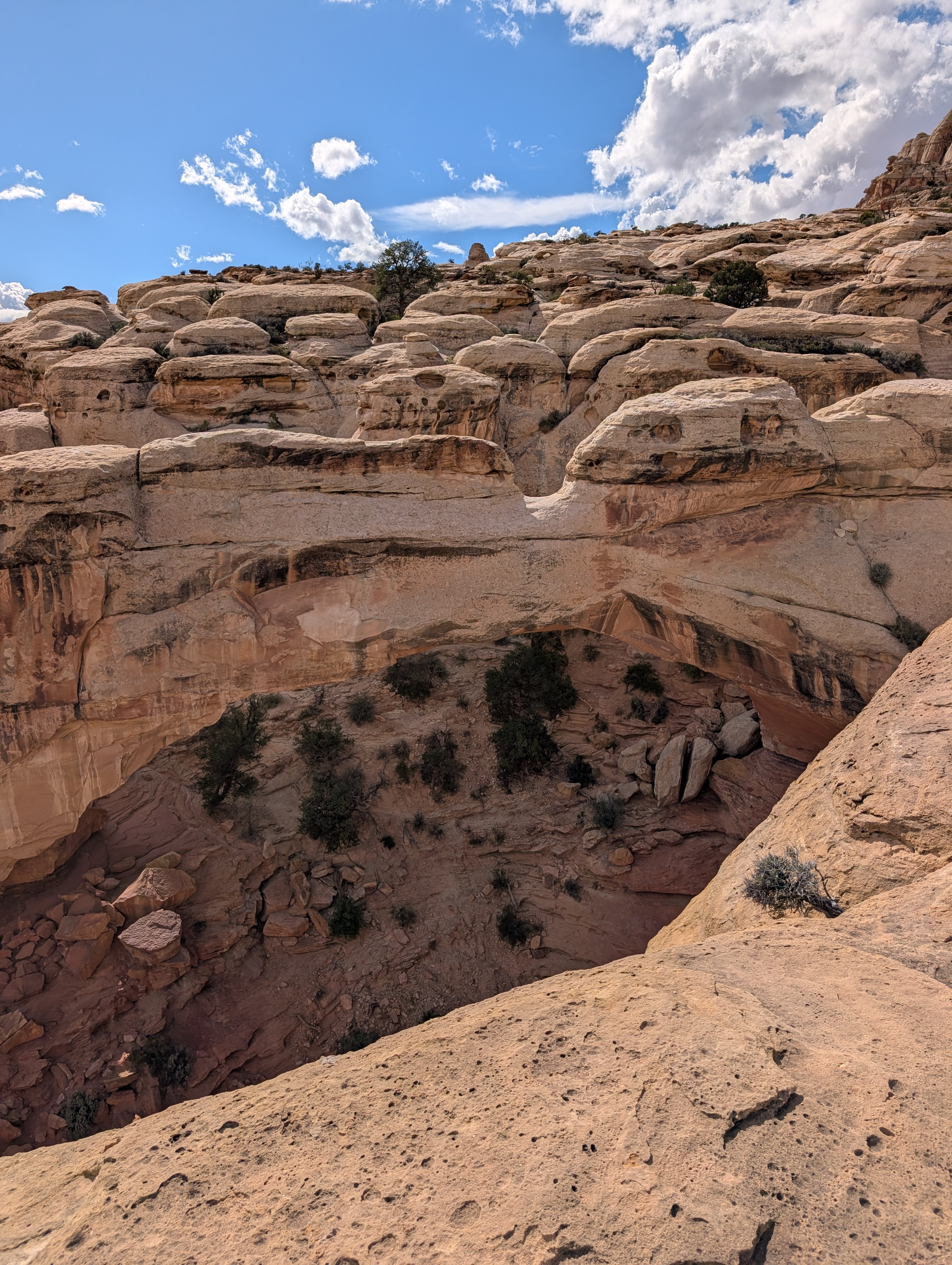
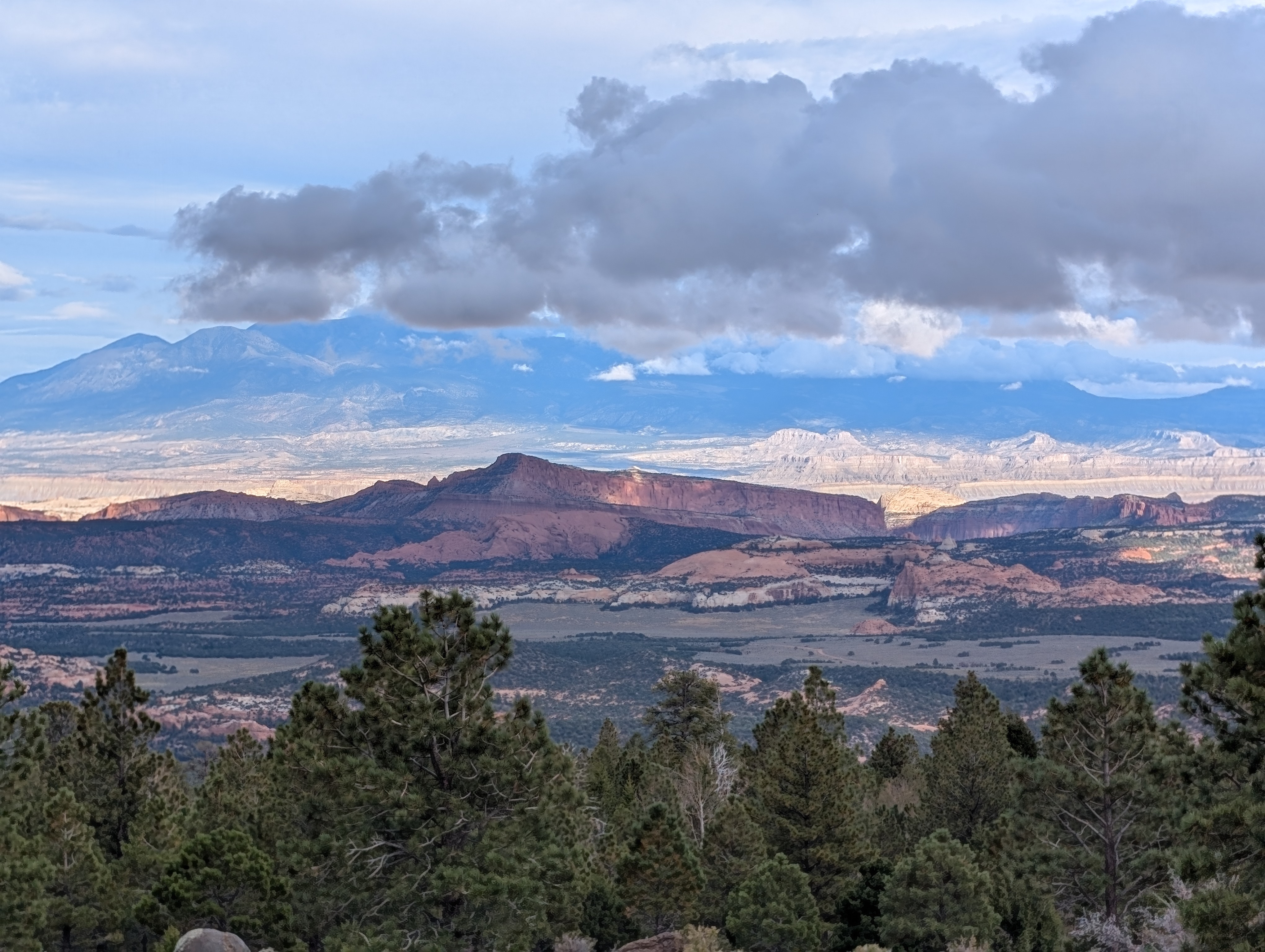
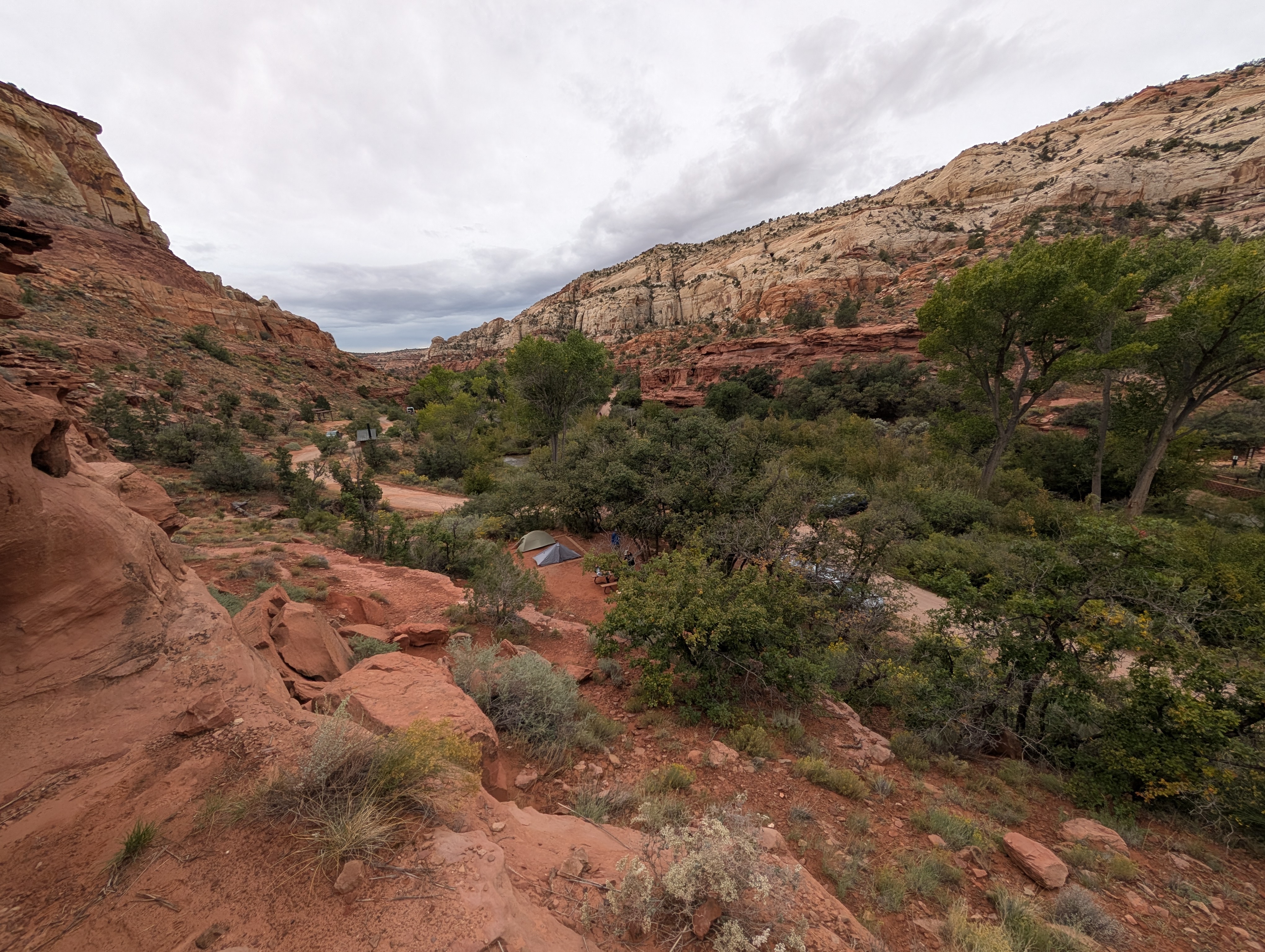
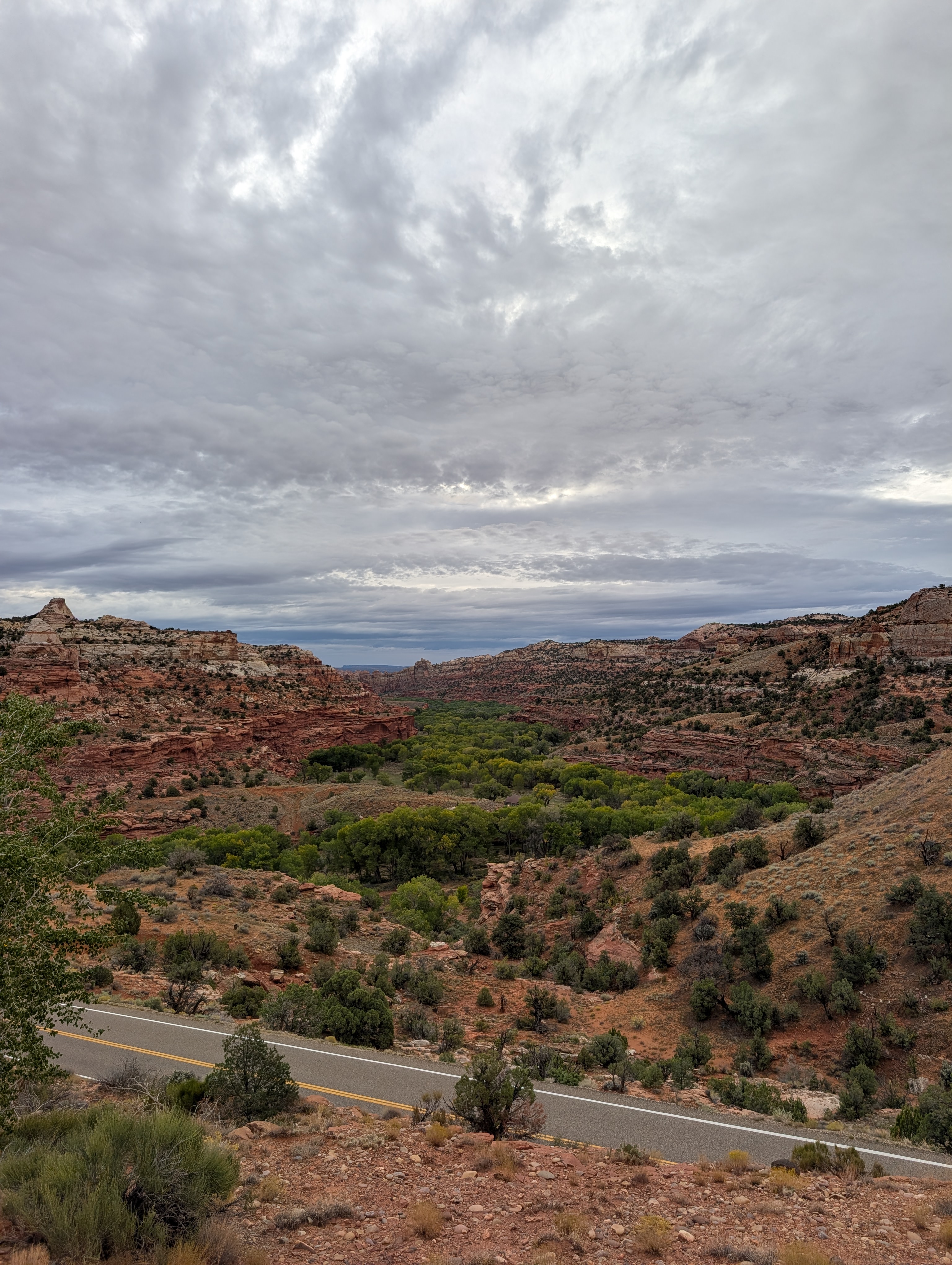
I am unbothered: something about these canyons makes them my happy place. It could be the awe-inspiring scale, towering cliffs funneling all life down narrow chutes and labyrinths across an otherwise impassable landscape. It could be the life-giving gifts of the rivers, ribbons of oasis that bring greenery and hope to a deadly climate. It could be the power of that water, blasting down with remarkable force and, over generations, carving its way through rock and time. It could be the sheer remoteness and isolation of these lands, a reminder that I really can disappear from all outside forces for a spell. Whatever it is, this land keeps a smile on my face, triggers surges of wonder even upon repeat viewing. I’ve been to many beautiful corners of this world, but this one demands returns in ways that many others do not.
Even when clipped in half, our hike, through the canyon of the Escalante River from its eponymous town to a highway bridge some ways downriver, is unlike any other. Just about every minute of it offers some vista that could be photographed. Giant canyon walls rise up most of the way, red or white or some shade of brown; sometimes they give the river space, while at others the waterway cuts right up against the towering cliffs. There are some obvious landmarks: an arch, a natural bridge, a few pictographs left by the Frémont people. In this dry year the Escalante is a muddy trickle above Death Hollow, but here Mamie Creek feeds in and gives it a burst of life. Flood evidence dots the route in the form of bent-over plants and accumulated debris and waterlines that show just how high the flow can get. Sometimes the trail over land is a dense thicket of tamarisk; at others, an open field of prickly plants. Further down the canyon widens into cottonwood savannas, airy parks split between sun and shade. Take a shortcut and it is a desert of sage scrub and terra cotta mud flats.
What is unavoidable is a walk in the river, sometimes for quick crossings and at others a long stroll down through the water. We seek out entries and exits on steep, sandy banks that crumble away beneath our feet, and we learn where the quicksand tends to appear: usually on the inner side of a tight curve, though unless there is rock underfoot, no one step is fully safe from muck. We follow dog and human prints as guides, but see on a handful of people deep in the canyon.
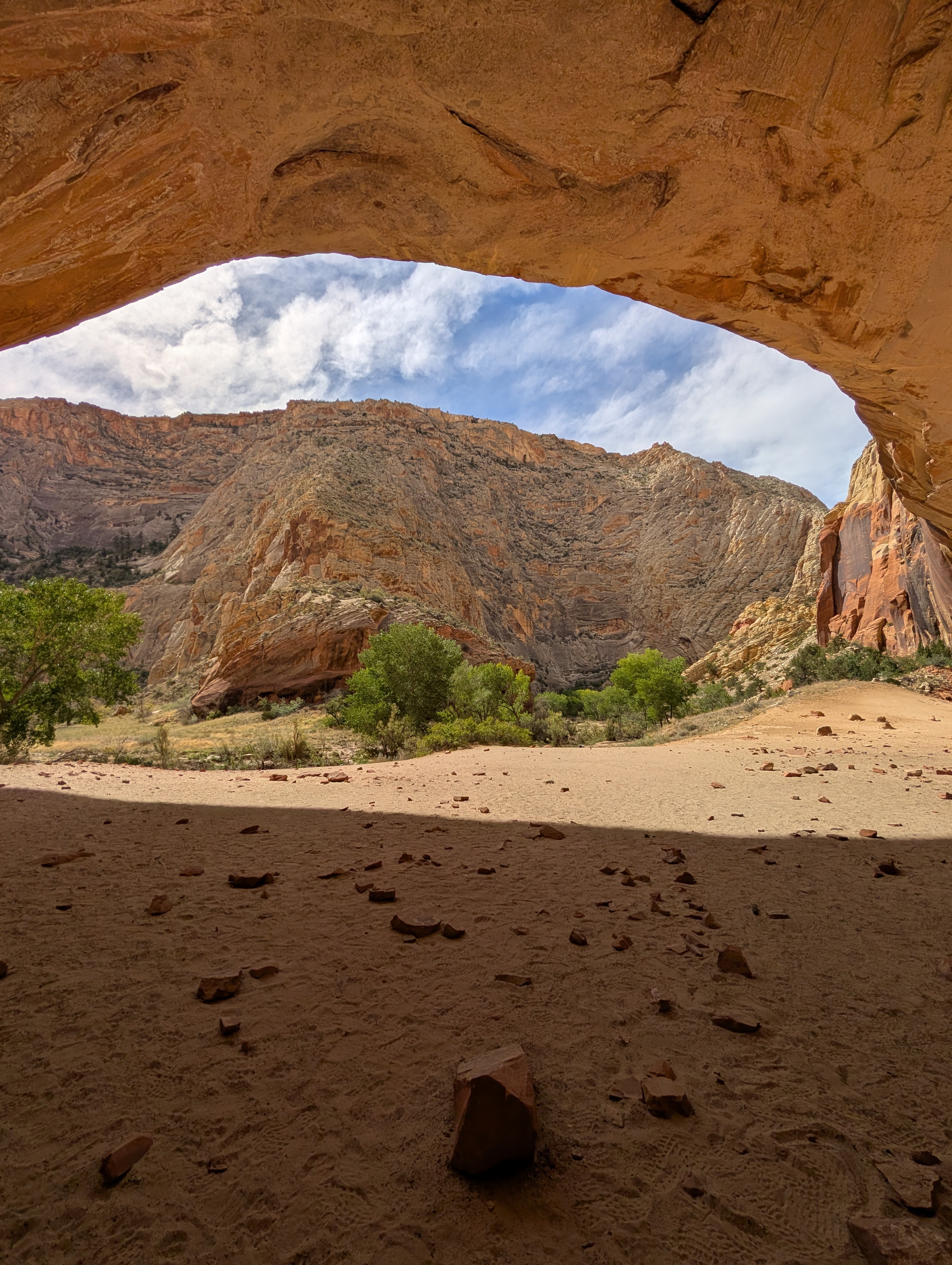
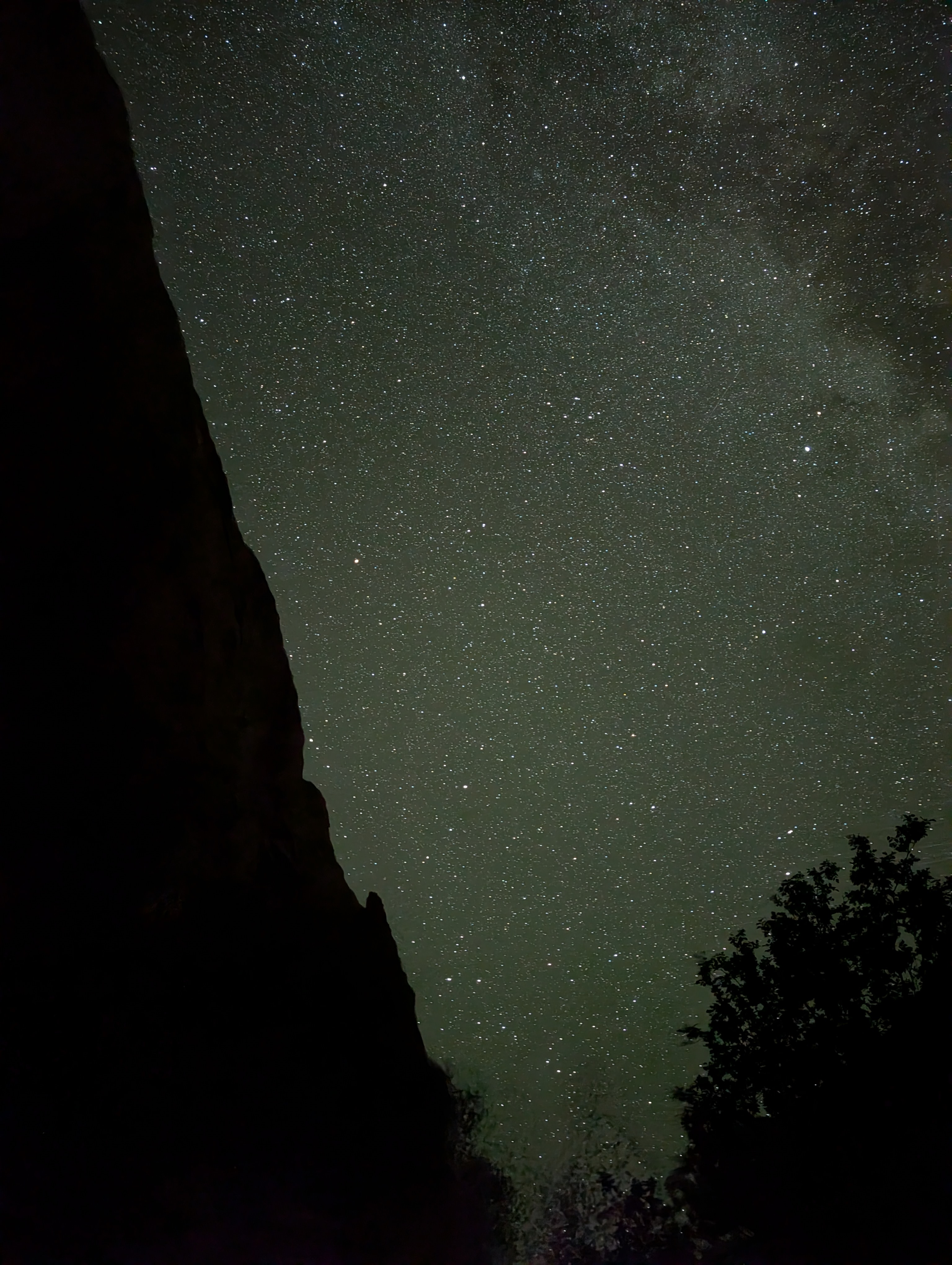
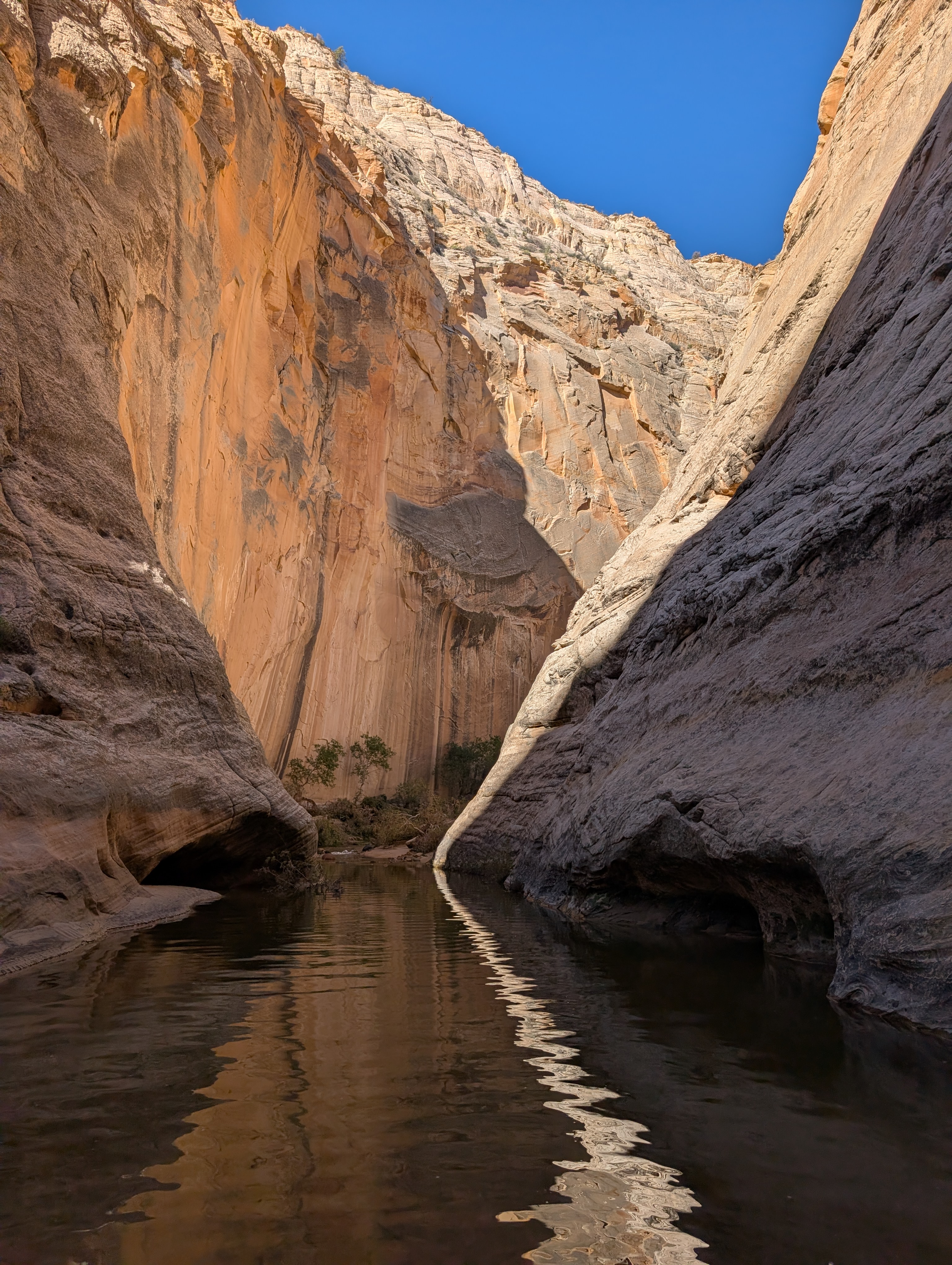
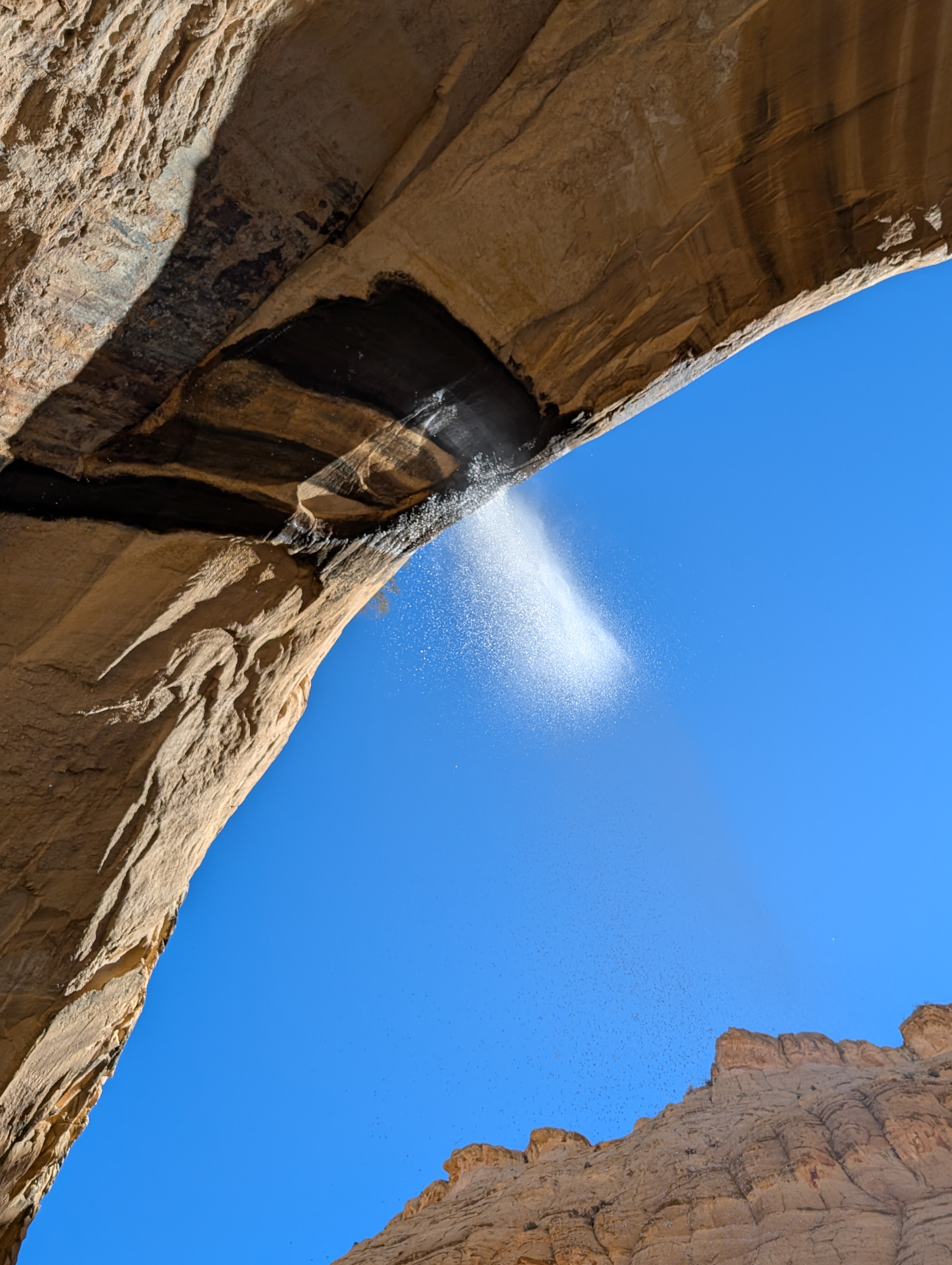
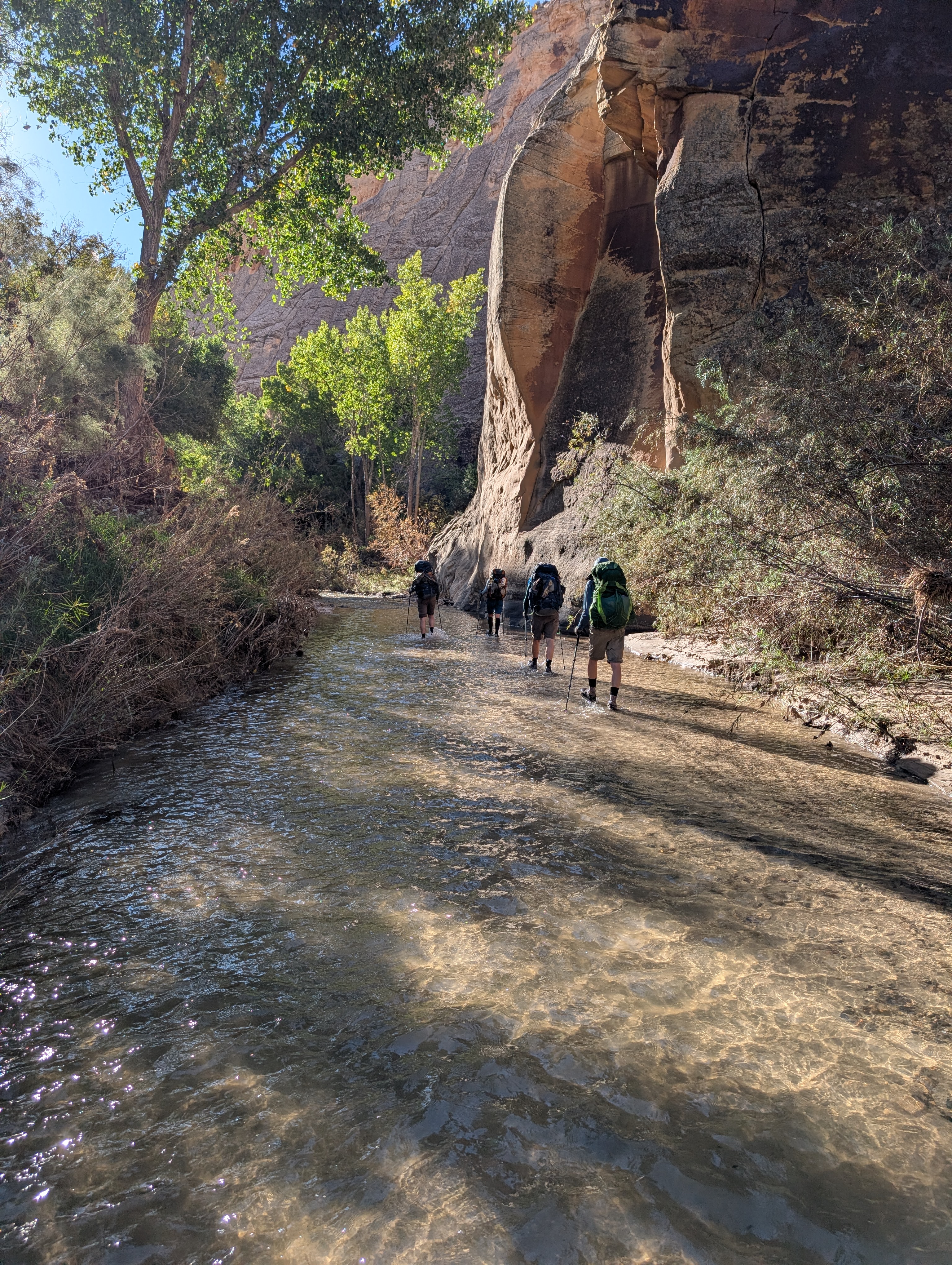
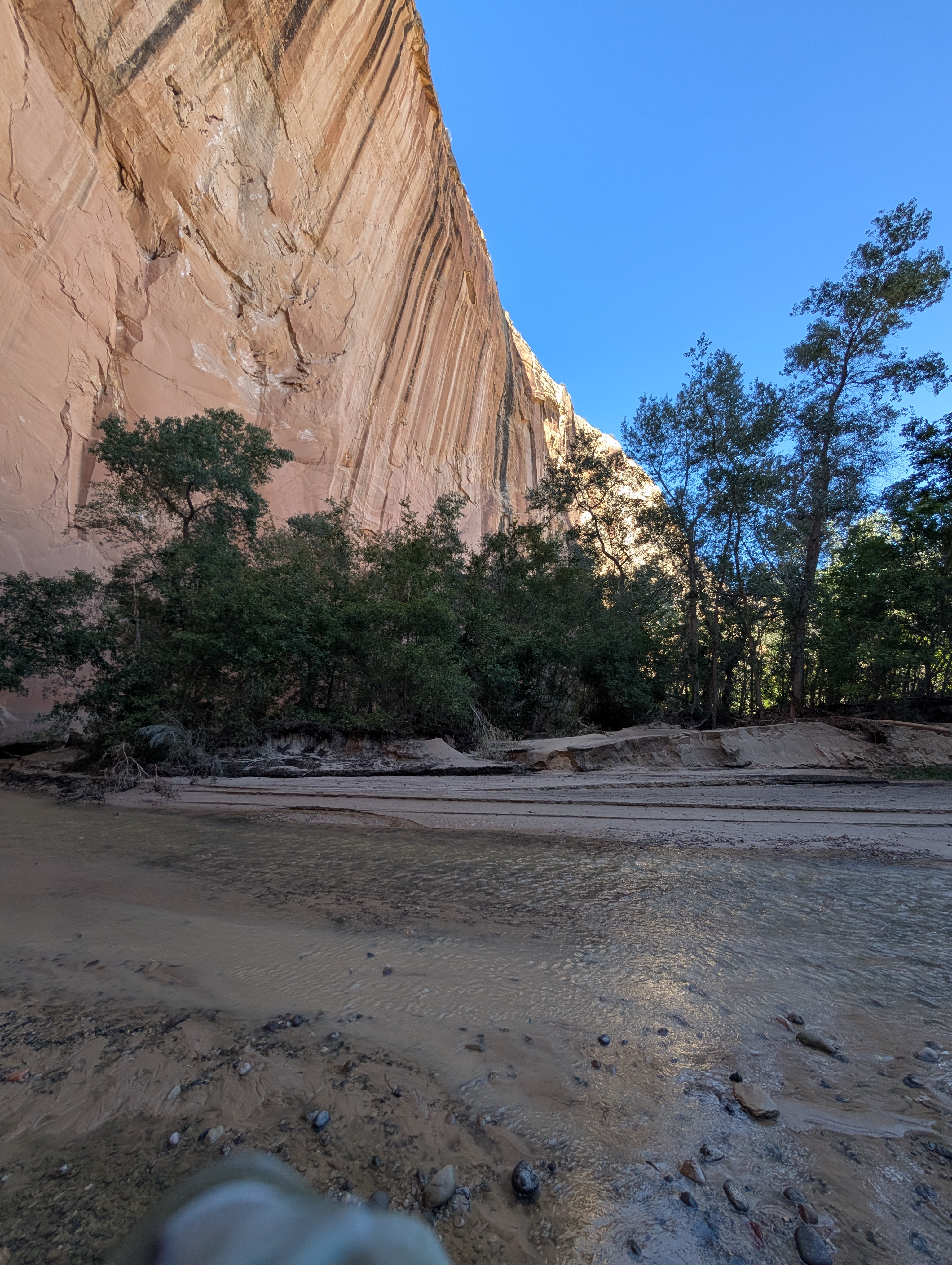
We camp for two nights on a large sand flat a little ways up Death Hollow from the Escalante. This even narrower canyon hosts rushing Mamie Creek, and there are hints as to its forbidding name: the floodwater evidence, ample poison ivy, the family of black widows spinning webs by our unofficial toilet area. But if I were nature, I too would try to protect the beauty of Death Hollow. Wading up the stream a few miles leads to even tighter spaces than on the Escalante, up past a graceful waterfall that turns loose a light shower into a pool below, edging along underwater ledges between cliffs and still deeps, picking paths up rapids, and, finally, the point of no return, a watery narrows of unclear depths that we choose not to swim.
The night sky in Death Hollow is as spectacular as I’ve ever seen. The canyon frames the Big Dipper perfectly, and the Milky Way makes a perpendicular cut across our gash in the rock. A few shooting stars burn past us. Vega glows straight overhead, while Polaris hides just behind the cliff. Later in the night, I think someone is shining a light in my tent, but it is merely the moon, finally rising over the rock walls, well short of full but bright enough to take a leak with no added light.
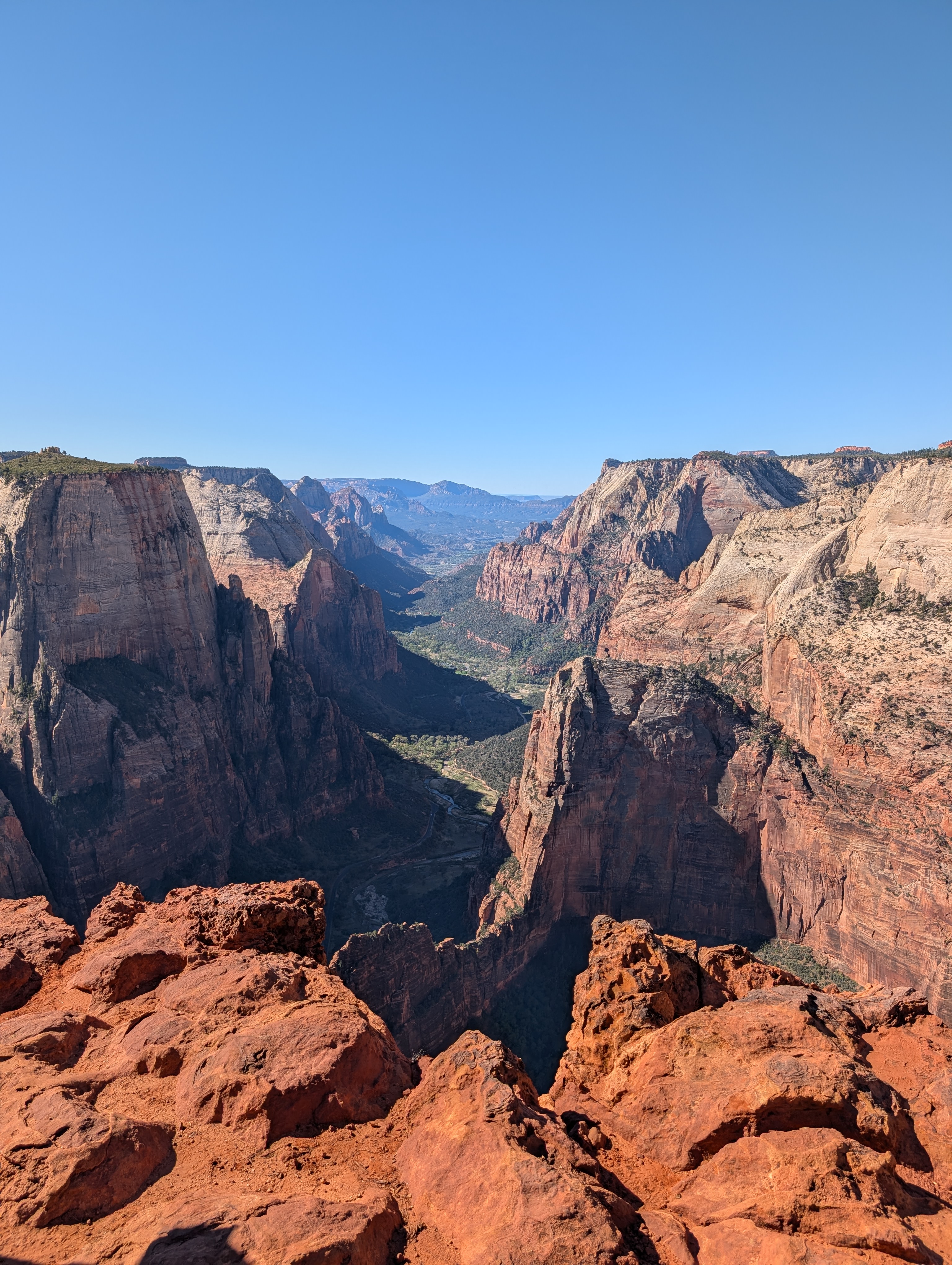
Off the trail the next day, a Zion-adjacent car campground is adequate, solitude sacrificed for a shower building and on-site restaurant. But it does give easy access to Eden. A stroll across the plateau along the East Rim of Zion Canyon takes us to Observation Point, a perch so commanding that it looks down on Angel’s Landing below. The crowd here is small, and we can marvel at our better view than that enjoyed by the masses down on the promontory below us. I trace my route up the West Rim four years ago, on to my lonely camp in cold and ice and the revelation of the glittering sunrise that followed the next morning, all the way up the red cliffs and white caps and through the green trees to the flatlands up top. This, I muse, is one of the coolest views a person will ever see, and I gaze down at the Shangri-La below and start the clock until my next return.
There is some validity to the concern that overtourism has come to Utah’s great national parks. Edward Abbey blasted the building of roads and upgraded campgrounds and other such amenities that ease access to canyon country. If he could see what tourism trends have done in the decades since, he’d roll over in his unmarked desert grave. They are busy and the roads can get packed, and the money is flowing in. But for my part, I think getting lost in canyons is a much more constructive use of people’s time than many of their other pursuits, and I make no special claim on any places to myself just because I had the good fortune to see them before they blew up. Conservation of natural treasures and their magic in the face of increased tourism is a solvable problem to manage, not an automatic crisis or signifier of decline. In fact, it allows people to recalibrate, to escape from the eternal progress machine they inhabit and commune with the grandeur that creates meaning. The more people we get to taste that, the better. If Zion now feels over-touristed to you, head to Grand Staircase-Escalante—or, for that matter, just walk up Zion Canyon instead of taking its shuttle. The American West is vast enough to hold all of us, which is why large parts of it are owned by all of us.
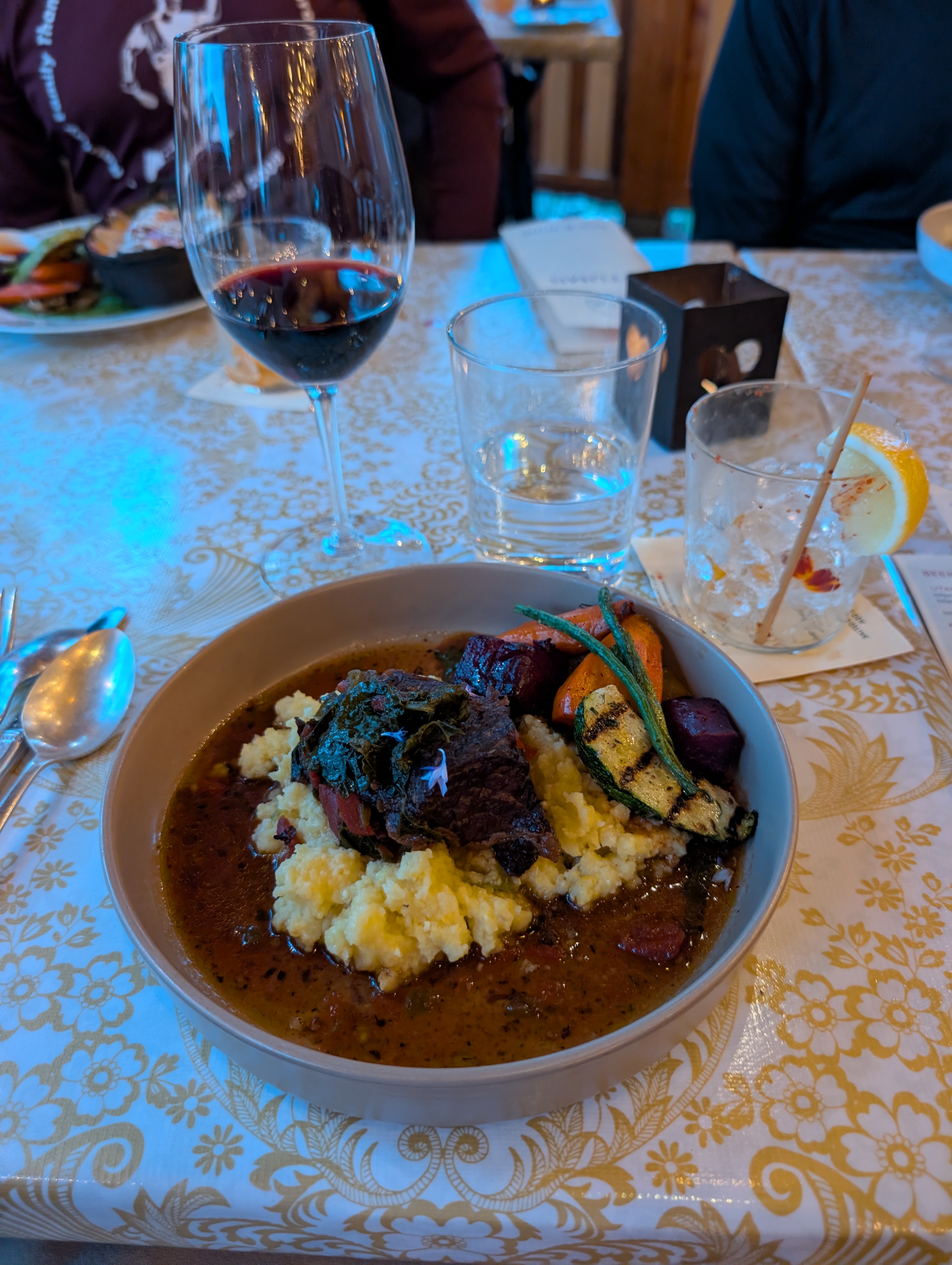
There are side perks to increased visitation, too: Escalante country has become a realm of low-key culinary achievement. The crown jewel is Hell’s Backbone Grill, a farm-to-table staple whose 2018 New Yorker feature first tripped my interest in this region. We have a night of great happiness on its patio. But there is also the Kiva Koffeehouse, an artsy outpost nestled into a cliff above the Highway 12 bridge over the Escalante. In the town of Escalante, Old Bull Kitchen serves elevated, Japanese-inspired fare. Even the Escalante Mercantile has lovely biscuit and croissant sandwiches for breakfast, surrounded by a most random collection of local food and art for sale. A rock slide across a highway keeps us from Springdale, Zion’s main gate, but it too now feeds its visitors well.
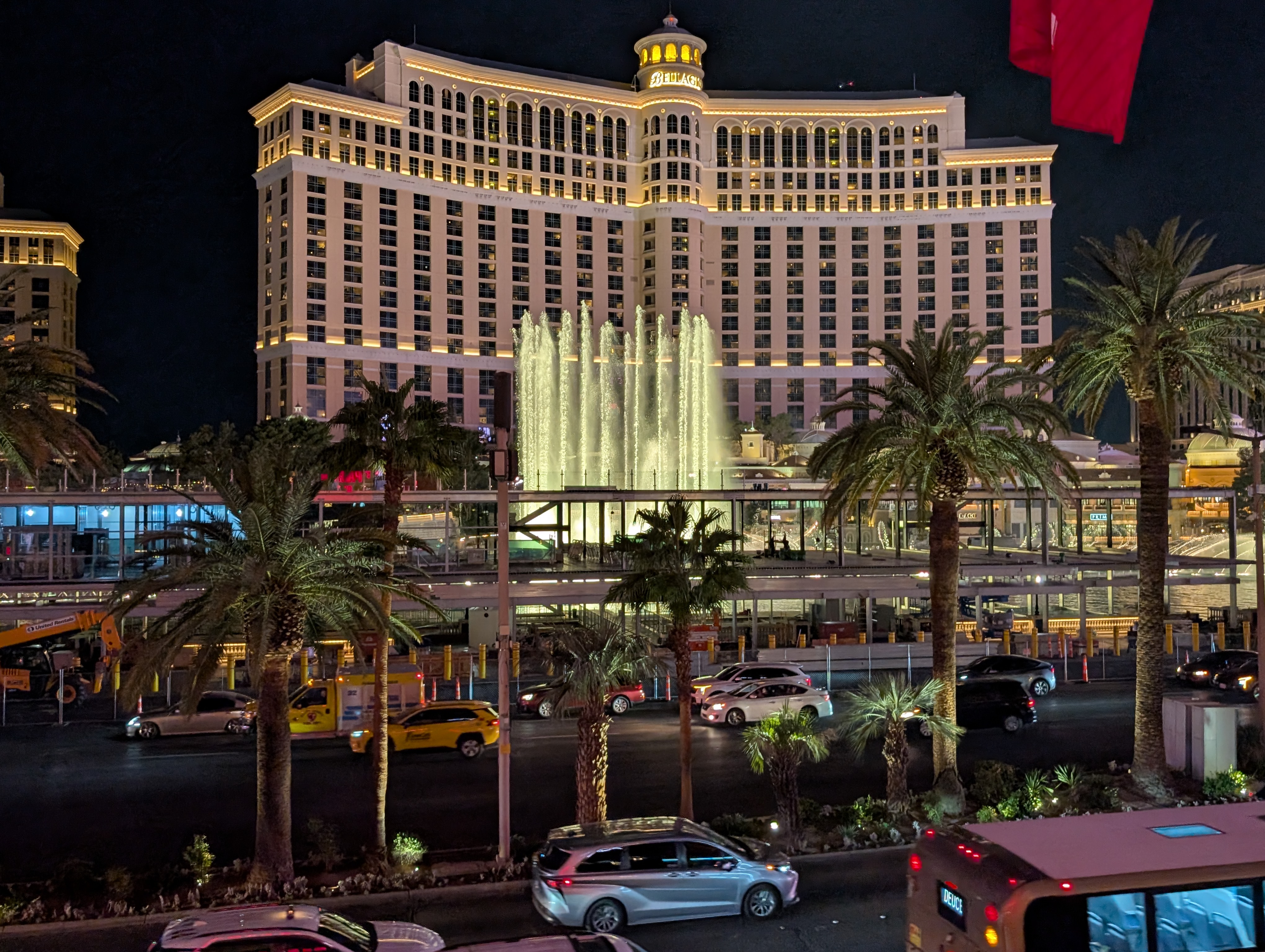
As we descend the Virgin River Gorge and leave red rock country, we know things are about to change. Perhaps nothing could be more discordant than beginning and ending a wilderness venture in Las Vegas. This city is the anti-wilderness, a world of artifice and flashy screens and money-chasing, a place to descend deep into bad habits instead of a realm of restoration. It is accessible to a fault, the democracy of mass tastes juxtaposed against the trail-seeking select who go far beyond its glitzy Strip. It would be easy to dismiss it with a haughty wave and move on.
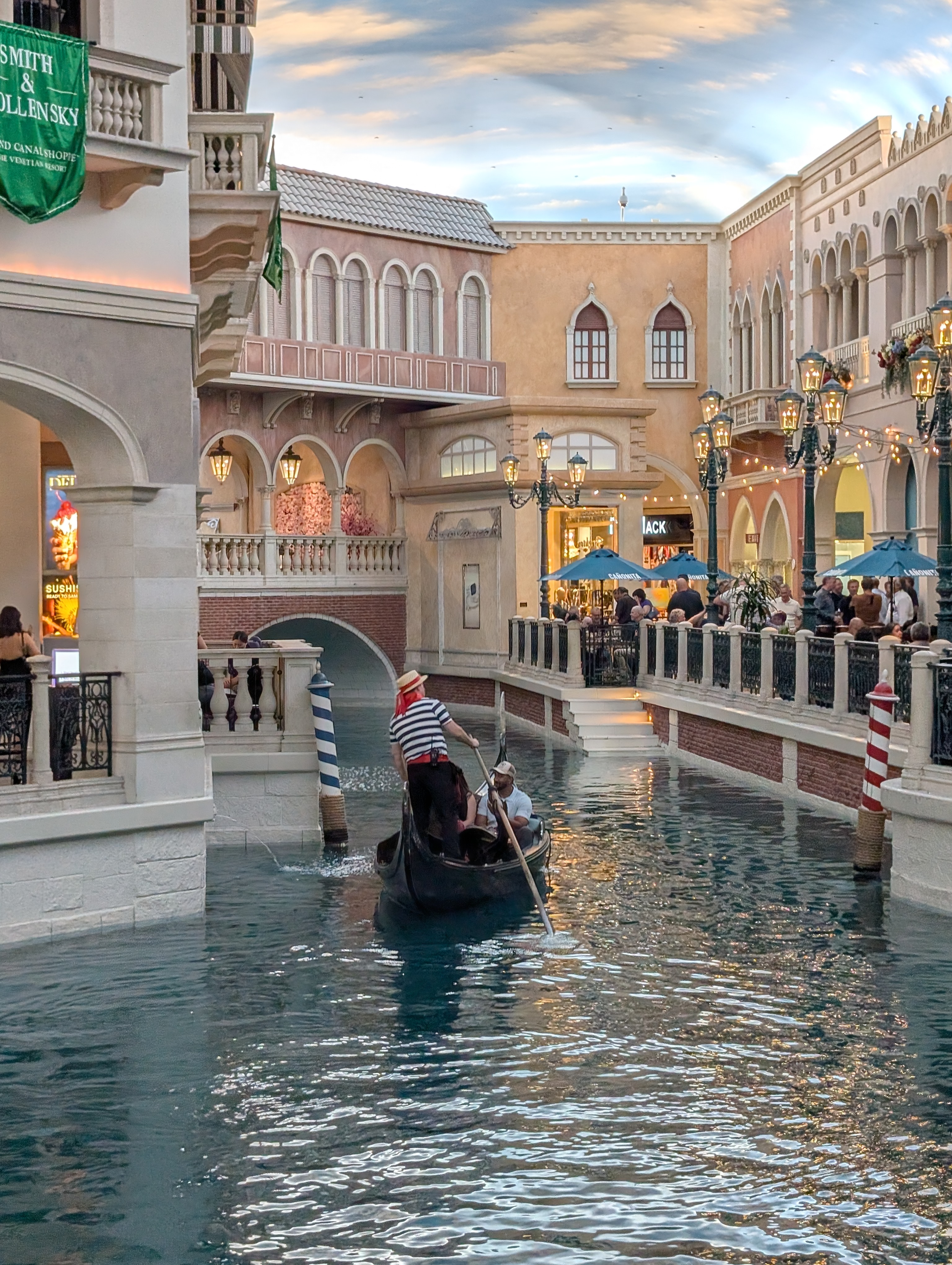
And yet I appreciate Las Vegas more with each visit. Appreciation does not necessarily mean I like it. Look closely and there are a lot of people around who are broken or breaking. Vegas has also drifted away from the building drama of the poker or craps table into greater screen time, sadder and sadder as the same trashy slot machines that one would find in any random backwater casino now infect even the lobby of the Bellagio. But the food scene is good, and we poke about the Cosmopolitan’s speakeasies and gawk at the pastiche absurdity of the Venetian, a true postmodern architectural triumph. A lot of people are delighted and having fun, and it’s hard not to gawk at the sleek new sports stadiums and rising new towers, the American growth machine at its apex. Vegas races headlong into the future ahead of the rest of us, a source of both intrigue and warning, and a temptation to let it all loose, at least for a night. For now, I settle for a fun, Rob-curated exploration before we say our goodbyes over a hotel room nightcap.
It will be a bit before I return to canyon country, but the rhythms of life aren’t too far off from a hike down a canyon. We are bounded by certain walls, constrained by forces of nature that long predate us and set us on a general path. Sometimes we can climb out, sometimes we are stuck struggling through sagebrush and invasive greenery, through prickly things and across mud flats. The path can start to feel monotonous, and some turns in the canyon start to resemble previous ones. Others are new and reveal cozy campsites or clues from long-gone inhabitants. Sometimes fresh new steams dump in to give things new life. Sometimes it is a tight slot and a traveler can only shuffle ahead carefully, but sometimes a range of paths diverge, offer options and chances to share trails with others. There are flash floods, there are droughts, but usually the life force flows along easily enough. Even in these oases the water continues to flow, wash over layers shaped by time.
As we age we often become more ourselves, locked in our ways, more apt to stick with what we know and dismiss the rest—if we even think of it, and are not sitting at our slot machine thoughtlessly pressing the same button again and again. Becoming one with the flow down a desert stream asks us how to exercise the time we’ve been gifted, to figure out the best pace, which might just vary a little from what we’ve done before. For all my ups and downs of the past few years, I stop to appreciate one legitimate triumph: these days I have the free time to do the things I want to do, able to add regular fresh delight as I please. There is time to see what is around the next bend in the canyon.

