I. A Dream Forgotten
Upstate New York, like New England outside of its better-known vacationlands, has the gentle shabbiness of a place beloved but somewhat past its prime. Country lanes meander through small hamlets, the federal and colonial homes dotting the way often in need of a coat of paint or a new roof. But they are still stately, still have something to say: we are at the root of Yankee thrift and economy, the foundations of American union and democratic culture, they suggest with a noble air. This is a realm of front porches and village greens and quaint shops at the hearts of towns, the sorts of places Frank Capra had it mind when he made “It’s a Wonderful Life.”
That idyll is not today’s American Dream, at least not outside the minds of a few nostalgic liberals drawn to northern woods and cozy studies. It has instead drifted south and west, toward glazed boomburbs and three-car attached garages and laminate flooring and inoffensive greige tones. Those markers of modern middle class achievement are in rare supply in Durham and Middleburgh and Esperance and other quaint communities on my road north from New York City.
It is baffling how far the communal ideal has fallen away, I muse as I wind past apple orchards and gentle babbling brooks. Tocqueville’s democracy is moribund, shunted aside by the race westward, the founders turned into deracinated oracles rather than people of a time and place. The Greeks told us this would happen to our young democracy, though there are surges of resistance here and there; maybe anger about data centers can do what a thousand exhortations over the value of civic engagement cannot. But so often now we hope not for ancient Athens reborn, but for benevolent emperors.
I waver about the magnitude of the loss. A transcontinental state cannot be governed by a small town council; the complexity of our world demands some level of specialization and expertise. The Empire State, as its nickname implies, was in on the game from the start. But the gap between founding dreams and present realities demands far more attention than it gets.
Over the course of this long weekend I read Edith Wharton’s The Age of Innocence, an acerbic window into the stifling, hierarchal world of 1870s New York. Of course I would argue our present world has its own stifling hierarchies that have the added defect of trying to pretend they are not what they are. The grip of old New York came down over time, just as our current hierarchies are starting to crumble some, too. In both cases it is worth noting the passing, and a smart conservative mind will skeptically eye what may come next. But mourn it not: instead, rescue what is worth rescuing. Take that road trip through the Catskills, appreciate the older wisdom, and bring along what you can.
II. Pastime
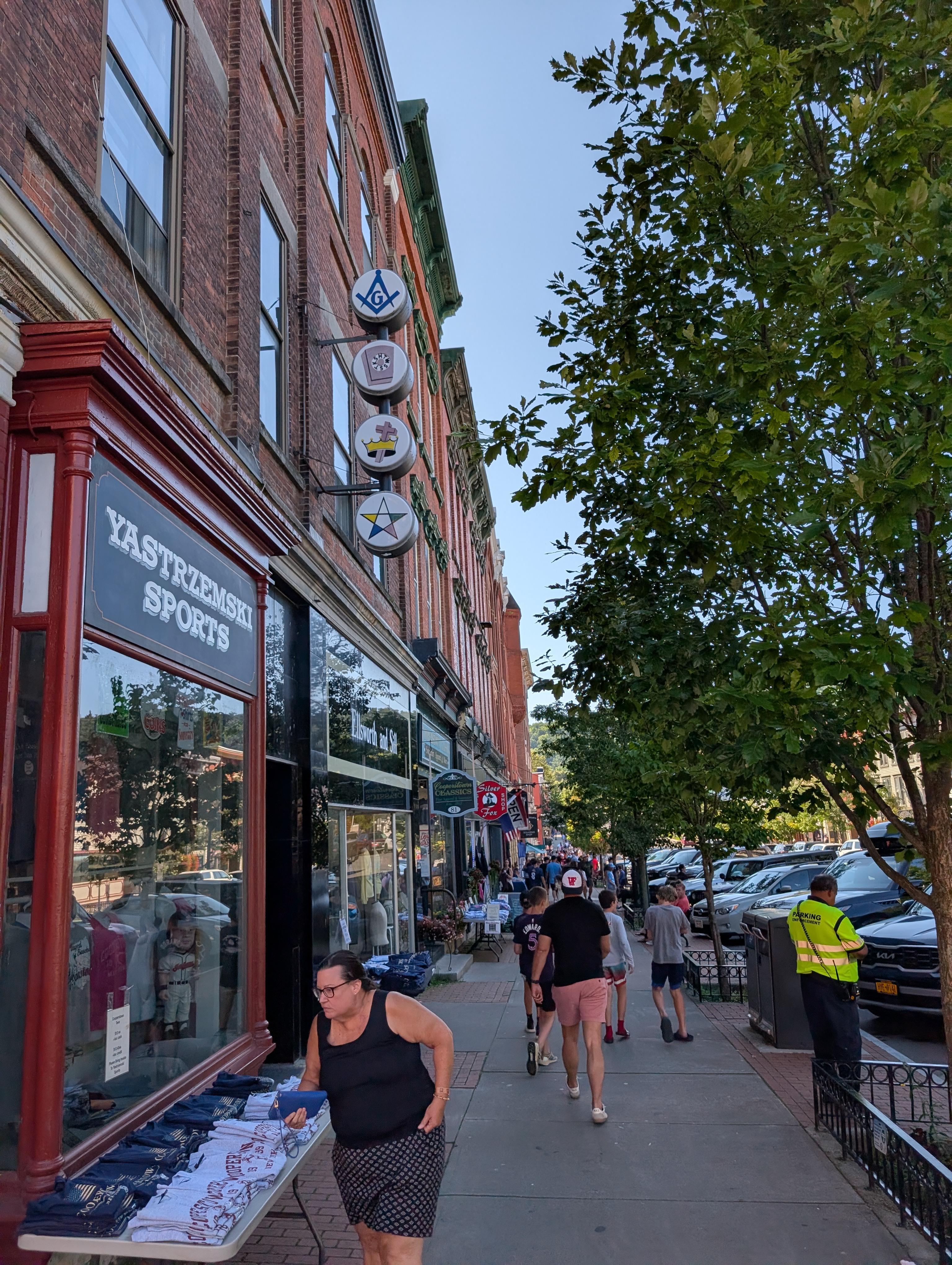
Cooperstown, some three and a half miles north of New York City, shows what one of these rural Northeastern towns can be when given a source of eternal life. Blessed by the foresight of some 1930s boosters who rode the myth of Abner Doubleday as baseball’s inventor, this little town at the end of a fingerling lake is home to a hall of fame for America’s most history-obsessed sport. Roll the James Earl Jones voiceover: “The one constant through all the years, Ray, has been baseball.”
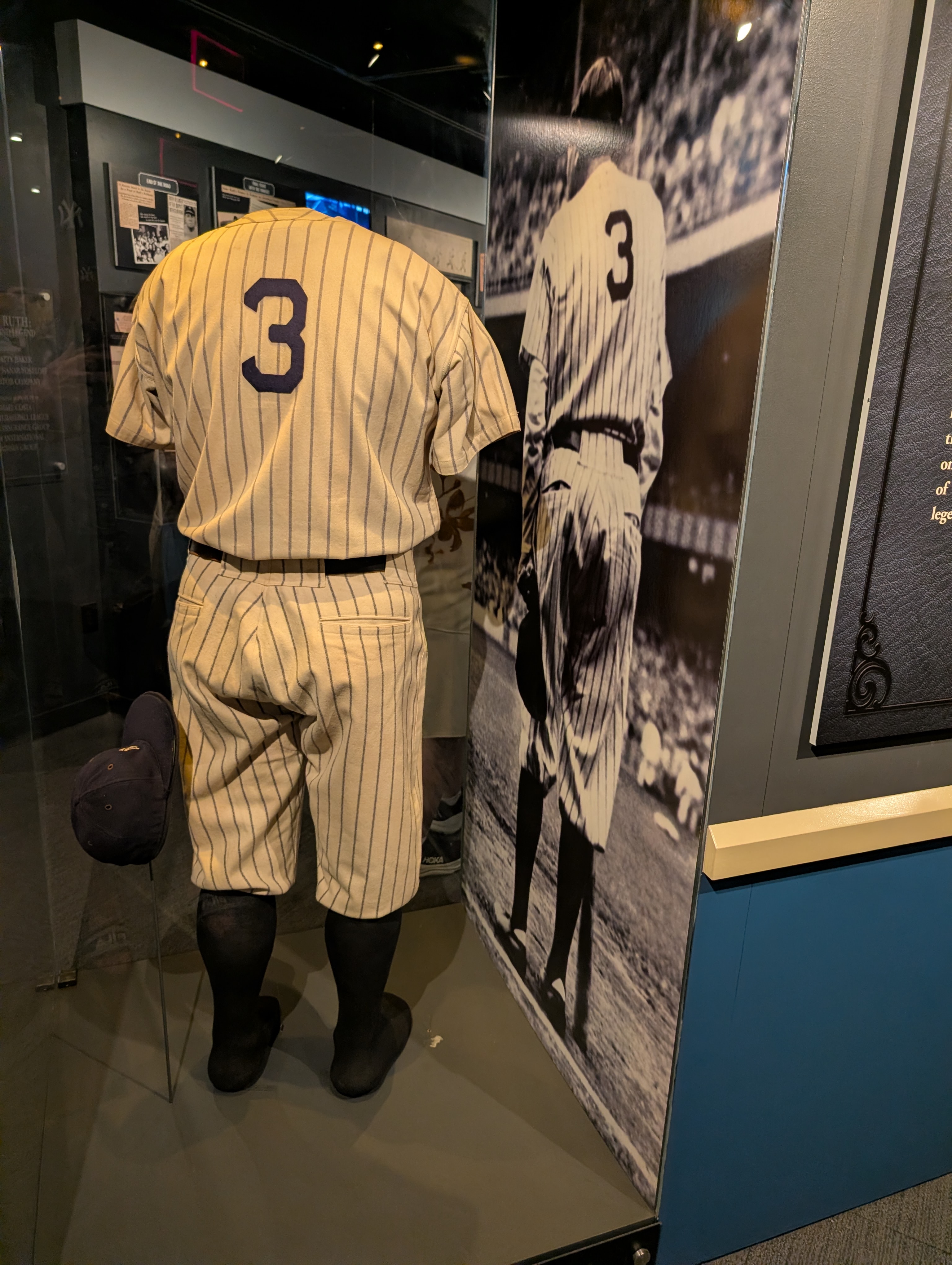
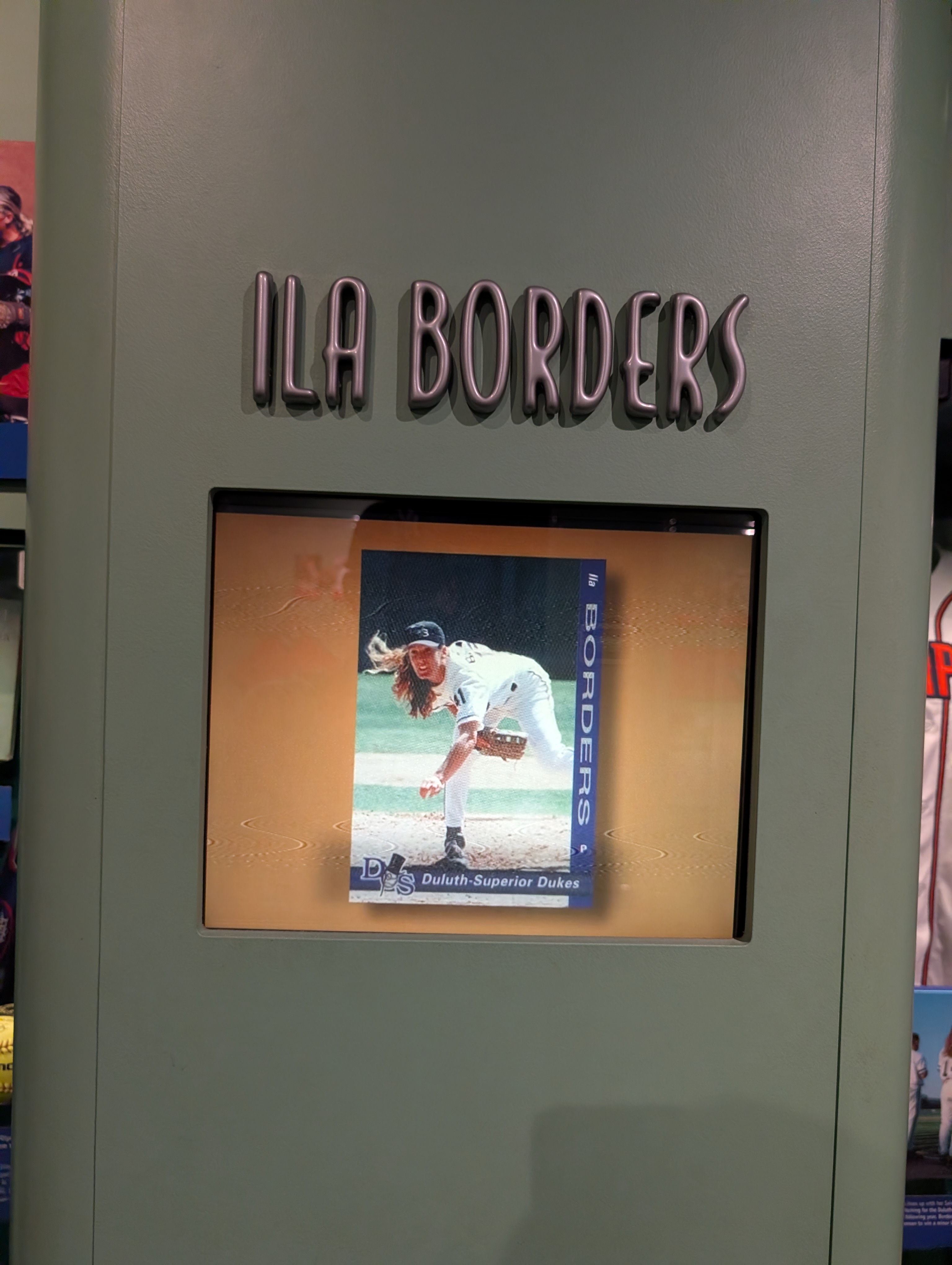
I join several thousand 12-year-olds and their handlers on the streets of Cooperstown on a Friday afternoon in August. The Hall of Fame does its duty, delivers the history, provides appropriate nuance as it navigates the stickiness of gambling and steroids. My favorite parts go deep into the players, with exhibits on Babe Ruth and Hank Aaron and their humble roots, Americans from different generations who came up from different dark places to do the impossible. There are exhibits on Black baseball and Latino baseball and women in baseball (feat. Duluth-Superior Duke Ila Borders), while the 12-year-olds are most absorbed by the Shohei Otani homage already on display. The Hall itself is a bit stiff but iconic, subject to the whims of the baseball writers guild that still controls its gates but appropriately grand for a sport passed down for generations.
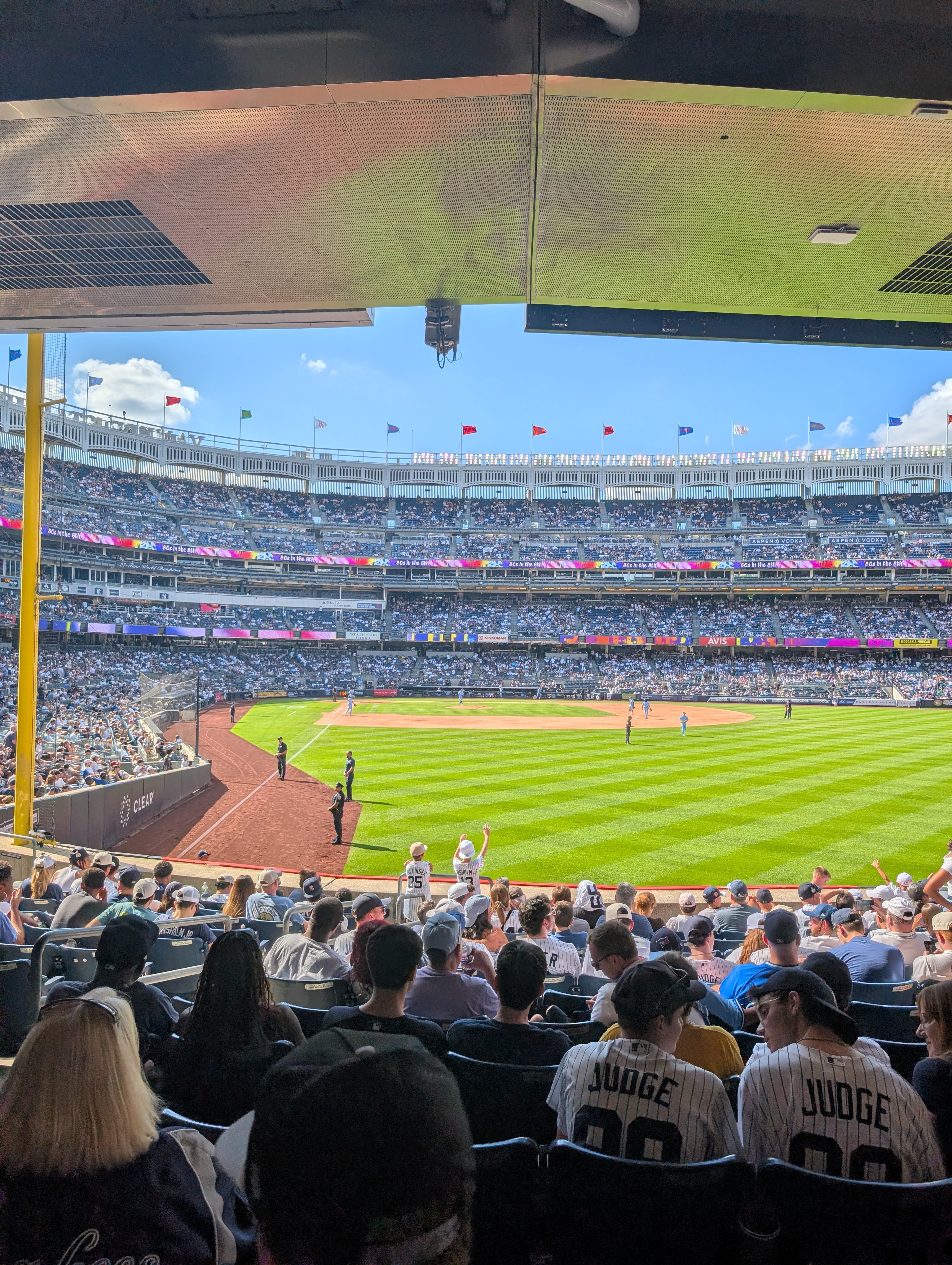
Two days later, here in the present without the plaques to Ruth or DiMaggio or even Jeter to carry them, the Yankees are in good form in the Bronx. The mid-2020s Bronx Bombers are entertaining but flawed, top-heavy and afraid to disrupt the status quo. But at least this gives the kids some chances, from the revelations of Cam Schlittler and Ben Rice to the halting promise of George Lombard and Spencer Jones. Recent years have taught me to check my enthusiasm; the days of Yankee inevitability are long gone. But with a loaded rotation and the looming return of Aaron Judge and a pillow-soft American League, I can’t help but dream. To be a baseball fan is to be trained in the art of eternal hope, sometimes against all odds.
I complete my pastime pilgrimage by peeking at the old site of Ebbets Field in Flatbush. A dated apartment tower rises, its baseball history forgotten. The cushy Brooklyn half a mile away in Park Slope fades away into generic big city soup, though construction is afoot here within easy walking distance of Prospect Park. In nearby Green-Wood Cemetery and other resting places, fans of Dem Bums may be turning in their graves at what the Dodgers have become since they decamped for sunnier climes. Baseball, like America, has at times rolled by like an army of steamrollers, matching a nation’s southward and westward turn.
III. Class Traitors
I take a presidential tour down the Hudson, an artery of old American (and Dutch!) power before the region lurched into its present state. Half an hour south of Albany is Lindenwald, the estate of Martin Van Buren. Van Buren was a forgettable president, but his legacy lives on: he furnished his predecessor, Andrew Jackson, with the machinery that became the Democratic Party. This tavernkeeper’s son organized the rabble into the first true populist force in American politics, which has become a throughline ever since. But give Van Buren credit: he was a fervent abolitionist, firmly resistant to adding Texas as a slave state, and later a founder of the Free Soil Party, a forerunner to the Republicans. Populism and principled institution-building can indeed go hand-in-hand when truly harnessed.
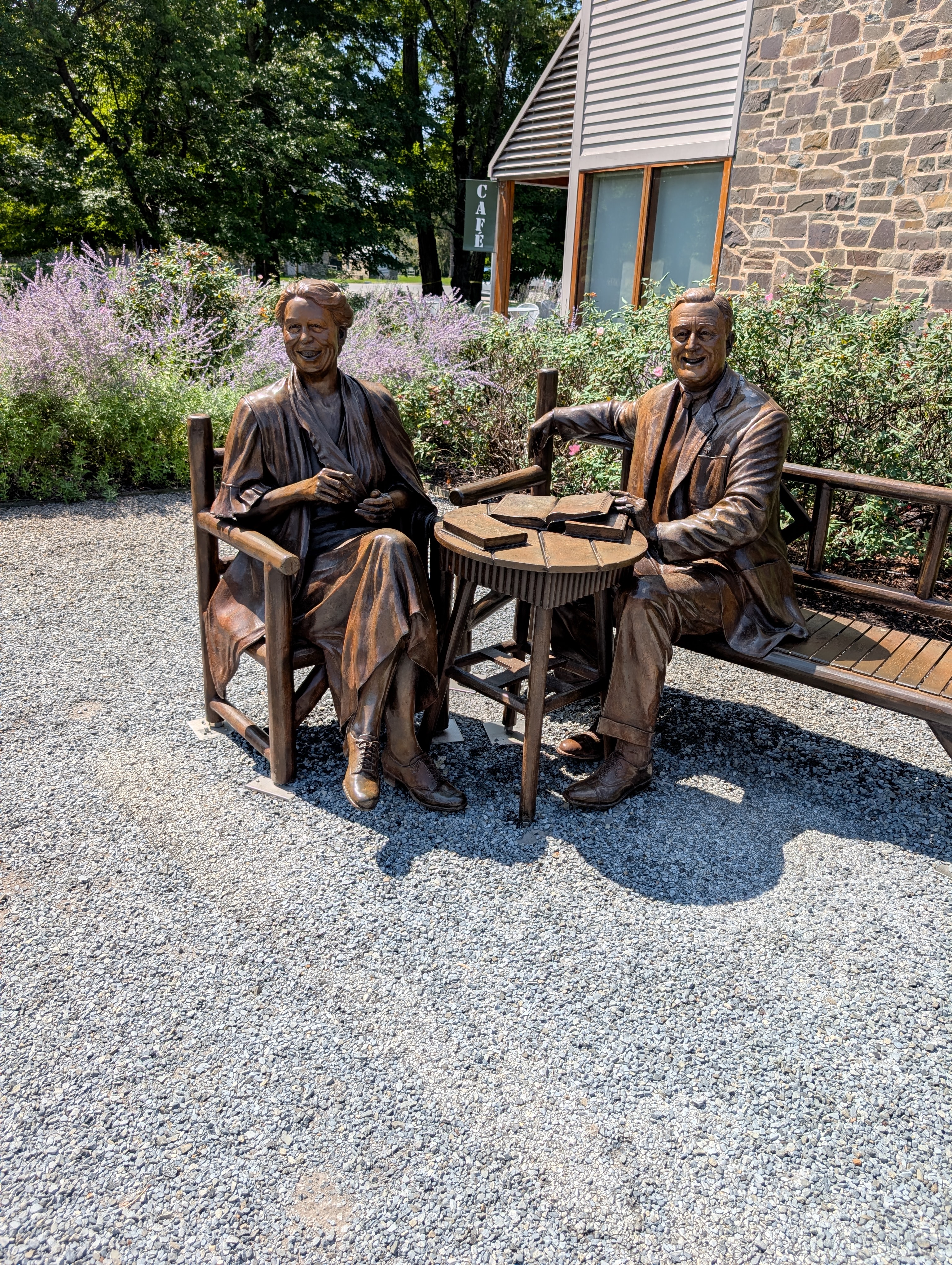
An hour further south is a better-known presidential retreat: Hyde Park, the lifelong home of Franklin Delano Roosevelt, sits in stately repose on a sprawling estate. Here the trend started by Van Buren reached its apogee, a New York patrician who rallied the masses in the face of the Depression and wielded more power than any American in history. He put his commanding majorities in Congress put to work remaking the way the federal government worked, and he played a geopolitical chess game that positioned the United States to rewrite the world order in the aftermath of great calamity. For over half a century we lived in a world FDR wrote into being, and parts of it carry forward today, high points of a bygone era.
It has been a slow fade since. New York governor Nelson Rockefeller, when he battled Barry Goldwater for the Republican nomination in 1964 and was asked if he could summon the old establishment to support his campaign, quipped that his advisors were looking at it. After him, a western frontier mentality took control of Republican politics, Roosevelt noblesse oblige thrown aside for a libertarian-inflected vision of freedom, and American politics followed a nation’s gaze southward and westward.
By the 1980s, New York had decided it could play this free market game too, and it united its old prestige with cutthroat capital to rebuild its power on the national stage. A straightforward reading has Donald Trump as a child of this moment; he can come off as a perversion of the old New York politics, a local aristocrat who vibed with a restive populace and invented himself as a tribune of the people. But the old world was gone before he took the stage; there was a clean split between New Deal New York and the post-80s flourishing of fluid capital and yuppies and hipsters and the city’s rebirth as a vibrant, wealthy, fun place to be. Sure, Trump is a child of both these eras, but his mind was formed by the interregnum between them: 1970s New York, an era of crime and fire and unquestioned sense of decline. This is a lesson of New York dating back to Gatsby: as much as a man may enjoy the glittering city, his deepest convictions are formed by the scars. Trump, unlike Roosevelt or Rockefeller, wears his acutely.
IV. Infrastructure
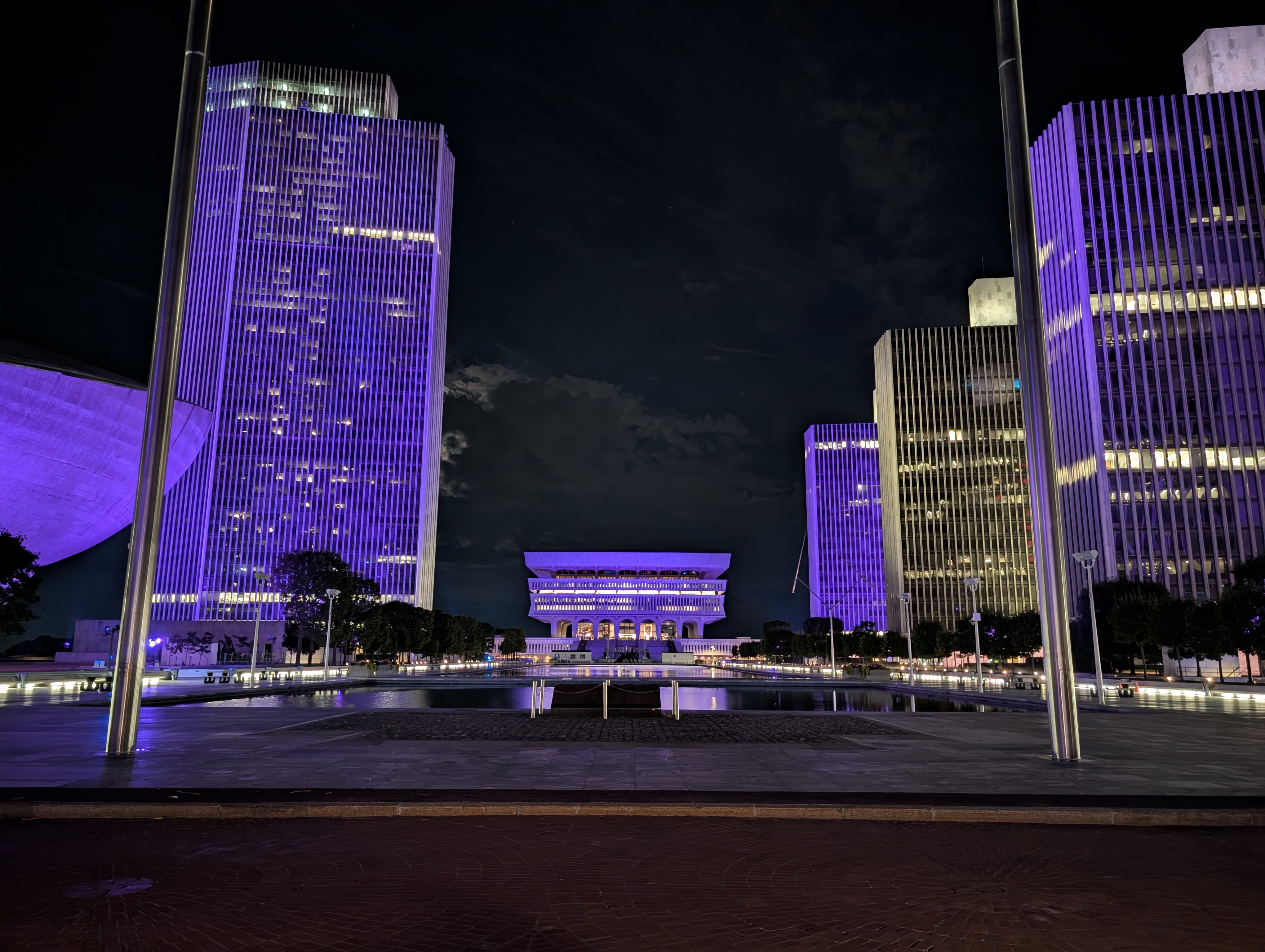
Between Cooperstown and my trip south along the Hudson, I spend a night in Albany. It’s not a place I need to spend a lot of time, but I have a nibbling desire to see its centerpiece, the Empire State Plaza. I wander it at night after a few beers and find myself more awed than I expected to be by this American Brasilia, bathed in purple light. Nelson Rockefeller’s forum to American glory is a monumental modernist work, emblematic of a national apogee and yet more than a hint anachronistic, a nod to an era that was but no longer is. I admire the vision; no state capitol complex has a unifying grandeur that can compete. But yet it is at once too much and a time capsule to an era, an imperial peak of a very specific style, back when an ambitious governor could steamroll neighborhoods and displace 7,000 people to build what he pleased.
After the diversion to see the presidential homes, my ride back into the city is one of beautiful serendipity. It owes this delight to the Roosevelt era: I take the Taconic State Parkway, a pinnacle of midcentury civic infrastructure. On this freeway there is not a truck to be seen, no roadside development save a few quaint old waysides: just a four-lane ribbon shooting gracefully up and down hills through a protected corridor of woods, clean down from the Taconic Mountains east of Albany to the Westchester suburbs. It is one thing to be a country that builds grand things to meet a specific moment, like the Empire State Plaza; it is another to be one that builds beautiful things to last, like the Taconic State Parkway. I would argue our inability to build much of anything these days is a direct product of our loss of the latter.
Will the murmured desire for a new era of American building come to anything? Zohran Mamdani, at least, wants to start by actually fixing a slice of the nightmare that is the Brooklyn-Queens Expressway. (This trip is an object lesson for me on how horrifically difficult it is to travel north to south on the west side of Long Island.) It is a tiny slice, but it is something, and the first hint of a politics that reaches toward civic greatness in building things for people. If this is what democratic socialism can look like in practice, I might yet get on board with the revolution.
V. Brooklyn Baby
I have been to New York a half-dozen times and have never seen a Broadway show, never been to the Statue of Liberty, and never been up a skyscraper. Times Square, to me, is a place where people go to take Instagram pictures, not to actually do anything. Central Park is grand and timeless and I appreciate its function in this city, but I have an affinity for parks that are wilder than Frederick Law Olmsted’s rolling greens.
What New York is to me, other than the home to a few old friends and a baseball team I like, is the best example of urban life achievable in America. Streets teem with energy, neighborhoods cohere into communities, and even in an era where living in New York takes more and more money, it forges and re-forges identities in a way few cities can. Here one can walk to nearly any cuisine in the world, bask in a park with grand monuments, wander around and pick up all the basic needs on a casual afternoon. Unlike other American cities with density, Brooklyn is filled with children, with families who have the money to choose other lives but have no desire to say goodbye to all this. The subway, even in our stare-at-our-phones era, is alive with chatter. Forget the laments of the anonymous and soulless city: this is a place with genuine community, the urban dance first captured by Jane Jacobs and preserved, sometimes all too self-consciously, by New Yorkers ever since.
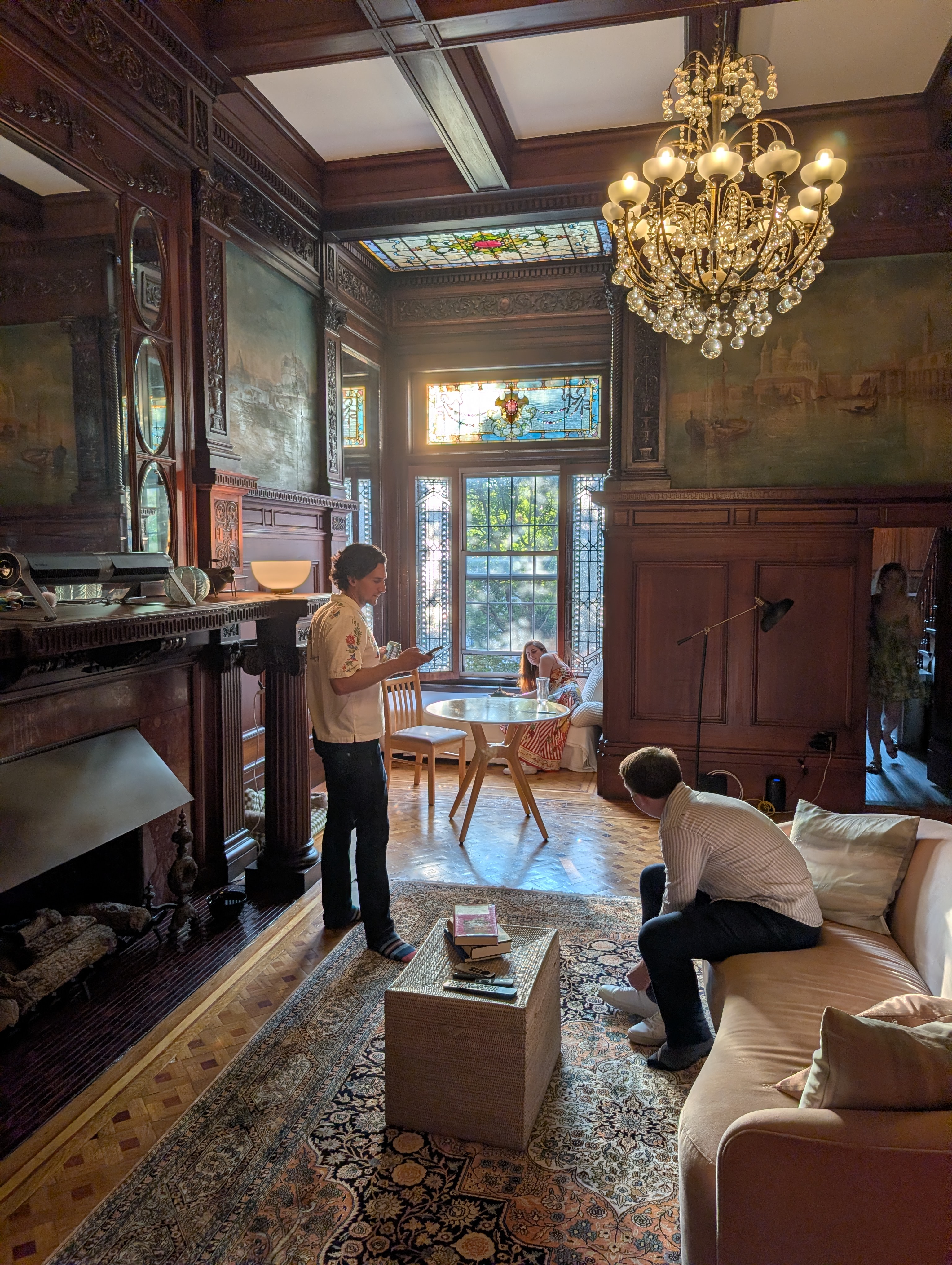
In New York I feel both very poor and as I live a life of great comfort, all at once. People will put up with a lot to live here, and the city makes them do so. The very notion of owning a car is a source of struggle for one couple I dine with. Buying real estate is nearly laughable. Even in a well-appointed apartment the kitchen is cramped and the water takes a few minutes to warm up and the guest bedroom is accessible only by re-entering the common stairwell where a bust of Nefertiti graces the fireplace. Here 1,700 square feet is a palace, though in this particular case it does in fact resemble a palace, with grand ceilings and ornate woodwork and scenes from Rome and Venice frescoed above the fireplaces and the built-ins, and golden hour pouring in through the Tiffany windows over the fainting couch.
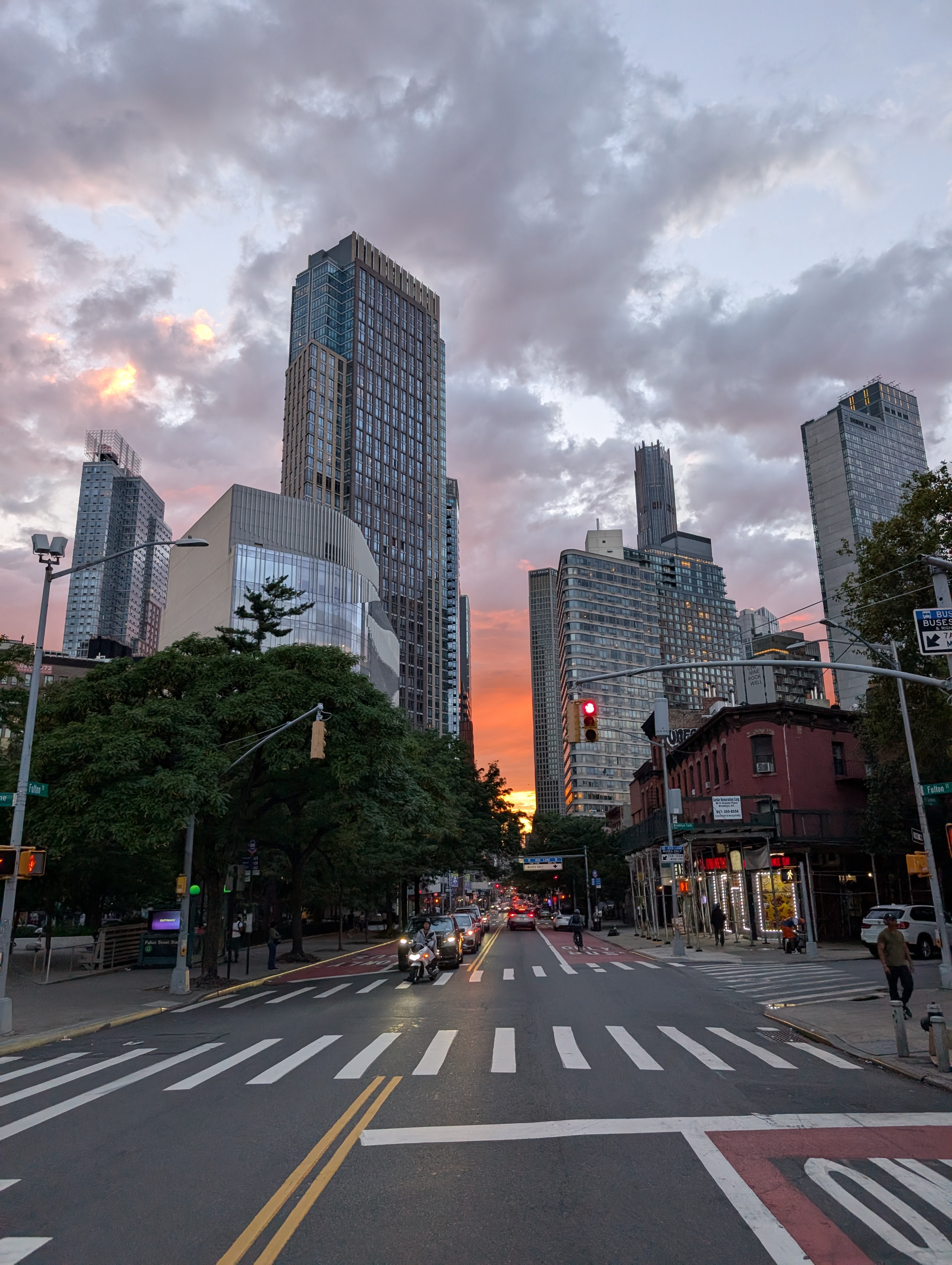
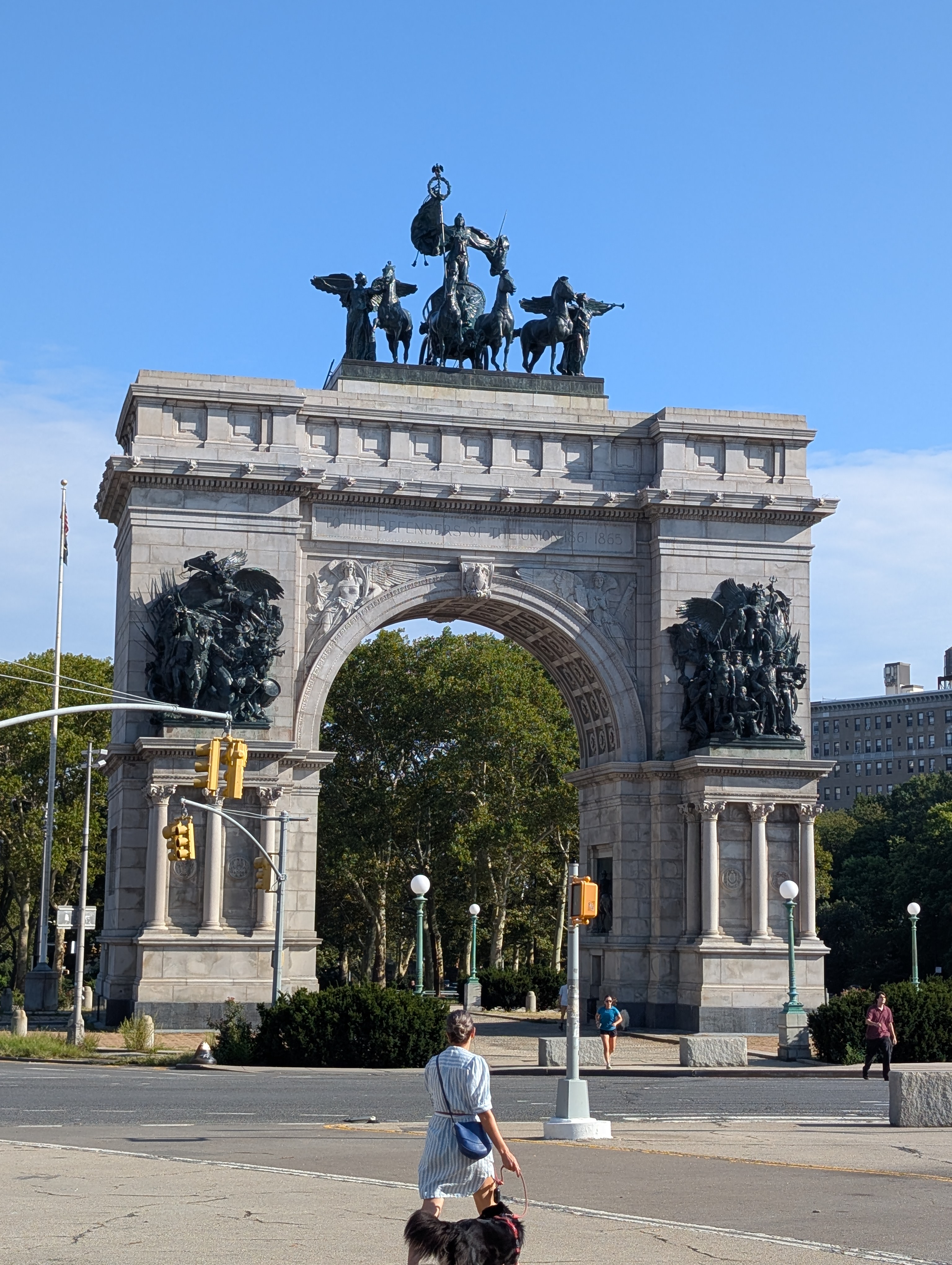
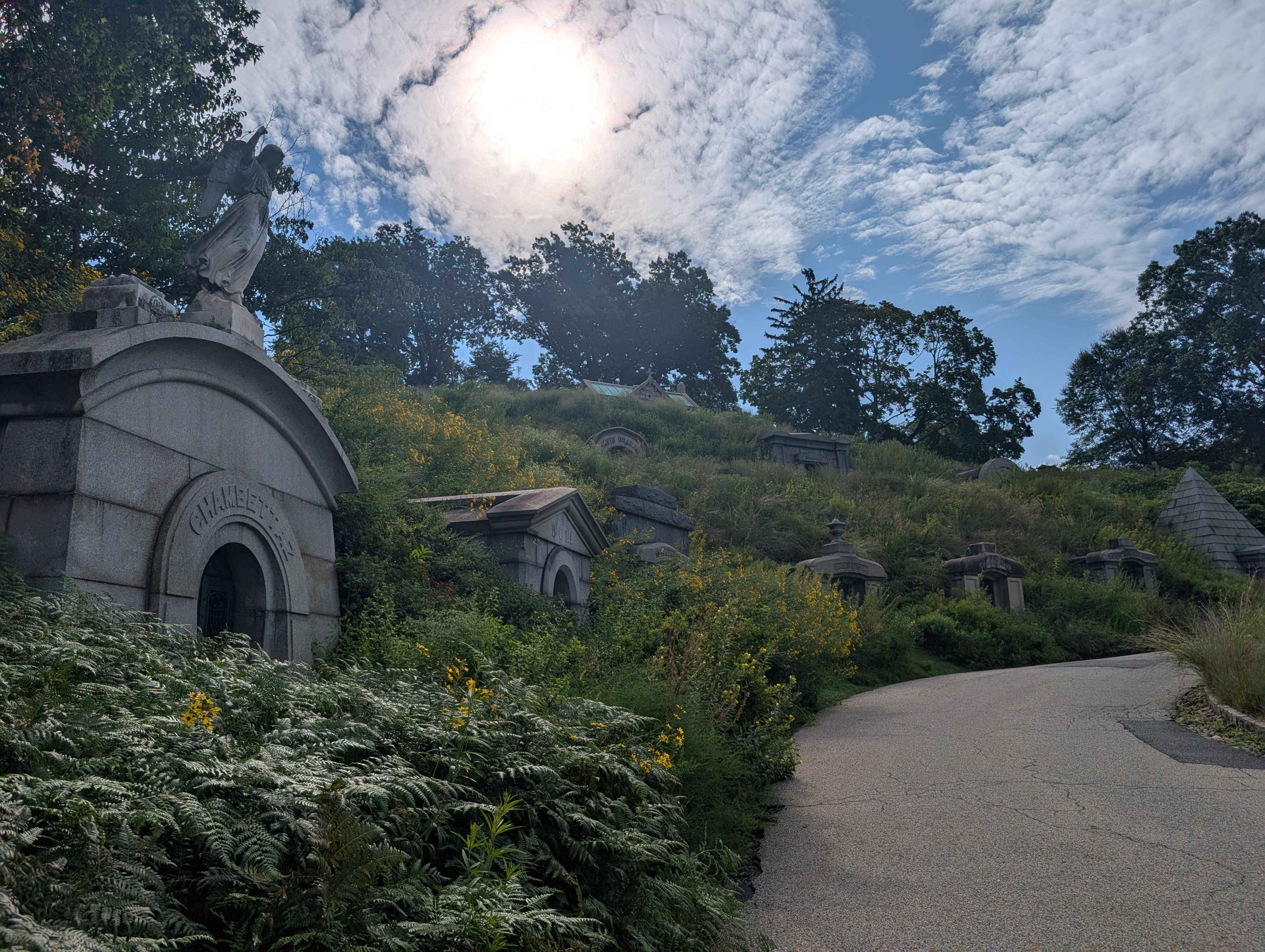
But drift out, just live in a few square miles of Brooklyn for a few days, and it all makes sense. My old roommate Tim and his partner Anika are in Park Slope, the Brooklyn ideal, a land of leafy streets and grand brownstones and books left out on the sidewalk for anyone to take, along with the world’s snobbiest co-op. It is a short walk to Brooklyn’s lungs at Prospect Park, or over to the Grand Army of the Republic Plaza, which is helpful in my quest for the world record for most quadriga sightings in a single year. I run down to Green-Wood Cemetery, a retreat where New York’s dead lie in peace behind their gothic gates, at rest beneath their mausoleums with a view off toward the towers of Lower Manhattan to the north. I eat Indian and Mexican and good ice cream and a tower of seafood in Downtown Brooklyn. Most museums are alas closed on my free Monday, but I compile a list for next time: the Brooklyn Museum, the botanical garden, the transit museum. I learn of color palettes, befriend the cats, settle in each night on an air mattress beneath the 20-foot ceiling and chandelier. Fortunes may rise and fall and tastes may come and go, but New York is eternal.


well done Karl. I enjoyed your NY journey and as always I learned quite a bit as well. Thanks!