Eighteen years ago Saturday, a moving van bearing my father and I rolled into Duluth to join my mother, who’d already made the trek. I now have less than a week left here—this time around, anyway. My departures are never very permanent. Even so, a proper good-bye was in order. So I headed out the front door and started walking.
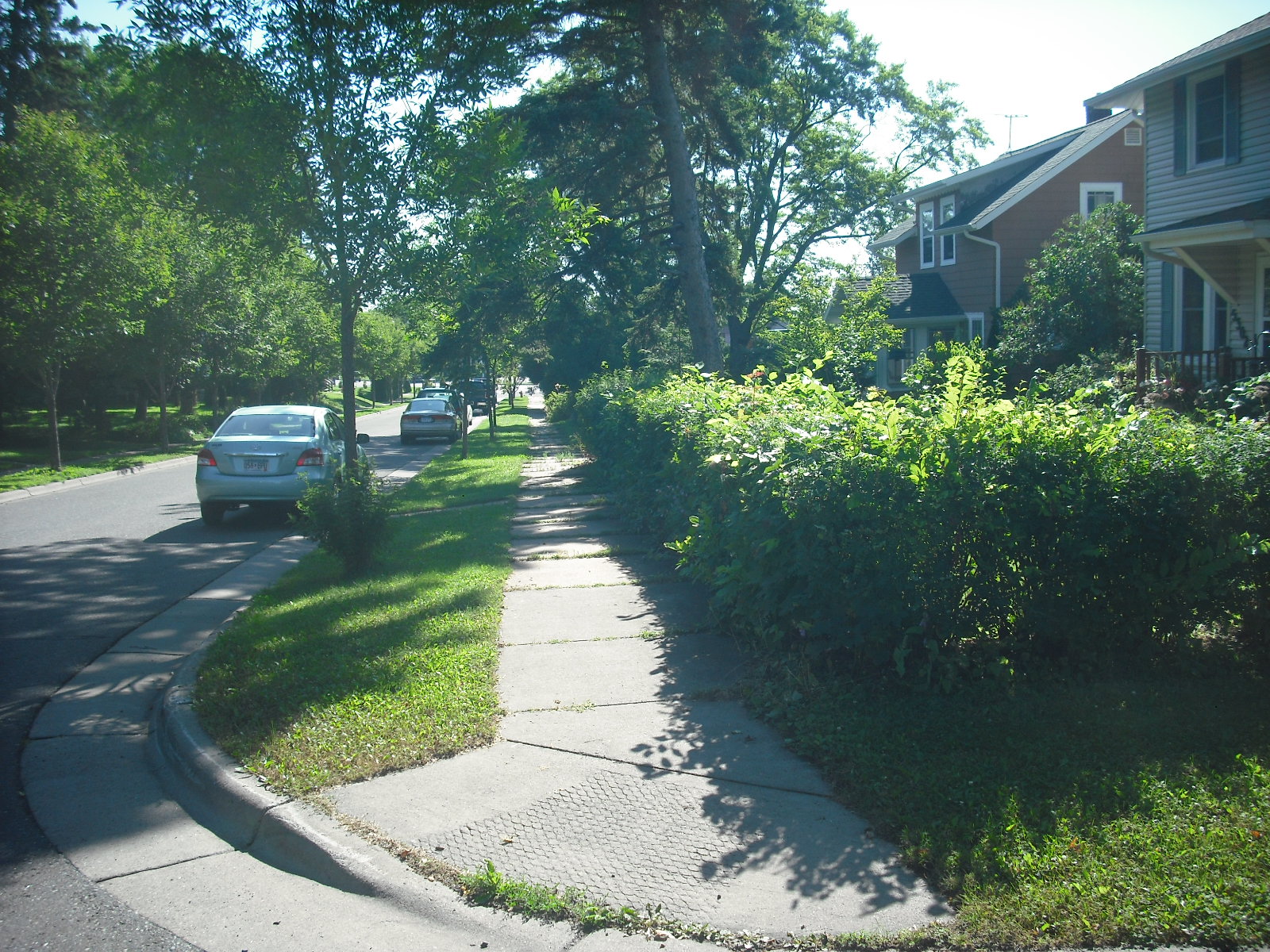
I begin in Lakeside, an idyllic middle-class neighborhood on the far east end, and my home for most of my life. It isn’t uniform; there are some gaudy houses along the lakeshore and scattered about, and many of the homes are older, bringing with them some character and occasionally some shabbiness as well. It just seems healthy, my own childhood repeated before my eyes from block to block. At times perhaps too sheltering, as evidenced ongoing temperance 80 years after the 21st Amendment, but it’s also easy to escape out into the woods or up the shore and find some freedom. The business district has hollowed out some over the years; the second grocery store and the pharmacy is gone now, though many of them plug along, and a new coffee shop is set to come in. For the most part, it seems timeless.
At the end of Lakeside is the new Duluth East, in the building where I went to middle school; the setting is second to none, with the expansive views of the lake. The building itself, though, can’t quite match the old one, which I come to in a short while: that old gothic brick academy with giant windows perched right in the heart of Congdon Park. To the west, Duluth’s mansions and old money core, tucked beneath the Cathedral of Our Lady of the Rosary and the Longview tennis courts. Say what you will about Duluth’s elite, but their commitment to this community down the years has been unquestioned, and that Congdon sensibility rubbed off on me during my time at East. Class, unapologetic appreciation for high culture, and sympathy for that noble approach to the world: political wars and resentment are so below us, and instead it is all our plaything, here to be enjoyed in all its finery. A defense of time-honored traditions and inheritances worth passing down, stewarding, and bringing to fruition. It has its shortcomings, of course, and I’ve got enough Wisconsin farm boy in me that it’ll never quite be me. It is a fine place to call home, though, and I have its largesse to thank for so much.
I leave the mansions behind, and a protest is afoot on 4th Street: the towering maples lining the route are on the chopping block due to planned street repairs, so the neighbors have wrapped them in clothes arranged to look like tree-hugging people and added some speech bubbles from the trees themselves. I grab their flier, turn north off 4th, and slide into the Hillside. This is often Duluth’s cutting edge, with many possible futures on display: incoming college students, the growing gardens of those who want to raise their families in the heart of a walkable city, lower-income rentals, and the sudden appearance of minorities, all in relatively close proximity. Variety begets vivacity, though it comes at the expense of some stability. The strength of neighborhoods such as this will be the bellwether for the future, not only in Duluth but across the nation: how do we adapt to the thinning of the middle class? How do we make do with our roles in life, knowing most of us aren’t destined for those Congdon mansions, and how do we adjust to neighbors who may not share our culture? The Hillside likely holds the answers to these questions.

I swing down around a reservoir, past a slope where I once went to count butterflies, now overgrown, and reach the Lower Chester hockey rinks. The place where the Williams brothers and Mike Randolph learned to skate has been given a new lease on life, thanks to the closure of the rinks in Congdon; it looks sharp, though today its only occupants are a couple of skateboarders. I pause to admire the towering building across the street; ex-mansion or some great hall I do not know, but it’s hard to tell if it’s occupied today. I plunge down the hill, through the tangle of the Hillside, and there is the lake: this walk wouldn’t be complete without a brief venture into the realm of the tourists. There’s the Armory and the walls of the old Duluth Arena beneath the Super One, and there is the brick next to the Rose Garden fountain where I must kneel and brush off the dirt. Onward, past two statues: one of a man who had nothing to do with Duluth but is honored here anyway (Leif Erickson), and the other of a robber baron who had everything to do with Duluth (Jay Cooke). How curious our historical memories can be.
I head down Superior Street, past bustling Fitgers and into the east end of Downtown. It’s come a long way since I last made this walk: Duluth has outlasted the Last Place on Earth, and the Kozy Bar offers no respite. Now, a Sheraton, classy restaurants, and a shiny independent theater. (As if I needed another trigger for childhood nostalgia and rumination on the passage of time, “Boyhood” has just opened here.) This is looking more and more like a cultured downtown, the commercial hub of northern Minnesota, many of the buildings lining its brick streets still graced with turn-of-the-century detail. It’s not a steady march into the future, though: the Fond Du Luth Casino’s lurid lights still flash all over the place, and a walk one block up to First Street is a step back into a different Duluth. The memorial to the 1920 lynchings sits vacant opposite the burned-out shell of the Kozy, and a woman stumbling up the street in an apparent drugged daze offers a halfhearted hello.

A light mist has kept the crowds at bay, and now as I get into the very heart of the city, it begins to rain properly. I seek brief shelter amid the ever-intriguing crowds in the Holiday Center, people who have caught my attention since my youth, left me to puzzle out lives that are not mine. I do a few stretches, then take to the skywalk for a brief spell. I can’t get far on a Saturday, but by the time I step out next to the Missabe Building, it’s all stopped, and I can admire the façade there and on the Board of Trade before plodding on to City Hall. I’ve spent my share of time in the halls of power over the past two years, but Duluth is too small for anyone to live in a bubble here. A block away, the ore ship of a library sits in port with its cargo of knowledge and collection of unsavory characters who needed a new home after the Last Place on Earth closed its doors, and beyond it, the real harbor, ever the root source of this city’s identity.

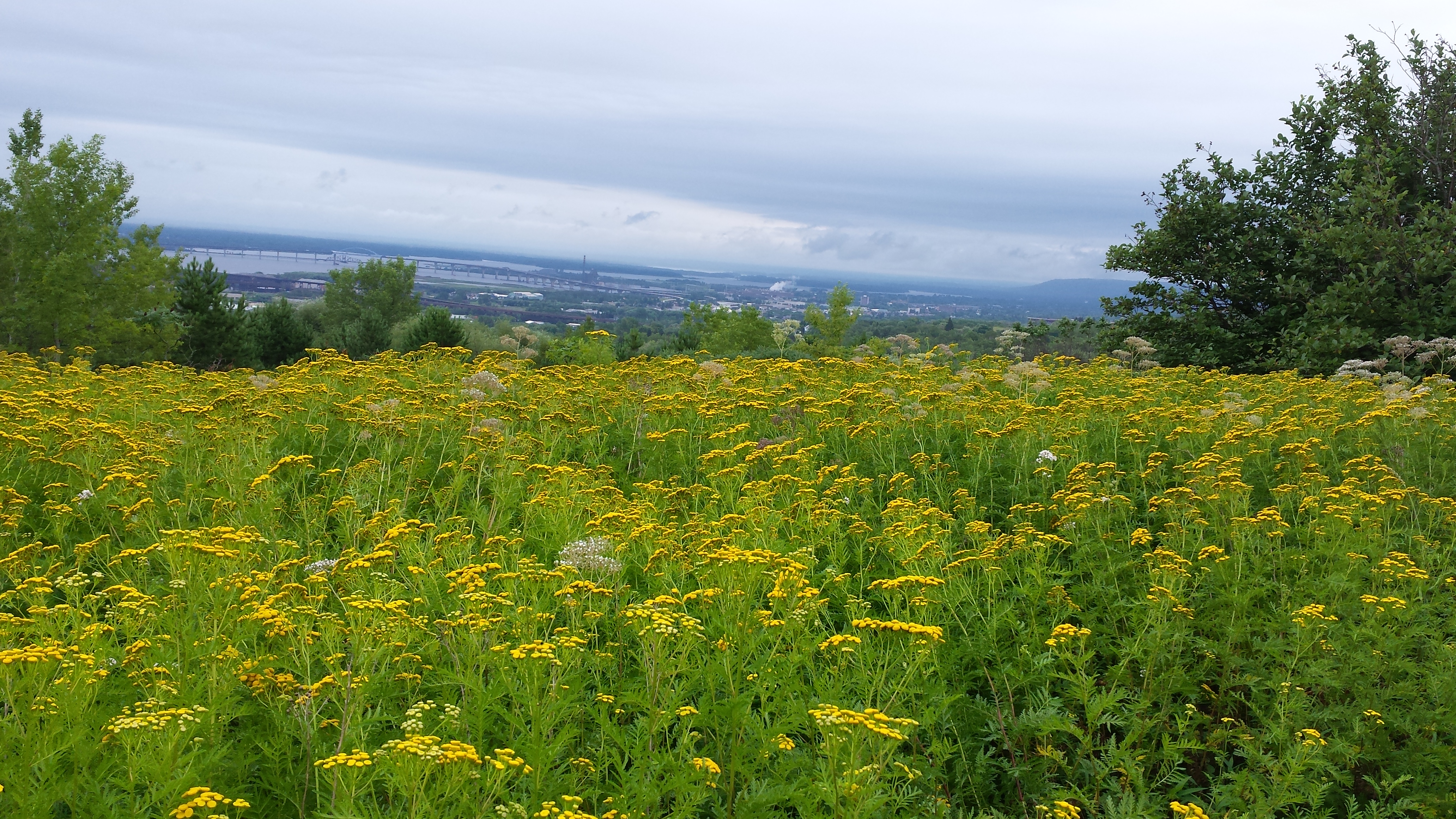
It’s time to head up. Fifth Avenue West is Duluth’s steepest street, but I conquer it with the help of the sidewalk railing, and stop to admire the view down toward the harbor and the DECC, another place where I’ve seemed to practically live at times, from hockey to concerts to other formal functions from high school on up. I hike the crest of Observation Hill, observing that house where my mother stayed when she first moved here ahead of the family seventeen years ago, and come to the Twin Ponds and Enger Tower. The park is busy, but I don’t linger for the view. Instead, I retreat to the woods, and head down the Superior Hiking Trail. Here, too, there is great variety: a stand of pines, an alpine meadow with views of the harbor, a babbling stream to hop across, and a forgotten old basketball court and baseball diamond, slowly being swallowed up by the woods. I cross Piedmont Avenue, then descend through Lincoln Park. As a ribbon of greenery it’s similar to the more familiar Lester Park, but it seems a bit less tamed, a bit more wild, and I have the upper reaches to myself.
Down below, in the heart of the park, there are a handful of picnickers and two fishermen; a pair of young lovers guide each other across the bridge. Then, back out to civilization, and a host of worn-out rental properties, some legitimately blighted. A little festival at a mid-block church apparently requires the presence of three police cars, and “Beware of the Dog” signs proliferate. More than anything now, I want lunch, and the Duluth Grill, that quintessential local restaurant, calls out. Even in the midst of Lincoln Park, a beloved restaurant of locally sourced food thrives, one of a few signs of change here. It’s packed as always, but it’s not hard to find a spot for one at the counter, and I recharge with a salmon burger.
My next steps take me along West Michigan Street, up to the Heritage Arena, my usual winter haunt and another of those signs of life out here. For once, the parking lot is empty, and I only briefly peek into the lobby. I’ll be back here in December and January, no doubt. Then it’s back along the backside of Lincoln Park, all industrial storage space and the like; lifeless on a Saturday. Up above, the gaudy new west side middle school lords over it all. I go underneath the railroad bridges and come to Wade Stadium, the ballpark in desperate need of the forthcoming state aid. The Huskies’ season has just come to an end, though I never did make it out there this year; what this park really inspires are fond memories of the Dukes, that old independent professional team that had a couple of entertaining title runs in my childhood. It’s one good remodeling away from being a real gem.

I step out on to Grand Avenue, the main artery of the west side and a simple summation of the plight of working-class America. It’s not blighted, but there’s nothing to make anything stand out here, either. It’s just uniform, everything of the same age and showing that age. The neighborhood around Denfeld offers a bit more, with the high school serving as the anchor. The houses here could all be in Lakeside, though the streets are in worse shape, and there’s action in the businesses. The girls’ soccer team is practicing on the field, the high school season just around the corner, and there’s a party in Memorial Park, too. Plenty of people come and go in the West Duluth downtown, but no one really lingers anywhere, so I don’t, either. On past the businesses, through the library parking lot, and down into Irving. Here again the housing stock takes a dip downward, though the street is pleasantly leafy, and there’s a herd of screaming children running along. The street suddenly fades into a dirt track through a copse, and I have to skirt a little stream that makes its slow way down to the St. Louis River.
Here is the west side charter elementary school, undergoing some summertime renovation, and I weave a bit more, dodging a kid on a bike and drawing closer to the river, where the houses are newer. The last time I was here, the far end of the Western Waterfront Trail was closed for pollution clean-up; now it’s open again, though I skip the first loop of the trail before joining it on Indian Point. I wind around the campground, breaking into a jog just to show myself I can do it as I close in on 17 miles. A family spends a sleepy afternoon on a pier jutting into the river, while I am accosted by a sudden swarm of mystery insects.

I’m nearing the end. It would be nice to plow on out to Gary, ruminate on the old steel mill and Morgan Park, and end it all by running up Ely’s Peak one last time, but it’s growing late, and I have a goodbye party to throw for myself. The destination for now is the former home of a high school teacher and Denfeld grad who, despite marrying a wealthy lawyer, remained true to the West Side, and had a point to prove about this city’s east-west divide. She doesn’t live here anymore, but it still seems like a fitting endpoint: a grand, modern house on the river, a sign of what might be to come in the redevelopment for the river corridor imagined by Mayor Don Ness. As I look around, I see the vision is already a fait accompli on the lower side of Norton Park: there’s a whole subdivision of nice, newer houses across the bay. Perhaps it won’t be as hard as it had seemed, though this budding urban planner has no illusions about the road ahead. There is much work to be done.
That is a debate for another time, though. My rescue wagon awaits me. I need to head home and freshen up, and after that, it’ll be time for one last Canal Park dinner and one last bit of mild debauchery on the Park Point beach. I’ll miss it, of course. But I’ve seen so much of it that I can’t help but leave satisfied. It’s all there, right before our eyes, and even after eighteen years, there’s always something new to find.

