This is Part Two of a seven-part series. Part One is here.
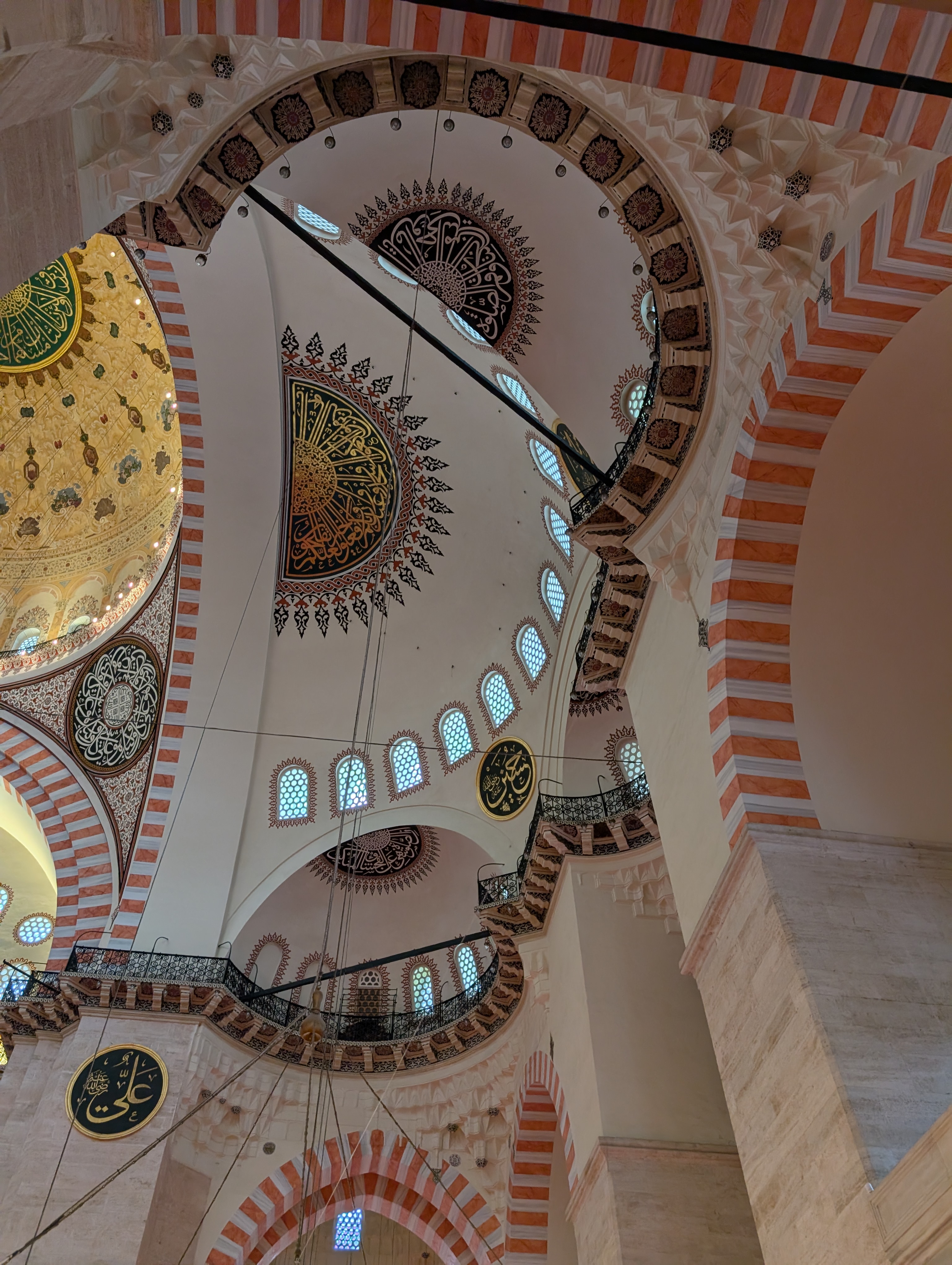
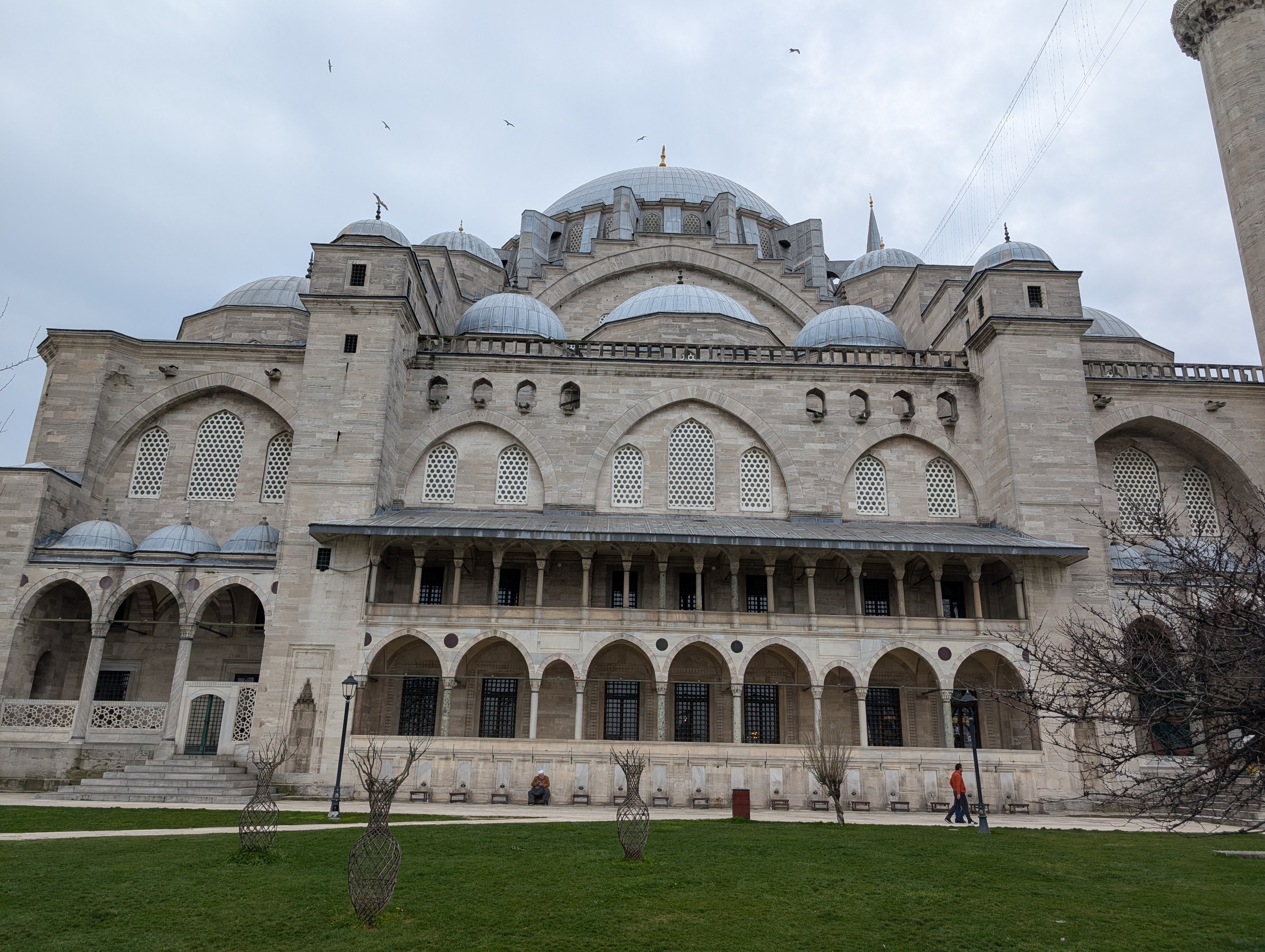
The Ottomans are still the dominant force in Istanbul, a 500-year empire founded by Turks who came out of the east and, under Mehmed the Conqueror, deposed Eastern Rome for good in 1453. The Blue Mosque is the first mosque I have ever entered, and it is not a bad place to start, given its grandeur and intricacy; at the same time, there is a simplicity of form to these Ottoman mosques absent in great Christian churches, with no side chapels or grand altarpieces or recessed saints. The Blue Mosque is more a destination than a place of worship, though: the line of entering tourists is endless, dwarfing the handful who head to the front for prayer, and unprepared nonbelievers are forced into hijabs of shame labeled “Property of Sultanahmet Mosque,” using its official name. I am more contented after my visit to the equally massive but somewhat less intricate Süleymaniye Mosque: here I can observe a dome modeled on the Hagia Sofia and a massive space in relative peace, appreciate the leafy grounds in a concrete-filled city and pause to peak into the tomb of Suleiman the Magnificent, the Ottoman sultan at the empire’s apogee.
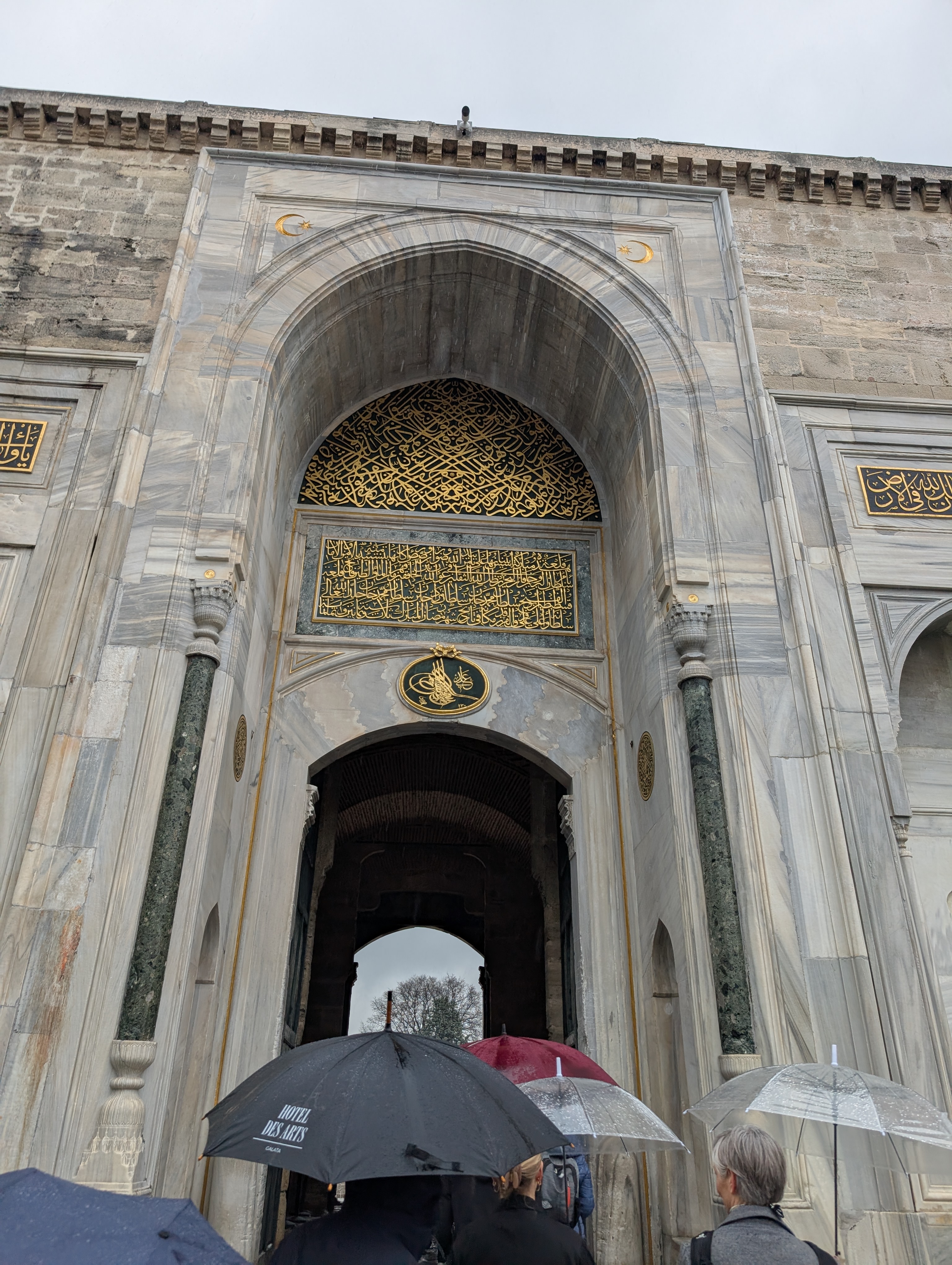
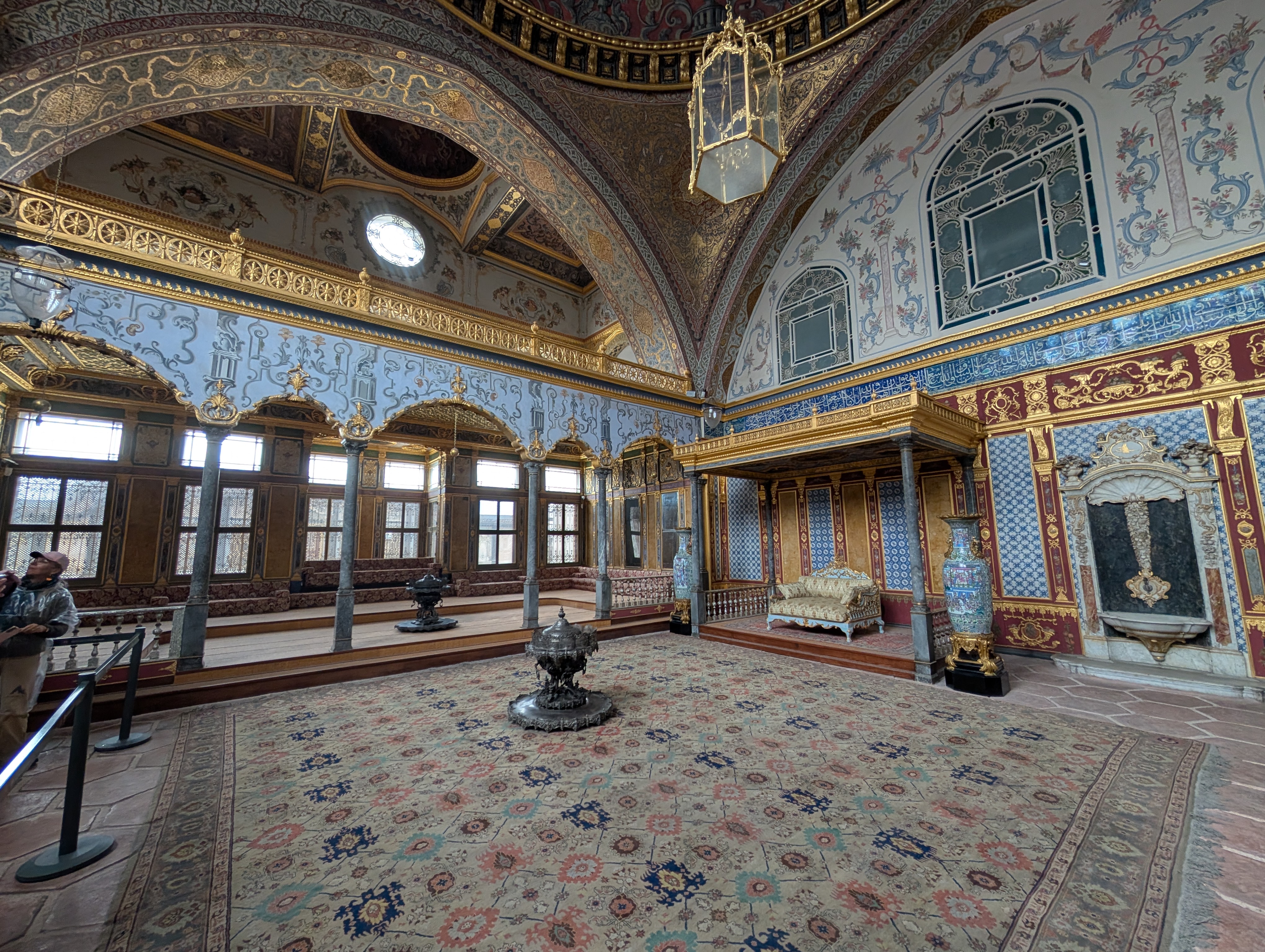
My rainy day at Topkapi Palace has me wondering about the origins of the gutter as a means to channel water and why one of the world’s most splendid empires did not bother to install them. (Later, in Prague, I gaze up at gargoyle waterspouts and wonder if they would violate Muslim bans on idolatry.) But the Ottoman palace for their first 400 years of rulership from Istanbul is a magnificent abode. Topkapi is a blend of glamour and grace, clinging to the hillside and unfolding as an acropolis worthy of Islam’s greatest empire, commanding it while still in the clear shadow of the Hagia Sofia and Blue Mosque, the earthly power nestling below God. Here and there the various sultans have left their own marks, adding on tasteful terraces and antechambers and a library, all of it conceivably master planned even though it evolved slowly over centuries. Here is a cloister for the eunuchs and there are the endless kitchens; in the harem there are spaces for everyone in the ever-evolving royal family. It is an airy space, open to catch Bosphorus breezes and give glimpses in all directions; on a cold, wet day it has a chill feel, but it doesn’t take a crazy imagination to picture fires roaring and luxurious baths filling and the sultan and his harem settling in for comfort. If I were to be gifted an empire, give me Topkapi as my palace.
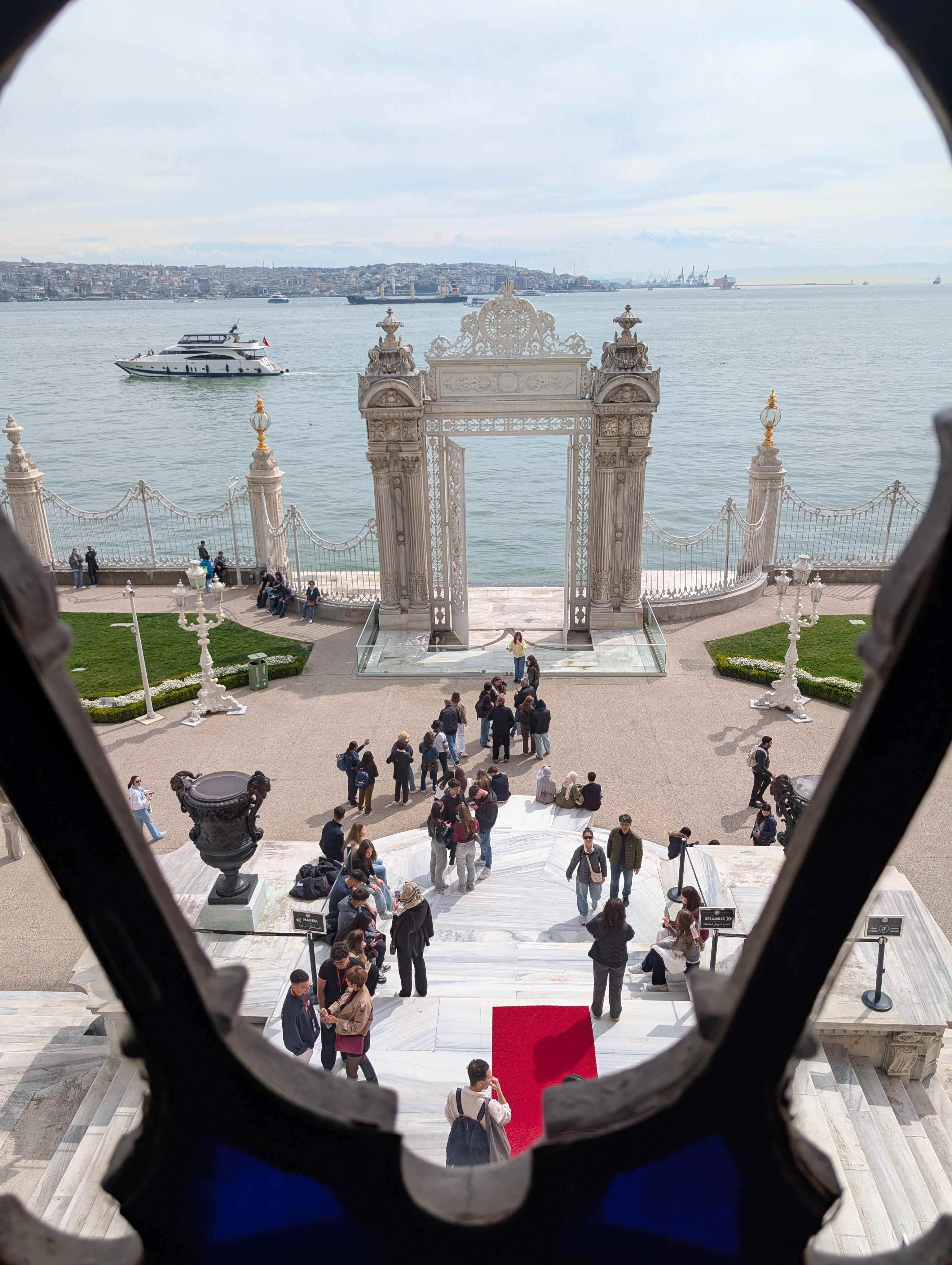
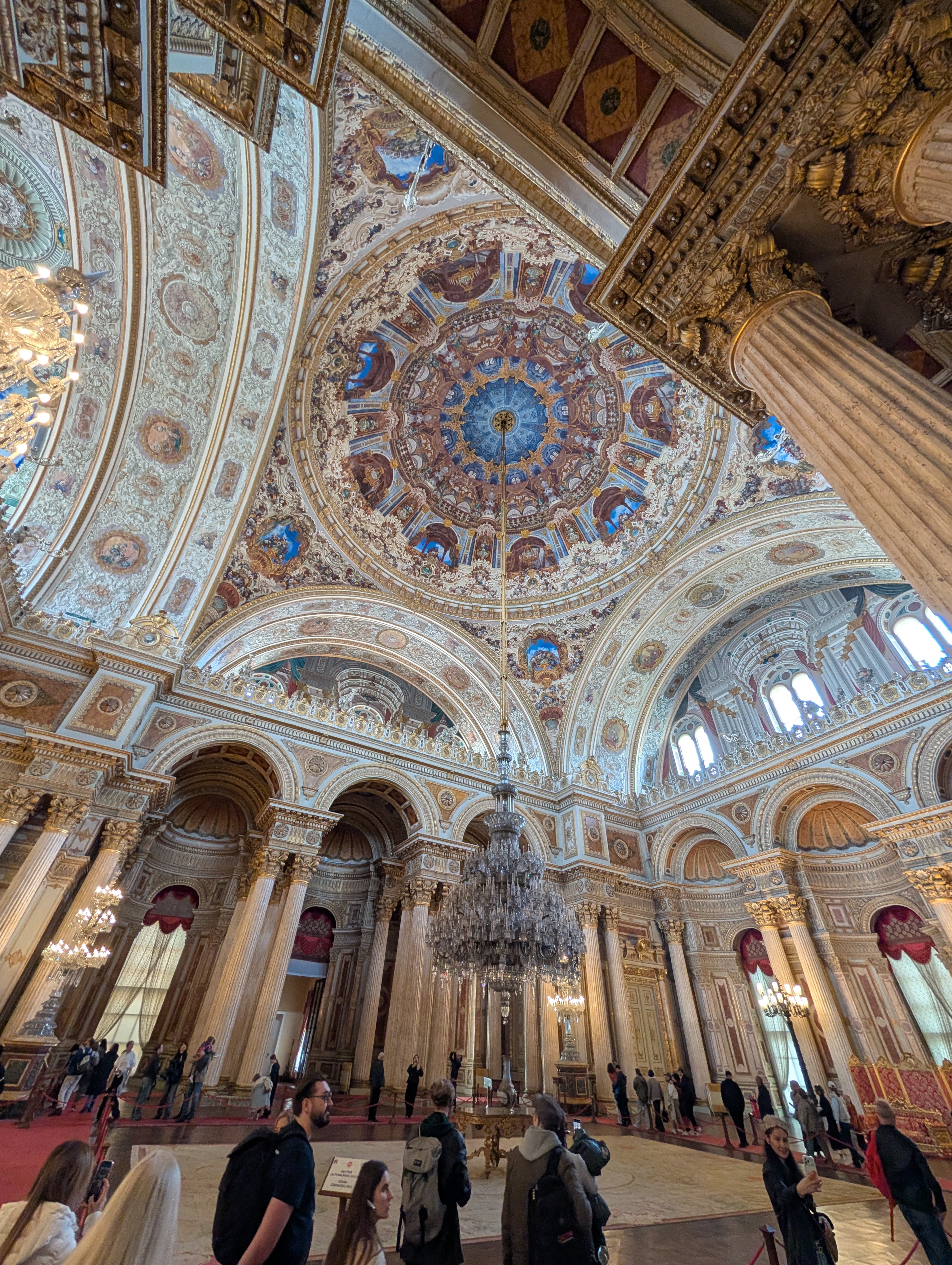
By the 1800s, the fascinating east-west fusion that is Istanbul starts to thin into outright copying. Topkapi’s successor, Dolmabahçe Palace, is stunning, yes, a sprawling complex with graceful gates on to the Bosphorus, and its greatest trait is its embrace of the strait that gives Istanbul its lifeblood. “If the city speaks of defeat, destruction, deprivation, melancholy, and poverty,” writes Orhan Pamuk in Istanbul, “the Bosphorus sings of life, pleasure, and happiness.” But Dolmabahçe’s sequence of gilded chambers reaches levels of exhaustion in time; its attempt at a Versailles left the Ottomans broke. By the 1800s the sultans had their eyes firmly fixed on Europe, and their failures to hold up in that century’s intricate dance between great powers opened the door for intrigue in the Balkans, and, fundamentally, the First World War and its echoes for the next 100 years. Out went the Ottomans in the imperial collapse at the end of the war, and in came the Republic of Turkey.
Taksim Square is the heart of Republican Istanbul, a giant, modernist, and rather austere square (meydan, in Turkish) still somehow overshadowed by the requisite mosque. But even in this monumental state it feels like a center in retreat, a relic of the era when Ataturk swept in with his staunch secular republicanism. Homages to him are still everywhere, but the Islamic populist Erdogan likely has the father of the Turkish Republic turning in his grave. And yet these two Turkish statesmen are two sides of the same coin: there is still an air of imperial grandeur, an all-consuming national project in everything Turkish since 1923.
Since the abolition of the sultanate, Istanbul has grown clearer in its identity and diminished in its global stature all at once. Pamuk, as he beheld his city after Ottoman decline and a series of fires that burned through the old city and the Turkish nationalism that purged the Greeks, Armenians, and Jews, called Istanbul more Western but less cosmopolitan. Perhaps it is only natural that, stripped of its diversity and in the thralls of a lost imperium, Turkey now drifts into a more Muslim state under a strongman undertaking a pale imitation of the sultanate.
This distinctly Turkish reality is most on display in Fatih, the oldest part of the city, where a monumental mosque lurks around just about every corner. Even though it is tourism central, it is also dipped in amber, holding on to a certain identity Turkey wants to project outward. To snake through the Spice Bazaar and the Grand Bazaar is to shrug off a thousand vendors, admire myriad carpets and Turkish delight, jewelry and shawls, soccer jerseys and leather goods, and endless supplies of handicrafts. Twinned scents of spice and cigarette smoke hang over the narrow corridors, and for someone who is somewhat exhausted by a trip to Target, the claustrophobia sets in before long. My guide around the bazaars is a book by a Grand Marais resident named Ann Marie Mershon, though I can’t bring myself to pull out the guidebook every few blocks and settle for a general meander past stalls and mosques and the hans that form the trellis upon which contemporary Istanbul grows.
With such tight quarters all around, I look for little escapes. In Istanbul, meydans have fewer defined lines than European plazas, edges blurred and little in the way of the bars or even cafes one might expect. Instead, they are dominated by mosques, whose grounds offer sanctuary from the frenetic activity beyond their shadows, and free bathrooms to boot. After several days of wandering Istanbul I see how these houses of worship give the city a chance to breathe. The logic of Islam is never really subtext; everything is part of a project, a belief in a path for harnessing life amid chaos and marching toward greater glory. Regular calls to prayer echoing from competing minarets make sure even a relatively secularized city like Istanbul can’t forget these demands.
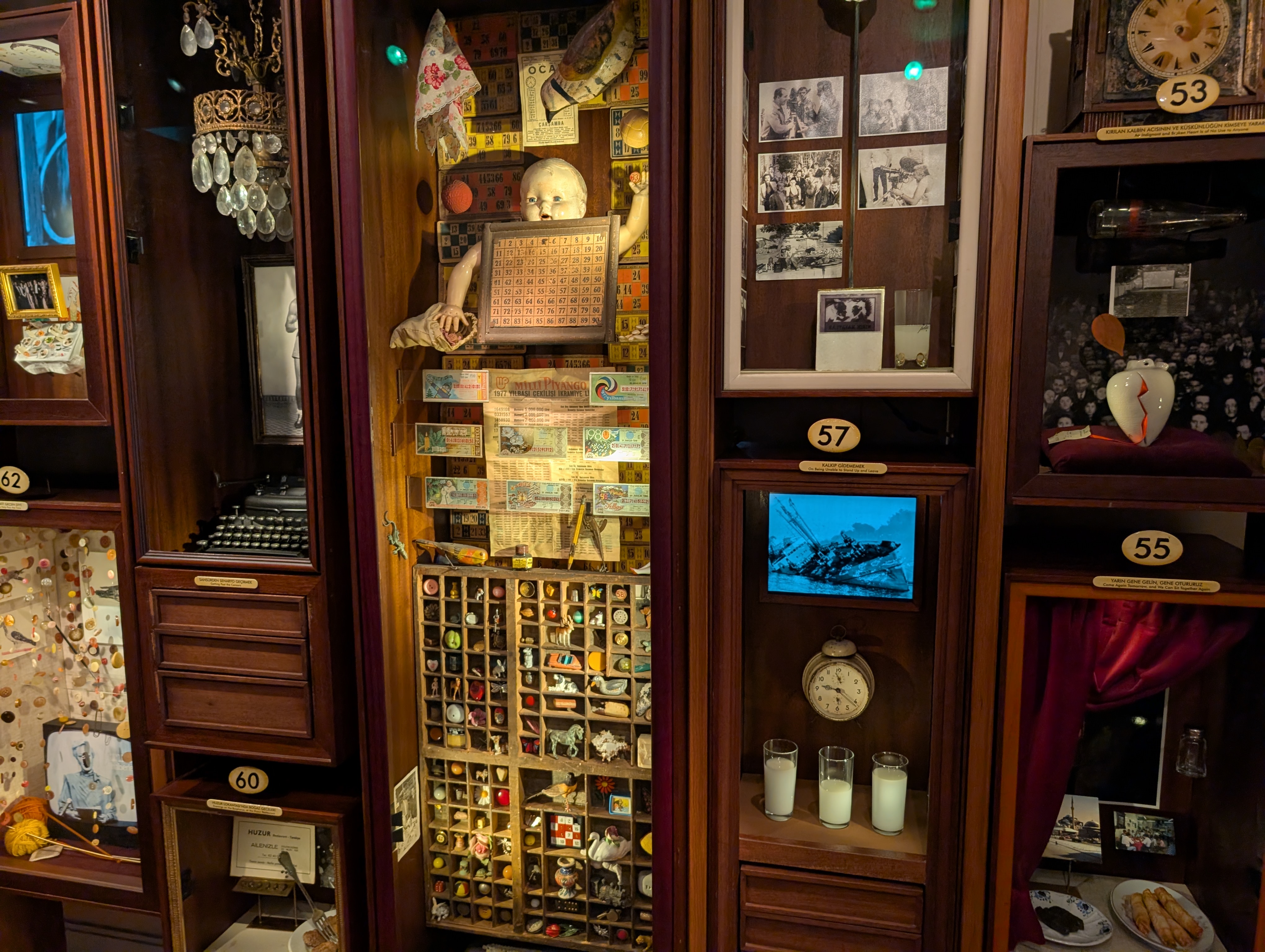
Pamuk is my Istanbul whisperer, but his city is a narrow slice of its existence: the Beyoglu district, settled by the Genoese in Byzantine days and a cosmopolitan hub basically ever since. Both Pamuk’s Istanbul and his Museum of Innocence, a physical accompaniment to his novel of the same name with 83 little displays matching the book’s chapters, are homages to life for the midcentury Beyoglu upper middle class of an emerging nation-state, the people who could best hold together a compound reality of Turkish nationalism and Euro-curious cosmopolitanism. The museum is a delightful collection of little vignettes that encapsulate one little place at one specific time, Pamuk’s statement on the stories worth telling in a museum. Since that midcentury era he captured Beyoglu has decayed and now rebounded, a gentrifying and cool landing spot that feels most comfortable to a Western outsider. In these districts the hijabs disappear and the complexions grow lighter; the liquor flows more easily, and no one is trying to sell me a rug. Most of my fellow guests at the Museum of Innocence are stylish twenty-something Turkish upper-class girls listening raptly to the audio tour, some clutching Pamuk’s novels. Now here is a culture I could enjoy.
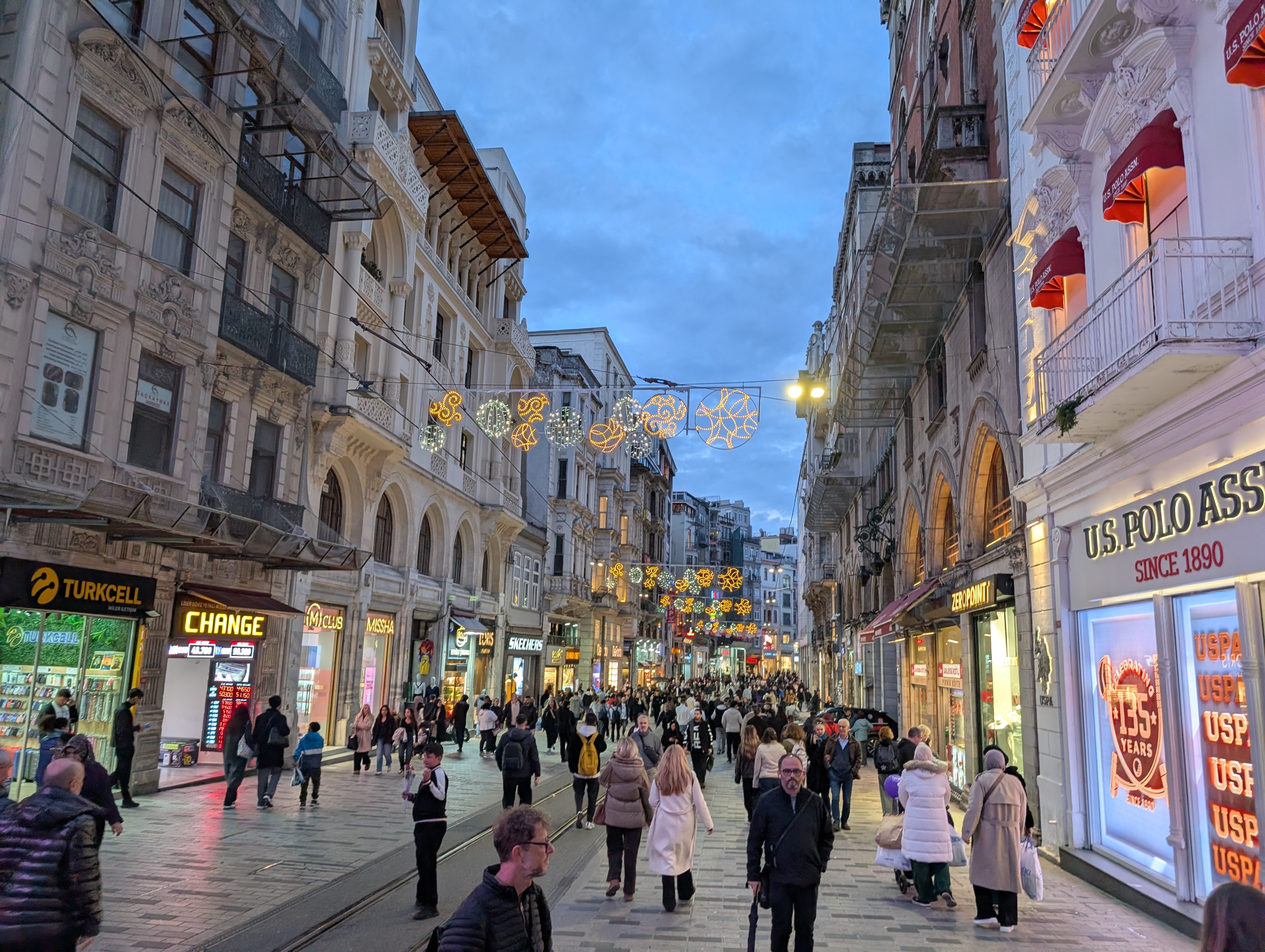
Unlike Europeans, the Turks punched relatively few grand avenues through narrow alleyways of their central districts, and there is an endless allure of going around corners to find a relic of Byzantium or the sultanate or another themed shopping street (here some power tools, there some electronics) or a few quiet stretches with creaking old wooden buildings barely clinging to their verticality, the ubiquitous stray cats slithering about. The exception is on Beyoglu’s Istikal Caddesi, a (mostly) pedestrian shopping street with a cable car that meanders along the top of the hill. Istikal has some of the inevitable glitz and global brand sameness that always comes with any such destination street, but it also pulses with the European-oriented beat of the city, a through line since its founding.
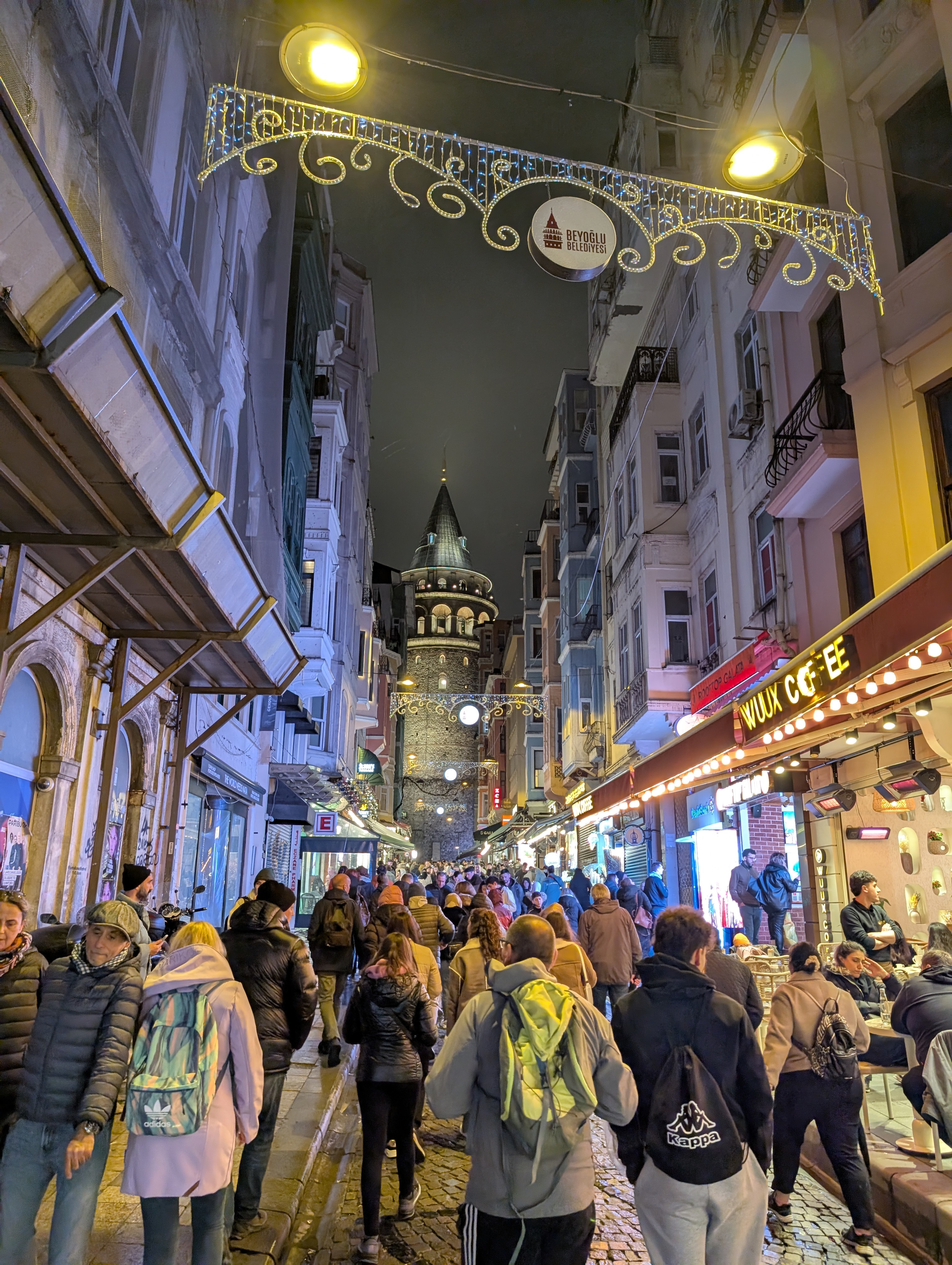
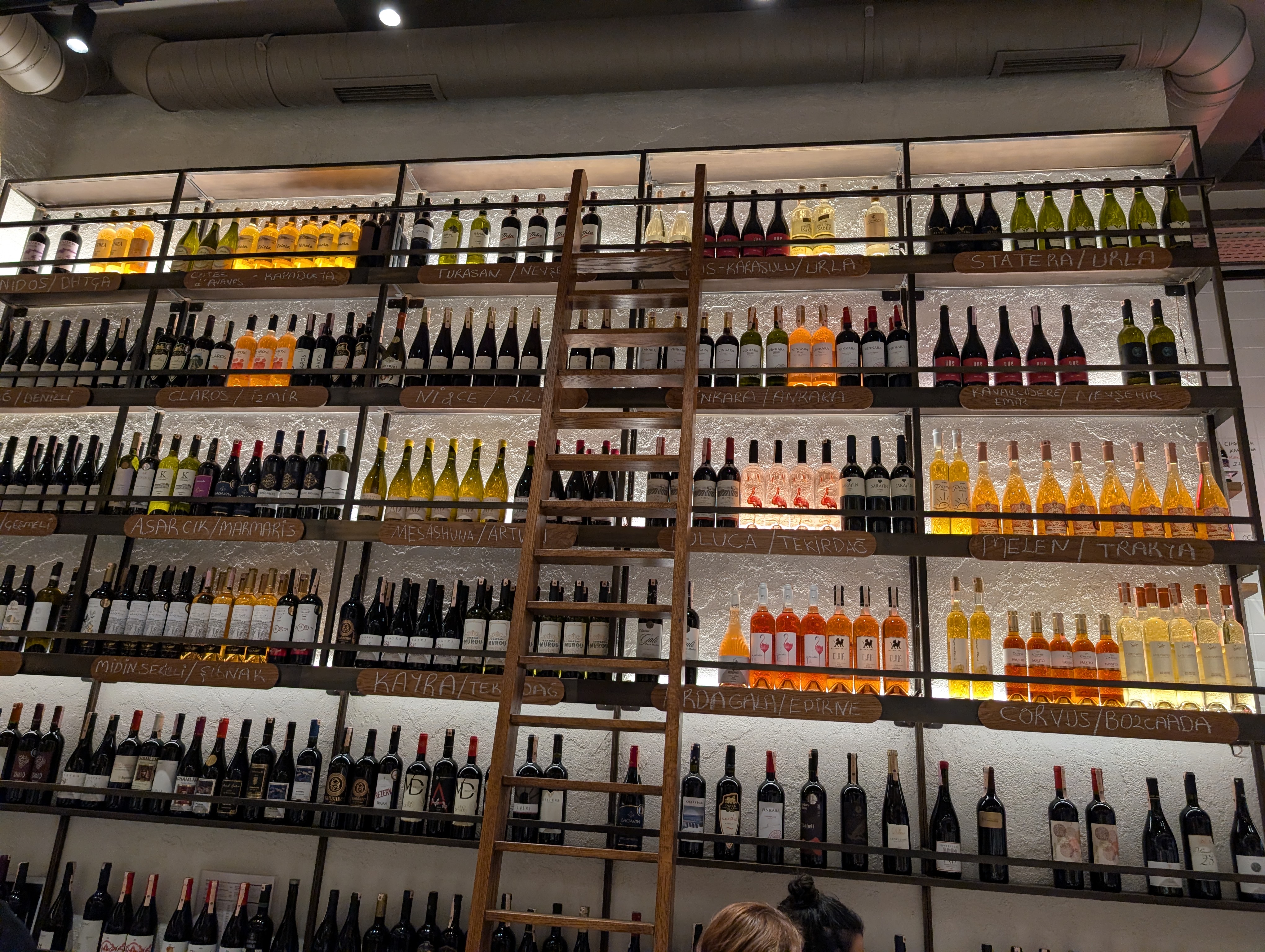
The Istanbul craft beer scene is a work in progress, seemingly confined to expat operations, but a Turkish wine bar just off Istikal showcases a fine art off limits to much of this nation’s population that nonetheless well exceeds expectations. Perhaps my favorite site in the modern city is along the dessert-serving street below the Galata Tower, lit up and full of life like a good nightlife corridor of any great city but still authentically Turkish in its focus. At a bar recommended by an Istanbul-savvy friend I watch the Turks edge Kosovo for a berth in this summer’s World Cup, and frankly expected more flag-waving and honking horns than I got. Latin America this is not.
No, this is Istanbul: forever its own thing, perhaps the city that, more than any earth, captures all of humanity’s competing interests and hungers. Toward faith and worldly power, between natural beauty and centuries of accumulated urban form, a national culture and a home in the world. It may tip one way or another with the times, but it will go on, because it is a monument built both to and upon those grey zones we all occupy. After plowing through all its sites over four days, I sink to a rest my aching legs at a fountain beneath the Galata Tower and grin at the pace I’ve set so far. On to the next stop.

