This is part one of a seven-part series.
My charge to myself over two weeks across late March and early April 2026: travel in through the Sublime Porte and out through the Brandenburg Gate. Meander across Europe (with an Asian cameo) for two weeks. Istanbul, Budapest, Vienna, Prague, and Berlin, all in quick succession. This trip is a push outward, away from languages I speak and the now beloved comforts of the western Mediterranean, to the very borderlands of the West itself. I undertake the venture alone, to better gauge where this thing I call myself is right now.
I can impose certain narratives on why I go on this journey, but in the end my destinations are a bunch of cities that are reasonably close to each other that may be able to meet my appetite in the spring of 2026. This trip idea survived the cut as others proved difficult for one logistical reason or another. I could say this stems from a unique restlessness; the past year has been an unspeakably weird one, professionally and personally, and it invites certain questions. But it’s just as much the case that I have more of the means to scratch an eternal itch now, and so I do.
I start on the east end, against the grain of old Orient Express fantasies; somehow it was dramatically cheaper to go this direction, but as the trip goes on, my ordering grows on me. I dive right in to the most radical destination first, settle into comfort and an easier pace as I tire. This journey follows a line through the history of Europe, from its pivot eastward after the fall of Rome on through Habsburg Austria and then into modern Germany, ground zero for the twentieth century’s greatest and grisliest dramas. Each stage tells a different tale.
I whet my appetite during an eight-hour layover in Amsterdam. A seamless trip through customs, a 15-minute train ride to Centraal station; walk out the doors and, suddenly, it’s Europe. I saunter along bustling shopping streets on a brisk spring day and then an afternoon strolling the canals. I was last here twenty years ago, as a teenager, and found Amsterdam edgy with its legal weed and red light district. Now it seems the edge has caught and surpassed the Dutch capital, and it is just a charming European city. It’s time to venture out to a different edge.
No city has straddled the line between East and West as much as Istanbul. It sits astride two continents, has been one of the great seats of both Christian and Muslim power. It was arguably the center of world for 1,500 years between the christening of Constantinople and the Ottoman Empire’s decline; even in late-stage Byzantium, after its sacking by fellow Christian crusaders in 1204, it remained a golden relic, the ultimate prize for the Turks as they tightened their vise. Today it tips between the first and third worlds, a bustling metropolis of 16 million, the capital in all but name for a state that is trying, stumbling, to understand how a glorious past can fit with a respectable but uncertain present.
I stay at the south end of the Beyoglu district in the Hotel Nordstern Galata, a grand old thing from the Ottoman gilded age. My room has a vaulted ceiling and extensive filigrees, and a rooftop terrace for breakfasts overlooks the Galata Bridge across the Golden Horn and the old city beyond it. Lively restaurants are up the hill by the Galata Tower, ferry docks are a two-minute walk away, and a tramway that heads straight for the Fatih district, home to the city’s greatest Byzantine and Ottoman wonders, is across the street. It is the ideal launch point for someone prone to wander, and for all Istanbul’s great sites, some of my favorite parts of this visit come from simply strolling about.
I begin my tours of Istanbul on a very wet day, which gives a character to the “melancholy of the ruins” Orhan Pamuk describes in his own wanderings of back alleys in Istanbul: Memories and the City, the Nobel laureate’s biography of his hometown. This is a city that has suffered a great fall from grace, and out of that picturesque ruin, writes Pamuk, “history has endowed it with an accidental beauty.” I gaze up at crumbling terraces, smile at the cats perched atop cars, peek down damp, chill side streets at Turks who gaze back, wondering if this white boy is lost. (He is not.) Istanbul is short on squalid poverty and has quality public transit; nowhere in my wanderings, which at times stray off the designated tourist routes, do I ever feel unsafe. But it also has that layer of chaos absent in the West, encumbered by both its deep historical trappings and the more recent puttering pace of development, spared the worst of the instability consuming its southern, eastern, and even northern neighbors but still understandably pulled toward the realms of its religious and ethnic roots as much as it is toward that cultured European dream it has sometimes sought out as well.
Now and then melancholy fades away, though: Istanbul can be resplendent, and never more so than when on the waters that feed its eternal power. I cruise the Bosphorus on ferries that snake their way through the steady traffic between the Mediterranean and Black Seas. By the second afternoon the rain and clouds have faded away, and the strait shimmers in the sun; a soft sea haze looms over the great mosques and gifts them a silvery sheen, and as the sun heads downward, the Golden Horn lives up to its name. I set foot in Asia for the first time and agree that it is, in fact, very crowded, though if I lived here I too would crowd down on a waterfront promenade on an afternoon like this.
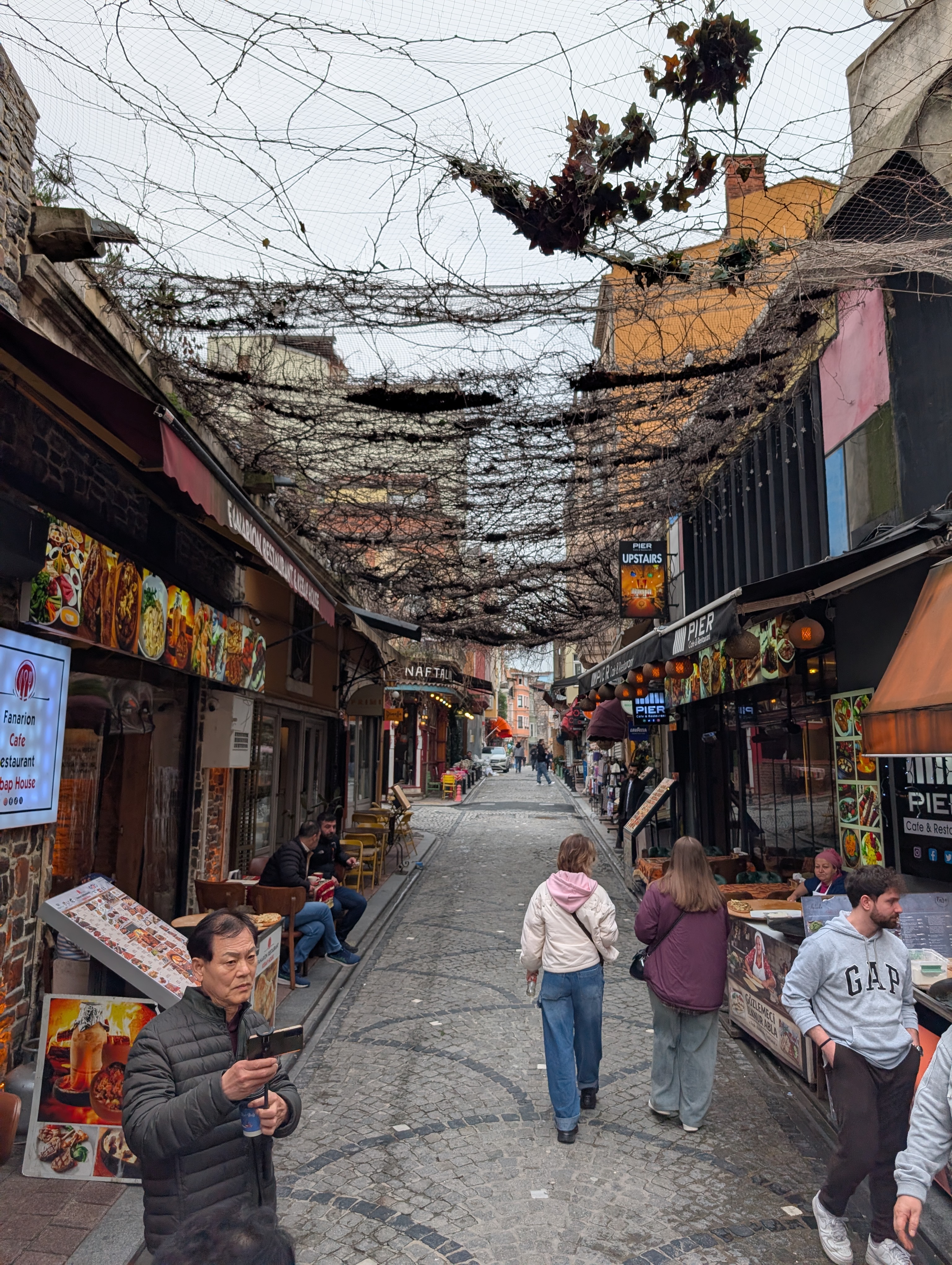
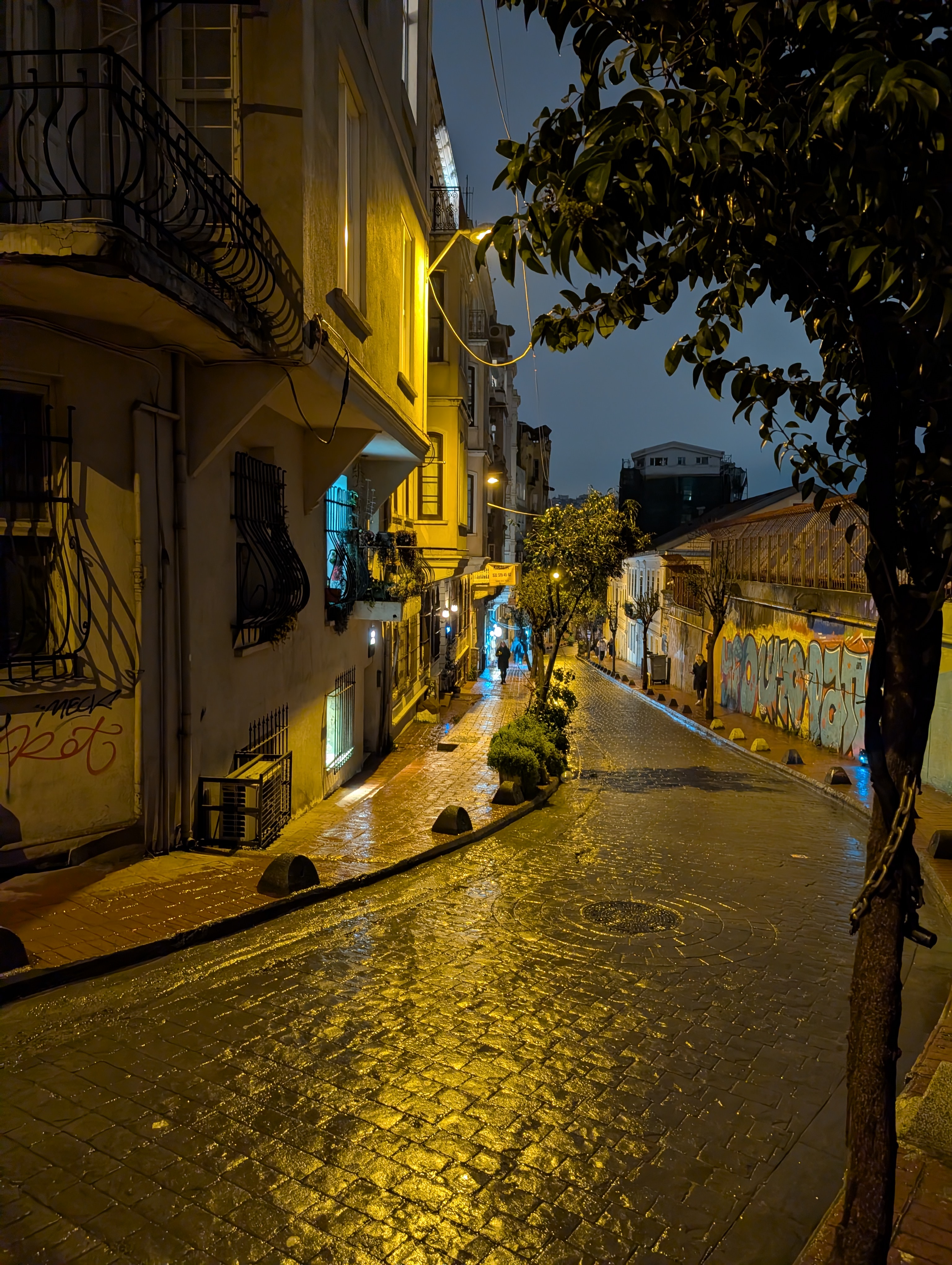
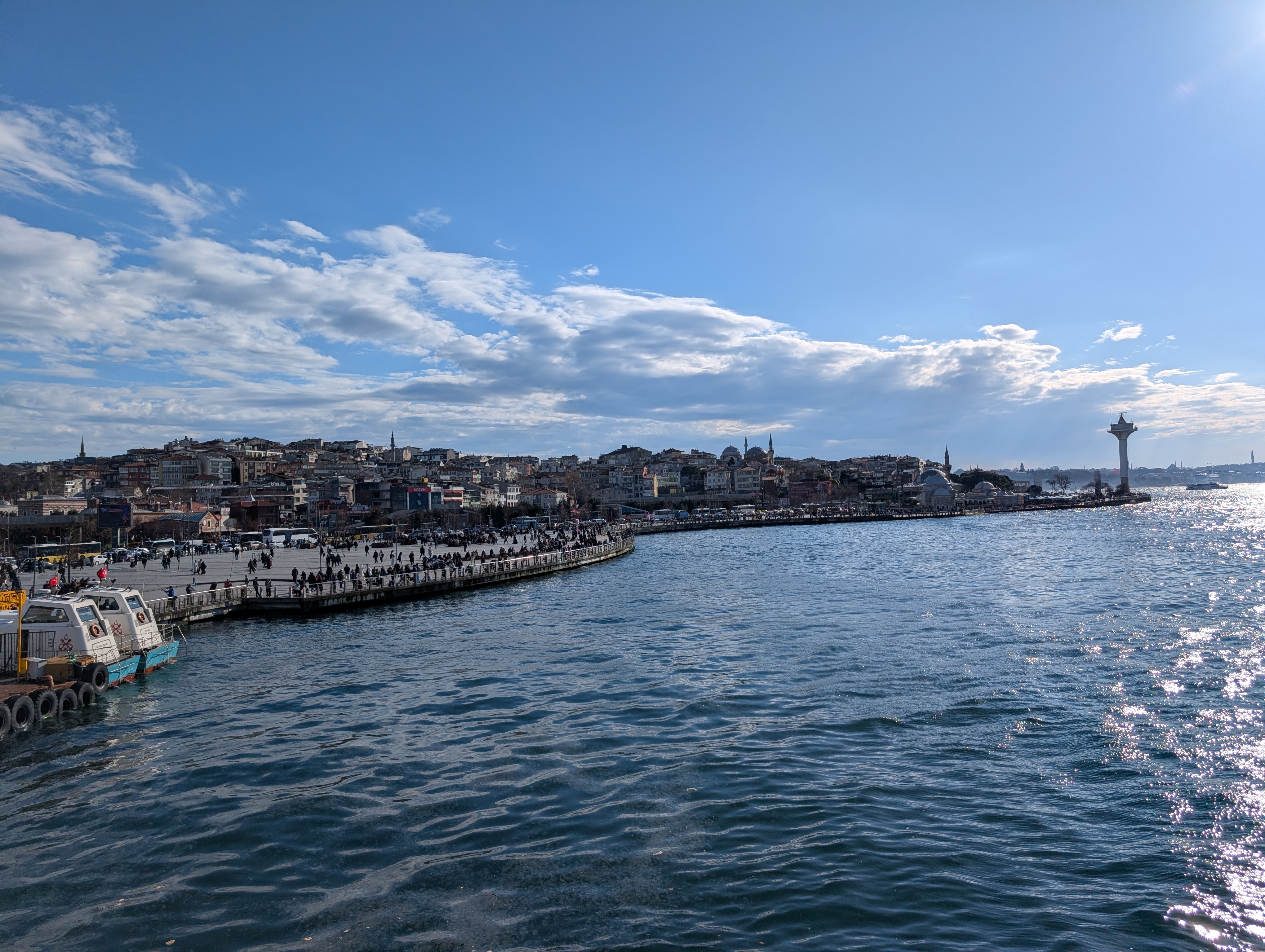
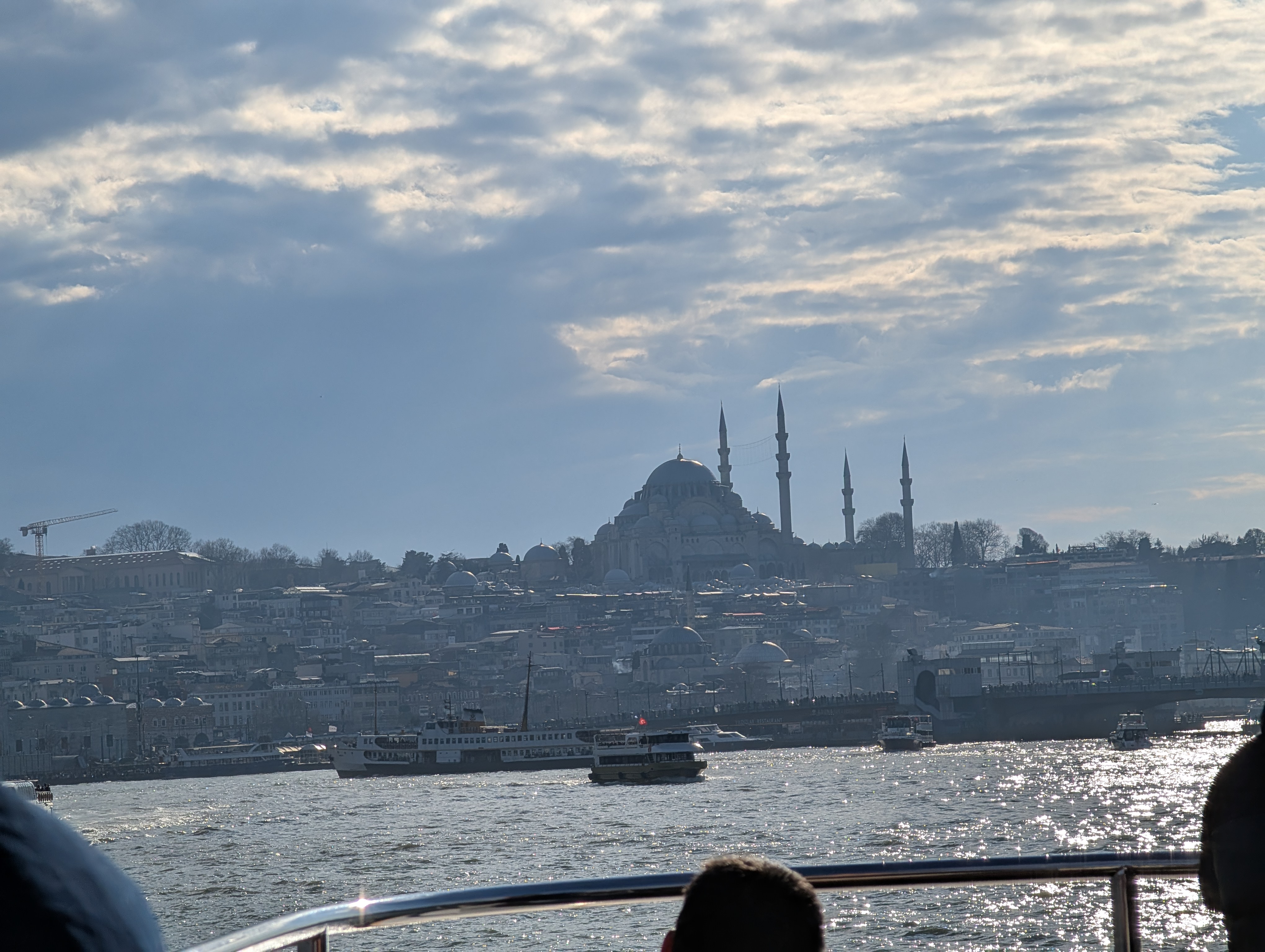
I’ll take my tour through Istanbul chronologically. The Byzantines have, somehow, become the lost empire that most allures me. It is a fascination born on a hot summer day in Ravenna with a visit to the mosaics of San Vitale, and from there I have found myself diving down Wikipedia pages on the empire that is Western history’s forgotten bridge, the tie that binds between the Greeks and the Romans and on to the Ottomans and the Russians. For a thousand years after the fall of Western Rome, the eastern empire lived on, its line effectively unbroken in these Greek-speaking Christians. Their power waxed and waned but their imperial longevity was remarkable; perhaps the longest ever in years after Christ, depending on how one counts one’s Chinese dynasties. On their way out the door they planted the seeds of the Renaissance in Western Europe and the rise of a Slavic identity in the east, and even Mehmed the Conqueror, after vanquishing them in 1453, assumed the title of kayser-i rum, as did every Ottoman sultan thereafter. They deserve a bit more love.
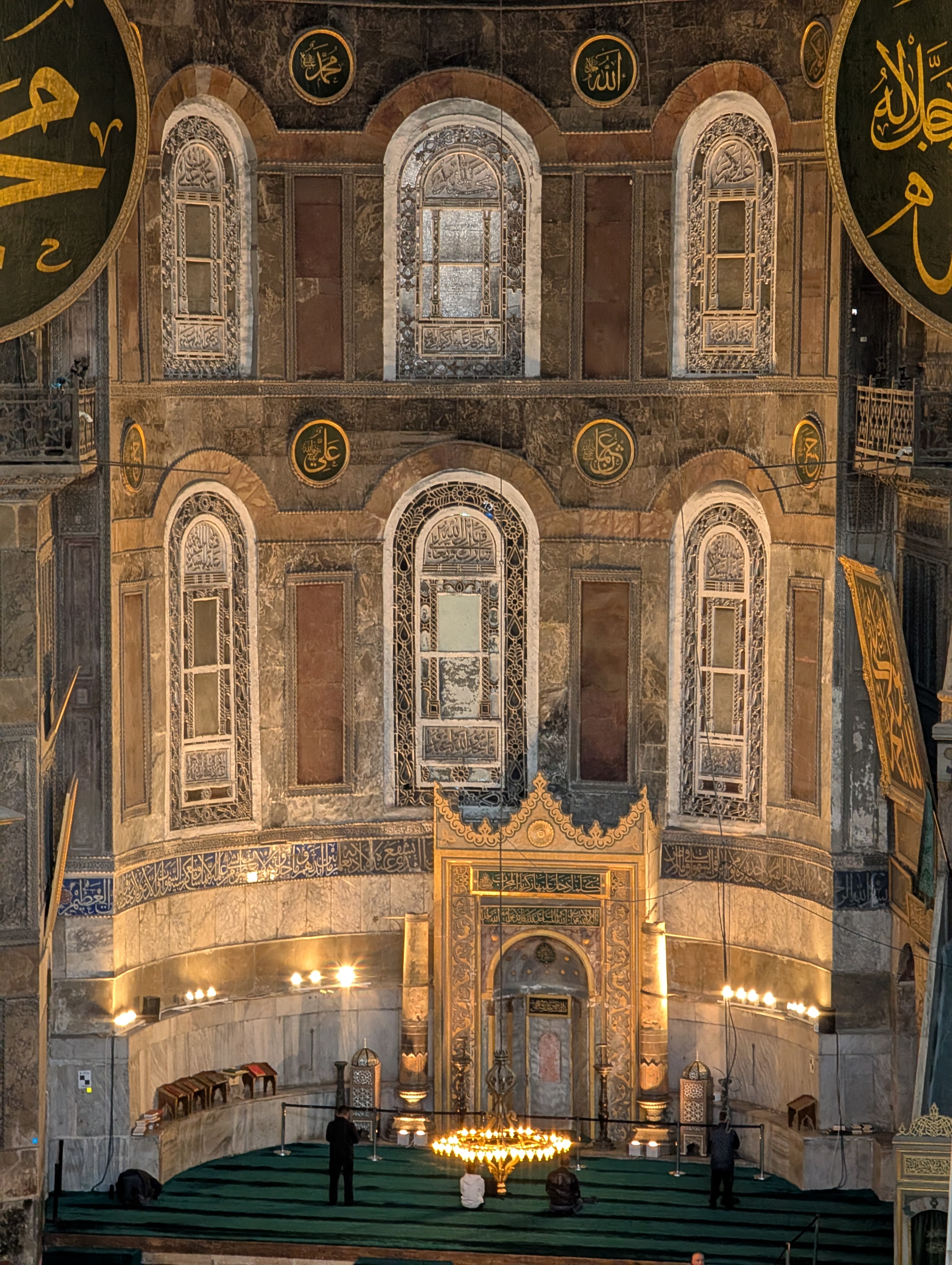
The Byzantines’ great architectural triumph is the Hagia Sofia, Emperor Justinian’s temple that aimed to outdo Solomon. Today, I mutter, it is the Hagia Scaffoldia, its great floating dome and two of four minarets surrounded by supports, a massive temporary support structure extending up the central nave to the blocked off dome. President Recep Tayyip Erdogan’s re-designation of the great house of worship as a mosque after a period as a museum consigns us tourists to the second level, where we make a slow circuit of the gallery and gaze up at what we can see of the ceiling. Mosaics and brilliant frescoes, part lost to time and anti-iconoclasm of both Christian and Muslim varieties, peek forth and hint at past reaches toward heaven. Even in this constrained state it groans with the weight of history, the accumulated ascensions of emperors and sultans and holy wars launched from this site, the world’s largest house of worship for 600 years. Awe is the only appropriate response.
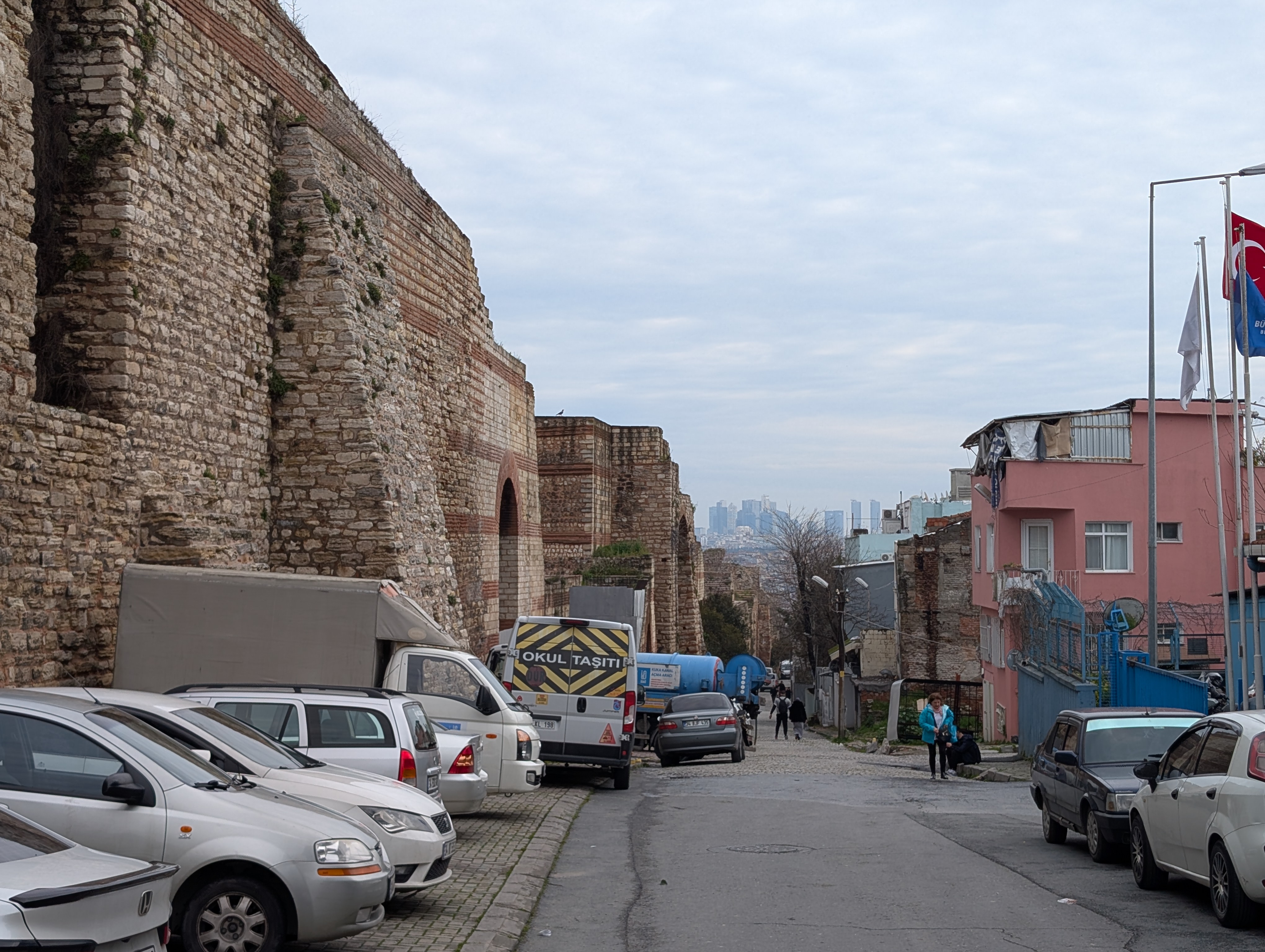
Look around elsewhere in Istanbul and the Byzantines linger. Below the acropolis sits the Basilica Cistern, an echoing cavern of columns over a dimly lit pool. Further west, the Theodosian Walls are arguably the greatest defensive structure in history, never breached even by the monstrous Ottoman cannons. (The only conquests of Constantinople were mustered by the Fourth Crusaders breaking the otherwise effective defensive chain drawn across the Golden Horn, and the Ottomans undertaking an arduous haul of ships over land to drop them into the Golden Horn behind the chain.) Even now much of these great defenses remains intact, still separating the original Constantinople from its later additions. A snippet of the old Byzantine palace complex along the walls at Blachernae, the Palace of the Porphyrogenitus, has only recently been restored. On a whim, I stroll in and climb the Theodosian Walls for a commanding view of the old and new cities, and learn how these ruins turned to kilns for pottery and fine craftsmanship in the Ottoman years.
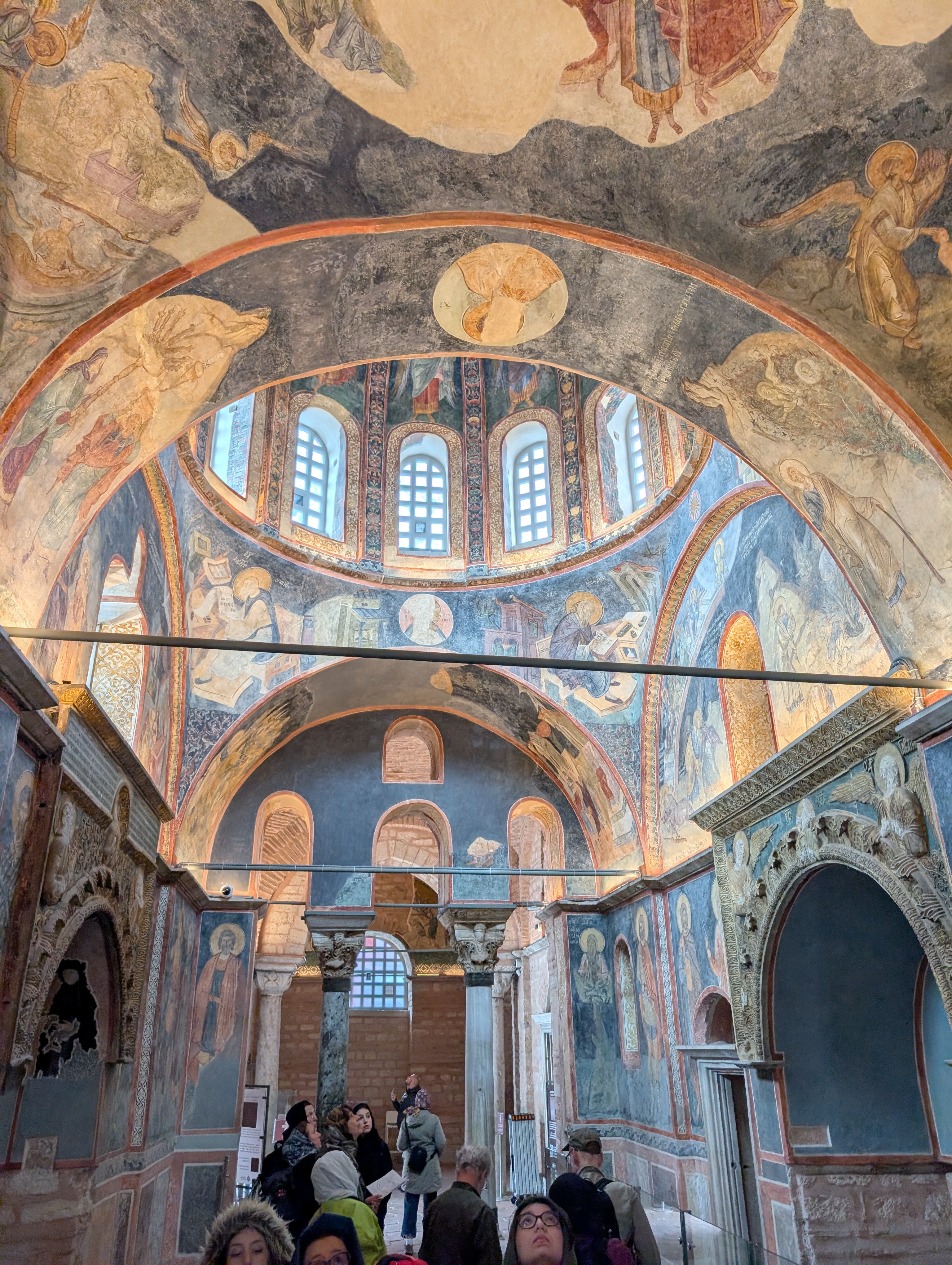
In the shadow of the Theodosian Walls is the Chora Church, identifiable as Byzantine by its red brick walls and buttresses, and its wealth of frescoes can be measured both in volume and in intimacy. Like the Hagia Sofia, the Chora has been converted by Erdogan and is now the Kariye Mosque, but here us nonbelievers are still allowed into the back of the nave, and I can sit on the carpet and look up at the handful of frescoes (with screens that come down to cover the icons during services) and pet the stray cat that wanders up and purrs in my lap. Perhaps my favorite day on this entire trip is this one, where I spontaneously wander Istanbul’s back alleys to find these old Byzantine gems.
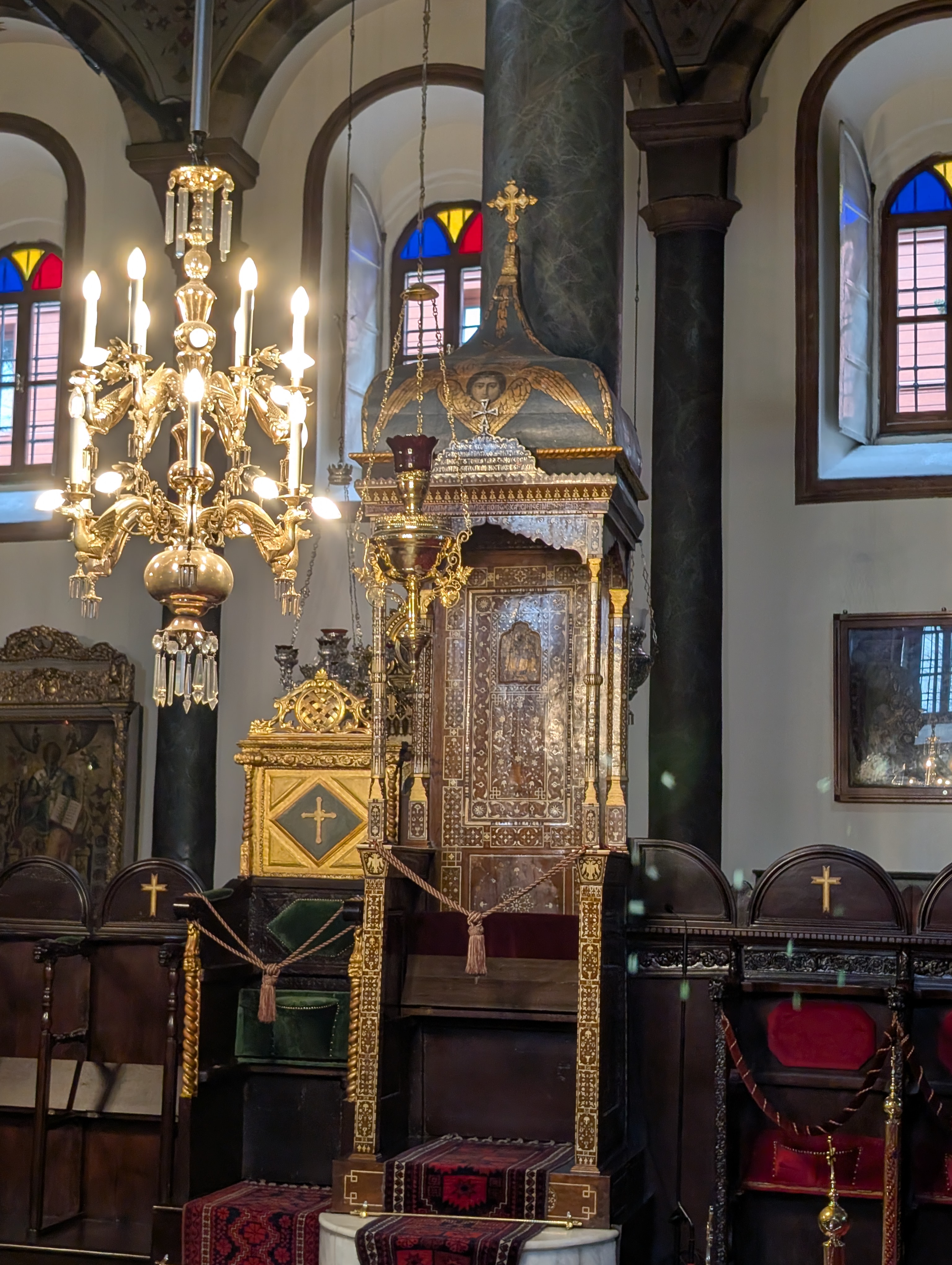
Byzantine Constantinople is not fully dead, either. A block behind the thoroughfare along the Golden Horn in the Fener district, easily missed by the unfamiliar, is the Patriarchal Church of St. George, home to the seat of the Ecumenical Patriarch of Constantinople, the nominal head of the Orthodox church. The current structure is only 200 years old but oozes history, has the feel of living, breathing space that hides secrets, some mysterious truth deep within its liturgy. Here presides Bartholomew I, head of the third-largest church in the world, though his defense of Ukraine has caused a schism with his Russian counterparts. I saw Bartholomew speak when I was an undergraduate, and the gravity of his remarks has lingered, even after 15 years. The Patriarch is a throwback leader who remembers the postwar years, knows loss and the value of fragile cooperation across cultures. Now that I have seen Istanbul, I understand why the Patriarch holds such things so deeply.
Yes, my Istanbul post is so long it had to be split into two. Part Two is here.
 A Patient Cycle