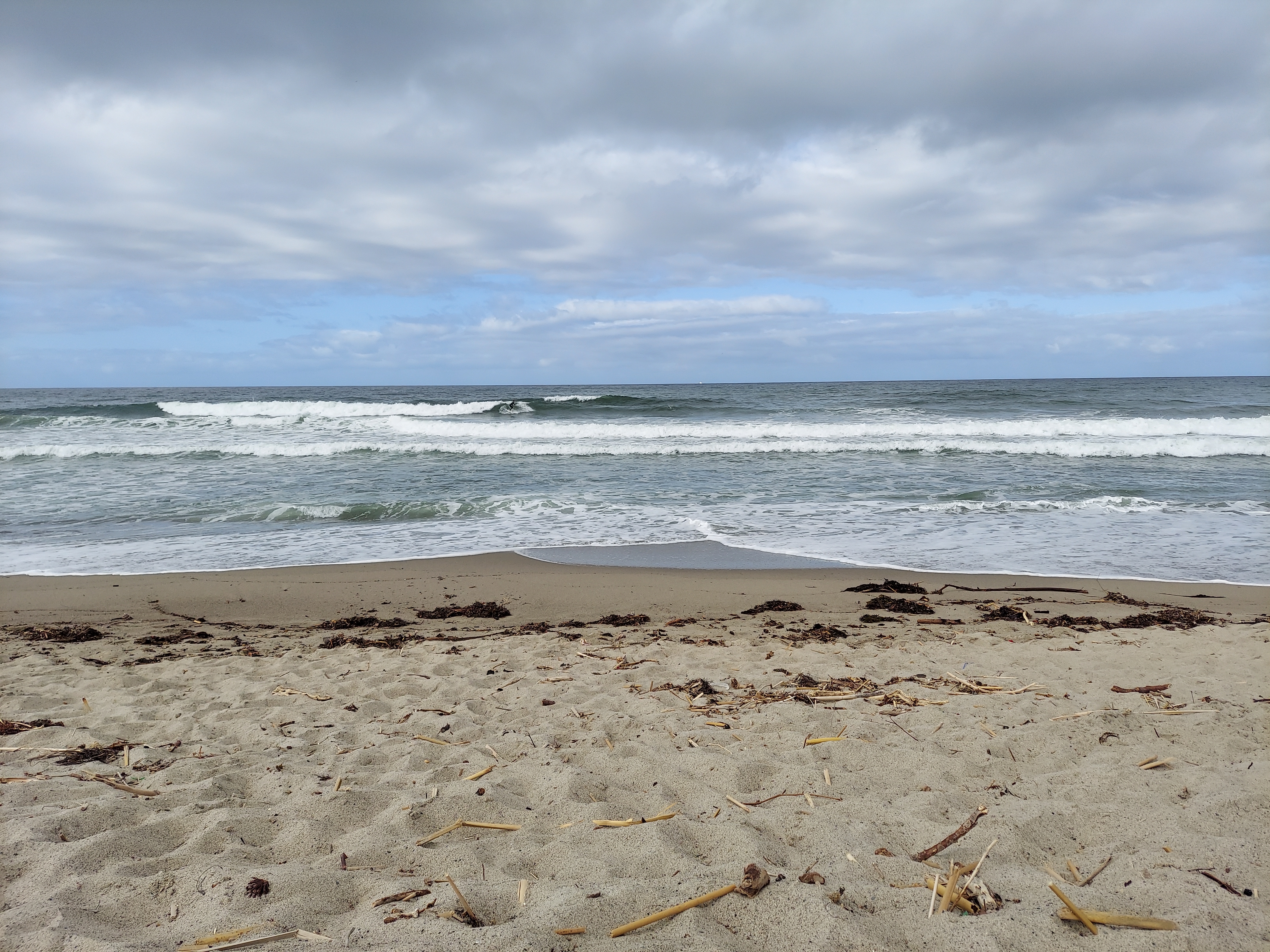
The Price of Commitment

In the late stages of Duluth East’s dismal 2024-2025 hockey season, I commiserated with a dad with whom I watched many games that year about the state of the program. The dad listed off a heap of players who were no longer with the program and sighed as he watched his own kid, one of the relative talents on a bad team, struggle to do what he could. “This is what we get for being loyal,” I lamented.

It was a strange, spontaneous comment whose bitterness has stuck with me since. Why was I so down? Loyalty is a value I hold deeply, both to people and to place. Such conviction comes at a price, and the tests of those things held most deeply reveal true character. People who know themselves, writes Joan Didion in “On Self-Respect,” “are willing to invest something of themselves; they may not play at all, but when they do play, they know the odds.” In that momentary lapse in a hockey arena, I forgot my respect for the odds, forgot that certain sacrifices are worth it if we truly believe what we say we do. I hope not to do so again.

Hockey was among the least consequential areas where I felt the price of loyalty this year. I fell deeper into a relationship than I have in years, and then I fell out of it, largely because my ex and I could not reconcile ourselves with the quasi-spiritual tie I feel to my hometown, where she does not live. I enjoyed my time with her, but I had to deal with the consequences of questioning one of my most deeply held articles of faith, and that faith won. At work, I dealt with the whims of powerful people beyond my circles of influence that have battered my employer; I got to be the executioner for a layoff. And yet, after fighting through the worst of that, I have found some of my past career ambivalence overrun by a deep commitment to the work I do and the places that I do it. I have come out of this year like a soldier who has been to war: bloodied, bruised, saddened by losses, and more committed to my core loyalties than ever.

As I worked through new life challenges, I realized what a hardened soul I can be. “You’re going to find that you are very set in your ways,” a friend who entered a long-term relationship with her now-husband in her late 30s warned me as I entered mine this year. She was spot-on. I am set not only in certain habits and what gets on my nerves, but also in how I manage conflict. I can dither, take too long to say important things, but when I make decisions, I do not second-guess them. I am not so bold as to claim I always make the right decisions, but I think I make the best decisions I can make for myself in the light of what I know, and that knowledge is enough. Again, from the Didion essay: “To have that sense of one’s intrinsic worth which constitutes self-respect is potentially to have everything: the ability to discriminate, to love and to remain indifferent.”

I am more confident than ever that I have that self-respect. I can discriminate with some confidence, even when I know it will hurt to do so. I know the tools I need to find a necessary level of inner calm. With that calm, I can accept that I have given everything I could, note any mistakes for future reference, and solider on. Explained poorly this thought process could feel heartless, but it is sustained by a flame burning beneath me, a restless fire of life that refuses to dwell, refuses to lapse into too dark a place because there is too much more to do. I know where to go when struggles arise: sometimes into the woods, sometimes into these words, perhaps into the arms of a few people who have been there through it all. But I go there and I make my commitments and that is that.

My confidence in these decisions gets some juice from the recognition that even a heavy year did not appear to age me much. In a weird way, I rediscovered some youth over recent months, gained insights into that flame beneath. “Don’t let the old man in,” repeated Uncle Bob on our summer hike in the Uncompahgre, a mantra for a man entering retirement who can still power up fourteeners. I am in a different stage of life, but I took those words to heart this year as I worked out more than ever, kept up my own travel pace, and found myself grumbling when other people preferred to sit and vegetate. Call it the Rob Jones effect (named for Uncle Bob’s son, my literally tireless cousin and semi-regular travel companion), call it some restless spirit, but it is core to who I am. I want to chase new experiences, say yes to things that make me a little uncomfortable, stay out until the end of the night if the situation demands it.

That value of youth was one of several things I learned or re-internalized over these tumultuous months. I can sometimes be a bit thermostatic, channeling the moods of people around me; that adaptability is a part of who I am. But beneath that there is a core, or at least a preferred set of modes I like to channel. The careful rationalizing of how my skillsets may complement another person’s, which works well in the work world, makes much less sense in a relationship. Instead I must trust the instincts, trust the passion, trust the pursuits I cannot shake. They are right more often than not, and even if they miss the mark, I can walk away with only the right regrets.

One of the beauties of being a writer, one that helps immensely when wrestling with tough questions, is that I have often pre-written the words I need to deal with just about anything. I reread parts of my blog in trying times this year: my last two year-end posts, the posts about my travels, each of which finds new ways to reveal something about who I am. But the core is the fiction I play around with, where the relevance of a few passages are obvious enough.

Here, a character named Evan ponders the suicide of his father some years prior:

It strikes him suddenly that, unlike ever-questioning Mark, he’s never really been consumed asking why. He wonders what went through his father’s mind, certainly, and wishes he’d had the power break his fall, been given some insight into the sickness that plagued the man so that he could have expended every ounce of his energy into saving him. Easy to say now, he thinks, but he does like to believe he could have done so, and even if he couldn’t, would have been able to make peace knowing he did all he could.

This is his style, he thinks to himself, a smile growing on his face. He is comfortable in reality, knows his limits, all guided by his faith. Faith in what? It almost doesn’t even matter since it just works for him, day in and day out, the lows never too low.

He wishes he could talk to his dad again, yes. He knows he carries some part of him inside him. He will never know what could have been. And yet, there it is: from the start, he’s managed to accept that nothing he can do can change what is done, and that it is his solemn task to take tragedy and turn it into something that can empower him. It seems almost cold. He can picture himself trying to explain this to his mother or Bridget and coming off as robotic, the self-improvement machine moving on with no need for pity. Perhaps this is why he can’t say a word about it.

And then Evan’s friend Mark, running trails on Nantucket, hung over after the pursuit of a woman did not go quite as planned:

He’s not quite sure how long his agony lasts, whether it is five minutes or half an hour, but it doesn’t matter. This is more than some stray hangover. He is a piece of trash, a useless scum, a kid with promise who’s pissing it away in a silly performative world of endless nothing. This will be the end of the line, the wake-up call he needs and the liberation of a sickened soul. No more descents into hedonism without purpose, no more sad nights alone in his room. And then there, squatting in a bush, clothing caked in sweat, hands buried deep in his disheveled hair, he turns his gaze upward and his closed eyes perceive the world through those of a child, future or past he cannot be sure, and suddenly he feels the pain easing away, drained out into this sandy Nantucket soil where it can remain.

Mark rises and begins a steady trot back to the beach house, ready to guide his charges out on a tour of the island’s lighthouses and feed them a fresh seafood dinner. His stomach rumbles softly. The wind tugs his hair in and out of his eyes. He smiles a manic smile. He’s found his pace.

I thought of these words as I laughed off a theatrical stumble on a ridgetop trail run of my own the weekend of my breakup. It hurt, but I kept on going, and there is so much to look forward to. Family holiday season is upon us. Winter is here. Ski trails beckon and hockey rinks call. I have next adventures to plan, decisions to make over how to pursue deeper commitments. A ferocity of life takes hold, and I push onward at my own pace.
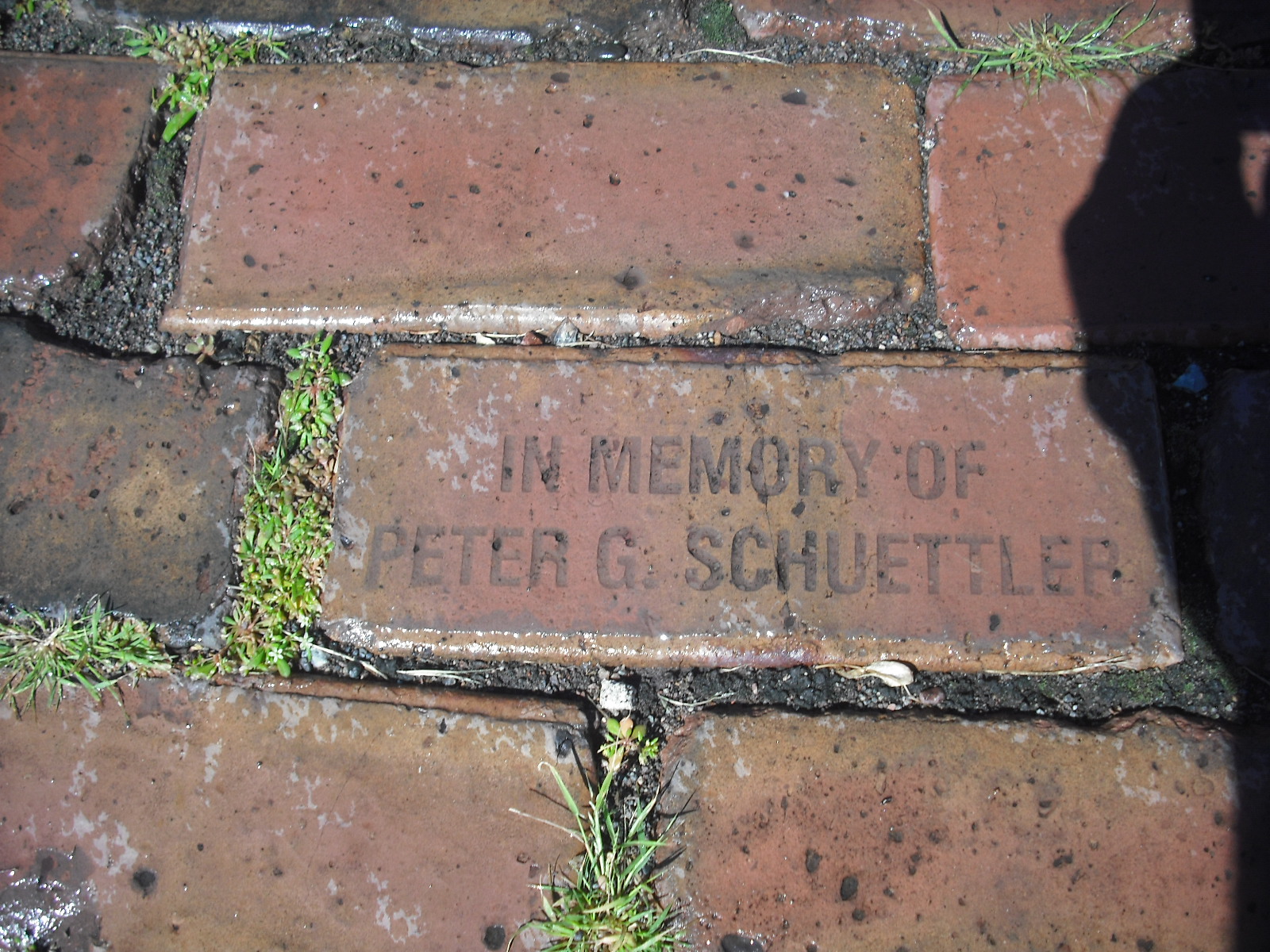
27

Fade as the blue nights fade.

Go back into the blue.

I myself placed her ashes in the wall.

I myself saw the cathedral doors locked at six.

I know what it is I am now experiencing.

I know what the frailty is, I know what the fear is.

The fear is not for what is lost.

What is lost is already in the wall.

What is lost is already behind the locked doors.

The fear is for what is still to be lost.

You may see nothing still to be lost.

Yet there is no day in her life on which I do not see her.

-Joan Didion, Blue Nights

Happy 27th, bro.

Olympian Distances

I’m not telling you to make the world better, because I don’t think that progress is necessarily part of the package. I’m just telling you to live in it. Not just to endure it, not just to suffer it, not just to pass through it, but to live in it. To look at it. To try to get the picture. To live recklessly. To take chances. To make your own work and take pride in it. To seize the moment. And if you ask me why you should bother to do that, I could tell you that the grave’s a fine and private place, but none I think do there embrace. Nor do they sing there, or write, or argue, or see the tidal bore on the Amazon, or touch their children. And that’s what there is to do and get it while you can and good luck at it.

-Joan Didion, Commencement Address at the University of California Riverside, 1975

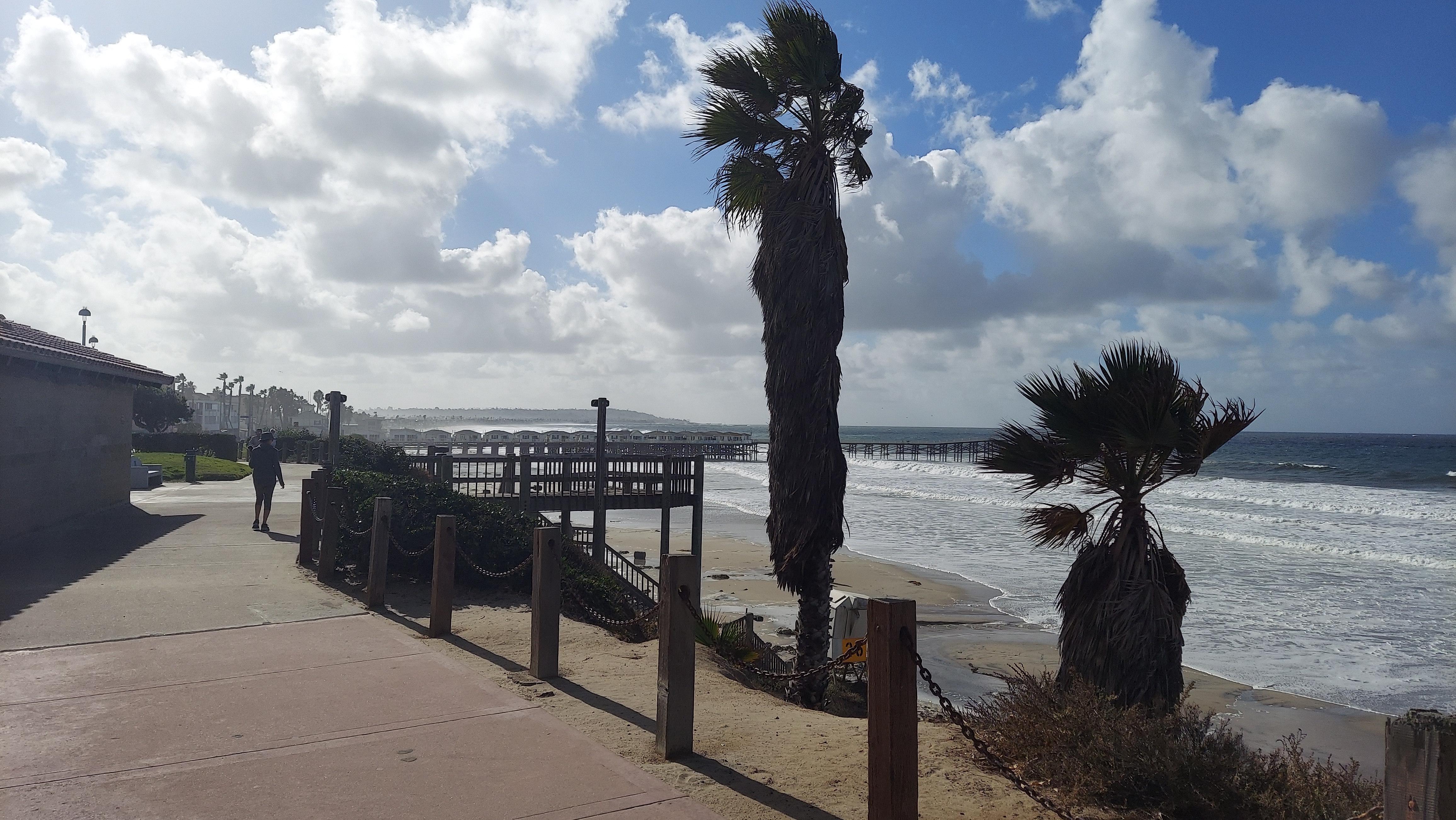
2024 approaches its close and I am aloft again, flitting this time to San Diego. I stay at the Diamond Head Inn at the head of Diamond Street in Pacific Beach, close enough for a sliver of an ocean view and to be lulled by the soothing crashes of giant waves through the night. I am not sure I prefer San Diego to some other haunts on the California coast that are becoming repeat destinations, but it is certainly the right place for this escape to cap a year of great escapes.

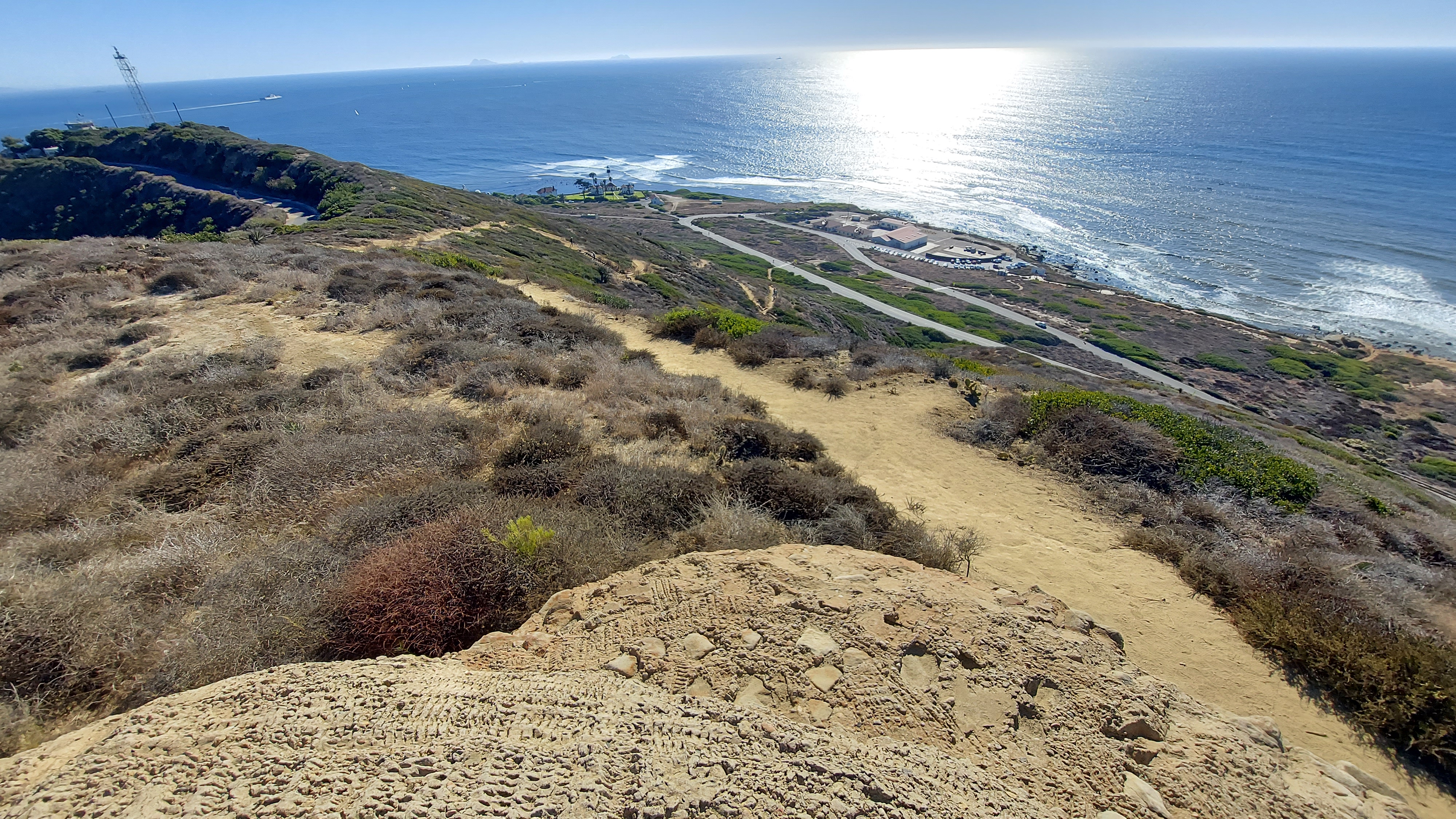
I run north through La Jolla, where the streets teem with the economy necessary to keep up the opulence of this headland: gardeners, renovation crews, cleaners, pest control. I run south along the length of Mission Beach, past miles of volleyball and beach bums and rows of vacation retreats, winding through the steady march of a three-day breast cancer walk whose path crosses mine on each of my days here. I grab a car for a day and venture down to the commanding views of Point Loma and up to spend a few hours with a college friend and his ever-expanding brood in Oceanside. But mostly I drift between the hotel and the beach and the clump of establishments along the Pacific Beach streets named for precious stones. Even with the Third Fleet looming in the harbor and Camp Pendleton to the north, San Diego feels removed from any great national dramas, a place where ambitions settle into yoga studios and waves and IPAs, a paradise now a bit overcrowded and at times a bit vapid but still holding to its beach life core.

A few people ask me if a beach escape was an election reaction, but it isn’t. Over the past few years I have found myself drifting out of political obsession and toward Joan Didion’s way of being in the world, not to forsake that realm but instead by finally internalizing the oft-neglected aspirations of my earlier self. My happiness is not ideological. I try not to let politics get me down, and through both an intentional effort and probably the simple passage out of youthful fervors and into my petite-bourgeois 30-something world, I am more or less there now. State and national affairs still matter to my moral universe, still matter to my job, but the privilege of not living in a state of anxiety over the world is, indeed, a privilege in the old-fashioned sense of the term, something one is lucky to have. To live in a place where anxiety does not drag one down, and where righteous anger does not consume one, is not in and of itself a defect.

This privilege allows me to seek to understand many ways of being while stripping away some preconceptions. It conveys a certain power: the ability to drink in experiences, to assume full presence in a particular moment, to say why not and just do things. To be always intrigued, ever nimble, always questioning, sometimes explicitly but also sometimes just in my mind so those around me can just be themselves. And it is not a realm of frivolity and luxury: the Olympian distance it can provide is the wellspring for reflection and insight that is hard to manage when wearing certain blinders.

Such distance can leave one in a lonely place, and it has taken time to embrace it as a real path when others are more clearly trodden. I can be a man in the arena, have perhaps even strengthened those skills considerably over the years, but I am not sure that doing so is the greatest use of my ability to come at stories from different angles, deep in the nuance. I am not by nature a fighter in the trenches, and I am drawn to realms upstream of politics, to places of culture and group dynamics and the deeper pulls of the human psyche. And I also now know that none of this is a binary choice, that I can step out for reflection but then dive back into messy human affairs in short order. (My stay in Pacific Beach also involved its share of time at beachfront bars, which are the definition of messy human affairs.)

My main method for my reflection has been writing. I gave up on a writing life after sweeping rejections from MFA programs over ten years ago, settling for sporadic posting on this blog instead of chasing any writing income. That failure has, on the whole, been a gigantic win for my mental health and financial security. But the itch has never died. The truth is that, if I have something resembling a vocation, it is not in anything terribly related to the job that earns me my income (though it is good work) but instead in being someone who has some useful things to say. I know that, in both triumph and crisis, I can sit down and come up with words that will both commemorate and help heal. People seem to like my stuff, if and when they find it.

I say I go San Diego to sit on a beach, but there is an ulterior motive: it is a retreat to begin compiling the episodic story collection on this blog into a manuscript, and I will be seeking professional feedback on it. This may seem like the ultimate Olympian turn, a retreat into fictional clouds at a time for engagement with reality. But this decade-in-the-making story is nothing but a response to questions about meaning in a fluid world, about coming of age, about masculinity and complicated family and coping with loss. I can think of no more urgent project for the skills I have.

I do not know what this story has to tell a broad audience; unlike everything else I write on here, the only feedback I’ve ever really gotten on it is from random people on the internet. But it is a story that is mine to tell, so I may as well tell it, take a chance on my attempt to get the picture and take pride in it. Progress may not necessarily be part of the package, but its possibility, whether sweeping or only in a few stray lives, is still a victory.

California 2023, Part III: Enriched

This is the third in a three-part series. Part I | Part II

Morro Bay is a sleepy midway point on this push up the coast, and while I take another pause along the harbor over chai and a muffin from a funky shop, it is time to move on from this inquisition into memory. Next, I am obliged to visit that land variously known as San Simeon, La Cuesta Encantada, even Xanadu: the castle built by William Randolph Hearst on the southern end of Big Sur. Alas, I see no zebras, and the Casa Grande never quite shakes a layer of the absurd for me, this Mexican cathedral of a house overloaded in tapestries and collected ceilings and art to a plutocratic excess. But the guest villas are on point, the Neptune Pool stuns, and the setting, artfully interwoven into the estate by architect Julia Morgan, lives up to all the wishful dreams of its builder.

Joan Didion may have biased my view of the place. In “A Trip to Xanadu” she calls it “exactly the castle a child would build, if a child had $220 million and could spend $40 million of it on a castle: a sand castle, an implausibility, a place swimming in warm golden light and theatrical mists, a pleasure dome decreed by a man who insisted, out of the one dark fear we all know about, that all the surfaces be gay and brilliant and playful.” But I also agree with her sentiment in “The Seacoast of Despair,” where she compares it to the monumental abodes of some East Coast barons of industry: “San Simeon, whatever its peculiarities, is in fact la cuesta encantada, swimming in golden light, sybaritic air, deeply romantic place.” In no place else could an estate like this look somewhat reasonable.

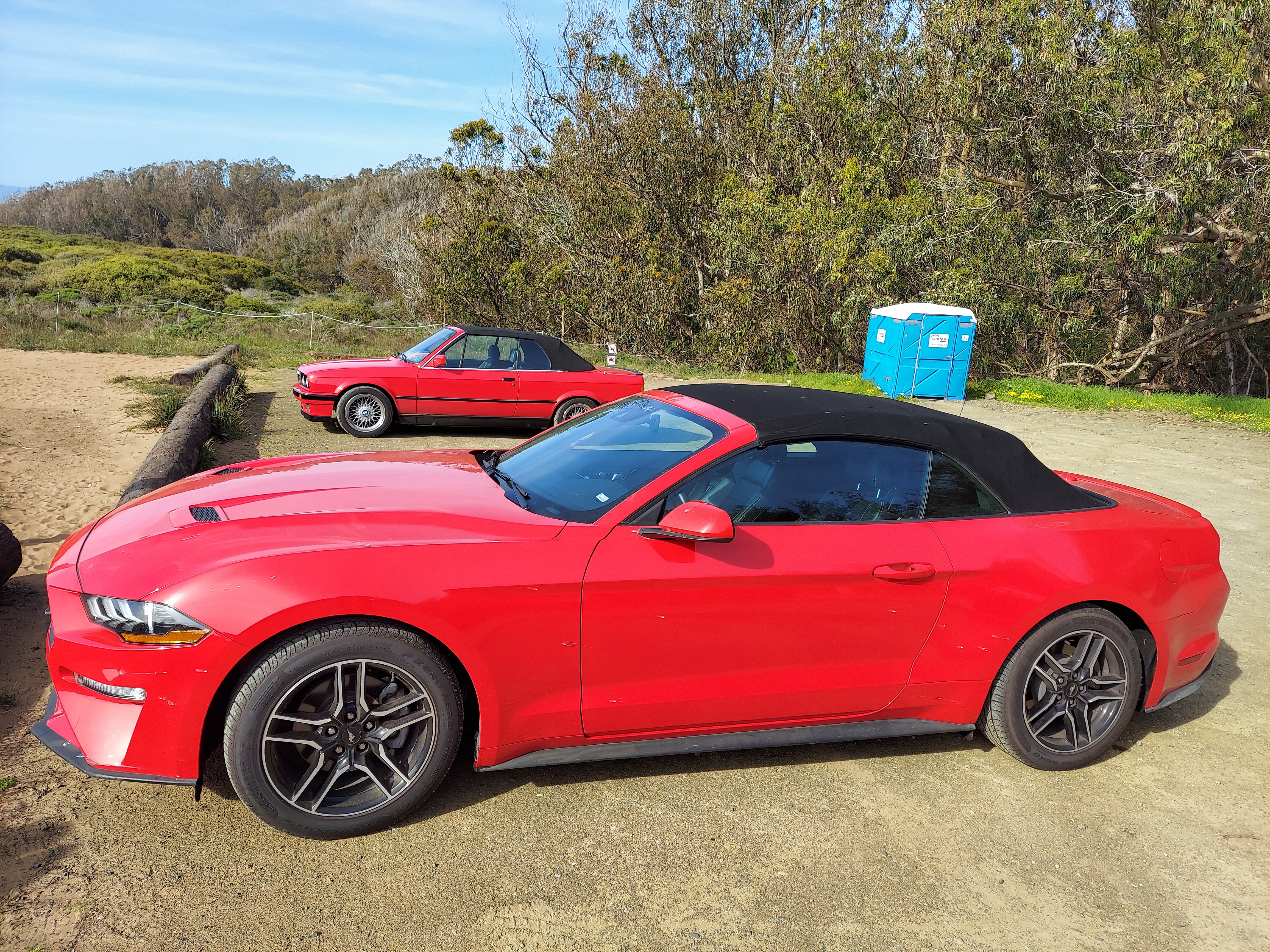
The romance comes from Big Sur, where spring landslides have now twice foiled my hopes to traverse the whole route. I settle for going a few miles past San Simeon to turn around at a lonely lighthouse at Piedras Blancas. All of the crowds have disappeared here, and my Mustang is alone, nestled into the chaparral, the surf once again mesmerizing. From there, I swing inland to the 101, a pleasant but unmemorable drive excepting a tasting at a winery in Paso Robles. Upon hearing this city name issue from locals’ lips, I conclude that Spanish speakers, when trying to figure out how to say the name of a California city, should imagine the worst pronunciation possible and will thereby be correct. I sigh theatrically and shoot north on the 101.

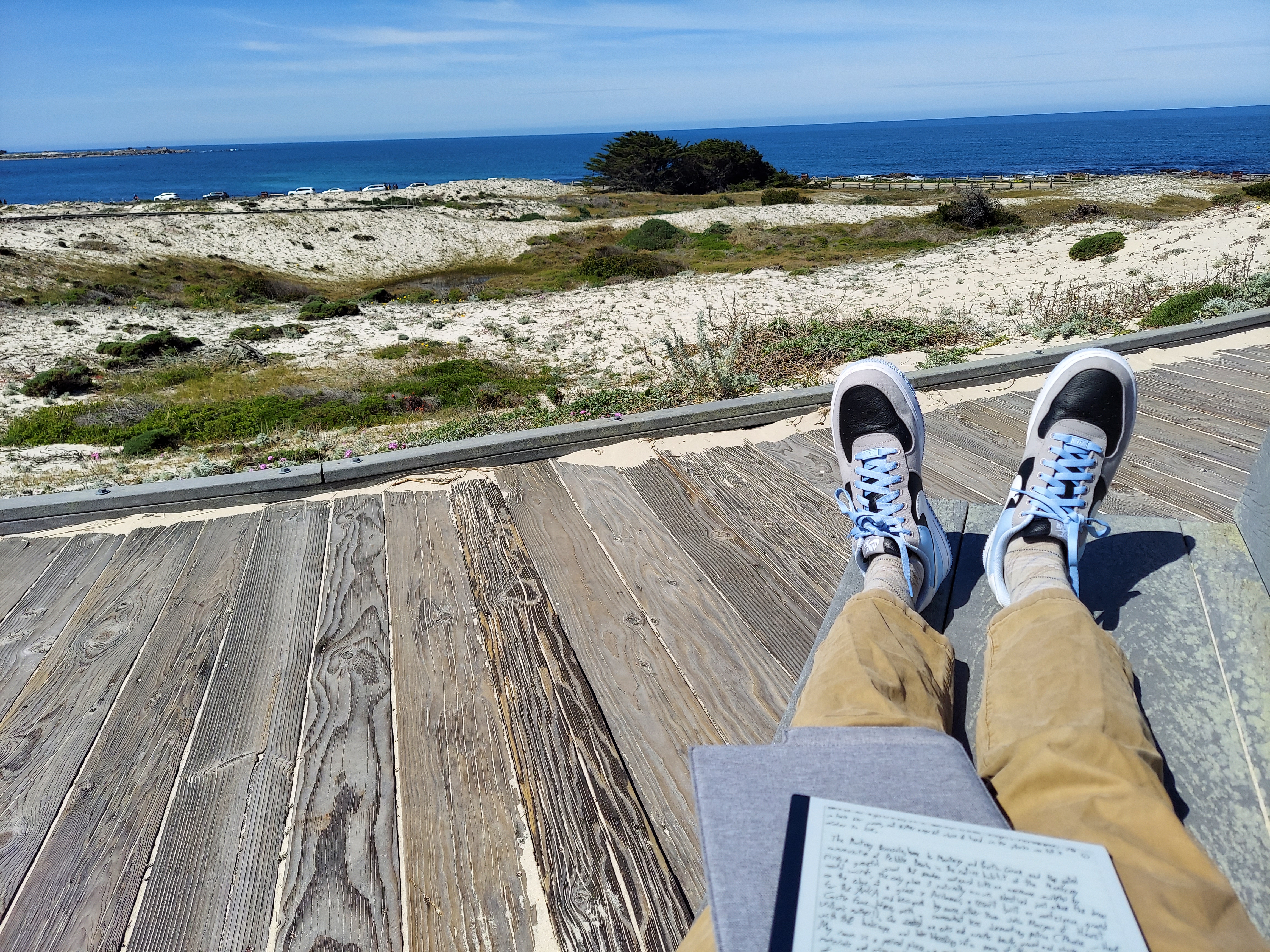
The Monterey Peninsula, home to Monterey and Pacific Grove and the gated communities at Pebble Beach, is the only native habitat of the Monterey pine, a graceful giant that reaches outward in accordioned layers, all sculpted by coastal winds. Nestled just above the dunes on the edge of a grove is Asilomar, a resort built as a conference ground for the YWCA and designed by none other than Julia Morgan of Hearst Castle fame. Here, with a somewhat less eccentric patron (Phoebe Apperson Hearst, who just so happened to be William’s mother), she created an Arts and Crafts beauty, wood and stone blending with the landscape and later bleeding into many of the Pacific Grove bungalows. My room is a period piece, a proto-modernist retreat of raw materials and crisp angles and balconies, outfitted simply and no TV. My kind of refuge—or asylum, depending on how one translates the Spanish. It lives up to the feel, a cool piney retreat where no excitement happens. Pacific Grove is “the sort of place where you worry you’ll knock over a grandma,” my friend Mike later opines. I unwind on the dunes of Asilomar, my best extended writing of the trip coming on its benches over the sea, before I begin northward again.

First, however, an interlude. I’m not sure what I expected when I arrived in Santa Cruz with only a vague knowledge of the town, but it was not what I encountered: a boardwalk amusement park right on the beach, children everywhere screaming and eating fatty foods and general chaos. This beach could not be any more different from the placid one I just left in Pacific Grove, and it strikes me that this boardwalk, with its gaggle of Hispanic and Asian families and harried parents escaping to the beach and wandering, segregated clumps of teenage girls and boys all putting themselves on display, is more representative of the full swath of California than any other coastal community I’ve visited this week.

By this point I’ve had enough of the solitary phase of this trip and am ready for a sojourn in the Bay Area with my college friend Mike and his wife Lizette. They live in leafy Menlo Park, an ideal-type suburb wedged between the Stanford campus and tech mogul retreat Atherton, the second-wealthiest zip code in America. Food comes at cafés on walkable streets, and I spend an hour weaving in and out of the arcades on the Stanford campus, past the engineering and computer science departments that feed the furnaces of industry and beneath Herbert Hoover’s bell tower and into the church at the heart of the campus, at once beautiful and yet discordant with all the earthly pursuit around it, an inscription on its wall both a warning and a premonition of the godless tech engine the Peninsula has become.

On the night I stay here, Mike takes me to a party of Stanford graduate students. When the first person we meet introduces himself with a discourse on his cold bath habit, I know we’ve hit the motherlode.

It has been a long time since I felt like this much of a fish out of water. Simply figuring out how to introduce myself takes several tries. I can slide in with rural Mexicans or Trumpy Midwesterners or East Coast political elites or any number of other groups easily enough, but here, I face an entirely new task. These Cardinal are remarkably diverse on the surface, but they inhabit a singular world, one that brushes up against my life every day but that I have never explored at any depth. Aside from one lonely biology student, these people are all deep in the Silicon Valley game, and while the level of polish varies dramatically—the lack of any sort of dress standard at this party would have been laughable at Georgetown—they all share an easy icebreaker: what start-up concept are you working on, when might it be ready for launch, and where will it go from here?

With this demographic, the answer is almost certainly somewhere impressive, in some form. Their ideas have the power to drastically reshape certain industries, from health care to computing; while these particular iterations may not pan out, they are laser-focused on specific problems. Whether there is enough thought about the systemic effects of these individual, money-making investments is the open question, and the one that will ultimately frame my opinion on them. Afterward, as I lie in bed and flip through my pictures from the day, I wonder how all this disruption will affect the lives of the kids on the Santa Cruz boardwalk. Few, if any, of those kids will ever march into this world, experience its wealth; all of them will use devices and apps created here. All this tech will make their lives easier in concrete ways. But will it make them better?

Mike takes me into San Francisco to meet up with my cousin Rob, my final stop on this tour. Dinner for the three of us is a culinary orgy at Rob’s favorite restaurant in the city, and I revel in crashing my college and family worlds together. From there we add Lizette and a few more old friends to the hopper in Chinatown, have fancy drinks at Cold Drinks (which, it emerges, has inherent limitations in its ability to serve coffee), and descend into an underground lair at a dive bar where the menu consists mostly of generic straight alcohol, plus its famed mai tais, which taste terrible but are a necessary part of the journey across sticky floors and through the San Francisco menagerie. Rob and I round out my stay with a few more ticked boxes: the stunning redwood groves of Muir Woods, a sojourn in Sonoma, a cable car ride, and a stroll from Fisherman’s Wharf to the Marina District on a brilliantly clear day.

“California is a place in which a boom mentality and a sense of Chekhovian loss meet in uneasy suspension,” writes Joan Didion in “Notes from a Native Daughter,” “in which the mind is troubled by some buried but ineradicable suspicion that things had better work out here, because here, beneath that immense bleached sky, is where we run out of continent.” Here we are indeed out of continent, and many things do not seem to be working. In 2016 and 2019, the aspects that made California seem extreme to me are now commonplace in my Midwestern redoubt: tent cities, upward bidding on real estate, even a looming fear of fire. The water wars will come for the shores of Lake Superior in different ways than they come for the Central Valley, but I expect them to come nonetheless. Having colonized a continent the California ethos is now trying to colonize the future, in the process abandoning the present in search of a new frontier, the self-justifying game played out in the fullest. I am enough a child of this pursuit to feel the hunger yet at enough remove from it to hate the possibility, left dabbling in ChatGPT and hoping I can master it before it masters us all.

And yet, on brilliant spring days like these, it is hard to picture California as the crime-ridden hellscape that feeds a certain media narrative. After a wet winter, the state is resplendent in green, the meltwater doing some work to restore depleted aquifers and possibly sparing us a brutal fire season. No one I meet talks about Silicon Valley bank failures or the headwinds confronting the entertainment and tech industries. The romance of the state still holds, and maybe there are enough innovative minds to make things work here, where resignation is harder to find and an aesthetic standard still reigns.

Above all else, California is a state of collisions. Mountains and sea, wealth and poverty, tech and agriculture, pursuit of the future and stubborn reality. It is here that the great contradictions of 21st century America are most visible, and for all the fear of drought and fire and exodus to Texas or Florida, it is here that answers are most necessary because it is both the harbinger of the future and a place of such beauty and cultural cachet that it will never lose its draw, even as so much of the world punches as it. No suburb of Austin or Atlanta will ever surpass Beverly Hills or a perch in Marin. I have fallen for this state because it is so contradictory, so bound up in the story of a country that is stunning and admirable and yet troubled, feeling in the dark for answers even as it barrels ahead at eighty miles per hour in a Mustang.

The friends I visit this week all have their off ramps. All three pursue interesting work somehow tied up in the fate of the state. One has a family to frame everything, and another is beginning down that road, too; the third has made an art of filling a schedule in ways that would overwhelm most mere mortals. All three explore faith in a place where it is not much of a discussion topic, from intellectual dabbling to full-on belief. My own road trip goes on, with stops to sponge up all they have to offer in an endless quest for more material, both for the words I write and the larger story over which I have some authorship. And I would like to imagine that, if I should return to Morro Bay again in another ten or twenty years, I will make this current version of myself proud of the story I’ve written since. For now, though, I will drift off, my mind back on the beach, one with the crashing waves.

California 2023, Part I: Authorship

For the past three years or so I have been living somewhere in the long shadow of Joan Didion’s prose. I came to her in a search for meaning in this American reality we now inhabit, both for the troubles of 2020 and a jaded phase of toil through work life that is, thankfully, behind me. But I stayed because I fell in love with her sentences, her artistry, her skill with the English language, whether I cared about what she wrote about or not. Her detached cool became my ideal authorial voice.

Nowhere did Didion fix her gaze more than her native California, this daughter of a settler family and witness to the state’s change from frontier outpost to the dream state of the late twentieth century to something a bit more complicated as the dream started to run out. Because she was from an earlier era she was a keen critic of what her state became, from the postwar boom to the Summer of Love to the Reagans, always at a remove and rarely comfortable with the direction of things. Her lingering dread became part of her persona, but it was always counterbalanced by a certain glamor, the way a provincial aristocrat from a dying order learned to keep up appearances and move with her times instead of languishing into laments for the way things were. This is, I suppose, the inherent Californian in her, and a mindset I can only admire.

I head back to Joan Didion’s native land for my annual escape from Minnesota non-spring. While I have visited California several times before, I have enough ties here and enough things to see that it remains fresh. I land in San Francisco and immediately break south, pausing for an overnight south of San Jose before a long push down toward San Diego, from which I will work my way back up the coast over the course of a week. I escape Bay Area traffic swiftly and rise through the California coastal range, those ever greater undulations up from the sea. After a winter of great rain the golden land has been reborn as emerald hills, and I go in search of glimmers in a red Mustang convertible.

This trip is a break from some of my idle wanders across the American West in recent years: I spend no nights in tents, and while I’ve scheduled a few days of relative solitude, I go to both see some familiar faces and drink in the crowds. In certain ways it feels like an arrival, a trip for someone in a new phase of life free from some of the gnawing worries that gripped past trips and the start of a year of plentiful ventures outward. After the long push on day one, its pace is leisurely, with few concrete plans: I go to explore, to see where the road and my fellow travelers will take me.

The first day slog down I-5, however, is every bit as interminable as I feared it would be. The Central Valley is rich in its output, the California Aqueduct and the state’s water works a stunning feat for anyone into that sort of infrastructure (Didion is instructive on both topics), but at eighty miles per hour it mostly feels like Wyoming with some almond trees. Californians, I learn, are useless when confronted with roundabouts, and are even worse than overly polite Midwesterners at the zipper merge. I also learn that Tesla drivers are obligated to go twenty miles per hour faster than all other traffic, though as I sit behind the wheel of a vehicle that purrs when I accelerate, I rather understand the allure.

Mostly, though, Californians sit in traffic. Traffic chokes the Tejon Pass over the Tehachapi Mountains, the one real passage from northern to southern California. I sit in traffic here and then I sit in traffic above Chavez Ravine and I sit in more traffic down by Norwalk; I even sit in traffic in the Glendale In-N-Out Burger parking lot. To top it all off, the narrow strip between San Clemente and my destination in Oceanside, some twenty miles in distance, takes a full hour. At least it is a prettier to sit in traffic here than between sound barriers in Los Angeles, the sun sinking over the San Onofre beach and incongruous Camp Pendleton, a relic of an era when real estate dollars did not rule all on the coast. Southern California makes complete sense and zero sense: I get exactly why people would want to perch up on these subtropical hills on rolling estates, and exactly why the traffic is as shit as it is on these ten-lane ribbons that knit together innumerable valleys with no actual reason to form one coherent metro. The secret of the beauty is out, and the Joan Didions of the world are left to scrutinize the replacement of the ranches they knew with endless tract housing, elegiac but accepting that this is the world that now exists.

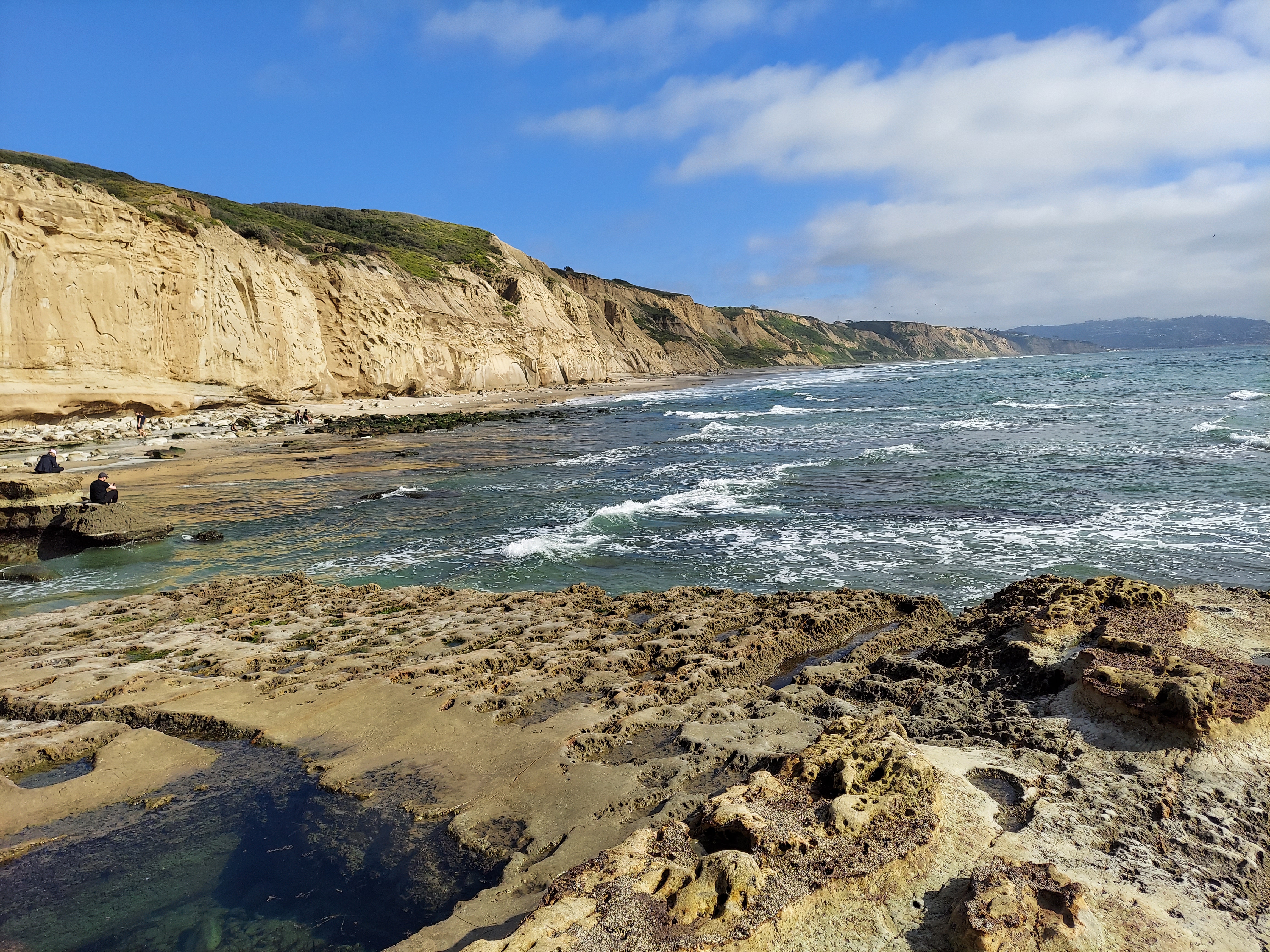
After I free myself from the freeway I pick way along the coast, where I will spend most of this week, its own little world with great variety among the beachfront towns. La Jolla glimmers with wealth on a hill, while Del Mar opens up to reveal Torrey Pines; Encintas and Leucadia are a blur of shopping, while I am too annoyed by a poorly signed road closure in Carlsbad to give it a fair shake. Oceanside seems more democratic than most towns on the coast, a healthy mix of people strolling its beach or fishing off its pier. To the north, San Clemente is the surfer stereotype on steroids, while Dana Point is a tryhard; Laguna Beach seems the platonic beach town, Newport Beach is a cut-and-paste Orange County suburb, and Huntington Beach is one giant timeshare. Malibu’s unrelenting development along the Coast Highway render its views mediocre, though a stop on one of its beaches brings a dazzling blur of sand and sea amid an unrelenting gale-force wind. Oxnard is a discordant slice of Central Valley agriculture transported to the coast, a fitting place to stop for gas and nothing else. There is something for everyone here, even if we can’t afford to live on it.

I land for two nights in Oceanside, where Georgetown friend Ben and his wife Etienne have doubled their brood since I last saw them in Sacramento four years ago. In a family with four kids under seven nothing happens quickly, ambitious plans swiftly reordered in the face of reality, and this new rhythm is an excellent corrective to my normal rigid scheduling and relentless travel pace. We bike to the beach and stroll up the pier, which is more than enough excitement for most of the kids, and do dinner at a brewery with ample space to turn them all loose. We sneak in life updates and insights between storytimes and toy deployment, and inevitably any building project with trainsets or connecting blocks or trimmed palm fronds turns into the adults wrapping it up while the kids have moved on to something else. The world looks different when one’s concerns are one’s kids’ schools, what they learn and how they learn it, how the world chooses to treat childhood. Any philosophical debate has immediate application, the inner world all-absorbing.

Greater San Diego, Ben observes, has a sort of opt-out culture, a great suburban city with no strong political identity anymore, having shed the old Orange County and military base conservatism that built up these areas south of LA. Here, one can enjoy the creature comforts of suburban homes and beach access and breweries while working from home to escape the miseries of the southern California commute. In my friends’ case an immediate family network is crucial to making it happen, the tight bonds of that inner world able to consume all. Without these anchors life here could trend toward anomie, but part of me admires the escape from the deeply political and the relentless progress-seeking, the choice instead to pursue the rhythms of the beach, a steady cycle of waves, bliss within reach.

I start my road trip north from Oceanside at San Onofre State Beach, an iconic California surf spot. Two lonely men work the Trestles on this grey Monday morning, committed to the relentless slog outward but nailing ten-second rides down the Middles. I am mesmerized by this unrelenting quest, the pursuit of a glimmer of sublime. Without ever seeing it, I made this beach a place of deep reverie for a fictional character, and I marvel at how I thereby manufactured its significance to myself. Such is the authority of the author, possessed of a power to shape a world.  

Part of me will always be a beach child, lured by the escape promised by the narratives here: freedom from all that overthinking I am prone to do, peace before the crashing surf, whether on Lake Superior rocks or St. John white sand beaches. The beach is its own little world with its own social codes, its outward displays that mean everything until they dissipate into the enormity of the sea and mean nothing. We find our wave here before the void, straddle it and accept our position between worlds. Somewhere here the myths of progress and eternal return collide, the inevitable march of time and the depth of memory that will always cycle back, resolving into a rare vitality. The moment lasts only an instant, but the right words can sustain it forever.

This is the first in a three-part series. Part II is here.

Twenty-Four

We are imperfect mortal beings, aware of that mortality even as we push it away, failed by our very complication, so wired that when we mourn our losses we also mourn, for better or for worse, ourselves. As we were. As we are no longer. As we will one day not be at all.

– Joan Didion, The Year of Magical Thinking

Happy 24th, bro.

My Year of Imaginary Thinking

Travel is useful; it exercises the imagination. All the rest is disappointment and fatigue. Our journey is entirely imaginary. That is its strength.

Céline, Journey to the End of the Night (lifted from the credits of La Grande Bellezza)

I began 2021 with the particular belief of a convert to a new faith. It was hard not to, since I started it by diving into a pool at a mountaintop estate on a Caribbean island, my crash into its depths a burst through the din of jungle fauna and steel drum bands echoing in the distance. A couple months later, I received my second stab of Moderna and penned what I hoped would be a victory essay over the virus that had disrupted the previous year of life. I had grand travel plans, I would see family again, work would move away from the misery of Zoom, and I would find undying love.

I wasn’t so naïve as to think it would be that easy, which is good, because it wasn’t. New variants surged, a dream of optimism curdled into an air of mystery, the general malaise lingered, and while I generally went about my life, the world did not. I certainly have no judgment for those who continued to take strong precautions for various reasons and would always work to reach their levels if need be. But to sacrifice any more of my rapidly dwindling youth to a climate of fear that was unlikely to afflict me in any serious way seemed a high price to pay, and trying to negotiate a world in which everyone was on a different page on this issue added another layer of complexity. To be a conscientious friend in 2021 was to live in a state of hyper-aware caution, and the escape of obstinacy grew ever more attractive.

I proceed with family and friends more or less as I did before the pandemic, but my social circles have not grown much, and arranging anything with anyone feels like a considerably larger chore than it used to, the serendipity of stray days together now a rare occurrence. My friend group is a busy one, and a lot of them have been pairing off and reproducing while I have not, a divergence that both keeps them occupied and is wont to drive me to brood. I field questions about my house as if contemplating the excitement of a new garage door is a comparable life step to having a child. For that matter, I have been traveling too much and too caught up in my day job when I am home to get around to acquiring the garage door.

The year took its tolls. I lost a grandmother, an aunt, and a cousin, and endured a funerary marathon for all three of them over one week in July. Somehow, this was not the most draining stretch of family time in 2021; that dubious accolade instead goes to a visit, two weeks later, to the other side of my family, on which I will not elaborate much out of respect for my relatives except to say that no human should ever be allowed to own more than three cats. The less weighty but still disruptive milestones mounted: in the hockey world, a man who was an ordering principle for my drive in life lost his job, a complex but significant era drawn to a close; at work, my colleagues and I were too good at our jobs, in short order overwhelmed by requests for help and pushed to the brink by a taxing schedule, a herd of Sisyphean retrievers forever chasing the ball. It took me until some time after that to see that I was slipping into those same dragging tendencies that had annoyed me about the rest of the world, and another period of time after that to correct course.

I sought my freedom from days of exhaustion and low-grade dread through bursts out into different worlds. It started in the Virgin Islands, made its way to some wilderness retreats in my own backyard, wound its way through another grand western road trip, and popped off to New York and St. Louis and Tucson for punchy weekends. I kept the pace going right up until the end: a week of professional development in Minneapolis featured not only full days of classes, but a different form of scheduled programming each evening as I caught up with family and friends, then topped the whole thing off with a 48-hour jaunt to Chicago for the Christmas party that, every year, manages to put every other party I attend to shame.

All this travel is dangerous. At times it makes me ponder other realities, roads not taken and potentialities looming within a kid who is still capable of quite a bit when he puts his mind to it. I come home from these trips a jumbled mess, always in need of recovery, at once enlivened and invigorated and yet sapped by long hours on the road and disappointed by the return to routine and possessed of a poorly directed energy. The magic does not necessarily last. But how I lived on these trips: sweating up slopes and treading blissful waters, fine dining and good drinks, revelry till the end of the night in the presence of delightful people who, consciously or unconsciously, understand what I mean when I quote Joan Didion and say I want not a window on the world but the world itself.

Didion has been my muse for pandemic era reckoning, and 2021 delivered one final blow when it stole her away this past week. Her death saddened me as much as that of any person I never met in the flesh. No contemporary writer had a greater influence on how I think about the art of prose, or gave me a better sense of how to frame my view of the world. Didion learned to write by copying down Hemingway sentences, and I have learned to write by copying down Didion sentences. An essayist adoring Didion is about as original as a classical music buff lauding Beethoven or a hockey person saying there’s something worth emulating in that Gretzky dude, but sometimes greatness is so plainly obvious, so transcendent of subjective standards, that it can stand up even amid the rush of cliches that inevitably pursue it like fame-hungry paparazzi.

It was amid the rush of Didion homages, all consumed breathlessly this past week, that I realized that what sustained me through 2021 was not the travel itself but the opportunities the travel gave me to write. “Her work was her own answer to the question of what writing and living is for. It ought to be ours, too,” wrote Nathan Heller in a New Yorker obituary. There is no personal crisis I cannot resolve, no looming burden I cannot overcome, by taking a moment to jot it into one of several notebooks or clattering away at a keyboard. The act itself, whether it resolves into a single flowing tale or disjointed marginalia, is enough. Through it, I am made whole at the end of every day, and increasingly in the middle of days when I need reminders to escape the tunnel of the mundane.

From a mesmerized gaze at waves on a beach to the solemn donning of a funeral suit, from the hubbub of a brewing party to curling up with some essays as a wintry wind howls outside, here is to the power of the written word. Here is to their power not to exact immediate results but to create the pieces by which, over time, a new idea can assemble itself, word by word and line by agonized line of authorial reflection and search for just the right turn of phrase. The words may or may not capture my reality in full, but that was never the goal. The goal was to change it.

Sweet, Sweet Decadence

A coronavirus outbreak seems an appropriate time to read a book about the fate of the human race, and so I dove right in with the latest from Ross Douthat, the New York Times’ lonely religious conservative opinion columnist. The Decadent Society: How We Became the Victims of Our Own Success is peak Douthat: a widely roving history of late modernity and its seeming stasis, one that touches on a dozen themes that this blog has also featured over the years because his concerns tend to nibble at me as well, to greater and lesser degrees.

Douthat’s strength as a social commentator is his refusal to accept easy explanations. He makes good cases for how a variety of factors can come together, and he is often among the most original analysts of contemporary American life. Agree or disagree, he can pull out unexpected theories while at the same time resisting the temptation to claim he’s found the answer to everything. He can imagine a variety of different outcomes and explain, succinctly, why each of them might be true. This new book follows in the same tradition as it pulls together all of the possible causes of decadence and explains that decadence may in fact be stable, and then imagines every possible way out of this stable decadence, from environmental catastrophe to the socialist international to a religious revival to aliens, and imagines how they can all work together in feedback loops that reinforce each other. (Well, except maybe for the aliens.)

Jacques Barzun, a French-American historian, supplies Douthat’s definition of decadence:

All that is meant by Decadence is ‘falling off.’ It implies in those who live in such a time no loss of energy or talent or moral sense. On the contrary, it is a very active time, full of deep concerns, but peculiarly restless, for it sees no clear lines of advance. The forms of art as of life seem exhausted; the stages of development have been run through. Institutions function painfully. Repetition and frustration are the intolerable result. Boredom and fatigue are great historical forces.

Douthat is also careful to acknowledge that this version of decadence gets a lot right. Modern society is rich, stable, and has eliminated a lot of past prejudices. Despite the seeming political unrest of Trump era America, most of the violence is rhetorical; when someone actually did die in Charlottesville, the right-wing marches did not continue to surge but instead mostly retreated back to a world of online cosplay. The appetite for actual confrontation is low.

But, then, it also features stagnant income growth, lurching political institutions, and general ennui. It offers potential ecological ruin, though we will likely muddle through in ways that are problematic for poor people at lower lines of latitude but bearable for affluent Westerners. Aside from the world of tech, which Douthat convincingly skewers for its minimal meaningful progress and lack of profitability outside of communication platforms and Amazon, human technological innovation is flatlining. Even popular culture is stuck in an endless loop of Star Wars and comic book movie reboots, and now we’re trapped in an algorithmic death spiral in which few unique things can break out into the mainstream.

More worryingly, The Decadent Society shows how the cultural arbiters of an aging society lock in to place attitudes of risk reduction and dull, safe choices in place of youthful dynamism. Here, Douthat makes his most interesting critiques of liberal society: we’re not reproducing much, we’re having less sex, and we’re giving up on shaping our own future. Workforce participation has declined, and a large swath of the population is now more interested in self-medicating through drugs and video games, with the most extreme cases lurching toward deaths of despair. Porn has not driven young men to pursue elaborate sexual feats, but desensitized them to feeling. Our dystopia comes to resemble Brave New World, perhaps not as clean in its horrors but amounting to the same end: numbed to old life-giving forces and subjected to the soft totalitarianism of norm enforcement by a privacy-free online world. What fun.

Douthat’s other useful point is that decadence can be a very stable state of affairs, even if certain moralistic narratives would prefer to predict its imminent demise. Rome endured for 400 years between Nero and the Visigoth sack, and Douthat sees no reason the American empire can’t lurch along for a similar period of time, dull and uncreative but still the clear colossus bestride the world. Our world is neither on the march toward a liberal dream nor (pandemic horrors aside) headed toward the demise prophesied conservative prophets of woe. It plods along, its most obvious alternatives fundamentally flawed, and some anti-decadent responses to this era run the risk of being very bloody or unequal or just subject to a lot of unintended consequences. Perhaps we should just carry on, elect Joe Biden, and keep trying to make people’s lives marginally better.

Douthat rambles on a tour of geopolitics in the book but gives some valuable international context to what is unique, or mostly not unique, about the American condition. He necessarily oversimplifies but points at some trends that will no doubt shape the next century, from the effects of mass immigration on Europe to the African population boom to the question of whether China is an authoritarian, and perhaps eugenicist, threat to the world order or an aging, poor society with a rickety economy propped up by a corrupt regime desperately trying to put on a good face. Japan, for Douthat, is the canary in the coal mine, a step ahead in reaching flat economic growth and political gridlock and weird, tech-abetted sexual fantasylands instead of the real thing. (It has also made some progress in reversing some of these trends under Prime Minister Shinzo Abe in recent years, though his marginal success shows the limits in how far a decadent society can move even with skilled leadership.) By and large, the world is converging on its decadent destiny, no matter where we come from or what we believe in our politics or our faith.

The Decadent Society became rather, well, decadent as it went along. Part of the trouble comes from the inherent challenge in trying to predict the future, especially in a broad and yet merely 240-page book that pays lip service to all answers rather than making a concerted case for a handful. The diagnosis is convincing, but the tale of what comes next is so sweeping and eager to check every possible box that I don’t feel any more enlightened as to what may come next. Symbolically, I enjoy Douthat’s riff on the closing of the frontier with the end of the Apollo missions, but as one with a weak interest in science fiction, I don’t buy that shift as a source of existential dread for any but a narrow, nerdy subset of society. There is no shortage of earthly frontiers available to us, if we choose to pursue them; the societal upheaval of the 1960s may well have ushered in some decadence, but they were baked into the cake long before the U.S. began to ratchet down its space program.

I’ve been fumbling over the end of this review for a week now, so I might as well lay out my writer’s block for the world to see. One false start explored Douthat’s religious aspirations for a non-catastrophic escape from decadence, a conservative Catholic’s probably-not-wrong view that a concerted movement will take some surge of faith, in some unknown form, to give enough lives added meaning to flip the script. I don’t have good answers here, but the secular world’s general inability to grapple with that need for myth and wonder at the core of the human psyche is one of its great analytical failures. Another ending took the opposite tack and riffed on Joan Didion, who I’ve read extensively in recent weeks. She gets a passing mention in The Decadent Society as an exemplar of how stuck our culture is, as her 1960s prose still seems strikingly contemporary. Maybe Didion and her generation set a high bar for us in their incredible detachment, and there’s no shame in standing on the shoulders of giants as we reach for the stars.

In a way, I think both are right: flawed as a decadent society may be, anything that breaks through its comforts should have to answer all those droll and rationalist critiques, should have to inspire a deeper sense of faith and mission. You want an Apollo-level mission, Ross? Well, there it is, right there in front of you. Go a bit further, take that argument you make for twinning faith and reason and beef it up into something serious. Make us believe.

Love in the Time of Coronavirus

My sixth-grade teacher pulled down the United States map. “This is New York, and this is Washington,” she told the class, on what could only have been our second or third week of middle school. “Not to take anything away from any of the other cities, but they’re probably the two most important cities in the country.” Airplanes had hit several buildings in them, she explained, and our lives were about to change.

I was eleven, and it was my first brush with a global crisis. Even for a hyper-aware kid, one who has a strong enough memory to still retain snippets of news clips about Bosnian Serbs while I played with toys on the floor at three or four at our house in Wisconsin, this was the first time the world had come close to me. Roger Angell’s snippet from the New Yorker that week, discovered years later, still rings true. No longer was history something that happened somewhere else.

But was it really, though? In New York, maybe; for an 11-year-old in northern Minnesota, life mostly just went on. Airport lines got longer (not that I can really remember what came before), and I recall a few some stray episodes of hysteria from others around me; 9/11 certainly informed my geopolitical conscience, but not my day-to-day life in any way. After that, there were snippets, mild crises of inconvenience that were mostly just cause for a little shared fun, like the Snowpocalypse that shut down Washington, D.C. my sophomore year, or the stray brush with a hurricane two years later. Any northern Minnesotan is accustomed to the occasional weather-driven shutdown, a snowstorm that pins us down and then brings out a burst of communal activity as we all shovel out together and then get on with our lives. The most recent, this past November’s snowstorm that ruined my Thanksgiving travel plans, is about as extreme as it’s been. I hardly expect much sympathy.

The arrival of the coronavirus, then, is my first direct brush with any sort of collective national crisis. A holding pattern of dread takes hold. Our sprawling and convoluted healthcare apparatus strains to its limits, and in Washington, at least some people seem to grasp the gravity of the moment and look to escape their regular state of sclerosis. But there’s nothing you or I can do besides wash our hands and lock ourselves in our homes. Perhaps the dread has less to do with the virus itself than the sudden reality of that sense of urgency that I preach to myself every week but have always forgotten by Thursday afternoon. We don’t know what we have until we lose it.

If this is to be my generation’s sacrifice, the postponement of a planned vacation down the East Coast next month is a small burden to bear compared to so many who came before, to say nothing of the scores who are now out of work. Still, it’s hard not to dwell, at least a bit: quarantine takes from me so many of the things that give me joy on this earth, sports and travel and dinner parties and game nights and the freedom to rove and revel and delight in the new. It threatens to leave me with more of the things that do not: devotion to screens, an already bad trend exacerbated; phone calls, which I irrationally hate; correspondence that slowly loses meaning over distance. I am among the world’s most incompetent introverts; or, perhaps, to borrow a phrase from a friend, maybe this sliding scale of introversion and extroversion isn’t worth much to us at all. I live for people, and I will interact with precious few of them in a meaningful way over the coming weeks, maybe months.

I’m still left with a few creature comforts in my 740-square-foot cell. I can see if TV has produced anything good since I stopped paying attention to it a few years ago, and I can delve into a stack of books I have at hand. Being stuck at home may force me to cook, an undertaking I always enjoy but am terrible at making time to do. I have a stash of booze and am learning the merits of the virtual happy hour. I may just have timed my entry into the homebuyers’ market perfectly. My athletic pursuits these days are of a solitary sort, and unless we go into total lockdown, I can still enjoy a good run or hike or ski if the snow should return. Color me torn: should I be pleased this has all come about during Duluth’s least pleasant season, a hope of full enjoyment of the summer ahead, or does staring out windows at drab grayness and fresh dustings just make it all worse? Excuse me while I go pop some more Vitamin D.

I become a creature of habit. Get up at the same time every morning, though I have no commute; just read things until eight, then log in and start my day. Meander the apartment and work in different positions. My normal work-related frustrations feel trivial now, especially for one whose job can go along with relatively little disruption. My tea water comes from a kettle instead of a water cooler and the coffee table holds less mess than my desk, and the company is poorer, too. But I can still plow through and learn how to manage a meeting on Zoom. Run, or at least walk, about the neighborhood after it’s time to sign off. If the routine gets stale, try something new, a midday break, maybe just a drive around for the sake of driving around. I switch it up: park in Denfeld and struggle up hills in Lincoln Park one day, head out to Stoney Point later in the week and scoot up to Knife River and back, take a moment to lose my eyes in the deep aquamarine of a Superior lake.

I tour my city at a safe distance to see how it’s coping. Runners and dog-walkers seem more eager to share a greeting, a glimpse of normalcy. Someone could run a good sociological experiment visiting the various Super Ones across town to see what different neighborhoods choose to horde. Downtown Duluth is dead now, though the people who stand on the corners and fight loudly with one another are somehow still there when I raid my office for a second monitor. I guess it’s reassuring that the Duluthians least likely to heed public health warnings are also among the least likely to interact with people who are jetting off to the global cities that have been the points of embarkation for this virus; I’m not sure if our status as an out of the way city might spare us the worst of this or leave us waiting for the damn thing to show up for another month after other places have recovered and moved on.

My reading choice for the first week of confinement has been Joan Didion, an apt muse for an era of societal reckoning, a literary voice infused with a quiet despair who nevertheless dispenses with the easy nihilisms of her era. She undermines the premises of unlimited freedom, whether Californian American Dreamers or a hippie generation and its offshoots in open rebellion against it, all while pushing to it herself with her omniscience. She’s striving toward something as a writer, some unseen truth behind the veneers, some logic that she, with her authorial power, can bring to bear on a world that would otherwise resist it. It is a Sisyphean task.

To be a witness to quarantine is to be a witness to the deeper chambers of one’s own mind. The process takes its toll: for all her blasé scrutiny of her world, Didion struggled mightily with her mental health. My own peaks and valleys are not so severe, though the topography seems a bit more accentuated from this single vantage point I now enjoy from my apartment windows. It’s harder to leave bed when the commute is just ten feet; harder to communicate with people who don’t always express themselves well in writing. I wake with a start at 3 AM one night and struggle from there, endure inconsistent heat and the croak of a lone crow and some inconsequential hockey revelation coupled with some weird childhood dream, a labyrinth of thought whose exit is hidden but still there for me. I retreat to my fictions to lull myself back toward peace.

Crises force us to find new founts of creativity, new ways to take stock of where we are. I was waiting for a bit of deliverance in Georgetown and Savannah and Key West; instead, I may have to find it right here in an apartment I’d thought I’d outgrown. I don’t know what my world will look like after the coronavirus, but I will take one bit of sage advice from those who have seen real disruption before: some things won’t ever be the same. As for what that new beginning looks like, well, that is a story I still have to write.

Golden Land

This is the second in a two-part series on my recent trip to California. Here is part I.

The main attractions of my recent trips to California were its mountains and shorelines and deserts, but I devoted half of my adventure last week to the more populated portions of the Golden State. The jarring riches and contradictions of its natural environment match those of its people, who luxuriate in opulence or live in massive tent cities on its streets, extremes that a Midwesterner accustomed to a semblance of order needs some time to process. But all halfway decent chroniclers of travel revel in the dualities and contradictions they see, witnesses to the rich vastness of human experience. We can dive into urban chaos and venture off the grid and chew on it over time, slow thought exemplified after the mad rush in the moment.

I’m not very good at travel at leisurely paces, and in San Francisco, I have the perfect guide to facilitate a rush to drink in everything this city has to offer. My cousin Rob, an artist at his craft, gives my fellow Lost Coast hikers and I the grand tour. This is my third time in San Francisco in four years, and despite the inauspicious theft of all my camping gear on the first visit, it continues to deliver thanks to Rob’s curation. My first visit featured an unexpected visit to Pride Weekend and an escape to wine country, while the second was a moped-powered kickoff to another great adventure. San Francisco is a temperate city populated by extremes, stunning beauty and endless fog banks, mind-boggling wealth and its trappings twinned with the extreme poverty of tent cities where my old Eureka may yet live on. It starts with a Women’s World Cup watch party, meanders through botanical gardens and the cable car museum, and crosses that famous Art Deco bridge a couple of times, all before dumping me back at the airport all too quickly for everything but my wallet.

San Francisco’s true greatness comes through the things one consumes while in the city, and this is where Rob’s expertise is most useful. The crowning meal is the seafood feast at Bar Crudo on our full day in San Francisco after the Lost Coast hike, octopus and wine and crudo and oysters. But we also enjoy a decadent brunch at Brenda’s French Soul Food, with beignets and shrimp and grits, and a Greek fast casual rush to salads after four days of freeze-dried delicacies. For drinks, it’s an even wider-ranging tour: a mezcal bar, a cocktail bar on Russian Hill, a couple of neighborhood establishments, and a failed visit to the Hilton’s 43rd story, shrouded in fog. At its most ridiculous, there’s the Tonga Room: a former pool in the basement of a luxurious Fairmont hotel that now has a band on a moving boat in the pool, which enjoys periodic rain showers with thunder and lightning. A full pirate ship sprawls across the bar as a dance floor (complete with real reclaimed masts), there are tiki huts and real dugout canoes scattered about, and we have the privilege of tasting $17 mediocre mai tais. After bidding our older companions farewell on the final night, Rob and I wrap up with a nightcap at a beer bar from a group headquartered in Copenhagen. I’ve drunk it all in, all too literally.

Our trip to the Lost Coast involves a three-and-a-half hour meander up the 101, a highway that runs down the coastal spine of California. It’s a somewhat confused highway, ranging from six lanes to two on its trek northward based on what the topography will allow. It starts in ritzy Marin County, wanders up through Sonoma, and eventually arrives on the north coast. The road trip brings two familiar stops, the Russian River brewery on the way north and the Locals wine cooperative on the way south; I fly home with a few bottles stuffed inside my sleeping bag. Rob and I drive separately of the rest, freeing us to talk of baseball and music and for him to share the sad tale of Pete Buttigieg’s iMac. (Fresh off his Rhodes Scholarship, the future mayor gifted it to a teacher at his high school, who in turn passed it on to the sort of kid who might make use of it, a future Bay Area engineer; alas, it fell victim to a recent purge of the attic storage area by his parents.) The south end of redwood country is both as a dramatic and as kitschy as we’d hoped for, and we’re easily distracted by an endless array of entertaining sights. We spontaneously divert to drive through the Drive Thru Tree, a 2,400-year-old Redwood that some enterprising entrepreneur cut a car-sized hole through in some less environmentally sensitive era.

Big tree tourism aside, the economy of northern California is sustained principally by mind-altering substances. Somewhere in Mendocino County, the vineyards of wine country give way to businesses making puns about the herbal substances grown in greenhouses up in the hills. Over dinner in Garberville on the night before our hike, we share a cantina—the last place open in town, and still open only because they can make some money off of us—with a herd of Mexicans in stoner garb who populate the neighboring table. Connor, our Lost Coast Adventure Tours shuttle driver, regales us with tales of the marijuana industry and points out greenhouses not-so-secretly tucked away in the woods off the miserable washed out roads of this backcountry. He had teachers in high school growing plants on the side, he explains, and those smashed-in cars that litter the roadside here and there are the product of a land that doesn’t want many intruders. Connor speaks of Brazilian and Bulgarian incursions, all in pursuit of this ideal pot-growing climate, and laments the one-sided portrait of Humboldt County that came out of HBO’s Murder Mountain, a series that points out the region’s nation-leading disappearance rate and the places where the authorities will not go. Tales of rural Mexico come back to me, and not for the first time, I think the borders between our countries are sometimes far more arbitrary than many Americans would like to believe. Whatever one’s take on actual use of the drug, my two-hour meander through the hills only fuels my weirded-out feeling by the marijuana industry, both for its insufferable lazy stoner culture and the dark side of its industrial-scale cultivation that will likely go on whether pot itself is illegal or legal but regulated.

At its core, California is a state of escapes. It was the end of the line for Manifest Destiny, the Promised Land beyond the frontier. Its cities have always been some of America’s most alluring, even as they descend into crisis; one friend calls San Francisco utopia gone wrong, and Los Angeles dystopia gone right. And while we’ve tamed nearly every corner of it now save for a few Lost Coasts, that push to the brink is a constant, whether in Sacramento’s gold rush yesterday or the Bay Area’s tech industry today, or in the form of kids who try to pursue illusory dreams of stardom in LA. For all of California’s cool pretense, it is as neurotic a state as one can find, and if worldly glory isn’t there for the taking, it offers direct escapes to wine or IPAs or weed. California lives in the future, and that is not altogether a reassuring thought. The myth was long ago obvious to Joan Didion, and like anything built on a mythical future it neglects realities of history that formed it. Its myth was the American myth taken to its logical extreme, and its myth, like America’s, is coming due. At times I’m repulsed by the whole spectacle, but I can’t stop coming back for more hits.

Sacramento, my first destination on this trip and the last I’ll write about in my account, stands at some remove from this edge while still imbibing some of it, which may be why I liked the place. Sacramento is one of the thirty largest metropolitan areas in the country by any measure, larger than more culturally prominent peers like Pittsburgh or Vegas. Culturally, however, it’s dwarfed by the Bay Area and Los Angeles in its own state, and even San Diego in many ways. It is a seat of government with little in the way of major private industry, the rare California metro whose brushes with national attention, like John Sutter and the Folsom prison, are relics of the past. Its culture, my hosts explained, is a mash-up of Central Valley agriculture, Bay Area spillover, and a more rugged foothill culture stemming from the nearby Sierras. It’s also an ethnic melting pot, by some measures among the most integrated cities in the U.S., with large white and black and Asian and Hispanic populations. Syncretic places that don’t try too hard to be different have something going for them.

Compared to the chaos of San Francisco, Sacramento is a breath of fresh, if very hot, air. Its streets sit on a clear, leafy, clean grid. This is California, so it’s not cheap by any stretch, but it is still far more livable than the larger metros. It’s a flat city, with large swaths lower than the nearby Sacramento River, kept out of the city by levees. My host for the weekend recommends I drive up via a road along the levees of the Sacramento, and my journey feels like a warp into Southern bayou country with some citrus groves thrown in along the side, my rental car yelling at me every time I drift too far to the side in the narrow lanes atop the embankment. Rural agricultural poverty collides with riverfront vacation homes here, though the defining feature for most of Sacramento’s population is not one of these extremes but instead the identical suburban tracts in which I temporarily lose myself in Elk Grove on my drive in, and a heap of other cities I pass through the next day on I-80 on the way up to some breweries in the foothills. The extremes tell only part of the story.

My two hosts in Sacramento live different California dreams. My Georgetown friend Ben and his wife Etienne, plus 2-year-old Ella and baby Bo, host me both nights. Ben is the rare Hoya who settled down right away with a girl from back home, and while they have solid professional jobs and live in a pleasant East Sacramento neighborhood, their lives have a steady rhythm, child-rearing and delicious cooking and walks or bike rides around the pleasant grid. With them, I can lose myself playing with Ella, any uptight worries gone, back to the cradle, an instinct my inner cynic will always doubt but which my cyclical life will always turn back to contentment when I do my final accounting of pleasures and frustrations. Their deliberate domestic life, the California Dream of generations before, feels more and more like a bold or even radical choice, an attempt to restore the lingering wisdom of an old order that may or may not still be welcome here.

Meanwhile, Parker, a fellow University of Minnesota-trained urban planner, took the same prodigal son’s path and I did and found his way back to his hometown for a job in affordable housing development. If there is any dream of rescuing semi-affordable housing in California, it’s probably here, and in him I could see the same zeal that other non-locals ascribe to me when I gush about Duluth. He lives the urban single life in trendy Midtown, cultivates his status as a music connoisseur, and is my guide to quality Midtown bars and some breweries up in Auburn and Rocklin that meet with Rob’s approval as some of California’s best. They take different paths, but Ben and Parker are both exceptionally well-read, reflective people who are finding their purpose as they go. My people.

On a trip that featured a stunning hike and a dive straight in to one of the world’s great cities, some of my favorite moments came when we settled into Ben and Etienne’s porch, the kids in bed and the four of us free to debate this city and this state and what it means to find our ways in the world, the breeze pouring up the delta keeping us cool as we work through a few beers. I may not know who I am but I know where I am from, and that place, whether Duluth or Sacramento or Georgetown or Madison or Phoenix or a beach in Puerto Escondido, has nights like this at its soul.