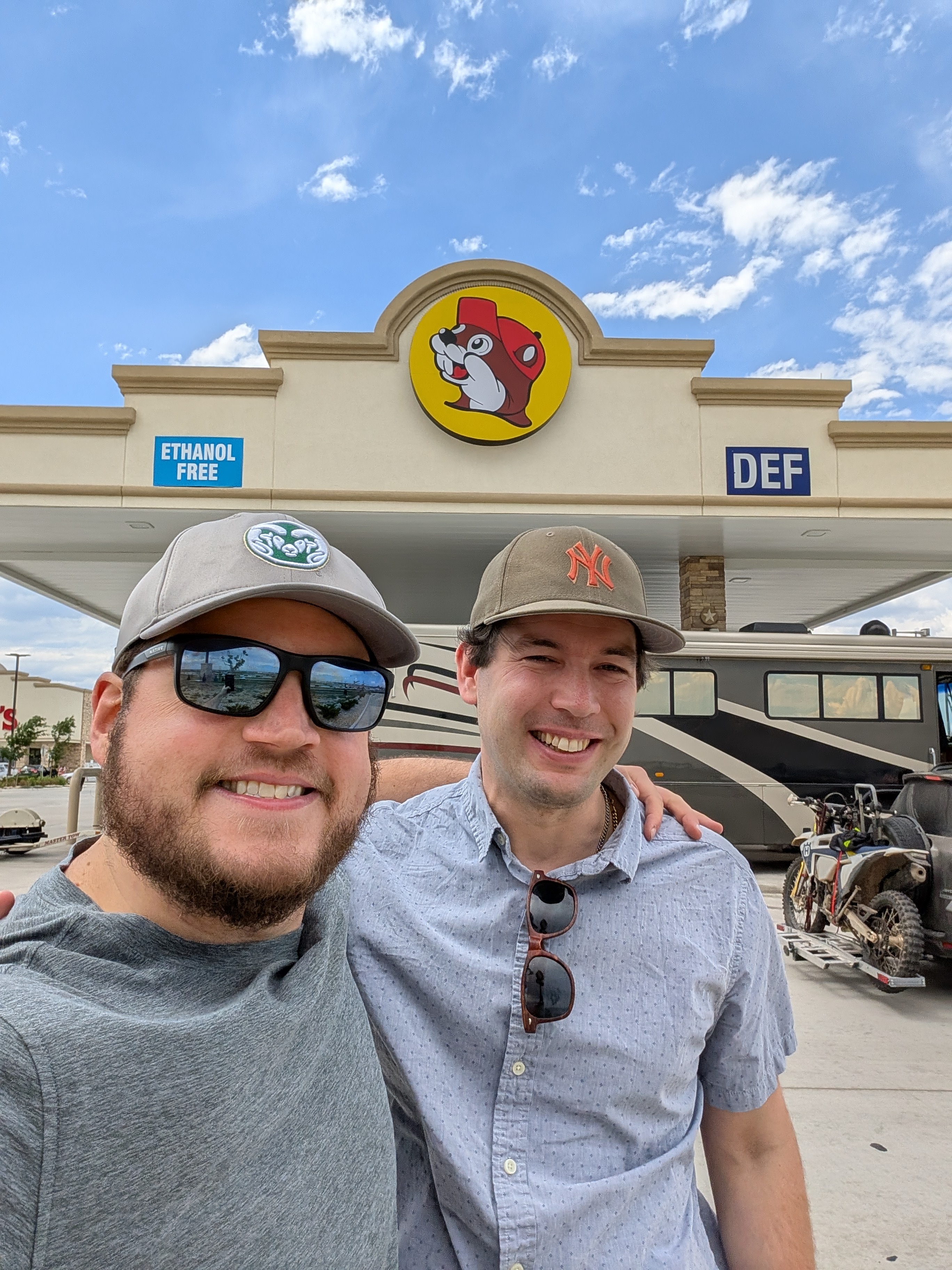
Last year I wrote that I go west for new beginnings, but this year’s trip starts with a blast from the past. I start my annual venture with a diversion away from my hiking crew’s rendezvous point in Denver and head to Fort Collins, Colorado. This Front Range college town exceeds all expectation with its verdant core, a green grid with a pedestrian mall and college bars and teeming life. A good guide helps, of course: in this case it is Joe, one of my oldest friends, a connection sustained since second grade. He gives me and a few of his friends a behind-the-scenes private tour of New Belgium, a leisurely three-hour affair that goes deeper than any other brewery visit I’ve done. The night carries on from there into the morning, dinner and drinks and debate and a blending of worlds would never have otherwise mixed. And yet it is as if we have not missed any time, our interests evolving on parallel tracks into the political world and urban planning and good beer too. This is a deep cut at a time of deep feeling, one in which words do not always come easily to me as feelings surge and demand examination, but a certainty in the paths I trod only grows.
As kids, Joe and I bonded over the Civilization computer game franchise, a fond memory for several people in our Fort Collins dinner party. That game had a certain influence on my way of being: a desire to build worlds, to advance a society toward greater glory, and perhaps to leave the Babylonians in smoldering ruins. But the game has to stop here and there, and it is time for my annual escape from civilization with my usual backpacking crew, a ritual renewed.
The venture gets off to an inauspicious start. Ed, a stalwart member of our party, injures himself on the drive west and has to abandon the trip. Our planned acclimation day-hike at the Black Canyon of the Gunnison goes up in flames as a wildfire shuts down that national park. We plan to start our official hike on the Bear Creek Trail just south of Ouray, but trail maintenance has closed that, too. As we pull up to the Middle Fork trailhead instead, signage warns us that several hikers have been attacked by sheepdogs, including one party just nine days before we set out. But the show must go on. Amy, Bob, Rob, and I head for the Uncompahgre Wilderness in the San Juan Mountains, an escape even many Coloradans do not know. This, I say, is kind of the point.
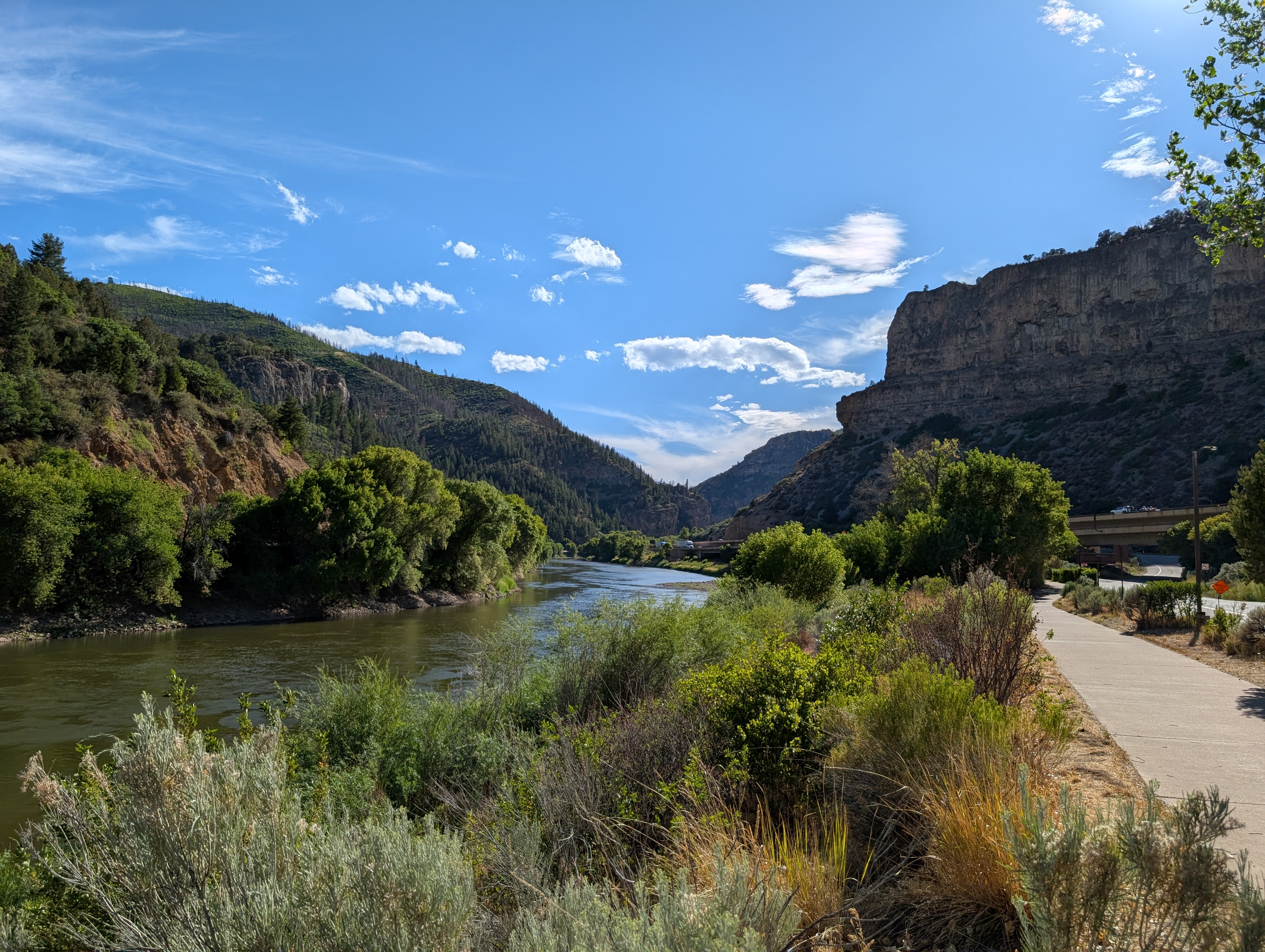
West of Denver, I-70 is the scenic showpiece of the interstate highway system. I have memories etched in amber of an Amtrak venture down this corridor at age fourteen: gazing out the observation car through Glenwood Canyon, the divinity of a Palisade peach. Somewhere on these stretches, beyond the Front Range traffic and the most extreme grades at Loveland and Vail Passes, I find my western release. We cruise down an austere river valley where dusty towns watch the world fly by, a simultaneous invitation offered and challenge posed by a landscape of yearning. It calls forth, speaks of more to find. Its treasures draws in seekers, from 19th century gold to today’s powdery slopes, from conquest of fourteeners to backcountry solitude. The Western Slope is far from the cradle of familiar northern Minnesota woods, not a safe harbor but land that won’t ever quite be so well charted and is all the better for it.
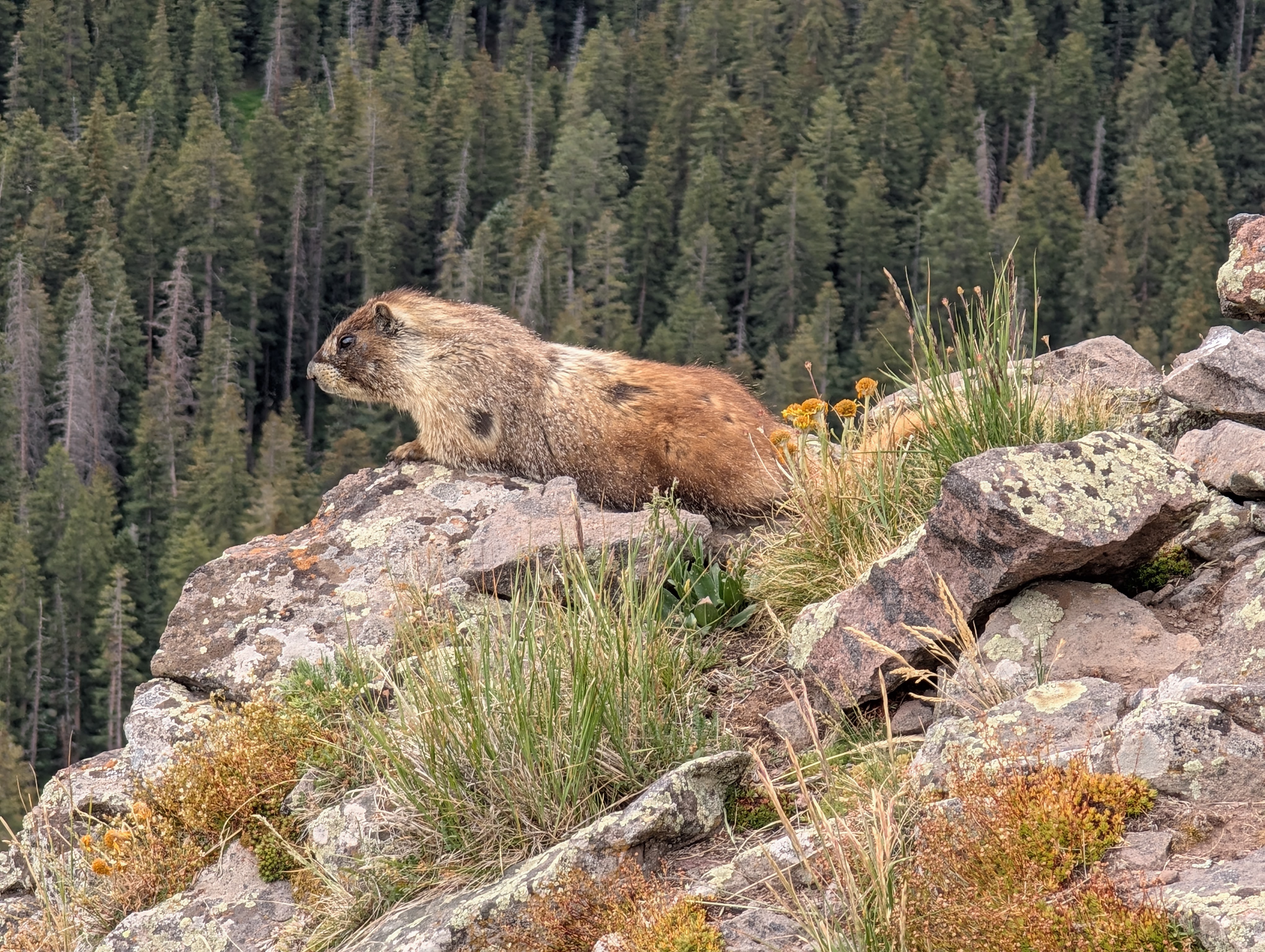
The alpenglow over the Uncompahgre beckons as we swing south from Grand Junction for a night in Montrose. We summit Courthouse Peak for a warmup hike and scramble, gaze down on the field where John Wayne finished off some bad guys in the original True Grit, and enjoy the company of a fat marmot on top. We spend the next night in Ouray, a vein of gold tucked between red cliffs along the Uncompahgre River, its sloping Main Street in classic Colorado style leading up toward the Million Dollar Highway to Silverton. Here we enjoy one of our best pre-trail meals ever at Brickhouse 737, though my pasta with rabbit cannot compete with the eight-year-old at the next table who orders the hibachi smores and roasts his marshmallows over a small flame. We pack in record time in a cozy motel beside the rushing river, breathing easier after a few days at elevation. It’s time to enter the wilderness.
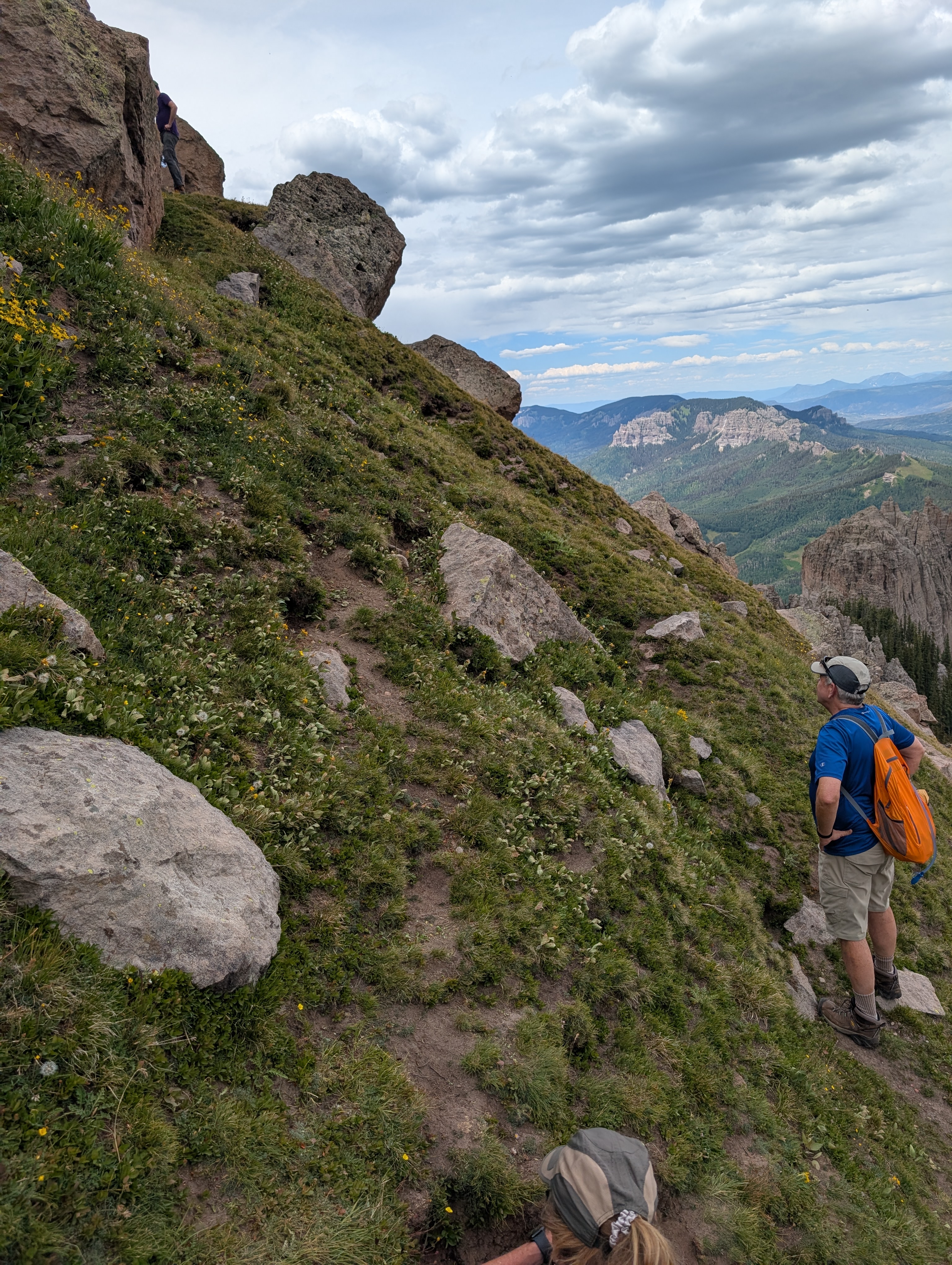
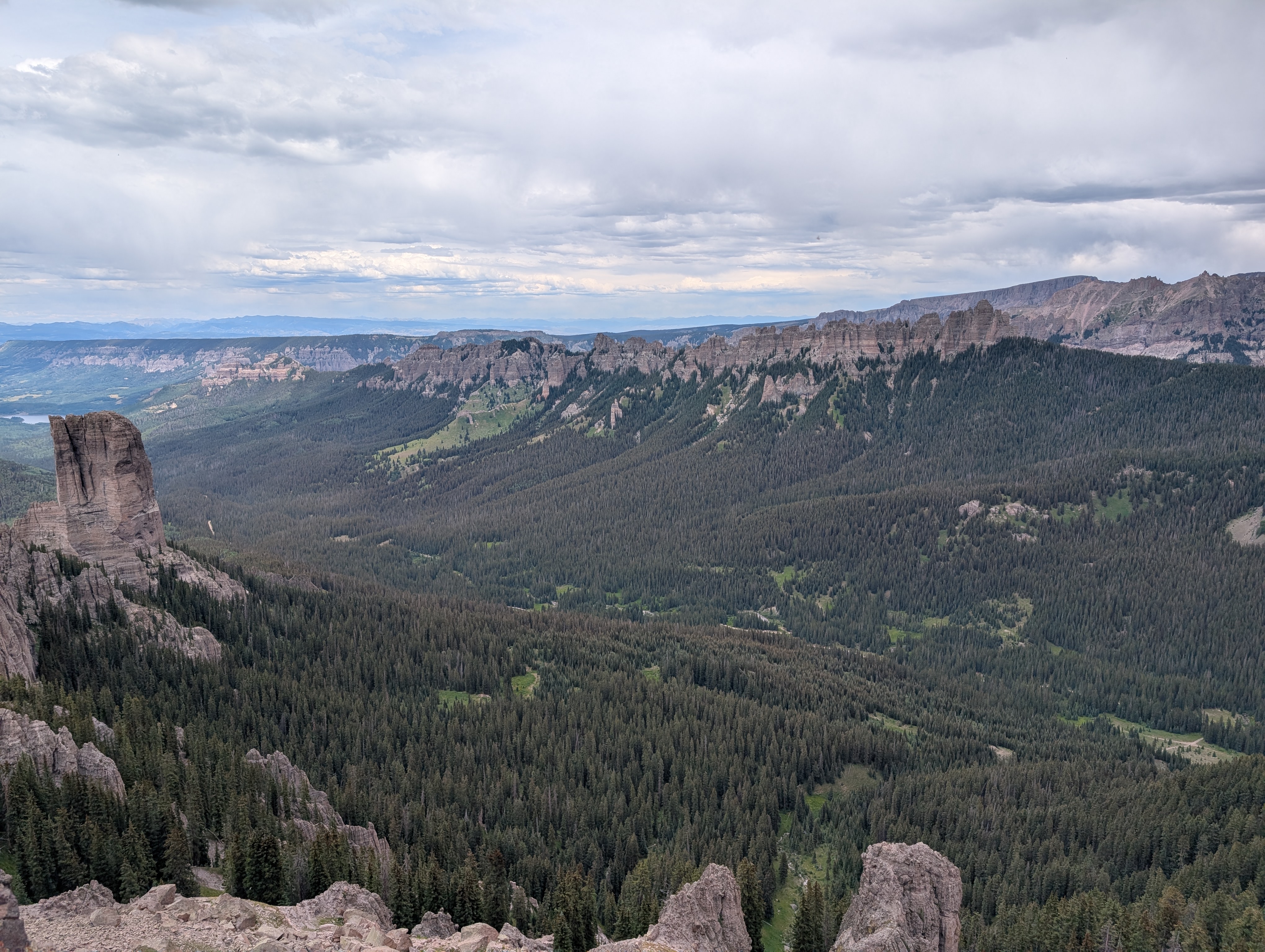
Oftentimes on these trips the first day is a plod to get to nicer things, but in the Uncompahgre, the beauty is immediate. The valley of the Middle Fork of the Cimmaron River, one of three long tines cutting into the northern side of the wilderness, is just wide enough to show its ramparts, a jumble of jagged peaks reaching skyward. We camp the first night atop a meeting of rushing streams, with views up the bowl to the south and down the Fork to the north. The sun bathes the valley in gold as it sets, and a faint crescent moon gives the night a touch of light. All is quiet, and I am where I want to be.
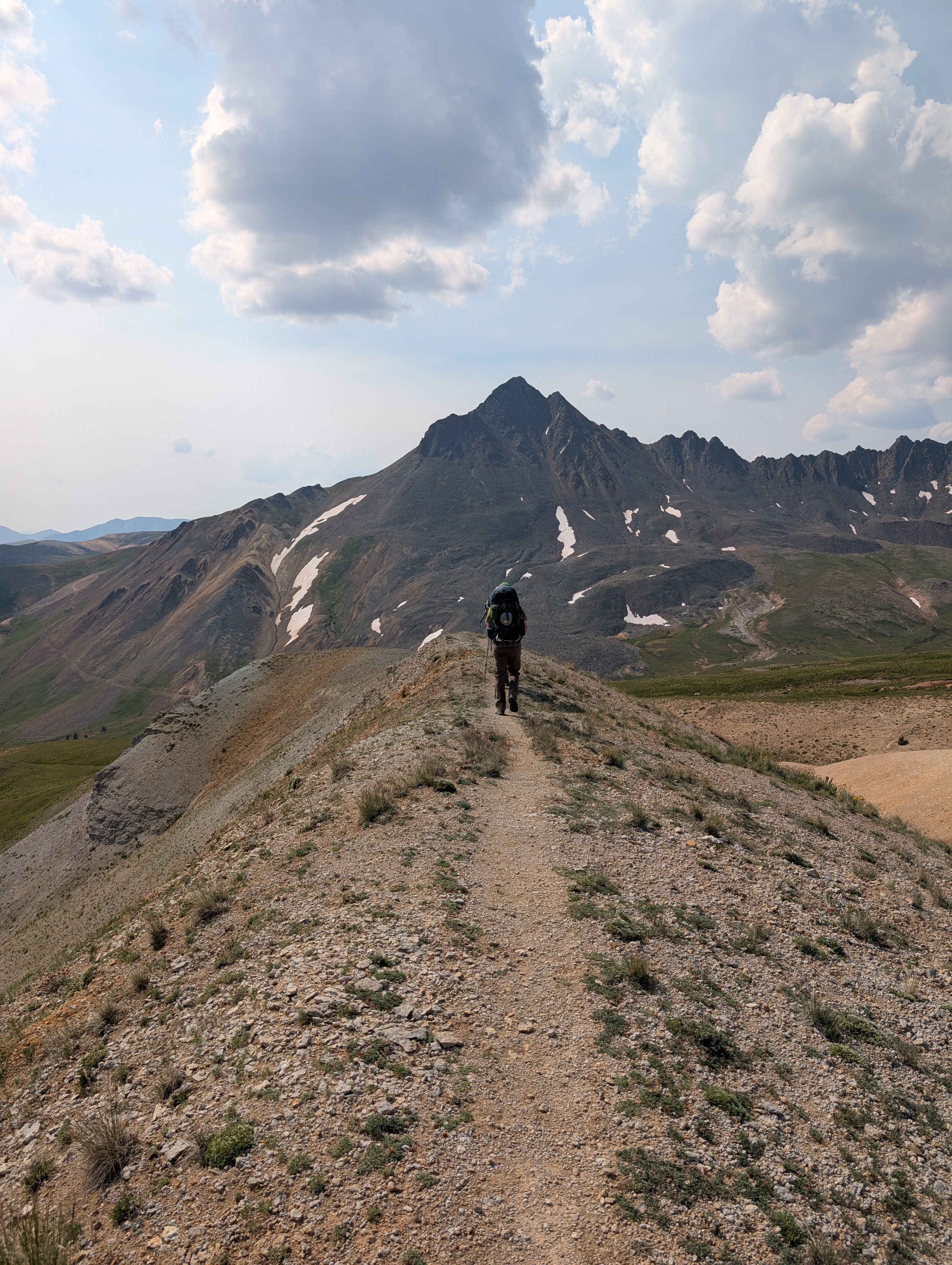
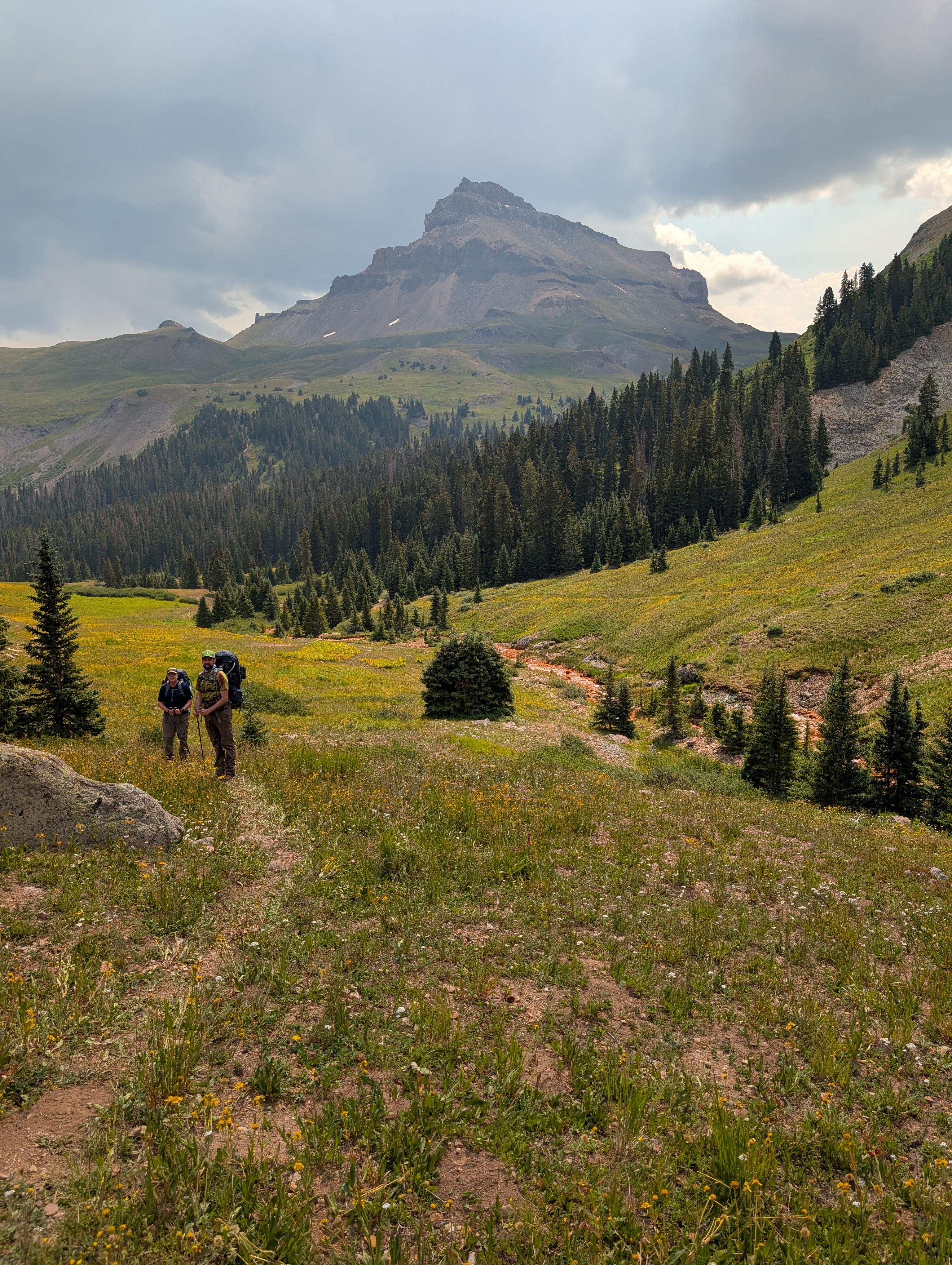
On day two we immediately climb 1,000 feet to a pass between the Middle and East Fork drainages. After we rise above the trees we are in an upward sloping glade of yellow flowers, and after a steady push we come over a pass that reveals the three greatest peaks at the heart of this wilderness: the striking Wetterhorn; the Matterhorn, reminiscent of its namesake Alp; and, to the east, a broad beast greater than all of them, Uncompahgre Peak. With eyes still turned upward at the giants around us we descend from the pass, ford an orange-tinted creek, and scramble up a lightly maintained shortcut trail to an eventual camp by some falls on the East Fork at the root of Uncompahgre. We are settled into camp before the afternoon storm rolls through.
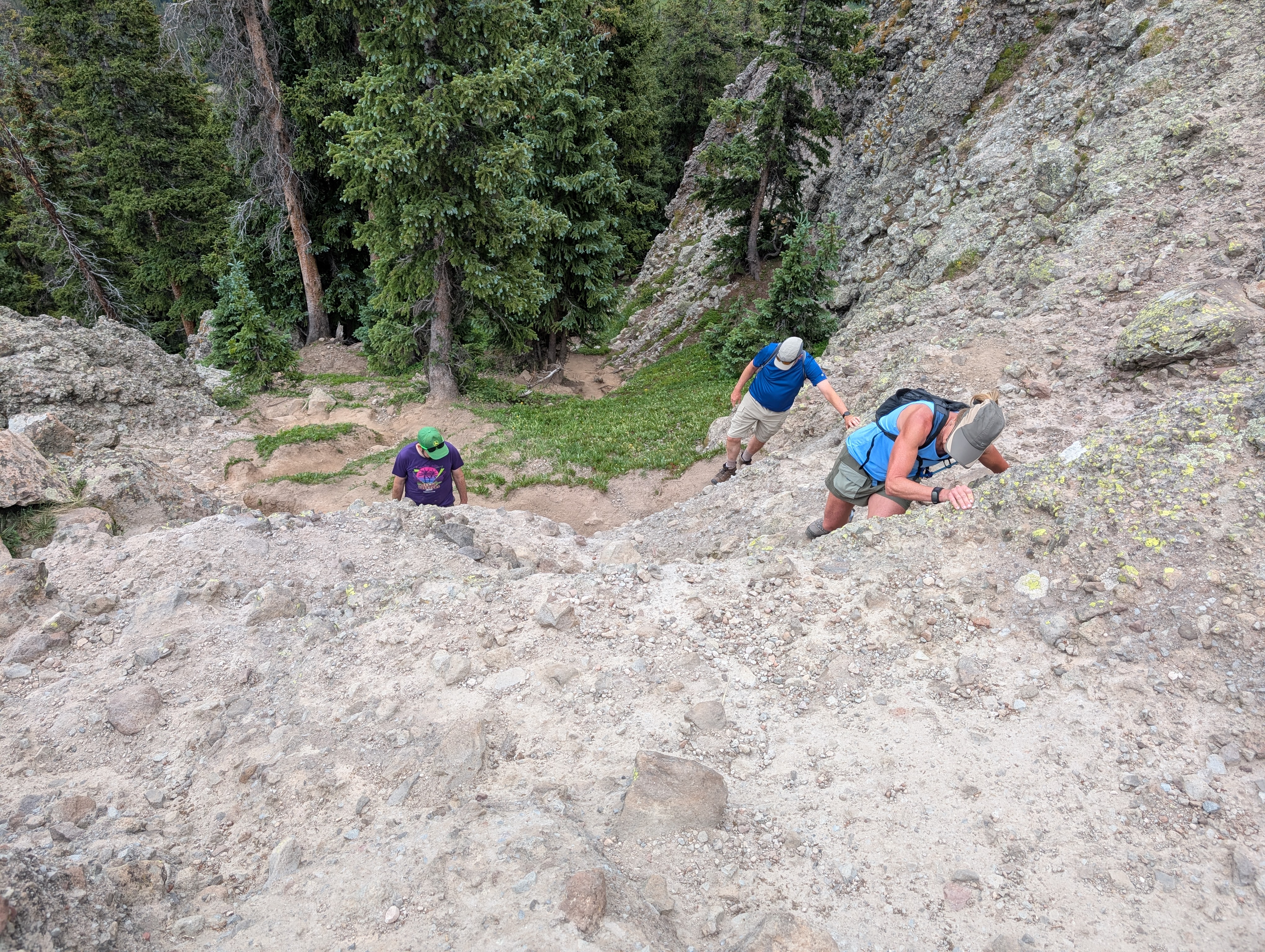
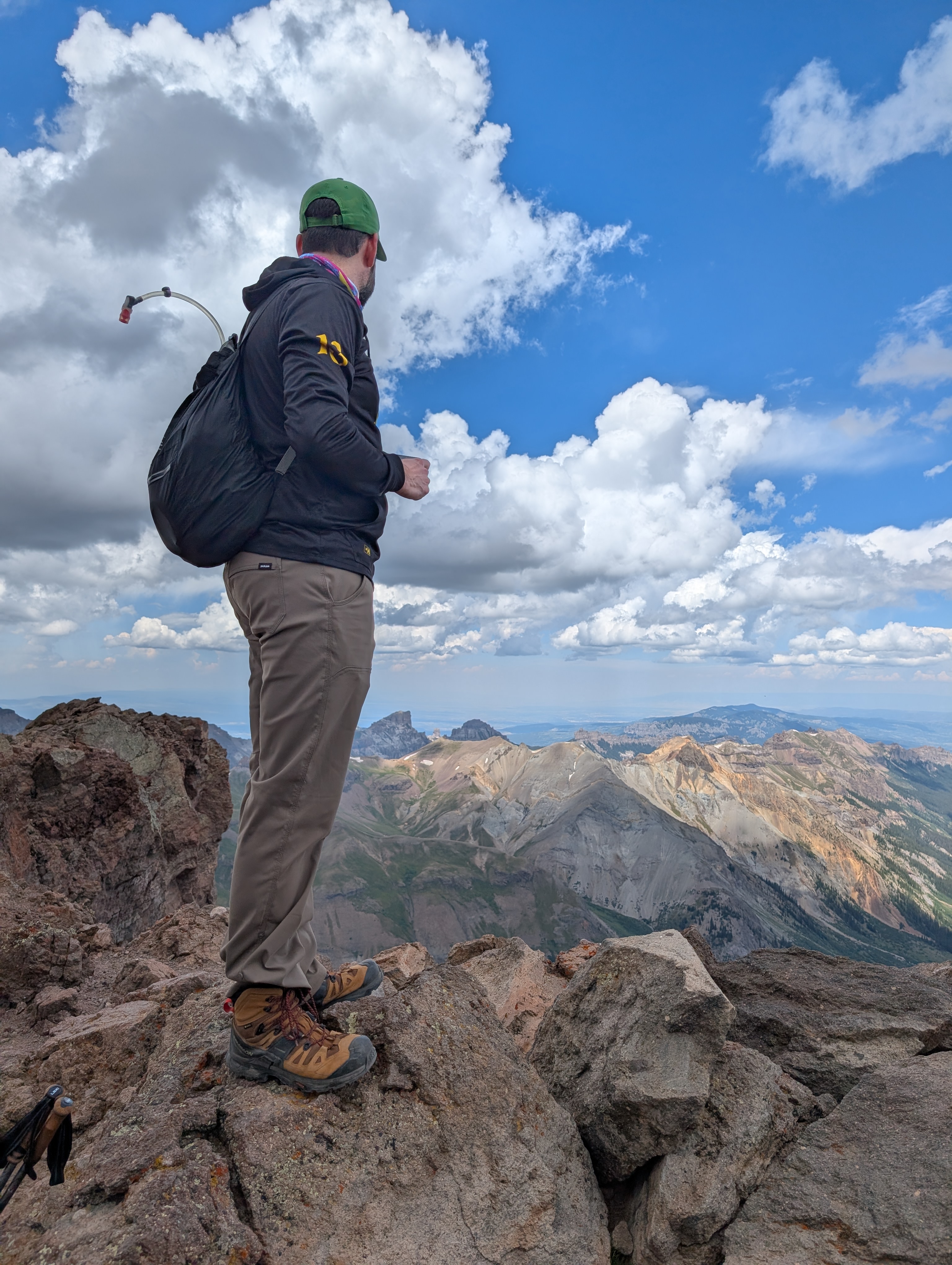
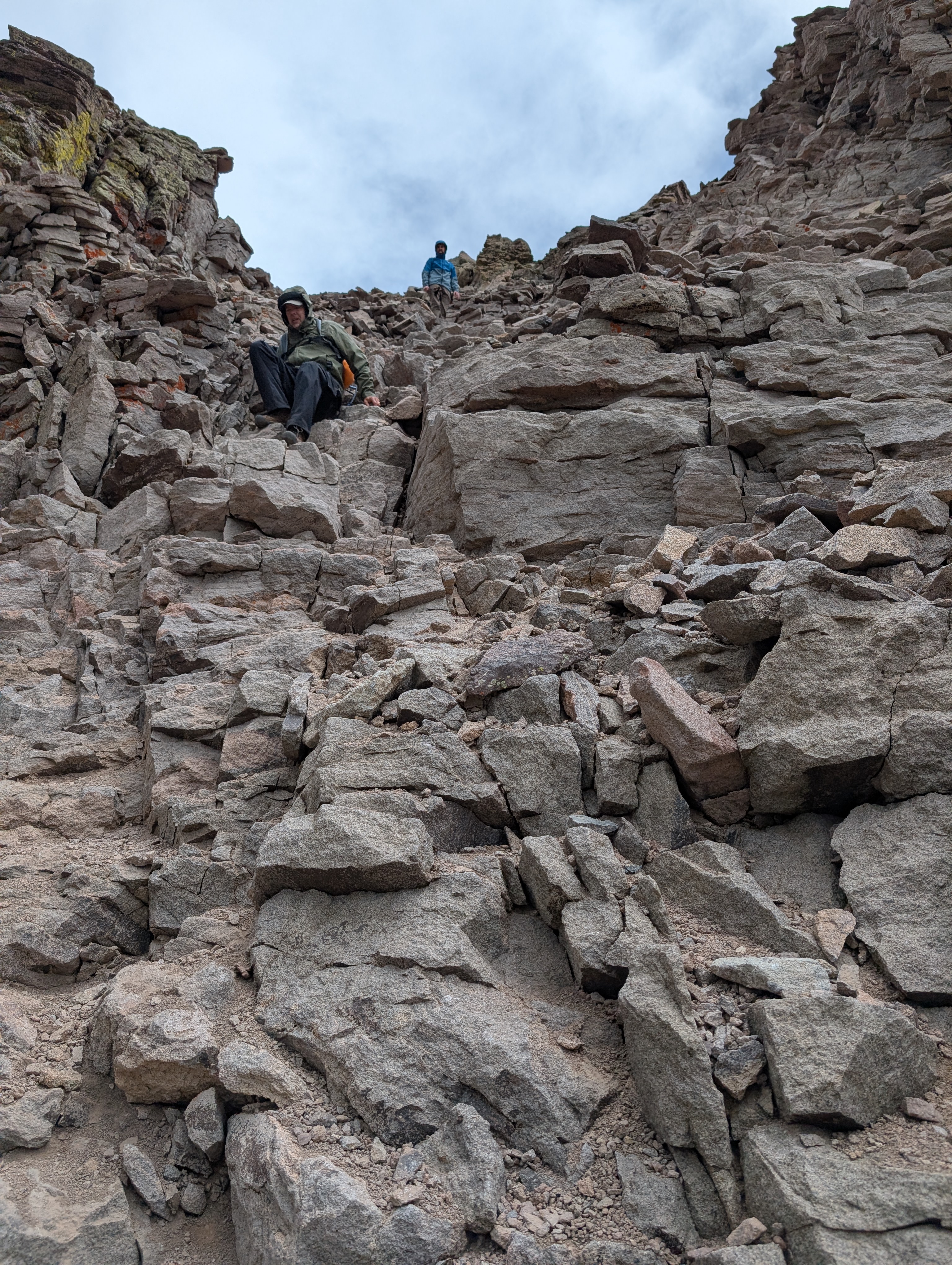
On day three, Bob, Rob, and I set out to bag Uncompahgre Peak. We climb along the creek, up through meadows of yellow and purple and white blooms, an open country trek upward as we circle the peak from northwest to southeast, where the main approach lies. Past the looming Matterhorn, up along sudden tan sands and lingering snow, on up the rolling green ramparts beneath the gothic cathedral spires and concave couloirs of Uncompahgre’s south face. A scramble up a harsh grade begets a long, steady ramp up past pikas and yet more flowers and ground set aside for endangered butterflies. Just shy of 14,000 feet, a wall requires some scrambling, but beyond that is a steady, limited-oxygen stroll to the top. From the summit we have a 360 panorama, sun here and storms there, our arrival just in time: distant thunder rumbles, Rob’s hair on his hand perks straight up as he stands astride the peak, and a few snowflakes start to wander down. Every manner of precipitation falls on our now urgent descent: the snowflakes, some sustained graupel, sleet, a little hail, and finally the rain, which picks up in earnest as we approach camp. When we look back up at Uncompahgre, its upper reaches have a light coating of snow. As day hikes go, this is one of the best I’ve ever done, the looming storm only enhancing the conquest of the summit.
The fickle San Juans weather continues on the hike out on day four. Rain gear goes on and off all day as we descend the East Fork, a graceful vale that proceeds from high peaks to scree fields to avalanche-prone slopes of spruce to red towers reminiscent of Zion. Right at a shaky river crossing, however, comes the coup de grace: a sudden onslaught of hailstones, many as large as chickpeas, comes crashing down and sends us hustling for tree cover. After they have fallen the landscape is strewn with tiny white pellets, the walls to the east coated and glittering and the rutted path below us now a soupy mess of water and floating ice. This is not the least pleasant thing underfoot on the East Fork, however: that title goes to the cowpies, left by a lowing chorus of cattle that harmonizes as we walk by. At least we evaded the sheepdogs.
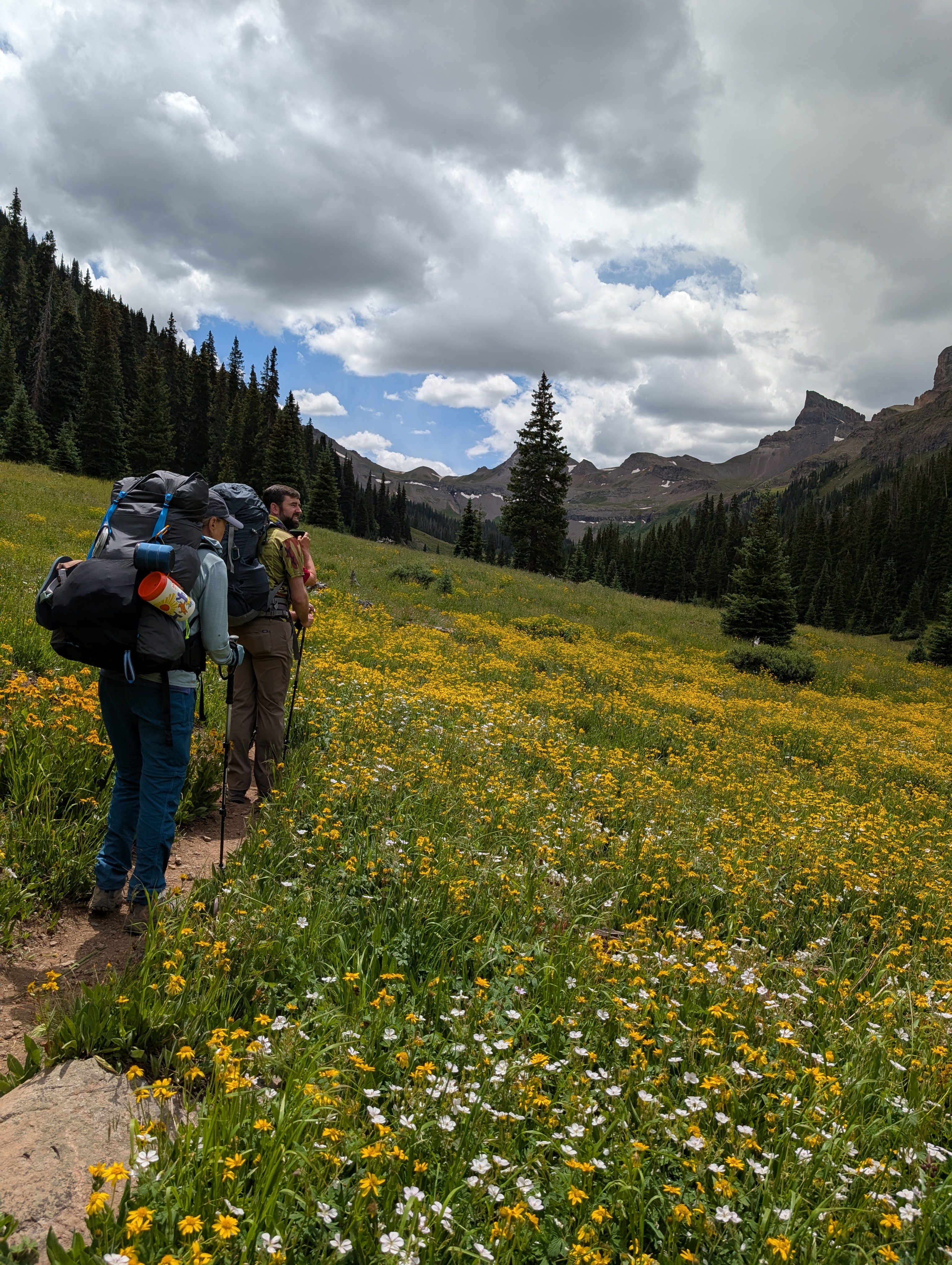
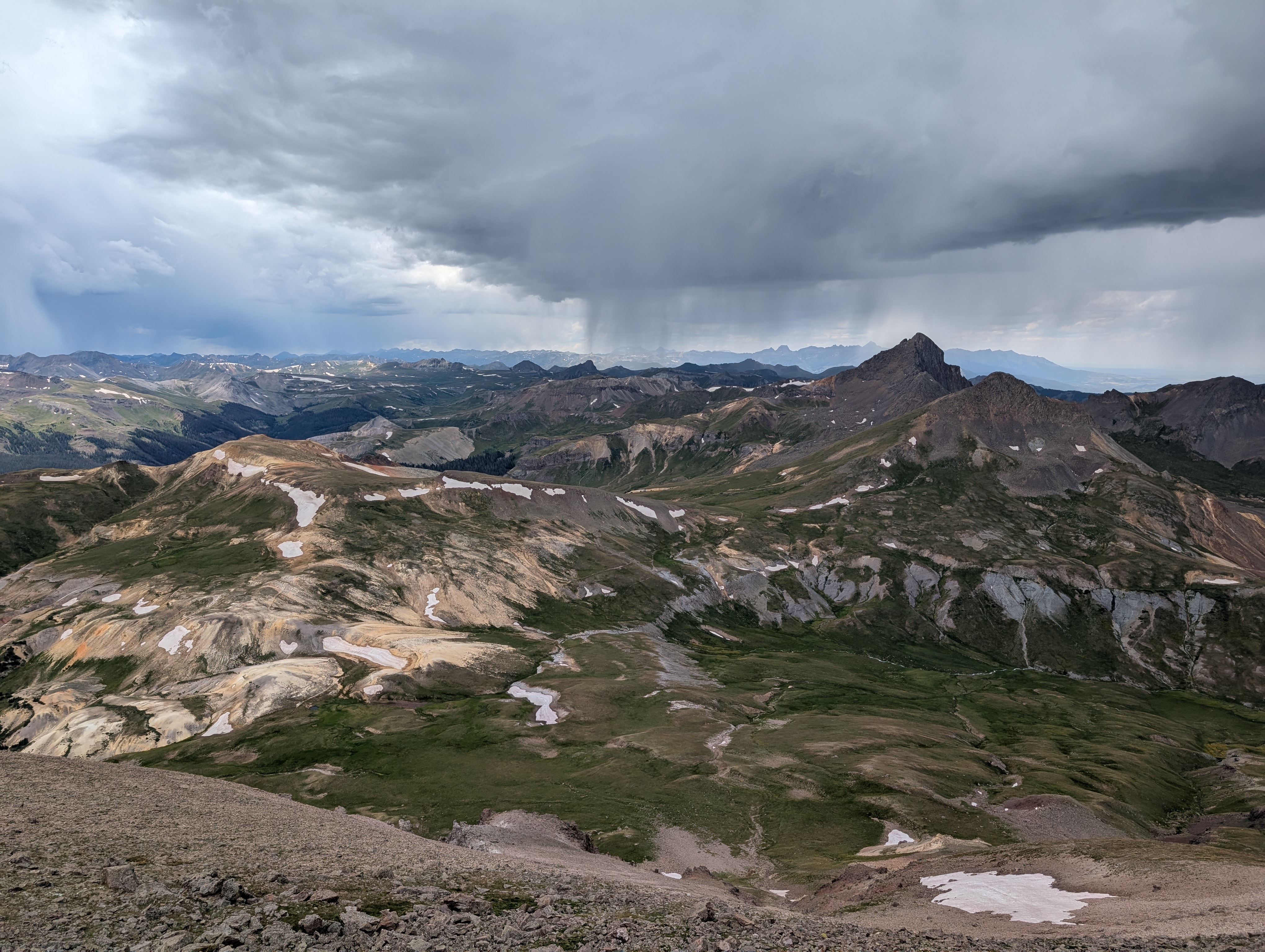
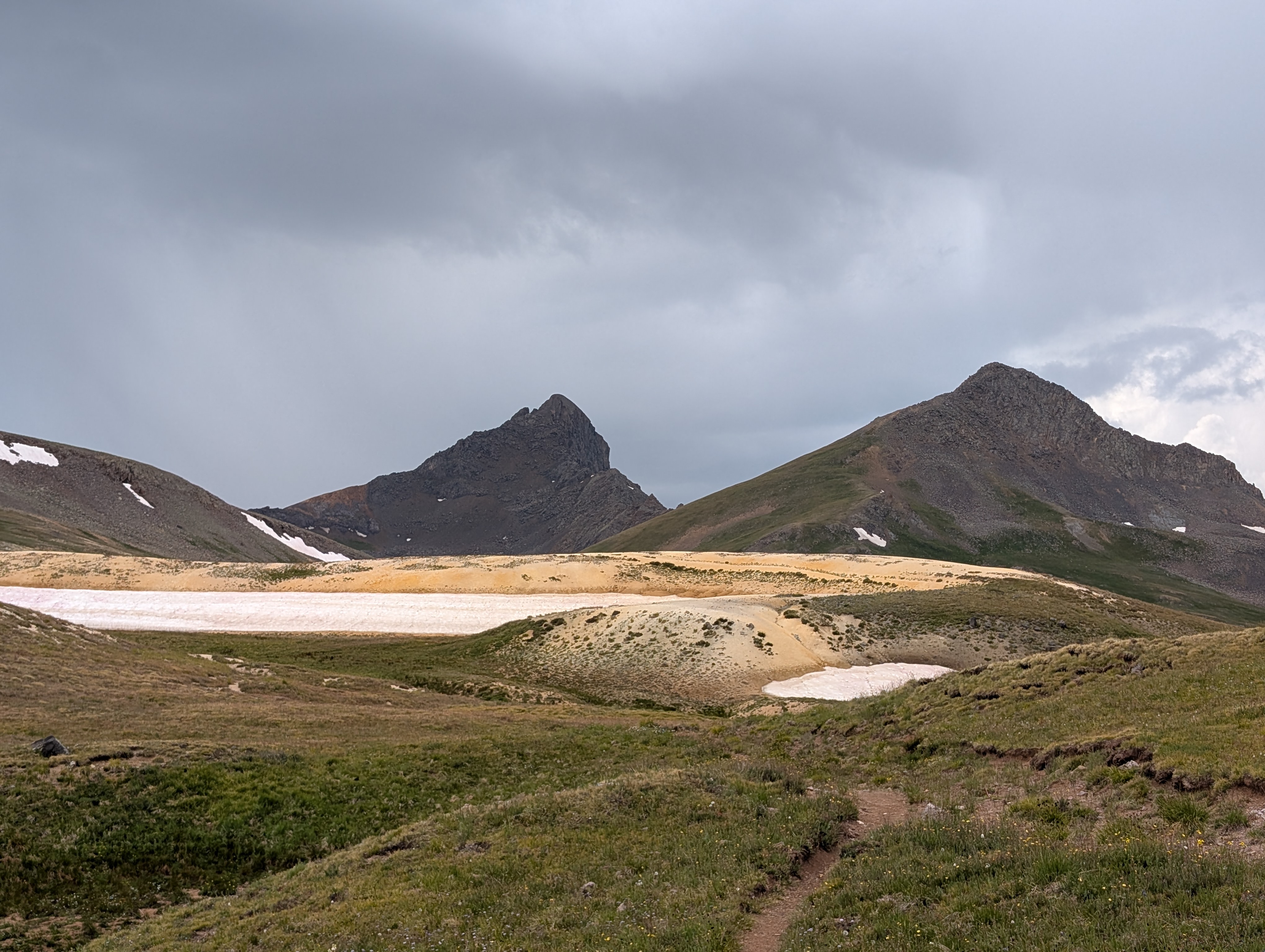
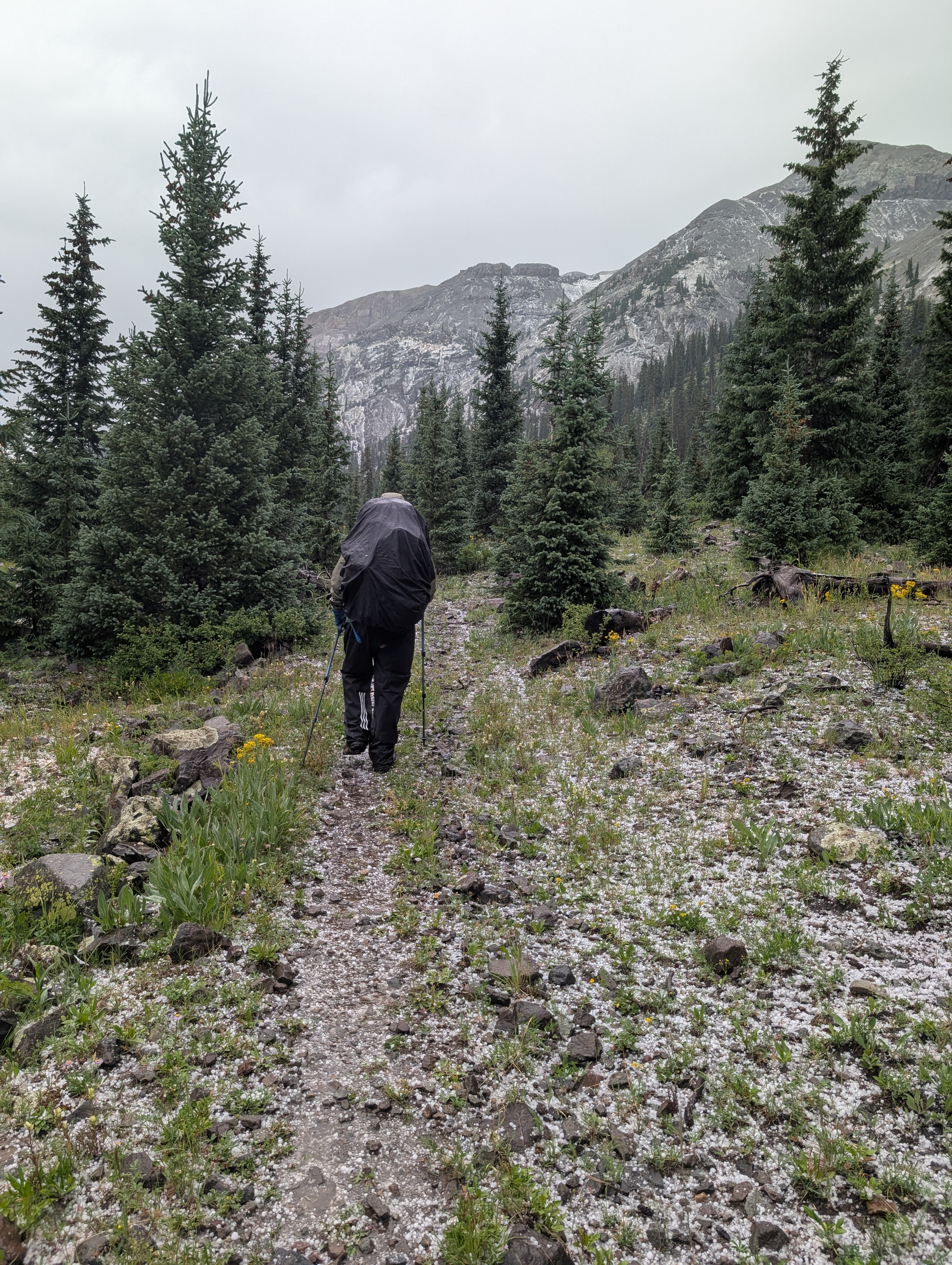
On the final evening we car camp off the Middle Fork, mission accomplished in spite of the absurd hail. Here we have the definition of Type Two Fun, a few minutes of misery that blossom into absurdist laughter and a memory that we can look back on forever, a random Friday on the first of August now immortalized, a remember when we did this, pushed out of comfort and saw a rare new beauty that will only pour gas on this blazing yearning for more of the world. The cattle go quiet and the creek rolls on and Rob and I stand out to watch the stars appear above our stand of aspen, musing on other yearnings we have.
Our two Ford Expedition rentals misbehave on the way back to Denver. The car alarm on Bob’s goes off three times in the night of our final evening, while the one I drive has the tire pressure light go on twice, growing worryingly low after dinner in Denver and prompting an early return. But it is a beautiful ride. We cruise along the Blue Mesa Reservoir, one of those manmade oases that dot the West, both a triumph over and a failure to fully tame nature. Lunch comes in Gunnison, with its bustling downtown, and we then ascend Monarch Pass back over the Continental Divide. The Arkansas River Valley and South Park would look like South Dakota but for the Collegiate Peaks and the backside of the Front Range looming over the high plain. We ascend once more, wind down the Platte Canyon, negotiate our way into Denver for the final night before heading out.
In some ways, Colorado has conquered America. The country vibe that has consumed pop culture this decade may get funneled through places like Nashville, but it has deeper roots in the cowboy west than the history-laden South. This is America as the open frontier, home to the pot-smoking libertine and the fitness-focused weekend warrior. But the frontier is over: after each weekend the chasers of peaks and slopes head back down the passes on I-70 and settle into the creature comforts of the subdivision on the outskirts, the escape to their safe retreats. Something is lost here but we don’t know quite what it is and so we yearn for it, nod to the past and chase a future. In this way, Denver and its environs may be the most American of all cities, spared the extremes of the coastal giants; as a newer city of many transplants, it lacks the particularity of other heartland metropolises, yet maintains a hold on reality absent in the likes of Las Vegas. There is a freshness and youth here, and I get the allure, an American reinvention that avoids the sterility or museumification of older societies. But while I feed off that youth, I need more than it.
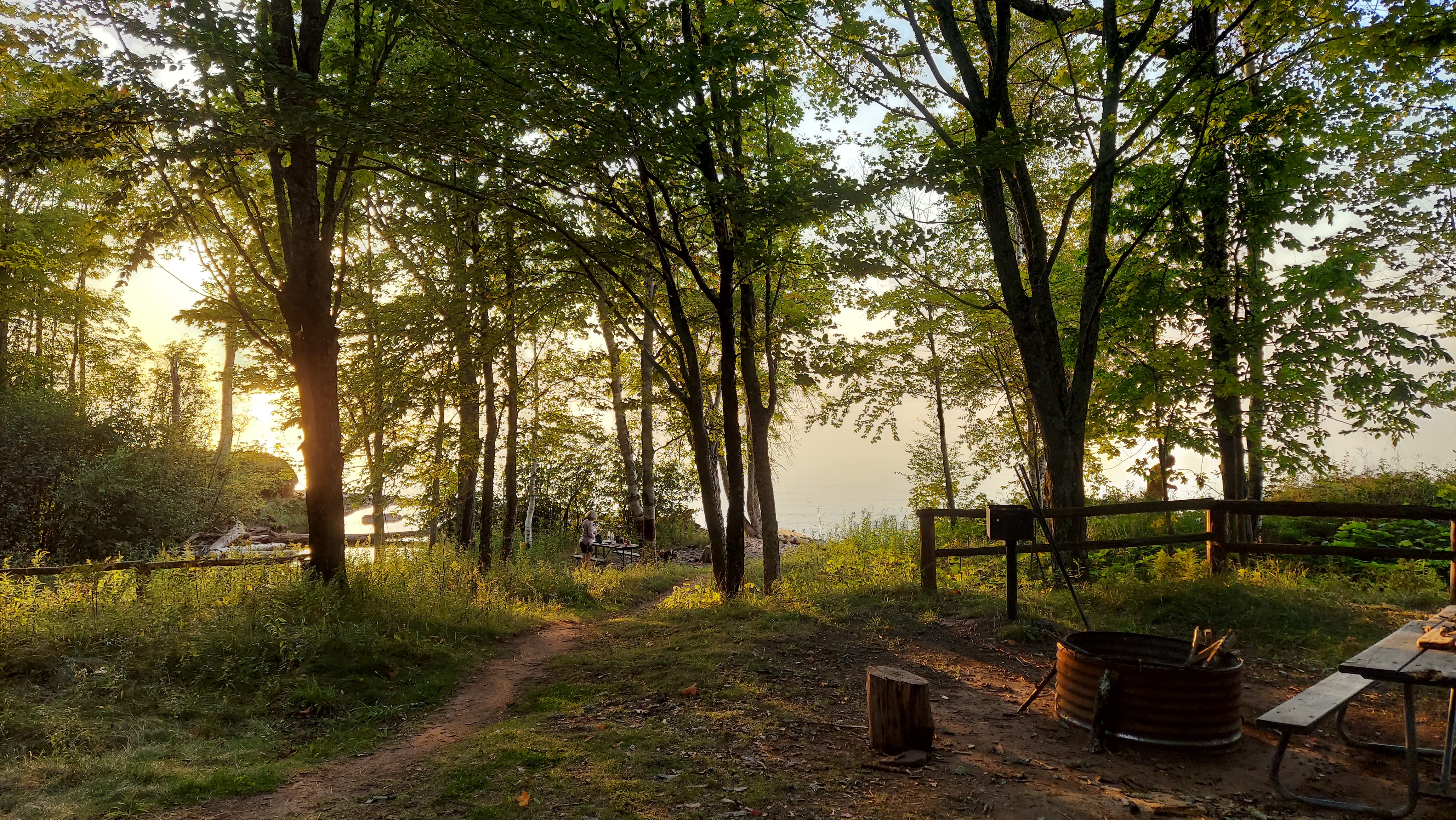
My split personality gives me clues to what it misses. I crave communion, relish tapping into these ties old and new, and over the past several months a shared life has been taking shape through careful steps and weekend drives down I-35. And yet I demand solitude, reflexively rebel in contrarian ways, possess within me a deep instinct to disappear into mountains or at the very least drive off into some anonymous western town where no one knows me and where I can be something other than my staid, disciplined, ever so rational self. The constant in all these strains is a rootedness to the land, a spirituality of place that I find more and more at the core of my being, whether that is in ventures outward to new beauty or a return to the North Shore cradle that birthed my oldest friendships and more recent dreams. These landscapes tell the stories of who we are.



















 A Patient Cycle