This is part six in a seven-part series that began here.
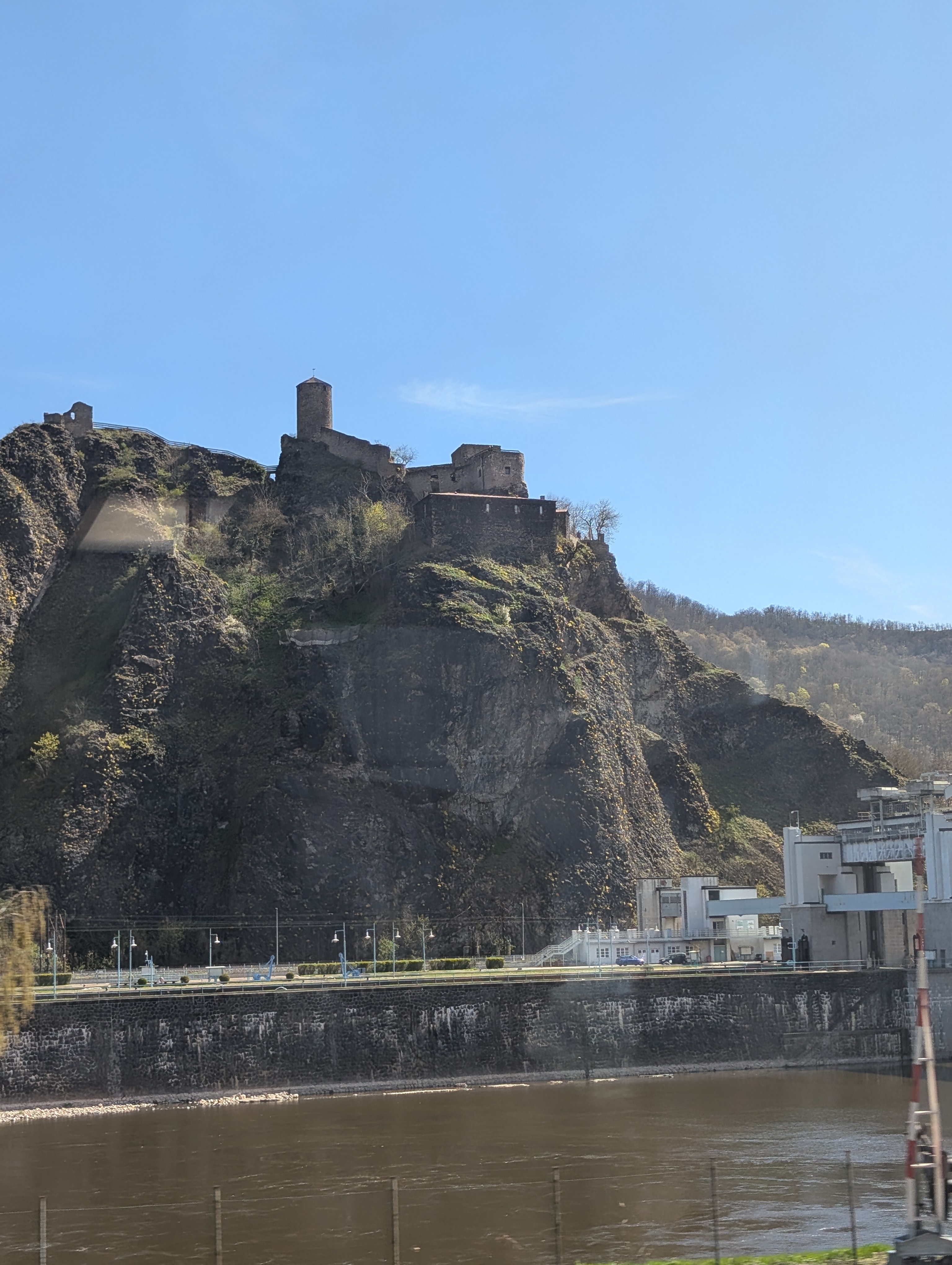
I am sad to leave behind the Prague party, could certainly have lingered, but my pace demands another journey. The train from Prague to Berlin follows the Vltava and Elbe Rivers to Dresden, through dramatic sandstone cliffs not unlike the Driftless Area of Wisconsin and Minnesota, only with some castles added for good measure. For this leg I share a seat with Andrés, a Chilean-born architect who lives in Marbella, Spain with his German wife and two kids, all of whom are on their way from vacation in Prague to visit family in Dresden and Leipzig. We scroll around Google Maps discussing our routes and our roots, and he picks out architectural features of the apartment blocks we pass. Eight-year-old Milo inserts insights on the games he plays on his tablet.
Andrés and family debark in Dresden, where he points out the old towers that have risen from the ashes of World War II carpet bombing, rebuilt as they were. Further north, the landscape melts into generic countryside, with only the occasional Schrebergärten plot to liven it up. The land is flat, the trees only showing the first hints of spring, and I understand why German migrants felt at home in the Midwest. Berlin arises in some charming, green suburbs, and then the train descends into a tunnel before entering the Hauptbahnhof.
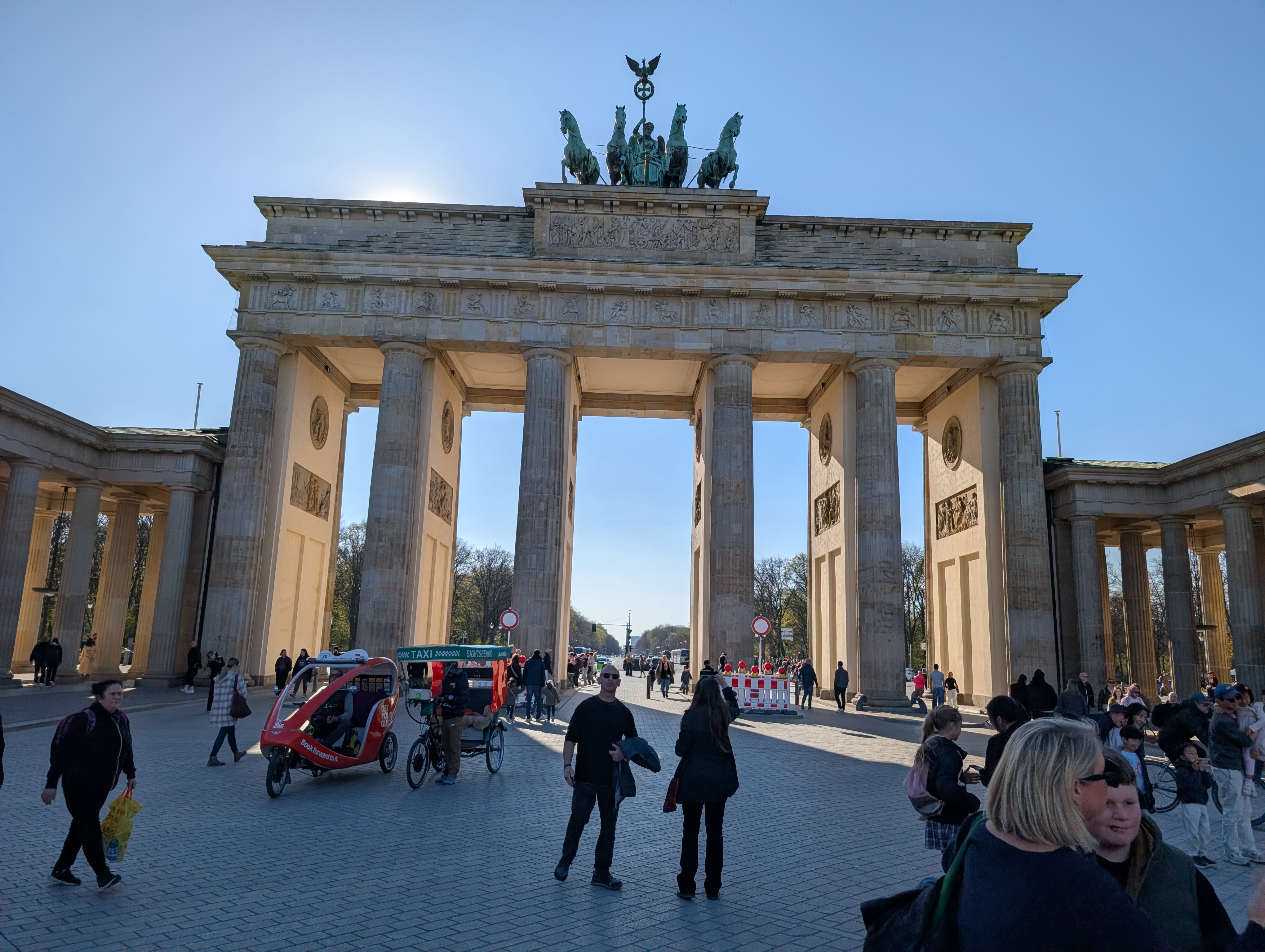
After a series of historic, intimate city centers, Berlin is jarring. Here is a giant modern city, authoritative and commanding, any quaintness blown away by the Second World War. In some ways, the result hardly feels European. The flat land, grey skies, and elevated trains trip comparisons to Chicago in my brain, though the eastern Tiergarten feels more like the National Mall in Washington DC. The interiors of blocks reveal secrets: once, trying to find a restaurant, I wind up in the silent courtyards of a hospital; later, I slip into one and find a modern brewery that suits my needs for the night. And did I mention the beer? Berlin is a place where contributing members of society may be casually sipping cans on the subway at noon. Biergartens are everywhere, right in front of the Brandenburg Gate on Unter den Linden and scattered in any stray park, ready to welcome visitors for a casual night or a long descent into the German national drink.
The hostel where I have a private room is huge and utilitarian, my one lodging misfire on this trip. The clientele appears to be 80 percent under 22 and 19 percent over 50, and I find myself in a liminal zone. I am, finally, probably too old to pass for some 20-something traveler with all life commitments ahead of me, a state I could pull off even a couple years ago; I am still closer to them in energy, but it is no longer a natural fit to slide in. Any peers my age or somewhat older are with partners or families, and not really looking to meet random people. I am also too young to take on grizzled globetrotter status quite yet. And so I drift about, take a beer in the hostel café and chip away at my notes for these essays, glancing up here and there to watch the show passing by.
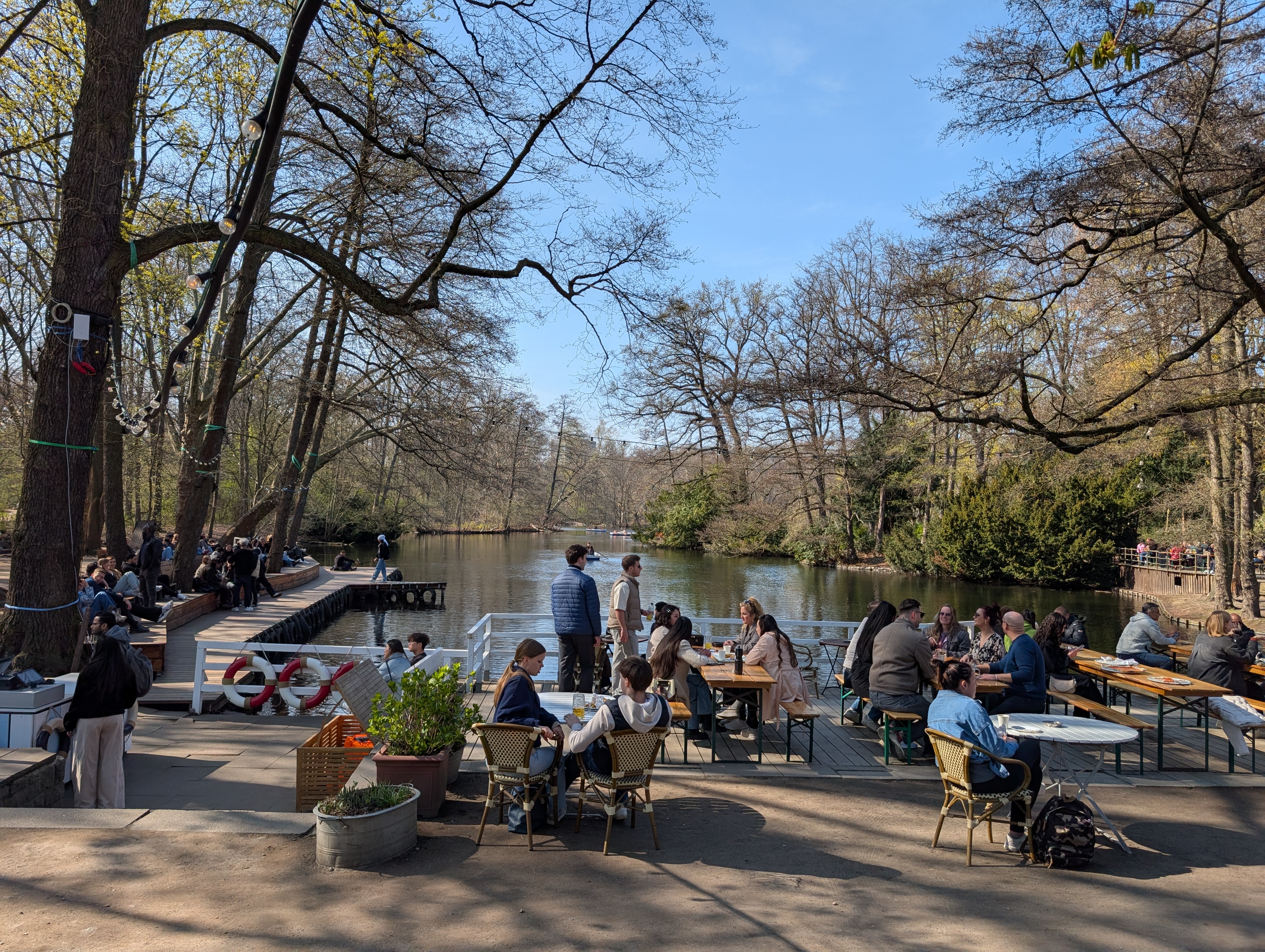
Mostly, however, I wander again. Berlin is a shift after all those walkable, quaint downtowns: while the pedestrian infrastructure is still good, this city is big and spread out, I make good use of a tourist metro pass. Around I go on subways and trams and elevated trains, popping out to see what the German capital has to show me. My first two days here are cold and on the bleak side, but my last full day in Europe is resplendent in sun, and I stroll across the Tiergarten and find a sprawling terrace to drink a lager and eat a full chicken. (“How many fucking chickens died for this place?” ask some Brits as they wander through and survey a host of Berliners enjoying this afternoon.)
Any visitor to Berlin should understand what it was before the Allied bombers unleashed their barrage and the Red Army marched in. Here was a city that was rising to surpass London and Paris as a center of culture and art, the confident capital of Europe’s largest, most ambitious state. The tale of twentieth century Germany is in part a story of tragic hubris and in part a story of what can only be described as pure evil, made somehow more discordant knowing that it came out of this refined, cultured, technically proficient young state at the heart of Europe. A nation fused out of old principalities by Otto von Bismarck in the 1870s was on a meteoric rise before the nonsensical charnel house of World War I and humiliation by the Treaty of Versailles fed into the toxic brew that unleashed a genocidal explosion.
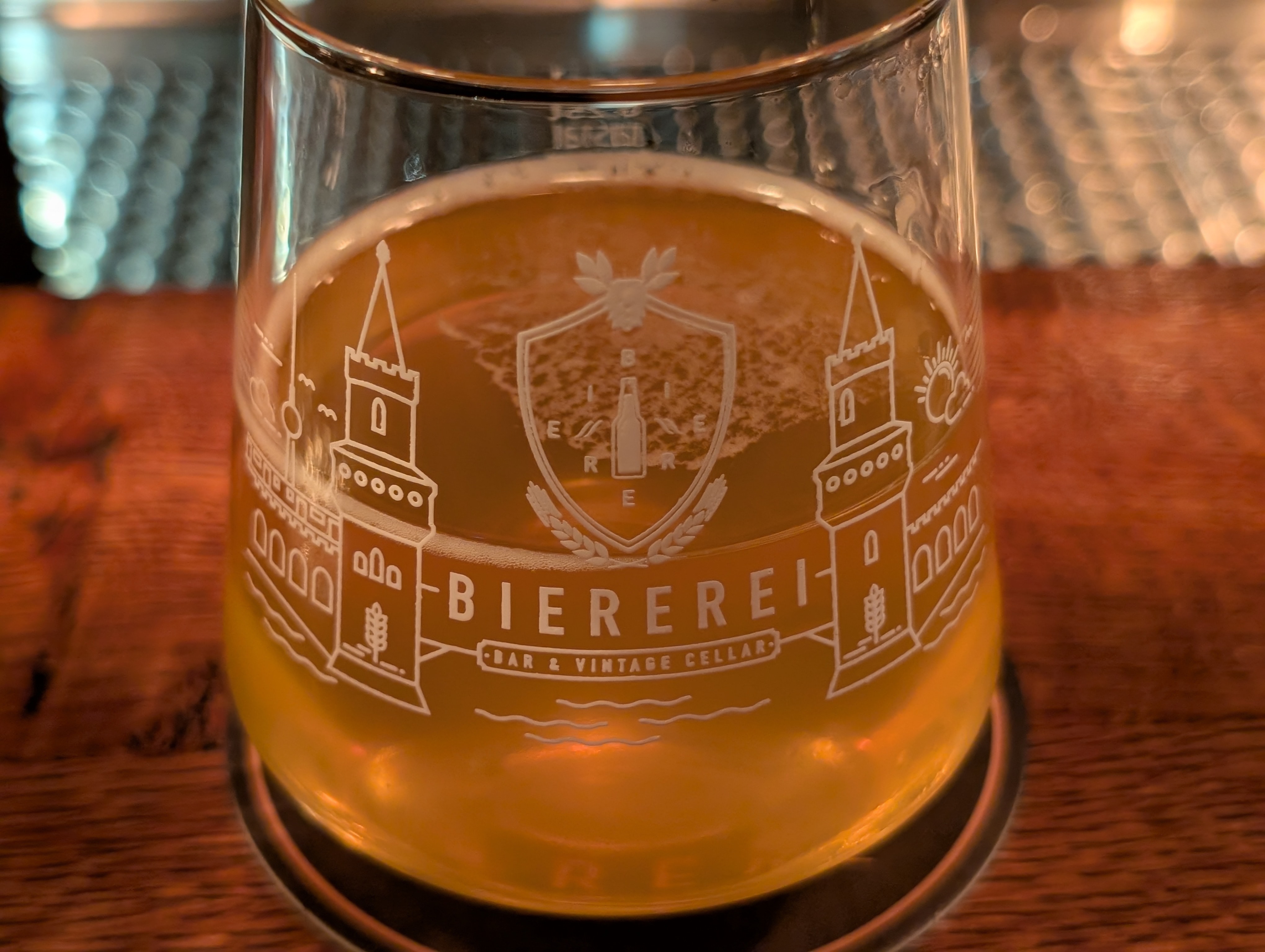
The war and its aftermath hang over all of Berlin’s great tourist attractions. This city’s cosmopolitan feel, I suspect, comes from the fact that so many people in recent decades have had a chance to add their own bricks to its rebuilding process, rather than just inheriting the pristine old order of a Vienna or a Prague. It is unlike the rest of Europe because it is almost entirely a new city that rose from complete devastation in 1945. Many of contemporary Berlin’s cultural markers are gifts from later arrivals: doner kebab and currywurst may be its best culinary offerings, and the range on offer here beats anything else I’ve seen in Europe. Even the beer scene, while honoring its German roots, pulls from beyond; I spent a delightful night at Bierirei, with beers on tap from all over the world (including Central Waters in Amherst, Wisconsin!), and chat with a Belgian brewer and a crew of Swedes, all passing through to sample the fun.
The recovery process from past devastation, impressively rapid in the West but dragged out over decades by the division of Berlin, continues. Even Museum Island, with its remarkable collection of antiquities and artwork, bears the scars of war. The museums sustained damage, and though many great works were stashed away in bunkers, fire came for some of them, too. The Soviets made off with troves of loot after they sacked Berlin, and the ownership of many works remains a sticky topic. Even with these lasting wounds, Berlin’s collection of cultural capital is remarkable.
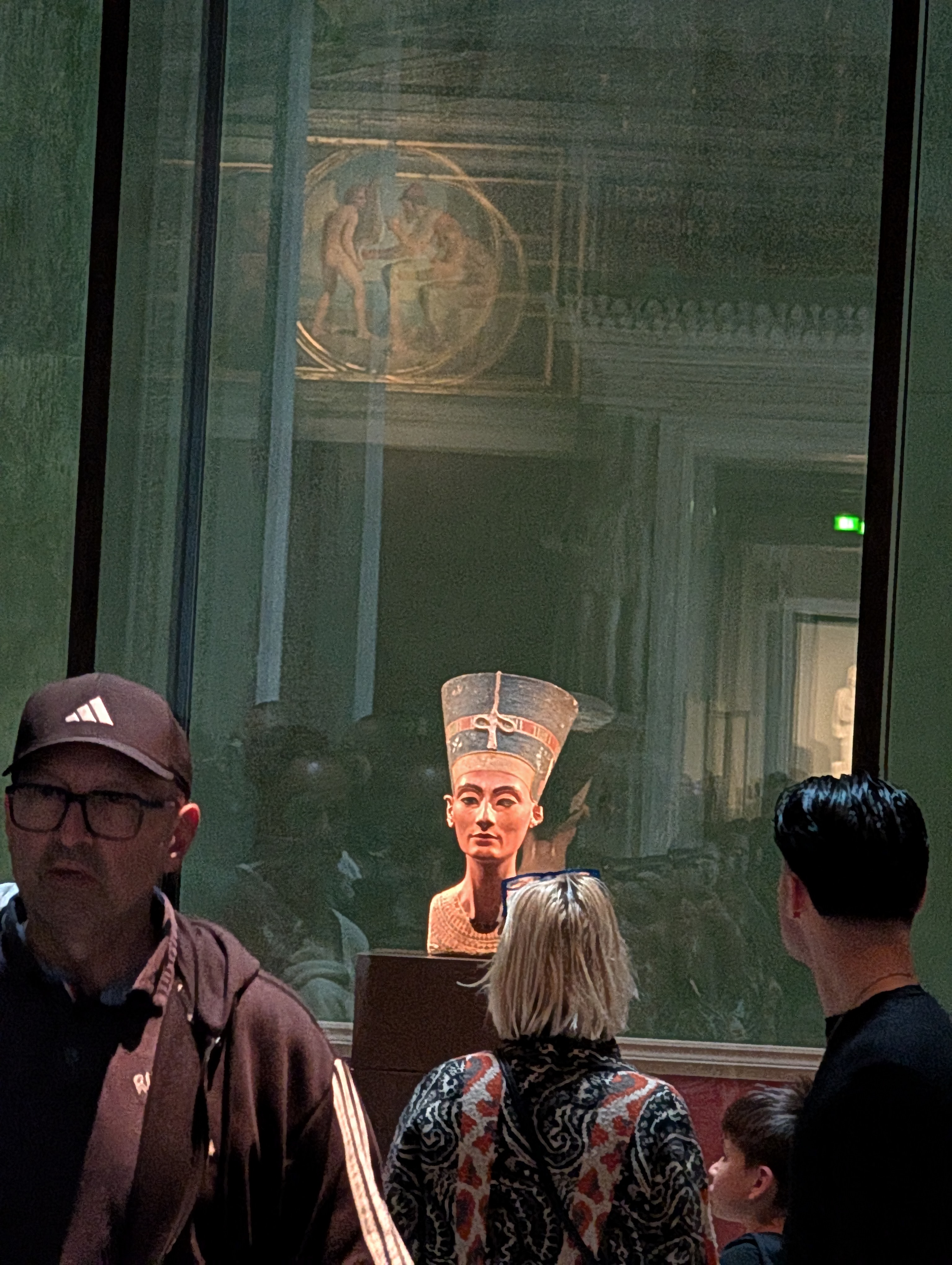
Alas, the Pergamon, home to a reconstructed Greek temple and Babylon’s Gates of Ishtar, is undergoing a three-year renovation. Berlin has atoned for its absence by creating the Pergamon Panorama, a museum across the street that features a few statues and friezes from the temple and a giant, four-plus story, 360-degree panoramic installation of what Pergamon might have looked like in the 100s AD. Next door in the Neues Museum I find the Bust of Nefertiti, along with some pieces from German antiquity and some Greek statues and a lot of Egyptology. The Germans do museum atmosphere well, too: the halls of the Neues have moody art and some Egyptian zodiacs on the ceilings, while the collection of sarcophagi in the basement very much feels like a tomb. Next door, the Bode Museum, home to sculpture and Renaissance and Byzantine art (because I just can’t quit the Byzantines), is a palatial structure. Giant doors open and close with slams, footsteps echo across cavernous rooms, and the occasional elevated train rolls by to break the silence of an early Saturday morning, a haunting aura given to the frescoes and altarpieces on display.
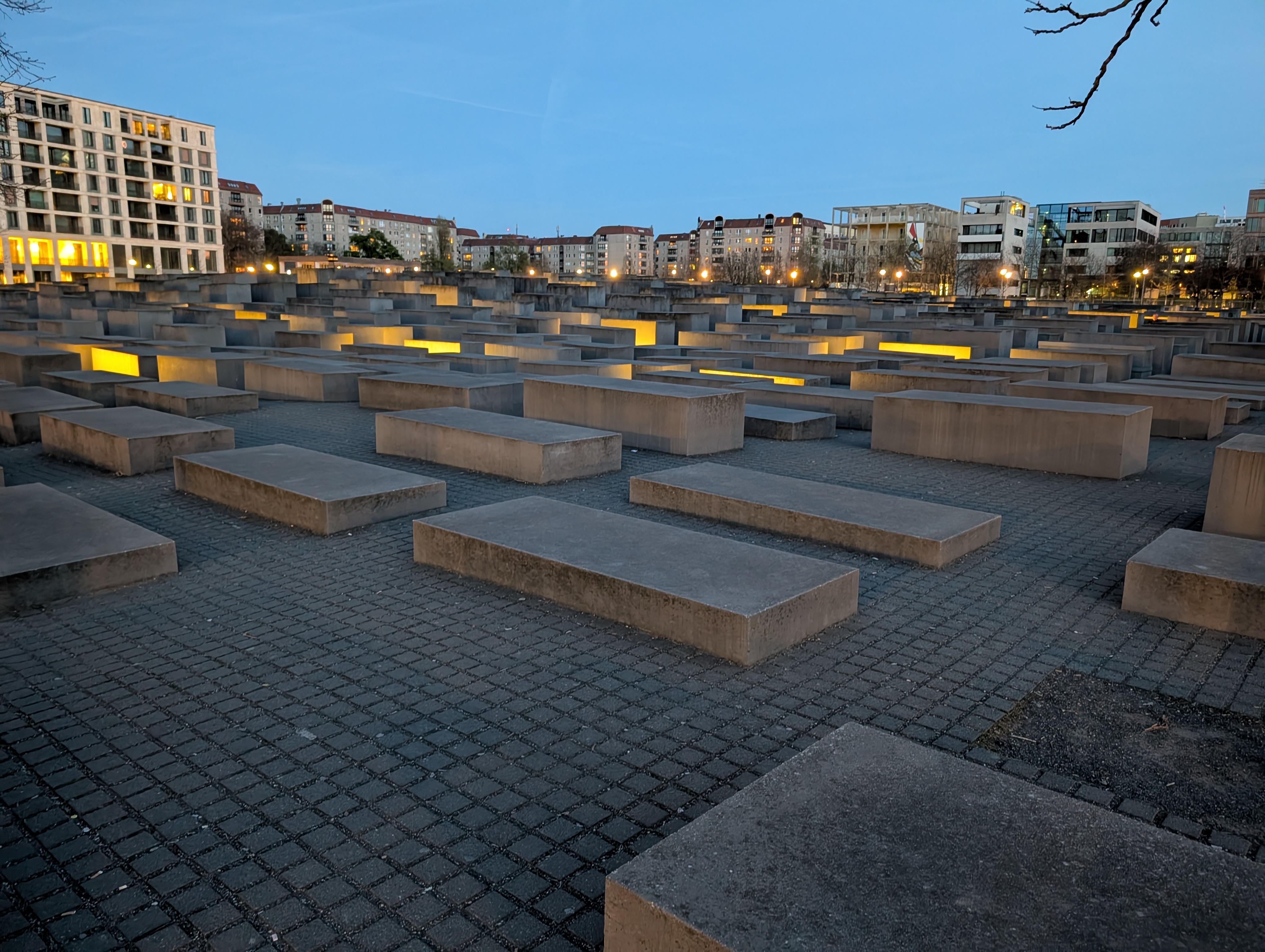
Most of Berlin’s history, however, is from the last century, and it is often heavy. The Memorial to the Murdered Jews of Europe, right in the shadow of the Brandenburg Gate, starts as a row coffin-shaped concrete blocks that get taller the visitor descends into a maze, a brutal logic unfolding at the scale of a mass ordered slaughter. Peek down one row and an empty expanse extends toward the end of the memorial, down another a child flits in and out from behind the tombs, down yet another someone purposefully walks away, whether toward an exit from the madness or deeper into it one cannot really tell. A little ways south, by Potsdamer Platz, the Topography of Terror carefully documents the depravity of the Nazi regime. On the site of the old SS headquarters, a series of exhibits methodically outlines the choices made by National Socialist leaders and the fates of the perpetrators. Near the end it offers diaries of three different Berliners, all of different political backgrounds and orientations, revealing their thoughts as the depths of the horrors perpetrated by the Nazis slowly came out.
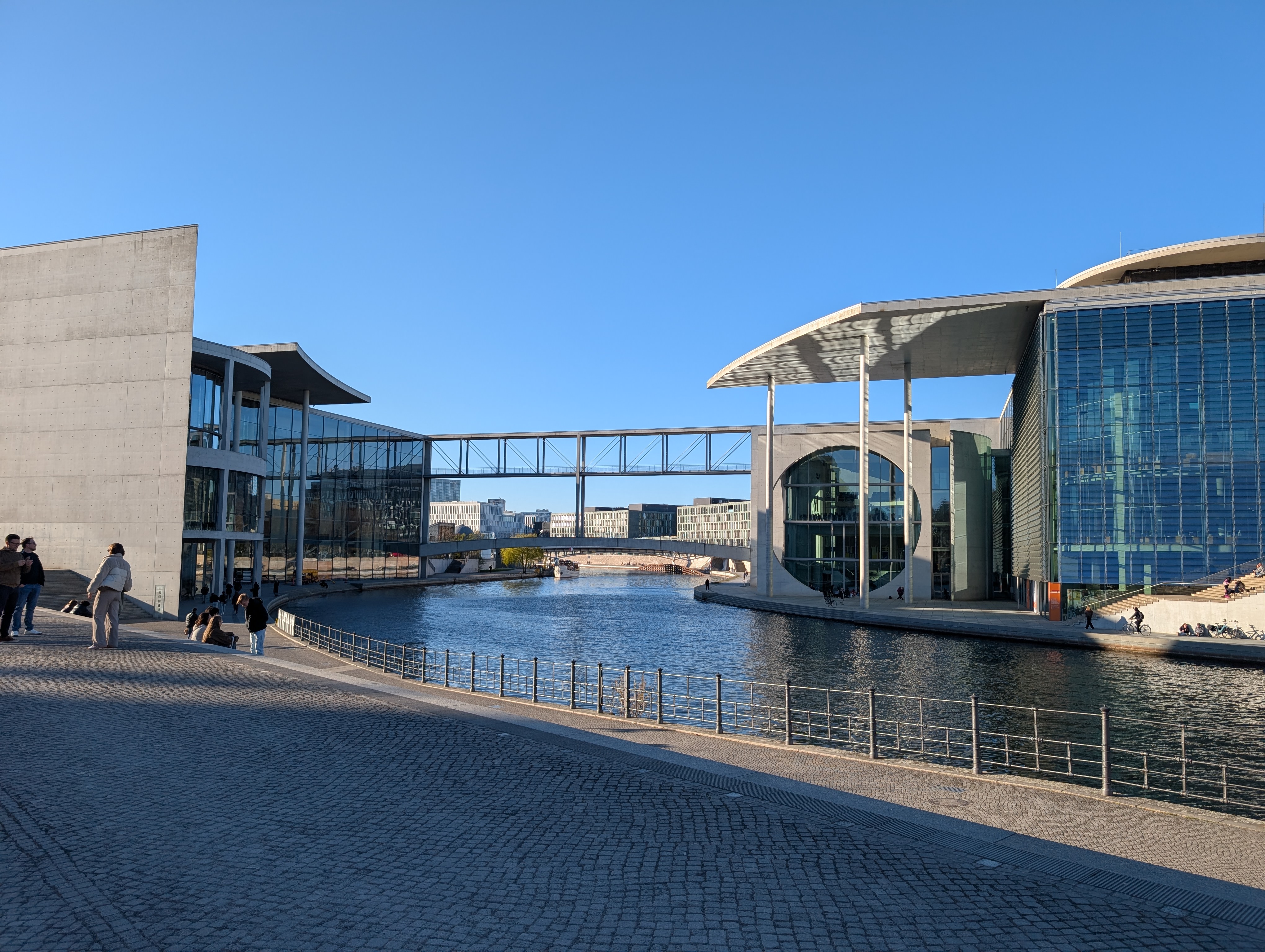
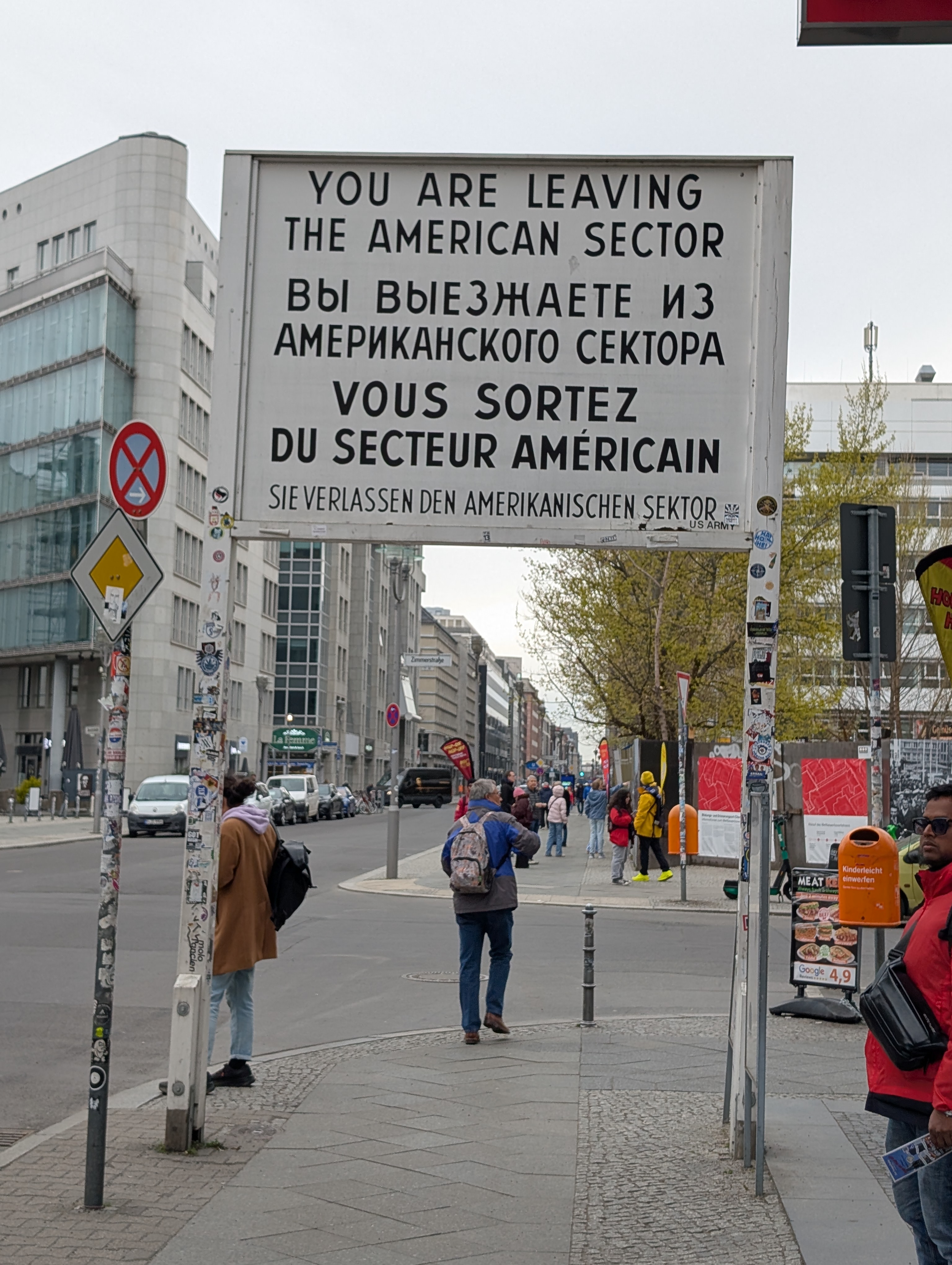
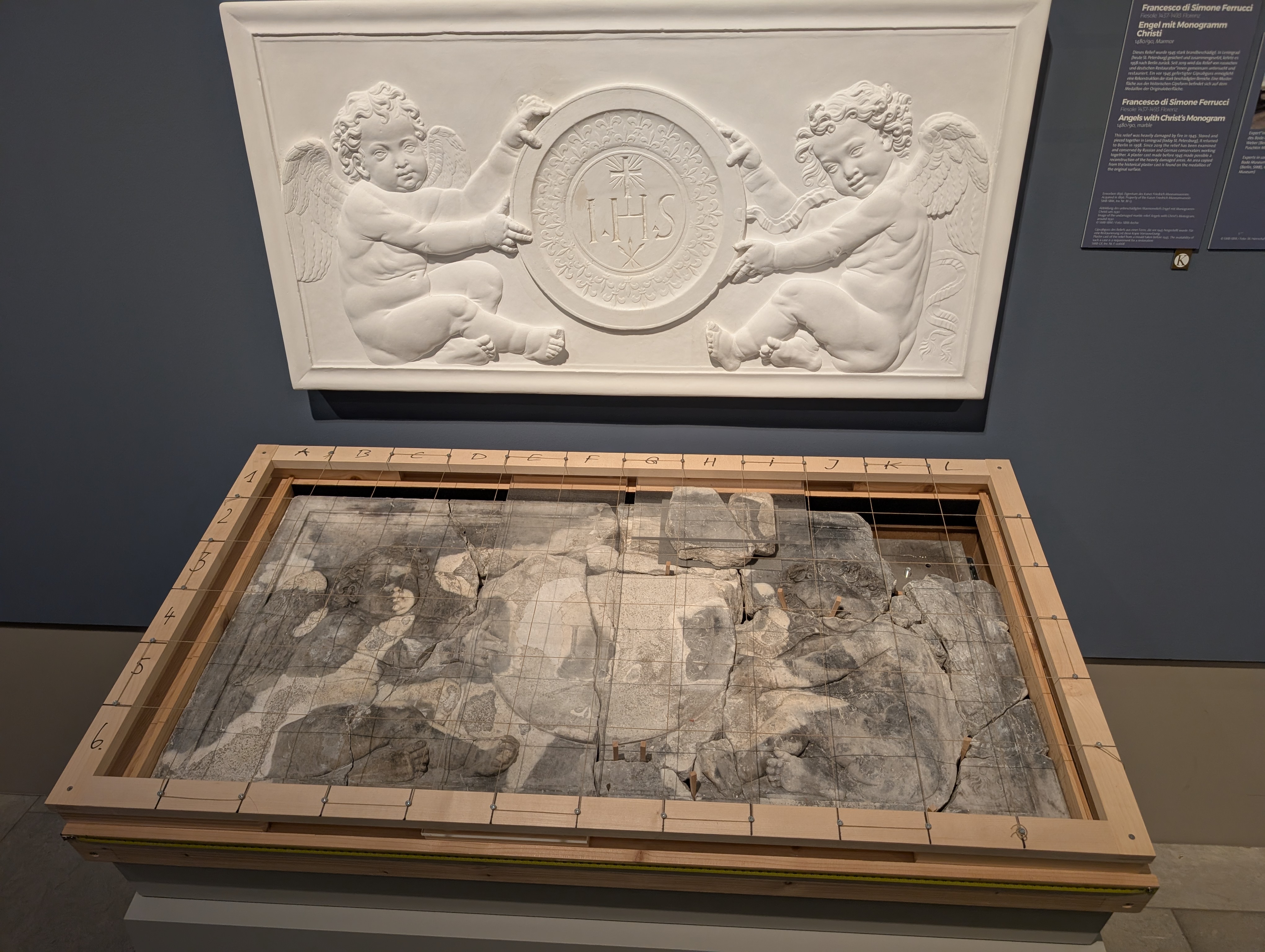
Perhaps the most eye-opening thing for a first-time visitor is the extent to which Berlin is still rebuilding from the dramas of 1945 and 1989, even today. The antiquities collections are a window into a painstaking restoration still in progress, trotted out slowly after cleaning. Many great buildings have been rebuilt as they were, history nursed back to life with great care. Checkpoint Charlie preserves an older border station between East and West; here and there along the River Spree are memorials to people who were gunned down as they tried across the barrier to freedom.
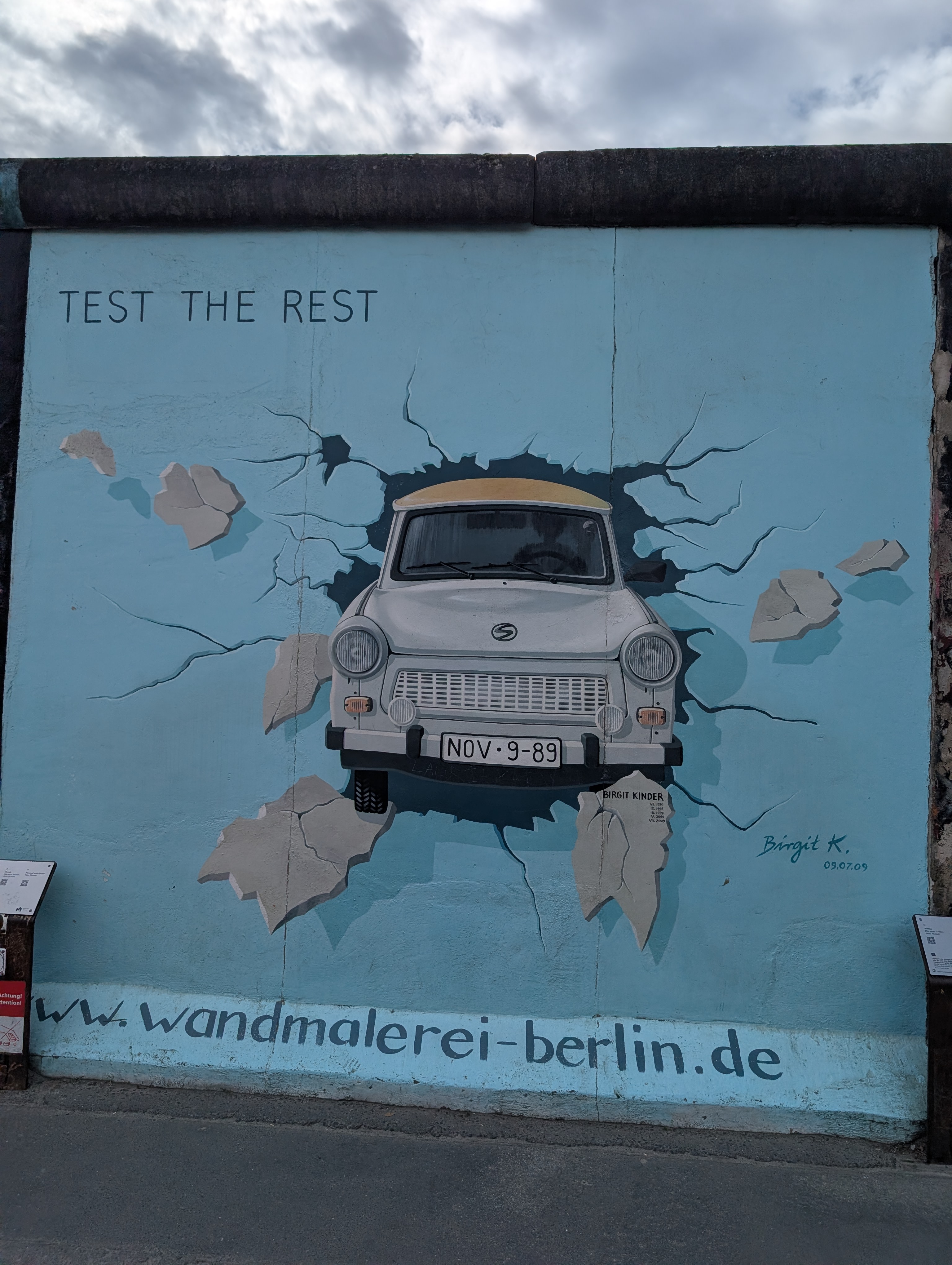
And, at times, markers of past terror can be transformed into beauty. The East Side Gallery is the longest stretch of the Berlin Wall remaining, and the art installation created after Germany reunited East and West tell a story of unity, reconciliation, and creative flowering. Here, artists came from around the world to put into vivid color their dreams of peace and triumph over communist cultural flattening, and three and a half decades later, it still speaks to the power of a halting but real achievement, perhaps does so more than ever in a world that has drifted from such ideals.
The culture that created the Gallery is not really that of Berlin today. 35 years after the Wall came down this city is less grunge and more corporate; new developments line the riverfront, and the Mercedes-Benz logo revolves atop a nearby office tower. The Berghain, the famed club that is the inheritor of that post-Cold War ecstatic burst of freedom, now has an hours-long line of tourists trying to get in. (I ponder joining the queue, but in the end use my limited Berlin hours elsewhere.) This is, after all, the capital of Europe’s largest country and largest economy, and in Angela Merkel’s 16-year chancellorship, it became the continent’s power center and de facto capital. Merkel’s Germany has shaken off the shackles of history and raced to lead the successful, if rather mundane, European present.
This is twenty-first century Germany: cushy, in command of Europe, its territorial ambitions now a distant memory, though its manufacturing-heavy economy has some brittleness to it. I hear things do not work quite as well as they did a decade ago, and the German habit for legalese and bureaucratic impulse is a regular frustration. (Said the British mom on the train out of Vienna who had lived in both countries: Austria is a logical society, and Germany is a legal society.) A general blandness pervades its politics, jolted only by some troubled murmurs from the far right AfD. What more, exactly, can the modern German state stand for?
 A Patient Cycle