Spain 2025, Part IV: Against Dereliction

This is the fourth and final piece in a series that began here.

Sated on San Sebastián and ready to head the province of La Rioja, Andrew and I pick up a rental Cupra, which is Spain’s effort at a sporty car. We roll down a winding Basque tollway and up into the Cantabrian Mountains, where we seek out the Salto del Nervión. In wet times this is the highest waterfall in Spain, but today, it is just a pretty cliff. We chat with two older ladies who are taking a new car for a spin and get some sense of how it should look. The forests are lush, the karst formations jarring, and a few toros wander on to the road. We are back in rural Spain.

The number of elderly people who get out for this several-mile hike is a statement on Spanish superiority. The life expectancy in this country is 84, between second and sixth in the world depending on the source and inclusion of micro-states, even though booze consumption per capita is not low and smoking remains more ubiquitous than it is across the pond. The culprits would appear to include a lot of walking, a lot of olive oil, and a densely knit lifestyle that keeps people enmeshed in social networks long into old age. On the streets of Briones, the small town where we spend the next two nights, the average age appears to be about 70. But everyone is still shuffling about in their little friend groups, gathering on squares, no one warehoused away or struggling much beyond the inevitable physical toll. Almost no one is overweight, and the drinking seems like a steady social activity instead of a lonely or perpetual rush to blackout. There is an art to living well to a ripe old age here, and it comes not through self-denial but through keeping everything in its place.

Speaking of old, the Monasterio de San Millán qualifies: the twin monasteries of Suso and Yuso date to the sixth century, and we stop by Yuso, which is open for tours. The first recorded writing of Spanish (and of Basque) took place here, an attempt by a monk to bridge the Latin of the church and the vulgar Latin of a Visigoth-ruled Iberia around the year 1000. It is also home to one of the few complete sets of giant books of Gregorian chants for each day of the year, all stashed in a specially built chamber to control their humidity. Yuso’s 11 remaining Augustinians honor San Millán, a hero from that area who, like St. James along the nearby Camino de Santiago, got drafted into slaying some Moors on behalf of the Reconquista. A few pilgrims have made the side trip up here, including a Spaniard who started in Barcelona and a couple from Iowa City for whom we translate the tour. I feel the pull to don a pack and start walking.

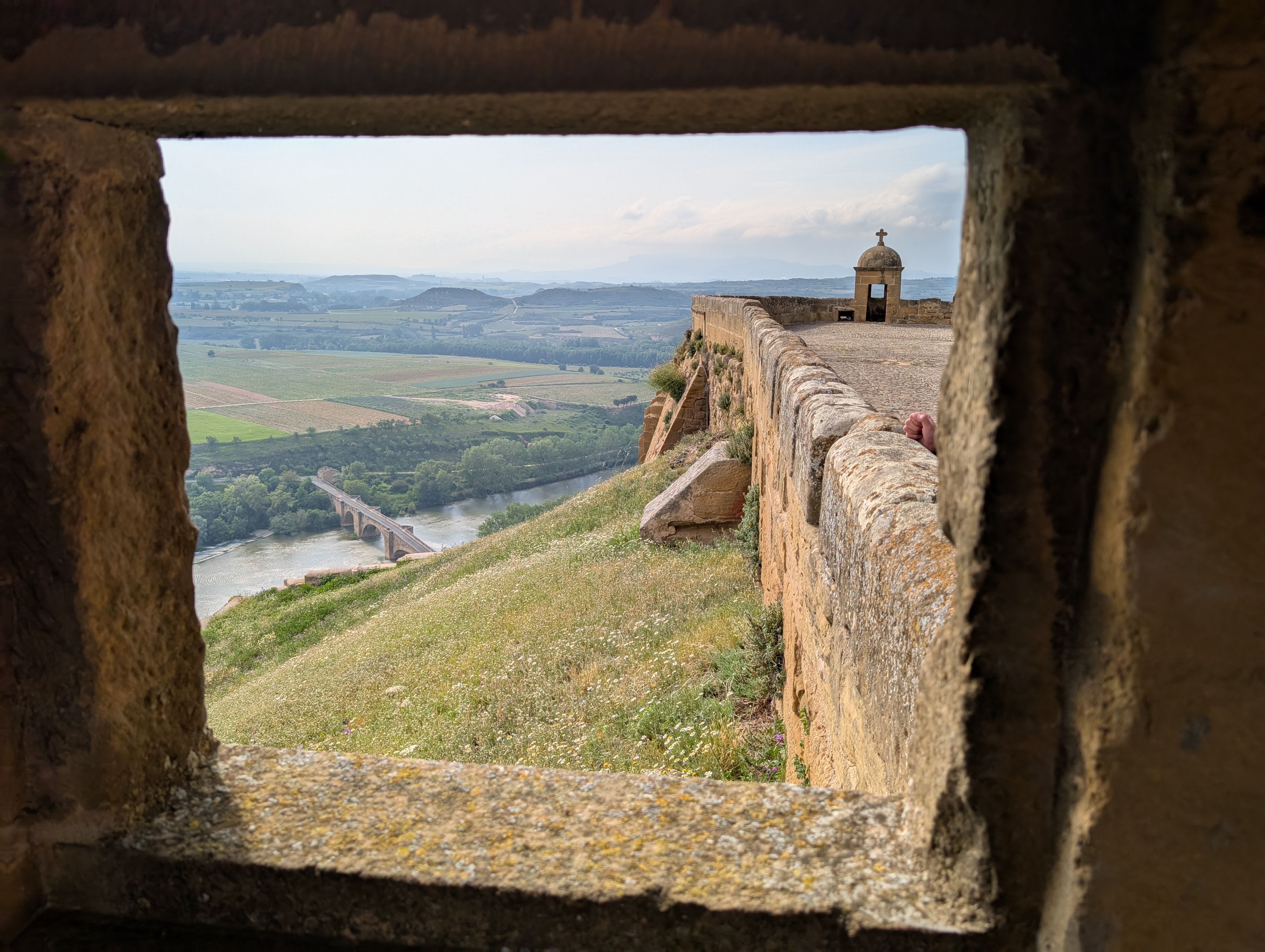
As it is, however, driving around Rioja is a beautiful way to spend a few days. Roads swing their way around ridges and vineyards, a view off to the next hilltop town or castle always somewhere in sight. Clouds hang over the mountains to the north, much closer in person than they appear on a map, and the valley of the Ebro River drinks in the sunlight that filters through them. Briones, where we stay at a restored old stone manor named Santa Maria Briones, is a quiet hilltop town that feels frozen in a different era. Once upon a time it was an outpost in competition with the even larger castle across the Ebro in San Vicente de la Sonsierra, a contested zone between the kingdoms of Castile and Navarre. Now, it feels about as far from war as a place can be, basking in wine country sun as the bell on the great old church tolls out the quarter hours and its residents shuffle into their later days.

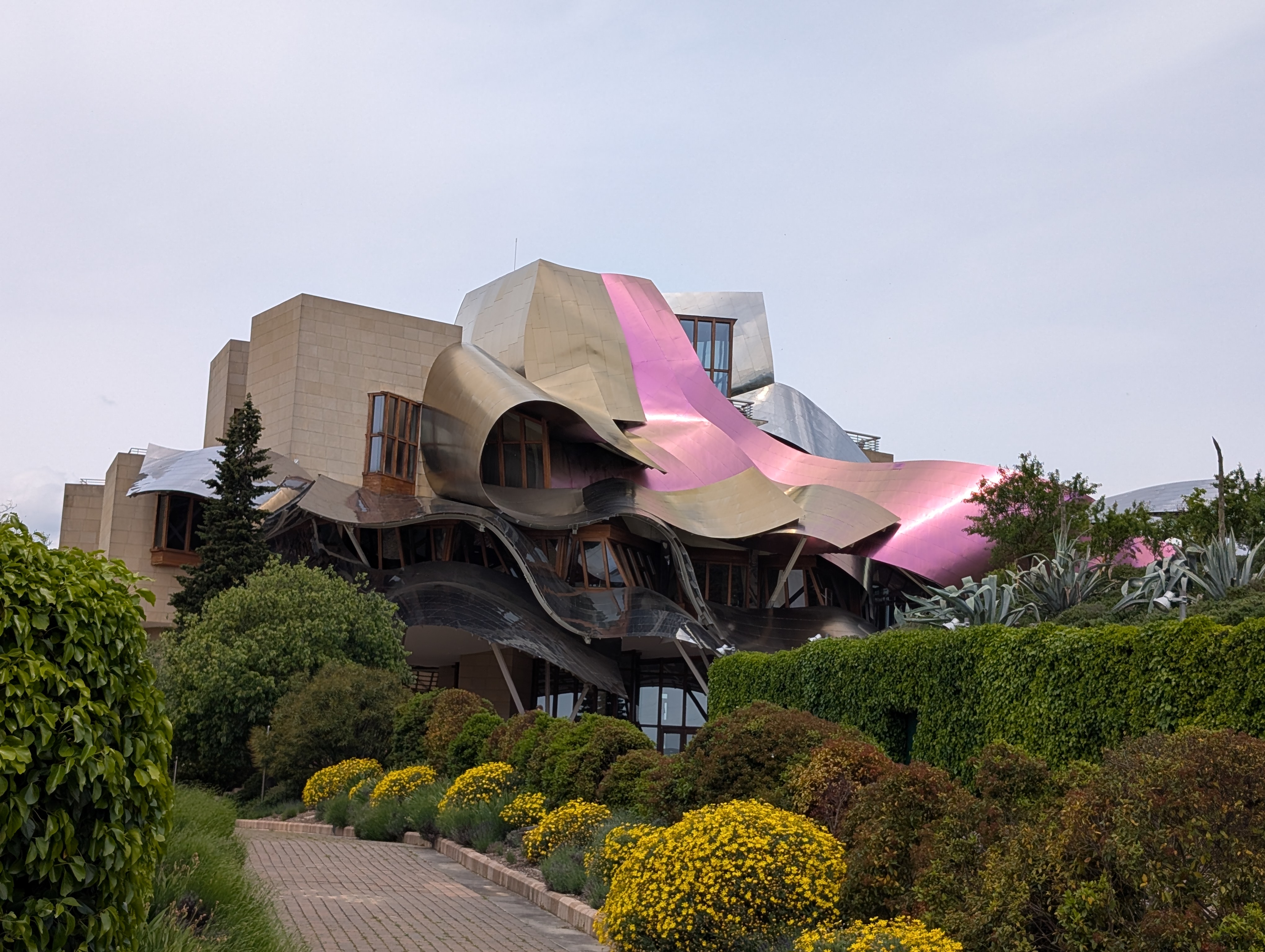
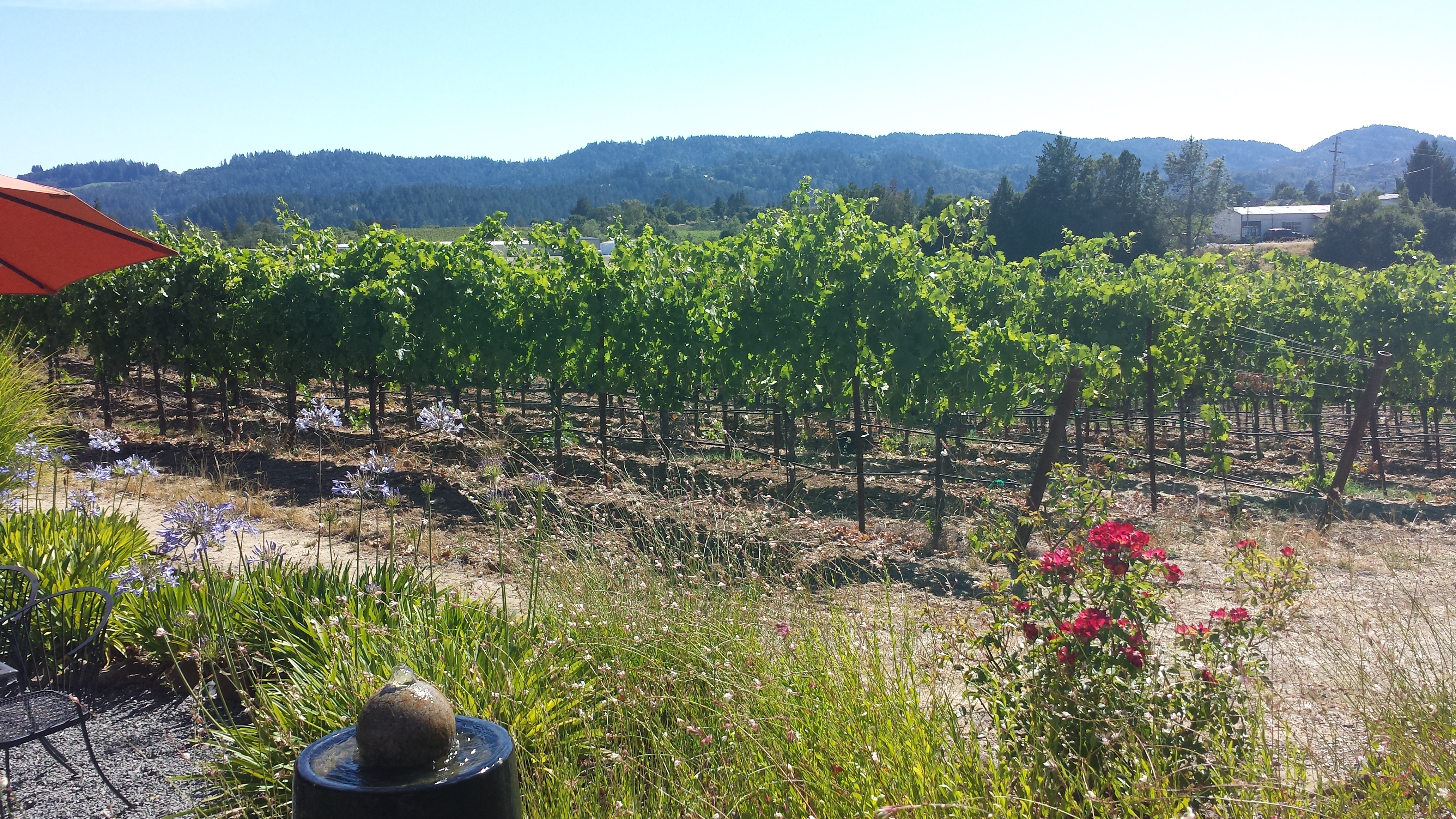
We are of course in Rioja to drink wine. We schedule three tastings, and the two on day one are contrasts in the scale available here. First we visit Miguel Merino, a small producer that we can walk to in Briones, where it’s just us and Lorena, one of the five people employed by this operation founded by an exporter and carried on by his son, relying on small batches and doing some experimentation as they get into many Michelin-starred restaurants. Later, we tour the Marqués de Riscal, an industrial-scale pillar of Rioja complete with a Frank Gehry hotel reminiscent of the Guggenheim, with a dash of wine purple added to the color palette here. The place is massive, a winemaking machine in full force, though the Marquis himself still sits in a corner with some friends sampling the product. Up in Haro, one of the larger towns in the region, we stroll past some of the other big Rioja names in its neighborhood of bodegas and do lunch on a convenient patio at Muga.

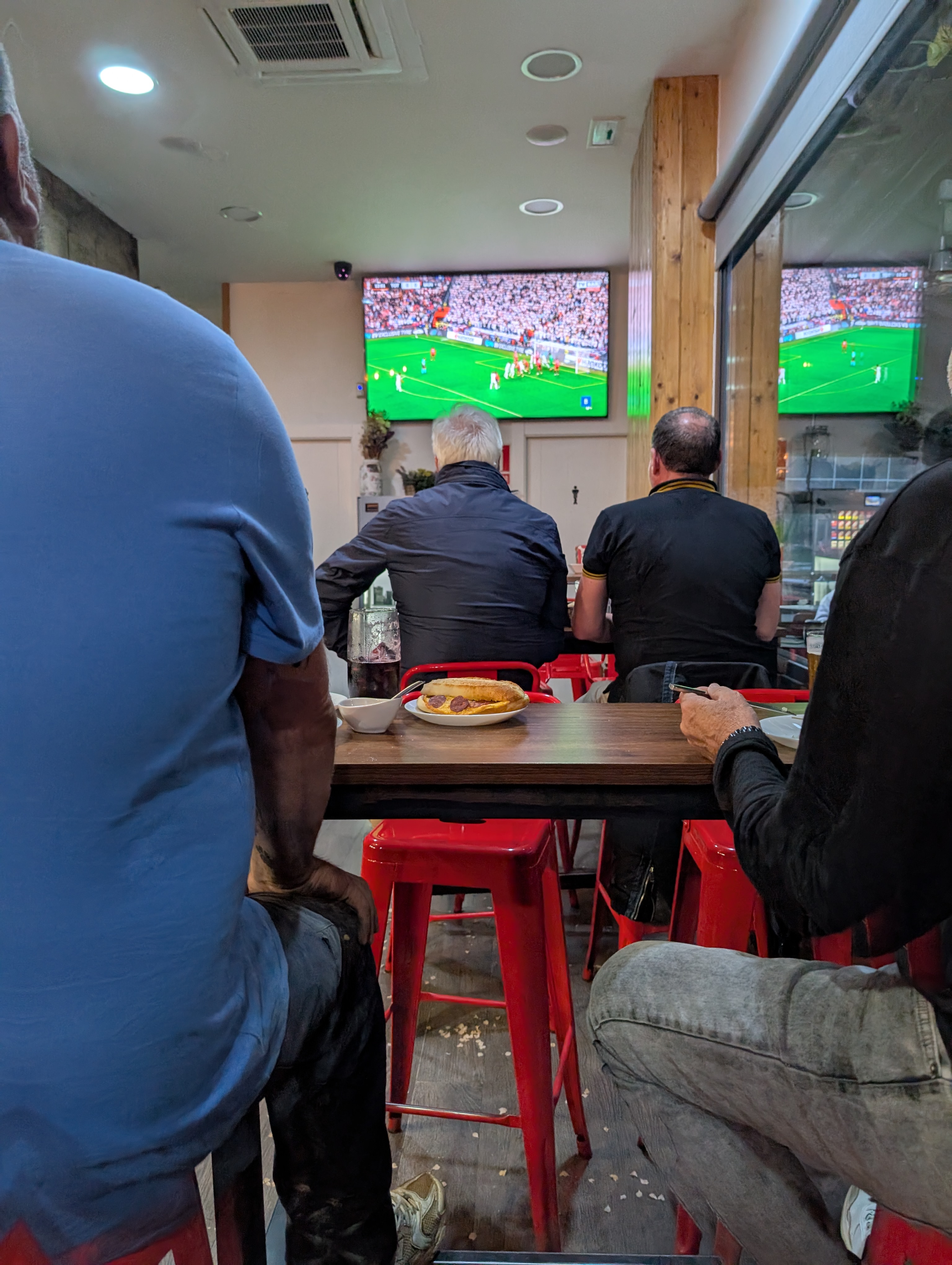
Our two nights here, meanwhile, are a marked contrast. On the first we eat at Allegar, the restaurant at Santa Maria Briones. Seventeen small plates come out through the course of the tasting menu, each with a major element from Rioja itself, along with wines to match. The three-hour tour is a culinary peak of a trip of nonstop great food. The next night, Andrew, a diehard fan of Tottenham Hotspur, must find a spot where we can watch Spurs’ Europa League final against Manchester United in Bilbao. We wind up in an Haro sports bar surrounded by large, booze-fueled Spanish men. They approve of our allegiances (“fook Mahnchesta”) and provide some high-fives when Spurs, one spot above relegation from the Premier League, improbably hold off United in a fairly disgusting soccer game. The aesthetics do not matter to Andrew, who is giddy, and I am amused as we watch Spanish sports talk into the night.

We have one final wine tasting on our way south back toward Madrid. When we pull up in the town of Sojuela, I’m worried I’ve made a mistake: the address for the Ojuel winery takes us to an unmarked door on a nondescript house in a town much further off the beaten path than Briones; the website is down and the phone number we have doesn’t work. But an ancient lady calls down to us from the upper floor and says someone is on her way, and before long Mila, the daughter-in-law of our greeter and the mother of the winemaker, is taking us on what is, by several orders of magnitude, the most memorable wine tasting tour I’ve ever had.

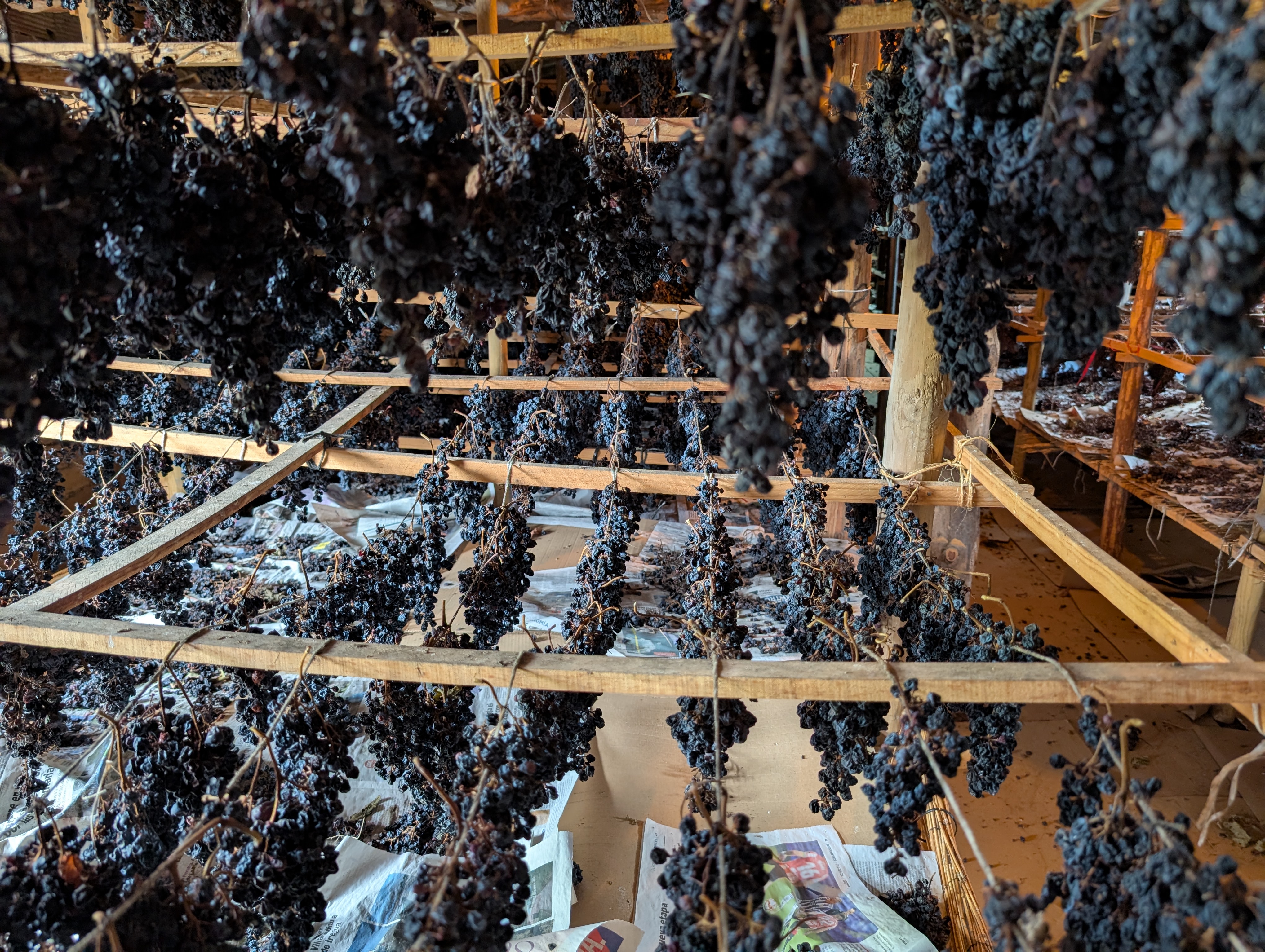
Mila takes us in her car up to a vineyard. This is an all-natural, all-organic operation, and all Ojuel bottles feature a different butterfly in honor of these pollinators. The contrast with the neighboring field is striking, these gnarled smaller vines with weeds tangled around their bases separated by a wall of vegetation from the monoculture beyond. (Grapes from the first few rows are sold to other winemakers who don’t care as much about purity, lest any pesticides have drifted in.) This plot’s history is deep, as a stone set here traces its owners back for generations and lists the varietals grown here, though two of the nine are not listed because they have been effectively lost to time. We learn of how Mila’s son Miguel did some oral history work, pulling out old wives’ tales of the supurao wine made for holidays and special celebrations in the youths of some village elders, and reproducing their methods by hanging grapes to dry to produce that rare beast, a delicious sweet wine.

For the tasting, Mila throws a few bottles in a tin pail and takes us on a walk to a couple tiny old bodegas dug into the hill, a gathering place where locals would create their own stocks back before mass commercialization, where people would gather for a few drinks in the climate-controlled holes slowly dug out with pickaxes. Those not associated with Ojuel are now rotting away, but these have been lovingly restored and put to use aging barrels. Ojuel rebels against the Rioja control board, experimenting with new things; at one point, Mila pulls out a turkey baster and dips it into a barrel so she can draw out some wine and offer it to us. This is deep winemaking, pulling on old tradition in ways that can now feel radical, experimentation and rejuvenation and daring to let things be different. Long live the Ojuels of the wine world, in firm revolt against the unthinking present and the decay of rural Spain.
After Ojuel, it is time to return to Madrid. Our Spanish road trip is smooth sailing, packing a lot into a few hours. Just south of Sojuela the N-111 winds along red cliffs dotted with green reminiscent of the American Southwest; soon, it climbs up a long cut through the Sierra de Cebollera, where spring is still in its earliest stages. We descend to the plain, try to figure out how the city of Soria functions when every single road is under construction, and then cruise easily across Castilla y León and Castilla-La Mancha, that rolling open green country that could have been dropped in from the Great Plains. Spanish highway etiquette is immaculate, everyone weaving in and out of appropriate lanes based on their speeds. Over four days of driving Google Maps has the occasional misfire where it sends us down some very sleepy, bumpy back lane and the narrowing of streets through town centers is at times harrowing, but all in all I enjoy my time behind the wheel in Spain.

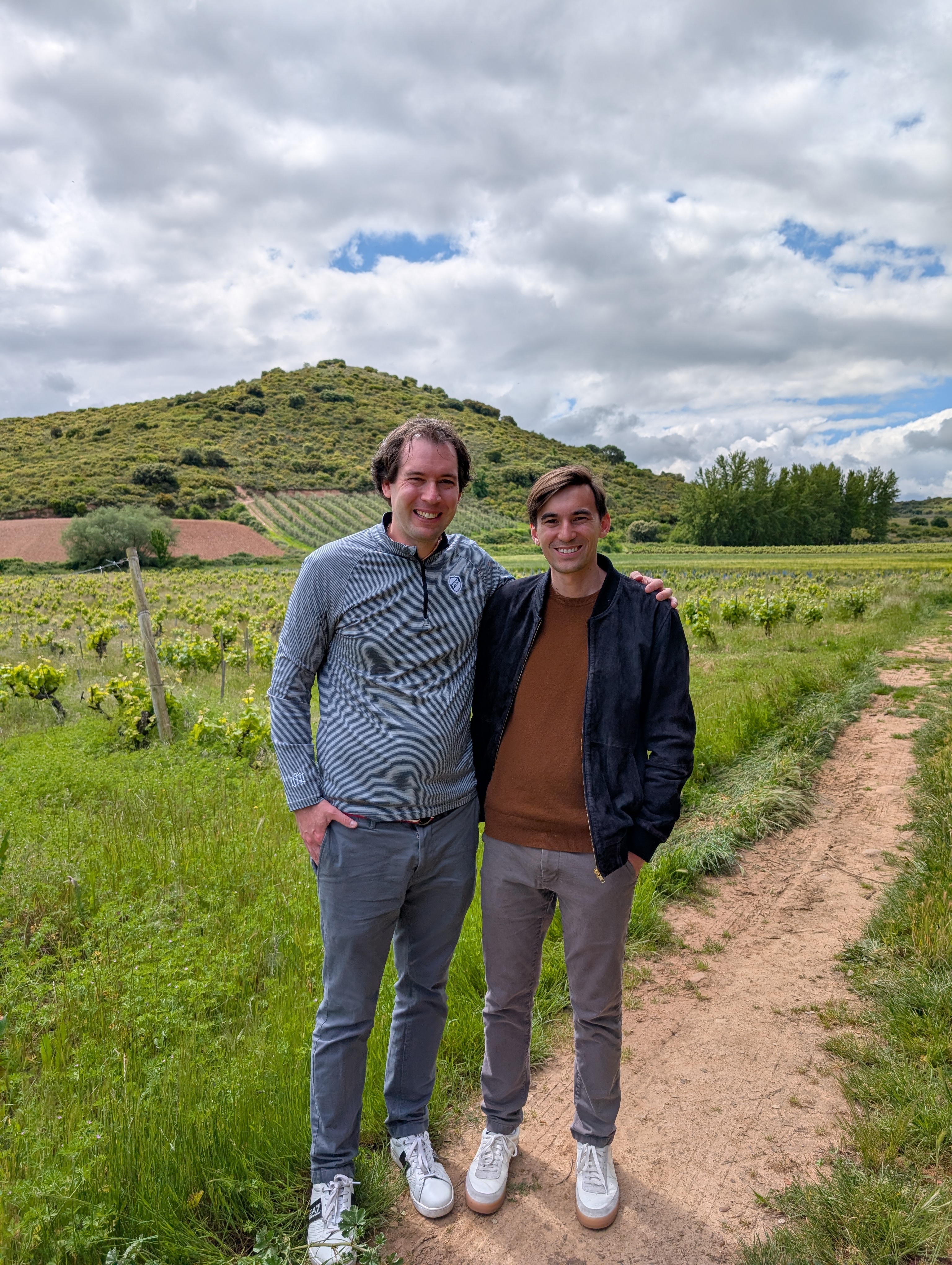
Andrew and I get to do a circuit of central Madrid together and share one final meal before my very early flight out the next morning. Unfortunately this is where I hit the wall, so I do not have my reflections in good order that evening, but it has been a joy to take this trip with Andrew. We survived a two-week road trip together as we both shifted between phases of life in 2016, and we are able to jump back in and seamlessly do it again now that we have attained some modicum of professional stability. Of course sharing tight European lodging with even a good friend for ten days will reveal some neuroses and see us both cycle through moments when exhaustion or annoyance catches up with us, but we share a commitment to the pace, a hunger to eat and drink it all up in short order, and that can power us both through anything that might drag us down.

We are a funny pair here, more capable in Spanish than the vast majority of tourists, one who could pass for a German and speaks like a Mexican alongside a half-Filipino who speaks like an Argentine, and I am amused by how often we confuse people. At Ojuel, Mila tells us Americans are the best tourists they get, respectful and curious about experimentation and eager to spread the word to their friends. It is not hard to juxtapose us against the loud, boozy British who make no effort to speak Spanish and the famously insular French. The Spanish resignation to bad tourists is at its worst in San Sebastián, where some waitstaff continue to talk to us in awful English even when we demonstrate some Spanish capability, but when we show that clichéd American enthusiasm for taking stabs at new things in Rioja, the people we meet are delighted. Of course the American tourists who get to second-tier European destinations clutching Rick Steves guidebooks and lists of Michelin-recognized restaurants are unlikely to be of the same demographic as those who go to Gulf Shores for spring break; this filtering is not present among the British, for whom Spain can be a quick weekend jaunt. But I do think there is something uniquely fetching in an American hunger to absorb the European deep histories and cultures that our imperial reality so often buries.

I am on that nonstop search on this trip even though I don’t think I am ever quite at one hundred percent. I develop a gross nagging cough early on, while my back does not seem to like the backpack I wear; bad sleep, a sporadic but lifelong scourge of mine, returns at times. For a second straight trip I make a dumb mistake with my writing tablet, this time losing its stylus (replacement cost: a disgusting $150) on the first plane flight. Because of that I never hit the reflective rhythm I aspire to, don’t have my thoughts organized the way I should when Andrew the lawyer probes me about our trip or our world beyond us. I worry I am too much a chameleon, am not reflecting as thoroughly as I should on recent developments in work and in the personal sphere, am only barely scratching a few deep yearnings I find welling up within.

But that is alright. These annoyances show I know I have work to do, and I will do it at whatever pace I can. For now, I can smile easily as I think of two weeks well-lived, of a drift down Spanish streets, of good art and good food, a drive up the coast and a sip of special wine. A hearty gracias (and an eskerrik asko) to this country I have come to love, though after three straight years it is probably time to try somewhere new next. We have so much to explore.
Cono Sur, Part IV: Lejos de Casa

This is the final installment in a four-part series. Part I | Part II | Part III

Mood shift, for the third time this trip: I head to Mendoza, a two-hour flight to the west of Buenos Aires, a city tucked in the shadow of the Andes. Mendoza gave the gift of malbec to the world, and it remains a great wine-growing region, so roughly a dozen wedding guests have made their way out here to continue the afterparty. We are strewn about between downtown Mendoza and the placid towns heading south toward the Valle de Uco, and I crash at a small bed and breakfast a block off the main square in Chacras de Coria.

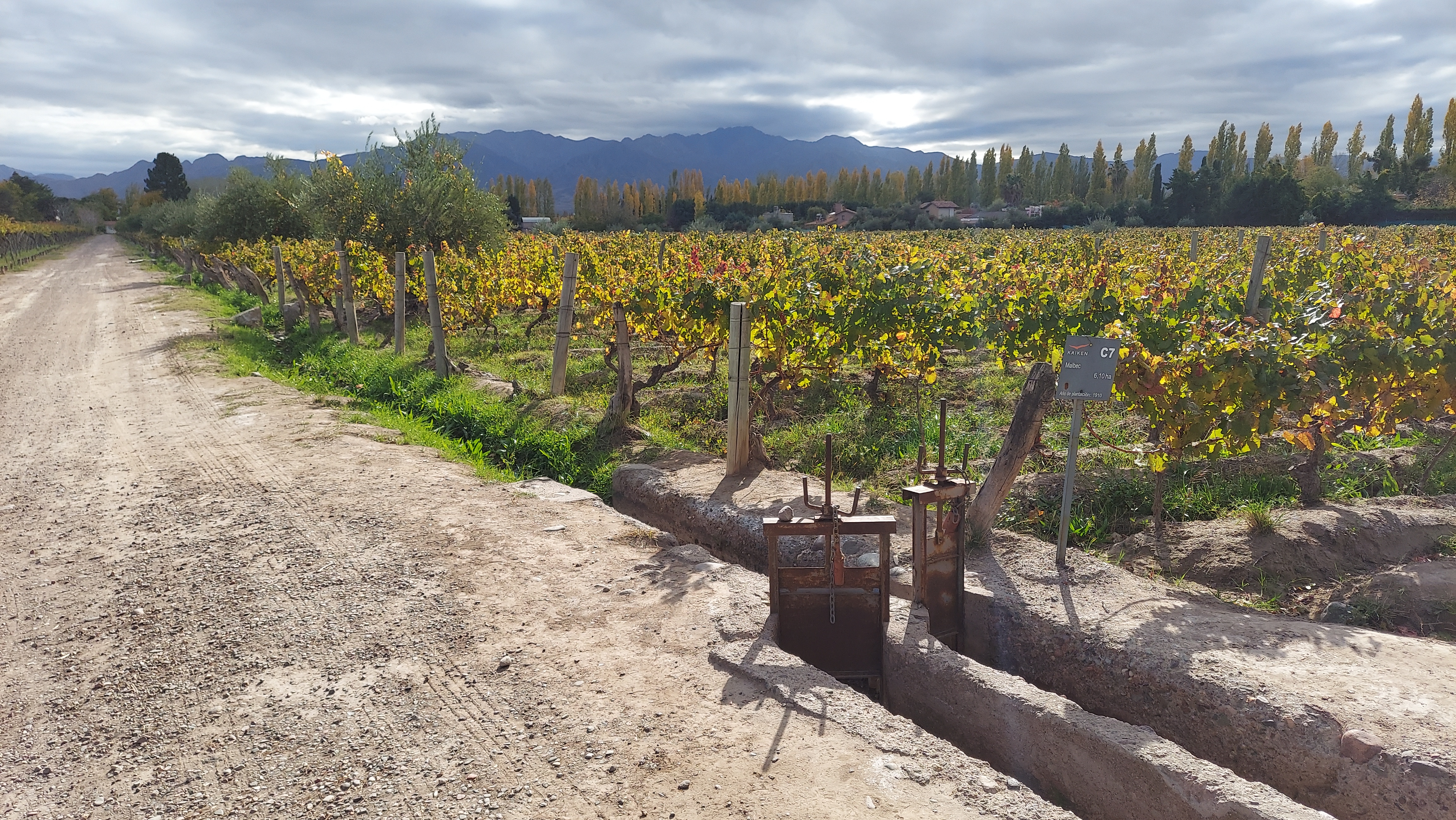
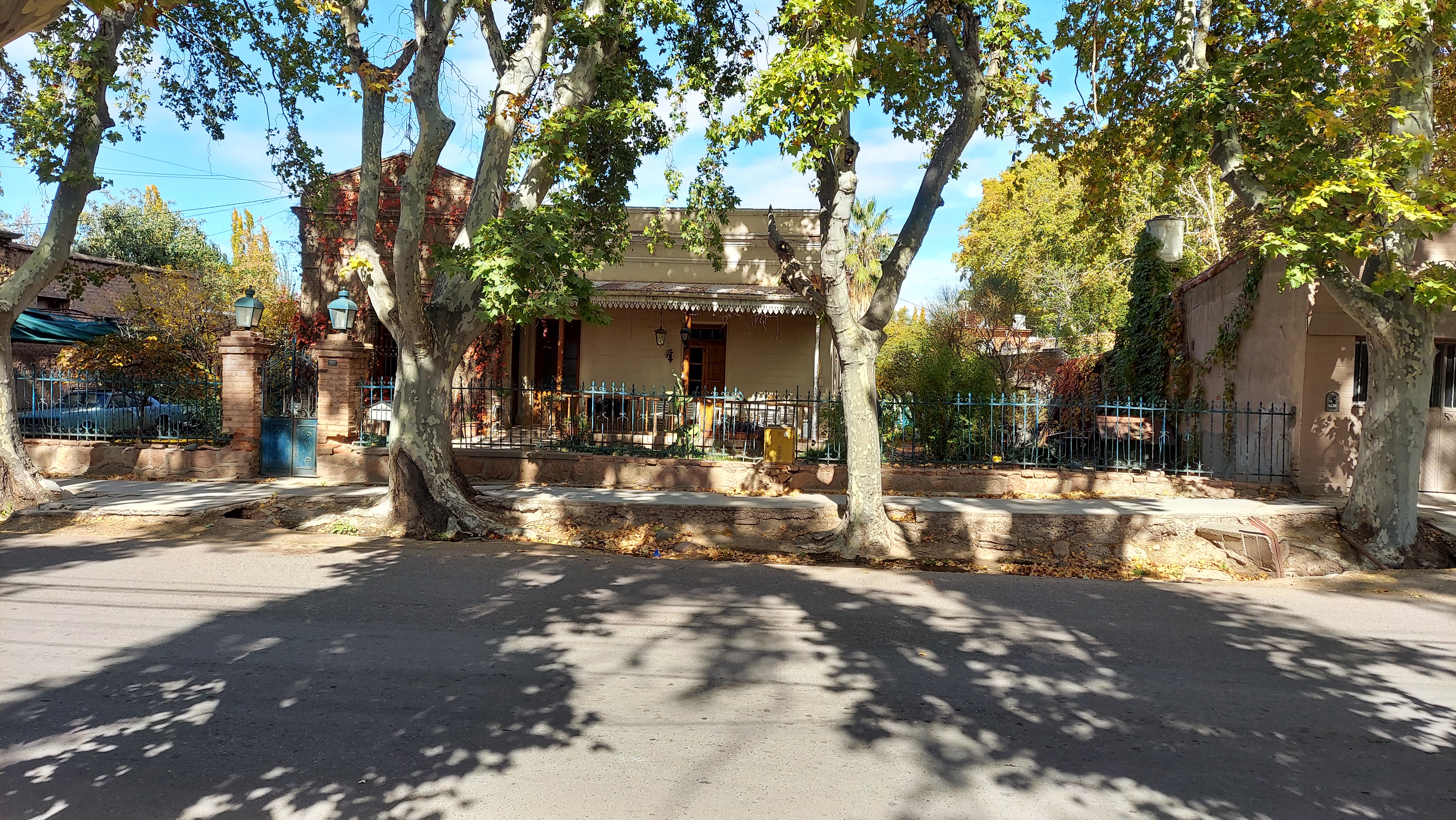
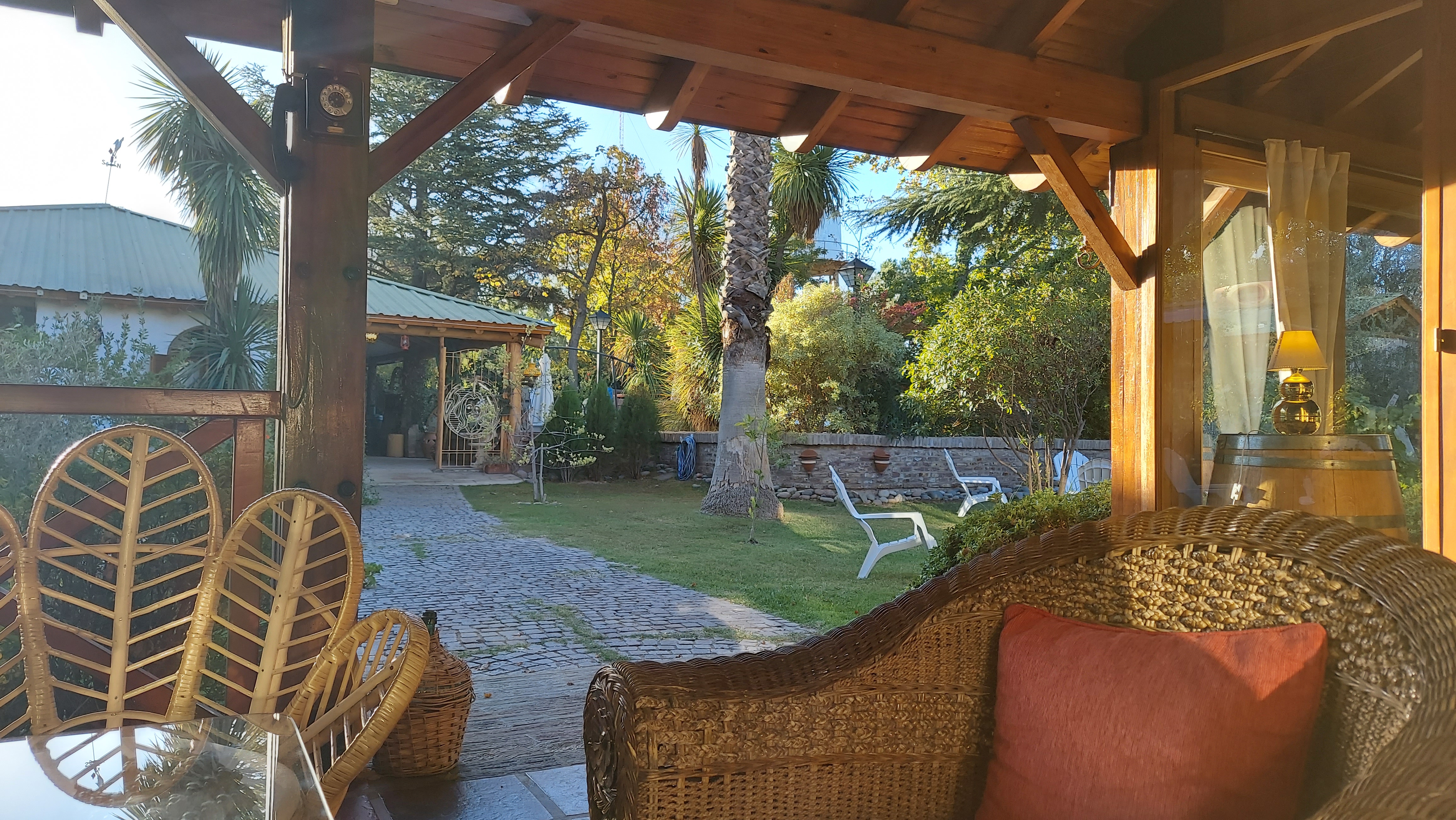
Chacras is a quiet town of low-slung, walled-off houses and unassuming quality restaurants. The smell of grilling meat drifts through the air and settles over my patio seat outside my room at the B&B. Thick sycamores and elms in fall color line a network of drainage channels called acequias, a legacy of the Huarpe and Inca that break up an otherwise dusty landscape. A wine country dry heat hangs over the foothills of the Andes, and the mountains above us shiver with a strong wind pouring down, a sign snow is falling on the slopes of Aconcagua, the highest point in the Americas, some 200 kilometers to the west. By the third day the winds stop and the temperature plummets over twenty degrees, a sign of deep autumn here in Mendoza.

My B&B is the pet project of an American named Bruce, a Vietnam era fighter pilot who later flew commercial planes. Bruce has electric blue eyes, a long and scraggly mane, and is one of the more astonishing humans I have ever met. His global travels have taken him to every continent and just about every ski hill on offer, flitting from place to place, adventures in motorcycle racing, a home in Giza, a German ex-wife, and even some time in Minnesota. After decades of an itinerant life he landed in Mendoza, the house choosing him, or so he says. He is now the pilot of this little B&B, a labor of love going on 20 years.

We spend my first night in Mendoza in conversation over meat and drink, though most of it flows in one direction. He diagnoses extreme stress in me, which is both right and wrong; yes, I can be a bundle of nervous energy, these surges often a fuel and sometimes a crutch, a tension no doubt heightened in a place far from home. The lone wolf struggles to understand the chameleon, forever calibrating himself to his surroundings, but the chameleon can come to understand the wolf.

If Bruce’s goal is to give me an escape, his scattershot volleys certainly don’t help the cause. He speaks so softly that I strain to hear, and while he peppers me with questions, only rarely do I sense he is really processing my answers. He grills me on my work and its value and shares his idiosyncratic takes, sometimes insightful and sometimes leaning toward cringe, a jumbo jet on a set path that I cannot alter, and I am intrigued to just watch him fly as far as he can. Here is a man who chose the radical freedom, gave up a family and everything he knew, and now here he is on a Monday night in Chacras de Coria, Argentina, guzzling down wines and holding court for an American kid who thought he was going to have a quiet evening in to recharge his battery before exploring the vineyards. I am fascinated by him, and he has clearly done some good for quite a few locals. But I would not choose to be him.

In spite of everything, Bruce is bullish on Argentina’s future. If Uruguay is a country that just works, Argentina is one that should work but too often does not. It has a world-class capital city of 16 million people, rich agricultural and mineral resources, beautiful countryside from Patagonia all the way up the Andes. Like the United States it is a European settler society, its indigenous peoples generally wiped out or pushed to obscure corners, a tragedy that has left it on a trajectory apart from some of its Andean neighbors. Waves of immigration from Spain and Italy crashed up on its shores in the late nineteenth and early twentieth centuries with a land rush to rival the opening of the American West.

Its modern history, however, is an absolute jumble. The country has managed to escape its long run of military coups over the past 40 years, ever since the hapless Falklands War discredited the last junta, and this is a real achievement. The economy, however, is a different matter, thanks to runaway inflation and the populist patronage machine that is the Justicialist Party, Argentina’s dominant political institution since Juan and Eva Perón showed up on the scene. Putting up the Economy Minister in a nation with rampant inflation did not work out well for the Peronists in the 2023 elections, and Argentina is now running an experiment with Javier Milei, a Trumpy figure with no legislative support and five cloned dogs named after University of Chicago economists. The drama goes on, though the early returns suggest one of his ideas, the dollarization of the economy, is doing some good to stabilize prices and rein in that inflationary scourge that Argentina needs to solve before it can make good on any other promise. That promise, as these next few days show, is considerable.

Dollarization also makes Argentina an even easier country for American visitors, and for us revelers, Mendoza is a land of bountiful excess. Given the difficulty of winery logistics—here is an industry that is just begging to be disrupted—we go off on our own or in small groups, and we share an entertaining group chat. Five or six courses into my seven-course paired meal at Alta Vista (a visit arranged by Bruce and his staff; he is nothing if not a connoisseur of good taste from the whole world over), I report a state of general bliss. One wedding guest who is on a guided tour of the Valle de Uco shares he has just been served his fifth filet mignon of the day; another makes the mistake of counting how many glasses she has consumed. “We need the anti-Ozempic,” our bride writes as she ponders her dinner reservation with dread. Indeed, after a siesta and plenty of time to digest, I can only stomach a small salad for dinner in downtown Mendoza, while a tablemate pokes feebly at her eggplant. Three of us end up at a rooftop bar overlooking Mendoza’s gentle grid that night, shivering a little at the coming cold and marveling at what we are a part of here.

The next day we do manage to get a healthy group together for a tour and tasting at Kaiken, where the aging barrels are serenaded by Gregorian chant to create vibrations. (As with Dante in the Palacio Barolo, here is that credulous Latin American melodrama, a feature of a society less beset by the all-knowing cynicism that can plague educated Americans.) Guided by a sommelier, we try an array of malbecs to test the differences between them, and we eventually close the place down. I join Jess and Phil back at Entre Cielos, their sleek spa resort for their mini-moon, and we bask in the hot tub beneath the Southern Cross and hold a scattershot bilingual chat with a man from Chile and a woman from Eau Claire, Wisconsin, who have settled here together. Later, we peck at a dinner with two more friends at the resort restaurant. We order as much tea as we do wine. The body can only endure so much here.

I return to Buenos Aires for one final night in Argentina, though the energy for greater exploration has diminished now toward the end of near-constant moves from place to place. I content myself with another night at the Miravida Palermo Soho and stroll around the neighborhood, with visits to the charming Japanese Garden and the rather moribund Ecoparque zoo. One unattached fellow Hoya remains, and we sample a bumping craft brewery named Strange. The beer is superb, and the blasphemous raccoon logos are, well, something.

Once it is time to head back to the airport, I am ready to leave Argentina. I am ready to speak fluent English again, ready to sleep in my own bed; at least for two nights, that is, before the last adventure of my mini sabbatical. In the days that follow I reflect on the juxtaposition between my hunger for that freedom to wander and my natural homing instinct; my embrace of Uruguayan anonymity and my rejection of Bruce’s retreat from all prior commitment.

Is it truly a tension? I’m not so sure. They are both parts of a well-lived life, paces adjusted and waves seized. Here is yet another way to be free: to find the ease of knowing one has found one’s home in a certain place, among certain people, desire and roots aligned. This trip is all a good dream, yes, but I have work to do when I get back home. I couldn’t ask for much more.

Road Trip Journal II: Salt Lake to San Francisco

(Part I)

Day Three: Descent to the Bay

On paper, this is the longest driving day of the trip, as we head from Salt Lake to San Francisco. We’re out early and grab some pastries before plowing out westward. If Wyoming seemed like vast tracts of nothing, today will eclipse that entirely: western Utah and much of Nevada are as empty as an area around a major American highway can be. We first skirt the Great Salt Lake, striking in contrast with the brown hills rising around it, and then the land becomes white: salt flats, all in a line across the floor of the Great Basin. Signs warn us to stay alert, lest we fall asleep at the wheel and veer off into a salt mine. Here and there, drivers have done exactly that, intentionally: tire tracks head off the freeway and some ways out on to the flat, and a couple of cars sit out there doing whatever it is that people do on salt flats.

DSCF0105.JPG

We can see Nevada from nearly forty miles away, as mountains thrust their way upward right at the border. The contrast is immediate: a cluster of casinos scream their presence just across the state line, ready to welcome in some sinful Utahns. Even a dismal gas station some ways further along has a slot machine room. The road itself winds up and down brown, scrubby passes, and we glimpse the first of many peaks we pass on this day that still have some snow on their upper reaches. There are occasional hints of greenery along rivers, and little oasis towns interrupt the monotony. We cruise through Reno without stopping, and begin one last major climb up into the Sierras.

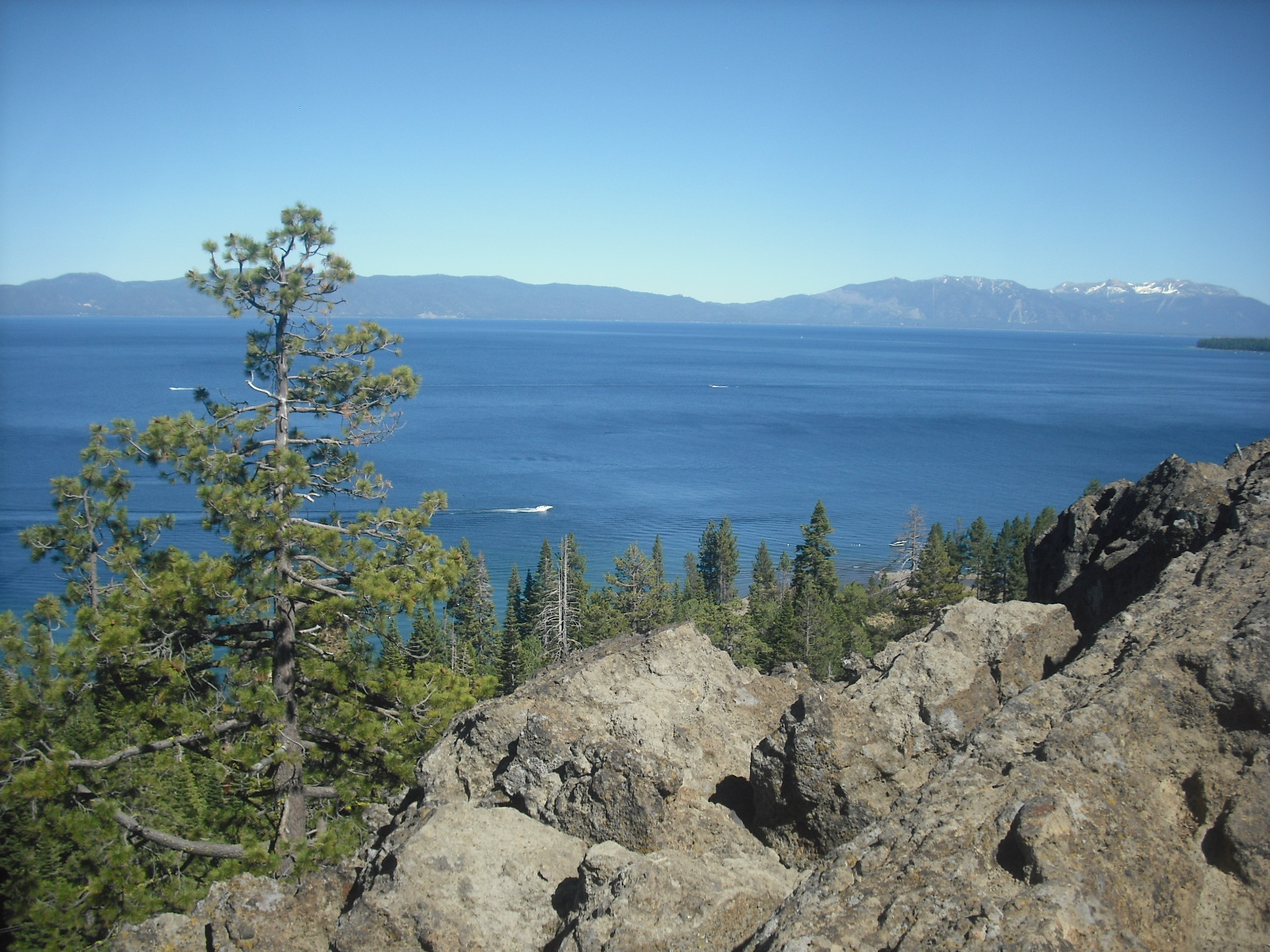
After we cross the border into California, the mountains are finally green again, and I-80 pitches upward. We’re stopped for an agricultural inspection, and then detour off the highway for a jaunt down to Lake Tahoe. It is, as expected, gorgeous. Its cool waters are bliss after a long day in the car. We wade out some ways after a late lunch. The road around the north shore of the lake is a delight to drive as it weaves through the resorts and quaint shops; we ditch the AC and throw the windows open. We stop for a quick jog up Eagle Rock, a rocky extrusion near the shore that offers commanding views of the lake and the mountains beyond. We could spend much more time here, but the ocean calls.

DSCF0123

The descent from the Sierras is probably the trip’s most extreme drop, as we sink from 7,000 feet at the Donner Pass—a site that brings back fond memories of a long internment on an Amtrak train here many years ago—to less than 1,000 feet in the Central Valley. Sacramento reveals some very California scenes: an eight-lane highway baking in late afternoon sun, the westbound lanes crawling while ours is crowded but motoring along. Signs everywhere alert of us the ongoing drought, and urge us to avoid watering our lawns.

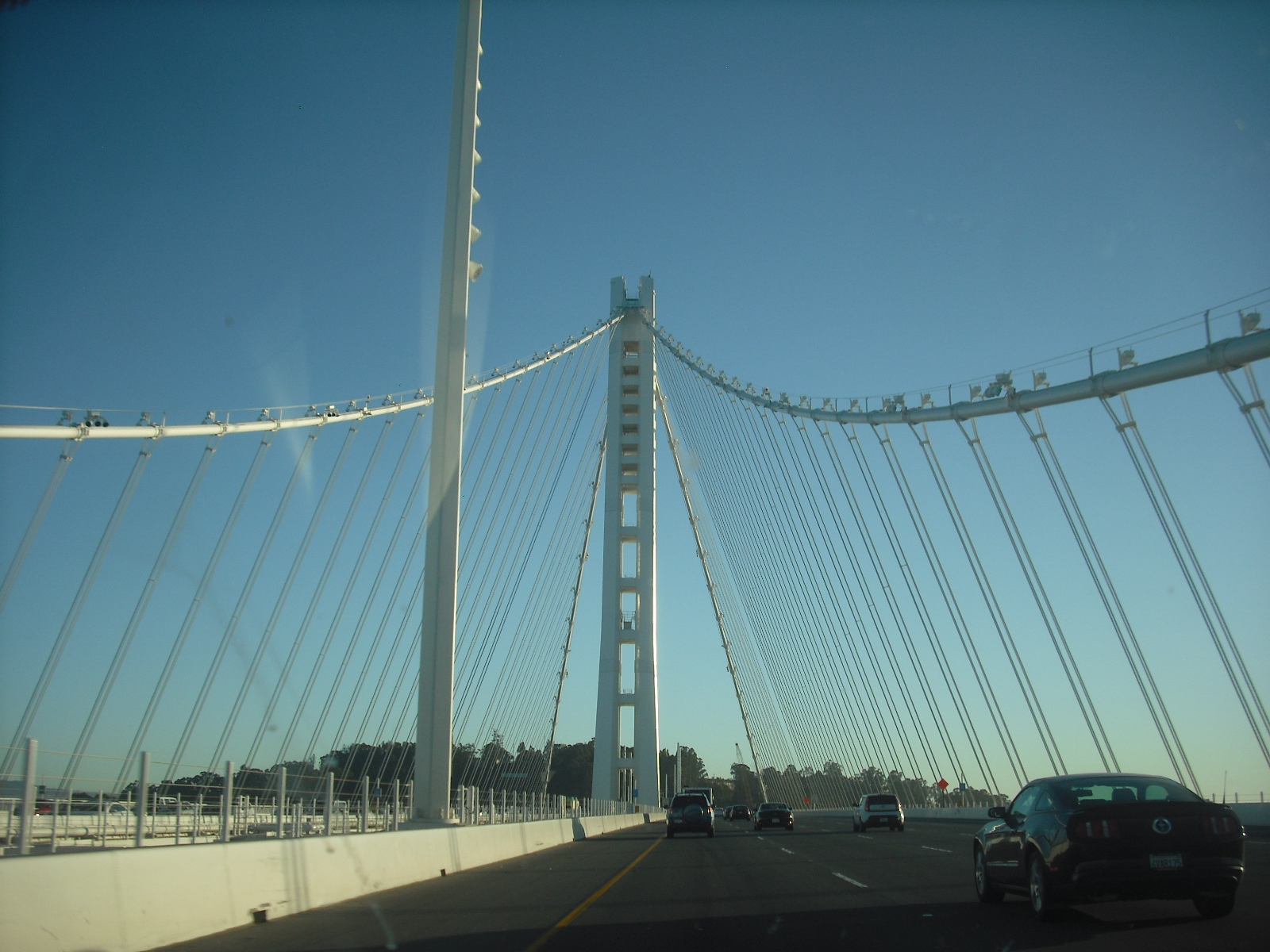
We come to the Bay Area as the sun is sinking toward the horizon. A golden haze looms over the city and the bridges, the fog seemingly aglow and the Transamerica Pyramid thrusting its way out above the Financial District. Thanks to some unexpected good fortune, the traffic on the Bay Bridge is manageable, so we can plow straight into the heart of the city with minimal delay. It happens to be Pride Weekend here, too. We’re not exactly in Utah anymore.

DSCF0145

This is my first time in San Francisco, and my first glances leave me as awed as I’ve ever been by any place on earth. As a sucker for hills, large water features, wine, Mexican food, and Mediterranean climes, this is in many ways my ideal city. The hills and fog and water make it feel curiously familiar to a Duluthian, and it is incredibly easy to live well, and spend easily, here. The closest comparison that I’ve seen before is probably Barcelona, but even that is much more spread out than San Francisco, and this city is very much its own. Its crowds and its prices are drawbacks, along with that lingering threat of a tremor that could dump it all into the bay. But the color, the vibrancy, and the unmatched views put it among the greatest of American cities without even expending effort. (And oh, does San Francisco expend effort, even if it tries to play it down with that faux Bay Area cool.)

We’re relieved to find parking just off the freeway—too easy, as we’ll eventually learn—and meet my cousin at his place in Hayes Valley, in the center of the city just north of Market Street. He knows how to host an urban planner, and shares a long stream of details on the streets and neighborhoods we pass. He leads us on a walking tour up a hill toward dinner at a fantastic Mexican restaurant, and we stop by a couple of bars to wrap up our evening, one with an incredible variety of local beer, and one that’s an excellent little dive. It’s a solid introduction, and we have much to explore over our two full days along the bay.

Day Four: Shattered Glass

After three straight days of ten hours on the road, we finally had a day to settle back and enjoy a city. My cousin is our guide, and our tour of San Francisco begins with Twin Peaks and Grand View Park, which together offer commanding views of the entire city. Twin Peaks has the more dramatic approach, and its upper reaches have been covered over by a pink triangle (the symbol used by the Nazis to mark gay Jews, now reclaimed) for Pride weekend. Below it, The Castro is decked out for the festivities, and people are pouring in for the festival. Grand View, meanwhile, is more subtle: the neighborhood around it features staid single-family homes, and its approach involves narrow streets turned staircases covered in intricate tiles that blend into murals from the bottom. Between the two, we have a complete panorama of San Francisco.

We continue a drive across the city and pass through Golden Gate Park, a sea of greenery that descends from the center of the city down to the ocean. It’s bigger than Central Park, though its water features are on the low side due to the drought, and there’s no shortage of congestion here, either. We head for the beach, which has a magical discovery for us: CorgiCon 2016, a festival for the wonderfully cute dogs. They all prance about the beach, burrow in the sand, and befriend one another. Some are in costume (flags, t-shirts), and one wears a GoPro. This is San Francisco, after all. They join their human handlers in beach bliss, and some of the more daring ones sprint through the surf, but most everyone keeps to the beach.

2016-06-25 13.44.31

Next, we head a short ways up to Land’s End, the point that which the ocean meets the Golden Gate, the strait feeding into the bay. The scrub-covered slopes with their groves of cypresses evoke the Mediterranean, and breakers crash in on the rocks in aqua hues. The bridge stands proud across the strait, and trails meander along the cliff. We stop in at the Sutro Baths to admire these old ruins, and wrap around the park with steady views of the ocean and the bridge beyond. We complete the city tour with a drive through some of its more distinctive ethnic neighborhoods, and return to Hayes Valley to regroup before dinner.

DSCF0171

Everything gets thrown for a loop when we hike up the street toward a pre-dinner drink, and I notice that the back passenger side window of my friend’s car is wide open. It’s been smashed, and glass is strewn across the street and the back seat. We’d brought in most of our valuables, thankfully, and insurance should hopefully cover the window. Still, there are substantial losses: my tent, our sleeping bags and pillows, some my friend’s clothes, my Duluth East cap, a Georgetown sweatshirt, my camera battery charger, the beer I’d brought as gifts for hosts, and a bunch of audiobooks from the Minneapolis Public Library. Thankfully, the library will forgive our costs with a police report, and most of the camping gear was hand-me-downs. (Though the tent, the sweatshirt, and the East cap did have some real sentimental value.) We’d put the more valuable stuff in the trunk, but there was enough scattered objects of intrigue such as clothes and food across the back seat to make the car an inviting target.

DSCF0181

In a way, I’m lucky: I’m 26, and this is the first time I’ve been a victim of any sort of crime beyond the theft of a pencil. I try to be vigilant, but I also took car safety for granted in decent neighborhoods of major American cities. No more, apparently. For the rest of my stay, I find myself inspecting the tent camps of San Francisco’s homeless—of which there are many—in wishful hope for a glimpse purple and white Eureka tent. This city lacks the no-go zones of a Chicago or even Oakland across the bay, but it has an underbelly that looms on many corners. We rush the car into a repair place before it closes.

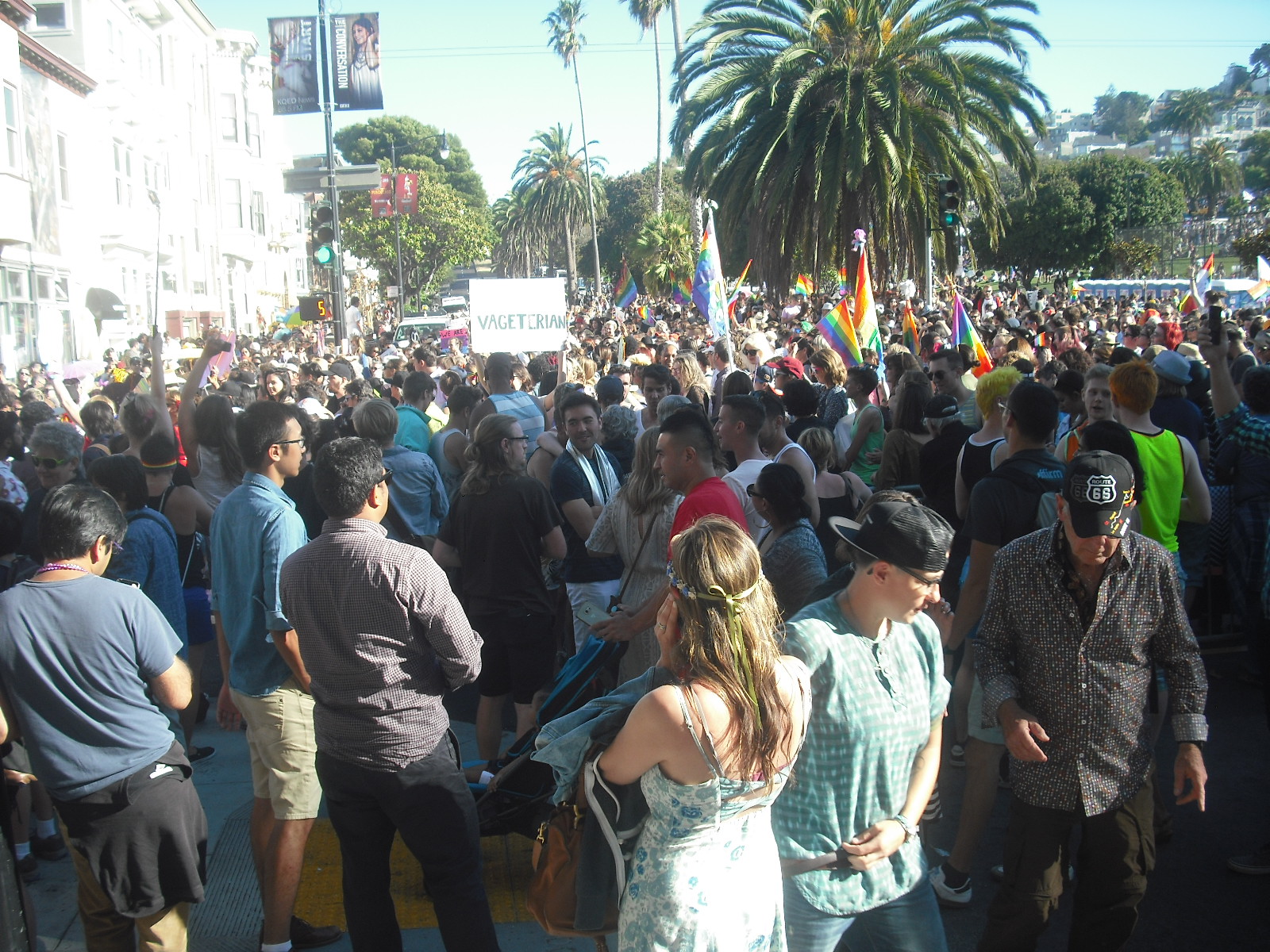
Dinner plans are further disrupted by a Pride week parade we were unaware of, which blocks our access to the pizza we’d hoped to have. (We later learn this is the lesbian parade, which apparently is its own show in addition to the better-known gay parade on Sunday.) A giant procession makes its way down from Dolores Park, and we have to jump through the crowd to negotiate our way to the other side of the street before walking parallel to a relentless drumline. Rainbow flags are everywhere, people lean out of second floor windows (some wearing nothing but duct tape covering teats), and others shower everyone in confetti. The placards are a mix of raunchy comments, expressions of solidarity for Orlando after the recent massacre, and broader leftist slogans. San Francisco, uninhibited and on full display.

DSCF0184

We grab burritos at a taquería on a corner and take our dinner back to Dolores Park, which teems with sunbathing revelers. Booze and pot abound, though somehow no one has a bottle opener, leaving us struggling to gain access to Coke bottles. The park, to my intrigue, earns its name from Miguel Hidalgo, the father of Mexican independence, whose statue lords over the hill; at its base sits a replica of the bell he rang to signal the start of the revolt in Dolores Hidalgo in 1810. Here, we meet an old Georgetown roommate of mine, and he joins the party as we meander over to another friend’s place for some beer tasting.

It’s been a night among the demographic emblematic of the Bay Area, late twenty-somethings with jobs in tech or research or some other start-up with boundless knowledge of food and beer. They’re all superb arbiters of taste, though also self-aware enough to know the complexity of their life here, and of the looming challenges on the horizon, as family obligations begin to arise. From this perspective, Silicon Valley seems less like some magical zone of invention and more like another place where people are trying to get ahead and get by. We’re all in the same boat, and for all of the Bay Area’s bells and whistles, they all seem fairly tame now. The tech culture’s facade comes down: everyone here displays an intimate knowledge of apps, and equal measures of frustration with how poorly they all function. The evening ends with a Nob Hill rooftop view of much of the city, including both the Bay and Golden Gate bridges and the Transamerica Pyramid. Fading, we retreat to bed afterward.

Day Five: Divine Wine

With the city swamped for the Pride parade on Sunday, two cousins and I escape to wine country north of the city. This is the heart of American viticulture, and a necessary journey for a wine lover. We take our time in starting out, and then head north through Napa, laughing at the traffic jams coming into the city as we cruise out. There’s no shortage of opulence along Napa Valley, as the wineries have all built their little villas and luxurious estates amid the grapevines, and display questionable command of Italian as they adopt or make up names to convey their prestige. Some are familiar names, while others look to break in, and all look to ride the cachet of the Napa name to greater recognition. Seeking some more exquisite experiences, we drive on past most of them.

The first stop is also the most absurd: Castello di Amorosa, a legitimate castle perched just above the north end of Napa Valley. The stonework is astonishing, and in among the turrets and battlements are a chapel, a great hall, a drawbridge, and some elaborate loggias. (A few extra dollars admit one to the torture chamber, among other special rooms.) The wine and service here are not especially remarkable, and it brings in crowds in a way that our later destinations don’t, but it’s still a winy wonderland. We’ve created a complete spectacle.

2016-06-26 12.03.26.jpg

Our next stop is the polar opposite experience. Locals, a wine cooperative in the miniature downtown of Geyserville, has no pretentions of an elaborate setting. It just delivers far better wine for no tasting fee, and reliably lures its visitors to purchase their favorites. Here, it’s easy to savor the different options and make informed comparisons, and make some effort to expand a mediocre vocabulary to describe the flavors we imbibe.

After a lunch stop in Healdsburg, we head into Sonoma, where we make two stops: first at Mazzocco, which specializes in Zinfandels, and then at Ridge, one of Sonoma’s gems. It’s a baking hot day in wine country, with temperatures in excess of 95 degrees, but we can linger inside while sipping at our glasses and still enjoy views of the vineyards marching out beyond us. I can’t resist a purchase from Ridge, though a looming trip through Canadian customs keeps me from going too crazy with the credit card.

2016-06-26 16.25.41

Now that we’ve had our fill of wine, we head back to Healdsburg, where a well-manicured central square makes the area appear even ritzier. We stop by its brewery, Bear Republic, best known for its Racer 5 IPA, though I elect for a delectable sour instead. As if we haven’t sampled enough satisfying beverages, we then head down the 101 to Santa Rosa, where we visit one of my cousin’s favorite breweries, Russian River. Their variety is so great and their ability to deliver on all of them so impressive that it would be a waste just to get a couple of beers, so we share a complete sampler with 18 different beers, from standard lagers to classic West Coast IPAs to Belgians to sours. With the help of some pizza, I’m feeling decidedly fat by the end of the tasting, but I manage to finish it all off.

The sun sinks toward the horizon as we head back south through Marin County. It’s down below the horizon by the time we reach the Golden Gate, but there’s still enough of a glow to make a detour up the coastal road worthwhile. I’m treated to panoramas over the Golden Gate Bridge, the city, and the ocean beyond. The wind howls and the fog begins to roll in; it’s a solid 40 degrees colder here than it was back up in Sonoma. Still, it’s worth taking a moment to drink it all in, one last sip at the vessel of Bay Area beauty before a final drive over San Francisco’s hills down into Hayes Valley. It’s been a rich weekend that has sapped my wallet in more ways than one, and I’m sure to return before long. For now, though, it’s time to hit the road again.

(Part III)