Cono Sur 2024, Part II: Tranquilo

This is part two in a four-part series. Part one is here.

My adventure to the Southern Cone begins, as half my trips anywhere these days seem to do, with travel issues. Ten minutes before I leave my door, Delta informs me the flight from Atlanta to Buenos Aires will depart nine hours later than planned. While they feed me, put me up in a decent Atlanta hotel, gift me some miles, and are night and day better than United was to me through comparable past incidents, I am still left lamenting lost time that I can never make up.

I confess that I am spoiled. Any regular flyer knows the absurdity of travel scheduling, the absurdity of our expectations, and the ability to schedule things out so meticulously can crimp the traveler’s mind. On our recent Camino, my dad reflected on his post-college backpack tour of South America in 1981, when there was no way to plan much of anything and he went with just one heaping guidebook to carry him through the whole continent. He would just take a bus to some city, wander until he found adequate lodging, and then stay there, and he came away from all of it just fine. As a millennial I got the slightest snippet of this unplanned life, most notably during my college semester in Mexico, which was just before functional smartphones for trips abroad were a thing. Now, such spontaneity feels like a borderline irresponsible relic, or at best a quaint dream of a different era.

This line of thinking trips an old hunger. On the plane, I break my usual rule about not connecting to the internet (the irony does not escape me) to wistfully reread Roger Cohen’s “Ways to Be Free,” the op ed column that has stuck with me more than any I’ve ever read.

It resonates so fully because the desire it expresses is deep in my bones. I can see my dad in Cohen’s van trip. William Finnegan’s writing on surfing triggered an artistic flourish from me, a fictional project that set re-oriented my trajectory some. I too asked the question Cohen’s son did, without ever quite settling on an answer. The appetite for freedom is inescapable.
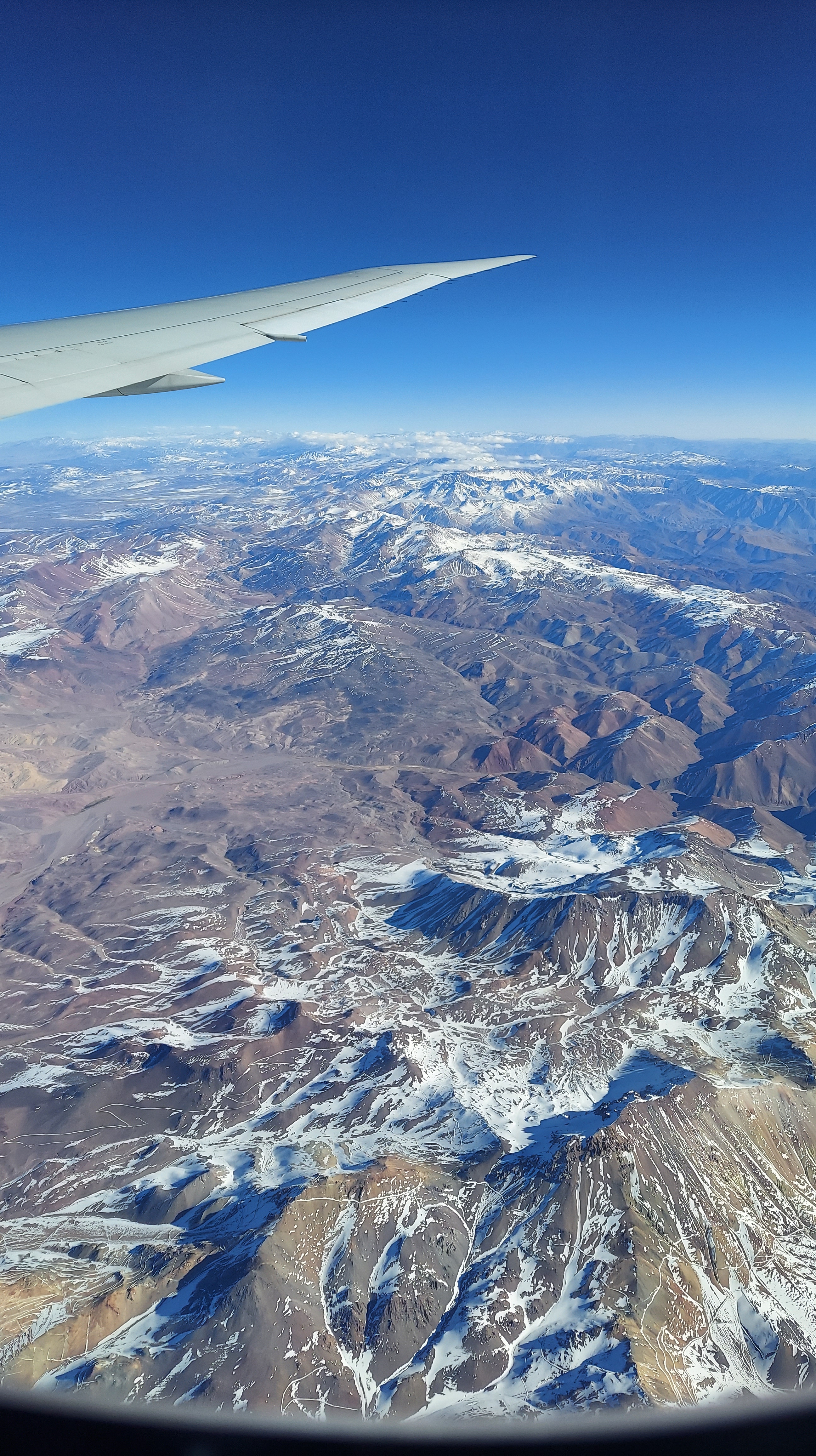
I was not in a position to take some grand adventure right after college (or at least I didn’t think I was), but I am now in a position to make up for some lost time. Any annoyance at the delay is forgotten as I drink in the rare experience of a full international flight in the daytime. I love this: over the ten-hour flight I can gaze out my tiny window at the Florida Keys, Cuba, the Panama Canal, the Andes over Ecuador and then Peru and then Chile before sweeping over the pampas and into the sprawl of Buenos Aires. This god’s eye view opens up the possibility of the world, shows how many more places there are to explore.

The contours of the earth always have fascinated me. From the youngest age I was enraptured by atlases and globes, tracing routes across nations I did not know and may never know. I recall some kid on the school bus early on—this must have been first grade, the only year of elementary school I took a bus—asking why I always stared out the window. Because I want to explore every inch of it, I probably would have said if I had the maturity to do so. Now, blessed with some modicum of disposable income, I dispose of it by visiting some of those places. Even with the travel delay, this feels right, some sort of trip I am meant to take.

An odd feature of my mini sabbatical: between my dad’s retirement trip and three weddings, all this travel is because of someone else. Of course I am pleased to go to all these places with all these people, and I had some input in crafting some of the itineraries. But I have just one snippet that is truly my own, for more than a few stray hours: my two-night detour to Uruguay.

The journey from Buenos Aires to Montevideo, the Uruguayan capital, takes just over two and half hours by a ferry named Francisco, which bills itself as the world’s fastest catamaran. It cruises smoothly across the Rio de la Plata, the views rather unfortunately blinded by bright string lights all around the windows. The travel delay has cost me my night in Montevideo, and from cab and bus windows it feels a bit tired, the changing fall leaves adding to the general sense of a drift into lost time. From Montevideo it is a two-hour bus ride on to Punta del Este, where I have decided to hole up before I return to Buenos Aires for the wedding.

Uruguay is a remarkable little country wedged between Argentina and Brazil. On the surface it resembles Argentina immensely, with its loves for beef and maté and wine and soccer; like its neighbor, its population is dominated by Spanish and Italian immigrants from around the turn of the 20th century. Its early history was tied up in wars involving its larger neighbors, whose residents still descend on its beaches en masse in peak seasons. But here is little Uruguay, tame as its neighbors overflow in excess, as boring in its politics as its neighbors are bombastic, comparatively affluent and low in crime. It is, perhaps, the most chill country on earth.

Uruguay earns this status not by exuding the painfully orchestrated cool of California or that “what, me worry” style of, say, a Caribbean island where people just expect things not to work. Uruguayans just seem to ease their way through life, living out small dramas, refilling their matés from the thermoses they carry around all day, and channeling any aggression on to the soccer pitch, where they might just bite you to get what they need. Uruguay is not rich, but it does not pretend to be. It works with what it has, and its infrastructure and institutions are the class of Latin America.

Riding out from Montevideo, the suburbs bustle with healthy life and don’t feel too far off from the parts of Portugal or Galicia I toured a few weeks earlier. In the countryside there is some poverty, but it feels stable, like these tiny cobbled-together homes have some staying power the shacks of a slum or dusty Mexican outpost do not, rooted into this pampa sand instead of living each day on the edge. The landscape starts out as plain grassland; cows and horses graze about. A few humpback mounts rise in the distance and grow thicker as I head east, and occasional forests offer pleasant mixes of pines and palms and the great ombú trees of the region. And then, finally, my bus rolls over a hill and reveals South America’s foremost beach resort.

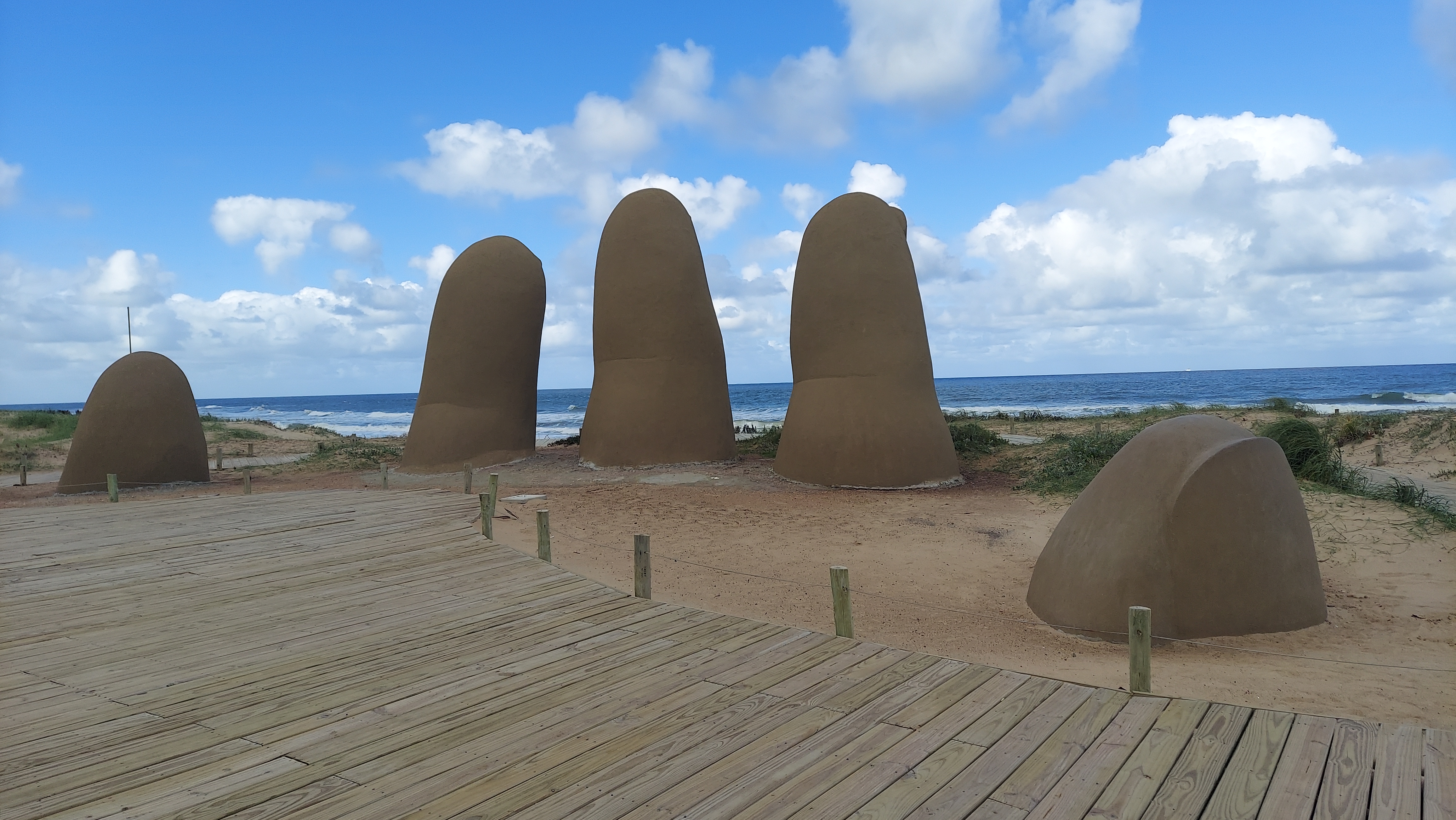
Punta del Este juts out on a snippet of sand where Uruguay’s southern and eastern coasts meet. Its center is more Miami Beach than modest Latin American resort, with clusters of towers and other prime real estate, while further out it drifts into graceful modernist homes settled beneath the pines. As this is fall in South America, it is now the offseason; the towers are mostly quiet, and the trendier clubs are closed up until the next major vacation. I putter around the peninsula and take a minute to appraise the iconic mano of Punta del Este, the hand that rises from the sand. Punta’s style is modern but tasteful, built to drink in the full surroundings, to provoke a few creative thoughts without disrupting the beachfront cool.
Some stray raindrops convince me it’s time to cab up to La Barra, a small beach town across an undulating bridge from Punta’s towers. It is still built up, still very much a destination, but has more of a town feel than Punta itself. I settle into a private room in an otherwise fairly dead, quirky hostel a block off an inlet, an easy walk from everything I will need for my stay in Uruguay. It all feels very assured.

I stroll along the beach at sunset. It is quiet, just a few stray couples and dog-walkers, and a lone surfer who puts in the brutal work out through fierce waves for one long, brilliant ride in. The sun disappears into glowing clouds and a full moon rises up through the marine layer, a resplendent yellow orb shrouded from time to time in a drifting oceanic haze. Everyone on the beach stops to watch. Later, I eat a chivito dinner at a casual restaurant named Chill Out and chat up the kid at the bar, an easygoing townie with a dream of an escape to Miami.

On day two, I fall deeper into Punta’s trance. It is grey, on the chilly side, but the surfers are out in force. Sixty or seventy of them ride off Playa los Cangrejos, and scattered others take on additional stray points along the unending beach. I amble my way to Manantiales a few miles up the shore just to drink it in. Sitting and watching the crashing waves appears a perfectly acceptable pastime in these parts. My guidebook calls Playa Bikini a “flesh cauldron” in the high season, but for now it is placid in response beneath a colorful row of those large-widowed modernist homes, all nestled beneath shapely pines and ombús. It is hard to square the Punta I see with the ubiquitous cranes putting up more towers, and hard to remember over lunch in a swanky beachfront joint that this is not in fact a rich country. I eat the seafood of the day, drink fernet, and the waiter provides a heavy blanket so I can get cozy in my seat. Rain arrives while I dine, and while I wait out the worst of it, the walk back is damp. Time for a siesta.

I dine at El Papu, a bohemian chic spot up the road, stone floors and the ubiquitous floor-to-ceiling glass, all lit by candle. They serve local craft beer; the eggplant parmesan is the best I’ve ever eaten, tender as can be, drizzled in a green salsa with nuts. A bassist and a keyboarder settle in to serenade us with jazzy tunes, all improvised, the bassist working wonders in the higher registers. The other patrons are local hipsters and surfers, at ease among one another, an easy night taking shape. The vibe has met the moment.

In Uruguay I am free to pursue a radical freedom, to re-create myself in a country where not a soul knows me as I am. It is an opportunity at once both tantalizing and impossible. I could expand on certain tales from my stay here, perhaps, but some things are best left unwritten. And sometimes fiction, in the words of Walker Percy, tells us what we know that we do not know that we know. After Uruguay, I know what possibilities exist, but I also know the extent of my reach. I can head home a wiser man.

Part three is here.

A Wave of Purity

Thanksgiving morning finds Evan driving alone up the shore of Lake Superior; alone, save for the urn of ashes riding shotgun. He’s had his license for three weeks now, and every acceleration in his mom’s old car still feels like a new burst of freedom, one mile closer to some reunion with an unseen destiny. Not that he can drive without some anxiety. His nerves rise when he crosses the patches where the road, coated by spray from this November gale, glistens in the car’s headlights. This all still has the feeling of a forbidden pleasure, one of which his dad at his best would have no doubt approved. Those moments were rare toward the end, and as depression consumed and defeated Evan’s once vibrant guide. For now, though, he can choose what he remembers of the man whose ashes ride along at his side. His old man will inspire him. The rush only grows as he swings on to a puddle-strewn gravel road out toward a point some ways north of town.

He didn’t want to spend this holiday with his mother’s family, not after what they’d said about his dad at Thanksgiving a year ago. He is too loyal to his father to blame him for leaving him behind, and the inundation of pity from the extended family was too much to endure. The visit over the summer had been even worse: didn’t his mother think Evan was letting himself go, they’d asked. He needed a haircut, he was far too young for that dating app, and he could probably use some friends who got him back in touch with that artistic side he’d used to show. This is what she got for letting her late husband turn him into a jock instead of making sure he followed in his cousins’ footsteps to choir and cello scholarships.

His mother, to her credit, stood up for his freedom to live as he pleased. She understood the adolescent impulses at play when he said he’d rather stay home for Thanksgiving, enjoy some personal time and feast with an accommodating friend’s family later in the day. He feels vaguely treacherous as he surveys the shoreline here, in full betrayal of her faith in his good decision-making. But somehow, he knows he’ll have no trouble drowning the guilt.

The stormwaters hammer away at a rocky beach. A few gawkers are on hand to admire the swells, but Evan makes sure to park as far from anyone as he can. He stops to admire himself in the mirror: yes, all this effort he’s put in to make himself look good over the past year has paid off. He smiles at himself, then reaches beneath the surfboard jutting through the middle of the car and fishes out the wetsuit at the foot of the passenger’s seat. It will be tight on him; he’s grown a few inches since he got it for Christmas two years ago. But he forces his way into it, an unwieldy dance between himself and Neoprene and the steering wheel at his knees. He’s in no rush, takes measured pride in his efforts. Every move is steady, deliberate, dripping with certainty. As it should be.

He pops the trunk and throws open his door only to have the wind nearly blow it shut in his face. He struggles out into the elements, makes his way to the back of the car, and scans the road: no, no one can see him. He pulls out the board, fights the wind as he closes the trunk, and picks out a path down to the rocks. A heat wave the previous week melted all the snow, but thin layers of ice carried in by the lake force him to fixate on each small step down to the shore. He’s seen big waves before, knows the danger they bring. But the steely grey sky and the bone-chilling cold reveal a malice he’d never known in the Great Lake before. If he picks the wrong waves, he’s most certainly dead.

Evan is not a veteran surfer. His résumé is limited to a series of vacations on the California coast, all of which started with noble intentions of conquering waves that swiftly dried out when his mediocre swimming skills ran up against the endless need to paddle outward. His mother dissuaded him at every chance she got, but his dad was always the trusting soul who knew his otherwise religiously risk-averse son ought to catch a wave when it rose up before him. As far as his mother knows, the surfboard is still gathering dust in the basement, a forgotten relic of happier days when they’d escape to San Onofre for spring break. But he’s put in his time to plan for this day. He’s researched this shoal meticulously, made three drives out this fall when he only had his permit, the closest thing his mother’s little saint has ever come to rule-breaking (whatever his worrying aunt may say). He chose each of those visits to survey the waves in prime conditions, to watch a couple of locals in action. But on none of those occasions had the winds approached this vicious pummeling power. His knees are quaking as he stares out at the roiling waters, his tremors in no way related to the cold.

His face clenches up into a grimace. If he can’t deliver now, when will he ever? Evan fixes the tether to his leg and marches out into the surf, lets the first wave break around him, gains some confidence that those that follow won’t bowl him over. He shuffles his way past the dashing rocks and then launches himself in, struggling to paddle out through the vicious breakers and toward a takeoff point that looms on the horizon. He labors intently, thankful for those long hours in the gym of late, his arms now just powerful enough to pull him out into the open lake.

The rest of the world ceases to exist. Evan, alone amid his unrelenting swells, all life reduced to himself and these crashing monsters that have swamped vessels sixty times the length of his little board. His mother, his father, his friends, his family: they all are gone now. His mind has no choice but to lock in on his singular purpose. He exhales, shuffles his body forward on the board, waits for a set that will suit him. He lets two passable swells roll by before he musters up the courage to clamber to his feet.

He lasts all of three seconds. He topples, battles back his panic to a level he can more or less manage. The waves come so much faster here than on the ocean, a relentless barrage of punches that land blow after blow. His mouthful of water may not be salty, but it chills him to the bone. He struggles back on to his board and forces himself back out, determined to ride one in with some measure of competence. His arms groan amid this unrelenting slog, though they’re afterthoughts compared to the protests in that ever-so-rational corner of his mind. A sudden howl of wind has the waves rising up as high as eighteen feet: true monsters of the lake, enough to challenge even the experts. He shouldn’t be here, yet here he is. He climbs to his feet for a second time, but the wave fells him immediately. Eternal seconds pass as he flounders in hapless misery. His ice bath plunges him into the depths of his fears, a cold, dark terror that instills a new wish for life within. He wrestles his way back on to the board and pushes back outward, ever outward.

Evan struggles out four more times, each effort deadening his queasy stomach. Fear becomes routine. He never lasts upright more than four seconds. This is far beyond his pay grade, far beyond a couple of halfhearted lessons from some stoned-out beach bums at Laguna Beach. Did they ever tempt death in the way he now does? If they did, they never said as much. Not that he’d blame them. This urge isn’t something he could explain, either.

The next wave has a different feel to him. It catches his eyes with a mysterious greenish tinge, something that marks it as different from the rest. This one, he knows, is the one. Eyes wide with delight, Evan surges with strength, picks out his line, and shoots down the tunnel in full control. He pulls back and rides the crest, and for the first time in his life nails a turn. He cruises the length of the wave for another five seconds before he crumples down to the surface of his board. He flounders, then resurfaces, pitching violently as the waves carry him in. His eyes are swimming, though not just from the spray: triumph and loss overwhelm him at once, sudden oneness with a sheer awesome force capable of destroying him. He’s done what he set out to do.

His moment of victory makes him complacent. The waves carry him in to toward a vicious reef, and he’s reduced to another sloppy and fearful paddle back to safer waters. For a fleeting second he imagines he can repeat that triumphant ride. No, no, he immediately tells himself: to even try would be to tempt a fate he does not dare imagine. This is enough.

By the time he coasts back into shore he has a small audience bending in the breeze to watch him. An older couple eyes him with worry and awe, and a mother with three preteen boys shepherds her flock away when she realizes this phantom emerging from the waves can’t be out of high school. She doesn’t want them getting any ideas. The old man politely applauds his performance, and Evan’s taught nerves burst into a wicked grin.

“You seem awful young,” offers his wife.

A cocky voice that Evan does not know responds for him. “Age doesn’t matter if you can ride like that.”

“No fear here!” the old man wheezes.

Evan shuts down his defensive impulse and chooses the right words. “Nah. It’s all fear, all the time. But that’s what makes it worth it.”

He smiles and picks his way back along the beach to the car, where he stashes away the surfboard and turns to face the wind. He lingers a few minutes, puts on a show of paying his respects to the beast he’s conquered. Once the couple has turned its backs on him, he collapses into the driver’s seat, hyperventilating as he cranks the car’s heat as high as it will go. He peels off the wetsuit, pulls back his hair, and closes his eyes so he can kill the terror and sear the triumph into his memory. That’s the only record of his ride: no pictures, no videos, no hurried accounts dashed off to friends. No one will ever need to know save himself.

He pats the urn next to him, feels a swell of something within, some god or primeval force surging through every thundering beat of his heart. In this moment Evan believes as much as he ever has, knows he must continue to find this force that pulses through him in these rare pinnacles of raw reality. What this belief entails or asks of him he’s not entirely sure, but that does nothing to diminish his certainty.

He knows he’s not alone in seeking it. The potheads try to tell him he can achieve this state with a few quick hits, but that seems like a cheap and safe shortcut; an escape, not a deliberate rush to the brink of fate. A friend who’s smoother with girls says sex is much the same; this, Evan can probably buy, the wonder of losing oneself in another in a rush of sensual ecstasy. He really should find himself a girlfriend so he can compare notes. But this? This is just him alone, or him made one with everything, most importantly that thing in the seat next to him that he can’t have back.

He pulls out his phone to call the friend who’s hosting him for dinner, his hands still trembling as he finds the number.

“Hey Evs,” the friend says, surprised by the call.

“Yeah. Listen, I’ll be a little late, just gotta…” he trails off, omits the details on how must head home to dry himself and replace the urn where it belongs.

“You okay?”

“I’m…” Evan pauses and returns his gaze to the waves. “I’m where I need to be.”

Here is the next piece in this series.