WRT V, Part 3: Of Sorrow and Triumph

This is the third in a three-part series. | Part 1 | Part 2

On the second to last day of my road trip, I cross South Dakota from southwest to northeast, almost entirely on back roads. I start in the Pine Ridge Reservation, which I expect to be jarring. It is.

The first markers of the new world I enter are the roadside markers reading “Think” and “Why Die?” While they are part of a statewide program to memorialize drunken and other reckless driving deaths, they are legion on Pine Ridge. Trailers begin to appear alongside the road, almost all in a state of decay, some fitfully patched up, others crumbling into these hard, rolling hills. In the town of Oglala, they just densify, each yard collecting broken down vehicles, mined for parts to keep one running. Drivers honk at the stray dogs who run in front of cars. A few men walk down lonely stretches of highway with no obvious aim.

The town of Pine Ridge stirs to life on this Sunday morning, a few kids ambling up streets and a group congregating outside a church. The reservation’s schools and health center at least look shiny and new, and the town now manages to offer some basic necessities in business and a few apparent research operations or other outposts from the outside. But it is still a tenuous borderland, still struggling to resist the entropy and despair that hang like a pall over Pine Ridge. There is one growing type of business that shows sign of new entrepreneurship: cannabis shops.

A few miles further east, I come to Wounded Knee. Here, in December 1890, over 140 Sioux camped beneath a white flag were slaughtered by the US cavalry. The massacre was the final blow in the Plains Wars and the end of an era, the frontier closed and reservation life made universal. Whispers of a mobilizing ghost dance spooked the Army, and after a single mystery shot, the guns above the creek blazed indiscriminately, killing Native men, women, and children, along with a number of US soldiers through friendly fire in the bloodbath below.

Today, a single sign by Wounded Knee Creek marks the site of the massacre, and a still-active cemetery atop a hill hosts the mass grave at its center. All is quiet when I pull up, but my arrival sparks some activity. An older man walks up the backside of the hill, introduces himself as the cemetery’s caretaker, and shares its history. His great grandmother, he says, is the one who showed another Sioux chief the blood coating the snow a few days later. He is reverent, adds some words in Lakota, though he also laughs easily as he talks of his grandchildren, for whom he needs to buy some Pampers.

Next, a younger man in a well-loved Seahawks jersey joins him. He adds some details on the 1973 occupation of this site by the American Indian Movement and subsequent standoff with federal forces. He had broken out of here to go live and work in Pipestone, Minnesota, but he is home to help restore water to his mother’s trailer down below the hill. He sells me a dreamcatcher. As I leave the site, two women with a young child arrive and begin setting up a table to peddle additional wares. For a variety of reasons I normally avoid giving handouts, but I leave Wounded Knee with a lighter wallet and no qualms about it.

Over these past two hours I have borne witness to an American moral disgrace. In some ways the tales of Native resistance and a delicate dance with an unbeatable government power take me back to the highlands of Chiapas in Mexico, right down to the vendors profiting off queasy, sympathetic tourists like me. But the affluence not far up the road seems to have particularly perverse effects on Pine Ridge, where residents can buy into one or two of the markers of modern American life but none of the rest, or are left with the detritus of a throwaway consumer culture and the accumulation of failing junk. I could haul in statistics on astronomical unemployment or obscene maternal mortality or life expectancies in line with the bleakest corners of sub-Saharan Africa, but my eyes are enough to capture the depths of the perdition here. Forget becoming great again: the US will be great when it can prove Pine Ridge is not a permanent state.

When I drove west in 2020, I struggled with questions about the state of the world, wrote moody fiction about a struggling soul who brushed up against the horrors of Pine Ridge. This time I drive freely, unburdened by what has been. I have borne witness, know I will find the words to capture this time on the edges of American life, a solo traveler drifting through and blending in with different worlds. I have a job in which I help chip away at the troubles in these lands, such as an outsider can. I am easing through, in control, pushing at edges and turning my eye my one great looming doubt, the place where my pursuit becomes tentative, comes up short.

As I go I listen to Hillbilly Elegy, now as good a time as any. The politics slip in here and there but the book is fundamentally an account of a broken boyhood, of one kid’s escape from a predetermined fate. JD Vance is the grandson of migrants (the irony drips through here), uncouth Appalachian Kentuckians who lit out for opportunity in an Ohio factory town, endured culture shock and their own demons but found ways, built lives. Two of their children lit upon upward trajectories, but Vance’s mother was the exception, the one who ran through men like tissues and lapsed into drugs. Young JD endures a constant rotation of father figures, jerked from place to place, unstable (despite some clear, precocious talents) until he finally lands in the place that has always been his most stable home: in with his Mamaw, the no-bullshit grandmother who sets a standard and holds him to it. She gifts him a world stripped of its ambiguities, clear in its expectations, no fleeting figures drifting through.

I feel stories like this deeply, am fascinated by how scars in youth can imprint themselves upon people. My own childhood was much happier than Vance’s, punctuated by a few acute jolts of pain instead of the near-constant anxious dread that probably made him the reflexive fighter that he is. Some scars linger, though, and he and I are not unaligned in some of our loose theories around the need for stable guides in a fluid world, of raising children to high standards, of the utmost importance of family life. How we have lived out that belief is very different.

I do not know if Vance has found the stability he craved with the choices he has made, will make no effort to judge his success or failure. But for my part there is no policy platform I would seek to impose on Pine Ridge to cure certain troubles of the soul, no rant about people whose views are different than mine. For me, before I ask what scenes like this demand that I do, I ask how I should be. In this case, the answer is to be a witness, to listen first, and then an attempt to uphold a faith in humanity through steady, daily work.

I have more pride than ever in the work I do because of some of the steps my office has taken over the past year to two to make good on some of these promises of greatness for people who deserve it. But the ties closest to home are still the ones that matter most. Trips like this one with an extended family are part of that work, bonds forged with people who are often not physically close but are some of my favorite humans. This whole year has been full of those journeys, and I cherish them all. And then there is my life in Duluth with my parents. Forget all the philosophical blather, forget the various expediencies: the foremost reason for my homing instinct in early adulthood was to live in joy with the two people who birthed me, even though our family unit is no longer. On that front, I have succeeded.

My project, however, is an incomplete one, and a gnawing void still looms as I dream of my own family life, my own investment in a future. What does it mean to want what I’ve been unable to find more than anything? It means I will pursue it with ever more vigor, with all the hunger, the joy, the panache, with everything I’ve articulated across all these journeys I take. I had thought this phase of life of outward journeys over the past few years may have been a distinct phase but now I understand it is in fact the project of a lifetime, an insatiable thirst for my world that will course through everything I do. I have built many of the necessary habits, slowly and fitfully over time. Whatever I might have believed before, I was never really ready. Now, I believe, I might be getting there. With that revelation I turn off the audiobook and coast into a Western sunset, my peace complete.
Cono Sur, Part IV: Lejos de Casa

This is the final installment in a four-part series. Part I | Part II | Part III

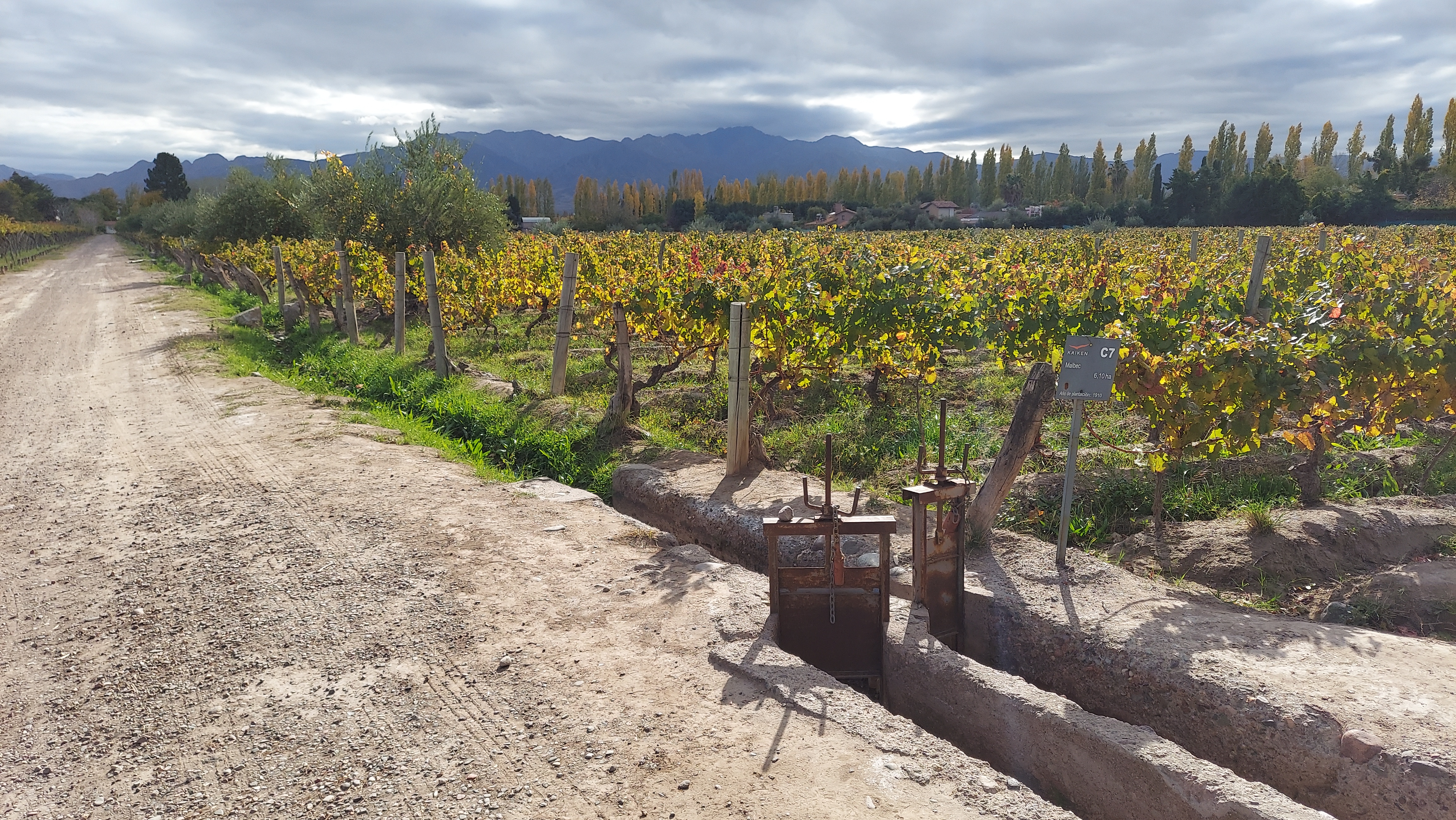
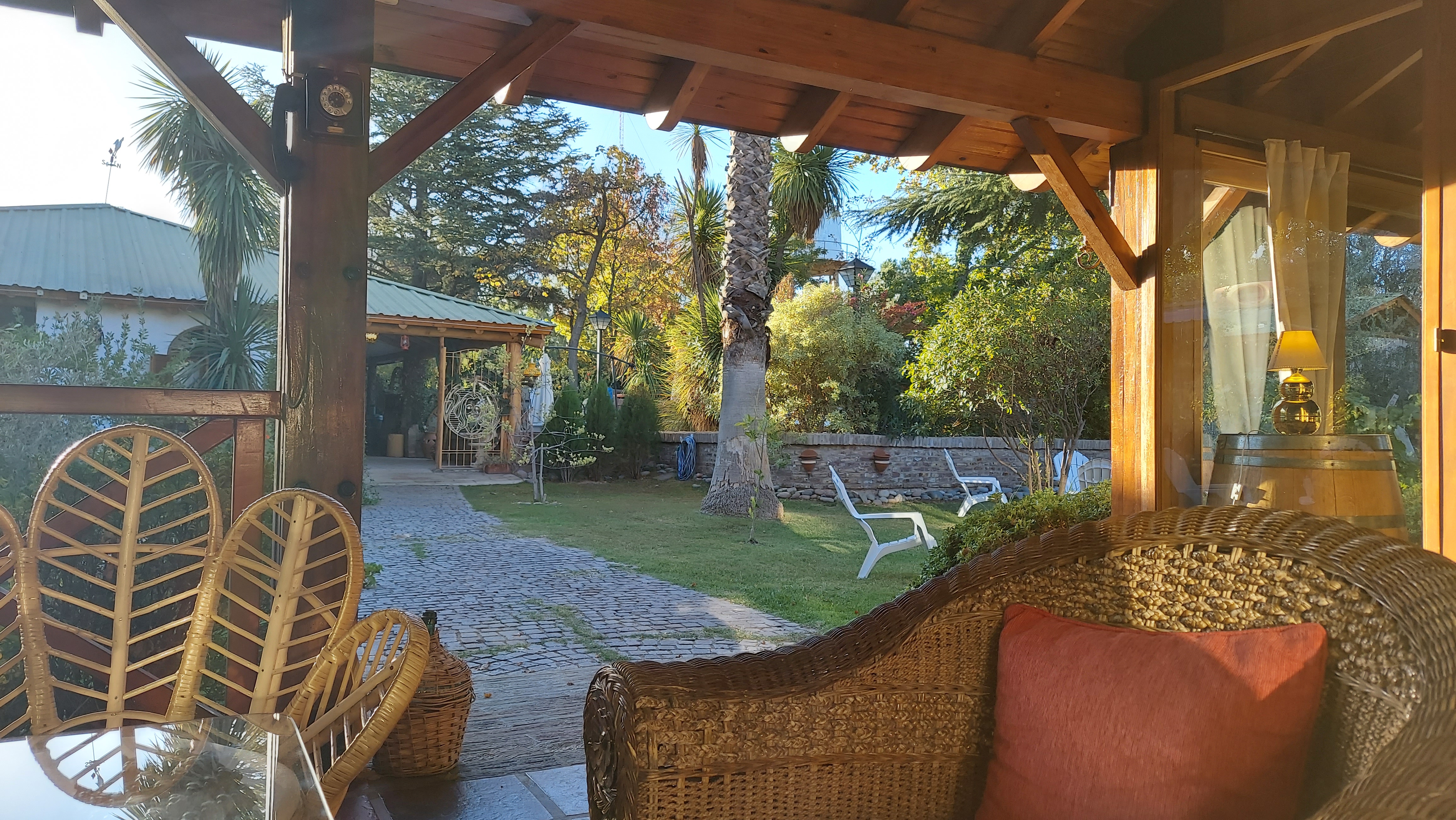
Mood shift, for the third time this trip: I head to Mendoza, a two-hour flight to the west of Buenos Aires, a city tucked in the shadow of the Andes. Mendoza gave the gift of malbec to the world, and it remains a great wine-growing region, so roughly a dozen wedding guests have made their way out here to continue the afterparty. We are strewn about between downtown Mendoza and the placid towns heading south toward the Valle de Uco, and I crash at a small bed and breakfast a block off the main square in Chacras de Coria.

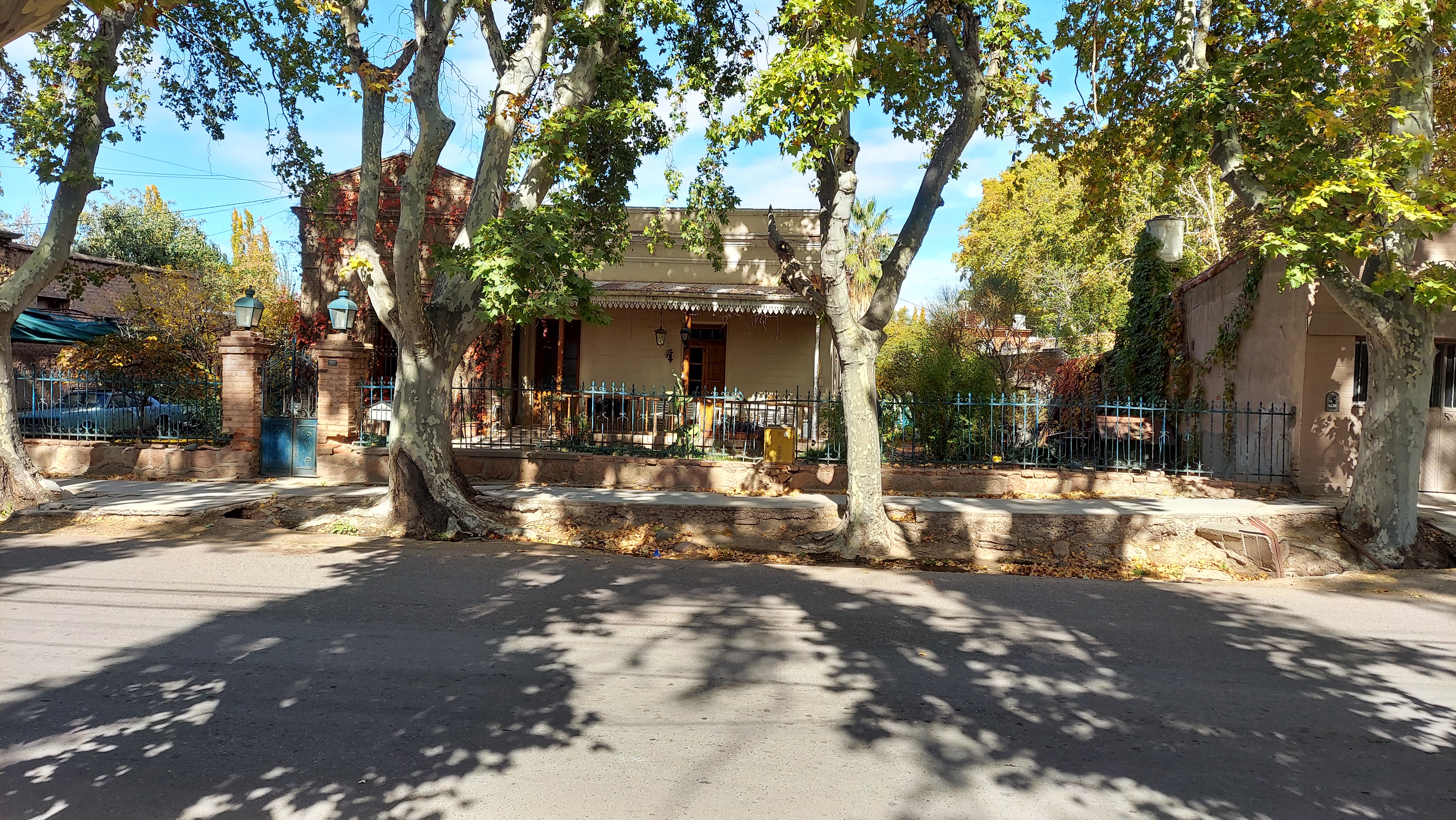
Chacras is a quiet town of low-slung, walled-off houses and unassuming quality restaurants. The smell of grilling meat drifts through the air and settles over my patio seat outside my room at the B&B. Thick sycamores and elms in fall color line a network of drainage channels called acequias, a legacy of the Huarpe and Inca that break up an otherwise dusty landscape. A wine country dry heat hangs over the foothills of the Andes, and the mountains above us shiver with a strong wind pouring down, a sign snow is falling on the slopes of Aconcagua, the highest point in the Americas, some 200 kilometers to the west. By the third day the winds stop and the temperature plummets over twenty degrees, a sign of deep autumn here in Mendoza.

My B&B is the pet project of an American named Bruce, a Vietnam era fighter pilot who later flew commercial planes. Bruce has electric blue eyes, a long and scraggly mane, and is one of the more astonishing humans I have ever met. His global travels have taken him to every continent and just about every ski hill on offer, flitting from place to place, adventures in motorcycle racing, a home in Giza, a German ex-wife, and even some time in Minnesota. After decades of an itinerant life he landed in Mendoza, the house choosing him, or so he says. He is now the pilot of this little B&B, a labor of love going on 20 years.

We spend my first night in Mendoza in conversation over meat and drink, though most of it flows in one direction. He diagnoses extreme stress in me, which is both right and wrong; yes, I can be a bundle of nervous energy, these surges often a fuel and sometimes a crutch, a tension no doubt heightened in a place far from home. The lone wolf struggles to understand the chameleon, forever calibrating himself to his surroundings, but the chameleon can come to understand the wolf.

If Bruce’s goal is to give me an escape, his scattershot volleys certainly don’t help the cause. He speaks so softly that I strain to hear, and while he peppers me with questions, only rarely do I sense he is really processing my answers. He grills me on my work and its value and shares his idiosyncratic takes, sometimes insightful and sometimes leaning toward cringe, a jumbo jet on a set path that I cannot alter, and I am intrigued to just watch him fly as far as he can. Here is a man who chose the radical freedom, gave up a family and everything he knew, and now here he is on a Monday night in Chacras de Coria, Argentina, guzzling down wines and holding court for an American kid who thought he was going to have a quiet evening in to recharge his battery before exploring the vineyards. I am fascinated by him, and he has clearly done some good for quite a few locals. But I would not choose to be him.

In spite of everything, Bruce is bullish on Argentina’s future. If Uruguay is a country that just works, Argentina is one that should work but too often does not. It has a world-class capital city of 16 million people, rich agricultural and mineral resources, beautiful countryside from Patagonia all the way up the Andes. Like the United States it is a European settler society, its indigenous peoples generally wiped out or pushed to obscure corners, a tragedy that has left it on a trajectory apart from some of its Andean neighbors. Waves of immigration from Spain and Italy crashed up on its shores in the late nineteenth and early twentieth centuries with a land rush to rival the opening of the American West.

Its modern history, however, is an absolute jumble. The country has managed to escape its long run of military coups over the past 40 years, ever since the hapless Falklands War discredited the last junta, and this is a real achievement. The economy, however, is a different matter, thanks to runaway inflation and the populist patronage machine that is the Justicialist Party, Argentina’s dominant political institution since Juan and Eva Perón showed up on the scene. Putting up the Economy Minister in a nation with rampant inflation did not work out well for the Peronists in the 2023 elections, and Argentina is now running an experiment with Javier Milei, a Trumpy figure with no legislative support and five cloned dogs named after University of Chicago economists. The drama goes on, though the early returns suggest one of his ideas, the dollarization of the economy, is doing some good to stabilize prices and rein in that inflationary scourge that Argentina needs to solve before it can make good on any other promise. That promise, as these next few days show, is considerable.

Dollarization also makes Argentina an even easier country for American visitors, and for us revelers, Mendoza is a land of bountiful excess. Given the difficulty of winery logistics—here is an industry that is just begging to be disrupted—we go off on our own or in small groups, and we share an entertaining group chat. Five or six courses into my seven-course paired meal at Alta Vista (a visit arranged by Bruce and his staff; he is nothing if not a connoisseur of good taste from the whole world over), I report a state of general bliss. One wedding guest who is on a guided tour of the Valle de Uco shares he has just been served his fifth filet mignon of the day; another makes the mistake of counting how many glasses she has consumed. “We need the anti-Ozempic,” our bride writes as she ponders her dinner reservation with dread. Indeed, after a siesta and plenty of time to digest, I can only stomach a small salad for dinner in downtown Mendoza, while a tablemate pokes feebly at her eggplant. Three of us end up at a rooftop bar overlooking Mendoza’s gentle grid that night, shivering a little at the coming cold and marveling at what we are a part of here.

The next day we do manage to get a healthy group together for a tour and tasting at Kaiken, where the aging barrels are serenaded by Gregorian chant to create vibrations. (As with Dante in the Palacio Barolo, here is that credulous Latin American melodrama, a feature of a society less beset by the all-knowing cynicism that can plague educated Americans.) Guided by a sommelier, we try an array of malbecs to test the differences between them, and we eventually close the place down. I join Jess and Phil back at Entre Cielos, their sleek spa resort for their mini-moon, and we bask in the hot tub beneath the Southern Cross and hold a scattershot bilingual chat with a man from Chile and a woman from Eau Claire, Wisconsin, who have settled here together. Later, we peck at a dinner with two more friends at the resort restaurant. We order as much tea as we do wine. The body can only endure so much here.

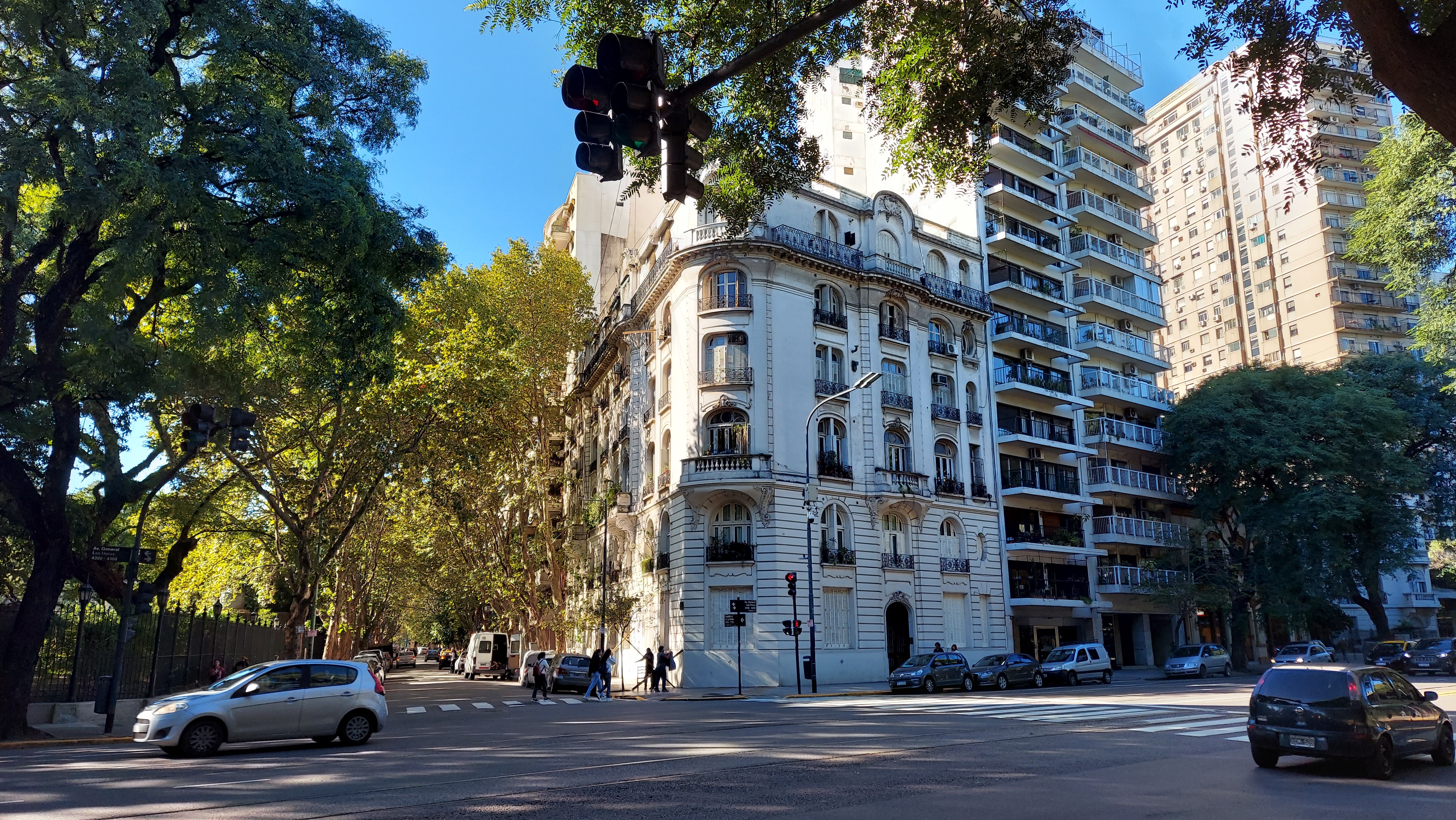
I return to Buenos Aires for one final night in Argentina, though the energy for greater exploration has diminished now toward the end of near-constant moves from place to place. I content myself with another night at the Miravida Palermo Soho and stroll around the neighborhood, with visits to the charming Japanese Garden and the rather moribund Ecoparque zoo. One unattached fellow Hoya remains, and we sample a bumping craft brewery named Strange. The beer is superb, and the blasphemous raccoon logos are, well, something.

Once it is time to head back to the airport, I am ready to leave Argentina. I am ready to speak fluent English again, ready to sleep in my own bed; at least for two nights, that is, before the last adventure of my mini sabbatical. In the days that follow I reflect on the juxtaposition between my hunger for that freedom to wander and my natural homing instinct; my embrace of Uruguayan anonymity and my rejection of Bruce’s retreat from all prior commitment.

Is it truly a tension? I’m not so sure. They are both parts of a well-lived life, paces adjusted and waves seized. Here is yet another way to be free: to find the ease of knowing one has found one’s home in a certain place, among certain people, desire and roots aligned. This trip is all a good dream, yes, but I have work to do when I get back home. I couldn’t ask for much more.

Cono Sur 2024, Part II: Tranquilo

This is part two in a four-part series. Part one is here.

My adventure to the Southern Cone begins, as half my trips anywhere these days seem to do, with travel issues. Ten minutes before I leave my door, Delta informs me the flight from Atlanta to Buenos Aires will depart nine hours later than planned. While they feed me, put me up in a decent Atlanta hotel, gift me some miles, and are night and day better than United was to me through comparable past incidents, I am still left lamenting lost time that I can never make up.

I confess that I am spoiled. Any regular flyer knows the absurdity of travel scheduling, the absurdity of our expectations, and the ability to schedule things out so meticulously can crimp the traveler’s mind. On our recent Camino, my dad reflected on his post-college backpack tour of South America in 1981, when there was no way to plan much of anything and he went with just one heaping guidebook to carry him through the whole continent. He would just take a bus to some city, wander until he found adequate lodging, and then stay there, and he came away from all of it just fine. As a millennial I got the slightest snippet of this unplanned life, most notably during my college semester in Mexico, which was just before functional smartphones for trips abroad were a thing. Now, such spontaneity feels like a borderline irresponsible relic, or at best a quaint dream of a different era.

This line of thinking trips an old hunger. On the plane, I break my usual rule about not connecting to the internet (the irony does not escape me) to wistfully reread Roger Cohen’s “Ways to Be Free,” the op ed column that has stuck with me more than any I’ve ever read.

It resonates so fully because the desire it expresses is deep in my bones. I can see my dad in Cohen’s van trip. William Finnegan’s writing on surfing triggered an artistic flourish from me, a fictional project that set re-oriented my trajectory some. I too asked the question Cohen’s son did, without ever quite settling on an answer. The appetite for freedom is inescapable.

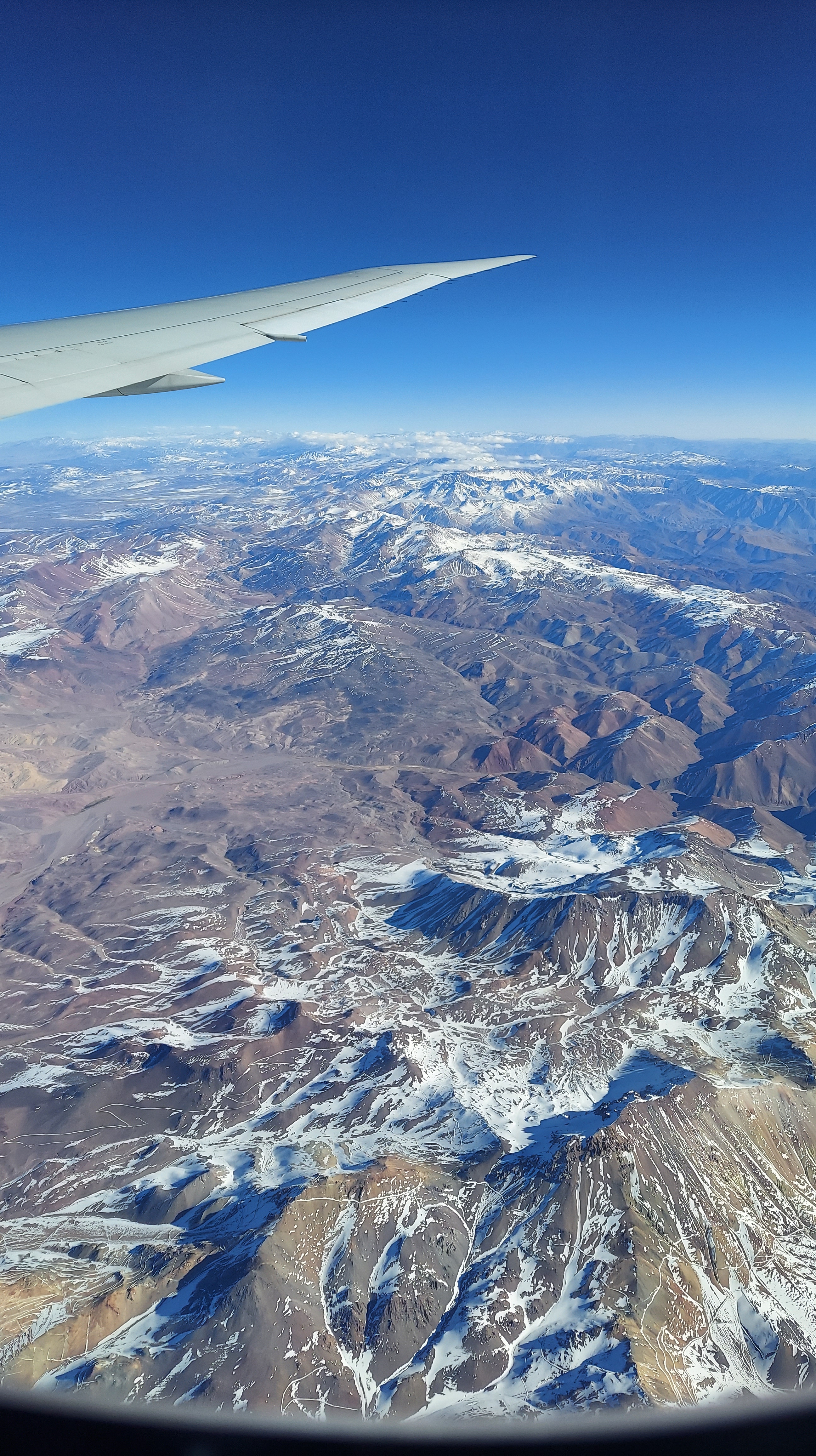
I was not in a position to take some grand adventure right after college (or at least I didn’t think I was), but I am now in a position to make up for some lost time. Any annoyance at the delay is forgotten as I drink in the rare experience of a full international flight in the daytime. I love this: over the ten-hour flight I can gaze out my tiny window at the Florida Keys, Cuba, the Panama Canal, the Andes over Ecuador and then Peru and then Chile before sweeping over the pampas and into the sprawl of Buenos Aires. This god’s eye view opens up the possibility of the world, shows how many more places there are to explore.

The contours of the earth always have fascinated me. From the youngest age I was enraptured by atlases and globes, tracing routes across nations I did not know and may never know. I recall some kid on the school bus early on—this must have been first grade, the only year of elementary school I took a bus—asking why I always stared out the window. Because I want to explore every inch of it, I probably would have said if I had the maturity to do so. Now, blessed with some modicum of disposable income, I dispose of it by visiting some of those places. Even with the travel delay, this feels right, some sort of trip I am meant to take.

An odd feature of my mini sabbatical: between my dad’s retirement trip and three weddings, all this travel is because of someone else. Of course I am pleased to go to all these places with all these people, and I had some input in crafting some of the itineraries. But I have just one snippet that is truly my own, for more than a few stray hours: my two-night detour to Uruguay.

The journey from Buenos Aires to Montevideo, the Uruguayan capital, takes just over two and half hours by a ferry named Francisco, which bills itself as the world’s fastest catamaran. It cruises smoothly across the Rio de la Plata, the views rather unfortunately blinded by bright string lights all around the windows. The travel delay has cost me my night in Montevideo, and from cab and bus windows it feels a bit tired, the changing fall leaves adding to the general sense of a drift into lost time. From Montevideo it is a two-hour bus ride on to Punta del Este, where I have decided to hole up before I return to Buenos Aires for the wedding.

Uruguay is a remarkable little country wedged between Argentina and Brazil. On the surface it resembles Argentina immensely, with its loves for beef and maté and wine and soccer; like its neighbor, its population is dominated by Spanish and Italian immigrants from around the turn of the 20th century. Its early history was tied up in wars involving its larger neighbors, whose residents still descend on its beaches en masse in peak seasons. But here is little Uruguay, tame as its neighbors overflow in excess, as boring in its politics as its neighbors are bombastic, comparatively affluent and low in crime. It is, perhaps, the most chill country on earth.

Uruguay earns this status not by exuding the painfully orchestrated cool of California or that “what, me worry” style of, say, a Caribbean island where people just expect things not to work. Uruguayans just seem to ease their way through life, living out small dramas, refilling their matés from the thermoses they carry around all day, and channeling any aggression on to the soccer pitch, where they might just bite you to get what they need. Uruguay is not rich, but it does not pretend to be. It works with what it has, and its infrastructure and institutions are the class of Latin America.

Riding out from Montevideo, the suburbs bustle with healthy life and don’t feel too far off from the parts of Portugal or Galicia I toured a few weeks earlier. In the countryside there is some poverty, but it feels stable, like these tiny cobbled-together homes have some staying power the shacks of a slum or dusty Mexican outpost do not, rooted into this pampa sand instead of living each day on the edge. The landscape starts out as plain grassland; cows and horses graze about. A few humpback mounts rise in the distance and grow thicker as I head east, and occasional forests offer pleasant mixes of pines and palms and the great ombú trees of the region. And then, finally, my bus rolls over a hill and reveals South America’s foremost beach resort.

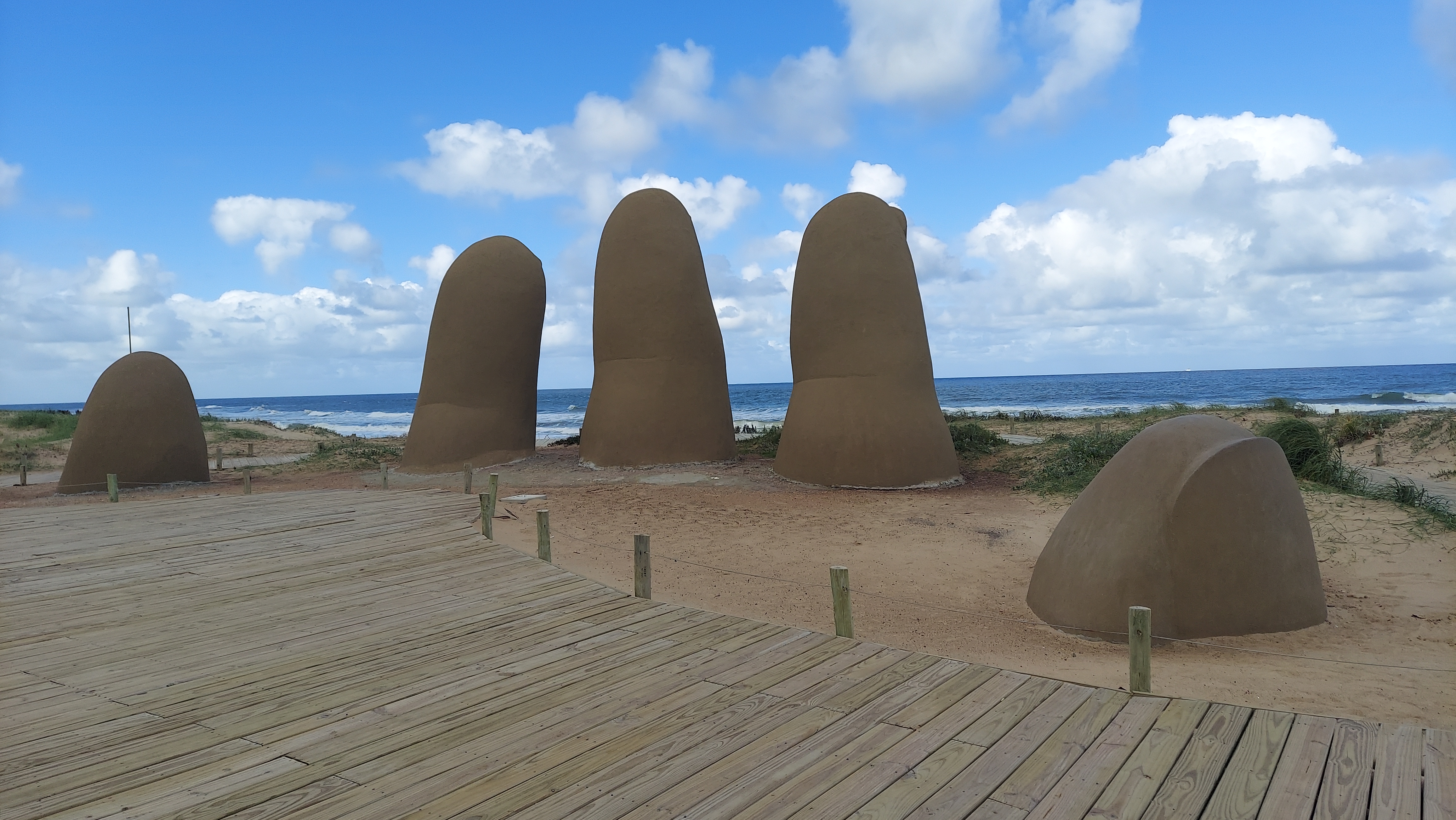
Punta del Este juts out on a snippet of sand where Uruguay’s southern and eastern coasts meet. Its center is more Miami Beach than modest Latin American resort, with clusters of towers and other prime real estate, while further out it drifts into graceful modernist homes settled beneath the pines. As this is fall in South America, it is now the offseason; the towers are mostly quiet, and the trendier clubs are closed up until the next major vacation. I putter around the peninsula and take a minute to appraise the iconic mano of Punta del Este, the hand that rises from the sand. Punta’s style is modern but tasteful, built to drink in the full surroundings, to provoke a few creative thoughts without disrupting the beachfront cool.

Some stray raindrops convince me it’s time to cab up to La Barra, a small beach town across an undulating bridge from Punta’s towers. It is still built up, still very much a destination, but has more of a town feel than Punta itself. I settle into a private room in an otherwise fairly dead, quirky hostel a block off an inlet, an easy walk from everything I will need for my stay in Uruguay. It all feels very assured.

I stroll along the beach at sunset. It is quiet, just a few stray couples and dog-walkers, and a lone surfer who puts in the brutal work out through fierce waves for one long, brilliant ride in. The sun disappears into glowing clouds and a full moon rises up through the marine layer, a resplendent yellow orb shrouded from time to time in a drifting oceanic haze. Everyone on the beach stops to watch. Later, I eat a chivito dinner at a casual restaurant named Chill Out and chat up the kid at the bar, an easygoing townie with a dream of an escape to Miami.

On day two, I fall deeper into Punta’s trance. It is grey, on the chilly side, but the surfers are out in force. Sixty or seventy of them ride off Playa los Cangrejos, and scattered others take on additional stray points along the unending beach. I amble my way to Manantiales a few miles up the shore just to drink it in. Sitting and watching the crashing waves appears a perfectly acceptable pastime in these parts. My guidebook calls Playa Bikini a “flesh cauldron” in the high season, but for now it is placid in response beneath a colorful row of those large-widowed modernist homes, all nestled beneath shapely pines and ombús. It is hard to square the Punta I see with the ubiquitous cranes putting up more towers, and hard to remember over lunch in a swanky beachfront joint that this is not in fact a rich country. I eat the seafood of the day, drink fernet, and the waiter provides a heavy blanket so I can get cozy in my seat. Rain arrives while I dine, and while I wait out the worst of it, the walk back is damp. Time for a siesta.

I dine at El Papu, a bohemian chic spot up the road, stone floors and the ubiquitous floor-to-ceiling glass, all lit by candle. They serve local craft beer; the eggplant parmesan is the best I’ve ever eaten, tender as can be, drizzled in a green salsa with nuts. A bassist and a keyboarder settle in to serenade us with jazzy tunes, all improvised, the bassist working wonders in the higher registers. The other patrons are local hipsters and surfers, at ease among one another, an easy night taking shape. The vibe has met the moment.

In Uruguay I am free to pursue a radical freedom, to re-create myself in a country where not a soul knows me as I am. It is an opportunity at once both tantalizing and impossible. I could expand on certain tales from my stay here, perhaps, but some things are best left unwritten. And sometimes fiction, in the words of Walker Percy, tells us what we know that we do not know that we know. After Uruguay, I know what possibilities exist, but I also know the extent of my reach. I can head home a wiser man.

Part three is here.

WRT III, Part 3: The Threshold of Freedom

My Yellowstone adventure concludes with a long goodbye. Amy and Bob bolt the next morning to catch their flights from Bozeman, while Rob, Alex, and I set out to deepen our explorations of the park’s highlights. We take more trails along the Grand Canyon, one down to a rainbow-enhanced view of the Lower Falls, one out to Point Sublime along its southern rim, and explore another set of thermal features at the putrid Sulphur Caldron and the explosive Mud Volcano and the travertine fountains at Mammoth Hot Springs. An attempt to plunge deeper into the Hayden Valley along the Mary Mountain Trail is foiled after two miles of hiking. We see a bison on the trail ahead of us, and while we try to wait it out, it prefers instead to plop down in place and wallow about in the dirt, seemingly taunting us. We’re forced to turn around.

Turning around was never an option for another group that made its way up this valley in the early years of Yellowstone National Park. The Mary Mountain Trail doubles as a portion of the Nez Perce Trail, the approximate route that Native American tribe followed on its five-month flight across the West now known as the Nez Perce War of 1877. Displaced from their native Oegon valleys after the U.S. government broke a treaty, the Nez Perce repeatedly outfoxed the army over the course of a 1,000-mile trek across the West. They first sought to join up with their old allies the Crows in eastern Montana, and the party of men, women, and children trekked across the young national park and disrupted a few pleasure-seekers. Later, rebuffed, they turned north to seek out Sitting Bull and his Lakota in Canada, and very nearly pulled off a great escape. Instead, they were surrounded and surrendered 40 miles short of the border, leading Chief Joseph to declare he would “fight no more forever.” The U.S. government promptly broke the terms of the surrender and sent the Nez Perce not to a reservation in Idaho, but to Oklahoma.

Today’s West bears little resemblance to the one that was a wilderness refuge for the Nez Perce. The road out of Yellowstone offers one of the park’s famed traffic jams in Mammoth Hot Springs. We revel anew at Bozeman’s development rush, enjoy a few final beers; Alex heads out on an early morning flight, and Rob and I have a more leisurely morning at a café before I start my way back east. Along the way, I take a short detour south off my route on I-94 to visit the Little Bighorn Battlefield National Monument in southeast Montana. On these lonely hills overlooking the meanders and cottonwoods of the Little Bighorn River, a combined Lakota and Cheyenne force annihilated George Custer and gave the Native Americans their greatest victory of the Plains Wars. Like the Nez Perce flight across the Northwest, though, it only delayed the inevitable for the Lakota and Cheyenne.

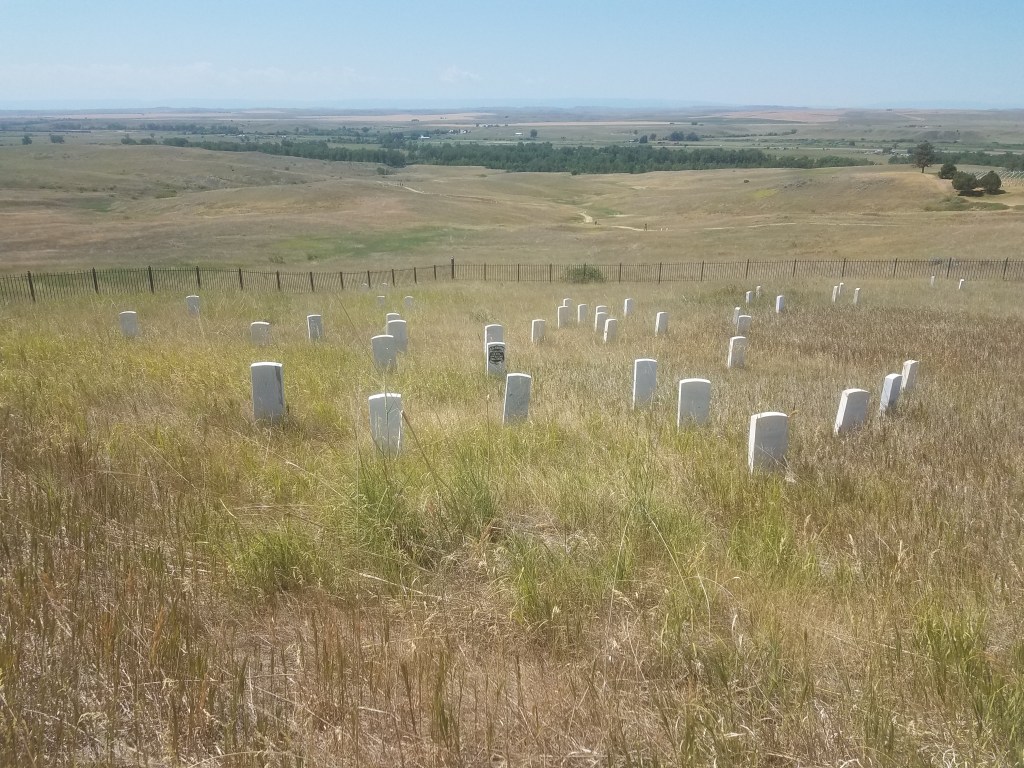
Today, the Little Bighorn site sits on a reservation for the Crow tribe. (In a reminder of how complicated tribal alliances could be, Crows served as scouts for Custer and denied aid to Chief Joseph’s Nez Perce.) My stomach churns as I gaze upon the abject depression of Crow Agency, the town two miles from Little Bighorn: crumbling trailers, a few burned-out relics, desperately patched roofs. It is the most downtrodden place I have ever seen in America; Detroit’s destitution may be on a greater scale, but at least there one can see a difficult but plausible path forward. Here, it’s hard to find that hope, and a glance at the data later shows me that the Crow Reservation’s poverty rate is only a fraction of several other tribal nations in the West. Native Americans have kept the harsh land around Little Bighorn, but won no freedom to prosper here, and the rest of America shoots through it at eighty miles per hour, stopping only for gas or a visit to this reminder of the past. Little Bighorn now remembers the dead from both sides and offers up a few wishes for peace. Peace to what end, I wonder as I meander along the Greasy Grass Ridge and ponder the scattered gravestones. I can aspire to understanding and struggle for empathy, but the reality of Native American consciousness will always be beyond my reach.

The second audiobook I consume on this road trip is The Last Campaign, which follows Robert F. Kennedy’s doomed 82-day campaign for the presidency in 1968. Kennedy, amid the primary campaign rush, took far more time than his aides wanted to visit the Pine Ridge reservation in South Dakota, often cited as the most poverty-stricken in the nation. Thurston Clarke, the author of this 2008 book, notes that Pine Ridge’s poverty and suicide rates had not changed since 1968; it is one of dozens of moments when RFK’s campaign themes, just like Joan Didion’s road trip, feel like they could have taken place yesterday instead of two generations in the past. Between the tale of the slaughter of the American politician I may admire above all others, ruminations on the plight of Native Americans, and a short, gut-punching novel on abusive family dynamics named One of the Boys with which I follow The Last Campaign, I am in a thoroughly morose mood by the time I pull into the Painted Canyon Overlook off I-94 in Theodore Roosevelt National Park.

Throughout the coronavirus pandemic and the American racial reckoning that began with George Floyd’s murder, I’ve been struck at times by the jarring juxtaposition of the natural beauty of my northern Minnesota haunts with the fraying world around me. I’ve been busy enough to forget those plaintive thoughts on this trip, but they return here as I gaze out on my escape in the Little Missouri badlands once again. How can a world capable of such sublime majesty be so depraved? How can we preserve such beauty so diligently, share it with our families and cultivate an appreciation for it in our children, even as we neglect so many other lessons of our history? Is my flight into the wilderness in times of trouble a meek retreat, a dereliction of duty to meet the call that inspired Roosevelts and Kennedys? In my writing, I revisit an old fictional friend who shares these neuroses and have him wrestle with them all on his own trip west.

Through him, I revisit one of my favorite columns of all time, Roger Cohen’s Ways to Be Free. A phrase he draws from William Finnegan on surfing gnaws at me throughout this trip, a description of a cathartic encounter with the natural world: “ferocious ambivalence, the threshold of freedom.” For adventure-seekers out in the wilderness, ferocious ambivalence describes the power of the elements that can overwhelm them, the way those elements can come to life and take on personality traits, at times loving, at times vengeful, indifferent to human comfort and even life, always imposing their presence. To feel that power of nature is to be liberated, if only for a moment. But that phrase can describe a very human way of moving through the world, too: the raw power that courses through the surfer taming the wave, the hiker powering to the summit, the writer hitting upon the perfect phrase. It captures both the intensity of the feat in the moment and the coolness one attains by making such conquests routine. This, too, is a form of freedom, a culmination of pursuit as fulfillment.

My earliest experiments in writing were obsessed with idea of freedom. What did it mean to be free, to live in a free society, to have political freedom? Freedom became a philosophical term, a question of will or escape from coercion or realization of potential. Lost was that raw feeling, the knowledge of the power its pursuit can bring. I realize that, in recent years, I’ve felt precious little freedom. Freedom, in its commonly understood sense, is not the end goal: lives need guard rails and direction, and while there are occasional twinges at loss, many decisions that close off options are mature moves toward a life of purpose. But freedom remains a delectable treat, and humans need to feel it; not in some Western myth of a clean slate free from the past, but through a push that knows we can learn from it and transcend it.

I spend the last night of my trip in Jamestown, North Dakota (home to the world’s largest buffalo!), in a hotel room that overlooks that agent of empire known as the interstate highway. I collect my notes and gaze out at my fellow travelers shooting across the country in the night. I head home from there, exhausted, box up my apartment and plow through work emails, lapse into the usual routines, any immediate lessons forgotten in an everyday slog. How quickly the freedom fades; how quickly the usual annoyances return.

Freedom is never a permanent state. It comes in quick jolts here and there: a first night in a new bed in the house where I’ll write the next chapter of my life, the freedom of a back road after a wrong turn through a construction detour, a jaunt to the Twin Cities that gives me a moment on a bench beside Lake Harriet and a wistful gaze out of an apartment window at a lit-up Minneapolis with raw, fresh scars on its skin. I set out on this road trip to find something, but that ferocious ambivalence never needed finding on some distant plain. It’s been here all along. I just need to live it, to cross that threshold with the imperative that such ferocity demands.

Gophers Out of Holes

Summer has opened up in Minnesota, and as the coronavirus curve in Duluth flattens out enough for now to allow for some social life, I decide the time has come to head out myself and take a spring Superior Hiking Trial overnight hike. My push takes me from the Temperance River to Caribou Lake, 24 miles according to the signpost, though I tack on a bit more with side treks to vistas that drive up the mileage.

The side trails are more than worth it on this adventure. We might call this the Great Peaks of the North Shore trek: on a list of ten of the most prominent hills lining the shores of Lake Superior, maybe half of them dot the route. Carlton Peak, the first I encounter, features the SHT’s longest vertical ascent and a prominent dome. Similarly iconic are the twin peaks of Oberg and Leaveaux a few miles up the shore; Oberg, with its mountaintop loop trail and picturesque inland lake, might be the most photographed peak on these shores, while hulking Leveaux reaches the same height from its hulking mass next door. Further along, Moose Mountain, well-known to Alpine skiers but less renowned among hikers, is the highest point on the Superior Hiking Trail of immediate shoreline peaks. (There are higher points on the SHT, but they lie inland, and do not offer the same striking juxtaposition.) Mystery Mountain, Moose Mountain’s immediate neighbor to the north, nudges its way just higher and still sneaks a peek of the lake. To top it all off, the hike wraps up at White Sky Rock, which towers over Caribou Lake and looks out toward Lake Superior some five miles off.

The hike starts at the Temperance River State Park wayside on Highway 61 and traces its way up the narrow gorge the river has drilled through the bedrock. The Temperance is deep, narrow, and almost impossible to photograph well given the absence of light in the gorge. (One attempt of mine looking down on a thundering fall that throws up rainbows in the sunlight looks more like I attempted to capture a shallow puddle in a rock.) Further upstream, before it plunges into the depths, the Temperance spreads wide across its valley, though it still carries along at a rapid pace, even at low water in dry conditions.

The crowds thin as my dad (as usual, my chauffeur to one end of these adventures) and I turn away from the river and up Carlton Peak. Named for a local guide who took a surveyor up the supposed first of the Sawtooths, Carlton Peak reaches over 900 feet above Lake Superior. For the first mile and a half or so, the trail is a leisurely one, but it rockets upward from there, first to a wooded ridge and then on a final scramble through some towering rocks up to the anorthosite dome. My dad, one calendar year removed from a hip replacement, marches on up right behind me. My last time here (via the much easier route from the north) led to a mountaintop swallowed in fog, but this time, we can see clear down to Taconite Harbor as we chow down our lunches.

My dad turns back after we come down from the spur to the peak. I stop at the Ted Tofte overlook just past the main peak, which offers nearly as good a view toward the south and east from a slightly lower elevation. From there I head down to the Sawbill Trail and take another spur up a short but steep climb to Britton Peak, which provides a vista out toward the mass of Carlton Peak. From there, the trail settles into a rhythm up of gentle ups and downs through a maple forest as it crisscrosses ski and single-track bike trials. I overtake two parties and pass one in the other direction, but the people don’t pick back up again until I pass the two campsites at placid Leveaux Pond. The main SHT skirts the flanks of Leveaux and Oberg, and I don’t feel compelled to summit them: been there, done that. I’m intent on a campsite and have a date with a hammock.

There are two sites at Rollins Creek just east of Oberg Mountain, and with loud voices carrying up from the one closer to the stream, I settle for the western site set back from the river I set up the hammock and enter a dreamy late afternoon trance, and I eat a leisurely freeze-dried dinner. I jot stray notes in a notebook and read ‘Pursuit as Happiness,’ the newly released Ernest Hemingway story whose title seems an apt description for my weekend hike. A reasonable number of my more useful insights have come while lying in a hammock over the years, and while I can’t claim any such revelation this time, I am just struck by a radical freedom, one with a flow through stages of life, if only for a few hours.

By sunset I’m polishing off my beverage for the evening and assume I have the place to myself when two hikers roll in from the north. My sitemates are two Duluthians making the most of their coronavirus downtime; one is through-hiking the entire SHT, and the other is joining him for as much as he can before he returns to work. They’re about five years older than me, so we have some mutual childhood acquaintances and can chat easily about their adventures to date, which include a brutal barrage of mosquitoes on day one, a Covid-prevention monitor at the Grand Marais grocery store, a delectable hamburger at Lutsen that day, and an encounter with a rogue grouse. It’s hard to ask for better random company. I fire off a few final lines in a notebook in the hammock using my headlamp after they turn in, the bugs mercifully absent from this site.

I wake at dawn the next morning and am nearly done packing by the time my sitemates emerge. Day two begins with a 500-foot upward push up Moose Mountain, its spruce-covered slopes still bathed in darkness. An overlook at the top rewards me, and while the hike from there largely just snakes along the spine of the hill, a few more views peek out both inland and out toward the lake, spruce thickets on the back side of the ridge and green maples on the lake side. I take another spur to the Lutsen ski resort gondola’s apex, its gears quieted by Covid, though its views still excellent. Back on the main trail, I dip down and then start up a meandering series of maple-forested switchbacks on Mystery Mountain. A brief window of a view is the only hint that this peak stands higher than Carlton or Oberg or Leveaux.

I descend Mystery Mountain and come to the wide paths of Lutsen lining the Poplar River. I pause on its wide bridge crossing, which overlooks a roaring staircase waterfall that splits the four peaks of the ski resort. Not for the first time, I picture a North Shore stream as a fountain that collects its waters in the inland wetlands and then cascades down through stone chutes to the lake at the bottom. My next climb takes me up a hill (Ullr Mountain, I later learn from a map of Lutsen) that proves deceptively tiring after the more expected runs up and down the better-known peaks. Eventually the trail dumps me out along the banks of the Poplar again, where a steady flow of people coming from the popular Lake Agnes sites slops past me in these muddy lowlands. When I come to a boardwalk submerged in mud, a mom and her five-year-old stand at the other end, contemplating their plight; ultimately, mom strikes across alone, deposits her pack, and heads back to collect her charge, whose impeccably white stuffed unicorn escapes unscathed. I watch them go with a smile (ready to run in and do any rescuing, if need be), then slog on through the mud and up a gradual, scrubby incline. I’m flagging a bit now, but a series of vistas back across the Poplar River Valley toward Lutsen lift my mood.

Lake Agnes arrives as a sudden surprise at the base of a descent. I pick my way about the lake, sublime in repose, somehow devoid of other parties at this early afternoon hour. Lunch comes on an outcropping above the lake beneath a solitary white pine, and I’m in enough of a reverie afterward that I get to the bottom of the hill before I realize that I’m going the wrong direction. If my geography instincts are failing me, it’s probably time to be done. I reload my water bottle for the ride back at Agnes’ lakefront campsite—my dad and I stayed here once, maybe two decades ago—and then begin up the spur to the parking lot on the Caribou Trail, where I find all the people again picking their way over its rocks and cedar-hewn staircase.

I take the turn for one last upward to push to White Sky Rock. I ended last spring’s hike here as well, albeit in a very different world. An older couple vacates it in time for me to settle in for a few final notes, one final view out over the resplendent lake and out toward Superior beyond. I would say that hiking makes my troubles feel trivial, though current events have done a perfectly adequate job of that lately. Instead, I just appreciate my freedom to take joy in an escape like this, and know that I have reliable maps for my ventures outward. The civilized world I drive back to that afternoon hasn’t changed since I left, but after three months in a coronavirus tunnel, the path that spins this cycle forward is easier to see.

WRTII, Part 1: Riding the Waves

The next three posts will tell the tale of my recent West Coast adventure, as detailed in this introductory post.

My wanderlust is calling, and I’m ready to answer. I spend my Friday at work chomping at the bit. I was supposed to have a meeting halfway between Duluth and Minneapolis today and bought plane tickets accordingly, but alas, the meeting was canceled, so I’m stuck in the office, watching the clock. I drive down to Minneapolis late in the afternoon, and meet a big group of old friends for dinner and games. After a leisurely Saturday morning, I head for the airport and make the four-hour journey to San Francisco, where I will spend a weekend in the company of my cousin. I visited him on my road trip two summers ago, and this will be my only repeat destination on this trip, but as it’s a city that no brief weekend jaunt can do justice, it’s a welcome return.

My cousin collects me from the airport and we jump right in with a swift tour of a few sites around the city that one won’t find in a guidebook. First, a tree swing with a stellar view of Billy Goat Hill; alas, this time around, the guerrilla swing-hangers lost their war with the Parks Department, and it has been cut down, spoiling the fun. Next, a concrete slide in a vacant lot on a hillside, complete with cardboard to scoot down the slope, the brainchild of a neighborhood kid some decades before. Finally, a labyrinth at Lands End laid out in stones in the model of the one in the Chartres cathedral, which we meander through in full. San Francisco is a complete adult playground; even, we lament, as the city prices out most young families.

20180428_164514

Sticking with the playground theme, our mode of transportation for much of the weekend will be the most San Francisco thing imaginable: a moped app named Scoot. Much like bikeshares, Scoot allows users to unlock mopeds stashed around the city (either in scattered garages or on the streets, where past users have left them), put on a helmet from an otherwise locked compartment, and Scoot to their desired destinations. I take a little while to get used to it, as the proximity of the brake and the throttle make for a few awkward lurches, but before long I’m Scooting with confidence. It’s also entirely practical for San Francisco, where traffic is never too fast, and where hills make a traditional bikeshare much more of an ordeal for the causal peddler. A twenty-minute series of introductory videos coaches users on the mechanics of mopeds and basic safety, and thanks me for being part of a movement to change the world. Such pretention is one of the reason the tech world drives me insane. Isn’t it ever enough just to be a good, fun idea for a particular city?

This being San Francisco, though, Scoot is only the tip of the iceberg. The current craze (or infestation, depending on whom one asks) involves electric scooters, which zip along on streets (where they are supposed to be) and sidewalks (where they are not) and get dumped in all sorts of odd places around the city. Somehow, these aren’t even the most preposterous transportation options in the city. That award goes to the GoCars, the yellow three-wheeled two-seaters that putter about a couple of inches off the ground. It all feels awfully gratuitous, but all these options get us where we need to go in the end.

20180428_201346

After a delicious dinner in the Sunset District, Saturday night features a beer tasting with a few familiar faces from my previous visit to the Bay Area. The conversation turns to local politics as we down stouts and nibble at smelly cheese. San Francisco’s impending mayoral election will follow familiar plot lines to the 2016 Democratic Party primary, as an establishment figure tries to break the city’s glass ceiling while some rebels nip at her heels. Beyond that, the Yes in My Backyard (YIMBY) movement tries desperately to break through the cynicism of well-heeled Bay Area liberals who reject greater density and development so as to preserve their perfect little neighborhoods, thereby driving some of the city’s absurd property values. I can’t help but be sympathetic to the cause, though my inner contrarian raises a few objections. Are we really right to pack more and more people into San Francisco, an earthquake-prone metropolis in a state that has its water issues? And this country already has a problem with concentration of wealth in too few major cities; might not the pricing out of San Francisco be a natural corrective that forces the tech engine of the American economy to spread the wealth and talent elsewhere? Duluth would be happy to have the services of a few refugees looking for a foggy, hilly city with much more reasonable real estate. I suppose I can dream.

Speaking of dreams, it crosses my mind several stouts in that my cousin and his friends are living a sort of millennial dream. They enjoy comfortable (if somewhat crowded) urban living, delicious food and drink, weekends at Tahoe, and travel around the world for both work and play. College, work, and church provide networks that form little communities within a larger city. We even got some avocado toast as an appetizer without a hint of irony. I’d be lying if I didn’t say that living it for a few days stirs up a little desire to start searching the job listings, as that magnetic Fear of Missing Out, so ubiquitous in an age of social media, rears its head again. A cursory look suggests I could double my salary, and while much of that gain would get swallowed up by rent, Bay Area money would still go awfully far, especially in travels or some eventual move elsewhere. Tempting, isn’t it?

There are a lot of reasons why that won’t happen, from family to temperament to some conviction over what I’m doing and why I’m doing it. But the allure tugs at my ambitious side, and only a week after my return, after a run around Congdon on a Perfect Duluth Day, do I fully remember why I don’t want to go down that road. I have my own little world to tend to here.

The delicious San Francisco life continues the next morning with a delectable brunch at Zazie in Cole Valley. (A pleasant West Coast offering: thanks to time zone differences, one can go to the bar next door and watch East Coast baseball while enduring one’s hour and a half wait for a brunch table.) The wait is worth it. And then, after further Scooting, we settle in at an authentic San Francisco crawfish boil, as one of my cousin’s friends has imported a stash of crustaceans and cooked them all up in a park with a view of the Golden Gate.

Sated, we Scoot over to Washington Square, see the old Italian neighborhood, and marvel at the public notice signage necessary to announce the planting of trees in San Francisco. I shake my head at my profession as we clamber up Telegraph Hill to Coit Tower. The urban planners here probably have as much power as anywhere, and use it for all the wrong purposes. The panoramic views from Telegraph Hill blot out that annoyance, though, as they show us the bay to the north and east, a glistening city in the sun to the west, and the Financial District, complete with the remarkably phallic new Salesforce Tower, to the south. (This seems fitting in so many ways for the city’s contemporary aesthetic.) The streets that descend down from Coit to the various numbered piers are nothing more than stairways, with cozy but luxurious homes tucked behind their gardens. We board a ferry for Alcatraz and head over for an evening tour.

20180429_200120

The prison at Alcatraz has been closed for over 60 years, but its symbolic power remains, thanks to both its high-profile prisoners and its unique geography. An audio tour recounts the experiences of guards, prisoners, and the families that grew up on The Rock. I did not know, however, about the subsequent Native American occupation of Alcatraz, an attention-grabbing move in the 1960s still in evidence today in the graffiti they left behind. The occupation played a role in ending assimilation policies at the Bureau of Indian Affairs, and freeing these groups to pursue greater self-determination.

The landscape, however, provides the greatest surprise of this visit: Alcatraz is a beautiful place. Sure, I expected a good view of the city and the Golden Gate, but Alcatraz itself has well-manicured gardens, graceful walks with stellar views, a few picturesque ruins, and offers up a sanctuary for thousands of birds. If not for the background noise in the audio tour, it would be impossible to remember that this place was once what it was. It is somehow heartening to see such an institution restored to the placid state of a seaside estate.

Following the tour, Alcatraz’s rangers offer a series of programs in various places around the island, recounting tales of famed prisoners or demonstrating the operation of the cell doors. The most memorable one, though, comes from a ranger who tells the tale of two inmates who dreamed of freedom. One, an escape artist whose attempts were foiled, figured out that he could brew beer in the milk bottles using the basic ingredients in the prison kitchen, where he toiled and found his escapes in hooch for years. The second, who came along after the guards had caught on to the milk bottle method, came up with an even more ingenious solution: beer fermentation in the prison’s fire extinguishers. Freedom, the ranger explains, is always possible with a change in perspective.

My cousin and I take the ferry back to the mainland and grab a late-night meal at El Farolito in the Mission. The street, filled with storefronts covered by garage doors, feels more Mexican than American, and save for the avocados on our burritos, the taquería itself has that vibe, too. We sit beneath a large painting of the Basilica of Guadalupe, and a lone mariachi minstrel makes his way up and down the length of the narrow restaurant. We devour our burritos and enjoy El Farolito’s excellent people-watching: young revelers on a Sunday night, complete families looking for an evening meal, gay couples, bougie white kids like us looking for an authentic bite. I’m at home here. Life is like the surf, so give yourself away like the sea.

I bid my cousin farewell early Monday morning and take a BART train down to the airport. (How can such a wealthy metro have such a dismal train system?) I collect my chariot for the week, a white Jeep Renegade, from the cheery staff of Fox Rental, and begin my road trip. My first leg will give me my fill of ocean, as I swing south along the California coast. I head out on The 101 (highways come with articles in the West), intent upon seeing Silicon Valley and the Stanford campus with my own eyes. My enthusiasm for a window into the seat of technological power wanes amid thick traffic, however, so I pull my first audible of the trip and make a turn straight for the coast. I encounter The 1, the Pacific Coast Highway, at Half Moon Bay, and head south from there. I don’t regret my choice for a second.

At first The 1 runs somewhat inland, and I’m going through green cow pastures instead of beaches. Then, however, it rolls over a ridge, and the shoreline explodes before me, with ranks of perfect breakers making their way into shore as far as the eye can see. I make my first pit stop at Bean Hollow Beach, and while there’s not much to separate it from the beaches I’ve passed before or the ones that will follow, it seems an appropriate place to stop and admire some tide pools. I pass through Santa Cruz, and stock up on some camping gear at the REI in Marina. A late lunch comes at a cute café in Carmel-by-the-Sea, a stucco-spattered town that preserves its original character about as remarkably as any American city. Here one will find no parking meters, no street addresses, no stones out of place: just rows of cute houses, art galleries, and wine tasting rooms. Life must be rough here.

South of Carmel is Big Sur, that beautiful and sparsely populated streak of coast where mountains and sea collide. The 1 weaves along clifftops and drops down to beaches, and offers a stunning view at every turn. Most of my fellow travelers are tourists, though locals with surfboards head for a few well-chosen spots. The driving pace is leisurely, with frequent turn-outs, and while it is hard to tire of this scenery, I just go until I’ve had enough, and then work my way steadily back north toward my accommodations for the night on the Monterey Peninsula.

20180430_153335

I have the audiobook of Jack Kerouac’s Big Sur for my listening pleasure on this stage of the journey. This is later-stage Kerouac, when his protagonist has become world-weary and tires of beatnik kids hunting him down for autographs. He drowns his sorrows in boozy binges. His solitary trip to Big Sur to clear his mind only leaves him lonelier, and sends him crawling back for more parties in San Francisco. All of his old friends from On the Road have aged, too. Cody Pomeray (Dean Moriarty in On the Road, and Neal Cassady in reality) has gone from the carefree epitome of cool to a family man trying to get out of the shadow of a stupid prison sentence for marijuana possession and live a decent life. Repeated later journeys down to the Big Sur cabin with various hangers-on always start out seeming like good ideas but are a mess by the end. While plenty of uncertainties afflicted Kerouac and friends in their early adventures, it came along with fevered searching and a sense of destiny. Now, the quest just ends in hangovers, and manipulation of words no longer does the trick, or at least not until the book ends in a deluge of stream-of-consciousness.

Big Sur, wrote Lillian Ross, is not a place at all, but a state of mind. Kerouac’s Jack Duluoz clearly did not inhabit that state of mind; he wasn’t able to shift his perspective, as the beer-brewing prisoners of Alcatraz had. Another semi-jaded aging writer traveling solo across Big Sur, however, can still pull it off, as he stops at Garrapata Beach and meander along the surf for a spell. Beauty alone may not bring enlightenment, but it is a powerful force in the moment.

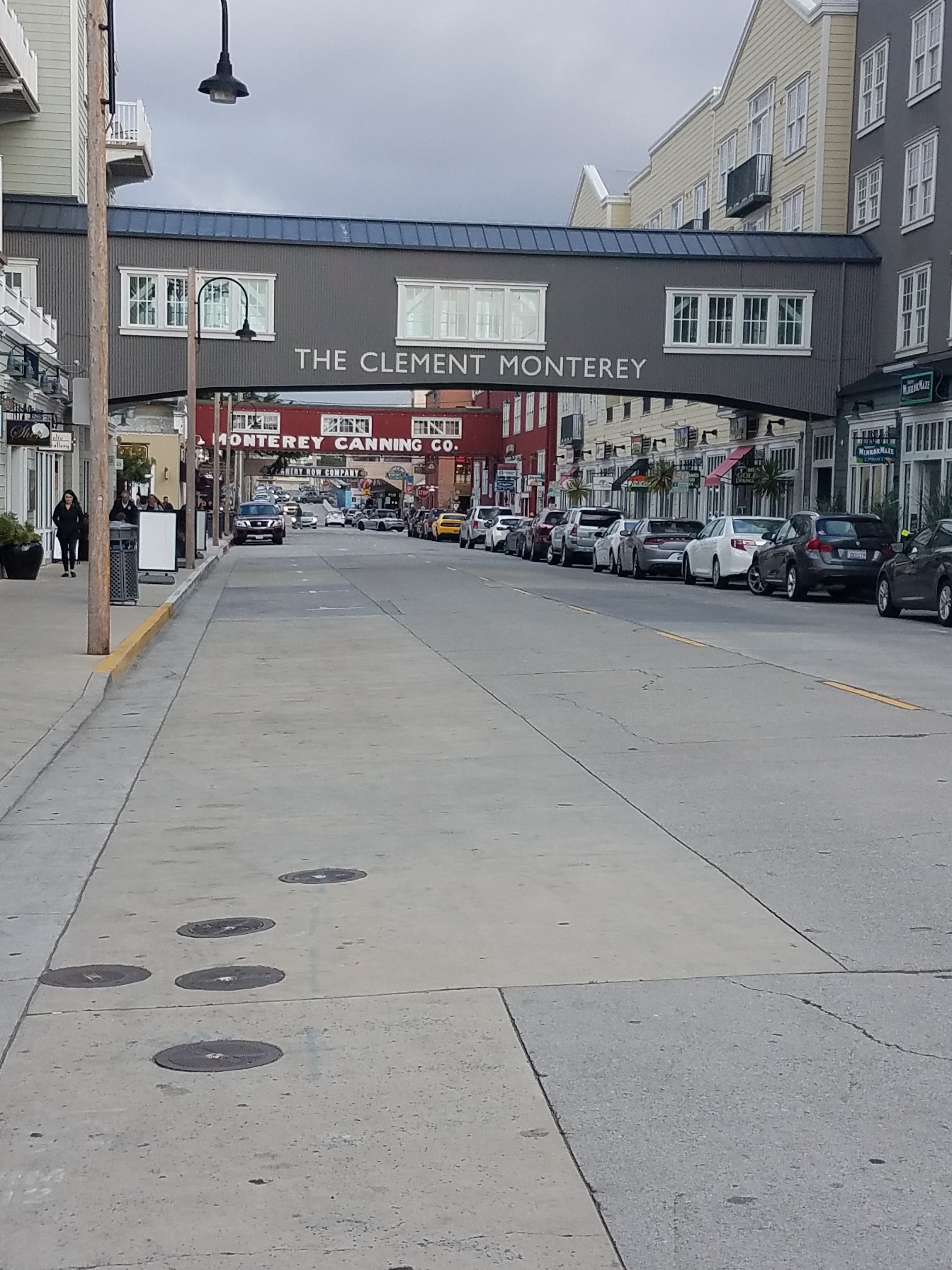
I return to the Monterey Peninsula, stock up on food for my week of travel, and check in to my cottage in Pacific Grove. It’s a quaint, well-appointed place, and I throw open the windows to invite in a sea breeze. Next, I meander down Pacific Grove’s placid streets and start a two-mile hike to downtown Monterey along a beachfront path. Waves roll in to my left, Victorian homes watch over me to my right, and a man proposes to a woman along the path. I pass the Monterey aquarium, which is closing up shop at this time of day, and head down Cannery Row. Steinbeck’s old manufacturing district is now a collection of expensive shops and restaurants, though at least there’s still a bust of the author and a fountain honoring the canners midway down the street. I consume overpriced fish at a place that advertises itself as a brewery but just serves other people’s beer. With little else to do, I return to my cottage along inland streets, and Pacific Grove feels almost unnaturally placid. It’s a lovely place, but highly sanitized, its business district almost too quiet. Sure, it’s a Monday night, but the telltale vacation rental licenses hang prominently on the corner of many houses. I wonder if Duluth, another waterfront town of a similar size and distance from a wealthier metro, might someday lurch toward a similar fate. It could be worse, but it isn’t exactly abuzz with life, either.

20180430_183148

On this first of five nights of solitary travel, I reflect on my choice while drinking in some wine and sea breeze in my cabin. This is what I signed up for: a chance to take on everything between here and Zion by myself. I can either conquer it, or watch it go by. If I come back to these seaside towns I’ve seen today, I doubt it will be alone. But I have my solitary side, and a periodic need to prove myself in the wilderness, if only to myself. And when I come back, all will be well.

I arise early the next morning, and check out before anyone in the neighboring cottages stirs to life. I head down to the ocean one last time. Large bodies of water always pull me in, even though I’m a mediocre swimmer whose weak stomach is easily upset by bobbing on waves. Endless expanses of water impose themselves on people who live by them, and make clear our place in a grander scheme of things. I’ll miss the sea, and will welcome back vast expanses of water when I return home to Duluth in a week. For now, though, I turn inland, and look for inspiration away from the comfort of watery vastness. Freedom requires different perspectives.

A Cycle Renewed

I’ve been slacking in my writing of late, which will happen when one is fairly busy and also coming off a rush of hockey-related activity that reached new heights this past month. I’m backlogged beyond belief on interesting articles that I’ve read and would like to comment on, though I’ll knock two out of the way in this post. I also have yet to opine on Donald Trump, which I’m told any self-respecting blogger must do or forever forfeit his credentials, as if everything there is to say has not been said already. (Worry not, I’ll let myself get sucked in at some point.)

Now that hockey is over this should conceivably be easier, though I’m afraid this alleged “spring break” I am now on will offer few such opportunities. With one last graduation looming, I have a lot on my mind, and a lot people with whom I want to spend time before venturing out into the world again. And in some of my rare free moments, I may opt for sloth instead of patient cycling, as was the case yesterday, when a 70-degree March afternoon found me beached on a towel in Loring Park. It was a dreamy escape. This freedom is only momentary, though, and it had my mind wandering back to a Roger Cohen article from a couple months ago on “ways to be free.”

In the article, Cohen describes the “ferocious ambivalence” that drives people in pursuit of freedom, with references to his own road trip through central Asia in his youth and the sublime surfing writing of William Finnegan. (I’ve never surfed in my life, but an excerpt in the New Yorker last year left me transfixed.) Cohen’s son seems skeptical that such freedom is possible in this day in age, but Cohen disagrees, and I think he’s right: for all our attempts to impose control on the world, vast swaths of it remain unconquered from the well-ordered Western mind. It will forever be this way, and we owe our sanity to it: the moments when we tap into that freedom beyond are some of the most formative moments imaginable.

Careful climber that I am, these moments aren’t always easy to find; as much as I may yearn for them and seek them out at times, they tend to be fleeting. My semester in Mexico certainly had some stretches that approximated it, but my self-discovery journey, such as it was, proved a far more inward affair that dug deep instead of roaming broadly. And, now that I am on the brink of a move to the 9-to-5 life, that hunger for adventure roars up again. It wants me on the road, or at the very least to wander through a few more Minnesota state parks to drink in the little details. For all my cynicism about journeys of self-discovery and the self-centered direction that inward turns can (though do not always) take, their power is genuine. We always seem to value things most when we’re about to lose them.

Perhaps, then, it’s helpful to read about a different sort of journey. Take the case of a Washington Post writer Christopher Ingraham, who used some Department of Agriculture data to rank all of the counties in the U.S., and declared that Red Lake County, Minnesota, was the country’s worst. The other states with counties near the bottom of the list ignored it, but Minnesotans, being Minnesotans, lashed out in polite but scathing anger. Ingraham visited, came away absolutely charmed, and now, several months later, is packing up his family and moving to Red Lake County. These moments are effective because they are so spontaneous or serendipitous, and they are life-altering in large part because they are so unplanned.

Ingraham’s story will no doubt cue its share of Minnesota smugness. Still, it’s a refreshing tale for someone who’s been dwelling on questions of status lately, and who’s trying to remember what’s worth valuing as he starts a career. It does run the risk of lapsing into complacency, a contented niceness that will forever leave me a bit restless in this state. We still need outlets for that roaring daimonic desire that every now and then surges up and reminds us what it means to be free. But in the meantime, a Minnesota spring is on its way, and it’s to renew belief in what we hold closest, no matter how small or mundane those things may seem. For that, northern Minnesota remains the perfect reminder.

Finding the Cyclical Life in Arendt and Vargas Llosa

This blog is, admittedly, rather eclectic, and I am proud of that. There are posts about high school hockey and posts about city council meetings and posts about obscure intellectual debates, and I am well-aware that a number of readers come just for one of those topics while ignoring the rest. The posts on hockey and local politics have a certain order to them, while the more theoretical ones, while united by some vague themes, are fairly disjointed.

With that in mind, I’m going impose some order and tease out some parallels between my post on Hannah Arendt’s theory on evil and another recent one highlighting Mario Vargas Llosa’s Nobel Prize speech on the importance of literature. They might not seem to have much in common in subject matter or underlying theory, but they share a robust vision of human life that is not strictly individualist or collective, but one that cycles between the two and emphasizes the importance of each.

At a cursory glance, both of these outlooks can appear rather individualistic. Arendt is famous for her attacks on totalitarian governments and the mindsets they instilled in their citizens, argues for a distinct private sphere of life (albeit not a realm she celebrates much), and had no problem with Adolph Eichmann hanging for failing to exercise his own moral agency. Vargas Llosa, who once ran for president of Peru as the candidate of a right-leaning party, is a staunch defender of individual liberty.

But neither one is that simple. As I explained in the last post, Arendt was no rampant individualist. Instead, she subscribed to a different definition of freedom rooted in Aristotle that saw living in community as the very essence of being human. In fact, she rejected the label “philosopher” because she believed it referred to people who studied man (in the singular) instead of people and how they interacted, and preferred to be called a “political theorist.” She had no great love for collectivism, but she was well-aware that human flourishing does not involve autonomous humans operating in vacuums, but is forever tied up in daily interaction with other people—that is, politics. Her thinking, while not always easy to penetrate, has a clear logic.

Vargas Llosa, on the other hand, is very much a modern man, and posits the individual at the center of his philosophical outlook. In a 1992 interview in Sergio Marras’s América Latina (Marca Registrada), he celebrated the death of collectivism that he believed came along with the collapse of the Soviet Union, and hoped “the death of all social utopias [will] lead us to search for utopias in activities where it’s not harmful, but actually very positive: for example, in art, in literature, and in individual life.” (Emphasis and translation mine.) Vargas Llosa’s profession also lends itself to an appreciation of individualism: as an author, his great creations emerge ostensibly from his own mind, and nowhere else. “A novelist is someone whose inner existence is as compelling as the details of his or her life,” writes Jane Smiley in her book Thirteen Ways of Looking at the Novel.

Still, even Vargas Llosa is well-aware that every person’s individuality emerges in part as a response to the collective. Storytelling is not just a means of entertainment or self-improvement, but a necessary foundation for the move from the “tautological” tribal life of prehistoric homo sapiens and is the power that “makes the human being really human: the capacity to move out of oneself and into another, into others, modeled with the clay of our dreams.” Like Arendt, Vargas Llosa sees that human flourishing emerges from the political realm, and the ability to dialogue with others and imagine a different life.

From my own experience, I can endorse Vargas Llosa’s words wholeheartedly.  I don’t know that I’d completely accept a label of “communitarian” or “localist” or “republican” (small-R republican, not the political party) but I do often emphasize themes that are associated with these words, and that comes directly from my first attempt at novel-writing. While I was an undergraduate in college, I started writing a novel late at night while my roommate was trying to sleep, and slowly put together a novel. It was about as individualistic an act as can be; it was a creative attempt to create a sort of narrative around my life, and I never shared any of it with anyone. (In retrospect, I’m glad I didn’t.) While it was an alright story and offered varying degrees of subtlety, the book was essentially a justification for my political views and my lifelong project of relentless academic success and achievement. But as I wrote, the book collapsed in on itself: I came to see the humanity in the ideas and people and places I’d meant to attack, and I came to love the setting that my protagonist sought to escape. Literature is, ultimately, to blame for my decision to head home after college; without it, I never would have come to embrace my own roots. I’d always been socially conscious, but at the same time, there was a manner in which my well-intentioned desire to climb the ladder and go on to save starving children in Africa came at the expense of more immediate relationships and realms in which my political activity could have an immediate, tangible impact. I don’t mean to denigrate people who commit their lives to social climbing or saving people elsewhere, but I did realize that I, at least, wasn’t going to find happiness there.

Instead, I find that it comes in cycles, with my time split between introspective writing (a la Vargas Llosa) and outward engagement in the community around me, as Arendt prescribes. While I certainly haven’t abandoned my old sense of ambition, I have recalibrated it to an entirely different sphere of life; one that situates it within a community, forever in search of dialogue. I have a lot of work to do.

How Is Evil Banal?

I have not seen the new “Hannah Arendt” movie, but I am enjoying the recent outburst of commentary on her most famous work, Eichmann in Jerusalem, which is her account for the New Yorker of Nazi war criminal Adolph Eichmann’s trial in Israel. The work is most famous for describing Eichmann’s brand of evil is “banal,” a wonderfully pithy phrase that has inspired generations of political thinkers to completely misunderstand her work. Writes Roger Berkowitz of Bard College’s Hannah Arendt Center for Politics and the Humanities:

Perhaps Arendt has been so violently misunderstood because her thinking is both provocative and demanding. Her blessing, and her curse was a facility for quotable aphorisms that, like Nietzsche’s, require whole books to reveal their unconventional meaning. It is easy to cite the “banality of evil.” It is much more difficult to make sense of what Arendt actually meant.

The common misunderstanding, says Berkowitz, stems from testimony at parts of the Eichmann trial Arendt did not attend, in which Eichmann’s anti-Semitism was on full display. Surely, her critics argue, had she heard his very willing embrace of Nazism, she would not have found anything banal in Eichmann. Berkowitz again:

The problem with this conclusion is that Arendt never wrote that Eichmann simply followed orders. She never portrayed him, in Cesarani’s words, as a “dull-witted clerk or a robotic bureaucrat.” Indeed she rejected the idea that Eichmann was simply following orders. She emphasized that Eichmann took enormous pride in his initiative in deporting Jews and also in his willingness to disobey orders to do so, especially Himmler’s clear orders — offered in 1944 in the hope of leniency amid impending defeat — to “take good care of the Jews, act as their nursemaid.” In direct disobedience, Eichmann organized death marches of Hungarian Jews; as Arendt writes, he “sabotaged” Himmler’s orders. As the war ground to an end, as Arendt saw, Eichmann, against Himmler, remained loyal to Hitler’s idea of the Nazi movement and did “his best to make the Final Solution final.”

The banality of Eichmann came not from his blindness, but from his idealism; his grandiose belief that he was a part of some movement that gave meaning to an otherwise fairly dull, bourgeois life. Arendt does indeed make Eichmann sound rather pitiful—not because he was an automaton, but because he had a desperate need to conform in his search for meaning. He abdicated his moral agency by accepting the ideas of others uncritically.

This argument could very easily turn into a rejection of all politics, for fear that it inevitably corrupts people and drives them to commit terrible deeds. Arendt, however, goes in an entirely different direction—one that is alien to the contemporary framing of politics as a fight between the state and the individual. In the words of Jesús Silva-Herzog Márquez in Mexico’s Nexos magazine (translation mine):

What is notable about this theoretical construction is that, despite being a vehement denunciation of the voracity of totalitarianism and all nationalization, Arendt does not find refuge in the defense of the private or the apolitical. On the contrary, she restores the value of politics better than anyone. Far from distancing herself from this sphere, she was convinced that it was necessary to recover it, or occupy it, as we say today. In politics she did not see a prolongation of the war, nor a nest of bureaucrats or proxy representatives. Politics, for her, was a cultural treasure that permitted men to find themselves, and find they were truly human. Only in the common realm of politics could man find his authentic existence. He is not the man in private isolation, in the monotonous echo chamber of commercialism. Citizenship could not be the occasional episode of voting, but a daily experience of one exercising liberty with others.

The work that should have been titled Amor mundi [The Human Condition] sustains precisely this necessity to revitalize the public space and find means to act in concert. It does not look for refuge in the private realm but instead in the plaza, in places of deliberation and encounter. In the face of historical determinism and manufactured inertia, it offers a route of imagination and creativity. The most essential thing about man is his “talent to create miracles,” that is, “his capacity to initiate, to achieve the improbable.” Conformity is the negation of liberty. In this way, Hannah Arendt led the fight for a notion of liberty that has little to do with the normal sense of the word in our day in age. Beyond liberating us from exterior constraints, being free means becoming engaged with the world. Her vision of liberty is republican, and densely political. In his room, isolated, man cannot be free. He is, if he goes out the door and enters the city and acts within it. Arendt restored the liberty of the ancients, the liberty within the city, among others. Totalitarianism is the most radical negation of liberty because it not only prohibits action; it also negates man. It negates the victim but also the executioner: one or the other, nuts and bolts within the imposed machinery of power. There are no individuals, only the species; there is no man, only humanity.

Totalitarianism is no longer the existential threat it was when Arendt wrote, but her work is no less relevant today. Due to a long list of factors I won’t delve into here, political participation has declined, and it’s not uncommon to hear laments over the collapse of civic participation. On the other side of the coin, there are still plenty of mass protests and advocacy campaigns, but many of them operate in ideological echo chambers. People get together to fight for a cause, but there is little in the way of dialogue, save mutterings about “those people” on the other side and shaking one’s fist (or worse) at the counter-protesters. In Arendt’s reckoning, this is not only an impoverished view of political life; it is a negation of human freedom.

To be sure, it is easy to pine for “dialogue” and “civil debate,” but it isn’t always easy to make it happen, and proponents of such debates are often not all that interested in hearing what other parties have to say. Arendt’s politics, however, goes back even further. It involves such simple things as families around the dinner table, friends at the bar, and co-workers acting in concert. It involves casual give-and-take, a slow learning that builds a culture out of which one defines one’s individuality. Politics conducted in good faith within a community is anything but banal; it is absolutely essential to the formation of a free human being. Only through such a dialogue can a person learn to consider alternatives to the ideological conformity that so enthralled Eichmann.

It isn’t the answer to everything that plagues politics in this day in age, and it takes effort. The design, however, is startlingly simple, and it is a start.

This Is Water

The Georgetown University Class of 2013 is currently being rained upon on Healy Lawn, listening to a series of commencement speakers who are about to release them into the world after college. This means I’m one year removed from my own graduation, so it seems like a fitting time to reflect on the greatest commencement speech I’ve ever read: David Foster Wallace’s 2005 address at Kenyon College. I’m hardly alone in lauding this one—this partial video of it went viral recently—but I’m not terribly snobbish about this sort of thing, and I suppose it isn’t surprising that people who actually care about commencement addresses often value the same thing.

Here’s a transcript of the full text:

http://moreintelligentlife.com/story/david-foster-wallace-in-his-own-words

I first read this a few years ago, but had forgotten it somewhat until last month. Ever since, I cannot count the number of times I’ve repeated that mantra. This is water. This is water. It really isn’t possible to be forever aware of the water around us—and there is such a thing as too much awareness—but Wallace (hereafter ‘DFW’) is dead-on when he notes that blind consideration of our own interests is our default setting.

In my reading, the climax of the piece is here:

If you’re automatically sure that you know what reality is, and you are operating on your default setting, then you, like me, probably won’t consider possibilities that aren’t annoying and miserable. But if you really learn how to pay attention, then you will know there are other options. It will actually be within your power to experience a crowded, hot, slow, consumer-hell type situation as not only meaningful, but sacred, on fire with the same force that made the stars: love, fellowship, the mystical oneness of all things deep down.

Not that that mystical stuff is necessarily true. The only thing that’s capital-T True is that you get to decide how you’re gonna try to see it.

This, I submit, is the freedom of a real education, of learning how to be well-adjusted. You get to consciously decide what has meaning and what doesn’t. You get to decide what to worship.

Because here’s something else that’s weird but true: in the day-to-day trenches of adult life, there is actually no such thing as atheism. There is no such thing as not worshipping. Everybody worships. The only choice we get is what to worship.

DFW goes on to say that worshipping the divine probably makes the most sense, given the fallibility of everything else. Since I don’t have a particularly rosy view of human nature, I’d certainly agree; the problem here—as most any devout believer will probably tell you—is that logical arguments for faith aren’t especially convincing. Sure, they might sound lovely, but to true belief requires some sort of leap into surrender before a deity or some other supernatural realm. This is a leap many people are quite unwilling to take, including many people who consider themselves religious: acknowledging a God is one thing, but submitting to the teachings of faith as a serious code for life is an entirely different matter. It is also one of my own biggest stumbling blocks: a few fairly minor things aside, I haven’t really chosen to worship anything yet. I take pride in my skepticism, but that doesn’t mean I’m not aware of its downsides. Freedom always has a price.

And DFW is dead-on in his definition of freedom. The freedom we so desperately seek does not come from liberties enshrined in some constitution, though the two can be related. Freedom comes from awareness; from having the wherewithal to embrace our surroundings as they are and find our niche within them. This does not mean blind compliance; instead, I think it means something akin to the old Reinhold Niebuhr prayer adopted by Alcoholics Anonymous and its various offshoots—‘God grant me the serenity to accept things I cannot change, the courage to change the things I can, and wisdom to know the difference.’ That wisdom is freedom. (Though I do have something of a beef with the second clause; surely not everything that we have the power to change should be changed!) It’s all a bit vague, but freedom’s power may be in its vagueness; it isn’t something we pin down, but something we feel.

Looming over this address, of course, is the knowledge that this incredibly insightful man took his own life just three years later. DFW had his mental issues, certainly, but it makes one wonder when he forgot what water was, or if the depth of his mind somehow overwhelmed him. The task is, as he says, “unimaginably hard.” But with the right grounding, with the right object of worship, it is all worth it.

So congratulations, Georgetown Class of 2013, and all of the other graduates who are on their way off to some other stage of their lives. Finding myself largely in the same place I was at this point a year ago, it’s time for me to head out into the world again, too.

But, of course, I cannot forget.

This is water. This is water.