Olympian Distances

I’m not telling you to make the world better, because I don’t think that progress is necessarily part of the package. I’m just telling you to live in it. Not just to endure it, not just to suffer it, not just to pass through it, but to live in it. To look at it. To try to get the picture. To live recklessly. To take chances. To make your own work and take pride in it. To seize the moment. And if you ask me why you should bother to do that, I could tell you that the grave’s a fine and private place, but none I think do there embrace. Nor do they sing there, or write, or argue, or see the tidal bore on the Amazon, or touch their children. And that’s what there is to do and get it while you can and good luck at it.

-Joan Didion, Commencement Address at the University of California Riverside, 1975

2024 approaches its close and I am aloft again, flitting this time to San Diego. I stay at the Diamond Head Inn at the head of Diamond Street in Pacific Beach, close enough for a sliver of an ocean view and to be lulled by the soothing crashes of giant waves through the night. I am not sure I prefer San Diego to some other haunts on the California coast that are becoming repeat destinations, but it is certainly the right place for this escape to cap a year of great escapes.

I run north through La Jolla, where the streets teem with the economy necessary to keep up the opulence of this headland: gardeners, renovation crews, cleaners, pest control. I run south along the length of Mission Beach, past miles of volleyball and beach bums and rows of vacation retreats, winding through the steady march of a three-day breast cancer walk whose path crosses mine on each of my days here. I grab a car for a day and venture down to the commanding views of Point Loma and up to spend a few hours with a college friend and his ever-expanding brood in Oceanside. But mostly I drift between the hotel and the beach and the clump of establishments along the Pacific Beach streets named for precious stones. Even with the Third Fleet looming in the harbor and Camp Pendleton to the north, San Diego feels removed from any great national dramas, a place where ambitions settle into yoga studios and waves and IPAs, a paradise now a bit overcrowded and at times a bit vapid but still holding to its beach life core.

A few people ask me if a beach escape was an election reaction, but it isn’t. Over the past few years I have found myself drifting out of political obsession and toward Joan Didion’s way of being in the world, not to forsake that realm but instead by finally internalizing the oft-neglected aspirations of my earlier self. My happiness is not ideological. I try not to let politics get me down, and through both an intentional effort and probably the simple passage out of youthful fervors and into my petite-bourgeois 30-something world, I am more or less there now. State and national affairs still matter to my moral universe, still matter to my job, but the privilege of not living in a state of anxiety over the world is, indeed, a privilege in the old-fashioned sense of the term, something one is lucky to have. To live in a place where anxiety does not drag one down, and where righteous anger does not consume one, is not in and of itself a defect.

This privilege allows me to seek to understand many ways of being while stripping away some preconceptions. It conveys a certain power: the ability to drink in experiences, to assume full presence in a particular moment, to say why not and just do things. To be always intrigued, ever nimble, always questioning, sometimes explicitly but also sometimes just in my mind so those around me can just be themselves. And it is not a realm of frivolity and luxury: the Olympian distance it can provide is the wellspring for reflection and insight that is hard to manage when wearing certain blinders.

Such distance can leave one in a lonely place, and it has taken time to embrace it as a real path when others are more clearly trodden. I can be a man in the arena, have perhaps even strengthened those skills considerably over the years, but I am not sure that doing so is the greatest use of my ability to come at stories from different angles, deep in the nuance. I am not by nature a fighter in the trenches, and I am drawn to realms upstream of politics, to places of culture and group dynamics and the deeper pulls of the human psyche. And I also now know that none of this is a binary choice, that I can step out for reflection but then dive back into messy human affairs in short order. (My stay in Pacific Beach also involved its share of time at beachfront bars, which are the definition of messy human affairs.)

My main method for my reflection has been writing. I gave up on a writing life after sweeping rejections from MFA programs over ten years ago, settling for sporadic posting on this blog instead of chasing any writing income. That failure has, on the whole, been a gigantic win for my mental health and financial security. But the itch has never died. The truth is that, if I have something resembling a vocation, it is not in anything terribly related to the job that earns me my income (though it is good work) but instead in being someone who has some useful things to say. I know that, in both triumph and crisis, I can sit down and come up with words that will both commemorate and help heal. People seem to like my stuff, if and when they find it.

I say I go San Diego to sit on a beach, but there is an ulterior motive: it is a retreat to begin compiling the episodic story collection on this blog into a manuscript, and I will be seeking professional feedback on it. This may seem like the ultimate Olympian turn, a retreat into fictional clouds at a time for engagement with reality. But this decade-in-the-making story is nothing but a response to questions about meaning in a fluid world, about coming of age, about masculinity and complicated family and coping with loss. I can think of no more urgent project for the skills I have.

I do not know what this story has to tell a broad audience; unlike everything else I write on here, the only feedback I’ve ever really gotten on it is from random people on the internet. But it is a story that is mine to tell, so I may as well tell it, take a chance on my attempt to get the picture and take pride in it. Progress may not necessarily be part of the package, but its possibility, whether sweeping or only in a few stray lives, is still a victory.

The Netting of Life

Sally Rooney is the closest thing there is to a star millennial novelist writing today. When I wrote about her Normal People a few years ago I focused on her chops as an author for my generation, one who talked to my own lived experience in prose that also reached beyond the present moment. Her latest work, Intermezzo, still does that. But while it contains the hallmarks of Rooney’s past novels, Intermezzo feels like a step into a new phase of writing life, exactly the sort of progression the dawning knowledge of her writing would imply.

Intermezzo tells of two Irish brothers living in Dublin. Peter is in his thirties, a lawyer driven to both public service and private drama, torn between a longtime love interest with some scars and a new fling with a college girl. Ivan is a chess prodigy just out of college, short on social graces and stumbling into something with an older woman. Their father has just passed, and neither is close with their mother, long divorced from the late dad.  These two heady young men are often stuck in their own brains and so we go on journeys with them, backward and forward as they dwell and process and then stumble through their complex interactions. Peter’s chapters have a staccato prose, the clipped thoughts of a culturally savvy lawyer firing through his thoughts, his debater’s instinct caked into his very being. Ivan, meanwhile, drifts on through, less precise but perhaps settling into a more stable inner peace.

Rooney is in her thirties now, and some of her characters have aged with her. While she still mines that fumbling twentysomething phase of life that birthed her writing career for more material, she has expanded her reach into another stage, that intermezzo somewhere between youth and middle age. Juxtaposing Peter and Ivan lets her show how the passage of time affects people. There is a tension here between youthful hope and older knowingness, between the buffeting forces of first loves and the steady attrition of passion that can plague later ones. The sex feels rawer, the intimacy more strained, the mental struggle more all-encompassing, not just a phase but a lifelong struggle to find a course.

There is an undercurrent of a radical existentialism beneath Rooney’s writing, one that I am coming to recognize as a fundamental faith that I share. She begins the novel with an epigraph from Wittgenstein, a founder of the whole line of thought. Her words also evoke Hannah Arendt, who saw in human relations the foundations of all achievement, and perhaps José Ortega y Gasset, who was explaining that we do not fall out of coconut trees long before the sentiment became political pop philosophy. While Rooney’s characters are smart people capable of holding court on such topics, that is not how she guides her stories forward.

Everything about Rooney’s prose drives home the existential stakes: the lack of extraneous detail, places defined but time left fluid. There are no acts of history or outside forces in a Rooney novel, few plot devices because there really isn’t all that much plot. She simply creates characters and has them collide with one another and that is all it takes for a great drama to ensue. In its spareness, Rooney’s writing makes the stakes clear: she has something to say about what we are all doing here, and how our interactions with flawed, scarred people will define both our triumphs and our failures. Consider this passage told from the lens of Ivan’s lover, Margaret, as they appear in public for the first time as a couple:

On the way back, they stop at an old country hotel in Knocknagarry. Margaret doesn’t think anyone will see them, it’s too unlikely, there’s no use being paranoid. And indeed, when they enter, the dining room is almost empty: a young family near the entrance, an elderly couple by the closed piano. Margaret and Ivan are shown to a small table, set with white linen, heavy silverware, a lighted wax candle. In her exhausted satisfaction after swimming, she smiles at him without speaking, and he smiles back. They order, the waitress brings their food, and they eat. When Margaret rests her arm on the tabletop, Ivan reaches over and touches the back of her hand lightly with his fingertips. No one else takes any notice, the staff, the elderly couple, the young family with their noisy children, and why should they. Margaret is reminded of the way she felt when she first met Ivan: as if life had slipped free of its netting. As if the netting itself had all along been an illusion, nothing real. An idea, which could not contain or describe the borderless all-enveloping reality of life. Now, in her satisfied exhaustion, with her hand resting on the white linen tablecloth, the touch of Ivan’s fingertips, the candle dripping a slow thread of wax down its side, the glossy closed lid of the piano, Margaret feels that she can perceive the miraculous beauty of life itself, lived only once and then gone forever, the bloom of a perfect and impermanent flower, never to be retrieved. This is life, the experience, this is all there has ever been. To force this moment into contact with her ordinary existence only seems to reveal how constricting, how misshapen her ideas of life have been before.

The scene is mesmerizing: the easy prose, the home evoked by this creaky old hotel on a bleak Irish day, the simple touches that give Margaret meaning to overpower every other earthly worry. Of course life is not this smooth, but the glimmers when it find this rhythm make everything else worth it. Later, Ivan and Margaret’s secret fling slips into the open:

They hang up. Margaret rises from the table, turns the lights on, fills the kettle. Rushing sound of the tap. Her reflection dim and bubbled in the dark window glass. Gradually these situations arise, she can see that now, just one step after another, and by the time a few weeks or months have passed, your life is no longer recognisable. You are lying to almost everyone you know. You have come to care too passionately, too fully and completely, for an unsuitable person. You can no longer visualise your own future: not only five years from now, but five months, even five weeks. Everything is in disarray. All this for one person, for the relation that exists between you. Your fidelity to the idea of that relation. In the light of that, you have come to hold too loosely too many other important things: the respect of your family, the admiration of your colleagues and acquaintances, even the understanding of your closest friends. Life, after all, has not slipped free of its netting. There is no such life, slipping free: life is itself the netting, holding people in places, making sense of things. It is not possible to tear away the constraints and simply carry on a senseless existence. People, other people, make it impossible. But without other people, there would be no life at all. Judgment, reproval, disappointment, conflict: these are the means by which people remain connected to one another. Because of Margaret’s friends, her former marriage, her family, colleagues, people in town, she is not entirely free to live the spontaneous life that she has imagined for herself. But because of Ivan, because of whatever there is between them, she is, on the other hand, not entirely free to return to her previous existence either. The demands of other people do not dissolve; they only multiply. More and more complex, more difficult. Which is another way, she thinks, of saying: more life, more and more of life.

Ivan and Margaret’s romance, while freighted with challenges, is the simple one. Peter’s mental descent as he negotiates his two live interests requires an even deeper reach and struggle that I could quote at length, but I will instead just encourage people to read the book. In Peter’s search, supplemented by Ivan’s parallel journey, we see deeper questions of what love can be, some tentative questions about faith, a path toward hope through deep anguish. That tale is not quite complete, but it is enough to go along for the journey through this intermezzo stage of life. It is also a hearty reminder that there are things novels can do that no other art form can. Keep weaving that netting, Sally Rooney, and showing us more and more of life.

Split in Two

This is the fifteenth part in a serialized fiction series appearing on this blog (beginning here). It is in no way intended as a commentary on any real-world institutions or individuals in Duluth.

I.

It is a dreary Easter Sunday afternoon. Thick clouds gather over lower Manhattan and a faint glow emanates from the lights of One World Trade Center across the street. Only a committed core hold out on the 37th floor of the tower where Mark has held court for the past three years, a few old hands who don’t want to take their work home, or are perhaps on the run from empty homes. A few of the fresh-out babies are there as well, the ones who have survived a year of hell yet are still desperate to please, the kids whose anxieties at Princeton or Yale prepared them well for the next stage of shattered nerve climbing. They work as silent automatons, headphones on and glued to screens, one with the spreadsheets and Bloomberg reports they nervously check to validate the cautious whims they will use to direct capital investments that will make or break companies’ fates.

The exceptions come from a clump of six analysts and a single vice president in a breakout room in the far corner. Not one of them needs to be here, but they sense a triumph near at hand. Most are mid-twenties seekers and true believers in the cause, though there are a veterans as well, seekers astute enough to latch on to the baby-faced 25-year-old with floppy blond hair who leads the team.

“We’re really going to kill this thing, aren’t we,” one muses.

“They would’ve laid off thirteen hundred people.”

“It was a shit merger from the start,” says Mark. “Gotta see past the shiny objects.”

“I’ve been here fourteen years and this is the most I’ve ever felt like part of something…real,” muses one of the veterans.

Mark shrugs. “Just went to Dora and told her I had a bad feeling about it. To give me six studs and the weekend to see if I could find the dirt. We did.”

“No one freaking tells Dora what to do,” the veteran counters.

Mark tugs a stray lock down over his right eyebrow. “I do.”

“Fuck, you’re gonna be a managing director by 27,” Mark’s least favorite of the group says. “And you actually have, you know, human skills.”

Mark shrugs. “Y’all kick ass. But we’re only getting started here. I’m claiming you all for me. This office is gonna be ours. But right now, I’ve got a date with one of my bros and you’ve all got lives to live. Get outta here.” He dismisses his team, and they head on their way. Two invite him for a drink, but he shrugs them off, leaving only his newest charge, Leslie, who makes a show of collecting the detritus from their ordered-in meals. Mark suspects what’s coming and pre-empts the question as soon as their last companion clears out.

“You saw the flaw in the plan.” Mark levels his stare at Leslie and catches her flutter of shock, but she betrays nothing further.

“You fudged some of the prospectus on the Detroit plant, right? I swear it looked worse yesterday.”

“Would’ve been a little disappointed if someone didn’t catch it.”

“Why?”

“That deal was the wrong thing to do.” Leslie ogles at her new manager as if she’s uncovered sudden gold.

Mark sizes up his newest find, one he snapped up after he overheard her previous boss lamenting her exactitude. She’s the same age as him but could pass for much older: short, stumpy, wears no makeup, a protruding lower jaw gives her a firm, certain air. Mark likes to think he can tell the difference between girls (or boys, for that matter) whose lack of effort displays carelessness and those who have made art of it, and he pins Leslie as the latter.

“Not what you expected out of me?” he asks as he swings his bag over his shoulder and leads her toward the elevators.

“Not what I’d expect out of anyone here. I’m impressed.”

“Is that why you didn’t say anything?”

“In part. But more because I knew you were just going to find a way to steamroll through it if I did.”

Mark nods. “You’d be in the street with some tire marks. You’re the best damn analyst I got, but you’d better believe I was stacking the deck to make sure no one would take you seriously if you did say shit.”

“Well, congrats.” The elevator doors slide open to reveal the empty lobby. “But Dora has to see this too, right? She’s the smartest person in this whole place.”

“Let’s just say I’ve got a thing or two on Dora.”

“Dirt? Do tell.”

“Let’s just say she owed me.”

Leslie cocks her head to invite the details. Mark surprises himself with his candor.

“I got her out of a shitty situation. Like, really shitty.”

“Work-related?”

“Relationship-related.”

Leslie bores her eyes into Mark and invites him to go on.

“Found out one of the other VPs she was sleeping with was going to blackmail her.”

“Other VPs?! Does that mean you were…”

“Shit had already happened by the time I learned those details. I haven’t slept with her since.”

“Since,” Leslie snorts in incredulity.

“Gotta play the game, Leslie. You’ve got the technical skill. Now you gotta get the people part.”

“Does it require sleeping with my boss?” she stops in the lobby and stares at him, and Mark locks his eyes with hers.

“Never. I’m here to handle that for you. No one should have to get mixed up in that kind of game. Unless you want to.” Mark adds a flicker of a laugh, one that will let her take his line as a joke if that is all she wants.

“Doubt I’m your type anyway. I started in on a PhD in Greek philosophy before I decided to sell out and come here.” She walks toward the doors, but now is the one who Mark stops dumb.

“That’s…exactly my type. For real.”

“You’re more than meets the eye, aren’t you, Mark Brennan?”

“I still mean everything I just said, but…want to come out with me to Billyburg tonight?”

“Now I know why you didn’t want to throw us all a little party.”

Mark decides to play along with this deflection. “I try to separate work and life. That group there, it’s a damn good team, but not many I’d want to party with. I’m choosy.”

“Not even Jing? She’s pretty chill.”

“So chill she’s human melatonin.”

“Zack?”

“Fun sponge.”

“Nolan…”

“Fucking tool. I have some standards.”

“Does that apply to women who think you’re hot, too?”

“Depends what I’m looking for, and how many drinks deep I am.”

“You go hard?”

“Well, my roomie and I had thirty people over last night. Got about two hours of sleep before I rejoined y’all.”

“Hadn’t heard that side of you around the office. Though I did find your Met Gala glamor shots, so maybe I shouldn’t be surprised.”

“We shake it up. A few finance bros, sure, but just the ones with class. Some starving artists. A few techies, effective altruists. At least they try to talk like normal people, even if they’re sad-ass utilitarians stuck in that philosophical suckhole. A couple people in fashion, gotta keep things pretty. We know how to mix up a good crowd.”

Leslie nods in respect. “Where are you? East Village?”

“Nah. Too cliché. Upper East Side.”

“That’s a trek. Can you even get there with just one subway transfer?”

“I walk to the Four at Fulton. I trail run for fun, a few blocks ain’t shit. And yeah, I like my easy access to the Met and to bangable old widows.”

Leslie shakes her head. “What’s the party tonight?”

“Not really a party. Just wine night with my boy Matty. You game?”

“If you don’t mind my girlfriend joining us.”

“Two for the price of one? I’m in.”

“I think you might be disappointed. When I say girlfriend, I mean girlfriend.”

“Knew there had to be a catch,” Mark sighs. “But I can be awfully convincing.” He bats his eyelashes, cracks a smile to take off Leslie’s edge. She shakes her head and carries out a quick exchange on her phone.

“Well, you’re in luck. Catherine’s going to the Mets game.”

“Shame. Better luck next time, Matty. I’ll send ya the place.”

II.

Evan casts a longing gaze at the poster of Rome on his cubicle wall. He sniffles, coughs, the vestiges of a late spring cold that has kept him off his game all week. He stares blankly at the document on his screen, flips over to a browser and checks some hockey punditry for the second time this morning.

“Hey Evan. Have a moment?” Bella, the lone other employee under forty in his office, sinks into the chair next to him without waiting. He hastily navigates back to his blank document, even though she has already seen his screen and would never be one to judge him for it anyway.

“Hey. I know you’ve got a lot on your plate, but…how about taking over administering the systems change grants? It would be great for you.”

“I mean, yeah, I’d love that,” he says. “Some of the best shit we do.”

“Good,” she beams. “I know you love that stuff. Would be a great next step for you, too.”

“Do you not want it anymore?”

“Well…” she swallows and looks around to make sure they are alone. “Don’t tell anyone, but I’m putting in my notice tomorrow.”

“Oh! Damn.” Evan crumples the tissue in his hand and pitches it blindly at the basket beneath his desk. “Can I ask why?”

“I got a job with a marketing firm in Minneapolis.”

“Sure. But…why?”

Bella looks up and heaves her troubles up out of her chest. “I feel so stuck here. The only move up is into Kyle’s seat, and he’s only 44 and he’s not going anywhere. Nothing really open around here.”

“Would you have stayed if you could’ve?”

“Probably. But the things that make this a nice place to live also mean you just don’t have many options.” She shrugs and makes her exit, leaving Evan to swill the dregs of his teacup around in aimless loops.

He retrieves the tissue from its landing spot next to the trash can and returns his attention to data entry. Normally this would be a mind-dulling duty, but for once it offers a welcome decompression, a task with no need to process others’ emotions. Outside his cube, Kyle and another older man in the office return from the kitchenette and trade fishing stories, a debate as to whether they’d have better luck on Lake X or Lake Y that drifts into tales of conquests past, and Evan fights back the urge to capture the audio of this Minnesota stereotype and send it to Mark. Next he catches Bella and Carrie, the foundation president, bemoaning an appointment to a neighboring town’s planning commission. He hammers at his keyboard with greater and greater force, annoyance surging to a peak before he distracts himself with some pictures of Bridget on his phone. He knows she has a list of home improvement projects waiting for him back home, but with the right incentives perhaps he can get her to agree to just a good, long marathon in bed. What more does a boy need?

Carrie summons a handful of staff into a hybrid meeting on grants to support local workforce needs. She laments the number of high-achieving kids leaving Duluth for college, many to never return. Normally this is a piety in these circles, but Bella, perhaps emboldened on her way out the door, mounts a defense of kids seeking out a new life. Evan has some thoughts he wants to volunteer but two virtual attendees redirect everything before he can form the carefully crafted sentences he seeks. One reminds everyone that too many children of color don’t even have the opportunity to leave in the first place, and another blames the trouble on a restless masculinity inherent in capitalism that leads kids to dispose of their nurturing homes. Carrie tries to slide past their existential concern about the foundation’s efforts and a cautious fencing match ensues.

Everyone else retreats inward, unwilling to do battle with the more forceful presences. With race and masculinity invoked, Evan, the only white man in the meeting, knows he may only now sit and listen. He glances back at his computer and trades emails on grant logistics with a department head at a nearby Tribal nation. Normally this quiet diligence would be satisfying, but Bella’s news gnaws at him, sniffles forgotten as his mind races. After a safe period of post-meeting détente, he walks into her office.

“Got a moment?”

“Sorry?”

“Was hoping you had a moment.”

“Oh…sure.” Like most people in this office, she is thrown by a sudden interruption. Evan tries a sheepish smile and relaxes his shoulders, hopes he can drain away her tension.

“What’s on your mind?”

“You leaving just triggered a lot of thoughts. About this place. About my role here. About how I can do good work and like the people around me and not see any great alternatives…and still feel stuck. You nailed it.”

“Huh.”

“What?”

“Are you the same guy who wrote that essay on why you wanted to come back when you started here? Quoted that author you got a few people in the office to read?”

“Wendell Berry.”

“Yeah. The guy who wrote about people who are stickers. Talked about how there’s value in being loyal to a place and the land and its people and all that.”

“That’s the dude.”

“Seems like you’ve evolved a little there.”

“Maybe. I did leave, for a bit. My best friends left.” Evan lets his words catch up with his thoughts. “I was so glad you said what you did, because I’m thinking of people like us when we were high school kids, and if we’d heard that conversation, people saying it would be better if we could just be happy with the opportunities we had here. I would have wanted to barf. And part of me is glad I came back…but there are doubts. Especially when I sit through meetings like that one.”

“Evan, everyone here loves you. You’re the boy king. You know that, right?”

Evan nods. “And I kind of hate it.”

Bella laughs. “What do you mean?”

“I’m kidding, kind of. But I feel like I’m this object that’s loved for what I represent. Not for who I am. A caricature of it, maybe, but not really.”

“Say more.”

“I’m a good story. This object to be held up and admired. I’ve heard from some other places, they’ve said to me, ‘we’d love to have you but we can’t steal you from Carrie.’ How do you think that makes me feel?”

“They mean it as a compliment.”

“I know. But sometimes it feels like this city is run by some freaking cartel that doesn’t want people to advance. Wants them to just stay as they are, play these roles they’ve already written for them.”

“I literally just handed you the most fun grant portfolio we have.”

“Wasn’t enough to keep you here.”

Bella grumbles, exasperated. “Or this is just a small city with not that many jobs that pay. At least they want you. Enjoy being the bright shiny object while you can. After a few years they take you for granted.”

“I’ve already kind of felt that. Noticed I’m not getting the same stray requests for my opinion that I used to.”

“Get used to that. I was the shiny object once too, you know. The smart young person, here to change the world! Then six years go by and you’re just part of the system, whether you want to be or not. And they find a new shiny object.”

“Me.”

“I think so. You might even have something on me…the hockey star who moves home, marries his high school sweetheart, only ever respectful and polite…”

“The good dude rebelling against that capitalist patriarchy or whatever.”

“Oh, that’s good! I love what a cynic you are now.”

Evan opens his mouth to expand on this theory, but an old instinct kicks in: he’s skated too deep, left himself too open to a counter. He won’t go there. Not here, not with Bella. That is something to share with Mark and probably no one else. Mark will whip him for it, of course, tell him he should go get his MBA, make more money and do some good with it. But Mark had also understood, and that kind letter from the Brennan family trust likely didn’t hurt his application for this job. Perhaps he is just the client of a different cartel.

“Always been a bit of a cynic,” Evan muses. “Think it just got lost because I’m young and have energy and do care about our work. But I won’t pretend this is my life’s calling. Maybe that’s why I’m good at what I do. I don’t get caught up in the passion of it. I just get it done.”

“But do you actually…like it?

“I don’t dislike it. I know it’s a good spot. And yet there are days where I just want to fucking quit.”

“But you haven’t, yet…”

“I need a better offer. I don’t run from things.”

“Well some of us are fine with running from things to shake it up.”

Evan grimaces. “Sorry. Not meant to be a judgment. I’m rooted here in a way you’re not.”

“That’s a choice for you, though, isn’t it?”

“Sure. But it’s a little different from a choice of happy hour bars.”

“Fair.” Bella starts to turn back to her computer but fires one last question at him. “But that desire to quit, where does it come from?”

Evan shrugs, parries with an answer about meetings like this morning’s. The answer isn’t on his lips. Instead it comes to him an hour later, fresh off an inefficient hour of logging metrics, daydreams flitting in and out like the wisps of fog over Lake Superior he can see out the window. It comes from the same place that rolls its eyes at this ideal of masculinity he is supposed to represent. He is hungry, unworthy of such praise, deadened by each unmemorable day of busy work, each second feeling like lost time and leaving him hungry to break out and do something reckless for once in his life.

He looks around his cubicle, a testament to those few days he does remember vividly. A group of hockey boys at the state tournament, arm in arm with his mom on senior night at Minnesota, honeymooning with Bridget in Utah national parks, slumped on a trail next to Mark high in a Himalayan pass. And then there are the unseen pictures, the voids: his dad’s body sprawled on the floor, his mom crying on his shoulder, a teary appeal to Bridget for forgiveness. Perhaps he has lived too vividly, felt too deeply. The reassurance of routine will never be quite enough.

III.

Mark bails on his subway and walks from Midtown up Central Park East back home. His shoes pinch his feet, a light mist has begun to fall, and a panhandler accosts him within twenty paces of the station. He shuts down the urge to return fire and slows his pace once he’s clear of the man. He gazes skyward at the glittering city lights, allows a smile to reach his lips: here, he muses, is the logical endpoint for his ambitions. He is proud of what he built in Minnesota, and a part of him will forever be at home at Yale, his most pure selves perhaps that brash kid after a game with Evan or that casual bro hosting an intellectual dinner party before a pre-arranged happy ending. But those were interim steps, places he knew he could not linger lest life pass him by.

Here, he can build for the long haul. There is always something fresh here, always some new world to see around every corner. When he stops his work obsession, shuts down his self-centered monologue, he can sit back and play nonstop observer, take some little burst of stimulation from whatever fresh turn comes on a gloomy Sunday at Sixty-First Street. Nowhere ignites the fire quite like this.

Spring has arrived in Manhattan, and even with a few stray drips this street is stripped of any Minnesotan austerity, any bleak empty scenes, and here he will never be trapped in some clifftop fortress or lonely tower or even back in the goals he guarded on a hockey rink. Here he blurs in, joins this gentle flow down the sidewalk, past the pretzel vendor, past the gaggle of tourists fresh off a bus, past the Upper East Side dames’ opinions on stray sons-in-law audible from half a block off. He shares a nod with a bored teenage boy trailing after his family, his blasé look bringing a grin to Mark’s face because he knew he once wore that exact same expression. 

He glances up at the window of an apartment a few blocks from the Met. It is dark now, its current occupants gone, perhaps merely part-time residents. It was here that a New York financier built a life with his wife and three children, and on the steps below that a bedraggled blonde twentysomething waved a baby in the face of that wife and asked her if she knew what her cheating husband had wrought. Within the year the place had sold, the mother and her brood exiled to a suburban abode, and that baby, improbably, was the new favored son, the prince anointed by fate to inherit the crown.

What compels someone who has everything he needs to seek out more? There had been stray clues, Mark knows. He flits back to the saved file of correspondence with his dad from the year he’d spent in boarding school: book recommendations, grumpy political missives, meticulous interpretation of Wall Street returns with examples to catch the eye of a young reader. He realizes with a start that his own promise may indeed have been the fuel for his dad’s drive. Beneath all that cold calculation was some animal instinct, some loyalty that rooted a body in no need of a permanent place. And that son he raised? His most fundamental desire is now for that exact same thing, for a family in which to ground his ravenous desire.

But there is a difference. Today Mark did something his father never would have done. He’d made a decision that was not in his investment bank’s best interest. He’d put his trust in a bunch of fallible humans: that most of his analyst team would be blind and lazy, that the one smart one who saw through him would buy into his mystique, that his dangerous game with Dora had made him too big to fail. Somewhere along the line, whether through all that reading or enough philosophical chatter with Evan or just sheer oedipal rebellion, he’d found a higher calling.

Mark closes his eyes. He is back in a dingy bar half-swallowed by the thickets that have retaken an otherwise abandoned block in Detroit. The air is thick with sweat on a sticky July night. The dim lights flicker. A rapper spits rhymes to soul-hammering beat. Mark grinds up on a busty girl with bubblegum pink braids in a skirt little larger than a thong, tongue protruding from his lips in thirst, their knees buckling in unison as they drive toward the floor.

A circle forms around them. He pushes harder. She turns around and envelops his mouth in a kiss and the two of them pop back up. Mark plumbs the depths of her throat with his tongue, pulls back, leaps above everyone on the floor, punches the sky with his fist before he comes back down in her arms. The crowd laughs, grins, nods in respect. The rapper beckons him to the stage. The girl pushes him up and Mark springs to accept the microphone. He gives the rapper an easy embrace and takes command of the room.

The lights go up at bar close. Mark’s dance partners, names never learned, sort back with the people who brought them. He has no one here. He finds the cap that had been stolen off his head at some point on a barstool, replaces it, and heads home down the dark streets of Detroit, watchful but untroubled, as if he knows he’s bought himself safe passage. He is alone, but that is alright.

Is this his fate, to be most himself when no one knows him? To dispense some joy to strangers here, some benevolence to a distant city there? Why can’t he close the deal on the thing he wants more than anything? Some ancient split still seeks resolution, quests for a wisdom he does not yet know.

Mark blinks back to the present and flips to another file on his phone. He knows exactly what Leslie would say if she saw this spreadsheet, girls in columns with scores for subcategories in looks and career potential and pedigree and personality. Leslie, for the record, scores an 86, the third-most of the 47 names on the spreadsheet, though he needs to apply a lesbian penalty that will drop her into the middle of the pack. This was the one wrench in the plan: he can’t just dangle certain possibilities in front of her and expect results. He needs to give her extra attention, keep her close. No, fuck that: she is worth knowing on her own terms. That’s what makes him better than his dad.

Mark jogs the last few blocks to his condo and changes out of his work clothes. From the next room he can hear the thumping of his roommate Landon’s bed as he masturbates away his evening, as he does every day. Mark decides to shop for a new condo tomorrow, one where the only pursuits take place in reality. He shoots Leslie a picture of himself with his shirt off in front of the sink.

‘Are you 16?’ she replies.

‘Gotta look good for the girl who knows my secrets, even if I’m not her type,’ he answers.

IV.

Evan stops at a liquor store to pick up a bottle of Bridget’s favorite just-above-the-bottom-shelf pinot noir. Before he heads for the house, though, he abruptly stops at a ribbon of parkland lining a ravine and strolls down toward into its depths. He picks his way along the path, mud clinging to his new white sneakers. Bridget’s scolding already echoes through his brain, a sudden anxiety amped up to a level he struggles to suppress. The creek thunders down with a rush of snowmelt, but he still stops to dip his hands and toss some chill water back through his hair. He shivers, exhales, and drains his worries way.

He wants to find some name for the particular misery of spring in Duluth. Lake Michigan has its permacloud and Joan Didion had the Santa Ana winds, those fell gusts that stream down the canyons and bring depression and fire to Los Angeles. But here it is just the thick mists of stasis, a sneaky nagging doubt that the day of deliverance may never come. But it always does, he knows; always will resolve itself into a balmy lake breeze on a warm summer day, an explosion of green after a long slog of grey, a renewed cycle that makes him believe. This fog has come to be a home, a peace with an inability to see far beyond the obvious, a comfort with the obscurity and a carefully knit humility that he quietly strives for without advertising it, his offering up to some heavenly accounting that he clings to in spite of it all. It is the blanket that swaddles him, an acknowledgment of reality, and it makes the belief in those moments of clarity that much deeper.

He recalls a walk along this very stream nearly ten years ago. A new boy with New York style had rolled in to his first Duluth high school party and made all the boys’ jaws drop with his audacity with girls. By the next morning though the hero of the night was hung over, trying to sweep that hair back into place, his sheen washed away to a hollow core that chilled the lone witness to his vulnerability, that patient, quiet, famously well-behaved teammate who’d barely left his side since the start of the party. Evan nursed him through his headache, took him out along this path so Mark could unload his bitterness at his parents, unpack his jumbled pride and haunting in his own sexual prowess. The allure entranced Evan, even if some internal barricade kept him from ever embracing the Mark life. He is the inheritor of some older belief, some moral code that he cannot name but more than anything else has left him where he is today.

Now he strides up this same ravine alone, unable to quite accept that this is what he has become, all those wild possibilities gone, a course determined, doors closed and growing nerves that some looming specter will sweep in and topple his carefully built home. He needs to escape the fog. Mark, he suspects, would jump at a spontaneous vacation. But he drained the travel budget and then some on Nepal and the wedding and the house, and all he has is right here before him. He cannot expect some flight of fancy to provide some insight that he now knows will not come.

Evan counts the investments made, the sunk costs masquerading as bold choices. His marriage. His hunger for babies, to raise a child to share the parks he’d run as a kid, the ice rinks he’d skated, the schools he’d stalked. To be the dad his wasn’t. Sunday morning brunches with his mom. A career rooted in place, his social capital deposited in one small group of people instead of some Twin Cities wealth-building network. The house, scored in a cheap real estate market, and the pile of renovations it needs before he could ever trade it for something worthwhile elsewhere. Duty, obligation, burden in a town where nearly everyone knows him, his history, any dalliance known at once.

The progression from his dad’s death on through his first few years of adulting has felt like an incessant reminder of his lack of power, that not all stories are his to tell. But some are. Some glitter, give life, the Renaissance boy born again, baptized in these waters that will forever renew him. He cups his hands in the creek and again splashes a bit of this dream over his face, a ritual grace, one with his people and his place, phone out to capture this poetry, perhaps someday refined and edited to a point where he can take it out of this realm of personal myth and upward toward some statement of his agency, his life unencumbered. And just like that, he has won again, rumination slain and mind set loose running up the path in front of him.

Evan knows why he is unsettled. Bella’s news was merely a catalyst. He’s slept poorly over the past week, trapped in a recurring dream, one where he climbs into the beacon of a lighthouse that towers over the Duluth waterfront. It is exhilarating, but the world up there feels fragile, vertigo-inducing. He dare not climb higher. Is this a warning, Icarus too close to the sun in his dream of stray glories? Or is it a fear for him to conquer, there for the taking? He does not know the answer but at least now he has a question, and he is hungry to answer it.

V.

Mark takes a ferry across the East River and meets Matt at a wine bar in Williamsburg. They snort at the pretension around them, two boys still dressed for a fraternity kegger rather than these bohemian Brooklyn trappings. Mark’s gaudy cross necklace hangs out over his pastel polo as an intentional provocation in a godless city, and Matt’s shirt is halfway buttoned up to reveal the tank top beneath. They are both slumped in poses to expand their presence, to draw in the eyes of passersby.

“Lady from the office is joining us,” says Mark as he snaps a photo of the two of them and blasts it to his social media following, now in excess of one million through some combination of his body and his career and New York beautiful people intrigue. Matt shrugs, nonplussed, at the picture of Leslie he shows him.

“I know, I know. But she’s sharp. Gave me shit. And she knows her shit. Most comfy person in the role I’ve seen.”

“You split her in two yet?”

“Turns out she likes girls.”

“When has that ever stopped you?”

Mark smirks. “Didn’t, that one time in Paris. But I can tell this one’s going nowhere fast.” They order a first wine bottle, which Mark sends back on a whim, but he has just proclaimed the second offering acceptable when an Uber disgorges Leslie.

“Well look at you two, just oozing sex.”

“It’s what we do,” says Mark, waving Leslie into the chair next to him and tipping the wine bottle into her glass. “Leslie, meet Matty Casillas. My best bud since second grade. Stayed tight even as he went to Princeton. My roomie now. Or the one I’m keeping after I throw out the sad one.”

Leslie gives Matt a measured nod. “You sleep with your bosses as much as this fucker?” she asks, with a jerk of her head toward Mark.

“I like this one,” Matt says with a grin.

“Told ya she was good. Answer the lady’s question, bro.”

“My boss is a sixty-year-old divorced bachelor from Tenafly.”

“I don’t see what the hang-up is there,” Leslie teases.

“Ever seen a sixty-year-old dick?”

“That’s a pleasure I tend to avoid.”

“Didn’t know you’d partaken, Matty,” says Mark, stroking his chin.

“Not high on my list of preferences,” says Matt.

“Y’all need a chapter of sexaholics anonymous.”

“Gotta play to win,” says Matt. “Where you from?”

“Chelsea. Stuyvesant, then Columbia. City girl all the way up.”

“Just some casual drinks among the controlling elite,” says Mark.

“C’mon now, bro, you got some Flyover cred from your days in Minnesota,” says Matt. “And your mom…you heard this kid’s story yet?”

Leslie blinks in surprise. “He left that part out.”

“Give me two more glasses and I’ll tell you the whole thing.” Mark leans back in his seat. “That’s what we all do now, right? Pour out our souls and earn our pity points?”

“All oppressed in our own little ways,” says Matt.

“I like the sound of this,” says Leslie, perking up. “You telling me this walking erection here is a scarred little Midwestern boy?”

“Marky’s seen way more than a lot of us,” says Matt. “And he’s richer than all of us, and smarter than all of us…some people just get it all.”

Mark shrugs. “Life to the fullest, or some shit like that.”

Leslie frowns. “You do grab the attention better than the other gunners in that office.”

“And that’s what you’re after, right? Attention-grabbing shallow assholes like me and Matts?”

A silence hangs over the table. Matt looks back and forth between his seatmates, unsettled. Leslie purses her lips but keeps her eyes fixed on Mark.

“Well, for starters, you’re smart enough to say that. And you do play at it. But I can tell you’re after…something. You’re not just some crass shithead who knows it. And you’re definitely not pretending you’re not it, which I appreciate. You’re after something.”

“Pussy, mostly,” Mark muses. He draws the expected laugh out of Matt. Leslie shakes her head.

“I’ll haul it out of you someday.”

“That’s the beauty of Marky Marks,” says Matt. “He knows. It’s fuckin deep.”

“But does he really know?” Leslie asks, her eyes boring into Matt.

“What do you mean, really know?”

“Like, does he say he knows, or does he feel it deep?”

Matt breaks into a sudden smile. “You know, my dad kinda goes off on this. There are two words for ‘to know’ in Spanish, you know. Saber and conocer. Conocer means you’re familiar with something. You kinda get it. But saber is to truly know. To really get it.”

“Well there you go. You know the difference. And now I get why he likes you, even with your dong hanging out of your shorts like that. Because you ask that. But the question is still there…”

Mark frowns at this brewing alliance. “Hey now. Said I needed two more glasses before we go deep.”

“You really need booze to get there?”

“Matty, remind me to uninvite her from our next party.”

“Fuck, bro, I really think you’ve met your match.”

“I finally find it and it turns out she likes girls. This world, I tell you.”

“Keep trying, boy. We’ll get there.” Leslie turns her attention to Matt and starts to extract his biography. Mark drifts out for a spell, lets them trade their own stories and absorbs himself in the wine list. By the time he is two glasses deeper the conversation has moved far from his own past and he is discoursing on French viticulture, and talk between the three of them then wanders to European travels to the fertility rates of nations to intentional communities to this kid named Evan who Matt insists is Mark’s soulmate. By the time they polish off the third bottle they have degenerated, and though Mark advocates for a move to a dance club Leslie says she must sleep and Matt reports a booty call in Bed Stuy whom they then spend a half hour appraising, Mark and Leslie peeling in laughter at their unsolicited input. A sheepish Matt gives them a pair of middle fingers as his Uber pulls up, but he wraps them both in a bear hug before heading south.

Mark grabs a ride for the two of them back to Manhattan. He is still pulsing with energy, ready for the next adventure, but Leslie is fading, lets her head slump on to his shoulder in the backseat. Mark summons all the willpower his drunk body can muster to resist reaching out a hand or turning his head to meet hers.

“I like him a lot,” says Leslie. “Matt. Smart. Filled with energy. Comfortable with who he is. But he’s caught in it deep.”

“Oh no, a single twentysomething boy is hooking up with a girl,” Mark yawns. “The horror.”

“You know what a gross cycle this is.”

Mark shrugs. “I won’t pretend it’s the absolute best. I’m past the point where smashing something new every weekend still feels fresh. And Matts is definitely on the same page.”

“And yet you both do it.”

“We choose reality. Life to the fullest. Not many people can do what we can. Why waste what we’ve got?”

“I don’t get it. You’re as sharp as they get, you can see everything that’s wrong with this culture…but then you just live this whole Dionysian life.”

“There are worse fates than being the god of parties. Just in search of my Ariadne,” Mark muses.

“You do know your shit.”

“I can play.”

Leslie sits upright, filled with sudden fire. “Maybe you’re Dionysus. But you’d hate being a god. I can tell already, you’d get bored. You want more than eternal debauchery. I think you’re more like Ariadne’s other lover. Theseus. The prince who’s here to slay the minotaur. Change the course of history…even if you’ve got human flaws. You’ve got the power, the money, the charisma…”

A warm smile blossoms across Mark’s face. “See, that’s exactly what I mean about choosing reality. Flawed human reality, and loving the world in spite of it.” He pauses. “Just got to fill a void in my own life first. I need someone to lay me a thread through the labyrinth.”

“Are you really still trying?”

“You’re the first girl I’ve met who’s turned on by extended Greek myth metaphors.”

“Shut it. You’re the one making them!”

“Fuck I wish you were straight.”

Leslie purses her lips. “Kiss me. I can play.”

Mark leans in even as he is pummeled by simultaneous instincts: a surge of sexual hunger, a burst of anxiety over the material he has handed Leslie over the past six hours, an even more ravenous hunger, a strange vision of a platonic confidante for life, yet more desire to proceed in terms so lurid he would never dare voice them even to Matt. He takes a deep breath.

“Nah. Either there’s something here or there isn’t. If you don’t want it—and I mean really want it—it’s gonna be a mistake.”

“Careful now. You’ll make me think that sexed up bro is just a performance.”

“It is. What’s the chase without acting the part?” He pauses. “It’s not that I don’t want it. Fuck, I want it. But I’m at a point where I know exactly what I want.”

“You think the world’s going to just give it to you?”

“This world is mine. I’ll make it happen.”

“You’ve got the whole world, but I get the feeling intimacy is on some other planet.”

Mark takes his time. “It would be for you too, if you’d grown up in the family I did.”

“Are we actually going to go there?”

“I will, if you want to hear it. But if I’m gonna do that, I’m gonna need to hear your story too.”

“Intimate,” Leslie muses. “It’s a start.”

VI.

“I’m not thirsty.” Bridget levels a stare at Evan, home an hour later than expected, his sneakers coated in mud and the wine bottle held out in a bashful offering.

“So only one glass then?”

Bridget shakes her head as she pops a plate of macaroni in the microwave for Evan. “Okay, pour it, Mark.”

Evan grins, screws the top off the bottle, and pours two glasses into the mason jars Bridget hands him. “I can only hear him if he heard my thoughts at work today.”

“Uh oh. Now what?”

Evan frowns, but the news bubbles out of him with an excitement he did not expect. “Bella told me she’s leaving today. I’m going to get the systems change grants.”

“Oh my god,” says Bridget, clinking her glass to Evan’s. “That’s what you want, isn’t it?”

“It’s some of the best stuff we do,” he says. “Real, deeper change. Not just keeping the same things going. Really trying to think deep and fix what’s broken.”

“And there’s a special new endowment for all that, right?”

“Yup. About time I got it. I do know more about endowment than anyone else in the office.”

Bridget throws an elbow into his side. “You’re the worst sometimes.”

He gives her a long, deep kiss before he takes the plate from the microwave. They sit at the narrow kitchen table in their 70s rambler, the can light Evan needs to replace buzzing above them. Bridget asks about the previous year’s grants and Bella’s new gig and Evan listens to her stories from the emergency room today, two car accidents and a woman in from a domestic situation, a kid off his bike, the usual spate of overdoses and a few laggards for the drunk tank from the previous night. Every day when he gets home Evan gets a reminder of why he does what he does, what that soul-deadening grant work and idle thinking about long-term investment has the potential to do.

They drift to the couch. Evan puts on a hockey game but it’s more out of habit than anything, and he mutes it as Bridget retreats to some romance novel on her tablet. He wants to follow suit, reaches for his book on Renaissance Florence, but his eyes cannot quite track the words on the page. Rebirth, he muses as he looks around his dark living room, out at the quiet street and the neighbors across the way floating into the exact same routine, a night they’ve repeated eight hundred times in the three short years they’ve lived here, are set to repeat again and again for years to come.

“I chatted with Bella, after she told me,” he chances. “Really good conversation. First time I’ve told someone at work about how restless I can be.”

Bridget sets down her tablet and glares at him. “Leave it to you to feel absolutely ambivalent about getting a promotion you want.”

Evan laughs. “And I do want it! But it’s so easy to forget that. Or to think about what else you could be doing with precious time.”

“You’re that dude in ‘It’s a Wonderful Life,’ aren’t you?”

“I don’t need some freaking angel to keep me off the ledge.”

“Well…I think you have one if you need it.”

Evan grimaces. “Maybe I do. However we describe what I believe.”

Bridget is smiling again, but it is a burdened smile, one that knows Evan needs more than a sweet nothing in return. “It might not be a guy from heaven who needs wings. Or even me. But you’re the biggest believer I know, you know.”

“Got to be reborn. Again and again.”

“You know a good thing when you see it, don’t you?” She sets her glass on an end table and leans over to nibble at his ear.

“I’ve been known to keep them when I find them, too.”

He lets her sink her head into his chest, but even now it takes a moment to let the peace come. He is too caught up in his own world, bitter at his inward morass. How can he be so uncaring, he scolds himself. He holds stock-still so he can muster deep breaths, match his heart rate to hers, let the anxiety drain away. He is here, and that is enough.

When is enough not adequate? When could he go for more? Evan wants to pour all these jumbled emotions out to Bridget, use her as his confessional. But something stays his hand. To spew out his own obsessions under the cover of intimacy would be to defeat the point of this union, built not on earnest brooding but on reconciliation and peace. There are some things Bridget does not need to know about him. He’s always loved her for bringing out the best in him, not for letting him be some static self. That was his exact complaint about his job to Bella today, and why should this be any different? He is forever in motion, forward somewhere, a surfer on a wave.

What if we were to pull up and move, he asks a Bridget in his brain. Try something new. You’re a nurse, we can go anywhere. I can figure it out, it might take a bit but once I’m in the door somewhere new I can only go up. We could get away from these winters, this fog, away from the old dramas that feel small now. He tries to imagine her response, her hurt at pulling up her deep stakes. No: he knows she will let him choose, follow him to whatever end his wandering might take. Perhaps not all the way, she’s never been one to seek the edge, but she will keep him within her sight, summon him back if he starts to gaze too wistfully.

“Evan?”

“Mmm?”

“Let’s make a baby.”

Evan bursts into a ravishing grin. “You really want it?”

“I don’t want a baby. I want your baby.”

“Best rebirth I can think of.”

Pietas

This is the fifteenth installment (and, chronologically, the third) in an increasingly unwieldy fictional series. Part one is here.

In retrospect, Evan will remember that Saturday in early December of his junior year as the day the revolution began. As with most changes of regime, the catalyst was not some oppressed soul rising up to shake off chains: it was, instead, a well-off visionary who could muster a following. On paper, Evan might have been the least likely to go to the barricades, but when some teammates ask him pointed questions about the course of events in the coming weeks, he’ll shrug and say it was just how things fell into place. Over time, Evan has learned that his casual shrugs have purposes beyond the naked eye, though the only person allowed to know this secret is his co-conspirator in the plot.

“Well that was a not fun win,” Mark muses from his seat at his locker next to Evan’s. After a game on the bench Mark hasn’t bothered to shower, though he still takes his sweet time making his exit, shirtless and showing off his sculpted chest and collection of gaudy necklaces.

Mark isn’t wrong. Evan had fired home a power play goal in a 4-3 win, but the three third-period goals conceded loom over him. Their coach, uncharacteristically, has shrugged it off, said these things happen and they executed their game plan well. This leaves unspoken the obvious failing: the incumbent senior goaltender who coughed up two painfully soft goals, a second straight ugly outing that had some of the team’s top scorers trading glances and edging closer to the hyped sophomore import who is his backup.

            “One rough period,” Evan offers, with a sidelong glance at the four seniors down the row from him, including the starting goalie. These boys, the hardworking and talent-poor veterans who’d survived the cuts as talented junior and sophomore classes took over more and more of the varsity roster, are already dressed, tracking every word of this conversation. Suddenly, Evan can see the looming conflagration. To his right, tensing up, a thick, short forward in clunky boots and a camo hat over short-cropped hair, his neck welling up in a bruise on his neck from a stray puck. To his left, suddenly on alert, the sculpted, shirtless pretty boy in his Air Force Ones and salmon sweats without a hair out of place in his fluffed blond coiffure.

“We outshot them. The D held up. If it weren’t for…” Mark trails off, laying his bait.

“Weren’t for what?” asks Jason Gates to Evan’s right.

“Well, I took a dumb penalty,” Evan deflects.

“We killed it no problem, bro,” says Mark. “And that cunt you cross-checked deserved it after running Nick.” There it is: the goalie’s name is in the open now. Eyes swing to Nick, one seat to Jason’s right.

“If it weren’t for what?” Jason demands.

“I’ll let you supply that answer,” says Mark. His smirk curls on the edge of his lip.

“Marky…” Evan cautions.

“So goddamn entitled,” Jason snarls. “Nick’s been to war for us. You’ve got nothing on him.” He steps around Evan and Mark shoots to his feet.

“You’ve never even seen me play, you little bitch!” Mark yells. The whole locker room freezes. At first blush his words are absurd, untested sophomore to battle-scarred senior, but six-foot Mark has a good five inches on Jason, and his chest muscles bulge as he tenses up. Evan throws himself between the them, but even as he does so, he feels the team’s whole balance of power spin around him.

“Shut the fuck up!” Jason yells back.

“That all you got, Carhartt boy? You gonna lie to your friend and say that showing was okay? Or are y’all just a bunch of nepo kids slapping backs and making up bullshit about how this all works? Fighting for the lost cause, even though reality’s moved on. Might as well get some Confederate flags for your pickup truck, you already got the look down. You get off to that kind of shit, bruh?”

Jason staggers under Mark’s machine gun fire. The retaliatory vulgarities, though loud, simply die in the room. Evan still holds him back, but it’s hardly necessary.

“Sorry, Nicky, nothing personal,” Mark says, pasting a fake grin on his face. “Just tryna light a fire under you. But you could get better friends. Might get caught with this one’s dip tins in your car if you keep hanging with him.”

“Dude, what the fuck?” Nick asks, shaking his head. “I was trying to…nah. It’s not worth it. C’mon, Jay.” He claps a hand on Jason’s shoulder and guides him out of the locker room. Evan’s heart rate slowly settles down, and he turns to Mark, who surveys his audience, nonplussed.

“Not cool,” murmurs someone on the other side of the room.

“Prolly got a bit extra there,” Mark admits. “Sorry, boys. But you gotta know I’ll always stand up for what I believe in. And it ain’t cocky if it’s true.” He tugs on his team sweatshirt, parks a cap on his head at a jaunty angle, and makes his exit.

Evan watches Mark go out of the corner of his eye. He pulls things in and out of his bag, aimless, forgotten as small camps form around him. The remaining seniors to Evan’s right mutter among themselves, and a few others cross the room to join them. To his left, a few JV kids close ranks, the powerless bystanders in a brewing war. Across the way the team’s most skilled players are trading nervous looks, their initial enthusiasm for the promising young goalie now troubled. Just one person notices Evan on his island: Brody, the team manager, who slides over and helps him make sense of his gear.

“I didn’t know he was like that,” he whispers.

Evan pauses. He wants to agree but finds an unexpected honesty rising up within him, in need of an outlet.

“I did.”

“Really?”

“I’ve gotten to know him. I think you know that. And there’s a real good side of him. But he’s also been through, what, a girl a month since he moved here? And his family story…it’s not surprising.”

“He’s everything we’ve been trying to get rid of here, isn’t he.”

Evan shrugs, loath to admit that, yes, Mark’s display is counter to everything this team has tried to instill in its culture after the locker room brawls and weeknight parties of previous years. Brody stares at him expectantly as the locker room empties out behind him.

“Want to just chill? I’d get it if you don’t want to go to Zack’s.”

“I don’t. But you should. Distract them if it turns into a bitchfest.”

“You’d be better at that than I am.”

“I might try to talk to Mark. Someone has to.”

“People know you’re tight with him, though. You gotta be careful.”

“Tell them I’m just gonna be with Bridget. They expect that by now anyway.”

Brody shakes his head at him but sighs in acceptance. “Tell me how it goes, okay?”

“Yeah. Course.” By now Evan’s bag is ready and he heads straight out the door without a backward glance at Brody. The guilt begins as soon as he’s in the hallway and begins to process: what, exactly, is he doing? This situation is s black and white as it gets. Brody has just offered him a night of companionship, of exactly the commiseration he’s always wanted in this world, first impossible to find and recently available only in a ridiculous, egomaniacal move-in who just alienated his entire team.

Evan is so lost in his thoughts that he almost trips over the gaggle of seven-year-olds contorting themselves in the arena lobby. Only when he looks up does he see why they’re all bent to one side: they are synchronized in matching the stretches of the goalie who holds court in their midst.

“Secret to great goaltending is all positioning,” Mark tells the boys. “Anytime you see a goalie make a crazy diving save? That’s slop. He’s just making up for being out of position. The best never get there in the first place. Make it look easy.” He snaps a picture of himself amid his adulatory crowd, framed just so to catch a group of onlooking girls who giggle at his display in the background. Mark pops out of his stretch and swings to Evan’s side.

“Let em try to say I’m the selfish one when I post that,” he whispers, smirk back in place. “You know I’m playin, right? If you can’t move heaven, raise hell. Got a nice wine bottle and some gummies if you wanna swing over.”

Evan’s eyes dart about the lobby and land on Jason and Nick, who are watching him from by the doors with narrowed eyes.

“Uh…sorry bro. Gonna hang with Bridget tonight. Maybe next weekend?” He tries to shuffle off at a pace that is neither too slow for his teammates nor too fast for Mark, but when his eyes alight on Bridget, head buried in her phone in a corner, he bounds over to her and wraps her in a hug.

“What did I do to deserve that?” she asks as she narrowly rescues the phone from escaping her fingers.

“You just were you,” Evan says in relief. He bores his eyes into hers, a refuge from judgment, and decides he won’t tell her one word of the locker room drama. Bridget brushes his wet hair into place and meets his gaze, her hazel eyes aglow. “I just want you tonight. Nothing more, nothing less. We don’t even need to do anything. I just want…you.”

“Third wheel life, here I come,” a blasé voice rips through the reverie. Evan had completely missed Bridget’s best friend Jackie standing right next to them, a feat considering her height and her cascading blonde hair and her on-point halter top that outclasses the rest of the lobby. He coaxes her into the hug, though she pulls the three of them out before long.

“Jackie and I were going to binge watch dating shows,” Bridget says. “You really want to join?”

“Of course.” Evan then stops to ponder this arrangement, deflates, and deflects. “None of those dudes are as hot as me, it’ll be good for my ego.” Bridget laughs at his joke, but Jackie’s eyes are elsewhere, and he traces her gaze across the lobby toward the goalie who has just now shaken his admirers and is mentally undressing the best catch in the whole room. The way Jackie’s gaze lingers on Mark turns Evan’s stomach in ways he cannot fully explain.

Bridget’s dad collects the three of them and drives them to her house. Evan gamely laughs at the doltish hunks in the dating show, but his mind is elsewhere, and Jackie’s presence keeps him from cuddling too closely with Bridget. Jackie fields stray messages all night; are they from Mark? Evan’s phone, meanwhile, goes off like a lightning show. The hockey team dissects the drama and plans its postgame gathering in discordant jolts, but he feels so isolated from that world. Brody demands to know how his détente with Mark is unfolding, and Mark himself unleashes a barrage of media, from videos of himself with his fan club to none-too-subtle musings on the importance on belief in oneself when others try to tear one down. Evan turns off his notifications and shoves the phone in his pocket. He wishes he could nod off here on the couch.

A hand sneaks down beneath the blanket he shares with Bridget. Evan feels it ease across his lower back, where it softly massages away his tension. Somehow, she knows. And rather than interrogate his troubled thoughts, rather than lapse into some cliché, she just shows him why she is there. He wants to pounce on her, kiss every inch of her, make love to her like they’ve never done before. Just what he needed, some unfulfilled sexual desire to add to his soup of anxiety.

A few hours later, Bridget’s mom enters the basement rec room and tells them to wrap up their evening of brain rot. Her eyes linger on the blanket Evan and Bridget share, and Evan can’t help but feel her judgment, her worry that this mop-haired jock, for all his bashful sweet talk, just wants to deflower her daughter. Little does she know that ship sailed months ago.

“I made your mom some banana bread,” she tells Evan after they head for the kitchen. “We should do dinner again, the five of us.” She smiles at Evan as if he’s part of the family and goes to summon her husband to drive the two visitors home. Now he feels guilty about assuming she was judging him, layer upon layer of confusion compounding and leaving him in a rut.

“Hey.” He looks at Bridget beaming up at him and realizes Jackie has retreated to the bathroom. Finally, they are alone, there in the soft lights of a galley kitchen in an old Duluth home. This time, the hand slides down the front of his sweats.

“Oh fuck,” he murmurs and extends a hand to return the favor. “I want you so bad.”

“You’re needy tonight, aren’t you?”

“How obvious was I?”

“More than usual, that’s for sure.”

Evan laughs. “Sorry. There was some locker room crap after the game today. I’ll tell you about it some other time. Tonight, I’m just looking for an escape.”

“Wish I could give you more of one. You and Jackie were both in moods, I could tell.”

“Thanks for being the glue. You doing alright?”

Bridget envelops his lips in hers and slides her hand in deeper.

“So I see,” says Evan when she comes up for air.

“How bad is it? Should I try to sneak over?” she whispers.

“I don’t know if—”

“Has anyone seen my tablet?” Bridget’s mother bellows from upstairs. “Greg, you are coming to give them a ride, right?”

Evan and Bridget’s hands withdraw from their respective spelunking expeditions, and Evan’s whole being droops. Jackie and Bridget’s parents barge into the kitchen from different directions at once, and the small talk leaves Evan with just one fleeting good-bye embrace before Bridget’s dad leads him and Jackie to the garage. Evan suspects some pretext when he takes an odd route to drop Jackie off first, but Jackie quickly pulls him in from any worries when she confirms his looming suspicions.

“Mark Brennan’s kind of your new bestie, right?” Her gaze, steadfastly out the window, belies her casual tone.

“You could say that. He’s a fun time.”

“Bridget says she’s worried he’s competition.”

Evan scoffs. “She beats him in some important departments. But we’ve got some things in common.”

“Like…”

“Like some weird family stuff, and liking to read, and being good at hockey even though it’s not the center of our worlds?”

Jackie smiles. “Is it true his dad is stupid rich? And that he ran off on his family with a prostitute after he knocked her up and made Mark?”

“I mean…”

“Sorry. Maybe not the best way to put it. But, you get what I mean.”

“Yeah. And yeah, that’s basically right. His mom is from here, so they moved back to a place up the Shore.”

“I loved how he dragged you out to the middle of the dance floor at Homecoming. And Bridget loved it too, even if she complained.”

It’s Evan’s turn to smile. “I know she did. He just…” he trails off at the sight of the glint in Jackie’s eyes. “He moves at a different speed, you know.”

“Yeah, I’ve heard the rumors.” Jackie sighs. “Is it actually bad?”

Evan becomes aware of Bridget’s dad’s intense interest in their conversation. “I…” he fumbles. “I don’t know what to think, actually.”

“You’d tell me if I should worry, right?” she asks as the car pulls up to her house.

“Of course,” Evan says, almost convincing himself. Jackie gives him a perfunctory hug, thanks her chauffeur, and makes her exit. Bridget’s dad drives Evan in silence for a few blocks until he starts choosing some words.

“That Mark is the new goalie, right?”

“Yeah.”

“I work with Nick’s dad, you know. Tough spot there.”

“Oh. No. Sure.” Evan says, less confident with every syllable.

“Says the new kid is pretty cocky. Has some private coach who jets in.”

“He’s not wrong.”

“And hearing what you just told Jackie…”

“I mean, he’s—”

“Look, you’ve been great to my little girl, as far as I know. Just make sure you’ve got people around you who act the same way. Okay?” Evan can see that his driver is sheepish, doesn’t quite know how to say what he thinks. His immediate reaction is defensive: of course he treats Bridget well, and everyone knows he’s the one hockey player who follows his own beat. But a nagging doubt lodges in his mind and starts to eat away: for all that independent thinking, he always wants to blend in, to at least be part of the party, and when a fellow contrarian did come along he’d glommed on to him immediately, admired that reckless push even as he himself stopped short, saved not by virtue but by anxious indecision. That choice now feels like a troubling one. And then there is the matter of his after-school sojourns in a steamy car with Bridget, where he cautiously but purposefully asks her to try more and more new things…

“Don’t worry,” Evan says after far too long a pause. “Mark’s fun, and he’s super smart too, but his style isn’t my style.” There: an answer with no lies. Is it odd that trying to choose his words so carefully leaves him feeling somehow shifty?

Mercifully, Bridget’s dad turns the conversation to hockey, and Evan is free to gush about the chemistry on the top line where he’s been installed as the right wing, about the potential of some of the sophomores. Bridget’s dad is a basketball man, but he knows enough to carry his side. He asks Evan to explain the junior hockey system to him, and Evan lingers in the car when they arrive at his house to explain that yes, he sure does have a few scouts looking at him.

“So you think you’ll go that route after high school?”

“Probably. Hockey isn’t my life, but if I’m good enough, I’ve only got one shot, right?”

“Do you tell the scouts that?”

“I do. Good way to see if it’s a good fit or not.”

“Huh.” Evan surges with pride when he sees he’s made an impression. “Bet they don’t get many kids who work them like that.”

“They’re the ones who think it is life—more than the college coaches, they at least have to talk about academics. I don’t love it, but yeah—gotta play the game, or else it’ll play you.” He stole that line from Mark, but decides not to volunteer this fact.

“Sounds like high school hockey’s turned into a business sort of like that, too.”

“Sometimes. What it does have is way too much drama.”

“News flash for you, the real world’s pretty much the same. A lot of people end up playing the same roles, year after year.”

Evan, stops short at this unexpected, possibly bitter insight. What is his role, exactly? Today he was a peacemaker, or tried to be; most of the time, he is the hard worker at some remove, the devoted boyfriend, a worrier who nonetheless finds his ways to settle things. He could do a lot worse, he figures. But could there be more?

“Thanks for the ride.”

“Of course.” Bridget’s dad starts to say something else but stops, and the words he settles on are exactly what Evan needs: “Keep doing what you do.”

Evan checks his phone as the car pulls off. He has ten minutes to spare before curfew. Gifted this extra time, he does a lap down his block, silent in the December night, its stillness interrupted by only a few winking Christmas displays. He busts out one of the breathing exercises his mom taught him after she started dabbling in meditation, and for a few seconds he tames the evening’s myriad frustrations. He exhales and looks up at the sky.

Suddenly he is back at the hunting camp his dad kept with a few friends, 11 years old, the year his mom finally agreed he could go. The whole affair was a total fiasco. Evan had shamed his dad as he trembled when he held the rifle, recoiled in disgust when another man brought home a deer, suffered the mockery of the other boys in camp for his cluelessness at it all. By the second night he ignores everyone in the shack, tucks away in a corner, reads the hiking-related sections of leftover outdoors magazines by flashlight. But then his dad coaxed him from his sleeping bag to see the stars, and they’d been rewarded with a slight glimmer of the aurora, a triumph that made the whole ordeal worthwhile. He’d beamed in delight, and his dad had swatted him lightly on the back of his head and called him his lucky star.

It should be a cherished memory. Instead, the intervening years have made it a queasy one, and as he gazes up at the stars peeking through wisps of cloud his stomach knots up again, any peace brought on by his mantras lost to the great night sky. That night his dad had seemed an ideal of manhood, but he gave up any such claim with his final choice. Evan is left now with Bridget’s kind but waffling dad, a coach who punts on addressing the looming tension, and the likes of Mark’s dad, a cold, distant figure. There are no answers, save in those deep corners of the internet he sometimes probes with a queasy curiosity. He’s losing control in the face of that void, lapsing not into his dad’s depression but into his own frantic nerves and coping through retreats back into himself, a safe but lonely place.

            He snaps back to that afternoon. He’s set up in front of the net on the power play, scraps with a defenseman to create a lane as a teammate weave through the zone. He waits until his marker turns to track a pass back to the point, takes three quick strides out to free up space, wheels around just in time to collect the blind pass and snipes a one-timer into the back of the net. He normally disdains gaudy celebrations, but this is such a satisfying, high-caliber goal that he can’t help but drop to a knee, cock his stick like a rifle, and fire a fake shot before he pops up to hug his teammates. That’s the power he needs.

Evan grins to himself and sprints back up the block. He’s halfway up the front steps before he registers the light flooding from the house, not just the one stray lamp his mom usually leaves on for him. Something is up. It isn’t curfew yet, is it? Has something happened in the family? Does she somehow know what he and Bridget did in his bed last weekend? He pushes the door open.

“Bout time, you lovebird.” Evan does a double-take at the sight of Mark at the dining room table across from his mother.

“You have a visitor,” Charlotte says in bemusement at her gawking son.

“Wha—how long have you been here?” Evan asks.

“Two hours, maybe?” Mark looks to Charlotte for confirmation, and she nods. “Since you ignored my third call. You do make me work, you know.” He sips idly at the tea in front of him and pours a serving from the pot on the table into a waiting third mug.

“Sorry, didn’t think…” Evan mumbles. “Sorry, Mom, there was some stuff after the game today, I should’ve…”

“Mark’s told me all about it,” she says. “Though for the past hour we’ve been on Aunt Cathy’s work in Mexico. Did you know that Mark’s been to a dig site in Egypt? You’re both amateur archaeologists!’

“Evvy knows how to dig deep,” says Mark. “Why we love him.”

Evan is too incredulous to groan. “And here I thought I was going to bed. Can I put some of the rum in my tea?”

“You promised no drinking during the season,” his mother chides him, a laugh still on her lips. “But I will leave you two. I’m sure you have more pressing things to talk about than Aunt Cathy scolding you for brushing the artifacts too vigorously.” She gets up and hugs her son, and he returns it a moment too late, sheepishly.

“Thanks for the tea and chat, Mrs. Evvy’s Mom,” says Mark. “Next time you gotta tell me how Evvy introduced you to Bridget. You just had to tease me with that one.”

Charlotte giggles. “Behave yourselves, and don’t stay up too late.”

“Dope.” Mark watches as Evan’s mom goes up the stairs, and as soon as she’s out of sight, he goes to the liquor cabinet and tips some of the rum into his teacup. Evan slumps into a seat and shakes his head when Mark offers him the bottle.

“You’re such a good boy.”

“You’ve got no limits, do you?”

“Who’d ever want that?”

“Some of your teammates, for one.”

“Damn, Evvy’s firing shots.”

“Honestly. What did you think of what happened after the game?”

Mark returns the rum to its perch and sniffs at the contents of his mug. Evan tries to read this pause, to discern if the hand brushed through those flopping locks is one of exhaustion or a vain restoration. He is here, clearly troubled, or at least in search of something from the closest thing he has to a friend in his new home. But what? Forgiveness? Commiseration? Some blurry mess of all the above?

“For the record, your mom did straight-up offer me a drink.”

“You’re kidding me. She’d never do that to me.”

“Have you ever asked?”

Evan shrugs, concedes the point.

  “I’ll say this, she read me as well as anyone ever has. She coulda just told me you weren’t home. I can charm, I know that. But she just gave me two hours.”

“You actually talked about today with her?

“I didn’t exactly quote myself. But, yeah. Why wouldn’t I?”

“Most of us don’t do that with their friends’ parents.”

“I’ve never been most of us.” It suddenly strikes Evan how, for all his wealth, for all the heads he turns, Mark must be truly lonely in his path through the world.

“What did you tell her?”

“That I fucked up and said too much. And that I was here to apologize to you for putting you in that spot.” Mark sips from his mug and bores his eyes into Evan’s.

“Well shit. Thanks.”

“Did you think I wasn’t sorry?”

I mean, you didn’t sound it.”

“Fair. I wasn’t, in the moment. But I stopped and I thought and, well, here I am. The gates of hell are always open. Going down’s the easy part. Coming back up is where you gotta work. But Evs…no matter how much I get handed to me, I’m gonna work.”

Evan smiles. “So I do think you should start the next game.”

“That’s right you do.”

“And what you said about Jason, and the seniors…I mean, it was brutal, but…you know, there’s something there. Life is more than some endless party with the boys. Gotta get out and see so much more.”

“Knew you were mine all along.”

Evan laughs. “You should still probably do a real apology, though.”

Mark sighs, sets down his mug, and pace the length of the dining room.

“I will. But only when the moment’s right. When I can fire em up and make em think we came together as a team or whatever.”

“There’s always a grand plan, isn’t there?”

“Sure is.”

“Marky, I love ya, but you’re the weirdest team player I’ve ever met.”

“Guess when you get raised like I’ve been, you get weird ideas of what it means to be part of a team. Who would’ve guessed?” Mark picks up a piece of the banana bread and munches his way through it. He appraises Evan, who is starting to fade into exhaustion, rubbing at his eyes.

“Does make me wonder, though. Why are you such a team player? You’re the rebel against just being one of the boys, maybe even more than me, but you almost do more than anyone to keep it together.”

Evan snaps to attention and takes a piece of bread for himself before it disappears. “Because I’ve lost things. And when you lose things, you hold on tighter to what you have.” He sniffles, chokes up, hates himself for it, and then jolts in shock when Marks wraps a hug around him.

“Evs, you feel it deeper than anyone I’ve ever met. And that’s what makes you the best.” Mark slaps him on the back and releases him. “But get your shit together now.”

The boys both laugh. Evan assumes a casual lean against the kitchen doorframe, at ease even as he dabs at his eyes. Mark is right: his emotions seem so vivid compared to the facades on so many as they drift through the world, whether he is on the ice or in the classroom, stealing time with Bridget or probing at friendships, even when he sits down on the beach and feels the pull of a radiant summer day along Lake Superior. He feels it, he feels it deep.

“Sorry I get like this some.”

“Don’t be. I admire it. And it hits different for me, but I know the feeling.”

“Yeah.” Evan nods and pulls himself up from his lean. “I can tell. You’ve got things you feel real deep, too.”

“We both get it,” says Mark. “Never trust anyone who doesn’t.”

“How do you know if someone doesn’t?”

“Fair question. But I like to think I’ve got a good eye for it.” Mark barely misses a beat, still chewing the bread. “Hey. Bridget and Jackie are BFFs. You think Jackie gets it?”

Evan is caught between a laugh and a groan. “She does. But she’s sharp, you know. You’d have to work for her. Way more than with…well, all the other ones.”

“Game on, motherfuckers. Think I’ll host a party next weekend. Show the boys some hospitality to make up for today. Though I’ll have my own agenda.”

“Dude, you never quit, do you?”

“I think you know my answer.”

“I’m not sure anyone can keep up with you, honestly.”

“I got my pace, Evvy. No apologies.”

“It feels…manic, almost. Are you sure you’re doing okay?”

“I’m fine, yeah. But I’m here to be way more than fucking just fine.”

“Yeah. I know what you mean.” Evan says it automatically, but it is true. He knows exactly what Mark means.

“Of course you do.” Mark beams as he rediscovers his enhanced tea and polishes it off. “Mind if I crash here?” Only now does Evan notice that Mark has come with a small duffel bag packed for the night.

“Do I have any choice?”

“Evs, you’ve always got a choice. You could kick me out and invite over Jason and Nick if you want. You’re the heart and soul of the team, everyone knows it. Up to you to decide the culture you want.”

“You’d better make this a damn good apology.”

Evan sets up the air mattress in his room, a process drawn out by repeated consultations with the directions and ample hushed swearing. When Mark goes to clean himself up in the bathroom, he finally responds to Brody’s five unanswered texts, and ropes in his linemates for good measure: ‘Talked to Mark tonight. He’s sorry for this afternoon. And he’s the best we’ve got. Gonna ask Coach to start him on Tuesday.’ He relishes the responses, first gawking and then promising support. The coup is under way. Mark will claim the starting job and won’t release it until his graduation.

Pleased with his work, Evan braces himself for pillow talk and further dissection of Mark’s social standing. But instead, Mark drops on to the freshly made air mattress and fishes a yellowing, hardcover book from his bag.

“What’s that?” Evan asks.

“The Aeneid.”

“The hell is that?”

“Evvy, I expected better of you. You philistine.”

“Something from an old white dude who’s been dead a few thousand years. Okay.”

 “Virgil. Story of how Rome got built. This bro Aeneas is one of the losers in the Trojan war. Spends a long-ass time wandering in the wilderness after it. Way worse off than Odysseus, though at least he got to bang Dido for his trouble. And now he’s about to get with this Latin princess. My kind of stud.”

“Escaping your parents’ Trojan War and starting your own empire. I get it. But aren’t there some wolves involved somehow?”

“That part comes later. But we’re in northern Minnesota, I’m sure we can find some around to fit the script.”

 “Alright Mr. Wilderness. I’m taking you to the Boundary Waters next summer.”

“Bring it, bro. Let’s build our Rome.”

Angels and Demons in an America Left Behind

It is dangerous to ask fiction to always be relevant, but when skilled writers reach for themes close to the heart, I can’t help but pick them up. Tales of Rust Belt cities or rural former mining towns have immediate resonance for me, and based on the evidence of thirty billion Trump era thinkpieces and resulting Ohio senatorial campaigns, I am not alone. Fiction at its best can tie themes together on more emotionally resonant levels than exacting reporting ever can, and two recent novels dove straight into this territory, telling two stories of children who come of age in forgotten places and cope in diametrically different ways.

The Rabbit Hutch is the tale of Blandine Watkins, nee Tiffany, who shares her apartment in the titular affordable housing development with three boys who, like her, are fresh out of foster care. She has a tortured relationship with her hometown, a fictional Indiana Rust Belt relic named Vacca Vale. (This city name, alas, only made me think of Vacaville, a wonderful Spanish-English mash-up of a name for a California city just north of the Bay Area.) She wanders the streets and tells the tale of her city’s decline, endures floods as its climate shifts, and becomes the lonely defender against a planned development in a cherished park named Chastity Valley. She takes on the name Blandine to channel one of her heroes, the early Christian female mystics who stood as lonely voices of protest against corrupt, crumbling systems. Whether she is a martyr like the real second-century Blandine is a question left to readers of this debut novel by Tess Gunty.

Like many first publications of American MFA program offspring, The Rabbit Hutch tries to do a lot, its voices not all consistent. Gunty, a South Bend native and Notre Dame alumna, clearly knows her territory, recasting Studebaker’s decline in that city through the tale of the Zorn Automobile Company in a wrenching examination of the remaining ruins. (Vacca Vale seems to lack any golden domes that might keep the outside money pouring in.) On the flip side, the threatened redevelopment of Chastity Valley is cartoonish, the sadness of Blandine’s teacher seducer an eternal cringe. I thought the whole thing could have held together just fine sans the amusing, meandering story of Moses Blitz, the exhibitionist who spurs along Blandine’s rapture. (Perhaps this should have been novel number two.) The undercurrent of absurdity built through digression after digression takes oxygen away from the reality of the rabbits in the hutch, too many of them left to too small parts in Blandine’s drama.

Blandine’s drama, however, can carry a story on its own. She brushes up against the other Rabbit Hutch inhabitants, all seeking some stability in chaotic lives, in a series of poignant set pieces. Her three roommates fall into tropes but all illustrate something valuable: social media pretty boy Malik, aloof Todd, and everyman Jack, who takes the narrative reins to rationalize the absurdity of the whole affair. Gunty’s decision to let Todd illustrate the novel’s climax in drawings adds a twist to Blandine’s long-foreshadowed fate, one of many bold thrusts by our author, whose creative range is wide enough to make the thing worth reading and hope she returns to Vacca Vale for more.

Gunty had the misfortune of emerging at the same time that a great institution of American literature took up some of the same themes. Barbara Kingsolver has been churning out bestselling literary fiction for years, and last fall she provided an update on Dickens’ David Copperfield in Demon Copperhead, its characters reborn in turn-of-the-millennium Appalachia, stripped of their Victorian morals and cast adrift in a sea of heroin and meth and Oxy. A 67-year-old woman surges out in a teenage boy, keen in his insight and dry in his humor, wrenchingly tender and hard as nails, descending into the deepest recesses of an American hellscape to produce one of the more compelling narrative voices I’ve encountered. Kingsolver’s book was one of the most absorbing I’ve read in years.

Demon Copperhead, nee Damon Fields, is born to a drug addict mother in a single-wide in Lee County, Virginia. His dad died in a place named the Devil’s Bathtub, and until the foster care system intervenes he is raised largely by his neighbors, the Peggotts, who are themselves raising a grandchild of the same age left behind by an incarcerated mother. He bounces from home to home, treated horribly, his only support from other kids, most notably the alluring Fast Forward, a magnetic high school football star who introduces ten-year-olds to pharm parties. Even when Demon secures an intervention from his rigid paternal grandmother and seems to reach a clear road through middle school, his own athletic success writes a prescription for his undoing. What follows is a brutal tale of addiction and life on the edge, an immersion in the inner workings of a boy still somehow seized by an instinct to persevere.

Demon and Blandine are twinned orphans of American collapse. Demon gets subjected to exploitative foster parents, though finds some support in inspiring teachers; Blandine wins the foster parent lottery, but gets wrecked by the teacher who takes her under his wing. Eminently practical Demon learns how to play the game and get by in any situation, which in Lee County leads him straight toward trouble; Blandine seeks a transcendent plane above her besotted surroundings, only to have them come crashing down on her naiveté. Hopes and dreams for either of them would imply an escape from their stations, yet Demon comes to own his roots, while Blandine is Vacca Vale’s most ardent environmental champion and/or ecoterrorist. The U-Haul escape is never so easy as any outsider might think, especially where there is a creepy snake of a man named U-Haul filling the role of Uriah Heep to Demon’s David Copperfield.

It is worth pondering Demon’s fate for a moment to see how far the world has come since David Copperfield. Dickens’ orphans, after all, did not have to contend with the pill mills of Appalachia, and that era’s concerns about sex look quaint in retrospect. There is a quiet but present Wendell Berry-style lament about modernity in Kingsolver’s prose, as successive generations of Appalachians lose touch with the skills necessary for self-sufficiency and the deeper cultural byways (sustained, in Demon’s world, by a Black transplant form Chicago), all flattened by mass media and consumer capitalism and doped-out societal collapse. But at the same time there are more ladders out, more however imperfect supports, more pathways for the Angus Winfields and June Peggotts to rise up and then return and tackle injustices head-on. And while New York Times reviewer Molly Young finds Demon’s eventual fate sorry in comparison to Copperfield’s ascend to Dickensian fame, it is also far more realistic: maybe Damon Fields can’t be a global celebrity, but maybe he can be a clean, decent guy with a loving girl who looks out for his people and provides stability in a place that needs it. If that is a condemnation of this era, may we all be so damned.

I’ve become increasingly convinced that contemporary fiction is at its best when it can take the slightly longer view. I have yet to read a tale of the Covid-19 pandemic or Trump Era America that truly compels me; these works always seem freighted with a try-hard quest for relevance, and wear their politics a bit too brazenly, and the climate change and redevelopment angles of The Rabbit Hutch fall right into that vein. Far more powerful are the retrospectives like Jonathan Franzen’s Crossroads and now Demon Copperhead, which look back across a few decades with sage eyes. Somewhere in here lies the enduring power of the social novel in an era of information and new media overload: it allows for meditation, for slow thought, for careful processing of what has transpired in a lifetime. It escapes the noise of the zeitgeist to pick out what should endure. (The great novelists who do write in the present, like Sally Rooney, achieve the same state by stripping out the superfluous details and allusions, boiling their prose down to the essentials.) Twenty years on from the start of the opioid epidemic, Kingsolver’s thundering moral authority punches harder because we, as readers, know exactly what will come of it, and while some of her jabs at the system that created hillbilly elegies land better than others, they all add up to an undeniable truth about the nation it has wrought. Her work is no less political than The Rabbit Hutch, but time allows it to get the perspective a bit more right.

Both The Rabbit Hutch and Demon Copperhead are deeply invested in their young protagonists. There is a risk here of sentimentality, of falling too far in love with these kids battered by forces beyond their control who nonetheless dream of more. But while not all fiction can have happy endings, neither can it all be portents of doom: it can instead tell a story that stands alone outside of any great arcs of progress or decline, speaking for itself and any relevance felt on a deeper plane by its readers. Moreover, great social novels not only reveal reality as it is or was, but can also nudge their readers, however gently, toward belief in something more. Somewhere in here lies the triumph of storytelling, an experience both immersive and thought-provoking that is more necessary than ever in a world of endless digital distraction. This is what good fiction should do.

Signposts at a Crossroads

Jonathan Franzen comes along with a great social novel about once a decade, a tale of family conflict that strives to capture something essential to its moment and something timeless about relationships between people. The first, The Corrections, tracked a St. Louis family coming back together at the home of its matriarch and patriarch for one final Christmas together in the 90s. That novel was well ahead of its time in shedding light on the strains between generations in an increasingly digital world, and it got Franzen into a spat with Oprah to boot. The second, Freedom, followed a Minnesota family as it crumbled in 00s America, wrestling with the American ideal of limitless freedom through several very limited individuals. Once again, Franzen’s critiques appeared prescient, and his tale’s sprawling ambitions suggested that the novel, if perhaps not this one, could yet be the most perfect vehicle for a summation of the human condition.

Now comes Crossroads, which, we are told, is the first in a series of three, a saga that will be Franzen’s modern-day answer to George Eliot’s Middlemarch. The novel takes place in suburban Chicago in the early 70s, the sort of placid, comfortable environment where Franzen likes to unleash his mayhem. (Some of the street names sound suspiciously like those in the towns where my mother grew up in this era. Like Freedom, Crossroads eerily manages to nail a place that has figured in my own life.) In this world we find associate pastor Russ Hildebrandt and his wife and four children, ready to take us on a journey of sex, drugs, and impulsive decisions.

The historical setting is one of the great strengths of Crossroads, and Franzen succumbs to less of his instinct to make it every event relevant on a world-historical level than he did in Freedom: he mostly lets the milieu do the work for him. This is a good thing, in part because I am skeptical that the world is ready for a literary novel on what has transpired over the past five years of American life, and in part because it is a rich inflection point for mining. It is the point when the edginess of the 60s went mainstream, the party coming to a close and the world left to reckon with the growing cracks in so many of its institutions. Any similarities between the present moment and that frequent point of comparison, another era of a widening gyre, are shown but not told: the certainty of the depravity in some lifestyles, the cloying religiosity in some bourgeois liberal circles, the chasm between white good intentions and the realities of Blacks in Chicago or Navajos in Arizona, a sense of great cultural change, and dents in the myth of moral progress.

Crossroads is the name of the Christian youth group that makes and breaks the fates of the Hildebrandts in varying ways, but each member of the family stands at his or her own crossroads. For Russ and Marion, it is fundamentally about the fate of their marriage, and whether they dare now explore various paths not taken as they seek to reinvigorate their lives, whose suburban staleness is again shown but never forced into that classic trope. Clem, their eldest son, consumed by an intense moralism he has inherited from his father, must decide how far his commitments will take him and wrestle with the shadow of said father. Becky, Russ and Marion’s daughter and queen bee of the New Prospect social scene, must reconcile her ambition, her newfound love for a boy, and her own more subtle but nonetheless intense search for certain standards to live by. Perry, the middle son, is a precocious schemer on a quest for alternative states. Nine-year-old Judson, meanwhile, is a point of projection for his family’s belief in innocence, and I am luridly eager to see how books two and three treat this poor kid surrounded by a family that is largely indifferent to him.

I’m not sure if Crossroads is Franzen’s best writing, but it is perhaps his best storytelling, and his character development has reached new heights. On the surface, the characters in this book are no better than those in The Corrections or Freedom, yet I found myself ever more compelled by his ability to suck us into these very flawed humans’ stories, a skill both subtle and magisterial. Russ may be a sorry cad, but the depth of his convictions almost has the reader rooting for him to pull off his affair. Becky, desperate to rise above the fray around her and put herself on some higher plane, comes across as the most levelheaded of the bunch until Franzen suddenly pulls us back to see what her decisions, both intentional and unintentional, have done for all her family members and to her own dreams. Perry may be the most sympathetic character ever to appear in a Franzen novel, an astonishing feat considering that he is an amoral addict who sells drugs to middle schoolers. Both Perry and Becky had my heart beating a little faster for how they pulled me back into certain states of mind, ones that may have reached their apogees in high school but never truly went away.

If there is an actual hero or heroine to be found in these pages, though, it is Marion: tortured, pushed to the brink, but able to find a flawed human grace in her moment of crisis, to see her fantasy for what it is. She is the anti-Russ, a chaotic mess of feeling with no firm belief to stand on, but her fevered quest to find it resolves into Crossroads’ most unambiguous triumph. After Russ grovels before her in an attempt to win her back, she gears up to return the favor. But instead, Marion rejects of the confessional culture that now dominates contemporary relationship discourse, and for that matter in the trend of literary fiction toward an intensely autobiographical sub-genre called autofiction. Maybe Marion does not need to tell Russ everything, can live with certain secrets, can accept some burdens as part of her inner life to build a story of perseverance so that she can give the best of herself to Russ and to Perry, the two people who most need her. More than any of the other Hildebrandts, she comes to a crossroads and finds a clear road ahead.

Faith lurks near at hand for each of the Hildebrandts, with the deeply confessional Crossroads—a setting in which scheming Perry excels—as its backdrop. For Russ, faith is a moral calling and a way to convince himself he is doing the world some good; Clem sees the gap between his father’s beliefs and actions and goes into full oedipal revolt. Marion, after a descent into purgatory, rediscovers a raw sort of grace, while Becky seizes upon God as her orientation to the world for thinner but not unrelated reasons. Perry chooses other gods, but, in one of the novel’s most memorable scenes, agonizes over the meaning of goodness and his own inability to reach it. It is as honest a treatment of faith and the search for it as I can recall in fiction, made all the more powerful by how much the traditional trappings have faith have fallen out of the circles in which most readers of Crossroads reside. Once again Franzen is a countercultural iconoclast, but pulls it off subtly, raising doubts through the best vehicle for creating them: complicated yet lovable humans.

Crossroads is not a perfect novel. Franzen’s endings are usually moving and powerful, but the denouement in this one, which sets the stage for part two, doesn’t quite clear his very high bar. Clem’s storyline is a relatively weak one, the teenage speech is occasionally off the mark, and certain Franzen tropes recur: the sorry patriarch, the matriarch’s lurching therapy, the cool musician friend sweeping the girl away. Other critics have lingered on the relative flaccidity of Franzen’s prose compared to his earlier work, though if this is the price we pay to drop some of the preachiness of earlier Franzen, I find it a worthwhile tradeoff. The more mature Franzen has dropped some of his old pretense, and much like Marion at prayer, his writing has its greatest power when stripped of its adornment.

My birth as a writer owes a certain debt to Franzen, the grumpy Great American Novelist who opened my eyes to the power of contemporary fiction. I was so absorbed by the hype Freedom that my mom sent a copy in a care package while I spent a semester in Mexico City, and by the next summer I was in a brief, unfortunate phase of life where I thought I might be able to make a living as he did. Franzen showed that fiction really can reveal something about the world as it is, and even when he whiffs, his work is worth reading. I can’t recall the last time I inhaled a book so deeply, as addicted as Perry Hildebrandt to his drugs, and he may yet be a gateway to more fictional pretensions. For now, though, I’ll settle for eagerly awaiting part two, convinced again that a novel can indeed give us some insight into which paths to follow in the meantime.

The Snows of Lesser Peaks

The new kid drops into the seat next to Evan. He suppresses a sigh. This is the last thing he needs, this chatty rich New Yorker in his pastel button-down and boat shoes. Granted, his parents’ well-timed divorce conveniently filled a hole on Evan’s hockey team with his goaltending skills, but as he watches the kid brush his blonde swoop of hair into place and check it in his phone’s camera, Evan is struggling to remember why he’s let this kid drift into his orbit.

“C’mon Evs. Gotta make some girls thirsty.” Mark snaps a photo of the two of them and blasts it out to his not-insignificant following.

“Not in the mood.” Evan pulls his sweatshirt hood up over his cap and retreats into his shell, even though it is a sticky, 90-degree day in the Twin Cities. After five summer tournament games in three days his muscles ache, his gimpy ankle flares up, and he would like to do nothing more than shut out the world and read a book on the bus ride back home. Bridget is gone for the week at her family’s cabin, so there is no cuddle in a hammock waiting for him back home. His mom won’t be home until late, and he’ll have to come up with his own meal. His aunt and cousin are coming up for the weekend; he needs to clear enough space on his floor to add an air mattress for Colin. He is a strange bundle of nerves, tense all over, a feeling he remembers only from that summer two years prior when his life turned upside down.

Mark tugs at Evan’s hood with a finger. “Moody Evvy is my favorite Evvy.”

“Oh, fuck off. And don’t call me that.”

Mark’s smile only grows wider. “God. Love having a bro who can see through all the bullshit.”

“At least someone else can see that it’s bullshit.”

“Aw yes. You in deep.” Mark fires off a few replies to the immediate comments on his picture. “Can give you an escape tonight if you want.”

“What you got?

“My dad’s gonna get me some booze when he picks me up. We can pregame before we go to Jack’s tonight if you want.”

“Bridget says I’ve been partying too much since you moved here.”

“Yeah, I think I’ve seen you have two whole drinks. Real rebel there.”

“It’s not that. I’m just not in the mood for a big group.”

“We could just hang at my mom’s. She’s having a girls’ weekend down at the casino, got herself a room.”

“Is every weekend girls’ weekend for your mom?”

“Pretty much.”

“That does sound like more my speed right now.” The words come out before Evan can even think.

Mark beams. “You just wanna chill and read on the way back?”

“Uh, yeah. That exactly.”

“I got your back, bro.”

“You’re my hero, Marks.” Evan exhales and fishes a book out of his bag and sets in. A teammate wanders forward to ask them about the team hangout at Jack’s, but Mark brushes him off with a casual swat, says he and Evan may need an evening as lovers together. Evan finds it in himself to laugh before he retreats behind his cover.

Mark tunes in and out of the conversations behind them on the bus: one kid’s struggles with a girl, the rehashing of another’s sloppy day on the ice, a group hammering away at some game on their phones. The same old high school baseline in every row, save in this kid next to him who now wears a contented smile. Mark’s eyes alight on the book and he wonders if he’d have the balls to sit here and read in front of his new teammates, even if he had some good material. He settles for scrolling around a map of Duluth on his phone, finding the town’s best hidden parks and escapes he’d gleaned in a team poll the night before. He glances at Evan every few minutes but feels a foreign sense of respect, almost a reverence, and. only when the bus crests the green ridgetop of his new home does he ask the question.

“What’s that about?” He nods at the book and keeps his gaze down at the late afternoon haze over the river estuary that fans out before them.

“It’s about a trek in Nepal. The guy goes to find a snow leopard. But it ends up being more of a spiritual trip.”

“Huh. Like it?”

“It’s older, so some of the parts about the Sherpas are a little awkward. But…damn, it makes me wanna go.”

Mark looks at Evan sideways. “You a lil Buddhist or something?”

“I dunno about that. But that sort of journey…I really respect that.”

“Huh,” Mark repeats. He goes back to scrolling around the map. He decides that Evan’s contributions to the list are by far the most alluring: tucked-away old ruins in the woods or hidden spots along creeks, solitude instead of the crowds. He gazes up at Duluth’s rocky spine, resplendent in midsummer green, houses clinging to the hillside just like his dad’s further up the shore.

“I’d go on that kind of trip,” he chances. “Not for all the God shit. But just to do it. To see it all.”

“Let’s go then,” Evan laughs. “Me and you, we’re gonna go on a trek. Get out there and live.”

“You mean buses to fucking Vadnais Heights in July ain’t living?” Mark laughs.

“Gotta find answers somewhere beyond…this.” Evan’s eyes flit back toward their guffawing teammates.

“Just don’t expect to find it in some god.”

“Why the hell is there a cross on your chain then?”

Mark fingers the chain around his neck. “To remind me that I have a cross to carry. And cuz it seems on brand for this world.” He waves an arm vaguely around him.

Evan laughs, then lowers his voice. “Sometimes I don’t even know if I want to play after high school.”

“Seriously, Evvy? You can be D-one material and you know it.”

“But there’ll be an end of the line after that. And you know this world, it’s not totally me.”

“Don’t let anyone on this bus hear you say that, they’d kill to be in your shoes. And it’s about more than hockey. They set you up real good. Good jobs, good money. To say nothing of the scholarship…”

“Right. I could use that. But I also want to do what I want to do.”

“What do you want to do?”

Evan shrugs. Marks laughs.

“I just…don’t want to do something just because it’s the path of least resistance, okay?”

“Got it. Hey. Maybe you can tell me which of these is path of least resistance.” Mark pulls up photos of two girls and flips back and forth between them.

Evan groans. “Is no resistance all that matters?”

“Not in the long run. Gotta get it right. I’ve seen that way too clear. But in the meantime…”

Evan averts his eyes and stands to collect his bags. They let themselves drift back into the chatter again, both offering vague noises over the plans for the party, and Mark follows Evan off the bus and down the sidewalk away from the group.

“You need a ride?” Mark asks.

“Nah, I was gonna take a bus.”

“Dude, we can take care of you. Why do you do that?”

“I just…” Evan trails off and shakes his head.

“My dad’s got you, don’t worry. And don’t be ashamed that your mom has to work.”

Evan grimaces and watches as a few of their teammates roll off in the cars their parents have bought for them. “Sometimes I think I was born in the wrong era.”

“Nah. You were born to bring something to this era that it needs.” Mark’s smile pierces through Evan and sets loose a torrent of new thoughts.

“Why Duluth?” The words jump out of Evan’s mouth before he can stop them.

“What do you mean?”

“You could’ve gone back east. Could’ve gone to some private school that would set you up for Yale like your dad. Why here, with all us shits?”

“I don’t think I need Andover to get into Yale if I play my game.”

“Andover?”

“Sorry. The prep school. In Massachusetts. Not the white bread Cities suburb.”

“Ah, got it. But…”

“I did the boarding thing for a year. Didn’t love it.”

“Yeah, but why not?”

“You bros are a lot more chill. And—” Mark breaks off and nods at the Bugatti snaking into the lot. Evan gawks at the approaching vehicle before it dawns on him who owns it. The car pulls up and the window rolls down. The driver is a stone-faced man with flowing white hair, collared shirt poking high up around his cheek, shades pulled down by his left index finger to scrutinize his boy. Evan flips his cap around from backwards to forwards in what he knows is a ridiculous attempt to look more dignified. The man behind the sunglasses merely stares out over the top of his lenses.

“We’re giving Evan a ride to my mom’s, too,” Mark says.

“Where are his parents?”

“Well, his dad’s dead and his mom works her ass off to make sure this kid can keep his hockey dream alive. So there’s that.”

“Get in,” says Mark’s father, still expressionless. “You gonna play D-one, kid?”

Evan shrugs. “If I can.”

“Which is why you just spent a whole bus ride talking about how you’re not sure you want to do that with your life,” Mark says with an eye roll.

“I mean, yeah,” says Evan. “But…” He gets it now: Mark’s father will want his prince’s confidante to be more than a dumb jock. “I want to go to a good college. Maybe study abroad. See more of the world.”

“You’ve traveled much?”

“Not really. My aunt’s an anthropologist, so we visited her on site in Mexico once. Otherwise we always go to the same beach in California. Or used to. But that’s about it.”

“What’s your mom do?”

“She’s an ER nurse.”

“And your dad? If it was recent…”

“Just two years ago. Outside sales.”

“How’d he go?”

Evan swallows. “Suicide.” He’s shocked at how easily the word tumbles from his mouth.

“Shit. You know that?” the elder Brennan asks Mark.

“I…we never actually talked about it. But I could tell it was…something not great.”

“How do you fight through it?” Mark’s dad asks. He takes off his shades and bores his eyes into Evan’s in the rear-view mirror.

“Well, we moved back here. To be by my mom’s family. It’s like her safe space,” Evan starts. “And—”

“Not her. You.”

“I…I make sure I take time to stop and think about him. Use him as a reminder that I can’t take anything for granted. That I gotta work for everything I can.”

“Good.” Mark casts Evan significant look, one of care and surging respect: he’s passing muster.

“Evvy’s my best bud on this team for a reason. Kid knows his shit.”

“Not well enough to escape all your shit,” Mark’s dad says. Evan cannot tell if this is a joke or not.

“He knows the game,” Mark says, aweing Evan with his well-practiced cool.

“Well that’s good. Play the game. Learn to win. But it’s all just part of the ladder.”

Evan nods vigorously. “I like the sound of that.”

“As you should. The world helps people who know that. Gotta get it. You boys need anything before I dump you at your mother’s?”

“Evvy’s got a soft spot for tequila.”

“You’re too young for that.” Evan blushes and tries to parse the thin smile playing around his driver’s lips in the rear-view mirror. He’d expected anger over his miscreant son, but instead he senses a sort of pride, an acknowledgment that Mark has shown his worth.

“If you don’t, Mom will just buy me cheap shit. Better to learn on good stuff, no?”

“Nice try. You as much of a little fuck-up as my boy, shaggy?”

Evan brushes at the hair fanning out from beneath his cap as he fumbles for words. “I…ride the waves, wherever they go, you know?”

“What Evvy means is that he gets it more than any dude on the team cuz he went and got himself one of the hottest girls we got. And he’s smart enough to keep her.”

“Thanks for translating he Minnesota Nice bullshit,” Mark’s father muses before he snaps his gaze back to Evan. “How’d you manage that?”

“I, uh, snuck her into my hotel room during the State Tournament last year.” Evan’s conquest is legend in the hockey world, but he’s never dreamed of telling an adult this story until now.

“Well now. Kid’s got some game.”

“Ya shouldn’t doubt me,” says Mark.

The Bugatti pulls into a liquor store parking lot. Evan and Mark sit in silence as its owner makes his purchases and returns with two stuffed bags, one of which he drops on Mark’s lap. Suddenly, Mark’s dad seems to have lost all interest in Evan. He grills his son on Hemingway novels on the way back, and Evan’s eyes widen as Mark answers the questions in rapid fire bursts: his life in Duluth so far is just like The Sun Also Rises only with worse fishing, come on Evan show me the good spots, he could use some Nick Adams time out in the woods, and yeah Dad aren’t you kind of just the Old Man fighting the sea?

Mark’s father doesn’t answer the question. He dumps them at the base of his ex-wife’s building and shoots off with only a toneless goodbye, Evan’s stammered thanks thoroughly ignored.

“Holy shit,” he mumbles as he watches the car gun up the street.

Mark exhales. “Filled the quota for Dad time for the next two weeks. But bro, no lie, that was the best any friend of mine’s ever handled him. You were magic.”

Evan purses his lips. “I…is it like that all the time?”

“Pretty much. Gotta flip that switch and be ready to go.”

“How can anyone keep that going all the time?”

“I don’t know, ask my mom.”

“And you…”

“What about me?”

“You’d always kind of made it sound like you hated him.”

“With everything I got. Gonna beat that fucker at his own game.”

“That’s…wow.”

Mark shrugs and shoves the bag of booze into Evan’s arms.

“But, thing is…I think he’d be proud of you if you did.”

Mark’s self-assured smirk slides off his face. “You might not be wrong.” He walks up the sidewalk to show Evan the conversation is over.

Mark’s mother has settled in a condo at the top of a building overlooking Lake Superior. An elderly couple in the opposite unit greets the boys as they exit the elevator, and Evan detects the hint of glee Mark takes in Evan’s cringe as he greets them like old friends and makes small talk: yeah we had a good tournament this weekend, had a couple shutouts and this kid got a couple goals, and here this is Evan isn’t he the best? Evan shuffles his feet and fails to look inconspicuous with his bag of liquor. Mark’s grin widens as Evan stammers about his mom and how happy the team is to have Mark now, and yes they’d been plotting a Himalayan trek on the bus ride back, didn’t that seem like a good adventure? The couple nods in shared pride, and the woman tells him that these kids these days, they sure are alright when you get to know them.

“That was mean,” Evan says as soon as they’re in the condo. Mark doubles over in laughter as he wrests the bag from Evan and places it on the counter.

“Too easy, Evvy. Too easy.”

“Just the way you like em.”

“Guilty as charged. Drinky drink?”

Evan gulps. “I mean, hell, why not?”

“Let’s try the tequila.” Mark scrutinizes the price tag but pulls it off the bottle before Evan can see it. He dishes out the beverages and takes a shot without batting an eyelash. Evan tentatively brings his glass to his nose, sniffs, and takes a tentative sip. He struggles to choke back his cough, but he needn’t have worried. Mark pounds his and retreats behind his phone without looking at him.

“Aw yes. Got a fish on the line,” he says.

“Well that’s rare.”

“Fuck off. Yeah, she’s gonna get the worm.”

Evan suppresses his groan and scrutinizes the shapely blonde out of central casting whose picture Mark waves in his face. “Who is she? I don’t recognize her.”

“Hermantown girl. Senior. I like chasing fish from different schools. And different years. Fewer witnesses that way.”

“I give you credit. How much of that bus ride was the boys giving each other shit for all the girls they say they’re gonna get? But they never actually do anything. It’s all talk. You actually get it.”

Mark beams. “I do. But you do, too. You went and got Bridget.”

“You don’t wanna know how long I was planning that, scared to actually go through with it.”

“That’s the thing, though. No one has to see that part. All about the results, Evvy.” Mark leads Evan out to the floor-to-ceiling windows that command two walls of the main room. The sun eases its way down in the west and leaves the calm vast lake a glowing molten silver. The condo feels overly sanitized to Evan, every bit the temporary landing place for two people rarely at home that it is, but the view makes him forget all that. After passing Papa Brennan’s tests he feels like he’s earned this commanding perch, could get very used to living like this. Now all he needs is a wife with vast sums of wealth, he thinks, worrying with sudden realization that he and Bridget could never pull this off.

“I see your mom’s finally decorating,” says Evan, nodding at an excess of ‘Live, Laugh, Love’ and ‘Faith, Family, Friends’ pillows that have appeared on the couch since his one previous visit.

“Give ya fifty bucks if you spill your drink over those,” Mark scowls.

Evan laughs. “If only life were so easy that a pillow could tell you how to fix shit.”

“Welcome to Hope Brennan’s world. You should see what she did in the extra room. Put up a marker wall.”

“I didn’t know she was an artist.”

“If you saw her art, you still wouldn’t.” Mark leads Evan to a back room, a lonely space with an unused exercise bike and a spare couch, a potential home office if the condo’s owner were the sort of person who had a job. One long, blank wall opens up as blank canvas for the boys. Mark reaches into a large tub, grabs a purple marker, and draws two stick figures mid-coitus.

“I didn’t see that coming.”

“Alright then, let’s see your Sistine Chapel here.”

“That would be kinda fun. Draw out a whole scene.” Evan takes a few more sips from his drink and sets to work on a green mountain range. Mark nods in approval and starts in on a lion baring its teeth around his loving couple.

“Can we go back to how much you kicked ass with my dad?” he asks. “‘I snuck her into my hotel room at the State Tournament.’ God, that was awesome.”

Evan shrugs. “Well, it’s the truth.”

“How did you even pull that off?”

“We’d been talking for a while by then. I was too scared to pull the trigger. Wasn’t sure what she’d think about a hockey player, Bridget’s no jersey chaser and she wouldn’t even go to games if I weren’t playing. And I wasn’t sure how okay she’d be with quiet nights where we just read and shit. But that whole school year we were both getting out a little at the same pace, and then we were in the same hotel, so I thought that was a sign. And I started thinking about it on the first night, how it might work. And then we beat Edina and it was like, if I don’t text her now, when do I ever? I was rooming with Aaron and told him about it and he’s like, yeah dude, you deserve it, I’ll get outta here and make it happen for you. Of course, he went and told everyone after, too…”

Mark genuflects in mock worship. “Just building the Legend of Evvy. Spreading the good word.”

“Made it awkward as hell.”

“Don’t hate, bro. I’m not sure you know how much everyone loves you. I saw that right away when I got here. Everyone said you were the best we’ve got.”

“Do I get a trophy for that?”

Mark beams even wider at Evan’s bitterness, his refusal to be content with mere respect. “You get to hang with me when I ain’t letting anyone else up here. Hope that’s an okay prize.”

“What an honor.”

“You gotta let me into your world too now. If we go to State this year, I’m your roomie and we’re having a four-way.”

Evan scoffs and starts adding a forest above the couch. He should have a snappy comeback here, but it eludes him. Mark, meanwhile, is content to fantasize and lets a dreamy gaze lay claim to his face.

“I would say sorry that my dad asked about your dad,” he says, intent upon his growing pride of lions gnawing at the limbs of the couple. “But you know I’m nosy. And I’m glad you shared that. You’re one fuckin tough kid for saying what you did, Evvy. I mean that.”

Words again fail Evan, who colors the leaves on his pink trees more vigorously.

“I’m serious,” Mark adds. “I know you don’t wanna turn it into a sob story. I respect you even more because of that. But you gotta be able to tell someone.”

“Thanks,” Evan says. “It…it felt good to say that out loud, actually.”

“I could tell.” Mark dumps a refill into Evan’s glass.

“God, you’re totally that kid they warn you about in middle school health class.”

“Because you never, ever had a drink and were a total virgin till you met me.”

“Hah, right.”

“Just letting you live how you want to. Were you one till that night you snuck Bridget in?”

Evan nods and turns away, ostensibly to peruse the marker collection for a new color.

“Makes the story even better. Way better than losing it on some sad hippie girl in seventh grade.”

Evan fumbles through the plastic bin and settles on puce. “Where are we going with this?”

“The Serengeti,” Mark says without missing a beat. He adds a herd of googly-eyed zebras who discern his lions’ carnage.

Evan stops to watch Mark work. The world swims around him. Has he ever been this drunk? He always has to be on the watch, make sure he gets home sober, make sure Bridget doesn’t scold him for going overboard. Right on cue she texts him and he provides a dutiful reply, but there is no real conversation, just assurances that yes, he’ll be around in three days when she’s back from her cabin. Tonight, though, he is free, under some spell cast by the collision between Mark’s obvious intellect and his crudeness, an assurance that he really can have it all if he wants it. He is in awe.

Time passes. They add to their scene and Mark continues to dole out the tequila, though at some point Evan registers that he’s pouring Evan far more than he is for himself. When Evan’s lines grows sloppy they drop the markers and head back to the kitchen, where Mark pulls out a collection of munchies and poses Evan with stray questions about his hypothetical Himalayan trek. The idea had never really formed in Evan’s mind, but the answers come easily now, and before long he’s looking up plane tickets and recoiling in horror at the cost of the numbers that swim before him on his phone.

“Would you use a Sherpa?”

“I wouldn’t want to. Want to do it myself. Unless that’s insensitive? I’d need to learn more.”

“Would you learn the language?”

“Enough to function, I’d hope.”

“Kay. And are we going up any actual mountains?”

“Like Everest? I don’t think so. People die doing that. Seeing it would be enough.”

“You’re so damn responsible.”

“The biggest mountains aren’t always the hardest ones.” Evan smiles to himself at his quip, but Mark’s eyes are back in his phone.

“Hm.”

“What is it?”

“My fish wants to get in the boat.” Mark brandishes the latest message from his would-be lover in Evan’s face.

“Well, shit. Want me to get out of here?”

Mark pauses. “I mean, don’t feel like you have to. We could both…or you could invite Bridget…or—”

“Don’t worry, man. I’ll go.”

“Sorry. Don’t want it to feel like I’m throwing you out. Honestly, if you wanna stay, I’d rather—”

“Nah, forget it…damn, I don’t even have a way to get home. I don’t want my mom to know I—”

“Don’t worry about it. I got you covered.”

“Sorry. I need to get a job so that I can—”

“You’re not going to do that either. We’ll take care of you.”

“Mark, I can’t take that.”

“Why the fuck not?”

“I…hockey is expensive. It’s hard for my mom to cover it all, and save for my college. You can’t cover all that.”

“I sure can.” Mark bores his eyes into Evan to show he is serious.

The full scale of Mark’s wealth immobilizes Evan. “No, you can’t do that.”
 “I can if I wanna make sure we can keep having nights like this. And doing it while you wait tables at fucking Applebees would kinda be a downer.”

“You’re drunk, Mark.”

“Drunk people are the most honest people.” Mark throws an arm around Evan and guides him back out into the main room, where they stare down at the lights on a ship waiting to enter the harbor. Evan chances a mushy smile, but Mark keeps his gaze outward, and Evan follows his eyes into the void of the lake. This night is exactly the escape he was looking for, but is that only because it is a step into a world he cannot afford, and probably never will? His new friend is a strange creature, both the teammate most like him and least like him all at once.

Mark walks Evan down to the lobby and salutes as his car pulls away. He jabs all of the elevator buttons on the way back up, stops to peer out on to every floor before he finally heads back to his mom’s place, where he goes to stand before the windows again. He checks his phone; his date won’t be here for another twenty minutes. He misses Evan already, wonders if he’s made a mistake. Maybe the two of them should have just passed out here together, drunk and pussyless but content. For that matter, did he come on too hard to a friendship that is only a month old? Was he too clingy, too desperately in search of a real connection? He frowns, idly scrolls through Wall Street Journal articles his dad has sent him without processing much. He thinks back to that question Evan had asked on the bus: why is he, a kid who could be anywhere, in this lonely loft in a lonely city, struggling to form any sort of connection?

The girl calls him. He lets her in the building and directs her to the condo. The place is a mess, he notices: bags of snacks strewn across the counter, a deeply dented tequila bottle atop the stove, his and Evan’s hockey bags abandoned atop the inspirational pillows and stinking up the whole place. Mark leaves the unruly scene and checks himself in the bathroom mirror, brushes his sweep of hair into place and finds a smile that looks cool without betraying how wasted he is.

The girl pushes open the door without knocking. He appraises his catch: shapely, wider around the hips than he’d hoped, but the blonde is indeed natural, and he rather likes the tired look in her eyes, the sense that she’s seen it all, even at seventeen. He has little patience for the naïve.

“Welcome,” he says. “Sorry bout all this, my boy Evan just went home. You know him?”

“Evan DeBleeker? I’ve seen him at parties, but he’s usually off with that one girl. He seems shy.”

“He’s the best. But he can do some damage, too.” Mark hoists up the bottle and pours the girl a generous shot. She accepts it and gazes around the apartment.

“Holy crap. You live up here?”

“Honestly, I’d rather we’d got a house, but my mom wants to pretend she got her New York glamor back.”

“What does she do?”

“She’s an artist. Which mostly means she’s a retired hooker who lives off the child support she gets from my dad for me.” Mark pours her a second shot.

“Oh. What does your dad do?”

“Screws over poor people, mostly.”

She shuffles her feet uncomfortably. “You’re even taller than I thought.”

“You’re even hotter than I thought.”

Her face is caught between embarrassment and eagerness. “Honestly, you’re the most exciting thing to happen here all summer. Every party I go to, it’s like, have you met the new Mark kid? Seen those pics he does?”

“I do have that effect on people.”

“You’re playing with all of us, aren’t you?”

“I’ll let you be the judge of that.” He puts an inquiring arm around her back, and she draws him in and lets him kiss her. She spins him around, an invitation to push her up into the wall. Mark lunges in for a few deep kisses slides a hand down toward her waistline. She pulls back and laughs, and he eases up, content. Yes: they have a rapport, much more than with the last three.

“Damn, boy. You know what you’re doing.”

“Did you doubt that I would?”

She laughs. “You have marker on your arm.”

“Evvy and I were coloring.”

“Coloring?”

“Let me show you!” he guides her into the back room and throws on the light to reveal the sprawling marker mural.

“It’s…an entire safari scene?”

“Yup. Not many people know about my artistic side, you know. I figured I had to let it out.”

“Yeah. I mean, the stick people getting eaten by lions? You’re obviously the next Van Gogh, Mark.”

“I try to be modest about it.”

“The blue giraffes up there are a real nice touch.”

“Yeah, I made Mount Kilimanjaro a little thinner than it should have been. But I had to leave room for the landing strip for the bush plane there…”

“What’s that beneath all the trees?”

“That was Evan’s contribution. But I think it’s a rhinoceros.”

“Can I ask why a safari?”

“It’s called symbolism.”

“Is this some weird roleplay crap?”

“Eh, not quite. Just want you to know what you’re getting into.” He pauses, isn’t sure he likes her troubled stare, but decides to let it loose: he is who he is, isn’t he?

“The giraffes are my mom, since she has a long neck and always gets into everything. The man-eating lions are so totally my dad. The herd of zebras who just blend in are my bros on the team. Evvy and his girl Bridget are the chimps fucking over in the corner there, he didn’t like it when I drew that part. I’m the dormant volcano. I didn’t put you in there, so I guess you can be Evan’s rhinoceros.”

“What the heck does that mean?”

Mark ponders the question. “Means I’m gonna be your guide. Gonna take ya every damn good love-making place this city has. I’ve learned from the masters. The best hidden little parks. Some of those old ruins up on the hill. Wanna get into Glensheen at night? I know the way. Best safari you’ll ever go on.”

“Didn’t you just move here a month ago?”

“I’ve made it mine.”

She cackles. “That’s what I like to hear. But…why? Why this?”

“I’ve been reading some Hemingway. Snows of Kilimanjaro.”

“You’re such a dork! I love it.”

“Whatever the hell Hemingway was, he sure as fuck wasn’t dorky,” says Mark, hurt coursing through him. He takes a swig from the bottle and hands it back to the girl, who struggles for words and instead follows suit.

“Sorry,” she says after she chokes down the drink. “I just love it. Here you are, nonstop shirtless selfies and little rap videos, hockey star, and what do you really do for fun? You draw safaris from old books.”

“We can do the shirtless part if you want.” All of Mark’s expectations for this hookup are gone now: it is merely that, and he was rash to ever expect more. He will take what comes, but he won’t ask her to go all the way. His line in the sand, he muses, eyes flitting to the cross on his chain on the chest that she now begins to massage. Pity.

The door bangs open just as the girl is getting into a rhythm.

“Marky’s still up!” he hears his mom yell. “Oh, he must have friends over, look, and—oh.” She rounds the corner, tipsy in leather and high heels, followed by a fellow dolled-up middle-aged woman with a hairdo twenty years out of date.

“Oh, shit.” Mark hikes his pants back up and tightens his belt as the girl shoots up to her feet. Hope’s eyes travel to Mark’s yawning fly and the bulge he has managed to tuck slightly off-center.

“Sorry to—oh, hi there.”

“Uh, hi.” Mark applies a mushy smile and, after an instinctive jerk of the hand toward the damning evidence, decides the more prudent move is to turn their collective attention elsewhere.

“You’re back from the nino already?”

“I just wasn’t in the mood.”

“Could’ve used a heads-up,” Mark mumbles.

“How old is he? Fifteen?” demands his mom’s companion, who is not one Mark recognizes. Her discerning stare conveys both sobriety and intense judgment, a formidable pairing. “I thought you said he read fat books for fun.”

“Not mutually exclusive,” says Mark, even quieter than before. The girl starts to laugh before she cuts it off in a strangled yelp. Mark, now that his drunk eyes look more closely, sees his mom is not in a chipper mood. His adrenaline surges.

“You okay?”

“I’m fine,” she says, with a rub of her eyeliner that assures Mark she is not.

“Think I might go home now,” the girl says as she pulls her shirt back on. Mark finds some confused sense of chivalry and collects her purse for her.

“Come on now, we can’t just throw her out like this,” says his mom’s friend. “She’s just had this happen to her and now…come on, do you need a ride home?”

“I have a car—”

“You’ve been drinking—”

“Not that much—”

“Cheryl, she’s had enough of a night already, we can put her in the guest room. Can you imagine her coming home to her parents now? Honey, here, we can pull out the couch bed.”

“You think she wants to share your apartment with this little pimp wannabe?”

“Hey, she had a fucking choice,” Mark yells, a bit more loudly than he’d intended. “She didn’t have to do any of this.”

“Fifteen, Hope. Fifteen and already just like his dad. Sweet-talking them. Manipulating them. Get past your mom genes and take some control.”

Mark’s anger ignites into an incandescent rage. “Who the hell are you? You’ve never even met me! If you ever think I’d do what that cheating sleazebag did to my mom…”

Hope throws her arms around her son, half in embrace and half in restraint, tears welling in her eyes. “Now Mark. Cheryl works with battered women, she’s seen some things. Let it go. We’ll all be alright. We’ll all be alright.”

Mark stares bullets of fury into Cheryl’s eyes. She seems cowed now, almost stunned. This, Mark gathers, is not the nerve she expected to trip. Suddenly he sees a different emotion in her eyes, one a million times worse than her condescending judgment: a hint of pity, a dawning understanding of what this spoiled brat has been through, torn between a father he hates and a mother who can only blubber. His eyes soften and flit to the girl, whose mortification is on a level unknown to Mark.

“I think I’ll call my mom. She’d want me to come home safe,” she finally says to break the frozen scene.

“I’m serious, sweetie, you can just stay here—”

“I’ll be fine,” she sniffs. She snaps her purse out of Mark’s hands and marches out of the apartment as purposefully as her tequila-addled legs can carry her. Cheryl chases after her, though the girl loudly tells this mystery woman to stay away. Cheryl pauses back in the doorway but Hope brushes her off with a wave. The door closes behind her.

Mother and son turn to each other and share a synchronized sigh. Hope sinks to the couch while Mark closes up the chip bags.

“Drink?” He lifts up the tequila bottle and gets the laugh that assures him he’s disarmed her.

“Your dad gets you top-shelf stuff, I see.”

“Sorry. I mostly had a quiet night. Just me and Evan and your marker wall. But then I got that text.” He looks down, frowns, zips his pants back up, and draws out a second laugh.

“Marky, I love you, sweetie, and you know I want you to be happy. But you’re scaring me these days.”

“You telling me you weren’t doing this when you were my age?”

She gazes around the apartment in a haze. “Not like this. Not about that.”

“What do you mean?”

“I don’t know.”

Mark had expected this response. He crushes the chip bag in his hands down as small as it will go, pulverizing its contents before he pitches it back in the cabinet. He is left to ask questions in his mind. How did his mom get her start? Some crude and thoughtless mining town kid north of here, not someone who’s been trained by an expert—an expert like herself who has dropped more than a few hints to her boy on how to make a woman happy. Did she, too, chase anything she could get at a young age, or was promiscuity merely a vocation? Is she the source of his hunger, or is Cheryl on to something, and is he the inheritor of his father’s predation? He solemnly swears to himself yet again to never, ever commit to a relationship until he knows it is one he can sustain forever.

Does Cheryl’s work with battered women include his own mother? Is that why they never talked to him about what was going wrong? Should he drive up the Shore right now and pound the shit out of his lecherous, scheming, wife-beating father? The man who is responsible for two broken families and thousands of outsourced jobs, but also for this condo for an unemployable ex-trophy wife, for all of Mark’s hockey training, for his hunger for canonical literature, the man who has him set up for Yale, or wherever else he may want to go? Suddenly Evan’s escape to the Himalaya sounds that much more alluring.

“You should see what Evan and me drew in the back room,” Mark says. “Come take a look.” He takes his mother by the hand and guides her before his scene. He doesn’t tell her what any of it means, just sits back and revels in her wonder at the scale of this creation, this reminder that this bursting vessel of ego and testosterone is still her little boy. She traces her way from one wall to the next, eyes glazed over, off in some other place.

“Did Dad ever hurt you?” Mark asks quietly.

“Not physically,” she says. “Mentally…”

“That I don’t doubt.”

“How was he today?”

“He absolutely grilled Evan. But, you know, it went okay. I think Evan’s a keeper.”

“Good. You need friends like that. Your dad never had many.”

She’s right, Mark thinks. Who in his father’s life is there for anything other than instrumental reasons?

Hope musters up a trace of a smile and provides the answer for him. “You do mean the world to him, you know. Even if he never says it.”

“Yeah,” he says. “I just wish…”

“I wish a lot of things about him, too.”

“Yeah…but not that, so much. I wish you’d given me a chance.”

“A chance to do what?”

“To fix everything. Instead of trying to hide it from me. Pretending I couldn’t hear you yelling. Or making excuses for him when he was off with one of his hookers.”

Hope laughs and sniffs. “Oh Mark. There are some things you can’t fix.”

“But I would’ve wanted to have tried.”

Evan’s ride back home is a painful affair. His driver, a stern-faced Native American man, expressionlessly processes his drunk 16-year-old passenger and waves him into the back seat without a word. Evan crumples into the back seat in shame. This man carts around dozens of drunks every weekend, he tells himself; if he’s driving a cab now, he probably has little regard for the façade that college-bound kids like him put up in front of their neurotic chase, will forget him within five minutes of dropping him off. He knows Mark would think nothing of the man’s judgment, would sit in cool repose. He tries throwing an arm across the back of the seat, but realizes it only makes him look like more of a stuck-up little asshole. It’s too late to take it down, though, and Evan sits there awkwardly as the car shoots through the highway tunnels and up along the lakeshore toward Evan’s quiet neighborhood. If he had any money on him, he would tip everything he could; he texts Mark to do so and says he’ll pay him back, but gets no reply. He mumbles an inaudible apology as he bolts from the car, which pulls away as quickly as he does. Evan trips on the front steps and falls forward in a heap. He swears and rubs at the scrapes on his arms.

The house is dark. He fumbles with his keys for half a minute and the door sticks as he pushes it open. He throws the keys down on the floor and stops, shocked at his own anger. He retrieves the keys and stalks past their cat, which stares in fear at this sudden intruder, this unfamiliar version of her guardian. She bolts toward the basement, claws clattering on the hard wood floors. Evan is alone.

He’s just had a night that was exactly what he wanted, perhaps the best male bonding he’s ever had. Why is he so bitter now? For starters, Mark never answered his question on Duluth. He still can’t figure out exactly why that kid is here, why he has taken on Evan of all people as his lone confidante when there are others who could better play wingman or feel less awkward around his wealth. He is ashamed that Mark wanted to offer him all that charity, he supposes; annoyed that Mark wanted his night to end with that girl. For all Mark’s kind words, he sometimes feels like a hollow vessel, a fishing boat trawling only for easy bites, its stray sweeps through the depths merely an amusing pastime. But just as he’d said, he wanted an Evan in his life, someone he could speak to freely. And sure enough, he’d gone and collected him, just as his father collected untold millions, the lesson he’d passed on to his son.

Evan stalks to his mother’s liquor supply: two dusty wine bottles and a three-quarters-full handle of rum from a vacation in Jamaica five years ago. He’s never raided it before, but tonight he takes a deep pull straight from the rum bottle and immediately chokes. He puts it back, grimaces, and stalks up the staircase, filled with instant regret. The floorboards creak beneath him, join his coughs in wrenching through the silence. His sock snags on a loose nail and he mutters “fuck” a few times for good measure. All of the charm of this groaning old traditional feels diminished after a day in Mark’s gleaming world.

He flips the light on in the bathroom, runs the water, tosses his cap aside and brushes his hair in a doomed quest for order. He pauses, opens the medicine cabinet, surveys its contents. It is sparse, his mother’s deliberate purge of anything that might call back her late husband’s final cocktail. Evan takes out the bottle of aspirin and shakes it. More than enough to do some damage.

He’d found his dad when he got home from school. It was a different house, a mortgage only two incomes could afford and before they knew the extent of the debts. The bathroom was larger; there wouldn’t be room to drape the body over the side of the tub in the same way here. He’d stammered his dad’s name a few times, backed away, collapsed into the wall in the hall. Feebly dialed 911, strung together words that cannot have been coherent but were enough to get the point across. Sat, watched, waited as the ambulance came and then his mother and then been trucked off to Aunt Cathy’s. He’d never cried, a source of retroactive guilt. He just took it all in, eyes wide open, silently consuming it all just as whatever had killed his father silently consumed him.

Evan puts the pill bottle back on the shelf and shuffles into his bedroom. He leaves the lights off as he strips down and stands there, naked. He shares those genes, he thinks. He recoils in horror, pushes down the framed photo of himself with his dad at a squirt hockey practice, even though he can’t see it in the dark. But yet he can’t feel that same way. Is this a failing on his part, an inability to connect with a dead man whose lack of connection killed him? Is it his triumph, proof he will never fall down the same hole?

A pair of headlights swings into the driveway. For a moment he panics, thinks either his driver or the neighbors have called the police over the drunk teenage delinquent making a racket, but he realizes it’s his mother, home from her shift. He considers feigning sleep, but instead pulls on his boxers, flips the light on, and settles into a seat on his bed that he hopes will look natural, pretends to scrawl a few notes in his journal.

“Hi, sweetheart,” she says from the doorway to his room a few minutes later. “Up late?”

“I, uh, actually just got home,” he says, blushing. “Was at Mark’s. Just the two of us. Quiet night. Guess it was a little late.”

“You’re almost spending more time with him than with Bridget these days.”

“Is that a good thing or a bad thing?”

“Just an observation.”

“He just…jumps at things more than anyone else I know.”

Charlotte DeBleeker smiles at her son. “I remember when you used to be the kid who hid behind my legs because you were scared of Lily Yu next door.”

“Well, she did have a mean left hook.”

“You’ve come a long way. And even if that’s hard for me…I’m proud of that.” Evan now knows she knows he isn’t fully sober, exhales in relief as his defenses come down. He makes eye contact for the first time. She brushes a stray lock of hair back behind her ear, a move Evan subconsciously copies with his own locks.

“I’ve had to. Or maybe not quite that. But I’ve seen that I can.”

“Please don’t give your Aunt Cathy reason to think you’re a budding alcoholic this weekend, will you?”

“I was kinda looking forward to corrupting Colin a bit,” he says with a toothy grin.

“On second thought, Colin could use a little of that. Just don’t let his mother find out,” Charlotte says. The two share a laugh. She comes forward to muss with his hair, and he reaches up to wrap a hug around her chest. He holds her there for a minute, and her eyes alight on the picture turned downward.

“Two years to the day,” she says. “I wish I had some words that could help, but this might have to do.” She feels Evan nod in her chest, holds him through his silent, dry sobs. His relationship with his mom since that day has not been one of deep words, but it has been one of simple honesty, and one of frequent raw, perhaps even carnal, contact. Fresh off an afternoon with Mark and his dad, he has some inkling of just how lucky he is.

The tension in Evan’s shoulders eases away. The game slows in front of him. Somehow this great hurtling contradiction that is himself is okay now, is a reality he accepts he must inhabit. The cat leaps up on to the bed and rubs up against him; slowly, he reaches to pet it and relaxes his hold on his mother. She kisses him on the forehead and makes her exit.

Evan settles into bed. He has his phone out to call Bridget before he reminds himself he is drunk and she is asleep; that would hardly be becoming boyfriend conduct. She has been the essential brake pedal on his most reckless urges over the past five months, and frankly from before then too, as the promise of someone like her made sure all his nights didn’t descend into this sort of fear.

But oh, will he take more nights like this. He closes his eyes, laughs back at his art project with Mark, drifts away, drifts up toward the clouds, up toward Kilimanjaro and then perhaps on to even greater heights, his mind back on that Himalayan trek. That urge to go isn’t one that Bridget would quite understand. His mother might, but she would only want to live vicariously, would never do it herself. No one in his life would follow him there. Except Mark. Mark would.

‘Fish off the line?’ he messages Mark.

‘Had it on the worm for a bit, but it got away. Long story. But I’m cool with it.’

‘Aw. Good to hear. Thanks for tonight.’

‘Showed me what’s really important. And that’s why I’m here.’

Evan replies with a heart and settles in for sleep.
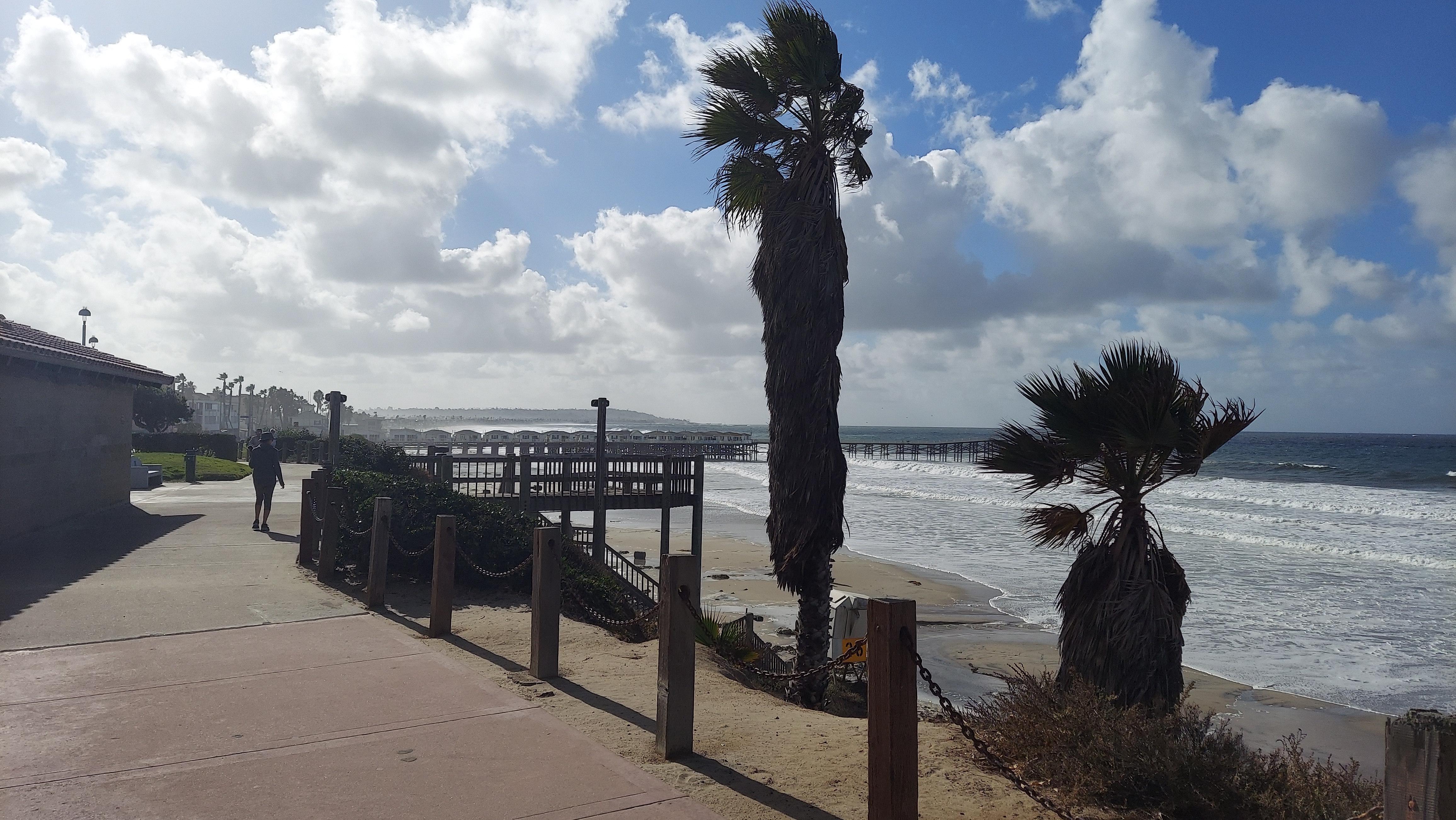
Ferocious Ambivalence

This story is a companion to the eleven-part series that began here and had an additional episode here.

Mark almost ignores the call from his mother. He’s not planning any human contact until Evan and family arrive tomorrow afternoon, and this is not the inspiration he needs as he heads into the wilderness. Her calls tend to be idle recollections of trivial episodes from his youth, or, if she’s had a few hard seltzers, unsolicited relationship advice drawn from her days as an escort. He could do without a seventh telling of the greatest hits. There was the saga of Ronald, the financier with a secret second life in a heavy metal band, and Pedro, who passed her off as his estranged wife to his blind mother; perhaps this time she’ll linger on Jack One, the effeminate mobster, or Jack Two, who had a fetish for socks. At least the sock story is mildly funny. Maybe he could use something mildly funny? He answers the phone.

A chorus of wails greet him on the other end.

“Mom? Mom, come on. What is it?” After three minutes of incoherence, she finally forces the words out.

Her breast cancer diagnosis should be a shock. She’s only 53, a generation younger than many of his friends’ parents, to say nothing of her late ex-husband. But for Mark, it seems like only the next logical signpost along this entropic highway. He knows the road well. He seeks out the off ramp, even as he knows her bleating will force a new route for what was supposed to be a meditative vacation.

Mark’s soothing tones do little to slow her tears, but he knows she just wants to hear his voice. His mere presence has always been enough. She’d never been entirely comfortable around him after her cute, pampered boy became a hard-edged teenager, complete with his father’s ruthless streak. But she’d never said anything about that, never dared question him to his face. In a rush, he realizes how much he loves her in spite of it all: she let him be a total shit in high school, imposed no curfews, bought him booze, trusted his ability to keep himself under control even as he spewed angst back at her every chance he got. She was unconditionally supportive of anything he did, and he knows how much pride she took in telling her backwoods boyfriends about her Yale grad Wall Street son. She omits any mention of his father in this story, an oversight that both makes her look like a superhuman mother and Mark a much more self-made than he actually is. It’s a convenient lie for both of them.

“Take good care of yourself. Sounds like they caught it early. You’re in good hands. If you’re ever not happy with what you’re getting, I’ll get you something better. And send me all the damn bills, of course.”

His mother sniffles. “You don’t need to do that.”

“Of course I do. Dad screwed you over, you know that. Least I can do is use some of his old money to keep you alive.”

Silence. He thought she’d like that dig. Mark casts about for the right words.

“I’ll swing through before I head back to New York.”

He can hear his mother warming on the other end of the line. “That would be great.”

Mark eases her worries to a halt so he can hang up. After a giant exhale, he tosses the car door open and surveys a trailhead deep in the worn-down open hills of Theodore Roosevelt National Park in North Dakota. The lot is empty aside from him, and a few coyotes call in the distance. Dusk already looms, and he has to hustle to find a backcountry spot to pitch his tent. He pulls the straps on his pack into place, cocks the cap on his head, and hefts a water jug out of the trunk and into his arms. This will do. He locks the car and trundles along the banks of a dry wash, his eyes fixed on a distant gully that will serve his purposes.

In her own way, Hope Salonen Brennan’s story is far more impressive than that of any girl Mark has ever dated. She’s worked her way up, put herself in elite circles in New York, somehow made an investment banker with a wife and three kids believe he’d be happier with this uncouth Finn from northern Minnesota. She’d even had the good sense to escape his clutches when she saw what he was. Sure, her climb had been an unsettling one as she sold her own body in higher and higher circles of Wall Street wealth, but how unique did that really make her? The Brennans’ ancestral fortune had probably been built on sold bodies in one way or another; hadn’t his dad said something about ties to the British East India Company? Mark’s own additions to that ledger are filtered through a few institutions of polite society, but he has no illusions about what goes on lower down on the food chain. She’d gamed the system and won, and he should be proud of her.

He thinks back to a time in high school when he’d had Evan over for a couple of beers. It was a tame night, just two friends escaping the drama to imagine a more worldly. His mother stumbled in from a girls’ night and thrust her protruding breasts in Evan’s direction, left him with some advice: you’re a cutie, Evan, but you roll over too fast. You need to make them beg. Make them show you they’ll give you what you want. Know that you’re the one in control. She reached in and fluffed up his hair, kissed him on the cheek, and strode away with a ravishing backward glance.

Mark has never forgotten that look in Evan’s eyes, both queasy and hungry, a first great temptation for the friend Mark had only ever known to exude sainthood. Evan’s wide eyes somehow captured everything Mark ever felt about his mother, and for the first time, he understood what his father had seen in her. He’d bumped his knee on the table in shock, but she was too drunk to notice his revelation. He and Evan turned away from each other in shame. They never spoke of that night again.

The sun wakes Mark as it pours up his valley the next morning. He lies in his tent and listens to stray bird calls, closes his eyes, and lingers in bed for the first time in months. Evan would describe this experience in metaphysical terms, a tale of being one with the land, his Minnesotan pagan rite. Mark has absorbed enough of his friend’s ritual that he subconsciously follows suit, filters it through a few related Brennan family instincts: that hunger for exploration, for conquest, or at least some place where he can get away from the short-selling leeches, the loveless sex. He’s always attributed those instincts to his father, but now he realizes they’re just as much his mother’s story, too. The three of them shared a quest for purity, for rebirth, and while they may not have found that in their many escapes, they’d at least stripped away the worst of what came before. Mark pours his coffee, gazes out at the badlands of the Little Missouri, says what the fuck to himself and tips in a splash of bourbon. He grins as he takes a deep sip.

He wonders if his mother ever expected to find real love when she went to New York. At turns she seems both naïve and ruthless, a believer in happily ever after and a fighter who knew to look out for herself. Has his own pursuit been all that different? He runs through the litany of his most serious prospects: Jackie, Victoria, Magda, Amelia, Indira, Amy. All these could-have-beens that never came to fruition, some reason or another they came up short: too caught up in the past, too boring, too cautious, too ruthless, too career-driven, too put off by that monster ego or that New York drive or that contrarian Midwestern rootedness.

They were all probably mistakes anyway. Not one of them was right. Is that belief an acknowledgment of a hard truth or a symptom of a perfectionism that plagues everything he does? He trails on through the failed endgames: a walk down a wooded trail, a stolen moment in a kitchen at a graduation party, a backward glance on a Nantucket beach, amid a downpour on the steps of St. John the Divine, at a drunken post-finals party. Now, the most recent addition to the saga, the most mundane, on his couch in his new place in Westchester, a palace far too large for a single man and yet she was not the one to help him fill it and he told her so and that was that.

Mark flew into Rapid City at the start of the trip to spend a night with an old high school friend named Jake. Back in their glory days, Jake had been a deeply earnest kid who nonetheless attached himself to athletes like Mark in a tentative search for a party. He’d written a fawning profile of Mark in the school paper their senior year, one that articulated Mark’s blueblooded panache in a way that had both tickled his ego and made him more conscious of the nobility that came with the Brennan name. Mark followed from a distance as Jake chased his dream in journalism, and for the past year his old friend has embedded himself on the Pine Ridge Reservation to send dispatches to the learned classes.

Jake shows up in mismatched flannels and with a scruff all over his face, a disheveled look with no resemblance to the pretty boy Mark remembers from high school. They still get along amiably, but every time Mark tries to turn the conversation to a mundane concern, some question about his writing method or his girlfriend back in Minneapolis, Jake always finds some way to turn his life into some stilted microcosm of their cultural zeitgeist. Maggie’s apartment in Minneapolis may have flooded last month, but it has nothing on the trailer he now occupies near Wounded Knee; their last trip together, to New Orleans, underscored the ongoing legacy of slavery and Jim Crow; reflections on his career path and college life lead to expositions on college debt and the decline of traditional media. Mark can hold court on all of these subjects if he so desires, but he looks at this man in front of him and can’t see any trace of the kid who used to sketch out classification systems of their high school’s girls in the lunchroom. The absence of the old Jake jars him. In a last-ditch effort he asks after Jake’s parents, but this too just brings out grumbles about how they sit glued to their TV every night and don’t read his work.

“They at least still reading the paper? I bought a stake in it, it you know.”

“I don’t think—wait, what? No way. Are you working on that a lot?”

“Not really. Just trying to give it some life and editorial direction. Let the reporters do their jobs.”

“I knew you had money. But not that kind of money.”

“My dad died a few years back. I came into some. I invested a lot in pet projects like this. Not big returns. Happy to break even.”

“Wow. Why not just coast and live off of that?”

“My dad did a lot in his life that I’m not proud of. Trying to make up for that, as much as I can, and put that money to use.”

“But you still work for…”

“Yeah, I do.”

“How’s that any better?”

“I never said it was. Anyway, if you wanna move home, I can probably get you a reporting job.”

“I…” Jake breaks off, perplexed. “I—thanks. Really. Hadn’t even considered something like that. And Maggie’s a city girl. But—I’ll consider it.”

“Consider it a standing invite. Duluth could use you.”

Jake seems unsettled, but Mark isn’t sure what else he could have done. Pretended he isn’t who he is? Perhaps just sat and listened, a fly on the wall? Jake is full of gut-wrenching tales of reservation life, and before bed that night, Mark slides some funds he’d earmarked for a New York charter school into a scholarship fund for Pine Ridge kids. But that raw empathy has never been his specialty, his power-as-birthright certainty once again colliding with his desire to dismiss opinions as the province of the unwashed masses. Give him either a chance to solve the problem or accept that he won’t burden himself with things beyond his control.

Mark leaves his encounter with Jake puzzled. In every way he admires his friend for his work, meant everything he said about becoming his patron. But Jake has made Pine Ridge his cause célèbre, while Mark knows that, as much as he may now contribute, he can always walk away from it, or anything else. He has no Pine Ridge in his life.

A storm brews on the horizon, a looming tempest that threatens to cut down Mark’s planned hike. He battens down the hatches on his tent, nervously tests the slack on the stake lines in the crumbling dirt, and tuck his gear in beneath the leeward side of the rain fly. He considers a run for his car, but is a veteran enough hiker to know not to tempt a storm. He stands atop a nearby rock to watch its advance, retreats only when the first drops start to fall, and zips himself in. The wind rips at the tent, does everything in its power to tear it up from the ground. He splays out his body to hold in all in place, his breaths coming sharply as he tests the corners for incoming water. When he’s confident it will hold in place her curls up into a ball, a fetal coil here in this lonely wet womb.

Solitude does not suit Mark. It never has, even if he’s lived alone most of his adult life. That image of his father fading toward death in his clifftop fortress is too visceral, far too close to home, and that nightmare looms up before him again now. He can never be that. But he can’t stay on the run, either, out into more distant wilds and lonely prairies. Evan will make sure of that. His old friend can’t arrive soon enough.

The drive north from Rapid City had been bleak, as he’d expected. The open plains and endless road he can do; the shock comes when he stops for dinner in Belfield, North Dakota. He finds himself at the end of a bar opposite a drunk clump of oil field boys at least five years younger than him, decked out in Carhartts and trucker hats and Confederate flag belt buckles, constantly reaching for their tins of dip. At some point in his life, Mark thinks, he would have seen them as a potential conquest, a proving ground for a slick city boy to slide in and go drink for drink with these people from a different world. He’s done it in Detroit and Nepal and half of Europe; these boys bear some resemblance to some relatives on his mom’s side of the family. But after Jake’s tales of Pine Ridge, he cannot in good conscience put on that blithe bravado. Indira had called Mark the poster child for the privileged patriarchy, but his ever-probing, hungry style has nothing in common with these misogynistic tools. Or is that only wishful on his part? Either way, he has never felt as foreign in his own country as he does on that bar stool in that moment.

Mark has started hanging out with politicians. His dad always told him not to, but then, one of his first contacts was the son of his dad’s ex-associate, a New York Republican Party functionary. What better way to honor Preston Brennan than through hypocrisy? Mark enjoyed toying with the kid, a pudgy hothead two years younger than himself who’d simply assumed Mark was red meat. Mark can speak the language well enough, and saw a much faster road to prominence here than on the left, but he walked away repulsed by this profit-hungry devotee to a losing cause.

A meet-and-greet with Manhattan Democratic activists left him with the opposite impression: the attendees were legion, eager to spread their gospel, and company he struggled to keep. One had recoiled when he gave his employer, though they was all too happy to let Mark pick up their tab. Another, who assumed he was gay, lectured him on how his career destroyed Black bodies, and it took all of Mark’s self-control to avoid telling him that he’d seeded an urban farming microfinance operation in Detroit and a vaccination drive in Senegal. Who in this group could claim to have done so much, he stewed as he donated another ten thousand dollars to the vaccine drive with a few casual flicks at his phone’s screen. Score one for his reserve.

Mark was born in the wrong era. In the past he’d have been the ideal inheritor of the Kennedy or the Roosevelt mantel, a traitor to his class; for that matter, he could have at least worked with a Bush. Now, though, noblesse oblige seems a lost cause. The masses have the power but none of the wealth, and what’s a good, old-fashioned aristocrat to do?

“You could renounce it all and become a radical,” says Lezlie, his work life confidante. “If the Democratic Socialists are a step too far to you, you could at least go all Gandhi on us.”

Mark snorts. “Yeah, I’m definitely gonna start fasting and swear off sex.”

“It’s more you than you think, Mr. Wilderness Hiker.”

“My hikes aren’t exactly leisurely strolls in the woods.”

“Fine, I guess. It’s a reach,” she concedes. “And maybe that’s okay. You might be able to do more where you are anyway.”

“Should use some of the inheritance to buy myself a politician or two.”

“I think they come pretty cheap these days, especially if you’ve got some co-investors.”

“Let’s go in on one,” Mark laughs, shaking his head.

“Why do you even want to do this?” Lezlie asks, boring her eyes through Mark’s veneer. “What are you in it for? Guilt over your career, or your dad’s career? That doesn’t seem like your style.”

Mark shrugs. “Guess I just always gotta be that man in the arena.”

“Ever the hockey player, aren’t you?”

“Something like that.” Mark chooses not to share his next thought: ‘Or, at least, I like myself better when I am.’ That’s it, he thinks, ever the self-improvement machine. This was the distinction with Amy, the reason that one too fell short: she loved him for who he was, not who he wanted to be. That current self was fun, but always a step behind the goal.

The rain moves on around noon, and Mark sets out on his planned trek. He marches up a plateau and marvels at the openness, this vast expanse of waving grass without a soul to be seen. He ignores the trail and plunges out across the meadow in no direction in particular, his hyper-awareness just enough to keep him alert but bury his anxieties beneath his immersion of the whole scene. He gets to this point more often than he gives himself credit.

The DeBleekers will arrive later this afternoon. Evan, Brendan, pregnant Bridget in tow, their three-year-old son’s first real road trip and the first time Mark has seen Bridget in over a year. He and Bridget had squabbled a bit after his breakup with Indira—they’d always squabbled a bit, really—and Mark will forever wonder just how different Evan would be if he hadn’t committed so young. Getting Evan alone was always a challenge, and now with Brendan added to the equation, it’s borderline impossible. Even his New York friends, though, are pairing off now, throwing up the same barriers. Has he even aged a day?

Mark orients himself by the sun and starts to pick his way back toward the spot where he parked his car. He’d committed too at that age, he figures, just in a different way. Evan chose a woman; Mark chose a road, one with no real end, a hurtling cycle of ambition and achievement and revelation and subsequent exhaustion or irritability or just plain old annoyance. It seems so small. He reads books of great men, towering midcentury Wasps who shared his pedigree, and occasionally some of his flaws. But even that doesn’t seem to get there. His troubles seem pettier, less attuned to an era when sheer force of reputation and power of will alone can’t do it. Could it ever? Or was that just hagiography, or having an army behind one’s back? Mark can’t be sure, and he sure wouldn’t mind a bit of either. But there it is, a question that needs an answer, and he has summoned the one person he knows who can provide one.

An hour before the DeBleekers are slated to arrive, Mark heads into town and checks into a motel room so he can shower. He decides not to shave, figures he needs to leave some scruff to show he’s been roughing it out here, but otherwise perfects the look. When the call comes, he heads back into the park and meets them in the campground.

“Marky!”

“Evs. Bridge. Bren-Bren.” Mark strides into the campsite and throws an embrace around each of them.

“Ya look good, bro. How’s the stay out in the wilderness?”

“Damn good time. Saw some buffalo. Got to think. Slept like a log. Almost got blown into Saskatchewan in the storm this morning. How was the drive?”

“Smooth enough. Brendan was big into the giant cow.”

“Uncle Marky, it was the biggest cow ever!” Brendan informs him.

“Legit. You get to milk it?”

Brendan scoffs. “Naw. It was so big!”

“Hm. Just remember, dude, you gotta milk things for all they’re worth. I got a present for you.”

“Yeah?”

Mark pulls a stuffed bison out of a bag and tosses it to him. “Named him Teddy. Take good care of him, okay?”

“But he’s not a teddy bear. He’s a buffalo!”

“When you go to bed tonight, tell your dad to tell you about Teddy Roosevelt. And about his buddy John Muir, too.” His eyes flit toward Evan to catch the grin from their inside joke.

“Aw, it’s actually cute,” says Bridget as she rescues the bison before it descends into a mud pit.

“I got some taste sometimes,” Mark shrugs.

“In buffalo, if not in women,” Bridget laughs as she holds the stuffed animal just out of the reach of her jumping son. “Honestly, you’d make a good dad. I’m just thinking of how you’d pour yourself into it.”

Mark hides his shock and channels his best Evan shrug. “Thanks. Someday.”

“Any closer lately?”

Mark mulls his response. “Just let another one go, so I’m gonna go with a ‘no’ there.”

“Why this time?”

“Exactly what you said. She’s not the mom.”

“What’s it gonna take?”

“I’m looking for answers. The bison didn’t have many. But this kid might.”

Bridget beams at Evan, who’s been watching this exchange silently, transfixed. “You two go do your thing. I’ll see if Brendan’s any good at setting up a tent.”

“Sweet. Let’s go.” Mark guides Evan down the roads through the campground and down toward the cottonwoods along the Little Missouri, his usual resolve lost behind a simple smile.

“Bridge was in a good mood.”

“Much as she gets on you sometimes, she really does like you.”

“Prolly knows you bring out the best in me. Even if I lead you into sin and evil sometimes. Guess that’s harder when your kid’s along.”

“Right on all fronts there.” Evan pauses and lets Mark lead him down toward a sandbank along the brown, fast-flowing river. “So what were you saying about me having answers?”

“I need you to level with me. Is the reason I’m like this because I’m…me?”

Evan laughs. “Slow down and rewind, bro. Tell me what’s really on your mind.”

“Nothing you haven’t heard before. Tryna live my life to the max, getting there in most people’s eyes, but still feeling empty. My own giant ego, wanting to run everything, make it all perfect. And because I stay caught up in that shit, I never get to what I really want.”

“And you recognize that.”

“Yep. Every fucking day.”

“Then why don’t you do something? You, of all people…”

“It’s like…when I get to a place where I want to, I’m out of gas. Or I don’t remember till too late.”

“Marky…you taking enough time for yourself?”

“I take plenty. Got my runs, my hikes, my—”

“No, not like that. I mean quiet time. You and yourself. You and—”

“Bro, I’m an extrovert. That’s not how I process.”

“It’s not that simple. We all need other people time and we all need ourselves time. No matter where we are on that spectrum. And you do need to pause. To lose yourself. Remember that Marky you want to be.”

“Problem is, I’m less sure than ever what that means.”

“You really? I think you’re getting there, mostly. Look at what you’ve done with your money, with your career, with your new place…you are getting somewhere, I think. And you’re mostly good with all that, right?”

“I am. But let’s not pretend this picture ain’t missing things.”

“Course not. That’s why you have to ground yourself. Remember that.”

“I mean, what do you think this trip is?”

“Just make sure it’s not some manic chase across the prairie. I know you too well.”

“Aw, fuck off.” Mark grins in spite of himself. “Here’s another way to put it. I want to be free. I’ve never felt free. Not really. I had so much pressure of expectation.”

Evan bends over and skips a stone across the Little Missouri. “Funny. In a way I don’t disagree. It’s been heavy on you. But you also love standards. That, let’s be honest, that kinda snobby end goal. Even when you lived with your mom, who let you do whatever. And I don’t think you should disown that.”

“Do you see a tension between that and freedom? Or do I just have daddy issues?”

“It’s not totally smooth, I don’t think. But I can’t see supercool Mark on the beach just chillin, ruling his world, and not think of you as free.”

Mark grins again. “Yeah. Yeah, I like that.” He brushes his hair into place and wanders on ahead of Evan, savoring the idea of that beach life freedom.

Mark’s mind flits back to the Nantucket house. (Is he wandering more than ever before now?) Last year he’d bought one of three shares in it along with two of his half-siblings when his dad’s first wife finally sold it. ‘I’m not him,’ he’d been careful to tell the original Mrs. Brennan in her retirement lodge along the Hudson. He showed her pictures of him with his mom, of his wanderings with Evan, of him with whichever love interest he’d had at the time. She didn’t need to know that part, and since there was no other potential partner to keep the house in the family, no one tried too hard to correct the record.

Yes, he feels free there, though sometimes thanks only to alcoholic oblivion. He thought Amelia would show him true freedom on the beach, but since that failure, he’s been loath to burden his funhouse with anything serious. He’s never been one to allow a failed relationship to tarnish his memory of a place; maybe he’s just reached a point where he’s too cynical to even bother setting the stage for anything serious.

He’d run into Amelia again recently at a wedding reception for a mutual friend in the Hamptons. She was with a bearded hipster who did content curation, whatever that was; she caught Mark’s otherwise imperceptible eye roll and smirked at him, gave a little head-nod that said, ‘I’ll see you later.’ He’d failed to hide his grin, and they found each other later along the pier at the far end of the lawn.

“How long have you had Blackbeard the Pirate there?” he’d said by way of greeting.

“We met maybe two months after you and I moved on. Hooked up and the rest was history.”

“Hitched yet?”

“It’s a matter of time. I’ll invite you if you want. I’ve got the balls for that and he won’t give a shit.”

“Depends on the venue, you know I’ve got standards there. I’m flattered, though. I’m the last finance bro you dated? Figured you needed some nice boytoy as your real soulmate after all that shit?”

“You know, I’d never thought of it that way, but you might be right.”

“Hurts me to admit it, but I had you pegged wrong. Thought you wanted power as much as I did.”

“Think I don’t have it in this relationship?”

Mark snorts with laughter. “I guess if you’re happy with a one-way street…”

“I appreciate not doubling down on the neuroticism.”

“An instinct I’ll never quite understand.”

“I guess we just weren’t meant to be.”

“We weren’t. Though I’m still proud of Nantucket.”

“Never had anyone roll it out for me quite like that.”

“The things I do for love.”

“Doesn’t seem to be working, unless you’re hiding someone.”

“Am I wrong, to be as demanding as I am?”

“I’ll let you be the judge of that.”

“I do sometimes get second opinions.”

“Yeah. You always had that side. And I admire that in you.”

“But only so much.”

“But only so much.”

“What are you thinking?” Evan asks. They’ve come to the end of the sandbar and have no choice but to turn back.

“Off on some girl that got away, as usual.” If there’s one thing he can’t share with Evan, it’s his tortured love life. For all his friend’s empathy, this is a world Evan does not know. He wants to ask Evan what he thinks of the Jake episode, of his dabbling in politics, if he can picture Mark firing up a crowd or playing out his cutthroat game in the public eye. But he already knows Evan will be supportive of anything he suggests, will find ways to work past any blocks he faces, and he’s not sure he’s worthy of that confidence. Better to say nothing at all than drive up false hope. He kicks at the ground, scuffles his feet. When did he become this weakling afraid of his own potential glory?

“It’s more than that. I can tell,” says Evan after a while.

“Meh.”

“Goddamn, spill it, Marks. I come chase you all the way down in North Dakota…”

“Hey, I chased you down in Nepal once. You owed me!”

Evan grins. “What a trip that was. I mean, I loved every moment of it, the mountains, the monasteries…but my favorite part was probably seeing you come rolling in to Tengboche and holding court liked you’d been there a thousand times before…”

“I was thinking about that the other night. How awesome it was to cut completely loose from the outside world for that long. And then, of course, I got back to civilization and found out my dad was in hospice.” He pauses. “My mom just got diagnosed with cancer.”

“Aw, shit.” Evan wraps an arm around Mark’s shoulder and shakes him gently. “No wonder…”

“No wonder what?”

“It explains a lot. About why you’re here. Why you’re back in Nepal in your mind. Why you feel the way you do.”

“I don’t exactly hide it when I brood, do I?”

“Gotta ride the waves, Marky.”

“That’s what I do every day. I mean, my life is all perpetual motion. Isn’t that what your red friends would tell me? The late-stage capitalist in his element…”

“I think you have more socialist friends than I do when you have those artists over.”

“Yeah, you Minnesotans at heart are too boring to be revolutionaries.” Mark laughs and shakes himself out from under Evan’s arms. He fishes at his pockets and grimaces. He’s left the flask behind.

“You keep trying to build this image of yourself as the hard-ass rich fuck, but at the end of the day, I’m not sure that’s you at all. Maybe just…let it go.”

“So what should I do? Quit my job? Give it all away tomorrow?”

“No. None of that. Maybe just start by acknowledging that you are who you are.”

“I’ve never believed I can just throw away part of who I am. We’ve talked about this.”

Evan shrugs. “You said you wanted to find freedom.”

“I’m…” Mark trails off. “Problem is, I don’t know what that means.”

“Maybe, as you ride the wave, you need to seize it.”

“I’m sure you’re a master surfer, Mr. Metaphors.”

Evan turns away to hide his blush.

“What?” Mark demands.

“Nothing.”

“Your turn to spill it.”

Evan turns away from Mark and walks off the dirt path and into the tall grass, still damp from the morning’s storm. He toys with a few of the nearest blades and turns around.

“You remember those people who used to surf off Stoney Point in big storms on the lake?”

“Yeah?”

“I’m…a low-grade celebrity in that group.”

“Shit. No fucking way. You? Really?”

“Learned a little as a kid on those California trips. That’s why I went back there a few years back. Dabble when I can on the shore.”

“I don’t believe it. What does Bridget think?”

“She has no idea. My old board just lives in the garage. Easy enough for me to sneak it out and come up with excuses.”

“I’m…fuck. Who else knows?”

“I’ve been doing it for fifteen years and you’re the first person I’ve told. I don’t ever talk to anyone when I’m out there. Don’t go if there’s a crowd. I’m just the mystery dude.”

Mark splutters. “Bro, that’s fucking awesome. So much makes sense now. Why the hell did you have to hide it?”

“It was…just my thing, you know?” Evan gives a very Evan shrug, folds his arms, and wanders back to Mark’s side. He scrutinizes him closely and sees something he’s missed for too long in those eyes, that unburdened delight he’d chased halfway around the globe. Mark drops his head into Evan’s shoulder and throws his arms around him, and Evan stands in stock-still shock as Mark chokes up. He returns the embrace, pats Mark on the back, looks out at his taller friend, his eyes drawn tight in a tearless sorrow.

“I’ve got you. You’ll get through this,” Evan murmurs.

Mark closes his eyes, exhales, and pulls back so he can look Evan in the eye. “Getting through is fine. I got that down. But I want to do so much more than that.”

Evan opens his mouth to counter Mark’s demand for achievement. He wants to calm him, remind him yet again that there’s another way. But this, he knows, is not Mark’s wave.

“And you will,” he says. “Look at what you’ve got behind you. Look at everything you know. You got all the tools you need. You will.”

“I just need the will.”

They head back to the campsite, where Bridget has wrestled the tent into place in spite of Brendan’s help. They cook a dinner over the fire and let the child divert them from any heavy thoughts, and the DeBleekers, drained from a long day on the road, crash after a brief, non-alcoholic nightcap. Mark gives himself a second splash of bourbon and wanders down to the river again, but chooses to go no further. This is enough, he thinks, and for the first time all week he stems the tide of nonstop drifts into the past. The past provides wisdom, but wisdom alone is no agent of change, of new beginnings, of instinct on Evan’s waves.

No: he needs to be free again. Not free like Brendan, untroubled by the weight of his home in the world, but freed by belief his capacity for change, to twin dream and reality, to make good on some promise that lurks beneath all these visions he pulls from the past. He turns his eyes up to the stars and digs for the charts he’d been careful to memorize before his last hike with Evan, that flair of brilliance he’d stashed away strictly to show off but now, as he gazes upward, allows him to recover his awe. His pursuit has freed him yet again.

Beach Boys

This story is a companion to the eleven-part series that began here.

I.

The San Onofre crew is accustomed to week-long interlopers every now and then. Some appear on their little slice of beach every year, others just drift in and out. Some are memorable, but even those are never more than a stray story, a remember when so-and-so and such-and-such that provides a background bass line to the chatter at the Ex-Con-Tiki bar every weekend.

He shows up with a beginner’s board and a wetsuit, and little else. He doesn’t wear any surf shop gear, makes no effort convey any skill or experience. They all agree he is attractive and looks the part of a beach poser: long scraggly hair pulled back beneath a backwards hat, muted tone tank tops and generic board shorts, well-sculpted shoulders and legs that show he’s more than a casual athlete. His wide, brown eyes bear an eternal look of someone peering off into the horizon, someone who gazes toward the light to see what it can reveal. After watching him for four days, Casey decides that this interloper, intentional or not, has become the platonic ideal of the beach. He makes it seem effortless without deploying any effort, a shockingly rare achievement along the California coast.

He has no great talent as a surfer. Not once does he attempt anything bold or inventive, his movements always deliberate and precise. But his form is on point, no wasted effort on his board, and he’s clearly done his homework, knows the nuances of the wave in a way few rookies do. Nor is he one to repeat mistakes, each lesson stored away in a trove of knowledge that Adrian suspects must border on the encyclopedic. Surely he’s been to San Onofre before, Casey asks him, and he shrugs and says yes, years ago, when he was just a kid. Neera suspects this is a lie to enhance his intrigue, but when pressed, the kid pulls up a picture of his preteen self on this very beach, grinning between two parents as he clutches this very surfboard. The memory means something to him, clearly, but what they cannot be sure.

When they break into his cabana to see what else he has, they find no more than a bottle of bourbon, sipped at in moderation; a pile of cheap microwave meals, though of the semi-healthy variety; and a few little notebooks half-filled with unintelligible scrawl. Adrian sees a picture of a girl on his phone background, but Jack, who holes up in the cabin next door, reports only one late night phone conversation, and it with a guy at some East Coast college. He is agreeable enough, shares a few beers with the Samoan proprietor of the Ex-Con-Tiki, can talk about the wave and downplay his own skill with the best of them. But even Neera, the most skilled prosecutor on these sunny shores, fails to fish out any details when she sidles up to him with a drink and her voluminous eyelashes.

Over the boy’s first four days at San Onofre he is tentative, avoids others unless they address him, willingly accepts his position as the rookie on the fringes of the lineup. He simply goes about his wave work within his limits, creates as small of a swell as he can. Neera invites him to a club in San Clemente, but he demurs and spends his night reading some cliched travelogue outside his cabin. His heart isn’t in it.

The interloper is a source of mild interest at the club that night; if Neera weren’t newly single, they wouldn’t have given him much mind. But Alexandra, eager to quash Neera’s intrigue, convenes a meeting of the minds before the boys inevitably disappear to the back alley to toke a bowl. The last thing she needs is to babysit yet another brokenhearted roommate.

“What was the name again?”

“Evan. His bag says Gopher hockey on it.” Frantic googling ensues.

“Sure enough, that’s him. Walk-on. Guess he’s alright.” Alexandra shows them his roster profile on her phone.

“He’s got good form for a kid from the middle of bumfuck nowhere,” says Jack, already half out of his seat for his trip to the alley.

“And he’s a cutie,” Neera muses. “Probably real nice. Minnesotans always are.”

“Some midwestern bro living out his fantasy,” says Casey.

“I’ll tell you what he is,” Alexandra says. “He’s a climber. He doesn’t want you to think he’s after anything…but he’s after something.”

“He’ll fit right in here,” Casey says, trying to give her a significant look. Alexandra ignores his puppy eyes and instead checks Neera’s reaction: concern, fear that her Minnesota Nice diagnosis may be awry. Yes, that’s exactly what she’d hoped for.

“There’s no fitting in here,” she replies. “Either you grab the wave or you end up washed up on the beach.”

II.

“Alright, kids, welcome to Solomon’s Temple,” Mark announces as the procession of cabs pulls up to the beach house.

“Did they add on a new wing since I was here?” asks Matt.

“Yup. New sun room on the side, and another bedroom below it where we can stuff a few more bodies.”

“You’ve been here before?” asks Dante, a newcomer to the group.

“Marky and I go all the way back,” says Matt. “Been dealing with this snob since I was ten, even when he went off to Minnesota and New Haven. Been in the family since way before you, right?”

“That it has. And Matty was one of the few Dirty Jersey friends my parents let me have out here on the island,” Mark says. “No freaking clue what they saw in him.”

“I just remember us out on that beach when we were like twelve, thinking we were hot shit and going after high school girls.”

“Better luck this time, Matty,” Mark teases.

“Why Solomon’s Temple?” Amelia asks from the back seat.

“Parents went through a religious phase. Plus my dad’s gone through almost 700 wives, so it’s fitting.” To Mark’s mild annoyance, the allusion goes over the heads of everyone in the car.

Lost references aside, Mark is proud of his plans for a long Nantucket weekend. He’s made his invites carefully, fifteen in total, six men and nine women, the ratio off-kilter to get the group to the front of bar lines and provide more options for his enjoyment. There are three couples, already paired off, and Leslie, his lesbian work life confidante; to the mix he adds Dante, a Camden-based writer who went to Princeton with Matt, proof this week is more than his own sandbox. No, he’s collected his interesting people, all with some purpose unknown to them. Dante the poet, Leslie the life coach, the couples to provide stability, and Matt, his foil, both a competitor and a partner in the pursuit of the four eligible ladies. They know the unspoken rules of the game they both relish.

The first night goes according to plan. They are all drunk by eight and pile into two cars Mark has contracted for the week for a venture to a strip of bars in town. Nora, the most attractive and least stable of the four singles, trips on a loose sidewalk brick and goes down in a heap. They are a bit on the drunk side for the finer bars in this outpost, but Mark has curated his guests well enough that he knows no one will go full Jersey Shore on him. They plow through a few fine cocktails before beginning the inevitable push back to the one dive bar on the island, where Mark suspects all their nights will end. The first one has enough novelty that he can ride it through, play his part, head home happily drunk at the end of the night and settle for a few sloppy kisses with Nora. Matt goes to bed empty-handed, and Mark claims pyrrhic sort of victory on night one.

He’s paced himself well. He wakes the next morning with no hint of a hangover and heads out for a ten-mile run along the coastal roads out to Siasconset and back. A handful of his housemates have stirred to life by the time he returns, all in awe of his early morning feat of athleticism. He shrugs off their praise with practiced nonchalance, the borderline arrogance of a man whose achievements require no acknowledgment. He is who he is.

Even so, Mark senses a distance growing between him and the rest of the house as it stirs to life. He has classified himself as a breed apart, and now it is his duty to reclaim his charm. He takes orders for mimosas and coaches Leslie and Dante on the Markian approach to beach life, to dive immediately back in. His disciples laugh and follow his lead. The god has come down from the clouds.

They pass most of the day on the beach. Mark drifts in and out of a few games of volleyball, works his tan, settles under an umbrella to keep his steady buzz and samples the edibles brought by Patrick and Erica, two underlings of his who have managed to hide their romance from everyone else in the office save Mark’s prying eyes. He caught their subtle winks, their well-timed bathroom trips, their aligned vacation schedules. Erica buries herself in the sand and gazes out at the waves in peace, and Patrick nuzzles up against her. Mark nestles near them on his towel, close enough for idle observation but far enough to give them space. They’re a fascinating specimen, this couple that has found love in a desolate office. He’s in a good enough place that he can stave off the wistful thoughts they inspire in him.

Night two involves less pretense, a quick pregame that moves on to a unified beach party with several other homes. This night, Mark expects, will be the most debauched of the week, and he steals a thirty-minute nap beforehand to steel himself for it.

“Game on,” he whispers to Matt as he settles in to bed.

“Remind me how many extra points I get per college girl?”

“Careful, Matty. Can’t talk like that anymore these days. You trying to tell me you aren’t here to find undying love?”

“C’mon, it’s not wrong if they’re in on the game, too.”

By the end of the night they are back in the room they share with two girls who claim they’re headed into their senior years at Dartmouth. In time it comes out that they’re merely Brooklyn baristas, but by this point Mark and Matt are in too deep. Mark thinks Matt wrapped up the proceedings with the slightly cuter one, but his finds just the right level of pleasure to sustain him through the longest finish he can ever remember. He is content to call the night a draw.

Mark wakes to find his new acquaintance wrapped in sheets at his side. Matt’s bedmate, he sees, has slipped off in the night. He deserves extra credit for that. He stays in bed until the girl wakes and politely sees her on her way, though he does not invite her to stay for the brunch Dante has promised to whip up to start day three. She was lovely, but he doesn’t want to give anyone the wrong impression. His prize will be no barista, no random encounter on the beach. He’s already culled his herd.

The group applauds Mark and Matt for their conquests, though Leslie groans as they settle in on the beach with Nora’s foul anti-hangover concoction.

“This isn’t the Mark I like. The one I like is the one who was grilling Amelia on what AI is going to mean for humanity.”

“That Mark does get a little tired of always having to be the know-it-all cynic.”

“Okay then. How about the one who kicked all our asses at volleyball then had some pot brownies with me on the beach yesterday?”

“You know I’d go freaking crazy if I tried to live like that.”

“You don’t make this easy, do you?”

“The world is a complicated place. Just…being one with its waves, you know?”

“Hah. Clever turn, I’ll give you that.”

“I’m good for that, if nothing else.”

“You’re in Sad Mark mode again, aren’t you?”

“Me? Sad? I fucking rule my world.”

“Doesn’t seem to do much for you.”

“Does plenty for me. Just hungry enough to want even more. There you go. There’s a thirst no AI can ever have.” He pours himself another mimosa.

III.

On day five, it all changes. The boy barges in to Adrian’s turf on the wave, commands the inside of the tube, pulls a series of hard turns in succession. The conditions aren’t particularly good, and he still has an erratic streak that nearly creates a few collisions. Yet he surfs with reckless abandon, just hanging on to an edge of control. Even Alexandra rises up from her droll position on the beach to eyeball this display of reckless bravado. Later, when he washes up immediately in front of her, just as composed as when he’d emerged from the waves the two days before, she can’t help but flash him a quick smile.  

Evan ignores her. When Adrian snarls at him over his lack of decorum, he rolls his eyes and doesn’t reply. When Casey asks if he wants the video he’s shot of him, he’s downright scornful: he’s not here to be found, to time it just right for the perfect conditions, to pull off any particular move. He’s here to surf.

That night the interloper shows up at the bar for the first time since the second night. After a survey of the room, he gives the boys an awkward nod of respect. They reciprocate, an invitation to become one of them for the night. Evan accepts, but Casey can tell he’s not after their approval. Instead, his eyes flit toward Alexandra at every opportunity.

Alexandra is the queen bee of the San Onofre crew, a daughter of New Yorker socialites who fled west to try show business, found it vapid, and now lives off a trust fund with some beach bums. She’s convinced her parents she’s still seeking out modeling opportunities, and she staved off her mother’s inquiries at the latest visit with a carefully concocted story of some group of surfing influencers. Her housemates are all complicit, bought off with the promise of Alexandra’s influence, and her willingness to pay the freight for the booze and drugs at the parties they host. The girls of the Ex-Con-Tiki have a reputation to keep.

Over the first few drinks of the evening, Evan pulls this story out of his fellow lustful males. Adrian has no interest in her uppity style, though this doesn’t stop him from telling Evan what he’d like to do to her in lurid detail. Evan pointedly turns to Casey and Jack, where he finds contradictory takes: Casey finds the addition of her tight mini-skirts and bottomless purse an unquestioned perk, while Jack tells anyone around him that she’s attracting the wrong type to San Onofre.

“Super high-maintenance.”

“Way more crowded than it used to be,” Casey admits.

“And they don’t belong. Way less chill. Don’t even know their way around a board.” Casey concedes the point, and Evan nods gravely.

That settles it, Casey thinks: the interloper stands for nothing if not purity, so he’s the last person he would expect to seek out Alexandra. He’s free to set up his own play. But it’s too late: Evan buys them all another round, slams his immediately, and marches across the bar to greet her. The boys watch, enthralled: will she eat this new kid for dinner as she has so many times before, or do those searching eyes know something she doesn’t?

Alexandra isn’t even sure why she’s here tonight. She’s cut back her drinking to a light trickle, and the charm of this beach dive wore off months ago. Her tablemates are all shrill harpies, and the crowd is otherwise sparse, a few aging wannabes in the corner and the tiresome Casey there in the middle with his unremarkable friends, headed for yet another stupor. And now up walks this boy who tries so hard to project some air of confidence.

“Slow night here,” Evan muses. It’s a comment for Alexandra alone, not the other four girls at her table.

“We don’t do much speed here,” she answers. “Unless you mean meth. Ask the bartender and he can hook you up for a decent price.” Evan’s eyes flit to the Samoan, who’d told him a tear-jerking tale of his turn to clean living after his release from prison a few nights before. They make eye contact, and he seems to know exactly what Alexandra just told him. He closes his eyes and musters up his cool.

“Appreciate the reference. Got a trailer we can take it back to?”

“Not much peace and quiet at my place. I hear you’ve got a little hermit cabin down toward the old nuke plant?”

“Out in the wilderness, just like Saint Onofre himself.”

“You’re a smart little fuck.”

“I try to be versatile. A renaissance man. A soldier-scholar. A philosopher king.”

“A drunk college jock who needs a haircut and wants it bad.”

“All of the above. Can I get you something?”

“You can get me out of here, that’s for sure.”

“Now you’re talking.” Evan steps aside to let her out of her booth and leads the way toward the exit. He doesn’t bother looking to see what sort of reaction he’s inspired, but Alexandra makes sure to give Casey a triumphant leer before she slips out behind him.

They don’t head straight for a bedroom. Freed from the need to perform, Evan sets a contemplative pace up the beach, and Alexandra regales him with the inner dynamics of her house. After five minutes of blather, she gets the sneaking suspicion he isn’t paying attention. Casey would have kept fawning after her the entire time, but no, this kid is subtly showing her he’s bored, that he doesn’t need her, that she should be the one seeking him out, not vice versa.

“Let’s head to my place,” she snaps, and he returns his attention to her.

“Not my wilderness hut?”

“Not sure I should trust men who think that sort of thing is fun. Trust me, a night in my bed will be an upgrade.”

Evan shrugs, nonplussed. Only later does Alexandra realize he already knows where she lives, her backstory, her reputation. She’s not sure if his homework should flatter or disturb her.

She drives him to a San Clemente neighborhood near the pier. The house is compact but carries a veneer of refinement, laden with the latest IKEA furniture and a mélange of perfumes that trip Evan’s allergies, an upgrade only when compared to the piggish squalor of Casey’s apartment or the eternal pot smell of Adrian’s. He pours them both lemonades to distract himself from her waterfall of apologies.

“Want to watch something?”

“Not particularly.”

“So who are you, really?”

“Some kid who likes to surf.”

“No shit.”

For the first time since he’d swaggered over to her table, Alexandra suspects some uncertainty in Evan. He blows his nose in a tissue and lets his eyes dart about the apartment, not processing anything they didn’t see the first time. He doesn’t seem like a person eager to get on with easy sex.

“You’re such a loner,” she chances.

“I try to surround myself with the right kind of people.”

“What are those?”

“The people who fuel my fire.”

“And who does that?” she asks as she unbuttons her shirt to reveal a pink polka-dotted bra.

“Not many people.” He tugs off his shirt and lets Alexandra run her hands around his chest in gentle massage circles.

“You’re sunburned.”

“Never can escape that, yeah. I’m not a beach kid.”

“You could play one on TV.”

“I’ll remember that if my business career doesn’t work out.”

“Why are you even here?”

“To surf.”

“No, shit. But out of all the beaches…”

“I could ask you the same question.”

“Quit being smart.”

“Fine, fine.” He gazes at their reflection in a window across the room. “My family used to come here when I was young. My aunt lived out this way for a bit and my parents fell for the place. It’s been ten years now, though. Was curious if it had changed.”

“Huh. Has it?”

“Hard to tell whether I’ve changed or it’s changed.”

“For the better?”

“Well, puberty did enhance one aspect of it. But mostly, no. Everything that seemed big back then seems small now. And people are just as petty here as they are anywhere.”

Alexandra isn’t sure if this is directed at her or not. She casts about for a response that will be on his level.

“You see places better when you don’t see them as a kid. You can see what they actually are. Not what you wish they still were.”

Her would-be lover smiles. “You’d be perfect for my buddy at Yale, saying things like that.”

“I went to high school just up the road from there. Choate. Bunch of self-righteous dicks.”

“My point exactly.”

Alexandra cackles and slides a few fingers in beneath his boxers. He reaches down and clasps his hands over hers, a caress that nonetheless stops her progress.

“You never answered my question,” she says.

“It’s not an interesting story.”

“I’m curious, though!”

“Living out some childhood fantasy, I guess you could say.”

“Oh, forget it, you’re impossible. Let’s fuck.”

He turns back toward her, and Alexandra is once again drawn in to those wide eyes.

“Nah.”

“Seriously? You put in that much effort and then you run away?”

“Got a girl back home. I’m loyal.”

“Loyal. Then what the hell are we even doing here? Loyal. Holy fucking shit. Loyal.”

“You make it sound like a foreign concept.”

“You sound like the clingiest kid ever.”

“When you know what loss is, you become that.” He pulls his shirt back on, cocks his cap back in place, and heads out the door.

IV.

Night three is Mark’s night for excess. After an early win, he can let Matt take the lead in the pursuit and just follow along, let instincts do the rest. He makes a few overtures to Carmina, the shapeliest of the four single girls, but her speech is slurring before they even finish dinner, and after three bars, Mark is little better. Matt paces himself better and takes home an androgynous gender studies major from Barnard. Under normal circumstances Mark would find intrigue in his friend choosing an interesting chat over the easiest lay, but is thankful he is so drunk that he can just pass out, his only lasting memory of the night formed through Dante’s reenactments of the girl’s relentless moaning.

Day four is drizzly and grey. Nora stumbles in with a ballet dancer she’d hooked up with the night before just as the group wraps up brunch, and he has the nerve to whine about the temperature of the leftover eggs. Leslie overhears Patrick criticizing the waitstaff at the dive bar and lectures him on his lack of empathy, leading Mark to edge out of the room in annoyance. He gives Matt a nod, which Dante catches as well, and they both follow him into the kitchen.

“Gotta love the white girl from Westchester lecturing us on privilege,” says Matt.

“You said it, not me,” says Mark, relieved that the two people of color in the party can be his confidantes.

“I give her points for trying,” says Dante. “But doesn’t she work at the same firm as you?”

“That she does,” Mark replies as he contemplates the empty Bloody Mary pitcher with a frown. “We’re all sinners here. Cept you, maybe, Dante.”

“Bro, his parents run a hedge fund,” says Matt. Mark cackles with glee while Dante blushes.

“Not where you come from, but what you do with it, right?”

“Sure. Something like that,” says Matt. “Ugh, the fridge is out of beer. I’ll get more.”

Dante shakes his head as Matt goes. “You and Matt together are a hell of a pair.”

“We’ve been playing the same game our whole lives, Delbarton all the way back.”

“I had you pegged as more of an Exeter kid.”

“Dad was a sleazebag. He fit in better in Jersey.” Mark grabs a tennis ball off a nearby counter and bounces it off the floor.

“Hey now, you know I’m in Camden.”

“Gotta get some good material there.”

“Like nothing you’ve ever seen.”

“I spent a summer in Detroit. Went to an all-black bar most nights. I’ve seen a thing or two.” Mark idly bounces the ball.

“What were you after?”

“Probably the same thing you’re after.”

“Sure, but you ain’t Black, dude. Those are my people there.”

“Right. I realize there are things I’ll never understand about that. Why can’t I try as much as I can to make them mine, too?”

Dante looks at him quizzically. “What the hell you doing here, then, getting trashed on this beach?”

“Playing the game, like I told you.”

Dante shakes his head. “Leslie says you should leave Wall Street. Says you need more than an intellectual dead zone.”

“Everywhere seems that way after Yale, really.”

“Let me show you Camden. See if you still think that after. You can get so much more than this.”

Mark’s eyes flit out at the waves through the rain-spackled window. The tempo of the tennis ball accelerates.

“Roots are complicated things. And mine are here.”

Mark’s heart isn’t in night four. He skips most of the day drinking games and plays cribbage in the lounge with Leslie, who knows him well enough to give him space. He halfheartedly coaches Dante as they size up a group of townies at a less popular beach, the best he can do to escape the motions of a tiresome routine, but Dante has no real interest in his game. Matt is back with the Barnard girl, who makes it clear she has no interest in Mark’s droll act; what exactly she sees in Matt, other than perhaps a brown kid with a lower outward privilege score, is unclear. After staying tight for three nights, their group spreads out across three bars in downtown: the couples choose a quieter locale for date night, Dante and Leslie join an edgier crowd at the dive bar, and Mark trails after the single girls intent upon a party, taking no joy in his role as the playboy.

To his relief, Matt slips away from his hook-up from the night before and employs a full court press on Eva. Mark takes his cue that he’s free to do as he pleases and turns his attention to his target for the whole week: Amelia, the prettiest of the bunch in his eyes, less busty than Eva or Nora but eternally poised and prim, an early employee at a start-up who has drifted into its inner ring. This conquest requires no great art, nor any drunken oblivion: merely the two best-credentialed people in the house taking their natural place at each other’s side.

Mark and Amelia cab back to Solomon’s Temple and wander along the dunes. She’s had more than him but is still in control, content to let him drape and arm around her shoulder and let it sneak downward. He can feel the tension draining out of her as they go and lets himself follow suit, a pair of neurotics twinned in escape.

“Isn’t this absurd, getting trashed out here every night?” he asks her.

“It is. How fucked up do we have to be to want this?”

“If this is fucked up, do we want to know normal?”

“Damn. And we’re the successful ones.”

“Just know how to keep up appearances as we play the game.”

“It’s all a game to you, isn’t it?”

“You got a better way to treat this thing we do?”

“Just make sure we don’t always play the game the same way.”

“Oh, I try. Matty and I are in competition all week.”

“I picked up on that. What’s tonight’s challenge?”

“We’re gonna see who can bring a girl home for a night on the beach.”

Amelia stops and glares at him. “I see you’ve won.”

“Always do.”

“Well, tell Matt to get his junk and whatever pussy he’s found to go with it down here with us.”

“The four of us, under the stars?”

“Why not?”

This seems too easy. Mark wants to ask her what exactly it is she’s looking for, but some instinct tells him it isn’t a prudent question. He calls Matt and orders him to the beach, hypes up an impending orgy even though he knows it will be nothing of the sort. He and Amelia pick their way back to Solomon’s Temple and arrive just as Matt and Eva climb out of their cab. The foursome is quiet, and Mark tries to diagnose the mood in the house, some mix of exhaustion and hope for something new; unspoken dreams for transcendence, or merely a release of pent-up drives?

Amelia and Eva collect a few wine bottles from the cellar while Mark and Matt and scope out the dunes for a leeward pocket where they can settle in beneath a few blankets. After the girls arrive, they chug the wine to warm themselves. Amelia shudders in the cool night air, and Mark nuzzles up against her. He wants to tell her that he’s been scheming for this moment since he met her two months ago; down the slope, he catches snatches of Matt and Eva’s debate over the most comfortable position with the added variables of sand and dune grass, and is tempted to test their advice.

But he says nothing. Amelia nests her body into his and settles into the rhythmic pulse of sleep, and he can only lie there, wide awake, loath to call it a night but even more reluctant to disturb her peace. He runs his hand gently up and down her side, content drain his plastic cup and meld his body into hers. Something about this feels different, less a conquest and instead a comfortable place to lay his head. He’s not sure he trusts it.

Mark wakes with a start when the first rays of sun creep over the beach, and his shudder stirs Amelia to life. He feels somehow wronged as she peels herself from him, but he musters up a bemused grin that she returns. She lets him kiss her gently.

“I do need to get back to the city today,” she says as she pulls away and climbs to her feet.

“Gotta get outta here before you start feeling something. I get it.”

“You almost sound sad about it, you soulless leech.”

“I can have an emotion every now and then.”

“Cute, kid.”

“Drinks sometime next week?”

“If I’m in the mood.” She swings a blanket over her shoulder and stalks her way back toward the house. Eva yells after her and hurries to follow, sick from how much she drank the night before. Matt sits up on his blanket, rubs his eyes, and looks up at Mark as if he were some heavenly apparition.

“You get all the points. Damn, Marky. She’s such a boss.”

“I guess,” Mark shrugs. “If she were as in control as she pretends she is, she’d say eff the boss and take more of this for herself.”

“She’s got the balls to leave this behind. I give her real credit for that.”

Mark cocks his head. “Dude, you just slept with a Vanity Fair model on a Nantucket beach. You really gonna question all this?”

Matt frowns as he massages his temples with one hand and adjusts his package with the other. “I am. Just too much of the same, day after day.”

“You the last person I thought I’d hear that from.”

“I’m serious, bro. I think you need to start seeing someone.”

“Nah. Not how I operate.”

“You’re allowed to win with help from other people sometimes.”

“You givin up on my game, Matty?”

“Shit, bro, you’re a one-track machine.”

Mark blinks at Matt, shocked to hear his closest comrade abandon the cause. Is he that neurotic, that driven to excess? For all his claims to the contrary, he has to concede the point. His life has taken on a manic pace, its successes more sustained but punctuated by these sporadic crashes when he just loses all self-control and lapses into days of sputtering misery.

Matt is too loyal to leave him alone and march off up the beach after the girls, but even as they collect themselves and their blankets and their empty bottles and begin to walk back toward the house together, he senses a new divide between them. Everyone else has found their stops off this train, but he just plows on toward the end of the line, wherever that might be.

V.

The next day, Evan is back to a life of complete isolation. At first Alexandra just diagnoses cold feet, a retreat from intimacy for a kid who only has a few days left on the beach. She’s seen it before, this fear of commitment. But Jack suspects something different: he looks at all of them the same way, some mixture of intrigue and pity, as if he dreads some great tragedy that he knows will befall them as they party on in their ignorance. Weeks later, when Alexandra looks back on this most bizarre of her summer forays, she will agree: he was a breed apart.

Evan has no knowledge of Jack and Alexandra’s blowout argument at the Ex-Con-Tiki. He is back in his cabin, alone, though alert enough to flash Casey a middle finger when he tries to peek in his window after bar close. As far as Casey can tell, he is only brooding, his notebooks untended, his phone forgotten on the bedside table; those eyes, unable to squint out toward the light, just fixed on the dark void where the nuclear power plant used to be.

Once Evan is sure Casey is gone, he dons all his surf gear again and takes his board down to the beach. He laughs at himself, this necessity of looking the part, even in the wilderness. He’s an actor playing a role, but aren’t they all actors on some great stage?

The waves aren’t right. It’s too calm, too still. He won’t have the final triumph he dreamed of to round out this trip. He turns to leave the ocean; might as well get a full night’s sleep. But he doesn’t get far before another instinct forces him to turn back.

Evan saunters over to where he’d washed up in front of Alexandra the day before. He drives his board into the sand and takes a seat next to it. He holds his knees in his arms and closes his eyes, his sole focus the inward crashes and outward pulls of the surf.

Every step on this beach has stirred up some memory, some past dream. It’s a home of sorts, and it’s tempting to remain in this world, to never leave behind the San Onofre of his youth. Evan could settle into a life here, set up in a little shack and drop his pretense and befriend someone like Jack. He could be happy here. He could just surf.

But this trip has never been about that. He’s passed his test, rode into the jaws of death and tempted himself as he’s never been tempted before. He’s come out triumphant. Back in the cabana a half hour later, Evan jots down a notes for a few calls he’ll make the next day. He’ll go back to Minnesota with no need to linger any further on what this beach means to him, no need to play out a dozen different futures in his mind any longer. He knows how the next chapter in his story will read. Now he just needs to write it.

VI.

Scandal is under way when Matt and Mark return to Solomon’s Temple. Erica, high on cocaine, made drunken passes at Dante in the kitchen the night before. The poet pleads his innocence, but Patrick demands culpability, and the house has separated into Team Patrick and Team Dante. Mark’s natural instinct is to sequester the two of them and order them to find a resolution, but today he feels drained, and for the first time all week, he has no Amelia to perform for. Does he still have time to catch her ferry back to Hyannis?

Mark tells Matt to sort it all out and heads to his room. His hangover, lurking in the backdrop since he woke, roars into full force by late morning, as his worst ones always do. He wants to crawl back into bed, but there is no time, he convinces himself; time, perhaps, is running out. His feelings are too complicated, too cluttered even for a mind attuned to life among shades of grey. He needs to purge any conflicting feelings. He needs to run. Matt can only watch in incredulity as Mark changes into his Yale shorts and a tight athletic top and begins his easy jog out to the beach.

The first mile goes easily enough, but by the time Mark swings inland toward Milestone Road, he knows he’s made a mistake. His stomach churns with the unprocessed concoction of six different types of alcohol, intent upon making its way out into the world; whether upward or downward he cannot tell. Lightheaded, he slows to a stumble and waits for a slow-moving truck to pass him before he dips into a convenient shrubbery. He squats, wills his digestive tract to act, forces out what he can and wipes his anus with some inadequate sandplain grasses. He is revolted, but he must go on. Perhaps he can cut this short and make a loop down the airport road, though there’s too much traffic there. Maybe this little side lane will do the job?

For a moment he resumes his brisk early pace, seemingly cleansed. But it’s a false reassurance. A quarter mile later, he’s seizing up more than before. He drops his rate to a slow walk, unable to keep a straight line, the world starting to swim before him. A middle-aged woman driving her Prius the other direction gives him a look of concern, but pushes on. Freed from any prying eyes, he returns again to the hedges, this time intent to stay for as long as he needs. He pushes across a grassy plain to another clump of scrub oak, tries to force more out but nothing will come; he fears he’ll vomit, but that too stays down. He breaks out in an intense sweat, feels the color drain from his face, wonders if he’s on the verge of a collapse into the bushes. There’s a house maybe five hundred feet away. Should he call for help? Ask someone to summon an ambulance? Spell out his will and testament in the sand before him?

He’s not quite sure how long his agony lasts, whether it is five minutes or half an hour, but it doesn’t matter. This is more than some stray hangover. He is a piece of trash, a useless scum, a kid with promise who’s pissing it away in a silly performative world of endless nothing. This will be the end of the line, the wake-up call he needs and the liberation of a sickened soul. No more descents into hedonism without purpose, no more sad nights alone in his room. And then there, squatting in a bush, clothing caked in sweat, hands buried deep in his disheveled hair, he turns his gaze upward and his closed eyes perceive the world through those of a child, future or past he cannot be sure, and suddenly he feels the pain easing away, drained out into this sandy Nantucket soil where it can remain.

Mark rises and begins a steady trot back to the beach house, ready to guide his charges out on a tour of the island’s lighthouses and feed them a fresh seafood dinner. His stomach rumbles softly. The wind tugs his hair in and out of his eyes. He smiles a manic smile. He’s found his pace.

90s Boys, Part II

Part One is here.

While The Topeka School aims to render contemporary America in grand moody sweeps, the book I read in conjunction with it, Alexander Tilney’s The Expectations, has seemingly more modest expectations. The allegory is more subtle and less grandiose, the language more measured, more matter-of-fact, a believable rendering of characters’ thoughts. Instead, Tilney worms his way into the mind of Ben Weeks, a third-former (high school freshman to the rest of us) at St. James School, a New Hampshire boarding school not-so-loosely based on the prestigious, if sometimes embattled, St. Paul’s. Ben is a sixth-generation SJS student, the son and nephew of prominent school benefactors, younger brother to a freshly minted SJS grad who was something of a campus legend, and an emerging squash star. On paper, he’s the embodiment of the WASP elite.

It would be easy to take a snapshot of Ben as a thoroughly unlikeable character. He is caught up in an anxious, morally dubious world of high school social striving, and the closest friends he develops have few redeeming qualities. For most of the book, he at best offers compromised advice to Ahmed, his Dubaian roommate with no concept of American social norms; at worst, he enables other kids’ torment of him. The nagging voice in his head does nothing to keep him from getting drunk enough to vomit all over the room in his first month at the school or engaging in any number of other improprieties large and small. He frequently lies to get out of trouble, and he gets away with it.

And yet Ben retains a tender core. Tilney wallows deep in Ben’s adolescent brain, an achievement both relatable and exhausting: in any given moment, his actions make sense, always an effort to find his place in a harsh social world and a long family history. His bluster always tentative, and at no point do we feel his heart is in it; he remains sensitive and industriously tries to make his way through an unforgiving environment. He is overwhelmed by forces beyond him, struggling desperately to find his own self beneath the weight of generations of expectations.

Part of the problem is the world in which Ben finds himself. St. James is caught in a moral paradox best embodied by the St. James Companion, a book of expectations it gives to its incoming students, a relic of a different era that still calls students “boys” even though SJS has long been co-ed. It wants to protect its students from the forces of the world and teach them humility while preparing them to rule it. The isolation from the rest of the world it so long enjoyed is beginning to break down amid modern connectivity. Disciplinary hearings are a farce, tied more to the school’s image than any sense of justice, an attempt to keep up appearances in changing times. Ben’s family situation is not what it seems at the outset, and like any family that finds its social situation fragile, he swiftly develops an anxiety that his complex social world turns into outright paranoia.

The Expectations is an elegy of sorts for East Coast old money. That includes its most redeeming qualities: frugality and taste in the face of gauche free-spending from the likes of Ahmed, its dying moral code an effort to tame the privilege the SJS kids enjoy. The WASPs aspired to their virtues, and often those virtues aligned with the best of the American project, but as that old aristocracy collides with new money and mass democratic culture, it finds the world has left it behind. The Companion isn’t relevant for Alice, Ben’s love interest, nor for Ahmed, who irks Ben with his dismissal of SJS tradition until he suddenly does branch out in a way that could destabilize Ben’s place at the school. Ben has few qualms about breaking rules so long as they are in line with the traditions of SJS mischief, but other forms of impropriety become existential threats.

As with Adam in The Topeka Project, Ben has a smart but ultimately tragic father and a pillar-like mother, an arrangement that seems either oedipal or an indictment of a particular era in American fatherhood. Ben’s mother, a budding academic with a keen and sympathetic understanding of her son’s motives, is the novel’s grounding force; his father, meanwhile, is every bit the sorry heir at the end of the line, riding past glory and fully consumed by a need to keep up appearances. The Expectations is a more sympathetic rendering of how elite hunger for wealth and power overrides a veneer of culture than The Topeka School, and for its efforts may prove an even more searing indictment.

I knew approximately nothing about squash before reading this book—another sign of WASP decline, perhaps—but the squash portions of the book are among its most riveting. Squash is both Ben’s escape and a source of stress, especially as the stakes get higher, and anyone familiar with high-stakes high school sports (or any such activity) will relish the tale of his struggle, at once both in search of prestige and cloistered in a narrow world of little interest to anyone beyond the courts. The SJS squash coach, the aptly named Manley Price, is probably a good barometer for readers’ reactions to The Expectations. Readers who relish his efforts to push his students to the brink probably understand the desire to elegize St. James; those who find him an over-the-top manipulator will probably want to grab Ben and order him to head back to his local public school. But if a culture of excellence is to sustain itself, it needs its manly (or womanly) prices; if there is any virtue in higher moral codes, they need to have arbiters and norms to maintain those standards. That tension sits at the core of The Expectations, and the moral questions it raises are some of the most crucial ones a changing society has to ponder.

The Expectations is a debut novel, and as a result has some of the rangy weaknesses of debut novels. Its third-person limited perspective gives us an exacting portrait of Ben but comes at the expense of depth for some of the supporting characters. Its occasional tendency to wander into other brains or offer sudden insights from on high, while sometimes a welcome break from relentless Ben thoughts, usually rings false; the need to name-check every 90s brand also drained me, especially as someone who is a bit too young to find any resonance in many of them. (This may be the point, of course.) But Ben Weeks is a timeless exemplar of the status struggle of teenage boyhood, and in the final chapter, when he has nothing left to lose, he starts to find himself. ‘Let yourself bleed,’ Price tells him, and Ben pays the price to learn the true nature of the world around him.