Cono Sur, Part IV: Lejos de Casa

This is the final installment in a four-part series. Part I | Part II | Part III

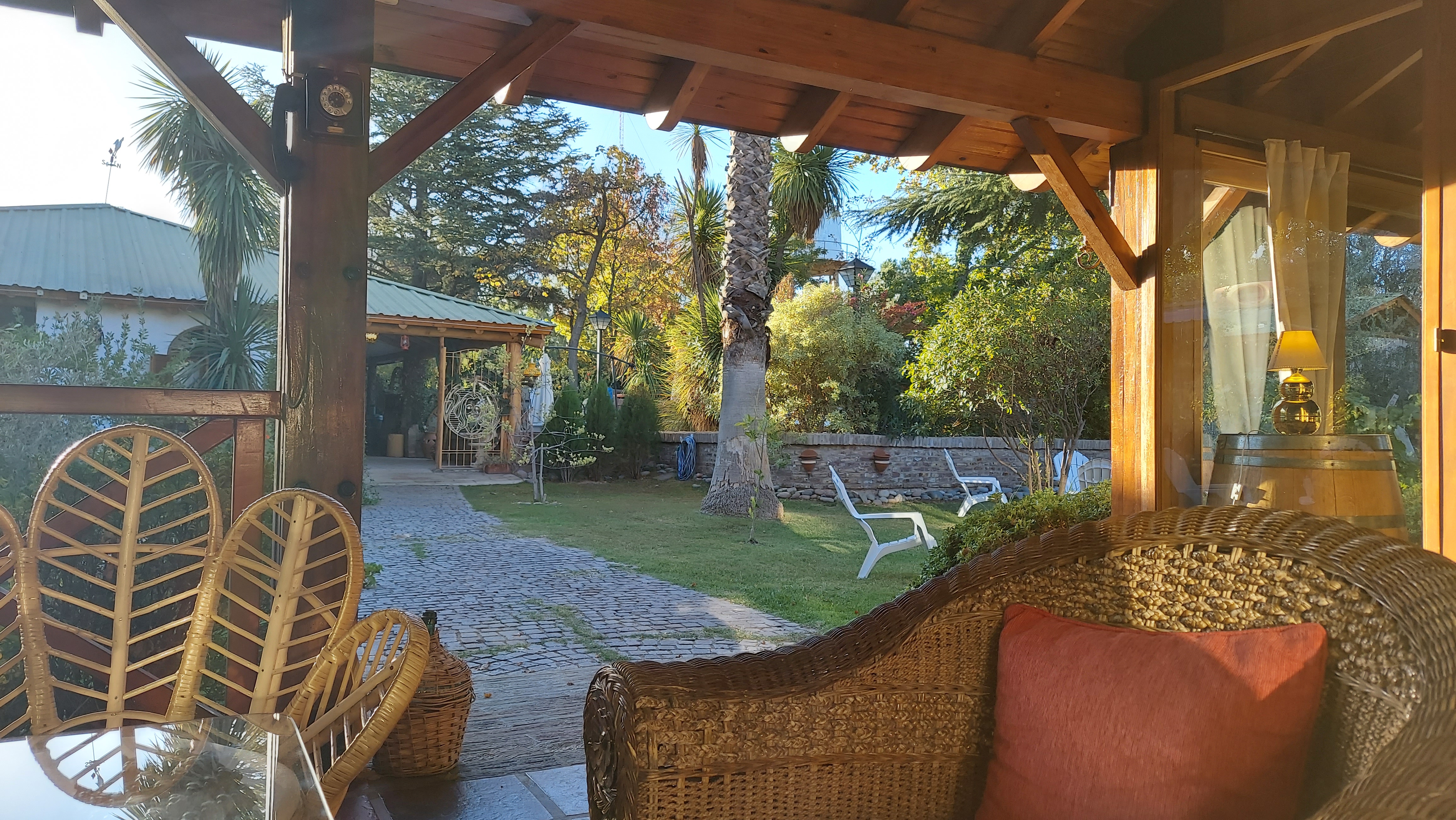
Mood shift, for the third time this trip: I head to Mendoza, a two-hour flight to the west of Buenos Aires, a city tucked in the shadow of the Andes. Mendoza gave the gift of malbec to the world, and it remains a great wine-growing region, so roughly a dozen wedding guests have made their way out here to continue the afterparty. We are strewn about between downtown Mendoza and the placid towns heading south toward the Valle de Uco, and I crash at a small bed and breakfast a block off the main square in Chacras de Coria.

Chacras is a quiet town of low-slung, walled-off houses and unassuming quality restaurants. The smell of grilling meat drifts through the air and settles over my patio seat outside my room at the B&B. Thick sycamores and elms in fall color line a network of drainage channels called acequias, a legacy of the Huarpe and Inca that break up an otherwise dusty landscape. A wine country dry heat hangs over the foothills of the Andes, and the mountains above us shiver with a strong wind pouring down, a sign snow is falling on the slopes of Aconcagua, the highest point in the Americas, some 200 kilometers to the west. By the third day the winds stop and the temperature plummets over twenty degrees, a sign of deep autumn here in Mendoza.
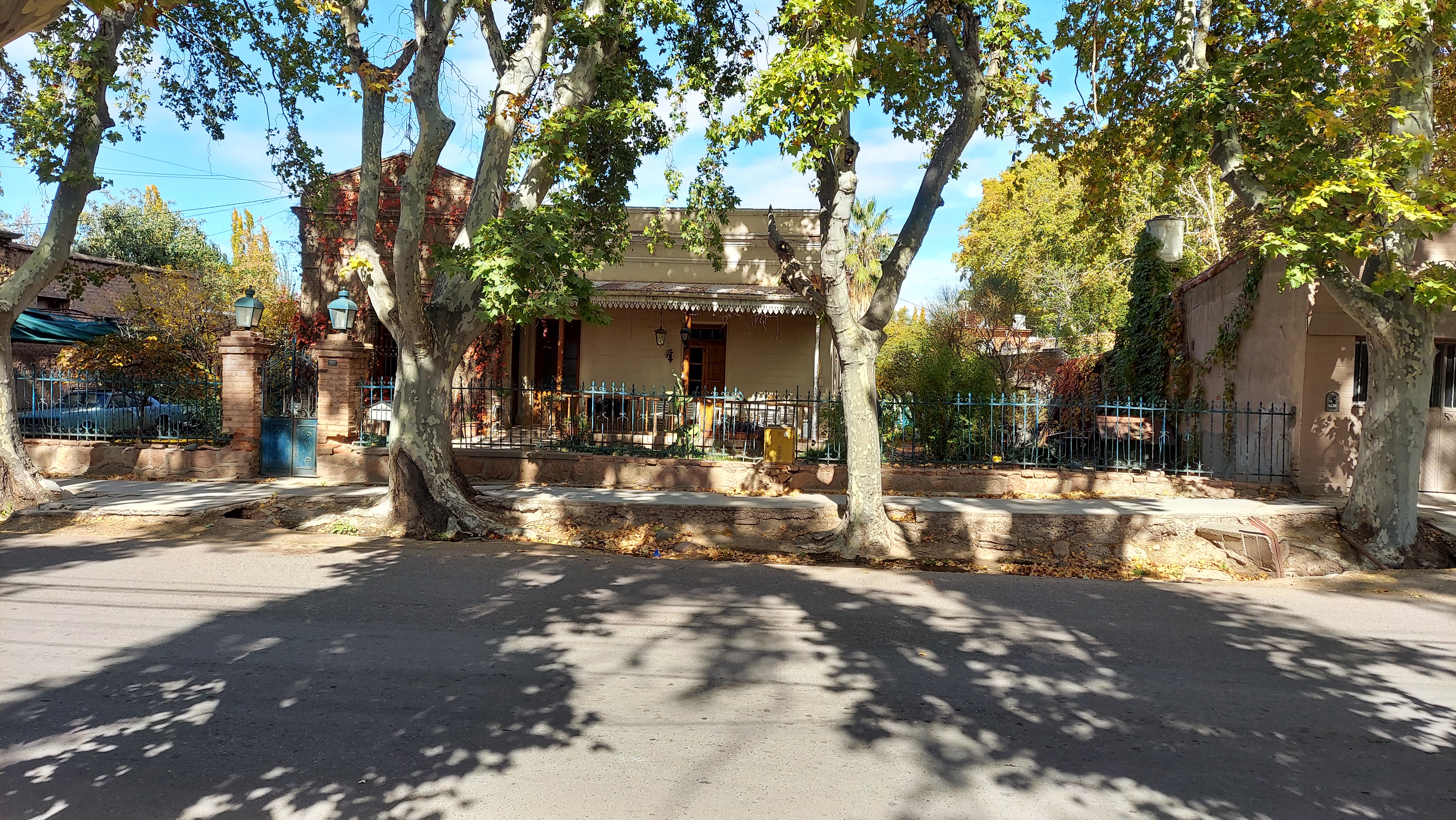
My B&B is the pet project of an American named Bruce, a Vietnam era fighter pilot who later flew commercial planes. Bruce has electric blue eyes, a long and scraggly mane, and is one of the more astonishing humans I have ever met. His global travels have taken him to every continent and just about every ski hill on offer, flitting from place to place, adventures in motorcycle racing, a home in Giza, a German ex-wife, and even some time in Minnesota. After decades of an itinerant life he landed in Mendoza, the house choosing him, or so he says. He is now the pilot of this little B&B, a labor of love going on 20 years.

We spend my first night in Mendoza in conversation over meat and drink, though most of it flows in one direction. He diagnoses extreme stress in me, which is both right and wrong; yes, I can be a bundle of nervous energy, these surges often a fuel and sometimes a crutch, a tension no doubt heightened in a place far from home. The lone wolf struggles to understand the chameleon, forever calibrating himself to his surroundings, but the chameleon can come to understand the wolf.

If Bruce’s goal is to give me an escape, his scattershot volleys certainly don’t help the cause. He speaks so softly that I strain to hear, and while he peppers me with questions, only rarely do I sense he is really processing my answers. He grills me on my work and its value and shares his idiosyncratic takes, sometimes insightful and sometimes leaning toward cringe, a jumbo jet on a set path that I cannot alter, and I am intrigued to just watch him fly as far as he can. Here is a man who chose the radical freedom, gave up a family and everything he knew, and now here he is on a Monday night in Chacras de Coria, Argentina, guzzling down wines and holding court for an American kid who thought he was going to have a quiet evening in to recharge his battery before exploring the vineyards. I am fascinated by him, and he has clearly done some good for quite a few locals. But I would not choose to be him.
In spite of everything, Bruce is bullish on Argentina’s future. If Uruguay is a country that just works, Argentina is one that should work but too often does not. It has a world-class capital city of 16 million people, rich agricultural and mineral resources, beautiful countryside from Patagonia all the way up the Andes. Like the United States it is a European settler society, its indigenous peoples generally wiped out or pushed to obscure corners, a tragedy that has left it on a trajectory apart from some of its Andean neighbors. Waves of immigration from Spain and Italy crashed up on its shores in the late nineteenth and early twentieth centuries with a land rush to rival the opening of the American West.

Its modern history, however, is an absolute jumble. The country has managed to escape its long run of military coups over the past 40 years, ever since the hapless Falklands War discredited the last junta, and this is a real achievement. The economy, however, is a different matter, thanks to runaway inflation and the populist patronage machine that is the Justicialist Party, Argentina’s dominant political institution since Juan and Eva Perón showed up on the scene. Putting up the Economy Minister in a nation with rampant inflation did not work out well for the Peronists in the 2023 elections, and Argentina is now running an experiment with Javier Milei, a Trumpy figure with no legislative support and five cloned dogs named after University of Chicago economists. The drama goes on, though the early returns suggest one of his ideas, the dollarization of the economy, is doing some good to stabilize prices and rein in that inflationary scourge that Argentina needs to solve before it can make good on any other promise. That promise, as these next few days show, is considerable.

Dollarization also makes Argentina an even easier country for American visitors, and for us revelers, Mendoza is a land of bountiful excess. Given the difficulty of winery logistics—here is an industry that is just begging to be disrupted—we go off on our own or in small groups, and we share an entertaining group chat. Five or six courses into my seven-course paired meal at Alta Vista (a visit arranged by Bruce and his staff; he is nothing if not a connoisseur of good taste from the whole world over), I report a state of general bliss. One wedding guest who is on a guided tour of the Valle de Uco shares he has just been served his fifth filet mignon of the day; another makes the mistake of counting how many glasses she has consumed. “We need the anti-Ozempic,” our bride writes as she ponders her dinner reservation with dread. Indeed, after a siesta and plenty of time to digest, I can only stomach a small salad for dinner in downtown Mendoza, while a tablemate pokes feebly at her eggplant. Three of us end up at a rooftop bar overlooking Mendoza’s gentle grid that night, shivering a little at the coming cold and marveling at what we are a part of here.
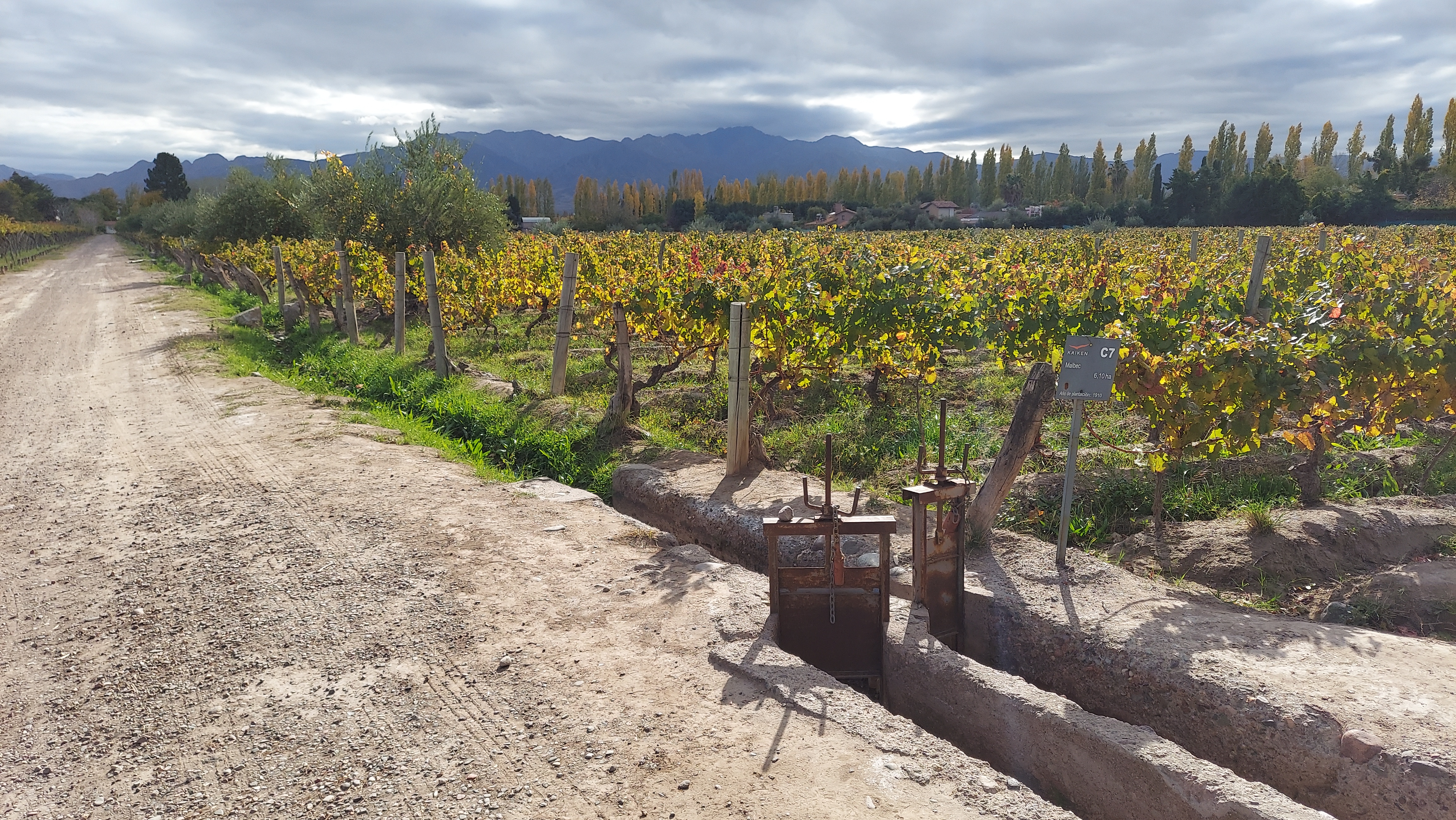
The next day we do manage to get a healthy group together for a tour and tasting at Kaiken, where the aging barrels are serenaded by Gregorian chant to create vibrations. (As with Dante in the Palacio Barolo, here is that credulous Latin American melodrama, a feature of a society less beset by the all-knowing cynicism that can plague educated Americans.) Guided by a sommelier, we try an array of malbecs to test the differences between them, and we eventually close the place down. I join Jess and Phil back at Entre Cielos, their sleek spa resort for their mini-moon, and we bask in the hot tub beneath the Southern Cross and hold a scattershot bilingual chat with a man from Chile and a woman from Eau Claire, Wisconsin, who have settled here together. Later, we peck at a dinner with two more friends at the resort restaurant. We order as much tea as we do wine. The body can only endure so much here.

I return to Buenos Aires for one final night in Argentina, though the energy for greater exploration has diminished now toward the end of near-constant moves from place to place. I content myself with another night at the Miravida Palermo Soho and stroll around the neighborhood, with visits to the charming Japanese Garden and the rather moribund Ecoparque zoo. One unattached fellow Hoya remains, and we sample a bumping craft brewery named Strange. The beer is superb, and the blasphemous raccoon logos are, well, something.
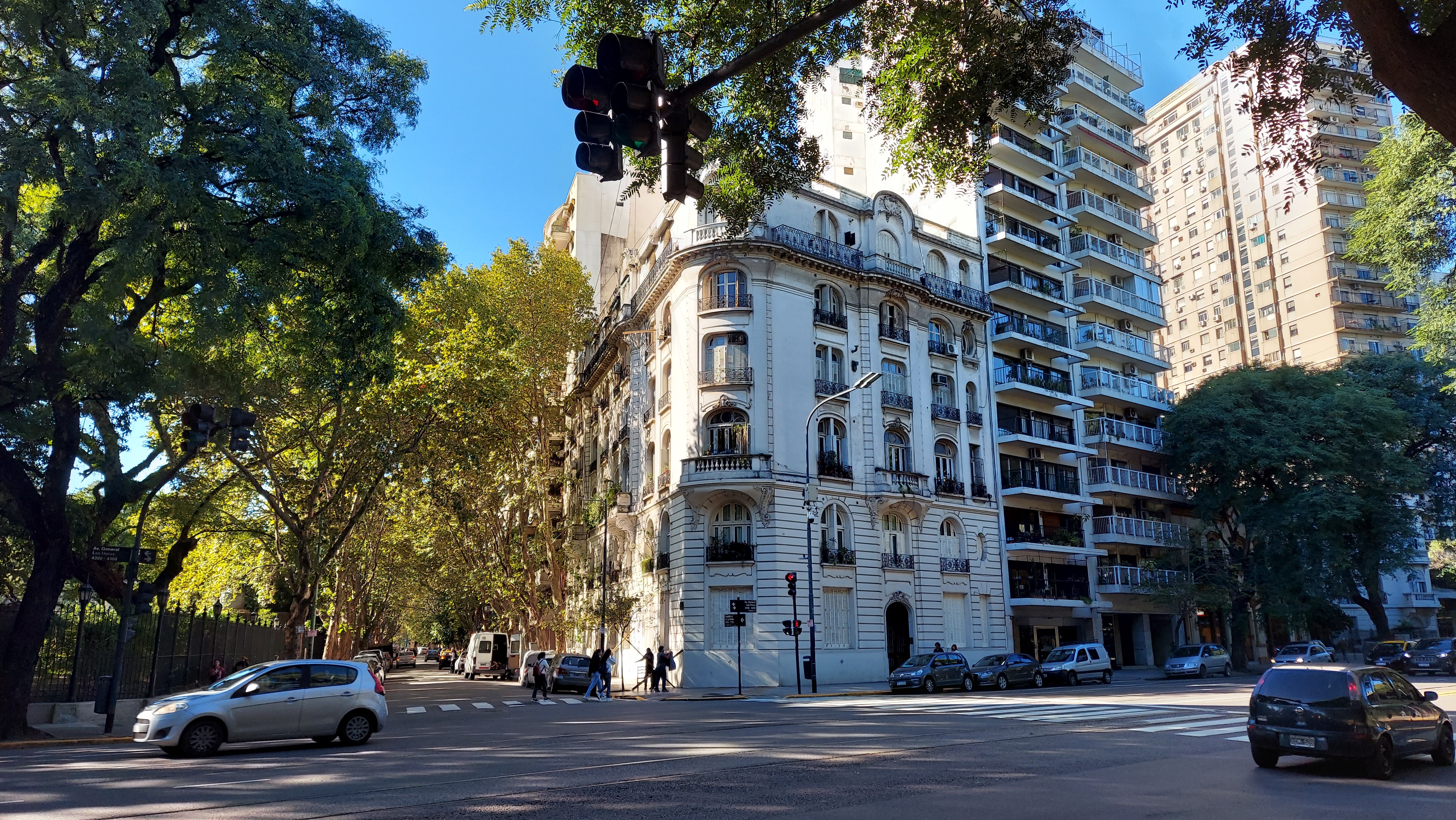
Once it is time to head back to the airport, I am ready to leave Argentina. I am ready to speak fluent English again, ready to sleep in my own bed; at least for two nights, that is, before the last adventure of my mini sabbatical. In the days that follow I reflect on the juxtaposition between my hunger for that freedom to wander and my natural homing instinct; my embrace of Uruguayan anonymity and my rejection of Bruce’s retreat from all prior commitment.

Is it truly a tension? I’m not so sure. They are both parts of a well-lived life, paces adjusted and waves seized. Here is yet another way to be free: to find the ease of knowing one has found one’s home in a certain place, among certain people, desire and roots aligned. This trip is all a good dream, yes, but I have work to do when I get back home. I couldn’t ask for much more.
Cono Sur, Part III: Subiendo

This is the third in a four-part series. Part I | Part II

My first impressions of Buenos Aires are mixed. The drive in from the airport is a slog down an apartment-lined highway. Next, I am greeted by a massive protest on the Avenida 9 de Julio, the greatest of the many great porteño avenues, and my cab driver meanders the neighborhood of San Telmo in dismay. The universities of Buenos Aires have risen in rebellion, marching in blocs of matching shirts for their schools, decrying proposed funding cuts by the country’s radical new president. By this evening hour many are disassembling, but some are still pushing forward, chanting and singing, and others have settled under the Obelisco in the city center with beverages. Signage here and there advertises this and future protests, and the next morning, the cleaning crews are rolling through. Argentine protests spawn their own little economy.

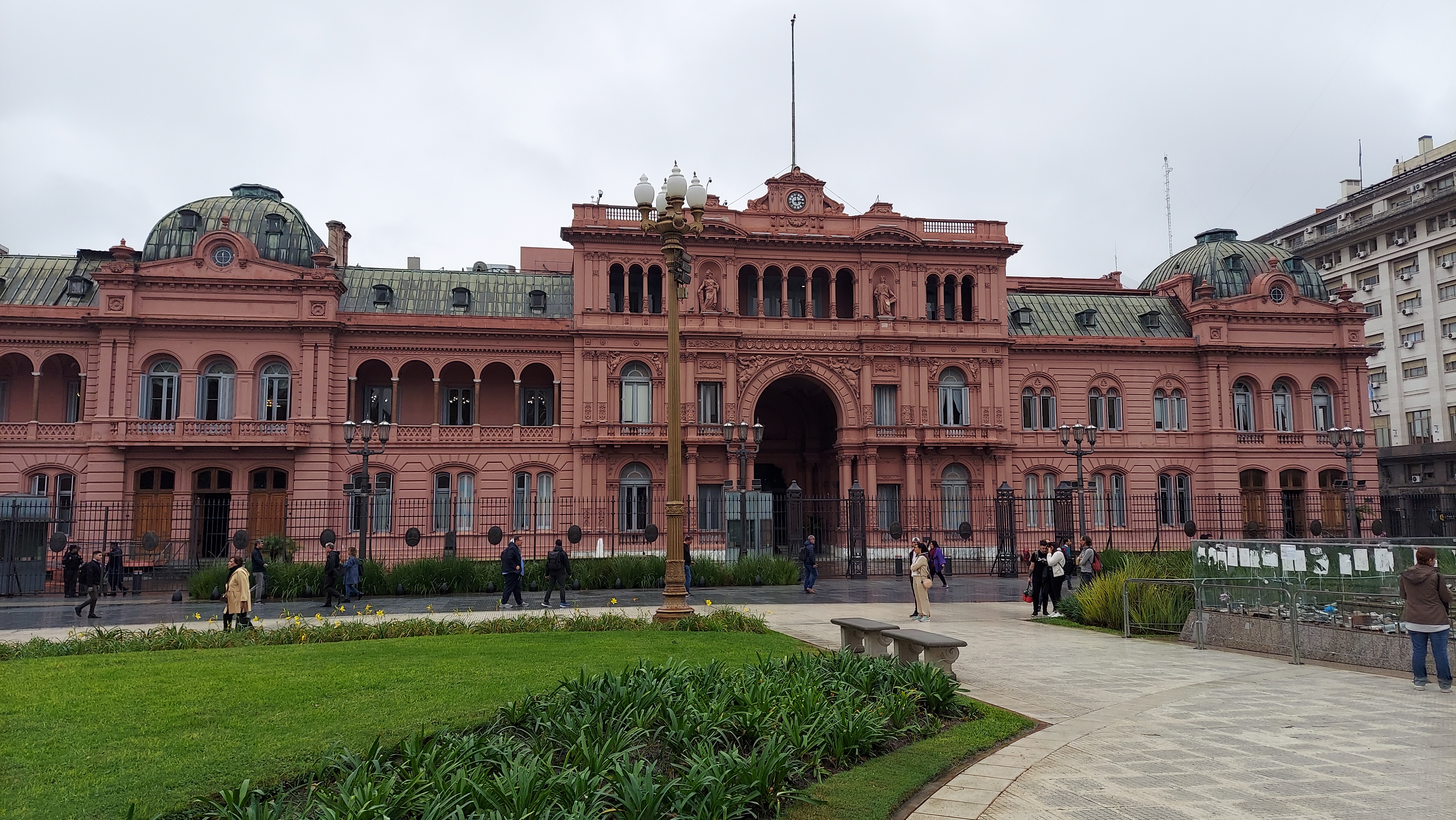
When my taxi finally reaches my last second lodging choice for the night, I find my “Presidential Suite” truly unremarkable, a bare bones all-white room with a light that shines through a frosted glass door all night long. (Hey, it was 30-some bucks.) The walk to the ferry dock in the dark the next morning, mostly through an unremarkable office district, does not help. While the Casa Rosada and the Plaza de Mayo are interesting, against a threatening sky and a tight timeline two friends and I are not compelled to linger, and I find myself perhaps suffering from square fatigue after a month of Spanish urban form. (Now, writing from a land far from them, I crave another evening on one of those plazas.)

The grand avenues and plazas are deceiving. Buenos Aires is a gritty city, a metropolis that encompasses all walks of Argentine life. In this country the immigrants never had the chance to move to tract housing in Jersey. They came to places like the Palermo neighborhood, a rough-and-tumble borderland where city met pampa and where streetfighters paved the way for the tango. While in the US the cowboys were always somewhere off in the great western netherland, a legend now filled by projections, in Buenos Aires the gauchos drifted right in. There was no Midwestern buffer between the frontier and the cosmopolitan center of power, and that collision starkly defined the first century-plus of Argentine existence through near endless civil strife between federalists and nationalists. Pampa life was no distant myth here, and even as some of those dusty immigrant suburbs now gentrify, there is still a raw edge to this city.

Predictably, neither copying European high culture nor wallowing in gaucho hagiography has served Buenos Aires well. Certain political figures such as Juan Perón have, arguably, adopted the worst of both. “I want neither progressivism nor criollismo, in the way those words are commonly used,” writes Jorge Luis Borges in “The Full Extent of My Hope,” an essay that holds up a century later. “The first means subjecting ourselves to being almost-North-Americans or almost-Europeans, a tenacious being almost-others. The second, once a word of action…is today a word of nostalgia.” Buenos Aires is a stark collision between two very different worlds, and the nation it rules is still sorting out the twisting strands of those two great stories.

And yet, Buenos Aires is full of gifts from both inheritances, once one learns how to see it. Borges again: “Never have I given myself over to its streets without receiving some unexpected consolation, whether from feeling unreality, from guitars at the back of some patio, or from contact with other lives,” he writes on his city in Evaristo Carriego. In time, I come to understand his sentiment.

The city starts to open up to me when I turn over tour guide duties to my friend Andrew, who studied abroad here. We visit the San Telmo market, an endless string of vendors on a narrow street through a bustling neighborhood of the same name, a delight of maté paraphernalia, art, cookware, Messi and Mafalda swag, CBD brownies, and any other effect one may find necessary. Instead of musicians, tango dancers do the busking; the garb of choice appears to be tracksuits for Boca Juniors, the working-class soccer superpower. Here is a city teeming with life, crowded and edgy, filled with inheritors of the gaucho tradition, even in a metropolis those forerunners would never know.

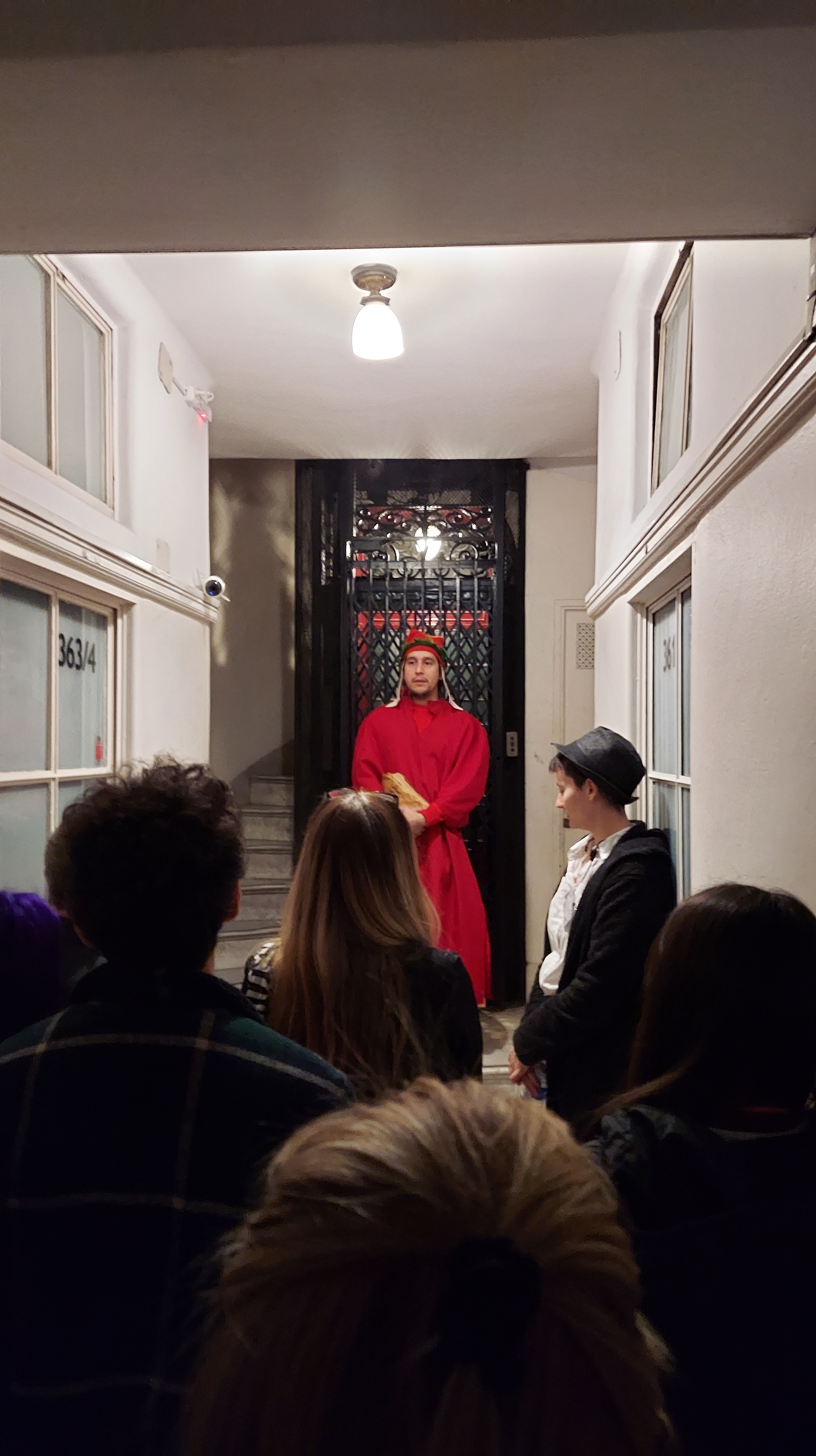
And then there is the dream of what can be. We tour the Palacio Barolo, a grand office building near the Argentine Congress whose 1920s builders created an homage to Dante: hell in its ornate main hall gilded with gargoyles and dragons, purgatory in the office spaces, and an ascent to paradise in the narrow tower at the top, which culminates in a cupola with a series of balconies and, two floors above that, a glass lighthouse turret that can hold ten vertiginous people for 360-degree views of Buenos Aires at sunset. The city rolls out in every direction, denser than in Borges’ day but aglow in the night, bustling with beauty. As we go about our tour up and down narrow stairs and 1920s elevators, a man dressed as Dante pops up here and there to read cantos from the Divine Comedy, a very Latin American melodramatic flourish that nonetheless sheds light on the vision behind this building.

The day after the wedding, Andrew, his wife Kara, and I spend the night in Palermo Soho, a trendy neighborhood of tree-lined narrow streets and hipster shops. Borges was born here, and many of the low-slung turn of the century buildings remain, enlivened with brilliant color and elaborate mural art, along with some jarring modern additions. Dinner for the three of us plus old roommate Tim is at Don Julio, rated by some critics as the greatest steakhouse on earth. I am in no position to measure it against the competition, but by 1:30 in the morning when our night there is done, I am in no mood to doubt the claim. The butterflied sirloin melts in my mouth, a malbec and a cabernet franc wash it down, the pumpkin and cheese plates just add life, and despite being overstuffed I will indeed have the dulce de leche ice cream for dessert, thank you very much. Food is an art form here, tradition and inventiveness brought together with utmost care. We drift the few blocks back to the Miravida Palermo Soho, a boutique hotel where I have somehow wound up with the lofted penthouse room with a terrace wrapping around two sides of the building. I end my night blissed out on meat and wine, and I say goodnight to my friends and catch the last snippets of revelry in Palermo on the streets below. I rose to a paradise twice in one night.

A confession: I have spent too much of my life in a state of status anxiety. I’ve long run in circles adjacent to considerable wealth and power and enjoyed some of their benefits while never really holding them myself, a position that provides both great fortune through the access it allows and a nonstop sense that I am somehow falling short, have somehow chosen poorly and consigned myself to being a passenger on the grand plans of others. This feeling is exacerbated by certain habits of the current American upper middle class, which include an eternal instinct to downplay any advantages one does enjoy, a sustained myth of equal footing that does not always play out in reality. Too often have I measured myself against opaque but daunting measures of success, queasily collecting Pell grants or opting out of some activities because I cannot afford them, struggling to find the right balance between a knee-jerk frugality and a desire to experience everything my peers are, if not more. It fosters a lingering sense that, no matter how meticulous I have been, I am not quite ready to launch.

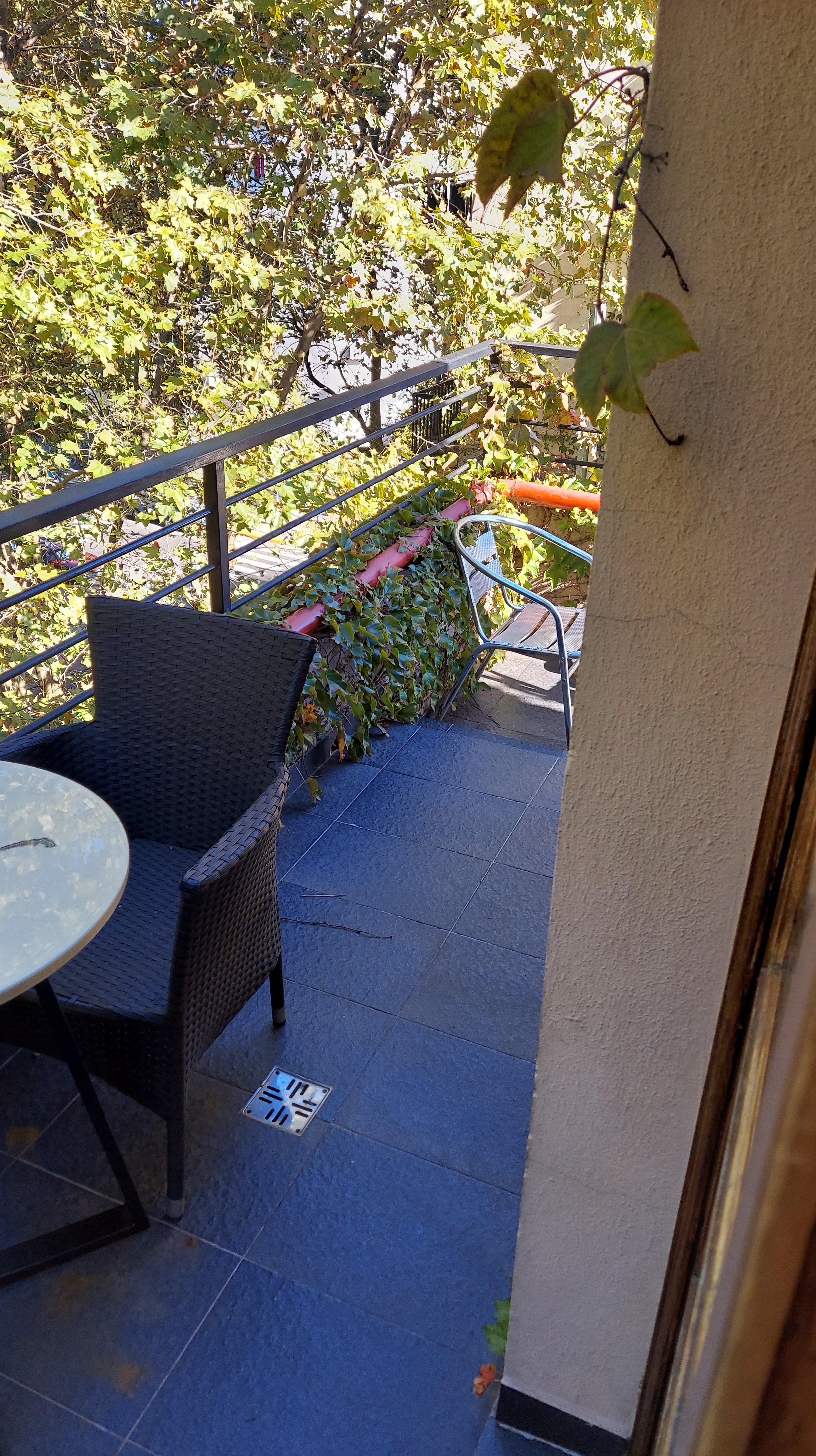
Lately, however, I have been able to allow myself a few more flourishes like this terrace at the Miravida Palermo Soho, and I can at least put up the appearance without feeling false. A small achievement, perhaps, but one freighted with some meaning. The ability to move between worlds is a lesson from Georgetown, a recognition that we can contain multitudes, can aspire to snippets of the best of all the worlds we brush through instead of feeling chained to one. I catch myself over dinner in some grumble over my ability to live in certain ways from my perch in Duluth, but on this balcony, I can write that strain away.

Belonging is not a matter of money or title. It is a matter of taste, a matter of belief, of seizing opportunities when they arise. In the grand scheme those things may be small. It is also dependent on finding the right people, and that is by no means small. But here, on a balcony in Buenos Aires, I rest assured that there is nothing false in certain dreams, that a certain life is within my grasp. It is up to me to seize it.

Part four is here.

Cono Sur 2024, Part II: Tranquilo

This is part two in a four-part series. Part one is here.

My adventure to the Southern Cone begins, as half my trips anywhere these days seem to do, with travel issues. Ten minutes before I leave my door, Delta informs me the flight from Atlanta to Buenos Aires will depart nine hours later than planned. While they feed me, put me up in a decent Atlanta hotel, gift me some miles, and are night and day better than United was to me through comparable past incidents, I am still left lamenting lost time that I can never make up.

I confess that I am spoiled. Any regular flyer knows the absurdity of travel scheduling, the absurdity of our expectations, and the ability to schedule things out so meticulously can crimp the traveler’s mind. On our recent Camino, my dad reflected on his post-college backpack tour of South America in 1981, when there was no way to plan much of anything and he went with just one heaping guidebook to carry him through the whole continent. He would just take a bus to some city, wander until he found adequate lodging, and then stay there, and he came away from all of it just fine. As a millennial I got the slightest snippet of this unplanned life, most notably during my college semester in Mexico, which was just before functional smartphones for trips abroad were a thing. Now, such spontaneity feels like a borderline irresponsible relic, or at best a quaint dream of a different era.

This line of thinking trips an old hunger. On the plane, I break my usual rule about not connecting to the internet (the irony does not escape me) to wistfully reread Roger Cohen’s “Ways to Be Free,” the op ed column that has stuck with me more than any I’ve ever read.

It resonates so fully because the desire it expresses is deep in my bones. I can see my dad in Cohen’s van trip. William Finnegan’s writing on surfing triggered an artistic flourish from me, a fictional project that set re-oriented my trajectory some. I too asked the question Cohen’s son did, without ever quite settling on an answer. The appetite for freedom is inescapable.

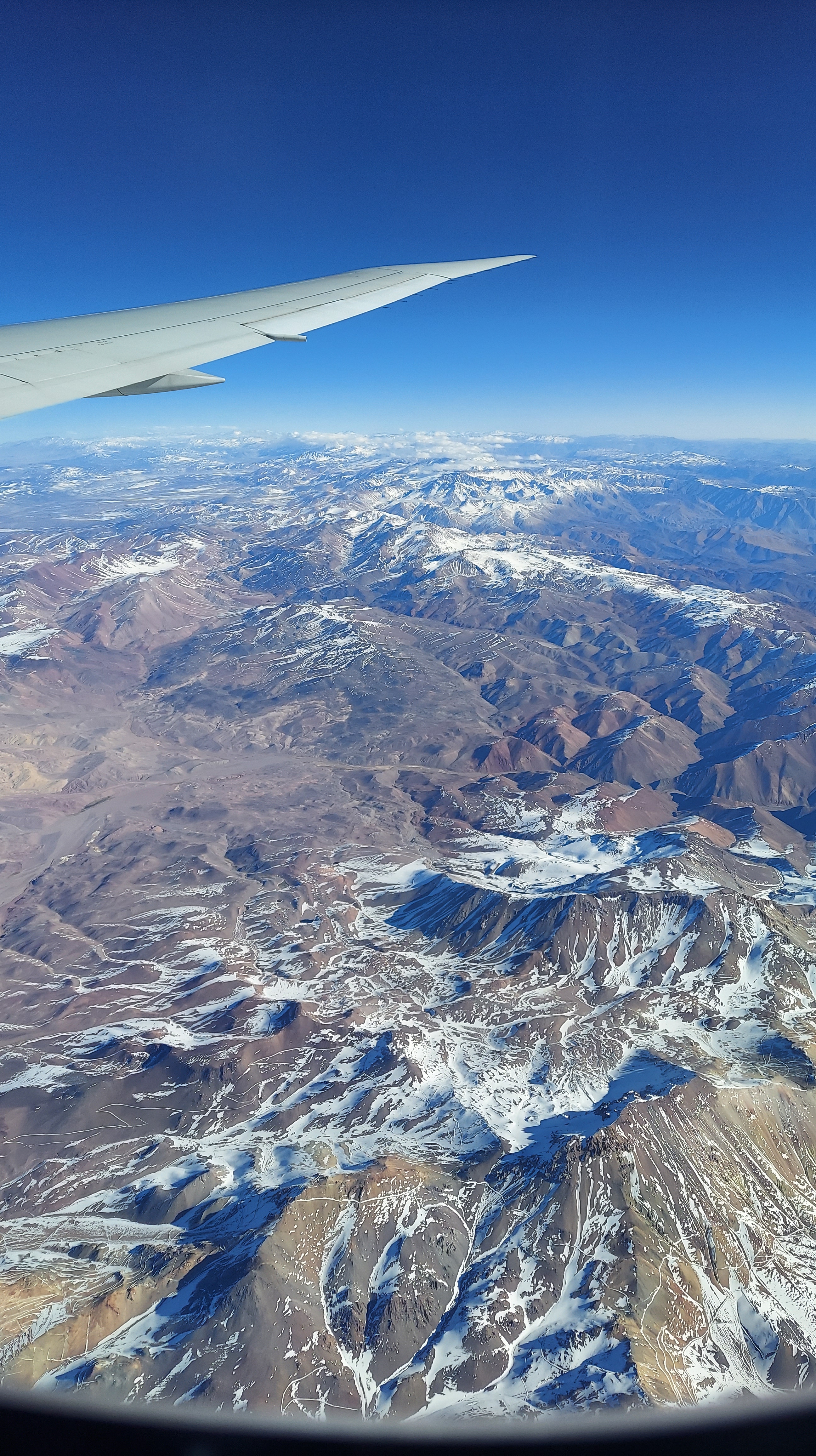
I was not in a position to take some grand adventure right after college (or at least I didn’t think I was), but I am now in a position to make up for some lost time. Any annoyance at the delay is forgotten as I drink in the rare experience of a full international flight in the daytime. I love this: over the ten-hour flight I can gaze out my tiny window at the Florida Keys, Cuba, the Panama Canal, the Andes over Ecuador and then Peru and then Chile before sweeping over the pampas and into the sprawl of Buenos Aires. This god’s eye view opens up the possibility of the world, shows how many more places there are to explore.

The contours of the earth always have fascinated me. From the youngest age I was enraptured by atlases and globes, tracing routes across nations I did not know and may never know. I recall some kid on the school bus early on—this must have been first grade, the only year of elementary school I took a bus—asking why I always stared out the window. Because I want to explore every inch of it, I probably would have said if I had the maturity to do so. Now, blessed with some modicum of disposable income, I dispose of it by visiting some of those places. Even with the travel delay, this feels right, some sort of trip I am meant to take.

An odd feature of my mini sabbatical: between my dad’s retirement trip and three weddings, all this travel is because of someone else. Of course I am pleased to go to all these places with all these people, and I had some input in crafting some of the itineraries. But I have just one snippet that is truly my own, for more than a few stray hours: my two-night detour to Uruguay.

The journey from Buenos Aires to Montevideo, the Uruguayan capital, takes just over two and half hours by a ferry named Francisco, which bills itself as the world’s fastest catamaran. It cruises smoothly across the Rio de la Plata, the views rather unfortunately blinded by bright string lights all around the windows. The travel delay has cost me my night in Montevideo, and from cab and bus windows it feels a bit tired, the changing fall leaves adding to the general sense of a drift into lost time. From Montevideo it is a two-hour bus ride on to Punta del Este, where I have decided to hole up before I return to Buenos Aires for the wedding.

Uruguay is a remarkable little country wedged between Argentina and Brazil. On the surface it resembles Argentina immensely, with its loves for beef and maté and wine and soccer; like its neighbor, its population is dominated by Spanish and Italian immigrants from around the turn of the 20th century. Its early history was tied up in wars involving its larger neighbors, whose residents still descend on its beaches en masse in peak seasons. But here is little Uruguay, tame as its neighbors overflow in excess, as boring in its politics as its neighbors are bombastic, comparatively affluent and low in crime. It is, perhaps, the most chill country on earth.

Uruguay earns this status not by exuding the painfully orchestrated cool of California or that “what, me worry” style of, say, a Caribbean island where people just expect things not to work. Uruguayans just seem to ease their way through life, living out small dramas, refilling their matés from the thermoses they carry around all day, and channeling any aggression on to the soccer pitch, where they might just bite you to get what they need. Uruguay is not rich, but it does not pretend to be. It works with what it has, and its infrastructure and institutions are the class of Latin America.

Riding out from Montevideo, the suburbs bustle with healthy life and don’t feel too far off from the parts of Portugal or Galicia I toured a few weeks earlier. In the countryside there is some poverty, but it feels stable, like these tiny cobbled-together homes have some staying power the shacks of a slum or dusty Mexican outpost do not, rooted into this pampa sand instead of living each day on the edge. The landscape starts out as plain grassland; cows and horses graze about. A few humpback mounts rise in the distance and grow thicker as I head east, and occasional forests offer pleasant mixes of pines and palms and the great ombú trees of the region. And then, finally, my bus rolls over a hill and reveals South America’s foremost beach resort.

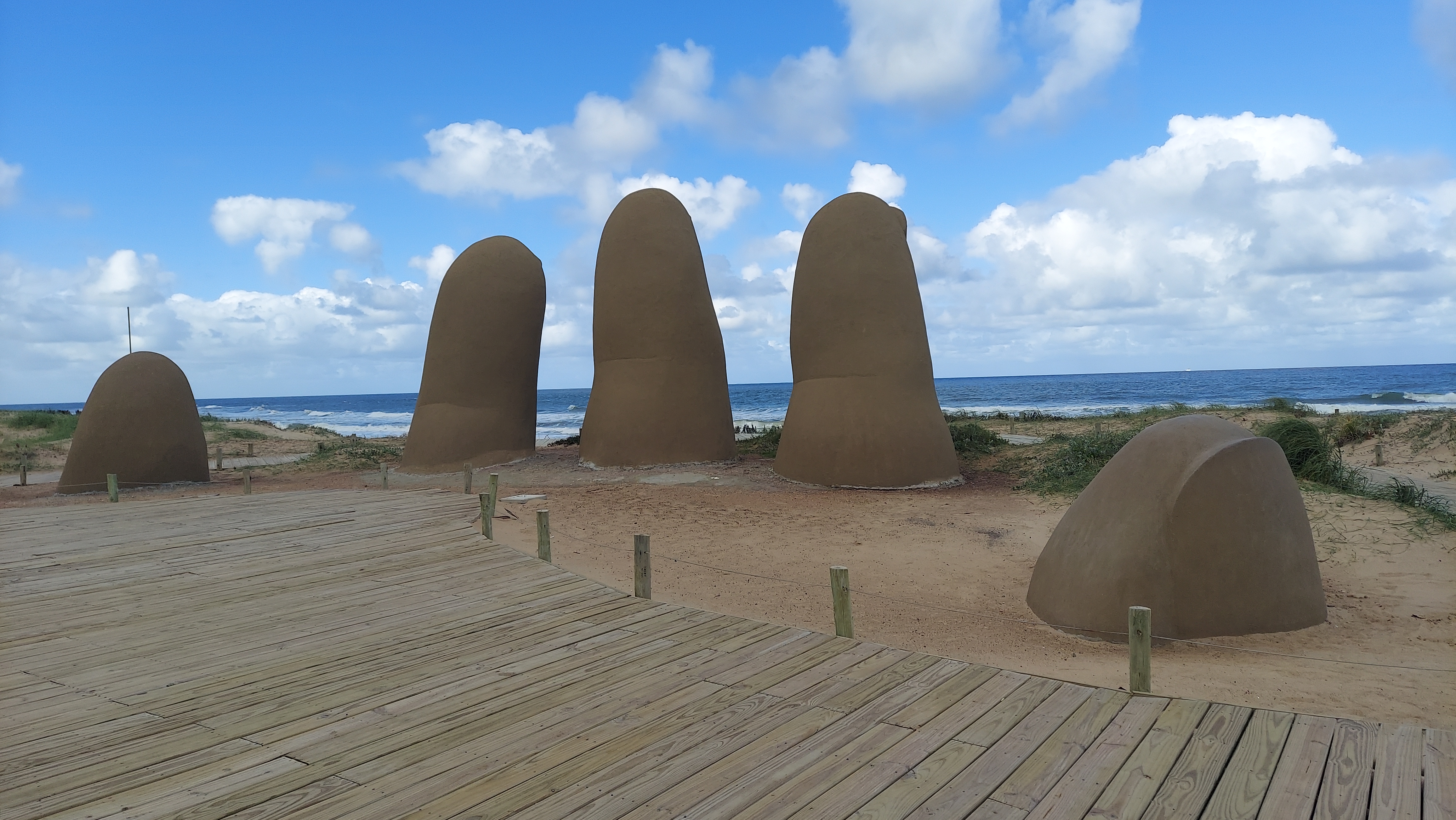
Punta del Este juts out on a snippet of sand where Uruguay’s southern and eastern coasts meet. Its center is more Miami Beach than modest Latin American resort, with clusters of towers and other prime real estate, while further out it drifts into graceful modernist homes settled beneath the pines. As this is fall in South America, it is now the offseason; the towers are mostly quiet, and the trendier clubs are closed up until the next major vacation. I putter around the peninsula and take a minute to appraise the iconic mano of Punta del Este, the hand that rises from the sand. Punta’s style is modern but tasteful, built to drink in the full surroundings, to provoke a few creative thoughts without disrupting the beachfront cool.

Some stray raindrops convince me it’s time to cab up to La Barra, a small beach town across an undulating bridge from Punta’s towers. It is still built up, still very much a destination, but has more of a town feel than Punta itself. I settle into a private room in an otherwise fairly dead, quirky hostel a block off an inlet, an easy walk from everything I will need for my stay in Uruguay. It all feels very assured.

I stroll along the beach at sunset. It is quiet, just a few stray couples and dog-walkers, and a lone surfer who puts in the brutal work out through fierce waves for one long, brilliant ride in. The sun disappears into glowing clouds and a full moon rises up through the marine layer, a resplendent yellow orb shrouded from time to time in a drifting oceanic haze. Everyone on the beach stops to watch. Later, I eat a chivito dinner at a casual restaurant named Chill Out and chat up the kid at the bar, an easygoing townie with a dream of an escape to Miami.

On day two, I fall deeper into Punta’s trance. It is grey, on the chilly side, but the surfers are out in force. Sixty or seventy of them ride off Playa los Cangrejos, and scattered others take on additional stray points along the unending beach. I amble my way to Manantiales a few miles up the shore just to drink it in. Sitting and watching the crashing waves appears a perfectly acceptable pastime in these parts. My guidebook calls Playa Bikini a “flesh cauldron” in the high season, but for now it is placid in response beneath a colorful row of those large-widowed modernist homes, all nestled beneath shapely pines and ombús. It is hard to square the Punta I see with the ubiquitous cranes putting up more towers, and hard to remember over lunch in a swanky beachfront joint that this is not in fact a rich country. I eat the seafood of the day, drink fernet, and the waiter provides a heavy blanket so I can get cozy in my seat. Rain arrives while I dine, and while I wait out the worst of it, the walk back is damp. Time for a siesta.

I dine at El Papu, a bohemian chic spot up the road, stone floors and the ubiquitous floor-to-ceiling glass, all lit by candle. They serve local craft beer; the eggplant parmesan is the best I’ve ever eaten, tender as can be, drizzled in a green salsa with nuts. A bassist and a keyboarder settle in to serenade us with jazzy tunes, all improvised, the bassist working wonders in the higher registers. The other patrons are local hipsters and surfers, at ease among one another, an easy night taking shape. The vibe has met the moment.

In Uruguay I am free to pursue a radical freedom, to re-create myself in a country where not a soul knows me as I am. It is an opportunity at once both tantalizing and impossible. I could expand on certain tales from my stay here, perhaps, but some things are best left unwritten. And sometimes fiction, in the words of Walker Percy, tells us what we know that we do not know that we know. After Uruguay, I know what possibilities exist, but I also know the extent of my reach. I can head home a wiser man.

Part three is here.

Cono Sur 2024, Part I: Un Destino

This is the first in a four-part series.

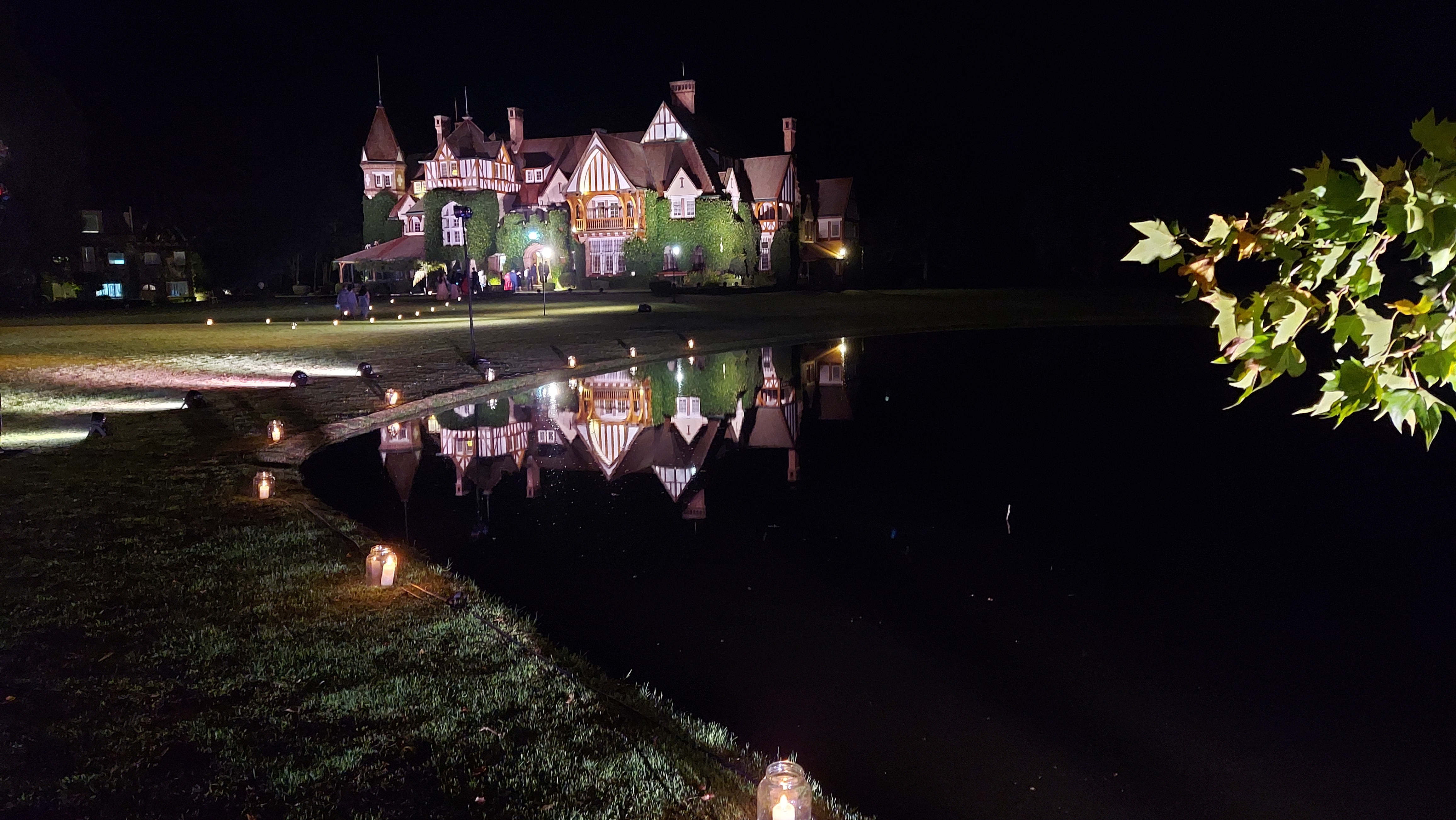
There are ways to celebrate and then there are ways to celebrate. Take, for example, the idea to hold a wedding 5,000 miles from home, to bring over 70 people from your life to a sprawling country estate in Argentina. The clouds lift just in time for the outdoor ceremony beneath an arch shrouded in flowers, emotions flowing at self-written vows. After that all your guests are strewn across a lawn for a garden party. Drinks appear, along with some particularly vigorous fiddlers; off in a corner, an asado grill churns out the meat, which wafts over and sticks to the guests. By nightfall the wedding party settles beneath a tent laced with golden lights, where each guest’s name plate includes a personalized appreciation. First dances draw tears, speeches turn to roasts, fog machines erupt and the DJ carted in from Boston churns out the best hits of 2012 for over four hours. We dance, we sweat, we wave around glow sticks and don ridiculous Argentine soccer swag. The estancia is aglow as the backdrop, reflected in a small pond, and when the feet are sore and the livers protest, it invites everyone in to sit in the drawing room’s enveloping couches and drift toward sleep. Dreams and reality blur.

I am in Argentina to celebrate Phil, one of my college roommates, and Jess, a friend from that era who went on to become more than a friend. He grew up in Schaumburg, Illinois, not far from my Chicago area relatives, and his easy Midwestern style remains contagious. On R Street, Phil occupied the basement lair, emerging for video games on the couch or nights out in DC or to tutor local students and occasionally for class too. The Tuesday trivia host at The Tombs most certainly knew who he was, and if Georgetown’s honor were challenged by invaders from Syracuse, he would rise to the challenge. He brought a good party with him everywhere.

Phil possesses an endless spontaneity and willingness to try just about any new thing. This does not always go well, but it brings collective fun when his schemes work and collective humor when they don’t. His college era shenanigans matured into a hunger for travel and United Airlines status. (Perhaps someday he will share his secrets over how he has gotten that company to not treat him like a heap of dung.) The old Phil is still very much around, though, as anyone who was taken on his wild goose chase for the utterly remarkable biscuits from a generic New Orleans chain named Willie’s can attest. His loose humor is a gift from his mother, as I learned from her savage send-up over dinner, a blend of pride and good-natured ribbing that summed up Phil perfectly.

From the outside Phil could make it look easy, shrugging off any nerves and from there quickly learning what he liked and disliked professionally. But there is a design here. He meets challenges with honest examinations, seeks the counsel of good friends, and possesses an uncommon tenderness that manifests as a strength. It is not hard to see how Jess, a star of the business school at Georgetown, could fall for him, and how they could come together as a well-complemented power couple. Jess can live as large as Phil but insists upon reasonable bedtimes and good life decisions, a diligence evident in the wedding planning, where her remarkable skill in pulling things and people together in a land far, far away shined through every time I took a moment to consider another aspect of what went into it.

Phil and Jess’s wedding is indeed on point: big, loud, no detail missed. It begins with a welcome lunch, which I miss because I am inbound on a ferry from Uruguay, and it proceeds from there to a welcome dinner at the Four Seasons in Recoleta, the swanky core of Buenos Aires. Guests stride up the streets in their finery, old college friends appear here and there, and the energy swells. After we mill about with drinks for a spell, a pair of tango dancers emerge, and they leave us in awe: feinting and swinging, pulsing with sexual energy, physiques perfectly tuned. From there we are seated for what becomes the first of five straight days of steak dinners for me. The buses then carry the wedding party out to the estancia, and we proceed from there.

At Estancia Villa Maria the wedding guests are split between the main villa, the neighboring Casa Francesa, and a series of more modern houses developed a short distance away. The older buildings are endearing in their old-world opulence; over the course of the weekend I hear allusions to Downton Abbey, Bridgerton, and Clue. I join the groomsmen in the Casa Francesa, where I shack up with my old roommate Trent and his wife Kelly in a suite that includes a balcony off the shower. Brunch is communal on both our days at the estancia, a gentle blurring of friend groups as we sip maté and nibble on pastries, gaze out at the polo ground beyond. At times it is hard to believe this is real.

This wedding is a spectacle without sacrificing intimacy, aided by an Argentine culture that enjoys going for it without any reservations. Phil bawls through a substantial portion of the ceremony, which is both predictable and endearing, and he and Jess can laugh through it and bring us along for the ride. Not once did this adventure feel gratuitous or attention-seeking; it was two people doing a wedding exactly as they wanted, with the people wanted, in a way that made it a party for everyone. Twice over the course of the wedding night, when I need a bathroom, I take the long stroll across the lawn to the house instead of using the convenient port-a-potty so I can savor the night and approach the tent in reverence, drink it in before a new tune inspires me to bolt back to the dance floor. Those two late nights, with nightcaps on the couches as the crowd dwindles, show how deep ties can be over space and time.

I will need to return to Phil and Jess’s Bed-Stuy brownstone before long, and someday we will make our planned pilgrimage to Chippewa Falls, Wisconsin. But for now, I will make sure this wedding to end all weddings is seared into my memory like a good Argentine steak on a grill, a rare meat indeed. What a delicacy, to have been brought along for this ride.

Part two is here.