One Last Time: Duluth City Council Notes, 8/18/14

It was a tame last night for me in the Council Chamber, with a small crowd and a light agenda. Councilor Julsrud and President Krug were both absent, meaning Vice President Larson got to assume the center seat. There was no report from the administration, and introductory Councilor comments were limited to Councilor Gardner’s celebration of summer break.

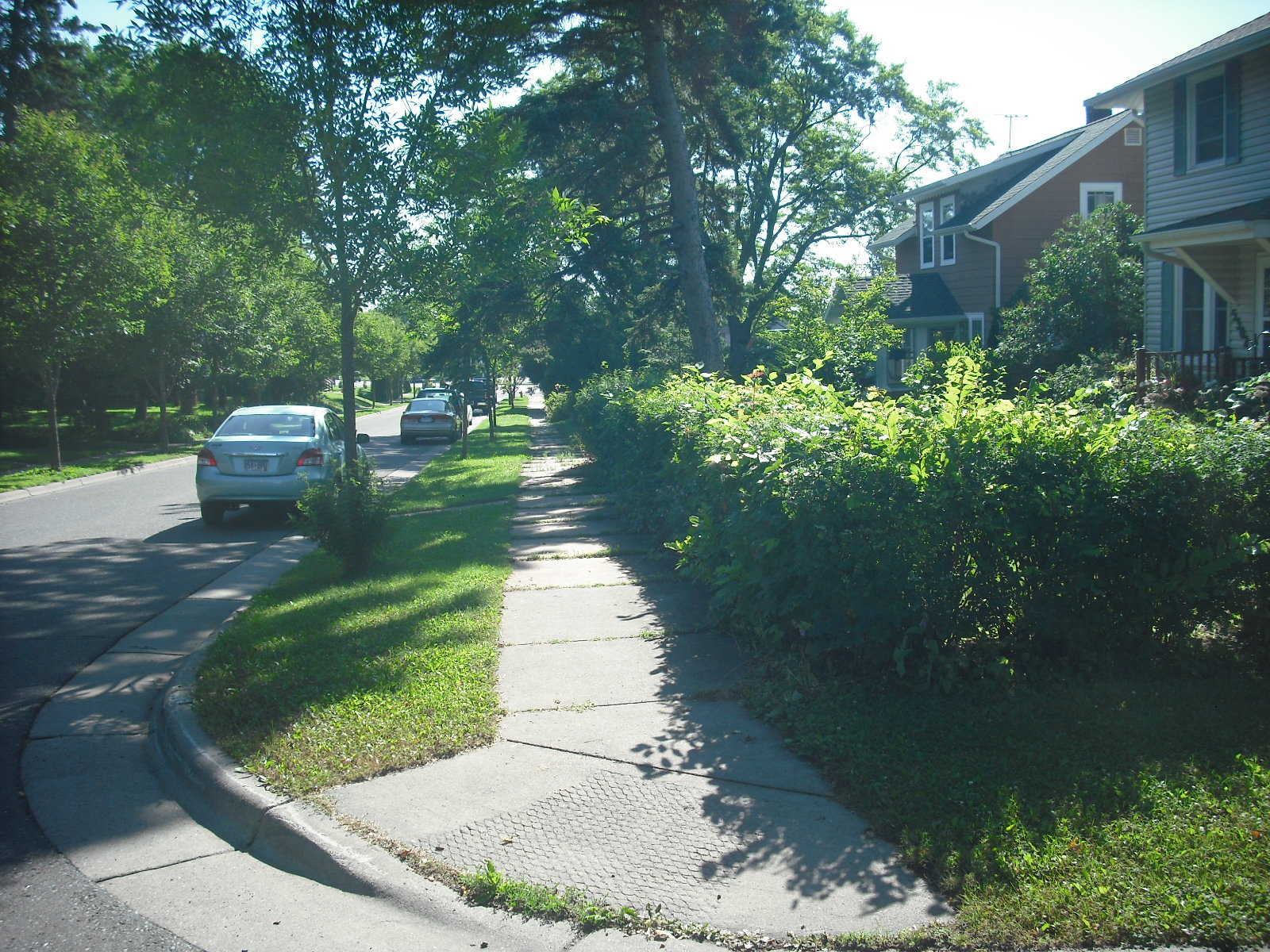
The first public speaker was Ms. Karen Lewis, who returned to the Council Chamber to express her concerns about a smattering of public safety issues, including sinkholes and other walking hazards, Park Point zoning, and a good balance in safety lighting. There was also a second public speaker, though we’ll get to his words later.

After again tabling Councilor Hanson’s proposed DECC casino, a resolution on the sale of tax forfeited properties on Park Point came off the table for consideration. As Councilor Russ explained, there had initially been much concern over the plan to sell all of the land between 13th and 16th Streets as one parcel, so the county land department had chosen to divide it up. The land will be offered at auction sometime around November, and while neighbors will not get to bid before anyone else, they will get complete information sent to them on the opportunity. Councilor Gardner added that everything from here on out will be handled by the county, which is running the sale. The resolution passed unanimously.

Councilor Fosle pulled a resolution on stoplight funding from the consent agenda, but only so that he could give a concerned constituent a proper explanation. The $500,000 to be spent on stoplights had already been funded by the existing street light fee, and even though Councilor Folse “hated” that fee, he said it was “part of the plan all along” and would increase efficiency and save money in the long run. It too passed unanimously.

A resolution approving $2 million in funding for the Wade Stadium restoration brought out the most comments, though they were all in agreement. Councilor Hanson, a former Wade employee and baseball player whose district includes the stadium, was especially excited, noting numerous possible economic opportunities. Councilor Filipovich talked up the Wade’s historical value, while Councilor Hanson sang the praises of artificial turf; Councilor Russ was disappointed to hear a scoreboard upgrade wouldn’t happen until phase two (presumably next year). Councilor Fosle was “happy the state finally listened” to their pleas for Wade money, and was pleased to learn that the tourism tax for the St. Louis River corridor could be directed to the stadium. It passed unanimously.

Councilor Gardner gave a few more details on an ordinance detailing regulations for microdistilleries, but that was it for the meeting. Councilor Sipress talked up a resolution on a Lakewalk taskforce that would come forward in next week’s meeting, while Councilor Russ shared her excitement over the NorShor Theater’s restoration. Councilor Gardner gave an update on the Park Point beach accesses, saying there were “legitimate concerns” about the health of dunes at some of the Tier Two accesses. The plans for the Tier One accesses will move forward, while Tier Two will undergo review from a citizen group. Councilor Larson praised a pair of new bike trails, Councilor Hanson plugged a possible new sports dome, and with that, my work was done. They let me off easy at the end here.

***

The second citizen speaker was me. (Props to VP Larson for asking how to pronounce my last name before calling me up.) Here are my prepared remarks:

Good evening Councilors, I’m Karl Schuettler, and as you may know, I’ve been lurking in this hall for the past year and a half and writing about your meetings. This will be my last one for the time being, as I’m heading south for graduate school later this week. I’d just like to take a moment to thank you all for your service. I’ve had my moments of disagreement with all of you, but I’ve heard insights and profound observations out of everyone here. Duluth is fortunate to have a cohesive Council that manages to think broadly, even though nearly all of you belong to the same political party. There is always room for more opinions, but this Council has a good, healthy debate at nearly every meeting, and it listens to citizens who approach it in good faith. There’s a lot to be said for that.

I’m also encouraged by a lot of what I’ve seen in this city lately. As I’ve left Duluth and come back several times, the changes that happen gradually are more striking to me than they might be to those who never leave: Duluth now seems cleaner, safer, and more vibrant, with a rich and unique local culture taking off. We’ve come a long way from the post-industrial mire of the 1980s that still afflicts so many Midwestern manufacturing centers. Still, I’ve found myself drawn to urban planning not just by enthusiasm for the new developments. Sustained growth requires a detached weighing of priorities, and must also make sure that longtime residents’ mundane needs are not neglected in the rush toward the newer, more inspiring ideas. Whatever direction it takes, Duluth needs to maintain a holistic vision of city government that encompasses both idealistic planning and popular concern about the consequences of that planning. With that vision in place, the next cycle in Duluth’s history holds great promise.

Thank you, and with any luck, I’ll be back at it here in two years’ time.

***

We’ll have to wait and see about that. Thanks to the Council for its welcome and support over the past two years, and thanks to the many of you out there who I know read this. (Hey CAO Montgomery, approve that job action form for the library delivery driver position. Seriously, they need it.) I’ll do my best to keep up from Minneapolis as time allows, though I’m not nerdy enough to drop other Monday night plans to watch a webcast. For the most part it’s been good fun, and even when it wasn’t, it was enlightening. I wish the Councilors luck, hope a few citizens can pick up the slack, and beyond that, I’ll never be too far away. We’ll be in touch.

Farewell Duluth IV: The Walk

Eighteen years ago Saturday, a moving van bearing my father and I rolled into Duluth to join my mother, who’d already made the trek. I now have less than a week left here—this time around, anyway. My departures are never very permanent. Even so, a proper good-bye was in order. So I headed out the front door and started walking.

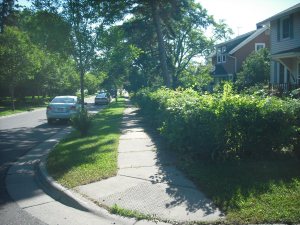
I begin in Lakeside, an idyllic middle-class neighborhood on the far east end, and my home for most of my life. It isn’t uniform; there are some gaudy houses along the lakeshore and scattered about, and many of the homes are older, bringing with them some character and occasionally some shabbiness as well. It just seems healthy, my own childhood repeated before my eyes from block to block. At times perhaps too sheltering, as evidenced ongoing temperance 80 years after the 21st Amendment, but it’s also easy to escape out into the woods or up the shore and find some freedom. The business district has hollowed out some over the years; the second grocery store and the pharmacy is gone now, though many of them plug along, and a new coffee shop is set to come in. For the most part, it seems timeless.
DSCF0002

At the end of Lakeside is the new Duluth East, in the building where I went to middle school; the setting is second to none, with the expansive views of the lake. The building itself, though, can’t quite match the old one, which I come to in a short while: that old gothic brick academy with giant windows perched right in the heart of Congdon Park. To the west, Duluth’s mansions and old money core, tucked beneath the Cathedral of Our Lady of the Rosary and the Longview tennis courts. Say what you will about Duluth’s elite, but their commitment to this community down the years has been unquestioned, and that Congdon sensibility rubbed off on me during my time at East. Class, unapologetic appreciation for high culture, and sympathy for that noble approach to the world: political wars and resentment are so below us, and instead it is all our plaything, here to be enjoyed in all its finery. A defense of time-honored traditions and inheritances worth passing down, stewarding, and bringing to fruition. It has its shortcomings, of course, and I’ve got enough Wisconsin farm boy in me that it’ll never quite be me. It is a fine place to call home, though, and I have its largesse to thank for so much.

I leave the mansions behind, and a protest is afoot on 4th Street: the towering maples lining the route are on the chopping block due to planned street repairs, so the neighbors have wrapped them in clothes arranged to look like tree-hugging people and added some speech bubbles from the trees themselves. I grab their flier, turn north off 4th, and slide into the Hillside. This is often Duluth’s cutting edge, with many possible futures on display: incoming college students, the growing gardens of those who want to raise their families in the heart of a walkable city, lower-income rentals, and the sudden appearance of minorities, all in relatively close proximity. Variety begets vivacity, though it comes at the expense of some stability. The strength of neighborhoods such as this will be the bellwether for the future, not only in Duluth but across the nation: how do we adapt to the thinning of the middle class? How do we make do with our roles in life, knowing most of us aren’t destined for those Congdon mansions, and how do we adjust to neighbors who may not share our culture? The Hillside likely holds the answers to these questions.

20140816_102857

I swing down around a reservoir, past a slope where I once went to count butterflies, now overgrown, and reach the Lower Chester hockey rinks. The place where the Williams brothers and Mike Randolph learned to skate has been given a new lease on life, thanks to the closure of the rinks in Congdon; it looks sharp, though today its only occupants are a couple of skateboarders. I pause to admire the towering building across the street; ex-mansion or some great hall I do not know, but it’s hard to tell if it’s occupied today. I plunge down the hill, through the tangle of the Hillside, and there is the lake: this walk wouldn’t be complete without a brief venture into the realm of the tourists. There’s the Armory and the walls of the old Duluth Arena beneath the Super One, and there is the brick next to the Rose Garden fountain where I must kneel and brush off the dirt. Onward, past two statues: one of a man who had nothing to do with Duluth but is honored here anyway (Leif Erickson), and the other of a robber baron who had everything to do with Duluth (Jay Cooke). How curious our historical memories can be.

I head down Superior Street, past bustling Fitgers and into the east end of Downtown. It’s come a long way since I last made this walk: Duluth has outlasted the Last Place on Earth, and the Kozy Bar offers no respite. Now, a Sheraton, classy restaurants, and a shiny independent theater. (As if I needed another trigger for childhood nostalgia and rumination on the passage of time, “Boyhood” has just opened here.) This is looking more and more like a cultured downtown, the commercial hub of northern Minnesota, many of the buildings lining its brick streets still graced with turn-of-the-century detail. It’s not a steady march into the future, though: the Fond Du Luth Casino’s lurid lights still flash all over the place, and a walk one block up to First Street is a step back into a different Duluth. The memorial to the 1920 lynchings sits vacant opposite the burned-out shell of the Kozy, and a woman stumbling up the street in an apparent drugged daze offers a halfhearted hello.

DSCF0029

A light mist has kept the crowds at bay, and now as I get into the very heart of the city, it begins to rain properly. I seek brief shelter amid the ever-intriguing crowds in the Holiday Center, people who have caught my attention since my youth, left me to puzzle out lives that are not mine. I do a few stretches, then take to the skywalk for a brief spell. I can’t get far on a Saturday, but by the time I step out next to the Missabe Building, it’s all stopped, and I can admire the façade there and on the Board of Trade before plodding on to City Hall. I’ve spent my share of time in the halls of power over the past two years, but Duluth is too small for anyone to live in a bubble here. A block away, the ore ship of a library sits in port with its cargo of knowledge and collection of unsavory characters who needed a new home after the Last Place on Earth closed its doors, and beyond it, the real harbor, ever the root source of this city’s identity.
20140816_113444

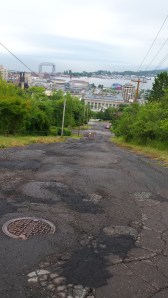
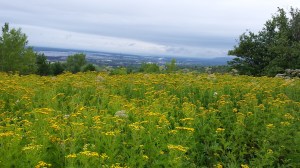
It’s time to head up. Fifth Avenue West is Duluth’s steepest street, but I conquer it with the help of the sidewalk railing, and stop to admire the view down toward the harbor and the DECC, another place where I’ve seemed to practically live at times, from hockey to concerts to other formal functions from high school on up. I hike the crest of Observation Hill, observing that house where my mother stayed when she first moved here ahead of the family seventeen years ago, and come to the Twin Ponds and Enger Tower. The park is busy, but I don’t linger for the view. Instead, I retreat to the woods, and head down the Superior Hiking Trail. Here, too, there is great variety: a stand of pines, an alpine meadow with views of the harbor, a babbling stream to hop across, and a forgotten old basketball court and baseball diamond, slowly being swallowed up by the woods. I cross Piedmont Avenue, then descend through Lincoln Park. As a ribbon of greenery it’s similar to the more familiar Lester Park, but it seems a bit less tamed, a bit more wild, and I have the upper reaches to myself.
20140816_121608

Down below, in the heart of the park, there are a handful of picnickers and two fishermen; a pair of young lovers guide each other across the bridge. Then, back out to civilization, and a host of worn-out rental properties, some legitimately blighted. A little festival at a mid-block church apparently requires the presence of three police cars, and “Beware of the Dog” signs proliferate. More than anything now, I want lunch, and the Duluth Grill, that quintessential local restaurant, calls out. Even in the midst of Lincoln Park, a beloved restaurant of locally sourced food thrives, one of a few signs of change here. It’s packed as always, but it’s not hard to find a spot for one at the counter, and I recharge with a salmon burger.

My next steps take me along West Michigan Street, up to the Heritage Arena, my usual winter haunt and another of those signs of life out here. For once, the parking lot is empty, and I only briefly peek into the lobby. I’ll be back here in December and January, no doubt. Then it’s back along the backside of Lincoln Park, all industrial storage space and the like; lifeless on a Saturday. Up above, the gaudy new west side middle school lords over it all. I go underneath the railroad bridges and come to Wade Stadium, the ballpark in desperate need of the forthcoming state aid. The Huskies’ season has just come to an end, though I never did make it out there this year; what this park really inspires are fond memories of the Dukes, that old independent professional team that had a couple of entertaining title runs in my childhood. It’s one good remodeling away from being a real gem.

DSCF0061

I step out on to Grand Avenue, the main artery of the west side and a simple summation of the plight of working-class America. It’s not blighted, but there’s nothing to make anything stand out here, either. It’s just uniform, everything of the same age and showing that age. The neighborhood around Denfeld offers a bit more, with the high school serving as the anchor. The houses here could all be in Lakeside, though the streets are in worse shape, and there’s action in the businesses. The girls’ soccer team is practicing on the field, the high school season just around the corner, and there’s a party in Memorial Park, too. Plenty of people come and go in the West Duluth downtown, but no one really lingers anywhere, so I don’t, either. On past the businesses, through the library parking lot, and down into Irving. Here again the housing stock takes a dip downward, though the street is pleasantly leafy, and there’s a herd of screaming children running along. The street suddenly fades into a dirt track through a copse, and I have to skirt a little stream that makes its slow way down to the St. Louis River.

Here is the west side charter elementary school, undergoing some summertime renovation, and I weave a bit more, dodging a kid on a bike and drawing closer to the river, where the houses are newer. The last time I was here, the far end of the Western Waterfront Trail was closed for pollution clean-up; now it’s open again, though I skip the first loop of the trail before joining it on Indian Point. I wind around the campground, breaking into a jog just to show myself I can do it as I close in on 17 miles. A family spends a sleepy afternoon on a pier jutting into the river, while I am accosted by a sudden swarm of mystery insects.

DSCF0066

I’m nearing the end. It would be nice to plow on out to Gary, ruminate on the old steel mill and Morgan Park, and end it all by running up Ely’s Peak one last time, but it’s growing late, and I have a goodbye party to throw for myself. The destination for now is the former home of a high school teacher and Denfeld grad who, despite marrying a wealthy lawyer, remained true to the West Side, and had a point to prove about this city’s east-west divide. She doesn’t live here anymore, but it still seems like a fitting endpoint: a grand, modern house on the river, a sign of what might be to come in the redevelopment for the river corridor imagined by Mayor Don Ness. As I look around, I see the vision is already a fait accompli on the lower side of Norton Park: there’s a whole subdivision of nice, newer houses across the bay. Perhaps it won’t be as hard as it had seemed, though this budding urban planner has no illusions about the road ahead. There is much work to be done.

That is a debate for another time, though. My rescue wagon awaits me. I need to head home and freshen up, and after that, it’ll be time for one last Canal Park dinner and one last bit of mild debauchery on the Park Point beach. I’ll miss it, of course. But I’ve seen so much of it that I can’t help but leave satisfied. It’s all there, right before our eyes, and even after eighteen years, there’s always something new to find.
Instant Runoff Voting and its Discontents

Instant runoff voting (here abbreviated IRV, and also known as ranked-choice voting, or RCV) offers what seems, at least, to be a plausible alternative to our current electoral system. It has become a popular cause, particularly in progressive circles, where people see election methods as reinforcing existing power structures. It comes as little surprise, then, to see the IRV debate resurface in Duluth this year: first, when the city council failed to use it properly in an attempt to fill a vacant council seat, and later, when it voted down a proposal to explore its implementation in local elections. I’m also about to head down and spend two years in Minneapolis, a city that has adopted it, so I’ll be curious to see what it looks like from the inside, and hear from people with direct experience. For now, though, I’ll lay out why I remain a skeptic. While I certainly don’t think the system we have is great, I don’t see any dramatic benefits from a change.

Thanks to fortuitous seating arrangements at the council discussion on IRV, I got myself a solid crash course in election algorithms and the critiques of IRV over the past month and a half. My guide throughout was UMD professor emerita Kathryn Lenz Peckham, who was joined by Prof. Barry James and instructor Rachel Breckenridge, all of the math and statistics department, at our final meeting. (Full disclosure: Prof. Lenz’s son was a high school friend of mine.) My teachers obviously had clear issues with IRV, but they’d been genuinely curious when they first heard about its application for political elections, and came at it with the detached, academic curiosity that I appreciate.

Most elections in the U.S. use a system known as plurality voting: each voter casts one vote and  the candidate with the most votes wins, sometimes with the help of a plurality primary in which the top two candidates advance to a general election run-off. IRV dispenses with the primary, asks voters to rank the candidates in order of preference, and conducts an instant runoff. If no candidate receives 50% of the vote, the lowest vote-getter is eliminated, and that candidate’s supporters’ second-place votes are then counted. This process continues until someone clears the 50% bar.

The most immediate critique of IRV is its confusion: it’s different, and requires a bit more thought than just casting a vote for one’s favorite candidate. IRV defenders, however, can mount a strong case in response, relying on good voter education. The evidence on voter turnout and understanding of the method is a bit mixed, though it isn’t completely damning, either. The statisticians’ greatest concerns were not really with the act of voting itself, but the manner in which those votes are counted.

One of their greatest concerns was the possibility of a tie. With so many rounds, IRV greatly enhances the possibility of a tie; there could be an election-determining statistical tie at each round.  A tie at any round could potentially be enough to trigger a recount or other such election intrigue as the order in which candidates are eliminated affects the way second- and third-place votes come into play, and could theoretically lead to a completely different result.

Transparency in reporting election results is also difficult. Since IRV elections often feature 10 or more candidates, it is practically impossible to publish a ballots table that lays out the rank-order voting data. With just 5 candidates, there are 85 distinct ways in which ballots could be marked; with 10, there would be 820. This creates challenges for accurate reporting and analysis, and data from each precinct in the voting district would have to be aggregated before the runoff process can begin.

This makes things very hard to track, and has led to delays in the counting of ballots in some cases. Even if unjustified, people may grow more suspicious of such complex procedures. This all says nothing of the fact that most standard vote-counting machines are not designed to handle IRV ballots. This would probably be a one-time cost, but it can still be substantial—Minneapolis’s first IRV election ran significantly over budget—and the machines would require new software if election officials continue to tweak the parameters, as has happened in numerous situations.

There are a few other claims by IRV advocates that seem logical enough, but struggle under further scrutiny:

IRV always elects a majority winner. This is only true if one takes a rather contorted view of what constitutes a majority. In the Minneapolis election, Betsy Hodges, despite being the clear leader from start to finish, never actually got a majority of the votes. She only cleared the 50% threshold in the 33rd round of counting, when 15,573 people (19.6% of the electorate) had seen their ballots entirely eliminated from consideration. Her final IRV total was 38,870 votes—almost 10,000 more than she’d started with, but still less than 50% of the initial votes cast. And this was in an election that was not at all controversial.

Eliminating the primary reduces costs. Primary elections are not especially expensive, and cost savings in running elections would be counteracted by the amount of money candidates would need to spend to stay in the race all the way to election day. It just spreads the cost around to different places. Moreover, a longer election season inherently favors candidates with deeper pockets. Primaries have their shortcomings, but they also channel party funds toward the most popular internal candidate. Some in the IRV crowd have argued that this just means some of the candidates were never serious anyway, and that perhaps there should be higher barriers to entry, through fees or petition requirements. This seems a rather curious way to go about making things “more democratic.”

Primary elections certainly have their issues, with small turnout and extra emphasis of activist fringe groups, though there are plausible counterarguments to these points, as Councilor Julsrud explained when the Duluth city council considered IRV. If we are to replace it, though, we should make sure the new version is certifiably better.

IRV improves behavior and minimizes mudslinging. This may be true at first, as people figure out how IRV works. In the long run, however, it’s a probably a placebo effect, to the extent that it can even be measured. No one really campaigns to get second place votes; they’re in it to win. Voters learn to play along and still vote strategically. Cynicism is just a fact of life is modern electoral politics, and it will take a lot more than a new voting method to change that.

IRV empowers minorities and candidates from underrepresented groups. Australia’s experience with IRV does not bear this out; instead of empowering minority candidates, its two major parties are more rigid than ever. If you want do give minority groups more power, you probably should consider proportional representation, but that’s a debate for a different day. The only way this argument works is by relying on the contention that minority groups are less likely to vote in primaries or runoffs, but this does nothing to guarantee that such candidates will actually run.

IRV’s greatest troubles, however, tend to come when there are more than two serious candidates. A favorite example of this trouble is that of the Burlington, Vermont 2009 mayoral election, in which the winner of the election did not have the most votes in the first round, and when matched up against the other two major candidates head-to-head in a ballot table (a method used to determine the Condorcet winner, another measure of electoral effectiveness), he lost to both. But, thanks to the round structure of IRV, he won. Burlington voters, baffled, did away with IRV shortly thereafter. Several other cities have also dumped it, and its implementation never ends the debate: Minneapolis is discussing tweaks after its first run with IRV, and San Francisco seems to have a constant string of amendment and repeal attempts underway. IRV’s adoption often leads to a protracted struggle over voting methods when there are probably more pressing issues in front of local legislators.

IRV might work well to counteract cases in which a small minority candidate saps just enough support away from a major one to flip an election (see Ralph Nader and Al Gore, 2000), but once things become more complicated, it’s not much better than plurality, and perhaps even worse. Depending on who gets eliminated first, there are actually scenarios in which it makes more sense to vote up one’s least favorite candidate over one whom the voter might prefer.

IRV advocates will retort that many of the complicated scenarios don’t happen all that often, and therefore this is all nitpicking. We could say the exact same thing about plurality voting, though, and while there are merits to IRV, it ultimately seems like much ado about very little. It also probably just distracts from some of the issues its proponents are probably most passionate about, such as voter turnout (where it cannot match the impact of a serious get-out-to-vote campaign) and money in politics (where voting methods are ants compared to the Citizens United gorilla). It seems an odd battle to choose.

Is there a better voting method? Perhaps, the professors tentatively suggested: score voting. In simple score voting, voters simply vote “yes” or “no” on every single candidate on the ballot. They can vote for everyone, no one, or any combination of them all. More complex forms allow voters to score each candidate on a scale of zero to four or five (or conceivably any number). The idea here is that the candidate with the broadest support would generate the most votes. It abandons the obsession with majority, which is increasingly difficult to come by in a pluralistic society with many candidates running for office, and settles for the broadest possible consensus. The method is compatible with standard voting machines, leaves a clear paper trail, and could work with or without a primary.

The main objection to score voting is that it appears to violate the “one person, one vote” principle, but this really isn’t the case: everyone gets one vote on every candidate, and a blank is equal to a zero. Every voter has the opportunity to cast judgment on each candidate one time. The algorithm is also mercifully easy, sparing us trouble with endless rounds and eliminations and ties. Just add the votes.

It also resonates with younger voters who are used to a world in which everything gets a rating on the internet. (While it’s obviously far too small a sample size to say anything definitive, Rachel Breckenridge’s Contemporary Mathematics classes—Math 1024, a non-major math course at UMD—named it their top choice after experimenting with several different voting methods.) Don’t expect to see it before the Duluth City Council anytime soon, though; that’s not how the professors want to push this through. They’re not in any rush to implement it, and think it ought to be tested on much smaller scales before a city goes ahead and imposes it, but it’s worth a shot somewhere. With some careful experimentation first, a new method would come across as being far less politically motivated, and might generate more organic support—hopefully from across the spectrum, and not just one wing of one political movement.

One last note: at the last meeting, we figured that the method the City Council used to elect Joel Sipress was, in fact, something akin to the Bucklin Vote, in which 2nd- and 3rd-place votes are added when no candidate receives a majority of 1st-place votes. (Under both plurality voting and IRV, the Council was deadlocked 4-4, and everyone who cast a 2nd-place vote gave it to the third candidate who got zero first place votes. However, two of Sipress’s supporters did not fill in 2nd or 3rd choices, and the Council erroneously used this to give him the IRV victory.)  While doing some profound research on the Bucklin Vote (aka reading its Wikipedia page), I learned from the Minnesota Bar that Duluth actually experimented with the Bucklin Vote about a century ago, only to have it declared unconstitutional. As the Council’s experience showed, a variation on the Bucklin method applied to IRV could conceivably resolve some ties, though it does nothing to relieve the problems of transparency and paradoxical results that emerge in all ranked-ballot methods that use rounds. There is no quick and easy fix that will quiet all dissent and make IRV instantly palatable.

Farewell Duluth III: Solitude

You’re a believer in community, you buy all that sentimental stuff you peddle every day, that life is found in intertwining your history with those of the people closest to you. And yet. And yet there are days where it wears you down, where you get too caught up in whatever bubble you inhabit, grow annoyed by the little tics of those around you. Community is one of the greatest sources of life you know, but it is not the only one. You have to get out. Just you, and you alone.

This is another of your town’s triumphs: nowhere is it easier. There are parks at every turn; some packed, some more wild; some well-worn, some neglected. A short drive can take you to places where you won’t meet a soul, if you so desire. You head out to recharge, to find distance; perhaps to cast judgment from afar, perhaps to head for a realm where judgment has no meaning.

You are swift to retreat into these moments; at times you were perhaps too swift, but even now as things come together, you cannot neglect this. This is your cycle inward, necessary before you pull back out. You must go. Back out to some little corner you’ve claimed as your own simply because it cannot be owned. Time is short, so you hurry upward, the jagged rocks in the path turning your feet as you climb. You could stop here or there to admire the view, but not here, this isn’t the place. Across a road, past the spot where you once saw a bear, ever winding upward. A few signs of youthful dalliance, carelessly hidden in the woods; was that you not so very long ago? How the time goes, how much more precious youth now seems.

Out you go, hurrying to time this journey just right. Before long you’re hopping from rock to rock, down a staircase carved in stone. Through the birches, across a boardwalk, the deer far back in the woods flushed, bounding back through the underbrush for only a moment before they’re silent, and then all is silent for you, too. Up a hill, though the view disappoints, back through another stand of wood, a mysterious half-hidden trail, whether from deer or teenagers or something much older you do not know, up to that oak tree near the top of the ridge where you once stood there trying to make sense of what exactly it was you’d done, brandishing a manifesto from an earlier self and proclaiming its wrongness, though now you’ve come full circle and have forgiven yourself. Your younger self deserves more credit than you ever gave him. Who could you have been if you’d gotten over those crippling anxieties, acted on that self you always wanted to be? God only knows now, though that impulse is still inside of you, can still be channeled into something good. Onward, you press, on to the outcropping, site of many a picnic and also your first goodbye to this place, a sunrise at dawn beneath a different oak, this one now as dead as the finality of that goodbye. Take the right fork, you haven’t been that way before. You make your way down the path, looping in and out behind spruces, careening downward so easily you can’t help but run. You bend to pick at a malformed raspberry, sample the latest thimbleberry, scarf the smattered juneberries, a regular forest feast.

Down a field of talus, across the bit that gets muddy when it rains, and you’re nearly there: or maybe you’ve come from the other direction, up from the wider path, past the ruin of an old mill and the side creek that you once waded up for a mile or two, picking crayfish out of the shallows with a couple of people you chose to share this garden with, down the path where one great story reached its peak and another arose; where it led was never entirely clear, but still it has its roots here, high on the bank above the little stream. The destination is always the same. This little patch of woods birthed so many of the convoluted thoughts of the past seven summers, your blessing and your curse, a burden you could not live without. Here is where the last story came to an end, and here too you hope to end the last and worst of the stories you’d rather pretend were not yours.

You reach the gates, push aside those tumbled branches and finally, there it is before you: the cathedral, the dying pines towering up above an open glade, the sun dancing between the trunks, the blinding light of the sinking sun pouring through, setting it all ablaze, and you set out gingerly through the waist-high grass, your hand trailing through it as you go. Perhaps you should drop to your knees, make a show of it all? No, you cannot linger, the mosquitoes nip and the sun sinks. Now, it seems, that time is over, gone without any obvious moment of revelation. It all makes sense now. You complete your duty without any fanfare, and life goes on as if it had never been more than a fleeting thought. Victory.

You head off the path and into the heart of the little stand. Not quite a sacred ground: you’re still in a city, after all, and the reminders of life beyond never quite die. Wilderness is a myth, or perhaps a state of mind. Yes, death comes only to the pines, nearly half of them now just towering empty trunks, lonely pillars supporting a ceiling of fading blue. Et in Arcadia ego. Spruces rise up in their place, and even here before you, a solitary oak tree, fighting above the tangles of thimbleberries and announcing its arrival on the scene. Bring your children here someday, and it might all be gone: just another clump of wood in a forest that buries its past. You could move on to the next hill, where the pines stand a bit more resolutely, but no: yours are these ones, right here, the ones that remind you that you don’t have long. Everything seems more immediate, both the triumphs and the tragedies of life given a vivid edge, and you relish them that much more because you know how much it means to feel all of these things, to live with that joie de vivre that overwhelms all weakness and fear. The more you lay claim to these trees, the more you sense that they are not yours alone, that another set of eyes watches. You’re not quite sure yet where one story begins and another ends; perhaps they all just blend together here; here, in this garden of all your dreams.

You’re free here, though you don’t quite feel it. Gone are the days when every little victory was cause for rejoicing; now you just take it all in stride, natural, the next step along this little chasm through the grass. All is right, all goes on, and as long as you may linger, this is not you: you must share this, come down from your messianic ideal not into a nihilistic doom but into reality where you belong, where you can still be the author of a story that aspires to everything you might desire, even as you know you might not ever quite get there. The pursuit is enough, and with moments like these, you’ll have the wits to make sure the chase never eats you alive.

It’s time to move on. The sun sinks away, and you have far to go before you can rest your feet again. You’ll miss this spot, but you are forever changed by what it’s gifted you, and that is enough: it belongs to you, you belong to it, and whatever shall come will be in the shadows of those towering pines. The light will filter through, blinding but bearing that gift of life all at once, all of those apparent contradictions borne together into something that is, quite simply, you.

Part 4 is here.

Farewell Duluth II: On Culture

Culture is a notoriously murky term, one that can be used to explain just about anything without actually proving causes or relationships or anything of the sort. Trying to define a culture is a frustrating exercise that throws a lot of unlike things into the hopper that then spits out a vague, abstract Thing that we claim has some substance. An awful lot of bad social analysis has used it to glorify or defame a group of people, and “cultural studies,” while potentially valuable, can also become repositories of mediocre thought and self-absorption.  At its most fundamental level, culture is a shared identity, which just goes to show how hard it is to pin down; no one person’s identity can be summed up by a few simple words, and it’s only going to get worse as we add more people. There is also a good chance that, even at a time where people are more and more likely to surround themselves with others who share their views, half the people on one’s block wouldn’t qualify as sharing one’s culture. There are a million different ways to measure it, and it’s tough to argue that one has any more intrinsic value than another.

Just because it is hard to capture something, however, does not mean that it is not real, or that it does not have considerable power. Duluth, Minnesota has a very distinct culture, one that makes it undeniably unique, and just about everyone from the city who ventures out and thinks about this knows it.

We can try to list some stuff that makes up the culture. There’s a hardiness and stoicism in the face of long winters, with a strong Scandinavian ethos to it. There’s a blue-collar legacy of a transportation hub near the Iron Range in there, and there’s also a strong element of Congdon Old Money and its resultant noblesse oblige. There’s an outdoorsy ethic, from biking and boating in summer to skiing and pond hockey in winter. There is relative racial homogeneity, the ruling DFL coalition, and an obsession with talking about the weather. There are neighborhoods and schools and businesses, all generators of their own sub-cultures; some predictable, some less so.

Culture, however, is never static, and Duluth has undergone a considerable shift over the past decade. It didn’t begin with mayor Don Ness—before him, there was Canal Park and the Munger Trail and a number of other efforts (of varying success) to get Duluth past its 1980s post-industrial mire. But Ness’s cool Duluth energy is part and parcel with the surge of renewal in recent years. In his own words, it plays to “authentic strengths” of this city, instead of trying to pretend we’re something we’re not. And so we have booms in biking and beer and indie music, plus the rise of urban farming and the industrial chic architecture used to revive derelict lots and crumbling old buildings. All the artsy quality of life stuff is moving in tandem with legitimate economic expansion, from the aviation sector to engineering to some good, old-fashioned manufacturing. Duluth has character, and a genuine sense of direction, too.

Another of Duluth’s strengths is its civic engagement, which has fueled the recent renewal. People love this city and want it to succeed, and will spend endless hours prepping for public meetings on school and park plans and so on. At the same time, though, some of its greatest outbursts are in opposition to new planning, and that’s definitely not always a bad thing. It is an erratic and often untamed force, as evidenced by the overzealous attempt underway to recall city councilor Sharla Gardner. Still, it’s a force that slows some of the more harebrained schemes and preserves some of the better aspects of local culture. At its best it’s simply a direct application of common sense, a counterbalance to the plans from on high that manages a strong voice without going into excess. It’s exemplar at the moment is Jay Fosle, the west side city councilor whose populist conservatism stands in sharp but (usually) respectful contrast to the left-leaning visionaries. As I wrote in my account of the first Council meeting I attended, he can waver between wise insights and serious head-scratchers with little warning. But Fosle is not there simply to say no; he is willing to work with people, and no one does a better job of effectively organizing citizens and bringing them forward to speak to the Council. The authenticity of the voices on both sides of Duluth’s political debates keeps things from falling into the stale platitudes of national politics, and that complexity is another source of life.

Still, as I’ve said many times—here in culture, here in politics, here in education—there’s an elephant in the room that threatens the whole project. This is, of course, the east-west divide. It’s always been there, of course. But the most obvious thrust of the current renewal, with its cultural enrichment and “creative class” cultivation, does not produce evenly spread results. If things just plug along as they are, it’s not hard to predict a split in which east side (and Hermantown) reap the benefits of a vibrant city, while the west side sinks into stagnation, a place without a future. Families with children are an excellent bellwether, and nothing is more haunting than this map of the city’s last school board levy. It’s also what makes Don Ness’s seeds of a vision for the west side so worth watching: if Duluth is going to transcend the common narratives of renewal by gentrification, this is where it will have to take place. It won’t be easy.

The plight of the debate around Duluth’s public schools is a sign of what can go wrong when the enlightened planners impose their vision while dodging public debate. Many of the critiques of that plan and its opaqueness had merit, even though I have little patience left with many of its foremost critics. Duluth’s echo chamber of education debate is a bizarre and unpleasant place, filled with catfights and resentment and overblown egos. Funnily enough, through it all, Duluth remains a pretty good place to raise some kids. It has enough big city stuff to be interesting and keep them engaged, has just enough variety to show them all walks of life, yet is small enough that they still get that much-hyped small-town feel. Every week, someone in the media laments the fact that kids don’t get to play freely anymore, but that’s not what I see when I look out my window. Children roaming and playing are one of the most obvious signs of communal health, and it was heartening to hear a recent visitor to the economic development agency where I intern gushing about all of the families she saw out and about on Duluth’s streets. A little part of me died when the Congdon hockey rinks got cleared out to make room for a parking lot.

This discussion of education and childrearing brings me back to the thrust of this post: the primacy of culture, from which everything else follows. Set things in motion early on, build a supportive environment, and your odds are as good as any, even if your background isn’t one of great wealth or education. Duluth does that well for most people, but as with anywhere, there are exceptions, and when they’re relatively few in number, the contrast can be glaring. There is still a substantial amount of poverty in Duluth, and while I’ll leave aside most of that debate about subcultures and pathologies and other things that bog people down, poverty and its associated ills often leave people incapable of participating fully in the broader culture and reaping its benefits.

To be sure, part of this problem comes from the culture itself. Aspects of culture can be both good and bad when it comes to business climate, and despite Duluth’s attentiveness to many of its ills, good intentions do not always beget good results; sometimes it can make things worse. Minority populations here (racial and otherwise) are so small that it’s hard for them to generate their own vibrant, self-sustaining cultures; they can either assimilate into the general culture, or be alone. It’s hard to know what can be done about this; if we did know, we’d have solved a lot of problems long ago. (Perhaps the most important point here is that these are not problems to be solved, but the stories of lives of real people to be unspooled into the fabric of a community.) Duluth has no shortage of well-intentioned people who want to overcome these troubles, and with the Clayton-Jackson-McGhie group and a vocal group of activists, there are real dialogues, though it’s not hard to ignore them, either. In time, demography will probably make these questions more relevant. One would hope that Duluth’s general tolerance will make this smoother than in other places, but it’s easy to claim tolerance when it’s rarely put to the test. Culture will always divide us, for good and ill.

In the eyes of some, the divisions coming out of culture are reasons for its dismissal. Better to cast away these things that tie us to imperfect places and people. An afterlife or some ideal form of human life takes precedent. Doing this, however, chokes off many of the greatest sources of earthly happiness. There are things I could do without in Duluth’s culture, but, in looking around the world, there is so much here that is worth preserving and enhancing. It has a strong sense of self, and now it also has a trajectory to match. It’s fighting the standard narratives of decline and measurements of success in cities, and these days, more often than not, it’s winning.

That makes Duluth unique, and explains why some people who aren’t native Duluthians find it hard to ever quite settle in here. But it works for Duluth, and it is, of course, never static. It goes along, guided by both inertia and a lot of hands that have claimed it as their own. It is a city with a soul, a sheer sense of being; a sense of motion through time, cyclical, coming and going, life and death flowing in and among one another. It has a rhythm, a pace, perhaps unique to each who walks its streets, yet felt like a beating heart, grounding one within it, leaving no doubt: a sense of place. It’s home.

Part 3 is here.

2014-2015 High School Hockey: The View from August

With the Elite League around the corner and a bunch of summer scrimmages in the book, hockey doesn’t seem so far off. It’ll still be a little while before I start seriously digging into preseason ranking research, but there’s been enough idle speculation that I can offer a few thoughts at this point.

On paper, this looks like it’s a pretty easy year to distinguish the early frontrunners in Class AA, and they’re the two teams that met in last year’s title game. Edina and Lakeville North both return hosts of front-line talent at every position, with Edina getting the early nod due to their depth and momentum. Add in a pair of relatively easy sections, and they’re both primed for another March showdown. The Hornets stand on the brink of the state’s greatest run since Bloomington Jefferson in the early 90s, while relative upstart North will look to peak with its best squad ever.

Beyond those two, though, it gets muddled. As usual, 6AA contributes a bunch of top-ten contenders. Benilde-St. Margaret’s has a stockpile of quality players, but lacks the truly elite forwards of the past couple years; they will likely have to adapt their freewheeling playing style to succeed in 2015. Wayzata, on the flip side, needs to find a bit more scoring punch without abandoning the defensive solidity that has become the hallmark of Pat O’Leary’s regime. But they’re not the only two contenders there, and I could trail on through each of the Metro sections, but the point would all be the same: things are pretty open for the taking. The same could be said for 8AA in the state’s northwest, where Roseau suffers heavy graduation losses. The real question is how well these teams can compete with Edina and North.

In the far northwest, meanwhile, a preseason Mr. Hockey favorite has passed up an opportunity to play a full season in the USHL to stick around in high school. Warroad’s Jared Bethune has chosen to play a before-and-after in the USHL, an arrangement used periodically by some players who want the best of both worlds; last season, Grand Rapids’ Avery Peterson and Duluth East’s Phil Beaulieu took that route. With a top line featuring Bethune and Kobe Roth, Warroad will put up some huge numbers, and is right there in the running for a Class A crown. Northern communities certainly aren’t immune to the early departure, but at times there is something in some of these towns that keeps kids at home when others might leave. It’s a trend especially revealing in players like Bethune and his Warroad predecessor T.J. Oshie, who are not natives of the town, but fell for it anyway. For good or ill, things often run a bit deeper outside of the Metro area.

The allure of that depth may have played some role in the offseason’s most significant coaching shift, as Dave Aus left Blaine after 13 seasons and moved up to Brainerd. He took Blaine to six state Tourneys over that time, building on the base of the Bengals’ 2000 Tourney win the year before his arrival on the scene. The past few years had ended in playoff frustration, however, and Aus elected to head north for an entirely different type of challenge, as he looks to take a rebuilding Warrior squad and get them to State for the first time ever. This first season may be lumpy, but there’s some decent talent in the Brainerd youth ranks, and 8AA could be ripe for the taking before long. The Blaine job, meanwhile, falls to Chris Carroll, a longtime Bethel assistant who will try to get the Bengals back atop 5AA and end that section’s ugly Tourney drought over the past five years.

Farmington and Forest Lake will also welcome in new coaches this coming season, while East Ridge has brought in a big name in former Wild captain Wes Walz to build up their young program. Up on the east side of Duluth, however, there will be no change: Mike Randolph returns for a 26th season, despite having passed retirement age from his teaching duties. His forward corps got a boost with the addition of former Marshall Hilltopper Luke Dow, a small but shifty forward who put up huge numbers with the State runner-up East bantams two seasons ago. The mini-exodus from Duluth Marshall this summer cuts against the usual transfer trends in high school hockey, and the departures of Dow and Denfeld-bound Cam McClure sap some serious scoring from what would have been (and still well could be) the best Marshall team since their run of three straight Class A 2nd place finishes in the mid-00s. Whether it’s a disinterest in shelling out private school tuition when Hermantown blocks the road to State or something deeper, the Toppers have a rare opportunity to play the underdog card this winter.

Dow’s arrival at East, meanwhile, adds a new element to a crew of forwards that already returns most of its bigger contributors from last season. With the Altmann brothers Nick and Ash, Brian Bunten, and Ryan Peterson back in the fold, the Hounds should have two very productive lines; add a deep group of seniors with some experience and the usual infusion of a few quality bantams, Randolph has no lack of resources up front. East’s hopes at a seventh straight Tourney berth, however, likely hinge on the defense in front of goalie Gunnar Howg. Gone are the days of Nate Repensky, Meirs Moore, Phil Beaulieu, and Alex Trapp ruling games from the blue line and putting up huge points. This being Duluth East, there is depth and some talent here; they just need to sort it all out, and meld the parts into a cohesive hole.

For a second straight year, the team best-positioned to end the East run is Elk River. Jake Jaremko and Reggie Lutz lead the attack up front, while Matt Kiersted is the best defenseman in 7AA; their youth teams have been at least as good as East’s in recent years. Amsoil Arena has been a house of horrors for the Elks the past two seasons, though, and getting over the hump may take something extra. Grand Rapids, meanwhile, should have a thrilling top line, and their defense can only get better from where it was last season. If they can fill the gap in goal and generate some depth, they’ll be right up there with the big guns. Further down the charts, Cloquet looks to be rising back toward contention, and St. Michael-Albertville is also climbing into respectability. While Andover and Forest Lake may be on the downswing, they have the numbers to keep the middle tier of the section crowded.

Amid all this speculating about the future, I need to give a nod to the past: Glenn Rolle, the coach who first brought hockey glory to Duluth East High School, passed away on Tuesday at the age of 93. Coach Rolle led the Hounds from 1953-1967, earning four State Tourney berths and a 1960 state title; you can find a more thorough accounting of his tenure in this post from last summer’s series on East hockey history. Like so many of the midcentury Minnesota greats, Rolle was an Iron Ranger, growing up in Eveleth in its hockey glory days. He served in the military, graduated from the University of Illinois, and taught in Hermantown before making his way down the hill to a new high school on East Fourth Street. His teams did not always have the overwhelming talent of their Iron Range rivals, but depth and discipline allowed them to compete, and East slowly began to churn out hockey talent, first to UMD, and then beyond. He also served as AD during his time at East, and continued to teach after his retirement from hockey. Just two years ago, he managed to trot out on to the ice at a ceremony honoring the 1960 team at the Heritage Center. He and Bob Fryberger are the twin founding fathers of Duluth East hockey, and without that base they built, nothing would quite be the same.

Speaking of things not being the same, my hockey coverage this winter is in for a change. I’ll be operating out of Minneapolis for the next two winters. Being a Duluthian to the core, I’ll miss my hometown, but there’s much to be said for a venture down into the midst of all the Metro madness, and Duluth East’s travel schedule ensures that I’ll still see plenty of the Hounds. I’m excited to wander through many of the Metro-area rinks, and it’ll be interesting to see how things look from down in the tropics. Time to start the countdown and ready myself for some Elite League scouting. It’ll be hockey season before we know it.

Farewell Duluth I: The Answer to Everything

One day in late February 2012, Prof. Patrick Deneen of the Georgetown Government Department (now at Notre Dame) modestly told us students that he was going to give us the “answer to everything.” He proceeded to draw three circles on the chalkboard and explain human nature in the clearest manner I’ve ever seen. It’s an oversimplification, of course, as all such representations must be, but it’s an excellent starting point, and now forms the basis of my worldview, such as it is. What follows is my take on the three circles. I’ve also embellished his drawing with some of my obvious artistic genius.

deneen circles

The three circles represent three rough spheres of human possibility. The center sphere is basic human action; above it we find gods who transcend human appetites and obsessions and lead lives of bliss, and below it we find the beasts, who fixate on instinctive and immediate fulfillment of those appetites.

One very large camp of people, most of them on the political left, draws a line through the center circle and focuses only on the top. They see humanity as fundamentally good, but simply constrained by unfortunate social or historical structures, and believe we can better ourselves by liberating ourselves from them. (This being the left, they often don’t believe in explicit “gods,” but the idea is much the same: humans are the masters of their own fate, subservient to no one, and can be the authors of their own salvation.) The general sense is that everyone has great potential, and it can be unlocked with the right combination of incentives and supports.

Most fundamentally, though, it aims to liberate people so that they’re free from the existing order and can just be their own awesome selves, deciding what’s right and wrong for themselves. If we turn people loose and have a safety net ready when they stumble, things should turn out alright. Humanity can be improved in this way, and the world can become a better place; depending on how far you want to go, we might even be able to perfect it. Marxism took this way of thinking to its furthest possible extreme, but the word progressivism, often used to describe the left-of-center agenda, captures the sense here. Humans are capable of progress and are going somewhere, wherever that might be, slowly making the world a better place. Other relevant philosophers here include Rousseau, the French positivists, John Stuart Mill, and Hegel.

The right also draws a line through the center circle, but focuses on the bottom half, not the top. (Deneen, a self-described conservative whose conservatism bears no resemblance to the contemporary Republican Party, used the term “liberal,” though I think my left/right terminology maps better on to current-day politics.) For the right, humans are fundamentally fallen, and while we may put on shows of benevolence and decency, the self-interest underneath can’t be wished away. Absent strong social mores and an established order, humans will rut around and kill each other and generally live in a miserable state of anarchy. No amount of wishful thinking or fanciful social engineering can get rid of those base instincts that we all have, and the manner in which many on the left react when confronted by conservatism is decent evidence of this. Hence the reliance on tradition, and the insistence on a strong state to keep things in line. (Machiavelli and Hobbes are the go-to philosophers here.)

This way of thinking can take other forms, too. The framers of the U.S. Constitution, for example, saw that those in power were just as likely to be corrupted as anyone else, and sought to limit their ability to exercise power. The Constitution is a fairly conservative document; it makes little effort to guarantee any positive rights that can lead toward the good life. It was written in response to some of the worst of human excesses, and only in some of the amendments do we find a more progressive turn. The emphasis is on recognizing and managing the tragedies in life, which no amount of “progress” can stop.

There is third approach here, less often used but alluring to some: just cut out the middle circle. This is Nietzsche. We have a choice, he argues. We can either be impressive Ubermenschen dedicated to living thrilling and fulfilling lives, taking control of everything and ruling nobly, or we can be feeble, weak people carried along only by resentment and grievance, seeking a pitiful life of bland comfort. It was a good thing for Nietzsche’s already frail health that he didn’t live to see suburban subdevelopments and reality TV. Still, this worldview is attractive for those who slog through Nietzsche: who wouldn’t want to be an Ubermensch? It’s a delightful lifestyle, and it makes for a very crisp, self-serving distinction, as the enlightened ridicule the pitiful masses below. (This is where we’d find the Nazis, who tried to hijack Nietzschean philosophy and turn it into a justification for their atrocities.) That’s a bit of a misreading of Nietzsche, but it also illustrates the weakness of this approach: no matter how hard one tries, it’s impossible to stay on top like that, and very easy to fall back into vindictive backbiting. The divisions aren’t that crisp.

This brings us to the last approach, which encompasses all three of those circles. It recognizes that humans have qualities that overlap with those of gods and of beasts, but that, in the end, we’re somewhere in between, wandering between the two and often in an ambiguous middle realm. We’re not inherently good; we’re not inherently bad. We have moments where we reach toward god-like status, and we have moments where we live among the beasts, and in the end we’re left with a confusing mix that isn’t quite as black-or-white as we’d like. The boilerplate left and the right stances both get part of the picture, but neither one quite grasps it all.

This is a very old notion of human nature, and its modern-day caretakers are, for the most part, Catholics, following in the tradition of Augustine and Aquinas. I’m not Catholic, but Catholicism has always hovered around my life, from deeply faithful grandparents to Catholic universities to travels in Mexico, so it’s probably no surprise I find this worldview most appealing. (Sticking with Nietzsche, we might say I’m living in its shadow, and quite thoroughly.) The very word “catholic” means, roughly, “about the whole” in Greek: it encompasses the totality of life, and tries to cover everything. To use my current favorite word, it’s holistic.

Theology digression: even if this seems obvious, it really isn’t a common worldview in this day in age. One need only look at the reactions of the left and the right to our current pope and his predecessor: one side loves Francis while the other is skeptical of him, and vice versa with Benedict. This is a pretty good sign that people are coming to the popes not as Catholics, but instead as liberals or conservatives who want Catholicism to conform to their preordained political worldviews. This isn’t to say that one can’t disagree with certain aspects of papal teaching, and that popes themselves may not be influenced by different forms of thought, but it reveals the disconnect, and how wholly we’ve adopted the modern political mindset in how we try to analyze things. Faith, for most moderns, has become a crutch in times of need and a source for inspiration that can give people a little nudge down a preordained path. But rarely is it a way of life, and when it is, it seems fundamentally alien. Moral therapeutic deism reigns triumphant.

Still, the three circles begin long before St. Peter. Prof. Deneen is a staunch Catholic, but he wrote one of his first books not on anything Catholic, but on the Odyssey and how it fit this conception, with Odysseus constantly pulled both up toward the gods and down toward the beasts. Philosophically, the man at the root is our old buddy Aristotle, who said that beasts or gods are unique from humans in that they’re capable of living free from community. But since we can’t ever live entirely in one of those realms, we’re neither. This doesn’t mean we have to submit ourselves solely to a communal order, whether it be of the left or the right; it just means we have to live in constant accordance with that fact. Instead of starting our theories by considering humans in vacuums and making presumptions about their nature from there, we need to understand each other socially. You can find a lot of spilled pixels on that topic elsewhere in this blog, so I won’t belabor it here, but in the end it does boil down to living in community and finding our niches within whatever ecosystem we call home, realizing it is neither heaven nor hell. Instead, it is complicated, and complication deserves respect, though once we’re inside it we can certainly leave our own marks. (Equally important is the need to step out of the community from time to time, in order to gain some perspective, before heading back in.)

Six years ago, when I left Duluth for Georgetown, I cared only for the top half of the diagram. My admissions essay for the School of Foreign Service was a paean to the power of liberal education to change the world. I don’t think my evolution was a complete surprise—in retrospect, I’m pleased with the subtlety expressed in the more thoughtful writings of my adolescent self—but evolve I did, from a fairly activist man of the left to something a lot more murky. Fixing the world’s problems proved a lot more difficult than waving some liberal magic wand, and my personal experience also suggested I was missing something.

Eventually, I found it. This was great for my understanding of the world, but something of a disaster for someone whose pre-college career interests had involved saving the world, and using the progressive agenda as my vehicle. I went home to Duluth, part out of philosophical belief in the community closest to me, and part because it was the only place I could go to figure out what the hell came next without undue stress. “Duluth needs people like you,” Prof. Deneen told me in our final meeting, and I took those words to heart.

I don’t know if Duluth needs me, but I sure needed Duluth. I’ve slowly gotten myself tied up in community affairs over the past two years, and I’ve found that this whole philosophy really does work in practice. I’ve also started down a career path that nurtures those goals; one that seems to have a healthy balance between practical work and the up-in-the-clouds thinking I enjoy but can take too far. It all worked out. I’ve found healthier channels for some of my instincts, both the ones that told me I could be a god and also the ones that had me wallowing in muck. (Channels, I hastily add; not stoic suppression.) I’m only human, so there will be continued temptation in both directions. But for now, I spend most of my time grounded in the middle circle and reveling in my community, where I belong.

Part Two is here.

Cycling Southward

People who know me already know this, but I suppose an announcement for the broader blog following is in order, so here it is: one month from now, I’ll be headed south to Minneapolis, where I’ll spend the next two years in graduate school.

In an ideal world, I’d be back in Duluth in two years and settling into a career. Sadly, I don’t live in an ideal world and you don’t either, so who knows what will come of that plan. The number of things that can change in that time is impossible to imagine. But, no matter what, this is certainly not a definitive good-bye.

So, to business: how does this all affect my blogging?

The hockey coverage can obviously go on as usual from Minneapolis; I’ll try to avoid letting the dreaded Metro Bias leach into my writing. Duluth East heads south often enough that I should be able to see the Hounds with some regularity, and of course there are school breaks and such. After doing my undergraduate studies 1,000 miles away, Minneapolis practically seems next door. Duluth will never be more than a quick bus ride away. My thoughts are already starting to form about the coming season, so stay tuned.

The rambling on culture and philosophy will likely take a hit, but I doubt it will go away, either. I’m in this for the long haul, and I keep my word. I never stop thinking about that stuff, and it can prove a pleasant break from obsessing about other stuff, so long as I don’t get too caught up in that, either. This blog has proven a great outlet on this front, and it will go on.

Coverage of Duluth political meetings will likely drop off, at least in its present format. I’ll definitely be watching from afar, may pay a visit or two when back in town, and could even make use of web broadcasts as time allows. There will definitely still be Duluth coverage; I just can’t commit to the consistency I’ve had over the past year and a half.

I will keep going right up until the end. That means one more meeting of both the city council and school board (both the week of August 18), and my departure will give me a good chance to reflect more broadly on what I’ve witnessed in all those meetings over the past year and a half. There will also be another post on our favorite new voting method, instant runoff (ranked-choice) voting, in the not-so-distant future, as I’ve had a crash course in it over the past few weeks.

This last month also offers an opportunity for lots of sappy Duluth posts and other such considerations of what this city means to me and where it’s going. This is my wheelhouse, so I’ll try to have some fun with it. These past two years back home certainly were not part of the plan when I left here for college six years ago, and while I came around and was happy to come back, I’d be lying if I didn’t say there were some moments of wavering faith. It is time to head back out, too: I’m a Duluth boy at heart, but I’ve always had both the blessing and the curse of being a bit more than that. As always, it’s a cycle, in and out, there and back again. I have a lot to say here, some general, some personal, some inextricably tangled up between the two. But, I’ll save that all for later—no need to ramble here. I’m on Park Point, it’s a beautiful night, I’ve got a wine bottle, and the beach is calling.

Holistic Government: Duluth City Council Notes, 7/21/14

It was a hot and sticky day in Duluth, but a decent crowd still made its way into the humid Council Chamber on Monday night. To kick off the proceedings, CAO Montgomery announced that all Council broadcasts are now closed-captioned, while Councilor Julsrud updated everyone on the Georgetown University Energy Prize, which will be awarded as part of a friendly competition between cities to reduce energy costs and change the culture around its consumption. (Hopefully having an illustrious alumnus in town will sway the committee.)

The Council began formal business with the host of resolutions that had been tabled the prior week, beginning with a move to again table the DECC casino plan. Next came the reappointment of several members of the Spirit Mountain board. Councilor Julsrud had held this one back because she’d originally had designs of splitting it up for votes on each individual, making good on her promise to “crack the whip” on Spirit Mountain’s financial management at a previous meeting. After further review, however, she declared herself confident in the “cultural shift” underway in Spirit’s leadership, and, after all four candidates got an endorsement from Spirit’s board chair, it passed unanimously.

Next up was the case of the Twins Bar, an East Hillside establishment whose liquor license was in danger due to excessive police calls and crime. Mr. Carl Green, who runs the bar, tried to plead his case, saying he’d already surrendered the license, disputing the number of police calls, charging racism, and threatening to sue. The Council, however, spoke with one voice, articulated by Councilors Gardner and Fosle: Mr. Green’s beef was not with the Council, which simply was there to authorize the “very clear” report from the Alcohol, Gambling, and Tobacco Comission. The Council meeting was “not a hearing,” Councilor Fosle explained, and Councilor Gardner spoke of the many complaints she’d received about the bar. The license was revoked unanimously.

Two Park Point residents spoke on the next resolution, which authorized St. Louis County to go forward with the sale of tax forfeit land on the Point. Both complained that past sales had been offered to the neighbors first; this one, which would sell the block-long properties in a single chunk, would like prove too expensive for residents and be snapped up by a developer. Councilor Gardner went to bat for them, drawing an explanation out of Mr. Mark Weber from the County as to the statutes surrounding the land. He was open to dividing the parcels, though this could be done at a later date; the Council, however, exercised caution, with Councilors Sipress and Fosle arguing in favor of tabling so as to allow further discussion and perhaps attach an amendment. It was tabled 8-1, with only Councilor Russ insisting on prompt action.

The longest debate of the night was about a plan to construct a city water main on 85th Avenue West, whose 13 houses are currently serviced by an often faulty private line. The whole process was a debacle: first there was grant money, then there wasn’t, then there was some for the 4 lowest-income households, and the city had to figure out how to assess the residents for the rest. CAO Montgomery recommended assessing everyone the same amount, since house tapped the water line once, while Councilor Fosle proposed an amendment that would instead charge by each property’s foot frontage on the street. There were six citizen speakers; four for the by-foot assessment, one for equal assessment, and one who appeared to oppose the plan entirely. Both sides agreed there was no good answer here, and people would feel jilted regardless; Councilor Fosle said that a majority got a somewhat better deal with his version. He’d done his due diligence and had figures ready for each household, which was enough to sway most of the Council; Councilor Julsrud was one of the few critics, and she came at it from a different direction, worrying that Councilor Fosle’s plan—which would require another return to the neighborhood for review—would only prolong an ugly process that had pitted neighbors against one another. It was a respectful and cautious debate in which established battle lines were irrelevant, and in the end the by-foot amendment passed 7-2, with Councilors Julsrud and Russ in opposition. The amended version then passed 8-1, with Councilor Julsrud as the lone ‘no.’

A discussion on the future of Hartley Nature Center also took a while. There were four citizen speakers, with three in favor and one railing against the disruption of habitat. Mr. Waylon Munch of the COGGS biking group talked about the compromise involved, and Hartley Nature Center Executive Director Tom O’Rourke spoke the importance of environmental education. While the group did not have an official representative at the meeting, he also noted the criticism of Hartley education programming sponsor Gender Matters, which objected to aspects of forest management and the possible restoration of Tischer Creek’s natural, un-dammed flowage.

When the Councilors took up the issue there was much bashing of the original redesign, which included paved trails and seemed to go way too far toward recreation. There was also much happy talk about experiences in Hartley, with Councilor Gardner reminiscing on going berry-picking in Hartley Field (when it was still called that) with her grandmother, Councilor Julsrud waxing about moonlight skis and getting in a Joni Mitchell reference, and President Krug saying that all of her experiences with Hartley involved getting lost. The Hartley Field reference showed how much the site has changed over the years, reminding everyone that humans are indeed a part of the natural habitat, too; Councilor Larson spoke of “stewardship” (an excellent word), and Councilor Sipress thanked people for speaking up and being passionate about parks so as to arrive at a plan most people liked. Councilor Fosle thanked the Hartley staff, and the resolution passed unanimously.

The final resolution on the agenda authorized a consultant to do a review on the main branch of the Duluth Public Library facility; as Councilor Larson explained, it has its issues, from a bad h-vac system to safety concerns to general architectural weirdness. She heartily endorsed the consultant, which pleased Councilors Gardner and Sipress after the criticism of the Hartley consultant; Councilor Julsrud went further than most in saying she wouldn’t mind seeing the thing torn down. Councilor Fosle alone thought the library had architectural merit, and while he supported the resolution, he did warn the Council that they were likely to get a “fancy book” asking them to spend lots of money they probably didn’t have on a redesign. It passed 9-0.

The Council pushed through its ordinances with some scattered debate but no serious disagreement. Matching funds for West Duluth tourism projects passed unanimously, while Councilor Fosle was happy to hear that a sewer-lining process was nearing its close. An ordinance eliminating the redundant posting of rental notices in owners’ homes also sailed through, and while Councilor Fosle wanted more answers and ultimately voted against the plan to annex a portion of Midway Township (mostly parkland), it passed without any other objections. At the end, Councilor Fosle thanked the Councilors and other city staffers for their support in recent weeks, as his granddaughter underwent surgery to remove a lobe in her lung. (After a minor complication, she appears to be fine.)

Despite it being a long night in a room without air conditioning, this was a model city council meeting. Sure, it probably helped that there weren’t any life-or-death issues up on Monday night, but there was an interesting array of topics, and each one got its due diligence. There was serious debate, but general agreement in the end, and on many of the measures the debate transcended the issue at hand and took up broader principles. And yet things remained very even-handed and respectful; it seemed like everyone there genuinely enjoyed their work, even when it was difficult. Both the populist impulse for citizen representation and an interest in intelligent planning from a distance were well-represented, and there was also refreshingly little politicking or grandstanding. This is how local government should work.

I would say it’s a very balanced council, but the word “balanced” has always struck me as a bit lame, aspiring for equity for equity’s sake instead of a higher aim. It is also far from being politically balanced, and the lack of obvious left-versus-right issues on Monday probably helped the good vibes. Instead, I might offer up the word “holistic”: there was a thoroughness to the Council’s work that is not often seen in government, with the varying perspectives and recognition of broader strains of thought, all coming together into something coherent. For one night, at least, the Council deserves a lot of credit, and they now have themselves a midsummer break to rest on their laurels and head out to the beach (where their trips will, hopefully, not be interrupted by a bunch of ugly, piss-yellow signs that have cropped up in some areas). They’ve earned it, but they’ll have to be back at it before too long, and they’ve set a high bar that they ought to aim for again and again.

Active Former Hounds, 2014

Elite League rosters are out, and summer transfer intrigue and early departure watches are underway…it’s time to start writing about hockey again. I’ll start on a light note by dipping into my Duluth East archives. Here’s a list of every active former Duluth East player that I’m aware of who played at some post-high school level last season. Asterisks denote players who left East early.

Nick Anderson (’97 F) Anderson’s hockey career is a testament to persistence and hard work. He wasn’t a star at East, playing a regular shift only as a senior, and even that was mostly in a supporting role on the ’97 2nd-place team. But he stuck with it through 3 years of juniors, played 5 years at Minnesota-Duluth (there must have been a redshirt in there), and went on to spend time in the ECHL, Germany, Italy, and the UK. He didn’t finish out last season with his British team, so the run may finally be over, but no matter what, it’s been an admirable one.

Nick Angell  (’98 D) Angell, the star defenseman of the ’98 state champ Hounds, played 4 years at Minnesota, winning a national championship as a senior. He went to Europe one year after graduation and has primarily played in Sweden since, though he also had stints in Germany and in the elite Russian KHL. He had a productive season in Sweden’s second-tier league in 13-14.

Zack Fitzgerald (’04 D)* Fitzgerald left East for the WHL after his freshman year (00-01) and played there for 4 years. He got a single-game cameo in the NHL with the Canucks in 07-08, but has spent most of the past nine years as an AHL enforcer, racking up massive penalty minutes and the occasional point in the process. He’s the younger brother of ’91 East alum Rusty Fitzgerald, who played parts of 3 seasons in the NHL.

Cade Fairchild (’07 D)* An offensive defenseman, Fairchild left East after his sophomore year for the National Training and Development Team, and went on to play at Minnesota. Like Fitzgerald he’s had a cup of coffee in the NHL, but has spent most of the past 3 years in the AHL.

Josh ‘Podge’ Turnbull (’07 F)* Turnbull transferred to East from Hayward, Wisconsin as a sophomore and spent two years in red and grey before a year of junior hockey and a 4-year run at Wisconsin. He’s bounced around various minor leagues for the past 3 seasons, most recently landing in with the Pensacola Ice Flyers of the Southern Professional Hockey League.

Keegan Flaherty (’08 F)* The much-hyped Flaherty played 3 years of Hounds hockey but left for juniors after flat-lining some as a junior. In the USHL he reinvented himself as a hard-working depth player and had 4 serviceable years at UMD. He was Turnbull’s teammate in Pensacola last winter.

Max Tardy (’09 F) Tardy just wrapped up his 4 years at UMD, and will be best remembered there for his goal in the 2011 national championship game. His overall UMD career was a mild disappointment as he sometimes struggled to crack the lineup in his upperclassman years, but he played with good energy when he did, and could likely catch on somewhere if he so desires.

Alex McLean (’09 D) McLean, one of the more defensive defensemen on the ’09 squad with 4 D-I D-men, played two years of juniors before catching on at Ohio State, where he’ll be a senior this coming year.

Jake Williams (’09 D) You’ve probably never heard of American International College, but it’s based in Springfield, Massachusetts and is a D-I program in the Atlantic Hockey Association. Williams has been a regular there for the past 3 years and will be a senior this coming year.

Julius Tamasy (’09 F) Tamasy transferred to East as a senior and, after a stint in juniors, went to D-III Nazareth College in New York, and was its 2nd-highest scorer in its inaugural season. He’ll be a junior there this fall.

Derek Forbort (’10 D)*  The most hyped of all the Hounds on this list and the school’s only ever 1st-rounder, Forbort played for the NTDP and spent 3 years at North Dakota before making the jump to the AHL this past season. There have been occasional questions along the way, and his NHL debut has probably been delayed somewhat by being stuck in the Kings’ organization, but it should come in due course.

Andy Welinski (’11 D)* Welinski, another highly touted defenseman and a 3rd-rounder, played 2 years in the USHL and will be a junior at UMD this coming fall. His development has been fairly steady.

Phil Johnson (’11 F) Johnson, a stalwart on the 2011 runners-up, has had 3 productive seasons a D-III St. John’s in Collegeville, Minnesota.

Hunter Bergerson (’11 D) Bergerson played one year in the NAHL and has spent the past two seasons playing some for D-III St. Scholastica in Duluth.

Nolan Meyer (’11 F)* Meyer transferred to Cloquet for his senior year, but had two seasons of modest production as a Hound. He is now at D-III Augsburg, where he has played sporadically over the past two seasons.

Dom Toninato (’12 F) A Maple Leafs draft pick, Toninato had a very strong year in the USHL before coming to UMD. He didn’t have huge points in his freshman year, but was often matched against others’ best lines and more than held his own.

Jake Randolph (’12 F) Mike Randolph’s son followed up a quality first year in the USHL with a monster one, breaking the league’s assist record and being named forward of the year. He’ll make his debut at Nebraska-Omaha this winter.

Trevor Olson (’12 F) The third member of the phenomenal Class of 2012 top line, Olson’s progress has been slowed somewhat by injuries, but he looked sharp when healthy at the end of the past USHL season and will start at North Dakota this fall, a school that should fit his edgy style well.

Nate Repensky (’12 D) Like Olson, Repensky’s had his injuries, but was very productive in the NAHL, and was named its defenseman of the year. He’s headed to Yale this coming school year.

Paige Skoog (’12 G) The first goalie on this list, the Forest Lake transfer was primarily a backup in his season in red and grey, but has had two reasonably good seasons in the NAHL.

Conner Valesano (’13 F)* Valesano has had two reasonably productive USHL seasons, but has yet to grab a D-I offer, meaning he’ll likely be back in the USHL this coming year.

Meirs Moore (’13 D) The shifty defenseman had a slow start to his USHL career, but came on toward the end of the season. He’ll spend a second season there before heading to D-I Rensselaer Polytechnic Institute (RPI).

Alex Toscano (’13 F) Toscano spent his first year of junior hockey shuttling between the USHL and NAHL.

Jack Forbort (’13 F) Derek Forbort’s younger brother put up decent numbers in the NAHL this past year.

Andrew Kerr (’13 D) Kerr had a strong NAHL rookie season, scoring more than he did in high school, mixing things up, and was picked in this spring’s USHL draft.

Hogan Davidson (’13 F) Like Kerr, Davidson picked up his share of penalty minutes as he bounced between a couple of NAHL teams.

Ryan Lundgren (’13 F) Lundgren had been set to play in the NAHL before suffering a season-ending injury. Depending on his recovery, he has some shot at playing at a higher level.

Dylan Parker (’13 G) Parker spent most of the past season in the NA3HL and was briefly rostered in the NAHL, but did not play.