Exit Gordie Roberts

Another week, another notable piece of news on a 7AA coach: Gordie Roberts, the former Minnesota North Star and four-year head coach of Elk River, has resigned to take an assistant position in Maple Grove. He ends with a 76-31-2 record, with two section semifinal losses bookending a pair of overtime section final defeats.

During the 2011-2012 season, a coup led by a single Elk River family pushed out Elk River icon Tony Sarsland, a man who had become synonymous with the program and built it up from scratch into a regular state contender. The fiery Sarsland was a difficult act to follow, and the drama surrounding his unfortunate exit meant his successor would be under a microscope. The Elks scored Roberts to fill that gap, hoping his NHL credentials would carry the gravity necessary to return to glory. Indeed, Roberts enjoyed a strong wave of goodwill at the start, and seemed a sensible way to turn the page.

He also came into Elk River at a good time, as an upsurge in talent promised more success than in the previous few years. While the Elks were usually toward the top of the section in their seven years in 7AA prior to Roberts’ arrival, they weren’t as strong as they were in the 1990s and early 2000s, with only two teams that had a serious shot at a section title. (Those came in 2006 and 2010, and in both years, the Elks faced stiff competition.) There were still roadblocks, from grumpy parents to that long road trip to Duluth in sections, but Roberts’ Elks looked like they’d have the talent break through.

It never happened, and the inability to win big games only snowballed, and grew worse every year. The Elks entered the 2013 semifinals on fairly even terms with Grand Rapids, and seemed like they’d scrape out a workmanlike 1-0 win. But with ten seconds left in regulation, Avery Peterson struck to tie it. The Elks lost in overtime. The next year they beat five-time defending section champion Duluth East during the regular season, and seemed very even with them heading into the section final. This time, they coughed up the lead with a minute and a half to go. The Elks lost in overtime. In 2015 they entered the clear favorite, with Mr. Hockey and a 20-win regular season in tow, and ran out to a 3-0 lead over East after the first period. In the ultimate gut punch, the Elks lost in overtime. Finally, this past season, a strong regular season despite injuries had them as a popular upset pick to knock off a vulnerable-looking East. They were down 4-0 before fans had settled into their seats. The wheels had come off, and the Elks’ Amsoil hex had become a self-fulfilling prophecy.

That sloppy loss finally brought some murmurs of discontent into the open. While I wouldn’t give it excess attention, Roberts’ request to move up the time of that game so that he could attend the North Stars’ alumni game at TCF Bank Stadium that evening (while fellow ex-NHLer Curt Giles skipped it to coach his team) seemed to show conflicting priorities. Roberts did nothing glaringly wrong tactically in any of the losses; I didn’t pick up on any unusual locker room angst, and his regular seasons all seemed to meet expectations. Still, playing in the NHL is no guarantee of coaching success, and reputation alone does not win section titles. Nor does it automatically create respect in the locker room, and Roberts, for all his decency, never seemed to quite inspire players to expend every last ounce the way Sarsland did. Following in the footsteps of a giant is never easy.

To pick up on a theme from the Trent Klatt discussion, being a head coach has huge challenges beyond pulling strings on the bench, and Roberts had to handle a big-time program with sky-high expectations. He deserves credit for running a clean ship, and for recognizing the mounting frustrations and making a graceful exit. His new position with Maple Grove should allow him to share some wisdom in a rising program that could use some stability at the top, and will free him of the heavy commitment he had with the Elks. With Elk River’s youth program looking as strong as any in the section, Roberts’ successor will once again have the pieces necessary to head to State in the next few years. Whether the team is able to capitalize on that is an open question.

RFK in Indianapolis, 1968

On Friday morning, I went for a run along Plymouth Avenue in North Minneapolis. It was a chilly morning, one that forced me to pull out the sweatshirt and the gloves, and a lingering winter sun provided little warmth. Later in the afternoon, a vigil and protest would take place here, but at this early hour, the streets sat silent as I approached an impromptu memorial. Ahead of me, a man and a woman crossed the street to ponder the collection of mementos to a dead man and snap a picture of themselves. I pushed on, past quiet midrise apartments and the Fourth Precinct police station, it too in an end-of-week slumber. Should it be reassuring to know we can soldier on as if nothing happened, or is it chilling that it can disappear from consciousness so quickly?

On Wednesday of this past week, Mike Freeman, the Hennepin County attorney, announced two Minneapolis police officers would not be charged in the death of Jamar Clark, a young black man killed in an altercation last November. Freeman cited DNA evidence and the officers’ testimony to justify the use of deadly force. He reviewed the case personally to avoid the anonymity of a grand jury, and released a mountain of evidence in a quest for transparency. The community along Plymouth Avenue and its allies, skeptical after competing claims from eyewitnesses and burdened by a long history of mistrust, did not buy the attorney’s tale. Hennepin County employees bolted the Government Center en masse to avoid getting caught up in a protest that afternoon, but I hung around, and it all remained tame. We’re Minnesotans, after all.

The march made its way to the plaza, and its speakers made their case. After my run on Friday, the protesters returned to downtown Minneaplis, this time taking their case to the skyways before heading back to the little memorial for another remembrance. They promise to continue their crusade, and additional investigations will carry on. To what end? To justice; to peace, whatever those may look like.

It is easy to dispense judgment and advice from an Uptown armchair a world away from North, a world away from the streets where young men try to carve out some safety, or the beat walked by police in an effort to hold it all together. Perhaps I’m ignoring an imperative for justice after a legacy of oppression; perhaps I’m shirking my call to uphold a fragile order that stands between this country and chaos. Two degrees in public affairs, countless debates, and ten thousand hours of reading get me no closer to an answer. I can offer only one unsatisfying bit of analysis: the Clark affair has pulled up the curtain on Minnesota Niceness and revealed a simmering tension that this state must reckon with. The collapse of that façade opens up a possible dialogue, but also threatens to tear it all apart at the seams, with everyone speaking past one another as each person attempts to impose one narrative on an uncooperative history.

At this, I recall the words of one man who tried to transcend these tangled narratives. Forty-eight years ago today, in Indianapolis, Robert F. Kennedy made one of the more enduring speeches in American history. In a few short minutes, he broke the news of Martin Luther King, Jr.’s death to an unknowing crowd, pondered his role as a white man speaking to black Americans, and found, in ancient wisdom, a guide toward a common goal. His quote from Aeschylus is as haunting as any in literature, and he crescendos to this finish:

What we need in the United States is not division; what we need in the United States is not hatred; what we need in the United States is not violence and lawlessness, but is love, and wisdom, and compassion toward one another, and a feeling of justice toward those who still suffer within our country, whether they be white or whether they be black.

So I ask you tonight to return home, to say a prayer for the family of Martin Luther King — yeah, it’s true — but more importantly to say a prayer for our own country, which all of us love — a prayer for understanding and that compassion of which I spoke.

We can do well in this country. We will have difficult times. We’ve had difficult times in the past, but we—and we will have difficult times in the future. It is not the end of violence; it is not the end of lawlessness; and it’s not the end of disorder.

But the vast majority of white people and the vast majority of black people in this country want to live together, want to improve the quality of our life, and want justice for all human beings that abide in our land.

And let’s dedicate ourselves to what the Greeks wrote so many years ago: to tame the savageness of man and make gentle the life of this world. Let us dedicate ourselves to that, and say a prayer for our country and for our people.

Two months later, RFK would join MLK in martyrdom. His ideal struggles on, often wandering in darkness, but never dead. Time to rededicate ourselves to that old Greek task. The stakes are growing higher.

Closing Thoughts on Klatt

A week after resigning his post as head coach in Grand Rapids, Trent Klatt is back. Here are a few closing thoughts on a tiring week of hockey news:

  1. I took down my post from last week for one reason: it insinuated (though did not state directly) that Klatt had been forced out. That was bad information; he resigned of his own accord. I stand by everything else.
  2. For the past week, Grand Rapids has been a black hole from which no good information emerged. This was frustrating to many people, including some with far more legitimate media credentials than my own. It also opened up a space for rumor and innuendo to run rampant. Just about every season there’s some sort of hockey controversy like this, but none topped this one for murkiness and lack of clarity. Clearly, there are lines we should not cross when talking about minors or dealing with the Data Practices Act. But in cases like this, I think it’s important to get out in front of the story, correct any falsehoods with facts, and acknowledge that things may not always be rosy. I will certainly uphold that standard and seek the truth if a similar situation ever arises at Duluth East, or at any other big-name program that I cover regularly.
  3. Some in Grand Rapids have noted, fairly, that some of the issues surrounding the team are hardly unique to Grand Rapids. (There’s a story brewing in Hibbing that will probably make this  one look like little league, though there’s even less good information on that at this point.) We all made mistakes in high school. However, hockey players in prominent programs are in the public eye. Being the center of attention in a very loyal community can be a double-edged sword. That’s the burden of glory, and it’s a valuable thing to learn how to handle this when one is young, and still has some protections. Hopefully this is a learning experience for Klatt, his players, and the community, and it is also one that the rest of the state can glean something from, too.
  4. Being a head hockey coach is very, very hard. I discussed this with a few other people over the course of the week, and Klatt acknowledged it in his interviews today:  the part of coaching we see during games is only the tip of the iceberg. There is a steep learning curve for all of the behind-the-scenes work, and doing it effectively requires support from a loyal group of assistants. Things can spiral out of control quickly, and when that happens, it’s often necessary to step away for a moment before regrouping. Klatt took some time to think, and in that time, he got to see how much support he had.
  5. Grand Rapids is very fortunate to have Klatt back. He did excellent work this past season, and while it may be a while until Rapids has another group like this one, there are still plenty of weapons in the arsenal, and I look forward to seeing what he can do in the coming years. The community should now be aware of how lucky it is to have him. I’m happy that we can now put this behind us and now, hopefully, enjoy a Minnesota spring.

Sell Central

I didn’t leave many secrets about my opinion when the idea of a Duluth Edison charter high school first emerged a couple of years ago. Since then, I’ve only studied under one of the state’s greatest critics of charter schools, Myron Orfield. While I don’t buy all that Orfield sells uncritically, his data only reinforces many of the points I tried to make at the time. As I said, I didn’t think there was any credible way to spin a new, large charter high school as anything positive for the existing school district. I still fear that the most likely result of a new Edison High will be a Denfeld even further drained of students, with dire implications for public education in western and central Duluth. The odds will be stacked against it, and its troubles would be troubles for the entire west side.

Now, however, the Edison has made a public offer for the Duluth Central site. The school board will meet Monday to hear community input, and may consider waiving its policy restricting the sale of buildings to other K-12 educators. The offer, a cool $14.2 million, is significantly more than the offer from a private developer that fell through last year. Central has long been an albatross for the district, which has struggled to sell a very large, somewhat difficult to access property with a giant school building on it. ISD 709 must pay to maintain the old building and the surrounding property, and revenues that were supposed to help pay off the Red Plan have never materialized.

The policy against selling buildings to potential competition makes sense. In any other line of business, it would appear crazy to dump off a facility like this. But as the charter-public “competition” dynamic shows all too well, education does not operate like a normal market. The “competition” is here, and now the question is whether ISD 709 can make some profit off its arrival. $14 million won’t plug up all the holes, but it will help pay down some debt and insulate the district from truly damaging cuts.

This all goes to show that there is only one logical and moral choice for ISD 709: sell it. Sell it now. The Edison high school is a fait accompli. Its leadership is committed, and the Duluth Central alumni base, not without reason, will note that this fills a hole in the center of the city. (Don Ness had quite the Facebook manifesto on the subject.) There will not be a better deal, or a better use of that site, in the foreseeable future. While Duluth is doing relatively well right now, it has not become a magical boomtown, and with a fair amount of apartment development under way, I’m not sure there’s a market for a giant new development atop the hill. Given the tepid interest to date, and the much lower single (known) bid by someone other than Edison, to go along with all the access-related and demolition challenges at the site, the signs aren’t encouraging. Using that old high school for its original purpose also serves the community in other ways, as it saves wetlands and spares traffic congestion around the corner of Rice Lake and Arrowhead, where Edison planned to construct a school from scratch.

The only reasonable counterargument claims that selling the building starts the clock on the high school’s opening sooner, which will only hasten the loss of funding that comes with a loss in students. Still, the price tag here appears good enough to recoup those losses, particularly if ISD 709 can negotiate an enrollment cap. And while I think the Edison people need to be more aware of the potential unintended damage of their new project, this need for mutual understanding goes both ways: the district, too, must respect Edison’s presence in local educational debates and engage the charter. For everything that divides them, they do have a common goal.

For too long in Duluth education circles, infighting, territorialism, and pettiness have kept the city from that goal. It’s time to start anew.

Trump Cards on the Table

I don’t talk about national politics much on here. This is partly a reflection of my political priorities, as I’ve explained elsewhere on this blog before: if people spent half the time they do moaning about national politics on building up their own communities, they could make a much bigger difference than people in Washington ever could. This is also partly a calculation to avoid having my other work judged by any simple conclusions people might pull from my complicated thoughts on these matters. I think it is sad how much some people judge the character of others in completely unrelated arenas of life based on their political views, but it is what it is, and I try to avoid it.

We’ve now reached the point where I am compelled to write about Donald Trump. His candidacy has been an absurdity from the start, and at first I hoped not to write about it so as to avoid the self-fulfilling prophecy of making his antics the center of political attention. No one has done more for Trump’s candidacy than the media figures who blow up his every single stunt while the candidates who play by the same old norms got lost in the shuffle. The outrage machine that is American political commentary created a perfect storm, and Trump has negotiated it masterfully. His maneuvers are some of the cleverest in the history of American politics, and now we must talk about him.

There are plenty of causes for his rise. There is a party that has stoked the anxieties of the voters who gave them their Reagan Revolution without ever giving them much of anything in return. With some, it clearly does tap into latent racial or ethnic animus, all still very much alive in American politics. On the left, we can blame a conscious move to largely write off the white working class, and the dismissal of a swath of the country as “clingers” to guns and religion whose share of the electorate will grow smaller and smaller over time. The cluelessness and lack of concern among liberals can be a sight to behold. We have a country that has gradually sorted into more and more rigidly defined society, with everyone separated by place and education and any number of other factors. The façade of a unified (white) middle class is falling away, and jilted, the people at the bottom are realizing they have no reason to buy in to a system that has left them behind. All of that in a time of ascendant mass democracy, when anyone’s opinion can get blasted about the internet and cause a reaction, makes the situation ripe. Along with the sensationalistic culture, though, I’d add a politics of protest.  Alasdair MacIntyre:

[P]rotest is now almost entirely that negative phenomenon which characteristically occurs as a reaction to the alleged invasion of someone’s rights in the name of someone else’s utility…the utterance of protest is characteristically addressed to those who already share the protestors’ premises…the protestors rarely have anyone else to talk to but themselves. This is not to say that protest cannot be effective; it is to say that it cannot be rationally effective and that its dominant modes of expression give evidence of a certain perhaps unconscious awareness of this.

Trump is a protest candidate who will never be able to enact most of his proposed policies, to the extent that he has any. Even a fair number of his supporters understand that; they simply want to make it clear that they’re fed up with the status quo, and want to stick it to the “establishment.” It’s cathartic, I’m sure, and I’m jaded enough by Washington that I certainly appreciate the instinct to watch it all burn. But the unknown of what would follow should worry anyone, and when we stop to mull what pent-up forces the ensuing chaos might turn loose. Thousands of years of history suggest the track record is not very good for anyone who’d like to see a peaceful change. Democracy does a good job of funneling human emotion into respectable debate, but it’s all still there simmering beneath, and given the proper catalysts, there’s no reason the whole enterprise can’t collapse.

The protests on the left to Trump’s candidacy seem to affirm this whole dynamic. The clashes between the Trumpistas and the shut-it-down Chicagoans only seemed to empower Trump, and push his votes over the 40 percent threshold he’d previously failed to clear. The other secret to Trump’s success: the extent to which people go to trash him or shut him down creates a counter-reaction. This gets to the core of my gripe with left-leaning current of protest since it began occupying things a few years ago: these activists are speaking a language that only they understand. I’m well-aware this is an attempt to escape the narratives of power and forge one anew, but when one can only speak one language and the other “side” is not versed in it, the result is incoherence, and no one should be surprised when it only alienates people further. Questioning power is a necessary exercise, but when it simply aims to prop up an alternative form of power, we’re left with a power struggle in which all morals and sense of common humanity are liable to go out the window. I fear many people take the stability of the American system for granted, and for all its inequities and gross failures, we are all still incredibly lucky.

One thing is clear enough, from the words of MacIntyre and this well-written takedown of the “Trumpenproletariat” by Adam Garfinkle: this is not a rational campaign. It is its antithesis. It is an emotional volcano, a reach into the depths that taps into the dark side of daemonic passion and lets it explode outward. It’s exhilarating for those it has empowered, and given a chance at greatness: they haven’t had this sort of voice in politics in decades, if ever. This is the double-edged sword of belief and ambition, of the power of collective action toward some sort of final ideal. Trump exemplifies the worst of it, but it’s still an integral part of the human psyche, and trying to cut it off will prove as successful as trying to recreate the 1950s. Instead, American politics must learn to channel it toward genuine outcomes that reduce the alienation, or, if all else fails, to shut it down in the defense of a stable state.

The Democratic Party is hardly immune to these broader trends, though it is a few years behind in the cycle. The Democrats, too, may be approaching their reckoning, as Hillary Clinton is probably the end of the line for Third Way Clintonite liberalism, in one way or the other. We see looming hints of rebellion in the far left, and though that movement has yet to manifest itself in a political figure of its own. (Instead, it settled for a grumpy old socialist from Vermont, whose staying power despite some misgivings from the people of color who make up an increasing share of the party base shows what power he has.) It may never manage to coalesce into an electoral movement; never underestimate the radical left’s ability to implode in internecine warfare. But even if it doesn’t, a revolt against the establishment could yet lead to lasting damage. Either the party’s hold on the presidency will renew itself—and it has a chance to do so, perhaps through Clinton’s Vice Presidential pick—or it will come to an end. The Democrats’ bench at the moment is not especially deep.

I’m not a declinist; I think it’s always been a delicate balance to maintain an open and fair democracy, and have some faith that there are still enough checks on presidential power to keep this from getting too ugly. As long as there is no violence, this whole fiasco could use some levity. This does have the chance to be a wildly entertaining election cycle, as our caricature of silver spoon entitlement and crass nouveau riche lifestyle rides into battle on behalf of the downtrodden masses. As much of the rest of the world can tell us, sometimes we just have to shake our heads and get on with our lives as best we can.

Sooner or later, however, we are going to need a politics at some level that resists protest, Manicheanism, and spectacle for its own sake, or it will all stall into lethargy. I’m about as politically aware as people come, yet I didn’t even attend an Minnesota caucus this year, since I was so ambivalent about the options before me. I may feel the need to speak up in the coming months, and I’m willing to spend some effort battling to defend a stable state. But it’s good to have an escape plan, and the woods of northern Minnesota are looking more and more like a pretty good place to be for the next four years.
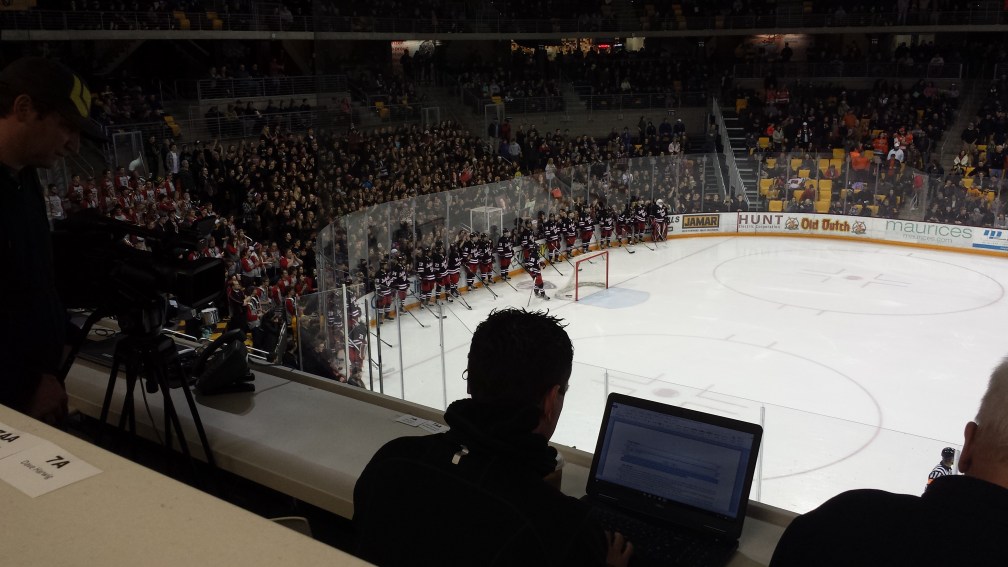
A Cycle Renewed

I’ve been slacking in my writing of late, which will happen when one is fairly busy and also coming off a rush of hockey-related activity that reached new heights this past month. I’m backlogged beyond belief on interesting articles that I’ve read and would like to comment on, though I’ll knock two out of the way in this post. I also have yet to opine on Donald Trump, which I’m told any self-respecting blogger must do or forever forfeit his credentials, as if everything there is to say has not been said already. (Worry not, I’ll let myself get sucked in at some point.)

Now that hockey is over this should conceivably be easier, though I’m afraid this alleged “spring break” I am now on will offer few such opportunities. With one last graduation looming, I have a lot on my mind, and a lot people with whom I want to spend time before venturing out into the world again. And in some of my rare free moments, I may opt for sloth instead of patient cycling, as was the case yesterday, when a 70-degree March afternoon found me beached on a towel in Loring Park. It was a dreamy escape. This freedom is only momentary, though, and it had my mind wandering back to a Roger Cohen article from a couple months ago on “ways to be free.”

In the article, Cohen describes the “ferocious ambivalence” that drives people in pursuit of freedom, with references to his own road trip through central Asia in his youth and the sublime surfing writing of William Finnegan. (I’ve never surfed in my life, but an excerpt in the New Yorker last year left me transfixed.) Cohen’s son seems skeptical that such freedom is possible in this day in age, but Cohen disagrees, and I think he’s right: for all our attempts to impose control on the world, vast swaths of it remain unconquered from the well-ordered Western mind. It will forever be this way, and we owe our sanity to it: the moments when we tap into that freedom beyond are some of the most formative moments imaginable.

Careful climber that I am, these moments aren’t always easy to find; as much as I may yearn for them and seek them out at times, they tend to be fleeting. My semester in Mexico certainly had some stretches that approximated it, but my self-discovery journey, such as it was, proved a far more inward affair that dug deep instead of roaming broadly. And, now that I am on the brink of a move to the 9-to-5 life, that hunger for adventure roars up again. It wants me on the road, or at the very least to wander through a few more Minnesota state parks to drink in the little details. For all my cynicism about journeys of self-discovery and the self-centered direction that inward turns can (though do not always) take, their power is genuine. We always seem to value things most when we’re about to lose them.

Perhaps, then, it’s helpful to read about a different sort of journey. Take the case of a Washington Post writer Christopher Ingraham, who used some Department of Agriculture data to rank all of the counties in the U.S., and declared that Red Lake County, Minnesota, was the country’s worst. The other states with counties near the bottom of the list ignored it, but Minnesotans, being Minnesotans, lashed out in polite but scathing anger. Ingraham visited, came away absolutely charmed, and now, several months later, is packing up his family and moving to Red Lake County. These moments are effective because they are so spontaneous or serendipitous, and they are life-altering in large part because they are so unplanned.

Ingraham’s story will no doubt cue its share of Minnesota smugness. Still, it’s a refreshing tale for someone who’s been dwelling on questions of status lately, and who’s trying to remember what’s worth valuing as he starts a career. It does run the risk of lapsing into complacency, a contented niceness that will forever leave me a bit restless in this state. We still need outlets for that roaring daimonic desire that every now and then surges up and reminds us what it means to be free. But in the meantime, a Minnesota spring is on its way, and it’s to renew belief in what we hold closest, no matter how small or mundane those things may seem. For that, northern Minnesota remains the perfect reminder.

State Tournament Reflection 2016

Here’s my annual reflection essay on the State Tournament, which first appeared on mnhockeyprospects.com.

Sixteen games across four days, gone in a blur and ending in a daze: another Tourney has come and gone, and as always, I’ll put fingers to keys to find what few words have not yet been said. By early March my mind is all too ready for a trip to some exotic locale, but the vacation I really need takes me just a few miles east. We make our yearly pilgrimage to the spectacle in St. Paul, a dip into tradition that somehow offers a compelling new drama, night after night.

For a second straight year, a first-time champion hoisted a trophy. Wayzata proved all those old clichés about depth and defense true, as they locked down in the first two rounds and rediscovered their game with their backs to the wall in the final. The winning goal came from pure grinding hockey, a steady offensive zone cycle that wore down Eden Prairie, forced a turnover, and a set up a shot from the point. Their hard-nosed effort warmed this Northern boy’s heart, and the relentless push was a vindication for coach Pat O’Leary, who has made an art of overpowering hockey and finally brought his crew along, rolling his four lines right down to the final horn.

The lockdown Trojans were never a given, as their midseason stumbles inspired a sea of skeptics. But by the end Alex Schilling pounced on every loose puck while Hank Sorensen hammered all in sight, and they just managed to find a healthy channel for that simmering fire. They stole the headlines from Casey Mittelstadt, the Eden Prairie golden boy who nearly willed a team to a title. Casey’s dazzling show throughout puts him in elite company, his performance comparable to Besse or Rau in recent years. But he saved his most genuine moments for after the game, pulling himself from tears to speak with poise about his loss; even in defeat, he quickly righted any wrongs, and began to learn the burdens of stardom that will likely follow him for years. His Eagles fell short in the title game for the first time, but gave every last ounce for their teammates and their inspiration behind the bench, Steve Ollinger.

Wayzata’s physical play was far from the only throwback in a Tourney field devoid of its usual suspects. The Halloween Machine from Grand Rapids made its way south for the first time since 2007, and the old northern giants flashed some of their nostalgic magic on their way to a third-place berth. They were no match for Middelstadt, but for a spurt in the second period on Friday night they had all of 218 Territory rising in unison, as the band cranked out one of its impeccably timed Olés and the west end of the arena, painted in orange, bounced in unison. United with the mass of Wayzata yellow on Saturday afternoon, Grand Rapids pulled off one last stirring comeback to bring home another trophy for 7AA.

The Burnsville black and gold also made its way back to St. Paul for only the second time in twenty years, and for one period gave us a hint of past glory. Thief River Falls, another claimant to dynasty in a more distant age, cruised to small-school third place behind a pair of genuine stars. Anoka’s Tornadoes shocked the world by spinning their way back to the Tourney, and the Lumberjacks from Bemidji axed their way through the consolation bracket. Their effort against Rapids gave us the Tourney’s only overtime affair, and its one true thriller before Saturday night. All four northern squads went home with at least two wins and a trophy in tow.

But even as the old guard kept up its proud legacy, newer faces showed the changing tides in hockey and beyond. As the suburbs grow, so goes the high school hockey success, and Farmington and Stillwater gave us glimpses of the future with their tight opening game. There is a learning curve for these teams, as there is for the southerners who got shellacked on the first day of Class A, but whole towns turned out anyway, and who can forget Mankato West’s display on that first skate up to the line? The flow poured forth from buckets left and right, its perfection driving me to self-consciously run a hand through my own mediocre mane at the intermission.

There were no surprises in Class A this year: everything went according to seed, up and down the bracket. But there was sheer, sweet relief, as Hermantown finally threw off a burden worthy of Buffalo and brought a title back to northeast. The Hawks left no doubts, dominating each and every game, and while they’re no longer the scrappy upstart story they were a few years ago, they are out of a long shadow and ready to claim a higher mantel. One hopes they embrace the challenges that may come their way next, and whatever Bruce Plante decides for the future, he has now earned himself a less anxious summer on his lake.

With no Duluth East in the field, I thought it might be a more relaxed Tourney for me, but the infectious nerves still swept through on Saturday night as the Trojans ran the clock down. That emotion never gets old, nor does this yearly dive back in to meet friends old and new, to revisit those Tournament institutions along Seventh Street or opposite Rice Park. I can even enjoy a momentary foray into that cloud of adolescent male hormones that hangs over the upper deck of the X, though before long I’ll beat my hasty retreat back to the land of free popcorn up in the press box. It’s a reminder of who we are and where we come from, even if our immediate alma maters may not have made this trip this year. It’s all timeless, and we can all go back, if only for a little while.

It’s all over now, headed into history books and video vaults and the realm of memory. Memory and that sense of rightness, emblazoned in the mind’s eye, a home where it will stay longer than in any pictures or words that try to capture it. An early spring is already melting away any icy dreams, but there’s work to be done, and it won’t be long before we begin the cycle anew. Thanks, boys, for another memorable year.

State Tourney Preview 2016

It’s finally time for Minnesota’s most important holiday: the boys’ state high school hockey tournament, which begins at 11:00 on Wednesday. Needless to say, there’s plenty of reason for excitement.

You can find me covering the Tourney in lots of places:

Twitter: @KarlEastHockey

Cold Omaha podcast preview with Danny Ryan, Tony Scott of Youth Hockey Hub, and myself: https://audioboom.com/boos/4240868-2-28-16-high-school-hockey-podcast

Quarterfinal game capsules for MNHockeyProspects: Class A | Class AA

Predictions with State of Hockey News: http://stateofhockeynews.com/2016-articles/2016-minnesota-boys-state-high-school-hockey-tournament-preview.html

Longer updates, press conference commentary, and arguments with random anonymous people on the Forum: http://www.ushsho.com/forums/viewforum.php?f=32

Also, check out the Dave LaVaque’s Star Tribune story on Wednesday about the 20th anniversary of the Greatest Game Ever Played, the five-overtime affair between Duluth East and Apple Valley in 1996. I had a minor assist in its creation.

Finally, you can also find me (and a few other Forum members) at McGovern’s on Saturday afternoon after the Class A championship game. Come join the party if you’re around.

To whet your appetite, here are some of this tournament’s biggest storylines:

Who are these people, anyway? No Edina. No Duluth East. No Hill-Murray. No Moorhead or Roseau. You have to go back to 1954 to find the last Tourney without one of those five. Even Lakeville North, which has become a regular and seemed a safe pick to come out of 1AA, is nowhere to be found. This AA field is a mix of throwbacks and newbies, with Eden Prairie being the only real regular entrant in recent years. Grand Rapids, celebrating its 15th berth, is the most regular entrant, but this is only their third of the two-class era, meaning they’ve finally caught up with Rochester Century on that front. (Sorry, Thunderhawks, we wounded Hounds have to get our digs in here and there.) The Halloween Machine is back for the first time in nine years, as is 80s power Burnsville; Anoka, whose best years were in the late 90s and early 2000s, has also unexpectedly crashed the party. On the other end of the spectrum, Farmington makes its AA debut, while Stillwater is suddenly among the favorites in its second State trip.

Can Anyone Stop the Hawks? If the AA field is highly unpredictable, A is just the opposite: Hermantown is a clear favorite, and would seem to be on a collision course with Breck in the final. If ever there were a time for the Hawks to end their long run of second-place finishes, it’s this year—though, of course, I said that last year, too. Barring a Thief River Falls upset of Breck, Hermantown’s road to the title will also go through two private schools, which would really be a nice touch for our old friend Bruce Plante. Hermantown has come a long way in the past few years, going from a plucky upstart trying to hang with St. Thomas to the goliath of Class A

Casey Time This year’s whacky section playoffs drained the Tourney of some of the state’s top talents, but one will be there in primetime: Casey Mittelstadt of Eden Prairie, the top player in the state and arguably the best in his age group in the nation. His talented Eagle team hasn’t always jelled, so if they are to win a third AA title in eight years, it’s likely on the shoulders of the junior Gopher recruit. There’s some debate over whether Eden Prairie deserved the top seed, but in a Tourney with no Edina or private schools, they’re certainly the ones with the targets on their backs.

Debuts on the Big Stage The less predictable Tourney field means the state will get a chance to see many of the top players who might not get as much recognition on the regular circuit of top teams. Isaac Johnson of Anoka is one of the state’s top juniors, while Farmington defenseman Tyler Jette got a Mr. Hockey finalist nomination as something of a sleeper. Ethan Johnson is the heart and soul of Thief River Falls, and the Prowlers will have to ride him as far as they can. Even Stillwater’s stars, such as the Cates brothers and Jesse Bjugstad, should get a little more attention than they did while steamrolling through the weak Suburban East Conference.

Late-Night Intrigue The best two quarterfinals, as is often the case, look to be the late night battles between the 4 and 5 seeds. In Class A, it’s a clash between two private schools that look pretty similar on paper, with debutant St. Paul Academy squaring off against surging St. Cloud Cathedral. In AA, where the privates have been shut out of the field for the third time in six years, we have an all-North battle, as Bemidji and Grand Rapids collide. This one should be great, even if it deprives the North of two cracks at the crown, and sets up a potential classic between the winner and Eden Prairie on Friday night. (Is there anything better than North vs. Metro on a Friday night?) It’s an excellent clash in styles, as Bemidji’s depth and steady defense collides with Rapids’ star power.

Enjoy the Tournament, follow along, and I’ll do my best to share my thoughts as I make my way through this crazy, fantastic week. See you at the X!

The Agony and the Ecstasy: Duluth East Hockey 2015-2016

2016-02-25 18.51.02

Duluth East’s string of seven consecutive 7AA titles has come to an end, as all great runs must. It came in heart-wrenching fashion, as rival Grand Rapids, so long the Hounds’ whipping boys, snatched away a 6-5 win on Alex Adams’ goal with six seconds left in regulation. East had just killed a late Rapids penalty, and the 7AA final seemed destined for overtime for a third straight year. It only took a momentary lapse; a sense that things might coast on into the sort of extra session that has treated East so well down the years. Instead, a supremely talented Grand Rapids team fulfilled its promise and punched a ticket back to St. Paul. If anyone ever earned the right to end a dynasty, it was this team, and they did it in a way that will go down in Rapids legend.

It was the sort of game that produced bedlam so incoherent that the details, in retrospect, are a blur. The leads went back and forth all night long, and the crowd at Amsoil Arena, 6,100 strong, nearly blew the roof off the building. For a fourth year in a row, the 7AA final gave us high school hockey at its pinnacle, as everyone in the building grinned manically through their nerves. This is how hockey is meant to be. Even when the Hounds grabbed their 5-3 lead in the third period, it never seemed safe. This was the sort of night where coaches’ best-laid plans went out the window, and it all turned on sheer emotion.

Not that Mike Randolph didn’t try. He switched lines and showed occasional glimpses of 2-3, and unlike the regular season game in which the Hounds sat back, they went at it with Rapids all night long. It made for spectacular theater. East used the TV timeouts to give Ash Altmann extra shifts, and by the end he was reunited with Ryan Peterson and Luke Dow, and those three marauded about the ice as the clock wound down. Even though his section final record now has a second blemish, Randolph took it with composure, and seemed downright proud of the Rapids players in the postgame ceremony. This one will sting, no doubt; it was a talented and balanced squad, even if it didn’t have the front-line firepower of Grand Rapids, East may not be able to match this depth again for a few years. But at this point, even someone as intense as Randolph can enjoy the spectacle for what it is.

Unlike some of the other big East senior classes, this one was often an adventure. They had their peaks and valleys, their moments of greatness and times of frustration. But they were playing up to their potential by the end, leaving it all on the ice as they barreled up and down the rink. One couldn’t ask for anything more. Altmann is perhaps the most identifiable name for the Hounds over the past few seasons, and was a force on Thursday night with a pair of powerful individual goals. His game-sealing dagger against Edina last season will remain one of the most indelible images in East hockey history. Peterson, a warrior through injury, likewise led this team, and has last year’s winner over St. Thomas to his name. Alex Spencer has his personal highlight reel of huge hits, Shay Donovan was always a steadying presence, Dow’s speed and dangles played a key role in many a win, and the versatile Nathaniel Benson found the back of the net for the first time all season in the section final. Auston Crist provided much-needed net-front presence, Marcus Skoog made his contributions, on John Orrey held down the backup goalie duties. We thank them for a long string of memories.

We East fans are blessed with eternal relevance, year in and year out. Even when the Hounds lose, it almost always happens in style, in a nail-biter against an elite team, with both teams giving it their all. It is hard to ask for much more. This year’s team was frustrating at times, with both flashes of great talent and head-shaking losses. I preached patience through their struggles, and with good reason: they would have it together by the end, and leave the ice with no shame. This latest batch of East players and their raucous fans in the stands are now members of this exhilarating hockey fraternity, one whose ties linger long past high school days. Whatever befalls the Hounds, be it a magical run like last season or the exploits of our alumni, whether it involves a crushing playoff loss or the rise of rival neighbors, we’re part of something that improbably draws us back, whatever roads we take.

I can now start to prepare for next week’s Tourney, which is East-free for the first time since my senior year of high school. It will be a strange feeling, but will also make it far less nervy, and I expect there will still be a host of Hounds wandering the X and downtown St. Paul. Grand Rapids’ elation at one Tourney berth makes us realize how lucky we are to have enjoyed so many, and as this great run now fades into memory, it will look that much brighter in retrospect. It began when East overpowered in Elk River in 2009, became routine in 2010, carried on through overtime after overtime in 2011, suffered heartbreak with a dream team in 2012, sought redemption in 2013, refused to die in 2014, and went on a magical run for the ages in its final season before Grand Rapids, four times East’s victim in sections over that stretch, broke through.

Some of the beauty of high school hockey comes in how fleeting it all seems, and how quickly it renews itself. There is promise for next year: a very talented junior class returns to take the reins, and as long as they find some depth, they’ll be right there for another run in 7AA. As I wrapped up my business in the press box Thursday night, I caught my enduring image from this season, one that sums up what this game and this sport means to all of us so simply: a lone Hounds player running up and down a flight of stairs in a near-empty Amsoil Arena. Conditioning for next season has already begun.