Europe 2023, Part I: Rebirth

This is the first post in a four-part series.

A simple fact of travel is that things will go wrong, and one’s enjoyment of travel is directly tied to one’s ability to adapt when things go wrong. Alas, when forty-two members of an extended family travel to Europe for a Mediterranean cruise and some offshoot adventures, there are bound to be a few victims. On this venture, I am one of them. Parts of this trip feel like they are designed as a test of patience, and it starts on day one, when the Newark airport decides to keep my plane from Minneapolis, already late in departing Minnesota, sitting on the tarmac for 40 minutes before pulling up to a gate just long enough to miss the connection.

There is no indignity quite like airline indignity. A delayed arrival in Venice is the definition of a first world problem, and there is the bizarre shared ritual of ten despondent people who have never met throwing their bags down when the gate agent, possessed of a robotic soullessness, closes the door to the jet bridge and informs us it cannot reopen. Thankfully, a United representative manages to get me on a Swiss Air flight via Zurich that arrives in Venice only five hours later than planned. Not helping the airline’s cause is the Newark airport, a poorly connected, poorly signed cesspool where some light drizzle renders 80 percent of the flights on the board delayed or canceled. (This was not my first such experience in Newark.) As of this writing 23 days later, my checked bag is still there, its location known both to United and me, yet they are in no rush to return it: no matter how politely or angrily I address them, I can be safely assured anything they tell me about its progress toward me is a lie.

So of course, my first hour and a half in Europe are spent trying to locate my lost bag. Of course, when my number is called at the lost luggage counter, some Italian marches in front of me so he can carry on some pointless argument with the staff. Of course I get the woman with the employee-in-training badge, whose look of sheer defeat when she learns United had no record of my bag because it was switched to Swiss Air will be forever burned in my memory. And of course, the driver who takes me from the airport to the water taxi stand gets in an argument with the water taxi guy before he audibles and decides to just drive me across the causeway into Venice before securing a different water taxi. My arrival in la serenissima calls for a serenity prayer.

And then I see the hotel room I am sharing with my cousin, for which only a picture can suffice.

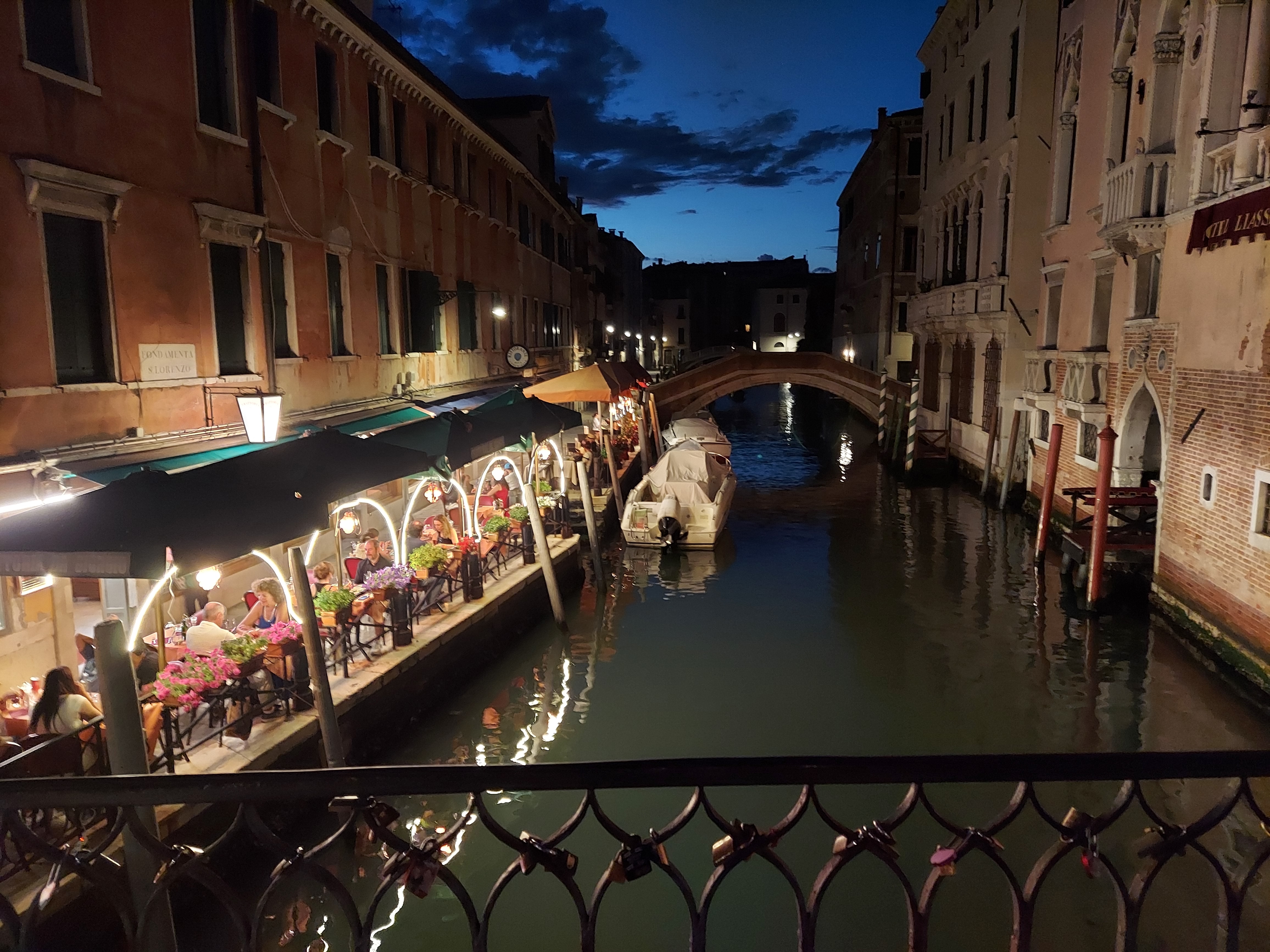
And yet, while mildly loopy after my travel ordeal over 30 sleepless hours, I am smitten by Venice. I get the taxi to myself up the Grand Canal and stand in the back, feeling vaguely James Bond-ish as it flies along. The hotel room is ridiculous enough to be a point of endless fun for our two nights in Venice, and the bed is in fact big enough to sleep two adult men with four feet between them. The room opens out onto a tiny balcony with a view of San Giorgio Maggiore, St. Mark’s Square is just a few minutes away, and tucked behind our waterfront base camp is a byzantine world of canals and alleys and invitations to wander.

After seeing other global tourist destination cities, I was expecting more garbage, more hawkers and homelessness, more general chaos. And yet here is Venice, reasonably clean, religiously tended, the nuisances kept to a minimum. Yes, the crowds do swamp St. Mark’s and the Rialto and the main pedestrian and gondola thoroughfares. But the attractions of this city are not confined to a small historic center like in so many of its peers, so it isn’t too hard to escape the crush. Across the Accademia Bridge, the Dorsoduro neighborhood offers up some rare greenery; a looping water bus trip takes a few of us to the narrow streets of the world’s first Jewish Ghetto before a chill lunch along a canal and a gradual stroll back. I do not have one bad meal here, octopus and lobster squid ink pasta and more classic Italian fare filling every menu. Every square foot of this city offers up something worth a second look.

There is no point in pretending otherwise: Venice is now a giant playground. But it is the best of playgrounds. If any city deserves to get preserved as a cultural treasure for the rest of humanity to explore, it is this one. Here the Roman world’s inheritance intertwines with the Byzantines and influences further to the east, the legacy of a great maritime republic that ruled half the Mediterranean through both trade and war. No city on earth has a built environment like Venice. Its streets and canals are an alluring maze, an invitation to lose oneself and reappear, serendipity with every step. I’m sure some Venetians would find such a take rather glib as they reflect on what has been lost in the slow museumification of their city. The slogan for rebuilding the Fenice opera house after it burned in 1996 was dov’era, com’era (as it was, where it was), but as John Berendt relates in The City of Falling Angels, the way it was had already made it subject to myriad rebuilds and renovations, a jumble of history with no clear point of return. Venice is a living monument, straining under pressures from both the sea and the crush of tourism, but it is worth saving and visiting because the life it brings out is like no other.

It is after dark that I most fall for Venice. On the first night, a group of my cousins and their spouses connects on the streets and we pick our way to St. Mark’s, the crowds unremarkable, the square aglow in the night. Later, we wind up sprawled on the flagstones along the waterfront, an array of mediocre European beers from a nearby kiosk on hand as we watch the nighttime water traffic, including a mock Venetian galley, cruise by. Several times we play a game where we identify a destination and then try to find our way without looking at maps, over a bridge and through a little arcade, past closed-up bars and lit-up ATMs, here a false turn down a dead end, there the sudden discovery of a church that in any other city would be a stunning monument but here is just some quaint afterthought tucked away on a backwater canal for our discovery and delight. When my fellow wanderers grow restless on a 2 AM retreat from Venice’s finest craft beer bar, I volunteer no details, even though I know the way. I could have wandered these streets until dawn.

I say I could have walked endlessly even though the only footwear in my possession is the same pair of boat shoes I’d worn on the plane, sometimes worn with the one increasingly gross pair of socks I have and at others occupied just by my bare feet as they slide around in a sweat-coated shoe. I am surrounded by beauty and feel disgusting. The next day, resigned to the fact that I will not reacquire my luggage before the ship cruise ship sets sail, I shop for a new wardrobe on Ravenna’s main streets. When life (or a terribly managed airline) takes your luggage, buy an Italian linen suit on their dime.

From there, the trip goes off without any major hitches. The only other real trying day is the one in Rome. Rome is big. Rome is hot. Rome is crowded. After the pleasant surprises of Venice, the Eternal City is frenetic, loud, stuffed with street vendors and pickpockets and garbage. In a city that peaked 2,000 years ago, the fraying seams are clear, and my party is in a state of collective exhaustion by the end.

For this day, I’ve booked myself a non-cruise tour through the Vatican Museums. (I did see the Colosseum, the Forum, the Spanish Steps, and the Trevi Fountain on a visit 19 years ago.) The pace through the collection is never leisurely: the whole time we are swept along through an unending stream of people, all baking in the midafternoon heat. The current tugs us from one gallery to the next, and at one point security diverts our flow through an Etruscan gallery to relieve the pressure on the Gallery of the Candelabra. The Sistine Chapel, the culmination of the tour, is awe-inspiring when one looks up; if one looks around, on the other hand, one gains the perspective of a herd of cattle shuffling through a pen toward slaughter while its Italian handlers around the edges demand silencio and scold the denser cows incapable of reading the ‘no photography’ signs. And yet there are marvels: the stunning Greek and Roman collections, the papal history, an unexpected modernist gallery, the sexy hall of maps, and my own pilgrimage destination on this trip: The School of Athens, Raphael’s great triumph, all philosophy and art distilled into one giant fresco. I am transfixed, and I wish I could linger.

I cannot linger, however, because we are on a cruise, and the boat must leave. We get just five hours to see Rome, controlled by tour guides even for this on-your-own venture. We still nearly lose one member of our party at the end, and my cousins who skipped the official tours and took the train instead also had their share of misadventures amid a few highlights. Between the time necessary to wait for my two-hour tour and the half hour it takes to actually get into the museum, the only other thing I really see outside of the Vatican is the Castel Sant’Angelo; I cross the Tiber only briefly, to meet with my mom and her partner Doug for a quick drink. For someone who reads a book titled Rome as a Guide to the Good Life on this trip (a recommendation by a reader and correspondent) and re-watched La Grande Bellezza (one of my favorite films of all time, in which Rome is a character unto itself) just before it, a day like this one can be something of a letdown.

To fixate on these troubles would miss the point. The message of Rome has never been of straightforward beauty (though it has it all over), but instead of staying power and reinvention, of finding panache amid ruin, or at the very least amid some unexpected chaos. No city can hold all of that complicated history in simultaneous tension as well as Rome, and I have a choice as to whether I fixate on the Sistine Chapel cattle pen or the wonder I find in The School of Athens. In the name of my Renaissance, I choose Raphael.

Part II is here.

Beckoning

“The beckoning counts, and not the closing latch behind you: and all through life the actual moment of emancipation still holds that delight, of the whole world coming to meet you like a wave.”

– Freya Stark

Scars do not disappear but they can heal, harden, turn to something more as they become memory. A quarter century after my brother’s birth and brief life, the grief I felt as an eight-year-old seems much more distant than it did as a teen or a young adult trying to define what family meant to him. If the world would stay still I think I could say I have healed, a scar still visible somewhere on a knee or an elbow but in no way inhibiting my functioning, just an ever-present reminder when I glance down at that once-wounded limb.

The world, however, does not stop delivering its little jolts: more people suffer or die, some more expected than others; some with gentle fades into the night, some with gut-wrenching jolts. This spring in particular has been freighted with loss, and when viewed from a detached distance, it is a particularly pyrrhic consolation to observe that one appears to have a talent for processing grief. But any healing power only seems absurd in isolation: released in a social milieu, it can take on a life of its own.

One year after my late cousin Andy and I went for a four-day trudge through endless mud, I repeat a snippet of our journey up the Superior Hiking Trail. At the time, Bear and Bean Lakes were lost in fog, invisible from view. Chagrined, I was left to narrate what we were missing, and it was not hard to find the weather symbolic of Andy’s mental state in the succeeding months. When I make the return trip there is no fog, just brilliant sun above the twin teardrop lakes, both wrapped in the embrace of those jagged North Shore ridges. I bring with me a flask filled with wine from the bottle he left me a few days before he killed himself this past February. I leave a tribute on a trail register, write a few words in a notebook, and am glad to be alone. But I feel no great sadness. Instead, I look out to what lies beyond, off toward Palisade Valley and the sublime ski trail tucked between rocky ramparts splashed with summer green. The next steps beckon.

I mark this date every year, and will do so for as long as I write here. But I also think it is easy to ruminate on loss for too long, and so, barring any sudden new insights, my writing life tries not to fixate on the closed latch. Honoring the dead has its place, but we are still here in the land of the living, and over the next few weeks, many members of the extended family that suffered this latest loss are going to live well. Very well. We are off to meet the wave.

But first, a pause: happy twenty-fifth, bro.

Pietas

This is the fifteenth installment (and, chronologically, the third) in an increasingly unwieldy fictional series. Part one is here.

In retrospect, Evan will remember that Saturday in early December of his junior year as the day the revolution began. As with most changes of regime, the catalyst was not some oppressed soul rising up to shake off chains: it was, instead, a well-off visionary who could muster a following. On paper, Evan might have been the least likely to go to the barricades, but when some teammates ask him pointed questions about the course of events in the coming weeks, he’ll shrug and say it was just how things fell into place. Over time, Evan has learned that his casual shrugs have purposes beyond the naked eye, though the only person allowed to know this secret is his co-conspirator in the plot.

“Well that was a not fun win,” Mark muses from his seat at his locker next to Evan’s. After a game on the bench Mark hasn’t bothered to shower, though he still takes his sweet time making his exit, shirtless and showing off his sculpted chest and collection of gaudy necklaces.

Mark isn’t wrong. Evan had fired home a power play goal in a 4-3 win, but the three third-period goals conceded loom over him. Their coach, uncharacteristically, has shrugged it off, said these things happen and they executed their game plan well. This leaves unspoken the obvious failing: the incumbent senior goaltender who coughed up two painfully soft goals, a second straight ugly outing that had some of the team’s top scorers trading glances and edging closer to the hyped sophomore import who is his backup.

            “One rough period,” Evan offers, with a sidelong glance at the four seniors down the row from him, including the starting goalie. These boys, the hardworking and talent-poor veterans who’d survived the cuts as talented junior and sophomore classes took over more and more of the varsity roster, are already dressed, tracking every word of this conversation. Suddenly, Evan can see the looming conflagration. To his right, tensing up, a thick, short forward in clunky boots and a camo hat over short-cropped hair, his neck welling up in a bruise on his neck from a stray puck. To his left, suddenly on alert, the sculpted, shirtless pretty boy in his Air Force Ones and salmon sweats without a hair out of place in his fluffed blond coiffure.

“We outshot them. The D held up. If it weren’t for…” Mark trails off, laying his bait.

“Weren’t for what?” asks Jason Gates to Evan’s right.

“Well, I took a dumb penalty,” Evan deflects.

“We killed it no problem, bro,” says Mark. “And that cunt you cross-checked deserved it after running Nick.” There it is: the goalie’s name is in the open now. Eyes swing to Nick, one seat to Jason’s right.

“If it weren’t for what?” Jason demands.

“I’ll let you supply that answer,” says Mark. His smirk curls on the edge of his lip.

“Marky…” Evan cautions.

“So goddamn entitled,” Jason snarls. “Nick’s been to war for us. You’ve got nothing on him.” He steps around Evan and Mark shoots to his feet.

“You’ve never even seen me play, you little bitch!” Mark yells. The whole locker room freezes. At first blush his words are absurd, untested sophomore to battle-scarred senior, but six-foot Mark has a good five inches on Jason, and his chest muscles bulge as he tenses up. Evan throws himself between the them, but even as he does so, he feels the team’s whole balance of power spin around him.

“Shut the fuck up!” Jason yells back.

“That all you got, Carhartt boy? You gonna lie to your friend and say that showing was okay? Or are y’all just a bunch of nepo kids slapping backs and making up bullshit about how this all works? Fighting for the lost cause, even though reality’s moved on. Might as well get some Confederate flags for your pickup truck, you already got the look down. You get off to that kind of shit, bruh?”

Jason staggers under Mark’s machine gun fire. The retaliatory vulgarities, though loud, simply die in the room. Evan still holds him back, but it’s hardly necessary.

“Sorry, Nicky, nothing personal,” Mark says, pasting a fake grin on his face. “Just tryna light a fire under you. But you could get better friends. Might get caught with this one’s dip tins in your car if you keep hanging with him.”

“Dude, what the fuck?” Nick asks, shaking his head. “I was trying to…nah. It’s not worth it. C’mon, Jay.” He claps a hand on Jason’s shoulder and guides him out of the locker room. Evan’s heart rate slowly settles down, and he turns to Mark, who surveys his audience, nonplussed.

“Not cool,” murmurs someone on the other side of the room.

“Prolly got a bit extra there,” Mark admits. “Sorry, boys. But you gotta know I’ll always stand up for what I believe in. And it ain’t cocky if it’s true.” He tugs on his team sweatshirt, parks a cap on his head at a jaunty angle, and makes his exit.

Evan watches Mark go out of the corner of his eye. He pulls things in and out of his bag, aimless, forgotten as small camps form around him. The remaining seniors to Evan’s right mutter among themselves, and a few others cross the room to join them. To his left, a few JV kids close ranks, the powerless bystanders in a brewing war. Across the way the team’s most skilled players are trading nervous looks, their initial enthusiasm for the promising young goalie now troubled. Just one person notices Evan on his island: Brody, the team manager, who slides over and helps him make sense of his gear.

“I didn’t know he was like that,” he whispers.

Evan pauses. He wants to agree but finds an unexpected honesty rising up within him, in need of an outlet.

“I did.”

“Really?”

“I’ve gotten to know him. I think you know that. And there’s a real good side of him. But he’s also been through, what, a girl a month since he moved here? And his family story…it’s not surprising.”

“He’s everything we’ve been trying to get rid of here, isn’t he.”

Evan shrugs, loath to admit that, yes, Mark’s display is counter to everything this team has tried to instill in its culture after the locker room brawls and weeknight parties of previous years. Brody stares at him expectantly as the locker room empties out behind him.

“Want to just chill? I’d get it if you don’t want to go to Zack’s.”

“I don’t. But you should. Distract them if it turns into a bitchfest.”

“You’d be better at that than I am.”

“I might try to talk to Mark. Someone has to.”

“People know you’re tight with him, though. You gotta be careful.”

“Tell them I’m just gonna be with Bridget. They expect that by now anyway.”

Brody shakes his head at him but sighs in acceptance. “Tell me how it goes, okay?”

“Yeah. Course.” By now Evan’s bag is ready and he heads straight out the door without a backward glance at Brody. The guilt begins as soon as he’s in the hallway and begins to process: what, exactly, is he doing? This situation is s black and white as it gets. Brody has just offered him a night of companionship, of exactly the commiseration he’s always wanted in this world, first impossible to find and recently available only in a ridiculous, egomaniacal move-in who just alienated his entire team.

Evan is so lost in his thoughts that he almost trips over the gaggle of seven-year-olds contorting themselves in the arena lobby. Only when he looks up does he see why they’re all bent to one side: they are synchronized in matching the stretches of the goalie who holds court in their midst.

“Secret to great goaltending is all positioning,” Mark tells the boys. “Anytime you see a goalie make a crazy diving save? That’s slop. He’s just making up for being out of position. The best never get there in the first place. Make it look easy.” He snaps a picture of himself amid his adulatory crowd, framed just so to catch a group of onlooking girls who giggle at his display in the background. Mark pops out of his stretch and swings to Evan’s side.

“Let em try to say I’m the selfish one when I post that,” he whispers, smirk back in place. “You know I’m playin, right? If you can’t move heaven, raise hell. Got a nice wine bottle and some gummies if you wanna swing over.”

Evan’s eyes dart about the lobby and land on Jason and Nick, who are watching him from by the doors with narrowed eyes.

“Uh…sorry bro. Gonna hang with Bridget tonight. Maybe next weekend?” He tries to shuffle off at a pace that is neither too slow for his teammates nor too fast for Mark, but when his eyes alight on Bridget, head buried in her phone in a corner, he bounds over to her and wraps her in a hug.

“What did I do to deserve that?” she asks as she narrowly rescues the phone from escaping her fingers.

“You just were you,” Evan says in relief. He bores his eyes into hers, a refuge from judgment, and decides he won’t tell her one word of the locker room drama. Bridget brushes his wet hair into place and meets his gaze, her hazel eyes aglow. “I just want you tonight. Nothing more, nothing less. We don’t even need to do anything. I just want…you.”

“Third wheel life, here I come,” a blasé voice rips through the reverie. Evan had completely missed Bridget’s best friend Jackie standing right next to them, a feat considering her height and her cascading blonde hair and her on-point halter top that outclasses the rest of the lobby. He coaxes her into the hug, though she pulls the three of them out before long.

“Jackie and I were going to binge watch dating shows,” Bridget says. “You really want to join?”

“Of course.” Evan then stops to ponder this arrangement, deflates, and deflects. “None of those dudes are as hot as me, it’ll be good for my ego.” Bridget laughs at his joke, but Jackie’s eyes are elsewhere, and he traces her gaze across the lobby toward the goalie who has just now shaken his admirers and is mentally undressing the best catch in the whole room. The way Jackie’s gaze lingers on Mark turns Evan’s stomach in ways he cannot fully explain.

Bridget’s dad collects the three of them and drives them to her house. Evan gamely laughs at the doltish hunks in the dating show, but his mind is elsewhere, and Jackie’s presence keeps him from cuddling too closely with Bridget. Jackie fields stray messages all night; are they from Mark? Evan’s phone, meanwhile, goes off like a lightning show. The hockey team dissects the drama and plans its postgame gathering in discordant jolts, but he feels so isolated from that world. Brody demands to know how his détente with Mark is unfolding, and Mark himself unleashes a barrage of media, from videos of himself with his fan club to none-too-subtle musings on the importance on belief in oneself when others try to tear one down. Evan turns off his notifications and shoves the phone in his pocket. He wishes he could nod off here on the couch.

A hand sneaks down beneath the blanket he shares with Bridget. Evan feels it ease across his lower back, where it softly massages away his tension. Somehow, she knows. And rather than interrogate his troubled thoughts, rather than lapse into some cliché, she just shows him why she is there. He wants to pounce on her, kiss every inch of her, make love to her like they’ve never done before. Just what he needed, some unfulfilled sexual desire to add to his soup of anxiety.

A few hours later, Bridget’s mom enters the basement rec room and tells them to wrap up their evening of brain rot. Her eyes linger on the blanket Evan and Bridget share, and Evan can’t help but feel her judgment, her worry that this mop-haired jock, for all his bashful sweet talk, just wants to deflower her daughter. Little does she know that ship sailed months ago.

“I made your mom some banana bread,” she tells Evan after they head for the kitchen. “We should do dinner again, the five of us.” She smiles at Evan as if he’s part of the family and goes to summon her husband to drive the two visitors home. Now he feels guilty about assuming she was judging him, layer upon layer of confusion compounding and leaving him in a rut.

“Hey.” He looks at Bridget beaming up at him and realizes Jackie has retreated to the bathroom. Finally, they are alone, there in the soft lights of a galley kitchen in an old Duluth home. This time, the hand slides down the front of his sweats.

“Oh fuck,” he murmurs and extends a hand to return the favor. “I want you so bad.”

“You’re needy tonight, aren’t you?”

“How obvious was I?”

“More than usual, that’s for sure.”

Evan laughs. “Sorry. There was some locker room crap after the game today. I’ll tell you about it some other time. Tonight, I’m just looking for an escape.”

“Wish I could give you more of one. You and Jackie were both in moods, I could tell.”

“Thanks for being the glue. You doing alright?”

Bridget envelops his lips in hers and slides her hand in deeper.

“So I see,” says Evan when she comes up for air.

“How bad is it? Should I try to sneak over?” she whispers.

“I don’t know if—”

“Has anyone seen my tablet?” Bridget’s mother bellows from upstairs. “Greg, you are coming to give them a ride, right?”

Evan and Bridget’s hands withdraw from their respective spelunking expeditions, and Evan’s whole being droops. Jackie and Bridget’s parents barge into the kitchen from different directions at once, and the small talk leaves Evan with just one fleeting good-bye embrace before Bridget’s dad leads him and Jackie to the garage. Evan suspects some pretext when he takes an odd route to drop Jackie off first, but Jackie quickly pulls him in from any worries when she confirms his looming suspicions.

“Mark Brennan’s kind of your new bestie, right?” Her gaze, steadfastly out the window, belies her casual tone.

“You could say that. He’s a fun time.”

“Bridget says she’s worried he’s competition.”

Evan scoffs. “She beats him in some important departments. But we’ve got some things in common.”

“Like…”

“Like some weird family stuff, and liking to read, and being good at hockey even though it’s not the center of our worlds?”

Jackie smiles. “Is it true his dad is stupid rich? And that he ran off on his family with a prostitute after he knocked her up and made Mark?”

“I mean…”

“Sorry. Maybe not the best way to put it. But, you get what I mean.”

“Yeah. And yeah, that’s basically right. His mom is from here, so they moved back to a place up the Shore.”

“I loved how he dragged you out to the middle of the dance floor at Homecoming. And Bridget loved it too, even if she complained.”

It’s Evan’s turn to smile. “I know she did. He just…” he trails off at the sight of the glint in Jackie’s eyes. “He moves at a different speed, you know.”

“Yeah, I’ve heard the rumors.” Jackie sighs. “Is it actually bad?”

Evan becomes aware of Bridget’s dad’s intense interest in their conversation. “I…” he fumbles. “I don’t know what to think, actually.”

“You’d tell me if I should worry, right?” she asks as the car pulls up to her house.

“Of course,” Evan says, almost convincing himself. Jackie gives him a perfunctory hug, thanks her chauffeur, and makes her exit. Bridget’s dad drives Evan in silence for a few blocks until he starts choosing some words.

“That Mark is the new goalie, right?”

“Yeah.”

“I work with Nick’s dad, you know. Tough spot there.”

“Oh. No. Sure.” Evan says, less confident with every syllable.

“Says the new kid is pretty cocky. Has some private coach who jets in.”

“He’s not wrong.”

“And hearing what you just told Jackie…”

“I mean, he’s—”

“Look, you’ve been great to my little girl, as far as I know. Just make sure you’ve got people around you who act the same way. Okay?” Evan can see that his driver is sheepish, doesn’t quite know how to say what he thinks. His immediate reaction is defensive: of course he treats Bridget well, and everyone knows he’s the one hockey player who follows his own beat. But a nagging doubt lodges in his mind and starts to eat away: for all that independent thinking, he always wants to blend in, to at least be part of the party, and when a fellow contrarian did come along he’d glommed on to him immediately, admired that reckless push even as he himself stopped short, saved not by virtue but by anxious indecision. That choice now feels like a troubling one. And then there is the matter of his after-school sojourns in a steamy car with Bridget, where he cautiously but purposefully asks her to try more and more new things…

“Don’t worry,” Evan says after far too long a pause. “Mark’s fun, and he’s super smart too, but his style isn’t my style.” There: an answer with no lies. Is it odd that trying to choose his words so carefully leaves him feeling somehow shifty?

Mercifully, Bridget’s dad turns the conversation to hockey, and Evan is free to gush about the chemistry on the top line where he’s been installed as the right wing, about the potential of some of the sophomores. Bridget’s dad is a basketball man, but he knows enough to carry his side. He asks Evan to explain the junior hockey system to him, and Evan lingers in the car when they arrive at his house to explain that yes, he sure does have a few scouts looking at him.

“So you think you’ll go that route after high school?”

“Probably. Hockey isn’t my life, but if I’m good enough, I’ve only got one shot, right?”

“Do you tell the scouts that?”

“I do. Good way to see if it’s a good fit or not.”

“Huh.” Evan surges with pride when he sees he’s made an impression. “Bet they don’t get many kids who work them like that.”

“They’re the ones who think it is life—more than the college coaches, they at least have to talk about academics. I don’t love it, but yeah—gotta play the game, or else it’ll play you.” He stole that line from Mark, but decides not to volunteer this fact.

“Sounds like high school hockey’s turned into a business sort of like that, too.”

“Sometimes. What it does have is way too much drama.”

“News flash for you, the real world’s pretty much the same. A lot of people end up playing the same roles, year after year.”

Evan, stops short at this unexpected, possibly bitter insight. What is his role, exactly? Today he was a peacemaker, or tried to be; most of the time, he is the hard worker at some remove, the devoted boyfriend, a worrier who nonetheless finds his ways to settle things. He could do a lot worse, he figures. But could there be more?

“Thanks for the ride.”

“Of course.” Bridget’s dad starts to say something else but stops, and the words he settles on are exactly what Evan needs: “Keep doing what you do.”

Evan checks his phone as the car pulls off. He has ten minutes to spare before curfew. Gifted this extra time, he does a lap down his block, silent in the December night, its stillness interrupted by only a few winking Christmas displays. He busts out one of the breathing exercises his mom taught him after she started dabbling in meditation, and for a few seconds he tames the evening’s myriad frustrations. He exhales and looks up at the sky.

Suddenly he is back at the hunting camp his dad kept with a few friends, 11 years old, the year his mom finally agreed he could go. The whole affair was a total fiasco. Evan had shamed his dad as he trembled when he held the rifle, recoiled in disgust when another man brought home a deer, suffered the mockery of the other boys in camp for his cluelessness at it all. By the second night he ignores everyone in the shack, tucks away in a corner, reads the hiking-related sections of leftover outdoors magazines by flashlight. But then his dad coaxed him from his sleeping bag to see the stars, and they’d been rewarded with a slight glimmer of the aurora, a triumph that made the whole ordeal worthwhile. He’d beamed in delight, and his dad had swatted him lightly on the back of his head and called him his lucky star.

It should be a cherished memory. Instead, the intervening years have made it a queasy one, and as he gazes up at the stars peeking through wisps of cloud his stomach knots up again, any peace brought on by his mantras lost to the great night sky. That night his dad had seemed an ideal of manhood, but he gave up any such claim with his final choice. Evan is left now with Bridget’s kind but waffling dad, a coach who punts on addressing the looming tension, and the likes of Mark’s dad, a cold, distant figure. There are no answers, save in those deep corners of the internet he sometimes probes with a queasy curiosity. He’s losing control in the face of that void, lapsing not into his dad’s depression but into his own frantic nerves and coping through retreats back into himself, a safe but lonely place.

            He snaps back to that afternoon. He’s set up in front of the net on the power play, scraps with a defenseman to create a lane as a teammate weave through the zone. He waits until his marker turns to track a pass back to the point, takes three quick strides out to free up space, wheels around just in time to collect the blind pass and snipes a one-timer into the back of the net. He normally disdains gaudy celebrations, but this is such a satisfying, high-caliber goal that he can’t help but drop to a knee, cock his stick like a rifle, and fire a fake shot before he pops up to hug his teammates. That’s the power he needs.

Evan grins to himself and sprints back up the block. He’s halfway up the front steps before he registers the light flooding from the house, not just the one stray lamp his mom usually leaves on for him. Something is up. It isn’t curfew yet, is it? Has something happened in the family? Does she somehow know what he and Bridget did in his bed last weekend? He pushes the door open.

“Bout time, you lovebird.” Evan does a double-take at the sight of Mark at the dining room table across from his mother.

“You have a visitor,” Charlotte says in bemusement at her gawking son.

“Wha—how long have you been here?” Evan asks.

“Two hours, maybe?” Mark looks to Charlotte for confirmation, and she nods. “Since you ignored my third call. You do make me work, you know.” He sips idly at the tea in front of him and pours a serving from the pot on the table into a waiting third mug.

“Sorry, didn’t think…” Evan mumbles. “Sorry, Mom, there was some stuff after the game today, I should’ve…”

“Mark’s told me all about it,” she says. “Though for the past hour we’ve been on Aunt Cathy’s work in Mexico. Did you know that Mark’s been to a dig site in Egypt? You’re both amateur archaeologists!’

“Evvy knows how to dig deep,” says Mark. “Why we love him.”

Evan is too incredulous to groan. “And here I thought I was going to bed. Can I put some of the rum in my tea?”

“You promised no drinking during the season,” his mother chides him, a laugh still on her lips. “But I will leave you two. I’m sure you have more pressing things to talk about than Aunt Cathy scolding you for brushing the artifacts too vigorously.” She gets up and hugs her son, and he returns it a moment too late, sheepishly.

“Thanks for the tea and chat, Mrs. Evvy’s Mom,” says Mark. “Next time you gotta tell me how Evvy introduced you to Bridget. You just had to tease me with that one.”

Charlotte giggles. “Behave yourselves, and don’t stay up too late.”

“Dope.” Mark watches as Evan’s mom goes up the stairs, and as soon as she’s out of sight, he goes to the liquor cabinet and tips some of the rum into his teacup. Evan slumps into a seat and shakes his head when Mark offers him the bottle.

“You’re such a good boy.”

“You’ve got no limits, do you?”

“Who’d ever want that?”

“Some of your teammates, for one.”

“Damn, Evvy’s firing shots.”

“Honestly. What did you think of what happened after the game?”

Mark returns the rum to its perch and sniffs at the contents of his mug. Evan tries to read this pause, to discern if the hand brushed through those flopping locks is one of exhaustion or a vain restoration. He is here, clearly troubled, or at least in search of something from the closest thing he has to a friend in his new home. But what? Forgiveness? Commiseration? Some blurry mess of all the above?

“For the record, your mom did straight-up offer me a drink.”

“You’re kidding me. She’d never do that to me.”

“Have you ever asked?”

Evan shrugs, concedes the point.

  “I’ll say this, she read me as well as anyone ever has. She coulda just told me you weren’t home. I can charm, I know that. But she just gave me two hours.”

“You actually talked about today with her?

“I didn’t exactly quote myself. But, yeah. Why wouldn’t I?”

“Most of us don’t do that with their friends’ parents.”

“I’ve never been most of us.” It suddenly strikes Evan how, for all his wealth, for all the heads he turns, Mark must be truly lonely in his path through the world.

“What did you tell her?”

“That I fucked up and said too much. And that I was here to apologize to you for putting you in that spot.” Mark sips from his mug and bores his eyes into Evan’s.

“Well shit. Thanks.”

“Did you think I wasn’t sorry?”

I mean, you didn’t sound it.”

“Fair. I wasn’t, in the moment. But I stopped and I thought and, well, here I am. The gates of hell are always open. Going down’s the easy part. Coming back up is where you gotta work. But Evs…no matter how much I get handed to me, I’m gonna work.”

Evan smiles. “So I do think you should start the next game.”

“That’s right you do.”

“And what you said about Jason, and the seniors…I mean, it was brutal, but…you know, there’s something there. Life is more than some endless party with the boys. Gotta get out and see so much more.”

“Knew you were mine all along.”

Evan laughs. “You should still probably do a real apology, though.”

Mark sighs, sets down his mug, and pace the length of the dining room.

“I will. But only when the moment’s right. When I can fire em up and make em think we came together as a team or whatever.”

“There’s always a grand plan, isn’t there?”

“Sure is.”

“Marky, I love ya, but you’re the weirdest team player I’ve ever met.”

“Guess when you get raised like I’ve been, you get weird ideas of what it means to be part of a team. Who would’ve guessed?” Mark picks up a piece of the banana bread and munches his way through it. He appraises Evan, who is starting to fade into exhaustion, rubbing at his eyes.

“Does make me wonder, though. Why are you such a team player? You’re the rebel against just being one of the boys, maybe even more than me, but you almost do more than anyone to keep it together.”

Evan snaps to attention and takes a piece of bread for himself before it disappears. “Because I’ve lost things. And when you lose things, you hold on tighter to what you have.” He sniffles, chokes up, hates himself for it, and then jolts in shock when Marks wraps a hug around him.

“Evs, you feel it deeper than anyone I’ve ever met. And that’s what makes you the best.” Mark slaps him on the back and releases him. “But get your shit together now.”

The boys both laugh. Evan assumes a casual lean against the kitchen doorframe, at ease even as he dabs at his eyes. Mark is right: his emotions seem so vivid compared to the facades on so many as they drift through the world, whether he is on the ice or in the classroom, stealing time with Bridget or probing at friendships, even when he sits down on the beach and feels the pull of a radiant summer day along Lake Superior. He feels it, he feels it deep.

“Sorry I get like this some.”

“Don’t be. I admire it. And it hits different for me, but I know the feeling.”

“Yeah.” Evan nods and pulls himself up from his lean. “I can tell. You’ve got things you feel real deep, too.”

“We both get it,” says Mark. “Never trust anyone who doesn’t.”

“How do you know if someone doesn’t?”

“Fair question. But I like to think I’ve got a good eye for it.” Mark barely misses a beat, still chewing the bread. “Hey. Bridget and Jackie are BFFs. You think Jackie gets it?”

Evan is caught between a laugh and a groan. “She does. But she’s sharp, you know. You’d have to work for her. Way more than with…well, all the other ones.”

“Game on, motherfuckers. Think I’ll host a party next weekend. Show the boys some hospitality to make up for today. Though I’ll have my own agenda.”

“Dude, you never quit, do you?”

“I think you know my answer.”

“I’m not sure anyone can keep up with you, honestly.”

“I got my pace, Evvy. No apologies.”

“It feels…manic, almost. Are you sure you’re doing okay?”

“I’m fine, yeah. But I’m here to be way more than fucking just fine.”

“Yeah. I know what you mean.” Evan says it automatically, but it is true. He knows exactly what Mark means.

“Of course you do.” Mark beams as he rediscovers his enhanced tea and polishes it off. “Mind if I crash here?” Only now does Evan notice that Mark has come with a small duffel bag packed for the night.

“Do I have any choice?”

“Evs, you’ve always got a choice. You could kick me out and invite over Jason and Nick if you want. You’re the heart and soul of the team, everyone knows it. Up to you to decide the culture you want.”

“You’d better make this a damn good apology.”

Evan sets up the air mattress in his room, a process drawn out by repeated consultations with the directions and ample hushed swearing. When Mark goes to clean himself up in the bathroom, he finally responds to Brody’s five unanswered texts, and ropes in his linemates for good measure: ‘Talked to Mark tonight. He’s sorry for this afternoon. And he’s the best we’ve got. Gonna ask Coach to start him on Tuesday.’ He relishes the responses, first gawking and then promising support. The coup is under way. Mark will claim the starting job and won’t release it until his graduation.

Pleased with his work, Evan braces himself for pillow talk and further dissection of Mark’s social standing. But instead, Mark drops on to the freshly made air mattress and fishes a yellowing, hardcover book from his bag.

“What’s that?” Evan asks.

“The Aeneid.”

“The hell is that?”

“Evvy, I expected better of you. You philistine.”

“Something from an old white dude who’s been dead a few thousand years. Okay.”

 “Virgil. Story of how Rome got built. This bro Aeneas is one of the losers in the Trojan war. Spends a long-ass time wandering in the wilderness after it. Way worse off than Odysseus, though at least he got to bang Dido for his trouble. And now he’s about to get with this Latin princess. My kind of stud.”

“Escaping your parents’ Trojan War and starting your own empire. I get it. But aren’t there some wolves involved somehow?”

“That part comes later. But we’re in northern Minnesota, I’m sure we can find some around to fit the script.”

 “Alright Mr. Wilderness. I’m taking you to the Boundary Waters next summer.”

“Bring it, bro. Let’s build our Rome.”

More Than Fine

This May, my good friend Mike Meaney had the privilege of delivering a convocation address at Georgetown University’s commencement (starting at 1 hour 19 minutes into this video), and I, in my now decade-plus role as his in-house editor, had the pleasure of a providing an assist. Mike makes an art of both real talk and lingering quips, and his take that “a pretty good indicator of what you are truly into is what you are looking up on Wikipedia at midnight when you should be doing something else” has wormed its way into my brain ever since.

Though I am a voracious Wikipedia consumer and think that the open-source pursuit to catalogue human knowledge is a rare, clear triumph of the internet era, I will confess this is not a helpful heuristic for me. This is in part because I am one of those Luddites who takes research on sleep and mental health seriously and turns his phone off at night, and in part just because I am old now and rarely make it to midnight anymore. Pedantry aside, however, Mike’s question pulled me back to the topics that are surefire ways to distract me from more immediate needs: what it means to live in community, what it means to come of age and find connection in a world where norms have shifted rapidly, what it means to find anchors in a fluid world. This question permeates so many lives, and yet there is such a stunning disconnect in contemporary discourse around what it means to do well that few people seem to have the right frames to talk about it.

Three recent Ezra Klein podcasts dip into this soup of topics. The first, with Richard Reeves, interrogates the array of indicators that suggest boys and men are struggling in contemporary society. The question of masculinity in the twenty-first century is the one topic I have been trying and utterly failing to write about in essay form on this blog for ten years, though I have interrogated it relentlessly through fiction. (A companion piece to this essay, whose genesis long predates it, will appear tomorrow.) The other two focus on teenage mental health, albeit with much broader applications to all of us: in one, Jean Twenge systematically swats down any doubts that it is indeed staring at phones (often at night when one should be in bed) that is the lead culprit in a whole host of negative trends, and in the next, clinical psychologist Lisa Damour claws at the nuance of micro-level mental health and the heightened challenges to life in an era of breakneck change in media and how humans socialize, and its resulting effects on the cultural infrastructure and ways of being we all inhabit.

We live in a time of hyper-focus on mental health. In many ways this is a vast improvement over prior eras of swallowed feelings and dismissal of genuine traumas; at its best, this new language has injected necessary nuance and given many people the tools they need to unravel the forces that hold them back. It is also, I think, a natural outcome of a world in which fewer and fewer people work with their hands or tackle the physical world at all, and are instead left to sort through an endless web of relationships and human-generated content in almost every waking moment. But as the court contrarian, I was gratified to hear Damour say that psychologists are “surprisingly agnostic about emotions.” The existence of negative emotion is a natural reaction to certain things in life, and is not in and of itself a crisis; it is instead “data coming across the transom that can be put to good use.”

I wish I could say I am a model of stability who methodically and dispassionately analyzes any negative emotion that floats into my brain. As a kid I had some social anxieties that certainly kept me from living as fully as I very much wanted to, a fact as painfully obvious to my teenage self as it is to the adult pondering how I’d handle my own hypothetical kids. (The fact that they are still hypothetical probably has its roots in these very struggles.) Upon my college graduation I had a crisis of purpose that, while ultimately clarifying, probably involved more wallowing than it needed to; last year, as my work life hit a nadir, I plowed forward with a stubborn and rather manic resolve that did my blood pressure no favors. At no point has my state come anywhere close to resembling a checklist for depression, and even the more diagnosable stints of anxiety always seem rooted in some genuine, real stressors, which Damour tells us are in fact healthy reactions that we can learn to understand and address. Never has any malaise drifted into the sort of vague vibe that makes anxiety clinical.

I diagnose in all of this a certain tunnel-visioned bullheadedness; one that has no doubt held me back in certain ways, but also gifts me with a deep sense of loyalty and commitment and a refusal to quit, all of which present as virtues. Lying beneath much of this is a hyper-sensitivity, at times crippling but also endowing me with perceptiveness and an ability to adapt to a complex world. I have my coping mechanisms down pat, and I know what to do when the low moods come; while my solution may not always address the underlying problems, they stabilize situations with relative ease. I never stay in the dark for long, and I can bury most outward signs of struggle, which is a helpful model when one tends to surround oneself by other type-A achievers who run the risk of feeding off a collective anxiety. I know myself, in success and in failure and in all blurred stages in between, all with a healthy respect for what I do not know, too.

And so I conclude that I am fine. But the more I hear this word issue from my own lips, the more it grates on me. ‘Fine’ is a detail-free baseline, a binary in which the two choices appear to be ‘acceptable’ and ‘bad,’ as if the goal of a life should be to cut out the bad without focusing on what comprises the good. As if emotions that drag us down are the only ones worthy of attention, a lassiez faire life of crisis management followed by one great big shrug about what comes at the end of the dark night of the soul.

I am more and more convinced that the great and perhaps potentially fatal flaw of the evolution of a modern liberal society is the collapse of a view of the human condition. The Richard Reeves interview on the state of men is brilliant in its diagnosis but a bit flaccid in its ultimate recommendations, and while I am on board many of his proposals, this disconnect is emblematic of the deeper issues with modern society: in the face of crises around the very question of what it means to live a good human life, the proposed answers are all technocratic fixes around the margins. Obsessed with harm reduction and scared to even use the language of questions of the human soul, it resorts to life hacks.

And so, in the pursuit of more of them, I acknowledge the moments when I have been more than fine. When my high school self, defined against loss, set forth on an unerring pursuit; when my college-age self transcended a single lens and learned to swim in different seas. When, after graduation, I appreciated that those pursuits alone wouldn’t cut it, and that I could pour out hundreds of thousands of words that would allow me to make something approximating sense of my world. When, in graduate school, I applied those early lessons and sought to build a thick network, both broad and deep, and chased a career that tackles at least one aspect of the malaise I diagnosed. When, as a pandemic set in, I resolved not simply to get by but to thrive, healthier than ever and, if anything, emerge as more of an extrovert, more dependent on sharing thoughts with people than before. When, upon hearing of the unthinkable, I immediately sat down to write because I had a quasi-religious belief in my ability to find the right words that would help others begin to heal.

As we pursue those questions that we read about on Wikipedia at midnight, may we all think about how doing so can make us more than fine. May we surround ourselves with other people who challenge us to be that, if it’s what we desire. And may we willingly engage on questions of what a good life is for and center that in our discussions about well-being, not just the minimization of harm, or the postponement of the good life as some higher-order good to be ignored until the rest is all in order. (It probably won’t ever be, not totally.) The questions in here are the ones we need to ask, and the rest will follow from that.

A Merge to Nowhere?

In most Minnesota hockey communities, the youth program it tightly aligned with the public high school whose boundaries it shares. This model has created pipelines from mites up the high schools that compete for State Tournament berths every season. High school teams go out of their way celebrate their associated youth teams. Young hockey players wear jerseys with the same name as their high school heroes, and they get groomed as future Jefferson Jaguars or Edina Hornets or Hermantown Hawks. It is not without its frustrations: of course, not every kid in a public school’s attendance area goes to said public school, programs can sort into haves and have-nots, and there are some who would rather skim off the cream and not have to deal with community boundaries. But this has been, implicitly or explicitly, the foundational model for the sport in Minnesota.

The Duluth Amateur Hockey Association has long put its own twists on this story. The city is famed for its Mite and Squirt-level neighborhood rinks, which have then filtered up into PeeWee and Bantam teams divided by the two public schools, East and Denfeld. But times are changing: this past season, Duluth debuted a unified, citywide Squirt A team. On the heels of this move, DAHA has proposed the merger of its PeeWees along the same lines, followed by a subsequent merger of the Bantams. Duluth East and Duluth Denfeld youth hockey will, effectively, be dead.

Only a blinkered nostalgist would say nothing had to change. The youth rinks have been slowly but surely shrinking in number, pressured by declining player numbers in many neighborhoods and hyper-concentration in others. Some rinks have strained to keep the volunteer bases that keep them viable, and in others, school boards have decided that parking lots were better uses for places where kids once played. By PeeWees and Bantams, Denfeld’s numbers are worryingly low, and while East’s are substantially better, the Hounds aren’t fielding teams at all levels, which creates some talent mismatches. It also shows in the results: despite fairly large youth numbers at the youngest levels, the city’s talent output has dropped off visibly over the past decade, even as a certain neighboring community reaches new heights. Something about the current system is not working as well as it could.

Unified Youth Programs, Sputtering Public School Hockey

But is a single, city-wide youth program the answer? We have some evidence from other communities that feed multiple high schools from a single youth program might be of some use. And a rundown of the case studies exposes a simple fact: in not one case does the hockey landscape in these places with multiple public high school hockey programs fed by a unified youth program look like that classic model.

St. Cloud may be the most immediate analogue, as a similar-sized small metro to Duluth with two public high schools and one private school and a single youth program. It’s hardly a perfect fit, as the St. Cloud schools had little statewide success outside of some very early Tourney appearances by St. Cloud Tech. But because of that, it’s a bit of a canary in the coal mine, as its schools’ hockey numbers dropped as development moved into more suburban areas. Apollo High, after dropping to Class A, did manage to claw out a couple of Tourney berths despite low numbers in its final years before it was forced to merge with Tech and create one single public high school team. The merger had no discernable impact on St. Cloud public school hockey success: the dominant force throughout has been private Cathedral, which has been the magnet for local front-line talent for going on two decades now. The unified public school team, meanwhile, typically putters along in the lower half of 8AA.

In recent years, Rochester has had one single youth program feeding four high schools. It is weaker hockey country, but it has historically had a bit of State Tournament success; John Marshall won a Tourney in the 70s, Mayo had some legitimately good teams in the 90s, and the newest school, Century, scraped together a few Tourney appearances in the 00s, even as the Lakeville schools rose to dominate Section 1AA. But since 2010, there was a brief period when private Lourdes was the talent collector, and ever after it has been fairly bleak. With the likely demise of John Marshall hockey forthcoming, it does not look like it will get better. The fact that a uniquely wealthy, large city with four high schools has landed with a model that cannot muster more than one Bantam AA team does not inspire confidence.

Woodbury is a well-off East Metro suburb, and on paper should be good enough to follow the trajectory of some of its peers like Plymouth and Eden Prairie and Andover and produce hockey powerhouses. Woodbury High did have some abbreviated success in the mid-2000s, but after that burst and the subsequent opening of East Ridge High in 2009, its high school teams have been mediocre at best. The two public schools, while sometimes scrappy mid-level seeds, have mustered little in the way of sustained success, all as the rosters of Hill-Murray and Cretin-Derham Hall and some other East Metro powers are littered with Woodbury kids. Perhaps not coincidentally, an East Ridge group has emerged to advocate for a breakaway that would create separate youth programs for both.

The unified Chaska-Chanhassen youth program is somewhere on the Woodbury trajectory, just a decade or two behind in the cycle and just now rising to potential greatness. And yet, just like these other examples, the youth program has seen a steady drain of talent, and a substantial herd mentality seems to take hold, with the bulk of the good players going to Chaska for a few years, and now with many of them off to Chanhassen. While it is entirely possible that this Chanhassen group will break through in the near future, the two schools have yet to land a State Tourney berth for their efforts.

The story of Minneapolis over the past few decades is unlike that of any other Minnesota city, and major demographic shifts and reactions to it changed the hockey environment more drastically than anywhere else. A city that once constituted almost an entire section and now musters just one hockey team for the entire public school system. (I told that story of urban change and high school hockey in a post some eight years ago; some details could use some updating, but the overarching narrative is as true as ever.) In some ways, this is the most uplifting story of what a unified youth program can do: after a long time in the wilderness, youth numbers started recovering maybe 10-15 years ago. Under Joe Dziedzic the high school team has become a semi-contender in Class A over the past few years, including a 2022 State Tournament appearance. Such success would not be possible without the allowance that they play in Class A, though: Minneapolis’s best players routinely attend Benilde, Blake, Breck, and Holy Angels. The city schools have not produced a D-I player in over 20 years.

Other Roads Taken

Not every youth program that feeds multiple high schools has gone the route of unified Bantam and PeeWee teams. The results here are scattered, suggestive of potential but far-from-guaranteed advantages. Separate youth programs on their own aren’t enough: both Bloomington schools, including former blueblood Jefferson and blue-collar Kennedy, have been on a steady downward trajectory, with all their talent draining outward, even without Minneapolis-style demographic change, especially in the Jefferson attendance area.

But there does appear to be some limited success when separate feeders for high schools can remain viable. The Lakeville schools, which split into North and South a bit before East Ridge and Chanhassen Highs opened, are not as large as some of the west metro powers and benefit from a weak section 1AA. But they have managed to put out some very good hockey teams and some very high-level talent, despite having separate youth teams. St. Paul has faced many of the demographic pressures Minneapolis has, but kept its youth teams separate for as long as it could. While its teams have also struggled for a while now, it has at least maintained more high school programs with a smaller population, and even with weak numbers, the soon-to-be-late St. Paul Johnson has still put out some sporadic stars and pulled the occasional playoff surprise. Now, however, even that long play seems to have run out.

What This Means for Duluth

I am in no way saying it is a sure thing that a unified youth program will cause the demise of local public high school programs. But the claim that it may forestall such trends appears unsupported by evidence from comparison cases, and there is at least some evidence that a single youth program serves instead to weaken any ties to the public schools and strengthen funnels to a place where all the good players can come together (namely, private schools) or just leads to a general dispersal far and wide. Of course, it is not the goal of a youth program to prop up public high schools; it is to develop hockey players. But we can’t pretend that this shift isn’t a concession to a change in the landscape.

Maybe hockey roots are deep enough in Duluth that the city can buck some of these trends: maybe Denfeld can find the resources it needs to stay alive through a time of thin numbers, and maybe the new East regime has the desire and the design to harness the program’s great legacy and keep it what it has been. But it is also entirely possible that we see a merged public high school program in the next few years, and no one should be too surprised if that product ends up being very mediocre amid a general talent exodus. With Stella Maris looking to get hockey off the ground, the vultures are already circling.

Maybe that’s how it will be anyway. Maybe political and economic changes in Duluth are too significant; the city is in a strange and complicated place right now, and my thoughts there are too complex to summarize pithily here. Maybe the escalating costs and year-round cycles that increasingly define this sport are too powerful, and this is just another marker in a slow but steady death march for community-based hockey that no realignment within a youth program could ever stop. The drift toward hockey domination by private schools and a few affluent talent magnet publics may continue, and that itself may just be a waystation on the road to the AAA hockey that a small but influential core of hockey maximalists desire. The forces are what they are. (For that matter, maybe the forces at play are such that even Stella hockey will be stillborn and Marshall will remain mired in the tough place it has landed since the loss of Brendan Flaherty. The AA landscape has become hard enough for even good, deep East teams to compete with, and Hermantown hegemony in local Class A hockey blocks the easier road some privates have used as a stepping stone.)

My point, then, is that decision-makers should be clear-eyed about what has happened in other places. Relying on the exceptional efforts of committed volunteers is not a long-term strategy, and all the celebrations of unity that will come with a single Duluth jersey for the youth ranks will mean little if broader incentive structures for families aren’t in alignment. The strategy is in the much harder work of growing numbers, retention, and finding ways to make sure this sport is accessible to people who aren’t just a who’s-who of the wealthiest locals and well-connected hockey people.

Easy for me to say, I know. I will remain a loyal, no matter which course DAHA follows, and I am sympathetic to anyone who has to struggle with these decisions. But as someone who still thinks Minnesota is the State of Hockey because it has followed the old Herb Brooks maxim on building the strongest possible base of the pyramid, I can only think of this merger as another chink in the armor of the culture that makes this state unique.

California 2023, Part III: Enriched

This is the third in a three-part series. Part I | Part II

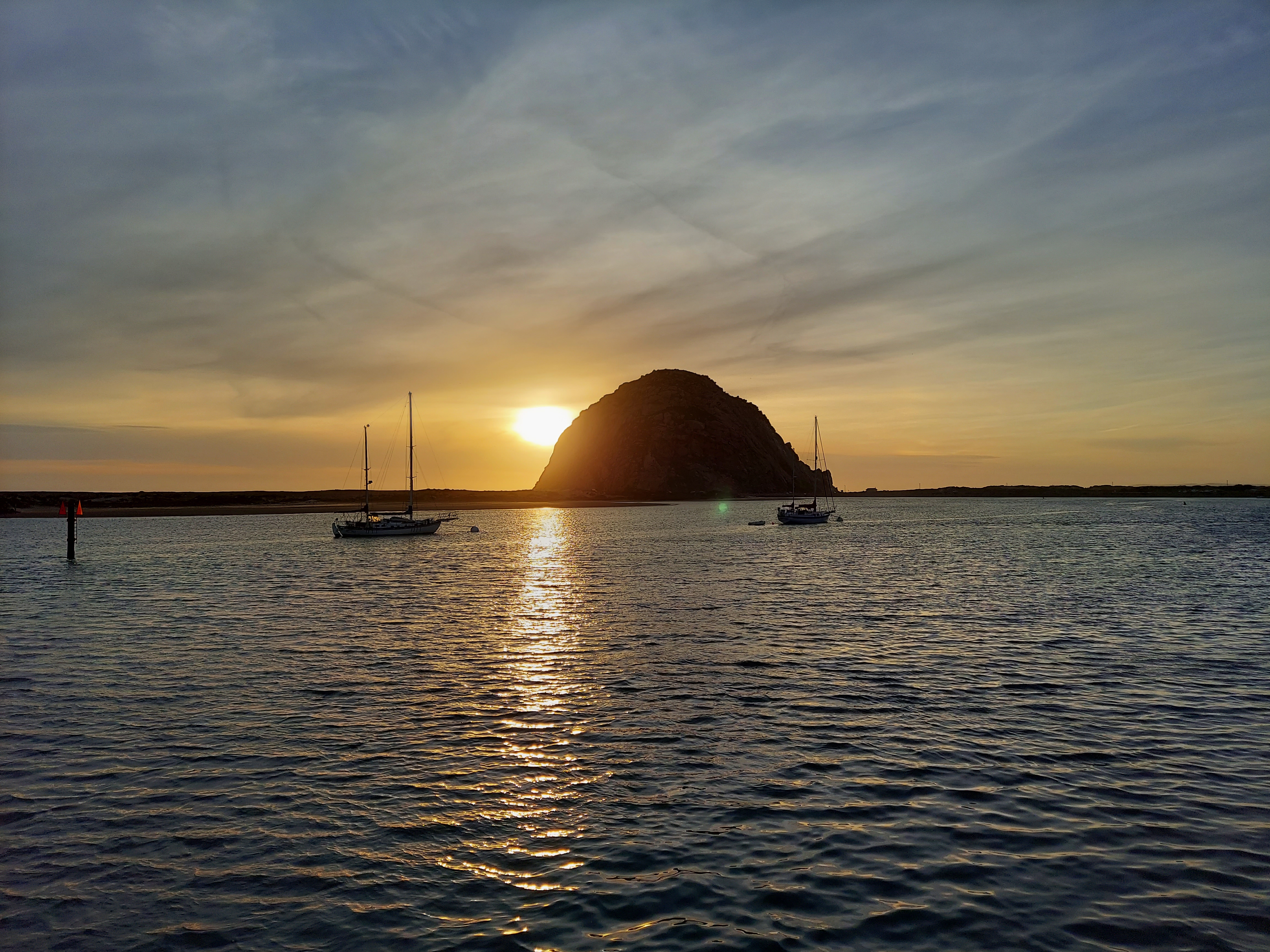
Morro Bay is a sleepy midway point on this push up the coast, and while I take another pause along the harbor over chai and a muffin from a funky shop, it is time to move on from this inquisition into memory. Next, I am obliged to visit that land variously known as San Simeon, La Cuesta Encantada, even Xanadu: the castle built by William Randolph Hearst on the southern end of Big Sur. Alas, I see no zebras, and the Casa Grande never quite shakes a layer of the absurd for me, this Mexican cathedral of a house overloaded in tapestries and collected ceilings and art to a plutocratic excess. But the guest villas are on point, the Neptune Pool stuns, and the setting, artfully interwoven into the estate by architect Julia Morgan, lives up to all the wishful dreams of its builder.

Joan Didion may have biased my view of the place. In “A Trip to Xanadu” she calls it “exactly the castle a child would build, if a child had $220 million and could spend $40 million of it on a castle: a sand castle, an implausibility, a place swimming in warm golden light and theatrical mists, a pleasure dome decreed by a man who insisted, out of the one dark fear we all know about, that all the surfaces be gay and brilliant and playful.” But I also agree with her sentiment in “The Seacoast of Despair,” where she compares it to the monumental abodes of some East Coast barons of industry: “San Simeon, whatever its peculiarities, is in fact la cuesta encantada, swimming in golden light, sybaritic air, deeply romantic place.” In no place else could an estate like this look somewhat reasonable.

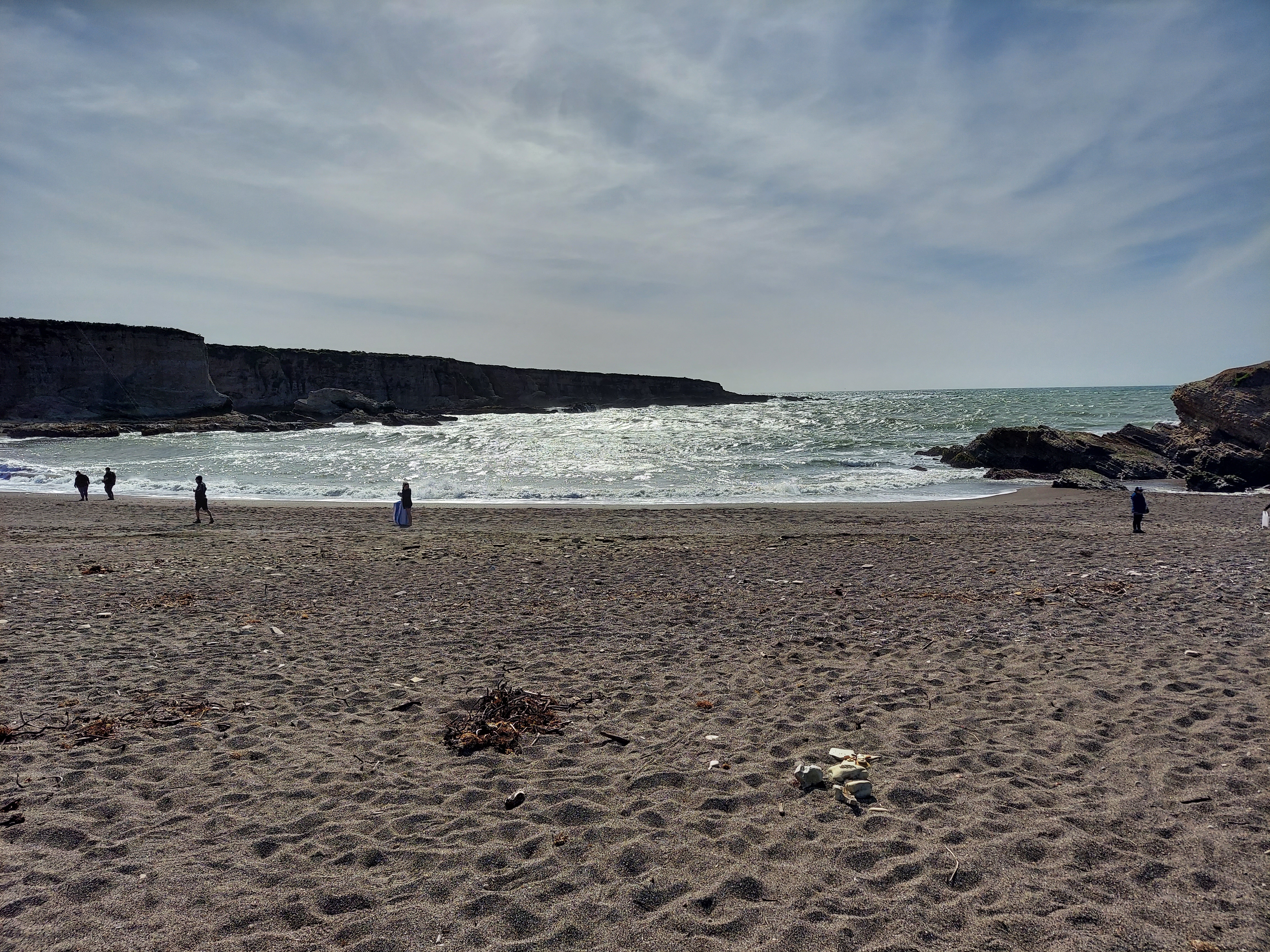
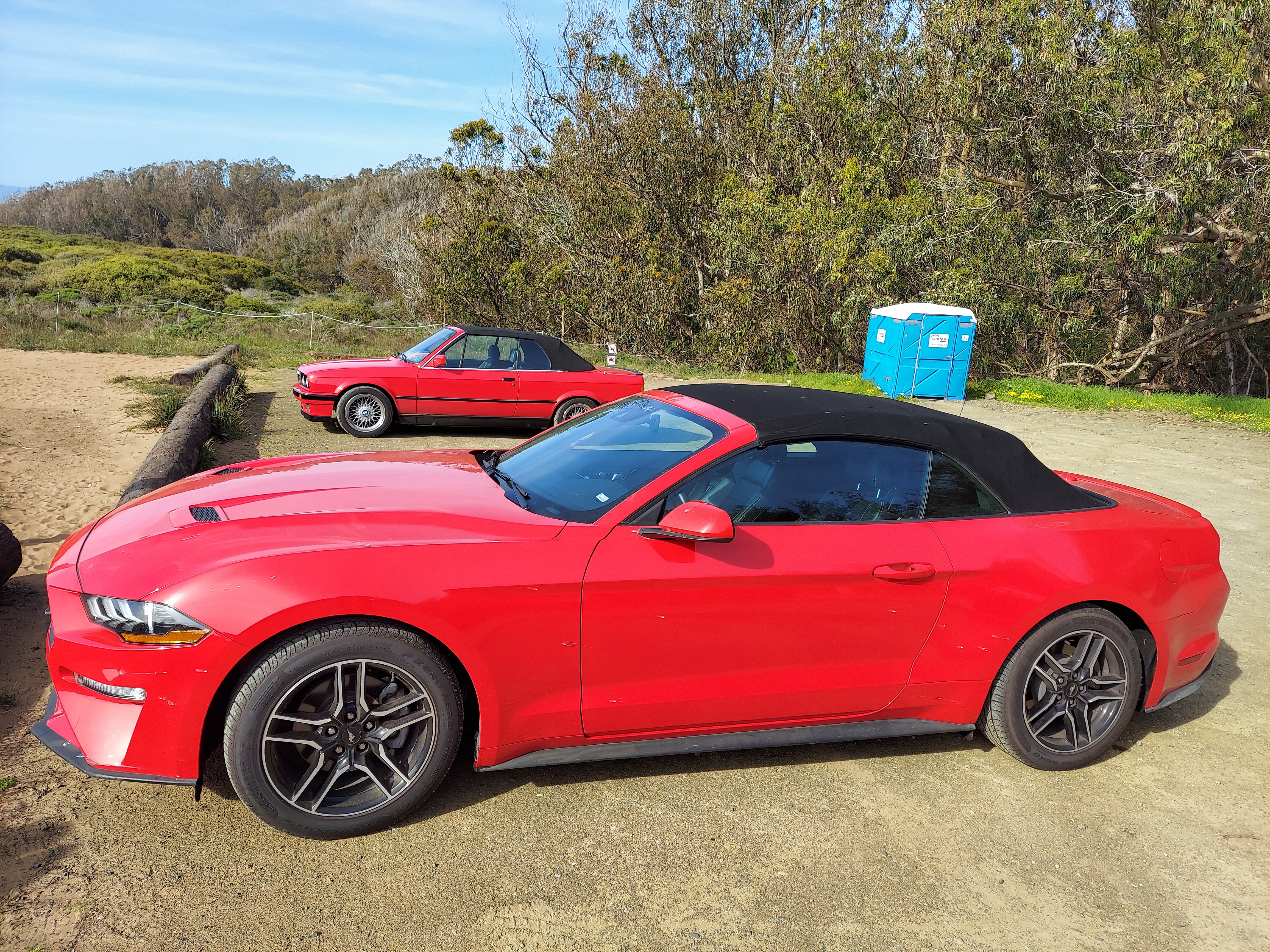
The romance comes from Big Sur, where spring landslides have now twice foiled my hopes to traverse the whole route. I settle for going a few miles past San Simeon to turn around at a lonely lighthouse at Piedras Blancas. All of the crowds have disappeared here, and my Mustang is alone, nestled into the chaparral, the surf once again mesmerizing. From there, I swing inland to the 101, a pleasant but unmemorable drive excepting a tasting at a winery in Paso Robles. Upon hearing this city name issue from locals’ lips, I conclude that Spanish speakers, when trying to figure out how to say the name of a California city, should imagine the worst pronunciation possible and will thereby be correct. I sigh theatrically and shoot north on the 101.

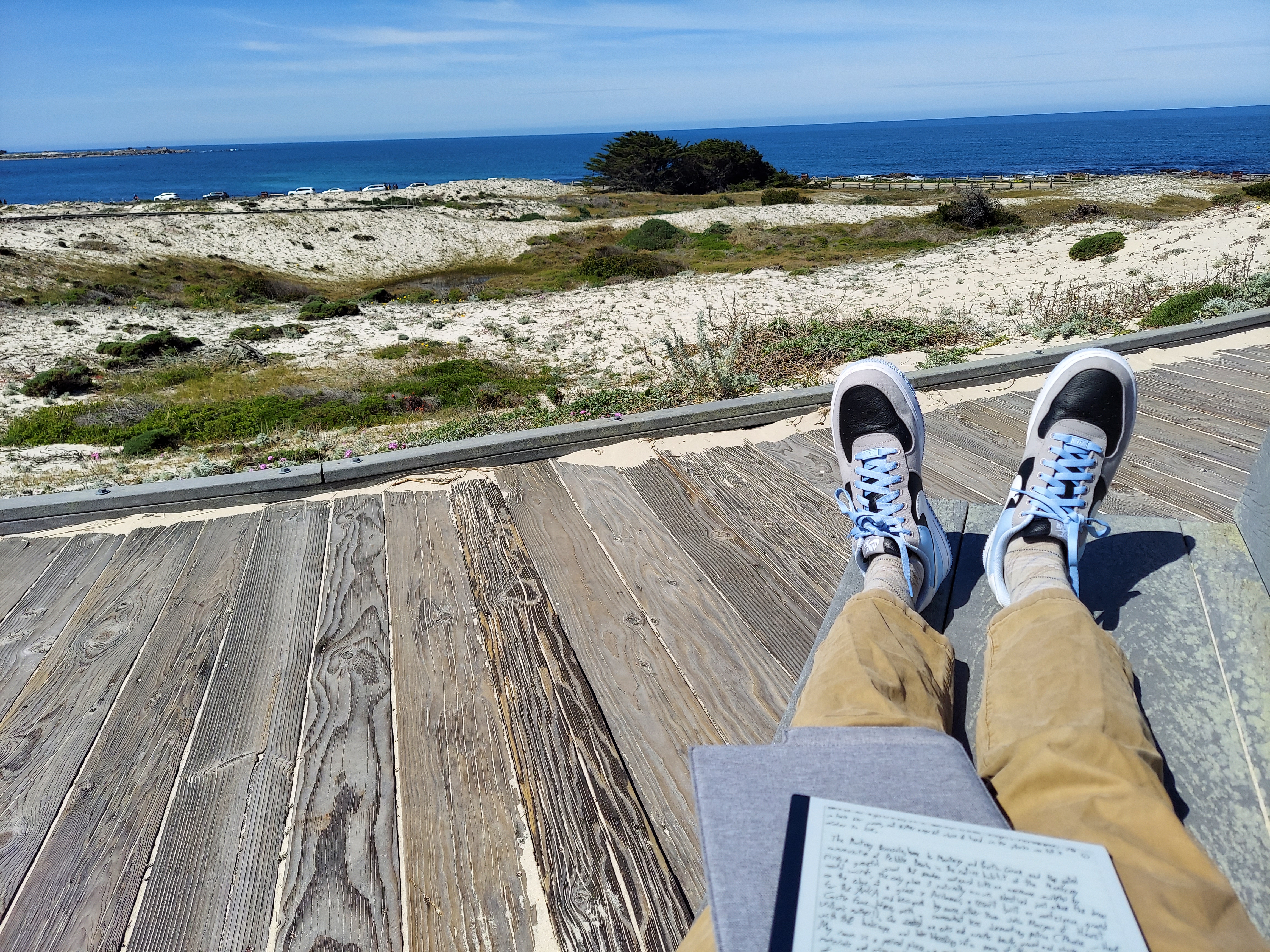
The Monterey Peninsula, home to Monterey and Pacific Grove and the gated communities at Pebble Beach, is the only native habitat of the Monterey pine, a graceful giant that reaches outward in accordioned layers, all sculpted by coastal winds. Nestled just above the dunes on the edge of a grove is Asilomar, a resort built as a conference ground for the YWCA and designed by none other than Julia Morgan of Hearst Castle fame. Here, with a somewhat less eccentric patron (Phoebe Apperson Hearst, who just so happened to be William’s mother), she created an Arts and Crafts beauty, wood and stone blending with the landscape and later bleeding into many of the Pacific Grove bungalows. My room is a period piece, a proto-modernist retreat of raw materials and crisp angles and balconies, outfitted simply and no TV. My kind of refuge—or asylum, depending on how one translates the Spanish. It lives up to the feel, a cool piney retreat where no excitement happens. Pacific Grove is “the sort of place where you worry you’ll knock over a grandma,” my friend Mike later opines. I unwind on the dunes of Asilomar, my best extended writing of the trip coming on its benches over the sea, before I begin northward again.

First, however, an interlude. I’m not sure what I expected when I arrived in Santa Cruz with only a vague knowledge of the town, but it was not what I encountered: a boardwalk amusement park right on the beach, children everywhere screaming and eating fatty foods and general chaos. This beach could not be any more different from the placid one I just left in Pacific Grove, and it strikes me that this boardwalk, with its gaggle of Hispanic and Asian families and harried parents escaping to the beach and wandering, segregated clumps of teenage girls and boys all putting themselves on display, is more representative of the full swath of California than any other coastal community I’ve visited this week.

By this point I’ve had enough of the solitary phase of this trip and am ready for a sojourn in the Bay Area with my college friend Mike and his wife Lizette. They live in leafy Menlo Park, an ideal-type suburb wedged between the Stanford campus and tech mogul retreat Atherton, the second-wealthiest zip code in America. Food comes at cafés on walkable streets, and I spend an hour weaving in and out of the arcades on the Stanford campus, past the engineering and computer science departments that feed the furnaces of industry and beneath Herbert Hoover’s bell tower and into the church at the heart of the campus, at once beautiful and yet discordant with all the earthly pursuit around it, an inscription on its wall both a warning and a premonition of the godless tech engine the Peninsula has become.

On the night I stay here, Mike takes me to a party of Stanford graduate students. When the first person we meet introduces himself with a discourse on his cold bath habit, I know we’ve hit the motherlode.

It has been a long time since I felt like this much of a fish out of water. Simply figuring out how to introduce myself takes several tries. I can slide in with rural Mexicans or Trumpy Midwesterners or East Coast political elites or any number of other groups easily enough, but here, I face an entirely new task. These Cardinal are remarkably diverse on the surface, but they inhabit a singular world, one that brushes up against my life every day but that I have never explored at any depth. Aside from one lonely biology student, these people are all deep in the Silicon Valley game, and while the level of polish varies dramatically—the lack of any sort of dress standard at this party would have been laughable at Georgetown—they all share an easy icebreaker: what start-up concept are you working on, when might it be ready for launch, and where will it go from here?

With this demographic, the answer is almost certainly somewhere impressive, in some form. Their ideas have the power to drastically reshape certain industries, from health care to computing; while these particular iterations may not pan out, they are laser-focused on specific problems. Whether there is enough thought about the systemic effects of these individual, money-making investments is the open question, and the one that will ultimately frame my opinion on them. Afterward, as I lie in bed and flip through my pictures from the day, I wonder how all this disruption will affect the lives of the kids on the Santa Cruz boardwalk. Few, if any, of those kids will ever march into this world, experience its wealth; all of them will use devices and apps created here. All this tech will make their lives easier in concrete ways. But will it make them better?

Mike takes me into San Francisco to meet up with my cousin Rob, my final stop on this tour. Dinner for the three of us is a culinary orgy at Rob’s favorite restaurant in the city, and I revel in crashing my college and family worlds together. From there we add Lizette and a few more old friends to the hopper in Chinatown, have fancy drinks at Cold Drinks (which, it emerges, has inherent limitations in its ability to serve coffee), and descend into an underground lair at a dive bar where the menu consists mostly of generic straight alcohol, plus its famed mai tais, which taste terrible but are a necessary part of the journey across sticky floors and through the San Francisco menagerie. Rob and I round out my stay with a few more ticked boxes: the stunning redwood groves of Muir Woods, a sojourn in Sonoma, a cable car ride, and a stroll from Fisherman’s Wharf to the Marina District on a brilliantly clear day.

“California is a place in which a boom mentality and a sense of Chekhovian loss meet in uneasy suspension,” writes Joan Didion in “Notes from a Native Daughter,” “in which the mind is troubled by some buried but ineradicable suspicion that things had better work out here, because here, beneath that immense bleached sky, is where we run out of continent.” Here we are indeed out of continent, and many things do not seem to be working. In 2016 and 2019, the aspects that made California seem extreme to me are now commonplace in my Midwestern redoubt: tent cities, upward bidding on real estate, even a looming fear of fire. The water wars will come for the shores of Lake Superior in different ways than they come for the Central Valley, but I expect them to come nonetheless. Having colonized a continent the California ethos is now trying to colonize the future, in the process abandoning the present in search of a new frontier, the self-justifying game played out in the fullest. I am enough a child of this pursuit to feel the hunger yet at enough remove from it to hate the possibility, left dabbling in ChatGPT and hoping I can master it before it masters us all.

And yet, on brilliant spring days like these, it is hard to picture California as the crime-ridden hellscape that feeds a certain media narrative. After a wet winter, the state is resplendent in green, the meltwater doing some work to restore depleted aquifers and possibly sparing us a brutal fire season. No one I meet talks about Silicon Valley bank failures or the headwinds confronting the entertainment and tech industries. The romance of the state still holds, and maybe there are enough innovative minds to make things work here, where resignation is harder to find and an aesthetic standard still reigns.

Above all else, California is a state of collisions. Mountains and sea, wealth and poverty, tech and agriculture, pursuit of the future and stubborn reality. It is here that the great contradictions of 21st century America are most visible, and for all the fear of drought and fire and exodus to Texas or Florida, it is here that answers are most necessary because it is both the harbinger of the future and a place of such beauty and cultural cachet that it will never lose its draw, even as so much of the world punches as it. No suburb of Austin or Atlanta will ever surpass Beverly Hills or a perch in Marin. I have fallen for this state because it is so contradictory, so bound up in the story of a country that is stunning and admirable and yet troubled, feeling in the dark for answers even as it barrels ahead at eighty miles per hour in a Mustang.

The friends I visit this week all have their off ramps. All three pursue interesting work somehow tied up in the fate of the state. One has a family to frame everything, and another is beginning down that road, too; the third has made an art of filling a schedule in ways that would overwhelm most mere mortals. All three explore faith in a place where it is not much of a discussion topic, from intellectual dabbling to full-on belief. My own road trip goes on, with stops to sponge up all they have to offer in an endless quest for more material, both for the words I write and the larger story over which I have some authorship. And I would like to imagine that, if I should return to Morro Bay again in another ten or twenty years, I will make this current version of myself proud of the story I’ve written since. For now, though, I will drift off, my mind back on the beach, one with the crashing waves.

California 2023, Part II: Released

This is the second in a three-part series. Part I is here.

There are four American cities that aspire to global greatness. Many others are lovely to visit or live in, have their own unique cultures and topographies, and I admire many of them. A few claim certain statuses: Portland is the capital of one American byway; Nashville, another. Miami is a borderland striving to be many things. Chicago tries to take New York and filter it through Midwestern sensibilities, with mixed results; Boston is an experiment in blending European built form with unnecessary aggression. Las Vegas is not a city of this globe at all, but an escapist window into a virtual future.

That leaves the big four: New York, Washington, San Francisco, and Los Angeles. Of these, New York remains the center of the empire, straining but hegemonic, truly its own thing among American cities. DC’s prestige is a simple power play, a magnet for wannabe influencers of a particular stripe and all of their hangers-on, even though beneath that there is a beguiling city of nuance and details and homage to both the richness of a national past and the complex world in which it is enmeshed. Anyone from abroad can understand why these two giants are the way they are.

California, meanwhile, is an altogether different matter. The pithy analogy of my grad school friend Parker remains the best: San Francisco is utopia gone wrong, while LA is dystopia gone right. Here are the two cities where manifest destiny, straining to the coast, sought new frontiers, collided with reality, and tell us something profound.

The Bay Area is a stunning place, hills rising from the mists, shimmering glows on the Golden Gate, and I return here on this trip for my deepest immersion yet. It is, more than ever, the central processor of the American zeitgeist, the chief engine of technological breakthrough and a laboratory for preening moralism over how the world must be, from a masturbatory libertarian singularity to the woke corporate commune. The child of tech genius and sixties radicalism is now both fabulously wealthy and yet strung out on something, its various aspirations toward utopia now crashing up against unattainable housing and an army of the homeless and sudden tech dread. That dream, it turns out, is a frontier only a select few may cross; for the rest of us there are endless swipes and AI-generated content, the opiates of the 21st century masses.

Edit a few details and many of these same critiques apply to LA. The difference is that LA is a few decades further along in the cycle, a late empire Rome that by now has dropped some of the pretense. Yes, it is still a vast cultural capital, home to the entertainment industry and a paean to the postwar era of suburban development and American dreaming. But there is a general sense that the jig is up. The golden age of Hollywood is long behind us, the traffic is a nightmare, and in the shadow of race riots and OJ and Skid Row, Los Angeles is at least a generation beyond any intelligent claim to utopia. It is all the stronger for it.

There is some kind of Sisyphean triumph in LA’s acceptance of its fate. Yes, it can be superficial in its obsession with surface-level beauty. So what? We’re human; we want to look good. Yes, the traffic sucks: well yes, we all want to be here, and we want to live in a well-appointed rambler, not stacked in tiny boxes, free from bad weather and creaky old buildings. Give us a remote job or a TikTok house and we don’t need to bother with the commute. In bizarre and not altogether reassuring ways, it may be attuned to this moment. The artifice is still there but we all know it is there, and can perhaps use that knowledge to build a city that still feeds on some very human impulses and tempers them with an appreciation for reality.

It is of course easy to write in these grand sweeps about cities and an altogether different matter to experience them firsthand. I’ve lived in DC and visited New York and the Bay Area numerous times, but this trip is my first venture into southern California. On my drive north I break off my coastal route at the industrial swamps of Long Beach, surge into Los Angeles to see the USC, a gorgeous campus where I never have been welcome given my lack of skateboarding skills. I check out the Rose Bowl, get lost amid Glendale and Pasadena, tucked away from all the rest. I give myself a half hour of Hollywood Boulevard, which is plenty to get the picture, meander down Mulholland and gawk at the estates on Sunset.

In the end, LA is about what I expected. Its poverty is less ubiquitous than San Francisco’s, but more tightly concentrated; a drive through Westlake is like a tour through a Mexican roadside market, only with garbage littered everywhere. A vicious wind casts a palm branch beneath the Mustang and it sticks there, dragging on the ground, before I stop to extract it. The traffic still sucks. I am intellectually ready to appreciate LA in a way I was not five years ago, but dystopia properly enjoyed would seem to require fellow travelers into the underbelly, and in this state I am not inclined to linger.

My destination on this night is instead Santa Barbara, and I am immediately suspicious that it is a city designed by AI to appeal to me. It settles between sandy beaches and the Santa Ynez Mountains, that collision of land and sea, the Channel Islands floating out in the distant haze. It is a Spanish colonial revival town, laid out in pristine urban form, and its architecture reflects that ideal, exquisite tile work and white adobe and red roofs and Moorish flourishes, all lined by lush trees. The State Street pedestrian mall bustles with families, and there are layers of surfer culture and college town funk to keep it from resort town sterility. I could spend a very long time here. As it is, I settle for watching the men’s NCAA basketball final at a brewery, a night in a gorgeous bed and breakfast, hiking up Rattlesnake Canyon, swinging past the old mission, and spending far more time than planned just strolling those stunning streets. As with so many beauties, the pictures only do it partial justice, failing to drink in the nuance and the power of full immersion.

Late on my night in Santa Barbara, sated by beers, I learn just how this city maintains its aesthetic. As I scroll through the channel guide, I stumble on a recording of a meeting of the Santa Barbara Architectural Board of Review. I endure about ten minutes of five older white people telling a Hispanic man they are pleased with his thematically appropriate elements and the relocation of the trash bins to the rear, though it would be really nice if we could do something about that carport, wouldn’t it? The prices we pay for beauty, and the dangers of looking under the hood.

My next stop is along the central California coast, in the environs of San Luis Obispo. I was here once before, half a lifetime ago, when a grade school science teacher brought me and a few other kids to present at a national conference on monarch butterflies. My journals on that venture, perhaps the first of my mature writings, still exist, and I fish them out ahead of this trip to peek into my 15-year-old brain. In them, I find some keen observation, a healthy degree of dry humor, meticulous notes on the science of the butterflies that overwinter in these areas, and titanic levels of latent horniness. It is at turns enlightening and cringey, and often fairly mundane. But above all I am struck by the rapturous details I saw in the world around me, of the love for the human and natural realms I inhabited, and a refusal to waste any time. While the succeeding 17 years have enriched my ability to craft prose, the journals are unmistakably the work of the exact same person, still ravenously hungry for his world, his successes and failures not so far off from those of his kid self. We are who we are.

I make the most of my trip down memory lane. I swing through the absurdity that is the Madonna Inn, where the other boys and I stood guard over the men’s room with that waterfall urinal so the girls could go in and take pictures. I return to the elephant seal beach, and while the more melodious males are out to sea for migration this time of year, plenty of females flop about on the beach, delighting the gathered crowd. “The deep, guttural sounds they issue are, horribly, a combination of the worst belches and flatulence,” I wrote in my 2005 journal. At Montaña de Oro State Park, I seek out the cove where we found rich sea life in tide pools; here, I shared a moment with the late Lincoln Brower, the world’s foremost monarch scholar, reveling in the beauty of our world. Dinner comes on the water at Morro Bay, staring out at the town’s eponymous rock, and make a temporary friend in a Brit working the other way down the coast, telling him snippets of this tale as we trade travel stories.

As I settle into my room with a view of Morro Rock that night, I wonder what that “smart kid with loads of ambition but no courage to do it all,” as I put it so very bluntly in December 2005, would think of the 33-year-old version who retraces these steps. Upon hearing the story, he would, I think, be proud of my journey, especially if he could hear how I’ve managed to draw down some of the anxieties that paralyzed me at that age. He’d nod in respect at the Mustang and my ability to actually follow through with some fashion sense. He’d be a bit distraught to learn the Yankees have won just one World Series since, and of course he’d also ask why the hell I’m still single, and I’d ask him just how much time he has if he wants to hear that whole tale. But whatever my 15-year-old self might think of me now, he would be proud of one thing: I have never lost the wonder.

That specter of its loss for others, however, has been on mind deeply for the past two months. On my drive I listen to some Jonathan Franzen essays, including one I’d remembered loving when it came out 12 years ago but whose particulars had faded: “Farther Away,” an account of his visit to remote Alejandro Selkirk Island in the South Pacific after the death of his friend David Foster Wallace. But it was more than that: Wallace’s death was the suicide of a brilliant, scheming, deeply damaged friend, and this piece hit differently when I could relate firsthand. In it, Franzen appreciates the loneliness of his quest to understand, gives up his pursuit of an elusive bird as he recognizes the gift of his own limits. Here, at the edge of the continent, may I do the same. At our best we do not forsake limits, nor bend the knee to them as supplicants: we become one with them, make them ours, use our words to order them within our lives and gain some measure of control, against all odds. Somewhere in here is the answer to the quest I’ve been on for a generation, that I now seek to revive through a renaissance. Yes, in here lies peace, not farther away but close at hand in the stories we tell ourselves in order to live.

Part III is here.

California 2023, Part I: Authorship

For the past three years or so I have been living somewhere in the long shadow of Joan Didion’s prose. I came to her in a search for meaning in this American reality we now inhabit, both for the troubles of 2020 and a jaded phase of toil through work life that is, thankfully, behind me. But I stayed because I fell in love with her sentences, her artistry, her skill with the English language, whether I cared about what she wrote about or not. Her detached cool became my ideal authorial voice.

Nowhere did Didion fix her gaze more than her native California, this daughter of a settler family and witness to the state’s change from frontier outpost to the dream state of the late twentieth century to something a bit more complicated as the dream started to run out. Because she was from an earlier era she was a keen critic of what her state became, from the postwar boom to the Summer of Love to the Reagans, always at a remove and rarely comfortable with the direction of things. Her lingering dread became part of her persona, but it was always counterbalanced by a certain glamor, the way a provincial aristocrat from a dying order learned to keep up appearances and move with her times instead of languishing into laments for the way things were. This is, I suppose, the inherent Californian in her, and a mindset I can only admire.

I head back to Joan Didion’s native land for my annual escape from Minnesota non-spring. While I have visited California several times before, I have enough ties here and enough things to see that it remains fresh. I land in San Francisco and immediately break south, pausing for an overnight south of San Jose before a long push down toward San Diego, from which I will work my way back up the coast over the course of a week. I escape Bay Area traffic swiftly and rise through the California coastal range, those ever greater undulations up from the sea. After a winter of great rain the golden land has been reborn as emerald hills, and I go in search of glimmers in a red Mustang convertible.

This trip is a break from some of my idle wanders across the American West in recent years: I spend no nights in tents, and while I’ve scheduled a few days of relative solitude, I go to both see some familiar faces and drink in the crowds. In certain ways it feels like an arrival, a trip for someone in a new phase of life free from some of the gnawing worries that gripped past trips and the start of a year of plentiful ventures outward. After the long push on day one, its pace is leisurely, with few concrete plans: I go to explore, to see where the road and my fellow travelers will take me.

The first day slog down I-5, however, is every bit as interminable as I feared it would be. The Central Valley is rich in its output, the California Aqueduct and the state’s water works a stunning feat for anyone into that sort of infrastructure (Didion is instructive on both topics), but at eighty miles per hour it mostly feels like Wyoming with some almond trees. Californians, I learn, are useless when confronted with roundabouts, and are even worse than overly polite Midwesterners at the zipper merge. I also learn that Tesla drivers are obligated to go twenty miles per hour faster than all other traffic, though as I sit behind the wheel of a vehicle that purrs when I accelerate, I rather understand the allure.

Mostly, though, Californians sit in traffic. Traffic chokes the Tejon Pass over the Tehachapi Mountains, the one real passage from northern to southern California. I sit in traffic here and then I sit in traffic above Chavez Ravine and I sit in more traffic down by Norwalk; I even sit in traffic in the Glendale In-N-Out Burger parking lot. To top it all off, the narrow strip between San Clemente and my destination in Oceanside, some twenty miles in distance, takes a full hour. At least it is a prettier to sit in traffic here than between sound barriers in Los Angeles, the sun sinking over the San Onofre beach and incongruous Camp Pendleton, a relic of an era when real estate dollars did not rule all on the coast. Southern California makes complete sense and zero sense: I get exactly why people would want to perch up on these subtropical hills on rolling estates, and exactly why the traffic is as shit as it is on these ten-lane ribbons that knit together innumerable valleys with no actual reason to form one coherent metro. The secret of the beauty is out, and the Joan Didions of the world are left to scrutinize the replacement of the ranches they knew with endless tract housing, elegiac but accepting that this is the world that now exists.

After I free myself from the freeway I pick way along the coast, where I will spend most of this week, its own little world with great variety among the beachfront towns. La Jolla glimmers with wealth on a hill, while Del Mar opens up to reveal Torrey Pines; Encintas and Leucadia are a blur of shopping, while I am too annoyed by a poorly signed road closure in Carlsbad to give it a fair shake. Oceanside seems more democratic than most towns on the coast, a healthy mix of people strolling its beach or fishing off its pier. To the north, San Clemente is the surfer stereotype on steroids, while Dana Point is a tryhard; Laguna Beach seems the platonic beach town, Newport Beach is a cut-and-paste Orange County suburb, and Huntington Beach is one giant timeshare. Malibu’s unrelenting development along the Coast Highway render its views mediocre, though a stop on one of its beaches brings a dazzling blur of sand and sea amid an unrelenting gale-force wind. Oxnard is a discordant slice of Central Valley agriculture transported to the coast, a fitting place to stop for gas and nothing else. There is something for everyone here, even if we can’t afford to live on it.

I land for two nights in Oceanside, where Georgetown friend Ben and his wife Etienne have doubled their brood since I last saw them in Sacramento four years ago. In a family with four kids under seven nothing happens quickly, ambitious plans swiftly reordered in the face of reality, and this new rhythm is an excellent corrective to my normal rigid scheduling and relentless travel pace. We bike to the beach and stroll up the pier, which is more than enough excitement for most of the kids, and do dinner at a brewery with ample space to turn them all loose. We sneak in life updates and insights between storytimes and toy deployment, and inevitably any building project with trainsets or connecting blocks or trimmed palm fronds turns into the adults wrapping it up while the kids have moved on to something else. The world looks different when one’s concerns are one’s kids’ schools, what they learn and how they learn it, how the world chooses to treat childhood. Any philosophical debate has immediate application, the inner world all-absorbing.

Greater San Diego, Ben observes, has a sort of opt-out culture, a great suburban city with no strong political identity anymore, having shed the old Orange County and military base conservatism that built up these areas south of LA. Here, one can enjoy the creature comforts of suburban homes and beach access and breweries while working from home to escape the miseries of the southern California commute. In my friends’ case an immediate family network is crucial to making it happen, the tight bonds of that inner world able to consume all. Without these anchors life here could trend toward anomie, but part of me admires the escape from the deeply political and the relentless progress-seeking, the choice instead to pursue the rhythms of the beach, a steady cycle of waves, bliss within reach.

I start my road trip north from Oceanside at San Onofre State Beach, an iconic California surf spot. Two lonely men work the Trestles on this grey Monday morning, committed to the relentless slog outward but nailing ten-second rides down the Middles. I am mesmerized by this unrelenting quest, the pursuit of a glimmer of sublime. Without ever seeing it, I made this beach a place of deep reverie for a fictional character, and I marvel at how I thereby manufactured its significance to myself. Such is the authority of the author, possessed of a power to shape a world.  

Part of me will always be a beach child, lured by the escape promised by the narratives here: freedom from all that overthinking I am prone to do, peace before the crashing surf, whether on Lake Superior rocks or St. John white sand beaches. The beach is its own little world with its own social codes, its outward displays that mean everything until they dissipate into the enormity of the sea and mean nothing. We find our wave here before the void, straddle it and accept our position between worlds. Somewhere here the myths of progress and eternal return collide, the inevitable march of time and the depth of memory that will always cycle back, resolving into a rare vitality. The moment lasts only an instant, but the right words can sustain it forever.

This is the first in a three-part series. Part II is here.

Angels and Demons in an America Left Behind

It is dangerous to ask fiction to always be relevant, but when skilled writers reach for themes close to the heart, I can’t help but pick them up. Tales of Rust Belt cities or rural former mining towns have immediate resonance for me, and based on the evidence of thirty billion Trump era thinkpieces and resulting Ohio senatorial campaigns, I am not alone. Fiction at its best can tie themes together on more emotionally resonant levels than exacting reporting ever can, and two recent novels dove straight into this territory, telling two stories of children who come of age in forgotten places and cope in diametrically different ways.

The Rabbit Hutch is the tale of Blandine Watkins, nee Tiffany, who shares her apartment in the titular affordable housing development with three boys who, like her, are fresh out of foster care. She has a tortured relationship with her hometown, a fictional Indiana Rust Belt relic named Vacca Vale. (This city name, alas, only made me think of Vacaville, a wonderful Spanish-English mash-up of a name for a California city just north of the Bay Area.) She wanders the streets and tells the tale of her city’s decline, endures floods as its climate shifts, and becomes the lonely defender against a planned development in a cherished park named Chastity Valley. She takes on the name Blandine to channel one of her heroes, the early Christian female mystics who stood as lonely voices of protest against corrupt, crumbling systems. Whether she is a martyr like the real second-century Blandine is a question left to readers of this debut novel by Tess Gunty.

Like many first publications of American MFA program offspring, The Rabbit Hutch tries to do a lot, its voices not all consistent. Gunty, a South Bend native and Notre Dame alumna, clearly knows her territory, recasting Studebaker’s decline in that city through the tale of the Zorn Automobile Company in a wrenching examination of the remaining ruins. (Vacca Vale seems to lack any golden domes that might keep the outside money pouring in.) On the flip side, the threatened redevelopment of Chastity Valley is cartoonish, the sadness of Blandine’s teacher seducer an eternal cringe. I thought the whole thing could have held together just fine sans the amusing, meandering story of Moses Blitz, the exhibitionist who spurs along Blandine’s rapture. (Perhaps this should have been novel number two.) The undercurrent of absurdity built through digression after digression takes oxygen away from the reality of the rabbits in the hutch, too many of them left to too small parts in Blandine’s drama.

Blandine’s drama, however, can carry a story on its own. She brushes up against the other Rabbit Hutch inhabitants, all seeking some stability in chaotic lives, in a series of poignant set pieces. Her three roommates fall into tropes but all illustrate something valuable: social media pretty boy Malik, aloof Todd, and everyman Jack, who takes the narrative reins to rationalize the absurdity of the whole affair. Gunty’s decision to let Todd illustrate the novel’s climax in drawings adds a twist to Blandine’s long-foreshadowed fate, one of many bold thrusts by our author, whose creative range is wide enough to make the thing worth reading and hope she returns to Vacca Vale for more.

Gunty had the misfortune of emerging at the same time that a great institution of American literature took up some of the same themes. Barbara Kingsolver has been churning out bestselling literary fiction for years, and last fall she provided an update on Dickens’ David Copperfield in Demon Copperhead, its characters reborn in turn-of-the-millennium Appalachia, stripped of their Victorian morals and cast adrift in a sea of heroin and meth and Oxy. A 67-year-old woman surges out in a teenage boy, keen in his insight and dry in his humor, wrenchingly tender and hard as nails, descending into the deepest recesses of an American hellscape to produce one of the more compelling narrative voices I’ve encountered. Kingsolver’s book was one of the most absorbing I’ve read in years.

Demon Copperhead, nee Damon Fields, is born to a drug addict mother in a single-wide in Lee County, Virginia. His dad died in a place named the Devil’s Bathtub, and until the foster care system intervenes he is raised largely by his neighbors, the Peggotts, who are themselves raising a grandchild of the same age left behind by an incarcerated mother. He bounces from home to home, treated horribly, his only support from other kids, most notably the alluring Fast Forward, a magnetic high school football star who introduces ten-year-olds to pharm parties. Even when Demon secures an intervention from his rigid paternal grandmother and seems to reach a clear road through middle school, his own athletic success writes a prescription for his undoing. What follows is a brutal tale of addiction and life on the edge, an immersion in the inner workings of a boy still somehow seized by an instinct to persevere.

Demon and Blandine are twinned orphans of American collapse. Demon gets subjected to exploitative foster parents, though finds some support in inspiring teachers; Blandine wins the foster parent lottery, but gets wrecked by the teacher who takes her under his wing. Eminently practical Demon learns how to play the game and get by in any situation, which in Lee County leads him straight toward trouble; Blandine seeks a transcendent plane above her besotted surroundings, only to have them come crashing down on her naiveté. Hopes and dreams for either of them would imply an escape from their stations, yet Demon comes to own his roots, while Blandine is Vacca Vale’s most ardent environmental champion and/or ecoterrorist. The U-Haul escape is never so easy as any outsider might think, especially where there is a creepy snake of a man named U-Haul filling the role of Uriah Heep to Demon’s David Copperfield.

It is worth pondering Demon’s fate for a moment to see how far the world has come since David Copperfield. Dickens’ orphans, after all, did not have to contend with the pill mills of Appalachia, and that era’s concerns about sex look quaint in retrospect. There is a quiet but present Wendell Berry-style lament about modernity in Kingsolver’s prose, as successive generations of Appalachians lose touch with the skills necessary for self-sufficiency and the deeper cultural byways (sustained, in Demon’s world, by a Black transplant form Chicago), all flattened by mass media and consumer capitalism and doped-out societal collapse. But at the same time there are more ladders out, more however imperfect supports, more pathways for the Angus Winfields and June Peggotts to rise up and then return and tackle injustices head-on. And while New York Times reviewer Molly Young finds Demon’s eventual fate sorry in comparison to Copperfield’s ascend to Dickensian fame, it is also far more realistic: maybe Damon Fields can’t be a global celebrity, but maybe he can be a clean, decent guy with a loving girl who looks out for his people and provides stability in a place that needs it. If that is a condemnation of this era, may we all be so damned.

I’ve become increasingly convinced that contemporary fiction is at its best when it can take the slightly longer view. I have yet to read a tale of the Covid-19 pandemic or Trump Era America that truly compels me; these works always seem freighted with a try-hard quest for relevance, and wear their politics a bit too brazenly, and the climate change and redevelopment angles of The Rabbit Hutch fall right into that vein. Far more powerful are the retrospectives like Jonathan Franzen’s Crossroads and now Demon Copperhead, which look back across a few decades with sage eyes. Somewhere in here lies the enduring power of the social novel in an era of information and new media overload: it allows for meditation, for slow thought, for careful processing of what has transpired in a lifetime. It escapes the noise of the zeitgeist to pick out what should endure. (The great novelists who do write in the present, like Sally Rooney, achieve the same state by stripping out the superfluous details and allusions, boiling their prose down to the essentials.) Twenty years on from the start of the opioid epidemic, Kingsolver’s thundering moral authority punches harder because we, as readers, know exactly what will come of it, and while some of her jabs at the system that created hillbilly elegies land better than others, they all add up to an undeniable truth about the nation it has wrought. Her work is no less political than The Rabbit Hutch, but time allows it to get the perspective a bit more right.

Both The Rabbit Hutch and Demon Copperhead are deeply invested in their young protagonists. There is a risk here of sentimentality, of falling too far in love with these kids battered by forces beyond their control who nonetheless dream of more. But while not all fiction can have happy endings, neither can it all be portents of doom: it can instead tell a story that stands alone outside of any great arcs of progress or decline, speaking for itself and any relevance felt on a deeper plane by its readers. Moreover, great social novels not only reveal reality as it is or was, but can also nudge their readers, however gently, toward belief in something more. Somewhere in here lies the triumph of storytelling, an experience both immersive and thought-provoking that is more necessary than ever in a world of endless digital distraction. This is what good fiction should do.

A Winter to Remember

It is never easy to say goodbye at the end of a great run. None of it quite feels real, even if we know this was it, that everyone must ultimately go their separate ways for the world to go on. This season’s Duluth East boys’ hockey team went on one of those runs, exceeding every expectation I had and bringing me a barrage messages from hockey friends across the state: are we really going to see those black jerseys and red breezers in St. Paul again? (The jerseys aren’t black anymore, I patiently explained.) Suddenly it seemed possible, a rebirth at hand. But the time for those goodbyes arrived abruptly, one step before a team could reach its ultimate dream.

But if it wasn’t going to be a storybook ending, it was still a tale to remember. A 5-1 December win over Andover served notice that Duluth East hockey was back, and a 6-0 blitz of Grand Rapids slew any demons with that old rival. The team was potent, fun to watch, going off on lesser competition and rattling off a 17-1-1 stretch ahead of the section final. Two improbable wins near the end, a dramatic comeback against Champlin Park and a defensive survival against powerful Rogers, gave off team of destiny vibes. This team didn’t have top five talent, didn’t run some genius scheme, but it just seemed rock solid from top to bottom, free to play good hockey, a whole host of good things running together and building toward playoff success.

I had my lurking doubts that I didn’t dare voice too loudly. The less charitable interpretation of the Champlin Park and Rogers games would suggest they struggled with a borderline top 15 opponent and couldn’t quite skate with one of the state’s elite. The offense was clearly a beat off after Thomas Gunderson’s injury in the final game of the regular season, and though he gave a valiant effort in the section final, the prolific top line never quite got on track against Andover. The regular season meeting had perhaps given the impression that the Hounds could skate stride for stride with the Huskies, but when Andover’s three bringers of doom came off their leashes in the second period, there was no keeping up. The Hounds started to press too hard, while the Andover defense, noticeably improved since their December effort, swatted aside the comeback push. Before long it had spiraled out of reach, a rare laugher of a playoff defeat for a good Hounds team, and a tough pill to swallow after all they had built. For all the steps taken this season, the final one was a bridge too far.

It is the nature of these season wraps to linger on what could have been, but what simply was did the job this year. Coach Steve Pitoscia and his staff buried the ghosts of last season and built a team that played exciting, clean, consistent hockey. The ever-ratcheting pressure of the Mike Randolph years was conspicuous in its absence; this team was going to win or lose with what it had, no more, no less. What they had was considerable, and such a positive season should dispel much of the peddling of decline and fall, or any instinct toward exodus at the youth level. This group can now confidently build toward the future now, and while the East of the mid-90s or even the mid-teens can’t be remade overnight, they can continue to build the foundations and open the doors for another virtuous cycle of upcoming and inbound talent.

As always, I thank the seniors. There are the four defensemen, all varsity players for at least three seasons, who leave behind a large hole: Grady Downs, the puck-eating redemption story; Aidan Spenningsby, the dangling sparkplug; Henry Murray, so often the steady rock who blossomed into a great high school defenseman this past season; and Grant Winkler, who played five years for the Hounds, by the end becoming the two-way force at the center of everything the team did. Nathan Teng was the fan favorite, Hunter Cooke put in the work, and Boden Donovan had his bursts that sometimes reminded me of another Hound who once donned number 22. (How strange will it now be to have the Hounds without a Donovan boy?) Makoto Sudoh developed into a true horse, logging heavy minutes and making his presence felt. And Cole Christian was the true catalyst, a long way removed from his pretty freshman dangles as he exploded with a monster senior year that I’d hoped would get him more Mr. Hockey Finalist consideration but at the very least showed the world what he is capable of.

With belief in this program restored, next season looks bright, even without Christian and the four stalwarts on D. The team brings back an interesting array of offensive toys, including Gunderson, Wyatt Peterson, Noah Teng, Caden Cole, and Ian Christian. Kole Kronstedt offers stability in net, and his backup, Drew Raukar, will also be back in the fold. There are a few other pieces worth a look from the ranks of the JV and the swing liners, and a respectable season from the bantams provides added reinforcement. Moreover, 7AA is in flux, with comings and goings amid opt-ups and an excess of teams to begin with. Andover will remain the favorite as long as it is still in the section, but it does have to replace its sublime trio, which is no small feat. Grand Rapids will be on the young side, down the rigid back side that kept it relevant this season; Blaine’s rebuilding road is long, Coon Rapids still has some gap to close, and Rock Ridge has to prove it can hang in AA. Even with the defensive rebuild at hand, East is in good shape to be right there again next season.

* * *

I close this postmortem on a personal note. After three straight rough seasons, I had begun to wonder if it was time to start taking some steps back from this East hockey fixation of mine. I have plenty of other demands on my time, so many things I want to do, and producing content on bad hockey felt less and less compelling. The team’s success this season helped correct for some of that, of course. But it went much deeper.

This was the sort of season that took all of that blather about community in hockey, the sort of thing we reserved skeptics are supposed to shrug off or pick at, and made it real. It came through Mom Bus road trips and late night beverages with the dads, via chaotic karaoke and casual warm-ups at Clyde. Whether through the works of the old hands looking to restore a program to its former glory or the newcomers seeing it with fresh eyes, and by all accounts through the concerted effort of a very tight group of boys, it all became what so many of us dream a sport can be. And in that final week, which was among the toughest I have ever lived, hockey became a balm and an escape for me, the final result in no way dimming the glow of a brilliant ride. Thank you, fellow Greyhounds, for a winter to remember, and even for those who are moving on, let’s come back together again next season. These goodbyes, it turns out, are never truly the final word.