Drug Testing Debate and Unity All Around: Duluth School Board Notes, 1/21/14

The ISD 709 held its first monthly meeting on Tuesday night, and the Board members all looked pleasantly dapper and fresh as they opened the new term. (No silly tiffs about illegal campaign t-shirts when everyone goes formal!) Chair Miernicki began by welcoming everyone and introducing the two student Members of the Board, Paul Manning of East and Kobi Tremble of Denfeld. (Manning, in addition to having a rather awesome name plate introducing him as ‘P. Manning,’ spoke more in this meeting than his two student predecessors on the Board combined across every meeting I attended last year.) The Board congratulated Mr. Ken Williams, who had recently won a national award for his work in District transportation, and celebrated US Sen. Al Franken’s visit with the East Robotics Team on Monday.

Of the five community speakers, three were members of AFSCME Local 66, and demanded answers over why the District cut out two days—the MLK Day holiday and Tuesday’s staff training day—for paraprofessionals. They complained of the late notice of the cuts and about decreases in training, and worried the District budget was being balanced on the backs of its lowest-paid workers. They presented the Board with a petition demanding further action. Two other speakers confronted familiar District budget complaints, with one taking some time to chide the Board for oppressing him with its uncivil eye rolls.

After Superintendent Gronseth plugged the “Think Kids” informational meetings on the District budget, the Board delved into a lengthy Education Committee report. Member Harala delivered it, and did a superb job of actually explaining the items on the report in a concise and helpful manner. (I’ve complained about the opaqueness of these items in the past, so this really was a laudable development.) In turn, the informational items presented to the Board prompted plenty of good discussion.

The first was a progress report on the new Unity High School design, which is a blended program that uses online curriculum. Everyone was happy to hear positive reviews and see its numbers on the rise, and Member Welty asked a number of questions that gave the program some context. He was especially curious about the idea, floated by Asst. Supt. Crawford, that the District could eventually enroll students online from outside the Duluth area, thereby boosting District enrollment. Member Johnston praised Unity, and also highlighted its role in a substantial decline in out-of-school suspensions in the District. Member Seliga-Punyko asked about its staffing, which led to explanations of the individualized teaching methods used to meet each student’s level.

The next discussion was perhaps the most anticipated of the evening, as the Board took up a committee report on a possible design for random drug tests in Duluth schools. There was some confusion over whether the District actually was on this, likely exacerbated by media coverage that included ACLU plans to fight the measure. Supt. Gronseth tried to explain that it was just a “conversation about chemical health issues” and “not a formal proposal.” Chair Miernicki added that they had simply sat down with the Superior District—which does have a random testing program in place—and had a conversation.

Member Westholm thought the idea was “worth looking into,” though he had reservations over cost, implementation, and legal challenges, saying there is “nothing worse than an unenforceable policy.” Member Johnston echoed these qualified concerns, and commented on the murky conclusions of studies done on the issue; “we do have to talk about drugs,” he said, “but I’m not sure this is the best way to do it.” Member Harala added that the District should compare itself to other districts with unique drug prevention methods beyond Superior, citing Deer River as a good example, and worried that the program might single out certain populations. Member Johnston later repeated this concern, and said he felt this approach likely missed the most at-risk students, who are often not involved in extracurricular activities. (The Supreme Court only allows testing on students who are involved in such activities or have otherwise consented to tests.) Student Member Manning demanded to know where student input might come in on the proposal.

While the critiques were all carefully measured and not unequivocally opposed, Supt. Gronseth did push back on a few of the points, saying people “shouldn’t make assumptions” about people with chemical health issues, and that any look at the research “had to be objective.” He said further action would only come about after a lengthy review that would include considerable community input. Member Seliga-Punyko also expressed some support for testing, saying it would give students a way out of peer pressure and help them to say ‘no.’ Member Loeffler-Kemp jumped in to insist that mental health concerns had to play a role in this discussion as well. Though the testing proposal is still on the table, it appears it will have to jump through a substantial number of hoops to get anywhere. (I’ll save my own comments on random tests for a later date, if this does eventually get off the ground.)

Next up was a discussion of course offerings, in which District Curriculum Coordinator Kevin Abrahamson fielded questions. (His title was the subject of jokes all night long after he was introduced as the “Curriculator.”) Student Member Manning had some questions about a music-related course, and Member Seliga-Punyko made her frustration with the middle school six-period day very clear, saying it forced students to choose between music and foreign languages, which had lasting impacts as students went into high school. Member Welty had a few small questions as well, and after that, the Education Committee report passed unanimously.

The very brief Human Resources report quickly followed suit, and the Board moved on to the Business Committee, where Members Welty and Johnston pulled several items for discussion. The longest discussion involved projected enrollments; while there was the predictable back-and-forth between Member Johnston and Supt. Gronseth and Chair Miernicki on declining enrollment, it had none of the Red Plan-related overtones it normally has, and this time around Member Johnston dug a bit deeper and added some useful nuance to the debate. There was some complaining by Members Seliga-Punyko and Welty about the state’s revised weighting of students by grade, though Business Services Director Bill Hansen pointed out some of its benefits. Member Harala asked for a presentation on the effects of treatment programs such as Woodland Hills on District enrollment numbers, and was promised one.

The Members rounded out the Business Committee report with some minor discussions on declining state grants (related largely to AmeriCorps funding), school board compensation, loading dock issues, cracking chairs at Denfeld, and an unclear discussion on retirement funds that was worth watching but out of the District’s hands. It then moved to a vote, and for the first time in two and a half years, Member Johnston supported a Business Committee report. It passed unanimously.

In the closing comments, Members Harala and Loeffler-Kemp both talked up MLK Day events in which students had participated, and Member Johnston asked that the Board discuss the plight of the paraprofessionals in a committee meeting. Most of the discussion was about Minnesota School Boards Association conference that all seven had attended the previous week (a drastic improvement in attendance since his previous stint on the Board, said Member Welty). While the meeting wasn’t perfect (too few people of color and too many lawyer talks, complained Member Johnston and Chair Miernicki), they all had some positive takeaways. Member Johnston especially liked the discussions on alternatives to suspensions that break the pipeline to prison, and an intriguing one on “character education” as an alternate measure of success, and also (unsurprisingly) one on respecting the opinion of the minority view on the Board. The Board, he explained, needed to be “unified, not uniform.”

On Tuesday night, the Board met that ideal with flying colors. Every single person on the Board contributed something of substance, a feat that the previous Board never came close to matching in the meetings I attended. I’ve flamed Member Johnston on this blog many times over the past few months, but tonight he was not a bitter Member beholden to a Manichean worldview, but a thoughtful critic who raised careful, legitimate critiques in good faith. I can get behind anyone who does that, whatever his past. The newly seated Member Harala also consistently impressed me with her questions and insights, and it was refreshing to hear from a Student Member who was willing to push others on the Board. Member Miernicki makes for an affable Chair, and once he and Member Welty figure out the microphone system, the meetings should run smoothly. It was about as encouraging a first meeting as possible.

Notes on a Wintry Weekend in Duluth

While Duluthians are quick to laugh at the weather plights of the rest of the country (psh, ten below is nothing), enduring a Duluth winter for so many months can be an ordeal. There are weekly battles with icy roads and blankets of snow and constant rescheduling due to weather. Endless conversations about the weather can also grow tiresome. These winters remind me of why I was so driven to study international affairs when I left for college: I find myself running to find books about adventures in the Brazilian Amazon or along the Silk Road to amuse myself. Anything to live vicariously and escape to a warmer climate, if only for a few hours while huddling beneath one’s blankets.

Of course, there are ways to embrace the weather, too. I’ve been skiing often, and there’s plenty of hockey to entertain every night. Last night’s Vancouver-Calgary brawl two seconds into the game was the sort of incident that makes hockey fans both laugh in delight and cringe as we think about how those not caught up in the hockey world will judge this sport. It’s funny that we northern Minnesotans and Canadians, among the most docile people on the planet, have so embraced the one sport that tolerates fighting for the sake of fighting. But we all need our outlets, I suppose, and once the broken teeth have been picked up off the ice, no sport can match hockey’s persistent flow of action and improbable grace.

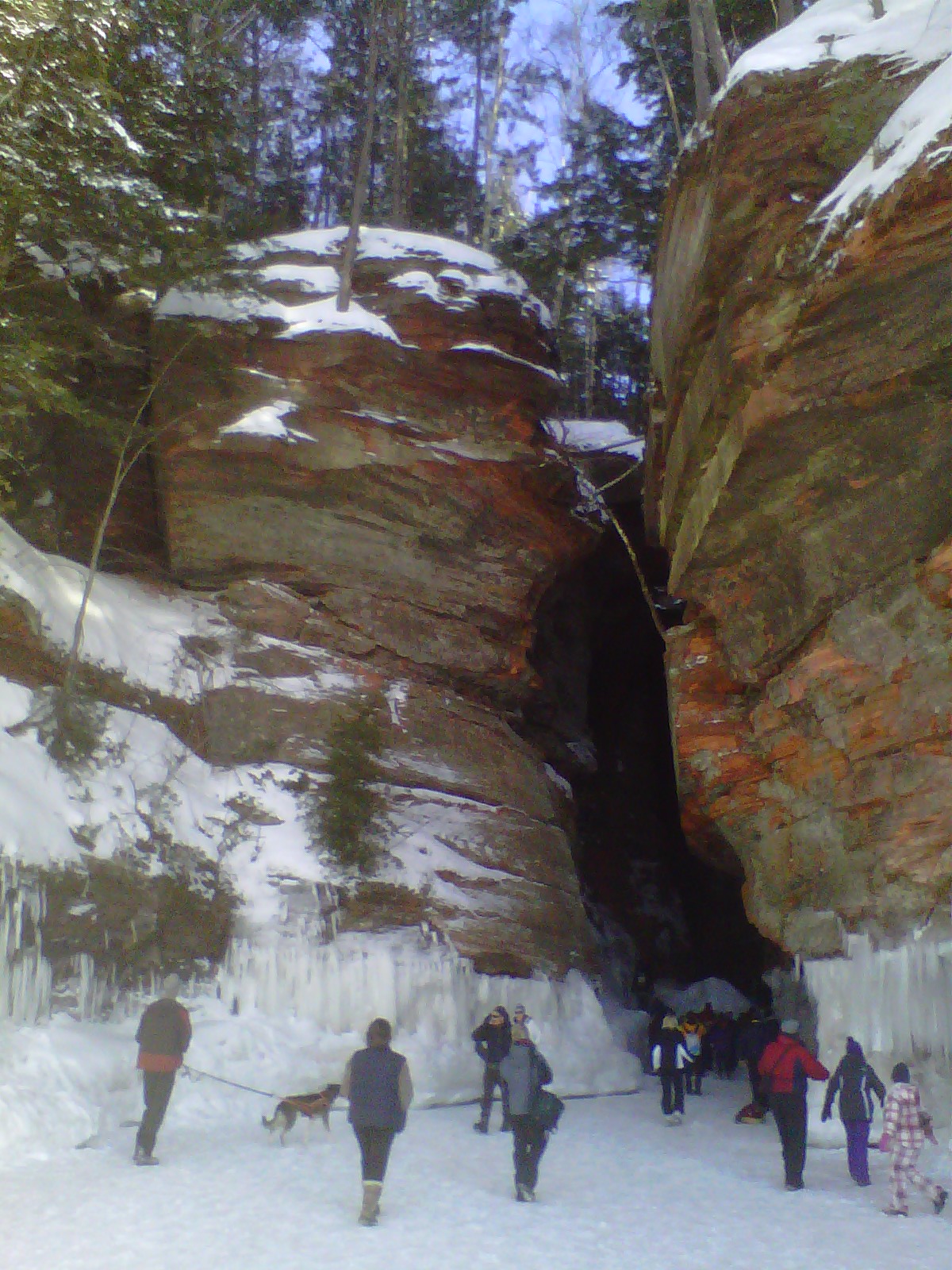
Winter in Duluth also has its moments of sheer, unquestioned beauty. Take this past week, when low temperatures made the Lake Superior ice caves near Cornucopia, Wisconsin, accessible by foot for the first time in a few years. My camera literally froze, leaving me to take pictures with a blurry cell phone camera, but here are some of the fruits of a long slog through the snow along the South Shore:

 Image

Image


Image

Image

Image

It was worth the cold hike, and despite the crowds, some of those icy halls between the rocks were awe-inspiring. It made me want to go back there…in summer, and in a kayak.

Still, things go on. Here’s a rundown of some significant events over the past week:

Boyle Cruises to County Board Duluth City Councilor Patrick Boyle defeated his former colleague Jim Stauber by a 65-35 margin in a special election to fill a vacant seat on the St. Louis County Board. Boyle’s big win over the well-known Stauber showed off the power of the Duluth DFL, and keeps the Board’s liberal bloc within one vote of the conservatives. It also means the Council will have to appoint a new representative to serve the 2nd District over the next two years. That won’t lead to a substantial change in the composition of the Council, but it will be interesting to see who comes forward to replace him. Stay tuned for news on that front.

PolyMet Hearing A packed house was on hand for the first of three informational meetings on the Environmental Impact Statement issued to assess possible copper and nickel mining on Minnesota’s Iron Range. It’s a contentious debate; mining jobs could make all of the difference in the world for the depressed northeastern Minnesota towns, where mining has been the lifeblood of so many communities for so many years. On the other hand, the specter of long-term environmental damage looms, most notably in water treatment that may be necessary for centuries. There will be more hearings, and they are only a small part of what will likely be a long, drawn-out process. For updates straight from the Range, I recommend the blog of Hibbing writer Aaron Brown, who gives a well-balanced overview of the debate here (complete with requisite Northern Minnesota Trampled by Turtles music video).

Maurices Headquarters Design The design for the planned Maurices Headquarters on the 400 block of West Superior Street came out. If I may play amateur architecture critic, I’ll say this: it blends well with that portion of downtown; there are hints of the modernist Radisson, Medical Arts, and Ordean Buildings in there, plus elements of the brutalist Holiday Center further to the east. It looks crisp and clean, and it’s an improvement on the dull former Channel 3 studio on that block. In the end, though, I find it rather sterile. It is very boxy and angular, all concrete and glass, with no hint of detail or nuance. Still, I won’t let my gripes with contemporary architecture weigh down the project too much: it’s a great addition to the downtown Duluth economy.

And, of Course, Hockey Yesterday was Hockey Day in Minnesota, and the day didn’t disappoint. Elk River hosted a pair of outdoor high school games, one including a local team in Cloquet; the Lumberjacks and the host Elks both won their games. The Gophers won, Elk River native Nate Prosser scored the game-winner for the Wild in overtime, and up here in Duluth, a record crowd watched the UMD Bulldogs pick up a shootout win over the University of Denver. In other local high school news, Duluth East tied Maple Grove to round out a very forgettable week, while Duluth Marshall, fresh off a big win over Class A frontrunner Breck, fell to a mediocre Roseville team. The young Hounds will look to right the ship after slipping out of the top ten when they visit section rival Forest Lake this week, while the inconsistent Hilltoppers will play Class A power Warroad on Friday. Both teams have potential, but need to catch some momentum as they head down the stretch run toward the playoffs, which are a month away.

Stay warm…

Duluth East and Apple Valley Revisited

The Duluth East boys’ hockey team heads to Apple Valley tonight. On paper, it isn’t a thrilling match-up; the Eagles have fallen on hard times in recent years, while the Hounds are among the better teams in the state. East won their meeting 10-1 last season. But even so, this game will always bring back memories of the game many high school hockey fans think was the greatest ever played. I re-watched that game a few months ago, and took some notes as the game went along. Here is a recap of the night of March 8 (and the morning of March 9!), 1996, at the St. Paul Civic Center.

-Duluth East comes into the AA State Tournament semifinal game as the top-ranked team in the state. Twelve players on the Hounds’ 20-man playoff roster will go on to play some D-I hockey, and another six will play hockey after high school in juniors, in Canada, or at a D-III school; both of those figures may be records. The defending state champs are led by 1996 Minnesota Mr. Hockey Dave Spehar, the leading scorer in state history and hero of the previous year’s tournament. They return two full lines and their top two defensive pairs from the previous season. They’d demolished Blaine 7-1 in the quarterfinals.

-Apple Valley, however, is no slouch, and is widely thought to be the one team that can stop East. They’re ranked third in the state (2nd-ranked Hill-Murray, the only team to beat East during the regular season, had been upset by White Bear Lake in sections), and lost only one game against a difficult schedule. They boast six future D-I players of their own, and another likely could have played had he not chosen baseball instead. They may not be quite as deep as the Hounds, but with the likes of Brad DeFauw and Erik Westrum on hand, they can match their top-end talent, and they have a small but talented goalie named Karl Goehring.

-One of those East D-I players, junior forward Matt Mathias, did not play. He’d suffered an injury in the quarterfinal, and had to watch on a TV in the Civic Center hallway. The UPN-9 crew interviews him twice during the game; once early on, and once in the 4th OT.  Senior Matt LaTour is pressed into duty in his stead.

-In the open, Wally Shaver and Lou Nanne talk about the need for AV to have a strong start to the game, as they’d been somewhat slow in their section final and quarterfinal; if they don’t, East might blow them out of the water, as they have with every other team they’ve played in the playoffs to date. The Eagles deliver, checking the smaller East forwards aggressively and outshooting the Hounds in a scoreless first period.

-The Eagles also look good killing off an East penalty, even though the Hounds, according to Wally, had an 85% PP over the second half of the season. Their defensive discipline in the early going, which forced East to expend a lot of effort simply to get out of regulation with a tie, may have been the most important piece of the puzzle.

-Duluth East coach Mike Randolph shakes some things up in the first intermission, and East comes out looking better in the second, with Dave Spehar starting to float and the Hounds looking to stretch the ice.

-Spehar came into the game sitting on four consecutive Tourney hat tricks, but the lone hat trick in this game goes to Apple Valley’s Erik Westrum. The crafty forward gives the East defense fits all night long. He scores his first goal of the night just past the five minute mark of the second, temporarily stemming the East momentum.

-13 seconds later, East’s Pat Gunderson responds with a blast from the point, and the game is tied at 1. The game opens up considerably from that point on, with both teams racing up and down the ice and trading chances.

-After Nick Gretz scores the second AV goal, a fan throws an octopus on the Civic Center ice. The Eagles take a 2-1 lead into the second intermission, despite a strong period by East on the shot counter.

-Spehar has two near-misses on breakaways, but each time, the defenseman gets just enough of him to disrupt him. Andy Wheeler has a couple of near-misses as well, one of which is the save of the game from Karl Goehring.

-Spehar takes an ill-advised penalty a minute into the third period (one of only two in the entire game, one on each team). Not to worry, says his longtime linemate, Chris Locker: he steals the puck and scores a shorthanded goal to tie the game at two.

-Less than two minutes later, Westrum has a response, and puts his team up 3-2. Three minutes later, Spehar finally strikes for the Hounds, circling the AV net in search of a passing lane before firing a low shot through traffic.

-After the first period, commentators Wally Shaver and Lou Nanne are calling it an excellent game; by the middle of the third, they’re calling it a truly great one. Little do they know…

-Both teams go back and forth, trading chances left and right, and with just over six minutes to go, Westrum completes his hat trick.

-East presses forward in desperate search of the tying goal, with Randolph using his timeout and a “goalie change” to get his top line as much rest as he can muster.

-That dedication pays off. The AV defense is drawn to Spehar behind the net, and he feeds Locker out in front to tie the game with 38.8 seconds left on the clock. It’s tough to gauge crowd noise from a DVD, but I’d hazard to guess that was among the loudest moments in Tourney history.

-In the 1st OT, Randolph puts the game in his top line’s hands and sends them out to win it. The result is firewagon hockey that is still exhilarating to watch, even 15+ years later. Both teams fly up and down the ice, trading chances. Apple Valley rolls two lines.

-Over the first two overtimes, AV’s best player is Brad DeFauw; he gets three excellent chances, one of which hits the pipe early in the 2nd OT.

-In the 2nd OT, Randolph decides to try to win a war of attrition and starts rolling three lines, with very short shifts. Larry Hendrickson sticks with two for AV. Randolph continues to float Spehar, daring AV to push forward and create an odd-man situation in the offensive zone; AV never takes the bait, and keeps its defensemen back around their own blue line.

-East has a strong start to the 2nd OT, while AV looks sharper toward the middle of the period; East again starts to take control toward the end, when Dylan Mills tees up a shot.

-LaTour deflects Mills’ shot, and it goes over Goehring’s shoulder and somewhere up in the vicinity of the crossbar. In real time, Wally seems to think it went in, while Lou thinks it hits the crossbar; replays seem to suggest the former, but there’s room for doubt. Most tellingly, there is no sound of puck hitting crossbar. A photo in the next day’s Duluth paper will confirm this: the puck was in the net. But the referees have no replay to rely on, and play goes on as the East fans boo.

-There is a distinct shift in gameplay at the start of the 3rd, as both teams grow cagey. East controls more of the play and has some decent chances, but Chris Sikich of AV does have the best chance of the period.

-At the start of the 4th, it looks as if AV is starting to take control. East gets the momentum back mid-period with a great shift from its top line, with Spehar once again making his presence felt everywhere, and Wheeler just missing.

-Late in the 4th, Goehring breaks the single game saves record in the Tourney. AV answers back to East’s surge and has two good chances near the end of the period that Hounds goalie Kyle Kolquist saves.

-By the 4th OT, it seems clear that the man with the most energy on the ice is AV defenseman Aaron Dwyer; Wally and Lou make a note of this fact.

-Between the 4th and 5th OTs, everyone looks spent; Kolquist is flat on his back with his head resting up against the boards, while Sikich is lolling on his side beneath his bench, modeling his stellar flow. Randolph dumps water over the head of a slumped Spehar. The crowd, which is still tightly packed into the Civic Center as it nears 1:30 AM, does the wave. Many have been standing throughout the OTs.

-East has a good surge toward the start of the 5th OT, but their momentum grinds to a halt when DeFauw flattens Spehar with a huge check. Spehar skates gingerly to the bench, and will not get a chance to return to the ice.

-On the next shift, Dwyer blindly fires a shot on net. Kolquist is screened and reacts too late, and the Eagles are on their way to the state championship game.

-In the aftermath, players from both teams embrace, and after the East coaching staff gets Kolquist to his feet, cameras capture he and Goehring talking to one another.

-East will win the 3rd place game 9-2 a few hours later, with Spehar notching one last Tourney hat trick. Apple Valley wins the state title 3-2 over Edina.

-The game had been just the second ever meeting between the two teams, but immediately thereafter, they began to schedule each other regularly. Ever since, East holds a 13-4 edge in the regular season series.

-Some of the stars of that game are still intimately tied to their programs. Mills and Kolquist are now two of Randolph’s assistants at East, while Sikich was named AV’s head coach at the start of this current season.

-Randolph, reflecting on that game and the 2011 triple-overtime loss to Eden Prairie in the state title game, in an interview this past summer:

It takes time to get over. It’s part of the nature of the beast. But then you reflect back, time heals, and you realize how fortunate you were to be part of that. Those were two of the best games at the State Tournament ever; as I told the kids, there was no loser in that game. To be part of it is special. I get over it about mid-summer. (laughs). But you always think about, ‘what if’?

Homeless Rights, Duluth in the NYT, and a Lot of Fighting Over a Shed: Duluth City Council Notes, 1/13/14

A packed house was on hand for the first Duluth City Council meeting of the 2014 session, and Councilors Zack Filipovich and Barb Russ took their seats for the first time. The Council kicked off by electing its new officers, and as Councilor Krug was the only one up for President, she was elected unanimously. The two candidates for Vice President gave brief and rather pointless speeches on their qualifications, with Councilor Fosle saying he had seniority and could run things as well as anyone else, and Councilor Larson listing off a heap of committees and such on which she has served. The Councilor voted 8-1 in favor of Councilor Larson, leaving Councilor Fosle laughing wryly.

Councilor Boyle then recapped several of the Board’s accomplishments in 2013 before swapping seats with his successor. President Krug slowly got into the groove of reading through the various things she is required to read and opening and closing two public hearings. (There have been at least ten public hearings since I started doing this, and there has never been a public speaker at one of them.)

The first big issue of the night was a resolution recognizing a petition asking the city to establish a bill of rights for homeless persons. There were four citizen speakers, including three people who had once been homeless and the executive director of CHUM in Duluth, Ms. Lee Stuart. They spoke to the struggles of homelessness and thanked the many organizations that got behind their effort, asking them to stand as they read the names. (Most of the people in the room stood.) Ms. Stuart explained that, even though most of the points on the bill of rights were already included in law and Duluth has tended to treat its homeless people fairly well, this was a call for deeper conversation and would focus attention on big issues.

The Councilors then took turns expressing their support for the bill of rights. Councilor Gardner echoed many of Ms. Stuart’s words and talked about the importance of organization for a constituency that often believes they have been left behind. Councilor Hanson expressed optimism about turning a corner, while Councilor Filipovich explained how the whole community benefits economically when people have roofs over their heads. Councilors Russ and Boyle emphasized related issues, such as the housing stock of the city, health care, and living wage jobs. The resolution passed unanimously, much to the delight of the crowd, and the Human Rights Commission will now set about making Duluth the first city in the country to have a bill of rights for homeless persons.

There was a mild flare-up over a point of order at this point, as Councilor Fosle asked President Krug if she intended to allow clapping and cheering in the Council Chamber when past Presidents had not. President Krug said she was in control of the room and cut off Councilor Fosle when he tried to respond, saying this would best be dealt with after the meeting. Councilor Hanson abstained from a vote on a contract to an oil company that advertises on his blog, but the rest of the consent agenda passed unanimously.

The resolution on the city’s intended bonding measures passed 8-1, with Councilor Fosle in opposition, and Councilor Filipovich was named to fill the outgoing Councilor Stauber’s seat on the Public Utilities Commission. Councilor Gardner then asked for an amendment to a resolution allocating federal community development grant money, shifting some from a housing program to a 3-year job education program for single mothers. Interim County Commissioner Angie Miller came forward to tout the job training program and emphasize its strong support network. Councilors Julsrud and Filipovich expressed their support, but Councilor Fosle got some good indignation out of the rest of the Council when he said that moving money out of the housing program would “throw three families out in the cold.” Councilors Gardner and Russ rushed to explain that this was not the case, and that there were other funding sources. President Krug, on the other hand, upheld her commitment to processes and said she didn’t think the Council should upend its vetting process for single projects. The amendment passed 6-2, and the whole resolution passed 7-1, with Councilor Fosle as the lone ‘no’ vote. (Councilor Larson recused herself from the vote due to her consulting work with some of the organizations involved.)

In one of those paradoxes of local politics, the most contentious issue of the night was an incredibly minor one. A Piedmont couple came before the Council to appeal a Planning Commission decision to deny them a variance that would have allowed them to build a storage shed on their property closer to a stream than is normally allowed by DNR standards. A neighbor came forward to speak against the variance. He complained about the size of the shed (at 12 by 20, it was practically a garage), and dismissed claims that the stream had dried up. He said he had long lobbied to keep houses away from the wetlands around the stream, and said the house had flooded during the June 2012 deluge. The couple countered this last claim, saying it was sewer-related and not caused by the stream, and thanked the city for paying for a sump pump that had resolved their flooding problems.

Councilor Julsrud spoke in support of the couple, saying there was no way this little creek that dried up in summer (of which there are many in Duluth) was actually a trout stream, and that the environmental expert on the Planning Commission had approved of the variance. Councilor Fosle had other ideas, rightly pointing out that the resolution needed to explain the hardship faced by the couple. Councilor Gardner furnished him with one, saying it was a practical difficulty for the couple; everyone else in the neighborhood could build such a shed if they so desired, but they could not. Councilor Fosle found this wanting, saying the couple should have known what they had when they bought the property, and said that the DNR’s standards existed for good reasons. The trout came up again, and Councilors Boyle and Fosle went back and forth on the quality of the couple’s runoff abatement efforts, with Councilor Fosle telling Boyle to “remember this” so that the neighbor could call him when all the runoff ends up in his yard. Councilor Larson came out against the variance, as did President Krug, who once again defended the process and worried about slippery slopes.

Councilor Fosle then decided to make the meeting even more exciting by saying that “everyone should follow rules no matter their affiliation to other people who have been elected,” thus implying that the change was a political favor for the couple, who apparently are related to a local politician. (I have no idea who this is.) Councilor Gardner lashed back, saying “I don’t normally like to respond to the things you say because I don’t want to draw attention to them,” but that she had no choice but to defend herself from a charge of association with someone who was not at all in her political circle. Councilor Hanson took “deep offense” at the charge, said he did not want to spend the next four years “being chastised” by Councilor Fosle, and added that “integrity is everything in my life.” (I here resist the very strong urge to make a comment about his hockey journalism. Onward.) Councilor Fosle sniffed that he hadn’t attacked anyone personally, and asked Councilor Hanson if he’d bothered to talk to the complaining neighbor, who did live in his district.

Councilor Gardner explained that the Council had the authority to overrule the Planning Commission, saying they were not restrained by the procedural dictates it must follow. Councilor Filipovich said the runoff prevention methods had been vetted by city staff, and Councilor Larson did what she could to celebrate everyone having different opinions and told the couple “enjoy your shed!” even though she was voting against it, since she saw how the votes would go. The variance passed, 6-3, with Councilors Fosle, Larson, and Krug in opposition.

The Council unanimously approved its priorities for state legislature lobbying this session, which include restoration projects of the NorShor Theater and Wade Stadium and a river water usage plant for Spirit Mountain. In the closing comments, Councilor Julsrud shared good news about new efficiencies in parking enforcement, Councilor Fosle and President Krug came to a vague resolution of their earlier spat about applause in the Council Chamber, and Councilor Larson tried to get everyone to schedule their summer recess.

***

Lastly, if you are a Duluthian who lives under a rock/has the good sense not to waste much of your time on social media and missed it, Duluth was on the front page of the New York Times on Monday. (And it wasn’t one of those articles that appear every year in which the national media covers winter weather in Duluth in shock and fright, while all of the interviewed Duluthians shrug and say “meh.”) The article plays off the tried-and-true journalism trope of taking two similar places (Duluth and Superior, Wisconsin) and showing how divergent state politics affects people on both sides of the St. Louis River. I don’t think there’s anything terribly insightful here for anyone with a basic knowledge of general political tendencies. (Breaking news: business owners prefer low taxes! Gay people want to live in states where their marriages have legal standing! Democrats like unions more than Republicans!) It also makes only passing mention of local politics and the particularities of the two cities, which I would have given more weight if I’d been asked to do this sort of piece. Sure, these cities could make interesting test cases—but for all of the cultural similarities, there are also large differences that would make a side-by-side comparison difficult. But it does an effective job of showing some of the effects of the different paths Minnesota and Wisconsin have followed over the past couple of election cycles, and there are some fun little shoutouts that locals will recognize. It will be interesting to chart any changes in economic and personal well-being indicators between the two states, though reality will inevitably be more nuanced than the partisans on either side will ever admit. If they further develop this series and do some follow-ups, it could wind up being a good study.

Yes, We Have an Election in Mid-January

If you live on the east side of Duluth, you may have seen a few lawn signs peeking out of snowbanks, even though the November elections are long since over. No, these people are not being lazy in removing their signs; we have an election coming up! The passing of 2nd District Commissioner Steve O’Neil threw the St. Louis County Board into limbo, and the timeline for an election to fill his seat has left us with a special election on January 14.

There was a primary back in November, which narrowed the field down to two candidates. They are familiar faces to anyone who knows Duluth politics: current Second District City Councilor Patrick Boyle and recently retired At-Large Councilor Jim Stauber. Boyle won the primary by a decent margin, while Stauber barely scraped by Scott Keenan for the second spot, but given the odd timing of the election and the likely challenges in turning out voters in mid-January, nothing is a given here.

Because of those odd dynamics and the well-established reputations of each of the candidates, this has become as clear a right-versus-left race as one can have in a local, nonpartisan election. With turnout likely to stay low, both sides appear to have focused their attention on turning out the base, each relying on their established ties in the community.

Boyle is a reliably liberal Councilor who was just elected to his second term, and is the O’Neil family’s favored candidate to win the seat once held by the longtime liberal champion. His campaign emphasizes his close ties with many local politicians, and claims he will work with them to improve roads and bring more quality jobs to the area.

Stauber, on the other hand, is a proud conservative, and has made it his priority to hold the line on taxes. His campaign also emphasizes his long years of service to Duluth, and his intimate knowledge of local government. As a Councilor, Stauber was often a rather lonely voice crying for fiscal restraint and was a frequent teller of cautionary tales; while history did sometimes prove him right, he was often powerless to shape the Council’s agenda in any serious way. As a County Commissioner, it would be a different story: the Board extends far beyond Duluth and into more conservative, rural areas of St. Louis County, and Stauber would actually be in the majority if elected.

Indeed, Boyle’s campaign has sought to play off of voters’ worries about growing conservative influence in St. Louis County, and given the well-known proclivities of a majority of east side voters, that is a sensible play. As a liberal on this side of this city, he should be able to win if he can turn out his base. Stauber, however, has been able to buck that trend throughout his successful political career, and enjoys a solid base of support as well. Both are well-qualified for the job; in the end, this race will boil down to connections and political leanings. It should be a good race.

Here are links to the candidates’ websites:

Boyle | Stauber

Here is a map of the St. Louis County districts. (Scroll down to get a close-up of Duluth.)

If you live in the 2nd District, here’s the city’s guide to finding your polling place. Get out and vote!

Hounds Throw Down the Gauntlet

On Thursday night, I made the road trip 80 miles west of Duluth to Grand Rapids for a hockey game. The town of 10,000 people has a rather mixed identity: it is part vacationland, part paper mill town, and part gateway to the Iron Range. What isn’t in doubt, of course, is its status as one of Minnesota’s most storied hockey communities.

The Grand Rapids High School Thunderhawks (Indians in less P.C. times) won three titles in six years back in the 70s and 80s, and have produced as many college and NHL players as any school in the state. Recent decades haven’t been nearly as successful, but the program has risen again in the past few years, with two second place finishes in the mid-00s, two narrow section title game losses to Duluth East in the past three years, and a promising youth program feeding in. Thursday’s game had the potential to break Rapids’ long string of frustration against the Hounds, a team they’ve only beaten twice in their past twenty meetings. They entered the game on a six-game winning streak, and a win could have just about locked up the top seed in Section 7AA, something the Thunderhawks have yet to earn in the two-class era. They boast a Mr. Hockey frontrunner in Avery Peterson, one of the state’s best goalies in Hunter Shepard, and a bumper crop of sophomores. A capacity crowd packed its way into the historic IRA Civic Center, ready to blow the wood-trussed roof off the building if Rapids were to win.

Duluth East, however, decided to crash the party, and they did it in style. The Hounds smothered Rapids with superb neutral zone play and a relentless forecheck, grabbing an early goal by Nathaniel Benson for a 1-0 lead. Despite East’s controlling play, Shepard and the inexperienced Rapids defense was doing just enough to keep it close for a while. Rapids took a major penalty late in the period, however, and it was 3-0 by the intermission. “Why so quiet?” the East students taunted a silent Civic Center.

 A few power plays gave the Thunderhawks a little more life in the second period, but East goalie Gunnar Howg saved the shots he needed to save, and another bad Rapids penalty set up an East power play goal late in the period. The Hounds went into cruise control in the third, not allowing a shot until over 12 minutes had passed, and adding a fifth goal with .5 seconds to go for some icing on the cake for the Cakeaters of the North.

The game was a total triumph of Mike Randolph hockey. His young Hounds executed his gameplan as well as any Hounds team ever has. They used their depth to their advantage, and the third line of Alex Spencer, Maysen Rust, and Nathaniel Benson—a potential concern I’d cited earlier in the week—was a wrecking crew all night long. The best player on the ice was not Peterson, but East defenseman Phil Beaulieu, who seemed unbothered by his huge amount of ice time, slaloming past countless defenders and shutting down every Rapids rush that came his way. He made some new friends as well, stopping for a photo op with Grand Rapids mites between periods. It was that sort of night for the Hounds.

Tactically, Rapids was a mess, as they tried to skate straight into the heart of the East defense and generated nothing in the way of odd-man rushes. If not for six power plays, they might not have mustered ten shots on goal. It was hard to find any sort of positives for the Thunderhawks; their one recourse, perhaps, is history, as East beat Rapids 5-1 in the regular season meeting in 2007, the year they picked up their sole playoff victory over the Hounds. This team can’t possibly be as bad as it looked on Thursday night, and while there are a bunch of things that would have to go right in a playoff rematch—better discipline, better breakouts, a willingness to do some dirty work on offense, a big night out of Shepard—it’s certainly imaginable that they could get it done.

East, on the other hand, has to make sure this mid-January win isn’t the peak, but only another sign of improvement from a squad that has already grown up a lot since November. They went to the box too often for comfort, and more 5-on-5 scoring wouldn’t hurt, either; they can’t count on major penalties, especially in the playoffs, when referees are more likely to swallow their whistles. But the win certainly put the rest of the state on notice, and we still don’t know how high their ceiling is. They now have a fighting chance at the top seed in 7AA, though every game will matter as they try to atone for their early season loss to Elk River. No matter how the season ends, the big win in enemy territory will go down as one of the highlights.

Meet Your 2014-2015 Duluth School Board

Last week I previewed the new City Council; here now is a rundown on the new ISD 709 School Board.

Rosie Loeffler-Kemp

1st District; Woodland, Hunters Park, eastern Lakeside, North Shore, Townships

1st term (elected 2013)

-A lifelong local education activist, Loeffler-Kemp cruised to the 1st district seat to replace retiring ten-year Board veteran Ann Wasson, a Red Plan champion. Loeffler-Kemp ran a very positive campaign, focusing on issues like class sizes and bullying instead of the Red Plan, which she believes the community must move past. She has been named Treasurer of the Board for the coming year.

Judy Seliga-Punyko

2nd District; Kenwood, UMD, Congdon, western Lakeside

2nd term (elected 2007)

-Seliga-Punyko is the last of the Board’s pro-Red Plan warriors, and has no qualms about lashing out at Art Johnston or other Board critics. Very committed to existing processes and the Board’s mission to students, regardless of community sentiment; she was the only Member to support a Board-imposed tax increase as opposed to sending the levies to the voters. Has also championed several pet causes, such as swimming pools in the new high schools. Was frequently absent from meetings toward the end of last year. Won re-election by a large margin two years ago. Has been chosen as Board Clerk for 2014.

Bill Westholm

3rd District; Endion, Downtown, Hillsides, Park Point, Chester Park, Duluth Heights, Piedmont

1st term (elected 2011)

-Westholm, a retired former Denfeld principal and district administration employee, won an unopposed race in 2011. He largely chose to avoid any mention of the Red Plan fracas during his first two years, and usually isn’t one to talk much, though he will ask questions on new proposals and is clearly well-versed in education policy debates. Will serve as the Board’s Vice Chair in 2014.

Art Johnston

4th District; western Observation Hill, and everything below the hill to the west (minus Bayview Heights, which is in the Proctor district)

2nd term (elected 2009)

-Johnston is the Board’s resident crank, and has taken it upon himself to serve as the voice of Duluthians who oppose any expansion of education funding. Takes no prisoners in vicious attacks on anyone who does not give him the answers he wants to hear. Lodged countless protest votes against the Red Plan over his first term, though his tactics tended to alienate the few potential allies he had, and his protests did not amount to a single legislative victory. It is hard to know how his role will evolve now that the Red Plan is largely in the past, though his re-election does prove he still has a strong base of support.

Harry Welty

At-Large

3rd term (first served 1996-2004; re-elected in 2013)

-Though it’s been ten years since he last served, Welty comes in as the most senior member of the Board. He’s been all over the intricacies Duluth education in his lifetime, though he is best known for his leading role in the anti-Red Plan crusade. Unlike Johnston, however, he ran a more conciliatory post-Red Plan campaign, and ambitiously seeks to work with the majority while still hearing the objections of the critics. Welty is very much his own man, and while his independence gives him a unique perspective, it also leads him to make some tone-deaf remarks. Time will tell if he can hold that center and help heal the Red Plan scars.

Mike Miernicki

At-Large

1st term (elected 2011)

-Miernicki, the jolly former Duluth East activities director, usually tries to keep the mood light at meetings, though his exasperation with Johnston shows through at times. Still, he tends to be a very agreeable and welcoming person without strong ideological tendencies, and has been named Board Chair for 2014.

Annie Harala

At-Large

1st term (elected 2013)

-Harala, a young Teach for America alumna, brings a fresh face to the Board. A Duluth native, she won her seat handily and stayed above the Red Plan fray with a push for more community involvement in schools. It remains to be seen how that plan will become reality.

Also of note:

Bill Gronseth

Superintendent

-Gronseth served for some time as an administrator in the District before taking the reins, and has been tasked with seeing the Red Plan through to fruition. He is relentlessly positive, doing all he can to stay respectful of Member Art Johnston. He took a gamble by putting the levies on the ballot, and was rewarded for his faith in Duluth voters; now, he has the less glamorous but no less difficult job of making sure that faith was well-placed.

Student Representatives

-Both high schools have a non-voting member on the Board; I don’t have the names of the new Members yet. The two 2013 representatives generally kept their quiet during meetings, though they did add their thoughts when high school student-specific topics came up, and one did have a memorable moment in which he scolded both sides of the Red Plan debate for their pettiness and incivility. (Naturally, the partisans in the room thought his words applied only to their opponents, and not to them.) We’ll see what the new ones can muster.

It’s a transitional period for the School Board. The past eight years or so have been consumed by Red Plan debate, but since that is all but over now, it will be interesting to see if those faults endure in any way, or if any new rifts will spring up. Big questions abound over the potential sale of the old Duluth Central, the restoration of the general fund and the allocation of new revenue achieved via the new levy imposed by voters this past fall. The new Board members will be expected to deliver on promises of smaller class sizes and new anti-bullying measures as well. We’ll see what this Board can muster.

The Hounds at Midseason

The Duluth East boys’ hockey team has played twelve of its twenty-five regular season games to date, and with a 9-3 record to date, and are #9 in Class AA in my latest rankings. After losing twelve seniors off last season’s squad and having only four this season, the 2013-2014 Hounds might have been expected to endure some growing pains. Indeed, it hasn’t all been smooth skating; they were upset by a decent Centennial team, had a narrow escape against bottom-feeding Cambridge, and aren’t exactly scoring in bunches. But so far, the positives far outweigh the negatives: they’ve knocked off powers Wayzata, Eden Prairie, and Breck, and played well in a narrow loss to section frontrunner Elk River.

The winning formula looks similar to the one used by last season’s Hounds squad, which also overachieved in the eyes of most pundits. Their anchors are their two big defensemen, Phil Beaulieu and Alex Trapp; both log loads of ice time but handle it well. Beaulieu darts about the ice playing pond hockey, practically without a position; for his efforts, he’s been rewarded with a scholarship to Nebraska-Omaha, where he’ll join former teammate Jake Randolph. Trapp, meanwhile, is as steady as they come, maintaining his discipline and dishing out the heavy hits. Despite the heavy reliance on the top pair, there is some depth on defense; senior Joey Marinac anchors the second pairing, and a steady supply of players have rotated through the other spots, with hard-hitting Bryton Lutzka and 6’4” sophomore Alex Spencer enjoying the bulk of the playing time.

Up front, the top line of Nick Altmann, Brian Bunten, and Jack Kolar has carried most of the scoring load, with Altmann in particular lighting the lamp with regularity. While not as prolific as the top line last season, this group—which was together last season as well—has good chemistry and can at least hold its own against most of the state’s better lines. The second line hasn’t produced a ton of points yet, but—much like the Altmann-Bunten-Kolar line last year—they are a young group featuring two sophomores and a junior, and have generated plenty of offensive zone time. Ash Altmann and Ryan Peterson accounted for two of the three goals in the Eden Prairie win on Saturday, showing their offensive potential.

The third line, on the other hand, remains unsettled. The Hounds lead the state in defensemen converted to forwards, as several D have taken turns at the wings of junior center Maysen Rust. There is potential here, but they have yet to match the level of the all-senior checking line the Hounds put out last season. East may not have the firepower of many of the other teams in the top ten, but they’re good enough to skate with all of them, and if they play smart defense, they don’t need to pile up tons of points.

Smart defense is, of course, Mike Randolph’s specialty. The Hounds’ coach has had some very different types of teams over his quarter century at the helm, but there are constants throughout: puck possession and cycling in the offensive zone, and their ability to forecheck aggressively clog up the neutral zone when they don’t have the puck. The former makes for some very pretty hockey; the latter, on the other hand, is no one’s idea of sexy hockey. But when properly executed, it protects narrow leads and wins tight games, and so far, this young squad seems to be buying in and following the gameplan as well as any. Sure, East might score a little more if Randolph turned them loose a bit more often (and he does throw in some wrinkles from time to time), but they’d also give up a lot more, and this isn’t the sort of team that’s going to do well in a shootout.

A few other things could foul up the formula. The first, of course, is goaltending: junior Gunnar Howg seems to have grabbed the starting spot with his acrobatic saves, but he’s still learning on the job, and has had a few forgettable moments so far. East’s defense doesn’t allow many scoring opportunities, but when they do, they are often good ones, and East goalies will need to be in good form down the stretch. Another mild concern is an occasional lack of discipline; it’s not a persistent problem and the penalty kill is solid, but they’ve taken a few more trips to the box than usual this season, and a few have come at inopportune moments.

Lastly, there is that matter of other teams who will have a say in the Hounds’ fate. Elk River has its best team in some time, and with a narrow win over East in December, they already have a leg up for section seeding. That Elk River team also lost to Grand Rapids, whom the Hounds visit this coming Thursday. East has owned the Thunderhawks in recent years, and they are certainly the deeper squad. But Rapids has one of the state’s best goaltenders in Hunter Shepard, and their collection of talented forwards doesn’t need many chances to make other teams pay. A loss on Thursday would make a top-two seed unlikely, a fate that hasn’t befallen the Hounds since 1999. And while they aren’t nearly as talented, an offensive outage from the Hounds could certainly give teams like Forest Lake, Andover, and even Cloquet a shot at a playoff upset.

And so the Hounds head into the second half, and as usual, the schedule is one of the toughest. In addition to the Grand Rapids game, they also play rival Duluth Denfeld this coming week, and will look to avenge last season’s embarrassing loss. They will also face a powerful Blaine team and Lakeville North, the state’s first half darlings who came out of nowhere to beat many of the elite. More often than not, one can predict the Hounds’ destiny based on the way they play over the second half; if they win the games they’re supposed to win and at least play top teams tough, their playoff prospects are excellent; if they struggle in games they should win comfortably, they might have peaked a little too soon. Time to see what this young team can do.

Meet Your 2014-2015 Duluth City Council

Time to get back to work. With the first Council meeting of the new year a week away, here’s a preview of the nine men and women who will be legislating the city of Duluth for the next two years.

Jennifer Julsrud

1st District; Lakeside, Woodland, Hunters Park, Mt. Royal area

1st term (elected 2011)

-Julsrud, who was narrowly elected in 2011, is fairly liberal, though that comes with some caveats. She also watches the bottom line, demands results, and is not afraid to ask tough questions. This leads her to vote against the majority more often than many of the other left-leaning Councilors, though usually for unique reasons, speaking of her own experience and demanding precision in processes. Is not in the running for Council leadership in 2014, but that makes her a very likely candidate for 2015.

Patrick Boyle

2nd District; Congdon Park, UMD campus, Kenwood

2nd term (elected 2009)

-Boyle served as Council President for the past year, a position he filed ably, though he never faced any serious issues. As such, he didn’t talk nearly as much as his colleagues, and was one of the more reliable liberal votes. His second term may be a very short one, as he is running in the January 14 special election for the St. Louis County Board.

Sharla Gardner

3rd District; Downtown, the various Hillsides, Endion, Park Point

2nd term (elected 2007)

-The queen bee of the Council, Gardner is a tireless community activist who will always explain her decisions (and explain them, and explain them some more, and…). She is a self-described “flaming liberal,” though she is happy to cross the aisle and work with other Councilors when she finds common ground, and will, as usual, explain her thought process. She will also break from the Administration to make occasional principled stands. While generally warm and encouraging, she can be formidable when crossed.

Howie Hanson

4th District; Lincoln Park, Piedmont, Duluth Heights

1st term (elected 2013; seated immediately to fill vacant seat)

-Unlike the other two new members, Hanson already has a couple of meetings under his belt. His instincts appear very pragmatic and consensus-driven so far, though this sometimes leads him to collide with existing processes. It’s hard to know if he’ll continue with this streak, or if he’s just still learning how to do business as a Councilor. It’s far too early to make any sort of judgment on him.

Jay Fosle

5th District; everything west of 39th Ave. W

2nd term (elected 2007)

-Fosle is the Council’s lone conservative, and quite the character. He will actively subvert the city administration when he disagrees with it, and has no qualms about quarreling (on more-or-less respectful terms) with his colleagues. Tends to speak in stream-of-consciousness, which can be head-scratching as he floats seemingly random proposals and questions, but it also leads him to come up with the occasional insight that no one else had considered. From heroin addicts to ATV riders, he also champions causes that the rest of the Council sometimes doesn’t see. Seems to have good days and bad days when it comes to the precision of his critiques. Put his name in the hat for Council Vice President, though given his lack of allies, I doubt he’ll receive it.

Linda Krug

At-large; 1st term (elected 2011)

-Like Julsrud, Krug is a left-leaning Councilor who will ask tough questions and occasionally break from the majority. She is not one to waste words, and is a strong defender of existing processes. She is the sole candidate for the Council presidency, and has also declared her interest in seeking the seat in the Minnesota state legislature being vacated by the retiring Rep. Tom Huntley.

Emily Larson

At-large; 1st term (elected 2011)

-The persistently warm and upbeat Larson is not one to go out on a limb and take daring stands, and instead looks to hear all voices, play the peacemaker, and lighten the mood when necessary. She’s been a tireless worker as the Council’s liaison to parks and libraries. Is reliably liberal, and likely to be elected Council Vice President.

Zack Filipovich

At large; 1st term (elected 2013)

-Filipovich, a recent UMD graduate, is set to become the youngest ever member of the Council. He was endorsed by the DFL, though his campaign was fairly vague and upbeat. What isn’t in dispute so far is his work ethic. An impressive campaign operation led him to big wins on the west side of the city, and he made up a substantial gap in support between the primary and the general election. He has been a regular at Council meetings for months, and sometimes he and I are the only people left in the audience at the end.

Barb Russ

At large; first term (elected 2013)

-Russ was a favorite to win a seat heading into the election season, and had the support of most of the Duluth liberal establishment. It was a bit of a surprise to see her finish behind Filipovich in the general election, but she still won easily over the third-place finisher. A retired lawyer and longtime community activist, Russ appears likely to hit the ground running as a Councilor, though we don’t yet know which particular causes she’ll champion.

Also of note:

David Montgomery

City Chief Administrative Officer

-Gives a weekly update from the city administration, and explains its stance on issues before the Council. Spars with Councilor Fosle with some regularity, but otherwise seems to enjoy a positive relationship with the Councilors.

Gunnar Johnson

City Attorney

-Johnson is on hand at all Council meetings to clarify city charter questions and council procedure issues. Frustrated the Council with his handling of the 4th District vacancy this past year, but the Councilors otherwise tend to respect his interpretations. Is sometimes subjected to leading questions from Councilors looking to reinforce their arguments.

As six Councilors have two years or less of experience, it’s a fairly green Council, and as I’ve discussed at some length before, it features one of the largest left-leaning majorities the city has ever seen. That’s good news for Mayor Don Ness and his administration, though it’s hard to know what the new year will bring, and what fractures might appear as the Council looks to repair Duluth’s streets, attract more living-wage employers, expand the housing stock, and deal with any number of possible surprises. The first meeting of the year will take place on Monday, January 6. As always, I’ll have updates.

Adios, 2013

I’ve never found a good way to express my bafflement of the passage of time. Just trying to answer the question ‘what is time?’ is trouble enough. But yet it goes on, passes us by, even in years like this past one, which for me was one of relative stasis. There were no great adventures, no decisive moves; just the steady rhythms of life somewhere in the vast white north of Minnesota. It’s been an interesting test. I’m a born dreamer, one who often lives in places where I am not, both real and imagined. I’ve always had a tendency to wander, whether down the darkened streets of my neighborhood or through worlds that exist only in my head. There is so much to see, so many little corners to explore and make sense of, and that force has driven most of my decisions to date. But that life up in the clouds of my mind has its drawbacks, and obsessive fascination with the outside can quickly become anchorless, and turn paradoxically inward into self-absorption. And so my retreat to Duluth has, paradoxically, had me fighting against that. So I started to take a few older obligations more seriously. I became a more active citizen. I wrote a novel, and I started a blog; neither one is likely to reshape the world much, but they’ve gotten a few things across, a process that I hope to continue. When it comes to Big Questions About Life, I’ve never been in a better place, and that has started to filter down into other places. Lingering anxieties seem far less important than they once did, old worries rendered trivial by new wisdom and evolving thought, often startlingly simple in its clarity. I had to go home to be set free, but it might, finally, be happening. My twenty-fourth year on this earth will, most likely, involve another venture outward, in one way or another. It’s time. There is no grand vision this time, but that now seems more like a triumph than a failing. It will be less in the ideal and more in the real. I’ll simply ride the moods and try to seize the opportunities that come along. Many of the constants will still be there: Duluth, the family gatherings, the little routines, the old friends worth holding on to, and (of course!) the hockey. I know plenty of people will laugh at the notion of someone my age feeling old, but as the glory days fade into history, I’ll admit to a few moments of angst. This is especially true for someone who’s subjected his own early years to a brutally intense self-examination, and someone who can’t forget the ‘what ifs.’ Still, the time has come, and I’m past the point where I can pretend to be a kid anymore. The good news is that those glory days don’t have to end. That doesn’t mean we don’t grow up; no, we do have to mature, and the march of time will trample anyone who stays for too long. But we can always go back, and as long as we have that, well, what more do we need? And so we head back, for one last time in 2013, for one last evening of youthful delight, a moment frozen in the frigid Duluth night. We carry it with us, unable to forget, no matter how far we wander.