We Are Who We Are

As a sports fan, I have always made it my priority to accept reality for my favorite teams. Talent levels are what they are, no matter what wishful beliefs we may hold. Acknowledgment of this reality is far from defeatist; it is, instead, an invitation to adjust to the relative strengths and weaknesses of an inevitably flawed team. From that point, I tend to keep some faith because I have seen enough to know the improbable can happen; there is almost always a pathway to an upset or a surprise run, no matter how thin. Hope springs from self-knowledge, and a commitment to rise up in spite of any limitations.

That hope was hard to find at times during this past Duluth East hockey season. It opened with an 0-8 start, and while that was the most difficult portion of the schedule, losses in winnable games against Forest Lake and Bemidji set the team irreparably far back in the section race. The team endured a myriad of injuries, a long Covid pause, and had players lose time for some other reasons, too. In the stands, we joked about Mike Randolph’s parting hex. 7AA’s imbecilic section seeding system left them with a tough playoff date; with a slightly better seed they could have at least made Amsoil, though I don’t think a team that wins seven regular season games has too much ground to complain. The Denfeld debacle and its aftermath cast a pall over the season’s final weeks and led some observers, myself included, to question the point of it all. The team seemed to spiral out of any progress it had made.

And there had been progress: in between those two ugly stretches they rattled off a month of .500 hockey. The Hounds lost four one-goal games to top 15 teams and lodged a respectable tie with Blaine, even as that one signature win would not come. In the section quarterfinal with Grand Rapids, they looked like a reasonably threatening team for a period, popping the first goal and coming close to a second that would have totally changed the tenor of the game. But in the second, a familiar plot line emerged. The Hounds took two more major penalties on which they gave up three goals, and the season was over.

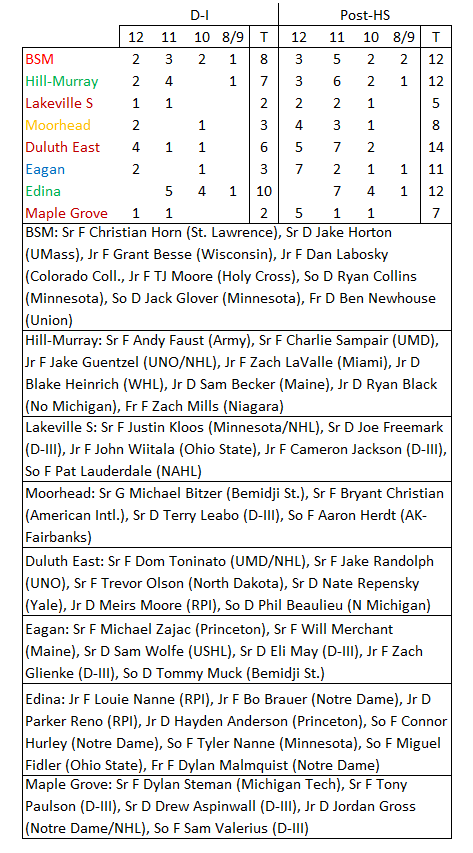
It was a yearlong trend. According to Minnesota Hockey Hub, the Hounds took 310 penalty minutes in 2021-2022. As of the day after their quarterfinal defeat, that was second-most in Class AA, with Gentry Academy claiming the dubious crown. There is a clump of three other teams in the low 290s, and no other team above 270. The average number of penalty minutes for the other teams in 7AA was 221, and that appears high when compared to other sections. (The lowest total, by far? Hill-Murray, at 138.) We can nitpick about bad calls here and reputations among referees there, but this is far too much smoke for there not to be a fire. Combine it with an abysmal 65% penalty kill and it was a formula for disaster that once again came home to roost in the playoffs. The discipline must improve, period.

As always, though, I turn the page and thank the team’s seniors: Tyler Smith, who became a reliable defensive rock on the blue line amid turmoil; Lars Berg, ever the instigator; Wyatt Zwak and Dylan Erickson, who earned their way to regular playing time; and a supporting cast that included Ben LaMaster, Fletcher Dirkers, Eli Fresvik, Kayden Miller, and Dain Fladmark. They have been through the ringer over the past few years, their times at East nothing like senior classes before them, and we appreciate their contributions.

The underclassmen provided some entertainment, too. Cole Christian’s artistry, when he is on his game, is a great pleasure that I try not to take for granted after watching it for three seasons. Noah Teng took major strides toward being a very productive high school forward, and Wyatt Peterson adds to the gaggle of young talent. Aidan Spenningsby continued to show his versatility, and Makoto Sudoh is growing into a genuine power forward. Grant Winkler offers next-level potential on defense, and in a season when every other defenseman spent some time on the shelf, Henry Murray was the one constant presence. I do not know what Grady Downs’ future holds, and I believe it was correct for him not to play the remainder of this past season. But his reckless abandon also made for some pretty entertaining hockey at times, and I do not think anyone should be eternally defined by one incident at age 17. If there can be a redemption story here, I am all for it.

Next season seems a critical one to the post-Randolph era at Duluth East. Barring defections (an all-important disclaimer after recent seasons), they return a lot of players from a team that wasn’t that far off from being respectable when it stayed out of the box. The top line looked legitimately potent against Grand Rapids, and a healthy Thomas Gunderson could be the X-factor for a dynamic offense. They have respectable depth and a veteran in goal; if they can round out the defensive corps, it too can be a strength. There are at least a couple of bantams who will slot in nicely to the openings that remain. Moreover, with Grand Rapids and Blaine set to lose a lot to graduation and no great bantam teams in the section, a high seed in 7AA looks ripe for the picking; only increasingly machine-like Andover, if their stars stick around, has more talent on paper. Duluth East’s wander through the wilderness could be due for an interruption.

There is a lot of time between now and November, however, and this team will have to convince me that it is more than it was at the end of this season. For all the talent, for all the close calls, Duluth East hockey is not in the place where it needs to be. It can get there again, but doing so will take more than the normal dose of effort. Let the work begin.

Embarrassed

In my correspondence and conversations following Duluth East’s 6-2 loss to crosstown rival Duluth Denfeld on Wednesday, the word “embarrassed,” sometimes augmented by colorful adjectives, repeated itself often. Those with a stake in the future worried about the optics. Loyalists of former coach Mike Randolph, on a spectrum from grim observation to vindictive pleasure, lamented his absence. Some said they felt sick, and wondered whether all of this was actually worth it. None of these comments had anything to do with the score.

The proceedings at a packed Heritage Center were not an isolated incident. A ragged affair in Champlin Park the next night marked East’s eighth consecutive game with over ten penalty minutes. The Greyhounds took thirty minutes of penalties in a win over Superior, including a pair of five-and-game penalties for fighting. They took twenty minutes against Cloquet, the bulk coming on a two-and-ten after the buzzer at the end of a period. The gamesheet for the Denfeld game shows fifty-three minutes of penalties, and it may be missing a misconduct or two. It became hard to keep track as the referees dismissed a succession of Greyhounds to the locker room. Those statistics do not capture the full-game suspensions associated with game misconducts. The extent of the deterioration against Denfeld, which carried on past the bludgeoning behind the net through a series of gratuitous excesses as time wound down, exceeded that of any I have ever seen in high school hockey. One of the state’s great programs had become the Bayfront Bullies.

I am far from a scold about decorum. I have always had a soft spot for the Garrett Worths of the world, the kids who earn some right to be cocky with their performance; I relish the long tradition of Greyhound sparkplugs and enforcers, from Andrew Kerr to Alex Spencer to Ricky Lyle. I ate up just about every bit of the Cloquet game, from the intensely hostile crowd to the Hounds’ dogpile atop the Lumberjack logo at center ice after the overtime game-winner, all of which felt edgy but within that tradition. In isolation, I can stomach the Superior fight, which seemed to spark the team from its slumber that night; every team will go overboard from time to time. Referees will inevitably get some things wrong, and sometimes the other team is the obvious aggressor. But when a trend emerges, so do the more fundamental questions.

The questions have complicated answers. After a few years of mediocrity, the hunger to win can slip; stakes lower and focus fades, and hockey becomes one big romp with the boys instead of the pursuit of a section title or a next level opportunity. There remain some parents who will make any excuse for their spawn, and some will even egg on that general mediocrity. The players who do care deeply can get frustrated or sucked into crimes of passion as they boil over. These kids have also gone through two years of Covid hell, and I am convinced a more virtual and isolated life has only fueled certain antisocial tendencies, only led more people to retreat inward and then explode in anger when reality intrudes on that inner world. Perhaps no group has suffered more than kids currently in adolescence, who have a hard enough time navigating those waters in normal times. And, yes, in the absence of the unflinching taskmaster and disciplinarian who ran this program for decades, a man who had no qualms about ordering even his greatest players to the bench when they crossed the line, a new culture was bound to emerge. At times that new culture has actually felt freer, but now that looseness is showing its ugly dark side.

In a December post I said I would not judge new coach Steve Pitoscia much this season. I did not want to nitpick about penalty kills or line-rolling as he learned the ropes. He is getting some flak he does not deserve; he played no role in his predecessor’s ouster, and, whatever history may exist between the two men, he has only said the right things in public about him. Even the greatest coaches cannot control everything, as incidents from Hill-Murray to Eden Prairie have shown this season. But if this is the baseline, we will need to see improvement. I was not around for the years preceding Mike Randolph’s tenure, but the tales I’ve heard of those days—two coaches lasting two years each, a program mired in undisciplined chaos—could sound eerily like the present unless things change.

After the Cloquet game, I was halfway done with a piece on this team’s halting progress, on how I was still enjoying myself, even as the product bore little resemblance to the East hockey of five years ago. My loyalty to the institution and the many great people who are a part of it remained strong. Those fundamentals are still there, and somehow, if healthy and composed, this team could still pull a surprise or two in sections. (If they do, the cheeseburgers are on me.) But this week, the results on the ice seem secondary to the escapades in a program that has, for so long, stood for so much more.

A Duluth Area Cross-Country Skiing Decision Tree

What follows is an incredibly scientific and very carefully curated guide to Duluth area cross-country ski trails.

1. Do you want something unavoidably intense?

If yes, proceed to #2

If no, proceed to #5

2. Do you have a lot of time?

If yes, proceed to #3

If no, proceed to #4

3. Do you prefer constant climbing followed by constant descent, or insidious but varying slopes?

Up then down: Korkki

Beat me up: Mangey-Snively

Korkki

The Korkki trail, located off Homestead Road between Duluth and Two Harbors, is a single loop out and back with cutoffs at various kilometer points. Like Lester Park, it features a steady rise on the outward ski and a steady coast downward on the inbound trail, only it is more intense in this trajectory, and reaches its climax at the far end of the loop, where there are a bunch of aggressive hills. While

Magney-Snively

Magney Snively, located at the far west end of Skyline Parkway, is Duluth’s hipster ski trail. The whole system is marked as intermediate, which weeds out a lot of the amateurs, and while other trails have more daunting individual hills, it is notable for having almost zero flat ground. Everything here is either a climb or a descent, sometimes gradual and sometimes a bit more aggressive. Overlooks from Bardon’s Peak and Ely’s Peak afford views of the St. Louis River, and a connector links into the Spirit Mountain system for the truly ambitious.

4. Do you prefer to fall on your face in front of college students or schoolchildren?

College students: Bagley

Kids: Chester

Bagley Nature Area

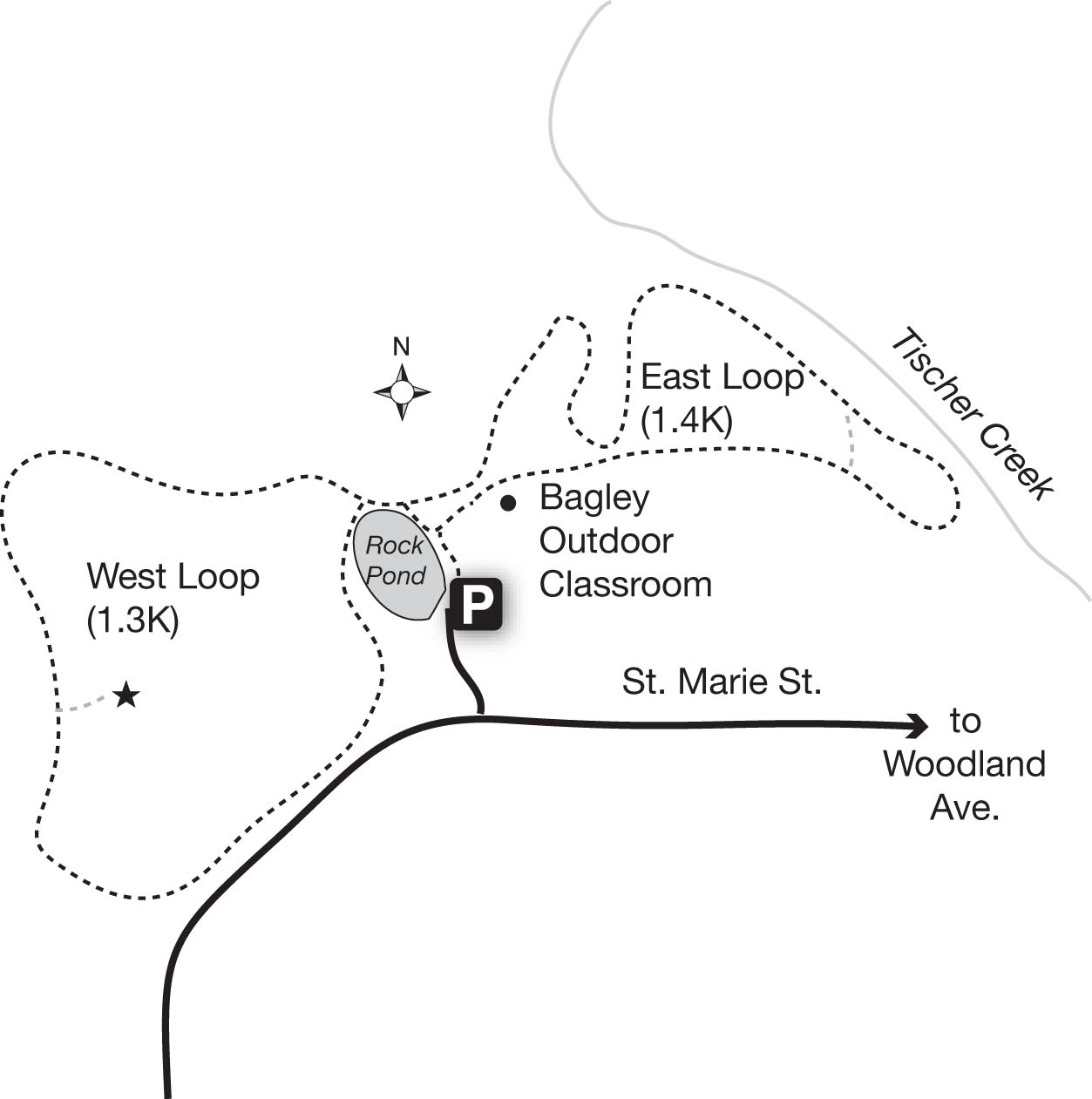
The Bagley trail is a brief circuit of a park just off the UMD campus. Half of the loop is weaves up and down a few moderately eventful hills, but they seem tame compared to the other half, which involves an intense climb up Rock Hill followed by a very long, curving descent that is about as demanding a hill as one can find on a Duluth cross-country trail. For an adrenaline rush on a tight timeline, Bagley reliably delivers.

Chester Bowl

Like Bagley, the Chester trails are not long, but they are also even more consistently not easy, which will come as no surprise to anyone who knows the terrain along Chester Creek. There is a downhill ski area here for a reason. A merely intermediate loop links the two nasty loops, with the one atop the ski hill being the substantially longer one.

5. Do you enjoy making constant inane loops?

If yes, proceed to #6

If no, proceed to #7

6. What sorts of children’s activities do you like adjacent to your ski trails?

The full gamut of outdoorsy education: Hartley

We are skiing purists here: Snowflake

Hartley Park

Hartley is not an extensive system, but it packs a little of everything into its nook between the Woodland and Hunters Park neighborhoods in Duluth. There’s an easy loop, an intermediate loop, and loop marked difficult largely due to one single hill with a curve at the bottom. The loops can grow a bit numbing, but the red pine ridge atop the intermediate loop has some romance to it in the fading winter light, and for a quick escape that still allows for a little variety, it’s an easy choice.

Snowflake Nordic Center

Like many young Duluth skiers, I learned my trade on the winding trails at Snowflake, the playground of the late local legend George Hovland. I have not been back much since, as it is not on the state ski pass and its trails seem to wind all over before ending up in the same place every time. Still, it has a good variety of stuff to deal with, 40 amusing signs, and the maze-like loops and cutoffs can add a new element.

7. Are you trying to get away from other people?

If yes, proceed to #8

If no, proceed to #10

8. Do you want to become an insufferable convert who only gushes about one single trail?

If yes: Northwoods

If no, proceed to #9

Northwoods

I will not pretend to be unbiased. Northwoods in Silver Bay is about a half hour extra drive from Duluth than anything else on this list, but it is here for a reason: it is hands-down the best trail I know, the crown jewel of northeast Minnesota ski trails. This single-track, classic-only network begins through thick balsams and traces the banks of the Beaver River in its early stages. The options only open up from there. First, just past a marshy meadow on the Beaver, the Palisade Valley connector splits off into the heart of Tettogouche State Park; often ungroomed, it tumbles up and down along creeks and between cliffs in pure solitude. There is the daunting climb up Herringbone Hill, and a separate, challenging overlook with views in three directions. To top it all off, there is a trail out to the floor of Bean Lake, one of the most photographed lakes in Minnesota in its cliff-lined hole, only with none of the crowds that flock to its hiking trail in warmer months. Its highlights take some commitment, but a novice with some endurance can reach Bean with no problem, and it’s possible to have a sedate ski here, too. It is perfection.

9. What is your preferred form of intimacy?

Surrounded by looming trees: Biskey Ponds

An open path lit by lanterns: Erkki Harju

Biskey Ponds

Fredenberg Township’s Biskey system may not have the full array of physical features of Northwoods, but for single-track intimacy and some trails that are fun but never brutal, it’s hard to do better in the Duluth area. There’s a pleasant enough easy loop, but the winding intermediate trails, aptly named for the white pines and birches lining them, are lovely. The Eagle Hill trail is the real gem here, as it climbs to a view over the Beaver River before a long but fun plunge down the opposite side.

Erkki Harju Trail

Erkki Harju sits on the edge of Two Harbors up Highway 2 and winds in and out of its golf course and some woods beyond. It has a couple of offshoots for added hill fun, and though at no point is the main loop overly technical, it does have a few long, steady cruises downhill that can be deceptively adventurous in the right conditions. Where this trail really shines is at night, when a 3 km loop is lit up by little lanterns on 3-foot poles. Give me this sort of inviting trail over the overhead lampposts on most lit ski trails any day.

10. Do you require the occasional lit evening ski?

If yes, proceed to #11

If no, proceed to #12

11. Do you prefer to commune with cakeaters or tourists?

Cakeaters: Lester Park

Tourists: Spirit Mountain

Lester-Amity

This East Duluth network is the second-largest of the city trails, and I’d claim it as my home course, having grown up within walking distance. The first half of your ski is a very gradual but quietly tiring climb upward, and the second half is a steady coast all the way back. Because of the elevation, the main loop asks a bit more of skiers than other supposedly easy circuits, and one can continue to add more and more loops as one heads north, both mainline intermediates that tack on the distance and some more demanding side hills for those who enjoy them. It can also be very pretty as it rolls along between the Lester River and Amity Creek, with the Lester D loop being its finest stretch. Get there early after a snowfall, though: it gets busy and it doesn’t take long for people to obliterate the tracks, and its users seem unreasonably fond of going the wrong way on a one-way trail. The good news: the further back one goes, the more the crowds dissipate.

Spirit Mountain/Grand Avenue Nordic Center

The longest system in Duluth has something for everyone. A bunch of easy loops putter around the top of the ski hill by Skyline Parkway, and a longer intermediate loop swings further afield, even providing a connector trail to Magney-Snively for the truly committed. It also has the longest difficult-rated trail anywhere in the area, at least among those using the standard classification system. I will confess to being an infrequent user for no easily discernable reason, but I have no reason not to recommend it, either.

12. Might your ambitions extend beyond one 5K loop?

If yes, Boulder Lake

If no, Piedmont

Boulder Lake

This Minnesota Power-run system located just beyond Island Lake is a solid trail with wide-ranging offerings. The four connected loops on the south side of the lake are forgiving, the only slight exception being some tight turns on Nine Pine’s hills. A connector across an arm of Boulder Lake takes one to a different world, with a climb up to the Ridge Runner, which runs along an esker and offers two equally worrying downhill options at its far end. Taking the northern route will connect one to the lovely, pine-lined Otter Run. (Why don’t more systems give their trails fun names the way Boulder does?) Bonuses include a bunch of interpretive signs and some campsites along the Bear Paw trail.

Piedmont

Piedmont is comparable to Hartley in its scope: an easy loop, an intermediate loop with some pretty scenery, and one difficult side loop notable for one particularly nasty big hill. The Evel Knevel hill at the back end of the intermediate loop can be challenging in the right conditions, though there is a cutoff, and its easy loop has a decent introduction to a hill with a curve on it. Amusing signs dot the route to liven things up, and there is a good overlook down over the city. Be prepared for the parking lot to overflow.

Yes, yes, I know Superior has a decent course, too, and there are good options at Pine Valley in Cloquet and at some of the local state parks. There is some lovely stuff up the Shore and on the Range, too. This post may grow with time as I venture further out.

My Year of Imaginary Thinking

Travel is useful; it exercises the imagination. All the rest is disappointment and fatigue. Our journey is entirely imaginary. That is its strength.

Céline, Journey to the End of the Night (lifted from the credits of La Grande Bellezza)

I began 2021 with the particular belief of a convert to a new faith. It was hard not to, since I started it by diving into a pool at a mountaintop estate on a Caribbean island, my crash into its depths a burst through the din of jungle fauna and steel drum bands echoing in the distance. A couple months later, I received my second stab of Moderna and penned what I hoped would be a victory essay over the virus that had disrupted the previous year of life. I had grand travel plans, I would see family again, work would move away from the misery of Zoom, and I would find undying love.

I wasn’t so naïve as to think it would be that easy, which is good, because it wasn’t. New variants surged, a dream of optimism curdled into an air of mystery, the general malaise lingered, and while I generally went about my life, the world did not. I certainly have no judgment for those who continued to take strong precautions for various reasons and would always work to reach their levels if need be. But to sacrifice any more of my rapidly dwindling youth to a climate of fear that was unlikely to afflict me in any serious way seemed a high price to pay, and trying to negotiate a world in which everyone was on a different page on this issue added another layer of complexity. To be a conscientious friend in 2021 was to live in a state of hyper-aware caution, and the escape of obstinacy grew ever more attractive.

I proceed with family and friends more or less as I did before the pandemic, but my social circles have not grown much, and arranging anything with anyone feels like a considerably larger chore than it used to, the serendipity of stray days together now a rare occurrence. My friend group is a busy one, and a lot of them have been pairing off and reproducing while I have not, a divergence that both keeps them occupied and is wont to drive me to brood. I field questions about my house as if contemplating the excitement of a new garage door is a comparable life step to having a child. For that matter, I have been traveling too much and too caught up in my day job when I am home to get around to acquiring the garage door.

The year took its tolls. I lost a grandmother, an aunt, and a cousin, and endured a funerary marathon for all three of them over one week in July. Somehow, this was not the most draining stretch of family time in 2021; that dubious accolade instead goes to a visit, two weeks later, to the other side of my family, on which I will not elaborate much out of respect for my relatives except to say that no human should ever be allowed to own more than three cats. The less weighty but still disruptive milestones mounted: in the hockey world, a man who was an ordering principle for my drive in life lost his job, a complex but significant era drawn to a close; at work, my colleagues and I were too good at our jobs, in short order overwhelmed by requests for help and pushed to the brink by a taxing schedule, a herd of Sisyphean retrievers forever chasing the ball. It took me until some time after that to see that I was slipping into those same dragging tendencies that had annoyed me about the rest of the world, and another period of time after that to correct course.

I sought my freedom from days of exhaustion and low-grade dread through bursts out into different worlds. It started in the Virgin Islands, made its way to some wilderness retreats in my own backyard, wound its way through another grand western road trip, and popped off to New York and St. Louis and Tucson for punchy weekends. I kept the pace going right up until the end: a week of professional development in Minneapolis featured not only full days of classes, but a different form of scheduled programming each evening as I caught up with family and friends, then topped the whole thing off with a 48-hour jaunt to Chicago for the Christmas party that, every year, manages to put every other party I attend to shame.

All this travel is dangerous. At times it makes me ponder other realities, roads not taken and potentialities looming within a kid who is still capable of quite a bit when he puts his mind to it. I come home from these trips a jumbled mess, always in need of recovery, at once enlivened and invigorated and yet sapped by long hours on the road and disappointed by the return to routine and possessed of a poorly directed energy. The magic does not necessarily last. But how I lived on these trips: sweating up slopes and treading blissful waters, fine dining and good drinks, revelry till the end of the night in the presence of delightful people who, consciously or unconsciously, understand what I mean when I quote Joan Didion and say I want not a window on the world but the world itself.

Didion has been my muse for pandemic era reckoning, and 2021 delivered one final blow when it stole her away this past week. Her death saddened me as much as that of any person I never met in the flesh. No contemporary writer had a greater influence on how I think about the art of prose, or gave me a better sense of how to frame my view of the world. Didion learned to write by copying down Hemingway sentences, and I have learned to write by copying down Didion sentences. An essayist adoring Didion is about as original as a classical music buff lauding Beethoven or a hockey person saying there’s something worth emulating in that Gretzky dude, but sometimes greatness is so plainly obvious, so transcendent of subjective standards, that it can stand up even amid the rush of cliches that inevitably pursue it like fame-hungry paparazzi.

It was amid the rush of Didion homages, all consumed breathlessly this past week, that I realized that what sustained me through 2021 was not the travel itself but the opportunities the travel gave me to write. “Her work was her own answer to the question of what writing and living is for. It ought to be ours, too,” wrote Nathan Heller in a New Yorker obituary. There is no personal crisis I cannot resolve, no looming burden I cannot overcome, by taking a moment to jot it into one of several notebooks or clattering away at a keyboard. The act itself, whether it resolves into a single flowing tale or disjointed marginalia, is enough. Through it, I am made whole at the end of every day, and increasingly in the middle of days when I need reminders to escape the tunnel of the mundane.

From a mesmerized gaze at waves on a beach to the solemn donning of a funeral suit, from the hubbub of a brewing party to curling up with some essays as a wintry wind howls outside, here is to the power of the written word. Here is to their power not to exact immediate results but to create the pieces by which, over time, a new idea can assemble itself, word by word and line by agonized line of authorial reflection and search for just the right turn of phrase. The words may or may not capture my reality in full, but that was never the goal. The goal was to change it.

MN HS Boys’ AA Rankings: 12/26/21

Due to an outage on the USHSHO forum, these rankings are appearing on here this week. They’ll get posted on the forum when it’s functioning again, but I know you’re all waiting…

A short week makes for relatively short work in the rankings world. I suspect we will not be able to say the same thing next week, as there’s a lot of good hockey on the schedule here. By request, I’ve added teams’ rankings from last week to the first line here, too.

1. Lakeville South (7-0) LW: 2

-I don’t love this, given the Cougars’ relative lack of competition, but they are winning by comfortable margins in games they should win. We’ll see if we can get another #1 who only lasts a week, as they now load up for some real battles on their hands: first against Maple Grove and quietly solid Stillwater in St. Louis Park, then a New Year’s Day 1-vs.-2 bowl game.

This week: St. Louis Park Tournament—Tues vs. #8 Maple Grove, Wed vs. Stillwater, Thurs vs. Holy Family; Sat at #2 Edina

2. Edina (6-1) LW: 3

-The Hornets were idle this past week, and have a fascinating Hockey for Life draw, taking on three of the most underperforming teams in AA to date. Does that make for easy pickings for the Hornets, or do some of these teams, hungry to prove their critics wrong, rise to the occasion? And then, of course, they follow it all up with Lakeville South. A juicy week, to say the least.

This week: Hockey for Life—Tues vs. Moorhead, Wed vs. Prior Lake, Thurs vs. #13 St. Thomas Academy; Sat vs. #1 Lakeville South

3. Andover (7-1-1) LW: 4

-The Huskies machined through a pair of 7AA opponents, shutting out Duluth East and Blaine and cementing their top spot in the section. It’s hard to critique much about how they’re playing right now, and they’ll be put to the test in Bloomington with a couple of huge games.

This week: Bloomington Tournament—Tues vs. #5 Cretin-Derham Hall, Wed vs. #6 Hill-Murray, Thurs vs. Rosemount

4. Roseau (8-1) LW: 5

-The Rams just keep rolling. As usual, their own holiday tournament doesn’t bring quite the competition of the big metro battles, but having to solve Mahtomedi will be a different sort of test than what they’ve had to do lately.

This week: Roseau Holiday Classic—Tues vs. St. Louis Park, Wed vs. Mahtomedi, Thurs vs. Minot (ND)

5. Cretin-Derham Hall (6-2) LW: 1

-The good news: the Raiders took down the top team in either class (albeit down a Plante), proving they certainly have the stuff to win the whole thing. The bad: they have to win their section to do that, and two losses to St. Thomas do raise some doubts for a program that needs to find its way in the playoffs. The Andover clash this week will say a lot for their positioning in these rankings, and Rosemount isn’t a free pass, either.

This week: Bloomington Tournament—Tues vs. #3 Andover, Wed vs. Rosemount, Thurs vs. Champlin Park

6. Hill-Murray (6-2) LW: 6

-The Pioneers didn’t put to rest any question over the direction of 4AA with a narrow win over White Bear, but they won the game nonetheless, and are in command of the race for the top seed—a position that suddenly makes it look like they might get Gentry Academy in the semifinals, not the finals. Andover is the big headliner this coming week, and we’ll see if they can show some offensive ability, which has been hit-or-miss so far.

This week: Bloomington Tournament—Tues vs. Rosemount, Wed vs. #3 Andover, Thurs vs. Cloquet

7. Wayzata (4-3-1) LW: 7

-The Trojans marched past Eden Prairie, further solidifying their top ten standing. They have a relatively easy draw in St. Louis Park, with no ranked teams, though their opponents are respectable enough that they could sneak past them if there’s an offensive power outage.

This week: St. Louis Park Tournament—Tues vs. Holy Family, Wed vs. St. Michael-Albertville, Thurs vs. Rogers

8. Maple Grove (5-2-1) LW: 8

-No action for the Crimson this past week; I’m still waiting for a better read on this team. To that end, they have a pretty interesting draw in St. Louis Park, as they seek to turn the tables on last season’s loss to Lakeville South when they were ranked #1, get a potent Benilde team, and get a potential trap against STMA after all of that.

This week: St. Louis Park Tournament—Tues vs. #2 Lakeville South, Wed vs. #9 Benilde-St. Margaret’s, Thurs vs. St. Michael-Albertville

9. Benilde-St. Margaret’s (4-4) LW: 9

-Handled Holy Family, which does nothing to change their status here. The Maple Grove game is the headliner this coming week, though none of their opponents are pushovers.

This week: St. Louis Park Tournament—Tues vs. Rogers, Wed vs. #8 Maple Grove, Thurs vs. Stillwater

10. Centennial (5-1) LW: 11

-The Cougars keep quietly sneaking up the table with consistently good, though not eye-popping, results, most recently a solid win over respectable Rosemount. Unfortunately, their Bloomington draw isn’t going to give us much of a better sense of where they stand.

This week: Bloomington Tournament—Tues vs. Champlin Park, Wed vs. Cloquet, Thurs vs. Blake

11. Grand Rapids (8-3) LW: 12

-The Thunderhawks rolled past Cloquet and saw their game against Denfeld get wiped out. Having played more games than most, they now enter a relative lull in the schedule, but the game this week is certainly one worthy of some attention.

This week: Wed at Minnetonka

12. Chaska (7-1) LW: 14

-The Hawks blitzed a decent Shakopee team, which isn’t a bad sign. They’ve got a couple of quality opponents in their Hockey for Life draw, which will be pretty important from a ranking perspective, as their games against top 25 teams are minimal after this. The Eden Prairie game could well make or break their 2AA seeding fate.

This week: Hockey for Life—Tues vs. Totino-Grace, Wed vs. #14 Eden Prairie, Thurs vs. Lakeville North

13. St. Thomas Academy (4-4) LW: NR

-Following a brief hiatus, the Cadets return to the top 15 with a second win over Cretin. They do need to beat someone else of consequence to stay here, and fortunately for them, a very tough Hockey for Life slate gives them just the chance to do that.

This week: Hockey for Life—Tues vs. #14 Eden Prairie, Wed vs. Moorhead, Thurs vs. #2 Edina

14. Eden Prairie (4-4) LW: 15

-The Eagles failed to build on their big win over Edina with a loss against Wayzata, and the question now becomes whether that was a sign of their potential or merely a rivalry high-water mark. Games with a couple of teams right above them here should help give us an answer.

This week: Hockey for Life—Tues vs. #13 St. Thomas Academy, Wed vs. #12 Chaska, Thurs vs. Totino-Grace

15. Eastview (6-2) LW: NR

-I don’t know if this lasts, but for the moment, I think this is warranted: the Lightning’s two losses are to Lakeville South and Centennial, and they have two legitimate quality wins over Prior Lake and St. Thomas, so they deserve some recognition. They’ve got a decent chance of sticking for at least one more week, if only because they don’t play again until January 4.

This week: Idle

The Next Ten

Moorhead (5-5)

-The Spuds pulled out a vital one-goal win over St. Michael-Albertville, which they needed for section seeding purposes. They remain a mystery team, and have a chance to really make an impression against a Hockey for Life lineup including Edina, St. Thomas, and Prior Lake.

Stillwater (5-1)

-A win over Mahtomedi, while not earth-shattering, is a nice pickup for the Ponies. STMA, Lakeville South, and Benilde make for a pretty tough trio of games in St. Louis Park.

Elk River (6-4)

-Beat Anoka in their only action this past week, and should do the same to Brainerd this week. In very good shape for a top-3 seed in 8AA following Moorhead’s win over STMA.

St. Michael-Albertville (5-2)

-Fell to Moorhead, but looked plenty competitive in the process. They’re in St. Louis Park this week for a tough run against Stillwater, Wayzata, and Maple Grove.

Prior Lake (4-3)

-The Lakers found some life with the return of Sam Rice and a win over Minnetonka. From a rankings perspective, it’s only a first step in undoing the damage of the first month of the season, but it’ll be easier to forget that with a good showing against a pretty decent Hockey for Life slate including Lakeville North, Edina, and Moorhead.

Minnetonka (6-3-1)

-The Skippers failed to build on the previous week’s momentum, losing to Prior Lake and tying Chanhassen. Is this team a real contender, or just one of a jumble in a deep 2AA? This week’s Grand Rapids game will offer some clues.

Lakeville North (3-2)

-Plodded along with a win over Apple Valley. Games with Prior Lake and Chaska this week will tell us a lot more about this group.

Gentry Academy (6-1)

-I doubt I’ve ever dropped a team that won both its games in its week as aggressively as this. The Stars left a lot of question marks in a narrow win over Greenway, and with a couple of those very sketchy results now coupled with zero quality wins against Minnesota competition, it’s just hard to justify a high ranking here. Their game with Alexandria this week could be an interesting one.

Blaine (3-3-2)

-Got shut out by Andover, leaving a tenuous hold on a spot here propped up by that Maple Grove tie. The week ahead is a big one for seeding in their new section as they face off against Forest Lake and Duluth East.

Chanhassen (4-2-1)

-The Storm, after a tie with Minnetonka, win the straw draw for the final spot and make their first ever appearance in this top 25. They have some sort of two-game thing in Shakopee this week in which they play Tartan and the host Sabers.

Signposts at a Crossroads

Jonathan Franzen comes along with a great social novel about once a decade, a tale of family conflict that strives to capture something essential to its moment and something timeless about relationships between people. The first, The Corrections, tracked a St. Louis family coming back together at the home of its matriarch and patriarch for one final Christmas together in the 90s. That novel was well ahead of its time in shedding light on the strains between generations in an increasingly digital world, and it got Franzen into a spat with Oprah to boot. The second, Freedom, followed a Minnesota family as it crumbled in 00s America, wrestling with the American ideal of limitless freedom through several very limited individuals. Once again, Franzen’s critiques appeared prescient, and his tale’s sprawling ambitions suggested that the novel, if perhaps not this one, could yet be the most perfect vehicle for a summation of the human condition.

Now comes Crossroads, which, we are told, is the first in a series of three, a saga that will be Franzen’s modern-day answer to George Eliot’s Middlemarch. The novel takes place in suburban Chicago in the early 70s, the sort of placid, comfortable environment where Franzen likes to unleash his mayhem. (Some of the street names sound suspiciously like those in the towns where my mother grew up in this era. Like Freedom, Crossroads eerily manages to nail a place that has figured in my own life.) In this world we find associate pastor Russ Hildebrandt and his wife and four children, ready to take us on a journey of sex, drugs, and impulsive decisions.

The historical setting is one of the great strengths of Crossroads, and Franzen succumbs to less of his instinct to make it every event relevant on a world-historical level than he did in Freedom: he mostly lets the milieu do the work for him. This is a good thing, in part because I am skeptical that the world is ready for a literary novel on what has transpired over the past five years of American life, and in part because it is a rich inflection point for mining. It is the point when the edginess of the 60s went mainstream, the party coming to a close and the world left to reckon with the growing cracks in so many of its institutions. Any similarities between the present moment and that frequent point of comparison, another era of a widening gyre, are shown but not told: the certainty of the depravity in some lifestyles, the cloying religiosity in some bourgeois liberal circles, the chasm between white good intentions and the realities of Blacks in Chicago or Navajos in Arizona, a sense of great cultural change, and dents in the myth of moral progress.

Crossroads is the name of the Christian youth group that makes and breaks the fates of the Hildebrandts in varying ways, but each member of the family stands at his or her own crossroads. For Russ and Marion, it is fundamentally about the fate of their marriage, and whether they dare now explore various paths not taken as they seek to reinvigorate their lives, whose suburban staleness is again shown but never forced into that classic trope. Clem, their eldest son, consumed by an intense moralism he has inherited from his father, must decide how far his commitments will take him and wrestle with the shadow of said father. Becky, Russ and Marion’s daughter and queen bee of the New Prospect social scene, must reconcile her ambition, her newfound love for a boy, and her own more subtle but nonetheless intense search for certain standards to live by. Perry, the middle son, is a precocious schemer on a quest for alternative states. Nine-year-old Judson, meanwhile, is a point of projection for his family’s belief in innocence, and I am luridly eager to see how books two and three treat this poor kid surrounded by a family that is largely indifferent to him.

I’m not sure if Crossroads is Franzen’s best writing, but it is perhaps his best storytelling, and his character development has reached new heights. On the surface, the characters in this book are no better than those in The Corrections or Freedom, yet I found myself ever more compelled by his ability to suck us into these very flawed humans’ stories, a skill both subtle and magisterial. Russ may be a sorry cad, but the depth of his convictions almost has the reader rooting for him to pull off his affair. Becky, desperate to rise above the fray around her and put herself on some higher plane, comes across as the most levelheaded of the bunch until Franzen suddenly pulls us back to see what her decisions, both intentional and unintentional, have done for all her family members and to her own dreams. Perry may be the most sympathetic character ever to appear in a Franzen novel, an astonishing feat considering that he is an amoral addict who sells drugs to middle schoolers. Both Perry and Becky had my heart beating a little faster for how they pulled me back into certain states of mind, ones that may have reached their apogees in high school but never truly went away.

If there is an actual hero or heroine to be found in these pages, though, it is Marion: tortured, pushed to the brink, but able to find a flawed human grace in her moment of crisis, to see her fantasy for what it is. She is the anti-Russ, a chaotic mess of feeling with no firm belief to stand on, but her fevered quest to find it resolves into Crossroads’ most unambiguous triumph. After Russ grovels before her in an attempt to win her back, she gears up to return the favor. But instead, Marion rejects of the confessional culture that now dominates contemporary relationship discourse, and for that matter in the trend of literary fiction toward an intensely autobiographical sub-genre called autofiction. Maybe Marion does not need to tell Russ everything, can live with certain secrets, can accept some burdens as part of her inner life to build a story of perseverance so that she can give the best of herself to Russ and to Perry, the two people who most need her. More than any of the other Hildebrandts, she comes to a crossroads and finds a clear road ahead.

Faith lurks near at hand for each of the Hildebrandts, with the deeply confessional Crossroads—a setting in which scheming Perry excels—as its backdrop. For Russ, faith is a moral calling and a way to convince himself he is doing the world some good; Clem sees the gap between his father’s beliefs and actions and goes into full oedipal revolt. Marion, after a descent into purgatory, rediscovers a raw sort of grace, while Becky seizes upon God as her orientation to the world for thinner but not unrelated reasons. Perry chooses other gods, but, in one of the novel’s most memorable scenes, agonizes over the meaning of goodness and his own inability to reach it. It is as honest a treatment of faith and the search for it as I can recall in fiction, made all the more powerful by how much the traditional trappings have faith have fallen out of the circles in which most readers of Crossroads reside. Once again Franzen is a countercultural iconoclast, but pulls it off subtly, raising doubts through the best vehicle for creating them: complicated yet lovable humans.

Crossroads is not a perfect novel. Franzen’s endings are usually moving and powerful, but the denouement in this one, which sets the stage for part two, doesn’t quite clear his very high bar. Clem’s storyline is a relatively weak one, the teenage speech is occasionally off the mark, and certain Franzen tropes recur: the sorry patriarch, the matriarch’s lurching therapy, the cool musician friend sweeping the girl away. Other critics have lingered on the relative flaccidity of Franzen’s prose compared to his earlier work, though if this is the price we pay to drop some of the preachiness of earlier Franzen, I find it a worthwhile tradeoff. The more mature Franzen has dropped some of his old pretense, and much like Marion at prayer, his writing has its greatest power when stripped of its adornment.

My birth as a writer owes a certain debt to Franzen, the grumpy Great American Novelist who opened my eyes to the power of contemporary fiction. I was so absorbed by the hype Freedom that my mom sent a copy in a care package while I spent a semester in Mexico City, and by the next summer I was in a brief, unfortunate phase of life where I thought I might be able to make a living as he did. Franzen showed that fiction really can reveal something about the world as it is, and even when he whiffs, his work is worth reading. I can’t recall the last time I inhaled a book so deeply, as addicted as Perry Hildebrandt to his drugs, and he may yet be a gateway to more fictional pretensions. For now, though, I’ll settle for eagerly awaiting part two, convinced again that a novel can indeed give us some insight into which paths to follow in the meantime.

Uncharted Territory

For the first fifteen years or so of my time following Duluth East hockey, I had the pleasure of generally watching this sport at its peak. For the next two, I watched a lot of ugly hockey, but at least much of that was by design. Now, I am rubbing my eyes in bafflement at an 0-6 start, willing to give away my kingdom for a clean breakout. How does a program that ruled northeast Minnesota for decades pick up the pieces?

Duluth East 2021-2022 hockey opened after a profoundly weird offsesason that saw the exit of Mike Randolph as head coach and an exodus of players from a program that for so long had been a destination. Into the void stepped Steve Pitoscia, who combined a long East pedigree as a bantam coach with a stint in junior hockey, a solid résumé worthy of the position. But recovery from what this program has undergone over the past two years or so will take longer than a few games and require more than some fresh vibes. Duluth East hockey is in a strange, difficult place, and the task ahead is not one for the faint of heart.

I intend to cast very little judgment on Pitoscia and his staff this season. They are new, and many of the greatest high school coaches never would have gotten anywhere if they were judged on their first season alone. Pitoscia has the unenviable position of following a larger-than-life icon whose final stanza at East left a very sour note, both for those who supported him and those who opposed him vehemently. No rational observer can pretend the talent level here is what it has been, thanks to both a slip in the product coming out of the youth system and an exodus, both pro- and anti-Randolph, over the summer. As far as I’m concerned, the new staff is free to do as much tinkering as it would like, and I ask only for signs of progress.

The talent is not all gone, either. A junior core of Cole Christian, Grant Winkler, and Aidan Spenningsby is a decent foundation, and sophomore Thomas Gunderson looked sharp before promptly suffering an injury. We await the return of Wyatt Peterson, who showed some offensive potential as a freshman last season and has yet to play a game. There are enough other respectable defensemen that the blue line corps could be a relative strength. In goal, Zander Ziemski has had a couple of yeoman’s performances, holding up under heavy barrages and at least giving his team some chances. No one will claim this is a top seed contender, but they have enough to be a very pesky section team that could pull an upset or two.

In the games to date, the tales of woe are mounting, one after another. A Thanksgiving road trip to the Twin Cities gave the Hounds two season-opening losses, a tight contest with White Bear Lake whose final score made it look lopsided and a lopsided affair with Chaska whose final score made it seem somewhat tight. The home opener against Grand Rapids provided its share of hope; while Rapids dominated for about a 25-minute stretch in the middle of the game, East held serve in the first period and mounted a plucky comeback late in the third that made it genuinely interesting. Giving the top team in 7AA a good run in the playoffs suddenly seemed very possible.

The good feelings did not linger. A home game against Bemidji should probably have been the first win, but the game slipped away late and wound up in an overtime loss. A weekend trip to Wayzata offered nothing in the way of bright spots. The snowball rolling down the hill then collected the Forest Lake game, which had some strong play early and a 2-1 lead after two before a four-goal burst in the third buried East yet again.

One suspects that half the battle will be mental going forward, as the team tries to find itself in this murky new territory. Perhaps a remnant of Mike Randolph’s black magic lingers in the Heritage Center, one final curse cast to haunt the program that drove him out. But one thing concerns me more than any game that got away against Forest Lake or any humbling against Wayzata: the current peewee and bantam teams have all started poorly, an almost baffling lack of success given the size of the youth program. At this rate, this team could be one of the better Hounds editions of the next few years. This leads me to ponder several possible futures for Duluth East hockey.

The first sticks with an old phrase I used when talking about predicting high school hockey: “the Edina of the north.” Among Minnesota high school programs in urban areas, only the Hornets compare in their ability to stay good decade after decade, defying the seeming laws of urban expansion and family moves. But it hasn’t been entirely consistent: take the start of the decade of the 00s, for example, when, under a relatively new coach named Curt Giles who’d gone to state in his first season there, the Hornets then went six years in which they only once made a section final and never went to State. East’s descent is already probably lower than that (the Hornets did not have a losing season in that stretch), but even the most dominant program in the state hits the occasional lull. Waves come and go, and by the late 00s, the Hornets were setting the bar again.

But maybe a better comparison is Bloomington Jefferson, starting around the same point in time. The Jags were, of course, the preeminent program in the state in the early 90s, and remained one of the top two or three through into the early 00s. Their bleed was long and slow: first the defection of Greg Trebil and some talent to Holy Angels, then the retirement of Tom Saterdalen; later, some teams that might have won other sections got stuck behind that return-to-glory Edina. They were still quite good, and consistently ranked. But as the 2010s went on that started to slip away. Now, they are often a punching bag, proud of their history but potentially looking at a merger with Bloomington Kennedy, which has struggled even more. Despite some committed alumni and some okay youth talent, a return to glory in the current environment looks like a real reach. West Bloomington is now one suburb among many, a pleasant enough place but no singular attraction for hockey.

That brings us to another possible future, one that reaches even further back: Minneapolis Southwest, long the class of Minneapolis hockey and a state champion in 1970. Southwest is still a pretty well-regarded public high school, situated among the affluent neighborhoods that surround Lake Harriet; as demographic changes have come to other parts of Minneapolis, it has, if anything, seen only a greater concentration of resources. But the pressures on other programs in Minneapolis had a direct effect on Southwest. Its hockey identity is dead; while it lasted longer than the rest of the Minneapolis schools and is the primary feeder for Minneapolis hockey, it has now merged with all of them to field a single team. The good hockey players in the area frequently wind up at private schools, if they stay in the city at all, and hockey just isn’t as big of a part of the community culture. Southwest hockey is a relic of history, and the sport rarely more than a feel-good story in the city, and while there are ways to imagine that changing—the resources are there, in a way they may not be in Bloomington—they are still a long way off.

There are reasons to think all of these are possible. The east side of Duluth still has a bunch of lakefront and ridgetop real estate, a bit of new construction and a some grand old history. It has the committed alumni base and the picturesque youth rinks, and the youth association is making some changes at the squirt level that accept a changing reality. It should continue to have decent numbers and the demographics that support hockey, perhaps even some growth if certain real estate trends persist. On the other hand, the east side of Duluth is no Edina clone: it includes swaths at more middle and even lower incomes, and shares a district with Denfeld. Does East just become a feeder for some of its neighbors? Can Denfeld stay viable, or will the East identity be the casualty of a merger? These are the longer-term questions that concern me much more than a bad goal conceded to Bemidji.

For the players on this year’s team, though, these questions are far off in the mists of the future. They need to get healthy, they need to find some combinations that work, and they need to accept that they now have the ability to write this next chapter of Duluth East hockey. There is far too much here, past and present, for the Hounds to roll over dead.

Interesting Reading, December 2021

Herein lies brief return of an old feature on this blog, just because I have for once actually collected some of the interesting articles I have read. Actual content will soon follow!

First, Noah Millman, one of the more interesting and unorthodox political and cultural thinkers out there, offers a Thanksgiving essay on gratefulness on his Substack.

Second, Kate Wagner, the architecture critic of McMansion Hell fame, offers a brief take in Bustle on the inanity of the “farmhouse” architectural style that prompted some conversation among my cousins and I as we spent Thanksgiving in a Chicago suburb brimming with these new things sprouting up to replace older ranches and split-levels. (My line at the time: “these are the things we’re going to look back on in 30 years and say, ‘ugh, that’s so 2020s.'”)

On the meatier side, Canadian philosopher Joseph Heath makes an appearance in American Affairs to offer a case for why racial problems in the United States seem so impossible to solve. He deftly shows how means and ends fail to align, and underscores the difficulty of a solution in light of the complexities of the Black American experience. His global context adds a valuable lens to a debate that so often gets caught up strictly in consideration of American events.

And, finally, in an article that can be termed Karl-bait, Graeme Wood tackles the concept of the “land acknowledgment” in the Atlantic. Land acknowledgments, for the uninitiated, are practice designed to honor Native Americans that too often, like so much of white liberal virtue-signaling, can allow people to feel good about themselves for knowing things without actually doing anything to fix them. It concludes with some concrete points to make them better.

Symposium

I started 2021 with a midnight splash into a pool, a dive both literal and metaphorical: after the caged life of 2020, 2021 would be a year where I jumped in. I am not ready to pass final judgment on that goal, as certain limitations have not exactly disappeared, but in one way this year has matched the hype. I traveled more than I ever have, a steady stream of escapes from daily toil, and this past weekend, a final excursion outside of holiday family time took me to Tucson, Arizona, a new place with a lot of very familiar people.

I liked Tucson. I found it somewhat less sprawl-happy than its larger northern neighbor, Phoenix. The Presidio neighborhood, where I made my home for two days, had a dash of Spanish colonial charm, its homes quaint and bright and the landscapes one with the desert around it. I visited the weekend of the University of Arizona homecoming, which brings its large campus to life. Tucson’s food scene is good enough to earn a UNESCO designation, and the intensity of the Mexican influence gives it a genuine sense of a borderland, a mash-up that brings together the poverty and migration and logistical challenges with the immigrant grit and rich cultural creation and re-creation that takes place when two worlds collide.

My summons to Tucson came for my college friend Mike’s wedding with Lizette, a union of Irish- and Mexican-Americans that underscored this syncretism at every step. Mariachis in the cathedral, Irish dancers at the reception, and a couple of Georgetown Jesuits to tie the ribbon; a bagpiper to herd us to dinner and a Mexican ballad crooner at the post-boda party the following day. Now that I have seen his city I sense that I know Mike a bit better, and know why he helped found Georgetown’s Kino Border Initiative alternative spring break program that continues to run today. No matter how far he ventures he is a child of his hometown, a sentiment I know all too well.

I will here embarrass Mike by calling him one of the most impressive humans I know. I dole out such praise not only for his considerable worldly achievements from his presidency of the Georgetown student association to his Cambridge fellowship to his burgeoning education career, but also for his capacity for introspection and his ability to change his life for the better. We have both come a long way since we were two eager kids stumbling around Mexico City together for a semester, each restlessly seeking out callings that reflect who we have become every step of the way. For him, this weekend was a moment of triumph, a rush that ties those disparate threads of life into one, and while my own such moment remains somewhere further out beyond those cactus-studded hills, seeing another achieve it only fuels me.

Recently I’ve been reflecting on my objects of love, most notably the city that my time at Georgetown led me to conclude was the place I should be. After Duluth, however, comes that institution. An inordinate number of my formative moments came between the ages of eighteen and twenty-two. Georgetown was the apotheosis of my childhood striving, though its central role has never been an unambiguously positive one. Not long out of undergrad I penned a somewhat cynical account of my time there, and I when I read critical takes here and there on institutions like Georgetown, I find my share of truth. I have struggled, sometimes mightily, to weigh my place amid and against everything that Georgetown represents.

But anytime I am back on its campus or among its people, it is an object of ever-growing love. This Tucson weekend, spent primarily among friends I liked in college but have not kept up with religiously since graduation, was a liberation of sorts. In short order any anxieties over class or money or my strange post-graduation path melted into nothing. My story remains a curiosity to this audience, but it earns respect, and as we roll into our thirties, we are collectively easing into our own skin and into healthier relationships with the meritocratic pressure-cooker we have all inhabited to greater or lesser degrees. We all still share a hunger for knowledge and a thirst for rich lives, this belief that we really can have it all. It was also refreshing to be back in circles where not every 31-year-old is married, perhaps with a kid or two, that status a source of growing annoyance but not unnatural. These are in so many ways my people, and as I kill time in the plaza of the Tucson Presidio the morning after the wedding, I appreciate once again that I am who am, formed by my own peculiar jumble of circumstances just as Mike has been formed by Tucson, a new pride stirring within me.

Each morning since my return, I’ve begun my days with a brief reading from Plato’s Symposium, a search inspired by a speech from a member of Lizette’s bridal party. Perhaps Socrates and friends can be guides to my own loves; perhaps Tucson is only another meander on this strange path I tread. But with each dive I grow a bit more comfortable in the water, a bit more content to ride the waves, whether they come in a Caribbean pool or a November gale on the greatest of lakes. And between each one, may I continue to have symposia with Hoyas, my fellow travelers for life.

Halfhearted Election Reflection 2021

Duluth had some municipal elections this week, and while I mostly lurked in the shadows this cycle, I feel compelled to offer up my usual closing thoughts. When compared to the national-level barometers in some sates and weighty ballot measures down south in Minneapolis, Duluth seemed decidedly sleepy this cycle. The two school board races for three open seats were predictable from the moment the filing deadline passed, with the only opposition to the labor/DFL bloc coming from two very familiar faces. Against that backdrop Loren Martell actually had a passable performance, pulling in over 4,000 votes, but the race was never really in doubt.

The District Two council race was a bloodbath. Mike Mayou, who fell short in the at-large race two years ago, had little trouble cleaning up against a fairly invisible campaign from Dave Zbaracki. Mayou won big everywhere, and now assumes the mantel of the retiring Joel Sipress, who has been the voice of the council’s leftward wing for the better part of a decade.

In District Four, on the other hand, things got a bit more interesting, as incumbent Renee Van Nett scraped out a win against Howie Hanson, whom she had herself unseated four years ago. Hanson’s campaign was consistent in its messaging, if nothing else, seeking to paint Van Nett as a tax-raising rubber-stamper of mayor Emily Larson’s agenda. This is an odd characterization of Van Nett, who is one of the more heterodox and interesting people in local politics, but Howie is, well, Howie, and his message had some resonance in the city’s most conservative district. (Remember when the guy first ran some years ago as a lockstep ally of Don Ness?) As was the case four years ago, Hanson carried the day in the Piedmont and Duluth Heights precincts, while Van Nett ran away with the three in Lincoln Park, which gave her enough of a margin.

The most interesting race (and the only one worthy of mapping) was the competition for the two open at-large seats, which became a three-way race when one of the people who advanced from the primary, Tim Meyer, withdrew from the race. (He still got over 1,000 votes. Not a bad showing, really.) Here, things broke as one might expect in a three-way race: the center-left figure nearest the center of Duluth politics, Terese Tomanek, coasted to victory. Like many winning coalitions in citywide politics, the east side was her base of support. Azrin Awal, meanwhile, was fueled by a strong personal story and DFL institutional power in a DFL city. She ran comfortably into the second seat despite winning only a handful of precincts around UMD and on the lower East Hillside, in neighborhoods often dominated by younger voters. Further to the right, Joe Macor seemed to try to run with the Derek Medved playbook, but he is not the singular figure Medved was two years ago when he ran up unprecedented margins in west side precincts. He still won much of the west side, but finished in a firm third place, and is now 0-for-2 in local elections. We’ll see if the Duluth right finds a new standard-bearer after this inability to break through.

2021 at-large race. Blue: Terese Tomanek; Red: Joe Macor; Green: Azrin Awal

This map is, somehow, nearly a carbon copy of the one from two years ago. Tomanek won pretty much every precinct that Arik Forsman won in 2019, plus the two that Noah Hobbs carried. All of the seats that Awal won were won by Mayou in his losing campaign two years ago. And Macor’s map pretty much maps on to Medved’s. The exceptions: Tomanek won two additional precincts, including 29 in the Denfeld area (won by Medved in 2019) and 15 on the upper hillside (won by Mayou), while Macor won one (23 in the upper Heights) that Forsman won in 2021. But yet, despite basically the same map, the actual results are very different, with the rightward-leaning figure dropping from first to a somewhat distant third, the center-left figure rising from second to first, and the leftward figure going from fourth to second. It goes to show what a unicorn Medved was, and also how a race with only two left-ish candidates (instead of the three in 2019) is pretty much a foregone conclusion.

Functionally, I’m not sure this changes things dramatically. Replacing the retiring Zack Filopovich with Awal does move things leftward; her successful and money-flush campaign showed how the DFL has gravitated that way, which is a statewide and national trend, and will certainly be a factor in coming elections. On the flip side, the firmly progressive bloc of the council no longer has Sipress as its commanding presence, and it will be interesting to see how the newcomers, Mayou and Awal, position themselves vis-a-vis figures like Mayor Larson or even councilor Janet Kennedy, who are no one’s real idea of moderates but also not exactly in lockstep with progressive movement politics, either. The center of the council is blurrier than it has been in recent years, which opens up some interesting potential arrangements and makes being able to whip the votes a valuable skill. The mayor herself also has a looming decision on a run at a potential third term, and we also await the results of a redistricting process, which is unlikely to bring major change but could alter some things at the margins. There will be no shortage of intrigue in the coming years.