Second Linemates

This post is adapted from my loosely scrawled outline for a rehearsal dinner speech I gave at my friend Danny’s wedding in New Orleans this May.

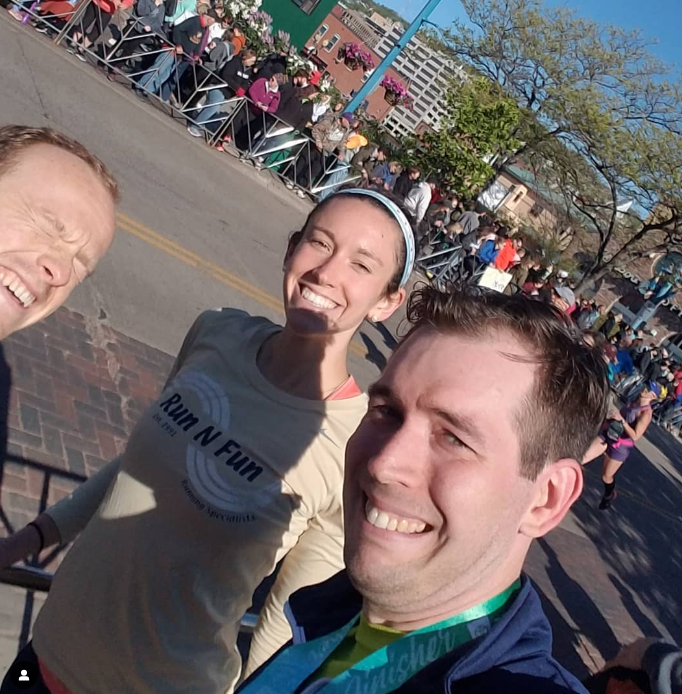
On a February night in 2015, I was minding my own business at a Duluth East-Blaine game at Fogerty Arena, locked in on a back-and-forth affair that saw 13 goals and an overtime. Some guy, having successfully Twitter-stalked me, tracked me down afterward and introduced himself. I promptly forgot him, though I managed to pretend otherwise when he re-introduced himself to me at that year’s State Tournament, and before long I’d been invited to attempt a podcast on high school hockey. The rest is history.

The podcast was the perfect launching point for both of us, and it gave us both the perfect outlet to share our thoughts on the sport we love in our ways. But before long, it became clear that Danny and I shared more than an unhealthy high school hockey obsession. We were born nine days apart, and our moms grew up a few miles from each other in suburban Chicago; years later, we realized we’d competed against each other in high school Knowledge Bowl meets. But our tie was more than mere coincidence: we were also going through a similar phase of life when we met, as we settled down on to roads far from our pre-college plans.

At the same time, though, there was a hunger. Danny was not going to be content just going to a few hockey games. He had to make the best podcast, attend the most games, find those outlets in which a natural homebody became a social butterfly and shared the fun with everyone around him: random connections invited to dinner, jersey-chasing games with high school kids, drinking in the full scene. It applies beyond hockey, too, where he seeks out the best food there is, sucks up all the random trivia, goes deep into his passion projects. To hang out with Danny is to learn the minutiae of every Ken Burns documentary, of the Donner Party or Hemingway, to dive in deep into topics of intrigue.

I made an easy slide in with his family, off on adventures that might involve Karl Pours at the Ryan family cabin or that ridiculous party during the Minneapolis NCAA Final Four at The Butcher and the Boar or us just puttering around Minneapolis when we both lived there. Before long I was passing up much cozier guest lodging in the city for his comfy couch a block off Loring Park: here I would get good food from one of the best chefs I know, good company for both adventurous and quiet nights, and a window into the ever-expanding hockey jersey collection.

Living this way Danny does, with a such strong sense of self, can make it hard to settle down with someone. (I speak here with firsthand knowledge.) And so, when Miranda came along, I managed my expectations about how well she’d handle someone who attended 92 hockey games the year they met. The beginning was inauspicious: we will not speak of Miranda’s first State Tournament, and the time she had to go headfirst through a window at the Ryan family cabin to save the day for Danny’s mom and her friend likewise did not portend a seamless blending of two worlds.
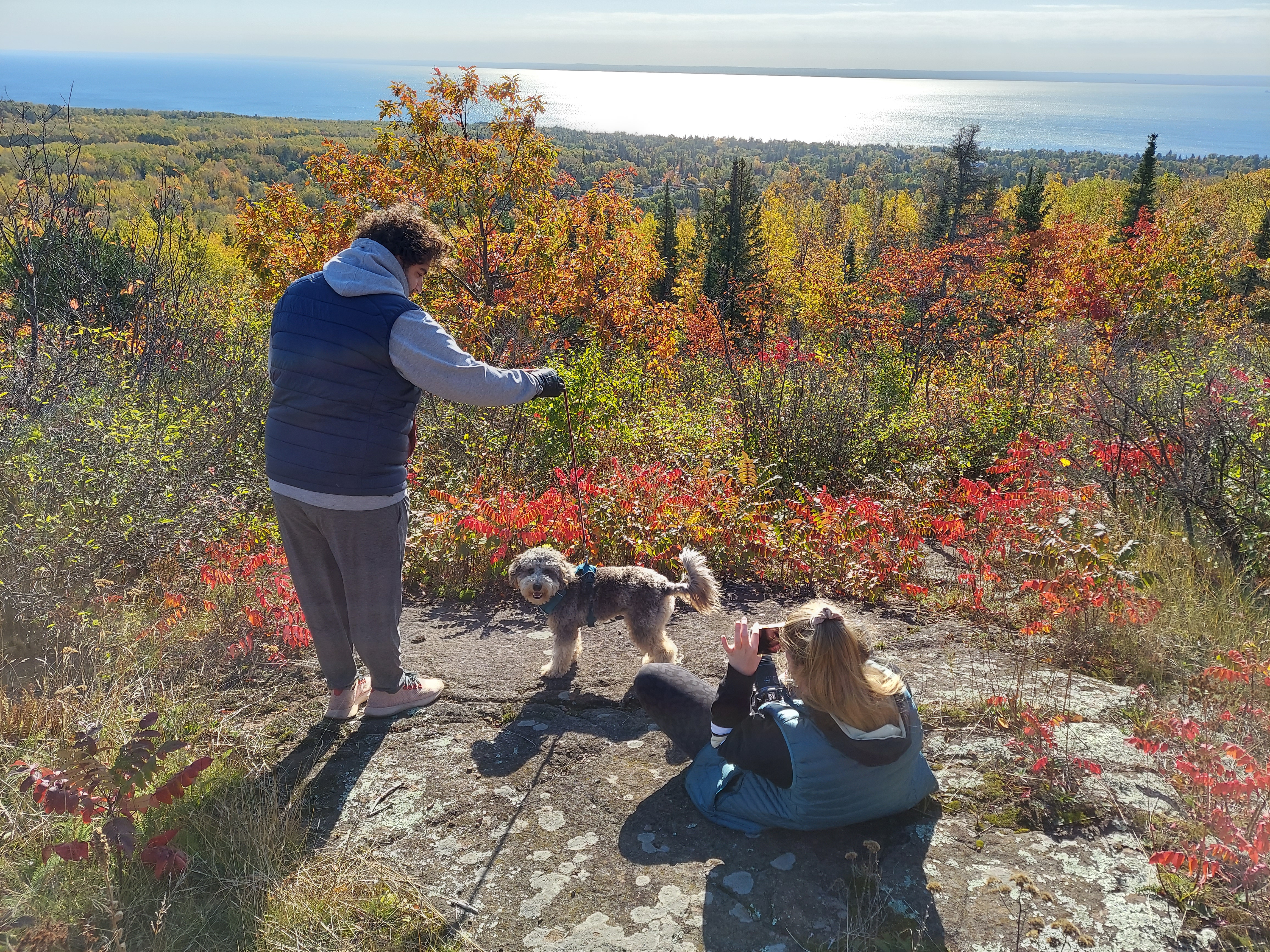
But there was clearly work being done here, a shared journey undertaken. Danny and Miranda were going to make this work. I finally saw it in full a few years ago when they came up for peak fall colors with their bernedoodle Beary—who, unlike his housemate Muffin, is a chill, sweet, kind dog. (I’m convinced Muffin is a member of a Hamas sleeper cell.) There was an ease to their interactions, the rhythm of good-natured humor of two people finding their way to a life they could share. Miranda and Danny can come off as low-key but are astute observers of their world, drive hard for what they want, and have become great company to keep.

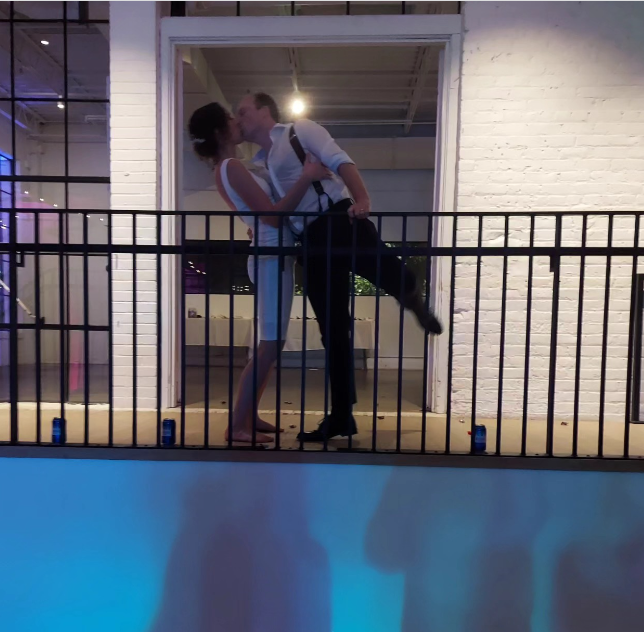
And so their wedding in New Orleans this May was the culmination of that shared journey. They power through obstacles and exercise their agency. They brought us together, a party in their favorite city with their favorite people, the rest of us along for the ride to share in it. Here we were, able to spend a week downing delicious food, celebrating at a grand Southern estate, dancing down the streets of the French Quarter for a second line. Who could ask for more? So here’s to the good memories we have made, the good ones we will make, and that shared journey we’re all on with them here. To Danny and Miranda.

Cono Sur 2024, Part I: Un Destino

This is the first in a four-part series.

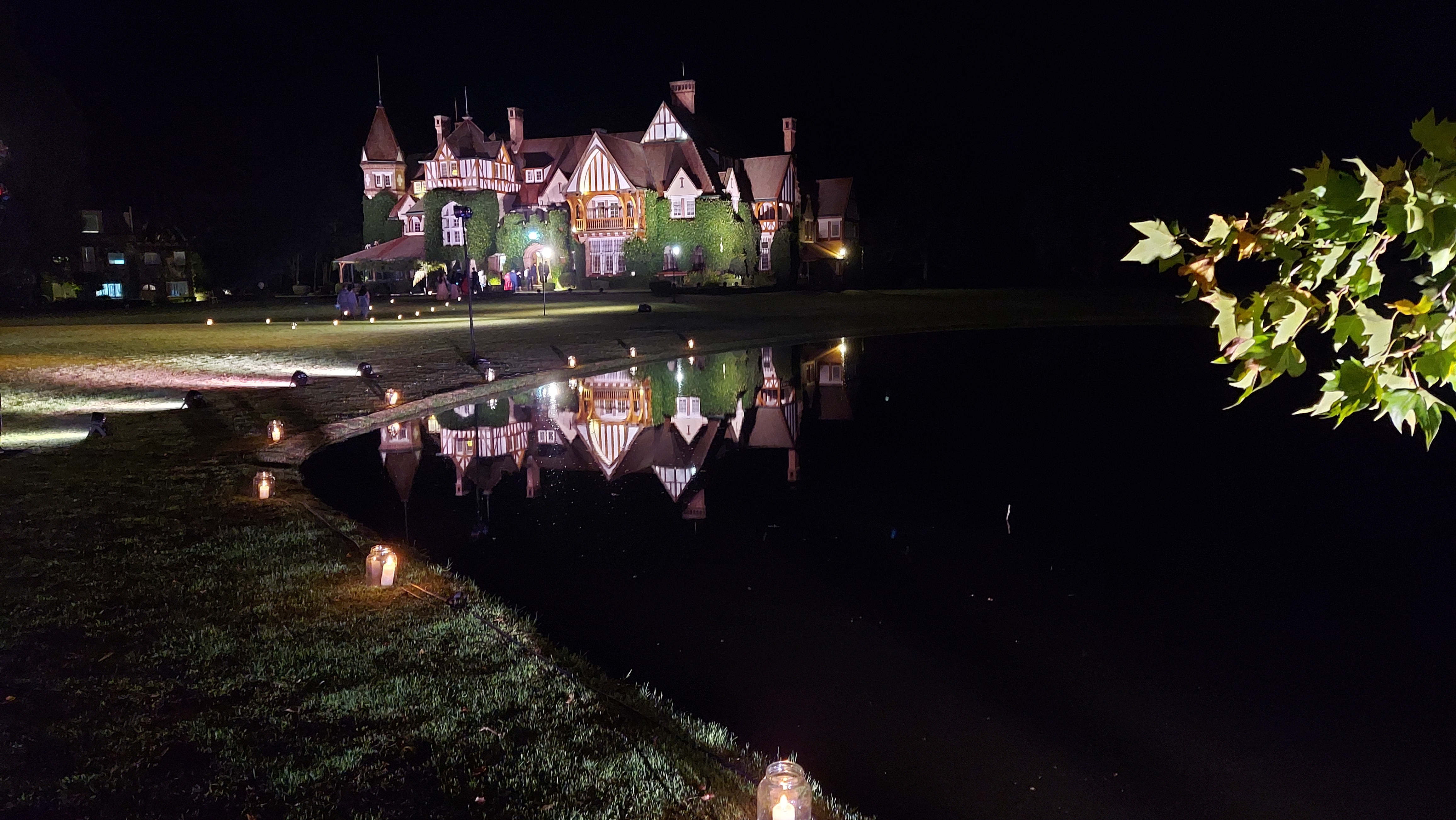
There are ways to celebrate and then there are ways to celebrate. Take, for example, the idea to hold a wedding 5,000 miles from home, to bring over 70 people from your life to a sprawling country estate in Argentina. The clouds lift just in time for the outdoor ceremony beneath an arch shrouded in flowers, emotions flowing at self-written vows. After that all your guests are strewn across a lawn for a garden party. Drinks appear, along with some particularly vigorous fiddlers; off in a corner, an asado grill churns out the meat, which wafts over and sticks to the guests. By nightfall the wedding party settles beneath a tent laced with golden lights, where each guest’s name plate includes a personalized appreciation. First dances draw tears, speeches turn to roasts, fog machines erupt and the DJ carted in from Boston churns out the best hits of 2012 for over four hours. We dance, we sweat, we wave around glow sticks and don ridiculous Argentine soccer swag. The estancia is aglow as the backdrop, reflected in a small pond, and when the feet are sore and the livers protest, it invites everyone in to sit in the drawing room’s enveloping couches and drift toward sleep. Dreams and reality blur.

I am in Argentina to celebrate Phil, one of my college roommates, and Jess, a friend from that era who went on to become more than a friend. He grew up in Schaumburg, Illinois, not far from my Chicago area relatives, and his easy Midwestern style remains contagious. On R Street, Phil occupied the basement lair, emerging for video games on the couch or nights out in DC or to tutor local students and occasionally for class too. The Tuesday trivia host at The Tombs most certainly knew who he was, and if Georgetown’s honor were challenged by invaders from Syracuse, he would rise to the challenge. He brought a good party with him everywhere.

Phil possesses an endless spontaneity and willingness to try just about any new thing. This does not always go well, but it brings collective fun when his schemes work and collective humor when they don’t. His college era shenanigans matured into a hunger for travel and United Airlines status. (Perhaps someday he will share his secrets over how he has gotten that company to not treat him like a heap of dung.) The old Phil is still very much around, though, as anyone who was taken on his wild goose chase for the utterly remarkable biscuits from a generic New Orleans chain named Willie’s can attest. His loose humor is a gift from his mother, as I learned from her savage send-up over dinner, a blend of pride and good-natured ribbing that summed up Phil perfectly.

From the outside Phil could make it look easy, shrugging off any nerves and from there quickly learning what he liked and disliked professionally. But there is a design here. He meets challenges with honest examinations, seeks the counsel of good friends, and possesses an uncommon tenderness that manifests as a strength. It is not hard to see how Jess, a star of the business school at Georgetown, could fall for him, and how they could come together as a well-complemented power couple. Jess can live as large as Phil but insists upon reasonable bedtimes and good life decisions, a diligence evident in the wedding planning, where her remarkable skill in pulling things and people together in a land far, far away shined through every time I took a moment to consider another aspect of what went into it.

Phil and Jess’s wedding is indeed on point: big, loud, no detail missed. It begins with a welcome lunch, which I miss because I am inbound on a ferry from Uruguay, and it proceeds from there to a welcome dinner at the Four Seasons in Recoleta, the swanky core of Buenos Aires. Guests stride up the streets in their finery, old college friends appear here and there, and the energy swells. After we mill about with drinks for a spell, a pair of tango dancers emerge, and they leave us in awe: feinting and swinging, pulsing with sexual energy, physiques perfectly tuned. From there we are seated for what becomes the first of five straight days of steak dinners for me. The buses then carry the wedding party out to the estancia, and we proceed from there.

At Estancia Villa Maria the wedding guests are split between the main villa, the neighboring Casa Francesa, and a series of more modern houses developed a short distance away. The older buildings are endearing in their old-world opulence; over the course of the weekend I hear allusions to Downton Abbey, Bridgerton, and Clue. I join the groomsmen in the Casa Francesa, where I shack up with my old roommate Trent and his wife Kelly in a suite that includes a balcony off the shower. Brunch is communal on both our days at the estancia, a gentle blurring of friend groups as we sip maté and nibble on pastries, gaze out at the polo ground beyond. At times it is hard to believe this is real.

This wedding is a spectacle without sacrificing intimacy, aided by an Argentine culture that enjoys going for it without any reservations. Phil bawls through a substantial portion of the ceremony, which is both predictable and endearing, and he and Jess can laugh through it and bring us along for the ride. Not once did this adventure feel gratuitous or attention-seeking; it was two people doing a wedding exactly as they wanted, with the people wanted, in a way that made it a party for everyone. Twice over the course of the wedding night, when I need a bathroom, I take the long stroll across the lawn to the house instead of using the convenient port-a-potty so I can savor the night and approach the tent in reverence, drink it in before a new tune inspires me to bolt back to the dance floor. Those two late nights, with nightcaps on the couches as the crowd dwindles, show how deep ties can be over space and time.

I will need to return to Phil and Jess’s Bed-Stuy brownstone before long, and someday we will make our planned pilgrimage to Chippewa Falls, Wisconsin. But for now, I will make sure this wedding to end all weddings is seared into my memory like a good Argentine steak on a grill, a rare meat indeed. What a delicacy, to have been brought along for this ride.

Part two is here.

Big Easy

The trope of the Midwestern kid heading to an East Coast seat of power has typically been one of innocence lost, of bright-eyed illusions dimmed by closed networks and sordid affairs. This story, saddled on succeeding generations of Midwestern boys heading east by F. Scott Fitzgerald, has a certain glamour. It is flattering to imagine oneself the wounded noble soul in a greater story, and wounded noble souls do not usually realize they are doing themselves no good until a few years have drifted by in aimless emoting.

One who has navigated this road with remarkable aplomb, however, is my Georgetown roommate Trent, whose wedding I attended in New Orleans this past weekend. Trent and I first came together in New South 205 as freshmen at Georgetown, two rare Hoyas who did not hail from large metropolitan areas and in the thralls of what Washington had to offer them. We were avid pursuers of the DC political scene and Hoya basketball loyalists, and while our social circles ebbed and flowed as he dove deeper into campus communities from the start than I did, we remained an ideal pairing, drama-free and easygoing. We lived together for all four years of our undergrad experience, New South to Copley to 3731 R Street, though we were abroad in Mexico in opposite semesters of our junior years. By senior year our house, with Phil and Tim added to the mix, crystallized into a cohesive unit.

The journeys since have been long. Trent left DC after graduation, first to teach in Houston and then on to NOLA, where his new wife, Kelly, attended medical school at Tulane. No doubt there have been moments of trouble and deep frustration, especially in those Teach for America years, a crucible that formed many of my Georgetown friends. But for no one did it show outwardly less than for Trent. In the hours before he tied the knot, a group of us sat in his hotel suite and shared stories of Midwest childhoods and Georgetown escapades and teaching travails, and there was no trouble believing these tales all wove their way through the same guy who sat before us. At the core, nothing has changed a bit.

Trent retains a slight Ohio twang, even as he travels higher in professional circles and eyes an impending return to DC. He is relentlessly competent and organized but stays preternaturally upbeat, his work rate nonstop but still grounded in the people around him, whatever their station. It was no secret where those lines about social justice in the prayer of the faithful during the ceremony came from, and he has the art of making such lines feel heartfelt. He has perfected the blend of roots and ambition that has always been my ideal, and he has the magnetic personality to make it all work. And in the meantime, he will have a lot of fun.

I will save a longer discourse on New Orleans for a second visit in May, but this venture was a dive into Trent’s life in the city. And, of course, no trip to the Crescent City can be complete without eating up the rich local culture and the nonstop revelry that make it unlike any other American city. Friday night takes us to the Mid City Yacht Club, a local joint with no pretentions of hosting people who enjoy yachting, tucked in among classic NOLA houses and across from a well-lit ballfield in the neighborhood where Trent and Kelly live. I’d assumed the name was ironic.

The rookie Jesuit presiding over the ceremony, however, tells us the truth: during Katrina this little bar, flooded along with the rest of the neighborhood, acquired the moniker in jest, and a few friends nursed it back, rebuilding it from the detritus of the hurricane. In the homily, the mention of the Yacht Club was a metaphor for love and commitment, but it was also a simple summation of Trent: there for the party often enough to be a regular, but using that tie to make a deeper connection and lift up a story of triumph and rebirth. Trent brings together great people, two new friends and I observe as we stroll up Canal Street toward the church with our roadie martinis in plastic cups.

Since this is a Hoya wedding, the ceremony takes place in a Jesuit church tucked just west of the French Quarter, its grandeur shadowed by the towers around it but resplendent in the Company of Jesus’ quest for the Greater Glory of God on the inside. It is as snappy a Catholic ceremony as one will hear, with no communion to separate out the devout from the apostates, and in time we bus over to the Ogden Museum of Southern Art for the reception. Beneath a cavernous ceiling we mill around and eat a steady stream of hors d’oeuvres, with no formal dining time or seating chart and only the briefest of wedding speeches. The party must go on—unless one goes on the bathroom odyssey, down a staircase and through a gallery and up an elevator past some distracting sensory art.

Photo credit: Vail K.

The DJ lords over the hall at one end, and while the dance floor takes some time to warm up, it eventually explodes with light and flashy light sticks for everyone, and we after we have all swayed in a circle as the lights come up the brass band marches in and the second line begins. We parade down the streets of NOLA, Trent and Kelly waving parasols in front of the procession, the band right behind and the rest of us in tow, waving towels and dancing along, the less mobile of our number rolling along in rickshaws. We are the attraction, filmed by passersby and watched from those classic wrought iron balconies above, and in time we get one of our own atop a bar near the hotels. The good times do indeed roll, onward late into a cool New Orleans night, though a dream of brunch looms in the morning. Even if New Orleans is not in Trent and Kelly’s longer-term plans, it is the ideal city for a group of friends to come together, dispense with the dithering, and commit to making the most of a moment.

On a personal note, Trent’s wedding is an appetizer for what I am calling my sabbatical, a stretch in which I will be away from Duluth for five of six weeks. This stretch starts and ends in New Orleans, with Europe and South America sandwiched in between. It seems right to start it with the people with whom I set out into the adult world, though they will reappear in it on an estancia outside Buenos Aires. If I am going to take a radical break from my day-to-day routines, who better to be with than the people who most revel in this life?

The Home and the World

It is easy to compartmentalize friendships into periods of life, to sort people into specific, fixed stages. High school friends here, college friends there, grad school friends beyond, clumps of people associated with certain cities or hobbies. At my friend Andrew’s wedding this past weekend, however, I realize I know people from all his scattered clumps in some way: his parents and brothers, a few others close to them, the high school crew from our trivia team at Billy’s on Grand, his fellow Minneapolis teachers, the Georgetown set at my table for dinner, and of course his new wife, Kara, from his law school days. We have, through no great design, charted our way together through the past fifteen years, each of our adventures somehow bound up in the other’s, sometimes near and sometimes far but always somewhere down a shared road.

Andrew is the oldest of four brothers, a boisterous clan forever glued to sports and debating issues great and small, a home that welcomes me in easily whenever I pass through their Roseville abode. He is the son of a girl from Willmar and a Filipino boy from Iowa, two Northwestern Wildcats and Minnesota doctors who set their boys off on their respective pursuits. His family’s story is one of everything a country can be, one that left in him in a lifelong dance with dualism and mixed identity, at times weighty but inseparable from who he is and what he stands for. “The world is a complicated place!” was his Minneapolis era slogan, the catchphrase of a kid who lashed out at hard dogmas of any stripe, my fellow trafficker in nuance, at times overwhelming but still a grounding foundation for the long slog through the meritocratic pressure-cooker. Together we have swum through the ebbs and flows, sometimes in fierce debate, sometimes quietly processing as we walk in Minnesota woods, selves constructed as we string together the various strands of our lives.

We met as two Georgetown kids, fresh off the plane and thrown into a pre-orientation program that took us deep into the hidden corners of DC, our ties deepening as two Minnesotans drawn to Latin American affairs who shared sporadic classes and interests. I remember it cementing on a night when we returned from our semesters abroad, Andrew from Buenos Aires and me from Mexico City, gushing about what we’d seen, locked in our own side conversations in the kitchen as an Australian visitor from my Mexico days captivated the crowd and earned my off-campus house its only ever police call. Though he did not live at 3731 R, the site of that night’s festivities, Andrew was such a regular feature that we came to call him the fifth roommate in that tiny rowhouse in Burleith.

Our paths took us back to Minnesota, Andrew for a Teach for America stint, me for whatever it was that I did in those first two years post-graduation, and when he stuck on for more teaching and I went to Minneapolis for grad school, it was obvious enough that we should live together. We settled into 2107 Hennepin, an old brick apartment just south of Downtown, ideally placed for Lake of the Isles strolls and Uptown revelry and right next to Minneapolis institutions such as Sebastian Joe’s Ice Cream and the late, great Liquor Lyle’s. We toured the city and sampled breweries and dashed together halfhearted Trader Joe’s meals, longing for days when we’d have the time and resources for more. Andrew became a regular in my urbanist circles, while I joined his family for soccer games and fall hikes in state parks. We both had our ups and downs in those two years, saw each other in some of our less composed moments, but in retrospect it is a blur of contentment, each of us settling on our subsequent paths and for the time being enjoying everything Minneapolis had to offer. When I think of my 20-something self the frozen image from that age will no doubt involve Andrew and me shuffling back from Lyle’s, deep in debate, never with all the answers but determined to chart our way through.

As two restless searchers, we pushed outward together from our Uptown confines. First there were those fall hikes in pursuit of leaves, up toward Duluth and down the Mississippi and that one sublime trip to Devil’s Lake in Wisconsin, a tradition continued even this year. Early in my time there we took a jaunt to Phoenix and the Grand Canyon, and we capped our time as roommates with a grand road trip across the American West. If two friends can together endure a broken car window in San Francisco and snoring Germans in a Vancouver hostel and generally survive a steady string of ten-hour days on the road with just each other, it is probably something that will stick. When we went back home we went our separate ways, him to Cornell Law and me back home to Duluth. But still we kept crossing paths, him returning to Duluth deep in midwinter and me heading for New York, me dragging him to see the state hockey tournament and him making Covid-era escapes to the freedom of the Northwoods.

Andrew returned to DC two years ago, and his wedding there this past weekend gives me the chance to walk back along all these paths we’ve known. I bring two other newlywed friends along on a Georgetown tour and see this city of my teenage dreams with fresh eyes again. We meander the old haunts, drink a pitcher at the Tombs with a basketball game against Syracuse running in the background, and I reminisce on how this place made me who I am, able to flip the switch between different worlds with ease. I take my own moment on a run up and down the steeper-than-I-remembered hills of Northwest DC, Embassy Row and Rock Creek and the Glover-Archbold Parkway and Dumbarton Oaks, across the checkerboard of lettered and numbered streets where this friendship was forged. Much as I may appreciate my time in Minneapolis or Mexico or the places I have deeper roots, there are only two places I can unabashedly call home: Duluth and here.

Yet again, the dualism, the pushes inward and outward: Andrew and I both nest deeply but are both School of Foreign Service graduates, forever making sense of the broader world around us. The melding of Kara and Andrew’s worlds takes place at the Meridian International Center, a stately manor for a diplomacy thinktank where, on a terrace beneath carefully tended lindens, they found a venue with the class and decorum that befit them. As the night rolls along we sip cocktails in gilded rooms and dine beneath laden bookshelves, but before long the night explodes into energy and a plot hatches to get Andrew airborne on the dance floor and he sails up above all these revelers between different stages, united in celebration of a couple who seem meant to be.

In Kara I saw quickly that Andrew had found someone for him, someone who can both match his pace and pull him out of his head when need be, someone who transfixed him even as they lived apart for a time. She grounded that mixed soul, she turned him into a cat person, and she and I laughed together at some of the quirks that come from living with Andrew. The raw emotion in their vows, filled with sincerity and depth and reminiscences on the Brooklyn Heights Promenade, made it obvious this will last. I wondered if I would get emotional, but instead I just found myself beaming, pleased to know such a good friend, pleased to be in the company of so many fun humans, ready to push this night as far as I could because every second was worth embracing. These are the friendships we build for life, the collective stories that pull together and push us toward the selves we want to be. They give us our homes in the world.

Grinding

Of course this wedding day must start with a run. We take a casual loop around Northeast, past the wedding venue and around a lizard sculpture, past Ecuadoran laborers at a bus stop and Somali men in thobes, down gentrifying streets and past industrial back corners with piles of gravel behind fences, the sun drying out a damp fall morning in this city that brought us together. The groomsmen and some fellow travelers gather in a boarding house of an Airbnb just off Lowry, and the group journeys toward formal dress in halting stages. In one corner there is heated debate on development design standards and in another an acoustic guitarist warms up; a romcom from our teenage years rolls on the TV, and we hydrate en masse ahead of the night’s scheduled debauchery. Honorary Hamm’s are cracked open and first toasts made; the Portland boys cannot tie ties. Our early strides are all in form.

Work and last second forgotten items intrude on my scheduled pre-ceremony Zen, but I know these runs well enough to adjust my pace accordingly. I take a lap around the neighborhood with friends I have not seen in years, gather a circle of the old guard, high-energy free spirits and intellectual heavyweights alike. Naturally an urban planner marries in a site of urban renewal, golden fall light pouring in through the spacious windows of a repurposed industrial space, a collision of Episcopalians and Latter-Day Saints and areligious philosophers of various stripes, brought together just as Northeast amasses something of everything Minneapolis has to offer. We eat, we drink, we party. We release the bride and groom back to their hotel and retreat to our house. Sometime around one some pizzas arrive and someone has put dish detergent in the dishwasher and I am sipping Liquid IV out of a martini glass, brotherly ties forming with kids I’ve only known for two weekends, each of us drifting off into a contented sleep at our own pounding rhythm.

Between now and May five good friends will pair off, a run that feels more significant than most in this matrimonial season of life. Their number includes my most frequent grad school correspondent, three of the four people I have ever called a roommate for any length of time, and my lead co-conspirator in the hockey world. These ones feel weightier than weddings past, a signal of some new brave new era, and there will be time to see what it all means. Minneapolis is a fitting place for this wedding sprint to start because it is here, ten years ago, that a cousin’s wedding on Nicollet Island gave me the platonic ideal of what one should look like, a weekend that in some ways set in motion my own move to Minneapolis to orient my life a year later. During that ceremony I had a moment of unseen panic, a crushing fear that I might never have a day like this. That day is not here yet but the paralysis is gone, the tools that killed it in 2013 the same ones I use to seize this moment. I dive in.

First up in this wedding relay is Kory, the college runner who, predictably, leads the pack. I could tell from a simple reading of a profile in a grad school mentorship program that this explosion of energy with a powerful sense of self would pair well with me. Our story has been burnished by serendipitous ties: he went to college in Oregon with the son of my parents’ best friends, and some members of the wedding party know this mutual acquaintance well; his wife’s parents live a block from my aunt and uncle in Irving Park, Chicago. He endured me as a mean TA in his first year of grad school, drank in bits of the Minnesota hockey gospel, and has even been receptive to my crusade to impose nuance and ambiguity upon his politics. Pre-Madeleine he spent nights on the couch in my Minneapolis apartment’s living room, plaintive after missed connections, our own bond growing as we hiked together, schemed career moves together, and took in marathon weekends together.

And then along came Madeleine, a fellow runner who also barrels straight into the breach, from Boston Marathons to her work in emergency rooms. They share a wavelength, an unrelenting pursuit, and yet Madeleine Era Kory is more able to modulate, settle into a chill ease that previously came only among us boys. The restless flame has not been quenched but instead channeled, paced into some version of the cycle through life that has always been my own aspiration. The grad school era sidekick has shown his sage old mentor how it’s done.

Before the ceremony, a few of us have been assigned a duty: make this dance floor rival that of any wedding I’ve ever attended. Mission accepted. The Vikings’ DJ dials up a long night of music. Cardboard cutouts of Kory and Madeleine’s cats bob about, and the mother of the bride tears it up to the end. I am at home here, able to unleash pure, unrestrained exuberance, bringing it with all I’ve got and one with the pulsing mass. My body may not have the stamina it had ten years ago but after any setback I can rally, and that is all that matters. I am, like the friend I celebrate on this night, built for marathons like this, here for runs both literal and metaphorical, ready to grind my way through whatever comes next.

Symposium

I started 2021 with a midnight splash into a pool, a dive both literal and metaphorical: after the caged life of 2020, 2021 would be a year where I jumped in. I am not ready to pass final judgment on that goal, as certain limitations have not exactly disappeared, but in one way this year has matched the hype. I traveled more than I ever have, a steady stream of escapes from daily toil, and this past weekend, a final excursion outside of holiday family time took me to Tucson, Arizona, a new place with a lot of very familiar people.

I liked Tucson. I found it somewhat less sprawl-happy than its larger northern neighbor, Phoenix. The Presidio neighborhood, where I made my home for two days, had a dash of Spanish colonial charm, its homes quaint and bright and the landscapes one with the desert around it. I visited the weekend of the University of Arizona homecoming, which brings its large campus to life. Tucson’s food scene is good enough to earn a UNESCO designation, and the intensity of the Mexican influence gives it a genuine sense of a borderland, a mash-up that brings together the poverty and migration and logistical challenges with the immigrant grit and rich cultural creation and re-creation that takes place when two worlds collide.

My summons to Tucson came for my college friend Mike’s wedding with Lizette, a union of Irish- and Mexican-Americans that underscored this syncretism at every step. Mariachis in the cathedral, Irish dancers at the reception, and a couple of Georgetown Jesuits to tie the ribbon; a bagpiper to herd us to dinner and a Mexican ballad crooner at the post-boda party the following day. Now that I have seen his city I sense that I know Mike a bit better, and know why he helped found Georgetown’s Kino Border Initiative alternative spring break program that continues to run today. No matter how far he ventures he is a child of his hometown, a sentiment I know all too well.

I will here embarrass Mike by calling him one of the most impressive humans I know. I dole out such praise not only for his considerable worldly achievements from his presidency of the Georgetown student association to his Cambridge fellowship to his burgeoning education career, but also for his capacity for introspection and his ability to change his life for the better. We have both come a long way since we were two eager kids stumbling around Mexico City together for a semester, each restlessly seeking out callings that reflect who we have become every step of the way. For him, this weekend was a moment of triumph, a rush that ties those disparate threads of life into one, and while my own such moment remains somewhere further out beyond those cactus-studded hills, seeing another achieve it only fuels me.

Recently I’ve been reflecting on my objects of love, most notably the city that my time at Georgetown led me to conclude was the place I should be. After Duluth, however, comes that institution. An inordinate number of my formative moments came between the ages of eighteen and twenty-two. Georgetown was the apotheosis of my childhood striving, though its central role has never been an unambiguously positive one. Not long out of undergrad I penned a somewhat cynical account of my time there, and I when I read critical takes here and there on institutions like Georgetown, I find my share of truth. I have struggled, sometimes mightily, to weigh my place amid and against everything that Georgetown represents.

But anytime I am back on its campus or among its people, it is an object of ever-growing love. This Tucson weekend, spent primarily among friends I liked in college but have not kept up with religiously since graduation, was a liberation of sorts. In short order any anxieties over class or money or my strange post-graduation path melted into nothing. My story remains a curiosity to this audience, but it earns respect, and as we roll into our thirties, we are collectively easing into our own skin and into healthier relationships with the meritocratic pressure-cooker we have all inhabited to greater or lesser degrees. We all still share a hunger for knowledge and a thirst for rich lives, this belief that we really can have it all. It was also refreshing to be back in circles where not every 31-year-old is married, perhaps with a kid or two, that status a source of growing annoyance but not unnatural. These are in so many ways my people, and as I kill time in the plaza of the Tucson Presidio the morning after the wedding, I appreciate once again that I am who am, formed by my own peculiar jumble of circumstances just as Mike has been formed by Tucson, a new pride stirring within me.

Each morning since my return, I’ve begun my days with a brief reading from Plato’s Symposium, a search inspired by a speech from a member of Lizette’s bridal party. Perhaps Socrates and friends can be guides to my own loves; perhaps Tucson is only another meander on this strange path I tread. But with each dive I grow a bit more comfortable in the water, a bit more content to ride the waves, whether they come in a Caribbean pool or a November gale on the greatest of lakes. And between each one, may I continue to have symposia with Hoyas, my fellow travelers for life.