Cono Sur, Part IV: Lejos de Casa

This is the final installment in a four-part series. Part I | Part II | Part III

Mood shift, for the third time this trip: I head to Mendoza, a two-hour flight to the west of Buenos Aires, a city tucked in the shadow of the Andes. Mendoza gave the gift of malbec to the world, and it remains a great wine-growing region, so roughly a dozen wedding guests have made their way out here to continue the afterparty. We are strewn about between downtown Mendoza and the placid towns heading south toward the Valle de Uco, and I crash at a small bed and breakfast a block off the main square in Chacras de Coria.

Chacras is a quiet town of low-slung, walled-off houses and unassuming quality restaurants. The smell of grilling meat drifts through the air and settles over my patio seat outside my room at the B&B. Thick sycamores and elms in fall color line a network of drainage channels called acequias, a legacy of the Huarpe and Inca that break up an otherwise dusty landscape. A wine country dry heat hangs over the foothills of the Andes, and the mountains above us shiver with a strong wind pouring down, a sign snow is falling on the slopes of Aconcagua, the highest point in the Americas, some 200 kilometers to the west. By the third day the winds stop and the temperature plummets over twenty degrees, a sign of deep autumn here in Mendoza.
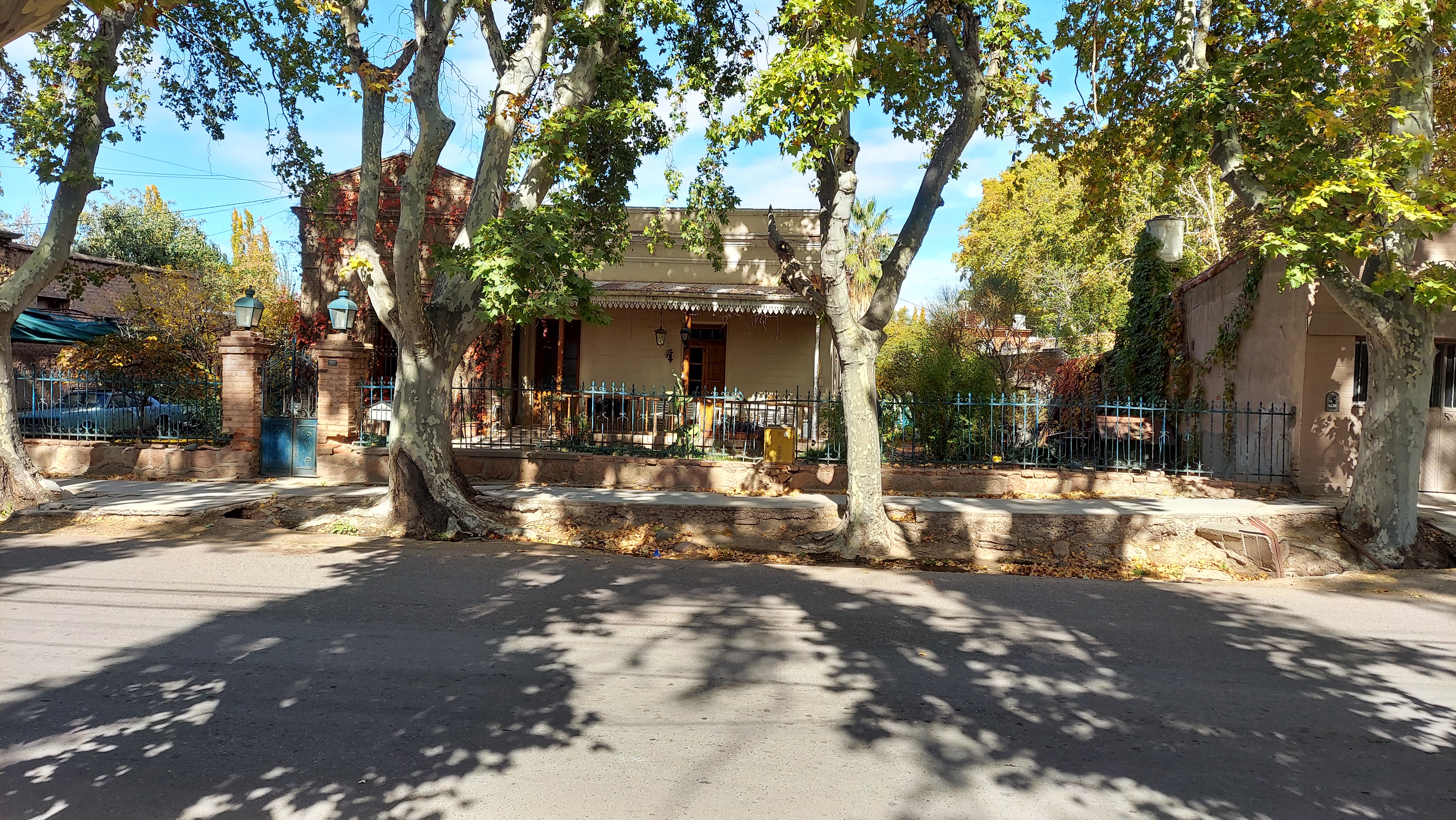
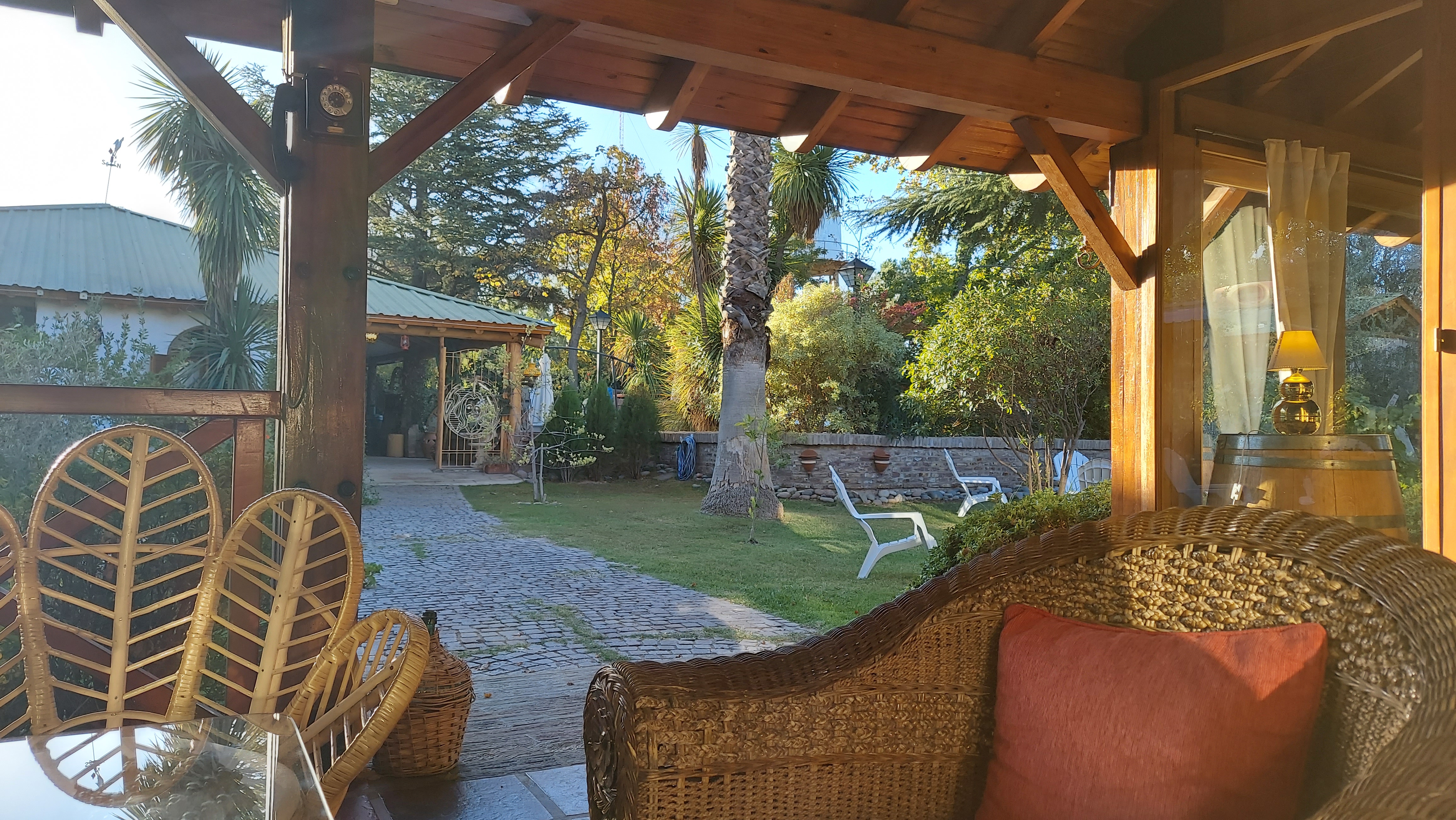
My B&B is the pet project of an American named Bruce, a Vietnam era fighter pilot who later flew commercial planes. Bruce has electric blue eyes, a long and scraggly mane, and is one of the more astonishing humans I have ever met. His global travels have taken him to every continent and just about every ski hill on offer, flitting from place to place, adventures in motorcycle racing, a home in Giza, a German ex-wife, and even some time in Minnesota. After decades of an itinerant life he landed in Mendoza, the house choosing him, or so he says. He is now the pilot of this little B&B, a labor of love going on 20 years.

We spend my first night in Mendoza in conversation over meat and drink, though most of it flows in one direction. He diagnoses extreme stress in me, which is both right and wrong; yes, I can be a bundle of nervous energy, these surges often a fuel and sometimes a crutch, a tension no doubt heightened in a place far from home. The lone wolf struggles to understand the chameleon, forever calibrating himself to his surroundings, but the chameleon can come to understand the wolf.

If Bruce’s goal is to give me an escape, his scattershot volleys certainly don’t help the cause. He speaks so softly that I strain to hear, and while he peppers me with questions, only rarely do I sense he is really processing my answers. He grills me on my work and its value and shares his idiosyncratic takes, sometimes insightful and sometimes leaning toward cringe, a jumbo jet on a set path that I cannot alter, and I am intrigued to just watch him fly as far as he can. Here is a man who chose the radical freedom, gave up a family and everything he knew, and now here he is on a Monday night in Chacras de Coria, Argentina, guzzling down wines and holding court for an American kid who thought he was going to have a quiet evening in to recharge his battery before exploring the vineyards. I am fascinated by him, and he has clearly done some good for quite a few locals. But I would not choose to be him.
In spite of everything, Bruce is bullish on Argentina’s future. If Uruguay is a country that just works, Argentina is one that should work but too often does not. It has a world-class capital city of 16 million people, rich agricultural and mineral resources, beautiful countryside from Patagonia all the way up the Andes. Like the United States it is a European settler society, its indigenous peoples generally wiped out or pushed to obscure corners, a tragedy that has left it on a trajectory apart from some of its Andean neighbors. Waves of immigration from Spain and Italy crashed up on its shores in the late nineteenth and early twentieth centuries with a land rush to rival the opening of the American West.

Its modern history, however, is an absolute jumble. The country has managed to escape its long run of military coups over the past 40 years, ever since the hapless Falklands War discredited the last junta, and this is a real achievement. The economy, however, is a different matter, thanks to runaway inflation and the populist patronage machine that is the Justicialist Party, Argentina’s dominant political institution since Juan and Eva Perón showed up on the scene. Putting up the Economy Minister in a nation with rampant inflation did not work out well for the Peronists in the 2023 elections, and Argentina is now running an experiment with Javier Milei, a Trumpy figure with no legislative support and five cloned dogs named after University of Chicago economists. The drama goes on, though the early returns suggest one of his ideas, the dollarization of the economy, is doing some good to stabilize prices and rein in that inflationary scourge that Argentina needs to solve before it can make good on any other promise. That promise, as these next few days show, is considerable.

Dollarization also makes Argentina an even easier country for American visitors, and for us revelers, Mendoza is a land of bountiful excess. Given the difficulty of winery logistics—here is an industry that is just begging to be disrupted—we go off on our own or in small groups, and we share an entertaining group chat. Five or six courses into my seven-course paired meal at Alta Vista (a visit arranged by Bruce and his staff; he is nothing if not a connoisseur of good taste from the whole world over), I report a state of general bliss. One wedding guest who is on a guided tour of the Valle de Uco shares he has just been served his fifth filet mignon of the day; another makes the mistake of counting how many glasses she has consumed. “We need the anti-Ozempic,” our bride writes as she ponders her dinner reservation with dread. Indeed, after a siesta and plenty of time to digest, I can only stomach a small salad for dinner in downtown Mendoza, while a tablemate pokes feebly at her eggplant. Three of us end up at a rooftop bar overlooking Mendoza’s gentle grid that night, shivering a little at the coming cold and marveling at what we are a part of here.
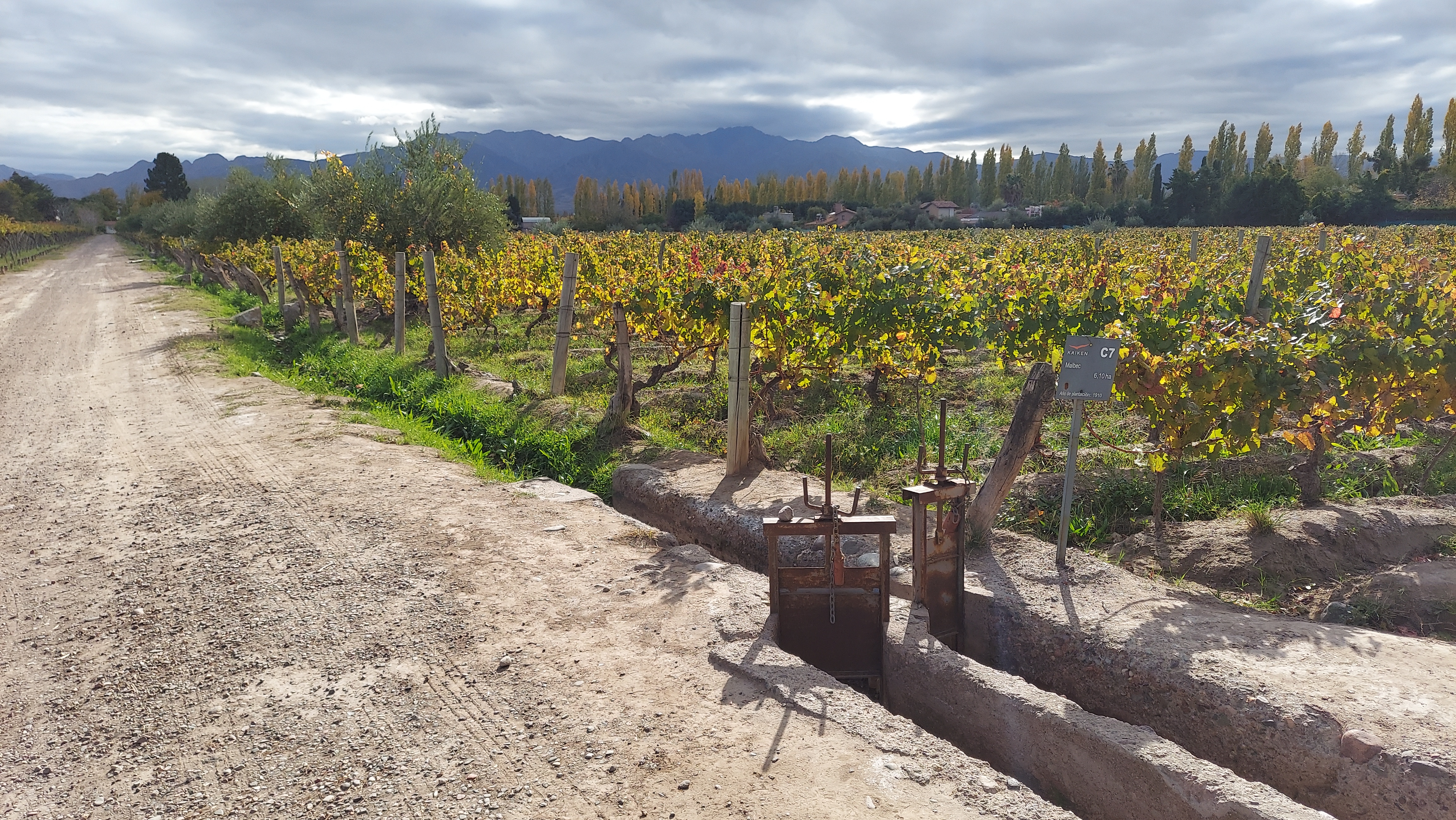
The next day we do manage to get a healthy group together for a tour and tasting at Kaiken, where the aging barrels are serenaded by Gregorian chant to create vibrations. (As with Dante in the Palacio Barolo, here is that credulous Latin American melodrama, a feature of a society less beset by the all-knowing cynicism that can plague educated Americans.) Guided by a sommelier, we try an array of malbecs to test the differences between them, and we eventually close the place down. I join Jess and Phil back at Entre Cielos, their sleek spa resort for their mini-moon, and we bask in the hot tub beneath the Southern Cross and hold a scattershot bilingual chat with a man from Chile and a woman from Eau Claire, Wisconsin, who have settled here together. Later, we peck at a dinner with two more friends at the resort restaurant. We order as much tea as we do wine. The body can only endure so much here.

I return to Buenos Aires for one final night in Argentina, though the energy for greater exploration has diminished now toward the end of near-constant moves from place to place. I content myself with another night at the Miravida Palermo Soho and stroll around the neighborhood, with visits to the charming Japanese Garden and the rather moribund Ecoparque zoo. One unattached fellow Hoya remains, and we sample a bumping craft brewery named Strange. The beer is superb, and the blasphemous raccoon logos are, well, something.
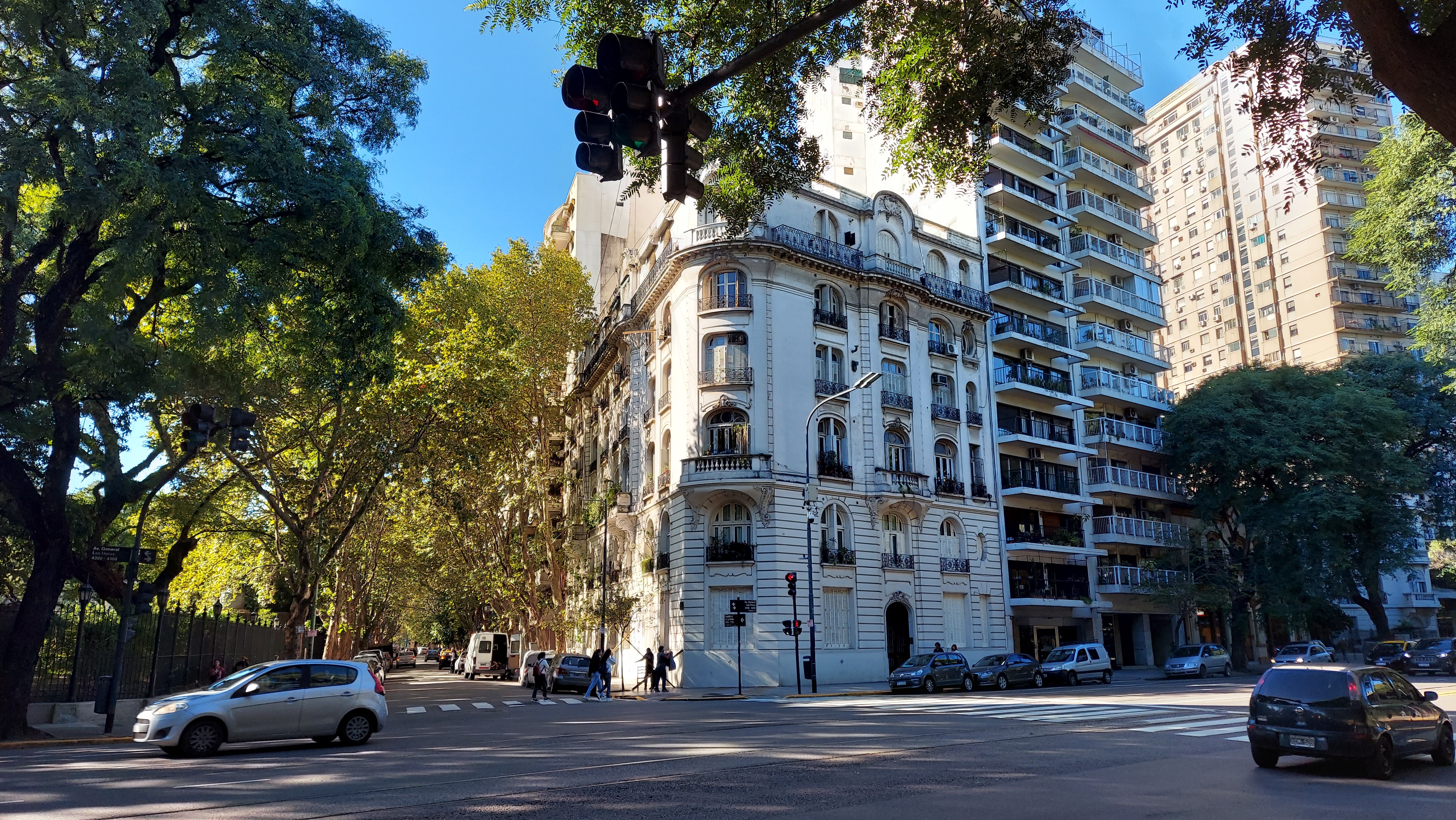
Once it is time to head back to the airport, I am ready to leave Argentina. I am ready to speak fluent English again, ready to sleep in my own bed; at least for two nights, that is, before the last adventure of my mini sabbatical. In the days that follow I reflect on the juxtaposition between my hunger for that freedom to wander and my natural homing instinct; my embrace of Uruguayan anonymity and my rejection of Bruce’s retreat from all prior commitment.

Is it truly a tension? I’m not so sure. They are both parts of a well-lived life, paces adjusted and waves seized. Here is yet another way to be free: to find the ease of knowing one has found one’s home in a certain place, among certain people, desire and roots aligned. This trip is all a good dream, yes, but I have work to do when I get back home. I couldn’t ask for much more.
Cono Sur 2024, Part II: Tranquilo

This is part two in a four-part series. Part one is here.

My adventure to the Southern Cone begins, as half my trips anywhere these days seem to do, with travel issues. Ten minutes before I leave my door, Delta informs me the flight from Atlanta to Buenos Aires will depart nine hours later than planned. While they feed me, put me up in a decent Atlanta hotel, gift me some miles, and are night and day better than United was to me through comparable past incidents, I am still left lamenting lost time that I can never make up.

I confess that I am spoiled. Any regular flyer knows the absurdity of travel scheduling, the absurdity of our expectations, and the ability to schedule things out so meticulously can crimp the traveler’s mind. On our recent Camino, my dad reflected on his post-college backpack tour of South America in 1981, when there was no way to plan much of anything and he went with just one heaping guidebook to carry him through the whole continent. He would just take a bus to some city, wander until he found adequate lodging, and then stay there, and he came away from all of it just fine. As a millennial I got the slightest snippet of this unplanned life, most notably during my college semester in Mexico, which was just before functional smartphones for trips abroad were a thing. Now, such spontaneity feels like a borderline irresponsible relic, or at best a quaint dream of a different era.

This line of thinking trips an old hunger. On the plane, I break my usual rule about not connecting to the internet (the irony does not escape me) to wistfully reread Roger Cohen’s “Ways to Be Free,” the op ed column that has stuck with me more than any I’ve ever read.

It resonates so fully because the desire it expresses is deep in my bones. I can see my dad in Cohen’s van trip. William Finnegan’s writing on surfing triggered an artistic flourish from me, a fictional project that set re-oriented my trajectory some. I too asked the question Cohen’s son did, without ever quite settling on an answer. The appetite for freedom is inescapable.

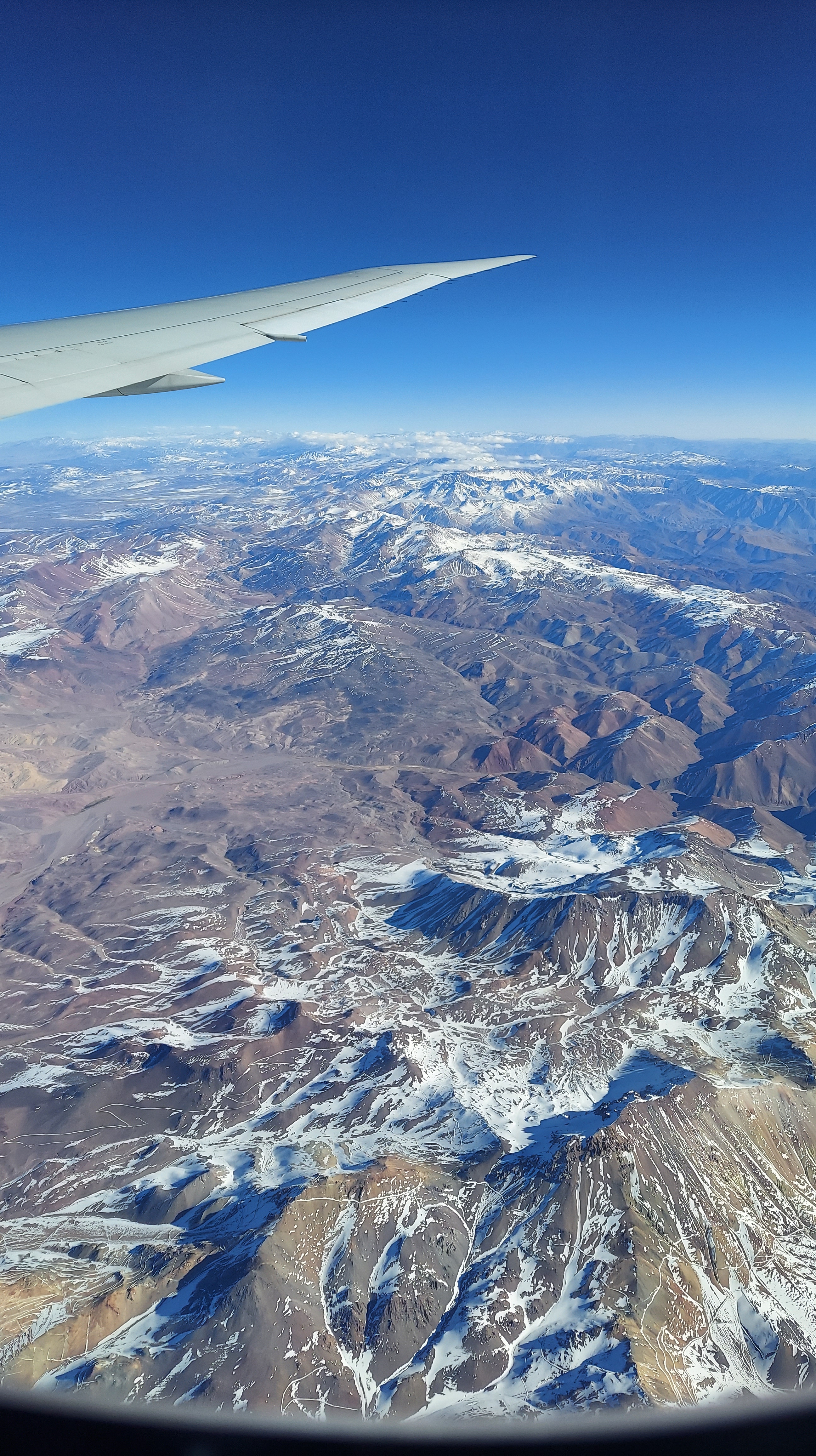
I was not in a position to take some grand adventure right after college (or at least I didn’t think I was), but I am now in a position to make up for some lost time. Any annoyance at the delay is forgotten as I drink in the rare experience of a full international flight in the daytime. I love this: over the ten-hour flight I can gaze out my tiny window at the Florida Keys, Cuba, the Panama Canal, the Andes over Ecuador and then Peru and then Chile before sweeping over the pampas and into the sprawl of Buenos Aires. This god’s eye view opens up the possibility of the world, shows how many more places there are to explore.

The contours of the earth always have fascinated me. From the youngest age I was enraptured by atlases and globes, tracing routes across nations I did not know and may never know. I recall some kid on the school bus early on—this must have been first grade, the only year of elementary school I took a bus—asking why I always stared out the window. Because I want to explore every inch of it, I probably would have said if I had the maturity to do so. Now, blessed with some modicum of disposable income, I dispose of it by visiting some of those places. Even with the travel delay, this feels right, some sort of trip I am meant to take.

An odd feature of my mini sabbatical: between my dad’s retirement trip and three weddings, all this travel is because of someone else. Of course I am pleased to go to all these places with all these people, and I had some input in crafting some of the itineraries. But I have just one snippet that is truly my own, for more than a few stray hours: my two-night detour to Uruguay.

The journey from Buenos Aires to Montevideo, the Uruguayan capital, takes just over two and half hours by a ferry named Francisco, which bills itself as the world’s fastest catamaran. It cruises smoothly across the Rio de la Plata, the views rather unfortunately blinded by bright string lights all around the windows. The travel delay has cost me my night in Montevideo, and from cab and bus windows it feels a bit tired, the changing fall leaves adding to the general sense of a drift into lost time. From Montevideo it is a two-hour bus ride on to Punta del Este, where I have decided to hole up before I return to Buenos Aires for the wedding.

Uruguay is a remarkable little country wedged between Argentina and Brazil. On the surface it resembles Argentina immensely, with its loves for beef and maté and wine and soccer; like its neighbor, its population is dominated by Spanish and Italian immigrants from around the turn of the 20th century. Its early history was tied up in wars involving its larger neighbors, whose residents still descend on its beaches en masse in peak seasons. But here is little Uruguay, tame as its neighbors overflow in excess, as boring in its politics as its neighbors are bombastic, comparatively affluent and low in crime. It is, perhaps, the most chill country on earth.

Uruguay earns this status not by exuding the painfully orchestrated cool of California or that “what, me worry” style of, say, a Caribbean island where people just expect things not to work. Uruguayans just seem to ease their way through life, living out small dramas, refilling their matés from the thermoses they carry around all day, and channeling any aggression on to the soccer pitch, where they might just bite you to get what they need. Uruguay is not rich, but it does not pretend to be. It works with what it has, and its infrastructure and institutions are the class of Latin America.

Riding out from Montevideo, the suburbs bustle with healthy life and don’t feel too far off from the parts of Portugal or Galicia I toured a few weeks earlier. In the countryside there is some poverty, but it feels stable, like these tiny cobbled-together homes have some staying power the shacks of a slum or dusty Mexican outpost do not, rooted into this pampa sand instead of living each day on the edge. The landscape starts out as plain grassland; cows and horses graze about. A few humpback mounts rise in the distance and grow thicker as I head east, and occasional forests offer pleasant mixes of pines and palms and the great ombú trees of the region. And then, finally, my bus rolls over a hill and reveals South America’s foremost beach resort.

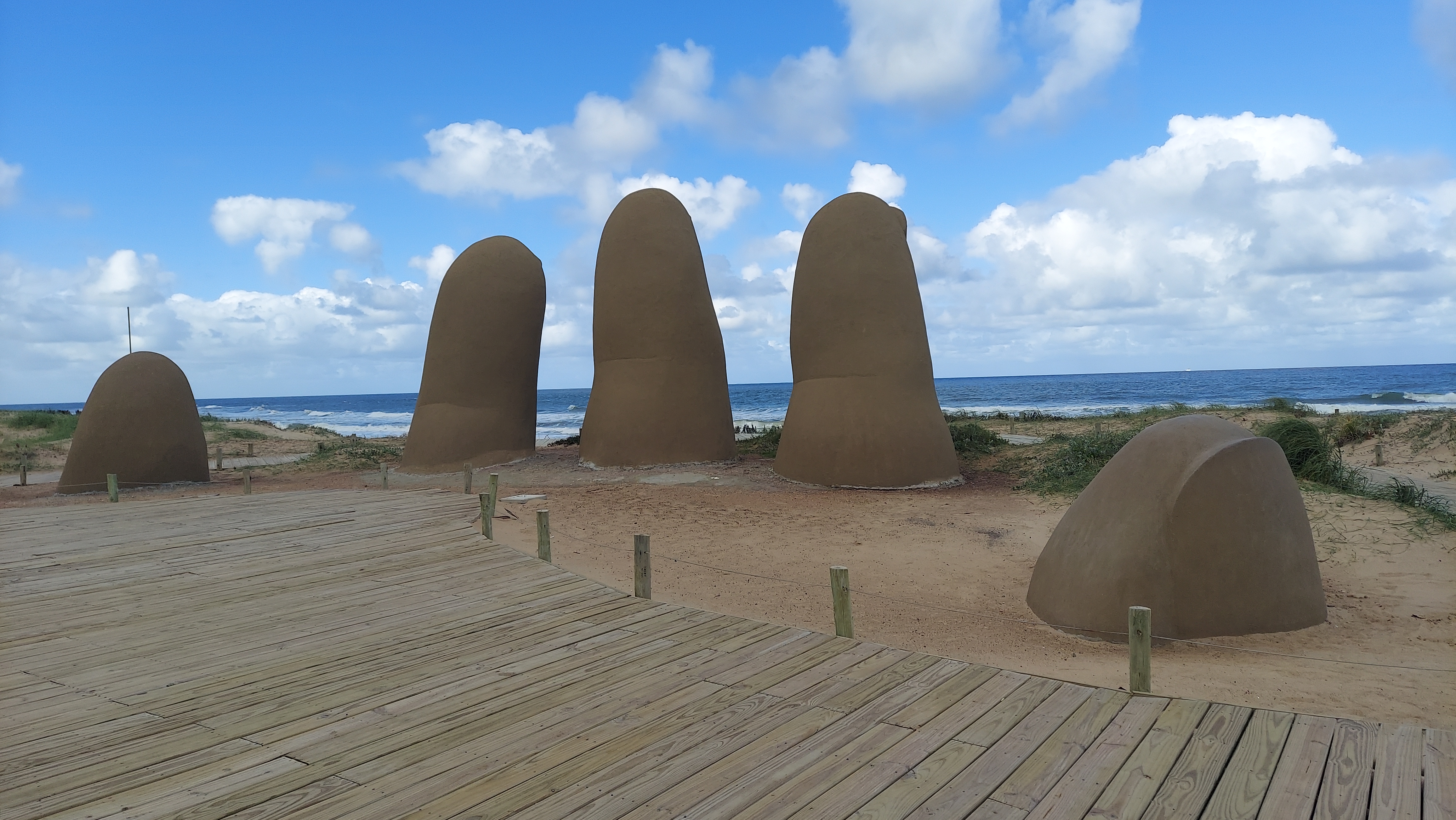
Punta del Este juts out on a snippet of sand where Uruguay’s southern and eastern coasts meet. Its center is more Miami Beach than modest Latin American resort, with clusters of towers and other prime real estate, while further out it drifts into graceful modernist homes settled beneath the pines. As this is fall in South America, it is now the offseason; the towers are mostly quiet, and the trendier clubs are closed up until the next major vacation. I putter around the peninsula and take a minute to appraise the iconic mano of Punta del Este, the hand that rises from the sand. Punta’s style is modern but tasteful, built to drink in the full surroundings, to provoke a few creative thoughts without disrupting the beachfront cool.

Some stray raindrops convince me it’s time to cab up to La Barra, a small beach town across an undulating bridge from Punta’s towers. It is still built up, still very much a destination, but has more of a town feel than Punta itself. I settle into a private room in an otherwise fairly dead, quirky hostel a block off an inlet, an easy walk from everything I will need for my stay in Uruguay. It all feels very assured.

I stroll along the beach at sunset. It is quiet, just a few stray couples and dog-walkers, and a lone surfer who puts in the brutal work out through fierce waves for one long, brilliant ride in. The sun disappears into glowing clouds and a full moon rises up through the marine layer, a resplendent yellow orb shrouded from time to time in a drifting oceanic haze. Everyone on the beach stops to watch. Later, I eat a chivito dinner at a casual restaurant named Chill Out and chat up the kid at the bar, an easygoing townie with a dream of an escape to Miami.

On day two, I fall deeper into Punta’s trance. It is grey, on the chilly side, but the surfers are out in force. Sixty or seventy of them ride off Playa los Cangrejos, and scattered others take on additional stray points along the unending beach. I amble my way to Manantiales a few miles up the shore just to drink it in. Sitting and watching the crashing waves appears a perfectly acceptable pastime in these parts. My guidebook calls Playa Bikini a “flesh cauldron” in the high season, but for now it is placid in response beneath a colorful row of those large-widowed modernist homes, all nestled beneath shapely pines and ombús. It is hard to square the Punta I see with the ubiquitous cranes putting up more towers, and hard to remember over lunch in a swanky beachfront joint that this is not in fact a rich country. I eat the seafood of the day, drink fernet, and the waiter provides a heavy blanket so I can get cozy in my seat. Rain arrives while I dine, and while I wait out the worst of it, the walk back is damp. Time for a siesta.

I dine at El Papu, a bohemian chic spot up the road, stone floors and the ubiquitous floor-to-ceiling glass, all lit by candle. They serve local craft beer; the eggplant parmesan is the best I’ve ever eaten, tender as can be, drizzled in a green salsa with nuts. A bassist and a keyboarder settle in to serenade us with jazzy tunes, all improvised, the bassist working wonders in the higher registers. The other patrons are local hipsters and surfers, at ease among one another, an easy night taking shape. The vibe has met the moment.

In Uruguay I am free to pursue a radical freedom, to re-create myself in a country where not a soul knows me as I am. It is an opportunity at once both tantalizing and impossible. I could expand on certain tales from my stay here, perhaps, but some things are best left unwritten. And sometimes fiction, in the words of Walker Percy, tells us what we know that we do not know that we know. After Uruguay, I know what possibilities exist, but I also know the extent of my reach. I can head home a wiser man.

Part three is here.

Europe 2023, Part I: Rebirth

This is the first post in a four-part series.

A simple fact of travel is that things will go wrong, and one’s enjoyment of travel is directly tied to one’s ability to adapt when things go wrong. Alas, when forty-two members of an extended family travel to Europe for a Mediterranean cruise and some offshoot adventures, there are bound to be a few victims. On this venture, I am one of them. Parts of this trip feel like they are designed as a test of patience, and it starts on day one, when the Newark airport decides to keep my plane from Minneapolis, already late in departing Minnesota, sitting on the tarmac for 40 minutes before pulling up to a gate just long enough to miss the connection.

There is no indignity quite like airline indignity. A delayed arrival in Venice is the definition of a first world problem, and there is the bizarre shared ritual of ten despondent people who have never met throwing their bags down when the gate agent, possessed of a robotic soullessness, closes the door to the jet bridge and informs us it cannot reopen. Thankfully, a United representative manages to get me on a Swiss Air flight via Zurich that arrives in Venice only five hours later than planned. Not helping the airline’s cause is the Newark airport, a poorly connected, poorly signed cesspool where some light drizzle renders 80 percent of the flights on the board delayed or canceled. (This was not my first such experience in Newark.) As of this writing 23 days later, my checked bag is still there, its location known both to United and me, yet they are in no rush to return it: no matter how politely or angrily I address them, I can be safely assured anything they tell me about its progress toward me is a lie.

So of course, my first hour and a half in Europe are spent trying to locate my lost bag. Of course, when my number is called at the lost luggage counter, some Italian marches in front of me so he can carry on some pointless argument with the staff. Of course I get the woman with the employee-in-training badge, whose look of sheer defeat when she learns United had no record of my bag because it was switched to Swiss Air will be forever burned in my memory. And of course, the driver who takes me from the airport to the water taxi stand gets in an argument with the water taxi guy before he audibles and decides to just drive me across the causeway into Venice before securing a different water taxi. My arrival in la serenissima calls for a serenity prayer.

And then I see the hotel room I am sharing with my cousin, for which only a picture can suffice.

And yet, while mildly loopy after my travel ordeal over 30 sleepless hours, I am smitten by Venice. I get the taxi to myself up the Grand Canal and stand in the back, feeling vaguely James Bond-ish as it flies along. The hotel room is ridiculous enough to be a point of endless fun for our two nights in Venice, and the bed is in fact big enough to sleep two adult men with four feet between them. The room opens out onto a tiny balcony with a view of San Giorgio Maggiore, St. Mark’s Square is just a few minutes away, and tucked behind our waterfront base camp is a byzantine world of canals and alleys and invitations to wander.

After seeing other global tourist destination cities, I was expecting more garbage, more hawkers and homelessness, more general chaos. And yet here is Venice, reasonably clean, religiously tended, the nuisances kept to a minimum. Yes, the crowds do swamp St. Mark’s and the Rialto and the main pedestrian and gondola thoroughfares. But the attractions of this city are not confined to a small historic center like in so many of its peers, so it isn’t too hard to escape the crush. Across the Accademia Bridge, the Dorsoduro neighborhood offers up some rare greenery; a looping water bus trip takes a few of us to the narrow streets of the world’s first Jewish Ghetto before a chill lunch along a canal and a gradual stroll back. I do not have one bad meal here, octopus and lobster squid ink pasta and more classic Italian fare filling every menu. Every square foot of this city offers up something worth a second look.

There is no point in pretending otherwise: Venice is now a giant playground. But it is the best of playgrounds. If any city deserves to get preserved as a cultural treasure for the rest of humanity to explore, it is this one. Here the Roman world’s inheritance intertwines with the Byzantines and influences further to the east, the legacy of a great maritime republic that ruled half the Mediterranean through both trade and war. No city on earth has a built environment like Venice. Its streets and canals are an alluring maze, an invitation to lose oneself and reappear, serendipity with every step. I’m sure some Venetians would find such a take rather glib as they reflect on what has been lost in the slow museumification of their city. The slogan for rebuilding the Fenice opera house after it burned in 1996 was dov’era, com’era (as it was, where it was), but as John Berendt relates in The City of Falling Angels, the way it was had already made it subject to myriad rebuilds and renovations, a jumble of history with no clear point of return. Venice is a living monument, straining under pressures from both the sea and the crush of tourism, but it is worth saving and visiting because the life it brings out is like no other.

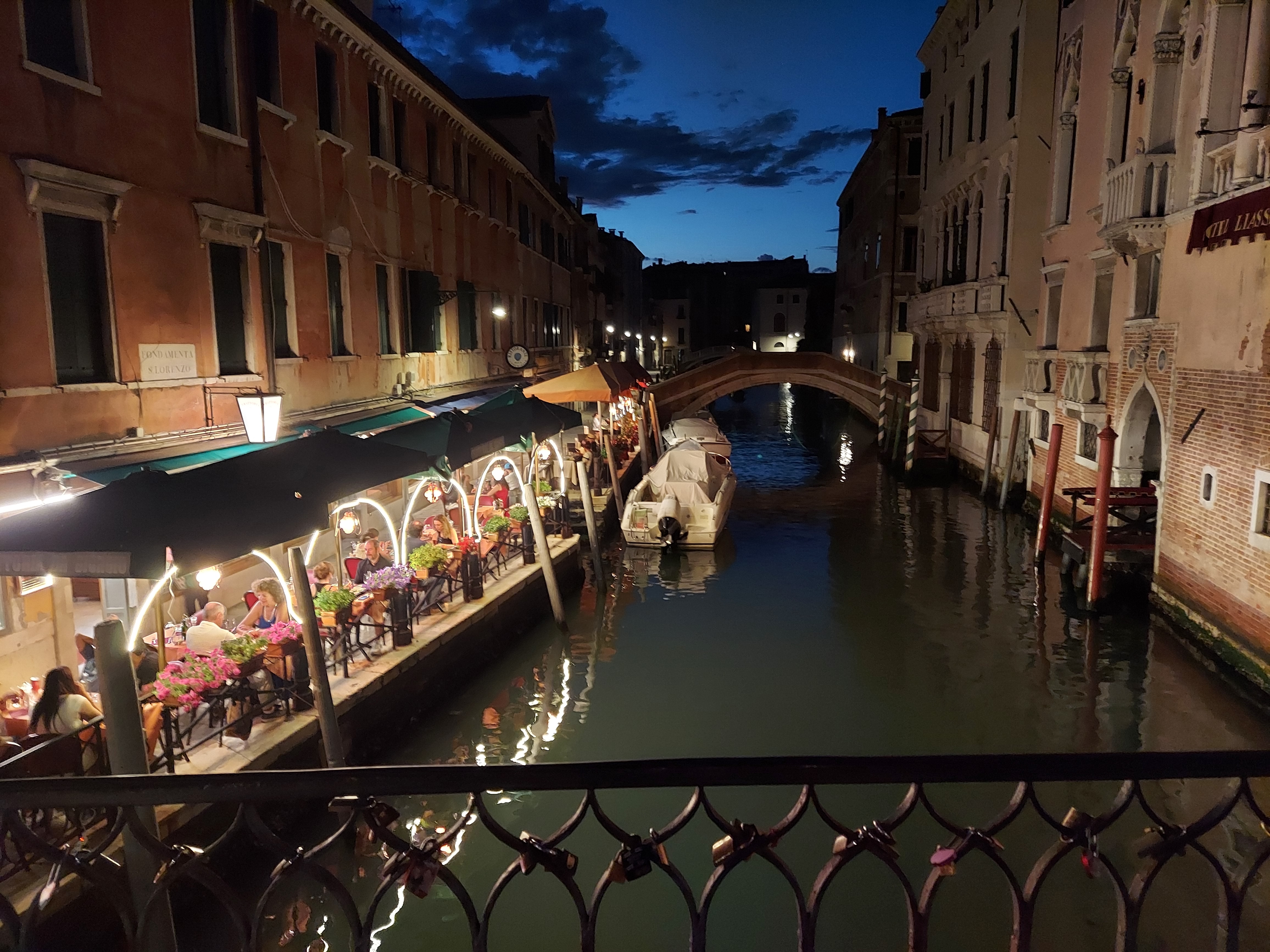
It is after dark that I most fall for Venice. On the first night, a group of my cousins and their spouses connects on the streets and we pick our way to St. Mark’s, the crowds unremarkable, the square aglow in the night. Later, we wind up sprawled on the flagstones along the waterfront, an array of mediocre European beers from a nearby kiosk on hand as we watch the nighttime water traffic, including a mock Venetian galley, cruise by. Several times we play a game where we identify a destination and then try to find our way without looking at maps, over a bridge and through a little arcade, past closed-up bars and lit-up ATMs, here a false turn down a dead end, there the sudden discovery of a church that in any other city would be a stunning monument but here is just some quaint afterthought tucked away on a backwater canal for our discovery and delight. When my fellow wanderers grow restless on a 2 AM retreat from Venice’s finest craft beer bar, I volunteer no details, even though I know the way. I could have wandered these streets until dawn.

I say I could have walked endlessly even though the only footwear in my possession is the same pair of boat shoes I’d worn on the plane, sometimes worn with the one increasingly gross pair of socks I have and at others occupied just by my bare feet as they slide around in a sweat-coated shoe. I am surrounded by beauty and feel disgusting. The next day, resigned to the fact that I will not reacquire my luggage before the ship cruise ship sets sail, I shop for a new wardrobe on Ravenna’s main streets. When life (or a terribly managed airline) takes your luggage, buy an Italian linen suit on their dime.

From there, the trip goes off without any major hitches. The only other real trying day is the one in Rome. Rome is big. Rome is hot. Rome is crowded. After the pleasant surprises of Venice, the Eternal City is frenetic, loud, stuffed with street vendors and pickpockets and garbage. In a city that peaked 2,000 years ago, the fraying seams are clear, and my party is in a state of collective exhaustion by the end.

For this day, I’ve booked myself a non-cruise tour through the Vatican Museums. (I did see the Colosseum, the Forum, the Spanish Steps, and the Trevi Fountain on a visit 19 years ago.) The pace through the collection is never leisurely: the whole time we are swept along through an unending stream of people, all baking in the midafternoon heat. The current tugs us from one gallery to the next, and at one point security diverts our flow through an Etruscan gallery to relieve the pressure on the Gallery of the Candelabra. The Sistine Chapel, the culmination of the tour, is awe-inspiring when one looks up; if one looks around, on the other hand, one gains the perspective of a herd of cattle shuffling through a pen toward slaughter while its Italian handlers around the edges demand silencio and scold the denser cows incapable of reading the ‘no photography’ signs. And yet there are marvels: the stunning Greek and Roman collections, the papal history, an unexpected modernist gallery, the sexy hall of maps, and my own pilgrimage destination on this trip: The School of Athens, Raphael’s great triumph, all philosophy and art distilled into one giant fresco. I am transfixed, and I wish I could linger.

I cannot linger, however, because we are on a cruise, and the boat must leave. We get just five hours to see Rome, controlled by tour guides even for this on-your-own venture. We still nearly lose one member of our party at the end, and my cousins who skipped the official tours and took the train instead also had their share of misadventures amid a few highlights. Between the time necessary to wait for my two-hour tour and the half hour it takes to actually get into the museum, the only other thing I really see outside of the Vatican is the Castel Sant’Angelo; I cross the Tiber only briefly, to meet with my mom and her partner Doug for a quick drink. For someone who reads a book titled Rome as a Guide to the Good Life on this trip (a recommendation by a reader and correspondent) and re-watched La Grande Bellezza (one of my favorite films of all time, in which Rome is a character unto itself) just before it, a day like this one can be something of a letdown.

To fixate on these troubles would miss the point. The message of Rome has never been of straightforward beauty (though it has it all over), but instead of staying power and reinvention, of finding panache amid ruin, or at the very least amid some unexpected chaos. No city can hold all of that complicated history in simultaneous tension as well as Rome, and I have a choice as to whether I fixate on the Sistine Chapel cattle pen or the wonder I find in The School of Athens. In the name of my Renaissance, I choose Raphael.

Part II is here.

Up in the Air

It is with some regret that I choose to fly for this year’s western hiking venture instead of taking to the western roads yet again. Rereading the account of my brooding deep-pandemic self in 2020 or my more mundane appreciation of such roads during my 2021 jaunt has me yearning for some of those cliches about western travel that are true because they are real. A recent Ross Douthat column whose sentiment I support seemed to scold my decision-making: “If you do not drive your country’s highways and byways, what path do you have to a nonvirtual experience of the America beyond your class and tribe and bubble? If you have strong answers to both questions, good. But lacking them, you should give the open road another look.”

A Saturday spent shuttling my dad from one end of northern Minnesota’s Kekekabic Trail to the other only renews this hunger for ribbons of asphalt and gravel. It is a nine-hour dive into the wilds of Minnesota’s north, and I bob and weave along two-lane highways through small towns, some humming with midsummer tourists and others fading back into the woods. Isabella has become a ghost town, while the cluster of bustle on the central Gunflint Trail could use a name on a map, and Ely straddles two worlds. Car travel frees me to eye the wreckage of the Greenwood Fire and drink in the cool lake air of Grand Marais, and to swing off to Sugarloaf Cove, where I can meander down the beach and flip open a notebook to record a few stray ideas. We writers are suited to modes of motion with spontaneous spurts and chances to suck up little details; it is only from these mined nuggets that we can later create grand arcs and sweeps.

While much of America has retreated from air travel, I have spent more time on planes over the past year and a half than at any point in my life. A healthy chunk of that was work-related puddle-jumping to Milwaukee, but I’ve found my way to destinations across the country, too. For the seasoned veteran, air travel is both simpler and more refined, inspiring in its God’s eye view but sapped of the details that allow for immersion and meditation. By plane I give no mind to the fortunes and failings of the towns along the highway, to the Native American reservations I skirt, to the stray roadside attraction that may worm its way into my mind. I bliss out, catch up on some reading, and flip the mental switch to begin living in the world where I’ve landed. It is a simpler, more self-absorbed way to travel, any interactions bounded by the metal tube we share and devoid of any relationship to the landscape around us.

Nor have I ever known air travel as a venture of true leisure and opulence. I have only dim memories of flights before 9/11 and its subsequent security cattle pens, most of which involve my nine-year-old self vomiting into a bag on a bumpy flight from Duluth to Chicago. I’ve had only brief brushes with business or first class, and while a free drink or two is nice, it is hardly a signifier of great luxury. For most of my plane trips, I join the unwashed masses in crunching my knees into ever-shrinking spaces and hoard my bag of nuts and cup of juice. Air travel is also prone to occasional great indignities when the plans go awry, whereas the driver will simply audible and find a detour or sub out a cranky rental car.

I romanticize the road trip, of course. This year’s hike is in Colorado, and somehow the tamed fields of Iowa and Nebraska do not inspire the same sense of frontier freedom as the Dakotas or Montana; time, scarcer and more precious amid a series of new pushes in life, has me settling for the two-hour hop to Denver. I will not miss the zombified state brought on by the eastern Great Plains, nor jockeying for space with long-distance truckers, nor the increasingly antsy push toward home of a final day on the road. These ventures have resulted in two busted windshields in the past three years, and at times I am left with a choice between splurging on an uninspiring roadside hotel or setting up a tent in a campground where I will be serenaded all night by the dulcet droning of RVs. But this decision is more profound than any convenience-seeking or aesthetic impulse: on my last solitary venture I decided that it would be my last one of that nature for a spell, and that is that.

Taking to the air seems a fitting way to head for some of the highest peaks in the lower 48 states. This year’s hike, on the Colorado Trail west of Leadville, will take place entirely above 10,000 feet in elevation, in the shadows of Mount Massive and Mount Elbert, Colorado’s two highest points. It will be a test of the lungs, and if we do indeed try to summit both peaks, a test of the legs as well. I will achieve a new cruising altitude and see just how hungry I am to reach new heights. Off I go, a new adventure beckoning.

My Year of Imaginary Thinking

Travel is useful; it exercises the imagination. All the rest is disappointment and fatigue. Our journey is entirely imaginary. That is its strength.

Céline, Journey to the End of the Night (lifted from the credits of La Grande Bellezza)

I began 2021 with the particular belief of a convert to a new faith. It was hard not to, since I started it by diving into a pool at a mountaintop estate on a Caribbean island, my crash into its depths a burst through the din of jungle fauna and steel drum bands echoing in the distance. A couple months later, I received my second stab of Moderna and penned what I hoped would be a victory essay over the virus that had disrupted the previous year of life. I had grand travel plans, I would see family again, work would move away from the misery of Zoom, and I would find undying love.

I wasn’t so naïve as to think it would be that easy, which is good, because it wasn’t. New variants surged, a dream of optimism curdled into an air of mystery, the general malaise lingered, and while I generally went about my life, the world did not. I certainly have no judgment for those who continued to take strong precautions for various reasons and would always work to reach their levels if need be. But to sacrifice any more of my rapidly dwindling youth to a climate of fear that was unlikely to afflict me in any serious way seemed a high price to pay, and trying to negotiate a world in which everyone was on a different page on this issue added another layer of complexity. To be a conscientious friend in 2021 was to live in a state of hyper-aware caution, and the escape of obstinacy grew ever more attractive.

I proceed with family and friends more or less as I did before the pandemic, but my social circles have not grown much, and arranging anything with anyone feels like a considerably larger chore than it used to, the serendipity of stray days together now a rare occurrence. My friend group is a busy one, and a lot of them have been pairing off and reproducing while I have not, a divergence that both keeps them occupied and is wont to drive me to brood. I field questions about my house as if contemplating the excitement of a new garage door is a comparable life step to having a child. For that matter, I have been traveling too much and too caught up in my day job when I am home to get around to acquiring the garage door.

The year took its tolls. I lost a grandmother, an aunt, and a cousin, and endured a funerary marathon for all three of them over one week in July. Somehow, this was not the most draining stretch of family time in 2021; that dubious accolade instead goes to a visit, two weeks later, to the other side of my family, on which I will not elaborate much out of respect for my relatives except to say that no human should ever be allowed to own more than three cats. The less weighty but still disruptive milestones mounted: in the hockey world, a man who was an ordering principle for my drive in life lost his job, a complex but significant era drawn to a close; at work, my colleagues and I were too good at our jobs, in short order overwhelmed by requests for help and pushed to the brink by a taxing schedule, a herd of Sisyphean retrievers forever chasing the ball. It took me until some time after that to see that I was slipping into those same dragging tendencies that had annoyed me about the rest of the world, and another period of time after that to correct course.

I sought my freedom from days of exhaustion and low-grade dread through bursts out into different worlds. It started in the Virgin Islands, made its way to some wilderness retreats in my own backyard, wound its way through another grand western road trip, and popped off to New York and St. Louis and Tucson for punchy weekends. I kept the pace going right up until the end: a week of professional development in Minneapolis featured not only full days of classes, but a different form of scheduled programming each evening as I caught up with family and friends, then topped the whole thing off with a 48-hour jaunt to Chicago for the Christmas party that, every year, manages to put every other party I attend to shame.

All this travel is dangerous. At times it makes me ponder other realities, roads not taken and potentialities looming within a kid who is still capable of quite a bit when he puts his mind to it. I come home from these trips a jumbled mess, always in need of recovery, at once enlivened and invigorated and yet sapped by long hours on the road and disappointed by the return to routine and possessed of a poorly directed energy. The magic does not necessarily last. But how I lived on these trips: sweating up slopes and treading blissful waters, fine dining and good drinks, revelry till the end of the night in the presence of delightful people who, consciously or unconsciously, understand what I mean when I quote Joan Didion and say I want not a window on the world but the world itself.

Didion has been my muse for pandemic era reckoning, and 2021 delivered one final blow when it stole her away this past week. Her death saddened me as much as that of any person I never met in the flesh. No contemporary writer had a greater influence on how I think about the art of prose, or gave me a better sense of how to frame my view of the world. Didion learned to write by copying down Hemingway sentences, and I have learned to write by copying down Didion sentences. An essayist adoring Didion is about as original as a classical music buff lauding Beethoven or a hockey person saying there’s something worth emulating in that Gretzky dude, but sometimes greatness is so plainly obvious, so transcendent of subjective standards, that it can stand up even amid the rush of cliches that inevitably pursue it like fame-hungry paparazzi.

It was amid the rush of Didion homages, all consumed breathlessly this past week, that I realized that what sustained me through 2021 was not the travel itself but the opportunities the travel gave me to write. “Her work was her own answer to the question of what writing and living is for. It ought to be ours, too,” wrote Nathan Heller in a New Yorker obituary. There is no personal crisis I cannot resolve, no looming burden I cannot overcome, by taking a moment to jot it into one of several notebooks or clattering away at a keyboard. The act itself, whether it resolves into a single flowing tale or disjointed marginalia, is enough. Through it, I am made whole at the end of every day, and increasingly in the middle of days when I need reminders to escape the tunnel of the mundane.

From a mesmerized gaze at waves on a beach to the solemn donning of a funeral suit, from the hubbub of a brewing party to curling up with some essays as a wintry wind howls outside, here is to the power of the written word. Here is to their power not to exact immediate results but to create the pieces by which, over time, a new idea can assemble itself, word by word and line by agonized line of authorial reflection and search for just the right turn of phrase. The words may or may not capture my reality in full, but that was never the goal. The goal was to change it.

Symposium

I started 2021 with a midnight splash into a pool, a dive both literal and metaphorical: after the caged life of 2020, 2021 would be a year where I jumped in. I am not ready to pass final judgment on that goal, as certain limitations have not exactly disappeared, but in one way this year has matched the hype. I traveled more than I ever have, a steady stream of escapes from daily toil, and this past weekend, a final excursion outside of holiday family time took me to Tucson, Arizona, a new place with a lot of very familiar people.

I liked Tucson. I found it somewhat less sprawl-happy than its larger northern neighbor, Phoenix. The Presidio neighborhood, where I made my home for two days, had a dash of Spanish colonial charm, its homes quaint and bright and the landscapes one with the desert around it. I visited the weekend of the University of Arizona homecoming, which brings its large campus to life. Tucson’s food scene is good enough to earn a UNESCO designation, and the intensity of the Mexican influence gives it a genuine sense of a borderland, a mash-up that brings together the poverty and migration and logistical challenges with the immigrant grit and rich cultural creation and re-creation that takes place when two worlds collide.

My summons to Tucson came for my college friend Mike’s wedding with Lizette, a union of Irish- and Mexican-Americans that underscored this syncretism at every step. Mariachis in the cathedral, Irish dancers at the reception, and a couple of Georgetown Jesuits to tie the ribbon; a bagpiper to herd us to dinner and a Mexican ballad crooner at the post-boda party the following day. Now that I have seen his city I sense that I know Mike a bit better, and know why he helped found Georgetown’s Kino Border Initiative alternative spring break program that continues to run today. No matter how far he ventures he is a child of his hometown, a sentiment I know all too well.

I will here embarrass Mike by calling him one of the most impressive humans I know. I dole out such praise not only for his considerable worldly achievements from his presidency of the Georgetown student association to his Cambridge fellowship to his burgeoning education career, but also for his capacity for introspection and his ability to change his life for the better. We have both come a long way since we were two eager kids stumbling around Mexico City together for a semester, each restlessly seeking out callings that reflect who we have become every step of the way. For him, this weekend was a moment of triumph, a rush that ties those disparate threads of life into one, and while my own such moment remains somewhere further out beyond those cactus-studded hills, seeing another achieve it only fuels me.

Recently I’ve been reflecting on my objects of love, most notably the city that my time at Georgetown led me to conclude was the place I should be. After Duluth, however, comes that institution. An inordinate number of my formative moments came between the ages of eighteen and twenty-two. Georgetown was the apotheosis of my childhood striving, though its central role has never been an unambiguously positive one. Not long out of undergrad I penned a somewhat cynical account of my time there, and I when I read critical takes here and there on institutions like Georgetown, I find my share of truth. I have struggled, sometimes mightily, to weigh my place amid and against everything that Georgetown represents.

But anytime I am back on its campus or among its people, it is an object of ever-growing love. This Tucson weekend, spent primarily among friends I liked in college but have not kept up with religiously since graduation, was a liberation of sorts. In short order any anxieties over class or money or my strange post-graduation path melted into nothing. My story remains a curiosity to this audience, but it earns respect, and as we roll into our thirties, we are collectively easing into our own skin and into healthier relationships with the meritocratic pressure-cooker we have all inhabited to greater or lesser degrees. We all still share a hunger for knowledge and a thirst for rich lives, this belief that we really can have it all. It was also refreshing to be back in circles where not every 31-year-old is married, perhaps with a kid or two, that status a source of growing annoyance but not unnatural. These are in so many ways my people, and as I kill time in the plaza of the Tucson Presidio the morning after the wedding, I appreciate once again that I am who am, formed by my own peculiar jumble of circumstances just as Mike has been formed by Tucson, a new pride stirring within me.

Each morning since my return, I’ve begun my days with a brief reading from Plato’s Symposium, a search inspired by a speech from a member of Lizette’s bridal party. Perhaps Socrates and friends can be guides to my own loves; perhaps Tucson is only another meander on this strange path I tread. But with each dive I grow a bit more comfortable in the water, a bit more content to ride the waves, whether they come in a Caribbean pool or a November gale on the greatest of lakes. And between each one, may I continue to have symposia with Hoyas, my fellow travelers for life.

Empire State of Mind

New York was no mere city. It was instead an infinitely romantic notion, the mysterious nexus of all love and money and power, the shining and perishable dream itself.

–Joan Didion, Goodbye to All That

It started with a baseball team, but it came to mean much more than that. New York has always held a special allure for me, a certainty that the universe revolved loosely around a constellation of stars somewhere between the World Trade Center and Times Square and Central Park and a ballpark at 161st Street in the Bronx. For my entire adult life, I have read a New York newspaper daily and a New York magazine weekly; the tales of some of the figures most dear to me, from Gatsby all the way down to my own scribbled notes, try to find their way through it. New York is a cultural touchstone with an infinite ability to attract the best and bring out the fullest, often flawed but always possessed of an undying allure.

Labor Day weekend of 2021 is a curious time to visit New York. I arrive amid an ongoing pandemic that has ravaged this city harder than most. As I take the train in from the Newark airport, floodwaters from the freak remains of Hurricane Ida loiter on New Jersey roads, the planes and trains that fuel the beast cut off until the day before my arrival. A somber mood lingers at the 20th anniversary of the fall of the Twin Towers, and in the immediate aftermath of the end(?) of the 9/11 Era’s misbegotten wars. When I pop out of Penn Station, the streets seem almost sedate. Where’s that frenetic, addicting pace I remember from the past?

And yet this is the perfect time to head to the center of the American imperium. I’ve kept up an aggressive travel pace over this past year and a half, but these journeys have been solitary, or at least involved trips with other people into natural solitude. I am hungry for a trip in and among people, raring to once again sample the full range of humanity, to stride down famed streets and pay homage at some of its shrines. My host and I will fill every moment of my 70 hours in New York, put on double-digit miles in less-than-ideal shoes, drink it all in as I know we can.

That host is Andrew, my Georgetown friend and Minneapolis roommate currently wrapping up a one-year stint as a New Yorker. He has temporary lodging in Carroll Gardens, which sits a few neighborhoods south of the Brooklyn Bridge. This is my first time exploring Brooklyn, an urbanist’s feverish fantasy made real. It is a step below Manhattan overload, with dense, historic homes, many carved up into smaller units that nonetheless still feel like familiar neighborhoods. Shops and restaurants sprout up on corners, all within walking distance, and narrow streets dotted with new outdoor seating and bike lanes calm the traffic and make it easy to cycle or scoot around the borough. Here are some Caribbean neighborhoods, there historically black Bedford-Stuyvesant, Russians down on the south end, the liberal elite doing their things in Park Slope, Italians living out that New York stereotype from a different area; no matter the business, Latin music is probably pumping out of it, because the Hispanics are everywhere too. Free-range children make the streets their own, and give it an urban life that one cannot find in adult playground cities like San Francisco. After time in New York, several friends observe, the streets anywhere else feel dead.

Andrew and I take on New York in full: bagels for breakfast and pizza for one dinner, staying out later than our 30-year-old bodies would normally allow. The first night takes us to a Michelin-starred Mexican restaurant, where the molé and the accompanying mezcal flight brings about a bliss powerful enough to overcome the stench of the Gowanus Canal. On the second, after the pizza, we head out on the town in Williamsburg: a lucky seat at the Four Horsemen and a sample from its famed for its natural wine list, and a nightcap at a German beer hall. We are old by Billyburg standards, but we can still make our way among the cool kids. On our final night we traverse the borough by foot, from Carroll Gardens straight over to our final stops in Bed-Stuy, with Park Slope and Prospect Park to distract us on the way. This is the only way to travel, no moment wasted, no chance to observe left unused.

As my credit card bill from the weekend can attest, New York is a city of extremes, and nowhere in America is insane wealth more ubiquitous. On a first day stroll up to the Brooklyn Heights Promenade and into Dumbo, I ask about the helicopters shooting up and down the East River. Upon learning that they are mostly rich people shuttling back and forth between the city and their places in the Hamptons, I suddenly understand why people here vote for Bernie Sanders. Prior to the Yankee game, we take a Labor Day walk up a quiet Wall Street. Twenty years after terrorists targeted it, downtown Manhattan remains the financial capital of the world. The only real damage to American supremacy has been self-inflicted.

This School of Foreign Service graduate has stopped and started three blog posts on the American withdrawal from Afghanistan and the twenty years of war that have now come to an ignominious close. Everything about it strikes me as a tale of hubris and decline, and the 2000s now look like a disastrous diversion that may shift the center of the world away from this great city and toward some rather less friendly place. But yet here is New York, still marching along, its power for good or ill only consolidated since terrorists tried to stab at its heart in 2001. The same can be said for its pandemic resilience: yes, there have been losses, some of them great, but the data already belie any tale of collapse. I also find New York’s Covid era policies, with regular vaccine card requirements for entry but mask mandates only in crowded indoor spaces, the best-adjusted to reality of any I’ve encountered in my travels. New Yorkers are in the game to crush the virus and get back to living as they prefer, not to lurch along in fear or accommodation of it.

For those of us for whom private helicopters are not an option, a series of ferries offer one of the more fun ways to drink in that New York life. They cruise up and down the East and Hudson Rivers at a surprising speed, with added routes around to the south side of Brooklyn and one even striking out boldly toward the promised land of Staten Island. Ferry passengers get new perspectives up at iconic bridges and across at skylines, an ongoing immersion that is hard to find when reliant on the subway. When my dad and I visited here on a college tour, he likened that experience to that of a gopher popping in and out of holes. A few rickety rides between these old tiled platforms quickly form strong opinions: the F is painfully slow, the 6 regularly ghosts, and the 4 is speedy but an eternal mystery over where it will actually stop. New York both exacerbates the wealth gap and then flattens it, subjects all but a select few to the same crowded platforms and scheduled maintenance delays.

The pandemic and the floods shed new light on a city fraying some at the edges, duct taped together in an effort to keep century-old infrastructure running, threatening to lurch toward a new status quo where nothing is fixable or ever on time. Except on rare occasions, the difference between third- and first-world cities is not so much in any immediately visible levels of chaos, but instead in the belief in the systems behind it all. If resignation reigns, if people expect that everything will run poorly and nothing will get better, well, they are probably right. New York teeters on the edge at times, but most people still nurse higher expectations against all odds. Things may yet get better, the eternal promise of the liberal, progress-oriented mind. And when they do go awry, New Yorkers have a talent for handling these situations in a way that we Minnesotans will not: just yell loudly.

This attitude is on display at Yankee Stadium on Labor Day. The Bronx Bombers, fighting to maintain a playoff spot, blunder their way through an anemic and error-filled performance, while the pitching serves up four home runs in an 8-0 loss to Toronto. Even in a game with nothing to cheer, spontaneous chants erupt all around our section at least once an inning. This is no Target Field picnic in Minneapolis: everyone is engaged, knows the players and their flaws. They offer up goofy random remarks and the continued graphic serenades of Houston Astro José Altúve that have been a staple of every game since his one and only visit this season back in May, that scumbag cheater. (Forgive me if my biases are showing.) After a scrub pitcher gives up a grand slam in the ninth and makes the game a laugher, the crowd fully turns, the boobirds out in full force. Ah well; at least it was a beautiful day for a ballgame.

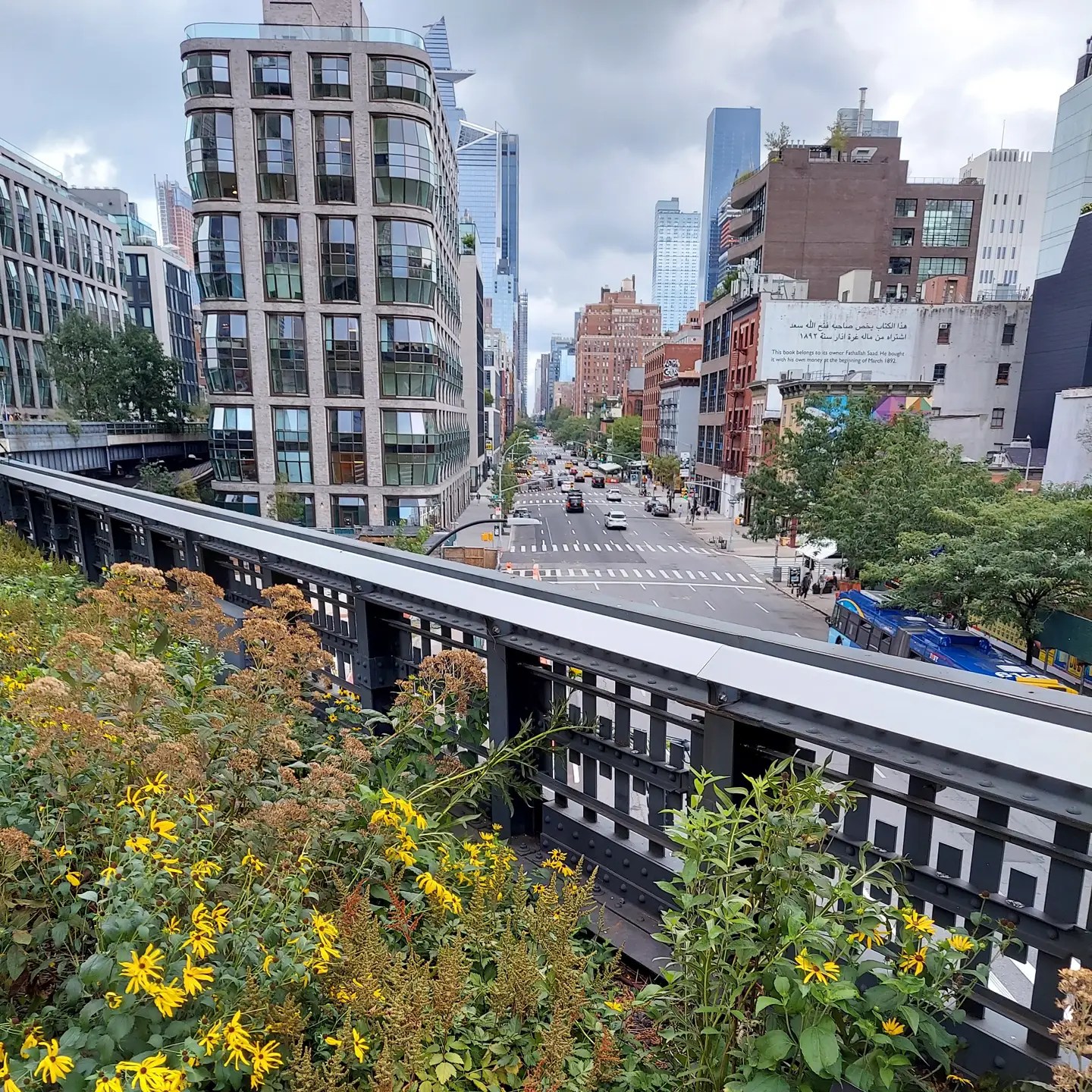
The Yankees may look moribund, but they will be back thanks to New York’s saving grace: an eternal hope for reinvention. I find one such sign in Moynihan Train Hall, a sparkling new Beaux-Arts facility that combines a grand new atrium with an old post office to hearken back to the late, great original Penn Station, an inspiring reminder that iconic public infrastructure really is still possible. A second comes on Little Island, New York’s newest burst of civic fascination, an art installation as a public park that invites senseless serendipitous wandering, both casual and immersive, depending on one’s mood. Its nearby forerunner is the High Line, a repurposed promenade along an elevated train line that is now thick with plant life growing up out of the concrete. These living parks blend New York’s brutal monumentality with a resurgence of nature, a sense of what a rebirth from ruin can be. Progress, however, comes in fits and starts: at the end of the High Line is Hudson Yards, a new, gleaming, soulless and inconvenient behemoth for rich corporations and luxury shopping. I would call it a billionaires’ playground, but if this is how billionaires have fun, the status may not be worth the hype.

I recover from any lingering annoyance at ugly developments with a stroll up Central Park East to the Met. The art museum first captured my imagination as a kid when I read The Mixed-Up Files of Mrs. Basil E. Frankweiler, but this is the first time I’ve set foot in America’s largest art museum. Alas, I fear hiding away in the Met is now much harder than it was when the book was published in the 60s, which is a shame, because I would gladly do so and spend a few nights here. Two and a half hours with no agenda lead me to wander from Greek and Roman art to Middle Eastern carpets, from French impressionists to halls of sculptures, through European period rooms past arms and armor to the Temple of Dendur (closed for construction) and some of the Egyptian rooms. I’ve only scratched the surface of this collection, that New York centralizing force at its absolute finest.

New York’s greatest works of art, however, may come in its human tapestry, and I am here to wrap myself in that urban fabric I have missed so dearly. Dozens of Instagrammers on the same street in Dumbo, rows of families grilling along the Brooklyn Heights waterfront, an urban motorcycle gang by Prospect Park, and the J’Ouvert festival of Caribbean pride livening up the streets of Crown Heights. A reality show casting event in Hudson Yards (a fitting locale); old Upper East Side dames with their marvelous accents and gaudy glasses and batty clothes. Kids attack the streets narrow of Brooklyn on bikes and skateboards with more confidence than I could muster on an empty six-lane highway. An earnestly cool young couple buried in some newspaper tarred in leftist slogans, a man straight out of hipster central casting reading a DIY book, the guy at the next table at the wine bar rattling on about his tasting journeys. A lone young artist on a bench in the Met, the outside world tuned out, deep in a sketch of a Roman statue. A towering Black man in drag getting handsy with his travel companion, a rowdy extended family of grumbling Yankee fans, the lady behind the bar whose small talk gives a single boy a little flutter. “She’s holding an ice cream cone!” a four-year-old proclaims upon his first viewing of the Statue of Liberty from the airplane window. Here, perhaps, is a true symbol of freedom.

After a rush of New York experiences on the first two nights, my final one is all about people: college-era friends who have settled into very different lives in the American capital to drink it up. First, Andrew and I do a vegan dinner with Eileen in Crown Heights, and later we get drinks with my old roommate Phil in Bedford-Stuyvesant, where he and Jess, another fellow Hoya, have just bought a brownstone and begun to nest. We catch up and get takes on pandemic life in New York, on Brooklyn neighborhoods, on how to get around the city, on the life stages we’ve entered now that we’re nearly ten years out of college. All the pieces are back in place, and maybe nothing has changed since we went out in Georgetown and wandered the cobblestones and stumbled back to the house on R Street, fully in the thralls of our fortunate lives.

Time, however, does not let us stay in these nostalgia trips, and in all of us I detect a new level of self-assurance, a deeper knowledge of who we are. My friends all live out some version of that New York pursuit. Eileen navigates life changes with an aplomb I could not muster, while Phil and Jess start to put down roots; Andrew, for his part, is very ready to say Goodbye to All That. I am sympathetic to his exhaustion with the uglier side of New York, and eager to visit him as he moves back to our old haunts in DC. There are a thousand eminently rational reasons for why New York is not my path, and I do not regret that life has not led me to pursue a Manhattan apartment or a Brooklyn brownstone or weekend choices between Nantucket or the Hamptons.

And yet the pull is just as strong as it was since I came here as a 16-year-old, just as fresh and intoxicating as it looked to teenage eyes, spared Joan Didion’s cynical and discerning eye because that distant ideal is probably all it will ever be. It is still the imperial capital, the height of the civilization I live in, and emblematic of all its glories and its horrors, humanity’s promise and belief in new beginnings tied up in its troubles and threats and the unavoidable insularity that comes when like-minded people cluster together in one place. I do not live in it, but I need it to set the standard I use to measure everything else. Ever upward.

A Portage to Simplicity

It’s a Fourth of July with no crowds, no grills, and no fireworks, save the ones from the lightning up in the sky. My dad and I, having gone too long between wilderness retreats, strap his canoe to the roof of his car and head for the Boundary Waters, that great escape in the wilds of northern Minnesota. It is time to get lost in the woods, paddle in deep away from the crowds, and forget the worries of the world for a spell.

Our entry point on Kawishiwi Lake is near the headwaters of a river of the same name that works its way north and west across the Boundary Waters and worms its way through some of its better-known lakes. I have not canoed since our last venture four years ago, but I have become a much more accomplished outdoor adventurer in the intervening four years. I am willing to develop a few arm bruises to go in further and faster than many of the other adventurers on a busy holiday weekend.

Our trip north is a well-traveled one, and all nine permits on our entry day are taken. From Kawishiwi Lake the water trail approximates the course of the river, thought it often meanders off or is lost in rapids or beaver dams, forcing a series of portages. The journey goes north through Square and Kawashong Lakes before arriving at Lake Polly, a common destination for paddlers on this route. We stop here for lunch, and my dad, after some brief reconnoitering to see how things have changed, confirms that this was indeed the site where he and a friend stayed on his first ever Boundary Waters venture nearly 40 years ago. The two of them hitched their way up to Lake Polly in flip-flops with an aluminum canoe, only to have a bear eat all of their food other than the bullion cubes.

Despite this inauspicious introduction, my dad has been back to this chain of lakes several times since. The destination lake on most of those trips has been Malberg Lake, which is two beyond Polly, and it is the same for us. We check out some of its inviting campsites—the open yet shaded site at the mouth of the Louse River, the clifftop site above the narrow channel into the lake’s western arm, a sandy site tucked behind that point—and eventually settle for a different sandy beach in the lake’s far northwest corner. Such dreamy landings and inviting swimming holes are a rarity in the rock-strewn Boundary Waters. Its kitchen area could be a bit more open, but the tent pads are shaded and the waterfront real estate is some of the best I’ve seen, and it will do for our midsummer retreat.

We spend all three of our nights out at that site on Malberg, but we undertake a long day trip on our second day. The portage out of Malberg into a wider meander of the Kawishiwi poses an immediate challenge: beaver action has created a large water hazard in its middle, effectively making it not one but two portages. Low water levels further along complicate the passage up a tributary toward Beaver Lake, but Beaver rewards us with a beautiful campsite at the confluence of its arms and some impressive cliffs. My dad ranks the overgrown boulder field of a portage into Smite Lake one of the worst he’s ever done; the portage smites us, though we are also smitten by the large rock outcroppings along the lake. This is deep wilderness, and we meet just two other people on the entire day, at the mouth of the portage from Smite to Adams Lake, where they have paused for a rest.

We chat with the couple for a while. The man is an ornithologist at a branch of the University of Wisconsin, and Adams Lake is his personal retreat. He comes here several times a year, and knows it well enough to paddle in at night by headlamp. As we paddle around Adams, we understand he has become its resident naturalist: it is serene, varied in its landscape, and buried in deep. Even the portage from Adams back into Beaver to close our loop is lovely, with a stone staircase and a cool rock wall, a welcome respite after a long day of travel. Back at our site late that afternoon, we swim off our beach and I float about, looking to recover that same bliss I found in a bay off St. John in January. It proves elusive, but I do not linger on its absence.

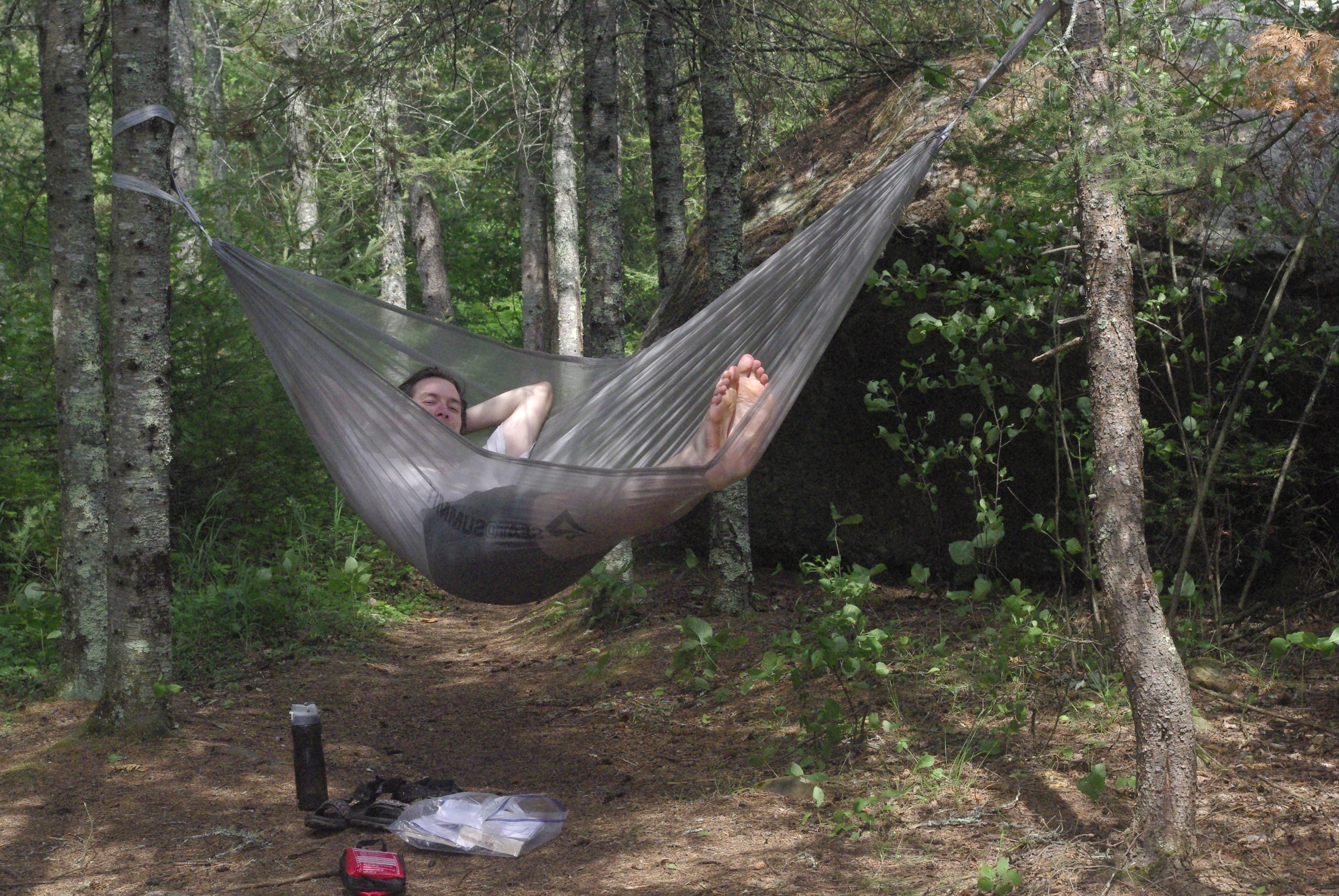
On our third day in the Boundary Waters, we do nothing. I cannot remember the last time I did nothing in a day, and I would not want to make a habit of it, but after some initial fitfulness likely spurred on by biting flies, I settle in. It is a brutally hot weekend in the North. The temperature clears 90, a rarity in these parts, and the day is mostly spent following the shade. In the morning, that means parking in a canoe chair along the beach, while by afternoon, shade has come for the hammocks, and while the breeze is a warm one, at least it is there to stir things up. We read, take our meals, and have our nightcap at a point far down the beach.

The paddle back out to civilization goes smoothly enough. The heat, combined with the effects of some distant wildfire, creates such a haze that we can barely see across some of the smaller lakes. The area between Polly and Square Lakes, cleared out by a forest fire some years back, looks almost desert-like when viewed from beneath a portaging canoe. The day starts stock-still, humid and oppressive, the hoped-for cold front never appearing; later, a strong breeze whips up to add an element of adventure to the final few lake crossings. Even back by Lake Superior, usually a reliable air conditioner, the temperature stays above 90. For a few days, northern Minnesota has become a languid, torpor-suffused sweatbox, but we have gone out for a burst of activity in spite of it.

Canoeing, like many of my recent wilderness adventures, satisfies because it simplifies needs to the most immediate, pressing questions. The only things that matter are the basic tasks of completing one’s itinerary and meeting straightforward human needs. It allows both urgency and activity to live in harmony with bliss, while those sometimes-competing claims can struggle to find resolution in the civilized world, where hunger for activity and achievement and desire to live as if on borrowed time all collide with an inherent patience, caution, and preference for temperature-lowering over outright conflict. A not insignificant part of me enjoys that challenge, but a step out of the trenches is necessary to see it for what it is. After a year and a half of frequent travel in very small groups or in solitude, that is all about to change, and I am ready for that shift. But escapes like this one will always have a special allure.

USVI III: Tropic Solitaire

Part 1 | Part 2

Early in the pandemic, I resolved not to let 2020 be a lost year. I mostly succeeded. I bought a house, managed a great summer trip, strengthened some local ties, filled my newfound downtime with some productive and athletic pursuits, and tacked on this spontaneous Caribbean adventure at the end. It was a trying year at times, certainly; never have world events felt so immediate, in spite of my isolation, and the pandemic put my most pressing search into a deeply unsatisfying pause. But I came through it all the same, and the Virgin Islands provide some catharsis ahead of a quest for more satisfying releases in 2021.

When I went on this summer’s road trip, I went with pretensions of grand discovery. I got a sense of it, perhaps, but little more. Before I left for this one, though, I looked back on how I started 2020 and realized I already wrote the only beach story I needed to write for the foreseeable future. I am not on a plaintive search for anything besides the obvious sun, surf, and rum. I can zone out as I gaze into the waves, write down little nothings, let this account come naturally over time, let it stand as a testament to two weeks of freeing, clarifying escape in a strange era.

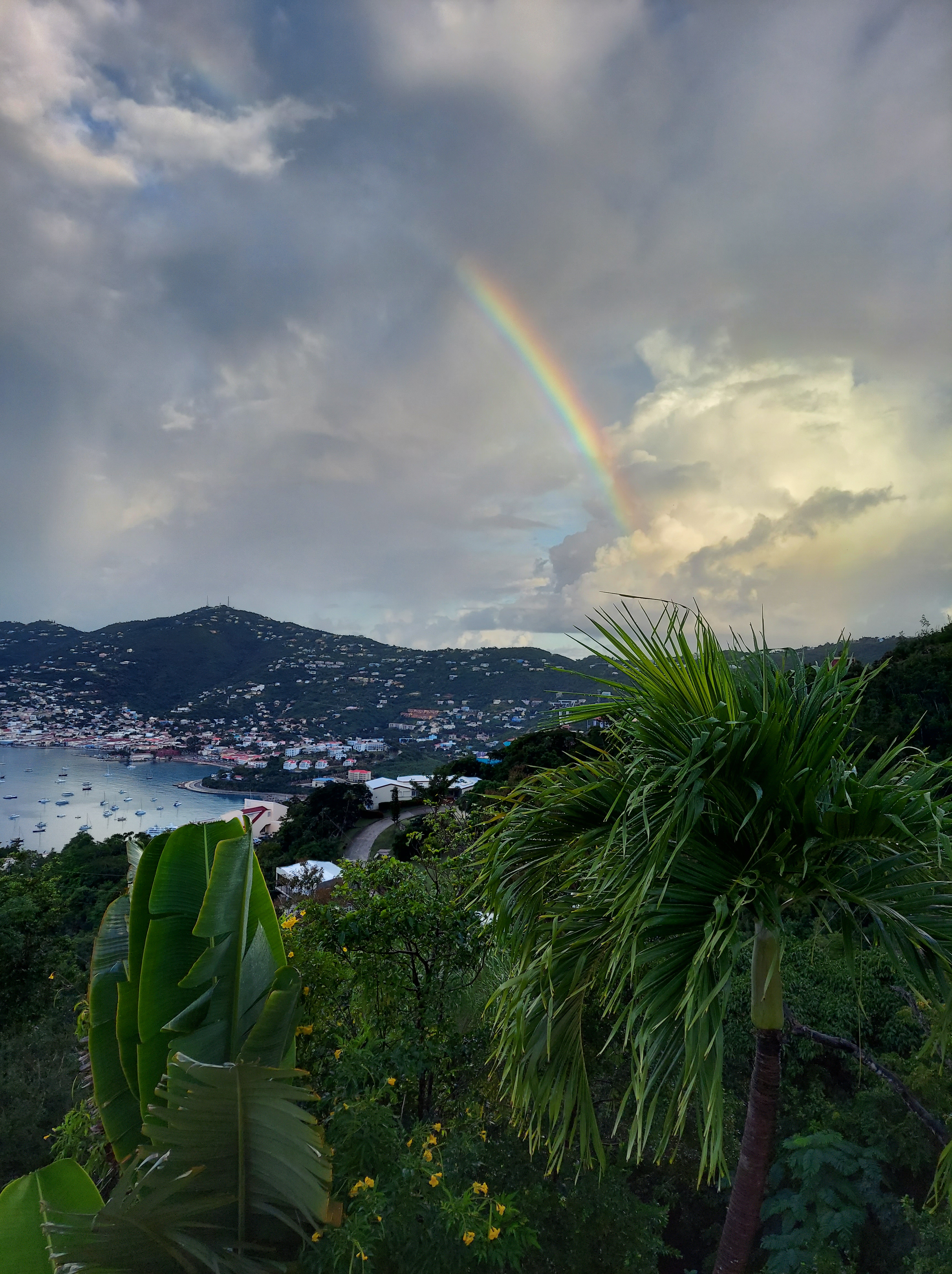
Traveling alone is nothing new for me, but that travel usually comes in a tent, not in a L’Esperance. Seeing the view, a friend calls me Citizen Kane, though I’ve arrived at this Xanadu merely through good fortune and general competence. I also undertake this journey amid an ongoing pandemic, which comes with obvious limitations. Many Virgin Islands activities, given the weather and buildings designed to beckon in the breeze, can go on with only minor changes; a beach is still a beach, and there’s plenty of space on the ones here. But with a few exceptions, there are fewer opportunities for a long afternoon of casual banter at the bar, or a night out on the town: except one somewhat later ferry ride back from St. John, I’m back at my hilltop perch for the sunset each night. With a view like this, why not?

Even in paradise, life settles into the same rhythms of the past nine months, albeit with better Zoom backgrounds and more novel diversions. I start my mornings in the exercise room; when the internet goes down briefly one day, I hop in the pool until it reboots. I rotate my work stations between the great room couch and the pool house and the kitchen counter, while evening reading or writing happens on other stray patios or seating areas. On nighttime Zoom calls, the fauna are so loud that one friend thinks an alarm is beeping in the background; dog barks and rooster crows give the night some life. For a few days during the first week, a vicious wind rips across Flag Hill. Said flag whips in the wind outside my window, and I settle into a rhythm of trade wind management, bartering between cool air flow and keeping my work papers from flying off to Venezuela. I spend inordinate amounts of time locating kitchen implements and figuring out which light switch is where.

My job proves entirely doable from thousands of miles away. I miss my second screen and feel an odd limbo in being two hours ahead of my work calendar on central time, but any annoyances are fleeting. At one point, my distance even proves beneficial, as most of the internet goes down in Duluth while I can jump in and manage a focus group with my pretentious background. (I got in a debate with the woman I meet at the St. John brewery: do we rub our tropical lives in, or try to hide it with blank wall backgrounds?) On the flip side, malfunctioning data tools are just as anger-inducing whether one has snowbanks or palm trees in one’s backyard. Work ends, happy hour begins, and I rinse and repeat the cycle the next day.

I mostly cook for myself in the villa, forking over the price for food commanded by an island that must import practically everything. I do chance a few meals out, most memorably at Duffy’s Love Shack, an open air tiki bar and a Red Hook institution that proved educational for nine-year-old Karl when his adult companions got “lei’d” here for ordering exotic drinks. Sadly, this time around, its confines feature just five tables and my lonely stool at a bar; the fun drink glasses have been replaced by plastic cups for the duration of the pandemic, and the mechanical shark gazes down on the proceedings in forlorn silence. I settle for enjoying the ever-colorful view of the parking lot around Duffy’s. Just in front of me, a college-age girl vomits in a bush (this is four in the afternoon); across the street, a security guard and a few good Samaritans chase down and corner a shoplifter. “Dinner and a show,” muses the woman at the next table.

My solitude continues on New Year’s Eve, a strange night to be alone. After wrapping up a Zoom around 11:00 local time, I launch a cathartic solo dance party to a college-era playlist, then head down to the pool deck and dive in at midnight. The pandemic has killed the usual festivities at the cable car platform just around the hill, but stray fireworks erupt here and there across Charlotte Amalie, while a villa below me supplies a soundtrack and another launches a few lanterns into the sky. Car horns honk, and somewhere, a lonely flute player pumps out Auld Lang Syne. Later, a drum circle erupts down the hill, and I stand out in the prow of the balcony and revel in my perch above it all.

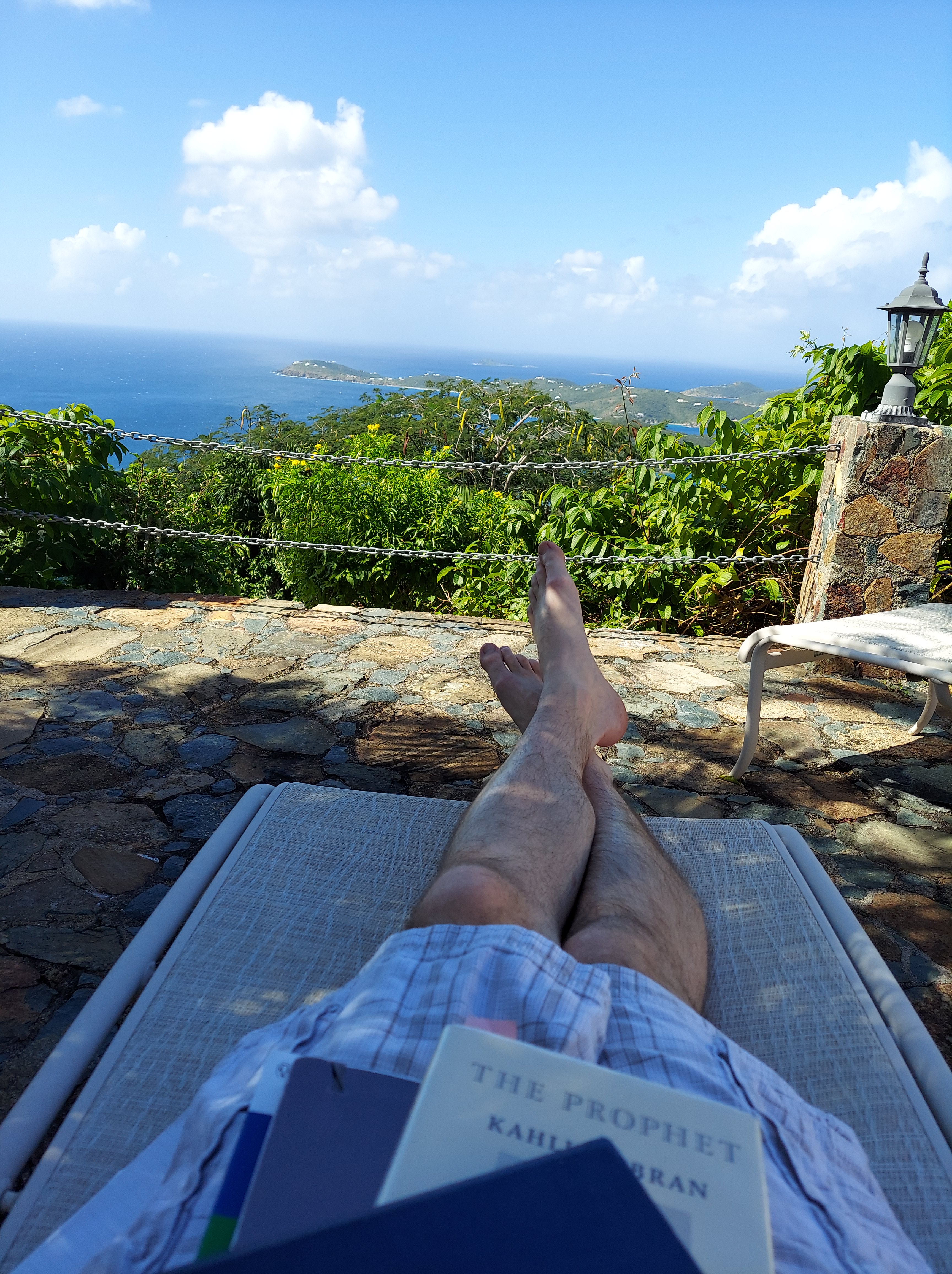
I get plenty of reading done, from Zadie Smith short stories to some grazing off my aunt and uncle’s shelves: a book on St. John, an autobiography of the paleoanthropologist Meave Leakey, a brief delighted dive into some convenient Wallace Stegner. On the weightier side, I give myself equal doses Jerusalem and Athens: first, through Kahlil Gibran’s The Prophet, the blur of divine ecstasy under the moonlight, and later, as I move toward a return to my earthlier concerns, yet another return to Hannah Arendt and The Human Condition. At the end of the dream is action, and a time to begin.

It is an incongruous time to enjoy two weeks in paradise. The pandemic rages on, and several close friends or their spouses contract the coronavirus while I am on St. Thomas. Others in my life are consumed by work, lockdowns, or other various annoyances. Early in my stay, my 94-year-old grandmother’s intestinal woes lead to a touch-and-go emergency surgery; with characteristic steadiness, she plows through it and is on the road to recovery. To sit and talk to a hospital-bound woman who can count the number of times she has left Wisconsin in her life on one hand is a jarring contrast for her grandson who alights to villas atop Caribbean islands on a whim. Toward the end of my stay, I find myself watching a news feed of rioters storming the U.S. Capitol while helping facilitate a tribal entrepreneurial focus group taking place in Minnesota while gazing out on the sun-splashed harbor of Charlotte Amalie. How’s that for cognitive dissonance?

A less self-assured soul might feel some guilt over the good fortune that allows me to enjoy these two weeks in paradise. But throughout this trip, as I knew it would be, my composure is basically a constant state, even with chaos elsewhere. I’d like to think this is some new equanimity, but history suggests there will still be lurches, and a little well-timed anxiety can be a healthy corrective at times. But if that ferocious ambivalence is the threshold of freedom, I took another step toward the door on this trip.

At times, this adventure just feeds my wanderlust. The sailors I meet on the Ram’s Head on St. John bring to mind C.P. Cavafy’s Ithaca, a poem anyone returning home from a great journey should revisit: that freedom to put into “harbors new to your eyes” isn’t limited to the ancients, is something I too could do in a sailboat down the Antilles to keep this dream alive. There’s so much of the world I have yet to see. Someday, perhaps. But fixating on that as the end goal would miss the point. “It’s been one my best escapes ever, but escaping alone ain’t life,” I text my Duluth brain trust on my final night.

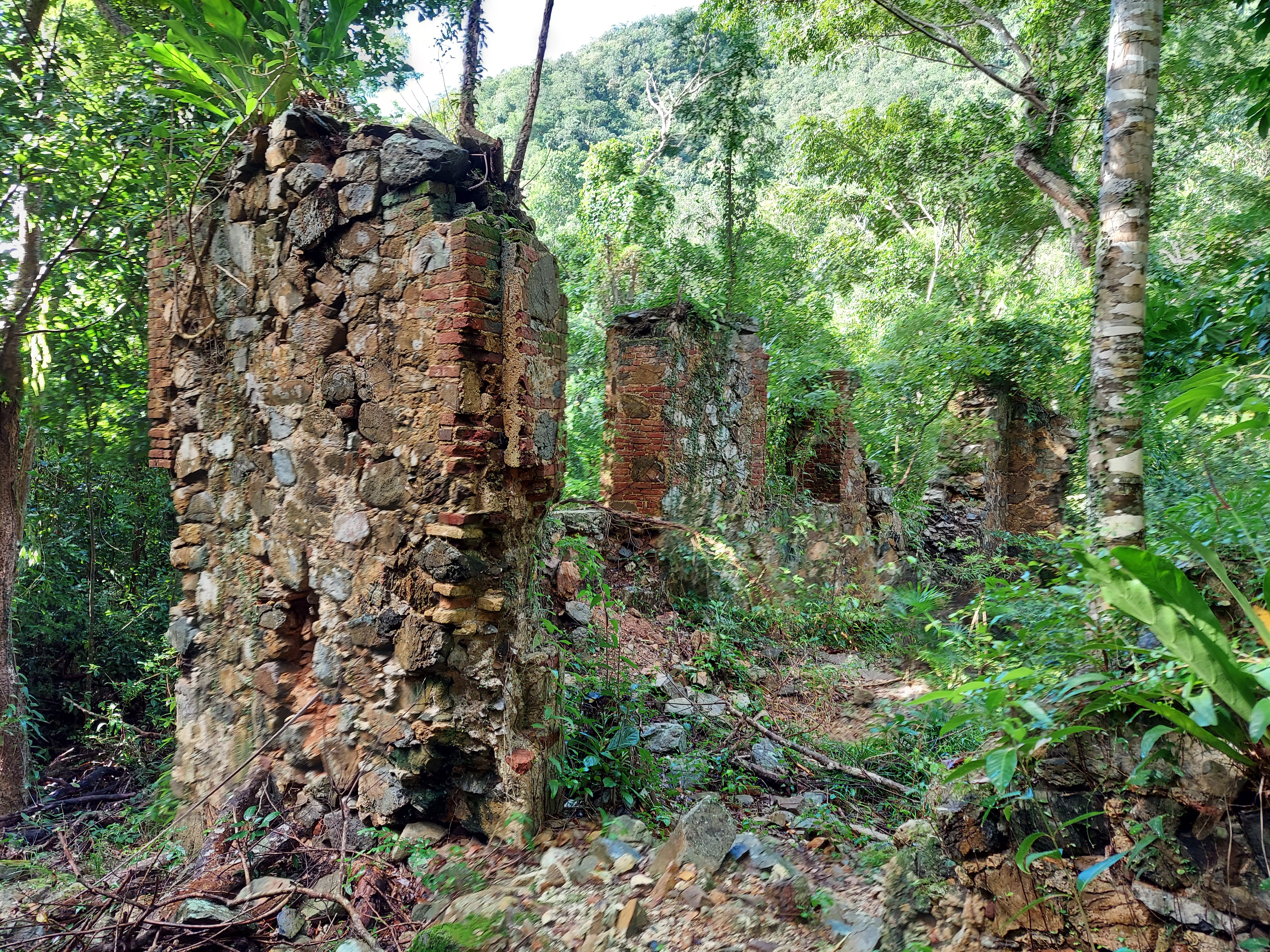
The fisherman I talk with on the Hull Bay beach tells me of his lifelong escape: endless surfing and fishing, traveling up and down the island chain, a home on the hill peeking out over the bay. “Living the dream,” I tell him; “I never need to act for anyone,” he assures me. It’s a dream, yes, but not my dream. I am here to play that game, to accept different roles on different stages, to know that my life contains multitudes, not some essential trait that I can find if I boil everything else away under the Caribbean sun. But there are moments when it all coheres, when all the different threads twist together, and whether they come on a picturesque ruin on St. John or on a moonlit ski trail in Lester Park, they show how to fend off any lurking demons and open up the complete range of possibility. And so, refreshed and tanned and one step further along a twisting, potholed island road, I begin anew.

USVI II: Beached

Part One is here.

The pandemic may drain people away from the crowded shopping streets of Caribbean islands, but life prostrate on a towel has the same allure it always does. Here we are free to get sand all over ourselves and glug mouthfuls of saltwater, to sweat unnecessarily and court the inevitable sunburn. This is, of course, the point. During my two weeks on St. Thomas, I sample beaches both old and new to me in my ventures outward, plus add two days of hiking on neighboring St. John. Each venture ends with a seat in the sand or a swim in the sea, a beached state of bliss that kills worries nearly as well as the rum.

On one of my first free days on the island I head to the far west end of St. Thomas. Here, the arching island tumbles down to a gated community kind enough to allow the unwashed masses to sign in at the guard hut. From there, it’s a little over a mile by foot down the road past some obscenely large houses to the westernmost point on the island. Its name is the Mermaid’s Chair, and while I never quite figure out if I should be looking for seated mermaids on the spit of land that gets covered at high tide or beneath the lone palm tree on the little isle connected by the spit or on the rocks where waves crash beyond it, the place provides a serene respite. The sunset here is sublime, and the waves crash harder than anywhere else on St. Thomas. It’s not really a beach in the traditional sense, but I find some shade behind a rock and wade into a small inlet and along through the surf, alone here at the seeming end of the earth.

My second St. Thomas beach may not be a pristine beauty, but it has the best vibe of the ones I’ve sampled. Hull Bay on the island’s north shore sits somewhere between the solitude of a St. John beach and the built-up resort offerings. If the beachside bar hadn’t been sadly shut down, it would have taken me back to Puerto Escondido. When I arrive late morning, the only occupants seem to be locals. I chat with a commercial fisherman who is measuring out his kite and learn the basics of fishing these waters. Two men with metal detectors make their way up and down the beach, while a child associated with them digs a hole to Tibet in the sand. I join two middle-aged surf bums in incredulous gawking as a pristine-looking yacht tender plows straight into the beach so it can disgorge a few picnickers. Nonplussed, its pilot and an assistant work their way off the sand with some haphazard pushing and rocking, and in time head out on their merry way. “The year is only ten hours old and we have a contender for dumbass of the year,” says one of the surf bums.

Hull Bay has a reputation as a surfing beach, though only two people venture out while I’m there. The first is a teenage boy who looks every bit the surf star with a shock of sun-bleached curls, but after a few tentative steps into the breakers he settles for swimming out into the calmest part of the bay and riding his board back in on his chest before calling it quits. The second is a greying stand-up paddleboarder who stays out on the larger swells for at least two hours, bobbing away on the horizon. Score one for those of us advancing in age. The fisherman says I look like a surfer; in a different life, perhaps, I muse.

There isn’t much in the way of surfing on Magens Bay, the giant bite out of the north side of St. Thomas and its most famous beach. It’s a busy one, but large enough that people can strew themselves out along its length and splash around in the gentle turquoise waters. I traipse from one end to the other and admire the bodies on display, skimpy bikinis and pretty boy swag, plus some things that people would be better off putting away. It’s been too long since I last sampled humanity in this way. That night in bed, I feel the rocking sensation of the bay’s waves carrying me off to sleep.

Secret Harbor, which protects its secrets with about 40 speed bumps and a parking lot unnecessarily atop a hill nowhere near the beach, is an intimate stretch of sand, the sort that would be great with a group but leaves me feeling exposed when there alone. Snorkelers work their way out to its convenient reef, and the blasé servers at the seaside restaurant eventually get around to feeding me. I vaguely regret heading here on my final full day instead of ponying up for the ferry to neighboring St. John for a third time, but a little unfulfilled desire can’t hurt. I’ll be back for Maho Bay some other day.

A second stop that day, Smith Bay, restores me to my beach equilibrium. Sure, my newly developed beach snobbery leads me to conclude it’s nothing special. But there is plenty of shade, and both local and tourist families splash about in its waters and snorkel out to its buoys. Sailboats work their way back and forth into the bay, and I wrap up a book in peace and solitude. It’s a fitting final destination, though not this trip’s apex. On the drive back, I cast one last look of longing toward the island where dreams and reality blurred on this trip.

That place would be St. John, a sparsely populated isle half an hour to the east of St. Thomas by ferry. The city of Cruz Bay, its main gateway for ferry traffic from St. Thomas, is a couple of clusters of shops near the docks, and then a series of villas clinging to the hills up above it. Beyond that, the majority of the land is devoted to the Virgin Islands National Park, and after I escape the ferry traffic, I head straight for the hills.

St. John’s roads are even more painfully tortured than those of St. Thomas; I’m not sure whether to admire the engineers for their accomplishments or recommend them to the asylum. Being a driver on St. John deprives one of some marvelous scenery, since one’s eyes are always fixed on the next hairpin turn and leerily checking that tailgating garbage truck in the rear view mirror. Additional obstacles include a leisurely herd of goats, a monstrous feral pig, and some burros who look miffed when a car traveling the opposite direction gets too close. The pace of life on St. John is a world apart.

The Reef Bay Trail is one of the island’s best-known hikes, and it plunges some 900 feet from Centerline Road along the spine of the island to its namesake bay on the south shore. Ruins line the route: pull back the jungle on St. John and you find a less serene part of the Virgin Islands’ history than its pastel buildings and its cobblestone streets. Like most of the Caribbean, they were once a hub of the slave trade, and the ruins of its sprawling estates litter the landscape: a crumbling wall here, an old storehouse there, a cluster of old homes back in the thicket. Right before the Reef Bay beach is an old sugar factory, whose owners kept it going on steam power after abolition. And for truly deep roots, a side trail leads to a trickling waterfall and a pair of pools beneath some petroglyphs from the pre-Columbian Taino, who drew themselves a cartoon squid his crustacean friends. On the way back up I see how fast I can move in tropical heat, my sweatiness unnerving some not-particularly-fit hikers I meet near the top of the ridge.

On the far southeast end of St. John, a crowded trailhead leads down to the Salt Pond Beach, an idyllic, calm cove that hosts a small armada of snorkelers. I join a family who has sailed here from Georgia for a few false starts further down the beach as we seek out the Ram’s Head Trail, which climbs over to a rocky beach before ascending a bluff that juts out into the sea and gives 360-degree views. There’s little shade, and when I get back to Salt Pond Beach, I am content to lounge in the shade away from the water’s edge, a second sweaty journey of the day complete. Yes, I think, St. John is worth the hype.

St. John’s greatest gems may be on its north shore, the white sand beaches of Hawksnest, Caneel Bay, Trunk Bay, Cinnamon Bay, and Maho Bay. The road here is stupidly pretty; the second-best North Shore on earth, I crack to friends back on another one now covered in snow. My birthday destination, however, is the end of the road at Annaberg, where the ruins of St. John’s largest plantation sit in repose over Leinster Bay. I follow a trail along the beach for a bit over a mile and briefly thrash around the ruins at the base of the hill where the trail turns away from the famed snorkeling spot of Waterlemon Bay. I first found this trail when volunteering with the Friends of the Virgin Islands National Park, on an outing for which we chopped out some of the brush along the trail and the ruins here; now, the jungle is encroaching again. Sufficiently scratched up by the undergrowth, I switch up to the ruined foundations of the Windy Hill House, the estate that once lorded over this whole expanse.

From there, I set out on a loop that takes me over the ridge from the north shore to the large southeastern bite out of St. John named Coral Bay. I follow the Brown Bay Trail further along the shore to another small beach a bit over a mile beyond. I have this one to myself, and tuck in beneath its encroaching undergrowth for a few minutes of shade. I only see one person on this entire trail, a relentless trail runner with whom I share a sweaty grin as we crest the hill with views both north and south. A few more ruins lie off the side near the end of the trail, which dumps me out on a road that runs along the East End peninsula. From there, it’s another mile along pavement through the hamlet of Zootenvaal, the easternmost reach of the United States.

I come to crossroads of Coral Bay, a collection of houses up on the hill and rundown shacks along the road, placid in the midday heat. I’d hoped to stop for a snack and to down some water next to its historic Moravian church, but the burros have occupied the spot beneath the one shady tree. Resigned, I turn and march 500 feet directly up a relentless grade; this is allegedly a road, but I’m not sure any vehicle could survive this thing. Naturally, the sun comes back out for its most intense burst of heat of the day while I’m slogging up. I crest the hill and saunter down the Johnny Horn Trail, which carries me back to the Windy Hill Great House.

I stop for lunch on a shaded set of steps on the ruins of the estate. The old house’s perch may be unbeatable: Leinster Bay and its sailboats to the left, Tortola of the British Virgin Islands across the Sir Francis Drake Passage to the right, shapely Great Thatch and quaint Little Thatch in front, and beyond it, Jost Van Dyke. The ruins are shrouded in pink flowers (which are, alas, an invasive Mexican creeper), its past lives as an overlord of slaves and a boarding house and a reform school now taken back by the wilds of St. John. A light rain pushes through, and I welcome the cleansing shower. I snack away, sip at a flask of rum, jot down a few notes, and attain something resembling nirvana.

At the bottom of the hill, I strip off my sweat-caked shirt and wade into the bay. I edge out gingerly, leery of urchins, and then strike out to a depth where I can float and tread water in peace. A few fish flit past my ankles, and I peer into the depths in this snorkeling haven as well as I can without goggles. A few motorboats come and go. The sun drifts in and out from behind the clouds. Hikers process up and down the beach in no real rush. I wonder just how long I can tread water, even though I know I must move on.

When a large family occupies the beach directly next to my bag, I decide it’s time to leave Leinster Bay behind. I do so with great reluctance. I stick with flip-flops for the beachfront stroll back to the car, where I change out of my sweaty hiking gear and take a brief spin through the Annaberg plantation. On a previous visit, it was packed, with docents and a little booth where a woman served juice from the plantation’s old kitchen; today, it is just me and a picnicking couple. Last time, I remember standing here, transfixed by a vista through the branches of a tree toward the sea; today, I find that spot again and internalize it as deeply as I can.

I make my way back into Cruz Bay. After a parking odyssey, I find the St. John Brewing Company’s tap room, which is tucked away on an upper level of the labyrinthine Mongoose Junction shopping area. The beer does the job, and I befriend Jim and Kate from Connecticut at the next table, the three of us reveling at the joys of dining in a restaurant and working remotely. How we’ve all missed this spontaneity, this liberation afforded by the most pristine of Virgins.

I take the ferry back at sunset. I’m at once hungry for more and fully satisfied: I could spend weeks on St. John, most likely, but I drank enough from its well on this trip to keep me going for years. How can I miss a place that provides a window unto eternity?

Part 3: Solitude in Paradise