Europe 2023, Part IV: Our School of Athens

This is the final installment of a four-part series. Part I | Part II | Part III

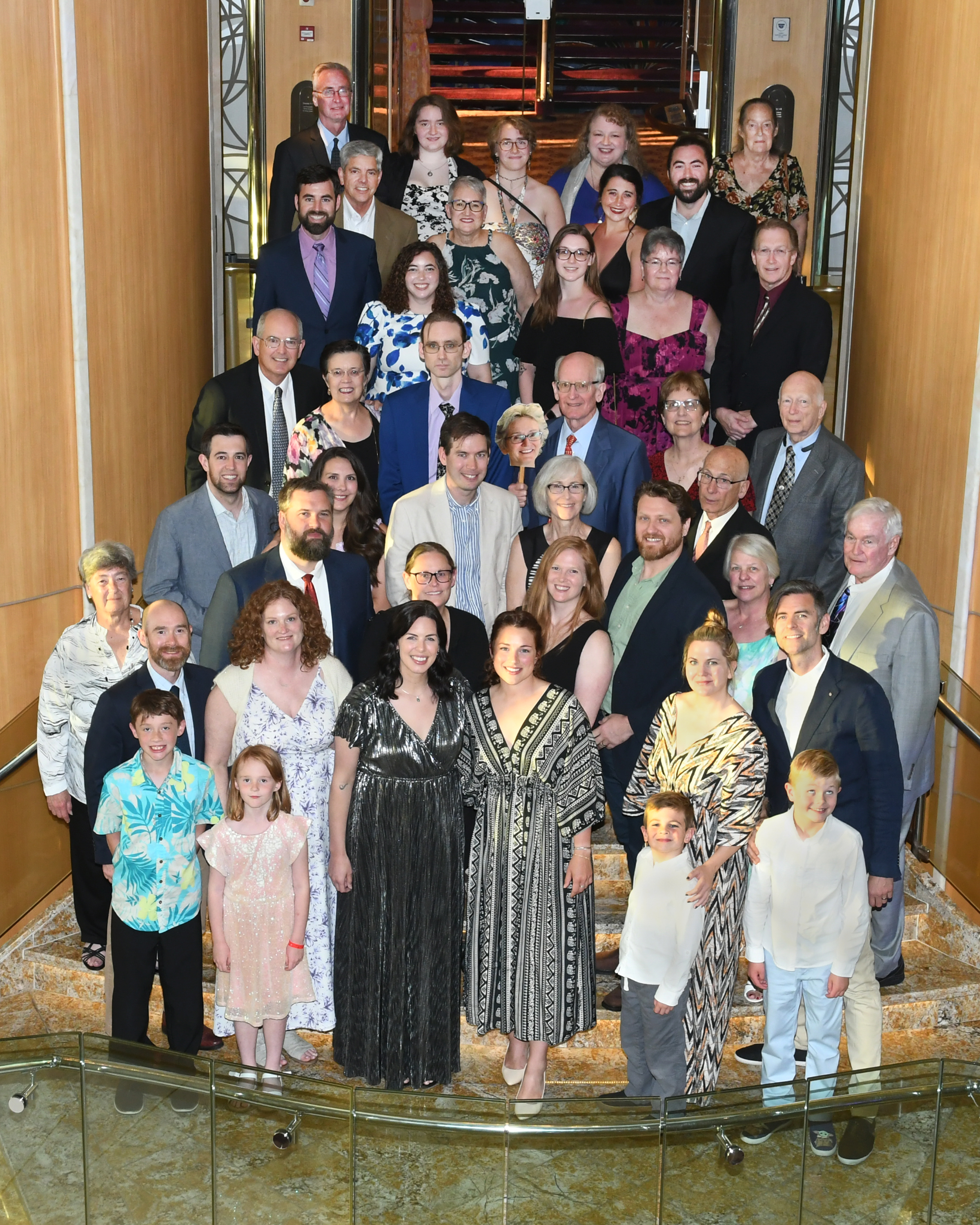
A 42-person family cruise is no enterprise for the faint of heart. My Uncle Chuck and Aunt Monica, the organizing forces behind this whole affair, give us a simultaneous window into a different world while traveling with the people we’ve known the longest. (Fate is cruel to even the best-laid plans: Monica’s broken hip just before our departure leaves her living vicariously, though pictures of Flat Monica heads on popsicle sticks crop up in every destination.) Most importantly, a cruise ship is a vehicle that will allow 42 people with disparate interests to all come together and share in the same thing. Of course we go our different ways: I see some people almost nonstop and only here and there. A cruise ship works for the people who aren’t physically able to do much other than be on the boat, and it works for people like me and my cousin Rob, for whom rest is an afterthought.

We did a version of this in 2004, beginning and ending in Barcelona, and I was fortunate to join a smaller group for a British Isles and Norwegian fjords excursion the following year. I hadn’t been to Europe since. Returning outside of peak awkward teenager phase brings considerable benefits—freedom to roam, legal booze, full choice in activities—though being turned loose on a giant boat is hardly an awful fate for a kid, especially one like me who could appreciate history and culture. Even so, my most enduring memories of that first trip include the discovery of the bidet, the phallic graffiti in Pompeii, a trash Royal Caribbean lasagna meal in Florence, and an exceptionally attractive Roman tour guide. I was fourteen; what can I say?
My attitude on cruising didn’t change appreciably in the intervening years. There are few agnostics on cruises, and telling someone about an impending cruise is likely to inspire envy or disdain. But, unless one has a David Foster Wallace level of misanthrope or gets warm tingly feelings at the phrase “organized group activity,” most people probably land somewhere in between. Cruise tourism is like tasting a beer flight; you may not get to immerse yourself in Rome, but you have enough of a flavor to know what you may want to come back for on some future trip. The first cruise showed me enough of Florence to know that any return visit would have to be for more than five hours, full stop, so it was easy to sub in Cinque Terre for the Livorno excursion this time around. As someone who now, improbably, has status with Royal Caribbean, I’ve learned how to bend these trips to my style.

Our vessel for the week is the Enchantment of the Seas, one of the oldest in the Royal Caribbean fleet, and its age shows around the edges: a few brown stains, the finest in 90s décor, a fraction of the absurd features on newer Royal ships. After an early Freudian slip, I take to calling it Endurance of the Seas. And while our fates are far from Ernest Shackleton’s, the whole two weeks do start to feel like a test of fortitude, not because of anything imposed from the outside but because I, aided and abetted by Rob, don’t want to waste one second of this trip: we are ready to go every morning, off on some lengthy excursion every day, seeking out the best food and drink every evening, and the last ones to retire every night. Cruising is, indeed, a feat of endurance.

Though the ship has over 2,500 passengers, it rarely feels crowded except when embarking or disembarking at a busy time It’s not hard to skip shows and gimmicks and choose “on your own” excursions, if you, like me, get relatively little out of comedy acts or following a tour guide with a Royal Caribbean popsicle stick down the streets of Taormina. We have sporadic pool parties in the solarium and play some shuffleboard; as always with this family, there is some euchre and Rummikub. But most nights we stage a takeover of the Viking Crown Lounge and cycle through conversations with one another, with people drifting off from there to bed or to their own activities, which for a few cousins and me means tasting the contraband beers we’ve smuggled aboard the ship. (No, Royal Caribbean, we’re not telling you our methods for getting around your systems to force us to buy your underwhelming drinks.)

The one organized group activity in which I am a regular and enthusiastic participant are the periodic trivia competitions held on board. Our family descends on three of them, and one of our teams wins every time. One afternoon, my team is in a three-way tie for first with two others, and we are instructed to send up one person for the tiebreaker; my team sends me up, and the other two counter with ten-year-olds. They are no slouches, and I don’t elbow them out of the way to answer first as I might have with some of my cousins, but I dispatch of them as politely as my blood-seeking trivia instincts will allow. I claim my Royal Caribbean highlighter prize and beat a hasty retreat to the bar.

The most grating part of the cruise is the extent to which the boat, despite already charging its passengers thousands of dollars, tries to take more and more of their money. The costs of the onboard internet and drinks package are laughable enough to make them easy to turn down, even as someone who remained pretty connected to the outside world and was hardly teetotaling on the trip. (That said, how can a boat with this many passengers serve only one craft beer, a lonely Terrapin fruity IPA that doesn’t even appear on the menu in half the bars where it’s served?) Plenty of people find ways to part with their money in the onboard shops and casinos. There is also the matter of communication, which is this constant dance among us between the glitchy Royal Caribbean app, other messaging apps, and texts for those of us whose cell phone plans work in Europe. T-Mobile, you are a quiet hero.

And then there is the often obsequious service. It is unclear if the fawning attention of the on-board attendants is coached by Royal Caribbean or a cultural characteristic of the Filipinos who dominate the crew or some combination thereof. It would not be hard to lapse into some sort of guilt about all these mostly brown people from scattered island nations waiting on a mostly white American passenger base, but I have of late found myself in revolt against the eternal calibration of morals in situations beyond my control, not to reject awareness of these divides but to find la vita serenissima in the situations we have been gifted. I am here, and giving the crew anything other than the respect they deserve would only make a hash of things. Let us save that anxiety for another day.

In a group of 42, the opportunities to connect with fellow passengers beyond the family are limited. The best gem comes the night after Cinque Terre, when seven of us join two other unsuspecting couples at the Chef’s Table, a five-course meal with wine pairings in a small dining room. As we stuff our faces we get to know Fran and Ed Dorn, a couple from Austin who were both on the faculty at the University of Texas, a Shakespearean actress and the dean of the Lyndon B. Johnson School of Public Affairs. That party goes deep into the night, and later, a few of us make it to the dance floor in the Viking Crown Lounge on Deck 12. Our fellow clubbers include a bunch of Spaniards demanding reggaeton and a clump of 18-to-20-year-olds who mostly stick to the areas by the bar as they revel in their newfound status. When the girl in the white dress vaults over a half-wall and pulls the boy in the “Please Drink Responsibly” t-shirt off down the hall, I drift off into some plaintive space of lamented lost youth that I never quite shake for the rest of the trip.
My catalog of small annoyances aside, a cruise ship offers a new perspective on may great cities, and even a few windows into great beauty. While the ports themselves are rarely scenic, I am of that obscure species that enjoys rolling through an industrial harbor to see the materials moving thorough and gawking at the massive container ships. At times there are stellar passages, never more so than on the day we set out through the Strait of Messina and pass the smoking volcano of Stromboli. The day at sea between Ravenna and Sicily gives a sense of how many other things share these waters with us, from ferries to oil rigs to ships in the night. After the Rome day the family gathers on the pool deck for certainly-not-contraband wine and watches a series of beastly cruise ships make their way out of port of Civitavecchia before we bring up the rear of the procession. As the Enchantment pulls out, the wind picks up and a lightning show kicks off out over the mainland. A near full moon lights up the night, and the sea begins to pitch. The late-night pizza run after what are of course legally brought on board beers brings a wobbliness unrelated to any beverages we consume. That night, the rocking ship soothes me into my deepest sleep in Europe.

We know we are lucky to live this way. We toast to the lives we’ve lived, we toast to those who can’t be with us, for whatever reason; we toast to our hosts and to the achievements of some of our party and to our freedom to revel in this escape. Nineteen years ago, it was easy to take this sort of opportunity for granted. Now, with my grandparents and an aunt and an uncle and a couple of cousins out of the picture and some others who should be here prevented by life events, it’s not hard to recognize what a treasure this is. I will forever hold close that unique joy of strolling through a completely foreign city and seeing my relatives scattered here and there around the corners, chance encounters on the streets of Venice or Ravenna or Barcelona as we devour everything the world has to offer.

And eat it up we do. It is not uncommon for the discussion to roll until 2 AM on stateroom balconies or over pizza in the solarium. Perhaps we are debating Supreme Court cases and housing policy, or perhaps we are telling bits of our own complex stories; perhaps we are comparing tasting notes on our contraband beer, or simply noting the absurdities of cruise ship life. We are here in this moment, free to forget lost bags or loves or other regrets or anxieties, riding waves with ease.
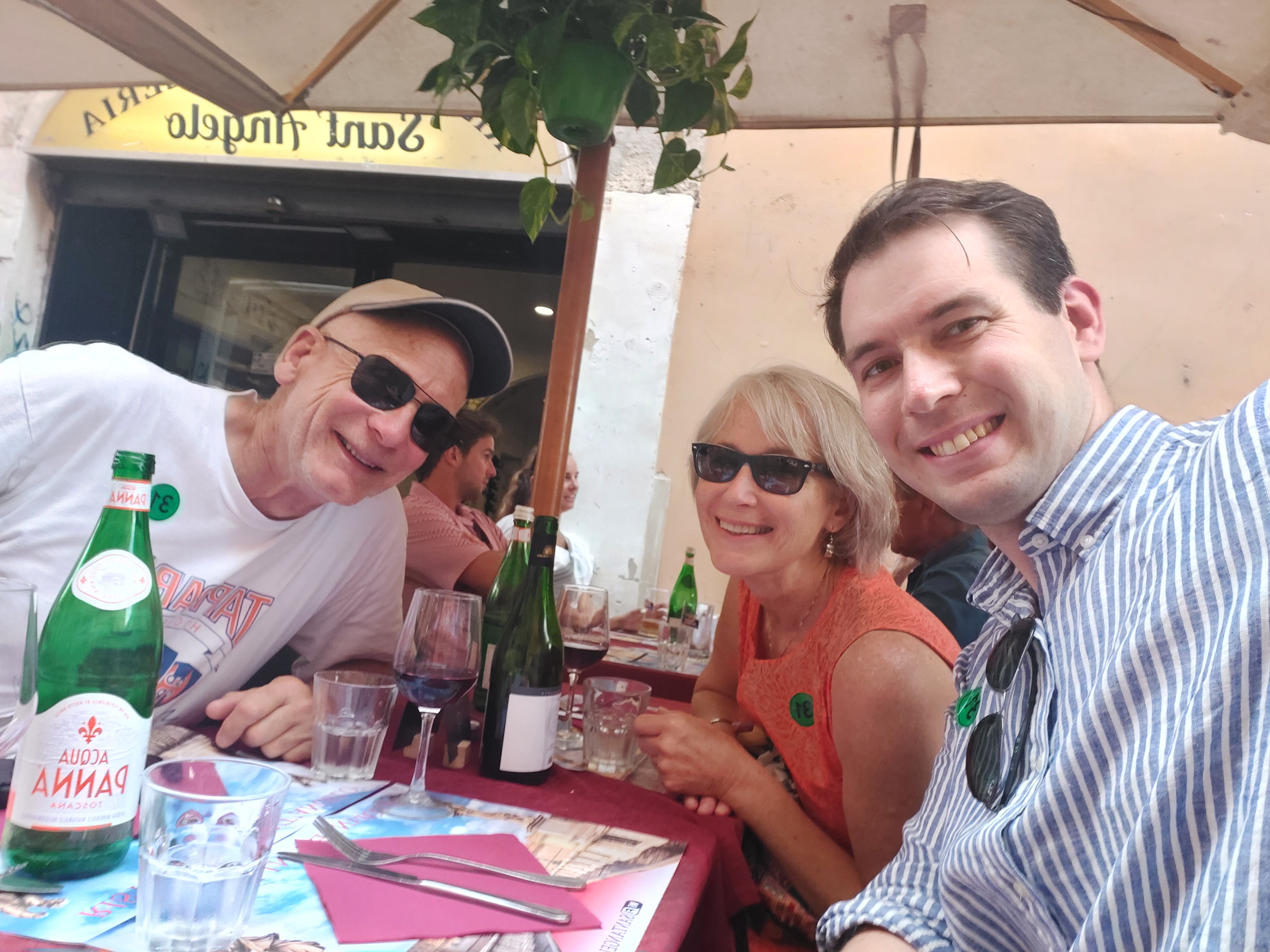
First and foremost, a thank you to Monica and Chuck for treating us to this adventure, and to Jim, who patiently comes along for my Ravenna shopping excursion and carts things back. Steph and Kyle perfect the art of smuggling beer on board and are Rob and I’s most frequent partners in crime; David is also a regular at our beer tastings, with his wife Monica joining on a few of our shore excursions; Alex and Meghan seem to perfect the balance of deep dives in with us and retreats into their own time. Becca likewise stays close as a stabilizing force, aided in her effort by Amanda, while Molly, now 18, comes out to join the party regularly, and Katie dips in her toes here and there. Bibs and Haley liven up the full day in Venice and any dinner or evening where they join the festivities; now we just need to get your partners out for the fun. A thanks to John and Megan for hosting me in the Twin Cities the night before our departure, and for finding a good blend of good life and retreats. Paul and Laura, it was a pleasure to share some dinners and drinks and see the world through the eyes of your kids. The next generation makes its imprint: Luke is well on his way to being a trivia force, Emma was the queen of the Flat Monicas, and Jack and Liam kept me plenty entertained.

On the last night, Uncle John and I bask in repose with cigars on the windy pool deck, though we stub them out a bit early so he can be back with his co-conspirator at the center of the party, Aunt Reen. Aunt Marge probably won the award for enthusiasm for the whole cruise beforehand, and she and Uncle Steve live it up and foot the bill as we clean out her shipboard balance on the final night. Aunt Mary Beth is forever at the core of things, and along for an uphill trek to a wine tasting too. A thanks to Aunt Lucy and Uncle Bob for letting me be a sort of appendage to their family as I room with their son, and to their help with Aunt Trisha, who we are delighted to see make the trip. Props to Aunt Kristin (and Chris and friend Casey, joining us in Barcelona) for giving their girls a trip of a lifetime after graduation, and for finding ways for Uncle Joe to be a part of it. My Mom and Doug put up with Rob and I’s pace through Madrid, and my abandonment of them in Newark, with aplomb. We Maloneys get to know the McQuaid side a bit: Bill, Rose, Dan, Jan, Stephen, Amy. That adds to forty-two, but we also need to give a shout to Uncle Mike and Aunt Chris, who show us a marvelous time when they come along for the ride in Venice and Ravenna.

I had one goal as a tourist on this trip, and that goal was to see the School of Athens in person. The rest was all negotiable. And when I gaze up at Raphael’s masterpiece in that fleeting rush through the Vatican Museums, I can’t help but think of this sprawling family, always in debate or relating tales, gesticulating toward the clouds or at the things we know, a cacophony of voices where one or two may raise higher from time to time but where we need all of the voices to make it what it is. A reproduction of The School of Athens hangs above my mantelpiece because I live for this conversation, at times a central player and times a peripheral figure but always there for the dialogue until the last bit of sand has run out of the glass at the end of a very long night. That, Raphael shows us, is the essential core of the human condition, seeking and probing and finding community amid all our eccentricities, all our strong beliefs, all these jumbled ways of living that nonetheless stem from a common root. May the project never end.
And yes, I am keeping track of everyone who said they’d pay a visit to Duluth.

Europe 2023, Part I: Rebirth

This is the first post in a four-part series.

A simple fact of travel is that things will go wrong, and one’s enjoyment of travel is directly tied to one’s ability to adapt when things go wrong. Alas, when forty-two members of an extended family travel to Europe for a Mediterranean cruise and some offshoot adventures, there are bound to be a few victims. On this venture, I am one of them. Parts of this trip feel like they are designed as a test of patience, and it starts on day one, when the Newark airport decides to keep my plane from Minneapolis, already late in departing Minnesota, sitting on the tarmac for 40 minutes before pulling up to a gate just long enough to miss the connection.

There is no indignity quite like airline indignity. A delayed arrival in Venice is the definition of a first world problem, and there is the bizarre shared ritual of ten despondent people who have never met throwing their bags down when the gate agent, possessed of a robotic soullessness, closes the door to the jet bridge and informs us it cannot reopen. Thankfully, a United representative manages to get me on a Swiss Air flight via Zurich that arrives in Venice only five hours later than planned. Not helping the airline’s cause is the Newark airport, a poorly connected, poorly signed cesspool where some light drizzle renders 80 percent of the flights on the board delayed or canceled. (This was not my first such experience in Newark.) As of this writing 23 days later, my checked bag is still there, its location known both to United and me, yet they are in no rush to return it: no matter how politely or angrily I address them, I can be safely assured anything they tell me about its progress toward me is a lie.

So of course, my first hour and a half in Europe are spent trying to locate my lost bag. Of course, when my number is called at the lost luggage counter, some Italian marches in front of me so he can carry on some pointless argument with the staff. Of course I get the woman with the employee-in-training badge, whose look of sheer defeat when she learns United had no record of my bag because it was switched to Swiss Air will be forever burned in my memory. And of course, the driver who takes me from the airport to the water taxi stand gets in an argument with the water taxi guy before he audibles and decides to just drive me across the causeway into Venice before securing a different water taxi. My arrival in la serenissima calls for a serenity prayer.

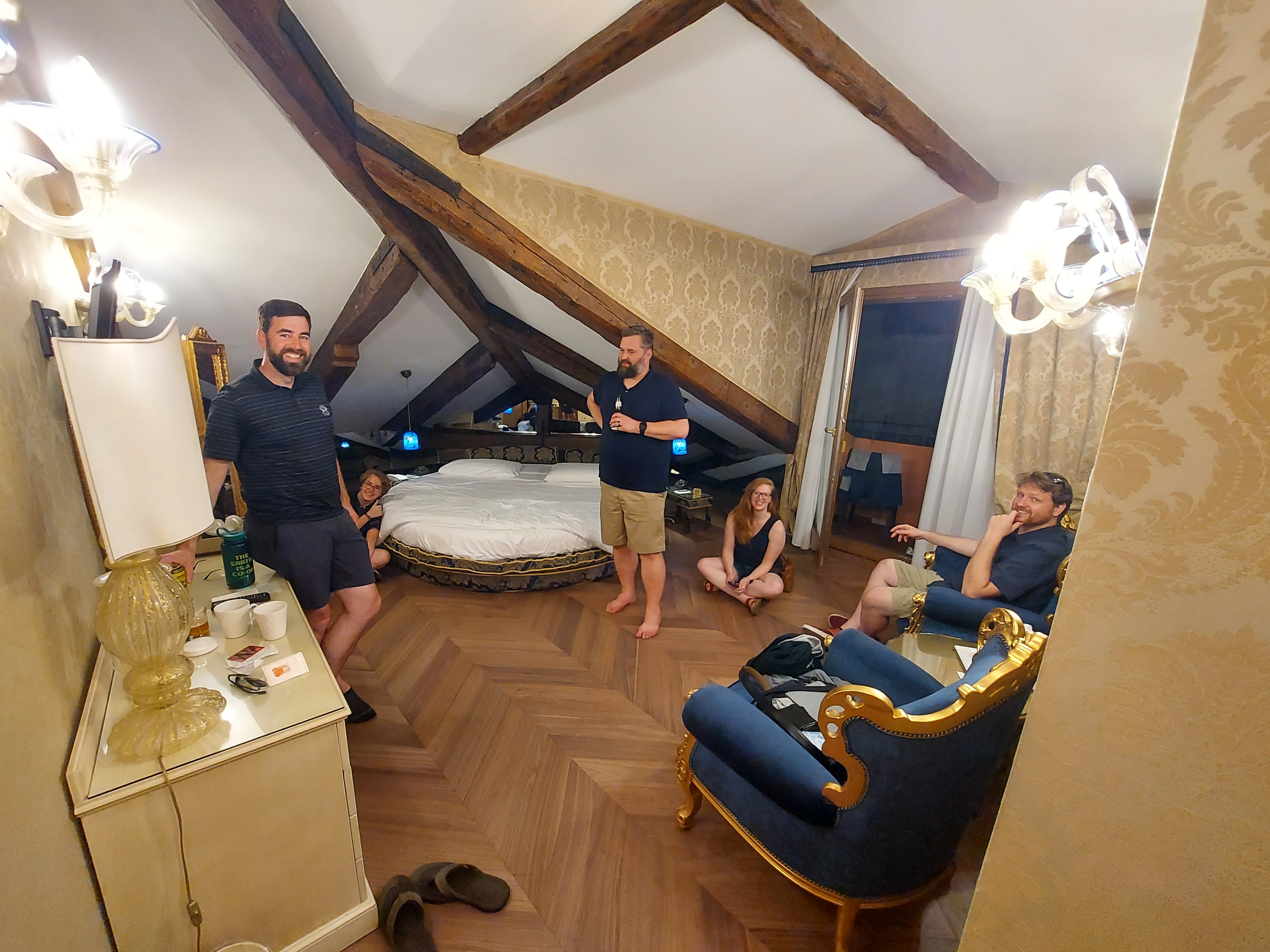
And then I see the hotel room I am sharing with my cousin, for which only a picture can suffice.

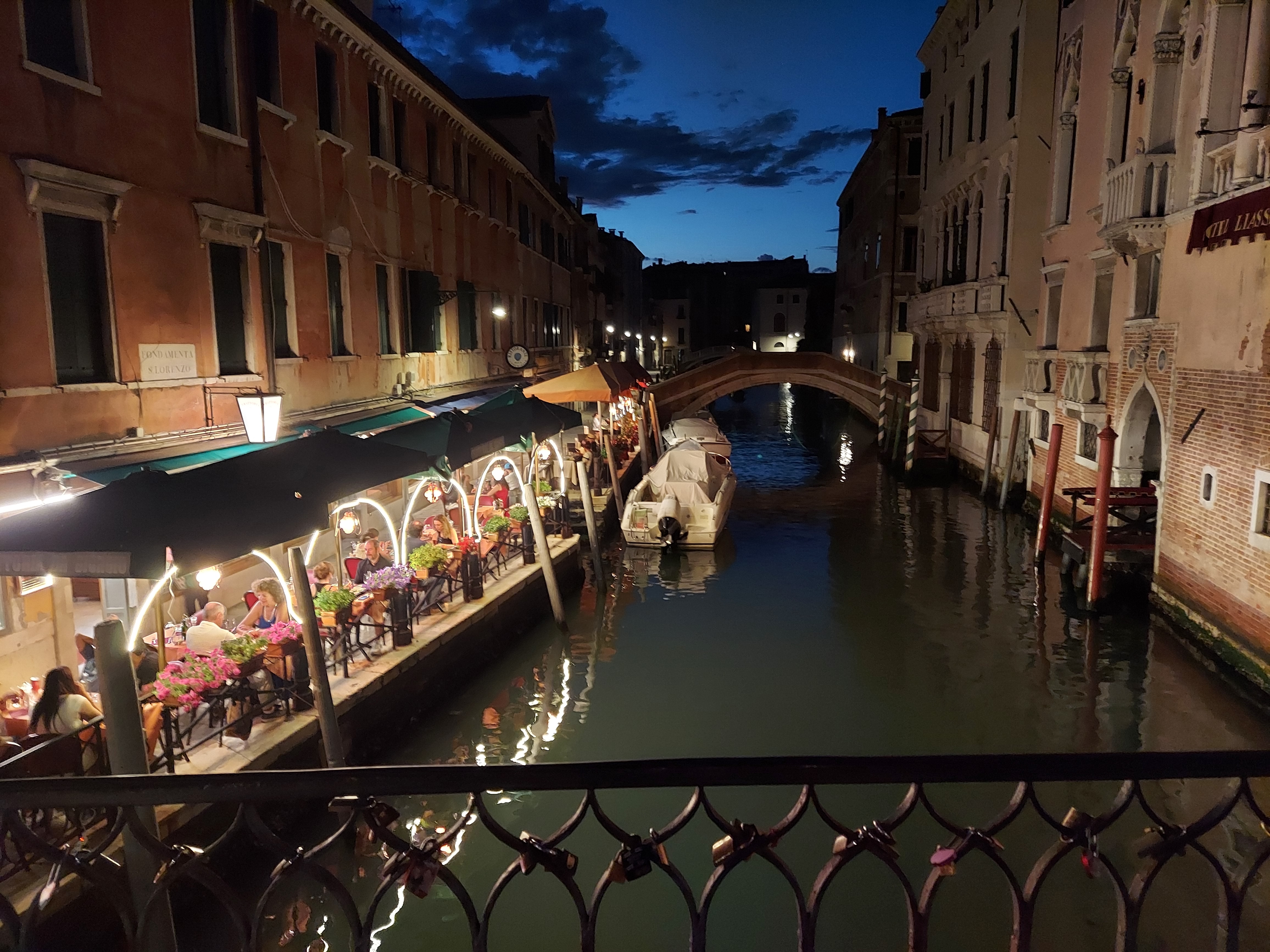
And yet, while mildly loopy after my travel ordeal over 30 sleepless hours, I am smitten by Venice. I get the taxi to myself up the Grand Canal and stand in the back, feeling vaguely James Bond-ish as it flies along. The hotel room is ridiculous enough to be a point of endless fun for our two nights in Venice, and the bed is in fact big enough to sleep two adult men with four feet between them. The room opens out onto a tiny balcony with a view of San Giorgio Maggiore, St. Mark’s Square is just a few minutes away, and tucked behind our waterfront base camp is a byzantine world of canals and alleys and invitations to wander.

After seeing other global tourist destination cities, I was expecting more garbage, more hawkers and homelessness, more general chaos. And yet here is Venice, reasonably clean, religiously tended, the nuisances kept to a minimum. Yes, the crowds do swamp St. Mark’s and the Rialto and the main pedestrian and gondola thoroughfares. But the attractions of this city are not confined to a small historic center like in so many of its peers, so it isn’t too hard to escape the crush. Across the Accademia Bridge, the Dorsoduro neighborhood offers up some rare greenery; a looping water bus trip takes a few of us to the narrow streets of the world’s first Jewish Ghetto before a chill lunch along a canal and a gradual stroll back. I do not have one bad meal here, octopus and lobster squid ink pasta and more classic Italian fare filling every menu. Every square foot of this city offers up something worth a second look.

There is no point in pretending otherwise: Venice is now a giant playground. But it is the best of playgrounds. If any city deserves to get preserved as a cultural treasure for the rest of humanity to explore, it is this one. Here the Roman world’s inheritance intertwines with the Byzantines and influences further to the east, the legacy of a great maritime republic that ruled half the Mediterranean through both trade and war. No city on earth has a built environment like Venice. Its streets and canals are an alluring maze, an invitation to lose oneself and reappear, serendipity with every step. I’m sure some Venetians would find such a take rather glib as they reflect on what has been lost in the slow museumification of their city. The slogan for rebuilding the Fenice opera house after it burned in 1996 was dov’era, com’era (as it was, where it was), but as John Berendt relates in The City of Falling Angels, the way it was had already made it subject to myriad rebuilds and renovations, a jumble of history with no clear point of return. Venice is a living monument, straining under pressures from both the sea and the crush of tourism, but it is worth saving and visiting because the life it brings out is like no other.

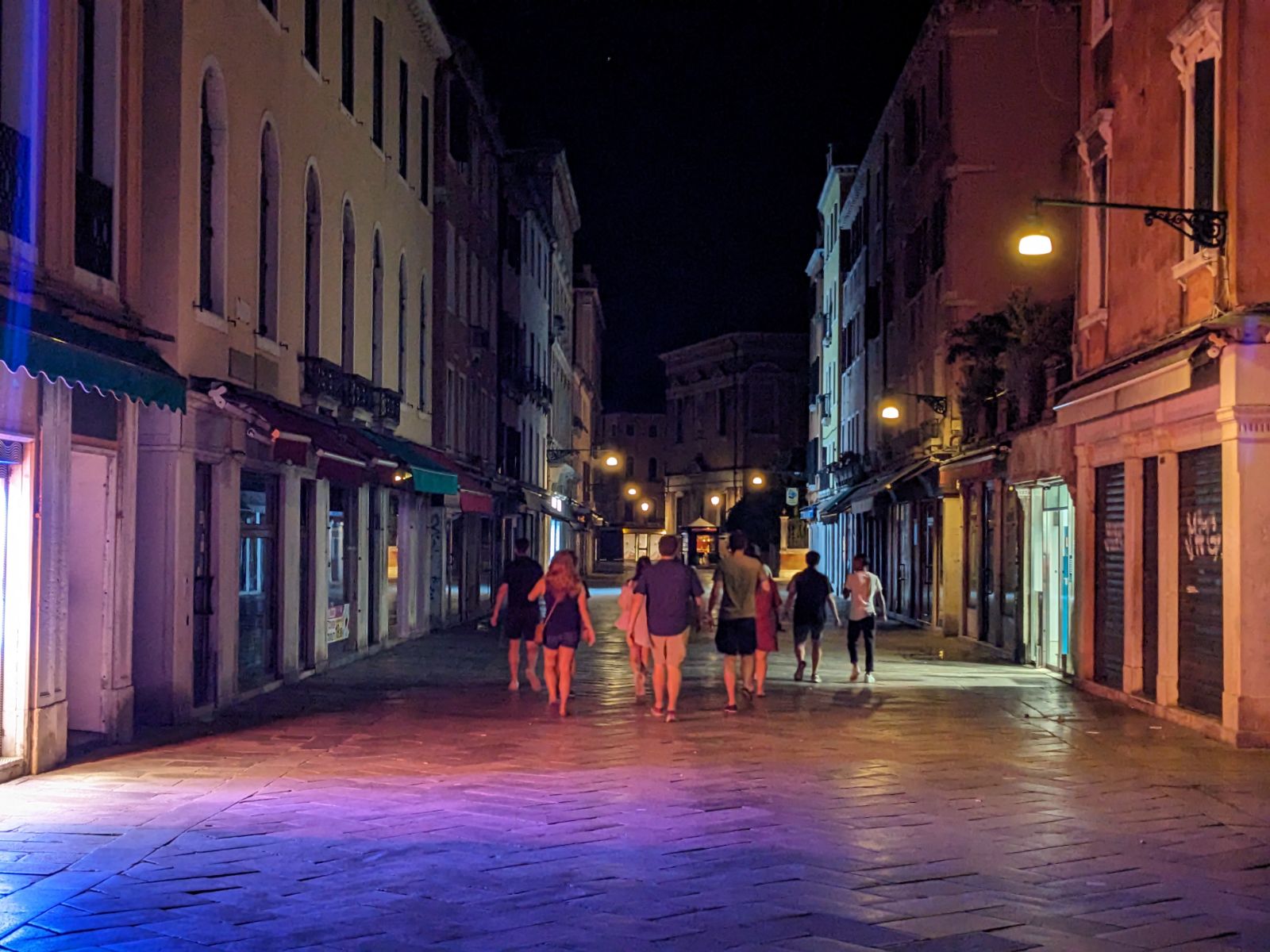
It is after dark that I most fall for Venice. On the first night, a group of my cousins and their spouses connects on the streets and we pick our way to St. Mark’s, the crowds unremarkable, the square aglow in the night. Later, we wind up sprawled on the flagstones along the waterfront, an array of mediocre European beers from a nearby kiosk on hand as we watch the nighttime water traffic, including a mock Venetian galley, cruise by. Several times we play a game where we identify a destination and then try to find our way without looking at maps, over a bridge and through a little arcade, past closed-up bars and lit-up ATMs, here a false turn down a dead end, there the sudden discovery of a church that in any other city would be a stunning monument but here is just some quaint afterthought tucked away on a backwater canal for our discovery and delight. When my fellow wanderers grow restless on a 2 AM retreat from Venice’s finest craft beer bar, I volunteer no details, even though I know the way. I could have wandered these streets until dawn.

I say I could have walked endlessly even though the only footwear in my possession is the same pair of boat shoes I’d worn on the plane, sometimes worn with the one increasingly gross pair of socks I have and at others occupied just by my bare feet as they slide around in a sweat-coated shoe. I am surrounded by beauty and feel disgusting. The next day, resigned to the fact that I will not reacquire my luggage before the ship cruise ship sets sail, I shop for a new wardrobe on Ravenna’s main streets. When life (or a terribly managed airline) takes your luggage, buy an Italian linen suit on their dime.

From there, the trip goes off without any major hitches. The only other real trying day is the one in Rome. Rome is big. Rome is hot. Rome is crowded. After the pleasant surprises of Venice, the Eternal City is frenetic, loud, stuffed with street vendors and pickpockets and garbage. In a city that peaked 2,000 years ago, the fraying seams are clear, and my party is in a state of collective exhaustion by the end.

For this day, I’ve booked myself a non-cruise tour through the Vatican Museums. (I did see the Colosseum, the Forum, the Spanish Steps, and the Trevi Fountain on a visit 19 years ago.) The pace through the collection is never leisurely: the whole time we are swept along through an unending stream of people, all baking in the midafternoon heat. The current tugs us from one gallery to the next, and at one point security diverts our flow through an Etruscan gallery to relieve the pressure on the Gallery of the Candelabra. The Sistine Chapel, the culmination of the tour, is awe-inspiring when one looks up; if one looks around, on the other hand, one gains the perspective of a herd of cattle shuffling through a pen toward slaughter while its Italian handlers around the edges demand silencio and scold the denser cows incapable of reading the ‘no photography’ signs. And yet there are marvels: the stunning Greek and Roman collections, the papal history, an unexpected modernist gallery, the sexy hall of maps, and my own pilgrimage destination on this trip: The School of Athens, Raphael’s great triumph, all philosophy and art distilled into one giant fresco. I am transfixed, and I wish I could linger.

I cannot linger, however, because we are on a cruise, and the boat must leave. We get just five hours to see Rome, controlled by tour guides even for this on-your-own venture. We still nearly lose one member of our party at the end, and my cousins who skipped the official tours and took the train instead also had their share of misadventures amid a few highlights. Between the time necessary to wait for my two-hour tour and the half hour it takes to actually get into the museum, the only other thing I really see outside of the Vatican is the Castel Sant’Angelo; I cross the Tiber only briefly, to meet with my mom and her partner Doug for a quick drink. For someone who reads a book titled Rome as a Guide to the Good Life on this trip (a recommendation by a reader and correspondent) and re-watched La Grande Bellezza (one of my favorite films of all time, in which Rome is a character unto itself) just before it, a day like this one can be something of a letdown.

To fixate on these troubles would miss the point. The message of Rome has never been of straightforward beauty (though it has it all over), but instead of staying power and reinvention, of finding panache amid ruin, or at the very least amid some unexpected chaos. No city can hold all of that complicated history in simultaneous tension as well as Rome, and I have a choice as to whether I fixate on the Sistine Chapel cattle pen or the wonder I find in The School of Athens. In the name of my Renaissance, I choose Raphael.

Part II is here.

Some Artistic License

Lest this blog turn into a hockey-only affair here in the midst of the playoffs, I’ll inject some art to liven things up a bit. The four works that follow are four of my favorites. I can think of plenty of good ones that aren’t here, and a few of my favorite painters don’t have any one single work that really stands above the rest like these do. But these four have captivated me in one way or another over the past four years or so, so they make the cut. Here they are.

I. Scuola di Atene (The School of Athens)

Rafael, 1511

schoolofathens

Anyone who’s bothered to read all of my philosophical ramblings won’t be surprised to see this one leading off the list. It is a fresco in the Vatican, and it pays homage to the philosophical roots of the Western tradition, of which Christianity is also a part. The great minds of the ancient world debate questions great and small. It’s not always entirely clear who is who, but the central subjects of the fresco are obvious enough: Aristotle and Plato, forever in a friendly tension, the real and the ideal juxtaposed against one another. Basically every philosophical debate ever since has its roots in this one, and even the rejection of this debate can be found sitting a few steps below them in the form of Diogenes.

It’s become fashionable in some circles to dismiss Greek philosophy as an anachronism, or a narrow Western imposition. But in many ways, the Greeks had the human condition measured better than anyone who came after, and they can be valuable guides. Of course the Western Canon has its flaws; all who contributed to it were a product of their times. Instead of trashing this self-evident truth, it’s much more useful to see what they got right, and how those simple early thoughts endure far more meaningfully for lived experience than anything in the arsenal of postmodern jargon. In a rare occurrence, I side with Plato over Aristotle: this is the ideal of how debate should look, with respect and camaraderie and deeper search for the truth.

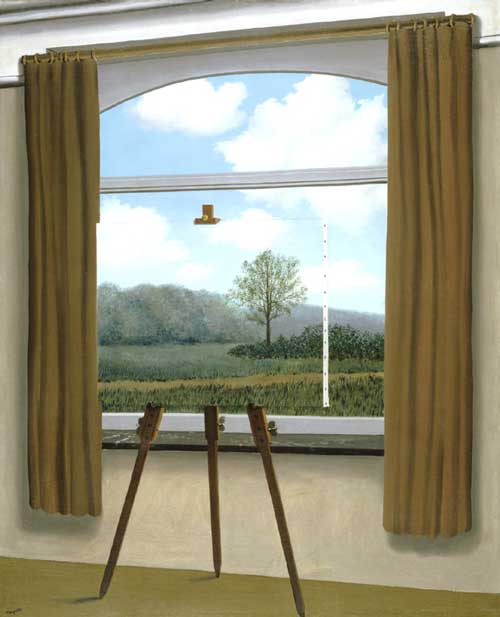
II. La condition humaine (The Human Condition)

René Magritte, 1933

laconditionhumaine

At one point while I was in Washington DC, I wandered through the modern wing of the National Gallery on my own, drifting along from one picture to the next with no particular enthusiasm. Then I came to this one. I stood there, transfixed, for at least a few minutes. It was hard to put into words exactly what it meant, but I got it immediately, and it couldn’t be any more right. From Sara Whitfield’s Magritte (1992):

“This is how we see the world,” René Magritte argued in a 1938 lecture explaining his version of La condition humaine in which a painting has been superimposed over the view it depicts so that the two are continuous and indistinguishable. “We see it as being outside ourselves even though it is only a mental representation of what we experience on the inside.” What lies beyond the windowpane of apprehension, says Magritte, needs a design before we can properly discuss its form, let alone derive pleasure from its perception. And it is culture, convention, and cognition that makes that design; that invests a retinal impression with the quality we experience as beauty.

The point here, I suppose, is not wildly different from the one I was making with The School of Athens: we all come from a certain context, and view things through a certain lens. We are our histories; we embody the people and places we come from, and cannot shake them off as we gaze out upon the world.

III. Sueño de una tarde dominical en la Alameda Central (Dream of a Sunday Afternoon in Alameda Park)

Diego Rivera, 1947

dreamofasundayafternoon(Click image for enlargement)

A high school Spanish teacher showed me this mural long before I’d considered studying abroad in Mexico, and while I probably rolled my eyes at her gushing like most high school kids do, something lingered. By the time I headed south, it had become an essential stop, and on my first free weekend, I hiked up Paseo de la Reforma alone to stand before the mural, which occupies an entire wall in its own museum. It didn’t disappoint. I was riveted.

It tells the story of Mexican history from left to right, from the first conquistadors to the Revolution of the 1910s. The heroes and villains all mingle in the park, strolling down its promenades, forever tied up in a contradiction of a nation. At the center is Rivera as a boy, standing next to the calavera, that reminder that death levels all the differences between these many people, arm-in-arm with its creator, José Guadalupe Posada. National myth, fantasy, and harsh reality all blend together in vibrant color, a crowd that captures the soul of a contradictory nation.

Once I’d drunk my fill, I then spent my own Sunday afternoon wandering the Alameda of 2010 Mexico. It was a chaotic mix of vendors and protesters and pleasure-seekers; none as famous as those portrayed by Rivera, but even if they had been, they would have been lost in the crowd. I sat down on a bench and wrote for a bit, happy to have arrived, but slowly realizing that this fleeting glimpse was only the beginning. I had more work to do. I set out to find a nation and wound up finding myself instead, in large part by coming to understand that wild cast of characters that had wandered through my own life.

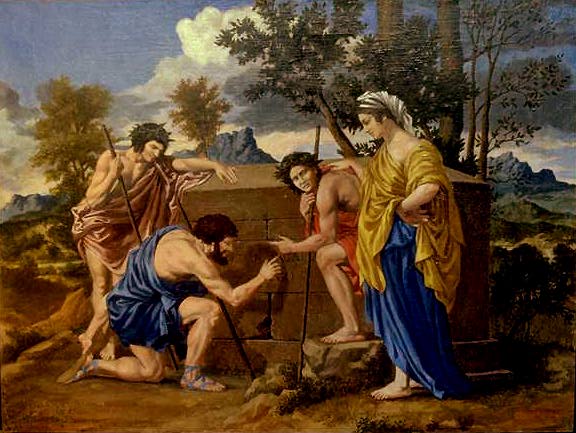
IV. Et in Arcadia ego

Nicolas Poussin, 1638

etinarcadiaego

Even in Arcadia, there am I. The speaker of these words, of course, is Death, and the shepherds of Arcadia have just discovered death in the form of a mysterious tomb. The pastoral lives they live are but a dream, and no one can hide from it forever.  My fatalist impulse comes through here, Posada’s calavera once again underscored: it is all so fleeting, and even in paradise, nothing is eternal.

It’s a somber note to sound, perhaps, but this isn’t to cast a pall over it all. Instead, it shows just how precious those moments of bliss can be, and how we must adapt to their lack of permanence: we must treasure them, and never lose sight of how little time we have to do whatever it is we’re setting out to do. That awareness is at the root of my hunger to figure things out, and to get as much right as I can. We all need our occasional retreats to Arcadia, but we cannot linger: the world calls.

It is no coincidence that two of these four works are filled with people, attempting to sort out their roles within a society or some other social environment. Another looks out from within, at how the individual sees the world; another steps out, while reminding us that we can only do so for a little while. It’s all part of the cycle.

Photo sources:

http://uploads5.wikiart.org/images/raphael/school-of-athens-detail-from-right-hand-side-showing-diogenes-on-the-steps-and-euclid-1511.jpg

http://www.ket.org/painting/images/humaine.jpg

http://www.oh-wie-scha.de/homepage_cipa001.jpg

http://www.parnasse.com/etinarc.jpg