Spain 2025, Part IV: Against Dereliction

This is the fourth and final piece in a series that began here.

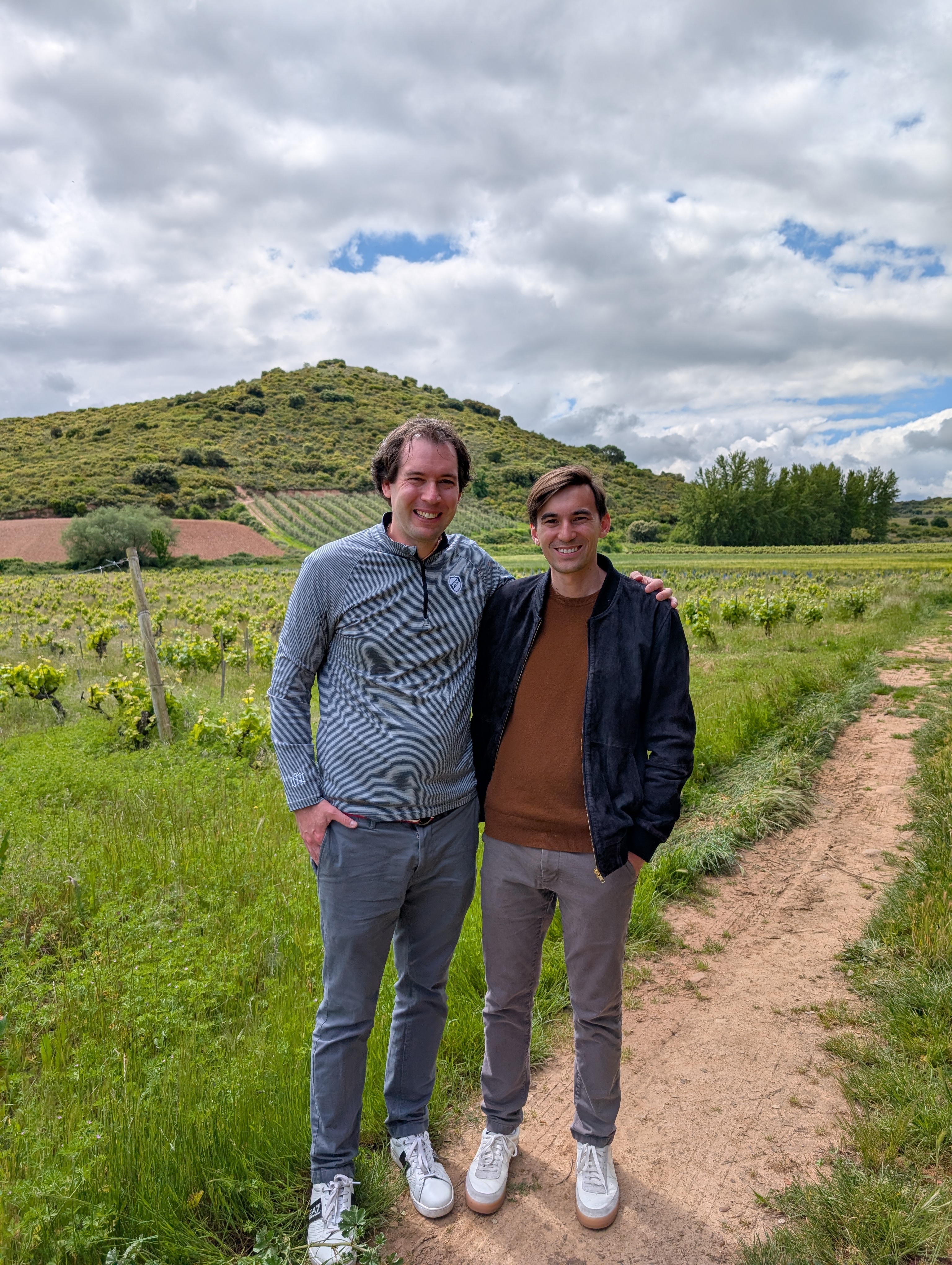
Sated on San Sebastián and ready to head the province of La Rioja, Andrew and I pick up a rental Cupra, which is Spain’s effort at a sporty car. We roll down a winding Basque tollway and up into the Cantabrian Mountains, where we seek out the Salto del Nervión. In wet times this is the highest waterfall in Spain, but today, it is just a pretty cliff. We chat with two older ladies who are taking a new car for a spin and get some sense of how it should look. The forests are lush, the karst formations jarring, and a few toros wander on to the road. We are back in rural Spain.

The number of elderly people who get out for this several-mile hike is a statement on Spanish superiority. The life expectancy in this country is 84, between second and sixth in the world depending on the source and inclusion of micro-states, even though booze consumption per capita is not low and smoking remains more ubiquitous than it is across the pond. The culprits would appear to include a lot of walking, a lot of olive oil, and a densely knit lifestyle that keeps people enmeshed in social networks long into old age. On the streets of Briones, the small town where we spend the next two nights, the average age appears to be about 70. But everyone is still shuffling about in their little friend groups, gathering on squares, no one warehoused away or struggling much beyond the inevitable physical toll. Almost no one is overweight, and the drinking seems like a steady social activity instead of a lonely or perpetual rush to blackout. There is an art to living well to a ripe old age here, and it comes not through self-denial but through keeping everything in its place.

Speaking of old, the Monasterio de San Millán qualifies: the twin monasteries of Suso and Yuso date to the sixth century, and we stop by Yuso, which is open for tours. The first recorded writing of Spanish (and of Basque) took place here, an attempt by a monk to bridge the Latin of the church and the vulgar Latin of a Visigoth-ruled Iberia around the year 1000. It is also home to one of the few complete sets of giant books of Gregorian chants for each day of the year, all stashed in a specially built chamber to control their humidity. Yuso’s 11 remaining Augustinians honor San Millán, a hero from that area who, like St. James along the nearby Camino de Santiago, got drafted into slaying some Moors on behalf of the Reconquista. A few pilgrims have made the side trip up here, including a Spaniard who started in Barcelona and a couple from Iowa City for whom we translate the tour. I feel the pull to don a pack and start walking.

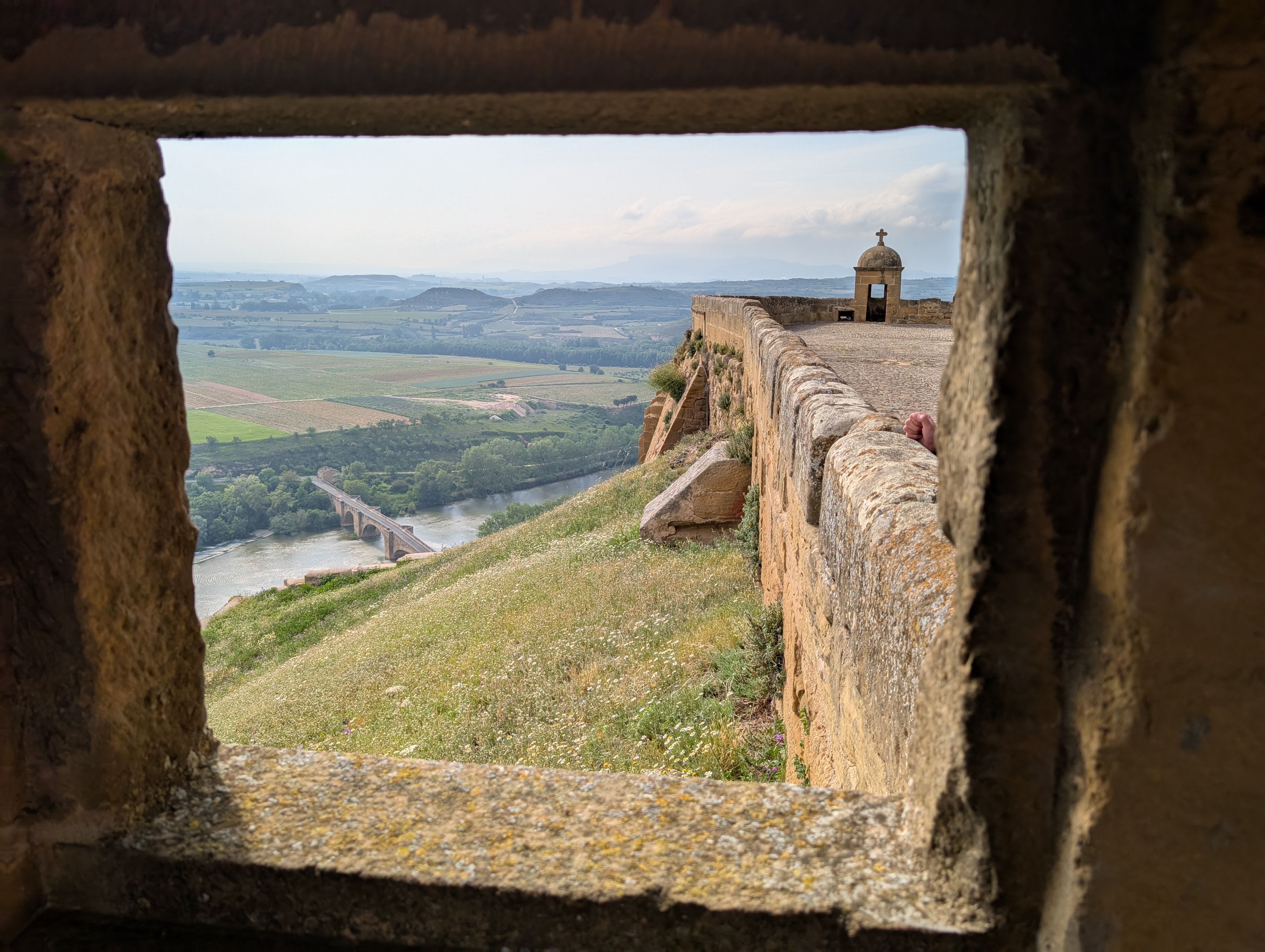
As it is, however, driving around Rioja is a beautiful way to spend a few days. Roads swing their way around ridges and vineyards, a view off to the next hilltop town or castle always somewhere in sight. Clouds hang over the mountains to the north, much closer in person than they appear on a map, and the valley of the Ebro River drinks in the sunlight that filters through them. Briones, where we stay at a restored old stone manor named Santa Maria Briones, is a quiet hilltop town that feels frozen in a different era. Once upon a time it was an outpost in competition with the even larger castle across the Ebro in San Vicente de la Sonsierra, a contested zone between the kingdoms of Castile and Navarre. Now, it feels about as far from war as a place can be, basking in wine country sun as the bell on the great old church tolls out the quarter hours and its residents shuffle into their later days.

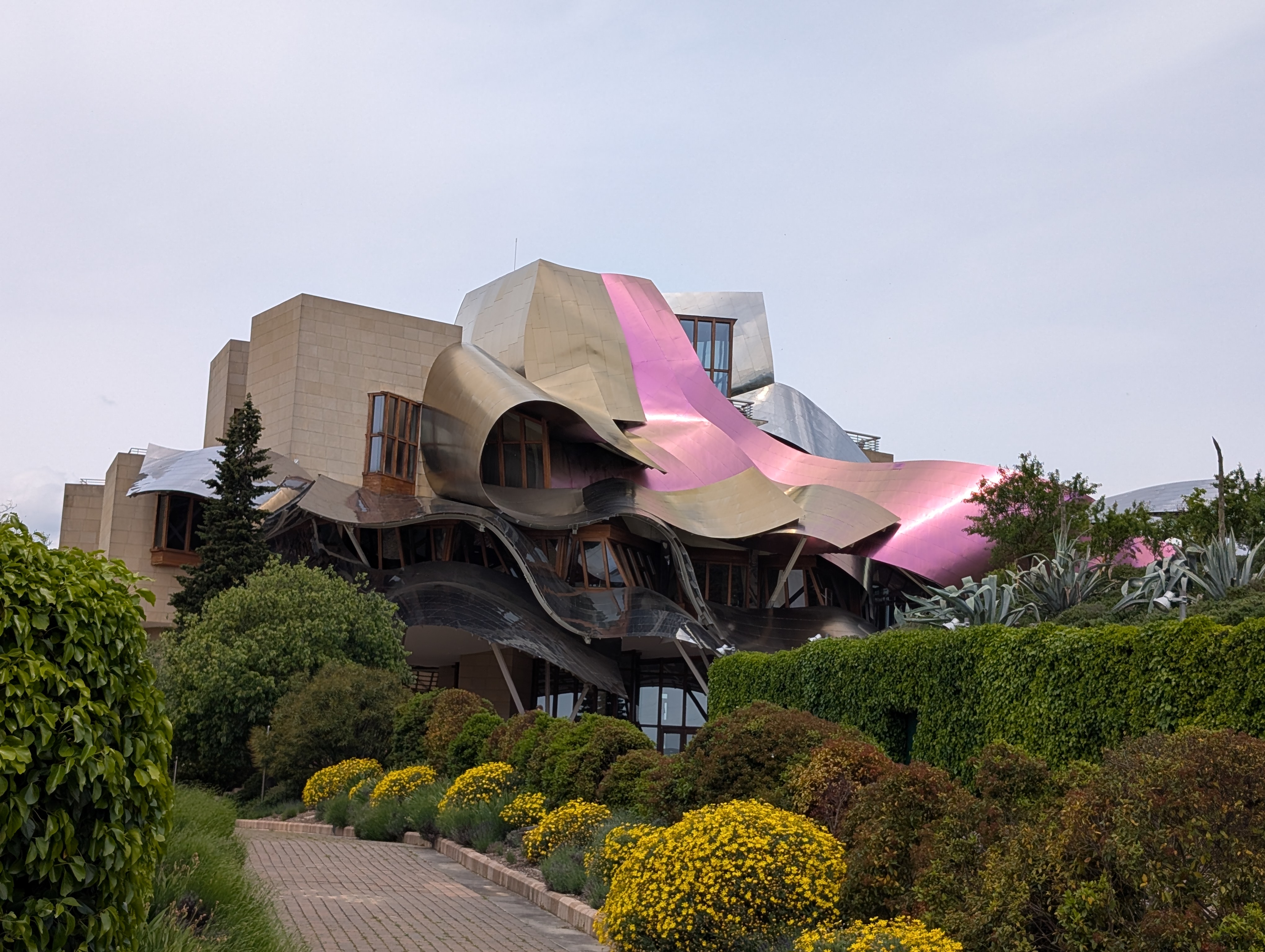
We are of course in Rioja to drink wine. We schedule three tastings, and the two on day one are contrasts in the scale available here. First we visit Miguel Merino, a small producer that we can walk to in Briones, where it’s just us and Lorena, one of the five people employed by this operation founded by an exporter and carried on by his son, relying on small batches and doing some experimentation as they get into many Michelin-starred restaurants. Later, we tour the Marqués de Riscal, an industrial-scale pillar of Rioja complete with a Frank Gehry hotel reminiscent of the Guggenheim, with a dash of wine purple added to the color palette here. The place is massive, a winemaking machine in full force, though the Marquis himself still sits in a corner with some friends sampling the product. Up in Haro, one of the larger towns in the region, we stroll past some of the other big Rioja names in its neighborhood of bodegas and do lunch on a convenient patio at Muga.

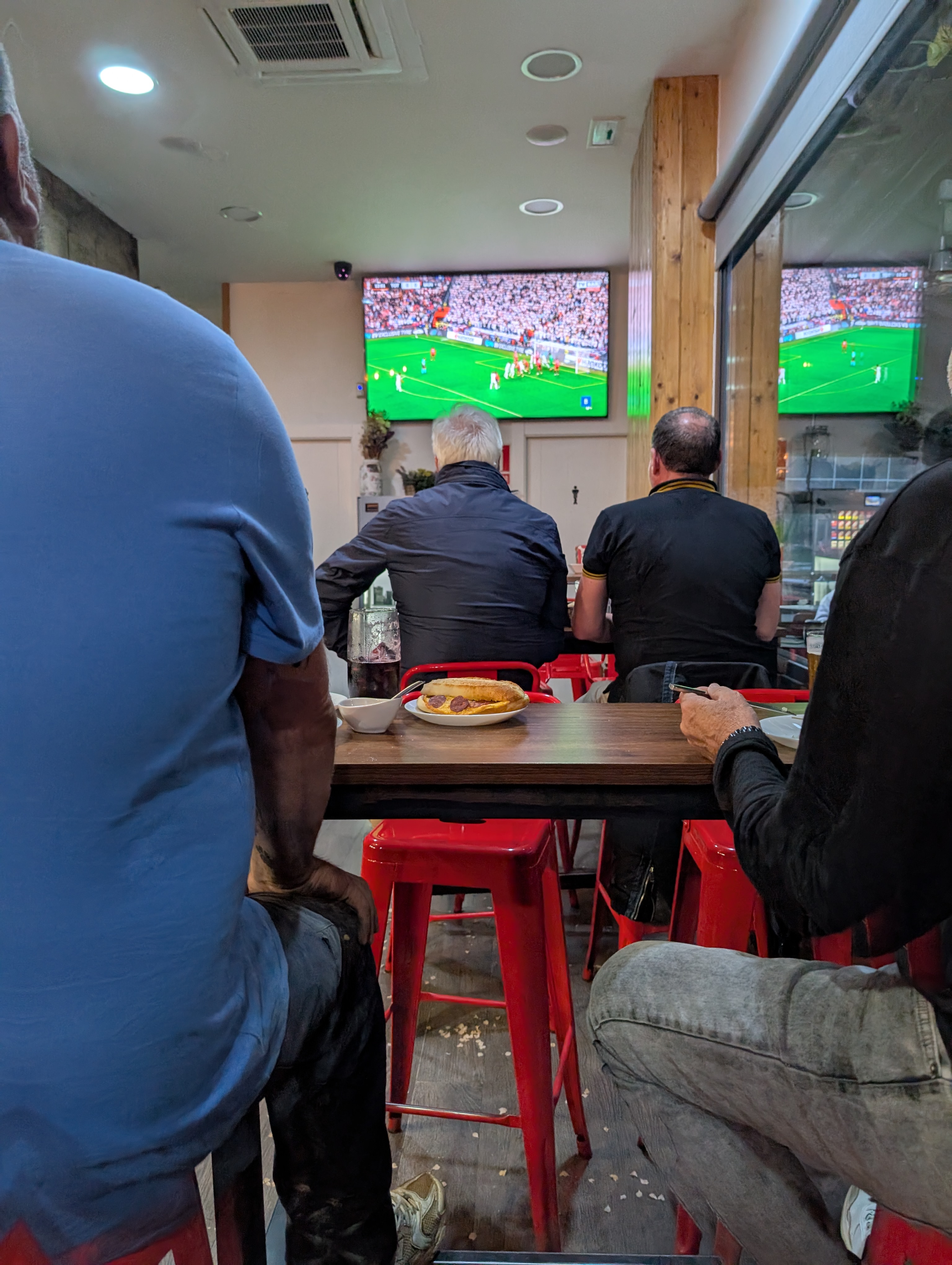
Our two nights here, meanwhile, are a marked contrast. On the first we eat at Allegar, the restaurant at Santa Maria Briones. Seventeen small plates come out through the course of the tasting menu, each with a major element from Rioja itself, along with wines to match. The three-hour tour is a culinary peak of a trip of nonstop great food. The next night, Andrew, a diehard fan of Tottenham Hotspur, must find a spot where we can watch Spurs’ Europa League final against Manchester United in Bilbao. We wind up in an Haro sports bar surrounded by large, booze-fueled Spanish men. They approve of our allegiances (“fook Mahnchesta”) and provide some high-fives when Spurs, one spot above relegation from the Premier League, improbably hold off United in a fairly disgusting soccer game. The aesthetics do not matter to Andrew, who is giddy, and I am amused as we watch Spanish sports talk into the night.

We have one final wine tasting on our way south back toward Madrid. When we pull up in the town of Sojuela, I’m worried I’ve made a mistake: the address for the Ojuel winery takes us to an unmarked door on a nondescript house in a town much further off the beaten path than Briones; the website is down and the phone number we have doesn’t work. But an ancient lady calls down to us from the upper floor and says someone is on her way, and before long Mila, the daughter-in-law of our greeter and the mother of the winemaker, is taking us on what is, by several orders of magnitude, the most memorable wine tasting tour I’ve ever had.

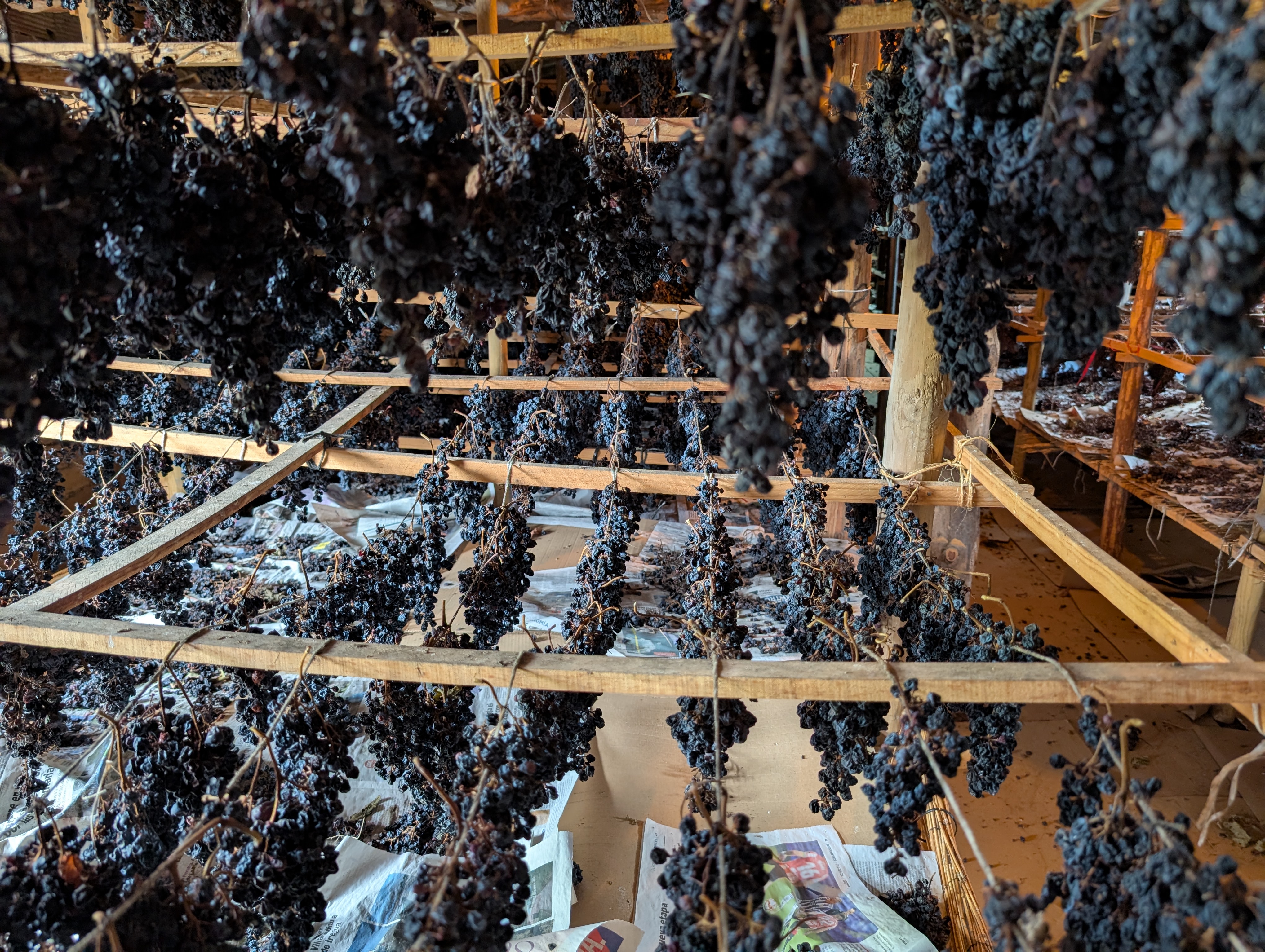
Mila takes us in her car up to a vineyard. This is an all-natural, all-organic operation, and all Ojuel bottles feature a different butterfly in honor of these pollinators. The contrast with the neighboring field is striking, these gnarled smaller vines with weeds tangled around their bases separated by a wall of vegetation from the monoculture beyond. (Grapes from the first few rows are sold to other winemakers who don’t care as much about purity, lest any pesticides have drifted in.) This plot’s history is deep, as a stone set here traces its owners back for generations and lists the varietals grown here, though two of the nine are not listed because they have been effectively lost to time. We learn of how Mila’s son Miguel did some oral history work, pulling out old wives’ tales of the supurao wine made for holidays and special celebrations in the youths of some village elders, and reproducing their methods by hanging grapes to dry to produce that rare beast, a delicious sweet wine.

For the tasting, Mila throws a few bottles in a tin pail and takes us on a walk to a couple tiny old bodegas dug into the hill, a gathering place where locals would create their own stocks back before mass commercialization, where people would gather for a few drinks in the climate-controlled holes slowly dug out with pickaxes. Those not associated with Ojuel are now rotting away, but these have been lovingly restored and put to use aging barrels. Ojuel rebels against the Rioja control board, experimenting with new things; at one point, Mila pulls out a turkey baster and dips it into a barrel so she can draw out some wine and offer it to us. This is deep winemaking, pulling on old tradition in ways that can now feel radical, experimentation and rejuvenation and daring to let things be different. Long live the Ojuels of the wine world, in firm revolt against the unthinking present and the decay of rural Spain.
After Ojuel, it is time to return to Madrid. Our Spanish road trip is smooth sailing, packing a lot into a few hours. Just south of Sojuela the N-111 winds along red cliffs dotted with green reminiscent of the American Southwest; soon, it climbs up a long cut through the Sierra de Cebollera, where spring is still in its earliest stages. We descend to the plain, try to figure out how the city of Soria functions when every single road is under construction, and then cruise easily across Castilla y León and Castilla-La Mancha, that rolling open green country that could have been dropped in from the Great Plains. Spanish highway etiquette is immaculate, everyone weaving in and out of appropriate lanes based on their speeds. Over four days of driving Google Maps has the occasional misfire where it sends us down some very sleepy, bumpy back lane and the narrowing of streets through town centers is at times harrowing, but all in all I enjoy my time behind the wheel in Spain.

Andrew and I get to do a circuit of central Madrid together and share one final meal before my very early flight out the next morning. Unfortunately this is where I hit the wall, so I do not have my reflections in good order that evening, but it has been a joy to take this trip with Andrew. We survived a two-week road trip together as we both shifted between phases of life in 2016, and we are able to jump back in and seamlessly do it again now that we have attained some modicum of professional stability. Of course sharing tight European lodging with even a good friend for ten days will reveal some neuroses and see us both cycle through moments when exhaustion or annoyance catches up with us, but we share a commitment to the pace, a hunger to eat and drink it all up in short order, and that can power us both through anything that might drag us down.

We are a funny pair here, more capable in Spanish than the vast majority of tourists, one who could pass for a German and speaks like a Mexican alongside a half-Filipino who speaks like an Argentine, and I am amused by how often we confuse people. At Ojuel, Mila tells us Americans are the best tourists they get, respectful and curious about experimentation and eager to spread the word to their friends. It is not hard to juxtapose us against the loud, boozy British who make no effort to speak Spanish and the famously insular French. The Spanish resignation to bad tourists is at its worst in San Sebastián, where some waitstaff continue to talk to us in awful English even when we demonstrate some Spanish capability, but when we show that clichéd American enthusiasm for taking stabs at new things in Rioja, the people we meet are delighted. Of course the American tourists who get to second-tier European destinations clutching Rick Steves guidebooks and lists of Michelin-recognized restaurants are unlikely to be of the same demographic as those who go to Gulf Shores for spring break; this filtering is not present among the British, for whom Spain can be a quick weekend jaunt. But I do think there is something uniquely fetching in an American hunger to absorb the European deep histories and cultures that our imperial reality so often buries.

I am on that nonstop search on this trip even though I don’t think I am ever quite at one hundred percent. I develop a gross nagging cough early on, while my back does not seem to like the backpack I wear; bad sleep, a sporadic but lifelong scourge of mine, returns at times. For a second straight trip I make a dumb mistake with my writing tablet, this time losing its stylus (replacement cost: a disgusting $150) on the first plane flight. Because of that I never hit the reflective rhythm I aspire to, don’t have my thoughts organized the way I should when Andrew the lawyer probes me about our trip or our world beyond us. I worry I am too much a chameleon, am not reflecting as thoroughly as I should on recent developments in work and in the personal sphere, am only barely scratching a few deep yearnings I find welling up within.

But that is alright. These annoyances show I know I have work to do, and I will do it at whatever pace I can. For now, I can smile easily as I think of two weeks well-lived, of a drift down Spanish streets, of good art and good food, a drive up the coast and a sip of special wine. A hearty gracias (and an eskerrik asko) to this country I have come to love, though after three straight years it is probably time to try somewhere new next. We have so much to explore.

Spain 2025, Part I: History’s Greatest Urbanists

This is the first in a four-part series. Part 2 | Part 3 | Part 4

Being out in big surf is dreamlike. Terror and ecstasy ebb and flow around the edges of things, each threatening to overwhelm the dreamer. An unearthly beauty saturates an enormous arena of moving water, latent violence, too-real explosions, and sky. Scenes feel mythic even as they unfold. I always feel a ferocious ambivalence. I want to be nowhere else; I want to be anywhere else. I want to drift and gaze, drinking it in, except maximum vigilance, a hyperalertness to what the ocean is doing, cannot be relaxed. Big surf (the term is relative, of course—what I find life-threatening, the next hellman may find entirely manageable) is a force field that dwarfs you, and you survive your time there only by reading those forces carefully and well. But the ecstasy of actually riding big waves requires placing yourself right beside the terror of being buried by them: the filament separating the two states becomes diaphanous. Dumb luck weighs heavily, painfully. And when things go badly, as they inevitably do—when you’re caught inside a very large wave, or fail to make one—all your skill and strength and judgment mean nothing. Nobody maintains their dignity while getting rumbled by a big wave. The only thing you can hope to control at that point is the panic.

-William Finnegan, Barbarian Days (Against Dereliction)

On my recent trip to Spain I spent a little time mesmerized by the skilled surfers off Zurriola Beach in San Sebastián. Old friends and readers of my writing will know surfing can enrapture me, inspire words that go far beyond the exploits of a beach bum on a board. It is a feeling known to anyone who has ever given himself over to something beyond him.

The passage above, while less immediate in its death-daring fear, approximates the dream state I enter when exploring a European city on foot. I feel it all deeply, want to wander without a map, one with thousands of forces that flow of their own accord to weave together into the fabric of an urban life. Gifted thirty jetlagged hours in Madrid at the start of my trip, I pick out one museum for a visit, but I am mostly here to wander and explore.

Madrid is a city of seven million people, and yet most of its great monuments are reachable by foot. The Plaza Mayor and the Puerta del Sol are the humming hearts of the city; down the Gran Vía and Calle Alcalá, luxury brands take up shop in ornate buildings, a pastiche of revival and art deco architecture. On the west end sit the monumental palace and cathedral, while a series of arches in traffic circles (puertas and glorietas in Spanish, far more melodious) ring the entrances to the city center. To the east and southeast are the great museums, the Prado and the Reina Sofia and the Thyssen-Bornemisza. Great green spaces bookend the Centro, the sprawling Parque del Buen Retiro to the east and the lush Campo del Moro below the palace to the west. Strewn between are neighborhoods of life and culture and history, La Latina and Letras and Chueca, plazas dotting them to open up the narrow streets and give people places to settle at tables for a drink or a bite. Fountains flow and statues stand guard and that central Spanish sun beats down on the scene.

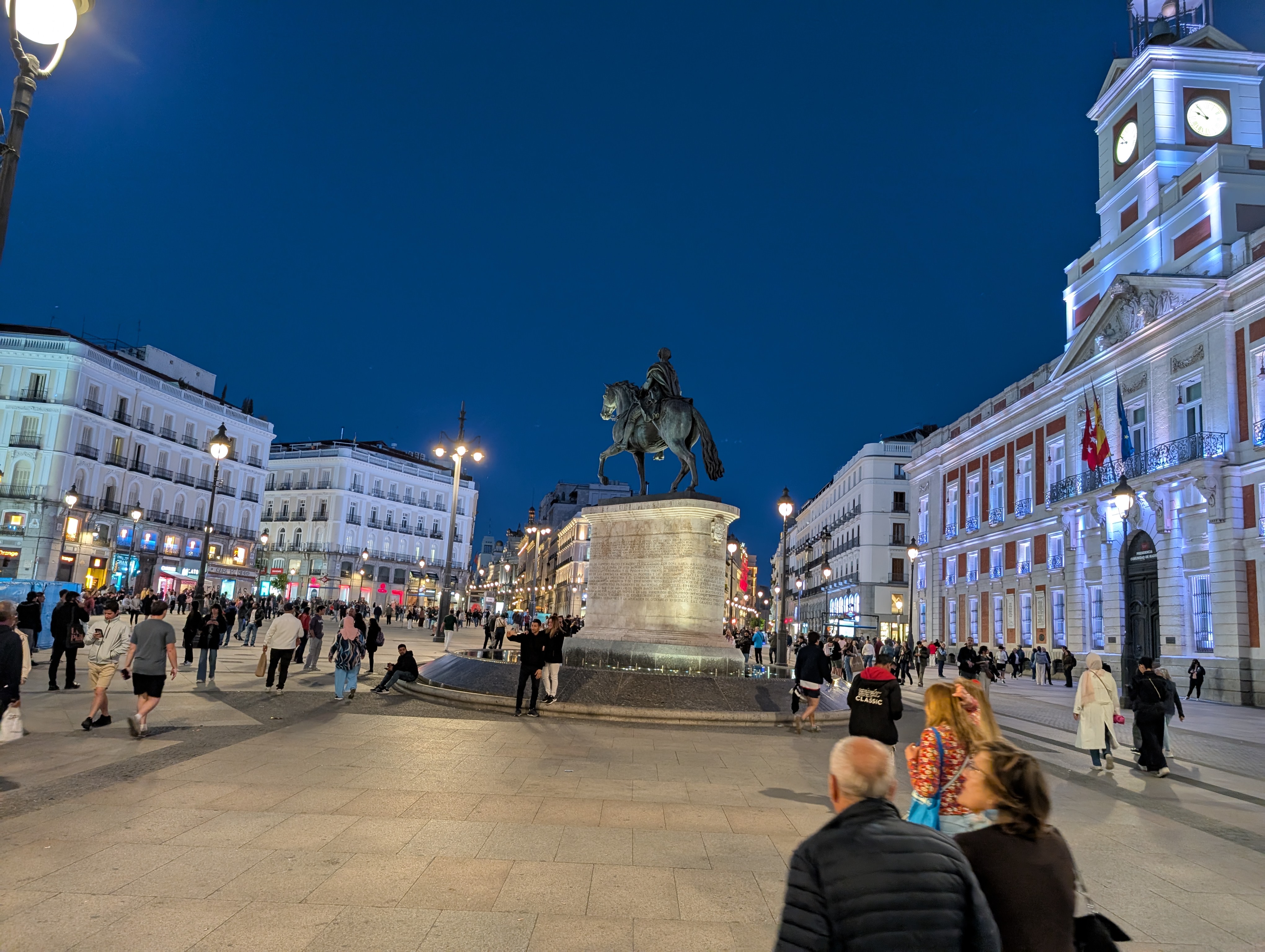
And so I re-immerse myself in that Spanish urban rhythm. I revisit a good brewery here and a fun restaurant there from my previous visit. I pause to read sign boards and take unexpected turns when piqued, and I sit in some churches and gaze upward in awe. In the Plaza Mayor, a stage has been set up and trucks are unloading kegs for the celebration of the Feast of San Isidro, which I will miss by one day. In the Puerta del Sol, lit up for the night, I sit for a spell and feel the rush of freedom that comes at the start of a new great trip, enchanted by what the Madrileños have designed here.

The Spanish are, after all, history’s greatest urban planners. It is difficult to find any Spanish town, no matter how godforsaken, without a walkable grid at its core and a pleasing central square and a couple appropriately scaled monuments: a church, a government building, some statues or fountains. Small, specialized shops are everywhere, selling food and technology and books (so many bookstores!) and just about any basic need within an easy walk of home. They make ample use of arcades, a superb and underused design feature, especially in hot or wet climates. Their housing is dense but not overcrowded; the apartment blocks in the suburbs, while not aesthetically pleasing, provide ample housing and are well-connected into the city.

These characteristics are not uncommon across Europe, but Spanish innovations endure. Whatever else one may say about their colonial exploits in the Americas, the Spanish did very intentionally export their urban form over the better part of two continents, and those plazas and zocalos will live on from Buenos Aires to Santa Barbara long after anything Bob Moses built gets replaced and the high modernists get consigned to the museums where they belong. More recently, the Spanish have built a train system that is the envy of the Western world, high-speed AVEs flying about, full lines built for the cost it takes to lay three ties on the California High-Speed Rail project; in Barcelona, the subway arrival time boards count down to the second. When I recently heard a joking proposal that we fire all train planners in the United States and replace them with Spaniards, I found myself nodding in solemn approval.

Besides the timeless aesthetics, Spanish cities understand something about human nature. An innate curiosity to peek around a corner, slip down an alley, emerge into a square. A simultaneous desire for order and ornament, a stable foundation topped by some of the flair that makes life fun. Spaces where adults can sit at tables and talk while the youths gather in another corner and younger kids can just dart about, all free to intermix while also carving their own little spheres. Spaces for God and spaces for hedonism; spaces for government and dim alleys to escape it. Meals are a progressive feast, small plates to escape gluttony, a free bite with every drink. Spanish city centers are a pleasure to stroll through, a pleasure to linger in, the place everyone wants to hang out instead of alone in little boxes every night.

My visit to the Reina Sofía modern art museum confirms my belief in Spanish urban thinking. How, exactly, does an art museum reflect values in city planning? Well, in it, I find a healthy heap of the original versions of designs I remember from introductory urban planning texts, from Garden City drawings to Le Corbusier’s schemes, along with plans for Madrid and Barcelona that seek to update these great old cities with grids that can sustain modern living. In a museum with relatively few non-Spanish works, the curators have seen fit to collect some of the most iconic pieces in the history of the field, show how their country then took those ideals and adapted them to their own towns. For the Spanish, urban planning is an art, worthy of its own wing just down the hall from Guernica.

Like its more classically inclined compatriot, the Prado, the Reina Sofía largely leaves out anyone who is not either from the country or in some way tied up in its history or artistic movements. Picasso and Dalí take center stage, but here also are Joan Miró and Juan Gris and adjacent surrealists who made the art world churn in the early 20th century. The temporary exhibitions include the funky sound artist Laia Estruch, a reasonably well curated collection of art attempting to subvert narratives associated with Spain’s colonial history (here I am pleasantly surprised to find art and video from a Mexican Zapatista community I have visited), and a painter named Huguette Caland with no obvious tie to the country who does hold the attention, sitting at an intersection somewhere between Picasso and Georgia O’Keefe, with the occasional sprinkle from the Middle East.

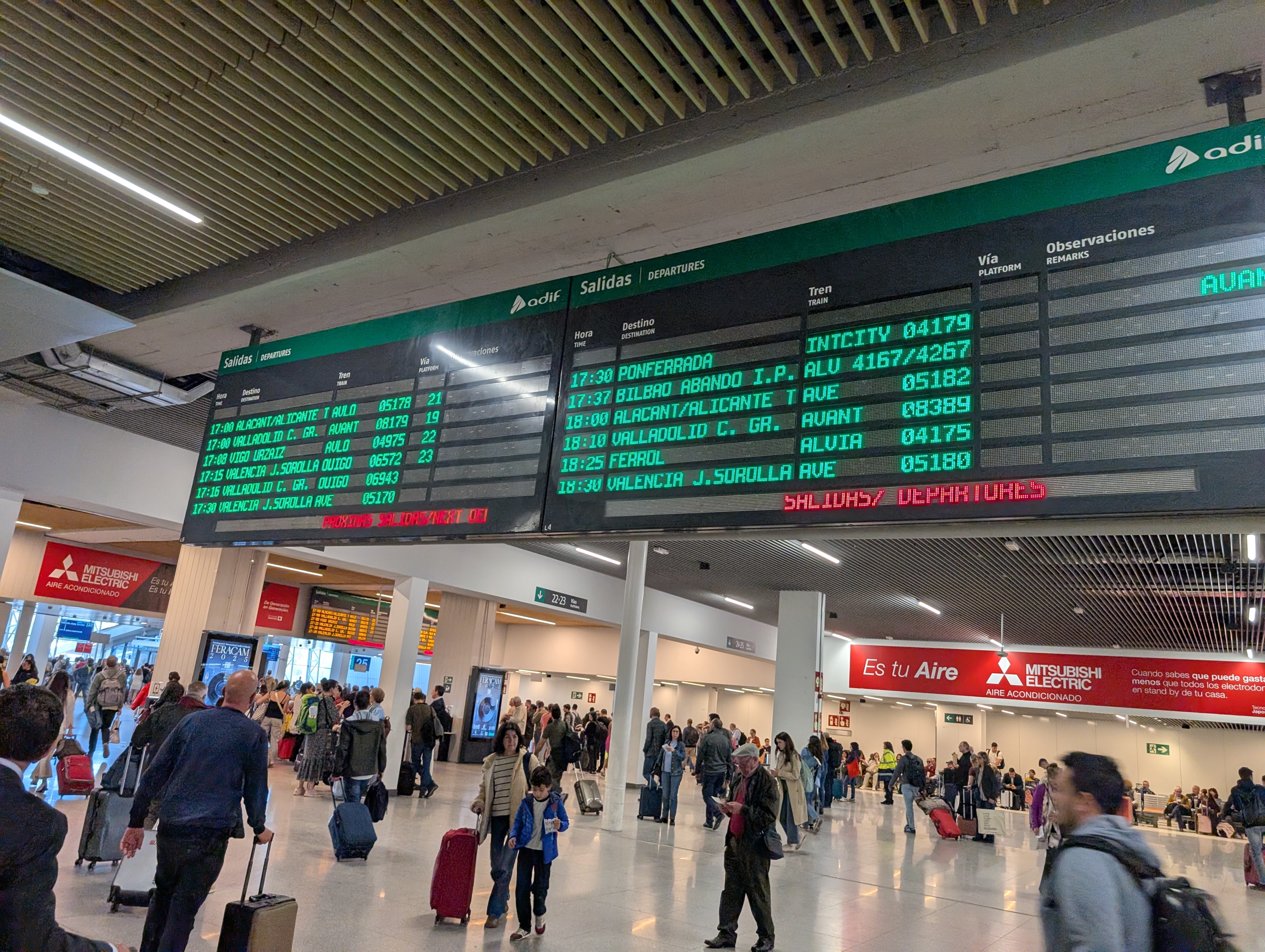
After my museum visit and a leisurely lunch on the Plaza Tirso de Molina a few blocks from my hotel, I head for Chamartín train station to get a taste of that great train system. It runs like clockwork, trains humming out every few minutes, and this isn’t even the busiest station in Madrid. The train I take rockets north, through tunnels under the Sierra Central and across the savannas of Castilla y León. The rain falls steadily on my train across the Spanish plain, through Segovia and Valladolid and Burgos and the smaller farming towns between them. The cities feature large industrial parks and larger apartment blocks, a somewhat bleak Spanish heartland.

When seen by train Spain feels like it is in a different stage of development, still suspended in an agricultural and industrial state instead of deep in the knowledge economy. In some ways this does not feel like a terrible tradeoff, with less job disruption and a healthier small business sector, with fewer basement-wage service jobs and a step of removal from the tech obsession and paranoia now gripping American culture. The only things that hurtle at maximum velocity here are the trains.

Still, it is a tradeoff: prior to the Great Recession, wealth in Western Europe’s leading economies (of which Spain is not really one) was basically on par with the United States. Now, American GDP growth has left Europe in the dust over recent years. Coming out of the recession, Angela Merkel’s Germany imposed bad austerity economics on the continent while the U.S. gave its economy some halting stimulus, and already higher energy prices have since been exacerbated by the war in Ukraine. Tech has been an engine of American growth, while Europe has maintained a skepticism of that whole push. Throw in a strong dollar and it’s easy for an American to feel relatively affluent in Europe: even with some exchange rate rebalancing amid a trade war, prices on most things still feel like a bargain, especially since Europe eschews the absurdity of tip inflation. Real estate in downtown Madrid is expensive, but under conventional American loan terms I could make a play at it with my current salary if I really wanted to. Doing the same in New York or Washington would be laughable.

There are still many reasons, some empirical and some subjective, to prefer European choices over the American growth-at-all-costs machine. But there are serious long-term implications for that widening income gap and what it will take to sustain those European welfare states. What the economy gains in preservation of the past, it can lose in any sense of dynamism; youth unemployment is an actual thing here. A loud soccer bro on his phone two rows behind me on the train, speaking in a Gen Z English punctuated by an appropriate number of fucks and bros, thinks his future is elsewhere. The question looms: how next will the Spaniards reinvent their cities and networks to meet the world they now live in?

Part 2 is here.

Europe 2023, Part III: Out on a Peninsula

This is the third in a four-part series. Part I | Part II

After seven days at sea, the cruise ship disgorges my 41 family members and me in Barcelona. While our inevitable dispersal brings a magical week to a close, I am glad to be free from Royal Caribbean’s controls on my movements. A little more space, wandering back at our own pace, ready to explore two more cities that have set themselves up well for me to like them.

Barcelona is both the capital of the Mediterranean basin and the standard-bearer for modern Europe. Though there is some graffiti around town trashing tourists, it is certifiably alive in ways that museum pieces like Venice or straining old metropolises like Rome are not. It has reinvented itself dramatically over the centuries: Roman roots, a Gothic core, a grand City Beautiful charge from the 1800s embellished by Gaudí’s ornamental flair, and a cosmopolitan boom in recent decades that has it pulsing with young life, beaches and clubs plus art and architecture, enough Catalan ingenuity to keep it from becoming a stale playground for the wealthy alone. The buildings are stunning and quirky but functional, the trains run on schedules to the second, and the food and drink have little competition. The three Duluthians in our party stay across from the old cathedral on two pedestrian Gothic Quarter streets, a maze that loses none of its luster even after a week of meandering cities with similar appeal.

Barcelona is not without its warts. There are pickpockets afoot, and I have a bizarre interaction with a man who tries to scam me with a Metro ticket before I rather unwittingly turn the tables on him by only having five Euros in cash in my possession. The Catalan separatist struggle, while invisible on this visit, drives at the heart of the European tension between lofty universal ideals and local tribal pride. Even FC Barcelona, after reaching new heights in fútbol achievement a decade ago, now flounders in debt and corruption after overreaching as it tried to keep up with the Gulf and Russian oligarch money that has besmirched the sport across Europe. Barcelona is also a very raunchy place, which is not in and of itself a defect, but any edginess does rather wear off when one passes a tenth little shop selling t-shirts with the same trashy slogans in English. Some bits of culture are, alas, universal.

Grumbling aside, Barcelona is still a special place, the city a whole continent wants to think it can be. It also has some reminders of home, as I have a quick rendezvous with friends from Duluth who are also passing through and then visit Black Lab, a brewery owned by a Duluthian who makes some of the best beer we find in our wanderings. My cousin Steph and her husband Kyle lead me on a sampling of vermut at a quiet neighborhood bar north of the city center. A rooftop tapas dinner is the last 10-plus person family gathering on the trip, and the desserts, including the beet ice cream with a cake and the very cheesy cheesecake and the ice cream dish featuring a tray with several vats of the stuff with cones and toppings, are the winners. The next morning we make a circuit of Parc Guell, Gaudí’s experiment in a meandering pleasure ground where visitors have no real agenda other than to stroll its pathways and lose themselves in a mix of naturalism and neo-Gothic design. Tapas lunch comes a few blocks from the Sagrada Familia, the magnum opus of the architect who gave this city its flair, slow but steady progress evident in the 19 years since my last visit.

The group slowly disperses from Barcelona: many straight back to the States, some to linger here or nearby on the Balearic coast, a few back to Italy or off on lengthy tours. For my mom, her partner Doug, my cousin Rob, and me, it’s a ride on the AVE high-speed train across the Spanish plain to Madrid. The train hums with power as we shoot over the meseta at 300 kilometers per hour, through small towns with hilltop castles and churches, olives and grapes, and a lot of windmills that look unlike anything Don Quixote would have encountered in his wanderings here half a millennium ago. At times the landscape is so barren as to evoke, say, eastern Montana, but before long we are edging into Atocha station in one of Europe’s great former seats of imperial power.

Madrid will never quite match Barcelona’s underlying cool, but it is a delightful place. Even though the kings based here dominated most of a hemisphere for centuries, it lacks the consistent grandiose scale of a London or a Paris or even a Rome. The Palacio Real sits starkly alone on the edge of the city center, surrounded by gardens; the Plaza Mayor is one of Europe’s more cloistered central squares, with no 19th century grand avenues punched through its colonnades. The Parque del Retiro is sprawling, but its green cover likewise encloses a certain intimacy, and while there are other triumphant arches and plazas scattered about, they seem to blend with the city, opening up logically even when they may seem haphazard from a bird’s eye view. Quality urban form is, of course, one of Spain’s great triumphs and exports to its former colonies.

Spanish culture is, if not insular, decidedly peninsular. This will happen to a nation that mired itself in inquisitions and counter-reformations as liberalizing advances made their way across the rest of Europe, but the view from 2023 is one of a place distinctive in its flavor, a collection of fairly stable local cultures that share a political system out of Madrid but often little else. Modern Spain is much less unified than France or even Italy, the difference obvious enough even in simply visiting its two largest cities. Madrid and Barcelona feel like different countries, and then there are the Basques and the Galicians; our last dinner comes at an Asturian restaurant, a nod to the lush pocket of the northern coast where apples and cider reign supreme. And that’s all in the northern half of the country alone, skipping over the massive Moorish influence in sunbaked Andalucía.

We spend a chunk of our first full day in Madrid touring the Museo del Prado. The Prado, while massive, does not have the worldliness of the Met or the Louvre or the British Museum: here, Spanish masters like El Greco and Velázquez and Goya still reign, alongside some associated Venetians and a few Dutch masters who drifted through the Habsburg orbit. In the Prado, Spanish artists and imperial collectors gathered works of nobility and religious iconography, but little else. To tour the Prado is to view countless Assumptions and Immaculate Conceptions and Passions, alongside myriad temptations of saints and looming sin. And yet there is still incredible range on display, from the cluttered fever dreams of Hieronymus Bosch to the stark austerity of Velázquez’s Jesus on the cross, from the subtle mastery of Las Meñinas to the empathy in every Goya portrait. Another gallery stages El Greco next to Picasso, showing ties across generations between artists who, at first blush, have nothing in common. The Prado’s collection, more than any royal language academy or stuffy French defense of certain standards, is the epitome of a cultural patrimony.

Otherwise, most of our Madrid time is devoted to wandering, with stops in the Basilica de San Francisco, the cathedral, and in the Corte Inglés department store, where I buy a new suitcase. We find the statue of Cervantes in the Plaza de España and educate ourselves on the various Carloses, Felipes, and Alfonsos seated on horseback around the city. (I muse as to whether the Felipes could have prevented the decline of the Spanish Empire if they spent less time posing on horseback.) The streets of Madrid feel safer and better tended than Rome or Barcelona, though there is still an element of the absurd, with busking accordionists playing the same eight tunes or people dressed in giant panda or Mario costumes at nearly every attraction. (How they live in these things in 90-degree Spanish summer heat is beyond me.)

One could paint staid, imperial Madrid as a tired counterpoint to sexy Barcelona and its beachfront brethren, but when the sun goes down, Madrid shows out. The routine across three straight nights here is the same: after siesta, tapas and wine, with dinner extending through to midnight. Traveling with Rob means we have nonstop great food, and instead of sitting for dinner for hours as in Italy, here one can drift about for tapas, served almost immediately and savored slowly, a movable feast whose style I would gladly import across the pond. We continue our bold quest to find decent Mediterranean basin beer and have better luck here than anywhere else, including from a brewery named Oso whose bear-head-on-hops logo eerily resembles one in Duluth. My European culinary apogee comes at Juana la Loca, a tapas restaurant that was high on Rob’s list and turns out to be just one block from our Airbnb off the Plaza de Carros. The truffles, crab, and foie gras carry me away to a blissful place, and we walk off the meal with a stroll to a nightcap at a mezcal bar with the prettiest menu I’ve ever seen, with a detour for some people-watching at blocks-long line outside the one nightclub that apparently attracts every single Madrileño youth.

I am pleased to find my Spanish still perfectly functional once I kick off the rust, though plenty of Spaniards still open conversations with us in English, which I suppose is our blessing and curse as native speakers of tourism’s universal tongue. Still, there are moments of pride: at one dinner, Rob and I proudly order in Spanish before realizing there is an English menu if one scrolls further down; we sit between a loud British couple who demand the biggest beer available and a group of Indians who scandalize the waiter by asking for red pepper flakes. With competition like this, we are model tourists, blending smoothly into a country where I’ve scarcely spent a week.

Even model tourists must go home, however, and after three nights in Madrid, drained by rotating through my modestly sized Italian wardrobe and still anxious about my bag, I am ready for a return journey. If things go according to plan, I will be back on the Iberian Peninsula before long, ready to sample more of its diversity, more of its tapas, and more of its inviting streets before the siesta calls. I have no Spanish blood, but as the child of a Spanish professor and someone who studied in Madrid some 40 years ago, and this peninsula feels like a natural extension of my life.

Part Four is here.