Arrival in Florida feels like one prolonged wait. Upon landing in Miami, my mom and I undertake an arduous trek to the rental cars. A four-hour drive means our entrance to the Keys comes in darkness, a journey across suburban strips and swamp and long, lonely bridges into the night. We are on a journey to celebrate my mother’s retirement, freed from city politics and social service provision after many long years at the Duluth Public Library. We’d planned a version of this trip in April 2020, but after the world intervened then, we are now free to do it well.
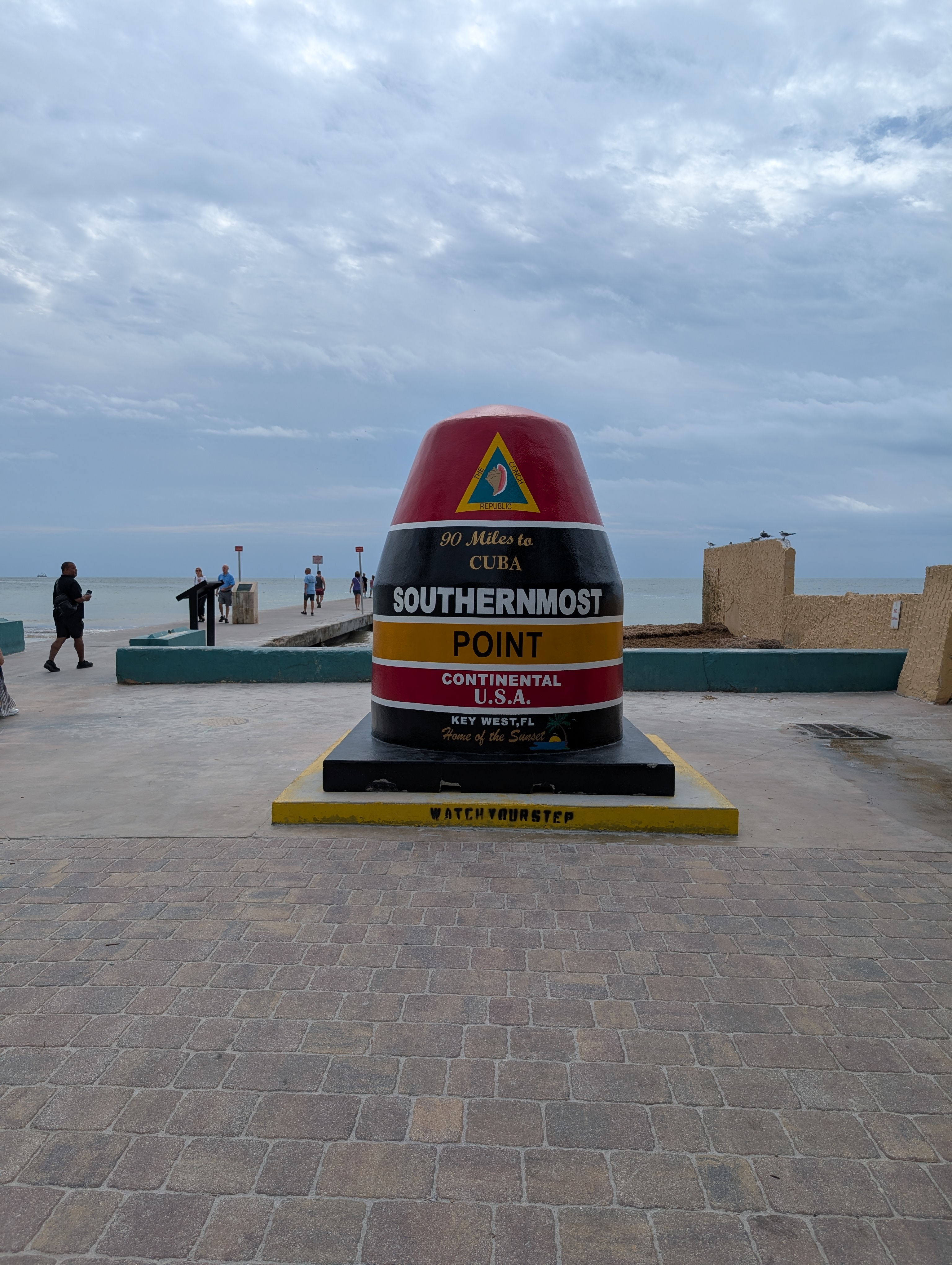
At the end of the bridges sits Key West, a land of tasteful bungalows and grand verandas, the whole island colored by a tropical languor, the stately repose of a retreat at the end of the road. Grey skies put it in a sense of slumber, a promise not quite fulfilled upon arrival. We are here midweek in the offseason, but the party goes on every night at Sloppy Joe’s and Captain Tony’s and a few dozen other tiki bars along its main drag. Duval Street is a Bourbon Street for middle aged white people, live guitars in every bar and beer and cocktails around every corner. A power boat race is in town this week, with souped up trucks to match; just about every man looks like he is here to fish. Here there is some risk of paradise as a commodity, a repeat soundtrack of Bob Marley and Jimmy Buffett, endless references to the drinking that will happen here. I am not here to fish. I am here to have a few drinks, but we are not exactly set on shutting down the bars, either. I am not really here to escape, but instead to take a pause that lets me write, be with the companion I’ve traveled with more than anyone.
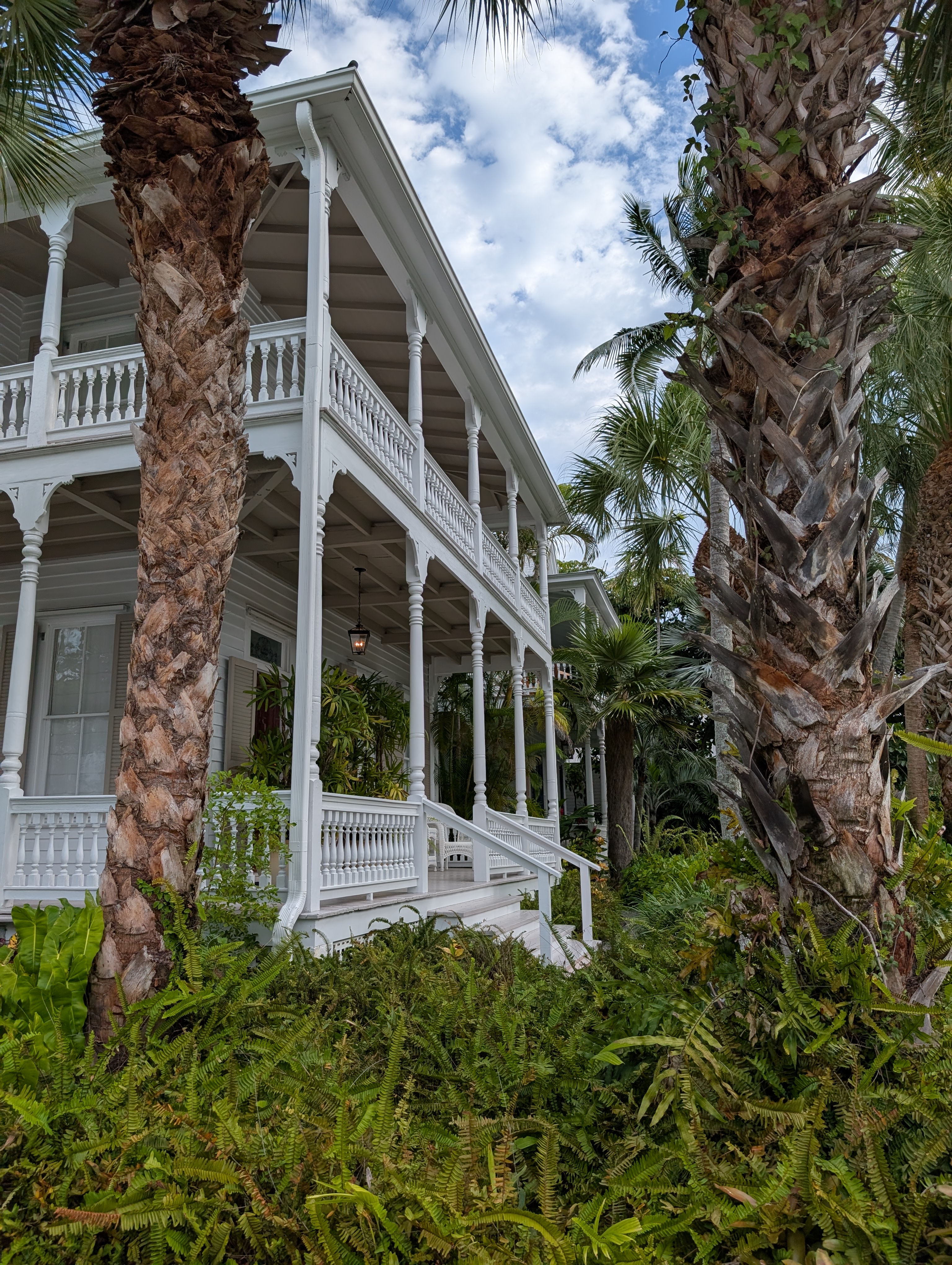
We take up rooms at the Eden House east of the city center. The rooms themselves are tight ground floor spaces, but I am of the camp that doesn’t much care about the interior of a hotel room beyond the basics: it is a launching point to go do other things. The Eden House’s pool deck has seating for all types, and a second story veranda is the hotel’s steal, one of those venues for Southern graciousness that is too often lost from later architecture. I sit out here and write three ways at once, this post and a possible follow-up and some musings on where my fiction goes from here. This town has punched above its weight as a retreat for writers for over a century, and I can only dream to catch a hint of that inspiration.
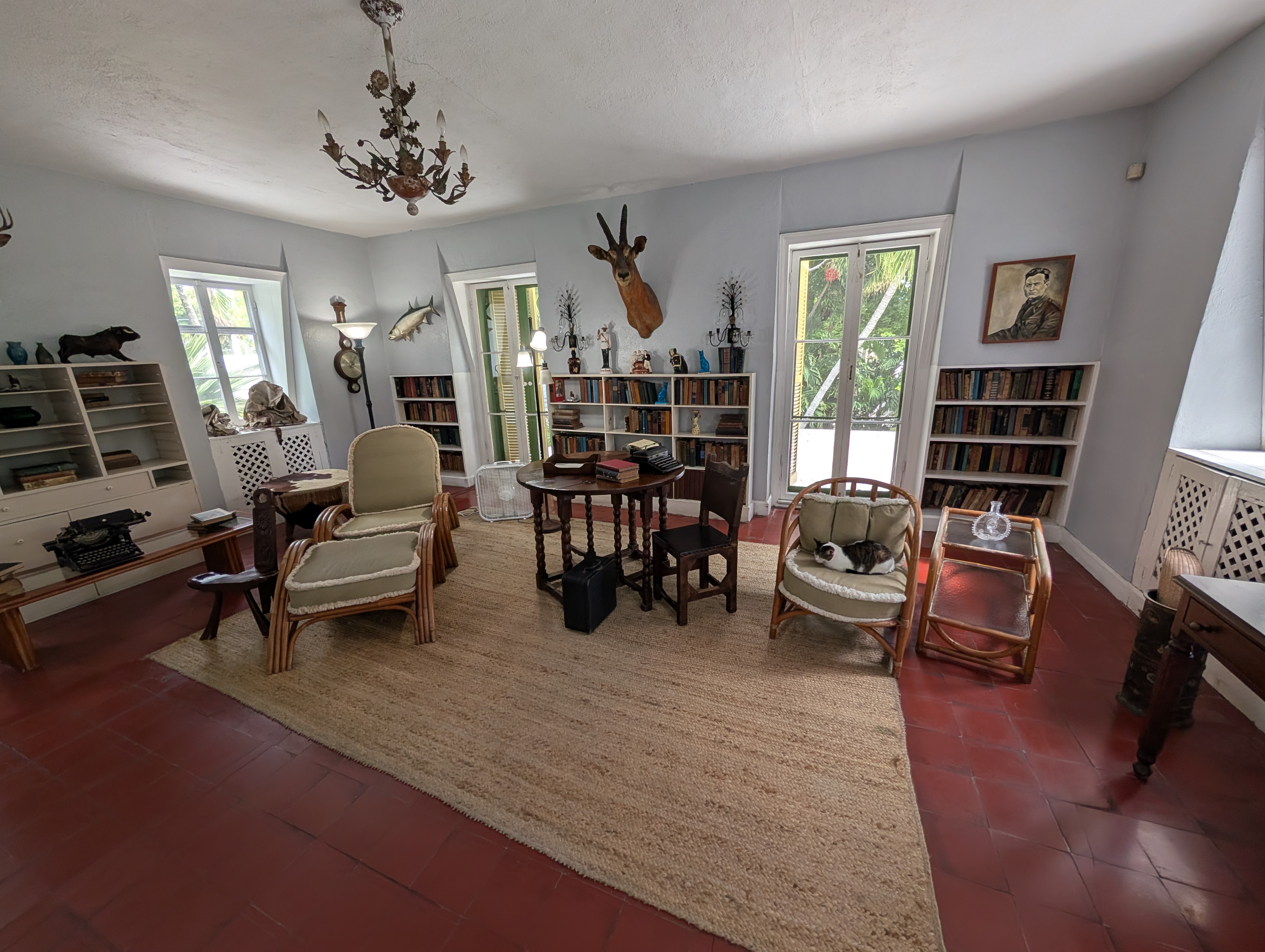
The Hemingway House is the highlight of Key West. The 61 cats prowl about and the writing studio sits in repose, books and typewriters and trophies from a life without limits, mementos of boxing and bullfights and fishing trips and safaris far afield. Here I find some of that awe, this time at that masculinity unleashed: the women and the parties for a warrior and a thinker, a man drawn to the questions of his time and the places where the action was, his pursuit straight up to the edge and then straight over it because what other way is there to live? Here the old man met the sea, fought it at times, churned out many of his greatest hits. He produced a legacy that smashes the underlying tragedy. The cost may or may not have been inevitable but it is a reality and it does just boost the mystique.
Ernest Hemingway’s crisp clarity defined modernity, his simple precision that can lead a 21st century reader to swoon about trout fishing in the hills above Pamplona or bring a pack of Two Hearted Ale to the mouth of the Two Hearted River in Michigan. (Yes, I have done this.) Joan Didion taught herself to write by copying down his sentences, and I have taught myself to write by toying with Joan Didion’s work. Of course from certain lenses Hemingway’s life can now be judged or even canceled; artistry with prose faces some headwinds in a flattened world of AI summaries and messages dumbed down to the lowest common denominator. Moreover the Hemingway mystique can swallow the human tale beneath, the depression coursing through his work turned into some tragic heroism that satisfies a certain narrative of tortured genius. As a writer whose instincts are not all that depressive I wonder if I’m missing some key ingredient that I would prefer to never have, but I decide I can make do with that tradeoff.
The cherished home of a long-departed author underscores the permanence of words. Sure, the novel may lack the cultural power it had in Papa’s prime. But fifty years from now no one will be watching TikToks made in 2025. They will still be reading Hemingway. Putting down words creates a record, both in print and in type, that the ephemeral world of live video does not. Of course there are some snippets that will last, but the power to both capture and interpret, provide witness and critical distance, will remain all the stronger.
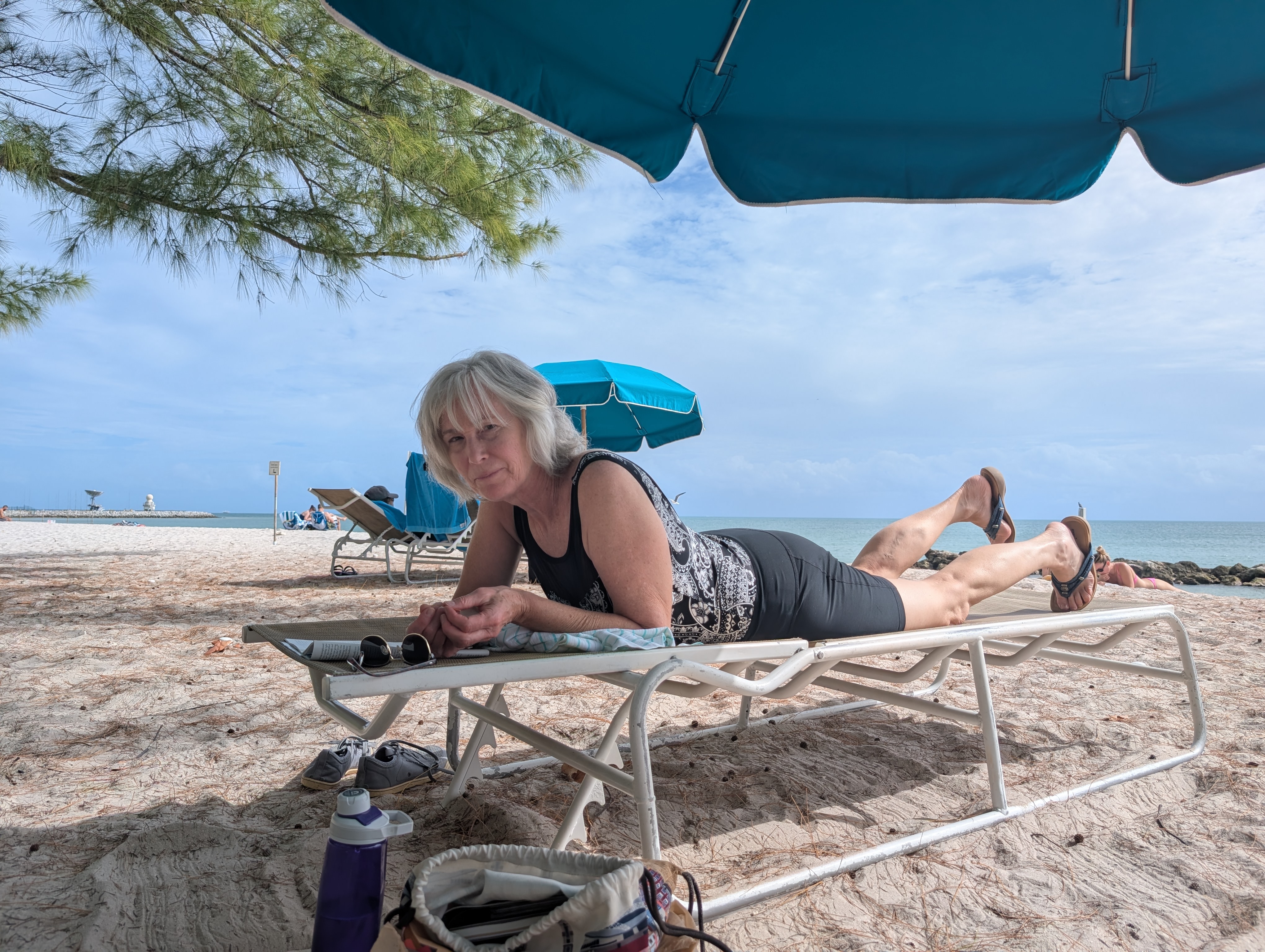
It would be easy to look around at the denizens of Key West and draw a harsh divide: us few, proud people of words who stand athwart the vapid party, immune to the siren call of the anomie of endless swipes. On a certain level I do believe some version of this argument: that is the point of a conviction. But there can still be pathways in for anyone, and pulling up the drawbridge to hold on to a snooty high culture isn’t going to change it. I instead prefer to own it, sit on a beach reading or writing and make it look good, share the best snippets here and there. And for anyone looking for a way in, Hemingway’s deceptively simple prose and chasing of great adventures isn’t a bad place to start.
Slowly, Key West shows more as we scrape beneath the surface. We visit Judy Blume’s bookstore, wander in search of beers and a spot on the beach beneath a soft curtain of an Australian pine’s wispy needles. Truman’s summer White House is here, and the ferry to Dry Tortugas beckons for a future visit, perhaps when the campground facilities are not shuttered thanks to a government shutdown. We tour the Audubon House, never visited by its namesake but a keystone for the preservation of Key West’s grace, a spendy preservation movement that nonetheless keeps it a step removed from sinking into the tourist trap ensnaring much of the rest of the Keys. The Conch Republic puts in the effort to maintain its independence.
After three nights on Key West, we are on the move again. This, I think, is my style of travel: a meander up an island chain, flashes of both wilderness and city, parts unknown and the center of the action. As we drive up the Keys we stop at a state park for halfhearted snorkeling, a bit of beach time, a stroll up the old railroad bridge that first knitted the islands together. Later we pause at a roadside carnival show named Robbie’s, where we feed some tarpons and see some manatees and dodge the scavenging ibises and pelicans. From there we are off through the wet lowlands and back to Miami.
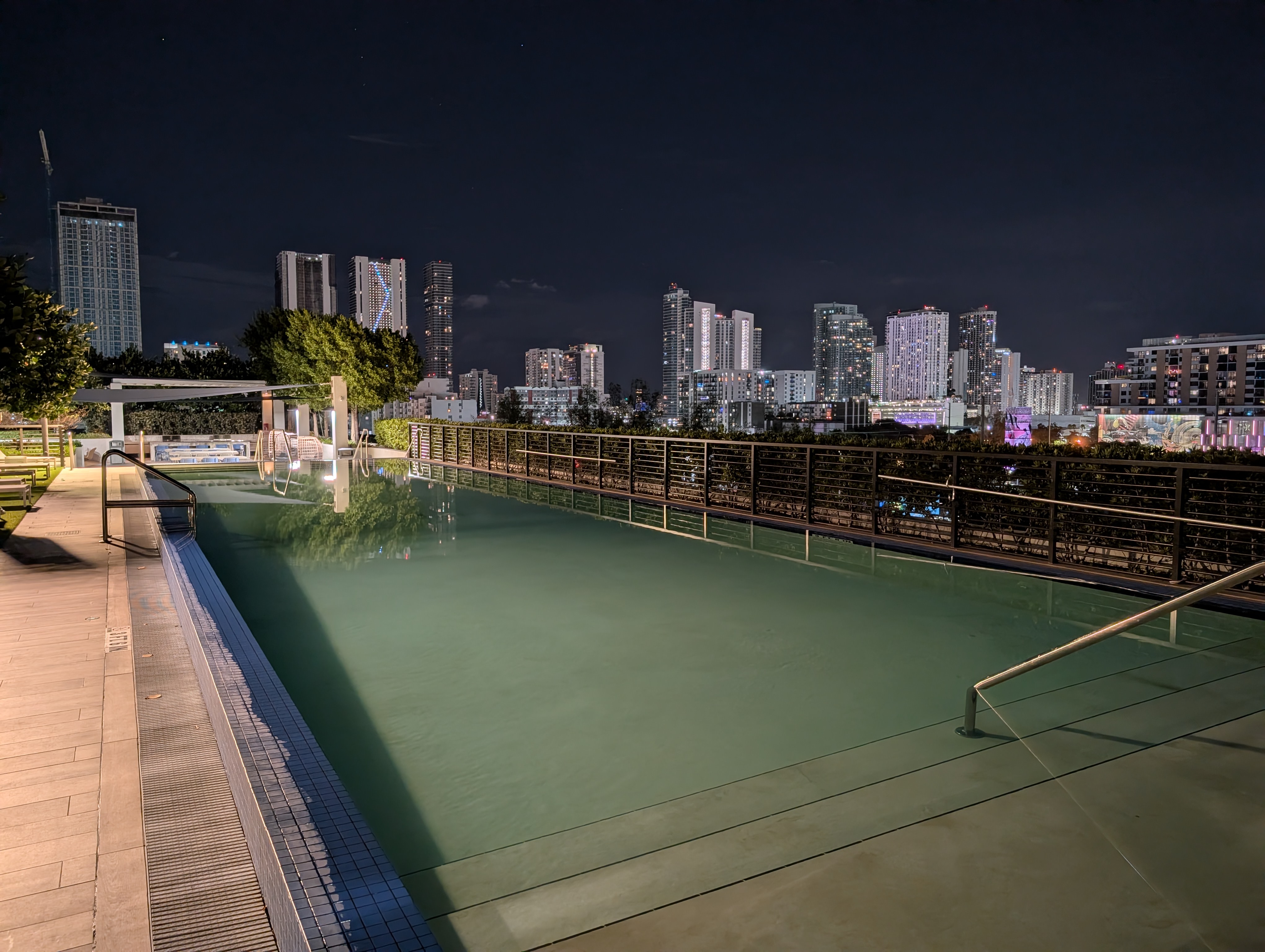
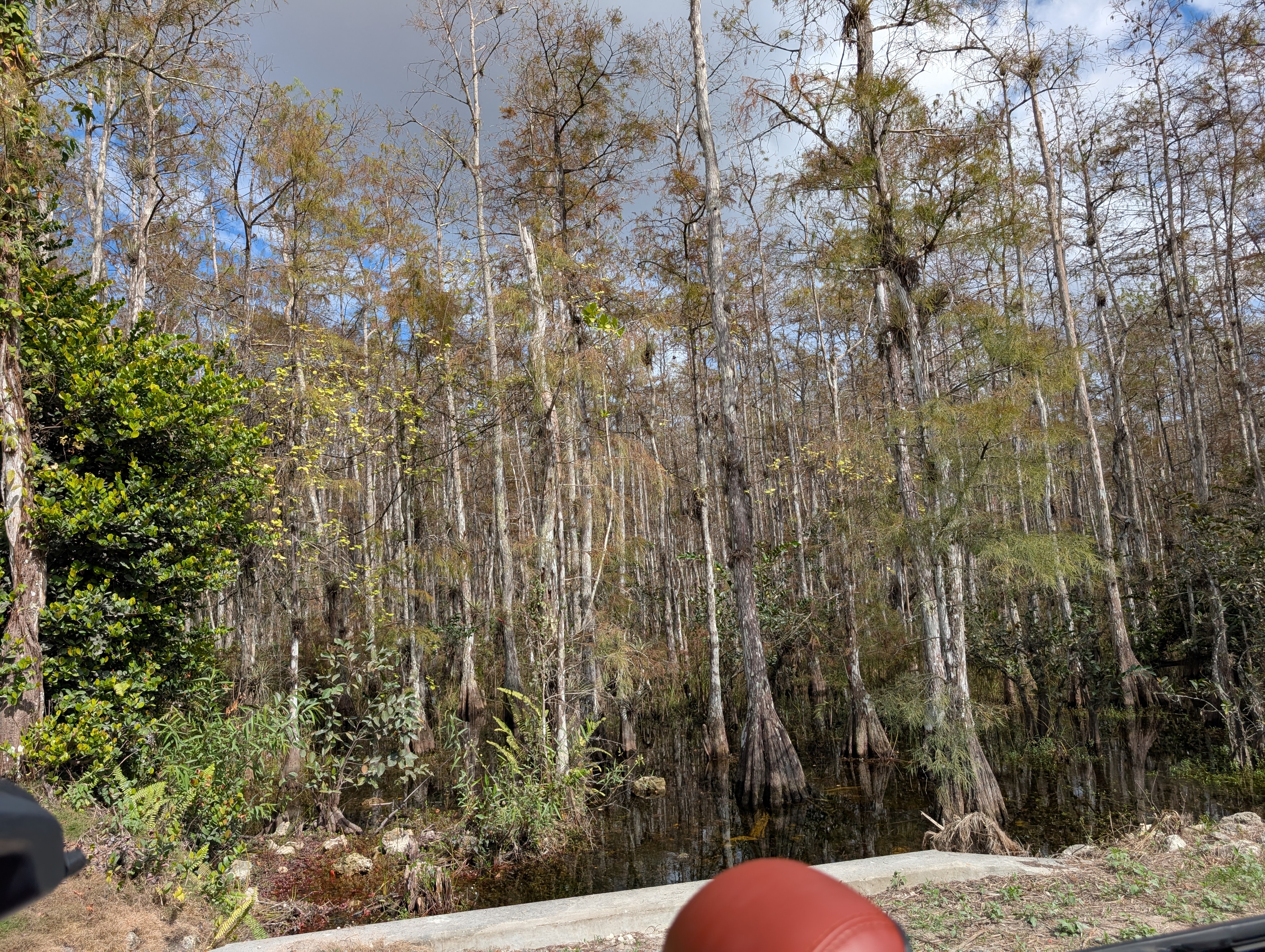
In Miami the skyline glows as warmly as many of the well-toned bodies, but for all the glaze it cannot quite hide how it is paving over a swamp. On our second to last day in Florida we immerse ourselves in that swamp and shoot up the Tamiami Trail, a 1920s causeway that colonized the interior of the Everglades. Even now, it is a wild place, the kind of locale an ambitious xenophobe would set up a migrant internment camp. (Sure enough, loud signs announce the presence of Alligator Alcatraz.) South Florida’s history is a series of battles against the rising waters, a desire to tame them and cut back that thick, oppressive brush to replace it with orderly rows of palm trees. This region’s boosters sought to roust the beasts who live in these swamps and the last people who hid away in these refuges, or at least tame them into a roadside attraction.
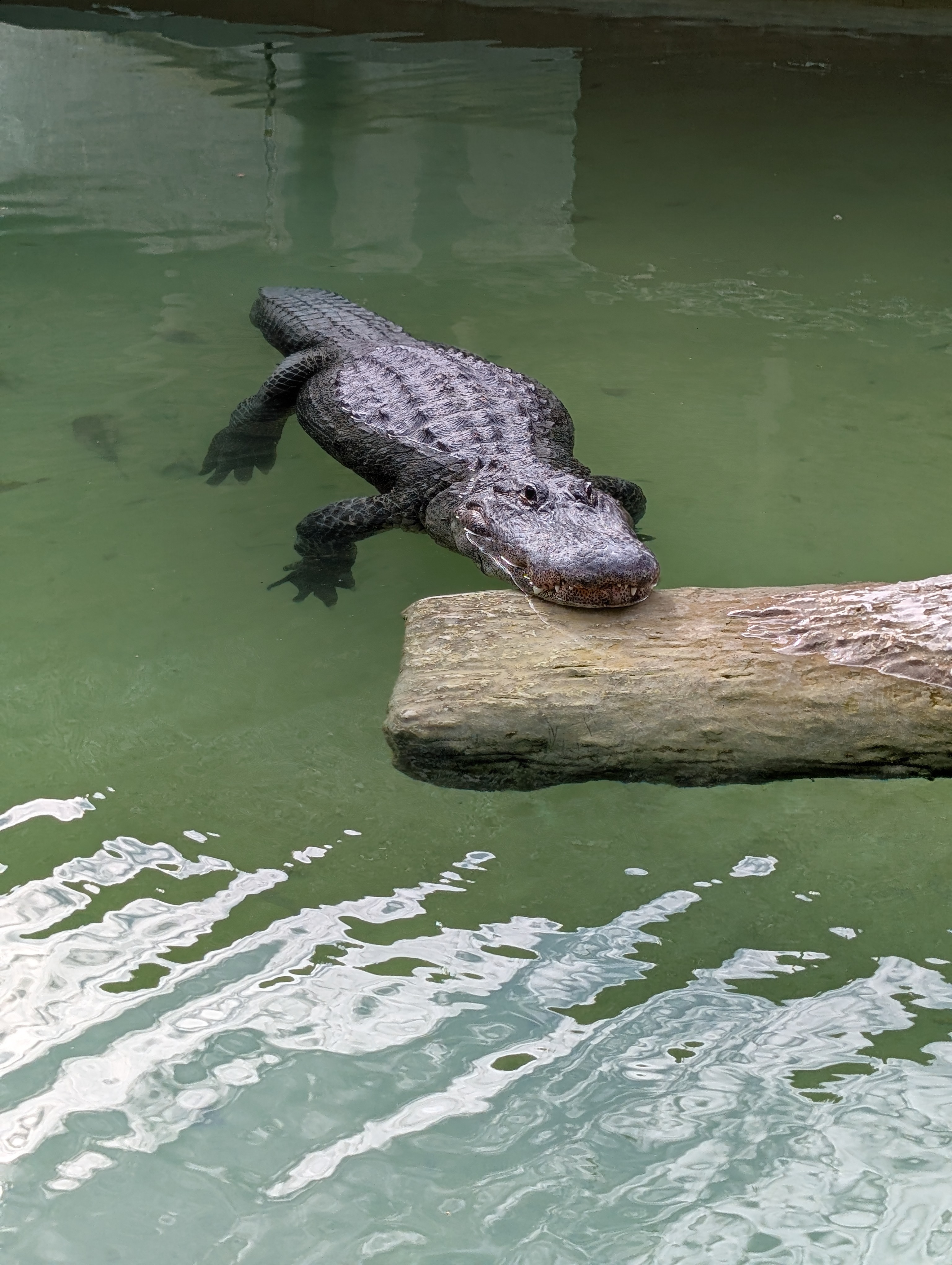
A circuit on the Big Cypress National Preserve’s loop road is a safari through a menagerie of birds, a few dozen alligators, and a slow roll through everything from dense watery forests to reedy cypress savannas to a tangled mass of endless scrub. It contains a wildness and a secrecy that the open West cannot match, the eyes only so much good in trying to explore it. Even a short hike on a nature trail leaves a little claustrophobia, a question of what might lie around the next bend, the mosquitoes rising up and some mysterious scat marking territory in the middle of the trail.
On the way out we visit the Miccosukee, a Native tribe that battled the U.S. government beside the Seminoles and later retreated deep into the swamp to retain some independence for as long as they could. Their roadside attraction of a village is sleepy today; the expected tour guide never appears. But the camp is well-tended, the museum behind carved alligator doors tells the story well enough, and a show demonstrating how to properly tame one of their rescue gators is a window into a different world.
Out of this landscape rises Miami, one of the nation’s largest metros. Miami’s story is an updated version of a very American story, a gateway city haphazardly absorbing immigrants. It has all of this country’s greatness and all its flaws: a rush of development, a hunger for freedom and parties and sexy bodies, out with the old and in with the new. It was famed for crime and coke in past generations but is now more of a place where people instead seek to properly model their bare chests or sports bras. With its borderland status comes tension as culture remains stubborn and ties to old countries complicate the politics. (Miami is one of the very few American cities that can still reliably elect Republicans to higher office, thanks largely to the particularities of the Cuban diaspora.) The beach gives it an allure that other Sun Belt cities cannot match; its closest analogue is LA, though it is more niche than LA, lacks its cultural power beyond the Hispanic community.
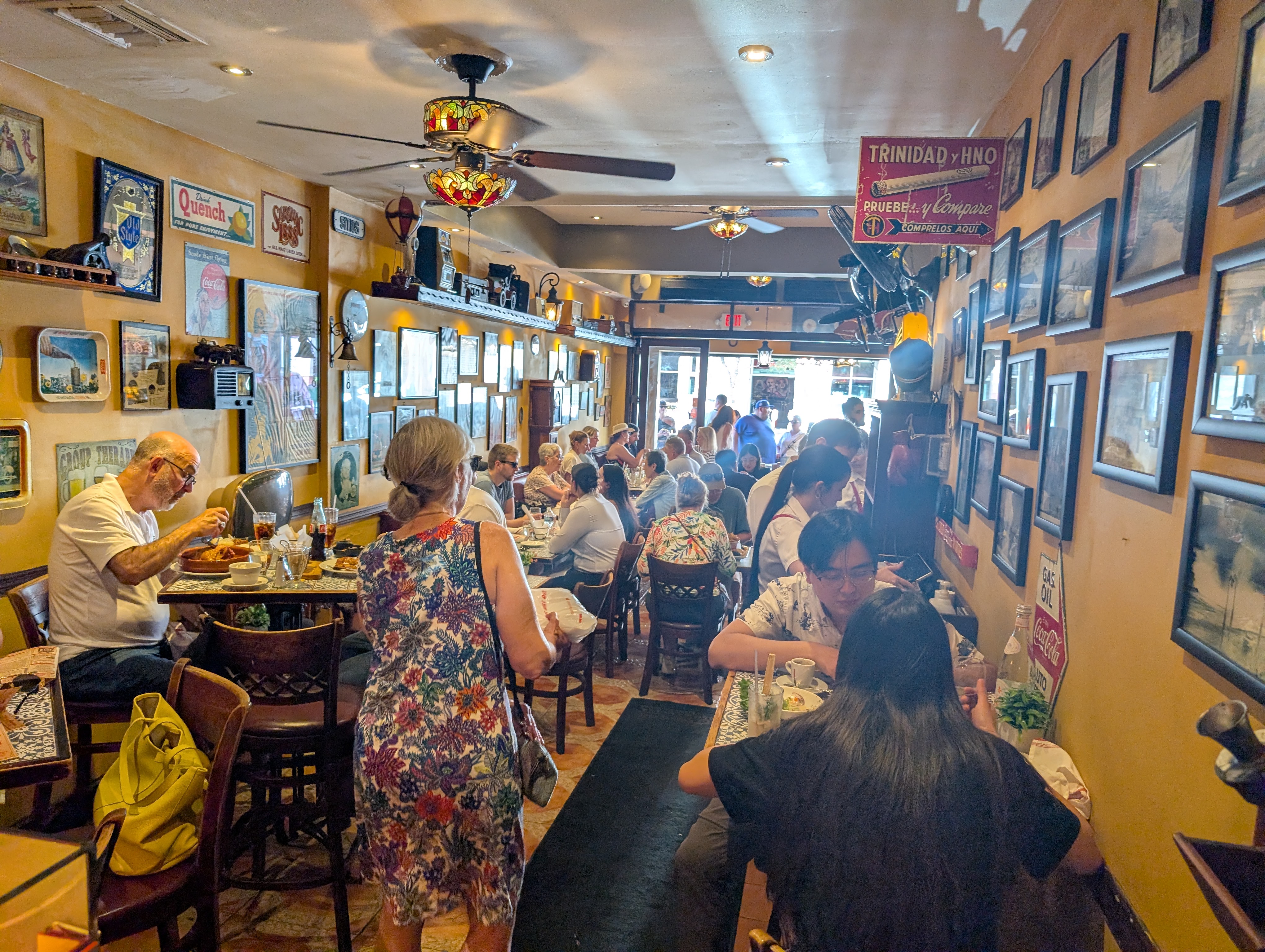
Within that community, though, Miami is everything. In my travels, I’ve learned that Latin Americans aspire to Miami as much as any American city. The heart of the allure is of course in economic opportunity, in political freedom, in glitz and glamor on the beach. But old ties are hard to break, and a visit to Little Havana is an object lesson: this neighborhood is home to a court in exile and a continuation of pure Cuba, of salsa rhythms and cigars and dominoes over cafecitos. Even with a collection of people branded with Royal Caribbean stickers strolling the streets, it feels alive, something carried forward and a place where a Hispanophile can feel very much at home.
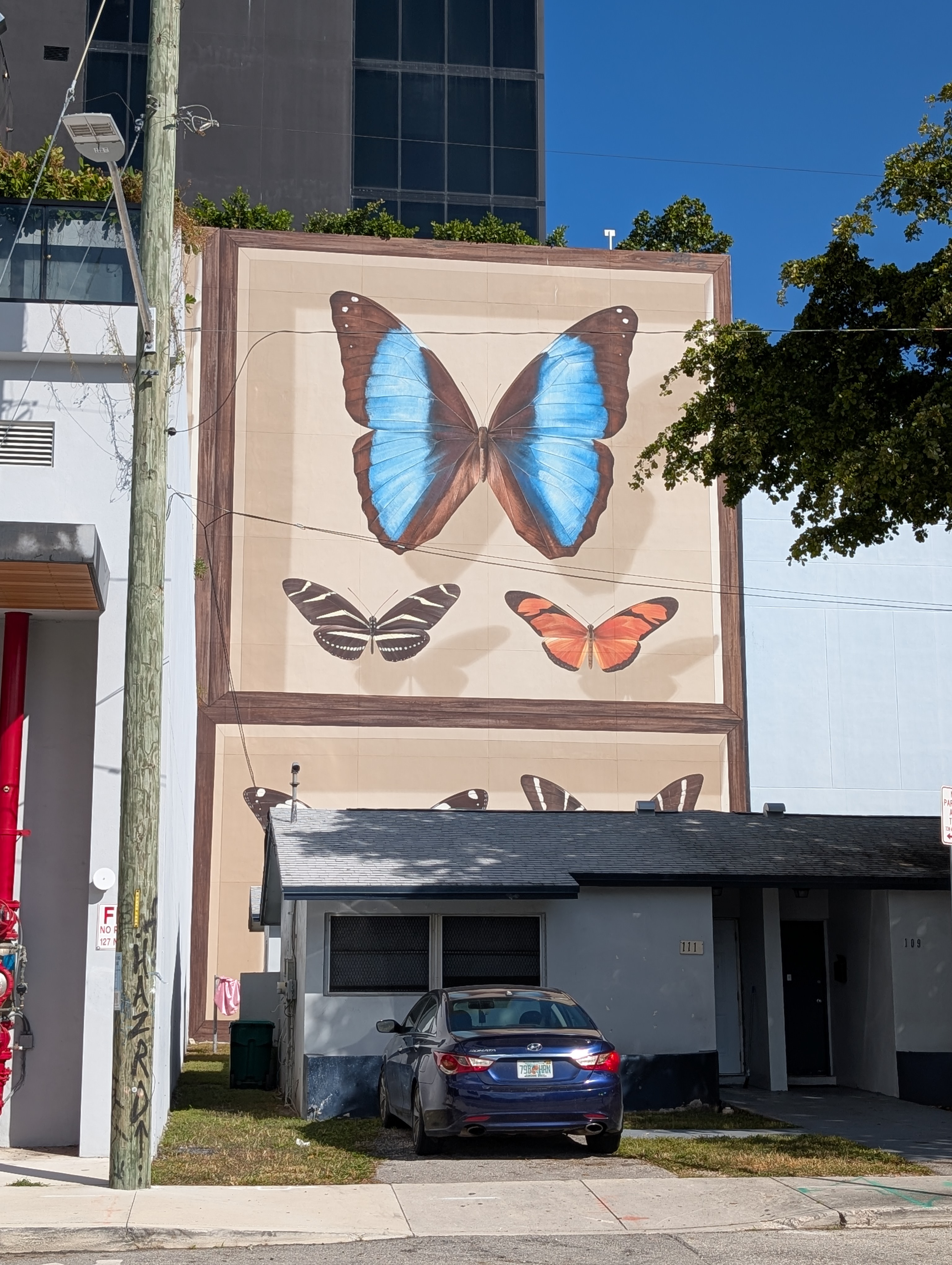
Miami is a city of gleaming beachfront towers, but it is also home to graceful Art Deco neighborhoods from an earlier era, that great triumph of American architecture serving as the perfect backdrop for this modern-day white city. Beneath the gleaming façade, color explodes, and never more so than in Wynwood, where we spend two nights. Wynwood is gentrification central just north and west of downtown, the inevitable boxy apartment blocks and trendy restaurants crowding out the bedraggled old concrete single-story homes and empty lots. I linger on these grungy old homes, wonder what stories they have told over the decades, which immigrant lives may have launched from here. Even as Wynwood changes there is an easy drift between Spanish and English here, a dance between two worlds, and I wonder how well it will hold on to its art. Miami is strongest in the places where it keeps the tension alive.
This trip is a perfect escape to celebrate a retirement, to find some well-earned rest and adventure all at once and think about what might come next. For my part, I am not sure how high Florida is on my list for a return visit. It is a land of leisure, but not one of awe, and as a pursuer of awe this easy luxury will never quite be me. I am not drawn to resorts or creature comforts, the overly sanitized or scheduled trip. Vacations should be a little bit hard, and I don’t mind a little snow, I think as the season’s first snowflakes wander down on the drive north from Minneapolis.
On the beach on Key West I read “The Snows of Kilimanjaro.” This short story was the first Hemingway piece to capture my imagination, and like all good fiction, it tells us something that we do not know that we know. “Snows” is a writer’s lament for the things he has not yet written and may never write, a call to me to get to work. It is a confession of the fumbles with women drawn in by the Hemingway-style pursuit, with Harry in the tale pushing Helen in ways that both give her new meaning and wound her, Harry at once proud of her but still questioning the whole exercise. And it closes with a drift away from even the heaviest of earthly concerns on to greater heights, to beauty, to the white snows at the end of the line. There are so many worthy goals here, so much to unpack and to reach for. And with that, I write.
 A Patient Cycle