I. Peregrinations
Climb aboard a plane. Shoot over a snow-dusted heartland, over the brain coral of the Appalachian hills and the long, aged spines of its mountains, over the Carolina coastal plain with its tidewater veins and then a long, sun-kissed expanse of ocean spackled by the shadows of clouds. I am off to St. Thomas again, hosted by Uncle Chuck and Aunt Monica at L’Esperance and joined by my mom and her partner and cousin David.
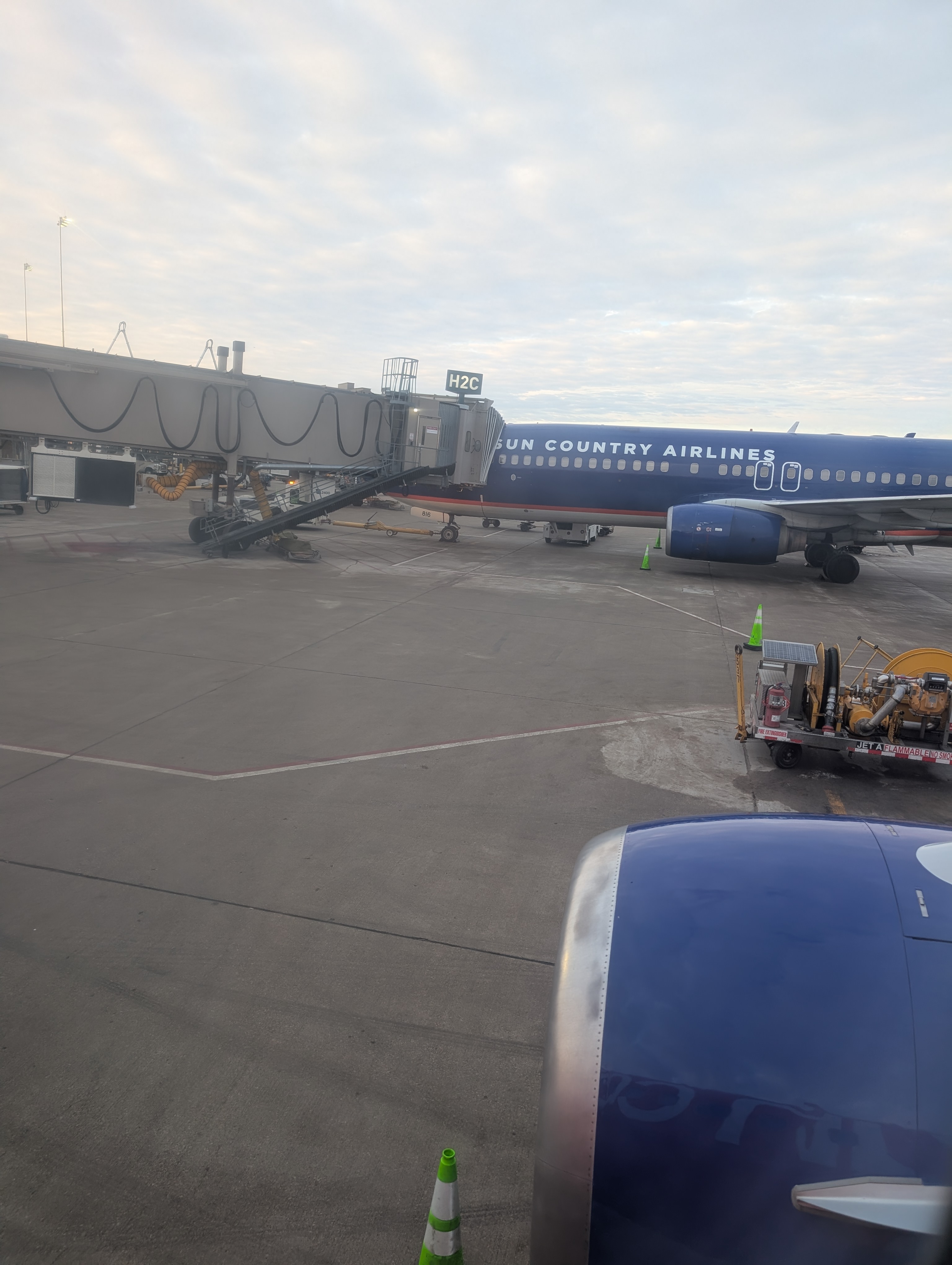
The actuarial tables of travel catch up with me again. Do it enough and things will go wrong, and this time, bad winds for landing cause a diversion to San Juan. Sun Country hotel vouchers are a fiasco and we wind up in a gated ground floor of a spare apartment in the city, a few blocks from a street shut off by police cars and a canine unit. It’s enough to sketch out most travelers.
A few ladies hold a casual party at the apartment next door, and it pulls at something deep within. I am eleven years old at a compound in Cuernavaca, Mexico, where a group of Minnesota college students study abroad and I am in the room next to the kitchen where I wake every morning to that same pitter-patter of Spanish chatter and laughter, those clattering dishes, those nourishing smells of baking food. Later, as a college student myself, I stumble down cobbled Mexican streets with an eclectic crew of kids from around the world, in search of a hostel and hear those same giggles, that same gentle teasing; later again they are reborn along the narrow lanes of an old Spanish city core. This easy soundtrack echoes through memory, puts me at peace. I am in good hands, perhaps only ever truly content as an object in motion.
II. Big Boats
From a perch at L’Esperance above the harbor, we watch the traffic come and go. Somewhere between one and five cruise ships visit Charlotte Amalie every day. They have grown in size over the years, disgorging ever more tourists, the islands left in a strange lurch of activity that settles down each evening. The long-term visitors go out for dinner and the locals party the night away. The carnivals of leisure cycle through, less the fresh joy of discovery in a European port of call and more of a drift through bars and shops that could, with some choice exceptions, be anywhere. Paradise, Incorporated.
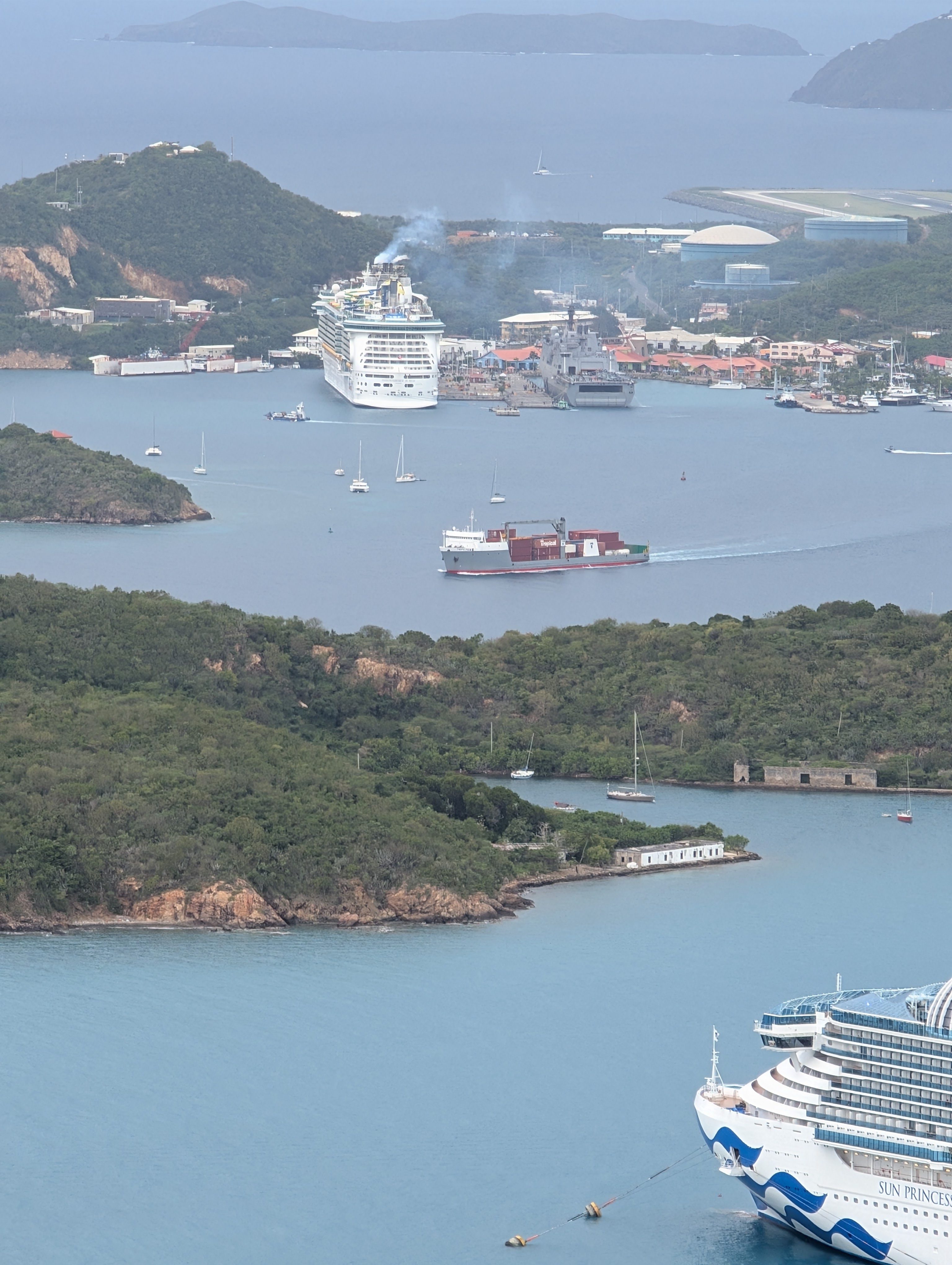
On the Thursday of my week on St. Thomas, the USS Stockdale powers into port. This AEGIS destroyer has spent recent years guarding commerce on the Red Sea from Houthi rebels, though it recently joined the Caribbean buildup that accompanied the ouster of Venezuelan despot Nicolás Maduro. It sits in Crown Bay next to Royal Caribbean’s Independence of the Seas, dwarfed by the pleasure cruise craft. The twin faces of empire, a reminder of the force that makes possible the leisure on St. Thomas, and the reason the U.S. collected these islands from the Danish during World War I. That treaty forsook an American claim to Greenland, and while I cannot comment on the relative value of any rare earth metals, I will say the beaches that treaty brought beneath the stars and stripes are much better than the alternative down the road not taken.
III. Billionaires
Laurance Rockefeller purchased most of St. John, the third-largest of the Virgins, in 1952. He later donated nearly all of his holdings for the creation of Virgin Islands National Park, and he developed a hotel on Caneel Bay on land leased from the National Park Service. The Caneel Bay Resort was a world-class gem design to be one with the coastline, an eco-conscious masterpiece that shunned technology and rightly revolved on one of the most beautiful stretches of sand in the world.
Hurricane Irma demolished the resort in 2017. Ever since it has been trapped in development hell, swiftly swallowed by fast-growing trees and gnarled vines just like St. John’s old slave plantations before. Myriad questions from the NPS lease to cleanup from 60s-era building materials loom over its future.
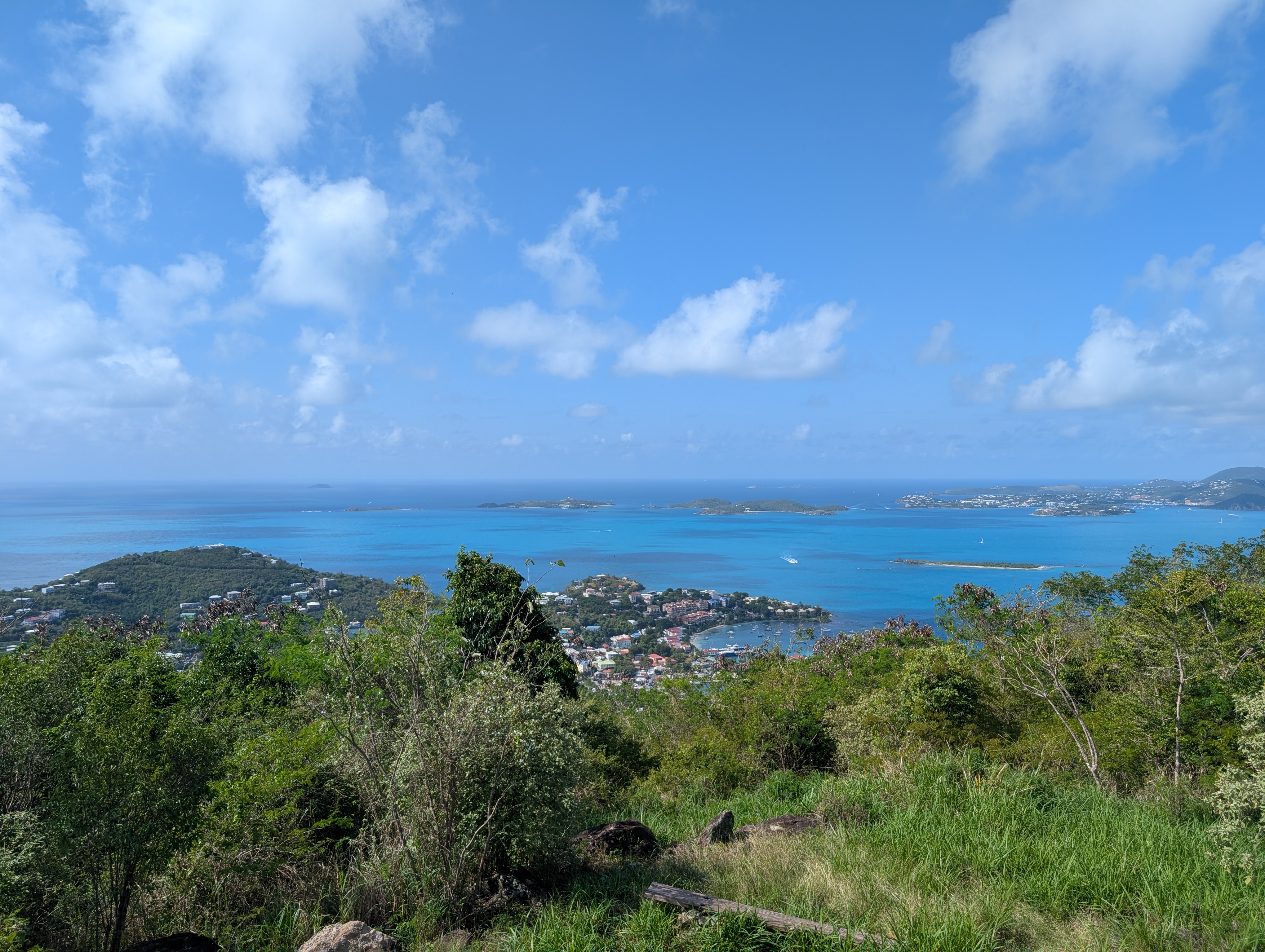
Jeffrey Epstein purchased Little St. James, an islet off Pillsbury Sound between St. Thomas and St. John, in 1998. For over 20 years it was the base of his most lurid operations, a steady procession of gilded elites and underage girls funneled through, his crimes an open secret among the islanders. In 2016, he added Great St. James to his collection.
Since Epstein’s death and disgrace, another billionaire, Stephen Deckoff, has purchased the islands from Epstein’s estate for $60 million. A proposed luxury hotel is trapped in development hell, unable to get off the ground despite its backer’s resources.
Some of the Virgin Islands’ billionaires aspire to preserve a natural and human heritage for posterity; some use its covers to hide the greatest depravities they can engineer. Others, like Deckoff, just try to profit from it, a money man doing what a money man does. But in the end, it seems the islands always win.
IV. Rituals
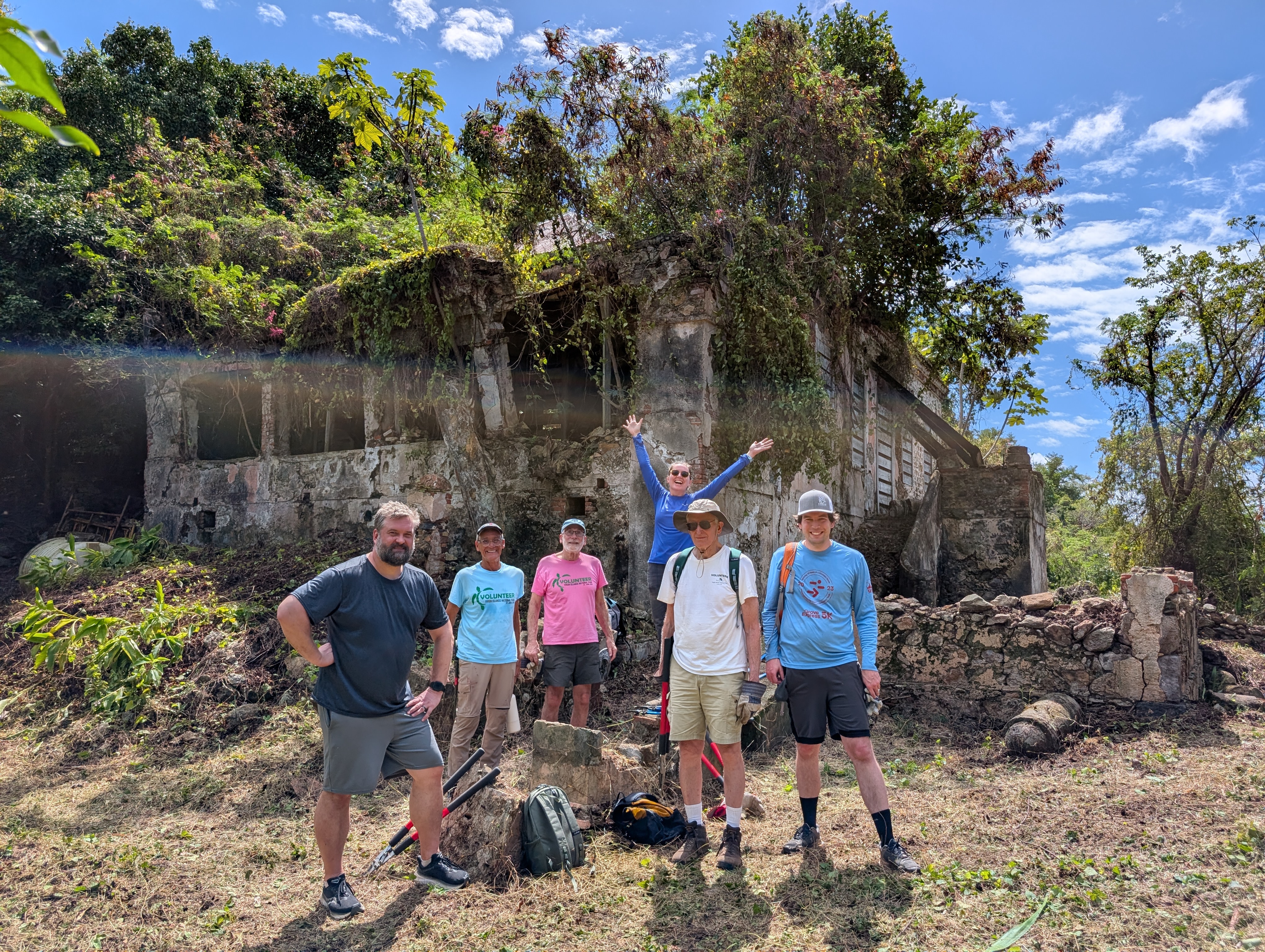
We enter the battle with the islands for a day of brush clearing on St. John, as we always do on Tuesdays here. Uncle Chuck is in his element with the Friends of the National Park, chatting botany and pointing out the monkey-no-climb he told fellow volunteers to spare several years back that has now shot up and become a healthy tree.
On this day we clear out the Reef Bay Great House, a sugar plantation relic now enveloped by a scourge known variously as coral vine and Mexican creeper. We hack back the jungle and restore some of its complex grandeur. Such as we can: a lintel along the portico now dangles in the breeze, its threat to pull down one side of the façade held only by a single strand of rebar. There is little chance of any stabilization from NPS, and a tragic fate for the Great House’s tragic legacy. But for now there is an easy satisfaction in passing on this privilege I enjoy, to cut out windows on to memory and beauty in a place where people come for joy and escape.
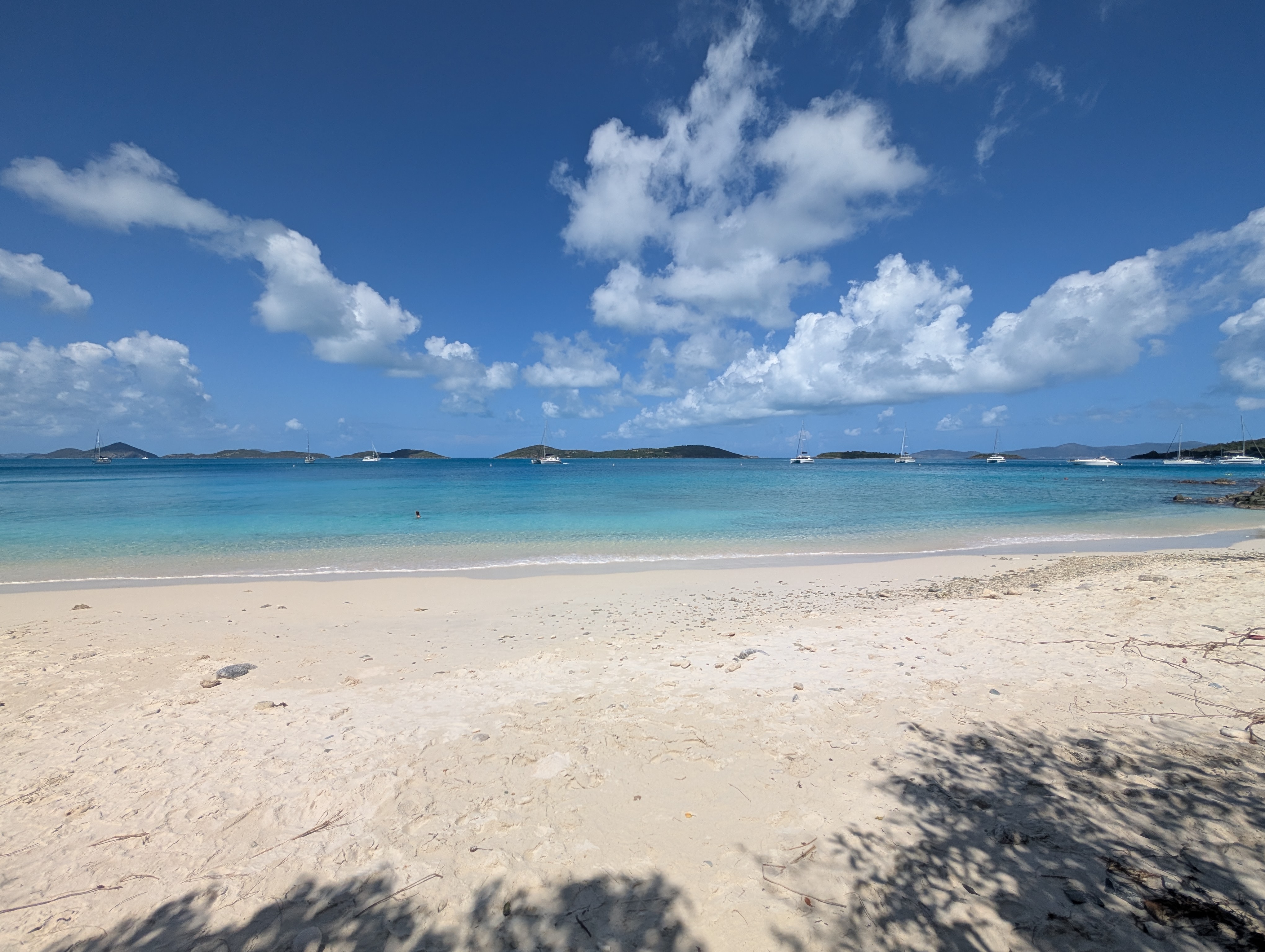
Later in the week, David and I return to St. John. We hike around Lind Point and up Caneel Hill, achieve commanding views of Cruz Bay and a descent to the ruins of Caneel and a splash into the ocean at Salomon Beach, a slice of white sand accessible only by trail or boat. Along the whole way the trail shows the fruits of the volunteer labor. A few cuts from catch-and-keep are a small price to pay, a little blood left to feed that lifeblood.
The other routines are less taxing: open up the villa, let in the breeze, wake to the sun’s long fingers creeping over the hill and in through the glass door to the balcony. Lay in sand and play in waves: Lindquist Bay, Hull Bay, a stroll down the streets of Charlotte Amalie. Make the circuit through the bars, order a Booty Call and get lei’d at Duffy’s, meet the same Minnesota waitress at two establishments, encounter the Islands’ finest purveyor of hose.
After long days on St. John we return to L’Esperance, where happy hour is a sacred rite. The sun plunges to the horizon and bathes Charlotte Amalie in a hazy sheen. The bell dings, the bottles pop open, ice tipped into glasses and drinks mixed. We set aside our books and our phones and hold forth: the day’s details, adventures past and future, the vagaries of island life. That happy hour bell is a call to drink, but it also breaks down that retreat into self, separates spaces for quiet and for community, both necessary in a well-rounded life. Pour me another, please, and again find that ease.
V. Inflection Points
My last time in the Virgin Islands my work life was in the process of blowing up as a regime change reoriented how things could be done. The previous time was deep in a pandemic. This time there are fewer lingering worries, easier roads to bliss.
It is thus to my great annoyance that I find myself facing writer’s block on the Hull Bay beach. I should be basking and letting my pen flow and yet the block nags, irks, makes one wonder if this is maybe too perfect or if I am just too easily knocked off my game. Things should flow naturally but they do not. I cannot absorb what the beach offers, assume that oneness that comes with the territory here. Distractions too easy, desires too fierce? Paralysis in the face of challenge? Nah. I just have to remember what the islands have already taught me.
I think back to my pandemic era escape here. I recognize now that it was a line in the canyon for me, a moment in which, when isolation anomie threatened to grind me down, I chose not to let it and instead struck outward. That journey put me on path toward being the world wanderer I long wanted to be, began infusing within me the self-assurance I always wished to have. In recent years I have looked at times for other lines in the canyon—a work life shift here, a memorable trip there; even that ultimate canyon line, a long-term relationship—and realized that all of those things, while attainable, are found somewhere along this rugged, sweaty, hunger-fueling hike on St. John. I embody the pursuit. Follow the path and the rest will come.
On that trip I read Khalil Gibran’s The Prophet. For reasons unclear to me I had previously thought I was not ready to read it. (These deep intuitions, I have learned, are things I should trust: even if they do not work out, I do not regret them, and they have delivered for me more than ever in the past year.) By that trip, I was indeed ready.
True it is I have climbed great hills and walked in remote places.
How could I have seen you save from a great height or great distance?
How can one be indeed near unless he be far?
At the end of The Prophet the poem’s namesake sails on from the city where he preached, on to the next adventure. I pick up a book on Byzantium and get ready for my next journey, too.
 A Patient Cycle