California 2023, Part II: Released

This is the second in a three-part series. Part I is here.

There are four American cities that aspire to global greatness. Many others are lovely to visit or live in, have their own unique cultures and topographies, and I admire many of them. A few claim certain statuses: Portland is the capital of one American byway; Nashville, another. Miami is a borderland striving to be many things. Chicago tries to take New York and filter it through Midwestern sensibilities, with mixed results; Boston is an experiment in blending European built form with unnecessary aggression. Las Vegas is not a city of this globe at all, but an escapist window into a virtual future.

That leaves the big four: New York, Washington, San Francisco, and Los Angeles. Of these, New York remains the center of the empire, straining but hegemonic, truly its own thing among American cities. DC’s prestige is a simple power play, a magnet for wannabe influencers of a particular stripe and all of their hangers-on, even though beneath that there is a beguiling city of nuance and details and homage to both the richness of a national past and the complex world in which it is enmeshed. Anyone from abroad can understand why these two giants are the way they are.

California, meanwhile, is an altogether different matter. The pithy analogy of my grad school friend Parker remains the best: San Francisco is utopia gone wrong, while LA is dystopia gone right. Here are the two cities where manifest destiny, straining to the coast, sought new frontiers, collided with reality, and tell us something profound.
The Bay Area is a stunning place, hills rising from the mists, shimmering glows on the Golden Gate, and I return here on this trip for my deepest immersion yet. It is, more than ever, the central processor of the American zeitgeist, the chief engine of technological breakthrough and a laboratory for preening moralism over how the world must be, from a masturbatory libertarian singularity to the woke corporate commune. The child of tech genius and sixties radicalism is now both fabulously wealthy and yet strung out on something, its various aspirations toward utopia now crashing up against unattainable housing and an army of the homeless and sudden tech dread. That dream, it turns out, is a frontier only a select few may cross; for the rest of us there are endless swipes and AI-generated content, the opiates of the 21st century masses.

Edit a few details and many of these same critiques apply to LA. The difference is that LA is a few decades further along in the cycle, a late empire Rome that by now has dropped some of the pretense. Yes, it is still a vast cultural capital, home to the entertainment industry and a paean to the postwar era of suburban development and American dreaming. But there is a general sense that the jig is up. The golden age of Hollywood is long behind us, the traffic is a nightmare, and in the shadow of race riots and OJ and Skid Row, Los Angeles is at least a generation beyond any intelligent claim to utopia. It is all the stronger for it.

There is some kind of Sisyphean triumph in LA’s acceptance of its fate. Yes, it can be superficial in its obsession with surface-level beauty. So what? We’re human; we want to look good. Yes, the traffic sucks: well yes, we all want to be here, and we want to live in a well-appointed rambler, not stacked in tiny boxes, free from bad weather and creaky old buildings. Give us a remote job or a TikTok house and we don’t need to bother with the commute. In bizarre and not altogether reassuring ways, it may be attuned to this moment. The artifice is still there but we all know it is there, and can perhaps use that knowledge to build a city that still feeds on some very human impulses and tempers them with an appreciation for reality.

It is of course easy to write in these grand sweeps about cities and an altogether different matter to experience them firsthand. I’ve lived in DC and visited New York and the Bay Area numerous times, but this trip is my first venture into southern California. On my drive north I break off my coastal route at the industrial swamps of Long Beach, surge into Los Angeles to see the USC, a gorgeous campus where I never have been welcome given my lack of skateboarding skills. I check out the Rose Bowl, get lost amid Glendale and Pasadena, tucked away from all the rest. I give myself a half hour of Hollywood Boulevard, which is plenty to get the picture, meander down Mulholland and gawk at the estates on Sunset.

In the end, LA is about what I expected. Its poverty is less ubiquitous than San Francisco’s, but more tightly concentrated; a drive through Westlake is like a tour through a Mexican roadside market, only with garbage littered everywhere. A vicious wind casts a palm branch beneath the Mustang and it sticks there, dragging on the ground, before I stop to extract it. The traffic still sucks. I am intellectually ready to appreciate LA in a way I was not five years ago, but dystopia properly enjoyed would seem to require fellow travelers into the underbelly, and in this state I am not inclined to linger.

My destination on this night is instead Santa Barbara, and I am immediately suspicious that it is a city designed by AI to appeal to me. It settles between sandy beaches and the Santa Ynez Mountains, that collision of land and sea, the Channel Islands floating out in the distant haze. It is a Spanish colonial revival town, laid out in pristine urban form, and its architecture reflects that ideal, exquisite tile work and white adobe and red roofs and Moorish flourishes, all lined by lush trees. The State Street pedestrian mall bustles with families, and there are layers of surfer culture and college town funk to keep it from resort town sterility. I could spend a very long time here. As it is, I settle for watching the men’s NCAA basketball final at a brewery, a night in a gorgeous bed and breakfast, hiking up Rattlesnake Canyon, swinging past the old mission, and spending far more time than planned just strolling those stunning streets. As with so many beauties, the pictures only do it partial justice, failing to drink in the nuance and the power of full immersion.

Late on my night in Santa Barbara, sated by beers, I learn just how this city maintains its aesthetic. As I scroll through the channel guide, I stumble on a recording of a meeting of the Santa Barbara Architectural Board of Review. I endure about ten minutes of five older white people telling a Hispanic man they are pleased with his thematically appropriate elements and the relocation of the trash bins to the rear, though it would be really nice if we could do something about that carport, wouldn’t it? The prices we pay for beauty, and the dangers of looking under the hood.

My next stop is along the central California coast, in the environs of San Luis Obispo. I was here once before, half a lifetime ago, when a grade school science teacher brought me and a few other kids to present at a national conference on monarch butterflies. My journals on that venture, perhaps the first of my mature writings, still exist, and I fish them out ahead of this trip to peek into my 15-year-old brain. In them, I find some keen observation, a healthy degree of dry humor, meticulous notes on the science of the butterflies that overwinter in these areas, and titanic levels of latent horniness. It is at turns enlightening and cringey, and often fairly mundane. But above all I am struck by the rapturous details I saw in the world around me, of the love for the human and natural realms I inhabited, and a refusal to waste any time. While the succeeding 17 years have enriched my ability to craft prose, the journals are unmistakably the work of the exact same person, still ravenously hungry for his world, his successes and failures not so far off from those of his kid self. We are who we are.

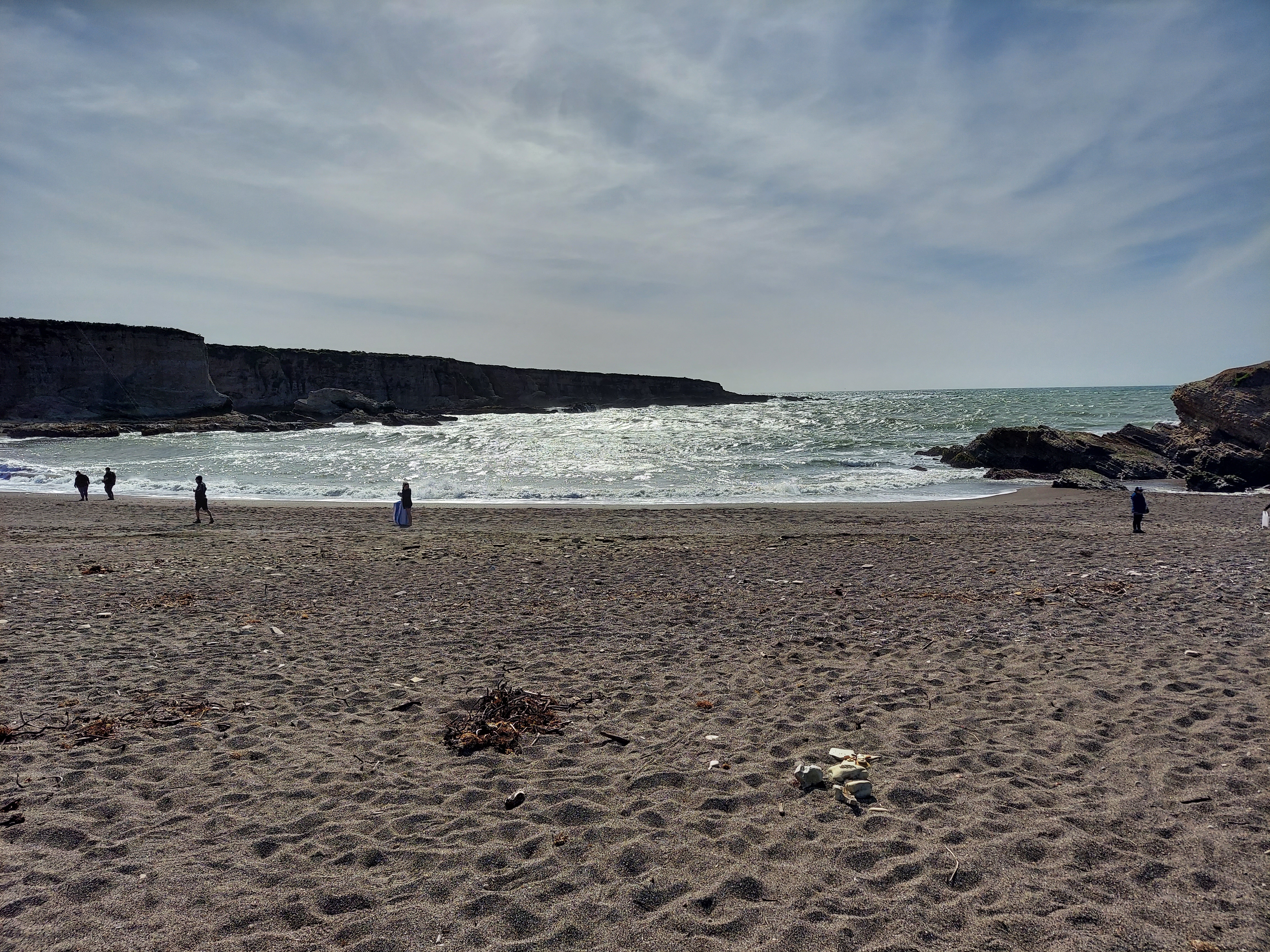
I make the most of my trip down memory lane. I swing through the absurdity that is the Madonna Inn, where the other boys and I stood guard over the men’s room with that waterfall urinal so the girls could go in and take pictures. I return to the elephant seal beach, and while the more melodious males are out to sea for migration this time of year, plenty of females flop about on the beach, delighting the gathered crowd. “The deep, guttural sounds they issue are, horribly, a combination of the worst belches and flatulence,” I wrote in my 2005 journal. At Montaña de Oro State Park, I seek out the cove where we found rich sea life in tide pools; here, I shared a moment with the late Lincoln Brower, the world’s foremost monarch scholar, reveling in the beauty of our world. Dinner comes on the water at Morro Bay, staring out at the town’s eponymous rock, and make a temporary friend in a Brit working the other way down the coast, telling him snippets of this tale as we trade travel stories.
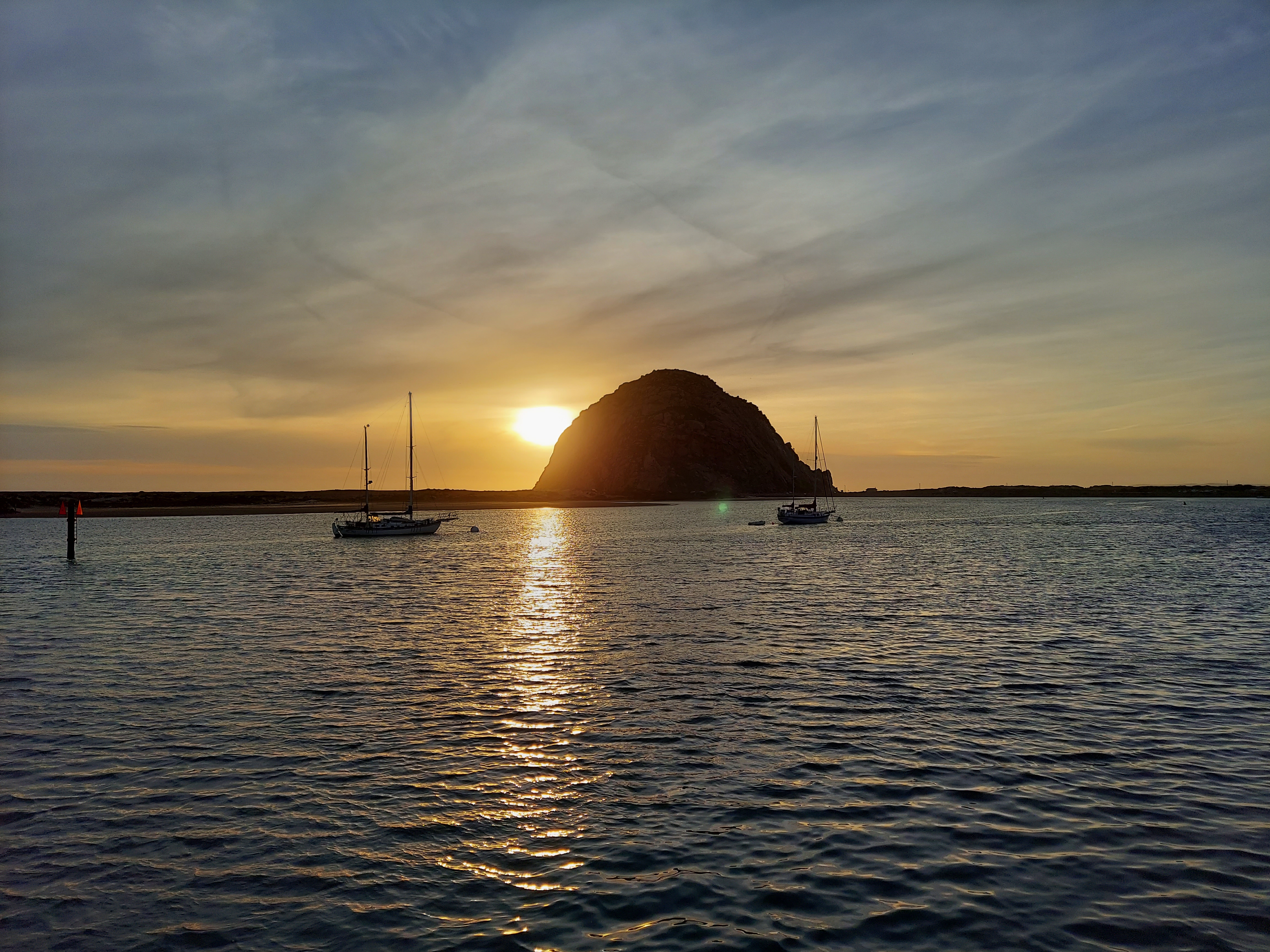
As I settle into my room with a view of Morro Rock that night, I wonder what that “smart kid with loads of ambition but no courage to do it all,” as I put it so very bluntly in December 2005, would think of the 33-year-old version who retraces these steps. Upon hearing the story, he would, I think, be proud of my journey, especially if he could hear how I’ve managed to draw down some of the anxieties that paralyzed me at that age. He’d nod in respect at the Mustang and my ability to actually follow through with some fashion sense. He’d be a bit distraught to learn the Yankees have won just one World Series since, and of course he’d also ask why the hell I’m still single, and I’d ask him just how much time he has if he wants to hear that whole tale. But whatever my 15-year-old self might think of me now, he would be proud of one thing: I have never lost the wonder.

That specter of its loss for others, however, has been on mind deeply for the past two months. On my drive I listen to some Jonathan Franzen essays, including one I’d remembered loving when it came out 12 years ago but whose particulars had faded: “Farther Away,” an account of his visit to remote Alejandro Selkirk Island in the South Pacific after the death of his friend David Foster Wallace. But it was more than that: Wallace’s death was the suicide of a brilliant, scheming, deeply damaged friend, and this piece hit differently when I could relate firsthand. In it, Franzen appreciates the loneliness of his quest to understand, gives up his pursuit of an elusive bird as he recognizes the gift of his own limits. Here, at the edge of the continent, may I do the same. At our best we do not forsake limits, nor bend the knee to them as supplicants: we become one with them, make them ours, use our words to order them within our lives and gain some measure of control, against all odds. Somewhere in here is the answer to the quest I’ve been on for a generation, that I now seek to revive through a renaissance. Yes, in here lies peace, not farther away but close at hand in the stories we tell ourselves in order to live.
Part III is here.

In That Sleep What Dreams May Come

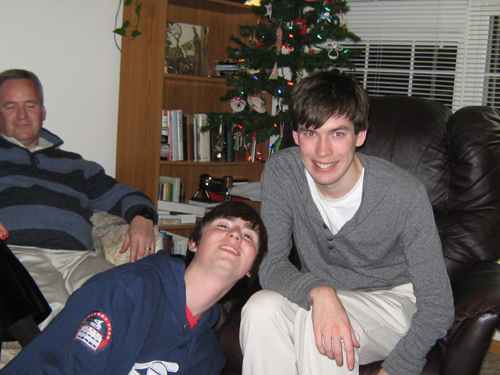
I pour out the last glass from the bottle of wine we opened together last weekend. I head upstairs, where my guest bed is stripped, its sheets still drying from the wash; the towel he used still sits here. In a family picture on my wall, one smiling face looms out, that image forever freighted with a different meaning now. There is an empty space in my house, a sense of loss even though he was here for only a few short days. I am gutted, angry, filled with a fire to go forth and never waste another precious moment, to heal a broken world with whatever power I might have. And so I sit down to write.

My cousin Andy had the power to fill a room with his presence. He was magnetic, aglow with opinions, eager to share his latest objects of fascination. Like many of us Maloney cousins he was a Renaissance man: an electrical engineer, a voracious reader, a skilled chef, an eager skier, a card and pool shark, a determined sailor, and a devoted lover to his high school sweetheart, along with a host of other pursuits he would be sure to tell us about whether we were interested in them or not. He and I always shared a bond, even if we only saw each other a few times a year; though he was over four years my junior, he was precocious enough to keep pace from a young age. On an unstated level, we were the only living children of parents who knew loss, perhaps living out a sort of surrogacy for the younger brother I barely knew and the older one he never did.

Andy was voracious in his appetites, and so many of our times together are vivid: in the Northwoods by Minocqua, snorkeling off St. Thomas, on that family Mediterranean cruise we were set to relive this summer; teenage pillow talk when we were supposed to have been asleep, a bourbon-infused night after a Shakespeare festival in La Crosse, too many euchre marathons to count. One night, after I unwittingly enabled his tip into drunken excess, I suddenly saw the danger in the relentless course he charted. But I was myself enchanted by that push, wanted to ride along with it, even as I remained firmly bounded by an unshakable sense of limits. He was refreshingly open about the troubles he did eventually face, sought out the help he needed, was bounded by a loving network of support.

Some diseases, however, are too deep to cure, and Andy careened toward the edge in his final months. My journal entries on the four times I saw him in 2022 read like a steady progression. In February, when he descended on my house with a gaggle of friends for a ski weekend, it was a rollicking party, good food and happy stories and a few nightcaps for just the two of us, united in our thirst for those moments. “His company is so very easy to keep,” I wrote in a contented blur on one of those nights. A May backpacking adventure on the Superior Hiking Trail left me a bit put off by certain conversation topics and the regularity with which he self-medicated with THC, but he was a trooper through relentless rain and mud, not once complaining at this brutal slog that would have broken many other backcountry rookies. By Thanksgiving, I wrote with annoyance at the seeming evacuation of his social awareness; by Christmas, I was having asides with relatives, bluntly asking if he was okay. He was not.

Andy was supposed to come visit for New Year’s, but instead spent it in a hospital. He was bitter over the intervention, our lone conversation during that stretch a rant-filled call in which I could not get a word in edgewise. It was, however, necessary, his ultimate passing in no way invalidating the wisdom that something had to be done. I now recognize that he was by this point deeply sick, on a path to ruin in one form or another. I started to wonder if this story could ever have a happy ending, a cascading series of concerns that, alas, proved preparatory for the end result, a thought that is in no way comforting but did allow me to glide past the shock phase in the cycle of grief and begin the effort to heal.

He finally made that planned New Year’s trip in mid-February and spent his final weekend in my guest bedroom. It was a low-key affair, reading time and board games, me apologetic for being pulled six different directions by hockey and a ski race over those days. Of course all the what ifs flit through the mind. Was this a goodbye? No: he was going on with life, making reading lists and travel plans, and by then I knew his evasions well enough to be sure it was no act. Could I have said more, done more? No: I have enough faith in my instinct that he was not ready to talk, and this intuition has since been backed up by those who did try to broach the topic. But there was a visible void there, a missing spark of the old manic energy and rebellion, the fuel that drove him to the edge and sometimes over it. I chalked it up to medication and hoped he would, in time, find a better equilibrium. He did not have that time. His case was terminal.

This suicide is the closest and rawest to me in recent years, but it is far from alone: there have been far too many in my orbits, too many friends and relatives left in grief. It is hard not to look around for things to blame. There is something to a late modern anomie, a lack of meaning or sanctity in a cold-hearted and status-obsessed world; an uncle and I who had been just trying to watch a football game were subjected to snippets of this malaise amid a meandering December rant. There is a news environment that preys on fear and despair for profit, a doomsaying world in which Andy at least dabbled. There is the Covid-era exacerbation of isolation that has compounded so many of these trends and pushed too many over the brink. There are the guns, the sickly offshoots of an American fetish that draw headlines for mass carnage but more often than that prove deadly accessories that turn dark thoughts on bad days into irreversible fates. There is the lingering cloud of generational trauma, the specter of addiction, the accumulating weights that trouble people across all cultures and eras.

And still. So many of us live through the same general conditions and come out well enough, and I ask him the question on a ski the night I learn of his passing: fuck, man, why couldn’t you see some of what I see, feel some of what I feel that lets me take every crisis I face and crush it beneath a resolute certainty of purpose? I’m not sure if I will ever know that answer, and I am, true to form, at peace with my efforts with Andy. I have found counsel in the words of both friends near and thinkers afar, and I have, perhaps eerily well, scripted my ability to process the unthinkable in my words on here over the years. I wish I could impart that equanimity to his parents, to the love of his life he left behind, to everyone else in our sprawling clan, but their journeys are their own. May we all find what we need to persevere, in speech or in writing or in unsaid feelings, in embraces and little memorials that convey what words cannot.

I head upstairs and remake the bed. The towel goes in a laundry bin, the wine bottle into the recycling. The picture, of course, remains on the wall. The fondness over the good times we lived will never die; nor, I think, will a certain anger over his final choice. But the rant-laden phone call from the hospital in January did end with a sudden, tender “love you,” a jarring reminder that the incandescent soul was still there, clinging to something as it lost its war with a fatal disease. That is still Andy, here both to haunt and bring forth a smile, the eternal presence burning through us. Like Hamlet, we do not know what dreams may come in his sleep of death, but those of us who live on know he will endure in ours.

Calm amidst Storms: 10/15/13 School Board Notes and Thoughts on a Suicide at Duluth East

The Duluth School Board convened for its monthly meeting in October on Tuesday night, and went on to have the least contentious meeting since I’ve started covering them. There were very few things of major interest on the agenda, so I’ll just breeze through the summary before offering a few comments on the citizen speakers. Member Seliga-Punyko was absent for a second consecutive meeting; the crowd included a group from Piedmont on hand to receive an award, a bunch of East students watching the meeting for class credit (for whom Member Wasson ran about grabbing and autographing agendas), a smattering of candidates in next month’s election, and the usual suspects. The District took time to thank many groups in and around Piedmont Elementary for a “Set your Student up for Success Night” at the school, and Superintendent Gronseth and at-large candidate Annie Harala celebrated the success of that event and a “Walk to School Day” at Lincoln Park Middle.

The only talk on the Education Committee report related to the results of Duluth schools on their progress as measured by the Department of Education. Member Johnston had a balanced assessment, noting improvements in a number of schools but picking out Stowe as elementary as one that had dropped, and again noting the east-west divide in the city. Superintendent Gronseth, who seemed to be making a concerted pitch for the levies in his comments throughout, emphasized the improvements and said Laura Macarthur’s turnaround was obvious proof that the Administration can get good results if given the resources to do so. Member Kasper echoed his sentiments, and Member Miernicki clarified some of the scores for the public, noting that they were raw numerical scores, not percentages; a “17” did not mean the schools were in the 17th percentile.

As usual, Member Johnston pulled a few things out from the Business Committee report for separate votes, but he kept his critiques concise and didn’t dwell on anything. There was a brief and rather directionless discussion on declining enrollment, and Member Johnston expressed some relief that there were very few change orders on the Long Range Facilities Plan this time around, though he cast his usual protest vote against them. That effectively ended the meeting. If I were in a cynical mood, I could complain about rubber-stamping or wonder if Member Johnston was desperately trying to put on a new, more civil face in the last meeting before the election, but the honest truth is that there just wasn’t much of anything worth debating at this meeting. For that reason, I’m not going to celebrate any newfound civility either; we’ll see if it that holds if more contentious issues come up during the two lame-duck sessions after the election.

This brings me back around to the two critical speakers, who were two very familiar faces at ISD 709 Board meetings: Mr. Loren Martell and Ms. Marcia Stromgren. Their shtick is so exhausted that it doesn’t merit much detail; basically, contra Gronseth, they think the Board’s record does not suggest the District can be trusted with more money. For them, the Board seems to be a monolithic bloc of bogeymen instead of seven individuals who come and go, many of whom are probably persuadable as to where the money should go. Ms. Stromgren offered a very selective reading of Student Member Thibault’s anger over Board incivility at the previous meeting, leading one to wonder if there is anything she cannot spin to fit her worldview.

***

There was a second part to Ms. Stromgren’s remarks that is worth mentioning without a snarky dismissal, however, as she took the District to task over its handling of the recent suicide of a 15-year-old Duluth East student. She blasted the District for covering up the suicide and refusing to talk about the bullying that appears to have caused it, adding several details about this boy’s case. After the meeting, when Harry Welty pressed Ms. Stromgren over some of the extra details she’d shared, she cited a Reader letter to the editor from the boy’s aunt that both Harry and I had read about the suicide. The letter does not include all of the details Ms. Stromgren added, which means she either has an inside source, or she is adding other things.

The letter itself does raise some real concerns, though at the same time, it goes without saying that this is an incredibly delicate issue. God only knows how the events in this boy’s life drove him to make such a tragic decision. Part of me thinks it is wrong for a woman who did not know him to make this a political issue at a School Board meeting, but if we’re to take the aunt’s letter at its word, it is hard to disagree with Ms. Stromgren’s notion that the letter asking the family to sign a statement “saying his suicide was not caused by bullying and is bad for the school and community” is tone-deaf at best. However, the aunt’s note is only one person’s perspective, and while I certainly don’t have any reason to doubt her, any ongoing investigation has to be very, very careful.

Unfortunately, in the meantime, rumor and hearsay will reign. (I’ve heard a few details that go beyond the narrative made public so far, but secondhand information on something with this much gravity will have no place on this blog.) It’s agonizingly difficult work, running about in the shadows trying to understand what happened and make sure it won’t happen again while also respecting the rights and privacies of everyone involved. I’m inclined to cut the District and the police some slack over the supposed “cover-up” and assume they’re doing all they can behind the scenes. That has to be frustrating as all hell for the family, and if you’re suspicious of anything Board-related as Ms. Stromgren is, it’s not going to be at all satisfying. If there aren’t any answers in a few months, then there may be cause for some real indignation.

For now, however, grief must take its course. My first instinct is to demand dialogue, especially for the sake of the boy’s friends, who need to make sense of this. To that end, I do think East erred if it tried to quiet any discussion of the incident. But it’s also not as black-and-white as some people would like to believe. Harry raises two key points in his piece on the issue: first, that copycat suicides do happen, and second, that the News Tribune’s decision not to cover the suicide suggests there may be good reason for not saying too much quite yet. I’ll add my own point that may illuminate the silence: if there was indeed a bullying kid, he or she obviously ought to be brought to justice, but the alleged bully is also a minor who must be considered innocent until proven guilty. It is our instinct to demand immediate action, but getting things wrong in a rush to condemn the perpetrator would be a terrible injustice to heap upon a story that is already a terrible tragedy. If rumors were to spread through the students that one among their number caused the death of another…well, just think about it.

In the end, that’s all I can really offer: a plea to think about it. Think about it from the standpoint of the boy we’ve lost, his friends, the school, the police, the family, and even a possible bully. That might seem like a frightening exercise. It is. Read the obituary. Write a check to the charities listed there. Look into those eyes. Imagine what might have been. But not for too long: the world moves on. The family may not think too highly of Duluth East right now, but East is more than a building, or its administrators, or the kids who are in it at any one time. This is a chance to leave a legacy; a tragic legacy, but one that transcends the horrors of the past and feeds into a community that can carry on with a higher mission. How are we going to stand up for Gregory Asher Nugent?