A courtesan, not old enough and yet no longer young, who shuns the sunlight that the illusion of her former glory preserved. The mirrors in her house are dim and the frames are tarnished; all her house is dim and beautiful with age. She reclines gracefully upon a dull brocaded chaise-lounge, there is the scent of incense about her, and her draperies are arranged in formal folds. She lives in an atmosphere of a bygone and more gracious age.
-William Faulker, “The Tourist,” New Orleans Sketches
Riding in from the airport to downtown New Orleans I observe two things: it is flat and it is wet. Water pools in canals and stray lowlands, portends more water, water seeping in and slowly rising, a whiff of doom amid the building heat and low grey clouds. Ridiculous feats of engineering make this city possible, from the levees holding back the Mississippi and Lake Pontchartrain to the spillways and the Old River Control System redirecting waters from the north. These days the most fearsome assault comes from the south, where the Gulf slowly eats up more and more of the protective swamps and bayous. The Nola response to these tenuous tides is a redoubled commitment to its cause: party even harder, live even more in the moment.
New Orleans is the love child of American excess and Spanish urban form, as if Las Vegas had been dropped atop a pleasing grid and then had some French affectations sprinkled over it like powdered sugar on a beignet. On the first of two visits for weddings this spring I am in the district of hotel towers just west of the French Quarter, high rises that disgorge revelers to lassiez les bons temps rouler. The second time around, I decamp to the Monteleone, a grand old thing in the heart of the beast. This city’s founders put the Quarter on the highest, driest ground available and gave it an artistry no American city can match, probably because the Americanness all came so much later. Here tight little streets are lined with beautiful balconies to drink in the revelry below, to catch a breeze off the Gulf to cool down after a long, hot day. In this sense it is European, but the only places the activities below might invoke are Ibiza or Benidorm.

Today, the French Quarter is both beautiful and utterly debauched. Every night the partying hordes emerge from wherever it is they come from and parade down Bourbon Street, slugging down hand grenades and hurricanes, concoctions that are one-way streets to oblivion. It is chaotic, it is loud, and it never stops, only reaches higher and higher apexes on weekends and around certain holidays. The street crews emerge the next morning to wash it all down, rinse and repeat.
One morning, a man wanders through the lobby of the Monteleone yelling that he has been drugged and robbed. As I await a pickup, a group of men literally roll about in a gutter along Canal Street, pouring beers over their heads to cleanse themselves. New Orleans is an olfactory smorgasbord, sometimes good (the food!), but usually not (vomit, secondhand weed, overdone perfume or cologne, garbage). Faulkner’s memories of a more graceful age are overrun.
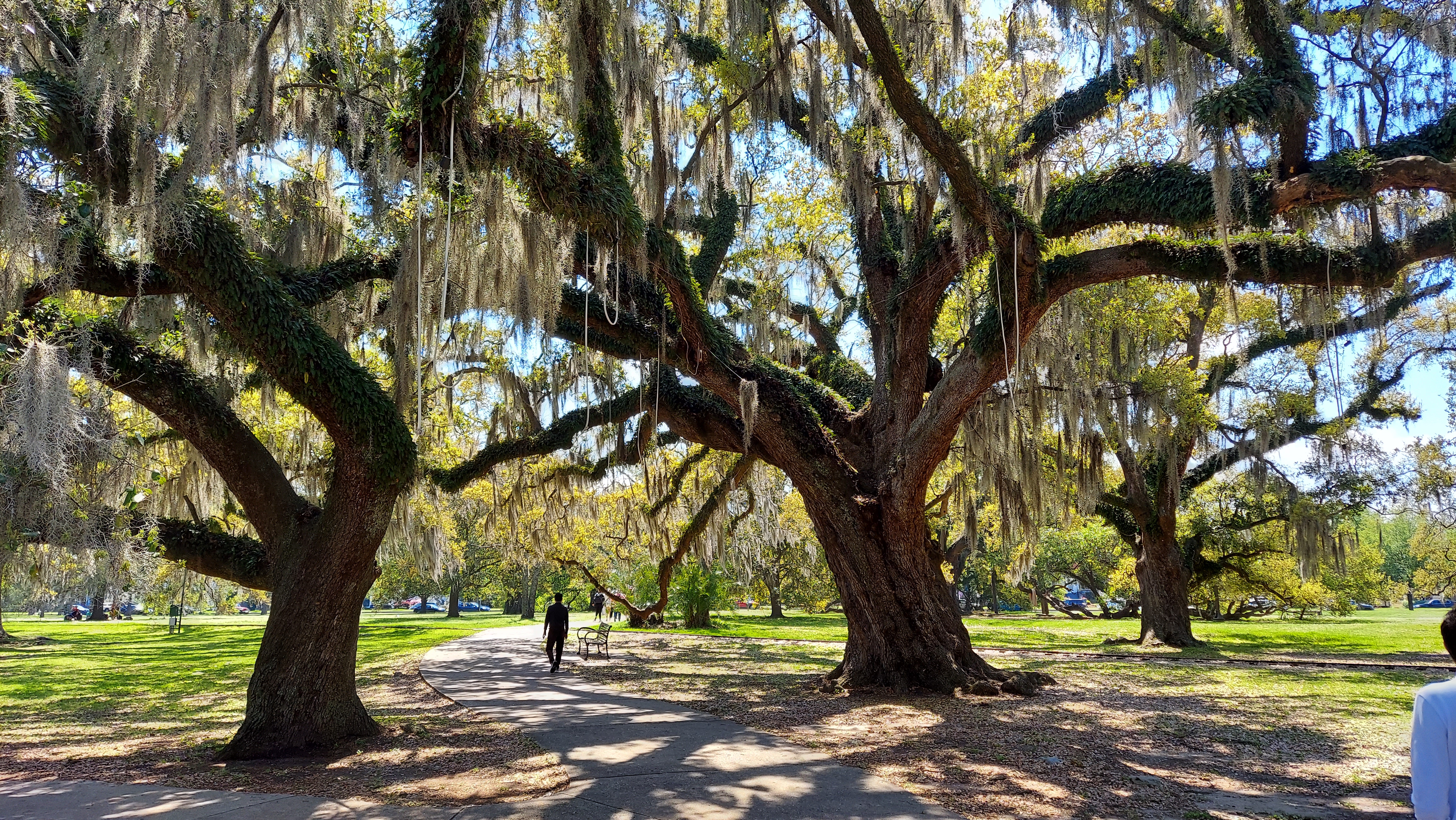
I seek out other sides of New Orleans, search for that old mystique. To stroll through the Garden District is to drift past colorful columned old grandees amid lush landscaping, past the house where Archie Manning raised his brood; as in many great American cities, million-dollar real estate can still get one a taste of the character that made the place. Towering, gnarled oaks draped in Spanish moss command the parks near the art museum, further evoking that complicated Southern sensibility, stateliness concealing old secrets. On the second visit I do dinner at a Trinidadian eatery in Mid City with the groom from the first, and with a move to DC looming, he is wistful for everything he is about to leave behind, the easy demeanors and the jazz and music scene that is so authentically from this place. Embed oneself at safe remove from the chaos and the spell this city casts starts to make sense.
New Orleans is a place of deep history, plaques and homages to people who in other towns would have drifted out of consciousness. Cemeteries are attractions unto themselves. On a grander scale, the World War Two Museum tells a good American story, a throwback to a time when there wasn’t much contestation about sweeping national narratives. This city, of course, is part of the death of that dream: on a run north and east of the Quarter, out toward the neighborhoods whose names are numbered wards, I pass some of the shotgun homes that survived Katrina, the ravaged, Blackest parts of New Orleans, home to the stewards of the old cultures crowded out by blasting pop on Bourbon Street. The struggle seems real in more sense than one.
The city strains, the infrastructure crumbles, dollars pour in to fix it. The potholes in a flat city with no snow are somehow worse than Duluth’s. The famed St. Charles Streetcar may be the world’s dorkiest, no maintenance performed in decades to the point that its creakiness has become part of the charm. If you don’t keep it up you might as well let it go, call it historic, and endure it at the speed of an ambling brass band. No one would name this thing desire today, but it is still great fun.

The heart of New Orleans is Jackson Square, a blurring of Spanish and French and American: a cathedral here, a cabildo there, street artists along the edges, a placid garden in the center. At its heart sits the victorious general turned populist president astride his steed. New Orleans’ Confederates have come down, but Andrew Jackson remains, a fitting figure for this city: democratic in spirit with all the joy and flattening that word entails, racially troubled and yet still a child of a blended nation, a mixed drink enjoyed as a corrective to staid impulses but deadly in excess.
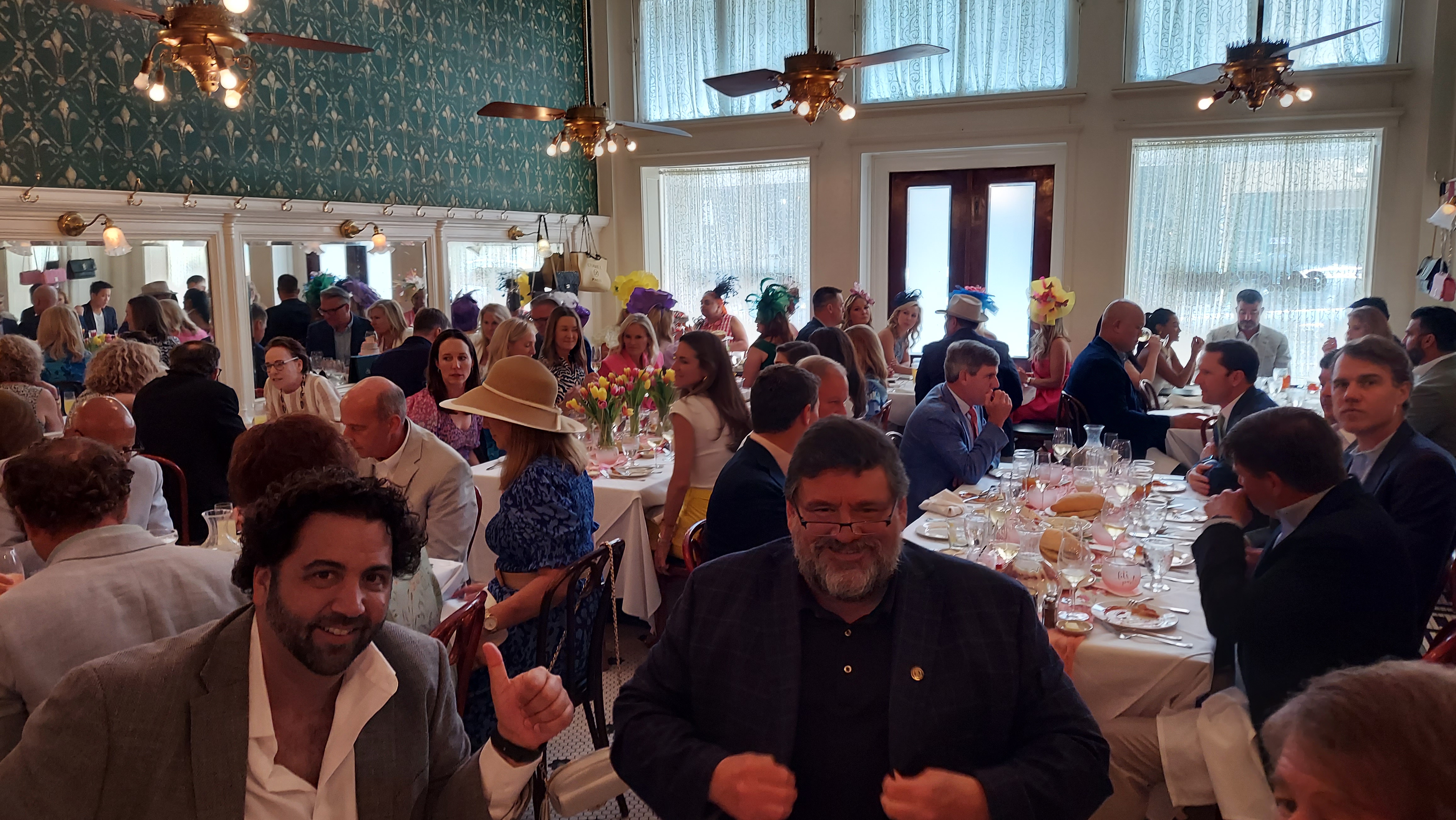
Excess? The food scene here is that and more, and my friend Danny is a connoisseur of this world. The white tablecloth French Quarter stalwarts consume many hours of my second trip there, coursed meals and bananas Foster and oysters Rockefeller at their origins. For the true culinary cutting edge there is the new New Orleans: Cajun delicacies at Cochon, radical sandwiches at Turkey and the Wolf, comfort food with an uplifting story at Café Reconcile. And then there is Friday lunch at Galatoire’s, Kentucky Derby caliber attire on display, with guest appearances by a brass band and Marie Antoinette and her court. It is pure spectacle, and I can play this game, bust out that Italian linen suit from Ravenna or a few pastels and slip into this murky gumbo, at least for the three hours of a good Nola meal.
I slowly succumb to the New Orleans torpor. Bloated by food and drink and oppressed by the heat, I lapse into naps and late mornings, planned explorations reduced to halfhearted strolls. Late night pool parties at the Monteleone pickle my skin. Exhaustion creeps in; tempers flare. But I keep up appearances, escape to find second winds and then jump back in. We ride this slow, clattering trolley past beauty and rot, on toward the end of the line, wherever that may be.
Thankfully, that end is in sight, at least for now. I have been traveling nonstop for seven straight weeks. I have become a packing automaton, my bags organized with military precision, a perpetual motion machine. My hair has achieved pandemic shutdown stage length. Half of my pants have olive oil stains. All this fun takes a toll on the body to the point that I crave salads and some sobriety, and my appetite for meeting new people has run its course. My patience fades. There is not much left to say. It is time to go home.


 A Patient Cycle