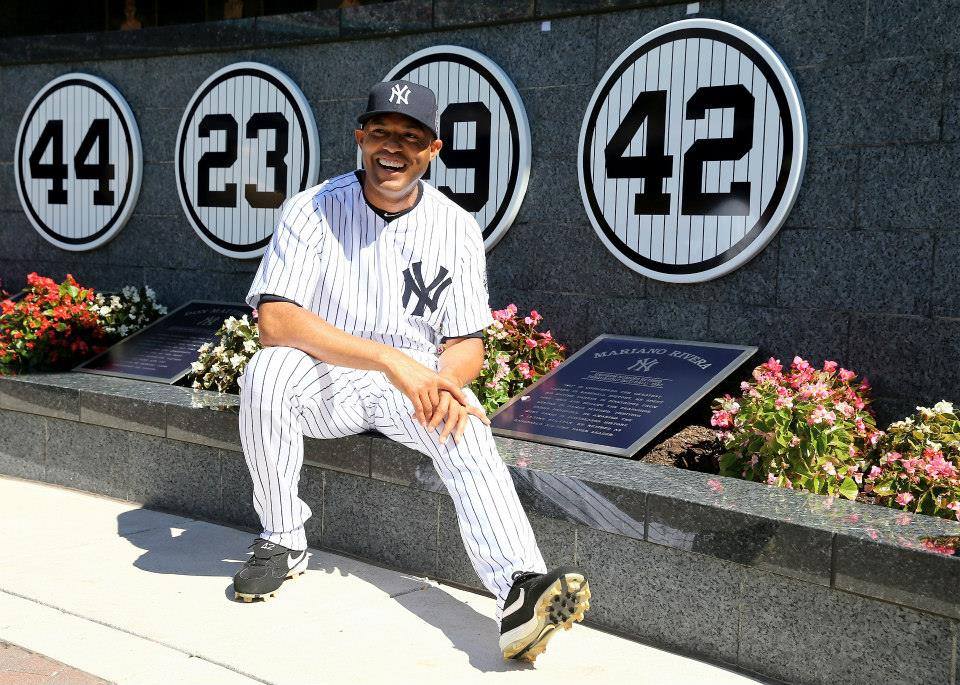
A Hero in a Sport without Heroes: Farewell, Mariano Rivera

Image

I’ve been meaning to write a post on the impending retirement of Mariano Rivera ever since I started this blog. Much to the chagrin of my Minnesotan friends, I grew up a diehard Yankees fan, and my earliest baseball memories are of their late 1990s dynasty. Derek Jeter was, naturally, my childhood idol, and I still have a deep respect the Yankee captain; I’m sure I’ll write some glowing words when he retires, too. But as I grew older and more jaded, my pantheon of athletes whom I was willing to call a hero slowly shrank to include just one man. That man is Mariano Rivera.

Writing this post wasn’t easy, in large part because I’m not sure what I have to say that hasn’t already been said. Dave D’Alessandro wrote a masterful column about Rivera in 2011, and the god of all sportswriters, the 93-year-old Roger Angell, used Sunday’s game to remind the rest of us mere mortals of our places. I could trail on about his dominance, both across 19 regular seasons and 16 postseasons, or wax about that single pitch he used to it all, that untouchable cutter. There are the five World Series championships, the All-Star games, and the admirable sendoffs heaped upon him by his opponents over the course of this season’s long good-bye. (The Twins’ “chair of broken dreams,” made entirely of bats broken by Rivera’s cutter, was the best gift he got.) There are also those few moments when some emotion snuck out from behind his serene façade, like when he flopped over in exhausted ecstasy on the Yankee Stadium mound after three shutout innings in the 2003 ALCS against Boston, or his composure when the Red Sox finally got to him the next year. There is also his winning smile, his profound faith, his care for his Panamanian hometown, and his farewell tour in which he spent time with the unrecognized workers and fans at every park. D’Alessandro nails it: Rivera’s statistics are phenomenal, but he became the most universally adored ballplayer in an otherwise troubled era because of his character, his class, and his dignity.

Better writers who know Rivera far better than I do have told those stories superbly, so I’ll settle for simply sharing a memory. I’ve been to a ton of baseball games over the years, including a number of very memorable ones; many stars in their prime have had great days, and I’ve seen some extra-inning marathons and some brutal weather. I saw one of Roger Clemens’ tries at a 300th win in person, and any Yankees fan’s first trip to Yankee Stadium (the old one in particular, though the first visit to the new one was pretty cool, too) has to rank right up there among one’s favorite baseball moments.

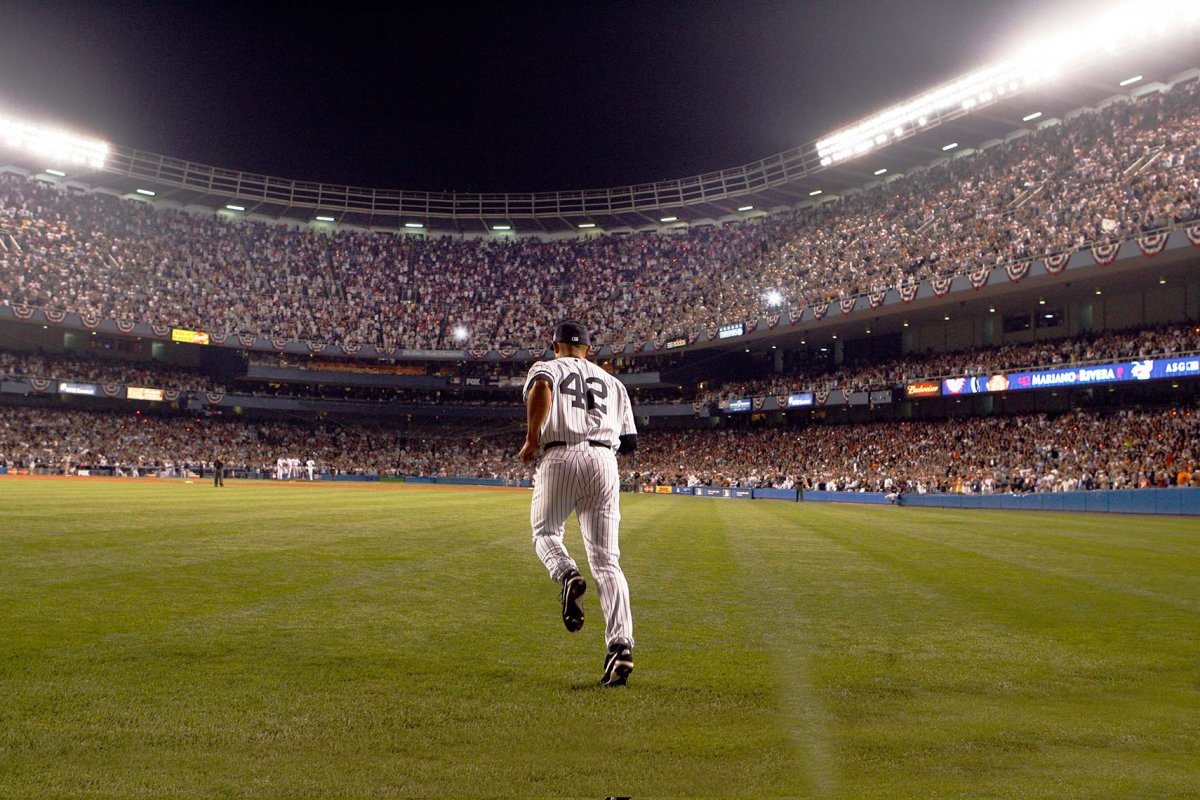
But my most cherished memory is one that, on the surface, appears utterly mundane. It happened during my first ever Yankees game, a 2000 win against the Twins. The game itself was smooth sailing for the Yankees, and the paltry Metrodome crowd included more backers of the Bronx Bombers than loyalists to the hometown team. My seat, however, was not terribly far from the Yankee bullpen, and in the top of the ninth, the last ballplayer to ever wear number forty-two rose to his feet and began to warm up.

It was as if the entire game behind him had stopped. My ten-year-old self was absolutely mesmerized. While Rivera was great at the time, he was still a few years away from being as universally lauded as he is today. But even then, there was something different about him. His windup was swift and graceful, yet he unleashed the ball with so much power that it popped in the catcher’s glove in a way no other pitcher’s did. He was the platonic ideal of a ballplayer, and only a handful of other modern athletes can match that blend of dominance and aesthetic beauty embodied by the lanky Panamanian with a soothingly smooth name. Perhaps Lionel Messi, though he still has years to go before he is on Rivera’s level of consistency; perhaps Roger Federer in his prime, but he rose and then began to decline all while Rivera kept plugging away. He leaves the game at age 43, just as dominant as he was when he first settled into his setup role in 1996. It is never fun to watch a former great tail off and struggle some at the end of his career with some other team, as with Michael Jordan or Brett Favre; Rivera didn’t do that. He simply remained Mariano Rivera.

No one does ceremonies quite like the Yankees, and Rivera had his Lou Gehrig moment in front of the fans last Sunday in the Bronx. They trotted out all of the greats of the 1990s dynasty, deluged him in gifts, unveiled his Monument Park plaque, brought in Metallica to give a live rendition of “Enter Sandman,” and even Jackie Robinson’s family took the field to honor the man worthy of being the last to ever wear wearing Jackie’s number. It went for fifty minutes, yet Rivera’s surprise and gratitude never wavered. On the same day, Yankee great Andy Pettitte made his final home start in the Bronx, and he was almost an afterthought. Yet Pettitte wanted it that way, and in fact only announced his retirement because Rivera told him to; so great was his respect for Rivera that he didn’t want to steal a second of his time.

Gehrig called himself the “luckiest man on the face of the earth” to be showered with such praise, but with Mariano, one got the sense that there was never all that much luck involved. He is a reminder of everything that is good about sports; the sort of human being who deserves every ounce of recognition and fame he’s received, a poor Panamanian kid who used a silly game to make something of himself, and to inspire millions.

His mantra was a simple one.

I know where I come from. And when you always have in mind where you come from, the rest will be easy.

We’re going to miss you, Mariano.
Image


Photos from yankees.com.


A-Rod’s World Continues to Turn

When I wrote about Yankee third baseman Alex Rodriguez’s ongoing steroid suspension saga two weeks ago, I was skeptical he’d have any prayer for success upon his return to the lineup. But I did leave one little caveat, saying one never really knows how fallen mythic heroes like A-Rod might respond. I’m glad I did.

Of course, one game in August between two teams separated by eight games in the standings isn’t going to change much. Nor is A-Rod anywhere close to being out of the woods, as the events on a Sunday night in Boston shared headlines with his blustering lawyer claiming A-Rod did not deserve to be suspended for “one inning” given the evidence against him, and announcing that Team A-Rod is filing a grievance against the Yankees for their handling of his injury.

But when Red Sox pitcher Ryan Dempster took justice into his own hands (video highlights here), something changed. Joe Girardi, in the midst of his finest season as Yankee manager for his evenness amid a circus of injuries and A-Rod stories, showed a completely different side. He had good reason to be angry: if opposing pitchers are free to throw multiple pitches at his player and avoid ejection, and the Yankees are never given a chance to retaliate, the rest of the season easily could become “open season on A-Rod,” as he described it in an uncharacteristically frank post-game press conference. The incident stirred up some tribal instincts in the Yankees, who rallied around the teammate they really don’t seem to like all that much. And rather than resort to a retaliatory bean-ball, A-Rod and the Yankees avenged themselves in a far more practical way. A-Rod launched an A-Bomb of a home run to dead-center off Dempster to lead off the sixth, and a three-run triple later in the inning turned a 6-3 deficit into a 7-6 lead, one they would build on as they stormed to a 9-6 victory.

After the Yankees took the lead, the Fenway faithful went deathly quiet. Perhaps the reaction to A-Rod’s hubris brought with it a self-righteous hubris of its own, and the Boston fans’ bloodlust came back to haunt them. Perhaps they woke the sleeping giant. It was hard not to watch the game and think back to the last great A-Rod bean-brawl between these two bitter rivals, in a 2004 game around this time of year when the fired-up Red Sox rallied to beat Mariano Rivera in the ninth inning. That game was often cited as the turning point that made the Red Sox believe they could end their 86-year World Series drought, which they promptly did that October.

If ever a game could spark the 2013 Yankees on a run, this could be it. They’ve been making noise for over a week now, with three straight series wins (two against division leaders). After months of mystery names and constant question marks, the lineup suddenly looks like a force. The bullpen has been strong throughout, and the starting rotation does the job more often than not. There are some real concerns; C.C. Sabathia must return to form for the Yankees to have a chance, and so many things have gone wrong for this creaky, old team this year that no player’s production can be taken for granted. But there is still an awful lot of talent on this Yankee squad, and while the gap between the team and a playoff berth will not be easily bridged, it is within their ability.

As for A-Rod, his 38-year-old self may not necessarily be a better person than the younger, philandering, juicing version, but he does seem to have matured in important ways. He yelled a few things and did a bit of glaring after he was hit, but he didn’t take any steps toward the mound, as he did in 2004. In the mid-00s, he would have come up in the later innings and struck out with his eyes closed as he tried to hit the ball to the moon. On Sunday night, he let his bat make the first response, though he did show some emotion as he rounded the bases. A few weeks ago, Ian Crouch lamented the fact that A-Rod “has never embraced the full potential of his villainy” in his hopelessly forced efforts to show he is a good person, but Sunday night’s deliberate imitation of David Ortiz’s skyward gesture at home plate after his home run was the act of a man who wanted to revel in a fresh chorus of boos. Why bother with the self-image obsession anymore? A-Rod is what he is—and, based on a small sample size since his return from injury, he is still one of the better hitters out there. If he produces, the Yankee organization and its fans will come back to him, and to the extent that he can salvage his legacy somewhat, it has to start with (and may be limited to) his own team. He may actually have figured that out.

Even though they tend to relish being the Evil Empire, the Yankees probably aren’t too fond of that. But the team and the player are stuck with one another, and they can either work with one another or go down in flames together. No, I don’t like the man, but I am also not such a vicious moralist that I want him thrown to the curb without due process, and he should be held to the same standard as other players—which he simply has not been. The puritanical urge to make A-Rod the symbol for everything that is wrong with baseball lets too many other people off the hook. As Girardi noted, the current rules were created by the players’ association—on which Dempster served. I don’t think steroids belong in baseball, but some perspective is in order here, and going a step too far in a search for a competitive advantage—something countless players do with nutritional supplements and such—is not on par with some of the worst sins out there. The testing regime that exists, while late in arrival, is getting to where it needs to be, and its suspensions are longer than the NFL’s. A veteran like Dempster should have known to let the system do its work, rather than play with fire. Before the A-Rod saga erupted, the storyline of this season was one of many younger stars (many of them vicious in their criticism of A-Rod) who’d come forward as A-Rod’s generation (of which his own team was the poster child) faded into the past. Anyone who wanted it to stay that way should have done what they could to make sure future A-Rods are caught before they can be anointed the Chosen One as A-Rod was, not single out one man who otherwise seemed to be on his way out the door.

Boo A-Rod all you like, but if you want to see violent on-field retribution for what he did, be prepared to deal with the consequences—which just might end up being an angry, resurgent A-Rod with something to prove, and a Yankee team that can pull together and make a playoff run. Just as the Yankees’ trade for A-Rod gave the Red Sox something to stand up to in that 2004 fight, taking shots at him could ignite this team to believe in itself. Or, of course, the Yankees could still crash and burn. But there is a window of possibility now, and that should make for an exciting final month and a half of the season. To the extent that baseball makes for great theater, it would, admittedly, be a poorer sport without the excesses of A-Rod and Dempster.

As A-Rod’s World Turns

New York Yankees radio broadcaster John Sterling, a jovial if somewhat pompous fellow well-suited for the Yankee ethos, is known for his personalized, colorful home run calls for each Yankee batter. Over the past ten years, he has used two different calls on Alex Rodriguez’s 302 homers in pinstripes, one of which now seems more apt than Sterling ever could have guessed: “Alexander the Great Conquers Again!”

A-Rod’s story is, indeed, like that of the famed Greek king. For years he was baseball’s golden boy, the hero who seemed destined to shatter the all-time home run record. He conquered Seattle, he conquered Texas, and won himself the richest contract in the history of American professional sports. When he was traded to the Yankees—baseball’s greatest stage—it looked like one last step to securing his spot on the baseball Acropolis.

The first five years of his tenure in New York complicated the narrative somewhat. He put up some huge numbers, yes, but he also struggled mightily in the playoffs—the only thing that really matters in Yankee lore—and never quite managed to be the model citizen his teammates Derek Jeter and Mariano Rivera were (and are). The scrutiny only increased when he opted out of his contract after the 2007 season, a bungled affair in which Rivera eventually convinced A-Rod to ditch his agent and declare his intent to stay in the Bronx. His new contract—even larger than his earlier record-setting deal—was negotiated directly with the Yankee ownership, went over the head of General Manager Brian Cashman, and locked A-Rod into a Yankee uniform into his 40s.

In 2009, his story grew even more complicated: first, he admitted to using steroids back during his days in Texas. But the supposedly clean A-Rod then went on to carry his team to a World Series title, finally shaking off the ‘playoff flop’ tag. Perhaps Alexander the Great had finally purged himself of his past sins and would be able to build a lasting legacy.

It wasn’t to be. First, his performance began to decline, and injuries started to mount; now, A-Rod has been suspended by Major League Baseball through the 2014 season for his ties to the Biogenesis steroid clinic. Like most all mythic Greek heroes, A-Rod’s quest for greatness has led him to reach too far, and he now must pay the price for his sins. The hero’s hubris has destroyed him.

In a typical twist of A-Rod oddness, the suspension came down on the day he will play his first game for the Yankees in 2013. After an injury rehab stint so long that some suspected the Yankees were trying to keep him off the field intentionally—Cashman, the GM who didn’t really want him back in 2007, at one point publicly told A-Rod to “shut the fuck up” when he seemed to contradict the Yankee doctors—he will finally take the field in Chicago tonight. He will appeal the suspension, which means he’ll be playing for the foreseeable future.

His return will make the next two months a complete circus for a Yankee team desperately trying to stay in the playoff picture. On the one hand, the Yankees’ third basemen this season have been atrocious, and even a shell of a past A-Rod will likely be an upgrade. But despite his real upside in that sense, it is clear that no one wants him here. His team’s front office almost certainly wishes the Commissioner’s Office had gone through with its threat to ban A-Rod for life, thus freeing the Yankees of his burdensome contract. His teammates say all of the right things, but even the unflappable Rivera grew peeved at reporters last night, when the only thing they asked him about was A-Rod’s impending return. A-Rod was never a popular figure with the Yankee fan base, and though 2009 will keep him from landing in the Yankee Ring of Hell with the likes of Carl Pavano and Kevin Brown, he’s now in a purgatory that will require a mythic performance if he has any hope of escaping. And that is his own team: for the rest of baseball he is a pariah, all of the worst suspicions about his questionable character now confirmed.

Even if he puts the Yankees in his back for the rest of this season, even if his appeal is successful, A-Rod’s legacy is now secure. He could have tailed off after 2009 and slumped to an early retirement; while perhaps not beloved, he would have been respected as a pretty good hitter, perhaps worthy of some sympathy both for the media that marked him as a target and his earnest desire to win that messed with his head when he came to the plate in October. Instead, he struck out again, and cost himself even the defenders who were willing to give him breaks through his playoff struggles and off-field escapades (of which I was one). A-Rod is now the player who got a doctor whom he had never to met—a man once disciplined by the state of New Jersey for irregularities in the prescription of steroids—to go on the interview circuit contradicting his team’s claims about his health.

And so the A-Rod saga has now become a full-fledged soap opera; the sort of macabre spectacle that baseball fans will claim to hate all while riveting themselves to each and every new detail. He has become bigger than his team and bigger than the game, but he still stubbornly believes he can win everyone over and reclaim some of that past glory. Most likely he is deluded, though one never truly knows when it comes to legendary figures. Thinking of A-Rod in such abstract terms may be the only way for Yankees fans to cope with their returning third baseman, as they certainly cannot embrace him as they do with their other stars. The man is now a myth, a lesson to us all of the dangers of excess, one whose ongoing story may reveal yet more about the endless human capacity for self-deception. For all the undeserved fixations over the trivial details of A-Rod’s life, for all of the possibly troublesome tactics the Commissioner’s Office used in its push to find itself a scapegoat for the steroid era it so badly mismanaged, he will deserve every boo he hears.