Two Losses in February

The regular season is coming down to the wire, and it’s been an adventurous week for the Duluth East boys’ hockey team. The Hounds lost back-to-back games for the first time since 2010, both by one goal, though the situations couldn’t have been more different.

Monday’s loss to archrival Cloquet was a blow to a team that rarely loses to local competition. The Hounds had won 12 straight against the Lumberjacks since a 2008 playoff upset, and while there has been a gulf in talent between the two teams for most of the years since, Cloquet usually played well enough to manage at least one reasonably tight game per season over that stretch. Cloquet coach Dave Esse’s strategy was a straightforward one, but not one that is always easy to pull off with a group of middling high school players: they trapped the Hounds, packed it in, and did all they could to slow up the East attack. They successfully turned the game into a snooze-fest, clogging the neutral zone with bodies and lulling a packed Heritage Center to sleep, but keeping East from adding to an early 1-0 lead. All it took was a single odd-man rush for the Jacks to tie the game, and momentum did the rest. Cloquet, fired up at a chance to beat East, withstood a late Hounds push and escaped with the 2-1 win.

On Thursday night, it was an entirely different story, as top-ranked Lakeville North came to town. This time the Hounds got off to an inauspicious start, as the North top line of the three Poehling brothers struck seventeen second in, and again midway through the first period. After that, though, the Hounds gathered themselves, went back to work, and played North at least even for the better part of two periods. Mr. Hockey Finalist Phil Beaulieu popped in a pair of goals, and the Hounds’ defense adapted to North’s speed and began to dictate the tempo. Things slowly came apart as the Hounds tired late in the third, but goalie Gunnar Howg made enough big saves to force overtime, and East had a few near-misses on tips in front of the North net. The Poehlings finally cashed in again three minutes into the overtime, ending a quality effort on a sour note. It was a reassuring rebound performance, but not quite the decisive statement that would have cemented the Hounds as a frontrunner in a complicated Section 7AA.

It’s hard to know what to make of the section right now. Grand Rapids finally found its stride on Wednesday in a win over Hermantown; while one game does not a season make, the 5-3 win was a step in the right direction for a team that certainly has the talent to make a run at a State Tournament berth. Andover has been on fire down the stretch, with wins over quality teams like Elk River, Maple Grove, and Centennial. They’ll truly put their winning streak next Tuesday when they visit state title contender Blaine. Elk River, on the other hand, has lost three of its last four, though all against quality competition, and may need a win over Centennial on Saturday to hold on to the top seed in the section.

The section seeding will be decided next Wednesday, when the coaches will meet at Tobies Restaurant in Hinckley and design a playoff bracket over sticky rolls. Often, the order is logical; this year, it is a mess, with plausible arguments for most any ordering of the top four. East, Rapids, Elk River, and Andover all have quality shots at winning the thing, which means they’d all have to beat two pretty good teams to win the section, but they may have preferences over who they’d prefer to meet in the semifinals. Nor are all four safe bets to escape the first round; an all-but-forgotten Forest Lake team lurks as a reasonably good probable 5-seed, and then, of course, there is Cloquet, which has obviously shown it can take down giants. The other coaches might be angling for a first-round East-Cloquet battle to perhaps knock the Hounds out of the picture, though if the Hounds take care of business in their last two games before the meeting, it would be tough to make a case that they belong at #3, which would match them up with #6 Cloquet.

So, what to make of these Hounds? We know they’re young, but play good team defense. They aren’t going to blow anybody out unless they get a lot of power plays; in fact, penalties could play a big role in their fate, as their power play and penalty kill are among the best in the state, while they have been rather pedestrian at times at 5-on-5. (Encouraging reminder for Hounds fans: last season’s team was much the same way during the regular season, but found another gear when it mattered.)

When this team runs its systems well, they can skate with anyone in the state; the North game makes that abundantly clear. If they stick to the formula, they’ll be tough to beat, especially in a section that lacks elite teams. The trouble is that the scores of most games will stay close enough that anyone will have a shot at them, and as the Cloquet game proved, it doesn’t take much to unleash a bit of momentum. How will the team react to a blown assignment, a bad call, or a strange bounce? The system work is great, but something unexpected is almost certain to happen at one point or another. East’s best playoff teams in recent years, when faced with such unpleasantness, have simply gone back to work, reasserted themselves, and kept the opposition from really feeding off of one single turn of events. Others have panicked, gone down too early to try to block shots, failed to clear loose pucks, and let the other team dictate play.  At this point, it’s hard to know which sort we have on our hands. We’ll find out in the coming weeks.

A History of Minnesota High School Hockey Section Tournaments

We had some discussion on historical section tournament formats over on the forum this past week, so I decided to put together a timeline that gathers all of the information in one place. Here it is.

In addition to that thread, sources include archives at the Hill-Murray website, MinnHock, and things I once copied from the 2000 book Let’s Play Hockey Presents a Complete History of the Minnesota Boys and Girls High School Hockey Tournament, 1945-2000.

The year used is the year of the State Tournament (i.e., the 2013-2014 season would be called “2014”.) Thus most major format changes (realignments, etc.) actually took place before the season, in the previous calendar year.

***

1945: first State Tournament. Records of region (now section) play are spotty for the first few years, but simply to make most regions, teams had to do well in the district tournament. There are usually several districts in each region with a pre-assigned number of spots in the regional tournaments, though the Minneapolis and St. Paul regions appear to have been limited to the schools in each city’s conference. Most regional tournaments have eight teams, though some experiment with deeper fields some years (Region 6 uses this approach the most often). Private schools are not included. Regions are aligned, roughly, as follows:

Region 1: south

Region 2: eastern suburbs (plus south after 1949)

Region 3: western/southwestern part of state, reaching into the western suburbs

Region 4: St. Paul schools

Region 5: Minneapolis schools

Region 6: central part of state (plus western suburbs after 1949)

Region 7: northeast

Region 8: northwest

State tournament opponents are determined on a rotation of sections, with no effort to seed teams or otherwise plan the bracket. Eveleth wins the inaugural Tournament.

1947: first state title for a metro area school, St. Paul Johnson.  It’s the first of three titles for Johnson, but no other metro team will win until 1969.

1949: realignment folds Region 1 into Region 2 and Region 3 into Region 6, and the two Tournament back doors are created. The 2nd-place finishers in Regions 4 and 5 (Minneapolis and St. Paul) compete for the Region 1 berth, while the Region 3 berth rotates between the runners-up in Regions 7 and 8.

By the early 1950s, most regions have a recognizable 8-team playoff format with recorded playoff scores, though there are some exceptions. The exception is Region 5 (Minneapolis), in which the regular season conference champion received an automatic berth, and the rest of the teams held a playoff for the right to play in the Region 1 back-door game.

This is also the year of the first private Tournament, the Minnesota Prep School Tournament. It matched the state’s top four Central Catholic Conference teams against the top four in the Minnesota Independent School League (non-Catholic privates). Cretin High owned it in the early going.

1960: The Region 1 Metro back-door expands from a two-team playoff to a four-team playoff, with the second place teams in Regions 2, 4, 5, and 6 fighting for the last berth. The semifinals always pitted Region 2 against Region 4 and Region 5 against Region 6. The 1960 Tourney features the first of four state tiles by Region 3 back-door teams; Region 1 back-door teams won it once.

1962: Region 5 finally adopts a normal playoff format.

1965: A playoff is adopted for the Region 3 back-door, as the second place teams in Regions 7 and 8 face off for the Tourney berth.

Also, the first year of the State Catholic Tournament, which took the top six teams from the metro-based Central Catholic Conference and matched them up with Duluth Cathedral (Marshall) and Crookston Cathedral, both of which got automatic berths.

1968: elimination of the Region 1 back-door. Region 1 once again becomes the region for the southern part of the state, extending north through the eastern suburbs as far as North St. Paul. Region 2 shifts to cover the northern suburbs, from White Bear Lake across to Elk River. By this point, Region 6 has become the dominion of west metro suburbs, and the central MN teams no longer make it to the regional tournament.

1969: first State Tournament won by a suburban school, as Edina beats Warroad in overtime in the Henry Boucha game.

1970: first State Independent Tournament, which included all MN private schools. Given the number of participants, regions for the tournament usually involved just one or two games for each team. There were also a number of automatic berths at the start, though those had all been eliminated by the last SIT in 1974.

1975: major changes. Private schools enter the MSHSL and are sorted geographically into regions. Districts are eliminated, as is the Region 3 back-door, and the Tournament assumes the 8-region format we know today. Everyone gets a berth in regions, meaning they are very large, with as many as 20 teams in them at times, prompting a number of early-round play in games for the right to get slaughtered by the top seeds. The regions that cover large areas geographically sometimes divide their playoffs by areas; for example, the Region 2 tournament includes a Metro bracket, a St. Cloud bracket, and a Duluth bracket, with the winners meeting in the later rounds. New regions are:

1—southern MN, including suburbs as far north as Bloomington

2—awkward collection of north metro teams, St. Cloud area teams, and Duluth area teams

3—east metro

4—St. Paul schools, plus some southeastern suburbs such as South St. Paul

5—Minneapolis schools

6—western suburbs

7—northeastern part of the state (north of Duluth)

8—northwest

1977: “Regions” are renamed “sections.” First (and only) championship for a team from south of the metro area, Rochester John Marshall.

1980: Last non-Class A title for an Iron Range area school, Grand Rapids.

1981: a significant realignment, as the Bloomington schools move north into Section 5. Minneapolis public schools’ only Tourney berths since came during the failed two tier experiment.

1983: first private school MSHSL champion (Hill-Murray)

1991: last single-class tournament.

1992: creation of the two-tier system, in which the top 64 teams at the end of the season played for the Tier I title, and everyone else played in Tier II. New sections for Tier I/AA:

1—southern MN

2—SE metro

3—St. Paul/NE metro

4—N/NW metro

5—SW metro

6—W metro

7—northeast, including Duluth area; boundaries slowly shift southward toward the northern suburbs as northern teams drop to Class A

8—anything northwest of Elk River

1994: tier format scrapped in favor of current two-class system. Top 64 schools by enrollment placed in AA, the rest in A. Class A teams are allowed to opt up to AA. AA sections match Tier I sections; Class A sections are as follows:

1—southern MN

2—I-35 corridor from north metro suburbs north to parts of Duluth area

3—east metro

4—central MN

5—western metro

6—rural SW MN

7—northeast, including some of the Duluth area

8—northwest

Ever since, sections have been realigned every two years, though in most years the changes are relatively minor.

1999: first private school Class A title; privates have won 12 of 15 since.

2007: change in the State Tourney format, as the top four teams in each class are now seeded, and the rest parceled out by a random draw.

2008: a substantial section realignment in both classes, though in some cases it amounted mostly to a change in number.

1AA—southern MN, as far north as Lakeville

2AA—SW metro

3AA—SE metro

4AA—E metro

5AA—N metro

6AA—W metro

7AA—northeast, including the north metro periphery

8AA—northwest, including the St. Cloud area

1A—southern MN

2A—west metro

3A—rural SW MN

4A—east metro

5A—north metro/I-35 corridor

6A—central MN

7A—northeast

8A—northwest

2013: a slight change in Tourney format, with the top 5 teams now being seeded.

There you go…let me know if you have anything to add, correct, or if there’s anything else you think should be added.

Hockey Parity Run Amok, Plus Gary Thorne!

There are only three weeks left in the Minnesota high school hockey season left, but for all of the games played so far, we are no closer to finding an obvious favorite.

A simple attempt to run through the frontrunners in each class is a mess. Among the big schools in Class AA, perennial favorites Hill-Murray and Edina are near the top of the rankings as always—ranked second and third, respectively—but both have shown more vulnerabilities than usual, and neither is a safe bet to come out of their section: Edina’s loss to Burnsville earlier this month was their first section loss in years, and Hill needed overtime to get past archrival White Bear Lake two weeks ago.

Instead, the new AA top-ranked team is a total surprise out of Lakeville North. The Panthers have are unbeaten in their last sixteen, and are the best team to come out of 1AA—normally the state’s doormat—since a one-loss 1997 Rochester Mayo team, if not ever. They are carried by a top line made up of the three Poehling brothers have no obvious shortcomings, and have a star-in-the-making freshman goalie, but they’re also a very young squad, and we have yet to see how they’ll respond to have a target on their backs.

There are plenty of serious threats beyond those top three teams. #4 Wayzata has allowed the fewest goals of any Class AA team, and are playing the dominant defense we have come to expect out of teams coached by Pat O’Leary. Fifth-ranked Burnsville is very much in the picture, as is an Elk River squad that must confront some sudden adversity after the defection of forward Andrew Zerban to the USHL. Blaine has looked as good as anyone when they’re on their game, but the consistency hasn’t quite been there; likewise, a young St. Thomas Academy squad showed off their superb top-end talent in a win over Hill this past week, but has been on the short end of a number of close games against top teams. Add in some decent Duluth East and Eden Prairie teams to round out the top ten, and the AA field is as wide open as possible. Even Section 8AA, which had appeared to be the weak link in the class, picked up a quality win when Roseau knocked off Holy Family 3-0 on Friday night.

Class A isn’t much different. This class has been owned by three teams in recent years—St. Thomas, Hermantown, and Breck—but with St. Thomas moving up to AA and relative down years from the other two, the field is wide open. Section 8A has as good a race as any going, along with a superb contrast in styles; East Grand Forks is the best defensive team in Class A, while Warroad relies on the firepower of one of the state’s most explosive lines. The Warriors slipped by another top five team, Duluth Marshall, on Friday night; while they were outshot in the game, their disciplined defense and timely scoring made all the difference.

Marshall may be the deepest team in Class A, but their road to State goes through Hermantown. The Hawks have dropped three games against quality AA teams, but they remain undefeated against Class A opposition, and they’re still scoring in bunches despite their relative youth. But Class A goes beyond those top few this year; New Prague and Mankato West are neck-and-neck in a race for Section 1A, and while they haven’t played any of the top teams, scores against common opponents suggest they’ll be able to compete. Breck recently lost to Totino-Grace, one of two 4A frontrunners along with Mahtomedi; and even 3A, normally a sure quarterfinal win for their opponent, has an intriguing team in undefeated Luverne. The Cardinals are untested against the state’s elite, but unlike most of the teams to come out of their section in recent memory, they do have a few legitimate top-end players, and will be worth a second look down the stretch.

The end result is relative parity. We don’t have any runaway favorites this season that will be remembered among the state’s all-time greats, but that isn’t any great loss: instead, we two wide-open fields where no one is safe. This should make for a thrilling run over the next few weeks.

Minnesota hockey fans were given a real treat on Sunday as well, when the news came out that longtime ESPN and ABC front man Gary Thorne will call play-by-play at this year’s AA Tourney. Thorne is widely regarded as one of the two elite hockey commentators of the past twenty years (along with the delightful Doc Emrick), and called some of the NHL’s greatest moments in the 1990s and early 2000s. Since NBC took over rights to the NHL playoffs about a decade ago, Thorne’s hockey duties have been limited to the NCAA Frozen Four and a bunch of video games. (While living in DC, I also got to enjoy his regular calls of Baltimore Orioles games on the Maryland Area Sports Network; he is among the easiest commentators to listen to for any sport.) Thorne couples his famous calls with a warm, lighthearted personality that would seem a good fit for a high school tournament.

Thorne’s arrival is a coup for the Tourney. It’s had its share of memorable voices over the years, from icons like Howard Cosell to Minnesota favorite son Wally Shaver in the 1990s. The lead men in recent years have been capable, but none of them quite had the flair for the dramatic of the greatest commentators, nor could they match the gravitas of their color partner, the timeless Lou Nanne. The prospect of a Thorne-Nanne combination is almost enough to make me want to stay home and watch, though I’m sure that urge will go away when it’s time to head down to St. Paul. I’ll have to settle for a recording, and perhaps a few words in the press elevator. His presence is one of those many little things that add up to make the Tourney into the cultural keystone that it is.

Notes on a Wintry Weekend in Duluth

While Duluthians are quick to laugh at the weather plights of the rest of the country (psh, ten below is nothing), enduring a Duluth winter for so many months can be an ordeal. There are weekly battles with icy roads and blankets of snow and constant rescheduling due to weather. Endless conversations about the weather can also grow tiresome. These winters remind me of why I was so driven to study international affairs when I left for college: I find myself running to find books about adventures in the Brazilian Amazon or along the Silk Road to amuse myself. Anything to live vicariously and escape to a warmer climate, if only for a few hours while huddling beneath one’s blankets.

Of course, there are ways to embrace the weather, too. I’ve been skiing often, and there’s plenty of hockey to entertain every night. Last night’s Vancouver-Calgary brawl two seconds into the game was the sort of incident that makes hockey fans both laugh in delight and cringe as we think about how those not caught up in the hockey world will judge this sport. It’s funny that we northern Minnesotans and Canadians, among the most docile people on the planet, have so embraced the one sport that tolerates fighting for the sake of fighting. But we all need our outlets, I suppose, and once the broken teeth have been picked up off the ice, no sport can match hockey’s persistent flow of action and improbable grace.

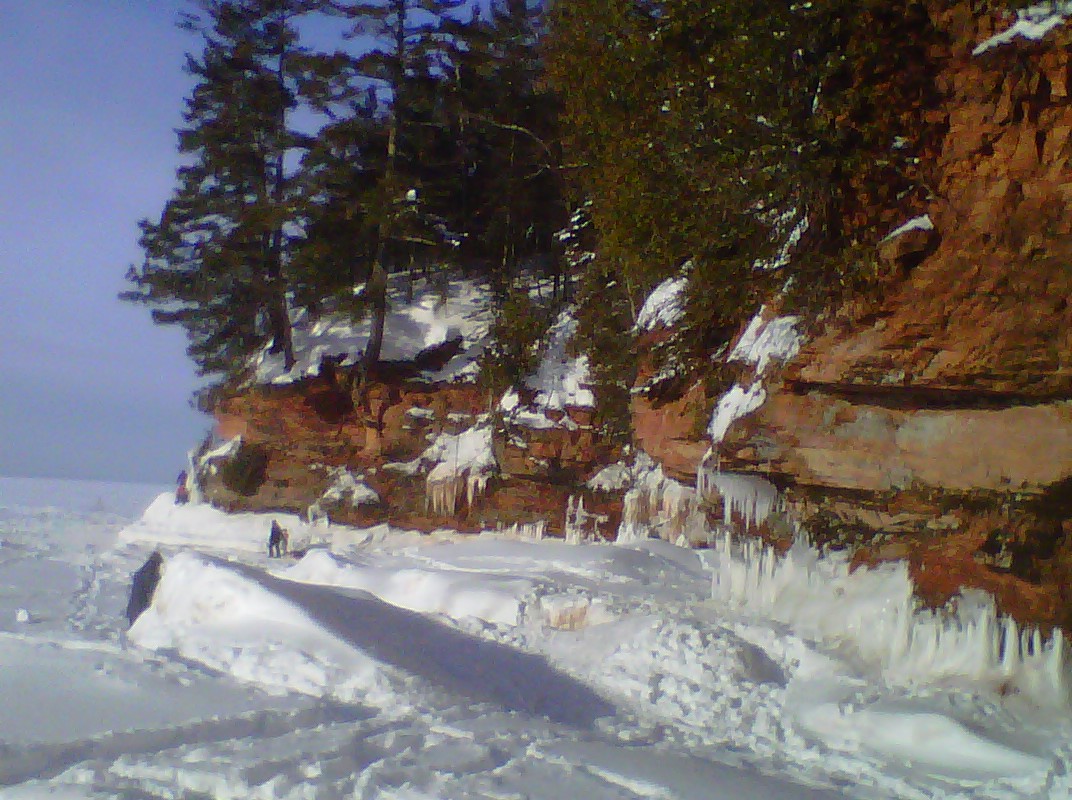
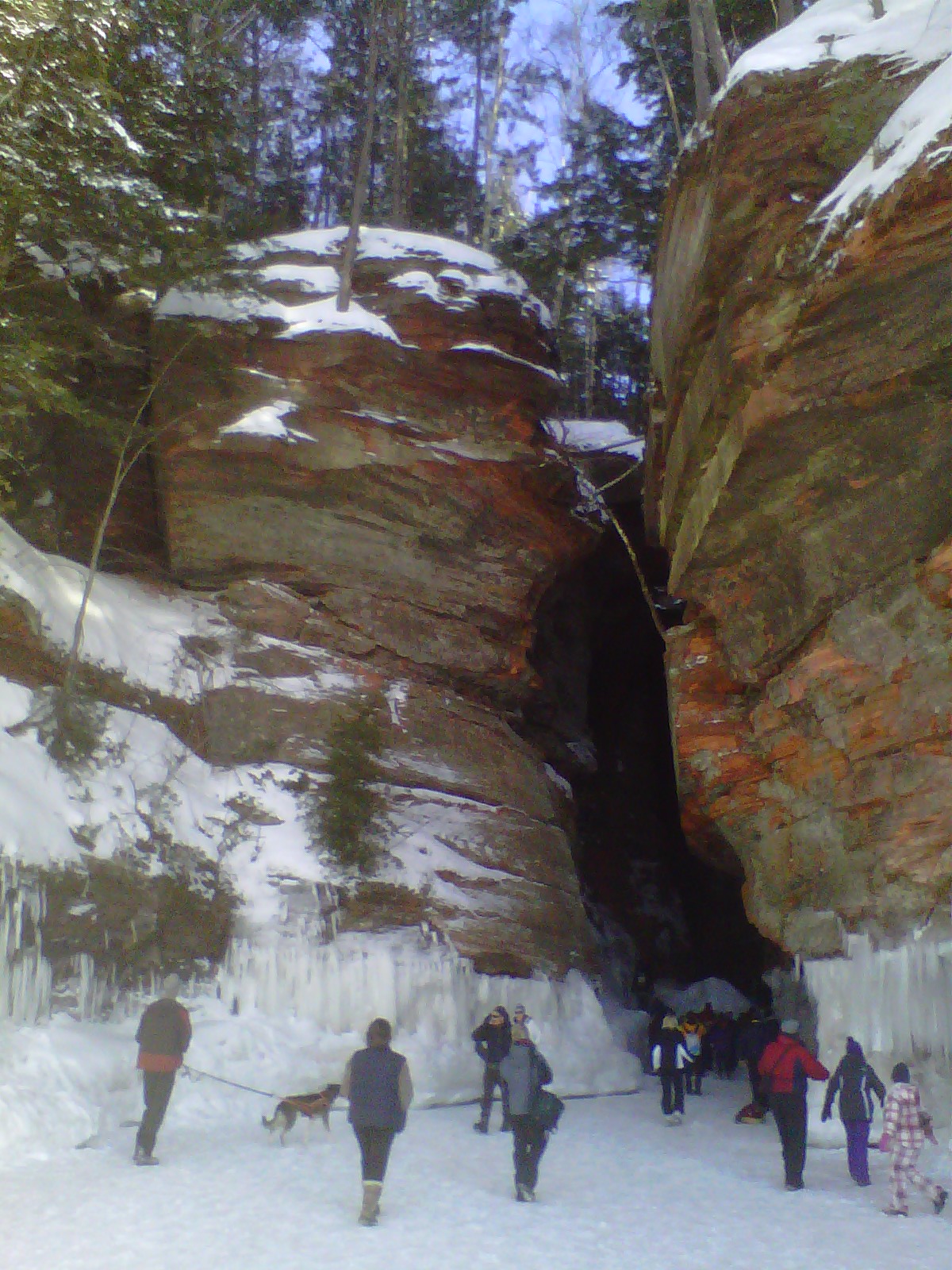
Winter in Duluth also has its moments of sheer, unquestioned beauty. Take this past week, when low temperatures made the Lake Superior ice caves near Cornucopia, Wisconsin, accessible by foot for the first time in a few years. My camera literally froze, leaving me to take pictures with a blurry cell phone camera, but here are some of the fruits of a long slog through the snow along the South Shore:

 Image

Image


Image

Image

Image

It was worth the cold hike, and despite the crowds, some of those icy halls between the rocks were awe-inspiring. It made me want to go back there…in summer, and in a kayak.

Still, things go on. Here’s a rundown of some significant events over the past week:

Boyle Cruises to County Board Duluth City Councilor Patrick Boyle defeated his former colleague Jim Stauber by a 65-35 margin in a special election to fill a vacant seat on the St. Louis County Board. Boyle’s big win over the well-known Stauber showed off the power of the Duluth DFL, and keeps the Board’s liberal bloc within one vote of the conservatives. It also means the Council will have to appoint a new representative to serve the 2nd District over the next two years. That won’t lead to a substantial change in the composition of the Council, but it will be interesting to see who comes forward to replace him. Stay tuned for news on that front.

PolyMet Hearing A packed house was on hand for the first of three informational meetings on the Environmental Impact Statement issued to assess possible copper and nickel mining on Minnesota’s Iron Range. It’s a contentious debate; mining jobs could make all of the difference in the world for the depressed northeastern Minnesota towns, where mining has been the lifeblood of so many communities for so many years. On the other hand, the specter of long-term environmental damage looms, most notably in water treatment that may be necessary for centuries. There will be more hearings, and they are only a small part of what will likely be a long, drawn-out process. For updates straight from the Range, I recommend the blog of Hibbing writer Aaron Brown, who gives a well-balanced overview of the debate here (complete with requisite Northern Minnesota Trampled by Turtles music video).

Maurices Headquarters Design The design for the planned Maurices Headquarters on the 400 block of West Superior Street came out. If I may play amateur architecture critic, I’ll say this: it blends well with that portion of downtown; there are hints of the modernist Radisson, Medical Arts, and Ordean Buildings in there, plus elements of the brutalist Holiday Center further to the east. It looks crisp and clean, and it’s an improvement on the dull former Channel 3 studio on that block. In the end, though, I find it rather sterile. It is very boxy and angular, all concrete and glass, with no hint of detail or nuance. Still, I won’t let my gripes with contemporary architecture weigh down the project too much: it’s a great addition to the downtown Duluth economy.

And, of Course, Hockey Yesterday was Hockey Day in Minnesota, and the day didn’t disappoint. Elk River hosted a pair of outdoor high school games, one including a local team in Cloquet; the Lumberjacks and the host Elks both won their games. The Gophers won, Elk River native Nate Prosser scored the game-winner for the Wild in overtime, and up here in Duluth, a record crowd watched the UMD Bulldogs pick up a shootout win over the University of Denver. In other local high school news, Duluth East tied Maple Grove to round out a very forgettable week, while Duluth Marshall, fresh off a big win over Class A frontrunner Breck, fell to a mediocre Roseville team. The young Hounds will look to right the ship after slipping out of the top ten when they visit section rival Forest Lake this week, while the inconsistent Hilltoppers will play Class A power Warroad on Friday. Both teams have potential, but need to catch some momentum as they head down the stretch run toward the playoffs, which are a month away.

Stay warm…

Duluth East and Apple Valley Revisited

The Duluth East boys’ hockey team heads to Apple Valley tonight. On paper, it isn’t a thrilling match-up; the Eagles have fallen on hard times in recent years, while the Hounds are among the better teams in the state. East won their meeting 10-1 last season. But even so, this game will always bring back memories of the game many high school hockey fans think was the greatest ever played. I re-watched that game a few months ago, and took some notes as the game went along. Here is a recap of the night of March 8 (and the morning of March 9!), 1996, at the St. Paul Civic Center.

-Duluth East comes into the AA State Tournament semifinal game as the top-ranked team in the state. Twelve players on the Hounds’ 20-man playoff roster will go on to play some D-I hockey, and another six will play hockey after high school in juniors, in Canada, or at a D-III school; both of those figures may be records. The defending state champs are led by 1996 Minnesota Mr. Hockey Dave Spehar, the leading scorer in state history and hero of the previous year’s tournament. They return two full lines and their top two defensive pairs from the previous season. They’d demolished Blaine 7-1 in the quarterfinals.

-Apple Valley, however, is no slouch, and is widely thought to be the one team that can stop East. They’re ranked third in the state (2nd-ranked Hill-Murray, the only team to beat East during the regular season, had been upset by White Bear Lake in sections), and lost only one game against a difficult schedule. They boast six future D-I players of their own, and another likely could have played had he not chosen baseball instead. They may not be quite as deep as the Hounds, but with the likes of Brad DeFauw and Erik Westrum on hand, they can match their top-end talent, and they have a small but talented goalie named Karl Goehring.

-One of those East D-I players, junior forward Matt Mathias, did not play. He’d suffered an injury in the quarterfinal, and had to watch on a TV in the Civic Center hallway. The UPN-9 crew interviews him twice during the game; once early on, and once in the 4th OT.  Senior Matt LaTour is pressed into duty in his stead.

-In the open, Wally Shaver and Lou Nanne talk about the need for AV to have a strong start to the game, as they’d been somewhat slow in their section final and quarterfinal; if they don’t, East might blow them out of the water, as they have with every other team they’ve played in the playoffs to date. The Eagles deliver, checking the smaller East forwards aggressively and outshooting the Hounds in a scoreless first period.

-The Eagles also look good killing off an East penalty, even though the Hounds, according to Wally, had an 85% PP over the second half of the season. Their defensive discipline in the early going, which forced East to expend a lot of effort simply to get out of regulation with a tie, may have been the most important piece of the puzzle.

-Duluth East coach Mike Randolph shakes some things up in the first intermission, and East comes out looking better in the second, with Dave Spehar starting to float and the Hounds looking to stretch the ice.

-Spehar came into the game sitting on four consecutive Tourney hat tricks, but the lone hat trick in this game goes to Apple Valley’s Erik Westrum. The crafty forward gives the East defense fits all night long. He scores his first goal of the night just past the five minute mark of the second, temporarily stemming the East momentum.

-13 seconds later, East’s Pat Gunderson responds with a blast from the point, and the game is tied at 1. The game opens up considerably from that point on, with both teams racing up and down the ice and trading chances.

-After Nick Gretz scores the second AV goal, a fan throws an octopus on the Civic Center ice. The Eagles take a 2-1 lead into the second intermission, despite a strong period by East on the shot counter.

-Spehar has two near-misses on breakaways, but each time, the defenseman gets just enough of him to disrupt him. Andy Wheeler has a couple of near-misses as well, one of which is the save of the game from Karl Goehring.

-Spehar takes an ill-advised penalty a minute into the third period (one of only two in the entire game, one on each team). Not to worry, says his longtime linemate, Chris Locker: he steals the puck and scores a shorthanded goal to tie the game at two.

-Less than two minutes later, Westrum has a response, and puts his team up 3-2. Three minutes later, Spehar finally strikes for the Hounds, circling the AV net in search of a passing lane before firing a low shot through traffic.

-After the first period, commentators Wally Shaver and Lou Nanne are calling it an excellent game; by the middle of the third, they’re calling it a truly great one. Little do they know…

-Both teams go back and forth, trading chances left and right, and with just over six minutes to go, Westrum completes his hat trick.

-East presses forward in desperate search of the tying goal, with Randolph using his timeout and a “goalie change” to get his top line as much rest as he can muster.

-That dedication pays off. The AV defense is drawn to Spehar behind the net, and he feeds Locker out in front to tie the game with 38.8 seconds left on the clock. It’s tough to gauge crowd noise from a DVD, but I’d hazard to guess that was among the loudest moments in Tourney history.

-In the 1st OT, Randolph puts the game in his top line’s hands and sends them out to win it. The result is firewagon hockey that is still exhilarating to watch, even 15+ years later. Both teams fly up and down the ice, trading chances. Apple Valley rolls two lines.

-Over the first two overtimes, AV’s best player is Brad DeFauw; he gets three excellent chances, one of which hits the pipe early in the 2nd OT.

-In the 2nd OT, Randolph decides to try to win a war of attrition and starts rolling three lines, with very short shifts. Larry Hendrickson sticks with two for AV. Randolph continues to float Spehar, daring AV to push forward and create an odd-man situation in the offensive zone; AV never takes the bait, and keeps its defensemen back around their own blue line.

-East has a strong start to the 2nd OT, while AV looks sharper toward the middle of the period; East again starts to take control toward the end, when Dylan Mills tees up a shot.

-LaTour deflects Mills’ shot, and it goes over Goehring’s shoulder and somewhere up in the vicinity of the crossbar. In real time, Wally seems to think it went in, while Lou thinks it hits the crossbar; replays seem to suggest the former, but there’s room for doubt. Most tellingly, there is no sound of puck hitting crossbar. A photo in the next day’s Duluth paper will confirm this: the puck was in the net. But the referees have no replay to rely on, and play goes on as the East fans boo.

-There is a distinct shift in gameplay at the start of the 3rd, as both teams grow cagey. East controls more of the play and has some decent chances, but Chris Sikich of AV does have the best chance of the period.

-At the start of the 4th, it looks as if AV is starting to take control. East gets the momentum back mid-period with a great shift from its top line, with Spehar once again making his presence felt everywhere, and Wheeler just missing.

-Late in the 4th, Goehring breaks the single game saves record in the Tourney. AV answers back to East’s surge and has two good chances near the end of the period that Hounds goalie Kyle Kolquist saves.

-By the 4th OT, it seems clear that the man with the most energy on the ice is AV defenseman Aaron Dwyer; Wally and Lou make a note of this fact.

-Between the 4th and 5th OTs, everyone looks spent; Kolquist is flat on his back with his head resting up against the boards, while Sikich is lolling on his side beneath his bench, modeling his stellar flow. Randolph dumps water over the head of a slumped Spehar. The crowd, which is still tightly packed into the Civic Center as it nears 1:30 AM, does the wave. Many have been standing throughout the OTs.

-East has a good surge toward the start of the 5th OT, but their momentum grinds to a halt when DeFauw flattens Spehar with a huge check. Spehar skates gingerly to the bench, and will not get a chance to return to the ice.

-On the next shift, Dwyer blindly fires a shot on net. Kolquist is screened and reacts too late, and the Eagles are on their way to the state championship game.

-In the aftermath, players from both teams embrace, and after the East coaching staff gets Kolquist to his feet, cameras capture he and Goehring talking to one another.

-East will win the 3rd place game 9-2 a few hours later, with Spehar notching one last Tourney hat trick. Apple Valley wins the state title 3-2 over Edina.

-The game had been just the second ever meeting between the two teams, but immediately thereafter, they began to schedule each other regularly. Ever since, East holds a 13-4 edge in the regular season series.

-Some of the stars of that game are still intimately tied to their programs. Mills and Kolquist are now two of Randolph’s assistants at East, while Sikich was named AV’s head coach at the start of this current season.

-Randolph, reflecting on that game and the 2011 triple-overtime loss to Eden Prairie in the state title game, in an interview this past summer:

It takes time to get over. It’s part of the nature of the beast. But then you reflect back, time heals, and you realize how fortunate you were to be part of that. Those were two of the best games at the State Tournament ever; as I told the kids, there was no loser in that game. To be part of it is special. I get over it about mid-summer. (laughs). But you always think about, ‘what if’?

Hounds Throw Down the Gauntlet

On Thursday night, I made the road trip 80 miles west of Duluth to Grand Rapids for a hockey game. The town of 10,000 people has a rather mixed identity: it is part vacationland, part paper mill town, and part gateway to the Iron Range. What isn’t in doubt, of course, is its status as one of Minnesota’s most storied hockey communities.

The Grand Rapids High School Thunderhawks (Indians in less P.C. times) won three titles in six years back in the 70s and 80s, and have produced as many college and NHL players as any school in the state. Recent decades haven’t been nearly as successful, but the program has risen again in the past few years, with two second place finishes in the mid-00s, two narrow section title game losses to Duluth East in the past three years, and a promising youth program feeding in. Thursday’s game had the potential to break Rapids’ long string of frustration against the Hounds, a team they’ve only beaten twice in their past twenty meetings. They entered the game on a six-game winning streak, and a win could have just about locked up the top seed in Section 7AA, something the Thunderhawks have yet to earn in the two-class era. They boast a Mr. Hockey frontrunner in Avery Peterson, one of the state’s best goalies in Hunter Shepard, and a bumper crop of sophomores. A capacity crowd packed its way into the historic IRA Civic Center, ready to blow the wood-trussed roof off the building if Rapids were to win.

Duluth East, however, decided to crash the party, and they did it in style. The Hounds smothered Rapids with superb neutral zone play and a relentless forecheck, grabbing an early goal by Nathaniel Benson for a 1-0 lead. Despite East’s controlling play, Shepard and the inexperienced Rapids defense was doing just enough to keep it close for a while. Rapids took a major penalty late in the period, however, and it was 3-0 by the intermission. “Why so quiet?” the East students taunted a silent Civic Center.

 A few power plays gave the Thunderhawks a little more life in the second period, but East goalie Gunnar Howg saved the shots he needed to save, and another bad Rapids penalty set up an East power play goal late in the period. The Hounds went into cruise control in the third, not allowing a shot until over 12 minutes had passed, and adding a fifth goal with .5 seconds to go for some icing on the cake for the Cakeaters of the North.

The game was a total triumph of Mike Randolph hockey. His young Hounds executed his gameplan as well as any Hounds team ever has. They used their depth to their advantage, and the third line of Alex Spencer, Maysen Rust, and Nathaniel Benson—a potential concern I’d cited earlier in the week—was a wrecking crew all night long. The best player on the ice was not Peterson, but East defenseman Phil Beaulieu, who seemed unbothered by his huge amount of ice time, slaloming past countless defenders and shutting down every Rapids rush that came his way. He made some new friends as well, stopping for a photo op with Grand Rapids mites between periods. It was that sort of night for the Hounds.

Tactically, Rapids was a mess, as they tried to skate straight into the heart of the East defense and generated nothing in the way of odd-man rushes. If not for six power plays, they might not have mustered ten shots on goal. It was hard to find any sort of positives for the Thunderhawks; their one recourse, perhaps, is history, as East beat Rapids 5-1 in the regular season meeting in 2007, the year they picked up their sole playoff victory over the Hounds. This team can’t possibly be as bad as it looked on Thursday night, and while there are a bunch of things that would have to go right in a playoff rematch—better discipline, better breakouts, a willingness to do some dirty work on offense, a big night out of Shepard—it’s certainly imaginable that they could get it done.

East, on the other hand, has to make sure this mid-January win isn’t the peak, but only another sign of improvement from a squad that has already grown up a lot since November. They went to the box too often for comfort, and more 5-on-5 scoring wouldn’t hurt, either; they can’t count on major penalties, especially in the playoffs, when referees are more likely to swallow their whistles. But the win certainly put the rest of the state on notice, and we still don’t know how high their ceiling is. They now have a fighting chance at the top seed in 7AA, though every game will matter as they try to atone for their early season loss to Elk River. No matter how the season ends, the big win in enemy territory will go down as one of the highlights.

The Hounds at Midseason

The Duluth East boys’ hockey team has played twelve of its twenty-five regular season games to date, and with a 9-3 record to date, and are #9 in Class AA in my latest rankings. After losing twelve seniors off last season’s squad and having only four this season, the 2013-2014 Hounds might have been expected to endure some growing pains. Indeed, it hasn’t all been smooth skating; they were upset by a decent Centennial team, had a narrow escape against bottom-feeding Cambridge, and aren’t exactly scoring in bunches. But so far, the positives far outweigh the negatives: they’ve knocked off powers Wayzata, Eden Prairie, and Breck, and played well in a narrow loss to section frontrunner Elk River.

The winning formula looks similar to the one used by last season’s Hounds squad, which also overachieved in the eyes of most pundits. Their anchors are their two big defensemen, Phil Beaulieu and Alex Trapp; both log loads of ice time but handle it well. Beaulieu darts about the ice playing pond hockey, practically without a position; for his efforts, he’s been rewarded with a scholarship to Nebraska-Omaha, where he’ll join former teammate Jake Randolph. Trapp, meanwhile, is as steady as they come, maintaining his discipline and dishing out the heavy hits. Despite the heavy reliance on the top pair, there is some depth on defense; senior Joey Marinac anchors the second pairing, and a steady supply of players have rotated through the other spots, with hard-hitting Bryton Lutzka and 6’4” sophomore Alex Spencer enjoying the bulk of the playing time.

Up front, the top line of Nick Altmann, Brian Bunten, and Jack Kolar has carried most of the scoring load, with Altmann in particular lighting the lamp with regularity. While not as prolific as the top line last season, this group—which was together last season as well—has good chemistry and can at least hold its own against most of the state’s better lines. The second line hasn’t produced a ton of points yet, but—much like the Altmann-Bunten-Kolar line last year—they are a young group featuring two sophomores and a junior, and have generated plenty of offensive zone time. Ash Altmann and Ryan Peterson accounted for two of the three goals in the Eden Prairie win on Saturday, showing their offensive potential.

The third line, on the other hand, remains unsettled. The Hounds lead the state in defensemen converted to forwards, as several D have taken turns at the wings of junior center Maysen Rust. There is potential here, but they have yet to match the level of the all-senior checking line the Hounds put out last season. East may not have the firepower of many of the other teams in the top ten, but they’re good enough to skate with all of them, and if they play smart defense, they don’t need to pile up tons of points.

Smart defense is, of course, Mike Randolph’s specialty. The Hounds’ coach has had some very different types of teams over his quarter century at the helm, but there are constants throughout: puck possession and cycling in the offensive zone, and their ability to forecheck aggressively clog up the neutral zone when they don’t have the puck. The former makes for some very pretty hockey; the latter, on the other hand, is no one’s idea of sexy hockey. But when properly executed, it protects narrow leads and wins tight games, and so far, this young squad seems to be buying in and following the gameplan as well as any. Sure, East might score a little more if Randolph turned them loose a bit more often (and he does throw in some wrinkles from time to time), but they’d also give up a lot more, and this isn’t the sort of team that’s going to do well in a shootout.

A few other things could foul up the formula. The first, of course, is goaltending: junior Gunnar Howg seems to have grabbed the starting spot with his acrobatic saves, but he’s still learning on the job, and has had a few forgettable moments so far. East’s defense doesn’t allow many scoring opportunities, but when they do, they are often good ones, and East goalies will need to be in good form down the stretch. Another mild concern is an occasional lack of discipline; it’s not a persistent problem and the penalty kill is solid, but they’ve taken a few more trips to the box than usual this season, and a few have come at inopportune moments.

Lastly, there is that matter of other teams who will have a say in the Hounds’ fate. Elk River has its best team in some time, and with a narrow win over East in December, they already have a leg up for section seeding. That Elk River team also lost to Grand Rapids, whom the Hounds visit this coming Thursday. East has owned the Thunderhawks in recent years, and they are certainly the deeper squad. But Rapids has one of the state’s best goaltenders in Hunter Shepard, and their collection of talented forwards doesn’t need many chances to make other teams pay. A loss on Thursday would make a top-two seed unlikely, a fate that hasn’t befallen the Hounds since 1999. And while they aren’t nearly as talented, an offensive outage from the Hounds could certainly give teams like Forest Lake, Andover, and even Cloquet a shot at a playoff upset.

And so the Hounds head into the second half, and as usual, the schedule is one of the toughest. In addition to the Grand Rapids game, they also play rival Duluth Denfeld this coming week, and will look to avenge last season’s embarrassing loss. They will also face a powerful Blaine team and Lakeville North, the state’s first half darlings who came out of nowhere to beat many of the elite. More often than not, one can predict the Hounds’ destiny based on the way they play over the second half; if they win the games they’re supposed to win and at least play top teams tough, their playoff prospects are excellent; if they struggle in games they should win comfortably, they might have peaked a little too soon. Time to see what this young team can do.

A Changing of the Guard in 7AA?

Section 7AA has been Duluth East’s dominion over the past five years, but last night’s result at the Heritage Center—a 3-2 win by 4th-ranked Elk River over the Hounds—has the potential to be a watershed moment.

It was a big night for the Elks in many ways. It was the first win by a 7AA opponent over East since the Elks beat the Hounds in 2010, and only the second since 2008. It was East’s first home loss since the 2010-2011 season (though that comes with an asterisk, as East was the “road” team in their loss to Duluth Denfeld last season). To find East’s last home regular season loss to a section opponent, we have to go back to a December 2006 game against Cloquet. Even without the history, it was a coming-out party for the Elks, who are now 3-0, with wins over state powers East and Edina. They are now the favorites for the section crown.

It was an important win, but it wasn’t the convincing sort of win that erases any doubts. The game went back and forth, with each team tallying once in the first two periods. The Hounds struck first on a terrific move by defenseman-turned-forward Phil Beaulieu, who dangled through the Elk defense before firing his shot; the Elks watched him closely for the rest of the night, making sure the East captain had little space to maneuver. The Elks tied it on a tap-in by Kyle Badger, and took the lead not long into the second on a blast from the blue line by Grant Bunker that nailed the water bottle atop East goalie Gunnar Howg’s net. After a penalty kill, East began to assert itself, and tied the game on a wicked shot from sophomore Ryan Peterson. The game-winner came with four and a half minutes to go, and was very similar to the first; there was a scrum in front of the East net, and suddenly the referee signaled a goal.

The gameplay was fairly even, though the teams excelled in different areas. Elk River’s forwards showed off their skill, beating the East defensive corps on the rush at times; the Hounds, on the other hand, relied on coach Mike Randolph’s signature puck possession system, controlling play for stretches in the 2nd and 3rd periods with their steady cycling and ultimately outshooting the Elks, 30-24. The difference-maker was Elk River senior goaltender Maclean Berglove; both East goals were tough to stop, and while Howg had some solid saves for East, he couldn’t quite pounce on the pucks sitting in his crease on the first and third goals, and the second goal came from very far out.

Recent history warns us from taking too much away from this game. Back in 2010, the Elks edged East 3-2 in the regular season meeting in Elk River, a game in which a veteran Elks’ goalie outplayed his less experienced East counterpart, despite a large edge in shots for East. The two teams met again in the 7AA final, and the Hounds steamrolled the Elks in a 5-1 win. As is the case this season, East was very young that year, and took some lumps in the regular season before putting things together in the playoffs.

But these Elks are not those Elks, and the 2013-2014 edition looks like one of the best teams in the state. Their third line scored twice last night, showing off their depth; they also did a superb job of blocking shots in front of Berglove, making his job much easier. With ten seniors on the roster, they have plenty of experience, and they play disciplined, smart hockey. Their second-year coach, former Minnesota North Star Gordie Roberts, has himself a team with no weaknesses. The Elks’ program seems be in a very good place right now, too. After five Tournament berths in seven years around the turn of the century, they moved to 7AA in 2005-2006, and haven’t been back since. They hit bottom near the end of the 2012 season, when longtime coach Tony Sarsland, a man who made Mike Randolph seem cute and cuddly, was axed by the district. Last season ended in pain, with Grand Rapids tying their 7AA semifinal with ten seconds to go and winning in overtime. But now, having done their penance, the Elks look like a force: their youth program has been on even terms with many of the state’s best in recent years, and the Twin Cities exurb will host Hockey Day in Minnesota 2014.

Still, several teams in 7AA could spoil their party; it’s a deep section, and even some of the weaker teams have shown they can stick around with the two top-ranked squads. East only has four seniors (one of whom is out hurt), and they have some correctible problems to fix don’t really have much of an identity yet. Randolph’s teams tend to improve as the season goes along; over the past nine years, they have a December winning percentage of .699, but up their game to an .857 clip in January and February. They may continue to take some lumps; they don’t have a whole lot of offensive firepower, and as a narrow win over Cambridge showed, East will probably get stuck in some close games against less-than-stellar opponents. But the East program continues to put out quality hockey players, and they’ve already shown that this young group can skate with the state’s best.

All we can say for now, then, is that the 7AA race will be as good as any in the state. Elk River and East are very even and are top ten teams at the moment, and a yet-untested Grand Rapids team has some stars it could ride into the conversation as well. It’s a bit early to be saying much about section seeding, and teams like Forest Lake and Andover won’t be easy wins, but at this point, there’s good incentive to grab the top seed and avoid playing one of the other top three in the semifinals. The Elks now have the inside track for that spot.

For both teams, it’s back to work now. Elk River travels to face a quality Maple Grove team on Thursday in a Northwest Suburban Conference game, while East visits archrival Cloquet. The Elks must be careful not to peak in December, as senior-heavy teams sometimes do; the Hounds cannot take future improvement as a given, and while there were no glaring weaknesses on Tuesday night, there were no clearly pronounced strengths, either. We have a long way to go, and whether East extends its dynasty or another team emerges, it’ll be neck-and-neck to the end.

Preseason Hockey Ranking Nuts and Bolts

My preseason Class AA Minnesota high school hockey rankings are out. For curious readers out there, here’s some background on how I go about this process.

I start out by taking most possible contenders and making lists of their players and their regular season point totals from last season, crossing out those who are gone, and adding any other useful information we might have on them (grade, position, special notes like making the Elite League). For example, here’s the list for top-ranked Wayzata:

Freytag 32 Jr F EL
Sorensen 24 Sr F EL
Zimmer 23 So F EL
Olson 19 Sr F
Haller 16
Machut 15 Sr F
Wahl 14
Hemenway 12 Sr D
Heising 10 Sr F
Batra 9
Olson 9
Lindstrand 8 Sr D EL
Stevens 6 Jr D EL
Zitzlsperger 6
Goalie:
Dingmann
Ahrens Jr EL

I cut the list off without including every player because, below a certain point, point totals are easily replaced by a fill-in, especially in deeper programs. That cut-off point varies by team based on the schedule they play, and I’m also more lenient in including low-scoring defensemen, for obvious reasons. Sure, a few of those 3-point players might break out and suddenly have huge years, but guessing which ones can be near-impossible. I also only list goalies who have played a substantial number of games.

With Wayzata, this method gives us six returning forwards, three returning defensemen, and one goalie. That’s among the better totals you’ll see for any team at each position:

Top 20 teams with 6+ returning forwards: Burnsville, Hill-Murray, Blaine, Wayzata, Benilde, Elk River, Roseau

Top 20 teams with 3+ returning defensemen: Eastview, Hill-Murray, Blaine, Wayzata, Benilde, Holy Family

Four teams make both cuts: Hill, Blaine, Wayzata, and Benilde. Of those four, two return goalies: Blaine and Wayzata. That’s a simplistic look, of course; I have to look at the individual players who are coming back and make some judgment on how good they are. But based on that alone, I have a decent idea of who’s going to be near the top of the rankings.

From there, I can weigh the strengths of teams against other teams in the same general tier. Hill has more front-end forward talent than Wayzata, but Wayzata’s defense is better and their goalie situation is more settled, while depth is a wash. The Trojans therefore pull ahead of the Pioneers. Blaine, on the other hand, despite being relatively good in every category, doesn’t jump to the top of the list anywhere. That’s why they settle toward the back of the top group.

I trust people can see the shortcomings here: it can overvalue points somewhat, and it’s not much use in figuring out who can fill all the holes in the lineup. For that, I turn to youth program rankings for help. This gives me an idea of how deep each team is, and how much they can expect JV or bantam players as they try to fill their holes. Again, it has that has its disadvantages: it’s useless for private schools (or publics without their own feeders), not all players go to the same high school program, and players develop at different rates. It’s of some use, though, and here are Bantam rankings (among programs feeding AA public high schools) for the sophomore, junior, and senior classes for the 7AA contenders:

Elk River 5-16-4
Duluth East14-15-12
Grand Rapids 43-26-5
Forest Lake 32-X-33
Andover 12-11-26
Cloquet 26-28-X

Teams with Xs were out of the top 45; I didn’t bother going any further than that.

Knowing that, we can then start to add asterisks. Cloquet lost a bunch of players in last season’s exodus, East had some players go to Marshall, and Elk River and Andover have also had players leave early. On the other side of the coin, two big-time players in this section—Grand Rapids’ Avery Peterson and East’s Phil Beaulieu—played varsity as freshmen, and are therefore not included in those numbers. I’ve also been at this long enough now that I can see certain trends. Forest Lake, for example, tends to exceed the expectations you’d have for them, based on those youth teams; Andover, on the other hand, often does not.

One last step I added last year was making a note of incoming players who are probably capable of jumping right in and contributing. I usually find these names off of the High Performance national camp teams (mostly the 15s), along with a handful of others who stand out (say, in the Elite Development League). Going back to Wayzata, that adds three players to our Trojan roster: Paterson (F), Senden (F), and Sorensen (D). Even if these players don’t play right away, that means there’s someone in the program who’s good enough to be taking their place. With three promising young players, Wayzata once again comes out looking good; only Edina, with five, has more.

Including those three players, the Trojans now have 8 forwards and 4 defensemen accounted for; those totals are both the most, or tied for the most, of any team out there. Add in their incredible depth (youth teams ranked in the top two each of the past three years), and they’re a pretty clear preseason #1. They’re not a runaway #1 like, say, Duluth East two years ago, or Edina in 2009: some of their top players are still on the young side, and haven’t put up big numbers in high school yet. Still, they’re a safe bet for now, and using this method, I get a decent look at the preseason top 25.

As I’ve explained in past arguments on the forum, this isn’t a formula, and I don’t ever want it to be. These are subjective rankings, and while that comes with obvious biases that computers don’t have, it also frees me to make certain judgment calls, and factor in less tangible things like coaching and history. I just aim to be as objective as I can, add those subjective tweaks that can correct for some of the head-scratchers that sometimes come up in computer models, and hopefully add some substantive comments that help tell a story for each team. I hope you’ll follow along as those stories unfold.

Housekeeping Notes: Election Wrap-Up and Dropping the Puck

First off, this site had a nice little spike in interest around Duluth’s recent municipal elections. Between that and the already strong interest generated by some of my hockey stuff, I’ve decided it was worthwhile to fork over the $18 to WordPress and buy the domain name. This blog is now apatientcycle.com, though if you still have the old web address cached in your browser, it should still link here. Thanks for the support!

Also, a note on my post-election analysis: I’m sure there are plenty of other conclusions or interpretations of the trends I found, or of other trends I didn’t comment upon there. It’s meant to be the start of a conversation, not the end. The goal here is dialogue. I don’t have all the answers. No one does. It takes a group effort to find some.

To that end, I’m interested in hearing some responses, and I’m also happy to post any sort of reply I get—questions, comments, criticisms, scathing rebuttals—and anonymously, if you’re more comfortable with that. I invite you to email me at karl.schuettler@gmail.com or get in touch with me in any other way you know how. My coverage of local politics will continue as time allows, and I do want to write more broad posts like that analysis one, too. I heard a few good points at a post-election wrap-up forum over the weekend, and I might try to expand on them, among other things.

Shifting gears: Minnesota high schools begin hockey practice this week, which means there will be more hockey coverage on this blog over the next few months. My preseason Class AA rankings, which have become something of a fixture over on the USHSHO forums, will debut over there on Wednesday, and will appear every Sunday of the regular season starting December 1.

You can find my hockey stuff in other places, too. MN Hockey Hub appears to still be selling copies of its annual preview book: it isn’t cheap, but it is incredibly thorough, and yours truly has an article in it. They had me do a feature on Duluth East, which included a much more succinct version of the history series that appeared on this blog over the summer, a preview of the upcoming season, and bits from a very long interview I did with Mike Randolph back in August. (I might try to get more of that online at some point—whatever you think of the man, it’s fascinating.) The rankings will probably be appearing on mnhockeyprospects.com once again also, and I’ve had other people talk to me about possible writing opportunities. No matter what, I will continue to put some stuff on this blog—most likely more Duluth East-related stuff, and perhaps essay-length responses to some of the more compelling topics that come up on our forum. (I already have a post on the work behind my preseason rankings queued up.) Stay tuned for details on that front.

To help keep people track of these things, and to be more actively engaged, I’ve also succumbed and decided to launch a Twitter account. You can find it here: https://twitter.com/KarlEastHockey

Since I know many of the hockey fans here have little interest in the political and cultural stuff I post on this eclectic blog (and vice versa), I’m going to limit that Twitter feed to hockey. I don’t have any immediate plans to create a separate handle for everything else, but if you think I should, let me know.

As always, thanks for reading.