I don’t believe that grief passes away. It has its time and place forever. More time is added to it; it becomes a story within a story. But grief and griever alike endure.
It was the nature of his profession that his experience with death should be greater than for most and he said that while it was true that time heals bereavement it does so only at the cost of the slow extinction of those loved ones from the heart’s memory which is the sole place of their abode then or now. Faces fade, voices dim. Seize them back, whispered the sepulturero. Speak with them. Call their names. Do this and do not let sorrow die for it is the sweetening of every gift.
-Cormac McCarthy, The Crossing
One year later, after Andy, certain moments are burdened with memory now. Of course there is a void at family gatherings, the occasional twinge when I glance at a few of his old possessions that have come my way. The weekend before the anniversary of his death is another such reminder of a past era. He visited me this weekend the past two years, the best fit for his Lutsen alpine adventures even though it is also the weekend of Book Across the Bay, the Ashland, Wisconsin Nordic ski race that has become a staple of my winters. After the race the past two years I came home to him, the first year to a lively party with many friends, the second to just him and my mom, chatting away a quiet midwinter night. Now, just quiet.
This year it is hardly even winter, the ski race reduced to a saunter on foot along shorefront ice and a bare paved path along the beach. Most people make it a casual stroll, but I elect to push, running as fast as I can on a thin layer of snow atop ice, sweat caking beneath layers. I run free, alone along the luminarias. I double back at the fire-breathing dragon that marks halfway point and I part the walkers moving in the other direction, their rippling wave of encouragement carrying me the whole way. I finish well enough to earn a shoutout from the emcee and a handmade mug as a prize at the afterparty. I don’t consciously make any dedications, don’t linger on any specifics, but I do know why I ran harder tonight.
The next day I trek along Hawk Ridge with a weight-laden pack, a preparation for a venture, now just six weeks out, on what may be the most self-conscious trekking route on earth. I reread a passage from Conor Knighton on those moments that marks shifts in life, quoted by me after a trip to Utah two years ago. Layers in time are not always obvious; jarring moments like Andy’s do not always immediately change a life. But they do, perhaps, have the power to take beliefs out of the theoretical realm where they marinate and encourage one to think about what it really means to live out beliefs, to make the most of precious time.
If I write little these days, this is why: the urgency of the present consumes me, and while writing remains here as a tool for discernment of the new or the unknown, the capstone on the adventure, a delight when it comes freely, it no longer need be a frustration when it does not. Life is not lived on paper, and even less so in the virtual spaces where I type out words. Here is to now, the sweet, sweet gift of McCarthy’s gravedigger, whose nectar I seek with more thirst than ever before.
“The beckoning counts, and not the closing latch behind you: and all through life the actual moment of emancipation still holds that delight, of the whole world coming to meet you like a wave.”
– Freya Stark
Scars do not disappear but they can heal, harden, turn to something more as they become memory. A quarter century after my brother’s birth and brief life, the grief I felt as an eight-year-old seems much more distant than it did as a teen or a young adult trying to define what family meant to him. If the world would stay still I think I could say I have healed, a scar still visible somewhere on a knee or an elbow but in no way inhibiting my functioning, just an ever-present reminder when I glance down at that once-wounded limb.
The world, however, does not stop delivering its little jolts: more people suffer or die, some more expected than others; some with gentle fades into the night, some with gut-wrenching jolts. This spring in particular has been freighted with loss, and when viewed from a detached distance, it is a particularly pyrrhic consolation to observe that one appears to have a talent for processing grief. But any healing power only seems absurd in isolation: released in a social milieu, it can take on a life of its own.
One year after my late cousin Andy and I went for a four-day trudge through endless mud, I repeat a snippet of our journey up the Superior Hiking Trail. At the time, Bear and Bean Lakes were lost in fog, invisible from view. Chagrined, I was left to narrate what we were missing, and it was not hard to find the weather symbolic of Andy’s mental state in the succeeding months. When I make the return trip there is no fog, just brilliant sun above the twin teardrop lakes, both wrapped in the embrace of those jagged North Shore ridges. I bring with me a flask filled with wine from the bottle he left me a few days before he killed himself this past February. I leave a tribute on a trail register, write a few words in a notebook, and am glad to be alone. But I feel no great sadness. Instead, I look out to what lies beyond, off toward Palisade Valley and the sublime ski trail tucked between rocky ramparts splashed with summer green. The next steps beckon.
I mark this date every year, and will do so for as long as I write here. But I also think it is easy to ruminate on loss for too long, and so, barring any sudden new insights, my writing life tries not to fixate on the closed latch. Honoring the dead has its place, but we are still here in the land of the living, and over the next few weeks, many members of the extended family that suffered this latest loss are going to live well. Very well. We are off to meet the wave.
I pour out the last glass from the bottle of wine we opened together last weekend. I head upstairs, where my guest bed is stripped, its sheets still drying from the wash; the towel he used still sits here. In a family picture on my wall, one smiling face looms out, that image forever freighted with a different meaning now. There is an empty space in my house, a sense of loss even though he was here for only a few short days. I am gutted, angry, filled with a fire to go forth and never waste another precious moment, to heal a broken world with whatever power I might have. And so I sit down to write.
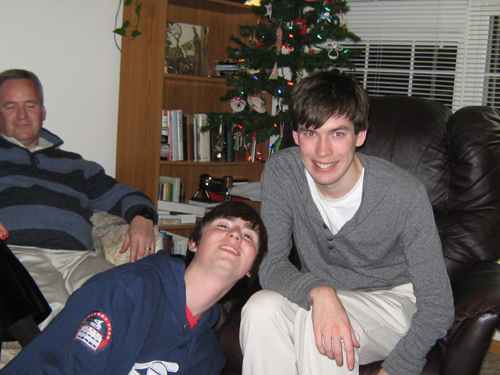
My cousin Andy had the power to fill a room with his presence. He was magnetic, aglow with opinions, eager to share his latest objects of fascination. Like many of us Maloney cousins he was a Renaissance man: an electrical engineer, a voracious reader, a skilled chef, an eager skier, a card and pool shark, a determined sailor, and a devoted lover to his high school sweetheart, along with a host of other pursuits he would be sure to tell us about whether we were interested in them or not. He and I always shared a bond, even if we only saw each other a few times a year; though he was over four years my junior, he was precocious enough to keep pace from a young age. On an unstated level, we were the only living children of parents who knew loss, perhaps living out a sort of surrogacy for the younger brother I barely knew and the older one he never did.
Andy was voracious in his appetites, and so many of our times together are vivid: in the Northwoods by Minocqua, snorkeling off St. Thomas, on that family Mediterranean cruise we were set to relive this summer; teenage pillow talk when we were supposed to have been asleep, a bourbon-infused night after a Shakespeare festival in La Crosse, too many euchre marathons to count. One night, after I unwittingly enabled his tip into drunken excess, I suddenly saw the danger in the relentless course he charted. But I was myself enchanted by that push, wanted to ride along with it, even as I remained firmly bounded by an unshakable sense of limits. He was refreshingly open about the troubles he did eventually face, sought out the help he needed, was bounded by a loving network of support.
Some diseases, however, are too deep to cure, and Andy careened toward the edge in his final months. My journal entries on the four times I saw him in 2022 read like a steady progression. In February, when he descended on my house with a gaggle of friends for a ski weekend, it was a rollicking party, good food and happy stories and a few nightcaps for just the two of us, united in our thirst for those moments. “His company is so very easy to keep,” I wrote in a contented blur on one of those nights. A May backpacking adventure on the Superior Hiking Trail left me a bit put off by certain conversation topics and the regularity with which he self-medicated with THC, but he was a trooper through relentless rain and mud, not once complaining at this brutal slog that would have broken many other backcountry rookies. By Thanksgiving, I wrote with annoyance at the seeming evacuation of his social awareness; by Christmas, I was having asides with relatives, bluntly asking if he was okay. He was not.
Andy was supposed to come visit for New Year’s, but instead spent it in a hospital. He was bitter over the intervention, our lone conversation during that stretch a rant-filled call in which I could not get a word in edgewise. It was, however, necessary, his ultimate passing in no way invalidating the wisdom that something had to be done. I now recognize that he was by this point deeply sick, on a path to ruin in one form or another. I started to wonder if this story could ever have a happy ending, a cascading series of concerns that, alas, proved preparatory for the end result, a thought that is in no way comforting but did allow me to glide past the shock phase in the cycle of grief and begin the effort to heal.
He finally made that planned New Year’s trip in mid-February and spent his final weekend in my guest bedroom. It was a low-key affair, reading time and board games, me apologetic for being pulled six different directions by hockey and a ski race over those days. Of course all the what ifs flit through the mind. Was this a goodbye? No: he was going on with life, making reading lists and travel plans, and by then I knew his evasions well enough to be sure it was no act. Could I have said more, done more? No: I have enough faith in my instinct that he was not ready to talk, and this intuition has since been backed up by those who did try to broach the topic. But there was a visible void there, a missing spark of the old manic energy and rebellion, the fuel that drove him to the edge and sometimes over it. I chalked it up to medication and hoped he would, in time, find a better equilibrium. He did not have that time. His case was terminal.
This suicide is the closest and rawest to me in recent years, but it is far from alone: there have been far too many in my orbits, too many friends and relatives left in grief. It is hard not to look around for things to blame. There is something to a late modern anomie, a lack of meaning or sanctity in a cold-hearted and status-obsessed world; an uncle and I who had been just trying to watch a football game were subjected to snippets of this malaise amid a meandering December rant. There is a news environment that preys on fear and despair for profit, a doomsaying world in which Andy at least dabbled. There is the Covid-era exacerbation of isolation that has compounded so many of these trends and pushed too many over the brink. There are the guns, the sickly offshoots of an American fetish that draw headlines for mass carnage but more often than that prove deadly accessories that turn dark thoughts on bad days into irreversible fates. There is the lingering cloud of generational trauma, the specter of addiction, the accumulating weights that trouble people across all cultures and eras.
And still. So many of us live through the same general conditions and come out well enough, and I ask him the question on a ski the night I learn of his passing: fuck, man, why couldn’t you see some of what I see, feel some of what I feel that lets me take every crisis I face and crush it beneath a resolute certainty of purpose? I’m not sure if I will ever know that answer, and I am, true to form, at peace with my efforts with Andy. I have found counsel in the words of both friends near and thinkers afar, and I have, perhaps eerily well, scripted my ability to process the unthinkable in my words on here over the years. I wish I could impart that equanimity to his parents, to the love of his life he left behind, to everyone else in our sprawling clan, but their journeys are their own. May we all find what we need to persevere, in speech or in writing or in unsaid feelings, in embraces and little memorials that convey what words cannot.
I head upstairs and remake the bed. The towel goes in a laundry bin, the wine bottle into the recycling. The picture, of course, remains on the wall. The fondness over the good times we lived will never die; nor, I think, will a certain anger over his final choice. But the rant-laden phone call from the hospital in January did end with a sudden, tender “love you,” a jarring reminder that the incandescent soul was still there, clinging to something as it lost its war with a fatal disease. That is still Andy, here both to haunt and bring forth a smile, the eternal presence burning through us. Like Hamlet, we do not know what dreams may come in his sleep of death, but those of us who live on know he will endure in ours.
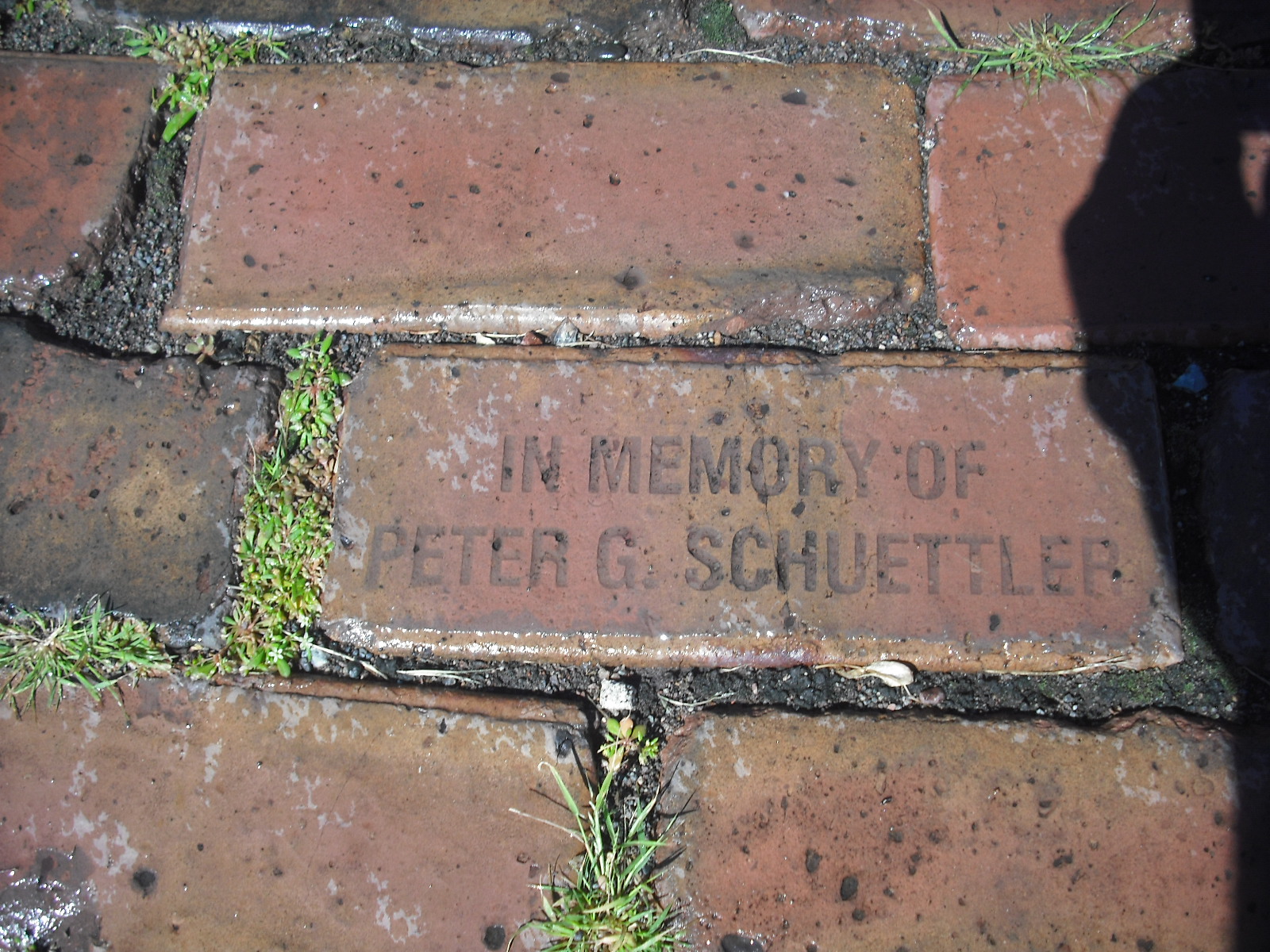
Visits to my paternal grandmother were studies in chiaroscuro. They always came in the dead of summer or at Christmastime, either vines and shrubbery slowly swallowing the home on a sweltering August day, or amid the bleak empty fields of a Wisconsin winter, perhaps with a dusting of snow. They came after a long drive across the state, past yellow brick churches whose steeples rise above the plain, German industry and weekend brat fries and bars with Pabst Blue Ribbon signs devoid of irony. They felt like trips into a time machine, back into some past American dream, a dive into a memory of a time half-forgotten yet indelible. They were in my world but not of my world, and with Mary Ann Schuettler’s passing this past week at the age of ninety-five, the lenses through which I see those visits do not seem like my own.
At their best, trips to visit my grandma were a passage out of Wendell Berry: a return to a simpler economy, diligent completion of household tasks, satisfaction from simple work in a bucolic farmhouse haven. She tended a sprawling garden and cared for too many cats and had enough birdfeeders out the window to host a small aviary. Holiday dinners were the same year after year, always the duck and the cranberries and the various side salads that I never really ate. Woe unto any visitor who dared express fondness for any dish on the table, for it would be sure to reappear at every single meal thereafter. She tended to her weekly soap operas and watched the news every night so that she could shake her head at whatever was going on in Milwaukee. Any chat on the phone began and ended with a discussion of the weather, which was always too hot or too cold or too snowy or not snowy enough, but always too something. She held off the passage of time through devotion to simple rhythms, to memories of what had been and what still could come out of them.
She carried herself with a quiet dignity, some cross of Catholic devotion and midcentury decency code morals, both demure and unbending. A visit to my Uncle Pat’s blended family one Christmas, a venture in which I was a fish out of water but suitably entertained by the sociology of it all, had her shaking her head over “how people could live like that.” She barely ventured out of Wisconsin in her ninety-five years, though she and my grandfather made regular retreats to the Northwoods near Eagle River. Later, my dad and I would work to get her out of the decaying house, whether on a tour of family history or just on a drive up the Kettle Moraine of eastern Wisconsin, those oak-studded eskers and kettles that I will always view with elegiac eyes.
At other times, life with Grandma could have been scripted by Faulkner or Flannery O’Connor, a Midwestern Gothic made all too real by a supporting cast of witch-worshipping neighbors and the excess of cats that spiraled out of control. Visits were vigils through long passages of wordless silence, and if anyone made any effort to improve her lot it was too much trouble, even though subsisting in a tenuous state was far more troubling than any effort to clean up the place. In a visit after a year and a half of Covid isolation my dad, Uncle Pat, and I went at the dried-out cat shit with an ice scraper and cleaning fluids, and as we worked she looked away in shame. Her anxiety at our visits took on an entirely different flavor.
Grandma’s life was not just the sedate passage of time. At one point, my Uncle Chris produced a news clipping with a photo of her and a friend at a Liberace concert; I’m not sure what will happen to the Elvis memorabilia in the dining room display case. Immersion in NASCAR and the Packers livened up her weekends. My dad and I both relish the memory of the night when, after enduring an hour of “It’s a Wonderful Life” at Uncle Chris’s behest on Christmas Eve, she shut it off promptly after he went out the door. Hints of spontaneity and verve occasionally peeked out from a life so often buried beneath nerves over the slightest alteration of routine. She was at her best when she cracked that bemused smile and muttered a “God” at some interruption we offered to her otherwise immutable procession.
Above all, she was a survivor. She outlived her rock, my eminently patient and kind-hearted grandfather, by thirteen years; she outlived her entire generation in her family, and all of her friends, too. Even as the trials of life mounted, she kept plodding on, at peace with her pace. She was born in West Allis when it was still a somewhat rural outpost; later, it became a postwar boom suburb and now it is a shifting segment of the Milwaukee inner ring. A similar story took place out in Ozaukee and Washington Counties, where she settled later in life. The farm near Port Washington became a dead end, and later burned; the house they rented after that, near Slinger, became one of two lonely relics at the end of a dead-end road as McMansions sprouted on giant tracts around it. (I’m not sure how often she actually voted, but in sentiment Grandma was a lifelong Democrat, a Catholic still loyal to the party that gave her the Kennedys and disgusted by one that would nominate Donald Trump.) She spent her later years in a state of reminiscence for times gone by, her world now gone, if it had ever truly existed.
Mary Ann Schuettler was the last of my grandparents, three of whom lived into their nineties. The two sides of my family, as I’ve noted in the past, could not be more different. They are two emblematic tales of the divergence of twentieth century America, two different tales for nineteenth century northern European immigrants. My mom’s side moved from the city to the suburbs and, while not lacking a few skeletons, passed along its considerable and accruing advantages to subsequent generations of a sprawling dynasty, a divide made all the more jarring this past week by a rush of emails forming plans for a European cruise. My dad’s side, meanwhile, saw its family farm drift away and clung on afterward in rural poverty. The exception to that trend is my dad, the kid who left the farm for the University of Wisconsin, traveled the world, and, with my mother, created a life for me that had no chance of resembling the one he’d left. My grandparents, while not always fully understanding, were loyal and proud of him, with my grandmother’s letters addressing him as Dr. Schuettler after he got his PhD.
I struggled to bridge this divide, and did so only haltingly. When my grandfather was still alive, I drew some family trees out of them and we visited an ancestral cemetery on her side; in the years after his passing, my dad and I would put Grandma in the car and go on those drives around the sun-splashed hills of the Kettle Moraine, and it was in the back seat on one of those rides not long out of college that I found the jolt that lifted me out of a temporary morass. Later, a more distant relative in nearby Mequon tracked us down after extensive genealogy research, and we came to enjoy visits with a branch of the family with a very different life story, at times even enjoying their generous hospitality instead of the joyous West Bend AmericInn. The addition of the Bridges-Wuesthoff branch to our extended clan showed me my architect great-great grandfather’s legacy in such landmarks as the Schlitz brewery, the dressmaking of another relative for the Pabst family, and the cemeteries dating to the mid-1800s. It was a new window into my Schuettler inheritance that until that point had been one I sometimes struggled to embrace.
The cyclical life brings serendipity: in my grandmother’s final months, my work took me several times to Port Washington, the closest town of substance to the old family farm, and where my dad went to grade school. I got the call that she had passed just before I jumped on a plane for Milwaukee, and later that very day I listened as some of Port’s current leaders reminisced about what the city had been while making peace with its new burst of life on its cozy historic streets and the bluffs that line Lake Michigan. Late the next night, I strolled from my waterfront hotel at one end of a gem of a main street and up to the Catholic church that commands the view of the harbor. I stood before it and felt the burdens of time lift away.
There will be return trips, of course. A memorial at Holy Hill this fall, another work venture or two, likely a few trips down into history for someone who has always experienced the past vividly. With her passing goes a generation, perhaps even a way of life, and a chapter in my own little drama, too. I am left with a gentle hug, a reminder to take care, and a repetition of my mantra from Hannah Arendt: we are not born in order to die but in order to begin.
We are imperfect mortal beings, aware of that mortality even as we push it away, failed by our very complication, so wired that when we mourn our losses we also mourn, for better or for worse, ourselves. As we were. As we are no longer. As we will one day not be at all.
On the weekend of my senior prom in high school, I took an impromptu trip to Chicago with my mother. For reasons not worth recounting here, my situation with girls was complicated, and I preferred to run away from it all. I had a few other things on my mind, too. The month before, I’d received my acceptance letter to Georgetown, a dream fulfilled; within a month, I’d be out of high school, and my parents’ divorce, long in the works, would be final. I was not exactly in my most stable mental state. I needed an escape, and my grandmother’s 80th birthday party provided a retreat into a safe harbor.
At the party, I had a moment to myself with my grandmother. She proceeded to give me the longest, most heartfelt hug I have ever received. She expressed some pride that I was headed to Georgetown—maybe I’d turn out a good Catholic boy after all!—but it quickly dawned on me that she was saying far more with that hug than a comment on college choice. There are a few people in life with whom I feel deeply in tune, fellow observers of the world passing before us whom I can read and who can read me in an instant. A quick look, even when cryptic, could convey paragraphs. Grandma was one of those people, and it was in that moment that I came to understand the meaning of unconditional love.
Her smile was a window unto an eternal incandescence. Her spirit gushed and overflowed and swept us up, making us forget pity, caution, concern, everything but the pleasure of her presence. -Wallace Stegner, Crossing to Safety
Grandma was something of an expert on the topic. As the mother of twelve children, she shepherded them all through their highs, lows, and all of the tumult that our sprawling clan mustered. If natality, as Hannah Arendt claimed, is indeed the miracle that saves the world, she brought about that destiny time and time again. It all seemed to come with a certain ease. There were, of course, times when it all drained her; times when wayward members of her lineage led her to shake her head and purse her lips. But she knew that the richness of her creation far exceeded its exhaustions, and by the time I came along, she’d seen it all, and knew what we needed in certain moments.
That innate connection appeared once again when I saw her for the final time this past April. Due to the coronavirus it was our first in-person visit in over a year, and she was moving more slowly, thinking more slowly, steadily slipping away into the mists beyond. We both seemed to have the sense this might be the last time we saw each other. We had a long goodbye, and we shared one final significant look that said it all: we would confront what came next, not without a little fear, but also with knowledge, with a certain faith. That was enough to see us through.
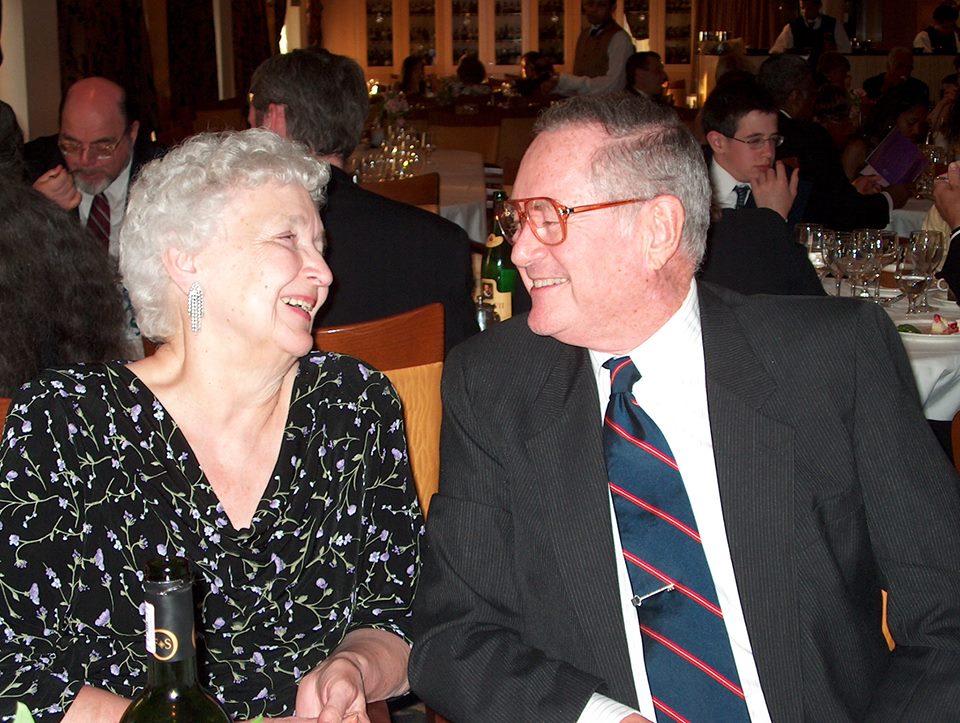
Grandma’s death this past week, at the age of 93, came with a characteristic grace. While there were struggles, she always seemed to slide easily and deliberately through life, and there was never a radical turn. When she lost her husband of 67 years, she mourned but moved on, kept up her joyous spirits, tiring more easily but still ready to be part of the endless family party. Unlike Grandpa, she did not crash with age; instead, it was a slow, gentle fade, tinged by the occasional frustration and uncertainty, but never far from her characteristic good humor. My Aunt Mary Beth took her in for the final four years of her life, an act of quiet heroism that made sure my grandfather’s rough decline in sterile hospitals would not befall her. She eased away with a steady stream of family visits and put up with the chaos of weekly Zooms during her final year. When it was time to go, she went quickly, waiting just long enough for Mary Beth to return from a much-needed trip with her son and grandchildren to Cape Cod, muttering a few final phrases in Polish to come full circle, family by her side as the breaths slid away.
Like her husband and so many of her progeny, Grandma possessed a robust mind. This young Polish girl from the city attended the University of Chicago in the 1940s, a feat whose impressiveness did not dawn on me until late in her life. While she didn’t get lost in intellectual tomes and debates the way Grandpa did, she kept herself busy, always ready to exercise a politely judgmental curiosity, whether over some book or movie or adventure of her offspring or in the complete tour of a giant book on art history that she and I once undertook. In coronavirus quarantine I picked up her crossword puzzle habit; toward the end, when that was beyond her, she settled for marathons of Rummikub, which now threatens euchre’s position as the official family game. If Grandpa was the driving force of nature who made their small empire possible, Grandma was its deep guiding core, her mere presence creating a sense that this all should come naturally.
The family Zooms over the final year and a half of her life gave us occasion to bust out old pictures and gifted me a window into the formation of a suburban Chicago matriarch. There were her childhood ventures to Devil’s Lake in Wisconsin, an ever-burgeoning clan filling first the house on Ardmore in Villa Park and then the house on Edgewood in Lombard, and later at the homes of aunts and uncles and out in Huntley. The steady string of lifelong friends, couples on a shared journey: Gingers, Gioias, Fanellas, and so on. Catholic masses, chaotic Christmas parties, Cubs games, a few European cruises, a papal mass. Joy filled it all from start to finish.
Grandma fell in love with the Northwoods of Wisconsin, long a family retreat, and I can still see her contented smile on the deck overlooking East Twin Lake. My Aunt Lucy’s transcription of her Northwoods journals early in the coronavirus pandemic were a revelation, a deeper dive into a mind whose contours felt both new and exactly right. Her work inspired me to start a simple journal with posterity in mind, a daily exercise that got beyond the alternating poles of incredible detachment and deeply personal musing that consume so much of my own output, and settled for easy reflection on the passing days. “I try not to feel apprehension — keep telling myself to just ENJOY what we’ve been given,” she writes on day one of the journal. An ethos we can all take to heart.
What I will remember forever, however, is her laugh. It had a full spectrum, from a quick chuckling eddy to a deep, full-throated roller, a cycle of the tides to fit any occasion. It was always ready, sometimes delighted and sometimes resigned, but always able to light up a room. The punches have come hard for us Maloneys in 2020: first an aunt and then a cousin and now the woman who birthed it all. At least now we can all be together again in the flesh to send her off. So I will dust off my suit, pour myself a Manhattan, and prepare one final do widzenia to the woman whose easy delight at the world around her made possible a life in accord with the rhythms of her world. We multitudes who follow all carry that light.
Happy 22nd, bro. It’s another stellar Grandma’s Marathon day, even if there’s no marathon to run this year. (Okay, a friend and I ran a spontaneous half anyway.) I’ve just committed myself to our city yet again. Confined here in recent months, I’ve come to appreciate it more than ever before: what beauty surrounds us. We don’t need closure. This dream, it never needs to end.



 A Patient Cycle