Big Easy

The trope of the Midwestern kid heading to an East Coast seat of power has typically been one of innocence lost, of bright-eyed illusions dimmed by closed networks and sordid affairs. This story, saddled on succeeding generations of Midwestern boys heading east by F. Scott Fitzgerald, has a certain glamour. It is flattering to imagine oneself the wounded noble soul in a greater story, and wounded noble souls do not usually realize they are doing themselves no good until a few years have drifted by in aimless emoting.

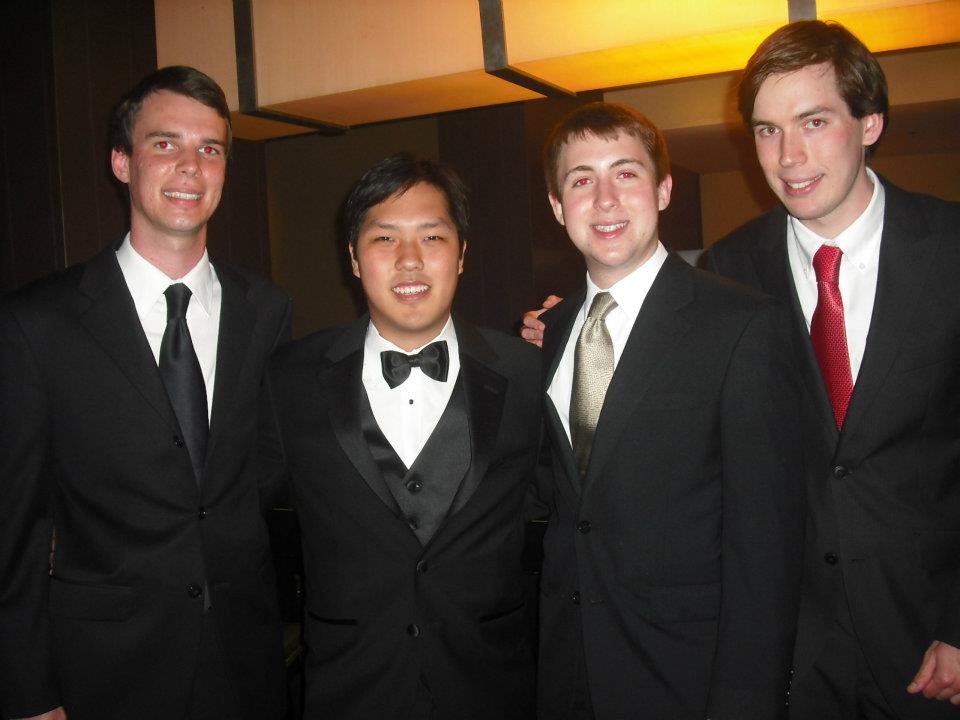
One who has navigated this road with remarkable aplomb, however, is my Georgetown roommate Trent, whose wedding I attended in New Orleans this past weekend. Trent and I first came together in New South 205 as freshmen at Georgetown, two rare Hoyas who did not hail from large metropolitan areas and in the thralls of what Washington had to offer them. We were avid pursuers of the DC political scene and Hoya basketball loyalists, and while our social circles ebbed and flowed as he dove deeper into campus communities from the start than I did, we remained an ideal pairing, drama-free and easygoing. We lived together for all four years of our undergrad experience, New South to Copley to 3731 R Street, though we were abroad in Mexico in opposite semesters of our junior years. By senior year our house, with Phil and Tim added to the mix, crystallized into a cohesive unit.

The journeys since have been long. Trent left DC after graduation, first to teach in Houston and then on to NOLA, where his new wife, Kelly, attended medical school at Tulane. No doubt there have been moments of trouble and deep frustration, especially in those Teach for America years, a crucible that formed many of my Georgetown friends. But for no one did it show outwardly less than for Trent. In the hours before he tied the knot, a group of us sat in his hotel suite and shared stories of Midwest childhoods and Georgetown escapades and teaching travails, and there was no trouble believing these tales all wove their way through the same guy who sat before us. At the core, nothing has changed a bit.

Trent retains a slight Ohio twang, even as he travels higher in professional circles and eyes an impending return to DC. He is relentlessly competent and organized but stays preternaturally upbeat, his work rate nonstop but still grounded in the people around him, whatever their station. It was no secret where those lines about social justice in the prayer of the faithful during the ceremony came from, and he has the art of making such lines feel heartfelt. He has perfected the blend of roots and ambition that has always been my ideal, and he has the magnetic personality to make it all work. And in the meantime, he will have a lot of fun.

I will save a longer discourse on New Orleans for a second visit in May, but this venture was a dive into Trent’s life in the city. And, of course, no trip to the Crescent City can be complete without eating up the rich local culture and the nonstop revelry that make it unlike any other American city. Friday night takes us to the Mid City Yacht Club, a local joint with no pretentions of hosting people who enjoy yachting, tucked in among classic NOLA houses and across from a well-lit ballfield in the neighborhood where Trent and Kelly live. I’d assumed the name was ironic.
The rookie Jesuit presiding over the ceremony, however, tells us the truth: during Katrina this little bar, flooded along with the rest of the neighborhood, acquired the moniker in jest, and a few friends nursed it back, rebuilding it from the detritus of the hurricane. In the homily, the mention of the Yacht Club was a metaphor for love and commitment, but it was also a simple summation of Trent: there for the party often enough to be a regular, but using that tie to make a deeper connection and lift up a story of triumph and rebirth. Trent brings together great people, two new friends and I observe as we stroll up Canal Street toward the church with our roadie martinis in plastic cups.

Since this is a Hoya wedding, the ceremony takes place in a Jesuit church tucked just west of the French Quarter, its grandeur shadowed by the towers around it but resplendent in the Company of Jesus’ quest for the Greater Glory of God on the inside. It is as snappy a Catholic ceremony as one will hear, with no communion to separate out the devout from the apostates, and in time we bus over to the Ogden Museum of Southern Art for the reception. Beneath a cavernous ceiling we mill around and eat a steady stream of hors d’oeuvres, with no formal dining time or seating chart and only the briefest of wedding speeches. The party must go on—unless one goes on the bathroom odyssey, down a staircase and through a gallery and up an elevator past some distracting sensory art.

Photo credit: Vail K.

The DJ lords over the hall at one end, and while the dance floor takes some time to warm up, it eventually explodes with light and flashy light sticks for everyone, and we after we have all swayed in a circle as the lights come up the brass band marches in and the second line begins. We parade down the streets of NOLA, Trent and Kelly waving parasols in front of the procession, the band right behind and the rest of us in tow, waving towels and dancing along, the less mobile of our number rolling along in rickshaws. We are the attraction, filmed by passersby and watched from those classic wrought iron balconies above, and in time we get one of our own atop a bar near the hotels. The good times do indeed roll, onward late into a cool New Orleans night, though a dream of brunch looms in the morning. Even if New Orleans is not in Trent and Kelly’s longer-term plans, it is the ideal city for a group of friends to come together, dispense with the dithering, and commit to making the most of a moment.

On a personal note, Trent’s wedding is an appetizer for what I am calling my sabbatical, a stretch in which I will be away from Duluth for five of six weeks. This stretch starts and ends in New Orleans, with Europe and South America sandwiched in between. It seems right to start it with the people with whom I set out into the adult world, though they will reappear in it on an estancia outside Buenos Aires. If I am going to take a radical break from my day-to-day routines, who better to be with than the people who most revel in this life?

The Home and the World

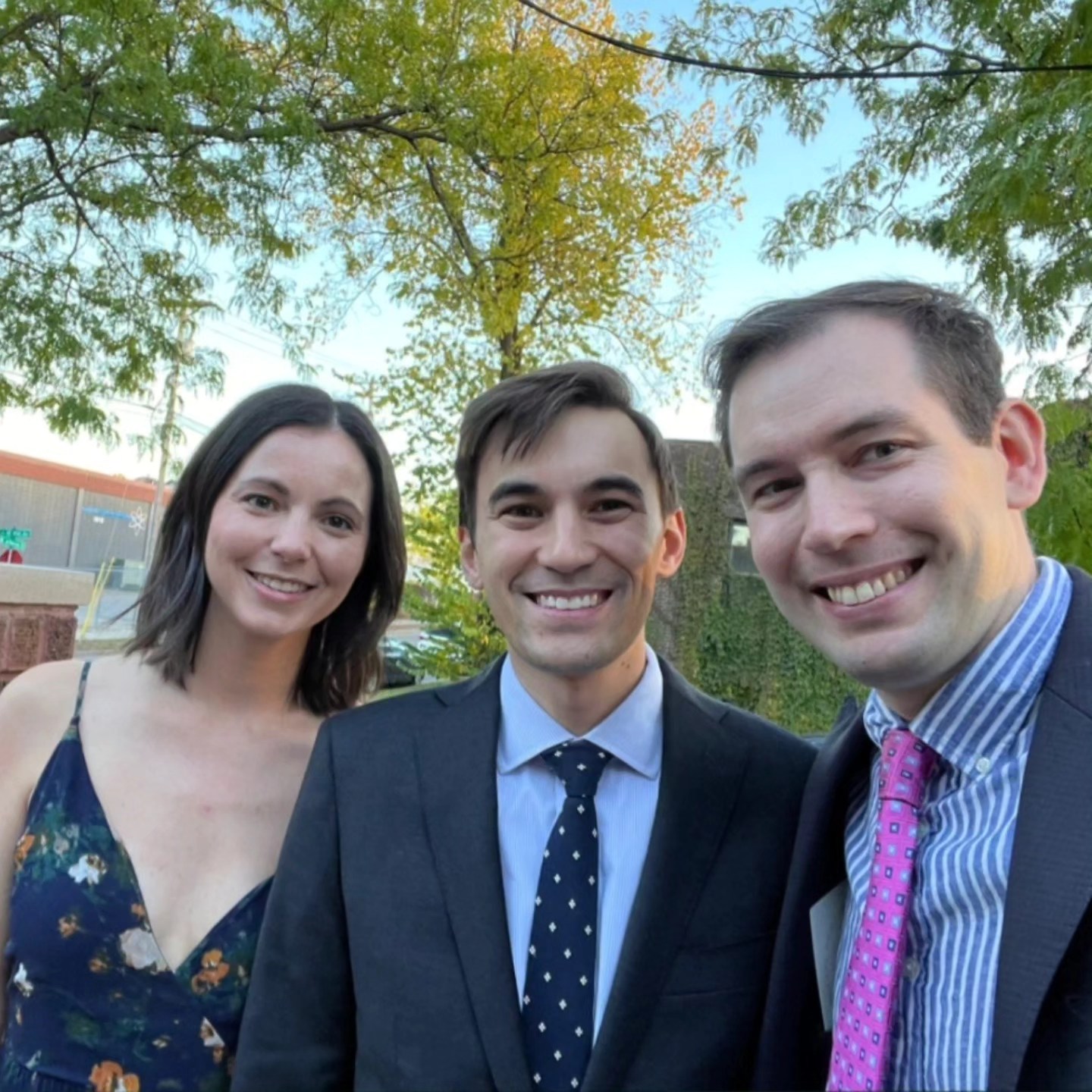
It is easy to compartmentalize friendships into periods of life, to sort people into specific, fixed stages. High school friends here, college friends there, grad school friends beyond, clumps of people associated with certain cities or hobbies. At my friend Andrew’s wedding this past weekend, however, I realize I know people from all his scattered clumps in some way: his parents and brothers, a few others close to them, the high school crew from our trivia team at Billy’s on Grand, his fellow Minneapolis teachers, the Georgetown set at my table for dinner, and of course his new wife, Kara, from his law school days. We have, through no great design, charted our way together through the past fifteen years, each of our adventures somehow bound up in the other’s, sometimes near and sometimes far but always somewhere down a shared road.

Andrew is the oldest of four brothers, a boisterous clan forever glued to sports and debating issues great and small, a home that welcomes me in easily whenever I pass through their Roseville abode. He is the son of a girl from Willmar and a Filipino boy from Iowa, two Northwestern Wildcats and Minnesota doctors who set their boys off on their respective pursuits. His family’s story is one of everything a country can be, one that left in him in a lifelong dance with dualism and mixed identity, at times weighty but inseparable from who he is and what he stands for. “The world is a complicated place!” was his Minneapolis era slogan, the catchphrase of a kid who lashed out at hard dogmas of any stripe, my fellow trafficker in nuance, at times overwhelming but still a grounding foundation for the long slog through the meritocratic pressure-cooker. Together we have swum through the ebbs and flows, sometimes in fierce debate, sometimes quietly processing as we walk in Minnesota woods, selves constructed as we string together the various strands of our lives.

We met as two Georgetown kids, fresh off the plane and thrown into a pre-orientation program that took us deep into the hidden corners of DC, our ties deepening as two Minnesotans drawn to Latin American affairs who shared sporadic classes and interests. I remember it cementing on a night when we returned from our semesters abroad, Andrew from Buenos Aires and me from Mexico City, gushing about what we’d seen, locked in our own side conversations in the kitchen as an Australian visitor from my Mexico days captivated the crowd and earned my off-campus house its only ever police call. Though he did not live at 3731 R, the site of that night’s festivities, Andrew was such a regular feature that we came to call him the fifth roommate in that tiny rowhouse in Burleith.

Our paths took us back to Minnesota, Andrew for a Teach for America stint, me for whatever it was that I did in those first two years post-graduation, and when he stuck on for more teaching and I went to Minneapolis for grad school, it was obvious enough that we should live together. We settled into 2107 Hennepin, an old brick apartment just south of Downtown, ideally placed for Lake of the Isles strolls and Uptown revelry and right next to Minneapolis institutions such as Sebastian Joe’s Ice Cream and the late, great Liquor Lyle’s. We toured the city and sampled breweries and dashed together halfhearted Trader Joe’s meals, longing for days when we’d have the time and resources for more. Andrew became a regular in my urbanist circles, while I joined his family for soccer games and fall hikes in state parks. We both had our ups and downs in those two years, saw each other in some of our less composed moments, but in retrospect it is a blur of contentment, each of us settling on our subsequent paths and for the time being enjoying everything Minneapolis had to offer. When I think of my 20-something self the frozen image from that age will no doubt involve Andrew and me shuffling back from Lyle’s, deep in debate, never with all the answers but determined to chart our way through.

As two restless searchers, we pushed outward together from our Uptown confines. First there were those fall hikes in pursuit of leaves, up toward Duluth and down the Mississippi and that one sublime trip to Devil’s Lake in Wisconsin, a tradition continued even this year. Early in my time there we took a jaunt to Phoenix and the Grand Canyon, and we capped our time as roommates with a grand road trip across the American West. If two friends can together endure a broken car window in San Francisco and snoring Germans in a Vancouver hostel and generally survive a steady string of ten-hour days on the road with just each other, it is probably something that will stick. When we went back home we went our separate ways, him to Cornell Law and me back home to Duluth. But still we kept crossing paths, him returning to Duluth deep in midwinter and me heading for New York, me dragging him to see the state hockey tournament and him making Covid-era escapes to the freedom of the Northwoods.

Andrew returned to DC two years ago, and his wedding there this past weekend gives me the chance to walk back along all these paths we’ve known. I bring two other newlywed friends along on a Georgetown tour and see this city of my teenage dreams with fresh eyes again. We meander the old haunts, drink a pitcher at the Tombs with a basketball game against Syracuse running in the background, and I reminisce on how this place made me who I am, able to flip the switch between different worlds with ease. I take my own moment on a run up and down the steeper-than-I-remembered hills of Northwest DC, Embassy Row and Rock Creek and the Glover-Archbold Parkway and Dumbarton Oaks, across the checkerboard of lettered and numbered streets where this friendship was forged. Much as I may appreciate my time in Minneapolis or Mexico or the places I have deeper roots, there are only two places I can unabashedly call home: Duluth and here.

Yet again, the dualism, the pushes inward and outward: Andrew and I both nest deeply but are both School of Foreign Service graduates, forever making sense of the broader world around us. The melding of Kara and Andrew’s worlds takes place at the Meridian International Center, a stately manor for a diplomacy thinktank where, on a terrace beneath carefully tended lindens, they found a venue with the class and decorum that befit them. As the night rolls along we sip cocktails in gilded rooms and dine beneath laden bookshelves, but before long the night explodes into energy and a plot hatches to get Andrew airborne on the dance floor and he sails up above all these revelers between different stages, united in celebration of a couple who seem meant to be.

In Kara I saw quickly that Andrew had found someone for him, someone who can both match his pace and pull him out of his head when need be, someone who transfixed him even as they lived apart for a time. She grounded that mixed soul, she turned him into a cat person, and she and I laughed together at some of the quirks that come from living with Andrew. The raw emotion in their vows, filled with sincerity and depth and reminiscences on the Brooklyn Heights Promenade, made it obvious this will last. I wondered if I would get emotional, but instead I just found myself beaming, pleased to know such a good friend, pleased to be in the company of so many fun humans, ready to push this night as far as I could because every second was worth embracing. These are the friendships we build for life, the collective stories that pull together and push us toward the selves we want to be. They give us our homes in the world.