Hounds Hockey History VII: The Burdens of Hockey Glory (2004-2008)

This is the seventh in a series of posts on the history of Duluth East High School hockey. For the complete series (in reverse order), click here.

With an on-ice record of 308-82-10, eight state tournament berths, and two championships in 15 seasons, Duluth East’s Mike Randolph almost certainly had the strongest record of any active Minnesota high school coach. But after the 2003 season, the East administration chose not to renew his contract, effectively firing Randolph. The unexpected announcement shook up not only East hockey, but high school sports across the state. The incident was front-page news in Duluth for the next month, as players, parents, and alumni rallied behind the ousted coach. Hockey fans endlessly debated the possible reasons, which were not made public due to the Data Practices Act, and even school board members struggled to make sense of it all; former Member Harry Welty’s account of the whole saga is preserved here. Randolph critics were, at first, few and far between.

Still, in time, the charges against Randolph started to trickle out, and while there was no obvious smoking gun, there was an array of complaints. One of the biggest issues involved financial irregularities surrounding the program’s annual wreath fundraiser, in which both the district and the coaching staff accused each other of poor communication.1 Many complaints revolved around players being cut and playing time; while some of these arguments appeared naïve about how a hockey team with a large feeder program naturally must operate or were simply sour grapes, others went a bit further and questioned his methods for cutting players.2 Claims of recruiting, long rumored but never substantiated, also reappeared.3 Arguably the most damning critiques claimed that Randolph’s coaching style and commitment to his team’s success had made the program “too big” for its own good, and that he put too much pressure on a group of teenage boys who might not be emotionally mature enough to handle high expectations and “mind games.”4 (I plan to explore the charge about the program size in a post after I finish this series on East hockey history.)

Randolph waived his right to privacy so as to assess the charges against him, and his supporters staged a vigorous defense of their coach.5 They cast doubt upon the anonymous letters in the coach’s file, and several ex-players gave impassioned defenses of the lessons Randolph had taught them at a circus-like school board meeting. They questioned the motives of several Randolph critics, including a principal whose son had once been cut and a school board member whose name was on the side of a rival team’s arena.6 It was all to no avail: when the issue was put to a vote, the school board chose to respect the administration’s decision. East hockey had to move on without Mike Randolph.

The man who stepped into the void was Todd Wentworth, a longtime coach within the East program. Wentworth inherited a veteran team with 14 seniors, and while they were not the most explosive team on earth, they were deep at every position. East’s 15-8-1 record was the sort of solid mark expected of the program, though they were blown out by some of the state’s better teams, and also lost to Superior for the first time since 1991. The Hounds benefitted from a very thin 7AA, and though Goligoski’s Grand Rapids squad once again put up a decent fight in the section final, the deeper Hounds dispatched of them with three third period goals.

East was fortunate to draw a weak Lakeville team in the first round of the 2004 Tournament, and though Lakeville goalie B.J. O’Brien did everything in his power to give his team a chance, the Hounds prevailed, 2-0. The campaign against all odds came to a close the next night, however, as Moorhead blitzed the Hounds with a four-goal second period and jumped out to a 5-0 lead en route to a 6-3 win. East took down Wayzata the next afternoon to bring home the third place trophy, which was a real achievement given the turmoil surrounding Wentworth’s first season on the job.

It would also be Wentworth’s only season. Randolph, claiming his application for the East job had not been fairly considered, filed a grievance against the district, which went to an independent arbitrator for consideration.7 The school board, however, pre-empted the arbitrator’s ruling and chose to reinstate Randolph. The board, purged of several anti-Randolph votes in the previous fall’s election, cited numerous procedural errors in Randolph’s dismissal, explaining that Randolph had not been properly alerted to concerns about his management of the program.8 Randolph’s supporters rejoiced, claiming the board had corrected an injustice; the administration complained it had been undermined; Wentworth was left in limbo; and the players struggled to make sense of the whole situation.9 10

Given the turmoil surrounding the program, it was little surprise that Randolph’s first year back was anything but smooth sailing. First, two billet players from out of state, Josh “Podge” Turnbull and Colin Trachsel (nephew of assistant coach Larry Trachsel), showed up in Duluth. The activities department erroneously assumed they were eligible to play immediately, which they were not. East was forced to forfeit its first seven games of the year (in which the team had gone 4-3), and Turnbull and Trachsel had to sit out the next thirteen games.11 In a December game at Grand Rapids, a player claimed to have been kicked by Randolph, leading to an investigation from the Grand Rapids Police Department. Though the investigation determined that nothing worse than a foot-tap had taken place, the investigator cryptically concluded that “I certainly do not agree with the way in which Mr. Randolph conducted himself and believe there are issues to be addressed by his employer.”12 Randolph was suspended for one game for violation of the Data Practices Act after he discussed the investigation with reporters, but that was the end of it.13 On top of it all, three seniors left the team during the course of the regular season.

In the midst of the off-ice controversies, the team put together another solid season. The Hounds knocked off title contenders such as White Bear Lake, Apple Valley, and Roseville, though they (rather understandably) struggled with consistency at times, and two regular season losses to Cloquet left the Hounds as the second seed in 7AA. Rob W. Johnson carried the load for an otherwise inexperienced offense, and sophomore wunderkind Cade Fairchild dazzled with his puck-moving skills on defense. But the player who carried East back to the promised land was Chris Sall, a little-hyped senior goaltender who simply caught fire in the playoffs.

The section final was a thrilling affair with top-seeded archrival Cloquet, as Sall held back a talented Jacks squad led by Mr. Hockey Finalist Mitch Ryan. Johnson scored in the third period to tie the game at two, and as the game moved into overtime, the deeper Hounds finally started to generate some offensive momentum. The winning goal, however, came from the least likely source: senior defenseman Kyle Michela, whose double-overtime game winner was the only goal of his high school career.

The State Tournament quarterfinal against White Bear Lake followed a similar script. The Hounds were outgunned and outshot 29-13, but Sall held firm and kept him team close. Two quick third period strikes were enough to stun the Bears and earn a return trip to the semifinals. Against a Moorhead team that featured six D-I seniors, not even a record-setting performance could save East; despite a 22-save 2nd period from Sall that stood as a State Tournament record for eight years, the Hounds fell, 4-1. They rebounded the next day to secure a second straight third place trophy with a 5-3 win over Tartan. After all of the tumult, Randolph’s first year back produced a very positive on-ice result.

The next three seasons bore some surprising symmetries. The Hounds had similar records (20-6-1, 18-7-2, and 18-8-1, respectively). Each year, they lost a player to other hockey opportunities (Cade Fairchild, Josh Turnbull, and Keegan Flaherty, respectively). And each year, they suffered an agonizing loss in the section semifinals to a lower-seeded team.

To be sure, the 2006 and 2007 losses were hardly upsets. 7AA was at its deepest, and all of the teams were tightly packed in the rankings. Cloquet had its most talented teams since the days of Jamie Langenbrunner, Grand Rapids won the section and finished second at State both years, and Elk River, re-added to the section, was a top ten team in 2006. The 06 East team was quite young and rather thin in back, but after a mediocre December they went on a run, winning 14 straight to close out the regular season, including an overtime win over Cloquet to secure the top seed. They clashed with the Jacks again in the section semifinals, but this time, Cloquet goaltender Reid Ellingson stole the show in a 1-0 shutout. Cloquet outshot the Hounds, slipped one fluky goal past East’s Ben Leis, and put an end to the run of three straight section titles.

2007 followed a similar script, as East muddled through December before racking up the wins in the second half. A February game against Cloquet featured another thrilling duel between Ellingson and Leis, with the goaltenders combining for 92 saves in a 1-1 tie. Another East-Cloquet playoff clash seemed like destiny, but a powerful Grand Rapids team had other ideas. After coasting to a 2-1 lead in the opening period of the section semifinal, East went on to have one of the worst periods in program history. Rapids outshot East 18-2 in the second period (though one of those two was, miraculously, a goal), and eventually the teams went to overtime, where Rapids star Patrick White beat Leis to secure a 5-4 victory.

Rapids and Cloquet suffered serious losses to graduation after 2007, and though the MSHSL cycled a decent Anoka squad into 7AA for 2008, the section seemed ripe for East’s taking. The offense was not deep, but they had a strong top line in Max Tardy, Rob A. Johnson, and Jake Boese, and the defensive corps was perhaps their best since the late 90s. The Hounds again started slowly but streaked down the stretch, with their only loss in the last 13 games coming to an elite Edina team; they beat Cloquet to earn the top seed in the section and renewed their rivalry with the Lumberjacks in the semifinals. The game was an exhilarating back-and-forth affair that saw East take a 5-4 lead after an early 4-2 deficit, but the hero of the hour was Cloquet defenseman David Brown, who scored four goals, including the game-winner with 12 seconds to go.

The 6-5 loss seemed a fitting capstone to a frustrating run for a program saddled with such high expectations. The 2006-2008 teams were all reasonably good, but were never great, and there was no peak of talent that might have carried East deep into the State Tournament. Not far away, Duluth Marshall was enjoying its finest run of MSHSL hockey success, while other hockey opportunities drained away top East players. Meanwhile, the East program was under an intense scrutiny brought on by past success, its unique powerhouse status in northeastern Minnesota, and the drama surrounding an intense, embattled coach.

It is not hard to see how the pressure weighed down the Hounds once they had become a high-profile program. The years in which the team was supposed to peak and be a frontrunner for the title—1996, 1997, 2009, 2012, perhaps 2002—all ended in frustration. The years immediately pre- or post-peak, however, almost always turned out well: the 1995 team won the title a year ahead of schedule, and the 1998 squad won it when East was supposed to be dropping off some. Excellent runs in 2011 and 2013 bookend the 2012 failure. Very young squads such as the 1994, 2000, and 2010 teams were quite potent by the playoffs, though there was more grumbling around the program in those years due to the reliance on underclassmen. East hockey was under a microscope, and the burden of expectation was a heavy one to saddle upon a group of high school kids. After three straight section semifinal losses, it would have been easy to claim the program was on the decline, overwhelmed by the changing high school hockey scene. But through it all, the Hounds’ pride remained intact, and even Mike Randolph’s staunchest critics would admit he is never one to back down. In 2009, a new talent bubble was ready to take East back to St. Paul.

Next week: East’s run of five straight tournament berths from 2009-2013.

1 Nowacki, Jon. “Fundraiser at Issue: Duluth East Administrators Asked Coach Mike Randolph for an Explanation of Wreath Sales Profits in December.” Duluth News-Tribune. 29 April 2003. Web. 15 July 2013.

2 Augustoviz, Roman. “Coach Questions Process: Mike Randolph Still Wants to Know Why His Contract Was Not Renewed After 15 Seasons and Much Success as Duluth East Head Boys’ Hockey Coach.” Star Tribune. 6 May 2003. Web. 15 July 2013.

3 Kersten, Craig. “Sound Off: Principal Did Well.” Duluth News-Tribune. 2 May 2003. Web. 15 July 2013.

4 Meryhew, Richard. “The Ice Man Goeth: Duluth Coach’s Exit Spotlights Polarized Views of Program .” Star Tribune. 6 July 2003. Web. 15 July 2013.

5 Nowacki, Jon. “Randolph Asks District to Open His Personnel File.” Duluth News-Tribune. 2 May 2013. Web. 15 July 2013.

6 Meryhew, op. cit.

7 Nowacki, Jon. “Randolph Files Grievance: Former Duluth East Coach Says District Is Unfairly Disregarding His Application.” Duluth News-Tribune. 8 July 2013. Web. 15 July 2013.

8 Michals, Lisa. “Board Reinstates Randolph: The Former East High School Hockey Coach Will Get His Job Back.” Duluth News-Tribune. 21 April 2004. Web. 15 July 2013.

9 Michals, Lisa. “School Board: Hockey Coach’s Reinstatement Prompted Accusations, Left Administrators Feeling Undermined.” Duluth News-Tribune. 22 April 2004. Web. 15 July 2013.

10 Nowacki, Jon. “Hockey Players: Many Students Happy to See Randolph Return, but Sad that it’s at the Expense of their Coach this Season.” Duluth News-Tribune. 22 April 2004. Web. 15 July 2013.

11 Nowacki, Jon. “Duluth East Gets Penalized: A Transfer Rules Violation Means East will have to Forfeit Wins in Boys and Girls Hockey.” Duluth News-Tribune. 19 December 2004. Web. 15 July 2013.

12 Stodghill, Mark. “Randolph won’t Be Charged.” Duluth News-Tribune. 29 December 2004. Web. 15 July 2013.

13 Weegman, Rick. “Randolph Gets One-Week Coaching Suspension.” Duluth News-Tribune. 21 January 2005. Web. 15 July 2013.

Hounds Hockey History VI: Lonely on Top (1999-2003)

This is the sixth post in a series on the history of Duluth East hockey. For the complete series (in reverse order), click here.

Replicating the success of the 1994-1998 seasons would be difficult for any program or coaching staff. East hockey was on top of the world, and on paper, there was no reason to suspect East might not continue its dynasty for the next several years; while the pipeline of talent was perhaps somewhat diminished, it was still on par with most of the state’s top programs. But the world of high school hockey was changing, and the Hounds’ great run faced obstacles past dynasties could not have imagined.

The first great change was the regularization of early departures for other hockey opportunities. There had been a steady trickle of players to Canada and junior leagues such as the United States Hockey League (USHL) throughout the 1990s, as players such as Jamie Langenbrunner sought longer seasons against tougher competition. But departures became normal in the late 90s, and East suffered its first prior to the 1999 season, when star defenseman Patrick Finnegan forewent his senior year to play in Canada’s Ontario Hockey League (OHL). East would go on to lose a single defenseman before each of the next three seasons as well. At first, coach Mike Randolph was philosophical about the talent drain; “I would love to have [Finnegan] on the team for another year, but this is what he thinks is best for him and I hope it works out for him,” he told the Duluth News-Tribune.¹ But as the defections mounted, Randolph changed his tune. “I don’t think he’s ready to make that kind of a step,” Randolph says of Jon Hedberg in a 2000 John Gilbert column examining the new trend.2 It was a refrain he would return to with future early departures, and his opinion rankled observers who thought he was only trying to hold on to his players.

Randolph’s opinion, while controversial, was based off of premises that were, at least, plausible. In an interview with writer John Rosengren, he listed off six players who “wanted to take the fast track” to a D-I scholarship, but “not one succeeded.”3 Among the East early departures, Finnegan flamed out in the OHL, and Tom Sawatske, who left East for the U.S. National Training and Development Program after his sophomore year in 2000, struggled to catch on at the University of Wisconsin, and had to go back to the USHL before closing out his college career at Notre Dame.4 Of course, it is impossible to know what would have become of these players if they’d stayed in Duluth, and the debate over player development paths will go on until the end of hockey. But the landscape for high-profile players had shifted, and Randolph and East hockey would have to cope with the steady drain of talent in order to succeed.

Even for those who stayed at the high school level, the hockey world wasn’t quite the same. The MSHSL tournament had included private schools since 1975, but for the first 20 years of that stretch, Hill-Murray was the only private to consistently contend. That changed with the advent of the two-class tournament in the early 1990s. Class A had been formed to give small schools a road to the State Tournament, and while it certainly did bring glory to schools such as Warroad and the Duluth exurb of Hermantown, the possibly unforeseen beneficiaries were the private schools, a handful of which collected talent from various youth programs and cruised through the thinner Class A sections. Loyalists of the community-based model championed by Edina’s Willard Ikola, Bloomington Jefferson’s Tom Saterdalen, and East’s Randoloph were suddenly confronted by schools that operated in an entirely different manner.

The rancor caused by the rise of private schools is best illustrated by the Academy of Holy Angels, whose rags-to-riches hockey tale is detailed in a chapter in John Rosengren’s Blades of Glory. Greg Trebil, a longtime Bloomington Bantam coach, took the Holy Angels job, brought many of the top Bloomington youth players with him, and turned a weak program into a Class AA powerhouse overnight. The Duluth area, however, had its own mini-version of this story. After taking Duluth Central to Class A State in 1996, head coach Brendan Flaherty made his way across the street to Duluth Marshall. He took one of his top players with him, and several out-of-state transfers arrived to bolster the Hilltopper lineup.5 Players from the East program, backlogged with so much talent and led by a notoriously demanding coach, noticed they could have more playing time and a decent shot at the state tournament if they became Hilltoppers. And so Marshall began to build a contender, a process that drew players from around the region and angered rival programs. A 2001 incident in which a Marshall alumnus allegedly offered several players from Ely and other Iron Range schools “pretty girls” if they transferred to Marshall led many local teams to try to axe the Hilltoppers from their schedules, and many of the grudges lingered.6

Considering the steady stream of transfers into the East program during the Randolph Era, the Hounds could hardly claim to be innocent victims in the new hockey arms race. High school hockey free agency had begun much earlier with the adoption of open enrollment laws in 1988, and talent-collecting powerhouses were perhaps merely its natural culmination.7 But the Duluth East youth program, long carefully groomed for Randolph’s high school squad, was a primary feeder into Marshall. While the East youth program was deep enough to support two respectable high school squads in most seasons, the end of the Hounds’ monopoly on quality youth players from the east side of Duluth disrupted the program’s pipeline. East had outscored Marshall by an absurd 73-1 margin over their five games during the Golden Age, but the 1999 meeting was a more competitive 6-3 victory. East and Marshall would never play again.

In spite of the changes around them, the 1999 Hounds were a real contender in a deep Section 7AA. Freshman Nick Licari and junior Ross Carlson, both future Wisconsin Badgers, led the East attack, and the team also had a quality second line. The defense, however, was quite green, as was sophomore goaltender Dan Hoehne. Three of their five losses were to top-end teams, but East also lost to Hermantown for the first time in school history, and a defeat at the hands of Hibbing hurt their standing in 7AA. Elk River was the clear top seed in the section, while East, Hibbing, and Greenway all split their games against one another; in the end, the Hounds drew the short straw and were seeded fourth. They beat Cloquet in the quarterfinals (in a game held in Cloquet due to a scheduling conflict at the DECC), but Elk River toppled them in the semifinals, ending the run of five straight section titles.

The offseason brought about another change to local hockey, as East left the Lake Superior Conference to play an independent schedule. Contrary to popular belief, this was not a hockey-driven move. The conference actually dissolved that season, only to re-form in meetings to which the East activities director was not invited; East, Silver Bay, and Cook County were all thrown to the curb.8 9 East’s orphaned sports teams had to find new homes, and Randolph seized the opportunity to load up the schedule with many of the state’s top AA squads instead of local opponents. He explained the move in terms that bore a certain logic; blowouts against local teams were no fun and did little to develop East players, and as only a handful of area schools were left in Class AA, these games had little playoff relevance.10 More cynical observers, on the other hand, suspected a ploy to avoid playing Hermantown and (especially) Duluth Marshall, lest some other team supplant East as the top hockey destination in the area. East turned down later scheduling requests from Hermantown and Marshall,11 but both schools voted against East when the Hounds re-applied to the LSC at various points over the next decade.12 13 It appeared the East program’s powerhouse status had opened up rifts in the local sports community, and no side can claim much high ground in the subsequent squabbling. The Hounds were both the gold standard and a target for other local hockey programs, and East fans soon learned how lonely it was on top.

When Elk River shifted back south into Section 4AA, there was good reason to suspect the Hounds would be on their way back to the State Tournament after a one-year hiatus. The 2000 squad was a very young team, but with Carlson and Licari on the top line and promising talent in sophomores such as Sawatske, Tom Kolar, and Nick Nelson, they were clearly dangerous. The new independent schedule was likely the most difficult in the state, and while the team lost four regular season games, they were all against top-end squads. The Hounds went into the playoffs on a ten-game winning streak and finished off a decent Cloquet team to earn the program’s twelfth state tournament berth.

East had finished the regular season ranked third, but when Elk River and Eden Prairie both went down in sections, a team with only four seniors entered the State Tournament as the battle-tested favorites. East opened the Tourney against Roseau, which was coached by Aaron Broten and returned much of the previous year’s dominant championship squad. The Hounds put together a controlling performance in a 4-1 win, a feat they would repeat in the semifinal against a talented Edina team. The young Hounds made it look easy, relying on their depth to apply relentless pressure.

It all came crashing down in the final, when the Hounds faced Blaine. Though the Bengals had taken their lumps during the regular season, they were clearly the more talented team; with three future NHLers, the senior-loaded squad had hit its stride in the playoffs. The Hounds’ defense was shredded by the speedy Blaine forwards, and the game quickly spiraled out of control. The 6-0 laugher put an ugly final word on an otherwise successful season, and it would be another eleven years before the Hounds made it back to the State Tournament’s Saturday night game.

The 2001 season brought about another change to the Duluth-area hockey world, as Cloquet replaced longtime coach Tom McFarlane with one of his assistants, Dave Esse. Esse would go on to lead the Lumberjacks to their most sustained period of success; counting the title game loss to East under McFarlane in 2000, the Jacks would participate in seven out of nine 7AA championships from 2000-2008, winning twice along the way. But under Esse, the Jacks saved their best performances for games against East. When he took over, Cloquet hadn’t beaten East in seven years, yet they went 13-7-2 against the Hounds over Esse’s first eight years, including a 4-2 mark in the 7AA playoffs.

Given the youth of the 2000 runners-up, there was good reason to expect the 2001 Hounds would make their way back to St. Paul. Juniors Licari, Nelson, and Kolar led the offensive charge, while Colorado College-bound senior Weston Tardy headed a deep defense in front of third-year starter Dan Hoehne in goal. While the 01 Hounds lost seven regular season games—the most by an East team since 1987—the intensity of the schedule was probably the primary culprit. East beat Edina and Hill-Murray twice each, along with several other prominent programs, and an early-season rout over Park Center involved a memorable scrap. However, the Hounds’ offense abandoned them in a handful of key games down the stretch, including a 4-0 loss to a talented Greenway squad that claimed the top seed in 7AA, a 1-0 shutout against Cloquet (the Jacks’ first win over East since 1994), and a 2-1 loss to Moorhead.

As the second seed in 7AA, East was on a collision course with Cloquet in the section semifinals. The Jacks certainly could not match the Hounds’ depth, but they played stout defense in front of star goaltender Josh Johnson, and late season wins over East and Greenway had them playing their best at the right time. Nothing went right for East in the game, and they fell 4-1, despite a 29-15 shots edge. Try as they might, they could not solve Johnson or turn back Esse’s disciplined, opportunistic squad.

The forward corps returned largely intact in 2002, a year in which Kolar and Licari—the latter now in his fifth varsity season—were both Mr. Hockey finalists. The defense was a bit thinner than in the previous year, and Hoehne’s graduation left a hole in goal that East filled with transfer Dustin Aro, himself displaced by a transfer to his old school, Elk River. Aro earned some revenge in the second game of the season, as East eased past the defending state champion Elks, 4-3. The regular season followed a similar script to the previous year: many close games with top-end teams, a couple of sketchy losses to Brainerd and Hastings down the stretch, and a 15-6-4 regular season record.

It was enough to earn the top seed in a talented 7AA, and East beat a top ten team, defending section champ Greenway, in the semifinals to set up a rematch with Cloquet. They’d tied and beaten the Jacks during the regular season, but with Johnson in goal and a similar defensive game plan to the previous year, Cloquet hung tough. The Hounds never could solve Johnson, and a shorthanded third period goal was enough to tip the Jacks back to the Tourney. The 2002 final was Mike Randolph’s only loss to date in his 15 section finals as East head coach.

After two straight State Tournament misses, Randolph faced one of his greatest challenges in 2003, as the Hounds had to replace their offensive core from the previous season. With an inexperienced group of forwards that lacked any real standouts, East unsurprisingly struggled to score in the early going, and Randolph rotated his lineup extensively in search of a winning combination. The Hounds also ran through several goalies before settling on junior Jake Maida down the stretch, and though they were fairly deep and strong on defense, it didn’t translate into wins against East’s rigorous schedule. Mid-January found the Hounds sitting at 3-8-4, their 50-year streak of winning seasons in serious jeopardy.

The turning point was a game against the eventual state champion, Anoka; East tied the Tornadoes with three seconds to go in the game and won it in overtime. The victory kicked off a six-game winning streak, and though East fell to Cloquet for a second time that season and was left with the 2-seed, they scraped out an 11-10-4 regular season record. It was also a very forgiving 7AA tournament, with no team far ahead of the pack, and Grand Rapids helped out the Hounds by knocking off top-seeded Cloquet in the semifinals. The Thunderhawks were a fairly thin team led by future NHLer Alex Goligoski, but they managed to hang in against the Hounds to force overtime. On the first shift of the extra session, Tom Knutson lifted East back to St. Paul.

The Hounds were clear underdogs heading into the State Tournament, but for two periods, it looked like they might slip by Anoka in the first round. They went into the third with a 3-2 lead, but the Tornadoes tied it halfway through the period and won it in the game’s final minute. The next day, East lost to Moorhead in their first consolation bracket game under Randolph. The two-and-out was hardly a happy ending, but given the relative lack of talent and the progress made from midseason on, it looked like a good building block for 2004. Before the Hounds could give any thought to the upcoming season, however, the school district dropped a bombshell on the program: it announced it would not renew Mike Randolph’s contract.

Next week: Coaching controversy, East hockey from 2004-2008, and an examination of the intense pressure placed on a high-profile program.

1 Pates, Kevin. “Finnegan Leaving: East Defenseman Will Forego Senior Year to Play in Canada.” Duluth News-Tribune. 19 June 1998. Web. 8 July 2013.

2 Gilbert, John. “Hounds Lose Hedberg to OHL’s Guelph Team.” Used Car Picks. Summer 1999. Web. 8 July 2013.

3 Rosengren, John. Blades of Glory: The True Story of a Young Team Bred to Win. Sourcebooks: Naperville, 2003, p. 232-233.

4 “Wisconsin Loses Defenseman Sawatske; Suter Sets Deadline.” USCHO. 24 May 2004. Web. 8 July 2013.

5 Pates, Kevin. “An Eastern Power: Duluth East Should Rule 7AA, Lake Superior Conference Again.” Duluth News-Tribune. 26 November 1996. Web. 8 July 2013.

6 Nowacki, Jon. “Private Schools, Public Outcry—Duluth Marshall: The Northland’s Only Private School Hockey Program Is in Danger of Being Shunned over Allegations of Recruiting.” Duluth News-Tribune. 7 December 2002. Web. 8 July 2013.

7 Rosengren, p. 123-124.

8 Miernicki, Mike. “Local View: East Belongs in Lake Superior Conference.” Duluth News-Tribune. 15 March 2012. Web. 9 July 2013.

9 “LSC Set to Return for Another Year.” Duluth News-Tribune. 13 April 2000. Web. 8 July 2013.

10 Weegman, Rick. “A Case of Class Warfare: Duluth Marshall and Duluth East Are Both at the State Tournament—But Not Playing One Another.” Duluth News-Tribune. 2 March 2005. Web. 8 July 2013.

11 Ibid.

12 Lubbers, Rick. “Here’s an Idea: Prep Showdown on Amsoil Ice—Bring the Area Top Four Hockey Teams under the Same Roof for a Holiday Tournament.” Duluth News-Tribune. 12 January 2011. Web. 9 July 2013.

13 Miernicki, op. cit.

Hounds Hockey History V: The Golden Age (1994-1998)

This post is the fifth in a series on the history of Duluth East hockey. For the complete series (in reverse order), click here.

Cloquet High School had ruled the northeastern Minnesota hockey roost in 1992 and 1993, but their chance to build a dynasty took a hit when star forward Jamie Langenbrunner left for Canada before the 1994 season. With Langenbrunner out of the way and dangerous Virginia sent to Class A under the revised, enrollment-based two-class system, the Section 7AA field was open for Duluth East. Mr. Hockey finalist Clint Johnson joined sophomores Dave Spehar and Chris Locker on the top line, and with a deep, young supporting cast, East lost only four regular season games. Two losses to state power Elk River were understandable; more troubling were the two losses to a somewhat depleted Cloquet team. At the second game in Cloquet, Johnson’s pre-period ritual of tapping the opposing team’s goal with his stick sparked a fight for the ages, with fans in the stands throwing punches over the low glass at East players. The Hounds’ otherwise dominant regular season earned them the top seed, but they had yet to exorcise their demons with Cloquet, whom they inevitably met in the section final.

The week before the game, Randolph got some unpleasant news: Locker had been deemed academically ineligible, and would be forced to miss the rest of the season. Rather than shake up all of his lines, Randolph pressed freshman Matt Mathias into duty on the top line with Spehar and Johnson. The reworked top line scored both East goals in the game as the Hounds ended a long stretch of frustration against Cloquet with a 2-0 victory. East’s opponent in the State quarterfinals was Minnetonka, another young but talented team that boasted six future Division One players. But the Hounds took care of business in a methodical manner, outshooting the Skippers 29-14 in the 3-1 win.

In the semifinal, East faced an entirely different animal: the Bloomington Jefferson Jaguars, the two-time defending state champions who were busy putting together the greatest dynasty in modern Minnesota high school hockey. The ’94 Jags featured nine D-I players, including future NHLers Mike Crowley, Mark Parrish, Ben Clymer, and Toby Petersen. East played Jefferson as closely as any team that season, jumping out to an early lead on a goal by Matt Frigaard and hanging in until the bitter end, losing by a 2-1 final score. The Hounds turned around and locked up third place hardware with a 5-3 win over South St. Paul the next day.

The Hounds bolstered their lineup with a handful of transfers before the 1995 season. Senior forward Dan Zabukover came in from Duluth Central to add his services to the checking line, and speed merchant Ted Suihkonen, a junior who had played an instrumental role for Virginia in the 1993 playoff victory over East, came south from the Iron Range. With Suihkonen came a pair of eighth grade defensemen who would get some varsity ice time, though they were not on the playoff roster: Ted’s younger brother, Steve, and Patrick Finnegan, who was perhaps the crown jewel of northeastern Minnesota hockey prospects at the time. The city of Virginia never would forgive East for their “theft,” but the transfers revealed the changing contours of high-stakes high school sports.

The 1995 Greyhounds were loaded for a state tournament run. Spehar obliterated the school scoring record with a 101-point season, and Locker wasn’t far behind, with 88 of his own—even though Randolph never really settled on a third member of the top line. Suihkonen combined with Mathias to lead a potent secondary scoring line, a young but talented defense improved as the year went along, and three-year starter Cade Ledingham led the way in goal. The Hounds split two games with Elk River and beat Edina and Grand Rapids; their only other losses were to Hill-Murray and a head-scratcher against Duluth Denfeld, whom they’d beaten 13-0 in the teams’ first meeting of the year.

While East had an easy road to the 7AA final, their opponent in that game, Grand Rapids, was a legitimate threat that had been ranked in the top 5 at times that season. Randolph also made a gamble in goal, starting sophomore Kyle Kolquist over the struggling Ledingham. The Hounds generally carried the play, but Rapids hung tough and tied the game at two in the second on a goal by 1997 Mr. Hockey Aaron Miskovich. The difference-maker, to no one’s surprise, was junior forward Dave Spehar, who scored the game-winner midway through the third.

As luck would have it, the Hounds were saddled with a first-round meeting with Bloomington Jefferson. The Jaguars were seeking a fourth straight title, and had only lost twice in the previous three seasons. But Mike Randolph had a game plan, and he had the perfect player to execute it. A minute and a half in, Locker found a floating Spehar on a breakaway. 1-0. Five minutes later, Spehar collected a loose puck and went the length of the ice. 2-0. Before ten minutes were up, Cullen Flaherty found a streaking Spehar again for the natural hat trick. A fourth goal late in the first made the rest of the game academic. On the other end of the ice, Ledingham had his finest game in a Hounds jersey, snuffing out several early Jaguar chances en route to the shutout, and a third period goal added some icing to the cake. The next day, East fans arrived at the Civic Center wearing shirts that summed up the mood: “East 5, Jefferson 0. Any Questions?”

Spehar, however, was only getting started. East started their semifinal against Edina the next night with a bang, as Ryan Engle scored just fifteen seconds in. Edina hung around for a little while, but the East assault was relentless, with two goals in each period, one of each by Spehar. In the title game the Hounds faced a formidable opponent in Moorhead, who was in its third final in four years. The Spuds, led by future NHLer Matt Cullen, proved far more capable of containing the East attack than their first two opponents. The Spuds took a 3-2 lead early in the third, but Ted Suihkonen had an immediate answer, and a few minutes later, Spehar broke free again. This time, the Spuds’ defense hauled him down, and Spehar earned himself a State Tournament dream: a penalty shot with the game on the line. Naturally, he didn’t miss. Four minutes later, he iced the state title when he completed his third consecutive hat trick. After 35 years, the championship trophy was headed back Duluth, and it was going in style.

Following their memorable run through the 1995 playoffs, the expectations for 1996 were sky-high. East returned two full lines, their top four defensemen, and filled in the few holes with their astonishing depth. The 1996 playoff roster featured eleven players who went on to play some Division One hockey—two more than the undefeated 1993 Jefferson Jaguars, who are generally considered the greatest high school team of all time—and that total didn’t include Locker or freshman defenseman Patrick Finnegan, who would go on to play Canadian Major Junior hockey.

The Hounds were never held to under three goals in 1996, and ran up some gaudy scores against Lake Superior Conference competition. They did prove mortal around Christmas, when they dropped a pair of one-goal games to Hill-Murray, and an injury to Locker kept both he and Spehar from exceeding their absurd point totals from the year before. One of the few teams to give them a close game was Grand Rapids, but the Indians were knocked off by Greenway in the section semifinals, and the Hounds coasted through the 7AA playoffs, winning their three games by a combined 27-3 score.

It was more of the same in the first round at State, as East demolished Blaine, 7-1. Spehar continued his Tourney prowess with a 4-goal performance, including a goal seventeen seconds in that left the Civic Center in awe. Hill-Murray had gone down in sections, and that left only one team in the field that might be considered a serious threat to beat East: Apple Valley. The Hounds and the Eagles met on in the semifinals, and the result was one of the greatest high school games ever played.

After feeling each other out in the first period, the teams began to trade goals. East never led in the game, but had an answer immediately after each Apple Valley tally. In the third period, each team’s stars took over: first Locker tied the game at two, then Erik Westrum scored his second of the night for Apple Valley; Spehar struck back a few minutes later, but Westrum finished his hat trick to give the Eagles the lead with just over six minutes to go. The gameplay was thrilling even in regulation, and the Hounds pressed forward in desperate search of a game-tying goal. Their backs to the wall, East turned to their heroes to get the job done again. With 39 seconds to go, Locker electrified the Civic Center when he pumped in a pass from Spehar to tie the game.

Often, games that go on for multiple overtimes tend to drag as the teams tire. In this game, there was none of that, and not a hint of cagy play. Both teams flew up and down the ice, flashing their skill in search of the game-winner, and the goalies saved shot after shot—49 for East’s Kolquist and an astonishing 65 for the Eagles’ Karl Goehring. Apple Valley, incredibly, rolled just two lines, one replacing the other when the first needed a break. Randolph used a deeper rotation in an effort to wear down the Eagles, and for a moment, it seemed as if it worked in the second overtime, when replays suggest Matt LaTour tipped in a Dylan Mills shot. The referees, however, disagreed, and the teams played on. And on. And on. In the fifth overtime, in the game’s 93rd minute, Apple Valley’s Aaron Dwyer ended the longest Tournament game ever played with a laser from the point.

Exhausted and crushed, the Hounds faced the unenviable task of taking on South St. Paul in the third place game the next day. They responded in style, winning 9-2, and Spehar rounded out his Mr. Hockey-winning résumé with his fifth career Tourney hat trick. It was a bittersweet end to a storied career, though there was no shame in the way East’s run came to an end. The futures of Locker and Spehar only underlined how fleeting those glory days were: after winning WCHA Rookie of the Year honors as a freshman at the University of Minnesota, Spehar plateaued and did not play hockey past college; Locker went to play Canadian juniors instead of playing for Wisconsin, and his hockey career never did quite land on its skates afterward.

Despite graduating Spehar, Locker, and several key members of the supporting cast, the 1997 Hounds showed no signs of dropping off. The East Class of 1997 was the school’s deepest ever, with seven future D-I players. Even though Steve Suihkonen transferred to Hibbing, they were particularly strong in back: goaltender Kyle Kolquist won the Brimsek Award for the state’s top goalie, Dylan Mills was named the Associated Press Player of the Year, Ryan Coole was a Mr. Hockey Honorable Mention, and junior Nick Angell would be a Mr. Hockey finalist in 1998. Patrick Finnegan, a defenseman the previous year, moved to the top line alongside Matt Mathias and Andy Wheeler to help fill the void left by Spehar and Locker.

The ’97 team put together East’s only undefeated regular season. Only three of their 21 wins came by less than three goals, and the lone blemish on their record was a late-season tie at Hibbing. Naturally, East had to play the Bluejackets in the section final at Hibbing Memorial Arena. The historic arena was packed to the gills and oozing with old-time Minnesota hockey atmosphere, and two quick strikes by Hibbing late in the second tied the game and made for a thrilling final frame. But in the end, Mathias silenced the home crowd and buried the game-winner to send East to its fourth straight State Tournament.

In the first round, the Hounds faced a spirited fight from one-loss Rochester Mayo, arguably the best team to come out of Section 1AA in the two-class era. With five future D-I players the Spartans were no southern Minnesota pushover, but East used its stifling defense to keep Mayo without a shot in the third period and won the game, 3-2. They faced second-ranked Moorhead in the semifinals, and once again the defense carried the day as East rolled to a 3-0 shutout.

East’s opponent in the title game was an Edina team also in the midst of a strong run, having finished third and second the previous two years. While East was the deeper squad, Edina stars such as Dan Carlson brought a burst of speed the Hounds couldn’t match, and a first period Carlson goal gave Edina a lead they would never relinquish. Without a finisher of Spehar’s caliber, East could not solve Hornets goaltender Jeff Hall, and the undefeated season came to an end in a 1-0 final.

After the title game loss, a drained Coach Randolph gave serious thought to retirement. It had been an exhausting season, and after so much success, the scrutiny of the East program had never been higher. Hibbing fans took exception to his salute to the East fans after the 7AA Final, and his four children—then between the ages of 3 and 13—overheard some unsavory remarks about their father at the State Tournament.1 Randolph was deluged by over 100 calls and letters, “only three” of them negative, and decided to stay.2

The 1998 squad, while perhaps unable to match the incredible depth of the previous two years, was still loaded for another Tournament run. Finnegan and Angell, the twin pillars on the blue line, were the undisputed stars of the team, while goalie Adam Coole gave East a second straight Brimsek Award winner. Up front, the lunch pail line of Kevin Oswald, Dan Roman, and Gabe Taggart led the way, while brothers Ross and Rheese Carlson hooked up with Chad Roberg to give East two interchangeable top lines.

The Hounds opened the season with five straight shutout victories, including 3-0 wins over state powers Elk River and Hill-Murray, though they were later forced to forfeit two of those wins due to a mix-up over Rheese Carlson’s eligibility. The senior forward had started the year at North Iowa of the United States Hockey League, and there was some question as to his status due to state residency rules. The MSHSL initially suspended Carlson, but a county court issued a restraining order against the League, and its Board of Directors later voted to declare Carlson eligible, though the wins were not reinstated.3

The 1998 squad’s sole on-ice loss came at the hands of Grand Rapids in the sixth game of the season, 7-5. The Hounds had only a handful of close games after that, including narrow wins over Moorhead and Greenway, and a 3-2 victory in a rematch against Rapids. They closed out the regular season with a 6-5 win over state title contender Anoka, and shut out Rapids in the 7AA semifinals before moving on to face Elk River, newly added to the section, in the final. The inclusion of an elite Metro-area program in 7AA rankled many supporters of northeastern Minnesota hockey, and the Elks were not particularly enthused over being forced to play a section final in Duluth, either. The 7th-ranked Elks were missing an injured young defenseman named Paul Martin for the section final, but even he would have struggled to turn the tide. The Hounds powered to a 7-1 victory to clinch a fifth straight trip to State.

The road back to the final was not an easy one, as East faced second-ranked Hastings in the first round. The Raiders were not a deep team, but with stars Jeff Taffe and Dan Welch leading the way up front, they could score in bunches. The teams traded punches for two periods; the Hounds built a 5-2 lead, and while Hastings drew within one late in the second, East held the Raiders down in the third for a 5-4 win. The semifinal pitted East against Bloomington Jefferson, a State Tournament rubber match between the top two programs of the 1990s. The top two remaining teams in the state, though sloppy at times, eventually delivered the goods: East took a 2-1 lead on an Angell goal in the third, but Jefferson battled back to force overtime. Randolph gambled by putting his big defensemen together, and it paid off; Kevin Oswald won the game for the Hounds at 3:43 of the overtime. In the championship game East faced fourth-ranked Anoka in the final hockey game at the old St. Paul Civic Center, but this time, there was no need for late heroics. The title game was a clinical 3-1 victory that showed off East’s dominant defense and Coole’s superb goaltending.

The win closed out a dominant era for the Hounds. They had finished in the top three in five consecutive seasons, a stretch in which they posted a 126-13-1 on-ice record. They won two titles, and their three playoff losses were all by one goal to the eventual state champion. 19 skaters who appeared on those teams went on to Division One hockey, while another 12 played after high school at some level. They brought an end to the great Jefferson dynasty, spent nearly all of 1996-1998 ranked #1 in the state, and the 98 title run, in which they beat the other three teams ranked in the top four, crowned the Hounds as the state’s premier hockey program. It was a superb time to be an East hockey fan, though it couldn’t last forever.

Next week: East hockey from 1999-2003, including an account of changes in high school hockey, life in a program expected to win, and the bombshell at the end of the 2003 season.

1 Pates, Kevin. “Randolph Ponders His Future: East Hockey Coach Considers Stepping Down.” Duluth News-Tribune. 11 March 1997. Web. 1 July 2013.

2 Pates, Kevin. “Randolph to Return; Support Overwhelming.” Duluth News-Tribune. 22 March 1997. Web. 1 July 2013.

3 Pates, Kevin. “Carlson Ruled Eligible: MSHSL Restores East Player’s Status.” Duluth News-Tribune. 13 January 1998. Web. 2 July 2013.

Hounds Hockey History IV: Building a Powerhouse (1985-1993)

This is the fourth in a series of posts on Duluth East hockey history. For the first three parts (in reverse order), click here.

By 1985, the future of Duluth East hockey looked rather murky. There was plenty of talent coming through the program, but it had been ten years since the team made a State Tournament, and six since they’d made a region final. As the northern Metro suburbs grew and the old hockey powerhouses on the Iron Range dwindled, the benefits of the 1975 move to Region 2 grew less and less. The city of Duluth was also under demographic stress, as the collapse of Iron Range mining and Duluth-based manufacturing sapped the local economy. The trends for future hockey success in Duluth were not good. One program, however, showed decline was not inevitable: likely aided somewhat by the closure of Morgan Park High, Duluth Denfeld began its greatest run of hockey success. Behind goaltender Robb Stauber and an offensive scheme drawn up by an assistant coach named Mike Randolph, the Hunters made their first State Tournament in 1986, and went again in 88 and 89.

Over on the east side, the common perception at the time was that the Hounds were failing to live up to their potential. It was no surprise, then, that they began to cycle through coaches in search of someone who could stick. After Don Bourdeau’s retirement after 1984, the Hounds got two years each out of Bob Hill and Art Amundson, both former East players who had sons on the team around that time period. Though each got the Hounds to a section final, neither one stuck around. The 1985 Hounds lost a tight final to Anoka, while the 1987 squad was shellacked by Roseville, 9-1. The 1988 second-round playoff loss was especially glaring; even with Mr. Hockey finalist and future 15-year NHLer Sean Hill on the squad, East still lost to Denfeld in overtime. The refrain was all too familiar: high expectations, solid regular seasons, playoff failure. Neither Hill nor Amundson could break the pattern, and were both swiftly off the job.

And so the puck was passed to Mike Randolph, a 1970 graduate of Duluth Cathedral who’d gone on to be the last man cut from the 1976 Olympic squad before serving as an assistant coach at Denfeld and Minnesota-Duluth and a one year stint as the head coach at Cathedral. A disciple of former Cathedral coach Del Genereau, Randolph came to the program with a simple message: “I’ll give you the recipe.” If the team followed it, he insisted, they would be in the State Tournament within five years. Following in the footsteps of two of the state’s greatest coaches—Edina’s Willard Ikola and Bloomington Jefferson’s Tom Saterdalen—Randolph consolidated control over the youth hockey program on the east side of Duluth, ensuring young players would have knowledge of his systems before they arrived in high school. His offseason training programs also helped strengthen the pipeline and set the foundations for a top-flight community-based hockey program. He was a demanding coach, but the consensus around the program was that it needed someone to whip it into shape, and Randolph certainly seemed like the sort of man who could do just that.

Still, Randolph’s first season seemed more like a continuation of the previous few years than a break from the past. Once again, East put together a solid regular season, splitting their games with section frontrunners Denfeld and Cloquet and losing just two other games, albeit against a schedule that only included one Metro-area team. But it was only enough to earn the third seed in the Duluth bracket of Section 2, the Hounds lost to Derek Plante’s Cloquet squad 6-1 in the first round of the playoffs.

The 1990 Hounds looked to improve on the previous year’s showing, and with three excellent senior forwards and a very deep junior class, they had the makings of East’s best team in years. Randolph strengthened the schedule by adding state powers Edina, Anoka, and Bloomington Kennedy, against whom they went 2-1. They again struggled with Cloquet, losing both regular season meetings, and also tumbled against Silver Bay, Hibbing, and State Tourney runner-up Grand Rapids. But by playoff time they were the top seed in the Duluth bracket, and they marched through the first two rounds before colliding with Anoka in the semifinals. In a competitive game between two high-quality teams, Anoka prevailed, 4-3. East’s breakthrough would have to wait another year, and the expectations rose ever higher.

The defining features of the 1991 Hounds were their size and physicality. The defense, led by senior North Dakota recruit Kevin Rappana and junior Pat Ryan, was rugged and stout in front of junior goaltender Wade Salzman, who went on to play at Notre Dame. They did have one truly elite offensive player in Rusty Fitzgerald, a senior transfer from Silver Bay who was among the state’s top NHL draft prospects. However, injuries forced Fitzgerald to play defense for a chunk of the season and held him to a fairly sedate 25 points, and though there was some offensive talent around him in the likes of Derek Locker, Jeremy Jeanette, and sophomore Nik Patronas, the Hounds’ offense did not put up very big point totals. Five of their six losses were by one goal, and almost all of them of the low-scoring variety; try as they might, two wins in three games against Cloquet were the closest thing East had to signature victories. They went into the Region 2 playoffs as lukewarm favorites, and though they had a one-goal adventure against St. Cloud Tech in the quarterfinals, they rolled past Blaine to meet Cloquet once again in the section championship game. Over 1,000 fans had to be turned away from the sold-out DECC, and the game lived up to its billing and went to overtime, where Fitzgerald showed his mettle and scored the goal that sent East to St. Paul for the first time since 1975.

East’s opening-round opponent was one of the tournament favorites, a two-loss Richfield team led by future NHLer and 1991 Mr. Hockey Darby Hendrickson. The Hounds didn’t have the skill of the Spartans’ top unit, but they did have a punishing, physical game plan designed to batter their opponents into submission. Randolph later cracked that “they let us hit anything that moved,” but their clean, hard-hitting style won the Hounds plenty of support at the Civic Center. After playing to a 1-1 tie through two periods, East broke down the Spartans in the third, exploding for four goals en route to a 5-1 win. The Hounds had come into the Tournament as relative unknowns, but Randolph was happy to play the underdog role. “I wanna know if you guys know who Duluth East is right now,” he teased a postgame reporter.

East’s semifinal opponent, Burnsville, had also pulled a first-round upset when they took down defending state champion Roseau. The feisty, senior-laden Braves gave East a strong fight, and both goaltenders were on top of their game. It went to overtime, where Fitzgerald once again played the hero, and swatting home the game-winner to send East to the championship game.

The final pitted East against Hill-Murray. Though the Pioneers hadn’t had a dominant regular season, they too had caught fire at the right time, and had rolled through the first two rounds by a combined score of 18-4. The game was a classic match-up of speed against brute force, but it was the Pioneers who dictated the flow of play. For a time, it looked as if the Hounds could run with Hill, as they leapt out to early 2-0 and 3-1 leads. But the open style was not to East’s favor, and in time, Pioneer forwards such as Mike and Mark Strobel began to gash the tiring East defense. Hill took a 4-3 lead by the middle of the third period and closed out their 5-3 win with an empty-netter in the game’s final minute.

East’s loss to Hill-Murray was also the end of an era, as it was the final game of single-class hockey in Minnesota. In 1992, the MSHSL debuted an ill-fated two-year experiment in a tiered system, which separated the top 64 teams into Tier I at the start of the postseason, and left the rest in Tier II. Unsurprisingly, the Tier II competition to decide the 65th-best team in the state didn’t generate much interest. The MSHSL’s response kept the two divisions, but chose instead to divide the schools by enrollment, with Class A for the small schools and Class AA for the large schools, plus any small schools that voluntarily “opted up.”

As a result of the changes, East made its way back north to re-join its old Duluth-area and Iron Range rivals, first in Tier I of Section 7, and later in Section 7AA. The section boundaries continued to shift, however; by the middle of the decade, both Duluth Denfeld and Central, still shrinking along with the city of Duluth, dropped to Class A. Several of the old Iron Range powers also switched classes, and 7AA slowly began to extend southward, once again adding exurban Twin Cities communities.

During the two-tier experiment, Section 7’s Tier 1 belonged not to East or one of the Iron Range schools, but to Cloquet. The Jacks fielded such future D-I players as Jesse Bertogliat, Aaron Novak, Sergei Petrov, and future NHLer Rick Mrozik, along one of the greatest players to ever come out of Minnesota, Jamie Langenbrunner. While the 1992 Hounds finished the regular season with 11 straight wins and had some key holdovers from the previous year such as Salzman, Patronas, Ryan, and Fran Bussey, they were no match for the loaded Lumberjacks, who beat them 4-1 in the section semifinals.

In 1993, Randolph sought to reshape his Hounds with a youth movement. Patronas’s wings on the top line were a pair of freshmen, Dave Spehar and Chris Locker, while eighth grader Dylan Mills was one of the team’s top defensemen. The young Hounds showed no signs of inexperience, exploding out of the gate with nine straight wins. Of their five regular season losses, three were to Cloquet (by a total of four goals). But with a season split with Denfeld and a loss to Virginia on the season’s final day, the Hounds were saddled with the fifth seed in a deep Section 7, and had to travel to play Virginia in the first round. Spehar scored twice in the third period to give the Hounds a chance, but Virginia pulled away for a 5-3 win. East has not lost in the first round since. And while the youth movement didn’t produce immediate playoff success, the foundations of a powerhouse program were finally in place, and Spehar, Locker, and Mills would carry the Hounds into their greatest run of hockey glory.

Quotations come from recordings of State Tournament broadcasts on KMSP.

Next week: The Golden Age of East hockey.

Hounds Hockey History III: The Don Bourdeau Era (1968-1984)

This is the third post in a series on the history of Duluth East High School hockey. For the complete series (in reverse order), click here.

After the retirement of longtime coach Glenn Rolle, Duluth East hockey came under the leadership of Don Bourdeau. The Hounds only made one trip to State in his seventeen years at the helm, making for one of the driest spells in East hockey history. But if the Bourdeau Era was not a time of greatness, it was one of sustained quality. Under Bourdeau the Hounds won five of seven District 26 titles and the Duluth-area bracket of Region Two in the first five years of the new playoff setup that began in 1975.

East had a strong season in Bourdeau’s first year, beating six of the eight eventual State Tournament entrants and rolling past Cloquet for a district championship. Their run came to a crashing halt in the first round of regions, as Virginia eclipsed the Hounds, 4-3. It was a theme that would become all too familiar: despite those five district titles in Bourdeau’s first seven years and a run in which they lost only nine regular season games from 1970-72, East only escaped the first round of the playoffs once, in 1973. Curiously, that was one of the years in which they did not win the district, and even though they managed a narrow win over Virginia in the Region 7 quarterfinals, they dropped a competitive game with eventual State champion Hibbing in the semis. The quarterfinals always pitted the top four Duluth-area teams against the top four from the Iron Range, and the wins for the Duluth area teams were few and far between.

Despite the playoff frustrations, East had its share of talent in Bourdeau’s first few seasons, and averaged roughly one Division-I player per year. As had been the case under Rolle, Minnesota-Duluth was the most common destination, though East also had several players make their way to schools such as Brown, Hamilton, Colorado College, and Denver. The greatest of their number was 1969 graduate Mark Heaslip, a forward who starred at UMD before going on to become the first East NHLer.

East just missed out on a second future NHLer in the late 1960s, as they suffered one of the first defections to Canadian hockey. Butch Williams, the younger brother of U.S. hockey pioneer and Duluth Central graduate Tommy Williams, had been slated to go to East, but in an era when American NHLers were rare and exposure was hard to come by, he chose to play amateur hockey in Ontario instead. The Williamses would later become the first pair of American-born brothers to skate in the NHL. While the pursuit of alternate hockey development options was not a common occurrence at the time, Williams’s story shows that the present isn’t always so very different from the past.

The 1975 season brought major changes to the Minnesota State High School League (MSHSL). For the first time, the league brought in private schools to compete against the publics in the playoffs. This meant Duluth Cathedral was added into the local playoff mix, though Cathedral was down some from its peak in the 1960s and never seriously threatened for a State Tournament berth until the creation of the two-class system. The biggest change, however, was in the playoff format, as the MSHSL scrapped the district playoffs and went to one giant bracket for each region. To balance the numbers, the Duluth schools left Region 7 and shifted south into Region 2. Region 2 was an awkward collection of the Duluth schools (but not neighbors like Proctor or Hermantown), Cloquet, the St. Cloud area schools, and eight suburban programs from the northern metro area of Minneapolis and St. Paul. On paper, this made the Hounds’ road to State easier, as they were rid of those troublesome Iron Range teams, though the section realignment also put the State Tournament back door to death. The Big Ten Conference, which had expanded to 11 teams with the inclusion of Superior, Wisconsin in the early 70s, was renamed the Lake Superior Conference.

East did indeed reap the benefits of the new region in their first year. At 11-9, the 1975 regular season was actually the Hounds’ worst under Bourdeau. (The yearbook suggests injuries played a big role in some of the losses down the stretch, including losses to Denfeld, Cloquet, and Grand Rapids.) Still, the team had plenty of talent, and beat state power Edina East. Forward Phil Verchota was one of the Hounds’ greatest skaters of all time, and went on to star at the University of Minnesota before playing on two U.S. Olympic teams, including the 1980 Miracle on Ice; he scored the game-tying goal in the gold medal-winning match in Lake Placid. Three sophomore D-I prospects supported Verchota: Jeff Mars (Michigan), John Slonim (Brown), and goaltender Walt Aufderheide (Denver). (In a fact that might surprise fans who now associate the Mars name with the Duluth Marshall’s home arena, four members of the Mars clan played for East in the 1970s, two of whom went on to play D-I.)

East avenged several of their regular season losses in the playoffs, defeating Denfeld in the quarterfinals and slipping past Cloquet 2-1 in the final to make their only State appearance under Bourdeau. It was the first meeting in what would become the Hounds’ biggest playoff rivalry; while teams have risen and fallen to fight the perennially-contending Hounds, no team has been as consistent a challenger as Cloquet. As of this writing, East holds an 11-9 playoff edge over the rival Jacks.

The Hounds faced a Hill-Murray team making its MSHSL Tournament debut in the quarterfinals, though the Pioneers had won the State Independent Tournament two times in the previous five years. Hill struck twice in the opening period, and though East closed to within one on a goal by Mars and piled on the shots in the third, they could not get another one past star goaltender Steve Janaszak. An empty-netter cinched a 3-1 Hill win, and East was relegated to the consolation bracket, where the Hounds powered past Henry Sibley in their first game and beat Hopkins Lindbergh in overtime to win the fifth-place trophy.

East would build on its dominance over the Duluth area from 1975-1979, winning the northern bracket of Region 2 to earn a trip to the region final every year. The 1976 region championship was the first of three consecutive finals between Duluth East and Mounds View, and pitted the Hounds against 1980 Olympics star Rob McLanahan. The Mustangs won, 3-1. The 1977 Hounds went 17-3 in the regular season, but despite a deep senior class and a less talented Mounds View edition, they still couldn’t get past the Mustangs. A weaker 1978 team also managed to go on a decent run toward the end of the season, but Mounds View prevailed in the final again, 8-4.

When Mounds View’s success dried up after 1978, the team that rose to fill the power vacuum was not Duluth East, but instead an Irondale team that included future NHLer Scott Bjugstad. The Hounds caught fire in the playoffs in 1979 and beat three Duluth-area teams they had lost to during the regular season, but they were no match for a deep and powerful Irondale squad and went down, 9-2. Despite an uptick in college hockey talent in the early 80s, East would not make another section final until 1985. Irondale would follow in Mounds View’s footsteps and win three consecutive Region 2 titles.

The 1980s were a frustrating decade for East hockey; despite a stream of talented players, the team only won the Duluth bracket of Region Two twice in the decade. East’s struggles were due in part to the rise of several local rivals. Over the first half of the decade the culprit was Cloquet; long a local whipping boy, the paper mill town west of Duluth finally rose to prominence under head coach Bill Kennedy. The Lumberjacks made the 1982 State Tournament with squad featuring five future NHL draft picks, the greatest of them all being forward Corey Millen. It was the first Tourney berth for a Duluth-area team other than East since Central’s trip in 1954, though an injury to Millen wrecked the Jacks’ chances at a title. Cloquet eliminated East from the playoffs in 1981, 1983, and 1984. The other thorn in East’s side was Duluth Denfeld, which enjoyed its most successful decade in hockey in the 1980s. The Hunters eliminated the Hounds in 1980 and 1982.

With Cloquet on the downswing and an East talent bubble including future University of Denver standout Scott Mathias and a deep junior class, 1984 seemed like a possible changing of the guard in Duluth-area hockey. Four of the Hounds’ six losses that season were forfeits due to a Duluth teachers’ strike, and they went into the playoffs on a five-game winning streak. But the Bourdeau Era came to a halt in a 4-3 loss to Cloquet, making for an unhappy end to a seventeen-year career. Bourdeau’s 275-112-10 record at East is obviously an impressive mark, but he was never able to couple his success against Duluth-area teams with any sort of sustained playoff achievement.

Next week: The brief tenures of coaches Hill and Amundson, followed by an account of the early years under Mike Randolph.

Hounds Hockey History II: The Glenn Rolle Era (1954-1967)

This is the second post in a series on the history of Duluth East hockey. See Part One  (the introduction) here.

Duluth East’s rise into hockey relevance began in the 1953-54 season, when the Hounds went 9-2 in the regular season and swept to the District 26 championship, the first banner won in a major team sport by the new high school. The arrival of two new faces to the program made the shift happen. The first was Glenn Rolle, a teacher at East who would coach the Hounds for the next fourteen seasons. Rolle’s Greyhounds won (approximately) 232 games while losing 81, and made four trips to the State Tournament, including a state championship in 1960.

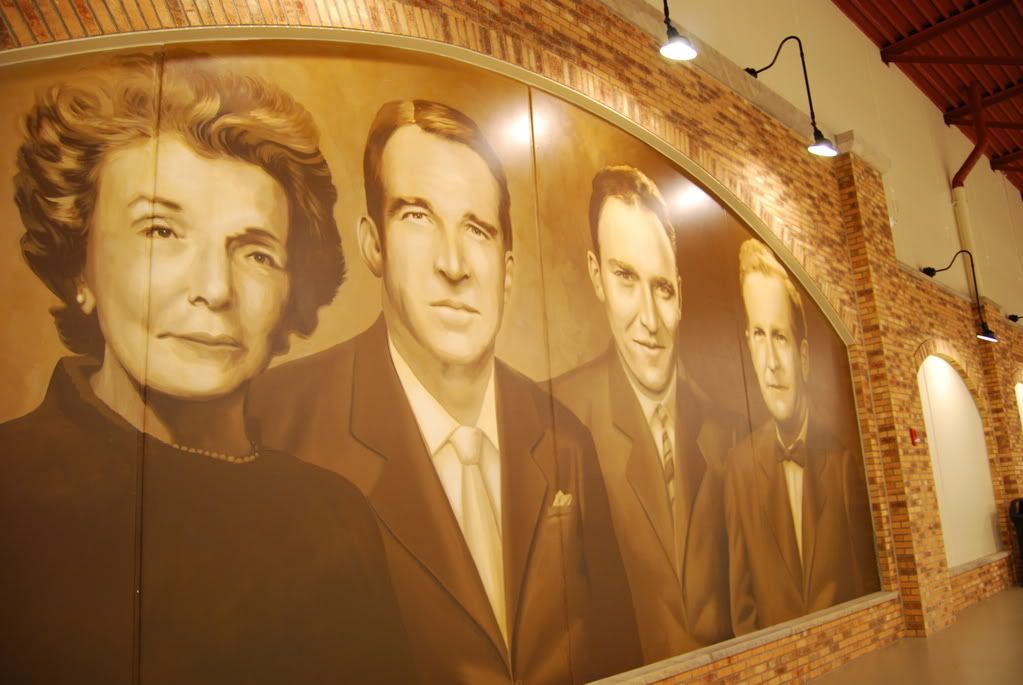
The second man was Robert Fryberger. While Fryberger is probably best remembered (and perhaps cursed, in some circles) for having a frigid Duluth arena named after him, his legacy extends far beyond that one sheet of ice. A Duluth native and Dartmouth hockey alumnus, Fryberger coached his sons’ PeeWee team to a national championship in the early 1950s. In 1954 twins Bob and Jerry Fryberger made the East team, and their father donated an outdoor rink to the program, giving the Hounds their home for the season. While the records may not be complete, the Frybergers are the first Hounds I can find who went on to college hockey; both went to Middlebury in the late 50s and early 60s, where they played on a line with their younger brother, Dates. With the Fryberger Line carrying the load, Middlebury put together a dominant team in 1961, and Dates’s 56-goal season remains among the highest totals by any NCAA skater ever. He later played on the 1964 U.S. Olympic Team, becoming the first of three East hockey Olympians. Community-based programs are often built on the backs of fathers and sons and brothers sharing their love of the game with one another and roping in their friends, and the Frybergers were East’s first great hockey family. For their services to Duluth hockey, Robert and his wife LaVerne are two of the four people enshrined in the center ice mural at the Hounds’ current home rink, the Heritage Center.

The Hounds’ 1954 season came to a crashing halt in the Region 7 quarterfinals in a 6-2 loss to 1950s powerhouse Eveleth. Shortly thereafter they suffered the further indignity of watching the team they’d beaten for the District 26 crown, Duluth Central, become the city’s first State Tournament entrant. But the foundation was in place, and under Coach Rolle’s steady hand, the results grew steadily better. In 1955 they knocked off an Iron Range team (Greenway) to advance to the region semifinals for the first time, and in ’56 and ’57 they repeated the feat, coupling the regional success with two more district titles.

In 1958, East broke through to its first State Tournament berth. The honor was rather anticlimactic, as the Hounds lost the Region 7 final to International Falls by an ugly 8-1 score.  But between 1948 and 1964, the MSHSL filled out the tournament field by awarding the Region 3 championship to the loser of the Region 7 and Region 8 title game on a rotating basis. The even years belonged to Section 7, and thus East’s quarterfinal victory over Virginia and semifinal win over Duluth Denfeld were enough to lock up a State berth. The so-called “back door” through Region 3 was one of many unusual playoff methods used in this early age of high school hockey; Regions 4 (St. Paul schools) and 5 (Minneapolis schools) also had their own back door until 1959, and it expanded into a four-game playoff including the runners-up from Regions 2 and 6 from 1960-1968. Even more strangely, some regions experimented with any number of systems of byes and automatic berths, and the 1946 Section 5 coaches decided they’d rather vote for a team than hold a playoff. The ’58 Hounds were hardly alone in making the Tournament via a curious path.

East’s first stint at State didn’t produce much in the way of happy memories, either. After a scoreless first period, St. Louis Park erupted for four second period goals and buried the Hounds, 5-1. Their consolation round experience was no better, as St. Paul Murray rolled to a 3-0 win. It was a stumbling but necessary first step.

The 1959 season proffered mixed results for the Hounds; their twelve losses were the most in the Rolle era, but they also beat state power Eveleth for the first time, and coupled a pair of solid senior UMD-bound defensemen, Ed Sutton and Jerry Udesen, with a sophomore core that would carry the team for the next several years. East played and beat Baudette 6-2 in a game at Williams Arena before a University of Minnesota game in a sort of forerunner to the contemporary Hockey Day in Minnesota. The season came apart in Districts, when they lost a tight game with Duluth Central in the semifinals and were then inexplicably blown out by Duluth Morgan Park 8-1, not long after beating that same team 8-0. This left the Hounds with a first-round Regional game against International Falls, which promptly whipped them, 10-3.

The 1960 team was built around five future UMD players: juniors Dave Stepnes, Bill Savolainen, Bill McGiffert, and Dick Fisher; and sophomore Bob Hill, a future East coach. While the Fryberger brothers (Middlebury) and Tom Wheeler (Hamilton) traveled east to play their college hockey, East High effectively served as a pipeline for the University of Minnesota-Duluth hockey team during the Rolle era. Between 1956 and 1967, no less than 17 Hounds went on to suit up for the Bulldogs. Jim Ross, Mike Hoene, and Bill Sivertson also appeared to play prominent roles on the 1960 squad, and while the team did not boast any future household names in Minnesota hockey, their depth appears to have been as good as any team’s in that era.

The team went 17-3 in the regular season, splitting two meetings with Eveleth and avenging a loss to Central in their drive through District 26. They collided with Eveleth for a third time in the Region 7 championship game, and while they lost, 5-4, the close score made them a much more worthy back door State Tournament entrant than they had been two years prior. In their State quarterfinal, the Hounds faced Minneapolis Washburn in a battle of back door teams, and fell into a 3-1 hole in the third. The team then rallied for four goals in a five-minute span late in the period, including two by Ross. East had its first State Tournament win, and the first round offered additional good news: Eveleth had also lost, and would lose again in the consolation round to Edina, which was making the first of its 19 trips to State under coach Willard Ikola.

The Hounds faced another familiar Minnesota hockey name in their semifinal, in which future University of Minnesota coach Doug Woog had a goal and an assist for South St. Paul. But East overwhelmed the Packers with three goals in both the second and third periods en route to a 6-2 win, with Sivertson logging a hat trick in the process. The state title game matched East against St. Paul Washington, and Sivertson continued his torrid scoring pace with a goal four and a half minutes in. McGiffert struck a minute later for a 2-0 lead, and though the Presidents scored early in the second, a Mike Hoene goal in the third iced away Duluth East’s first state championship.

The 1961 Hounds returned with most of their title-winning core intact, and loaded up their schedule in anticipation of another championship run. They played Eveleth and South St. Paul twice each, and also took on two Minneapolis teams, White Bear Lake, and the University of Minnesota-Duluth Freshman Team in addition to their usual slate of Duluth and Iron Range area high schools. They finished 16-4 in the regular season and marched through Districts and the even the Region, until they met International Falls in the final.

The region championship in Eveleth was a clash of Minnesota hockey titans, with the Falls ranked #1 and East at #2. With no back door open to Region 7 that year, it was do or die for the Hounds’ four D-I seniors and a star-studded Falls roster that included such Minnesota hockey greats as Mike “Lefty” Curran and Keith “Huffer” Christiansen. The game was a thriller, and East pulled out a 3-2 win for its first proper Region 7 title and third Tourney berth in four years. The most memorable part of the game, however, may have taken place after the final buzzer sounded. Frustrated Falls star Jim Amidon whacked East’s Mike Hoene in the head with his stick, prompting a small fight on the ice. The players didn’t drag out the action, but the fans at the sold-out Hippodrome had other ideas. In perhaps the most epic high school hockey fight ever, 30-40 fans leapt on to the ice and did battle with one another, with some fans even going after the East players. A furious Coach Rolle declared he’d never schedule the Broncos again, and the Falls’ famed coach, Jim Ross, ordered each of his players to go over to the East locker room and apologize afterwards.

With the Falls out of the way, East entered the Tourney as favorites to repeat. In the first round, East battled a strong St. Paul Johnson team into overtime, and in the end, Sivertson broke the scoreless draw to send East back to the semifinals. There, the Hounds suffered their first State Tournament upset. The culprit in this case was South St. Paul goalie Gary McAlpine; despite a 37-18 edge in shots, East fell, 2-1. They bounced back the next day with another low-scoring victory, this time edging North St. Paul 2-1 in overtime. The offensive power outage at State seems to have done the Hounds in, though they bid farewell to their deep senior class knowing they’d made East a presence on the state hockey scene.

The 1962 and 1963 seasons stalled out in the regional semifinals in one-goal losses to Greenway and International Falls. The mid-60s were the Falls’ time to shine, as they put together one of the state’s greatest dynasties, winning titles in 1962, and 1964 through 1966, and losing the 1963 championship in overtime to St. Paul Johnson.

The greatest threat to the Falls’ dominance in northeastern Minnesota, however, came from Duluth East. In 1964, East reloaded with another core of four UMD-bound players (Tom Ahrens, John McKay, Dave Maertz, and Ben Wolfe) plus future Hamilton standout Tom Wheeler. The result was the Hounds’ best regular season to date, as they lost only one game, though I could not find a game-by-game schedule. East and the Falls again collided in the Region 7 title game, and once again, East prevailed by a 3-2 score. As luck would have it, the Falls entered the Tournament through the Region 3 back door, and the teams met again in the State quarterfinals. This time around, it was the Falls’ turn to eke out a one-goal win, despite a 25-20 East edge in shots on goal. East thus became the last team to beat and the first team to lose to the Broncos as they began their record-setting 59-game winning streak, a mark that still stands today. They went undefeated through the next two seasons until they finally fell in a November 1966 game against Duluth Cathedral.

East lost 3-0 to Roseau in the consolation round, and went home without any hardware. The 1964 section title was East’s last trip to State under Rolle, and closed out what we might call the Bronze Age of Duluth East hockey: a seven-year stretch of four Tourney berths complete with a third place finish and a title. And though it would be another eleven years before East made its way back to St. Paul, they still had plenty of entertaining moments in the ensuing years.

East and the Falls met yet again in the 1965 final, though this time the Falls forsook the drama and creamed the Hounds, 8-1. A playoff format change gave East a second chance at the Tournament; instead of automatically handing out the Region 3 back door berth, the MSHSL debuted a one-game playoff between the runners-up in Region 7 and Region 8. East took on Thief River Falls for the right to advance but came up short, 2-1.

The 1966 team had another strong regular season, including a series split with third place State finisher South St. Paul and a one-goal loss to runner-up Roseau. The Hounds marched to yet another District 26 title and won their regional quarterfinal against Virginia, but rising power Greenway proved too much to handle in the semifinals. The Raiders would go on to finish fifth at the 66 Tourney before winning back-to-back titles in 1967 and 1968.

By the late 1960s, East was not only struggling to match Region 7’s finest; they were no longer the best team in the city of Duluth. The team that supplanted them was not a threat in the playoffs, however; it was Duluth Cathedral, which participated in the private school tournament until 1975. Cathedral won five straight Catholic school titles under coach Del Genereau from 1965-1969 and featured such stars as NHLer Phil Hoene and Steve “Pokey” Trachsel. East did not beat Cathedral during that stretch, and was on the wrong end of perhaps the most famous Duluth high school game that decade. In the final game of a 1966-67 season sold-out high school tripleheader at the newly minted Duluth Arena (later known as the DECC), East was tied 3-3 with Cathedral in the second when Hoene scored a natural hat trick in all of 27 seconds. As frustrating as those games must have been for Hounds fans, those Cathedral teams were deeply intertwined with East’s future: they included current Hounds head coach Mike Randolph and his longtime assistant, Larry Trachsel.

Cathedral losses aside, the 1967 season was a strong one for the Hounds, as they beat state powers International Falls and Roseau and sailed through the District 26 playoffs to an easy title. The team’s five regular season losses in Coach Rolle’s final year were all narrow defeats against top-end teams, and the Hounds appeared primed for another deep playoff run. But the tables turned in the first round of the region playoffs, and Rolle’s tenure concluded, rather fittingly, with a 5-0 loss to his longtime nemesis, International Falls. Rolle is, at last report, still alive and living in Duluth, and looked quite sharp several years ago when he took part in a ceremony at the Heritage Center honoring the 1960 State champions.

Next week: East under coach Don Bourdeau (1968-1984).

Hounds Hockey History I: Introduction

Lest my hockey-writing development lapse while other hockey writers work hard on their craft in summer training programs, I’ve decided to launch a series on the history of Duluth East high school hockey. I will still have non-hockey content; this will just be a weekly feature. This project is quite some time in the making, and there are still a number of holes in the record books (especially in the early years) that I still hope and plan to fill. Research for this project draws from a variety of sources, including:

-My own memory, for roughly the past ten years.

-The Duluth-News Tribune online archives, which date to 1995.

-Several other stray articles written in the past 10-15 years, most prominently a series of columns by former Star Tribune writer and Duluthian John Gilbert.

-Video of East section finals and State Tournaments since 1991. (Yes, I own just about all of them; no, I am not making copies; I have given some thought to getting them onto Youtube, though that is not a priority right now.)

-Archives of historical data provided by Lee at MinnHock, the Hill-Murray website, and the 2000 book Let’s Play Hockey Presents a Complete History of the Minnesota Boys and Girls High School Hockey Tournament, 1945-2000.

-Duluth East yearbooks, though I was unable to get my hands on copies from 1951, 1962, 1963, and 1964.

Since I have no memory of most seasons and am constructing this history backwards, there are bound to be plenty of holes, assumptions, and selective readings of history. That’s the only way to make this work. I welcome any information that might fill in some of the gaps, and different perspectives that I might not be aware of. That said, the purpose of this project isn’t a data dump, but an attempt to build my own narrative through 64 years of hockey history. At this point I’m envisioning a series of nine parts or so, with most of the emphasis on the past twenty years, which offer the most source material, the juiciest storylines, and probably the greatest reader interest, too. I’ll devote the remainder of this post to the origins of East hockey.

One quick note: rather than write out every season as two years (e.g. “2012-2013”), I abbreviate it by using simply the half of the season in which the playoffs are held. That is, if I say talk about the Hounds’ achievements in 2013, I’m talking about the 2012-2013 season, not 2013-2014, or the calendar year of 2013.

The story of one of Minnesota’s most prominent high school hockey programs begins some five years after the birth of the Minnesota State High School Hockey Tournament in 1945. With the city’s population on the upswing, Duluth East Junior High became a high school in the fall of 1949, and put together a hockey team in its first year. Teacher Frank Hart took the helm as the head coach, and his team’s first game was against Floodwood, a tiny town west of Duluth that no longer fields a hockey team. The Hounds won, 6-0, and followed that up with a 9-3 win over Duluth Cathedral (now Marshall) and a 19-1 win over Hermantown. (Some fans might be surprised to learn that Hermantown, now a State Tournament regular, was a complete doormat until the late 1990s.) They wound up with a 7-1 record at the end of their regular season, though they appear not to have participated in the playoffs. The sole loss was an 8-1 pasting at the hands of Duluth Denfeld.

The Hounds’ most common opponents in those early days were the teams that went on to become members of the now-defunct Big Ten Conference of northeastern Minnesota. If these Proctor baseball historians are to be believed, the conference officially formed in 1959 as the Big Nine, and eventually evolved into the still-existing Lake Superior Conference. Members appear to include the four Duluth public high schools (East, Central, Denfeld, and Morgan Park); the city’s western neighbors of Cloquet, Proctor, and Hermantown (eventually—I think they were the team that turned the Big Nine into the Big Ten in 1963); and two towns on the north shore of Lake Superior, Silver Bay and Two Harbors. Duluth Cathedral also appears to have been a conference member; however, as a private school, they had their own playoffs prior to 1975. Otherwise, the conference seemed to line up with District 26, which fed its top four finishers in its district tournament into Region 7. In the eight-team Region 7 Tournament, the Duluth-area schools competed against (and were often slaughtered by) teams from the Iron Range and the far reaches of northeastern Minnesota in search of a State Tournament berth.

Records are spotty for the next few years, and East lurched through a couple of middling seasons. All I have for 1951 is a 4-6-1 record, and the 1952 yearbook suggests the listed 4-2 regular season record is incomplete. The Hounds did make their first regional tournament in that year, and promptly lost to eventual state champion Hibbing in the first round. From 1952 on I have rosters for every season but 1963 and 1965, but with these early teams, it’s hard to find much evidence of post-high school careers, unless the player in question is particularly famous or a certain college has its own database. At any rate, the 3-4 result under coach Alvin Ness in 1953 was the last losing season on record, meaning the Hounds wrapped up their 60th consecutive winning season in 2013. While the results of those first few seasons weren’t awful, there wasn’t much to suggest the Hounds could become a state powerhouse, either. First, two key people would need to leave their mark on the program.

Up next week: a post on East’s fourteen years under coach Glenn Rolle, who guided the Hounds to their first brush with glory.

On Developing Hockey Players in Minnesota

The NHL playoffs may be nearing their close, but the hockey season never really ends. For top-end Minnesota high school players, this means the junior league camps are just around the corner. The players will have to decide if they want to forgo the remainder of their high school careers for hockey opportunities in other cities. Some will do so to get out of, say, a bad relationship with a coach, but most will do so in pursuit of better “development” as a player. The better junior leagues have longer seasons and older players, which offer increased competition and challenges that may not be available in high school. Unsurprisingly, this also results in heated and vitriolic debates over which path makes the most sense; I’d guess that over half of the disciplinary actions I have to take on the hockey forum I moderate relate to these arguments.

The number of players choosing different development models shot up dramatically in the late 90s, and though it has since leveled off somewhat, the hockey scene will never be the same. Across the Twin Cities, a proliferation of summer hockey programs has given rise to several that have moved into the winter season and now, whether directly or indirectly, antagonize the Minnesota hockey model. (While the pre-high school, community-based youth associations technically have nothing to do with high schools, the two work in such concert that I will conflate them in this piece.) The new programs attempt to group together elite players on teams that play schedules that are far more intense than anything allowed by the powers that be—whose responses  to such challenges, as one might expect out of a many-layered bureaucracy, have often been rather slow and lurching. Canadian Major Junior leagues now eye young American players with relish, and there is something of a silent war going on between the Canadians and the proponents of high school and U.S. college hockey. (Playing Canadian Major Juniors leaves players ineligible for the NCAA.) The Alec Baer incident this past winter was probably only the opening round in an impending battle of development models.

Putting myself in the shoes of a hockey parent, I understand the shift. If I someday have a kid who loves hockey, I doubt I’d hesitate to give him or her the best development opportunities my money can buy, and I wouldn’t hold an ambitious kid back from heading off to another league if it were a good fit. Sure, I love the high school game more than any other level, and in my perfect world, no kid would ever leave. But perfect worlds aren’t necessarily good guides for what to do in the real one, and I also can look at this game from a far enough distance that I have no desire to sacrifice the goals of others to the altar of community-based hockey.

Still, two issues leave me with some reservations.

The first comes from Herb Brooks, the Minnesota hockey legend and coach of the U.S. national team that won the gold medal in the 1980 Miracle on Ice. Brooks envisioned hockey development as a pyramid, with a broad base of community-centered hockey propping up the top players. By its nature, this model is somewhat inefficient; it doesn’t allow the top players group together to maximize their development. But it also recognizes that culture matters, and that the long-term health of hockey in Minnesota requires attention to the things that make hockey more than a game. It is near-impossible to measure the value created by the bonds of community loyalty and the mystique of the ever-so-Minnesotan high school tournament, but it certainly exists, and I sincerely doubt the dream of playing for a team in Alberta or the 2004 Birth Year Team Minnesota Wolfpack Sponsored by Car Dealer X would be able to match the pull of playing for Edina or Roseau or Hill-Murray High. The reason football is so embedded in the American psyche is because its sole development model touches just about everyone who goes through a traditional American high school; kids who have minimal interest in the game still show up on Friday nights to join their friends in a rite that venerates the players but also lets each and every fan participate, an experience passed forward through schools and families and generations. The same is true for Minnesota hockey in many communities, and losing that cultural cachet in the interest of efficient development would be a real loss.

This is especially true for a sport that, due to high equipment and ice rental costs, has largely come to be the province of the wealthy. Hockey has big enough image issues as it is. In this day in age we like to pretend that any choices we make that are “best for our kids” don’t have any consequences beyond said kids. They do. People who act according to strict self-interest are naïve if they think others will not judge them for abandoning a community or having different priorities. I’m not saying it is right for those considering leaving to abandon their aspirations under communal pressure, but if they do not understand where the community is coming from, conflict will ensue. Culture matters.

The second issue has to do with the very notion of “development” itself. Many critics have wondered whether young hockey players are mature enough to leave home early, or whether the rigors of an intense training regimen will lead to burnout or injury. These are real concerns that have affected some players who seek different development paths, though they can be mitigated in various ways. Still, my questions are a bit more profound. We can justify just about anything claiming that it leads to better development, but development is such an abstract term that any serious contemplation of what it means requires some distance. Sure, more ice time will almost certainly make a player better, but we have a very limited grasp on the degrees to which it can help. At what point do we hit the point of diminishing returns, and can a different path fundamentally change the trajectory of careers that are also dependent on genetics and work ethics and other issues that pop up in life? Advocates of models have lots of anecdotes and select statistics they like to throw around, and plenty of them do make intuitive sense. But until someone can put together a study with a huge sample size that takes players and compares their career trajectories and isolates as many variables as is humanly possible, we are all groping around in the dark.

I can go even further on the development front. Does the arms race for better hockey development have an ending point, or will it simply go on until the end of time, with more and more opportunities that are less and less accessible to most anyone? On an even more existential level, is youth hockey always a means to an end, or is there more to it? Is childhood a constant progression from one step to the next, or does thinking of hockey players as crops to be grown and harvested somehow impoverish our understanding of them—and if so, in what ways?

I don’t pose any of these questions with the hope that they will lead anyone to have a sudden change of heart. I just hope people might consider them with as much objectivity as possible, instead of running away from them because they are too deep and complicated, or trying to cram knee-jerk responses into a preexisting worldview. Our inability to be completely objective is no excuse for not trying.

For the Minnesota kids who do choose to leave this offseason, I’ll be rooting for all of you. But I do have one simple request: remember where you came from. Even if you bounced around for a bit or didn’t quite fall in love with your particular program the way some people do, it is a part of you. If you love hockey, you are in some way indebted to the many people who keep it going at each and every level.

Take the example of Zack Fitzgerald—a player who is not from Duluth (his family moved there when his older brother, a future NHLer, was in high school), and left Duluth East High for Canadian Major Juniors after his freshman year. He has had a successful career as an enforcer in the American Hockey League, one step below the NHL, and got into one game in the big show. Yet he spent his formative years in Duluth, and this summer will find him back home, running a hockey camp along with his older brother. There are countless ways to help, whether through volunteer work or philanthropy; God knows schools (both public and private) need all financial the help they can get. I’d also advise donors to look beyond one’s alma mater, as means allow; for example, the need for support at Duluth East, while real, is far less pressing than it is for the dwindling program of their crosstown rivals, Duluth Denfeld. Sustaining the hockey culture in Minnesota requires a broader perspective, and programs that get financially disadvantaged kids on skates can help in ways that go far beyond the rink. So long as the base of the pyramid remains solid, I am at peace with players pursuing their hockey careers in any way they see fit. And if that base isn’t solid, before long it won’t much matter which paths players take.

A Coaching Controversy Revisited


Today marks the ten-year anniversary of the most infamous day in the history of Duluth East hockey. It wasn’t a loss in a game, nor an embarrassing off-ice incident. In truth, the stunning news of April 24, 2003 didn’t affect the team’s performance in any measurable way. But the decision handed down that day attracted statewide attention and dominated Duluth’s news for the next year. The Duluth East administration chose not to renew the contract of head coach Mike Randolph, effectively firing the state’s most decorated coach.

ImagePhoto credit: Duluth East High School Hockey Facebook Page

At the time, Randolph was a hockey icon. In his fifteen years at the helm of the Hounds, he turned a perennial underachiever into one of Minnesota’s premier hockey programs, guiding them to eight State Tournaments and two championships. East hockey had become a breeding ground for Division One hockey players, abandoning its conference to play the most difficult schedule possible and attracting talent from across the state. Randolph had a reputation as an intense, fiery leader; a brilliant hockey mind who demanded excellence at every turn. His will to win was unquestioned.

But as is so often the case, the very traits that made Randolph great were also his downfall. He pushed his players so hard and was so unrelenting in his demands that some lost their passion for the game. He had to cut many players over the years, and he never was one to mince words in doing so. In his efforts to balance the development of his stars and playing time for all, he’d inevitably made a number of enemies. Fixated on his team, he delegated team fundraisers to his assistants, and some accounting issues sprang up. Randolph, his critics argued, had lost sight of what high school sports were supposed to be. Down came the axe, with no explanation given: data privacy laws allowed the administration to dismiss him without cause.

If Randolph’s tale were a Greek tragedy, the story would have ended there, with the hero felled by his tragic flaw. But Randolph, a fighter to the end, demanded answers. His legions of supporters mobilized against the alleged injustice, and the coach waived his right to privacy and threw open his confidential personnel file for the world to see. His supporters had responses ready for each and every charge, and claimed conflicts of interest at every turn; many of the complainants were parents of cut players with axes to grind—including the East principal—and a leading Randolph critic on the school board had prominent ties to East’s private school rival, Duluth Marshall. No one seemed to have an objective account of what really went on in the East hockey program, and no one’s testimony seemed entirely trustworthy. All of the intrigue culminated in several explosive exchanges with the school board, which ultimately voted to uphold the administration’s decision.

For one year, anyway. That fall, the fate of a hockey coach became an election issue. Three school board members who had opposed Randolph’s reinstatement either lost their bids for re-election or retired. In April 2004, shortly after East’s 3rd place finish in that year’s Tournament, the board declared it had erred the previous year. Randolph had his job back.

Naturally, people with little interest in hockey found the whole affair absurd. Duluth public schools faced declining enrollment and tough budgetary decisions at the time, and yet the only thing that inspired any passion was a man in charge of an extracurricular activity who made $4,000 a year. And even if Randolph had been wronged, why drag out a fight that would only serve as a distraction?

To some, it was a matter of justice, pure and simple. To those who took a longer view, it raised crucial questions about the meaning of high school sports, and even a high school education in general. The debate over whether the program was “too big” probably deserves its own post, but there are plenty of other things to consider. There’s no doubt Randolph was (and is) a tough coach, and that he is not for everyone. But he wouldn’t be controversial if it didn’t work. Is high school too soon to place a hockey team under the command of someone so demanding? Are the claims of burnout enough to invalidate the testimony of those who cite Randolph as one of the most important formative figures in their young lives? Even if the administration had just cause to can Randolph, were there issues with their methods? Should the wronged party (whichever one it might have been) ever stop fighting an injustice for the good of the team, or the community? Where are the lines between demands for perfection and emotional abuse, between intensity and depravity? Would we rather have coaches who push us to the limit, or ones who take things as they come? When framed in those terms, the questions become near-existential, and it’s not so hard to see why the Randolph saga enjoyed so much attention in Duluth. In the beginning it was only about hockey, but by the end came to mean so much more.

So, what verdict might we pass on Randolph’s return to Duluth East? Naturally, it’s in the eye of the beholder. I’ve been through nearly every press clipping, talked to many people around the program, watched every old State Tournament game on DVD, and done my share of eavesdropping at the rink, and I’m not still not sure I have an easy answer. East has been to six State Tournaments in his nine years back on the job, though the third state title has eluded him, and there have been a few playoff disappointments along the way. Moreover, the scrutiny brought on by the 2003-04 saga has left him under the microscope ever since, with controversies at every turn: an accusation of physical abuse (unsubstantiated), players leaving high school for junior hockey (some citing the coach as a reason), Randolph’s criticisms of those who leave, alleged favoritism when his own son was on the team (untrue, in my opinion), claims of recruiting, and scheduling controversies, along with the typical disputes over playing time and cuts that plague most any high-profile program.

On more than one occasion, I’ve wished he might find some way to ride off into the sunset so that we could leave all of this behind and move on to the next coach. But that, of course, wouldn’t be Randolph’s style, and for the time being East hockey is wedded to him, both in victory and in defeat. And even if I grumble from the stands from time to time, I can’t quite picture East hockey without Mike Randolph stalking the bench behind his players, arms folded, glower in place as he barks at his Hounds, orders them to begin that patient cycle that so enthralled me as I watched from the stands in his first season back on the job. I was a freshman back then, and without his quarter century of work, I doubt I’d care about this sport half as much as I do.

Complexity, Causes, and a Championship

Time to use some hockey to make a point about complexity and causes.

Here is a replay of the triple-overtime championship-winning goal in the 2011 Minnesota State High School Hockey Tournament. In that game, Eden Prairie defeated Duluth East, 3-2. (Sorry for the grainy video, but it’s the best I can do.)

This is about as straightforward as it comes in a sport: the puck goes in the net, one team wins, the other one loses. So, what caused that goal? What decided the 2011 championship?

At the most basic level, you have the excellent effort by the goal-scorer, Kyle Rau, diving to swat the puck into the net. There are also two Duluth East miscues: the goaltender letting the puck squirt through him, and the defenseman, Andrew Kerr, fanning on his attempt to clear it.

Others might point to luck or fate, too: as later replays showed, after Rau made contact with the puck on his dive, it hit the goalpost, bounced out, and deflected off Kerr’s skate before sliding into the back of the net. It was a great play by Rau, who was the state’s best player that year, but not even he could have planned something like that.

But why stop there? Let’s rewind this play a bit: you have the initial shot from the Eden Prairie defenseman, and the sequence of events from both teams that led up to that shot, of which you see only a fraction in this clip. And for Rau to even be in this position in the first place, countless other events had to fall in line. Both teams had scoring chances throughout the three overtimes, and in regulation as well. With East up 1-0 after two periods, one of their best defensemen went off with an injury. The second East goal was fairly soft—one the Eden Prairie goalie would have normally saved. The referees also played a role; they called only one penalty in the entire game, much to the chagrin of Eden Prairie fans—Kerr put together a complete highlight reel of vicious checks on Rau before the fateful play at the end. Any little change in a play, and this moment doesn’t happen. And that doesn’t even touch the months and years of preparation that led up to this game.

Keep in mind that hockey is, conceptually, fairly straightforward. It follows set rules, has a limited number of actors involved, and the goal is obvious: put the puck into your opponent’s net more often than they put it in yours. It has been studied by enough people over the years that we now have a reasonably good idea of what it takes to win a championship. We can know what to look for in individual players, and how they fit within the coach’s scheme; computer models can weed through the flood of information and statistics and predict outcomes with commendable accuracy. We can correlate many things with success.

But nailing down a precise cause; the exact catalyst that left Eden Prairie dancing in delight, and Duluth East flat on the ice in dejection? That’s an entirely different story.

And if it’s so difficult to do in hockey, how can it be any easier in any other realm of human affairs; ones with more actors, less clear goals, and fewer sets of rules we can all agree on? From politics to warfare to those mundane events that pop up in our daily lives, how can we pin down a sequence of events with any degree of accuracy?

Now, this train of thought could easily lead to a sort of causal nihilism. I don’t want to go there. The point here isn’t that it’s impossible to label a single cause. It is that finding these causes is a lot harder than it may at first seem, and that anyone who looks to study this sort of thing needs to go at it with a proper dose of humility. Any sort of analysis or study that tries to end the conversation, whatever the merits of its arguments, suffers from a conceit that does its audience a disservice. At some point, of course, we need to make a decision and move on. But social science, for all its explanatory power, is not a hockey game. Anyone who approaches it with the intent to win or lose has missed the point, and that can be a serious problem.

So, what does this Duluth East alumnus think caused that goal? My philosophy is that one has to boil it down to what one can control, which in this case means pointing out the two plays the East players could have made, but didn’t. There is no shame in taking that responsibility, especially for two otherwise rock-solid players who had fantastic high school careers. They were minor mistakes, but in a game that was so dead-even that it almost had to end on a fluky play, those two in tandem made the difference. Hockey can be a cruel sport, but, well, so can life. That’s my opinion, and while I doubt I’ll change it, it doesn’t invalidate the many other accounts of this game.

At any rate, this is the mindset I hope to use on this blog. Tomorrow, we’ll add some politics to the discussion.