Summer draws to a close, and the days for carefree outdoors enjoyment dwindle. In the past six months I have been to Spain and the Caribbean and Colorado and Chicago, but I have neglected the more immediate opportunities. My dad tugs me into the Boundary Waters for the first time in four years, too long an absence for someone with wilderness in the backyard.
Our gateway to the BWCA comes at the Brandt Lake entry point off the north end of the Gunflint Trail. We set out with ambitions of revisiting Adams Lake, a gem deep in the interior of the BWCA; if we cannot reach that lofty goal, we will at least settle for exploring a little-traveled chain of lakes between it and better-known destination lakes like Gabimichigami and Little Saganaga. My dad tweaks his knee on day one, however, and our itinerary shortens considerably. We settle for a three-night jaunt in and out, puddle-jump over seven portages to Bat Lake, where we spend two nights before working our way back over two days, a journey of no great physical feats that instead turns to gentle release.
It has been a wet late summer in northern Minnesota. The first portage has standing water for much of its length, and the second and third are only marginally better. The fifth has developed a mid-path waterfall. The mosquitoes of legend, usually in remission by September, are still about, though tolerable. The grey skies are steady throughout our trip. The Canadian Shield has been stained black by rainfall, steady drips off overhanging cliffs into the water below. My favorite spot on the trip is Gotter Lake, a small, marshy expanse lined whose narrow points are lined by cliffs, the looming mists clinging to the walls and drifting over the grasses. We turn into the wrong arm on our way across it, but I don’t mind the extra paddle.
Some fall foreplay is emerging in the trees, first hints of the golden eruption that will strike in the coming weeks. Even across four days, we see a real difference. The nights settle into a perfect sleeping temperature. A steady procession of geese makes its way southward, their flying Vs audible long before they are visible. A flock of cranes, meanwhile, heads west. I contemplate the stray geese who do not quite get the memo about flying in formation: is it ineptitude, or rebellion? We fend off an intrepid chipmunk who darts about the site. We reach for our cameras when something emerges from our lake; from a distance it could be a moose, but it is just another canoe. I extract a leech from its feasting grounds on my foot. We watch something steadily work its way along currents on the lake against the wind. It is a leaf.
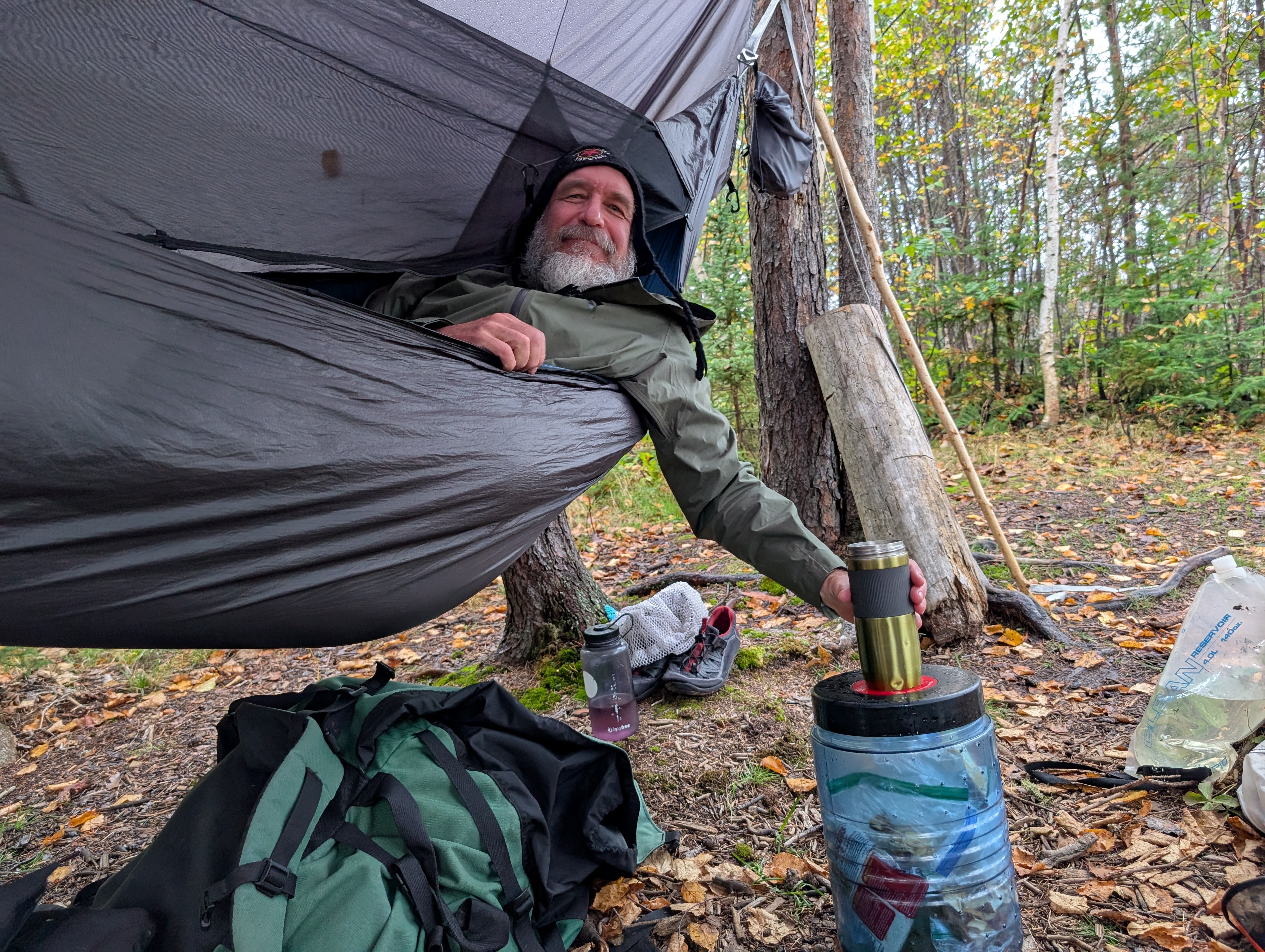
There is no boredom here, though. My dad continues to perfect the art of hammock camping, and while I stay in my trusty tent, I too set up a hammock and hang between trees to read and write and watch nights fade into darkness. This is wilderness but there are still people to liven up our days: six Brits flying the Union Jack from their lead canoe pass us on the way out and two good Samaritans take some of our gear as they double-portage in the opposite direction, sparing a second traverse of one of the longer portages on the gimpy knee. People ask about the fishing, on which we have no insight. Paddling and portaging is enough.
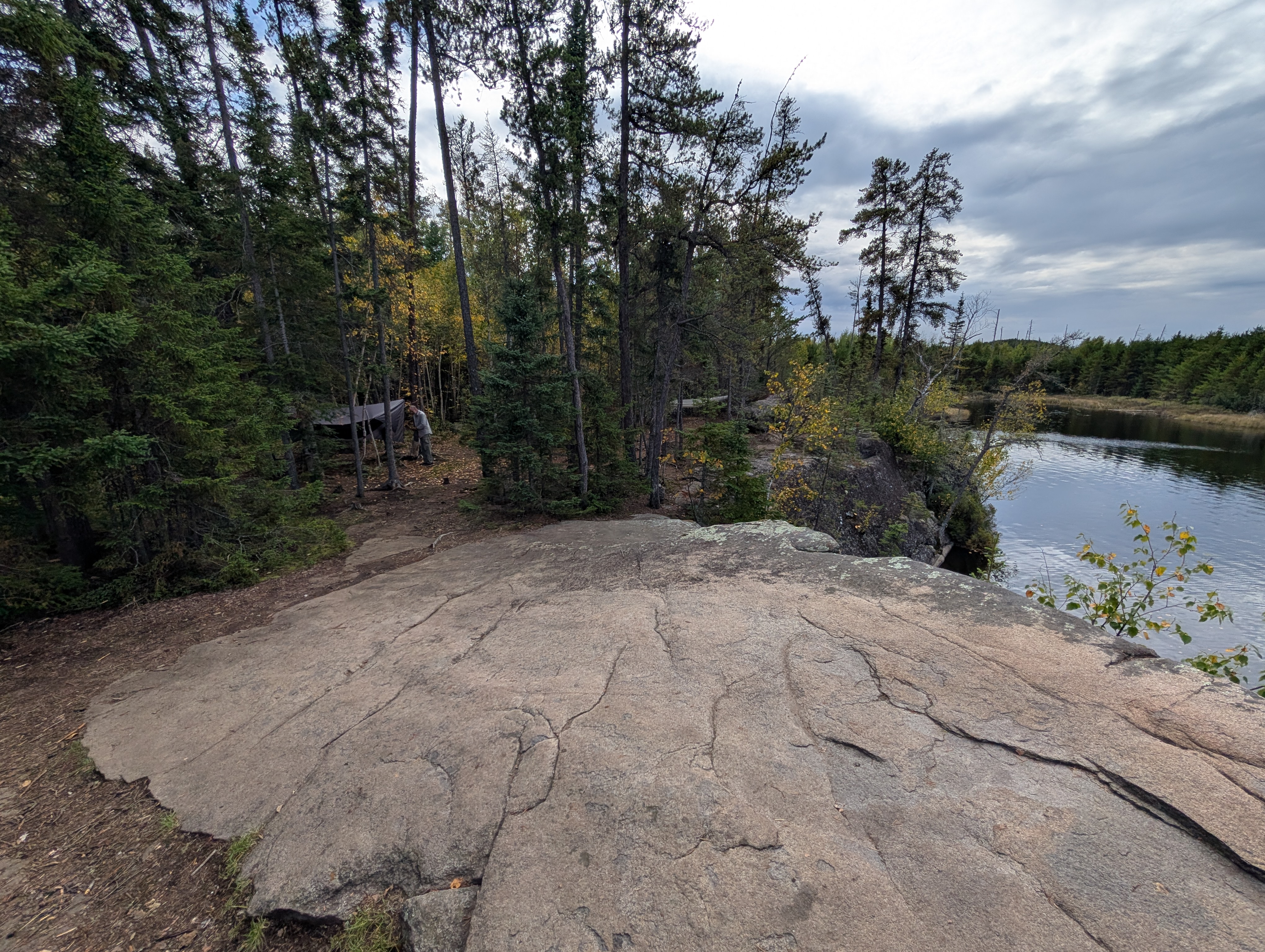
We grade our campsites. The site on Bat Lake is a B, with a nice sitting rock by the shore and a well-appointed kitchen and plenty of tent and hammock space. Its biggest demerit is the clear view of the latrine from the kitchen, and while it is quite likeable there is no real wow factor. Bat is not a destination lake, but it is a pleasant hideaway one portage short of better-known Gillis Lake. The site on Brandt Lake on the way out, however, is an A-plus. The kitchen sits right behind a rocky outcropping, which gives a commanding view of the lake and a place to bask in the sun or stargaze in better weather. It remains secluded, hidden from the nearest site by a protruding island, and offers a glimpse of prime moose territory in a back bay swamp. The tent pads are quality but not overused, and there are ample spots to string up a hammock for a lake view. Here the latrine is appropriately hidden, though a hint of lake is visible from a seat atop the throne.
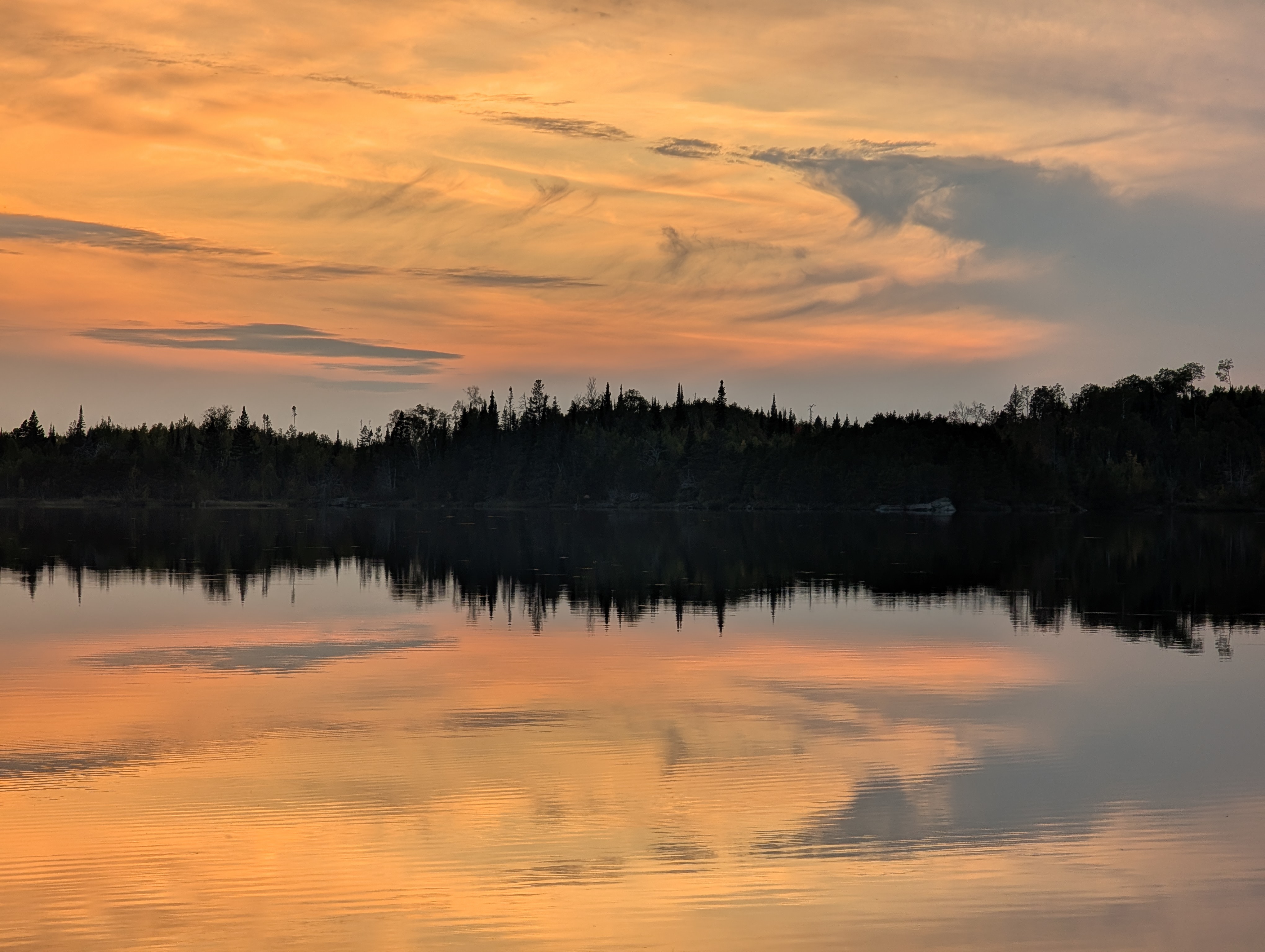
Our conversation drifts about, from wilderness observations to retirement life to where I might travel abroad next. (Nepal? Brazil or Peru? Mount Kilimanjaro? Eastern Europe and on to Istanbul? Time will tell.) We appraise the amount of scotch we’ve brought with some disappointment at these deceptively small flasks. I read a book in the hammock and, for the first time in years, am not writing or editing the same damn short stories—one that had one installment written on a previous canoe trip—because I have made good on my promise from San Diego last November and am actually trying to do something with them.
Where that goes is of little import out here. The only demands are the most immediate, and the release from other obligations and communications and intrusive virtual worlds becomes more precious over time. Here we can just listen to what the wilderness tell us. We hear a whippoorwill, a distant white-throated sparrow; a few voices echo up the lake from the next campsite. A fish jumps, a beaver tail slaps, and the aspen leaves quake overhead. This home calls to me, even if I do not visit often enough.
The call, for whatever reason, seems deeper now, more pressing. Its immediacy has something to tell me. We make plans to try for Adams sometime again soon.


 A Patient Cycle