Hounds Hockey History V: The Golden Age (1994-1998)

This post is the fifth in a series on the history of Duluth East hockey. For the complete series (in reverse order), click here.

Cloquet High School had ruled the northeastern Minnesota hockey roost in 1992 and 1993, but their chance to build a dynasty took a hit when star forward Jamie Langenbrunner left for Canada before the 1994 season. With Langenbrunner out of the way and dangerous Virginia sent to Class A under the revised, enrollment-based two-class system, the Section 7AA field was open for Duluth East. Mr. Hockey finalist Clint Johnson joined sophomores Dave Spehar and Chris Locker on the top line, and with a deep, young supporting cast, East lost only four regular season games. Two losses to state power Elk River were understandable; more troubling were the two losses to a somewhat depleted Cloquet team. At the second game in Cloquet, Johnson’s pre-period ritual of tapping the opposing team’s goal with his stick sparked a fight for the ages, with fans in the stands throwing punches over the low glass at East players. The Hounds’ otherwise dominant regular season earned them the top seed, but they had yet to exorcise their demons with Cloquet, whom they inevitably met in the section final.

The week before the game, Randolph got some unpleasant news: Locker had been deemed academically ineligible, and would be forced to miss the rest of the season. Rather than shake up all of his lines, Randolph pressed freshman Matt Mathias into duty on the top line with Spehar and Johnson. The reworked top line scored both East goals in the game as the Hounds ended a long stretch of frustration against Cloquet with a 2-0 victory. East’s opponent in the State quarterfinals was Minnetonka, another young but talented team that boasted six future Division One players. But the Hounds took care of business in a methodical manner, outshooting the Skippers 29-14 in the 3-1 win.

In the semifinal, East faced an entirely different animal: the Bloomington Jefferson Jaguars, the two-time defending state champions who were busy putting together the greatest dynasty in modern Minnesota high school hockey. The ’94 Jags featured nine D-I players, including future NHLers Mike Crowley, Mark Parrish, Ben Clymer, and Toby Petersen. East played Jefferson as closely as any team that season, jumping out to an early lead on a goal by Matt Frigaard and hanging in until the bitter end, losing by a 2-1 final score. The Hounds turned around and locked up third place hardware with a 5-3 win over South St. Paul the next day.

The Hounds bolstered their lineup with a handful of transfers before the 1995 season. Senior forward Dan Zabukover came in from Duluth Central to add his services to the checking line, and speed merchant Ted Suihkonen, a junior who had played an instrumental role for Virginia in the 1993 playoff victory over East, came south from the Iron Range. With Suihkonen came a pair of eighth grade defensemen who would get some varsity ice time, though they were not on the playoff roster: Ted’s younger brother, Steve, and Patrick Finnegan, who was perhaps the crown jewel of northeastern Minnesota hockey prospects at the time. The city of Virginia never would forgive East for their “theft,” but the transfers revealed the changing contours of high-stakes high school sports.

The 1995 Greyhounds were loaded for a state tournament run. Spehar obliterated the school scoring record with a 101-point season, and Locker wasn’t far behind, with 88 of his own—even though Randolph never really settled on a third member of the top line. Suihkonen combined with Mathias to lead a potent secondary scoring line, a young but talented defense improved as the year went along, and three-year starter Cade Ledingham led the way in goal. The Hounds split two games with Elk River and beat Edina and Grand Rapids; their only other losses were to Hill-Murray and a head-scratcher against Duluth Denfeld, whom they’d beaten 13-0 in the teams’ first meeting of the year.

While East had an easy road to the 7AA final, their opponent in that game, Grand Rapids, was a legitimate threat that had been ranked in the top 5 at times that season. Randolph also made a gamble in goal, starting sophomore Kyle Kolquist over the struggling Ledingham. The Hounds generally carried the play, but Rapids hung tough and tied the game at two in the second on a goal by 1997 Mr. Hockey Aaron Miskovich. The difference-maker, to no one’s surprise, was junior forward Dave Spehar, who scored the game-winner midway through the third.

As luck would have it, the Hounds were saddled with a first-round meeting with Bloomington Jefferson. The Jaguars were seeking a fourth straight title, and had only lost twice in the previous three seasons. But Mike Randolph had a game plan, and he had the perfect player to execute it. A minute and a half in, Locker found a floating Spehar on a breakaway. 1-0. Five minutes later, Spehar collected a loose puck and went the length of the ice. 2-0. Before ten minutes were up, Cullen Flaherty found a streaking Spehar again for the natural hat trick. A fourth goal late in the first made the rest of the game academic. On the other end of the ice, Ledingham had his finest game in a Hounds jersey, snuffing out several early Jaguar chances en route to the shutout, and a third period goal added some icing to the cake. The next day, East fans arrived at the Civic Center wearing shirts that summed up the mood: “East 5, Jefferson 0. Any Questions?”

Spehar, however, was only getting started. East started their semifinal against Edina the next night with a bang, as Ryan Engle scored just fifteen seconds in. Edina hung around for a little while, but the East assault was relentless, with two goals in each period, one of each by Spehar. In the title game the Hounds faced a formidable opponent in Moorhead, who was in its third final in four years. The Spuds, led by future NHLer Matt Cullen, proved far more capable of containing the East attack than their first two opponents. The Spuds took a 3-2 lead early in the third, but Ted Suihkonen had an immediate answer, and a few minutes later, Spehar broke free again. This time, the Spuds’ defense hauled him down, and Spehar earned himself a State Tournament dream: a penalty shot with the game on the line. Naturally, he didn’t miss. Four minutes later, he iced the state title when he completed his third consecutive hat trick. After 35 years, the championship trophy was headed back Duluth, and it was going in style.

Following their memorable run through the 1995 playoffs, the expectations for 1996 were sky-high. East returned two full lines, their top four defensemen, and filled in the few holes with their astonishing depth. The 1996 playoff roster featured eleven players who went on to play some Division One hockey—two more than the undefeated 1993 Jefferson Jaguars, who are generally considered the greatest high school team of all time—and that total didn’t include Locker or freshman defenseman Patrick Finnegan, who would go on to play Canadian Major Junior hockey.

The Hounds were never held to under three goals in 1996, and ran up some gaudy scores against Lake Superior Conference competition. They did prove mortal around Christmas, when they dropped a pair of one-goal games to Hill-Murray, and an injury to Locker kept both he and Spehar from exceeding their absurd point totals from the year before. One of the few teams to give them a close game was Grand Rapids, but the Indians were knocked off by Greenway in the section semifinals, and the Hounds coasted through the 7AA playoffs, winning their three games by a combined 27-3 score.

It was more of the same in the first round at State, as East demolished Blaine, 7-1. Spehar continued his Tourney prowess with a 4-goal performance, including a goal seventeen seconds in that left the Civic Center in awe. Hill-Murray had gone down in sections, and that left only one team in the field that might be considered a serious threat to beat East: Apple Valley. The Hounds and the Eagles met on in the semifinals, and the result was one of the greatest high school games ever played.

After feeling each other out in the first period, the teams began to trade goals. East never led in the game, but had an answer immediately after each Apple Valley tally. In the third period, each team’s stars took over: first Locker tied the game at two, then Erik Westrum scored his second of the night for Apple Valley; Spehar struck back a few minutes later, but Westrum finished his hat trick to give the Eagles the lead with just over six minutes to go. The gameplay was thrilling even in regulation, and the Hounds pressed forward in desperate search of a game-tying goal. Their backs to the wall, East turned to their heroes to get the job done again. With 39 seconds to go, Locker electrified the Civic Center when he pumped in a pass from Spehar to tie the game.

Often, games that go on for multiple overtimes tend to drag as the teams tire. In this game, there was none of that, and not a hint of cagy play. Both teams flew up and down the ice, flashing their skill in search of the game-winner, and the goalies saved shot after shot—49 for East’s Kolquist and an astonishing 65 for the Eagles’ Karl Goehring. Apple Valley, incredibly, rolled just two lines, one replacing the other when the first needed a break. Randolph used a deeper rotation in an effort to wear down the Eagles, and for a moment, it seemed as if it worked in the second overtime, when replays suggest Matt LaTour tipped in a Dylan Mills shot. The referees, however, disagreed, and the teams played on. And on. And on. In the fifth overtime, in the game’s 93rd minute, Apple Valley’s Aaron Dwyer ended the longest Tournament game ever played with a laser from the point.

Exhausted and crushed, the Hounds faced the unenviable task of taking on South St. Paul in the third place game the next day. They responded in style, winning 9-2, and Spehar rounded out his Mr. Hockey-winning résumé with his fifth career Tourney hat trick. It was a bittersweet end to a storied career, though there was no shame in the way East’s run came to an end. The futures of Locker and Spehar only underlined how fleeting those glory days were: after winning WCHA Rookie of the Year honors as a freshman at the University of Minnesota, Spehar plateaued and did not play hockey past college; Locker went to play Canadian juniors instead of playing for Wisconsin, and his hockey career never did quite land on its skates afterward.

Despite graduating Spehar, Locker, and several key members of the supporting cast, the 1997 Hounds showed no signs of dropping off. The East Class of 1997 was the school’s deepest ever, with seven future D-I players. Even though Steve Suihkonen transferred to Hibbing, they were particularly strong in back: goaltender Kyle Kolquist won the Brimsek Award for the state’s top goalie, Dylan Mills was named the Associated Press Player of the Year, Ryan Coole was a Mr. Hockey Honorable Mention, and junior Nick Angell would be a Mr. Hockey finalist in 1998. Patrick Finnegan, a defenseman the previous year, moved to the top line alongside Matt Mathias and Andy Wheeler to help fill the void left by Spehar and Locker.

The ’97 team put together East’s only undefeated regular season. Only three of their 21 wins came by less than three goals, and the lone blemish on their record was a late-season tie at Hibbing. Naturally, East had to play the Bluejackets in the section final at Hibbing Memorial Arena. The historic arena was packed to the gills and oozing with old-time Minnesota hockey atmosphere, and two quick strikes by Hibbing late in the second tied the game and made for a thrilling final frame. But in the end, Mathias silenced the home crowd and buried the game-winner to send East to its fourth straight State Tournament.

In the first round, the Hounds faced a spirited fight from one-loss Rochester Mayo, arguably the best team to come out of Section 1AA in the two-class era. With five future D-I players the Spartans were no southern Minnesota pushover, but East used its stifling defense to keep Mayo without a shot in the third period and won the game, 3-2. They faced second-ranked Moorhead in the semifinals, and once again the defense carried the day as East rolled to a 3-0 shutout.

East’s opponent in the title game was an Edina team also in the midst of a strong run, having finished third and second the previous two years. While East was the deeper squad, Edina stars such as Dan Carlson brought a burst of speed the Hounds couldn’t match, and a first period Carlson goal gave Edina a lead they would never relinquish. Without a finisher of Spehar’s caliber, East could not solve Hornets goaltender Jeff Hall, and the undefeated season came to an end in a 1-0 final.

After the title game loss, a drained Coach Randolph gave serious thought to retirement. It had been an exhausting season, and after so much success, the scrutiny of the East program had never been higher. Hibbing fans took exception to his salute to the East fans after the 7AA Final, and his four children—then between the ages of 3 and 13—overheard some unsavory remarks about their father at the State Tournament.1 Randolph was deluged by over 100 calls and letters, “only three” of them negative, and decided to stay.2

The 1998 squad, while perhaps unable to match the incredible depth of the previous two years, was still loaded for another Tournament run. Finnegan and Angell, the twin pillars on the blue line, were the undisputed stars of the team, while goalie Adam Coole gave East a second straight Brimsek Award winner. Up front, the lunch pail line of Kevin Oswald, Dan Roman, and Gabe Taggart led the way, while brothers Ross and Rheese Carlson hooked up with Chad Roberg to give East two interchangeable top lines.

The Hounds opened the season with five straight shutout victories, including 3-0 wins over state powers Elk River and Hill-Murray, though they were later forced to forfeit two of those wins due to a mix-up over Rheese Carlson’s eligibility. The senior forward had started the year at North Iowa of the United States Hockey League, and there was some question as to his status due to state residency rules. The MSHSL initially suspended Carlson, but a county court issued a restraining order against the League, and its Board of Directors later voted to declare Carlson eligible, though the wins were not reinstated.3

The 1998 squad’s sole on-ice loss came at the hands of Grand Rapids in the sixth game of the season, 7-5. The Hounds had only a handful of close games after that, including narrow wins over Moorhead and Greenway, and a 3-2 victory in a rematch against Rapids. They closed out the regular season with a 6-5 win over state title contender Anoka, and shut out Rapids in the 7AA semifinals before moving on to face Elk River, newly added to the section, in the final. The inclusion of an elite Metro-area program in 7AA rankled many supporters of northeastern Minnesota hockey, and the Elks were not particularly enthused over being forced to play a section final in Duluth, either. The 7th-ranked Elks were missing an injured young defenseman named Paul Martin for the section final, but even he would have struggled to turn the tide. The Hounds powered to a 7-1 victory to clinch a fifth straight trip to State.

The road back to the final was not an easy one, as East faced second-ranked Hastings in the first round. The Raiders were not a deep team, but with stars Jeff Taffe and Dan Welch leading the way up front, they could score in bunches. The teams traded punches for two periods; the Hounds built a 5-2 lead, and while Hastings drew within one late in the second, East held the Raiders down in the third for a 5-4 win. The semifinal pitted East against Bloomington Jefferson, a State Tournament rubber match between the top two programs of the 1990s. The top two remaining teams in the state, though sloppy at times, eventually delivered the goods: East took a 2-1 lead on an Angell goal in the third, but Jefferson battled back to force overtime. Randolph gambled by putting his big defensemen together, and it paid off; Kevin Oswald won the game for the Hounds at 3:43 of the overtime. In the championship game East faced fourth-ranked Anoka in the final hockey game at the old St. Paul Civic Center, but this time, there was no need for late heroics. The title game was a clinical 3-1 victory that showed off East’s dominant defense and Coole’s superb goaltending.

The win closed out a dominant era for the Hounds. They had finished in the top three in five consecutive seasons, a stretch in which they posted a 126-13-1 on-ice record. They won two titles, and their three playoff losses were all by one goal to the eventual state champion. 19 skaters who appeared on those teams went on to Division One hockey, while another 12 played after high school at some level. They brought an end to the great Jefferson dynasty, spent nearly all of 1996-1998 ranked #1 in the state, and the 98 title run, in which they beat the other three teams ranked in the top four, crowned the Hounds as the state’s premier hockey program. It was a superb time to be an East hockey fan, though it couldn’t last forever.

Next week: East hockey from 1999-2003, including an account of changes in high school hockey, life in a program expected to win, and the bombshell at the end of the 2003 season.

1 Pates, Kevin. “Randolph Ponders His Future: East Hockey Coach Considers Stepping Down.” Duluth News-Tribune. 11 March 1997. Web. 1 July 2013.

2 Pates, Kevin. “Randolph to Return; Support Overwhelming.” Duluth News-Tribune. 22 March 1997. Web. 1 July 2013.

3 Pates, Kevin. “Carlson Ruled Eligible: MSHSL Restores East Player’s Status.” Duluth News-Tribune. 13 January 1998. Web. 2 July 2013.

Let’s All Agree on Everything and Finish in Twenty Minutes: Duluth City Council Notes, 7/1/13

It was a windy day in Duluth today, and the Duluth City Council decided to breeze through its meeting in a mere 21 minutes. The Council chamber was on the empty side, though Troop 9 from Glen Avon, looking every bit like the platonic ideal of a group of Boy Scouts, showed up to lead the Pledge of Allegiance. Council President Boyle came to chat with them a bit before the meeting started, while Councilor Hartman snuck in a slice of pizza and some grapes. After their colorful wardrobes last week, most of the Councilors were in black.

Councilor Larson opened the official business by touching on some park safety issues, mostly still dating back to last year’s flood; Chief Administrative Officer David Montgomery made it clear that another so-called concern, the lack of fencing along a heavily vegetated stretch of railroad track, was not really a concern. Councilor Hartman apologized for not noticing several Councilors’ lit buttons during the Committee of the Whole meeting, and Councilor Krug celebrated the success of the much-anticipated social with the School Board.

After again tabling the Pastoret Terrace housing project, the Council heard from a citizen whose name was not made entirely clear. He spoke on the AFSCME contract that was on the table, and said that while he was fine with the contract (which, mercifully, did not involve much wrangling between the city and the union this year), he hoped the city would look into the “abusive” use of overtime by city workers. Councilor Fosle and Mr. Montgomery assured the speaker that the city is well aware of some past issues involving Public Works employees, and has taken some steps to rein in excessive overtime. Mr. Montgomery noted that some overtime was inevitable, however, what with water main breaks at two in the morning and occasional police action. The union contract passed along with the rest of the consent agenda, 9-0, as did several easements, reclassifications, and a permit for an exhaust fan. The mayor’s administration pulled the plumbing ordinance first introduced last week, likely after the plumbers’ union made its objections clear. That took care of all of the business on the agenda.

In the closing comments, Councilor Krug raised a pair of concerns. First, she complained about the lack of a street plan in the current iteration of the 2014 budget, a worry echoed by Councilor Julsrud. At the very least, she argued, the city needs some sort of “enhanced pothole program” to repair the inevitable damage to Duluth streets after the snowmelt. Her second concern was a weekend letter to the editor in the Duluth News-Tribune criticizing the level of public safety along the Lakewalk. Given Duluth’s reliance on tourism money, she suggested the Council bring Chief of Police Gordon Ramsay before their next Committee of the Whole meeting to learn if crime statistics substantiate the letter’s claim. Councilor Gardner thought this was a good idea, and also suggested a city attorney join the party so as to discuss the implications of the new synthetic drug ordinances, which Mayor Don Ness will sign in the next two weeks. Councilor Fosle opined that the perceptions about crime were related to a series of recent violent crimes in the city; Mr. Montgomery agreed, but said the violent crimes were all among people who knew each other, and thus not of the random sort that might deter people from walking on the Lakewalk. Regardless, it sounded like the Council is up for a serious discussion on crime in Duluth at the next Committee of the Whole meeting, which may be well worth attending.

For tonight, however, the Council was happy to wrap things up in record time. The Boy Scout troop’s leader assured his charges they could come back again if they felt shortchanged. It didn’t sound like they were too sad about missing out on endless council bickering, but, then, there are some of us who are entertained by that sort of thing. I’ll be back with more in another two weeks.

Fútbol Evolves

For the past six years or so, soccer fans have enjoyed (or been endlessly annoyed by) the domination of two teams: the Spanish national team in international competitions, and F.C. Barcelona in club competition. Spain has won the past two European championships and the 2010 World Cup, while Barcelona won three of six Champions League titles (the European Super Bowl, so to speak). Seeing as six to eight regulars for Spain have also play their club soccer for Barcelona, the two are, effectively, the same core squad. There are key differences, of course: Barcelona enjoys the services of one Lionel Messi, the greatest player on earth at the moment; the Spanish defense is somewhat better than Barcelona’s, and they also boast the sainted goalkeeper Iker Casillas of Real Madrid. But the similarities in style are all too obvious, and there is no doubt that the heart and soul of both squads is the midfield of Xavi, Sergio Busquets, and Andrés Iniesta.

In the past three months, both dynasties have come apart. First, Barcelona lost to Bayern Munich in the Champions League semifinals by a brutal 7-0 scoreline over two matches, and earlier today, Spain was thrashed 3-0 by an inspired Brazil squad in the Confederations Cup final. There are excuses out there: Messi and a couple of other key players were hurt for the Munich matches, and the playing Brazil in Rio de Janeiro a few days after a draining semifinal against Italy is no easy task. Several players have shown signs of age, as well: Xavi and Casillas aren’t what they used to be, and the strikeforce that carried the Spanish national team, Fernando Torres and David Villa (the latter also a Barcelona man), has been out of form for a few years now.

But even more importantly, there is the sense that the style of play made famous by both squads has been eclipsed by that of its rivals. Both teams relied on that famed midfield to unleash the mesmerizing “tiki-taka” passing patterns that wore down the opposition, demoralizing them with relentless ball control. The few teams that beat Spain or Barcelona usually “parked the bus”—that is, they put as many people back on defense as possible to clog up the area in front of the goal and hope to spring the occasional breakaway the other direction when Spain or Barcelona overcommitted offensively. Bayern and Brazil, however, took the game straight to Barcelona and Spain, pressuring them across the pitch and unleashing a physical style that the smaller Spaniards struggled to match. Their defenses, always the teams’ weaknesses (to the extent they had one), were exposed badly, while the pedestrian forwards not named Messi have had zero answers. The midfields have been rendered unable to control play anywhere near the level they used to, and their offenses have degenerated into Iniesta trying to dribble through five defenders.

As damning as that end of tactical dominance may sound, however, it is by no means the end of these great runs by each team. It’s not a coincidence that the two teams that have beaten them have relied on a pair of rock-solid holding midfielders to shut down the tiki-taka, and with Bayern star Javi Martínez gathering dust on the Spanish national team bench, perhaps it’s time to pair him with Busquets to give La Roja its own strong defensive midfield. It might not be as sexy, but it’s not like they’d lose much by taking off one of their mediocre forwards, and that strength would allow offensive fullbacks such as Jordi Alba to range forward into the attack more often. Up front, the national team also has some options; winger Jesús Navas, who came on in the Brazil game a bit too late to make a real difference, adds an element of speed and pace that is otherwise missing from the plodding tiki-taka, and should start playing more. It’s also probably time to start working in the next generation, which early evidence suggests is just as talented as the last one; while it’s hard to see the likes of David de Gea, Isco, and Thiago Alcántara starting full-time by next year’s World Cup, an infusion of youth could add a needed spark to an otherwise aging squad.

Untroubled by the limits of national boundaries, Barcelona opened up the checkbook this summer and bought themselves Neymar, the 21-year-old Brazilian wunderkind who just finished making mincemeat of several of his future teammates for the national team. There are some questions as to how well he’ll jell with Messi, but the potential is there for one of the most lethal combinations in fútbol history. Even if he isn’t an instant hit, he should at least lessen Barça’s Messi-dependence and open up some space for other players on the team. They still have some pressing needs on defense, and just about every center back on the market has been linked to the Catalan giants. Barcelona, too, may want to consider adding a second holding midfielder: like Spain, they have got a good one on their bench in the out-of-position Javier Mascherano, and Bayern certainly showed that such a lineup need not come at the expense of artistic play going forward. This would be especially helpful for the Barça defense, as their fullbacks are even more offensive-minded than Spain’s.

All dynasties must come to an end; it’s impossible for a team to put together a core that will win championships for ten years or so. But with flexible leadership, there’s no reason that a great team can’t build a second dynasty with a little bit of tweaking around the edges. Both Spain and Barcelona have the resources to do so. It’s now up to the teams’ respective managers—veteran Vicente del Bosque with the national team and the green Tito Vilanova at Barcelona—to prove their worth.

Case Studies in Conservatism

Much like “liberalism,” the word “conservatism” has come to mean any number of things, and most of the time is used as code for “things I agree with” or “things I disagree with,” depending on one’s political ideology. Here, I’m going to use an old definition of “conservatism” that is not always followed closely by self-described conservatives: essentially, a conservative believes that the road to hell is paved with good intentions, and is skeptical of (but not always opposed to) government action. While I don’t always agree with their critiques, I do think they are important voices in government, which otherwise tends to attract devoted public servants who are excited to do good for their constituents, often to the point that they start throwing money about so freely that they run out of it, or regulate things to such an extent that law becomes unintelligible to most people (if not contradictory or unenforceable). Every political body needs at least one sober, perhaps cynical voice to, in the words of Bill Buckley, “stand athwart history yelling ‘stop.’” This is especially true in a city like Duluth, which does not have a shortage of well-intentioned people in government.

The problem with this conservatism is that people usually say a lot more than just “stop,” and their attempts to rationalize their opinions can make all the difference. Take the case of two local politicians who show the best and the worst sides of the conservative mindset.

At the Duluth City Council meeting this past Monday, I witnessed a clinic in compelling local government conservatism. Councilor Garry Krause voted against the grain on every contentious issue before the Council, and in several cases took the time to explain exactly why he voted the way he did not support added regulation or new development. Councilor Krause was concise, stated his principles, listed examples of negative ramifications of Council meddling, and had a knack for pithy lines that summed up his arguments. Though he disagreed with his colleagues, he remained congenial (in public, at least), and the other councilors often made an effort to respond to his critiques. They seemed to respect one another, and Krause showed a willingness to work with the other Councilors when they do find some common ground. His perspective seems to understand the world is a very complicated place, but he knows where he stands within it, and looks to carve out a niche that leaves his conscience comfortable at the end of the day. While his frequent partner in dissent, Councilor Jay Fosle, comes off as a loose cannon who picks his battles (and his words) haphazardly, Krause manages to be a man of conviction without putting on any airs of self-righteousness.

On the other end of the spectrum, we find people like the Member Art Johnston of the Duluth School Board. Like Krause, Johnston is a reasonably effective public speaker who can put together a solid sound bite. He is also not a dumb man, as evidenced by his encyclopedic knowledge of District bylaws and procedures, and by his careful consideration of issues on which his anti-Long Range Facilities Plan ideological framework does not have much to say. Even his greatest critics would never deny that he is true to his principles.

Yet Johnston is no Krause. He evinces self-righteousness and resentment par excellence. He is disruptive, holding up such routine processes as the approval of meeting minutes. He votes against practically everything before the Board even when those votes serve zero practical purpose, largely to keep up his ideological consistency. His relentless attacks have so alienated the rest of the Board that they only rarely acknowledge his presence, and simply work past him instead of working with him. Whatever his broader political views may be (and I have no idea what they are), his style is reminiscent of some Tea Party politicians: it is virulent, hard-line, and takes no prisoners. As I left the building after the meeting, I overheard him telling a companion, “I don’t know what’s wrong with those people. Actually, I do.” Whatever it was that he understood or did not understand about “those people” (a phrase that immediately sets off alarm bells in my head), his world is clearly one of rigid, Manichean distinctions.

The easy conclusion to this piece would be “Krause good, Johnston bad,” and to say the world needs more conservatives like the former, and fewer like the latter. Reality, unfortunately, is not that simple. Taking the time to develop a complex view of the world while also balancing that with a few core principles is not easy, and is not a trait found in many politicians, who are usually rewarded at the ballot box for taking firm stances. Voters don’t always appreciate nuance.

Furthermore, telling history to stop is a very difficult thing. Both Krause and Johnston hardly ever win. And when one never wins, it is easy to understand the allure of a Johnston, who at least makes the world well-aware of his presence. For all his faults, Johnston has a committed following, and a few of his supporters still come forward to thank him at the end of every meeting. Krause, on the other hand, has no fan club. As he himself noted at last week’s meeting, he is, effectively, the defender of the “mundane and boring.” And when one is not viciously screaming at the opposition, it is not hard for other committed conservatives to see one as too compliant, too much of a loyal opposition, leaving the principled conservative with very few allies. Thus the Garry Krauses of the world face a dilemma: do they sell their souls and join the Art Johnstons, going down screaming? Or do they stay true to basic standards of decorum and fight only the necessary battles, praying the voters will recognize their efforts? It is not too hard to see some immediate parallels between this debate and one of the key rifts in today’s Republican Party.

I’ve set up two ideal types here, and it’s worth noting that they didn’t emerge out of vacuums. At present, the Duluth City Council seems to be a fairly agreeable body, and while it makes its mistakes and may have a certain groupthink to it, it usually manages a constructive conversation. Within the confines of its mission and realistic standards, it is an effective body. The School Board, on the other hand, is still in the shadow of an extremely divisive school restructuring plan, and its culture remains poisoned by a near-existential war. It is easy to dismiss Johnston’s motives as sheer resentment, but his views had to be honed and hardened by something. It is the responsibility of the non-conservatives to understand his mindset, and not in a simplistic way that is just as black-and-white as Johnston’s worldview. The same is true at the national level: it is unfortunate that Washington can barely manage civil discourse anymore, but there are underlying cultural reasons for the breakdown in civility, and there is plenty of blame to be spread around on that front. No one is innocent.

Of Pets, Bike Trails, and Rentals: Duluth City Council Notes, 6/24/13

Two weeks after wrestling with synthetic marijuana and various urban blights, the Duluth City Council settled in for a more mundane session on Monday night. Spring overstayed its welcome in Duluth this year, and with summer finally on hand and no terribly weighty issues in front of them, the Councilors were in a sunny mood. They joked freely with one another, and sported their summery wardrobes; Councilor Hartman looked dapper in a light-colored suit, while Councilor Gardner broke out a turquoise top. Councilor Larson was the sharpest of the bunch in a bold vermilion sun dress, while Councilor Krause, loathe to be outshone by anyone, went with a pink polo shirt. Councilor Fosle wore black.

There was a decent crowd on hand in the council chamber, though I appeared to be the only attendee not speaking on any issue, or there in solidarity with a speaker. The opening remarks were fairly straightforward; Councilor Gardner gave an update on the Park Point Small Area Plan, which no longer includes a 9-story hotel along the spit of land sticking out into Lake Superior. Councilor Krug reminded the Council of an upcoming social with the School Board, and Councilor Julsrud asked the mayor’s office to look into possible city input in Minnesota Power’s 15-year plan. A resident of Central Hillside, “at the risk of sounding like the neighborhood grumpy curmudgeon,” urged the Council to enforce existing ordinances on firecrackers on the Hillside, as he would like to get some sleep during the month of July.

After again tabling the Pastoret Terrace plan they’d tabled two weeks ago, the Council moved on to its first issue of any contention, which was a proposal by Councilor Stauber to license pets owned in the city of Duluth, and fine owners who failed to spay or neuter their animals. Councilor Gardner applauded Councilor Stauber’s efforts, and was pleased to report that money from the fines would go straight to a local animal shelter. Councilors Julsrud, Krause, and Fosle all spoke in opposition to the measure. Councilor Julsrud wanted an exception for impounded animals, while Councilor Krause listed several cases in which the mandatory spaying or neutering of pets would be “imposing a value” on the citizens of Duluth. He also doubted that money from fines would be enough to improve the animal shelter. Councilor Fosle concurred, and said he would prefer a simple licensing system without the spaying or neutering stipulations.

The eternally peppy Councilor Hartman disagreed, saying that more licensing was necessary, and that any legislation that moved in that direction was a good thing. Councilor Krug, after lauding the value of community and the responsibilities and expectations that come with it, explained that the measure was not an imposition of values. Council President Boyle wrapped up the discussion by praising the licensing system, and the resolution passed, 6-3.

After unanimously approving a street repair project and a resolution supporting an effort to curb the spread of Asian water carp into the Great Lakes, the Council took up a contract for the construction of two mountain bike trails in Duluth. Mr. Eric Viken of Cyclists of Gitchee Gumee Shores (COGGS) plugged the measure, claiming it would help create the “largest urban mountain bike trail system in the country,” and pointed to the economic and public health benefits enjoyed by other communities that had made similar investments. Councilors Larson and Julsrud celebrated the measure, pointing to other sources of funding that would help with the project; Councilor Juslrud told a story of a friend who had broken an arm biking on an existing  trail recently, and said, laughing, that it was “a great way to break your arm!”

Councilors Fosle and Krause led the opposition to the resolutions, and claimed it was a poor use of Parks and Rec money that would be better directed to community centers and youth programs. Councilor Fosle, who represents the western end of the city, said there are six community centers in his district that remain closed despite the passage of a Parks and Rec referendum in 2011, and Councilor Krause also spoke of the “promise of the referendum” going unfulfilled. One community center in his district was “leaking like a sieve,” while another “looks like it’s from 1922.” Of the public meetings that produced the trail plan, he said that “those who show up, win,” suggesting they are not truly reflective of public opinion. He went on to make a more philosophical plea, pointing to a mindset of “new things good, old things bad,” and said the “mundane and boring” things get neglected as the Council “keep[s] adding stuff and [doesn’t] take care of it.” Hence, he argued, the need to take a stand on the bike trails and vote ‘no’, lest the community centers lapse into further disrepair, doomed to be self-funded by parents or closed.

David Montgomery, the Chief Administrative Officer of the city, defended the trail plan with a vision of parks as spaces, with trails as connections between them; he explained it as an evolution from past models that focused on the community centers. Councilor Hartman peppily added survey numbers backing up this claim. Councilor Gardner said that, while the Councilors Fosle and Krause were right to some degree, lots of people showed up at the meetings on parks, and Councilor Julsrud said she was working on a plan for youth program funding. The resolution passed, 7-2.

A group of plumbers from a local union waited out these discussions to support their president, who spoke against a newly-introduced resolution that would, it seemed, make it easier for non-plumbers to do plumbing work. The union boss claimed such work by non-plumbers was potentially dangerous given the lack of credentials required, especially on projects involving businesses that might have hazardous gases on hand. The resolution will be taken up in future meetings.

The last measure to generate debate was a proposal by Councilor Fosle to amend the city’s rental licensing process. Three citizens, at least two of whom were landlords, spoke against the ordinance, claiming it only further complicated an already messy system. The measure aimed to make it easier for family members or otherwise romantically involved people to rent to one another, but the landlords found it unenforceable, and also thought it would be difficult to effectively deal with complaints about such properties with no landlord on hand. One landlord said it opened the door for distant parents to buy houses for their college-aged students to rent, which in the past had created many problem houses in neighborhoods. Another landlord took an unexplained shot at the “party initiating the amendment,” which left Councilor Fosle indignant. Council President Boyle said the new licensing measures adopted several years prior had led to a drastic reduction in complaints, and did not find it wise to mess with them at the present. The measure failed, 7-2, with Councilors Fosle and Krause again joining forces in a losing cause. The Council then concluded its meeting with further excitement by Councilor Krug for their upcoming social with the School Board.

Hounds Hockey History IV: Building a Powerhouse (1985-1993)

This is the fourth in a series of posts on Duluth East hockey history. For the first three parts (in reverse order), click here.

By 1985, the future of Duluth East hockey looked rather murky. There was plenty of talent coming through the program, but it had been ten years since the team made a State Tournament, and six since they’d made a region final. As the northern Metro suburbs grew and the old hockey powerhouses on the Iron Range dwindled, the benefits of the 1975 move to Region 2 grew less and less. The city of Duluth was also under demographic stress, as the collapse of Iron Range mining and Duluth-based manufacturing sapped the local economy. The trends for future hockey success in Duluth were not good. One program, however, showed decline was not inevitable: likely aided somewhat by the closure of Morgan Park High, Duluth Denfeld began its greatest run of hockey success. Behind goaltender Robb Stauber and an offensive scheme drawn up by an assistant coach named Mike Randolph, the Hunters made their first State Tournament in 1986, and went again in 88 and 89.

Over on the east side, the common perception at the time was that the Hounds were failing to live up to their potential. It was no surprise, then, that they began to cycle through coaches in search of someone who could stick. After Don Bourdeau’s retirement after 1984, the Hounds got two years each out of Bob Hill and Art Amundson, both former East players who had sons on the team around that time period. Though each got the Hounds to a section final, neither one stuck around. The 1985 Hounds lost a tight final to Anoka, while the 1987 squad was shellacked by Roseville, 9-1. The 1988 second-round playoff loss was especially glaring; even with Mr. Hockey finalist and future 15-year NHLer Sean Hill on the squad, East still lost to Denfeld in overtime. The refrain was all too familiar: high expectations, solid regular seasons, playoff failure. Neither Hill nor Amundson could break the pattern, and were both swiftly off the job.

And so the puck was passed to Mike Randolph, a 1970 graduate of Duluth Cathedral who’d gone on to be the last man cut from the 1976 Olympic squad before serving as an assistant coach at Denfeld and Minnesota-Duluth and a one year stint as the head coach at Cathedral. A disciple of former Cathedral coach Del Genereau, Randolph came to the program with a simple message: “I’ll give you the recipe.” If the team followed it, he insisted, they would be in the State Tournament within five years. Following in the footsteps of two of the state’s greatest coaches—Edina’s Willard Ikola and Bloomington Jefferson’s Tom Saterdalen—Randolph consolidated control over the youth hockey program on the east side of Duluth, ensuring young players would have knowledge of his systems before they arrived in high school. His offseason training programs also helped strengthen the pipeline and set the foundations for a top-flight community-based hockey program. He was a demanding coach, but the consensus around the program was that it needed someone to whip it into shape, and Randolph certainly seemed like the sort of man who could do just that.

Still, Randolph’s first season seemed more like a continuation of the previous few years than a break from the past. Once again, East put together a solid regular season, splitting their games with section frontrunners Denfeld and Cloquet and losing just two other games, albeit against a schedule that only included one Metro-area team. But it was only enough to earn the third seed in the Duluth bracket of Section 2, the Hounds lost to Derek Plante’s Cloquet squad 6-1 in the first round of the playoffs.

The 1990 Hounds looked to improve on the previous year’s showing, and with three excellent senior forwards and a very deep junior class, they had the makings of East’s best team in years. Randolph strengthened the schedule by adding state powers Edina, Anoka, and Bloomington Kennedy, against whom they went 2-1. They again struggled with Cloquet, losing both regular season meetings, and also tumbled against Silver Bay, Hibbing, and State Tourney runner-up Grand Rapids. But by playoff time they were the top seed in the Duluth bracket, and they marched through the first two rounds before colliding with Anoka in the semifinals. In a competitive game between two high-quality teams, Anoka prevailed, 4-3. East’s breakthrough would have to wait another year, and the expectations rose ever higher.

The defining features of the 1991 Hounds were their size and physicality. The defense, led by senior North Dakota recruit Kevin Rappana and junior Pat Ryan, was rugged and stout in front of junior goaltender Wade Salzman, who went on to play at Notre Dame. They did have one truly elite offensive player in Rusty Fitzgerald, a senior transfer from Silver Bay who was among the state’s top NHL draft prospects. However, injuries forced Fitzgerald to play defense for a chunk of the season and held him to a fairly sedate 25 points, and though there was some offensive talent around him in the likes of Derek Locker, Jeremy Jeanette, and sophomore Nik Patronas, the Hounds’ offense did not put up very big point totals. Five of their six losses were by one goal, and almost all of them of the low-scoring variety; try as they might, two wins in three games against Cloquet were the closest thing East had to signature victories. They went into the Region 2 playoffs as lukewarm favorites, and though they had a one-goal adventure against St. Cloud Tech in the quarterfinals, they rolled past Blaine to meet Cloquet once again in the section championship game. Over 1,000 fans had to be turned away from the sold-out DECC, and the game lived up to its billing and went to overtime, where Fitzgerald showed his mettle and scored the goal that sent East to St. Paul for the first time since 1975.

East’s opening-round opponent was one of the tournament favorites, a two-loss Richfield team led by future NHLer and 1991 Mr. Hockey Darby Hendrickson. The Hounds didn’t have the skill of the Spartans’ top unit, but they did have a punishing, physical game plan designed to batter their opponents into submission. Randolph later cracked that “they let us hit anything that moved,” but their clean, hard-hitting style won the Hounds plenty of support at the Civic Center. After playing to a 1-1 tie through two periods, East broke down the Spartans in the third, exploding for four goals en route to a 5-1 win. The Hounds had come into the Tournament as relative unknowns, but Randolph was happy to play the underdog role. “I wanna know if you guys know who Duluth East is right now,” he teased a postgame reporter.

East’s semifinal opponent, Burnsville, had also pulled a first-round upset when they took down defending state champion Roseau. The feisty, senior-laden Braves gave East a strong fight, and both goaltenders were on top of their game. It went to overtime, where Fitzgerald once again played the hero, and swatting home the game-winner to send East to the championship game.

The final pitted East against Hill-Murray. Though the Pioneers hadn’t had a dominant regular season, they too had caught fire at the right time, and had rolled through the first two rounds by a combined score of 18-4. The game was a classic match-up of speed against brute force, but it was the Pioneers who dictated the flow of play. For a time, it looked as if the Hounds could run with Hill, as they leapt out to early 2-0 and 3-1 leads. But the open style was not to East’s favor, and in time, Pioneer forwards such as Mike and Mark Strobel began to gash the tiring East defense. Hill took a 4-3 lead by the middle of the third period and closed out their 5-3 win with an empty-netter in the game’s final minute.

East’s loss to Hill-Murray was also the end of an era, as it was the final game of single-class hockey in Minnesota. In 1992, the MSHSL debuted an ill-fated two-year experiment in a tiered system, which separated the top 64 teams into Tier I at the start of the postseason, and left the rest in Tier II. Unsurprisingly, the Tier II competition to decide the 65th-best team in the state didn’t generate much interest. The MSHSL’s response kept the two divisions, but chose instead to divide the schools by enrollment, with Class A for the small schools and Class AA for the large schools, plus any small schools that voluntarily “opted up.”

As a result of the changes, East made its way back north to re-join its old Duluth-area and Iron Range rivals, first in Tier I of Section 7, and later in Section 7AA. The section boundaries continued to shift, however; by the middle of the decade, both Duluth Denfeld and Central, still shrinking along with the city of Duluth, dropped to Class A. Several of the old Iron Range powers also switched classes, and 7AA slowly began to extend southward, once again adding exurban Twin Cities communities.

During the two-tier experiment, Section 7’s Tier 1 belonged not to East or one of the Iron Range schools, but to Cloquet. The Jacks fielded such future D-I players as Jesse Bertogliat, Aaron Novak, Sergei Petrov, and future NHLer Rick Mrozik, along one of the greatest players to ever come out of Minnesota, Jamie Langenbrunner. While the 1992 Hounds finished the regular season with 11 straight wins and had some key holdovers from the previous year such as Salzman, Patronas, Ryan, and Fran Bussey, they were no match for the loaded Lumberjacks, who beat them 4-1 in the section semifinals.

In 1993, Randolph sought to reshape his Hounds with a youth movement. Patronas’s wings on the top line were a pair of freshmen, Dave Spehar and Chris Locker, while eighth grader Dylan Mills was one of the team’s top defensemen. The young Hounds showed no signs of inexperience, exploding out of the gate with nine straight wins. Of their five regular season losses, three were to Cloquet (by a total of four goals). But with a season split with Denfeld and a loss to Virginia on the season’s final day, the Hounds were saddled with the fifth seed in a deep Section 7, and had to travel to play Virginia in the first round. Spehar scored twice in the third period to give the Hounds a chance, but Virginia pulled away for a 5-3 win. East has not lost in the first round since. And while the youth movement didn’t produce immediate playoff success, the foundations of a powerhouse program were finally in place, and Spehar, Locker, and Mills would carry the Hounds into their greatest run of hockey glory.

Quotations come from recordings of State Tournament broadcasts on KMSP.

Next week: The Golden Age of East hockey.

Brotherhood

A quote from a 1992 interview of Mexican writer Octavio Paz by Sergio Marras, and the epigraph for a novel that is currently sitting on the blocks (translation mine):

If we think of that trio upon which the modern world was founded–liberty, equality, fraternity–we see that liberty tends to turn into tyranny over others; thus, it needs to have limits; and that equality is an impossible ideal that cannot come to be without the use of force, which implies despotism. The bridge between these two is fraternity, which is conspicuous in its absence.

For some of us, that absence is an inescapable void. Happy 15th, little bro.

Art Johnston vs. the World: Duluth School Board Notes, 6/18/13

For whatever reason, this very old post still generates a lot of traffic. My thoughts have evolved some since. For my more recent posts on ISD 709 affairs, check out the school board tag here.

In my continuing coverage of local politics, here is an account of a recent Duluth school board meeting.

First, some background information: in the face of declining enrollment, Duluth launched a huge school consolidation and reconstruction project, the Long Range Facilities Plan (LRFP), colloquially known as the Red Plan, in 2007. Most people agreed something had to be done; the debate centered on how to implement the changes, and quickly spiraled into bedlam. The LRFP was highly controversial due to its large price tag and because it did not go to a referendum. (It is my understanding that the school board is by no means required to hold a referendum, but many citizens were so upset with the size of the measure that they thought it constituted an attack on the democratic process—and now, years later, there are still people who come to each school board meeting to berate its members.)

The school board pushed the measure through just in time for the economy to crash. Many of the shuttered schools remain unsold—buy yourself an old high school on Craigslist here!—and the district has failed to meet its enrollment projections. But far more significantly, anger over the LRFP has been a major factor in the failure of several school board levies. Class sizes have skyrocketed into the 40s, teachers have been axed, and a number of students have open-enrolled in neighboring districts. While the large class sizes are not okay, I do think the apocalyptic views of Duluth schools taken by some critics are over-the-top; the facilities are indeed excellent, the curriculum is still fairly strong, there are many great teachers and administrators who haven’t gone anywhere, and Duluth East, at least, still seems to send just as many (if not more) kids off to top-end colleges. But all is not rosy in ISD 709, and Tuesday night’s circus before the Board revealed a community still torn apart by a nearly-complete process that began six years ago.

It was a fairly full house for the meeting, which is held in what appears to have once been the cavernous cafeteria of Historic Old Central High School, a building that now houses the district’s administration and several alternative learning programs. (HOCHS is not to be confused with the Unhistoric Old Central High School, the one that is now for sale.) All seven school board members were on hand, along with Superintendent Bill Gronseth and the two non-voting student members, one from each high school. Seven of the ten people seated at the front of the room wore glasses, of which Member Westholm won the hotly contested award for the most professorially-perched spectacles.

In the audience, ten to fifteen of us had no obvious business before the Board; our number included school administrators, candidates for the Board in this fall’s elections, and the media. A handful of people who had been first incensed into action by the LRFP were on hand; whatever the merits of their initial critiques, their presence now seems to be little more than an exercise in self-righteousness, their shtick so exhausted that one must struggle to take them at all seriously. (At one point, I thought Silly Hat Lady had actually let a worthwhile suggestion slip into her endless bloviating, but when the topic in question came up in the Board’s discussion, it was clear they were already miles ahead of her.)

About twenty people dressed in red were there to support the clerical workers’ union, and their leader made an impassioned plea on behalf of the district’s overstretched secretaries. But the most visible and vocal crowd in the hall, their number somewhere around 25, was on hand to decry the decision not to retain Ms. Leea Power, a school principal.

Ms. Power had moved her family to Duluth the previous summer, and after a year working at the alternative high school had been appointed principal of Piedmont Elementary. Roughly a week later, the Board turned around and made a motion to terminate Ms. Power’s contract. The reasons, which went unsaid until after the Board voted to cut Ms. Power due to data privacy regulations, included issues of communication, leadership, time management, learning attitude, professionalism, and building trust. Her supporters, naturally, disagreed. But there was an added element that fueled the debate over Ms. Power: she is black.

Without going through the whole racial history of Duluth (a topic on which I am no expert, to be sure), it is safe to say that African-Americans face some unique issues in an otherwise very homogenous, white community. At one point, Member Johnston said the racial achievement gap in Duluth is one of the largest in the state of Minnesota, and that Minnesota’s gap is the largest nationwide. It is rare to find a black person in a prominent position in Duluth, and a number of audience members saw Ms. Power as a much-needed African-American in a position of authority. Of Ms. Power’s supporters, all but three or four were black, and their lead speaker, Ms. Sharon Witherspoon, quoted Martin Luther King several times. Member Cameron, the lone African-American on the Board, said she thought many of Ms. Power’s alleged shortcomings were correctable, given proper training.

The longest plea on Ms. Power’s behalf, however, came from the white man sitting at the far end of the dais, Member Art Johnston. Member Johnston, an older man whose hair style suggests he enjoys going for long walks along the lake before Board meetings, was one of the members elected immediately after the LFRP rancor, and his opinions on his colleagues seem to range from bitter frustration to outright contempt. In his three-plus years on the board, he has perfected the art of making a scene. He claimed the accusations against Ms. Power were full of “hearsay and contradictions,” produced a ream of letters supporting her, and ripped through a list of procedures he believed the district’s HR Department had violated. The HR Manager, Mr. Tim Sworsky, described his accusations as “appalling” in their ignorance of HR processes, and Member Johnston fired the charge right back at Mr. Sworsky. He predicted lawsuits, NAACP involvement, and called Superintendent Gronseth’s letter recommending Ms. Power’s dismissal “pretty pathetic.” He finished by saying the Board was “destroying this person’s educational career” and said the “looks in people’s eyes” as they debated the topic were “very concerning.”

One of those people with a troubled look behind his glasses was Member Kasper, who struggled to find the words to explain that he supported Ms. Power’s dismissal; though he did not do so lightly, he trusted the Superintendent’s judgment. Member Cameron, while not endorsing all of Member Johnston’s rhetoric, said the HR Department practices needed some work. No one else said a word. The Board voted to terminate Ms. Power’s contract, 5-2, with Members Johnston and Cameron providing the opposition. The ball is now in Ms. Power’s court: will she move on from Duluth, or will she pull a Mike Randolph and fight?

The Board went on to recognize a west side elementary school that improved its test scores markedly, and Member Johnston had fun slowing down the proceedings to point out any number of bylaws that were in danger of being violated. (While I certainly do not condone the violation of bylaws, the notion of choosing one’s battles seems to have no place in Member Johnston’s worldview. His obstructionism drowned out his most salient criticisms, and made one wonder if he has at this point simply resorted to disrupting as many things as he can.) There was a healthy, consensus-building discussion about possibly closing the high school campuses during lunch hours, in which the student Members played their largest role of the night; it was a rare moment of constructive engagement by everyone up on the dais, and the sort of dialogue one wished one heard more often at local board meetings.

The meeting concluded with the consideration of the budget for the upcoming year, and Member Johnston was once again at the top of his game. He harped on several change orders to a handful of ongoing LRFP projects, and insisted that any savings from the LRFP should be put directly back into classrooms, rather than paying off long-term debt created by the facilities plan. He noted that he has never voted to cut a single teacher, and claimed the Board could reduce class sizes “right now” if it wanted to.

Superintendent Gronseth was the only person to respond to Member Johnston’s charges, though he said he was “at a loss” over where to start, since he disagreed with Member Johnston on so many fronts. Many of the issues, he said, had been belabored to death, and he said the District was slowly moving in the right direction, particularly when given the impending repeal of many state-level mandates. All parts of the budget passed, 6-1, with Member Johnston being the lone ‘no’ vote. Member Johnston concluded the meeting by asking why Superintendent Gronseth had not responded to a past request for some sort of follow-up, and asked if he would like the state to weigh in on the issue. The Superintendent paused before quietly replying that his door is always open.

It would be easy to dismiss Member Johnston as a lunatic on the fringe, which is exactly what his colleagues seem to have done. But it was hard to fight the notion that, if not for Member Johnston, the Board would simply be a rubber stamp machine. Perhaps there is greater debate behind the curtains, but one wouldn’t know it from the meetings, and the other Members may not be aware of how opaque their processes can seem to the rest of the city. Whether justified or not, the LRFP process did damage the Board’s image, and the Board’s reaction appears to consist of ignoring this fact rather than doing anything about it. Half of the Members were basically mute throughout the controversial proceedings on Tuesday night, giving little indication of how they arrived at their votes. I understand their hands were tied somewhat by the Data Practices Act when discussing Ms. Power, and that many of Member Johnston’s complaints over LRFP money have likely been rehashed time and time again. But at this meeting, only a few people tried to defend their agenda. Member Seliga-Punyko rightly noted the long-term declines in district enrollment that long predate the LRFP, but it would be naïve to claim this is the sole reason for Duluth’s current bind. Superintendent Gronseth also made some effort to counter Member Johnston, but—with all due respect to the Superintendent, who was an assistant principal at East High when I was there, and about whom I have heard nothing but praise from observers other than Member Johnston—he needs to expand beyond his arsenal of education platitudes if he actually wants to convince anyone. The District needs a much stronger sales pitch, and needs to have the courage of its conviction to refute every little point Member Johnston makes. Otherwise, even those of us who are skeptical of a man who seems to be nursing a longtime grudge will wonder why the Board refuses to counter him, and whether he might be right about a thing or two.

Hounds Hockey History III: The Don Bourdeau Era (1968-1984)

This is the third post in a series on the history of Duluth East High School hockey. For the complete series (in reverse order), click here.

After the retirement of longtime coach Glenn Rolle, Duluth East hockey came under the leadership of Don Bourdeau. The Hounds only made one trip to State in his seventeen years at the helm, making for one of the driest spells in East hockey history. But if the Bourdeau Era was not a time of greatness, it was one of sustained quality. Under Bourdeau the Hounds won five of seven District 26 titles and the Duluth-area bracket of Region Two in the first five years of the new playoff setup that began in 1975.

East had a strong season in Bourdeau’s first year, beating six of the eight eventual State Tournament entrants and rolling past Cloquet for a district championship. Their run came to a crashing halt in the first round of regions, as Virginia eclipsed the Hounds, 4-3. It was a theme that would become all too familiar: despite those five district titles in Bourdeau’s first seven years and a run in which they lost only nine regular season games from 1970-72, East only escaped the first round of the playoffs once, in 1973. Curiously, that was one of the years in which they did not win the district, and even though they managed a narrow win over Virginia in the Region 7 quarterfinals, they dropped a competitive game with eventual State champion Hibbing in the semis. The quarterfinals always pitted the top four Duluth-area teams against the top four from the Iron Range, and the wins for the Duluth area teams were few and far between.

Despite the playoff frustrations, East had its share of talent in Bourdeau’s first few seasons, and averaged roughly one Division-I player per year. As had been the case under Rolle, Minnesota-Duluth was the most common destination, though East also had several players make their way to schools such as Brown, Hamilton, Colorado College, and Denver. The greatest of their number was 1969 graduate Mark Heaslip, a forward who starred at UMD before going on to become the first East NHLer.

East just missed out on a second future NHLer in the late 1960s, as they suffered one of the first defections to Canadian hockey. Butch Williams, the younger brother of U.S. hockey pioneer and Duluth Central graduate Tommy Williams, had been slated to go to East, but in an era when American NHLers were rare and exposure was hard to come by, he chose to play amateur hockey in Ontario instead. The Williamses would later become the first pair of American-born brothers to skate in the NHL. While the pursuit of alternate hockey development options was not a common occurrence at the time, Williams’s story shows that the present isn’t always so very different from the past.

The 1975 season brought major changes to the Minnesota State High School League (MSHSL). For the first time, the league brought in private schools to compete against the publics in the playoffs. This meant Duluth Cathedral was added into the local playoff mix, though Cathedral was down some from its peak in the 1960s and never seriously threatened for a State Tournament berth until the creation of the two-class system. The biggest change, however, was in the playoff format, as the MSHSL scrapped the district playoffs and went to one giant bracket for each region. To balance the numbers, the Duluth schools left Region 7 and shifted south into Region 2. Region 2 was an awkward collection of the Duluth schools (but not neighbors like Proctor or Hermantown), Cloquet, the St. Cloud area schools, and eight suburban programs from the northern metro area of Minneapolis and St. Paul. On paper, this made the Hounds’ road to State easier, as they were rid of those troublesome Iron Range teams, though the section realignment also put the State Tournament back door to death. The Big Ten Conference, which had expanded to 11 teams with the inclusion of Superior, Wisconsin in the early 70s, was renamed the Lake Superior Conference.

East did indeed reap the benefits of the new region in their first year. At 11-9, the 1975 regular season was actually the Hounds’ worst under Bourdeau. (The yearbook suggests injuries played a big role in some of the losses down the stretch, including losses to Denfeld, Cloquet, and Grand Rapids.) Still, the team had plenty of talent, and beat state power Edina East. Forward Phil Verchota was one of the Hounds’ greatest skaters of all time, and went on to star at the University of Minnesota before playing on two U.S. Olympic teams, including the 1980 Miracle on Ice; he scored the game-tying goal in the gold medal-winning match in Lake Placid. Three sophomore D-I prospects supported Verchota: Jeff Mars (Michigan), John Slonim (Brown), and goaltender Walt Aufderheide (Denver). (In a fact that might surprise fans who now associate the Mars name with the Duluth Marshall’s home arena, four members of the Mars clan played for East in the 1970s, two of whom went on to play D-I.)

East avenged several of their regular season losses in the playoffs, defeating Denfeld in the quarterfinals and slipping past Cloquet 2-1 in the final to make their only State appearance under Bourdeau. It was the first meeting in what would become the Hounds’ biggest playoff rivalry; while teams have risen and fallen to fight the perennially-contending Hounds, no team has been as consistent a challenger as Cloquet. As of this writing, East holds an 11-9 playoff edge over the rival Jacks.

The Hounds faced a Hill-Murray team making its MSHSL Tournament debut in the quarterfinals, though the Pioneers had won the State Independent Tournament two times in the previous five years. Hill struck twice in the opening period, and though East closed to within one on a goal by Mars and piled on the shots in the third, they could not get another one past star goaltender Steve Janaszak. An empty-netter cinched a 3-1 Hill win, and East was relegated to the consolation bracket, where the Hounds powered past Henry Sibley in their first game and beat Hopkins Lindbergh in overtime to win the fifth-place trophy.

East would build on its dominance over the Duluth area from 1975-1979, winning the northern bracket of Region 2 to earn a trip to the region final every year. The 1976 region championship was the first of three consecutive finals between Duluth East and Mounds View, and pitted the Hounds against 1980 Olympics star Rob McLanahan. The Mustangs won, 3-1. The 1977 Hounds went 17-3 in the regular season, but despite a deep senior class and a less talented Mounds View edition, they still couldn’t get past the Mustangs. A weaker 1978 team also managed to go on a decent run toward the end of the season, but Mounds View prevailed in the final again, 8-4.

When Mounds View’s success dried up after 1978, the team that rose to fill the power vacuum was not Duluth East, but instead an Irondale team that included future NHLer Scott Bjugstad. The Hounds caught fire in the playoffs in 1979 and beat three Duluth-area teams they had lost to during the regular season, but they were no match for a deep and powerful Irondale squad and went down, 9-2. Despite an uptick in college hockey talent in the early 80s, East would not make another section final until 1985. Irondale would follow in Mounds View’s footsteps and win three consecutive Region 2 titles.

The 1980s were a frustrating decade for East hockey; despite a stream of talented players, the team only won the Duluth bracket of Region Two twice in the decade. East’s struggles were due in part to the rise of several local rivals. Over the first half of the decade the culprit was Cloquet; long a local whipping boy, the paper mill town west of Duluth finally rose to prominence under head coach Bill Kennedy. The Lumberjacks made the 1982 State Tournament with squad featuring five future NHL draft picks, the greatest of them all being forward Corey Millen. It was the first Tourney berth for a Duluth-area team other than East since Central’s trip in 1954, though an injury to Millen wrecked the Jacks’ chances at a title. Cloquet eliminated East from the playoffs in 1981, 1983, and 1984. The other thorn in East’s side was Duluth Denfeld, which enjoyed its most successful decade in hockey in the 1980s. The Hunters eliminated the Hounds in 1980 and 1982.

With Cloquet on the downswing and an East talent bubble including future University of Denver standout Scott Mathias and a deep junior class, 1984 seemed like a possible changing of the guard in Duluth-area hockey. Four of the Hounds’ six losses that season were forfeits due to a Duluth teachers’ strike, and they went into the playoffs on a five-game winning streak. But the Bourdeau Era came to a halt in a 4-3 loss to Cloquet, making for an unhappy end to a seventeen-year career. Bourdeau’s 275-112-10 record at East is obviously an impressive mark, but he was never able to couple his success against Duluth-area teams with any sort of sustained playoff achievement.

Next week: The brief tenures of coaches Hill and Amundson, followed by an account of the early years under Mike Randolph.

Hounds Hockey History II: The Glenn Rolle Era (1954-1967)

This is the second post in a series on the history of Duluth East hockey. See Part One  (the introduction) here.

Duluth East’s rise into hockey relevance began in the 1953-54 season, when the Hounds went 9-2 in the regular season and swept to the District 26 championship, the first banner won in a major team sport by the new high school. The arrival of two new faces to the program made the shift happen. The first was Glenn Rolle, a teacher at East who would coach the Hounds for the next fourteen seasons. Rolle’s Greyhounds won (approximately) 232 games while losing 81, and made four trips to the State Tournament, including a state championship in 1960.

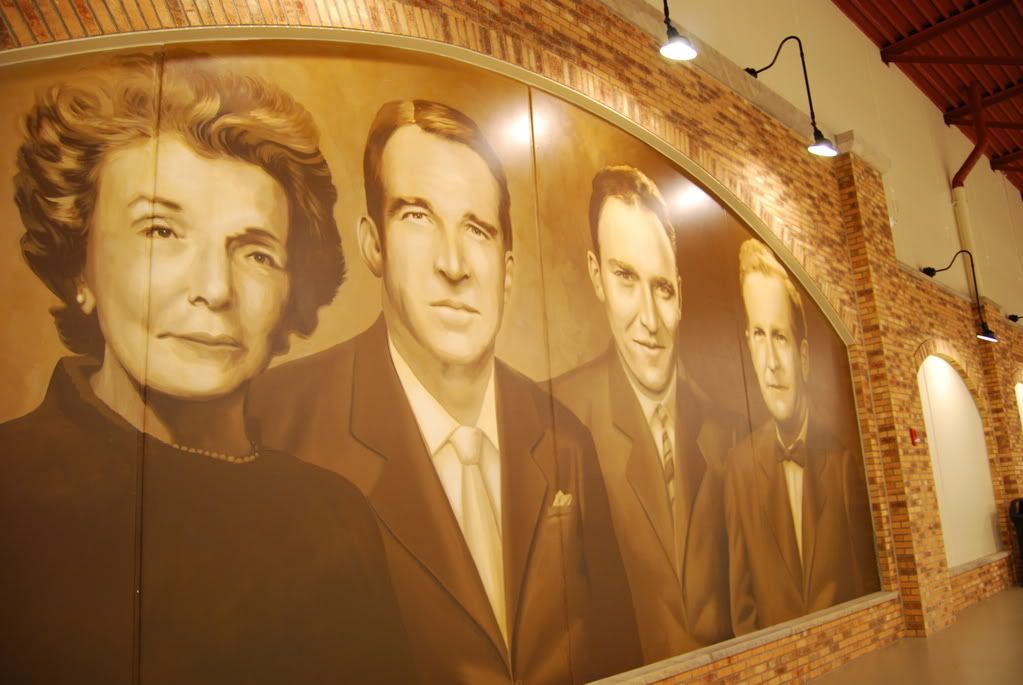
The second man was Robert Fryberger. While Fryberger is probably best remembered (and perhaps cursed, in some circles) for having a frigid Duluth arena named after him, his legacy extends far beyond that one sheet of ice. A Duluth native and Dartmouth hockey alumnus, Fryberger coached his sons’ PeeWee team to a national championship in the early 1950s. In 1954 twins Bob and Jerry Fryberger made the East team, and their father donated an outdoor rink to the program, giving the Hounds their home for the season. While the records may not be complete, the Frybergers are the first Hounds I can find who went on to college hockey; both went to Middlebury in the late 50s and early 60s, where they played on a line with their younger brother, Dates. With the Fryberger Line carrying the load, Middlebury put together a dominant team in 1961, and Dates’s 56-goal season remains among the highest totals by any NCAA skater ever. He later played on the 1964 U.S. Olympic Team, becoming the first of three East hockey Olympians. Community-based programs are often built on the backs of fathers and sons and brothers sharing their love of the game with one another and roping in their friends, and the Frybergers were East’s first great hockey family. For their services to Duluth hockey, Robert and his wife LaVerne are two of the four people enshrined in the center ice mural at the Hounds’ current home rink, the Heritage Center.

The Hounds’ 1954 season came to a crashing halt in the Region 7 quarterfinals in a 6-2 loss to 1950s powerhouse Eveleth. Shortly thereafter they suffered the further indignity of watching the team they’d beaten for the District 26 crown, Duluth Central, become the city’s first State Tournament entrant. But the foundation was in place, and under Coach Rolle’s steady hand, the results grew steadily better. In 1955 they knocked off an Iron Range team (Greenway) to advance to the region semifinals for the first time, and in ’56 and ’57 they repeated the feat, coupling the regional success with two more district titles.

In 1958, East broke through to its first State Tournament berth. The honor was rather anticlimactic, as the Hounds lost the Region 7 final to International Falls by an ugly 8-1 score.  But between 1948 and 1964, the MSHSL filled out the tournament field by awarding the Region 3 championship to the loser of the Region 7 and Region 8 title game on a rotating basis. The even years belonged to Section 7, and thus East’s quarterfinal victory over Virginia and semifinal win over Duluth Denfeld were enough to lock up a State berth. The so-called “back door” through Region 3 was one of many unusual playoff methods used in this early age of high school hockey; Regions 4 (St. Paul schools) and 5 (Minneapolis schools) also had their own back door until 1959, and it expanded into a four-game playoff including the runners-up from Regions 2 and 6 from 1960-1968. Even more strangely, some regions experimented with any number of systems of byes and automatic berths, and the 1946 Section 5 coaches decided they’d rather vote for a team than hold a playoff. The ’58 Hounds were hardly alone in making the Tournament via a curious path.

East’s first stint at State didn’t produce much in the way of happy memories, either. After a scoreless first period, St. Louis Park erupted for four second period goals and buried the Hounds, 5-1. Their consolation round experience was no better, as St. Paul Murray rolled to a 3-0 win. It was a stumbling but necessary first step.

The 1959 season proffered mixed results for the Hounds; their twelve losses were the most in the Rolle era, but they also beat state power Eveleth for the first time, and coupled a pair of solid senior UMD-bound defensemen, Ed Sutton and Jerry Udesen, with a sophomore core that would carry the team for the next several years. East played and beat Baudette 6-2 in a game at Williams Arena before a University of Minnesota game in a sort of forerunner to the contemporary Hockey Day in Minnesota. The season came apart in Districts, when they lost a tight game with Duluth Central in the semifinals and were then inexplicably blown out by Duluth Morgan Park 8-1, not long after beating that same team 8-0. This left the Hounds with a first-round Regional game against International Falls, which promptly whipped them, 10-3.

The 1960 team was built around five future UMD players: juniors Dave Stepnes, Bill Savolainen, Bill McGiffert, and Dick Fisher; and sophomore Bob Hill, a future East coach. While the Fryberger brothers (Middlebury) and Tom Wheeler (Hamilton) traveled east to play their college hockey, East High effectively served as a pipeline for the University of Minnesota-Duluth hockey team during the Rolle era. Between 1956 and 1967, no less than 17 Hounds went on to suit up for the Bulldogs. Jim Ross, Mike Hoene, and Bill Sivertson also appeared to play prominent roles on the 1960 squad, and while the team did not boast any future household names in Minnesota hockey, their depth appears to have been as good as any team’s in that era.

The team went 17-3 in the regular season, splitting two meetings with Eveleth and avenging a loss to Central in their drive through District 26. They collided with Eveleth for a third time in the Region 7 championship game, and while they lost, 5-4, the close score made them a much more worthy back door State Tournament entrant than they had been two years prior. In their State quarterfinal, the Hounds faced Minneapolis Washburn in a battle of back door teams, and fell into a 3-1 hole in the third. The team then rallied for four goals in a five-minute span late in the period, including two by Ross. East had its first State Tournament win, and the first round offered additional good news: Eveleth had also lost, and would lose again in the consolation round to Edina, which was making the first of its 19 trips to State under coach Willard Ikola.

The Hounds faced another familiar Minnesota hockey name in their semifinal, in which future University of Minnesota coach Doug Woog had a goal and an assist for South St. Paul. But East overwhelmed the Packers with three goals in both the second and third periods en route to a 6-2 win, with Sivertson logging a hat trick in the process. The state title game matched East against St. Paul Washington, and Sivertson continued his torrid scoring pace with a goal four and a half minutes in. McGiffert struck a minute later for a 2-0 lead, and though the Presidents scored early in the second, a Mike Hoene goal in the third iced away Duluth East’s first state championship.

The 1961 Hounds returned with most of their title-winning core intact, and loaded up their schedule in anticipation of another championship run. They played Eveleth and South St. Paul twice each, and also took on two Minneapolis teams, White Bear Lake, and the University of Minnesota-Duluth Freshman Team in addition to their usual slate of Duluth and Iron Range area high schools. They finished 16-4 in the regular season and marched through Districts and the even the Region, until they met International Falls in the final.

The region championship in Eveleth was a clash of Minnesota hockey titans, with the Falls ranked #1 and East at #2. With no back door open to Region 7 that year, it was do or die for the Hounds’ four D-I seniors and a star-studded Falls roster that included such Minnesota hockey greats as Mike “Lefty” Curran and Keith “Huffer” Christiansen. The game was a thriller, and East pulled out a 3-2 win for its first proper Region 7 title and third Tourney berth in four years. The most memorable part of the game, however, may have taken place after the final buzzer sounded. Frustrated Falls star Jim Amidon whacked East’s Mike Hoene in the head with his stick, prompting a small fight on the ice. The players didn’t drag out the action, but the fans at the sold-out Hippodrome had other ideas. In perhaps the most epic high school hockey fight ever, 30-40 fans leapt on to the ice and did battle with one another, with some fans even going after the East players. A furious Coach Rolle declared he’d never schedule the Broncos again, and the Falls’ famed coach, Jim Ross, ordered each of his players to go over to the East locker room and apologize afterwards.

With the Falls out of the way, East entered the Tourney as favorites to repeat. In the first round, East battled a strong St. Paul Johnson team into overtime, and in the end, Sivertson broke the scoreless draw to send East back to the semifinals. There, the Hounds suffered their first State Tournament upset. The culprit in this case was South St. Paul goalie Gary McAlpine; despite a 37-18 edge in shots, East fell, 2-1. They bounced back the next day with another low-scoring victory, this time edging North St. Paul 2-1 in overtime. The offensive power outage at State seems to have done the Hounds in, though they bid farewell to their deep senior class knowing they’d made East a presence on the state hockey scene.

The 1962 and 1963 seasons stalled out in the regional semifinals in one-goal losses to Greenway and International Falls. The mid-60s were the Falls’ time to shine, as they put together one of the state’s greatest dynasties, winning titles in 1962, and 1964 through 1966, and losing the 1963 championship in overtime to St. Paul Johnson.

The greatest threat to the Falls’ dominance in northeastern Minnesota, however, came from Duluth East. In 1964, East reloaded with another core of four UMD-bound players (Tom Ahrens, John McKay, Dave Maertz, and Ben Wolfe) plus future Hamilton standout Tom Wheeler. The result was the Hounds’ best regular season to date, as they lost only one game, though I could not find a game-by-game schedule. East and the Falls again collided in the Region 7 title game, and once again, East prevailed by a 3-2 score. As luck would have it, the Falls entered the Tournament through the Region 3 back door, and the teams met again in the State quarterfinals. This time around, it was the Falls’ turn to eke out a one-goal win, despite a 25-20 East edge in shots on goal. East thus became the last team to beat and the first team to lose to the Broncos as they began their record-setting 59-game winning streak, a mark that still stands today. They went undefeated through the next two seasons until they finally fell in a November 1966 game against Duluth Cathedral.

East lost 3-0 to Roseau in the consolation round, and went home without any hardware. The 1964 section title was East’s last trip to State under Rolle, and closed out what we might call the Bronze Age of Duluth East hockey: a seven-year stretch of four Tourney berths complete with a third place finish and a title. And though it would be another eleven years before East made its way back to St. Paul, they still had plenty of entertaining moments in the ensuing years.

East and the Falls met yet again in the 1965 final, though this time the Falls forsook the drama and creamed the Hounds, 8-1. A playoff format change gave East a second chance at the Tournament; instead of automatically handing out the Region 3 back door berth, the MSHSL debuted a one-game playoff between the runners-up in Region 7 and Region 8. East took on Thief River Falls for the right to advance but came up short, 2-1.

The 1966 team had another strong regular season, including a series split with third place State finisher South St. Paul and a one-goal loss to runner-up Roseau. The Hounds marched to yet another District 26 title and won their regional quarterfinal against Virginia, but rising power Greenway proved too much to handle in the semifinals. The Raiders would go on to finish fifth at the 66 Tourney before winning back-to-back titles in 1967 and 1968.

By the late 1960s, East was not only struggling to match Region 7’s finest; they were no longer the best team in the city of Duluth. The team that supplanted them was not a threat in the playoffs, however; it was Duluth Cathedral, which participated in the private school tournament until 1975. Cathedral won five straight Catholic school titles under coach Del Genereau from 1965-1969 and featured such stars as NHLer Phil Hoene and Steve “Pokey” Trachsel. East did not beat Cathedral during that stretch, and was on the wrong end of perhaps the most famous Duluth high school game that decade. In the final game of a 1966-67 season sold-out high school tripleheader at the newly minted Duluth Arena (later known as the DECC), East was tied 3-3 with Cathedral in the second when Hoene scored a natural hat trick in all of 27 seconds. As frustrating as those games must have been for Hounds fans, those Cathedral teams were deeply intertwined with East’s future: they included current Hounds head coach Mike Randolph and his longtime assistant, Larry Trachsel.

Cathedral losses aside, the 1967 season was a strong one for the Hounds, as they beat state powers International Falls and Roseau and sailed through the District 26 playoffs to an easy title. The team’s five regular season losses in Coach Rolle’s final year were all narrow defeats against top-end teams, and the Hounds appeared primed for another deep playoff run. But the tables turned in the first round of the region playoffs, and Rolle’s tenure concluded, rather fittingly, with a 5-0 loss to his longtime nemesis, International Falls. Rolle is, at last report, still alive and living in Duluth, and looked quite sharp several years ago when he took part in a ceremony at the Heritage Center honoring the 1960 State champions.

Next week: East under coach Don Bourdeau (1968-1984).