This is part two in a three-part series. Part one is here.
For a sixth straight year, I am off on a western hiking adventure of overpacked food, bourbon, deep debate, and dramatic scenery. Stalwarts including Uncle Bob, cousin Rob, and friends Amy and Ed are here once again. Our numbers have swelled this year, as van-dwelling cousin Alex and his wife Meghan have timed their meanderings of the American West to join us. Jim, too, is back for the first time in three years, making for perhaps the largest party in the history of this crew.
We gather at Big Sandy Lodge, a resort at the end of a long, car-killing road high in the foothills of the Wind River Range in west-central Wyoming. A collection of spare cabins arcs around an opening in the pine forest, and a small lake frames the view to the nearest peak. The small lodge serves up hearty communal dinners and welcomes in exhausted hikers, and the proprietors’ toddler pulls books from the shelves and insists that I read them. (The first one he hands me is in French.) We lay out our meals on the single table in one of the cabins for the annual debate over necessary supplies, and we later enjoy drinks by oil lamp. We are at the edge of civilization, a final homely house on the frontier.

Eight hikers set out from Big Sandy Lodge the next morning, but a mile in, Jim concedes that physical ailments will keep him from enjoying this trip, and he makes the difficult decision to turn back. Nurse Meghan escorts him, and Alex and I hang with her pack while the other four press on. When we are reunited, Meghan, Alex, and I turn on the jets to catch up, but in our haste choose not to look at a map at the first fork. We thus end up on a path parallel to the one we want, and we are two miles in and beyond some pleasant lakes and mountain views before we appreciate our error. A backpacking backtrack ensues, and our first day adds four extra miles. For a second year in a row, this alleged master of maps has seen his group get hopelessly lost just a mile in. I hereby forfeit my credentials back to the National Geographic Society.
The correct trail is closer to the spurs of the mountains, up rises and past parks with nascent creeks, down a busy trail to Dads Lake, where we finally catch the waiting group. The Winds, we can see here, are not a secret: plenty of families roll in on fishing trips, including a horde of loud kids on the bluff right above our eventual campsite on Marms Lake. But some passersby tell us there is solitude just a bit onward, and the first steps on day two are promising.
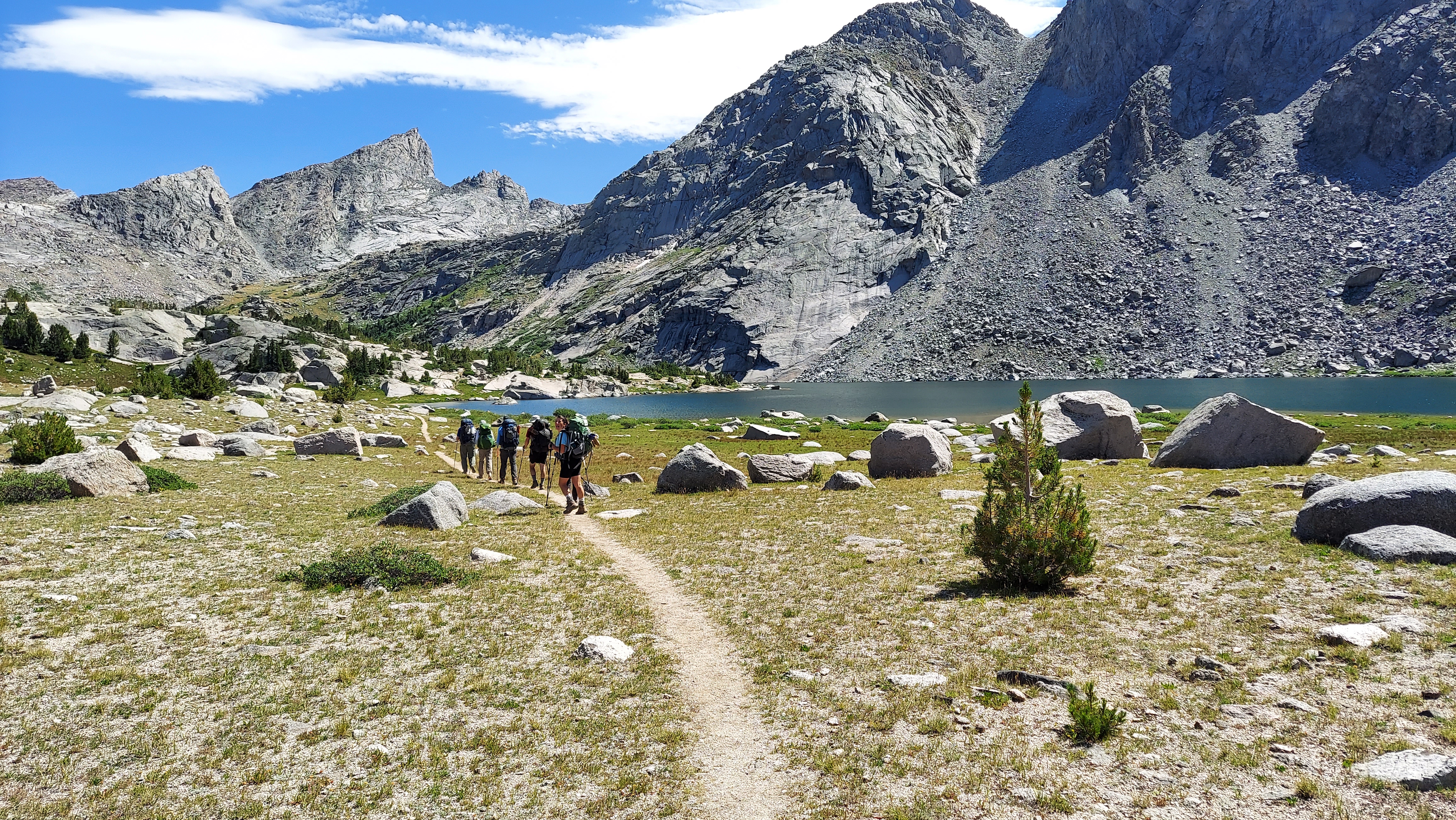
The second day has generally become the most aggressive of these trips, and this year is no different. The sheer exhaustion may not match the Colorado Trail’s offering two years ago, but this one may be the most technical. It starts out innocently enough, as we make our way up a valley with a glittering creek that bubbles downward and swing past a series of lakes with sandy beaches, tempting us to stop for a swim. Sheer alpine beauty. We rise above the trees, skirt the aptly named Barren Lake and swing up to Texas Lake, the source of the stream nestled deep in a small cirque. Harsh peaks line its sides, but up one scree field a few figures slowly climb. This is Texas Pass.
After a lunch break and ample incredulity over the path ahead, we make the slow plod up the 800-foot pass. Rob and I pick out the route up, call some guidance back downward. The adrenaline surges at the wind-blasted crest, and after some recovery we step forward into the Cirque of the Towers, the destination this trip, a beauty of a high-country bowl beneath stunning peaks and a haven for rock climbing virtuosos.
The Cirque’s serrated jaws wrap around Lonesome Lake, invisible in the depths below, and we traverse a small snow field and detour to an overlook above another stellar lake before we begin the descent. At first it is lovely, down rock ledges and past another dancing stream, to the point that we entertain camping up here before wisely choosing to plunge downward. This is a treacherous stretch of loose dirt and tentative footholds, less physically exhausting than the climb but perhaps more taxing, and the shores of Lonesome Lake can’t come quickly enough.
We make camp a quarter mile down the North Popo Agie River, Lonesome Lake’s outlet, amid some scrub where forest meets meadow. To the west, the Cirque, dominated by Pingora Peak just right of center, a striking granite pinnacle reminiscent of Devil’s Tower. Beyond it, a jagged ridgeline of rock-climbing conquests wraps southward to the sheer-faced massifs of Pylon, Warrior, and War Bonnet Peaks. To the east, a long run down the valley of the Popo Agie, peaks and cliffs lining the route and closing us in to the north and south. The last remnants of snow cling to the nooks where sheer faces meet boulder fields below, some of them permanent enough to count as glaciers.


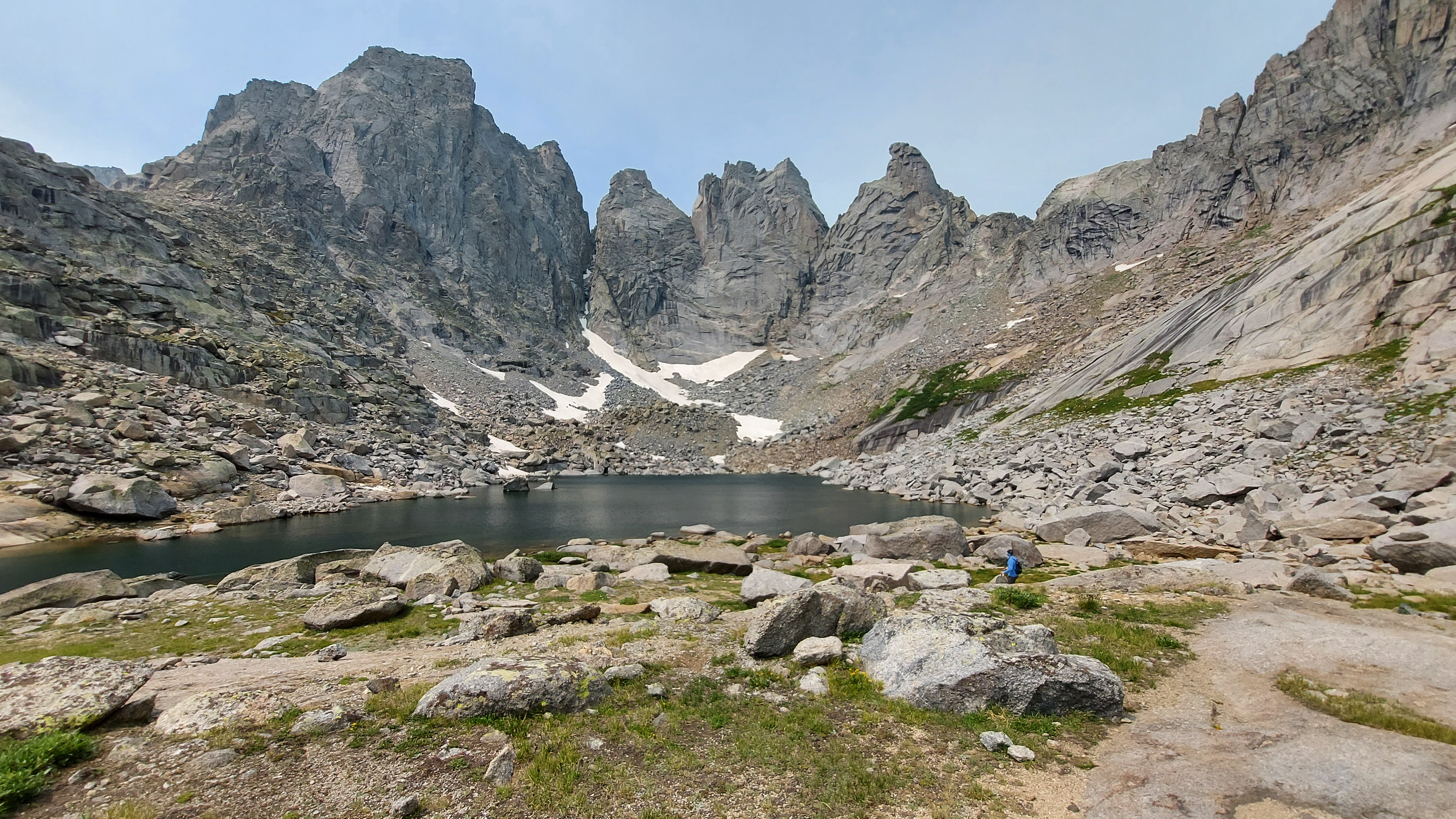


We spend two nights on the doorstep of the Cirque. A day hike on day three takes us around Lonesome Lake and into the upper reaches of this great bowl, on and off a semi-formal trail past additional tucked-away camps and a curtain waterfall. One thousand feet higher up, past a labyrinthine boulder field, is a mini-cirque with its own little lake and walls up to the heavens. Atop the jagged Shark’s Tooth, we pick out two ant-sized climbers summiting the peak. When in shade some of the spires look ominous, the guardians of some dark lord’s land in a fantasy series, an otherworldly sinister beauty that has me thinking this may be our most stunning single destination on any one of these trips.
On day four I wake to a drip of water in the face, condensation seeping through the rain fly and dropping to touch the tent fabric. I step out and gaze up at the fog hanging over the Cirque, coming and going as it obscures peaks and slowly lifts. In moments like this nature kills any sense of time, just invites a steady gaze until the magic breaks. After breakfast we push up Jackass Pass, the tamer southern gateway to the Cirque, and bid its spires farewell. Arrowhead Lake poses a choice: either clamber back up a promontory and slide down a Texas Pass-type slope, or swing west along the lakeshore through a boulder field. In keeping with our theme of the trip, we choose the boulders, swinging across gaps, sitting to sink into a passageway or clambering to rise above the furtive crevasses.
Next is a long plunge down to North Lake, followed by yet another rock scramble. On a spire to the right, climbers work their way up a sheer face. Up the trail come all manner of hikers seeking the Cirque: backpackers with bold itineraries, young couples with climbing ropes, day trippers from Big Sandy Lake, teenage fishermen, and a bachelorette party of 11 in matching Wild Women of the Winds hats and their five dogs. One last big drop brings us to the tent-dotted shores of Big Sandy Lake, and we pick out a campsite atop a small rise over the lake where we polish off the bourbon and play cards deep into the night.

The final day of hiking is, after the past few days, an easy stroll downhill, though thick forests and the occasional pleasant meadow along the Big Sandy River keep it lively. It is easy, that is, until the final half mile. Over the course of this trip Rob’s CalTopo app has saved us at numerous crossroads where the paper maps fall short. This time, however, it outdoes itself, and we are left picking our way through a bevy of downed timber and over awkward rocky knobs. Juicy burgers and beer await at Big Sandy Lodge, however, and we unwind, reconnect with Jim, trade stories with three hikers who have been in deep over the past week. It has been another hiking triumph, another journey well-spent, and I head east again in full belief in the power of these wildernesses to take us to new heights.
 A Patient Cycle