And if, while following him, you ever feel a disapproving cluck rising inside your palate, as I sometimes do, don’t forget that inside most people you read about in history books in a child who fiercely resisted toilet training. Suppose the mess they leave is inseparable from their reach and grasp? Then our judgment depends on what they’re ambitious for—the saving glimmer of wanting something worthy.
-George Packer
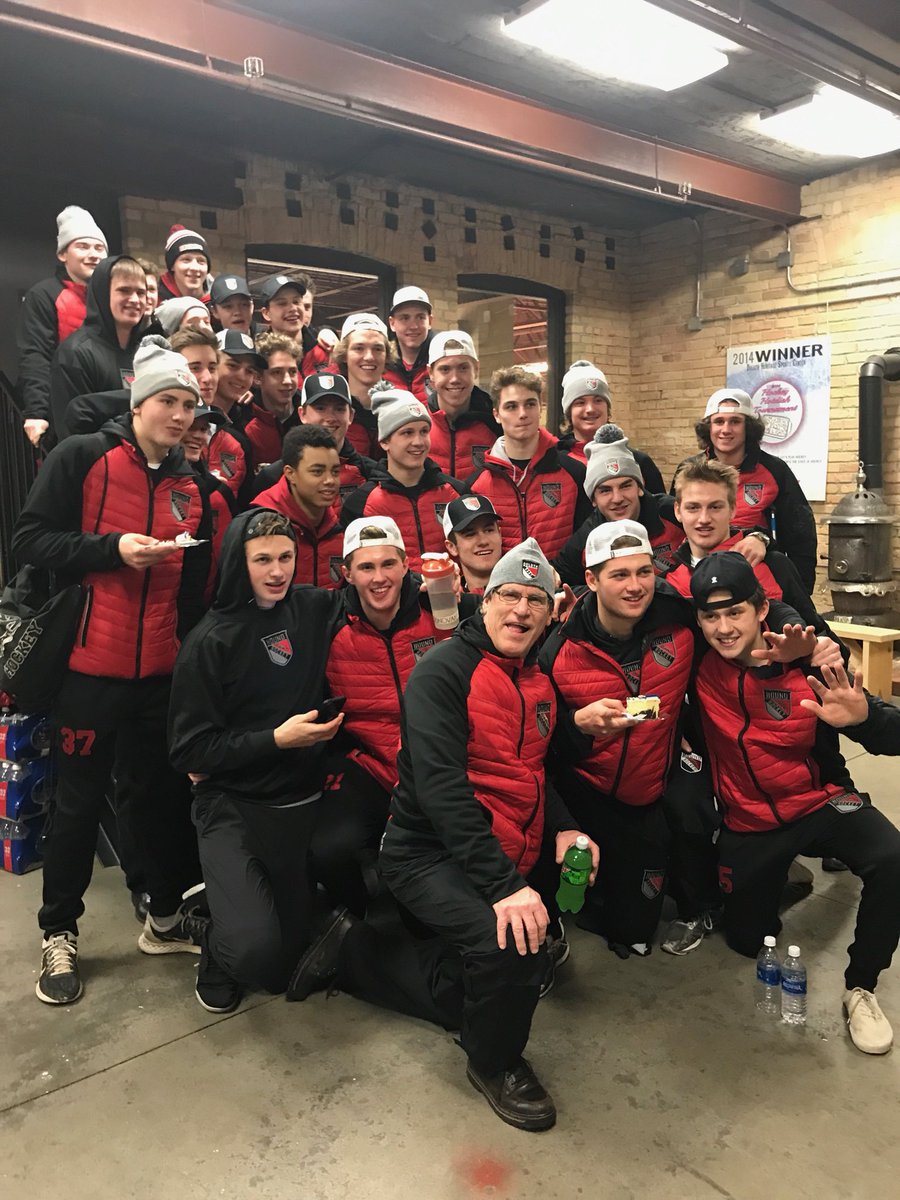
Mike Randolph’s tenure at Duluth East ended not in victory or defeat. In fact, it came in a season in which the Hounds did not play a playoff game. It revealed itself not in one of those emotional roller coasters of hugs and tears on the ice after a big game, but in an odd whimper and a hushed-up meeting with school administrators. The caginess of the whole affair showed how high the stakes were, and how vicious the voices involved could be. Few people feel comfortable being the face of the defense when the sharks are circling, and few are willing to be the prosecution after the axe has come down.
Mike Randolph was one of the most intense coaches to ever stalk the bench of a hockey arena. The ability of players to adapt to that reality both made them and broke them. Some kids would skate through brick walls for him; some said he made their high school years a living hell. It was his show, his formula. His control over every aspect of the game allowed him to pull strings that others would not, and occasionally to get more out of less than any other coach in Minnesota. He rewarded those who met his standard, and those who did etched themselves into the collective consciousness of several generations of kids passing through a school on the east side of Duluth, their coming-of-age rites of passage in packed arenas in Duluth and St. Paul come playoff time.
Over the years I have worked hard, sometimes painfully hard, to offer a voice of detached neutrality when it comes to Mike Randolph. In part that’s who I am, and in part it has served my purpose of staying on good terms with just about everyone around a sport that, for me, is a diversion and an escape, not the serious business of life beyond the rink. This position is at odds with many people I interact with, including both Randolph himself and many of the kids and parents involved in the game. Those lives overflow with devotion and passion in the pursuit of a singular goal. The ability to delight in that world and yet still be able pull oneself out of that cave and see beyond it is not a common gift.
In some ways, my side gig as a hockey commentator was always building until this moment. Never have I been more nervous to send out a Tweet as when I got the go-ahead to share the news of his Randolph’s resignation with the world. On the next day I felt a queasiness my sometimes-weighty day job has never given me when I got to be the fly on the wall at a meeting that supportive current players asked for with their coach. It was raw and emotional: disbelieving kids, parents in search of a solution, and the grizzled coach pulling fewer punches than in his carefully crafted statement to the press a few days later. Randolph left the door open for a return if the political winds were to turn, but he knew the odds were not in his favor, and he told the gathered crowd as much. Some of the players tried to rally, but the reply one of them received from a school board member showed exactly where that course was going to go. There were still glimmers of Randolph’s old scheming, but he himself knew it was time to move on.
Later that evening, on a blissful summer night on the grounds of Glensheen, I stumbled upon a former East hockey parent. She extolled Randolph’s impact on her son’s life and shared the reprehensible and false things some detractors asked her to accuse him of to get him removed. A friend with her, meanwhile, had the exact opposite perspective: he lamented his son’s treatment in his time with the program and said he felt relief upon hearing the news of his resignation. The three of us hashed out a healthy conversation about what the man meant and where the program should go next. I am pleased that I have been able to have these conversations face-to-face with people over the past several years. (The grandstanding from anonymous social media or message board users is another story, and one I happily ignore.) The future of Duluth East hockey depends on them.
I got to know Mike some over the years. I wouldn’t call us intimates, but he was certainly willing to spill out his thoughts when he had the time, and he was bracingly honest when he did so. In those interactions he was only ever gracious, and would offer unsolicited praise for players past and present, including some whose parents I knew to be critics. He had a lot of fun doing what he did. Whatever else Mike Randolph might be, he is a marvelous storyteller possessed of a vicious dry wit. To anyone who enjoys high school hockey, the chance to watch him scribble schemes on napkins and to pick his voluminous memory was a trip down a rabbit hole that was hard to escape. A series of long nights on the town during his last State Tournament at East will forever rank among my favorite high school hockey memories. (I hasten to note that Randolph was completely sober for these encounters, as he has been for many years; he was merely out to suck up the atmosphere of that special week in March.) Over those nights, I saw with my own eyes his ability to pre-script dramatic games, and I got some windows into just how viciously some people treated him. The comparatively drama-free and successful mid-to-late 2010s felt like a valediction to a long career, as a battle-scarred man found peace, received his due, and delighted in the relationships he was building with his players. But history is rarely that easy.
I’ve heard out many parents who did not like Randolph, and I have listened with ears wide open as others talked around me. Their critiques ran the gamut, from line combinations to mind games to some less savory rumors unrelated to hockey. (In 2021, as one of the few non-parents in the pandemic-limited arena, I heard little else.) When I also struggled to see the logic in some of Randolph’s tactical or personnel decisions, I tended to agree with them, and frankly that was not an uncommon occurrence over the past two years. But it was also interesting to see how, once a parent developed an initial beef, perhaps one with some merit, all of the rest tended to follow. It was almost amusing how the same critiques in the same exact phrasing would filter their way down through the rumor mill from year to year. If Randolph was to be guilty of one thing he was to be guilty of everything, a black and white world with little room for Greyhounds in between.
Randolph was no doubt hardened by the attacks upon him over his career. He had an ego, as will most anyone who is driven to win, and was proud of what he had achieved. He surrounded himself with assistants who were full believers, almost exclusively ex-players who bought in to what he preached and sought to replicate it throughout the system. Loyalty, above all else, became central to the Duluth East program. Many people circle the wagons when under duress, and the strain only seemed to grow over recent seasons, the coaching staff set against a growing camp of bitter skeptics. At what point, I wondered in one late-night discussion with a hockey confidante, was the atmosphere around the program too toxic to endure without a change, whatever Randolph’s merits as a coach?
By 2021, it seemed like Randolph’s supporters felt they had to whisper their actual feelings to me in private lest anyone overhear something that went against this brewing narrative. Given the imbalance in what I was hearing, I was almost stunned when I saw the number of current players and parents who showed up to support the man wholeheartedly at the end. The media narrative since Randolph’s fall has likewise been mostly supportive of the coach. Figures large and small have lamented the power of parents to bring him down, and East players from down the years have blasted the softness and blindness of those who, in their minds, could not see Randolph’s tough love as the demanding standard that could illuminate the path to greatness. I don’t quite buy the argument that Randolph is someone whose style got left behind by the times; some very recent classes, including many of the current underclassmen, appeared to value his frank talk. I also know and respect some parents from much earlier years who still nurse hard feelings. Something much deeper and more fundamental was afoot.
The question throughout the drama has been whether Randolph’s purported sins should cost him his job. I have only been able to look at the evidence before me, which at this point is little different from the same things I have been hearing for 15-odd years, supplemented by a few emails from past parents who saw in a new school district administration a fresh opportunity to take the man down. There were some rumblings about the booster club, but a district official, I am told, said there were no lingering issues there at a parents’ meeting after his resignation. Opacity denies us closure. The late-stage pandemic further removed any drama from the final act; I expect the school district is all too pleased its meetings are still on Zoom, depriving us the board room drama that erupted last time around. At some point, the district will, hopefully, comply with the data requests made by the media regarding the complaints against Randolph, and we may learn from the source material if there is anything truly salacious within them. Until then, we are left in a cloud of doubt, sorting through stories that call him the most powerful influence on the lives of some and a source of misery for others, struggling to reconcile the fact that both can be true.
In the moments when hockey has seemed to overwhelm other commitments in my life, I’ve often stopped to wonder why I, a Duluth East alumnus who never skated for the program and the owner of a rich and satisfying life beyond hockey, became such a devoted follower of this sport at this level. The reason, I think, circles back to Mike Randolph: not necessarily to the man himself, but to the idea behind this sometimes brilliant, sometimes intimidating, sometimes flawed human. Life roughed up Randolph in his early years, a tale he told in his final statement: limited resources, his father’s stroke, the care he received from his own high school coach. He bypassed many other roads to wed himself to the little corner of the world that made him, a place where he saw an opportunity and pour out his soul for over three decades. He wrote himself into the lore of a Minnesota tradition and took none of it for granted, scrapping every step of the way, always demanding more.
Perhaps he erred along the way; perhaps his ambition at times took him too far. But the idea he stood for, that glimmer of the worthy pursuit: that lodged in the mind of more than a few teenage strivers in need of some discipline, some fuel for the drive. Thanks for the memories, coach. The young men you formed include a few who never even played for you.
Up until this past weekend, I had seen two moose up close in the wild. One was a tame sighting from a canoe; the other, which wandered in front of the family car during a nighttime drive down the Gunflint Trail when I was young, may have been the closest I have ever come to death. This docile creature, seemingly part deer and part cow, has otherwise been an elusive presence for a resident of northern Minnesota. While a quest for moose is hardly a search for snow leopards in the Himalaya, they are part of the local allure, and a trip to Isle Royale seemed the perfect way to rectify this lack of large, furry, antlered beasts.
Isle Royale is the largest island in Lake Superior. It sits some 20 miles off the coast of Minnesota and Canada, though it is a part of Michigan, leading those who come from the Minnesota entry to eternal time zone confusion. It is the least visited national park in the United States outside of Alaska. Over the past century it has gained some fame for its moose and wolf populations, which often move in relation to one another, though lately the wolves have preferred to wander off across the ice pack in winters and thrown the balance out of whack. The island’s folded rock is the geological twin of Michigan’s Keweenaw Peninsula, its length scarred by the glaciers that formed Lake Superior and created the lake-studded Northwoods that I call home.
After a year in which I kept up my travel pace largely by sacrificing companionship, I am eager to tread trails with other people. My fellow hikers, Connor and Alex, are new to backpacking but well-prepared for this venture. (We are all planners, after all.) Rarely have I been the experienced hand on my group hiking excursions, but as I relate tales of past excursions as part of the steady chatter that takes our minds off our feet, I realize just how much exploration I’ve done in my life. And though I’ve never been to Isle Royale before, it feels like home turf. When my companions, both St. Paul residents, ask me on the drive up if Lake Superior ever gets old, the answer is an easy ‘no.’ This realm is my playground, and these outdoor pursuits are among my fondest pastimes.
The ferry dock for boats to Isle Royale is in Grand Portage, the final settlement on Minnesota’s North Shore. With the Canadian border four miles to the northeast still closed, Highway 61 is quiet, and the settlement nestles sedately around a large bay. Grand Portage is home to an American national monument dedicated to French voyageurs, but it is primarily home for members of the Grand Portage Band of Ojibwe, whose tribal headquarters are here, along with a campground, a general store, and a casino, which provides our lodging the night before the ferry departs. Randomly pressing buttons nets me $6.91 off the free $15 casino voucher I get for being a hotel guest. I consider it a win, though Connor’s haul dwarfs those of Alex and me.
The Voyageur II, our ferry, nears its capacity of about 50 for this jaunt across the strait that separates the island from the Minnesotan and Canadian shoreline. The boat heads first for Windigo, its western port of entry, which is the destination for my travel party and the vast majority of our fellow sailors. From there, it will ply its way around the island, with stops at a few smaller trailheads and an overnight at Rock Harbor on the eastern end before it completes its circuit back to Grand Portage. I pop my Dramamine and settle on to a rigid bench for the two-hour ride.
Isle Royale is not a complete and utter wilderness. A hotel still operates at Rock Harbor, and both Rock Harbor and Windigo are home to additional buildings, including ranger stations, Park Service stores, and bathrooms with actual plumbing. Small motorized vehicles putter about these entry points, seaplanes drone past with some regularity, and after a bad storm rolls through on our final morning, a chorus of chainsaws rings out through camp as the rangers re-open the trails. It would be possible to have a vacation here that is rustic but requires minimal physical exertion, and the day trip ferries, which resume service the day after our departure, no doubt add to the touristy nature of these outposts at each end of the island.
Most visitors to Isle Royale, however, embark on backcountry expeditions, the most famed being the 45-mile hike from Rock Harbor to Windigo across the spine of the island and the opportunity to canoe and portage across a chain of small lakes on the northeastern end. Our hiking loop is a standard 30-plus mile route for those who come from the west end. It begins in Windigo and circles its way counterclockwise through the southwest portion of the island, with tastes of everything it has to offer: inland lakes, Lake Superior waterfront, ridges along the central spine, an old mine, and, of course, moose.
The first day is an eight-mile walk from Windigo to Feldtmann Lake, which looks like prime moose habitat on the map. The trail follows Lake Superior for a spell and then clambers up a ridge with views of a swampy interior, which it then drops to and skirts on its way around to Feldtmann Lake. The trail here is tame and relatively flat, though the underbrush, thinner than on the mainland, is clear evidence of moose activity. Many balsam firs along the path seem stunted, with all the vegetation shorn from their lower branches and only some tufts of needles at the top, away from prying mouths. Later, a ranger tells us that some of these trees can be decades old, and not the saplings they seem to be, due to the constant nibbling. We come to Feldtmann Lake to find the best two campsites occupied, but settle for a respectable one just a short distance away from the lake.
Isle Royale campgrounds are unlike others I’ve encountered before. Often eight to ten miles apart, they are sparser than those on the Superior Hiking Trail or in other backcountry realms I’ve hiked. They make up for their scarcity with clumps of sites in marked campgrounds. My initial reaction to this setup is not one of great love: it’s hardly deep wilderness when there are five other parties within two hundred yards of one’s site, and yet since we are all strewn across our own distinct areas, the conviviality that comes with sharing a site with ten other hikers does not come as easily. Still, over the course of three days, we get to know two 40-something women from the Chicago area who are on the same route; a quieter couple is also on the same circuit, and a few others linger to chat here and there.
There is also some surprising variation in the amenities. Siskiwit Bay, which has its own very new-looking dock, features picnic tables at the sites, while several Feldtmann Lake sites lack even the rudimentary seating log common at deep wilderness camps. Of the four campgrounds we tour, only Island Mine has fire pits, and Washington Creek, a stone’s throw from the ferry dock at Windigo, is more of a collection of wooden shelters with single screened sides, with a few sad tent sites tucked behind them for overflow. Some of these variations are logical enough, but it makes every stop a new adventure.
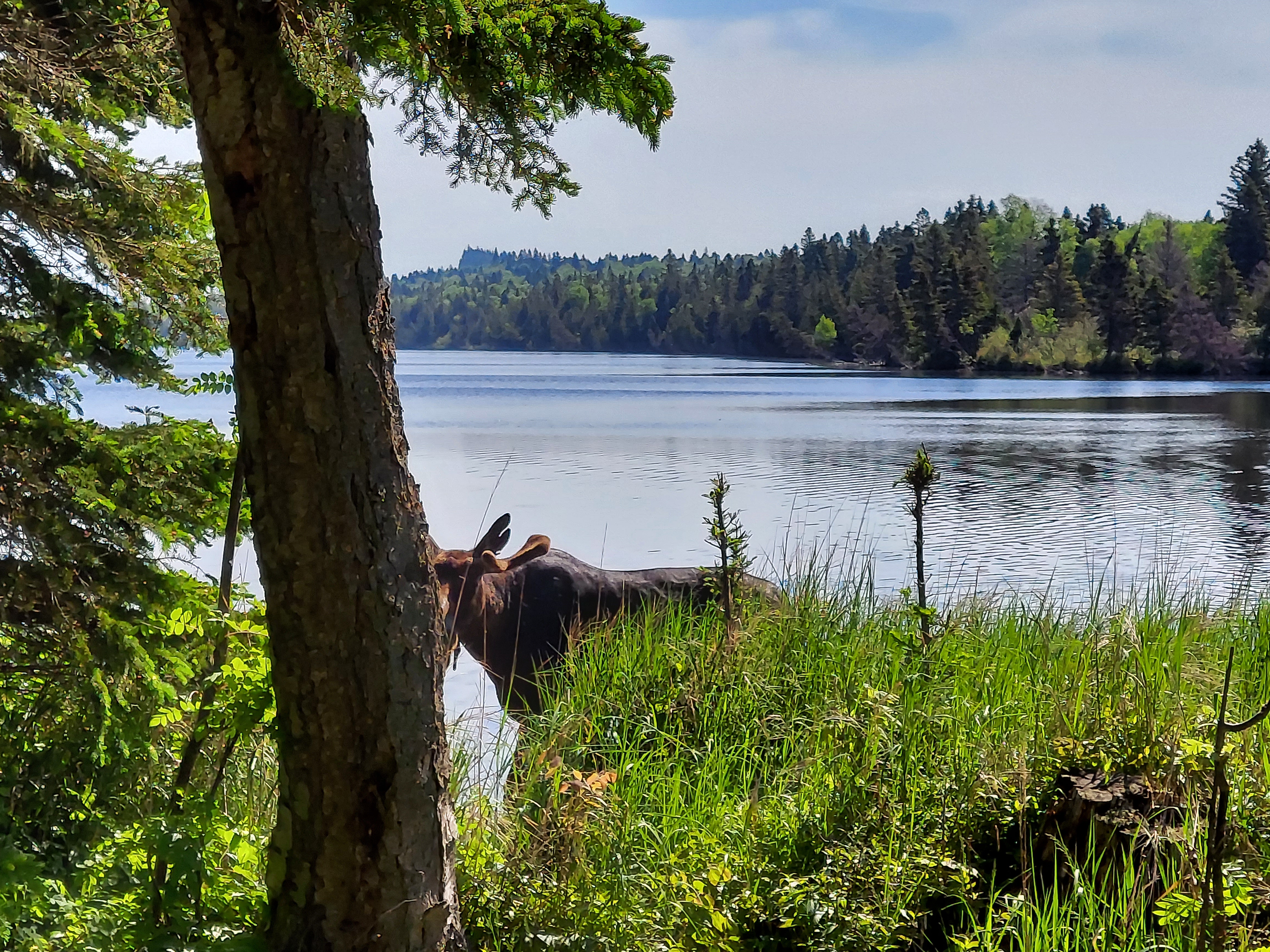
Despite the lack of seating options, a strong breeze off Feldtmann Lake knocks down all the bugs on the first night and gives us a pleasant evening. We take our dinner a short distance away at the placid pebble beach of Rainbow Cove along Lake Superior. Later, back at the site, we deploy a wood-burning stove of questionable legality and stay up late enough to watch the stars come out. A thunderstorm hits while we’re still in tents the next morning, and after it blows over, I peek out of my tent for the first time and am immediately greeted by a female moose plodding past our site down the path. Success! I’m too slow with the camera to get a respectable picture, but I need not worry: a short while later she makes her way back up the shoreline, stopping to chew on plants, and a male friend follows her shortly thereafter. We take our time to admire them from as close a distance as we dare.
The second day’s hike begins with a placid wrap around Feldtmann Lake’s southern shore, the trail high and dry from the surrounding swampland on a short ridge, moose prints dotting the mud. We then charge up a steep climb to Feldtmann Ridge, which offers looks back over the lake and to Superior beyond, a series of false summits offering better and better views before we settle into a ridgetop plod, often in direct sun. Next comes a beaver pond and a gentle trickle of a stream before we come to a defunct fire tower that now serves as a lunch spot, where we meet an older couple heading the opposite direction and the Chicago area women, one of whom gracefully tips over her camp chair while holding a freshly reconstituted bag of freeze-dried chili. We clamber up the tower as far as we can for equal doses of pretty views and vertigo before continuing on our merry way. The trail descends into the largest birch grove I’ve ever seen, though it later degenerates into a buggy, scrubby, scorching hot swampland as we slog across the final miles to Siskiwit Bay.
Siskiwit Bay is a prominent bite into Isle Royale’s southern shoreline. A large vessel, perhaps from the Coast Guard, sits at anchor toward its mouth, and after sunset, a distant lighthouse blinks away. The two shelters are already taken, but we claim the best of the tent sites, open to the wind and with an access down to a small private beach. We while away the afternoon here and eat dinner in a shadier spot down on the main beach by the large new dock, where the pebbles conveniently rest in a seat-height berm. A picnic table at the end of the dock catches a strong breeze, and we stay out here as the sun plunges into the horizon. Our muscles ache and a rodent may have gotten into the cookies, but none of that matters. We are deep into hiking trip bliss.
The next morning dawns in brilliant sun, and we make much better time in breaking down camp. Beaver activity has made the trail impassable around the back of Siskiwit Bay, so we are diverted to the beach, and this next mile and a half, save for a mucky bushwhack to an inland bridge over the Big Siskiwit River, wraps along the shoreline. It is the most beautiful part of the hike. The lake glows golden in the morning sun, and the thick forest to our left keeps us on the straight and narrow path. A few crystal-clear rivulets make their way down across the beach and into the pristine inland sea. The Chicago ladies, headed just a few short miles to Island Mine on this day, are sprawled in chairs and soaking in the sun. I am loath to leave it, but leave it we must, and the next stage of the hike climbs some 800 feet upward, first through mud obstacle courses and then over a series of aggressive ridges that take their toll.
On this stretch of trail we get a window into Isle Royale’s human history. Called Minong by the Ojibwe, a word translating to “the good place” or “the place of abundance,” it was an early source of copper mining, and white settlers later returned for the same purpose. We pass an empty well shaft and a large pile of mining overburden, the remnants of a short-lived 1870s operation here on the hillside. Lunch comes at the Island Mine campground, a series of sites strewn across a low ridge of maples in a valley between two higher rises. We’ve been waffling on whether to spend the night here or press on to Washington Creek, but with our energy restored by lunch and a looming threat of bugs here and the need to be on time for a ferry the next day, Alex convinces us to pound out the last 6.5 miles.
We make the right choice. The trail from Island Mine back toward Windigo is a wide, gentle descent through a shady maple forest, its halls carpeted by a dense layer of blanched-out leaves from down the years. We pass a series of parties going the other direction, all fresh off the ferry and chipper; Island Mine will be crowded on this night. The Washington Creek campground, however, has several open shelters for us to choose from, and once again we choose right. As we laze about the site reading that afternoon, I glance up toward some stray movement in the thicket between our shelter and the next and see a male moose just a few feet from our site making his way down the steep bank toward the creek, which at this point is more of an estuary. We hustle down our own path to the water and tuck in to watch him as he plods about, munching at pond scum and shaking water back and forth off his antlers.
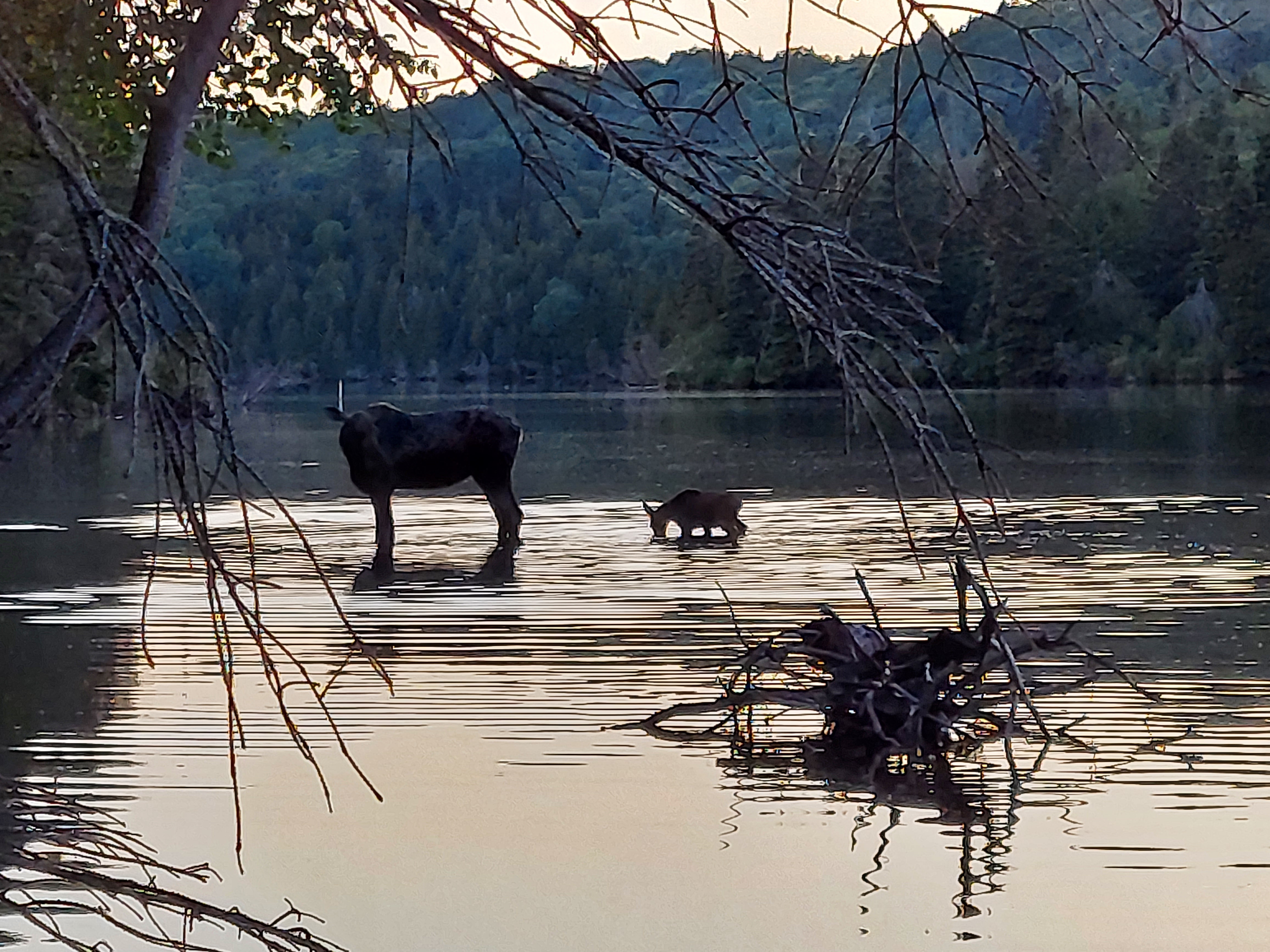
The moose show is only beginning, though. A short while later we pick out a mother and her calf, who cannot be more than two or three weeks old. They pick their way upstream, and, with some urging from its mother, the calf emits some near-human wails as it strikes out across the water to join her. Next, an interlude of amusing ducks and ducklings, which Connor calls the Greek chorus of our trip. Two more moose, including a large bull, wake us early the next morning, and a distant female downstream provides the final act. Mission accomplished.
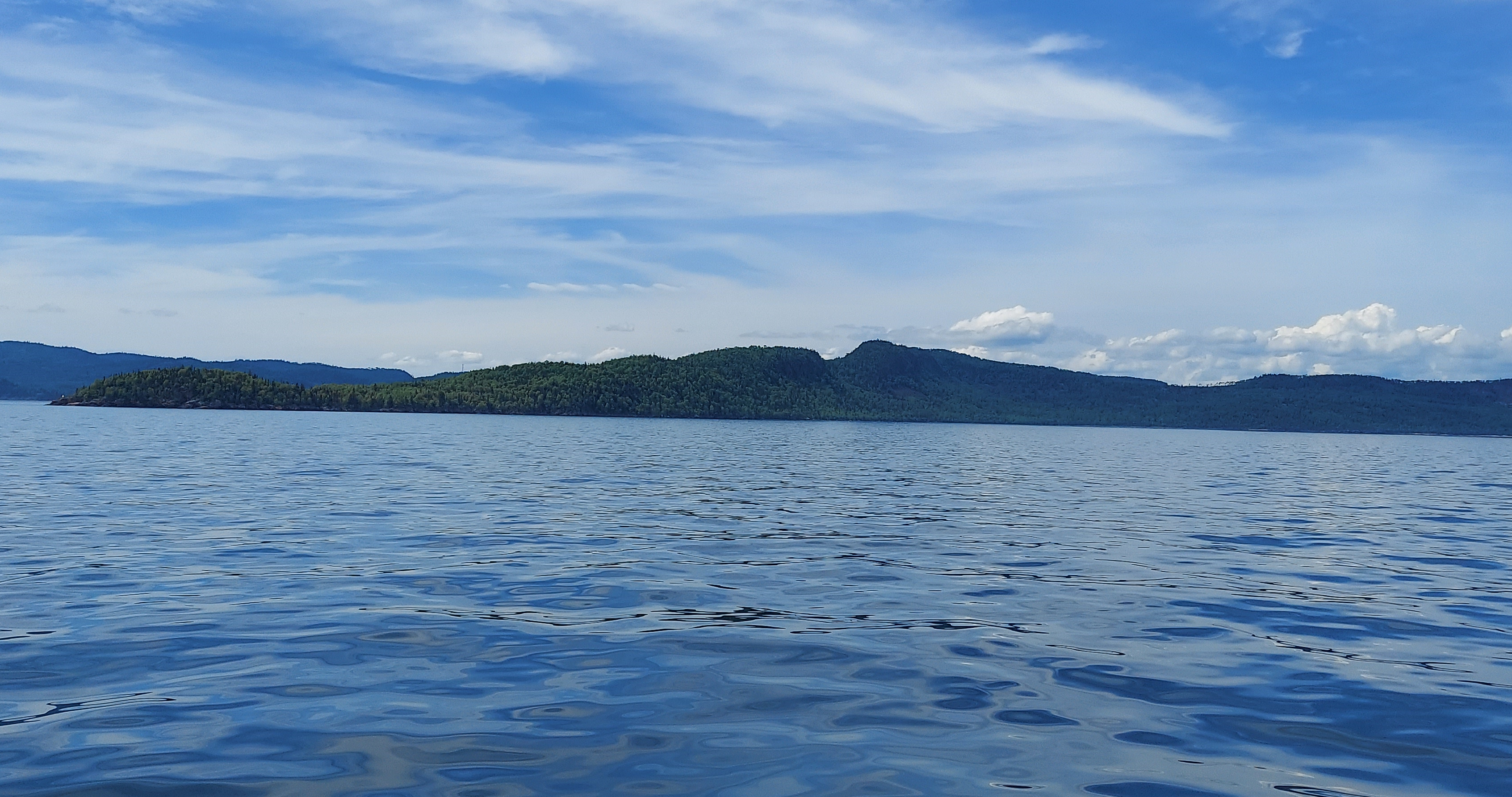
Our travel plan again seems prudent when the when the storm rages across the island on our final morning. The Chicago women, who set out around 5:30 from Island Mine, report a terrifying hike down, with a tree falling next to them and the trail so darkened by the storm that they pull out headlamps. By the time they arrive in Windigo, however, they are free to share a very good story, and a few other familiar faces join us for a ranger lecture before the ferry collects us again. The boat ride back to Grand Portage is as smooth as possible, and Connor and I head to the bow to watch the green North Shore bluffs and Mount Josephine rise up to welcome us back to the mainland, a narrow band of undulating green between two rich, blue expanses of unfathomable depth. I live in one of the most beautiful places on earth.
Mike Randolph’s tenure as head coach of the Duluth East boys’ high school hockey team is over.
The news is not a total shock to anyone who has followed the events of the past few months. The school district had engaged a private investigator to poke around the program following a heap of parent complaints, and the rumor mill swung back and forth from week to week: he was done for, he was fine, or no one knew what was going on. Randolph has been through the ringer in his time with the Hounds; he’s been through countless questioning parents and a purge that removed him from his job for a year before an intense campaign swung a school board election and helped return him to his longtime post. This time, however, he has chosen to make his exit rather than go through it all again.
Let’s get the record out there first: 658 on-ice wins (third-most all-time; 646 of those at East), 18 State Tournament trips (second-most all-time behind Edina’s Willard Ilkola, who has 19), and two state championships. Six second place finishes, four third place finishes, three consolation titles, and a hand in some of the most memorable games ever, such as the Duluth East-Apple Valley five overtime affair in 1996 and the East-Eden Prairie three overtime final in 2011. His presence, both through tactical innovation on the ice and in his fight for his job off it 18 years ago, has driven the narrative around high school hockey far beyond the shores of Lake Superior. With the exception of the 2003-2004 sabbatical, he has been coaching Duluth East hockey my entire life.
I will embargo some of the other things I know until a longer retrospective next week; a planned press conference on Friday will, I expect, provide some added juice. I will also acknowledge there is much I do not know, and may never know, about what happened behind closed doors. I have a lot of thoughts that will take some time to process, and will take some time to filter back through the thousands of conversations I’ve had over the past 16 years with people regarding Mike Randolph. Love him or hate him, he is a fascinating figure, one whose story winds its way through just about every theme one could possibly associate with high school sports, from the glory to the pain and every emotion in between.
The open coaching job is a fascinating one. It’s a position with one of the most illustrious programs in the state and no shortage of history to draw upon. There is some talent to work with, and while we cannot pretend that it is still 1996 or even 2016 (a fact that has been difficult for some to accept), the long-term fundamentals of the program are pretty solid, and a new coach will have a chance to build on deep foundations. On the flip side, this program is also a hornet’s nest, and I will be fascinated to see how long a honeymoon the new regime gets. Duluth East is hardly alone in this; Randolph is just one of several fairly prominent coaches who have headed for the exits this offseason, and while the details vary from place to place, the roots of the purge are always the same. I do not envy anyone who takes a head coaching job these days, and rather hope the next Hound head man is not someone with any immediate tie to the program and the mess it has been the past few years. School board, if you’re reading this, go get someone from the outside with a proven track record.
For those looking for a walk down memory lane, here’s a selection of posts that have focused on him:


 A Patient Cycle